
Rosy feather star (Antedon bifida)
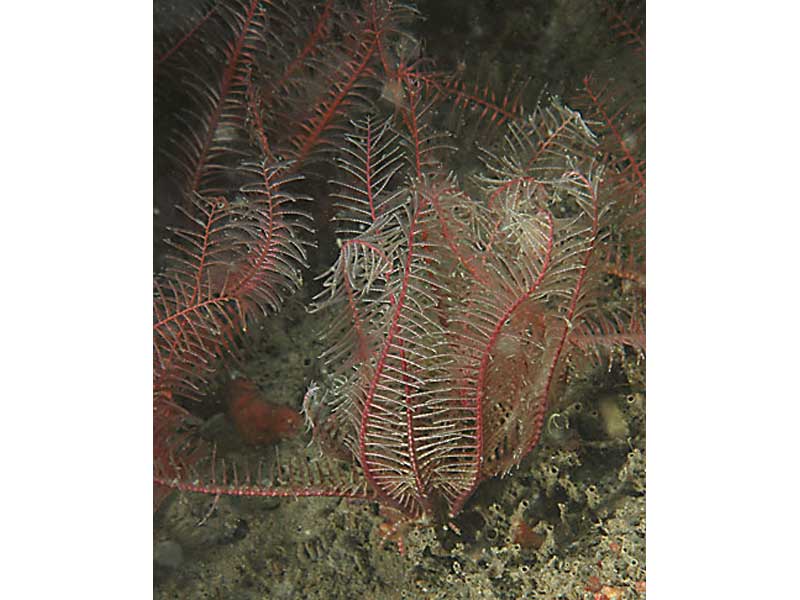
Antedon bifida at Firestone Bay in Plymouth Sound.
Photographer: Keith Hiscock Copyright: Dr Keith Hiscock
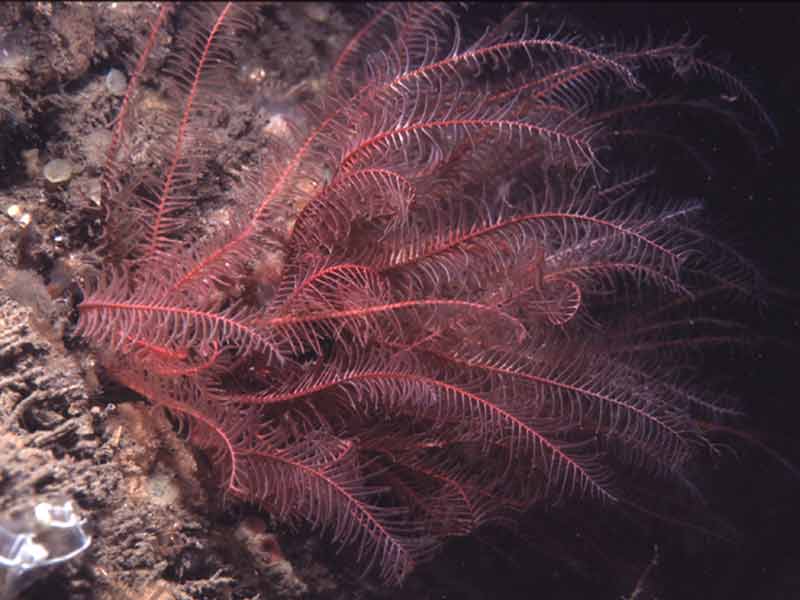
Antedon bifida
Photographer: Keith Hiscock Copyright: Dr Keith Hiscock
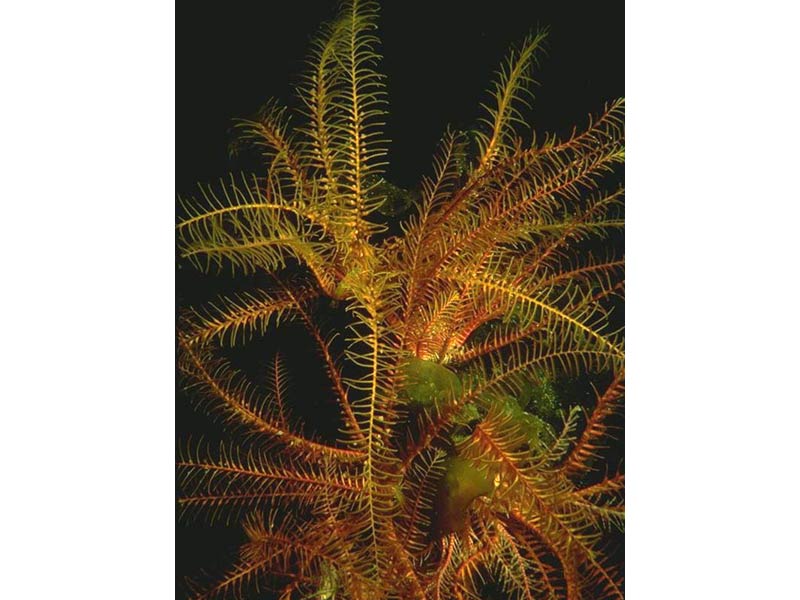
Antedon bifida feather stars.
Photographer: Sue Scott Copyright: Sue Scott
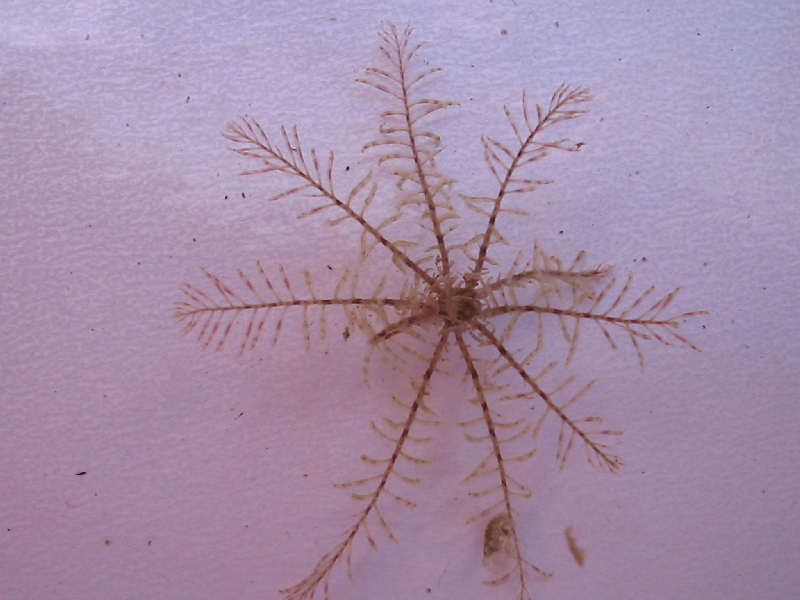
Antedon bifida from a settlement plate on a pontoon.
Photographer: Judith Oakley Copyright: Judith Oakley
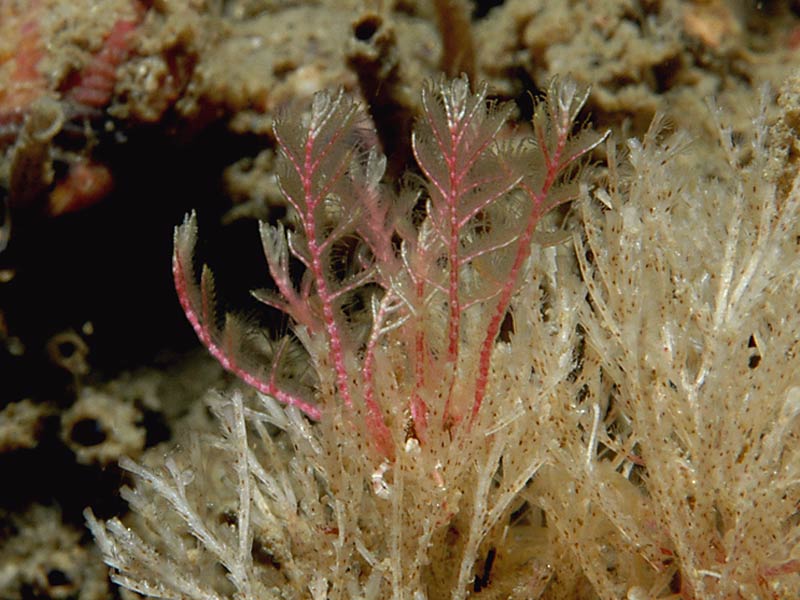
Antedon bifida juvenile at Firestone Bay in Plymouth Sound.
Photographer: Keith Hiscock Copyright: Dr Keith Hiscock
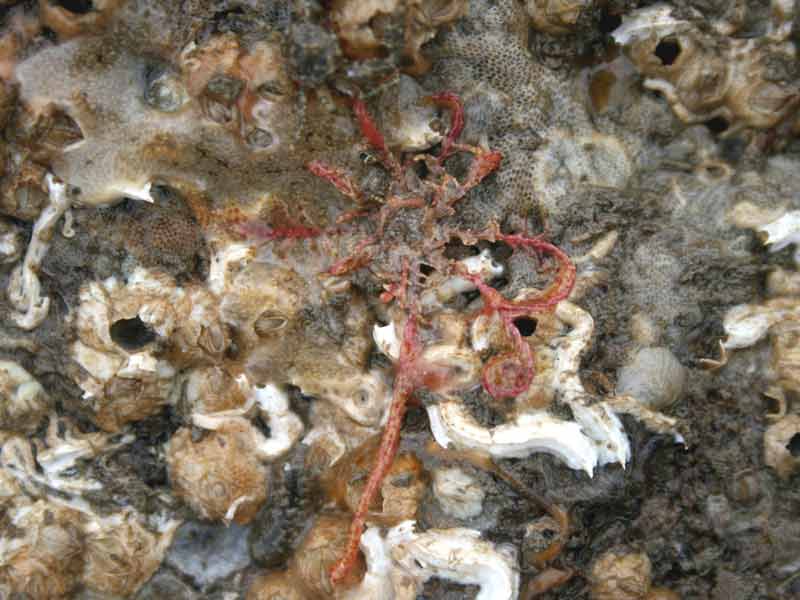
Antedon bifida under a small boulder.
Photographer: Judith Oakley Copyright: Judith Oakley
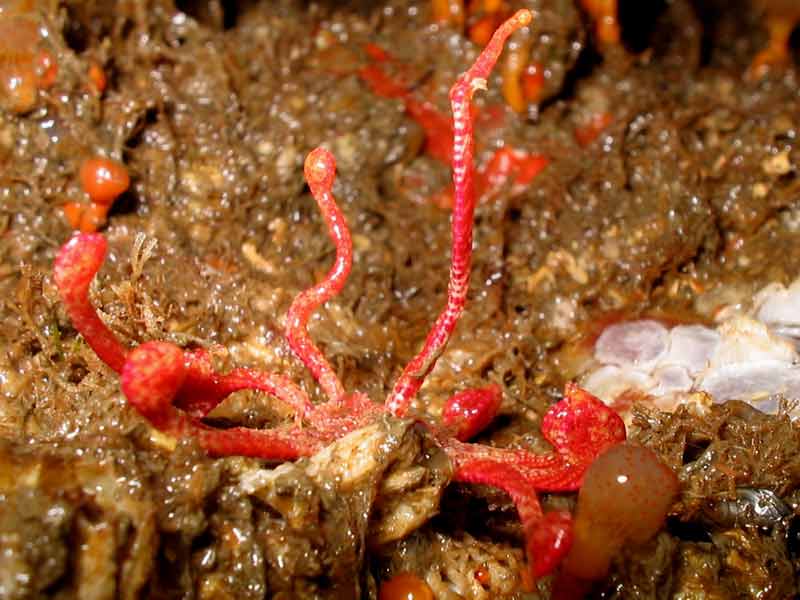
Antedon bifida under the overhang of a boulder.
Photographer: Judith Oakley Copyright: Judith Oakley
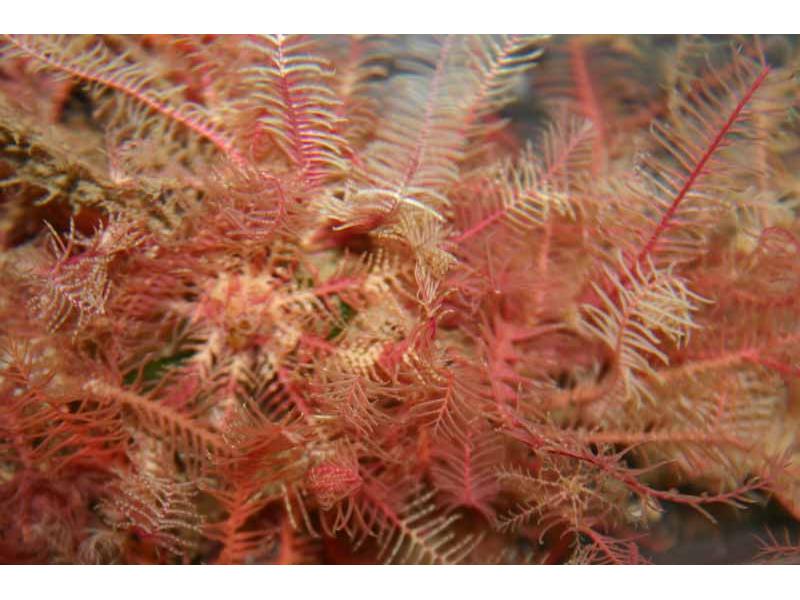
Entangled Antedon bifida feathers.
Photographer: John Rundle Copyright: John Rundle
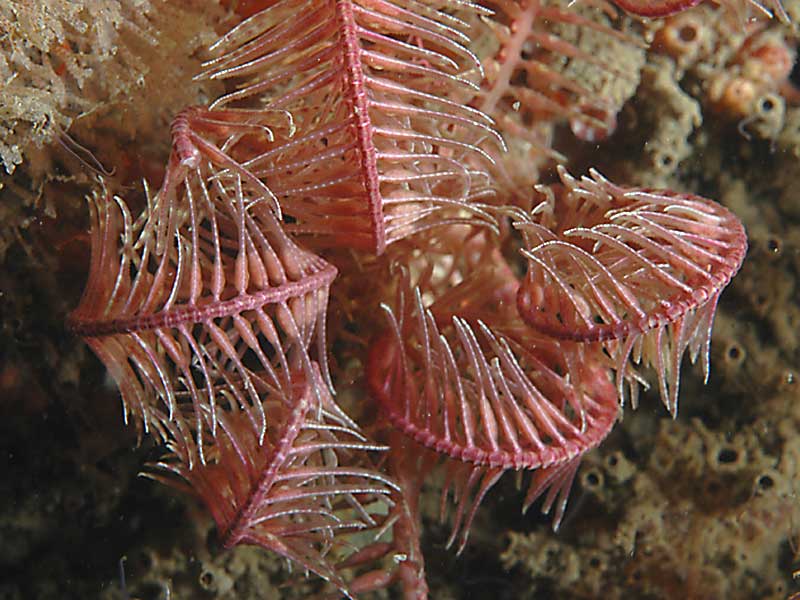
Ripe pinnules of Antedon bifida at Firestone Bay in Plymouth Sound.
Photographer: Keith Hiscock Copyright: Dr Keith Hiscock
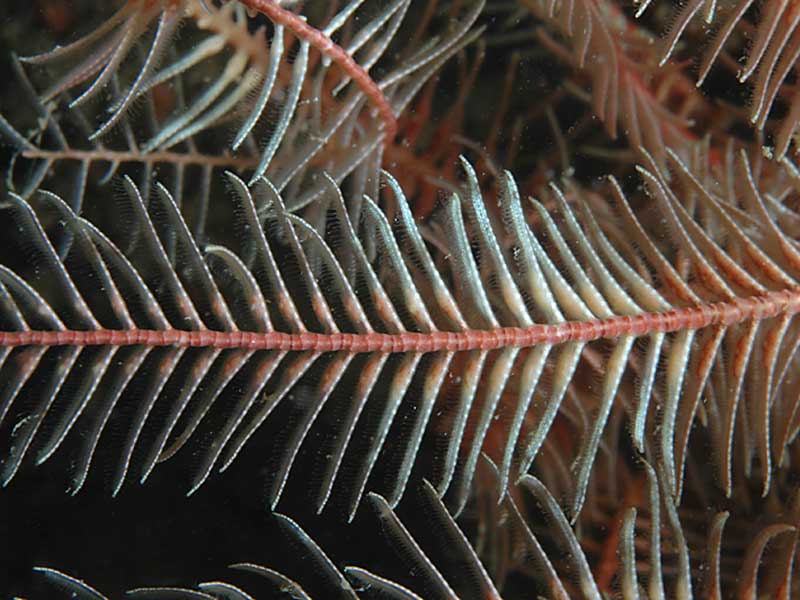
Ripe pinnules of Antedon bifida at Firestone Bay, Plymouth Sound.
Photographer: Keith Hiscock Copyright: Dr Keith Hiscock
Distribution data supplied by the Ocean Biodiversity Information System (OBIS). To interrogate UK data visit the NBN Atlas.Map Help
| Researched by | Jacqueline Hill | Refereed by | This information is not refereed |
| Authority | (Pennant, 1777) | ||
| Other common names | - | Synonyms | - |
Summary
Description
A feather star with five pairs of feathery arms, 5-10 cm in length. The species is secured to the substratum by movable, claw-like cirri, up to about 25, on the undersurface of the disc. The animal is thus able to crawl, often quite swiftly. The colour of Antedon bifida is varied, red, pink, orange or yellow, often mottled or banded.
Recorded distribution in Britain and Ireland
Antedon bifida is found around most of Britain and Ireland but is apparently absent from the southern part of the east coast of England.Global distribution
Widely distributed in north-west Europe from Shetland to Portugal.Habitat
Antedon bifida is found from the shallow sublittoral to depths of 450 m but is most abundant between 15 and 40 m (La Touche, 1978). It is occasionally observed at the level of the lowest spring tides. It is free-moving but is usually found clinging by its cirri to the walls of gullies and on seaweeds in areas of fast flowing water currents.Depth range
from ELWS to -450m.Identifying features
- Five pairs of feathery arms.
- Central disc with mouth and umbulacral grooves on the upper surface.
- Without stalk. Up to 25, rarely 30, short cirri on the undersurface of the central disc.
- Oral side branches or pinnules long and modified, about 35 segments.
- Three sizes of tube feet arranged in groups of three on the 'feathers' or pinnules of each arm.
Additional information
Antedon bifida may be confused with another feather-star species Antedon petasus which has a more northerly distribution around the British Isles. Antedon petasus is larger and has 50 or so short cirri on the undersurface of the disc.
Listed by
- none -
Biology review
Taxonomy
| Level | Scientific name | Common name |
|---|---|---|
| Phylum | Echinodermata | Starfish, brittlestars, sea urchins & sea cucumbers |
| Class | Crinoidea | Feather stars and sea lilies |
| Order | Comatulida | |
| Family | Antedonidae | |
| Genus | Antedon | |
| Authority | (Pennant, 1777) | |
| Recent Synonyms | ||
Biology
| Parameter | Data | ||
|---|---|---|---|
| Typical abundance | High density | ||
| Male size range | diameter 10-20cm | ||
| Male size at maturity | |||
| Female size range | Medium(11-20 cm) | ||
| Female size at maturity | |||
| Growth form | Pinnate | ||
| Growth rate | Data deficient | ||
| Body flexibility | High (greater than 45 degrees) | ||
| Mobility | |||
| Characteristic feeding method | Passive suspension feeder | ||
| Diet/food source | |||
| Typically feeds on | particulate matter such as detritus and plankton. | ||
| Sociability | |||
| Environmental position | Epibenthic | ||
| Dependency | Independent. | ||
| Supports | Host Myzostoma, a parasitic hermaphrodite polychaete. | ||
| Is the species harmful? | No | ||
Biology information
Mobility. Featherstars are also able to swim short distances by moving their arms up and down through the water.
Habitat preferences
| Parameter | Data |
|---|---|
| Physiographic preferences | Open coast, Offshore seabed, Strait or Sound, Enclosed coast or Embayment |
| Biological zone preferences | Circalittoral offshore, Lower circalittoral, Lower infralittoral, Sublittoral fringe, Upper circalittoral, Upper infralittoral |
| Substratum / habitat preferences | Macroalgae, Bedrock, Large to very large boulders |
| Tidal strength preferences | Moderately strong 1 to 3 knots (0.5-1.5 m/sec.) |
| Wave exposure preferences | Moderately exposed, Sheltered, Very sheltered |
| Salinity preferences | Full (30-40 psu) |
| Depth range | from ELWS to -450m. |
| Other preferences | No text entered |
| Migration Pattern |
Habitat Information
No text enteredLife history
Adult characteristics
| Parameter | Data |
|---|---|
| Reproductive type | Gonochoristic (dioecious) |
| Reproductive frequency | Annual episodic |
| Fecundity (number of eggs) | No information |
| Generation time | |
| Age at maturity | 1-2 years. |
| Season | See additional text |
| Life span | Insufficient information |
Larval characteristics
| Parameter | Data |
|---|---|
| Larval/propagule type | - |
| Larval/juvenile development | Planktotrophic |
| Duration of larval stage | 2-10 days |
| Larval dispersal potential | No information |
| Larval settlement period | Insufficient information |
Life history information
- Mature individuals can be recognised by swollen genital papillae at the base of the arms. Eggs escape through splits which appear in the pinnule walls, and adhere in groups to the external wall of the pinnule where fertilization takes place. The embryos are held on the pinnules in a mucous net during which time the female holds its arms close together in what has been described as brooding behaviour, allowing spawned females to be readily identified. Embryos remain attached in groups of up to 20 for four or five days (Chadwick, 1907 cited in Nichols, 1991). The embryos hatch as free-swimming larvae which, after a short pelagic phase, attach to the substratum and develop a short stalk. At this stage they are known as pentacrinoid larvae. The pentacrinoids eventually detach and by this stage the small, prehensile cirri have developed on the undersurface of the disc.
- The season of spawning for Antedon bifida is universally stated as May to July. However, Nichols (1991) observed that mature oocytes and active sperm were present in every month of the year although a spawned out condition is seen in samples every so often. Therefore, although shed embryos have only been seen in the period May to July, it is possible that, like the congeneric Antedon mediterranea, Antedon bifida reproduces all year. Other evidence leads Nichols (1991) to suggest that Antedon bifida may have two shedding strategies, also shedding directly into the seawater as in the case of the congeneric Antedon petasus.
- In later work Nichols (1994) suggests that the maintenance of gonads at a high level of maturity throughout the year is a life-history trait developed to tolerate the predation of expendable and easily-regenerated gonads.
- Brooding female comatulids are almost insensitive to mechanical stimuli (Lahaye & Jangoux, 1984).
Sensitivity review
The MarLIN sensitivity assessment approach used below has been superseded by the MarESA (Marine Evidence-based Sensitivity Assessment) approach (see menu). The MarLIN approach was used for assessments from 1999-2010. The MarESA approach reflects the recent conservation imperatives and terminology and is used for sensitivity assessments from 2014 onwards.
Physical pressures
Use / to open/close text displayed
| Intolerance | Recoverability | Sensitivity | Evidence / Confidence | |
Substratum loss [Show more]Substratum lossBenchmark. All of the substratum occupied by the species or biotope under consideration is removed. A single event is assumed for sensitivity assessment. Once the activity or event has stopped (or between regular events) suitable substratum remains or is deposited. Species or community recovery assumes that the substratum within the habitat preferences of the original species or community is present. Further details EvidenceAlthough Antedon bifida is free living and can swim and crawl short distances the species will be lost along with substratum removal so intolerance is assessed as high. See additional information for recovery. | High | High | Moderate | Moderate |
Smothering [Show more]SmotheringBenchmark. All of the population of a species or an area of a biotope is smothered by sediment to a depth of 5 cm above the substratum for one month. Impermeable materials, such as concrete, oil, or tar, are likely to have a greater effect. Further details. EvidenceSmothering by 5 cm of sediment is likely to result in the death of feather-stars. Although the tops of arms can probably extend above the sediment most of the feeding and respiratory structures will become clogged. Animals are also unlikely to be able to move above the sediment as they require a hard substratum for attachment. Intolerance is therefore reported to be high. If sediment were then removed recolonization could take place and recovery should be possible within five years - see additional information. | High | High | Moderate | Low |
Increase in suspended sediment [Show more]Increase in suspended sedimentBenchmark. An arbitrary short-term, acute change in background suspended sediment concentration e.g., a change of 100 mg/l for one month. The resultant light attenuation effects are addressed under turbidity, and the effects of rapid settling out of suspended sediment are addressed under smothering. Further details EvidenceAntedon bifida is often found in turbid areas where strong water currents deliver particles for suspension feeding. Therefore, the species can probably tolerate an increase in suspended sediment at the benchmark level although cleaning costs may increase. Intolerance is recorded as low. On return to normal conditions recovery will be immediate. | Low | Immediate | Not sensitive | Moderate |
Decrease in suspended sediment [Show more]Decrease in suspended sedimentBenchmark. An arbitrary short-term, acute change in background suspended sediment concentration e.g., a change of 100 mg/l for one month. The resultant light attenuation effects are addressed under turbidity, and the effects of rapid settling out of suspended sediment are addressed under smothering. Further details EvidenceA supply of suspended particles is required for feeding as Antedon bifida is a suspension feeder so a decrease may reduce food supplies. Therefore, a decrease in suspended sediment may impair growth rates. However, the benchmark reduction is for a month only so the impact will be minimal and intolerance is assessed as low. On return to normal suspended particle levels growth will soon return to normal. | Low | Very high | Very Low | Moderate |
Desiccation [Show more]Desiccation
EvidenceThe species is subtidal, only occurring very rarely at extreme low water springs, so is likely to be intolerant of desiccation. Therefore, an intolerance of high is reported. See additional information for recovery. | High | High | Moderate | Low |
Increase in emergence regime [Show more]Increase in emergence regimeBenchmark. A one hour change in the time covered or not covered by the sea for a period of one year. Further details EvidenceThe species is subtidal, although some populations are found at very low water springs, so an increase in emergence is likely to result in desiccation to which the species is highly intolerant. Therefore, an intolerance of high is reported. For recovery see additional information. | High | High | Moderate | Moderate |
Decrease in emergence regime [Show more]Decrease in emergence regimeBenchmark. A one hour change in the time covered or not covered by the sea for a period of one year. Further details EvidenceThe species is subtidal and so is tolerant to a decrease in emergence. However, there are some individuals found at very low water springs so a decrease in emergence will enable them to move up the shore. However, the overall intolerance of the species is reported to be tolerant. | Tolerant | High | Not sensitive | Moderate |
Increase in water flow rate [Show more]Increase in water flow rateA change of two categories in water flow rate (view glossary) for 1 year, for example, from moderately strong (1-3 knots) to very weak (negligible). Further details EvidenceThe species occurs in areas where there is fast current flow suitable for passive suspension feeding. In a series of unpublished experiments by Mr M. Hannan (cited in Hiscock, 1983) Antedon bifida was able to maintain its grip on a concrete substratum in currents up to 90cm/s in a flume. Thus, the claw-like cirri enable the species to survive in moderately strong currents and dense populations are found in areas where water flow is likely to be between 1 and 3 knots during maximal tidal flow. However, if water currents increased to very strong (>6 knots) from moderately strong for a period of a year it is likely that populations would not survive. La Touche (1978) observed that Antedon bifida was unable to maintain its arms in a vertical feeding position in all but the weakest of currents. However, the extremely flexible and opportunistic nature of the species arms and pinnules to adapt in other ways and in several types of water movement. Although dense beds of feather-stars are likely to buffer water currents to some degree feeding is likely to be difficult and many individuals are likely to be washed away. Intolerance is therefore recorded as high. For recovery see additional information. | High | High | Moderate | Moderate |
Decrease in water flow rate [Show more]Decrease in water flow rateA change of two categories in water flow rate (view glossary) for 1 year, for example, from moderately strong (1-3 knots) to very weak (negligible). Further details EvidenceThe species occurs in areas where there is fast current flow suitable for passive suspension feeding so a decrease in water flow is likely to reduce food supplies. Thus, growth and fecundity will be impaired and over the period of the year individuals are likely to die or move away to higher flow areas. Thus, intolerance of the species is considered to be high. For recovery see additional information. | High | High | Moderate | Moderate |
Increase in temperature [Show more]Increase in temperature
For intertidal species or communities, the range of temperatures includes the air temperature regime for that species or community. Further details EvidenceThe species is distributed from Scotland to Portugal so is probably able to tolerate a long term increase in temperature of 2°C. However, as a subtidal species Antedon bifida is less likely to be able to tolerate a short term increase in temperature of 5°C. Intolerance is set to intermediate. For recovery see additional information. | Intermediate | High | Low | Very low |
Decrease in temperature [Show more]Decrease in temperature
For intertidal species or communities, the range of temperatures includes the air temperature regime for that species or community. Further details EvidenceInsufficient | No information | No information | No information | Not relevant |
Increase in turbidity [Show more]Increase in turbidity
EvidenceAntedon bifida is not sensitive directly to increases in turbidity because light attenuation does not impact upon suspension feeding. However, an increase in turbidity, reducing light availability may reduce primary production by phytoplankton in the water column and thus influence food availability. However, particulate food supplies are also likely to be derived from distant sources so the impact of a change for a period of a year is not likely to be significant, maybe a reduction in growth and fecundity, and an intolerance of low is reported. Recovery is likely to be very high as photosynthetic levels and local phytoplankton production will rapidly return to normal. | Low | Very high | Very Low | Moderate |
Decrease in turbidity [Show more]Decrease in turbidity
EvidenceAntedon bifida is not sensitive directly to decreases in turbidity because light attenuation does not impact upon suspension feeding. However, a decrease in turbidity, improving light availability may improve primary production by phytoplankton in the water column and thus increase food availability. Food supplies are also likely to be derived from distant sources so the impact of a change for a period of a year is not likely to be significant, maybe a slight increase in growth and fecundity, and so an intolerance of low is reported. Recovery is likely to be very high as photosynthetic levels and local phytoplankton production will rapidly return to normal. | Tolerant* | Very high | Not sensitive* | Moderate |
Increase in wave exposure [Show more]Increase in wave exposureA change of two ranks on the wave exposure scale (view glossary) e.g., from Exposed to Extremely exposed for a period of one year. Further details EvidenceAntedon bifida is not found in areas subject to wave exposure and so is likely to be intolerant. If subjected to wave exposure, the species will probably be unable to feed and may be damaged by wave action. Populations are unlikely to survive such a increase for a period of a year so intolerance is reported to be high. On return to normal conditions recovery should be possible within five years - see additional information. | High | High | Moderate | Low |
Decrease in wave exposure [Show more]Decrease in wave exposureA change of two ranks on the wave exposure scale (view glossary) e.g., from Exposed to Extremely exposed for a period of one year. Further details EvidenceAntedon bifida is found in areas of extremely low wave exposure such as Scottish sea lochs so is likely to tolerate a decrease. | Tolerant | Not relevant | Not sensitive | Low |
Noise [Show more]Noise
EvidenceAntedon bifida may respond to vibrations by curling up their arms, maybe to avoid predation for example. However, the species is unlikely to sensitive to noise and so the biotope is assessed as tolerant. | Tolerant | Not relevant | Not sensitive | Not relevant |
Visual presence [Show more]Visual presenceBenchmark. The continuous presence for one month of moving objects not naturally found in the marine environment (e.g., boats, machinery, and humans) within the visual envelope of the species or community under consideration. Further details EvidenceSome response to visual disturbance has been detected in echinoderms. There is some evidence that the basiepithelial nerve plexus below the entire outer skins is sensitive to light (D. Nichols pers. comm.). However, movement of boats etc. in the marine environment is not likely to affect the species so a rank of not sensitive is reported. | Tolerant | Not relevant | Not sensitive | Not relevant |
Abrasion & physical disturbance [Show more]Abrasion & physical disturbanceBenchmark. Force equivalent to a standard scallop dredge landing on or being dragged across the organism. A single event is assumed for assessment. This factor includes mechanical interference, crushing, physical blows against, or rubbing and erosion of the organism or habitat of interest. Where trampling is relevant, the evidence and trampling intensity will be reported in the rationale. Further details. EvidenceAntedon bifida is likely to be intolerant of abrasion as individuals would probably be killed or damaged by a force equivalent to a scallop dredge dragged across them. The species can regenerate body parts even when most arms and part of the disc have been lost so most damaged individuals are likely to recover. For recovery see additional information below. | High | High | Moderate | Low |
Displacement [Show more]DisplacementBenchmark. Removal of the organism from the substratum and displacement from its original position onto a suitable substratum. A single event is assumed for assessment. Further details EvidenceIf moved to another suitable substratum Antedon bifida is able to attach itself by means of the cirri which grasp the substratum. Therefore, intolerance to displacement is low. If inverted the species is able to right itself very rapidly so recovery is recorded as immediate. | Low | Immediate | Not sensitive | Moderate |
Chemical pressures
Use [show more] / [show less] to open/close text displayed
| Intolerance | Recoverability | Sensitivity | Evidence / Confidence | |
Synthetic compound contamination [Show more]Synthetic compound contaminationSensitivity is assessed against the available evidence for the effects of contaminants on the species (or closely related species at low confidence) or community of interest. For example:
The evidence used is stated in the rationale. Where the assessment can be based on a known activity then this is stated. The tolerance to contaminants of species of interest will be included in the rationale when available; together with relevant supporting material. Further details. EvidenceProlonged exposure to low concentrations of polychlorinated biphenyls (PCB's) have been shown to result in growth and regenerative abnormalities in the feather-star Antedon mediterranea (Carnevali et al., 2001). Therefore, it seems likely that the congeneric Antedon bifida would also be intolerant of PCBs. However, no reports of the death of individuals was found. Hoare & Hiscock (1974) reported that Antedon bifida appeared to be completely intolerant of conditions within the vicinity of an acidified, halogenated effluent discharge. Intolerance is therefore reported to be high. See additional information for recovery. | High | High | Moderate | Low |
Heavy metal contamination [Show more]Heavy metal contaminationEvidenceInformation about the effects of heavy metals on echinoderms is limited and no details specific to Antedon bifida were found. However, Bryan (1984) reports that early work has shown that echinoderm larvae are intolerant of heavy metals, e.g. the intolerance of larvae of Paracentrotus lividus to copper (Cu) had been used to develop a water quality assessment. Kinne (1984) reported developmental disturbances in Echinus esculentus exposed to waters containing 25 µg / l of copper (Cu). Therefore, it is likely that adult Antedon bifida is intolerant of heavy metal contamination and so intolerance is assessed as intermediate. See additional information for recovery. | Intermediate | High | Low | Very low |
Hydrocarbon contamination [Show more]Hydrocarbon contaminationEvidenceAlthough there is no information available on the effect of hydrocarbons on Antedon bifida although echinoderms in general appear to be highly intolerant. For example, long term chronic pollution is thought to be responsible for reduced abundance of Asterias rubens (Bokn et al., 1993) and Echinocardium cordatum (Daan & Mulder, 1996). Crude oil from the Torrey Canyon in 1967 off Land's End of Cornwall, and the detergent used to disperse it caused mass mortalities of echinoderms; Asterias rubens, Echinocardium cordatum, Psammechinus miliaris, Echinus esculentus, Marthasterias glacialis and Acrocnida brachiata (Smith, 1968). Therefore, an intolerance of high is reported. See additional information for recovery. | High | High | Moderate | Low |
Radionuclide contamination [Show more]Radionuclide contaminationEvidenceInsufficient | No information | No information | No information | Not relevant |
Changes in nutrient levels [Show more]Changes in nutrient levelsEvidenceInsufficient | No information | No information | No information | Not relevant |
Increase in salinity [Show more]Increase in salinity
EvidenceEchinoderms are considered to be stenohaline animals that lack the ability to osmo- and ion-regulate (Stickle & Diehl, 1987). The inability of echinoderms to osmoregulate extracellularly causes body fluid volume to decrease when individuals are transferred to higher external salinity. Over the period of a year, populations are unlikely to survive increased salinity. Echinoderm larvae have a narrow range of salinity tolerance and will develop abnormally and die if exposed to increased salinity. The species is therefore likely to be intolerant of an increase in salinity for a period of a year and an intolerance of high is reported. See additional information for recovery. | High | High | Moderate | Very low |
Decrease in salinity [Show more]Decrease in salinity
EvidenceEchinoderms are considered to be stenohaline animals that lack the ability to osmo- and ion-regulate (Stickle & Diehl, 1987). The inability of echinoderms to osmoregulate extracellularly causes body fluid volume to increase when individuals are transferred to lower external salinity probably resulting in the death of animals. Echinoderm larvae have a narrow range of salinity tolerance and will develop abnormally and die if exposed to reduced salinity. The species is therefore likely to be intolerant of a decrease in salinity for a period of a year and an intolerance of high is reported. See additional information for recovery. | High | High | Moderate | |
Changes in oxygenation [Show more]Changes in oxygenationBenchmark. Exposure to a dissolved oxygen concentration of 2 mg/l for one week. Further details. EvidenceAntedon bifida is an aerobic organism and oxygen uptake is by the tube feet and across the body wall. It is typically found in areas of fast tidal flow where water will be oxygenated. Although there is no evidence regarding the effect of low oxygen conditions on Antedon bifida, Cole et al. (1999) suggest possible adverse effects on marine species below 4 mg/l and probable adverse effects below 2 mg/l. Therefore, an intolerance of intermediate has been reported. | Intermediate | High | Low | Very low |
Biological pressures
Use [show more] / [show less] to open/close text displayed
| Intolerance | Recoverability | Sensitivity | Evidence / Confidence | |
Introduction of microbial pathogens/parasites [Show more]Introduction of microbial pathogens/parasitesBenchmark. Sensitivity can only be assessed relative to a known, named disease, likely to cause partial loss of a species population or community. Further details. EvidenceLike most echinoderms Antedon bifida is host to symbiotic organisms. The annelid myzostome Myzostoma cirriferum is an obligate associate of echinoderms and live mainly with crinoids including Antedon bifida (Eeckhaut & Jangoux, 1997). Infestation levels seem to vary between sites (Leonard & Jeal, 1984). Although no diseases associated with these organisms have been reported echinoderms in other parts of the world have been severely affected by epidemic type diseases so there is the potential for this to occur. | Low | High | Low | Low |
Introduction of non-native species [Show more]Introduction of non-native speciesSensitivity assessed against the likely effect of the introduction of alien or non-native species in Britain or Ireland. Further details. EvidenceNo known non-native species compete with or prey upon Antedon bifida and so the species is assessed as not sensitive. However, as several species have become established in British waters there may be future introductions that compete or prey upon species in the biotope. | Tolerant | Not relevant | Not sensitive | Moderate |
Extraction of this species [Show more]Extraction of this speciesBenchmark. Extraction removes 50% of the species or community from the area under consideration. Sensitivity will be assessed as 'intermediate'. The habitat remains intact or recovers rapidly. Any effects of the extraction process on the habitat itself are addressed under other factors, e.g. displacement, abrasion and physical disturbance, and substratum loss. Further details. EvidenceExtraction of Antedon bifida is unlikely because it has no commercial value and often occurs in areas where no other commercial species exist and where dredging would be difficult such as on rocky reefs. However, if 50% of the population were removed recovery should be high. See additional information. | Intermediate | High | Low | Moderate |
Extraction of other species [Show more]Extraction of other speciesBenchmark. A species that is a required host or prey for the species under consideration (and assuming that no alternative host exists) or a keystone species in a biotope is removed. Any effects of the extraction process on the habitat itself are addressed under other factors, e.g. displacement, abrasion and physical disturbance, and substratum loss. Further details. EvidenceAntedon bifida has no known obligate relationships so is not sensitive to the removal of any other species. | Tolerant | Not relevant | Not sensitive | Not relevant |
Additional information
Recovery. No information is available on recovery of the species. However, judging from life-history traits Antedon bifida should be able to recover within five years. The species reaches sexual maturity within the first or second year and is iteroparous, spawning for 2-3 months every year. Eggs are brooded on the arms of the feather-star and pelagic larvae are then released into the water column. However, the pelagic phase is fairly short so dispersal distances may not be great and recruitment may rely on relatively local populations. Therefore, if populations are completely removed by a factor recovery may take longer than five years.
Importance review
Policy/legislation
- no data -
Status
| National (GB) importance | - | Global red list (IUCN) category | - |
Non-native
| Parameter | Data |
|---|---|
| Native | - |
| Origin | - |
| Date Arrived | - |
Importance information
-none-Bibliography
Bokn, T.L., Moy, F.E. & Murray, S.N., 1993. Long-term effects of the water-accommodated fraction (WAF) of diesel oil on rocky shore populations maintained in experimental mesocosms. Botanica Marina, 36 (4), 313-319. DOI https://doi.org./10.1515/botm.1993.36.4.313
Bryan, G.W., 1984. Pollution due to heavy metals and their compounds. In Marine Ecology: A Comprehensive, Integrated Treatise on Life in the Oceans and Coastal Waters, vol. 5. Ocean Management, part 3, (ed. O. Kinne), pp.1289-1431. New York: John Wiley & Sons.
Carnevali, M.D.C., Galassi, S., Bonasoro, F., Patruno, M. & Thorndyke, M.C., 2001. Regenerative response and endocrine disrupters in crinoid echinoderms: arm regeneration in Antedon mediterranea after experimental exposure to polychlorinated biphenyls. Journal of Experimental Biology, 204 (5), 835-842.
Daan, R. & Mulder, M., 1996. On the short-term and long-term impact of drilling activities in the Dutch sector of the North Sea ICES Journal of Marine Science, 53, 1036-1044.
Eeckhaut, I. & Jangoux, M., 1997. Infestation, population dynamics, growth and reproductive cycle of Myzostoma cirriferum (Myzostomida), an obligate symbiont of the comatulid crinoid Antedon bifida (Crinoidea, Echinodermata). Cahiers de Biologie Marine, 38, 7-18.
Fish, J.D. & Fish, S., 1996. A student's guide to the seashore. Cambridge: Cambridge University Press.
Hayward, P.J. & Ryland, J.S. (ed.) 1995b. Handbook of the marine fauna of North-West Europe. Oxford: Oxford University Press.
Hiscock, K., 1983. Water movement. In Sublittoral ecology. The ecology of shallow sublittoral benthos (ed. R. Earll & D.G. Erwin), pp. 58-96. Oxford: Clarendon Press.
Hoare, R. & Hiscock, K., 1974. An ecological survey of the rocky coast adjacent to the effluent of a bromine extraction plant. Estuarine and Coastal Marine Science, 2 (4), 329-348.
Kinne, O. (ed.), 1984. Marine Ecology: A Comprehensive, Integrated Treatise on Life in Oceans and Coastal Waters.Vol. V. Ocean Management Part 3: Pollution and Protection of the Seas - Radioactive Materials, Heavy Metals and Oil. Chichester: John Wiley & Sons.
La Touche, R.W., 1978. The feeding behaviour and autecology of the shallow-water featherstar Antedon bifida (Pennant). Journal of the Marine Biological Association of the United Kingdom, 58, 877-890.
Lahaye, M. & Jangoux, M., 1984. Post-spawning behaviour and early development of the comatulid crinoid, Antedon bifida. In Proceedings of the Fifth International Echinoderm Conference Galway, 24-29 September, 1984. Echinodermata (ed. B.F. Keegan et al.), pp.181-184. Rotterdam: Balkema.
Leonard, A. & Jeal, F., 1984. Hippolyte huntii (Gosse, 1877), a first record from the east coast of Ireland, with notes on other animals associated with the crinoid Antedon. Irish Naturalists' Journal, 21, 357-358.
Nichols, D., 1991. Seasonal reproductive periodicity in the European comatulid crinoid Antedon bifida (Pennant). Proceedings of the Seventh International Echinoderm Conference, Atami, 9-14 September 1990. In Biology of Echinodermata (ed. T. Yanagisawa, I. Yasumasu, C. Oguro, N. Suzuki & T. Motokawa), pp. 241-248. A.A. Balkema. Rotterdam.
Nichols, D., 1994. Sacrificial gonads: A reproductive strategy for the crinoid Antedon bifida. In Proceedings of the eighth international echinoderm conference, Dijon, France, 6-10 September 1993. Echinoderms through time. (ed. B. David, A. Guille, J.P. Feral & M. Roux), pp. 249-254. Rotterdam: Balkema.
Smith, J.E. (ed.), 1968. 'Torrey Canyon'. Pollution and marine life. Cambridge: Cambridge University Press.
Stickle, W.B. & Diehl, W.J., 1987. Effects of salinity on echinoderms. In Echinoderm Studies, Vol. 2 (ed. M. Jangoux & J.M. Lawrence), pp. 235-285. A.A. Balkema: Rotterdam.
Datasets
Centre for Environmental Data and Recording, 2018. Ulster Museum Marine Surveys of Northern Ireland Coastal Waters. Occurrence dataset https://www.nmni.com/CEDaR/CEDaR-Centre-for-Environmental-Data-and-Recording.aspx accessed via NBNAtlas.org on 2018-09-25.
Cofnod – North Wales Environmental Information Service, 2018. Miscellaneous records held on the Cofnod database. Occurrence dataset: https://doi.org/10.15468/hcgqsi accessed via GBIF.org on 2018-09-25.
Fenwick, 2018. Aphotomarine. Occurrence dataset http://www.aphotomarine.com/index.html Accessed via NBNAtlas.org on 2018-10-01
Manx Biological Recording Partnership, 2018. Isle of Man historical wildlife records 1990 to 1994. Occurrence dataset:https://doi.org/10.15468/aru16v accessed via GBIF.org on 2018-10-01.
NBN (National Biodiversity Network) Atlas. Available from: https://www.nbnatlas.org.
OBIS (Ocean Biodiversity Information System), 2024. Global map of species distribution using gridded data. Available from: Ocean Biogeographic Information System. www.iobis.org. Accessed: 2024-04-24
Outer Hebrides Biological Recording, 2018. Invertebrates (except insects), Outer Hebrides. Occurrence dataset: https://doi.org/10.15468/hpavud accessed via GBIF.org on 2018-10-01.
South East Wales Biodiversity Records Centre, 2018. SEWBReC Marine and other Aquatic Invertebrates (South East Wales). Occurrence dataset:https://doi.org/10.15468/zxy1n6 accessed via GBIF.org on 2018-10-02.
Citation
This review can be cited as:
Last Updated: 08/05/2008