
St John’s jellyfish (Calvadosia cruxmelitensis)
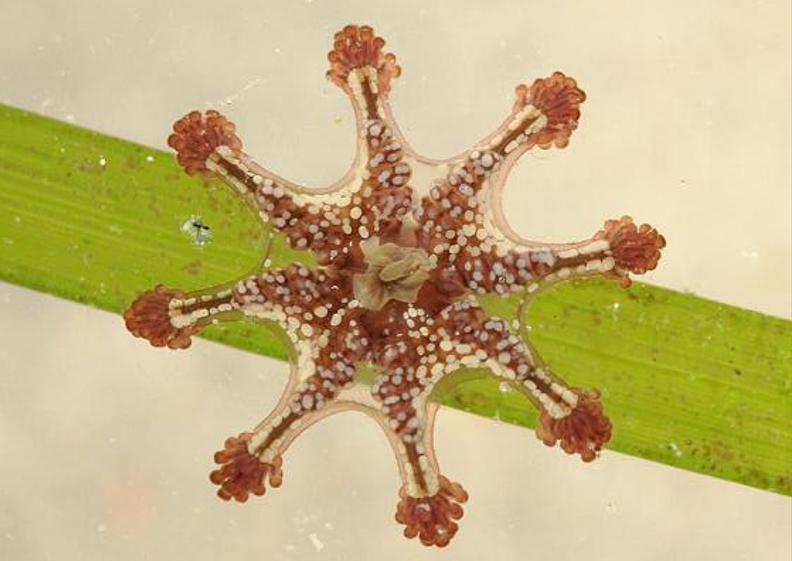
Calvadosia cruxmelitensis
Photographer: David Fenwick Copyright: David Fenwick Snr.
Distribution data supplied by the Ocean Biodiversity Information System (OBIS). To interrogate UK data visit the NBN Atlas.Map Help
| Researched by | Dr Harvey Tyler-Walters & Saskiya Richards | Refereed by | Admin |
| Authority | (Corbin, 1978) | ||
| Other common names | - | Synonyms | Lucernariopsis cruxmelitensis (Corbin, 1978) |
Summary
Description
This stalked jellyfish is the smallest member of its family. Calvadosia cruxmelitensis has a translucent, maroon, broad funnel-shaped bell that can reach 1.2 cm in diameter and 0.8 cm in height. The bell is divided by hollow septa. The reproductive gonads are thick and linear, and arranged inside the bell in halves which join at the base and extend in a linear fashion to the arms. The 8 arms are arranged in a circle and well-developed with up to 35 tentacles each. Each of the tentacles has a rounded head. Unique to the Calvadosia cruxmelitensis is the arrangement of the nematocyst organs, which appear as white spots in the shape of a 'maltese cross', from which the species name 'cruxmelitensis' is derived. A distinguishing feature of Calvadosia cruxmelitensis is its stalkless appearance due to the base of the bell involuting around the stalk that is 0.8 cm in height and attached to the substratum by a broad basal disc. Tentacle anchors are absent in Calvadosia cruxmelitensis compared to Haliclystus salpinx.
Recorded distribution in Britain and Ireland
Calvadosia cruxmelitensis is recorded from the south-west of England, from Swanage to north Devon, and the Isles of Scilly and the Atlantic coasts of Ireland, with occassional records from Pembrokeshire and the Llyn Pennisula in Wales, the Firth of Lorn in Scotland.
Global distribution
Calvadosia cruxmelitensis is only recorded from the British Isles.
Habitat
Calvadosia cruxmelitensis inhabits moderately-exposed rocky shores in the low intertidal and shallow sublittoral zones. In contrast to most species of Stauromedusae it is rarely attached to Zostera spp. but is often found on the macroalgae Chondrus crispus and Mastocarpus stellatus.
Depth range
Lower eulittoral to shallow sublittoralIdentifying features
- Stalk-less appearance.
- 8 arms.
- Up to 35 tentacles on each arm.
- Translucent, maroon colour.
- White spots on surface of bell form a distinctive maltese cross.
- No tentactle anchors.
Additional information
The nematocyst capsules are large, vivid white against the maroon of the body, and arranged in the pattern of 'maltese cross' (Corbin, 1978). The species name 'cruxmelitensis' refers to this 'maltese cross' pattern (Corbin, 1978).
Information on the ecology of Calvadosia cruxmelitensis is limited. Information from similar species or other members of the group (Stauromedusae) was used to complete this review. Information relevant to sensitivity assessment was particularly lacking. Sensitivity assessments are based on proxies (e.g. the sensitivity of its preferred substratum) and expert judgement where possible. Miranda et al. (2010, 2016a&b) provide detailed studies of the morphology, histology and taxonomy of the Stauormedusae.
Listed by
Biology review
Taxonomy
| Level | Scientific name | Common name |
|---|---|---|
| Phylum | Cnidaria | Sea anemones, corals, sea firs & jellyfish |
| Class | Staurozoa | Stalked jellyfish |
| Order | Stauromedusae | |
| Family | Kishinouyeidae | |
| Genus | Calvadosia | |
| Authority | (Corbin, 1978) | |
| Recent Synonyms | Lucernariopsis cruxmelitensis (Corbin, 1978) | |
Biology
| Parameter | Data | ||
|---|---|---|---|
| Typical abundance | High density | ||
| Male size range | up to 0.8 cm | ||
| Male size at maturity | up to 0.8 cm | ||
| Female size range | up to 0.8 cm | ||
| Female size at maturity | up to 0.8 cm | ||
| Growth form | Radial | ||
| Growth rate | No information | ||
| Body flexibility | High (greater than 45 degrees) | ||
| Mobility | Sedentary, temporary attachment | ||
| Characteristic feeding method | Predator | ||
| Diet/food source | Carnivore | ||
| Typically feeds on | Copepods, amphipods, ostracods, small juvenile decapods, polychaetes and gastropods | ||
| Sociability | Not relevant | ||
| Environmental position | Epifloral | ||
| Dependency | None. | ||
| Supports | None | ||
| Is the species harmful? | No | ||
Biology information
Population dynamics. Stauromedusae are annuals that develop seasonally, reproduce, and die back until the following year, although they have a complex life cycle that may include resting or overwintering stages (see ‘life history’ below) (Berrill, 1962; Corbin, 1978,1979; Zagal, 2004a; Miranda et al., 2012). Although the number of studies is limited, Stauromedusae exhibit seasonal periods of high abundance in both the northern and southern hemispheres (Miranda et al., 2012, Table 2). In Wembury, the UK, Corbin (1978, 1979) noted that Haliclystus auricula exhibited its highest abundance in mid-summer, Calvadosia (as Lucernariopsis) campanulata in autumn and Calvadosia (as Lucernariopsis) cruxmelitensis in winter, based on 23 years of observations. Between 1953 and 1974, Corbin (1979) also observed years with exceptionally high counts of Calvadosia campanulata in 1962 and 1974, of Calvadosia cruxmelitensis in 1968 (when ca 2000 individuals were found) and of Haliclystus auricula in 1972 and 1973. The annual mean number of individuals was 37 in Haliclystus auricula, 39 in Calvadosia cruxmelitensis but 5 in Calvadosia campanulata (Corbin, 1979). In southern Chile, Zagal (2004a) noted a summer peak in abundance in Haliclytus auricula, with a maximum density of 1,405 individuals/m2, after which it disappeared in winter. The stauromedusae adult phase is the only conspicuous phase of the life cycle. Although it is small and often camouflaged on its algal substratum, the other life stages (planulae and stauropolyps) are small and hard to observe (Corbin, 1979; Miranda et al., 2012). The environmental cues for the seasonal growth and exceptional years are unknown but their abundance coincides with the greatest algal cover and is probably correlated with optimal conditions for feeding and hence growth (Zagal, 2004a; Miranda et al., 2012).
Feeding. Stauromedusae are passive predators that catch food using stinging nematocysts. In southern Chile, Zagal (2004b) reported that the prey of Haliclystus auricula consisted mainly of gammarid amphipods, chironomid fly larvae, ostracods (seed shrimp), juvenile decapods crustaceans and gastropods, and that the smaller medusae took the smallest prey. These prey are typical mobile grazers and scavengers in seaweed canopies. In South Georgia (subantarctic) Haliclystus antarcticus preyed mainly on calanoid copepods, amphipods and, in one case, an errant polychaete (Davenport, 1998). Davenport (1998) concluded that they took both benthic and planktonic prey. It is probable that Calvadosia spp. take similar prey, depending on size.
Predators. Davenport (1998) also noted that Haliclystus antarcticus in South Georgia (subantarctic) was preyed on by aeolid nudibranchs and the fish Notothenia rossii (the marbled rockcod).
Habitat preferences
| Parameter | Data |
|---|---|
| Physiographic preferences | Enclosed coast or Embayment, Strait or Sound |
| Biological zone preferences | Lower eulittoral, Sublittoral fringe, Upper infralittoral |
| Substratum / habitat preferences | Macroalgae |
| Tidal strength preferences | Weak < 1 knot (<0.5 m/sec.) |
| Wave exposure preferences | Moderately exposed, Sheltered |
| Salinity preferences | Full (30-40 psu) |
| Depth range | Lower eulittoral to shallow sublittoral |
| Other preferences | No text entered |
| Migration Pattern |
Habitat Information
Haliclystus auricula, Calvadosia (as Lucernariopsis) cruxmelitensis and Calvadosia (as Lucernariopsis) campanulata grow on a variety of macroalgae on the lower half of the shore, in pools or 'moving with the waves' 'at the tides edge' (Corbin, 1979). Corbin (1979) noted that Calvadosia cruxmelitensis rarely settled on Zostera and that no specimen was seen attached to a solid substratum. It occurred most frequently on Chondrus and Gigartina, frequently on Ulva, Gracilaria, Furcellaria, Polyides, Corallina, Ceramium and other feathery macroalgae, infrequently on Codium, Cystoseira and Calliblepharis, but also on a wider range of other macroalgae. In 25 years of observation, only one specimen was noted on Zostera or Fucus and none on Halidrys, Laminaria, Chorda, or Himanthalia. He also noted that Calvadosia cruxmelitensis is perfectly camouflaged on Corallina, as the white tips of the pink branches match the stauromedusan's colouration; a camouflage enhanced by the presence of encrusting Lithothamnium (Corbin, 1978).
Life history
Adult characteristics
| Parameter | Data |
|---|---|
| Reproductive type | Asexual, Gonochoristic (dioecious), Sexual |
| Reproductive frequency | Annual episodic |
| Fecundity (number of eggs) | No information |
| Generation time | <1 year |
| Age at maturity | <1 year |
| Season | Winter |
| Life span | <1 year |
Larval characteristics
| Parameter | Data |
|---|---|
| Larval/propagule type | Planula |
| Larval/juvenile development | |
| Duration of larval stage | 2-10 days |
| Larval dispersal potential | Very limited (<1 m) |
| Larval settlement period | Winter |
Life history information
Stauromedusae have a potentially complex life cycle with sexual and asexual stages, although the larval and early stages have been observed in few genera (Haliclystus and Stylocoronella) (Miranda et al., 2010, 2012). In addition, Miranda et al. (2010) concluded that the hydrozoan Microhydrula limopsicola was a life-stage of Haliclystus antarcticus (based on morphology and molecular markers) and, therefore, suggested that the ‘microhydrula’ was part of the Stauromedusan life cycle.
- Individual medusae are dioecious. Spawning in Haliclystus stejnegeri was induced by exposure to light after an 8 hour dark period, while spawning was more intense in Haliclystus salpinx rather than induced under the same light regime (Otto, 1978).
- Eggs were in diameter 35 µm in Haliclystus stejnegeri and 40 µm in Haliclystus salpinx (Otto, 1978).
- Once fertilized the embryos become extremely sticky, stick to the substratum, and develop into planulae within 24 hours at 12-15°C (Otto, 1978).
- The non-ciliated benthic planulae settle within 1-3 days, on an available substratum, or already settled planulae, and many form aggregations of 1 to 8 planulae (Otto, 1978, 1979). They develop nematocysts within a week. In Haliclystus octoradiatus planulae settle in aggregations of 3-20 larvae (Miranda et al., 2010).
- Otto (1979) noted that in one culture, the planulae underwent cell division and developed gastric cavities after several weeks, but was unable to stimulate further development in culture.
- Miranda et al. (2010, 2012) suggest that the planulae develop into the microhydrula stage, which further develops into the stauropolyp (the juvenile or intermediate stauromedusa).
- The planula develops into the fully developed stauropolyp in ca 15 days in Haliclystus octoradiatus (Wietrzykowski, 1912; cited in Miranda et al., 2012).
- The stauropolyp develops apically into the stauromedusa (Kikinger & von Salvini-Plawen, 1995; Miranda et al., 2010, 2012), in about 2 months in Stylocoronella (Kikinger & von Salvini-Plawen, 1995).
Asexual reproduction can occur at several stages. The adult stauromedusa can bud ‘frustules’ from the upper part of the animal, while frustules can also bud from special tentacles on the stauropolyp and from the ‘microhydula’ stage (Kikinger & von Salvini-Plawen, 1995; Miranda et al., 2010, 2012). Kikinger & von Salvini-Plawen (1995) noted that ‘frustules’ divided and then encysted, and suggested that they were ‘resting stages’. Otto (1979) also noted that the lack of further development within her cultures suggested that the larvae had entered an overwintering stage, especially as larvae did not develop immediately after settlement in the field. Miranda et al. (2012) suggested that the ‘microhydrula’ stage might represent the ‘resistant’ stage of Otto (1978).
Miranda et al. (2012) noted that stauromedusae appear in specific seasons and then disappear. Adults are small (1-4 cm) and often camouflaged against the background of macroalgae and their abundance may be underestimated (Corbin, 1979; Miranda et al., 2012). However, the tiny planulae (ca 100 µm in length) and stauropolyps (0.3-0.8 mm in height) are more difficult to find and have only been documented for nine of the 51 known species of Stauromedusae (Miranda et al., 2010). It was also suggested that there might be a subtidal 'reservoir' population (Gwilliam, 1956, cited in Miranda et al., 2012). The ‘microhydrula’ stage of Haliclystus anatarcticus was collected at a depth of 31 m, and the stauropolyp of Haliclystus octoradiatus can detach itself from the substratum, even in calm water. However, no other evidence was found for seasonal migration of planulae, stauropolyps and stauromedusae to or from deeper water (Miranda et al., 2012). Field observations suggest that Stauromedusae disappear for several months before the young stages appear, which suggests that encystment occurs in the field (Otto, 1979; Miranda et al., 2012). Also, Wietrzykowski (1912, cited in Miranda et al., 2012) noted young polyps in April and mature stauromedusae in July. Miranda et al. (2012) concluded that three months from December to March would be adequate for planulae to become mature stauromedusae.
In addition, although a single stauropolyp only develops into a single adult (sexual) stauromedusae, the ‘microhydula’ and ‘stauropolyp’ stages can create numerous asexual ‘frustules’. Frustules and planulae provide the potential to create a 'resevoir' of resistant or overwintering stages (Otto, 1978, 1979; Kikinger & von Salvini-Plawen, 1995; Miranda et al., 2010) towards the end of the season, which may then develop when favourable conditions return the following year resulting in the seasonal peak in abundance. But frustules 'from asexual reproduction' may also rapidly develop many new polyps, contributing to the seasonal peaks in abundance, and in particular, exceptional ‘blooms’ in some years (Miranda et al., 2012). Miranda et al. (2010) also noted that intense asexual reproduction was consistent with the low genetic diversity of the Haliclystus antarcticus populations they studied and, provide Stauromedusae with the potential to develop large populations in isolated areas.
Sensitivity review
Resilience and recovery rates
Stauromedusae are sedentary and spend their lives attached to the substratum, although they can attach to seaweeds and plants with their tentacles and adhesive disks and undertake limited locomotion. Their planulae are benthic and non-ciliated, as are the rest of their life stages (Otto, 1978, 1979; Miranda et al., 2012) so that dispersal is limited. However, benthic life stages have been recorded in the subtidal and stauropolyps may detach (Miranda et al., 2012). Therefore, it is probable that water flow and wave action may be important for dispersal (authors comment) although no evidence was found.
Although a single stauropolyp only develops into a single adult (sexual) stauromedusae, the ‘microhydula’ and ‘stauropolyp’ stages can create numerous asexual ‘frustules’. Frustules and planulae provide the potential to create a ‘reservoir’ of resistant or overwintering stages (Otto, 1978, 1979; Kikinger & von Salvini-Plawen, 1995) towards the end of the season, which may then develop when favourable conditions return the following year resulting in the seasonal peak in abundance. But frustules (from asexual reproduction) may also rapidly develop many new polyps, contributing to the seasonal peaks in abundance, and in particular, exceptional ‘blooms’ in some years (Corbin, 1979; Miranda et al., 2012). Miranda et al. (2010) also noted that intense asexual reproduction was consistent with the low genetic diversity of the Haliclystus antarcticus populations they studied and provide Stauromedusae with the potential to develop large populations in isolated areas. This may also explain why Stauromedusae in the UK are locally abundant but nationally uncommon or rare (depending on species).
Hiscock et al. (2011, 2013) noted that Haliclystus auricula, Calvadosia cruxmelitensis and Calvadosia campanulata had declined, markedly in parts of the south-west compared to their abundance between the 1950s and 1970s (Corbin, 1979), and were 'little seen' in the UK. As a result, Haliclystus auricula was regarded 'uncommon', Calvadosia campanulata was regarded as 'scarce' and Calvadosia cruxmelitensis was regarded as 'rare' in the UK. Hiscock et al. (2011) suggested that the loss of seagrass beds or other habitats may have contributed to the decline but that the reason for the decline was unknown.
Annual increases in abundance and occassional exceptional 'natural true blooms' (sensu Miranda et al., 2012) have been recorded in several Stauromedusae. It is suggested that the early life stages of the Stauromedusae provide a 'reservoir' of overwintering and resistant stages (as above) that persist in the environment awaiting favourable conditions for the growth of the sexual stauromedusae stage. It is possible that the 'reservoir' of early life stages may persist (e.g. via asexual reproduction or resistant stages) for many years awaiting favourable conditions. It may also be possible that this 'reservoir' exists in the subtidal, and that early life stages may be dispersed passively (by water flow and wave action) (authors comments). However, the lack of information on the ecology of the Stauromedusae does not allow support a conclusion, at present (see Miranda et al., 2012).
Resilience assessment. Calvadosia cruxmelitensis is an annual that can develop large populations quickly within the summer months only to die back in winter. The potential that numerous planulae and resistant frustules can overwinter, its short lifespan, together with the potential for asexual development in Stauromedusae suggest that recovery could be rapid. Therefore, where resistance is 'Medium' or 'Low', resilience is probably 'High'. But, where a pressure results in severe impacts 'the loss of over 75% of the species population and modification of the habitat' and, hence, removal of the species substratum (i.e. macroalgae and seagrass) and any resident 'reservoir' of resistant or overwintering stages, recovery may be prolonged. Therefore, the resilience of Calvadosia cruxmelitensis to severe impacts is discussed, where relevant, on a pressure by pressure basis and the explanatory text for each assessment must be consulted. The resilience assessment is based on evidence on the Stauromedusae as a whole, a scarcity of information on the ecology of this species, and a scarcity of any direct evidence of recovery in the field. Therefore, the confidence in the assessment is 'Low'.
Hydrological Pressures
Use [show more] / [show less] to open/close text displayed
| Resistance | Resilience | Sensitivity | |
Temperature increase (local) [Show more]Temperature increase (local)Benchmark. A 5°C increase in temperature for one month, or 2°C for one year. Further detail EvidenceNo evidence on the temperature tolerance of the Stauromedusae, and Calvadosia cruxmelitensis, in particular, was found. It is recorded from Scotland to the Isles of Scilly in the British Isles. It also occurs on seaweeds on the lower intertidal, although often protected by the seaweed from direct sunlight and hence desiccation (Corbin, 1979). Therefore, it is likely to resist a 2°C change in temperature over a period of a year in UK waters. It is a winter annual (Corbin, 1979) so that long-term changes in temperature may affect its seasonal growth and reproduction but the environmental factors that result in its seasonal abundance are not know (Corbin, 1979; Miranda et al., 2012). No information was found on the effect, if any, of short-term acute temperature change (e.g. by 5°C). Sensitivity assessment. Therefore, it is probably resistant to a 2°C change in temperature over a period of a year in UK waters and a resistance of 'High' is recorded, albeit with 'Low' confidence. Hence, resilience is assessed as 'High' and the species is recorded as 'Not sensitive' at the benchmark level. | HighHelp | HighHelp | Not sensitiveHelp |
Temperature decrease (local) [Show more]Temperature decrease (local)Benchmark. A 5°C decrease in temperature for one month, or 2°C for one year. Further detail EvidenceNo evidence on the temperature tolerance of the Stauromedusae, and Calvadosia cruxmelitensis, in particular, was found. It is recorded from Scotland to the Isles of Scilly in the British Isles. It also occurs on seaweeds on the lower intertidal, although often protected by the seaweed from direct sunlight and hence desiccation (Corbin, 1979). Therefore, it is likely to resist a 2°C change in temperature over a period of a year in UK waters. It is a summer annual (Corbin, 1979) so that long-term changes in temperature may affect its seasonal growth and reproduction but the environmental factors that result in its seasonal abundance are not know (Corbin, 1979; Miranda et al., 2012). No information was found on the effect, if any, of short-term acute temperature change (e.g. by 5°C). Sensitivity assessment. Therefore, it is probably resistant to a 2°C change in temperature over a period of a year in UK waters and a resistance of 'High' is recorded, albeit with 'Low' confidence. Hence, resilience is assessed as 'High' and the species is recorded as 'Not sensitive' at the benchmark level. | HighHelp | HighHelp | Not sensitiveHelp |
Salinity increase (local) [Show more]Salinity increase (local)Benchmark. A increase in one MNCR salinity category above the usual range of the biotope or habitat. Further detail EvidenceCalvadosia cruxmelitensis is recorded from full salinity conditions. It also occurs on seaweeds on the lower intertidal, although often protected by the seaweed from direct sunlight and hence desiccation that might result in localised increases in salinity (Corbin, 1979). It is also found in lower shore rockpools, which are unlikely to experience the range of salinities typical of upper shore rockpools. It is unlikely to be exposed to hypersaline (>40) conditions but hypersaline effluents are probably detrimental. However, no evidence was found on which to base an assessment. | No evidence (NEv)Help | Not relevant (NR)Help | No evidence (NEv)Help |
Salinity decrease (local) [Show more]Salinity decrease (local)Benchmark. A decrease in one MNCR salinity category above the usual range of the biotope or habitat. Further detail EvidenceCalvadosia cruxmelitensis is recorded from full salinity conditions. It also occurs on seaweeds on the lower intertidal, although often protected by the seaweed from direct sunlight (Corbin, 1979), although it may be exposed to rainfall and reduced salinity for short periods at low tide. It is also found in lower shore rockpools, which are unlikely to experience the range of salinities typical of upper shore rockpools. No evidence of salinity tolerance of the adult or other life stages was found. However, its position on the shore suggests that it could tolerate occasional rainfall at low tide but that a change from 'full' salinity to 'reduced' would be detrimental. Therefore, a resistance of 'Low' is suggested, with 'Low' confidence. Resilience is probably 'High' so sensitivity is assessed as 'Low'. | LowHelp | HighHelp | LowHelp |
Water flow (tidal current) changes (local) [Show more]Water flow (tidal current) changes (local)Benchmark. A change in peak mean spring bed flow velocity of between 0.1 m/s to 0.2 m/s for more than one year. Further detail EvidenceCalvadosia cruxmelitensis is recorded from the lower intertidal dominated by abundant fucoids and red seaweeds (e.g. Chondrus or Gigartina) (Corbin, 1979). It is, therefore, probably adapted to wave exposed to sheltered conditions in weak flow, that is, low to moderate energy habitats (see Connor et al., 2004). Fenwick (2017) also remarked that the Stauromedusae in mounts Bay, Cornwall were most likely to occur close to a constriction in the runnels and interlinked pools of the bay where the water flow was increased locally. Therefore, a significant change in water flow may be detrimental, partly as the species may be removed but mainly as the seaweed substrata it requires would be removed or lost. However, a 1-2% change in water flow (the benchmark) is not likely to be significant. Therefore, a resistance of 'High' is recorded so that resilience is 'High' and the species is probably 'Not sensitive' at the benchmark level. | HighHelp | HighHelp | Not sensitiveHelp |
Emergence regime changes [Show more]Emergence regime changesBenchmark. 1) A change in the time covered or not covered by the sea for a period of ≥1 year or 2) an increase in relative sea level or decrease in high water level for ≥1 year. Further detail EvidenceCalvadosia cruxmelitensis is recorded from the lower intertidal dominated by abundant fucoids and red seaweeds and from seagrass beds (Corbin, 1979). Lower shore populations are likely to be affected by changes in emergence. A decrease in emergence will probably provide additional habitat. However, an increase in emergence (for a year) will increase the potential for desiccation and reduce the cover of its required macroalgal substratum. Therefore, a resistance of 'Low' is recorded. Resilience is probably 'High' so that sensitivity is assessed as 'Low'. | LowHelp | HighHelp | LowHelp |
Wave exposure changes (local) [Show more]Wave exposure changes (local)Benchmark. A change in near shore significant wave height of >3% but <5% for more than one year. Further detail EvidenceCalvadosia cruxmelitensis is recorded from the lower intertidal dominated by abundant fucoids and red seaweeds (e.g. Chondrus or Gigartina) (Corbin, 1979). It is, therefore, probably adapted to wave exposed to sheltered conditions in weak flow, that is, low to moderate energy habitats (see Connor et al., 2004). Therefore, a significant change in wave action (e.g. to very exposed) may be detrimental, partly as the species may be removed but mainly as the seaweed or plant substrata it requires would be reduced in abundance or lost, presumably together with any resistant stages or early life stages, depending on the season. However, a 3-5% change in significant wave height (the benchmark) is not likely to be significant. Therefore, a resistance of 'High' is recorded so that resilience is 'High' and the species is probably 'Not sensitive' at the benchmark level. | HighHelp | HighHelp | Not sensitiveHelp |
Chemical Pressures
Use [show more] / [show less] to open/close text displayed
| Resistance | Resilience | Sensitivity | |
Transition elements & organo-metal contamination [Show more]Transition elements & organo-metal contaminationBenchmark. Exposure of marine species or habitat to one or more relevant contaminants via uncontrolled releases or incidental spills. Further detail EvidenceThis pressure is Not assessed. | Not Assessed (NA)Help | Not assessed (NA)Help | Not assessed (NA)Help |
Hydrocarbon & PAH contamination [Show more]Hydrocarbon & PAH contaminationBenchmark. Exposure of marine species or habitat to one or more relevant contaminants via uncontrolled releases or incidental spills. Further detail EvidenceThis pressure is Not assessed. | Not Assessed (NA)Help | Not assessed (NA)Help | Not assessed (NA)Help |
Synthetic compound contamination [Show more]Synthetic compound contaminationBenchmark. Exposure of marine species or habitat to one or more relevant contaminants via uncontrolled releases or incidental spills. Further detail EvidenceThis pressure is Not assessed. | Not Assessed (NA)Help | Not assessed (NA)Help | Not assessed (NA)Help |
Radionuclide contamination [Show more]Radionuclide contaminationBenchmark. An increase in 10µGy/h above background levels. Further detail EvidenceNo evidence was found. | No evidence (NEv)Help | Not relevant (NR)Help | No evidence (NEv)Help |
Introduction of other substances [Show more]Introduction of other substancesBenchmark. Exposure of marine species or habitat to one or more relevant contaminants via uncontrolled releases or incidental spills. Further detail EvidenceThis pressure is Not assessed. | Not Assessed (NA)Help | Not assessed (NA)Help | Not assessed (NA)Help |
De-oxygenation [Show more]De-oxygenationBenchmark. Exposure to dissolved oxygen concentration of less than or equal to 2 mg/l for one week (a change from WFD poor status to bad status). Further detail EvidenceHaliclystus and Calvadosia spp. have a preference for areas with flowing water, which suggests that low oxygen levels would be detrimental. However, no evidence was found. | No evidence (NEv)Help | Not relevant (NR)Help | No evidence (NEv)Help |
Nutrient enrichment [Show more]Nutrient enrichmentBenchmark. Compliance with WFD criteria for good status. Further detail EvidenceNo information on the effects of nutrient enrichment on this species was found. However, its sensitivity is probably determined by the macroalgae it requires for substratum. Green algae species have been identified worldwide as species that occur in areas subject to increased nutrient input within the vicinity of sewage outfalls and at intermediately polluted sites (Littler & Murray, 1975; Bellgrove et al., 1997; Bellgrove et al., 2010). Atalah & Crowe (2010) added nutrients to rockpools occupied by a range of algae including encrusting corallines, turfs of Mastocarpus stellatus, Chondrus crispus and Corallina officinalis and green and red filamentous algae. The invertebrates present were mostly Patella ulyssiponensis, the winkle Littorina littorea and the flat top shell Gibbula umbilicalis. Nitrogen and phosphorous enhancement was via the addition of fertilisers, as either 40 g/litre or 20 g/litre. The treatments were applied for seven month and experimental conditions were maintained every two weeks. The experimental treatments do not directly relate to the pressure benchmark but indicate some general trends in sensitivity. The cover of green filamentous algae was significantly increased both by reduced grazing and increased nutrients, although the effect size was synergistically magnified by the combined effect of grazer removal and nutrients. Nutrient enrichment caused an absolute increase in the average cover of green filamentous algae of 19% (±3.9 S.E.) respect to the control treatments while the cover of red turfing algae was not affected by nutrient addition (Atalah & Crowe, 2010). Sensitivity assessment. Calvadosia cruxmelitensis can occur on a variety of macroalgae. In the intertidal hard rock habitats and rock pools the macroalgal substratum for the species is unlikely to be removed by nutrient enrichment. Although the species may change in abundance, adequate substratum is likely to be present, together with more grazers, on which the Stauormedusae may also feed (e.g. amphipods). Therefore, a resistance of ‘High’, resilience of ‘High’ are recorded and the species is probably ‘Not sensitive’ at the benchmark level in intertidal hard rock habitats. | HighHelp | HighHelp | Not sensitiveHelp |
Organic enrichment [Show more]Organic enrichmentBenchmark. A deposit of 100 gC/m2/yr. Further detail EvidenceNo information on the effects of organic enrichment on this species was found. However, its sensitivity is probably determined by the macroalgae it requires for substratum. Organic enrichment and nutrient enrichment commonly co-occur, for example, sewage deposits or outputs from fish farms may enhance nitrogen and phosphorous and organic matter. Nutrient enrichment alters the selective environment by favouring fast growing, ephemeral species such as Ulva lactuca and Ulva intestinalis (Berger et al., 2004, Kraufvelin, 2007). Rohde et al. (2008) found that both free growing filamentous algae and epiphytic microalgae can increase in abundance with nutrient enrichment. This stimulation of annual ephemerals may accentuate the competition for light and space and hinder perennial species development or harm their recruitment (Berger et al., 2003; Kraufvelin et al., 2007). Nutrient enrichment can also enhance fouling of Fucus fronds by biofilms (Olsenz, 2011). Nutrient enriched environments can not only increase algae abundance but the abundance of grazing species (Kraufvelin, 2007). High nutrient levels may directly inhibit spore settlement and hinder the initial development of Fucus vesiculosus (Bergström et al., 2003). Bellgrove et al. (2010) found that coralline turfs out-competed fucoids at a site associated with organic enrichment caused by an ocean sewage outfall. Therefore, in hard rock habitats, adequate substratum for the Stauromedusae is likely to remain so that resistance is recorded as 'High', resilience as 'High' and the species is probably 'Not sensitive' at the benchmark level in hard rock habitats. | HighHelp | HighHelp | Not sensitiveHelp |
Physical Pressures
Use [show more] / [show less] to open/close text displayed
| Resistance | Resilience | Sensitivity | |
Physical loss (to land or freshwater habitat) [Show more]Physical loss (to land or freshwater habitat)Benchmark. A permanent loss of existing saline habitat within the site. Further detail EvidenceAll marine habitats and benthic species are considered to have a resistance of ‘None’ to this pressure and to be unable to recover from a permanent loss of habitat (resilience is ‘Very low’). Sensitivity within the direct spatial footprint of this pressure is, therefore ‘High’. Although no specific evidence is described, confidence in this assessment is ‘High’ due to the incontrovertible nature of this pressure. | NoneHelp | Very LowHelp | HighHelp |
Physical change (to another seabed type) [Show more]Physical change (to another seabed type)Benchmark. Permanent change from sedimentary or soft rock substrata to hard rock or artificial substrata or vice-versa. Further detail EvidenceThe species lives attached to macroalgae in the lower littoral and shallow subtidal. In rock habitats, a change in seabed type from hard rock to sediment would result in the loss the most macroalgae and, hence, the species and any early life stages. Based on the loss of species habitat (substratum), resistance is assessed as ‘None’. The change is defined as permanent so that resilience is assessed as ‘Very low’ and sensitivity is assessed as ‘High’. Although no specific evidence is described, confidence in this assessment is ‘High’ due to the incontrovertible nature of this pressure. | NoneHelp | Very LowHelp | HighHelp |
Physical change (to another sediment type) [Show more]Physical change (to another sediment type)Benchmark. Permanent change in one Folk class (based on UK SeaMap simplified classification). Further detail EvidenceThis pressure is not 'Not relevant' as Calvadosia cruxmelitensis occurs on macroalgae on hard rock habitats. | Not relevant (NR)Help | Not relevant (NR)Help | Not relevant (NR)Help |
Habitat structure changes - removal of substratum (extraction) [Show more]Habitat structure changes - removal of substratum (extraction)Benchmark. The extraction of substratum to 30 cm (where substratum includes sediments and soft rock but excludes hard bedrock). Further detail EvidenceThis pressure is not 'Not relevant' where Calvadosia cruxmelitensis occurs on macroalgae on hard rock habitats. | Not relevant (NR)Help | Not relevant (NR)Help | Not relevant (NR)Help |
Abrasion / disturbance of the surface of the substratum or seabed [Show more]Abrasion / disturbance of the surface of the substratum or seabedBenchmark. Damage to surface features (e.g. species and physical structures within the habitat). Further detail EvidenceNo evidence on the effect of abrasion (e.g. from trampling or vehicular access) of this species was found. Stauromedusae are small and soft-bodied and probably not physically robust. Similarly, their early life stages (e.g. stauropolyp, ‘microhydula’, encysted frustules, and overwintering planuale) are tiny and potentially susceptible to physical disturbance. However, most importantly, they are likely to be lost if their macroalgal or seagrass substratum is damaged or removed by abrasion. Most macroalgae are very flexible but not physically robust. The trampling of shores by humans will result in increased breakage of algal thalli, decreased thallus height and a net reduction in biomass (Tyler-Walters & Arnold, 2008). The effects of trampling are dependent on intensity, expressed as frequency and force per unit area of the impacting 'footprint' (see Liddle, 1997, Tyler-Walters & Arnold, 2008). Mechanical abrasion due to vehicles, jack-up-barges, or grounding vessels will exceed the abrasive 'intensity' of trampling by humans or livestock. Overall, the abundance of fucoids and red seaweeds are likely to be reduced (see reviews of LR.MLR.MusF.MytFR, LR.MLR.BF.FvesB for detail). Sensitivity assessment. The sensitivity of Calvadosia cruxmelitensis to abrasion is linked to the sensitivity of its preferred substratum; i.e macroalgae in the intertidal and the shallow subtidal. Therefore, if abrasion causes a significant reduction in the abundance of available substratum in the affected area, resistance is recorded as ‘Low’. It is difficult to know if removal of macroalgal substratum would also remove a significant proportion of the resistant or overwintering stages, although that seems likely. However, recovery is also dependent on the recovery of a suitable substratum. Therefore, a resilience of ‘Medium’ (2-10 years) is suggested to account for the return of suitable substratum (which is likely to vary between 1-2 years or 2-10 years depending on species) and subsequent recovery of the resident population from the surrounding area. Hence, sensitivity is assessed as ‘Medium’. | LowHelp | MediumHelp | MediumHelp |
Penetration or disturbance of the substratum subsurface [Show more]Penetration or disturbance of the substratum subsurfaceBenchmark. Damage to sub-surface features (e.g. species and physical structures within the habitat). Further detail EvidenceHard rock is resistant of sub-surface penetration. Therefore, where this species' preferred substratum (i.e. macroalgae) occur on hard rock the pressure is recorded as 'Not relevant'. The assessment for 'abrasion at the surface' only is, therefore, considered to equally represent sensitivity to this pressure. Please refer to ‘abrasion’ above for hard rock habitats. | Not relevant (NR)Help | Not relevant (NR)Help | Not relevant (NR)Help |
Changes in suspended solids (water clarity) [Show more]Changes in suspended solids (water clarity)Benchmark. A change in one rank on the WFD (Water Framework Directive) scale e.g. from clear to intermediate for one year. Further detail EvidenceCalvadosia cruxmelitensis grows on macroalgae. In the intertidal, they grow on macroalgae on rock, and also in pools and runnels where some sediment may accumulate (Corbin, 1979; Fenwick, 2017). But no evidence on the effects of suspended sediments on the Stauromedusae was found. However, suspended sediments may adversely affect their preferred substratum. Increases in the cover of sediment trapping, turf-forming red algae at the expense of canopy forming species have been observed worldwide in temperate systems and have been linked to increased suspended solids linked to human activities worldwide (Airoldi, 2003). For example, canopy-forming fucoids may be replaced by more sediment tolerant species such as Chondrus crispus. As Haliclystus auricula, Calvadosia campanulata and Calvadosia cruxmelitensis can grow on a variety of macroalgae an increase in suspended sediment may not be detrimental, especially as the macroalgae would probably recover within two years (i.e. 'High' resilience; for example LR.MLR.MusF.MytFR). Therefore, resistance is probably 'Medium', with a resilience of 'High' and a sensitivity of 'Low' on hard rock shores. | MediumHelp | HighHelp | LowHelp |
Smothering and siltation rate changes (light) [Show more]Smothering and siltation rate changes (light)Benchmark. ‘Light’ deposition of up to 5 cm of fine material added to the seabed in a single discrete event. Further detail EvidenceCalvadosia cruxmelitensis grows on macroalgae. In the intertidal, they grow on macroalgae on hard rock, and also in pools and runnels where some sediment may accumulate (Fenwick, 2017). No evidence on the effects of sedimentation or smothering on the Stauromedusae was found. However, sedimentation or smothering may adversely affect their preferred substratum. Increased abundance of algal turfs worldwide has been linked to sediment perturbations although not all the pathways and mechanisms of these effects are clear (Airoldi, 2003). However, even the most tolerant of organisms would eventually suffer from inhibition and mortality following smothering although the thresholds for these effects have has not been identified (Airoldi, 2003).In a review of the effects of sedimentation on rocky coast assemblages, Airoldi (2003) outlined the evidence for the sensitivity of coralline algae to sedimentation. The reported results are contradictory with some authors suggesting that coralline algae are negatively affected by sediments while others report that encrusting corallines are often abundant or even dominant in a variety of sediment impacted habitats (Airoldi, 2003 and references therein). Crustose corallines have been reported to survive under a turf of filamentous algae and sediment for 58 days (the duration of the experiment) in the Galapagos (species not identified, Kendrick, 1991). The crustose coralline Hydrolithon reinboldii has also been reported to survive deposition of silty sediments on subtidal reefs off Hawaii (Littler, 1973). Atalah & Crowe (2010) added sediment to rockpools in controlled experiments. The rockpools were occupied by a range of algae including encrusting corallines, turfs of Mastocarpus stellatus, Chondrus crispus and Corallina officinalis and green and red filamentous algae. The invertebrates present were mostly Patella ulyssiponensis, the winkle Littorina littorea and the flat top shell Gibbula umbilicalis. Sediment treatment involved the addition of a mixture of coarse and fine sand of either 300 mg/cm2/month or 600 mg/cm2 every 15 days (the depth of sediment was not reported). The experimental treatments do not directly relate to the pressure benchmark but indicate some general trends in sensitivity. In the pools, the chronic addition of both levels of sediment led to a significant decrease in grazers and crustose coralline algae also decreased. Sedimentation had no significant effect on the cover of green filamentous algae (Ulva sp.) but led to an increase in the mean cover of red turfing algae (Mastocarpus stellatus and Chondrus crispus and Corallina officinalis) from 11.7% (±1.0 S.E.) in controls to 26.1% (±4.7 S.E.) in sedimented assemblages, but there were no differences between the two levels of sedimentation. The cover of red filamentous algae (Ceramium spp. Gelidium spp.) was also significantly increased in the sedimentation experiments. The experimental results support the general trend of greater sensitivity of grazers and encrusting corallines to sedimentation than turf-forming algae. Sensitivity assessment. On intertidal rocky shores exposed to wave action, 5 cm of deposited sediment is unlikely to persist for more than a few tidal cycles. However, sediment may be retained on wave sheltered shores and in sheltered rockpools. The evidence summarised above suggests that suitable substrata for Calvadosia cruxmelitensis would remain in pools and on sheltered shores. However, there is no information on the resistance of the stauromedusae themselves or their early life stages, which might be damaged or suffocated by a layer of sediment. Therefore, a resistance of ‘Medium’ is suggested, with a resilience of ‘High’ and sensitivity is assessed as ‘Low’ on hard rock shores. | MediumHelp | HighHelp | LowHelp |
Smothering and siltation rate changes (heavy) [Show more]Smothering and siltation rate changes (heavy)Benchmark. ‘Heavy’ deposition of up to 30 cm of fine material added to the seabed in a single discrete event. Further detail EvidenceAs above the duration of smothering by 30 cm of deposited material is dependent on the wave exposure of the shore. In wave exposed conditions the deposit is likely to be removed within a few tidal cycles while it may remain on sheltered shores and in sheltered rock pools. The evidence summarised above suggests that suitable substrata for Calvadosia cruxmelitensis would remain in pools and on sheltered shores (see evidence under ‘siltation (light)’ above). However, there is no information on the resistance of the stauromedusae themselves or their early life stages, which might be damaged or suffocated by a layer of sediment. Therefore, a resistance of ‘Medium’ is suggested, with a resilience of ‘High’ and sensitivity is assessed as ‘Low’ on hard rock shores. | MediumHelp | HighHelp | LowHelp |
Litter [Show more]LitterBenchmark. The introduction of man-made objects able to cause physical harm (surface, water column, seafloor or strandline). Further detail EvidenceNot assessed | Not Assessed (NA)Help | Not assessed (NA)Help | Not assessed (NA)Help |
Electromagnetic changes [Show more]Electromagnetic changesBenchmark. A local electric field of 1 V/m or a local magnetic field of 10 µT. Further detail EvidenceNo evidence was found | No evidence (NEv)Help | Not relevant (NR)Help | No evidence (NEv)Help |
Underwater noise changes [Show more]Underwater noise changesBenchmark. MSFD indicator levels (SEL or peak SPL) exceeded for 20% of days in a calendar year. Further detail EvidenceNo evidence was found | No evidence (NEv)Help | Not relevant (NR)Help | No evidence (NEv)Help |
Introduction of light or shading [Show more]Introduction of light or shadingBenchmark. A change in incident light via anthropogenic means. Further detail EvidenceOtto (1978) noted spawning in Haliclystus stejnegeri was induced by exposure to light after an 8 hour dark period, while spawning was more intense in Haliclystus salpinx rather than induced under the same light regime (Otto, 1978). However, this observation does not provide any evidence about the response of Stauromedusae to increased light or shading in the natural environment. No assessment was made. | No evidence (NEv)Help | Not relevant (NR)Help | No evidence (NEv)Help |
Barrier to species movement [Show more]Barrier to species movementBenchmark. A permanent or temporary barrier to species movement over ≥50% of water body width or a 10% change in tidal excursion. Further detail EvidenceNot relevant - this pressure is considered applicable to mobile species, e.g. fish and marine mammals rather than seabed habitats. Adult Calvadosia cruxmelitensis are sedentary and unlikely to move far, and their early life stages are also benthic and non-motile (Miranda et al., 2012). The dispersal of larval stages or propagules is not considered under the pressure definition and benchmark. | Not relevant (NR)Help | Not relevant (NR)Help | Not relevant (NR)Help |
Death or injury by collision [Show more]Death or injury by collisionBenchmark. Injury or mortality from collisions of biota with both static or moving structures due to 0.1% of tidal volume on an average tide, passing through an artificial structure. Further detail EvidenceNot relevant’ to seabed habitats. NB. Collision by interaction with bottom towed fishing gears and moorings are addressed under ‘surface abrasion’. | Not relevant (NR)Help | Not relevant (NR)Help | Not relevant (NR)Help |
Visual disturbance [Show more]Visual disturbanceBenchmark. The daily duration of transient visual cues exceeds 10% of the period of site occupancy by the feature. Further detail EvidenceThe Stauromedusae are sedentary and do not exhibit an escape response. Visual disturbance by passing vessels or humans at the sea surface is probably 'Not relevant. | Not relevant (NR)Help | Not relevant (NR)Help | Not relevant (NR)Help |
Biological Pressures
Use [show more] / [show less] to open/close text displayed
| Resistance | Resilience | Sensitivity | |
Genetic modification & translocation of indigenous species [Show more]Genetic modification & translocation of indigenous speciesBenchmark. Translocation of indigenous species or the introduction of genetically modified or genetically different populations of indigenous species that may result in changes in the genetic structure of local populations, hybridization, or change in community structure. Further detail EvidenceNo evidence of translocation, breeding or species hybridization was found. | No evidence (NEv)Help | Not relevant (NR)Help | No evidence (NEv)Help |
Introduction or spread of invasive non-indigenous species [Show more]Introduction or spread of invasive non-indigenous speciesBenchmark. The introduction of one or more invasive non-indigenous species (INIS). Further detail EvidenceNo evidence was found to suggest a positive or negative interaction between non-indigenous invasive species and Calvadosia cruxmelitensis. | No evidence (NEv)Help | Not relevant (NR)Help | No evidence (NEv)Help |
Introduction of microbial pathogens [Show more]Introduction of microbial pathogensBenchmark. The introduction of relevant microbial pathogens or metazoan disease vectors to an area where they are currently not present (e.g. Martelia refringens and Bonamia, Avian influenza virus, viral Haemorrhagic Septicaemia virus). Further detail EvidenceNo evidence of microbial or other pathogens was found. | No evidence (NEv)Help | Not relevant (NR)Help | No evidence (NEv)Help |
Removal of target species [Show more]Removal of target speciesBenchmark. Removal of species targeted by fishery, shellfishery or harvesting at a commercial or recreational scale. Further detail EvidenceNot relevant. This species is not subject to a targetted commercial or recreational fishery. | Not relevant (NR)Help | Not relevant (NR)Help | Not relevant (NR)Help |
Removal of non-target species [Show more]Removal of non-target speciesBenchmark. Removal of features or incidental non-targeted catch (by-catch) through targeted fishery, shellfishery or harvesting at a commercial or recreational scale. Further detail EvidenceRemoval of macroalgae or seagrass would directly affect the population of Stauromedusae by removal of its substratum. Recovery would depend on the recovery of suitable substratum, which in the case of macroalgae could take between 1-2 or 2-10 years depending on species (for example see LR.MLR.MusF.MytFR). Hence a resistance of 'Low' is suggested, with a resilience of 'Medium' and a sensitivity of 'Medium'. | LowHelp | LowHelp | HighHelp |
Importance review
Policy/legislation
| Designation | Support |
|---|---|
| UK Biodiversity Action Plan Priority | Yes |
| Species of principal importance (England) | Yes |
| Features of Conservation Importance (England & Wales) | Yes |
Status
| National (GB) importance | Nationally rare | Global red list (IUCN) category | - |
Non-native
| Parameter | Data |
|---|---|
| Native | Native |
| Origin | - |
| Date Arrived | - |
Importance information
This species was found in often high numbers (ca 2000 individuals in one shore search in 1968; Corbin, 1979) on shores in south-west England but is now rarely seen (Hiscock et al., 2011). Hiscock et al. (2011) suggested that the population had declined by 90% from the 1970s to 2005, although the reason for the decline was unknown.
Bibliography
Airoldi, L., 2003. The effects of sedimentation on rocky coast assemblages. Oceanography and Marine Biology: An Annual Review, 41,161-236
Atalah, J. & Crowe, T.P., 2010. Combined effects of nutrient enrichment, sedimentation and grazer loss on rock pool assemblages. Journal of Experimental Marine Biology and Ecology, 388 (1), 51-57.
Bellgrove, A., Clayton, M.N. & Quinn, G., 1997. Effects of secondarily treated sewage effluent on intertidal macroalgal recruitment processes. Marine and Freshwater Research, 48 (2), 137-146.
Bellgrove, A., McKenzie, P.F., McKenzie, J.L. & Sfiligoj, B.J., 2010. Restoration of the habitat-forming fucoid alga Hormosira banksii at effluent-affected sites: competitive exclusion by coralline turfs. Marine Ecology Progress Series, 419, 47-56.
Berger, R., Bergström, L., Granéli, E. & Kautsky, L., 2004. How does eutrophication affect different life stages of Fucus vesiculosus in the Baltic Sea? - a conceptual model. Hydrobiologia, 514 (1-3), 243-248.
Berger, R., Henriksson, E., Kautsky, L. & Malm, T., 2003. Effects of filamentous algae and deposited matter on the survival of Fucus vesiculosus L. germlings in the Baltic Sea. Aquatic Ecology, 37 (1), 1-11.
Bergström, L., Berger, R. & Kautsky, L., 2003. Negative direct effects of nutrient enrichment on the establishment of Fucus vesiculosus in the Baltic Sea. European Journal of Phycology, 38 (1), 41-46.
Berrill, M., 1962. The biology of three New England Stauromedusae, with a description of a new species. Canadian Journal of Zoology, 40 (7), 1249-1262.
Clark, H.J., 1878. Lucernariae and their allies. A memoir on the anatomy and physiology of Haliclystus auricula, and other Lucernarians, with a discussion of their relations to other Acalephae; to Beroids, and Polypi. Smithsonian Contributions to Knowledge, 242, 1-130.
Corbin, P.G., 1978. A new species of the stauromedusan genus Lucernariopsis (Coelenterata: Scyphomedusae). Journal of the Marine Biological Association of the United Kingdom, 58 (2), 285-290.
Corbin, P.G., 1979. The seasonal abundance of four species of Stauromedusae (Coelenterata: Schyphomedusae) in Plymouth. Journal of the Marine Biological Association of the United Kingdom, 59, 385-391.
Crothers, J.H. (ed.), 1966. Dale Fort Marine Fauna. London: Field Studies Council.
Davenport, J., 1998. Note on the Trophic Relationships of the Stauromedusa Haliclystus antarcticus from Subantarctic South Georgia. Journal of the Marine Biological Association of the United Kingdom, 78 (2), 663-664.
Fenwick, D., 2017. Stauromedusae UK - an online guide to the Stalked jellyfish (Stauromedusae) found around the coastal waters of the United Kingdom and Ireland. Penzance, Cornwall. http://stauromedusae.co.uk
Foster-Smith, J. (ed.), 2000. The marine fauna and flora of the Cullercoats District. Marine species records for the North East Coast of England. Sunderland: Penshaw Press, for the Dove Marine Laboratory, University of Newcastle upon Tyne.
Gibson, R., Hextall, B. & Rogers, A., 2001. Photographic guide to the sea and seashore life of Britain and north-west Europe. Oxford: Oxford University Press.
Greening, H. & Janicki, A., 2006. Toward reversal of eutrophic conditions in a subtropical estuary: Water quality and seagrass response to nitrogen loading reductions in Tampa Bay, Florida, USA. Environmental Management, 38 (2), 163-178.
Hayward, P., Nelson-Smith, T. & Shields, C. 1996. Collins pocket guide. Sea shore of Britain and northern Europe. London: HarperCollins.
Hayward, P.J. & Ryland, J.S. (ed.) 1995b. Handbook of the marine fauna of North-West Europe. Oxford: Oxford University Press.
Hayward, P.J. & Ryland, J.S. 1990. The marine fauna of the British Isles and north-west Europe. Oxford: Oxford University Press.
Hiscock, K., Bayley, D., Pade, N., Cox, E. & Lacey, C., 2011. A recovery / conservation programme for marine species of conservation importance. A report to Natural England from the Marine Biological Association of the UK and SMRU Ltd. Natural England Commissioned Reports, Natural England, Peterborough, 65, 245
Hiscock, K., Bayley, D., Pade, N., Lacey, C., Cox, E. & Enever, R., 2013. Prioritizing action for recovery and conservation of marine species: a case study based on species of conservation importance around England. Aquatic Conservation: Marine and Freshwater Ecosystems, 23 (1), 88-110. DOI 10.1002/aqc.2283
Howson, C.M. & Picton, B.E., 1997. The species directory of the marine fauna and flora of the British Isles and surrounding seas. Belfast: Ulster Museum. [Ulster Museum publication, no. 276.]
Kendrick, G.A., 1991. Recruitment of coralline crusts and filamentous turf algae in the Galapagos archipelago: effect of simulated scour, erosion and accretion. Journal of Experimental Marine Biology and Ecology, 147 (1), 47-63
Kikinger, R. & von Salvini-Plawen, L., 1995. Development From Polyp to Stauromedusa in Stylocoronella (Cnidaria: Scyphozoa). Journal of the Marine Biological Association of the United Kingdom, 75 (4), 899-912.
Kraufvelin, P., 2007. Responses to nutrient enrichment, wave action and disturbance in rocky shore communities. Aquatic Botany, 87 (4), 262-274.
Kraufvelin, P., Ruuskanen, A., Nappu, N. & Kiirikki, M., 2007. Winter colonisation and succession of filamentous algae and possible relationships to Fucus vesiculosus settlement in early summer. Estuarine Coastal and Shelf Science, 72, 665-674.
Liddle, M.J., 1997. Recreational ecology. The ecological impact of outdoor recreation and ecotourism. London: Chapman & Hall.
Littler, M. & Murray, S., 1975. Impact of sewage on the distribution, abundance and community structure of rocky intertidal macro-organisms. Marine Biology, 30 (4), 277-291.
Littler, M.M., 1973. The population and community structure of Hawaiian fringing-reef crustose Corallinaceae (Rhodophyta, Cryptonemiales). Journal of Experimental Marine Biology and Ecology, 11 (2), 103-120.
MBA (Marine Biological Association), 1957. Plymouth Marine Fauna. Plymouth: Marine Biological Association of the United Kingdom.
Miranda, L.S., Collins, A.G. & Marques, A.C., 2010. Molecules Clarify a Cnidarian Life Cycle – The “Hydrozoan” Microhydrula limopsicola Is an Early Life Stage of the Staurozoan Haliclystus antarcticus. PLoS ONE, 5 (4), e10182.
Miranda, L.S., Collins, A.G., Hirano, Y.M., Mills, C.E. & Marques, A.C., 2016b. Comparative internal anatomy of Staurozoa (Cnidaria), with functional and evolutionary inferences. PeerJ, 4, e2594. DOI 10.7717/peerj.2594
Miranda, L.S., Hirano, Y.M., Mills, C.E., Falconer, A., Fenwick, D., Marques, A.C. & Collins, A.G., 2016a. Systematics of stalked jellyfishes (Cnidaria: Staurozoa). PeerJ, 4, e1951. DOI 10.7717/peerj.1951
Miranda, L.S., Morandini, A.C. & Marques, A.C., 2012. Do Staurozoa bloom? A review of stauromedusan population biology. Hydrobiologia, 690 (1), 57-67.
Naylor, P., 2000. Marine Animals of the South West. Plymouth: Sound Diving Publications
Nienhuis, P., 1996. The North Sea coasts of Denmark, Germany and the Netherlands. Berlin: Springer.
Olsenz, J.L., 2011. Stress ecology in Fucus: abiotic, biotic and genetic interactions. Advances in Marine Biology, 59, 37-105. DOI https://doi.org/10.1016/B978-0-12-385536-7.00002-9
Otto, J.J., 1976. Early devolpment and planula movement in Haliclystus (Scyphozoa, Stauromedusae). In Mackie, G.O. (ed.) Coelenterate Ecology and Behaviour, New York: Plenum Press, pp. 319-329.
Otto, J.J., 1978. The settlement of Haliclystus planulae. In Chia, F.S. and Rice, M.E. (eds.). Settlement and metamorphosis of marine larvae, New York: Elesevier/North Holland Biomedical Press, pp. 13-22.
Picton, B.E. & Costello, M.J., 1998. BioMar biotope viewer: a guide to marine habitats, fauna and flora of Britain and Ireland. [CD-ROM] Environmental Sciences Unit, Trinity College, Dublin.
Rohde, S., Hiebenthal, C., Wahl, M., Karez, R. & Bischof, K., 2008. Decreased depth distribution of Fucus vesiculosus (Phaeophyceae) in the Western Baltic: effects of light deficiency and epibionts on growth and photosynthesis. European Journal of Phycology, 43 (2), 143-150.
Tyler-Walters, H. & Arnold, C., 2008. Sensitivity of Intertidal Benthic Habitats to Impacts Caused by Access to Fishing Grounds. Report to Cyngor Cefn Gwlad Cymru / Countryside Council for Wales from the Marine Life Information Network (MarLIN) [Contract no. FC 73-03-327], Marine Biological Association of the UK, Plymouth, 48 pp. Available from: www.marlin.ac.uk/publications
Zagal, C.J., 2004a. Population biology and habitat of the stauromedusa Haliclystus auricula in southern Chile. Journal of the Marine Biological Association of the United Kingdom, 84 (2), 331-336.
Zagal, C.J., 2004b. Diet of the stauromedusa Haliclystus auricula from southern Chile. Journal of the Marine Biological Association of the United Kingdom, 84 (2), 337-340.
Zagal, C.J., 2008. Morphological Abnormalities in the Stauromedusa Haliclystus suricula (Cnidaria) and Their Possible Causes. Journal of the Marine Biological Association of the United Kingdom, 88 (2), 259-262.
Datasets
Fenwick, 2018. Aphotomarine. Occurrence dataset http://www.aphotomarine.com/index.html Accessed via NBNAtlas.org on 2018-10-01
NBN (National Biodiversity Network) Atlas. Available from: https://www.nbnatlas.org.
OBIS (Ocean Biodiversity Information System), 2025. Global map of species distribution using gridded data. Available from: Ocean Biogeographic Information System. www.iobis.org. Accessed: 2025-08-02
Citation
This review can be cited as:
Last Updated: 22/02/2017