
Common or Harbour seal (Phoca vitulina)
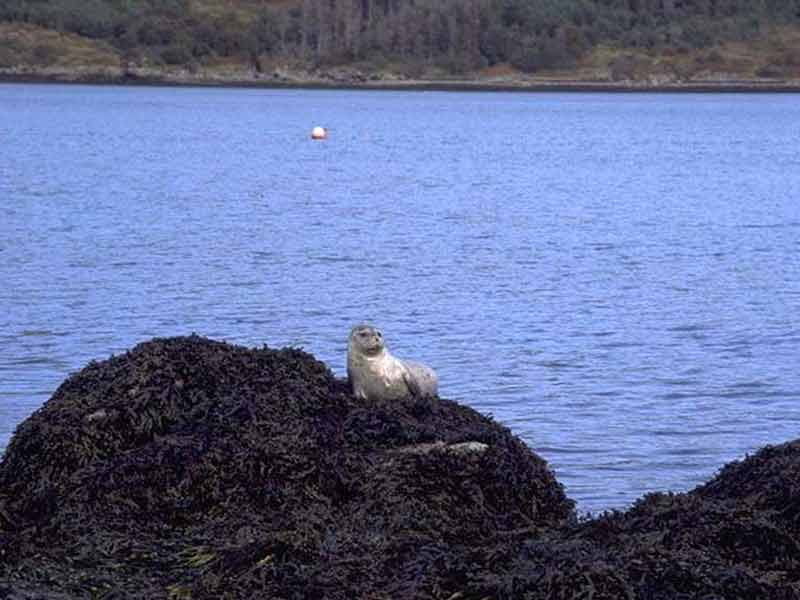
Common seal on rock.
Photographer: Sue Scott Copyright: Sue Scott
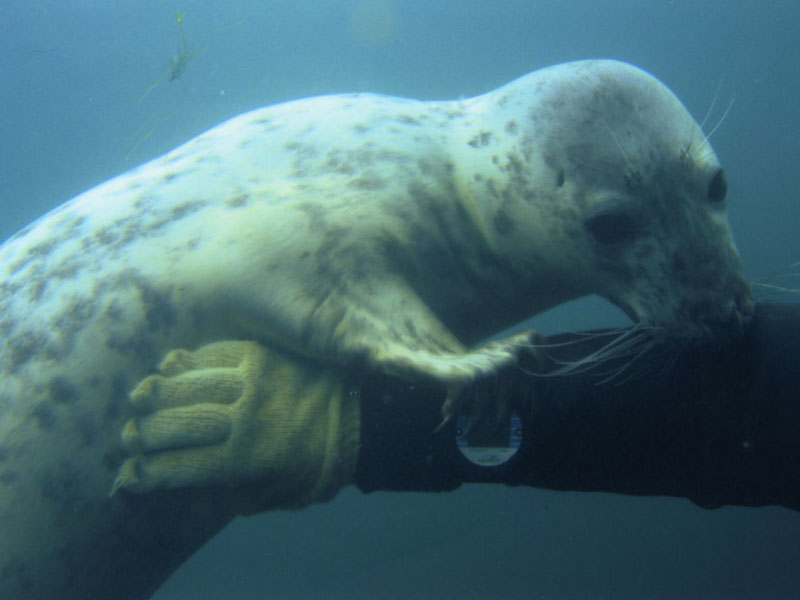
Phoca vitulina playing with a diver's arm.
Photographer: Robert Keen Copyright: Robert Keen
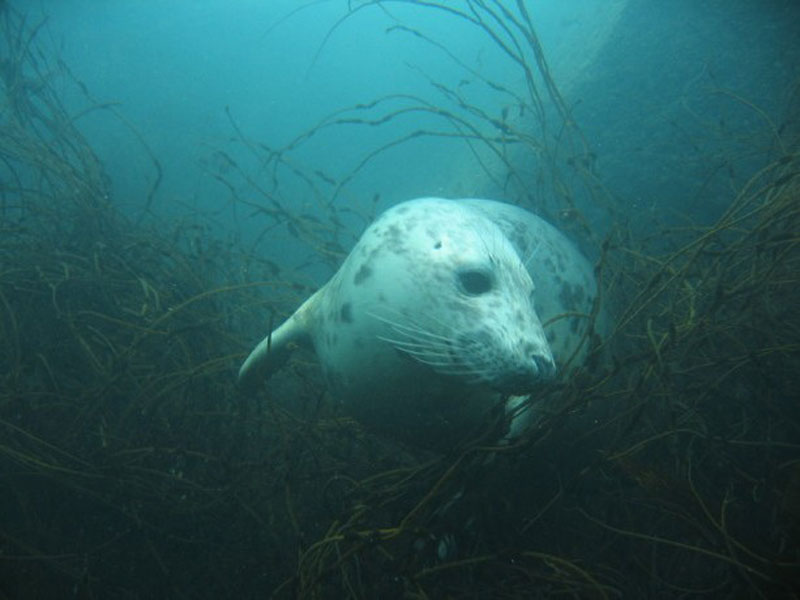
Phoca vitulina swimming towards the camera.
Photographer: Robert Keen Copyright: Robert Keen
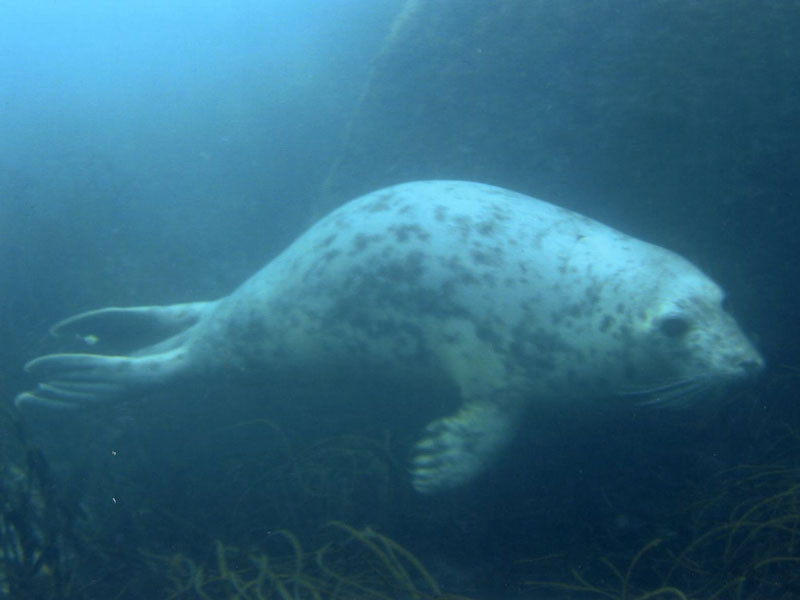
Phoca vitulina swimming underwater.
Photographer: Robert Keen Copyright: Robert Keen
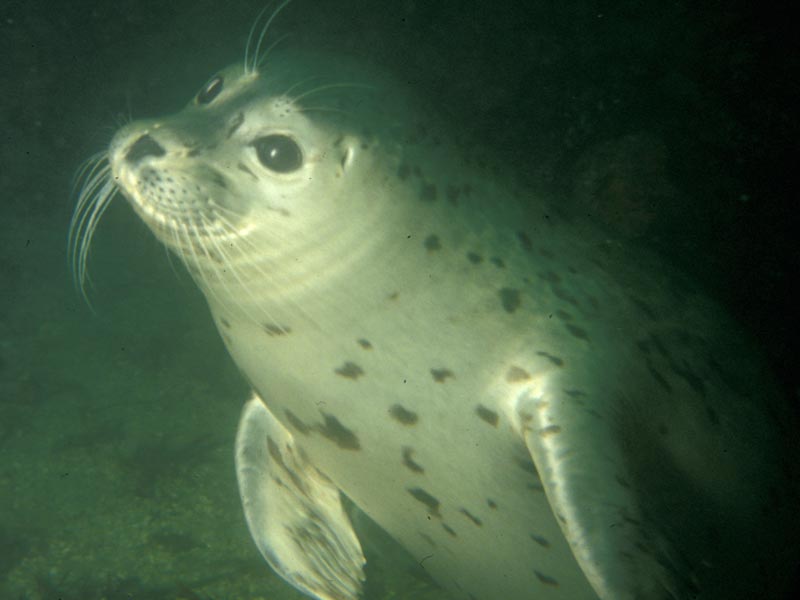
Phoca vitulina.
Photographer: Dr Keith Hiscock Copyright: Dr Keith Hiscock
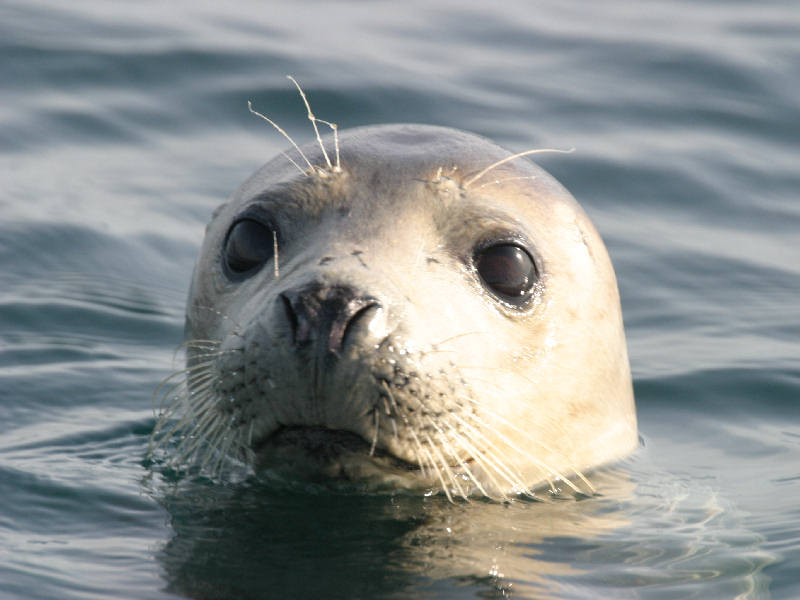
Close up of Phoca vitulina highlighting characteristic facial features.
Photographer: John Rafferty Copyright: John Rafferty
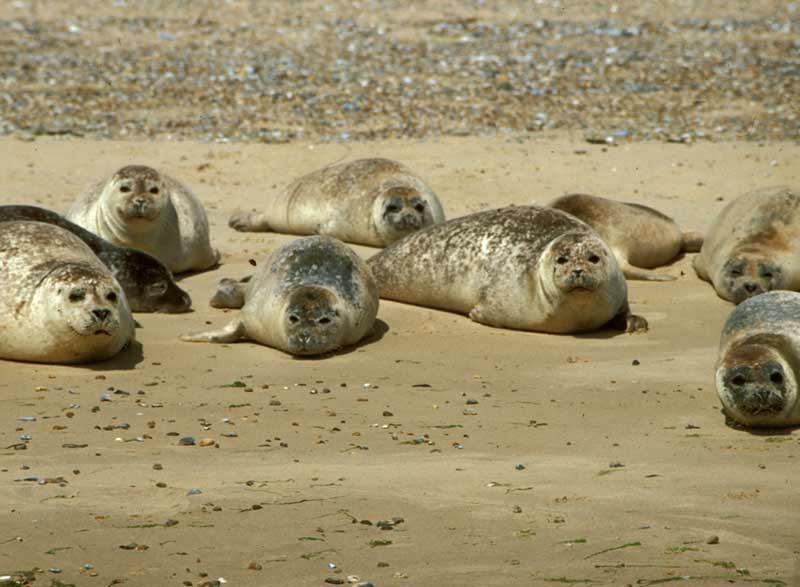
Harbour seals on a sand bank.
Photographer: Dr Keith Hiscock Copyright: Dr Keith Hiscock
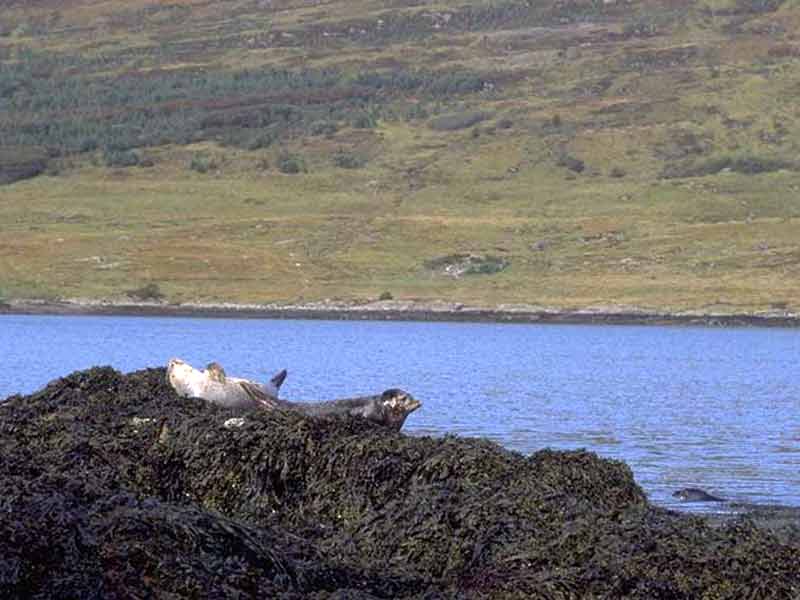
Two common seals sitting on rocks.
Photographer: Sue Scott Copyright: Sue Scott
Distribution data supplied by the Ocean Biodiversity Information System (OBIS). To interrogate UK data visit the NBN Atlas.Map Help
| Researched by | Judith Oakley | Refereed by | Admin |
| Authority | Linnaeus, 1758 | ||
| Other common names | - | Synonyms | - |
Summary
Description
Recorded distribution in Britain and Ireland
The species is fairly evenly distributed around the coasts of Great Britain and Ireland, except for regions where there are extensive cliffs (Hewer, 1974). It is most commonly seen on the east coast of England, western Scotland and the northern isles.Global distribution
Widely distributed in the North Atlantic and North Pacific from the subtropics to the Arctic. Common on Canadian and USA coasts. In Canada there are populations that live throughout the year in freshwater.Habitat
The common seal lives mainly along shorelines and in estuaries. It is commonly seen resting on sandbanks, easily accessible beaches, reefs and protected tidal rocks.Depth range
-Identifying features
- Lacking external ear flaps.
- Colouration variable but generally coat is grey or brownish grey with small spots.
- Head rounded with nostrils forming 'v' shape when animal viewed head on.
- Eyes equidistant between ear and nose.
- 3 front teeth, one eye tooth and 5 cheek teeth in each half of upper jaw.
- 2 front teeth, one eye tooth and 5 cheek teeth in each half of lower jaw.
Additional information
May be confused with the grey seal (Halichoerus grypus) that has a much longer muzzle and their nostril slits are nearly parallel.Seals are highly adapted to live in water. Their limbs are modified into flippers and they have streamlined bodies. Phoca vitulina can dive to 450 m and remain submerged for up to 30 minutes. The common seal is a strong swimmer and can be seen leaping completely out of the water (porpoising) (Nowak, 2003). Only the head is usually seen when the seal is in water. As well as being fur-coated they have a thick layer of subcutaneous fat or blubber. This keeps them warm and enhances streamlining (SMRU, 2004). Seals are warm-blooded air-breathing mammals but spend a considerable amount of time below the water surface. Common seals give birth to pups in June and July and moult in August. The main threat to seals in the UK and Ireland is organochlorine compounds that may interfere with reproduction (SMRU, 2004).
The Common or harbour seal has been reported as non-migratory and littoral in distribution and as exhibiting a diurnal haul-out pattern (Evans & Raga, 2001). Common seals in Europe belong to a distinct sub-species. Britain holds around 40% of the world population of the European sub-species (Duck & Thompson, 2003).The Conservation of Seals Act, 1970, provides a closed season for the Common seal during its pupping season. During this time, it is illegal to kill or take seals without a licence. There is also provision for giving complete protection to seals at al times, if neccesary. During the close season, a license is required to handle seals unless they are sick or injured (SMRU, 2004). The Baltic and Wadden Sea populations are listed under the Bonn Convention (Appendix II).
Listed by
Bibliography
Duck, C.D. & Thompson, D., 2003. The status of British Common Seal Populations. In Scientific Advice on Matters Related to the Management of Seal Populations. Special Committee on Seals (SCOS)., Sea Mammal Research Unit, University of St. Andrews., http://smub.st-and.ac.uk\pdfs\SCOS%2003_v7.pdf
Evans, P.G.H. & Raga, J. A. (ed.), 2001. Marine mammals: biology and conservation New York: Kluwer Academic / Plenum Publishers
Hewer, H.R. 1974. British Seals. London : Collins
Howson, C.M. & Picton, B.E., 1997. The species directory of the marine fauna and flora of the British Isles and surrounding seas. Belfast: Ulster Museum. [Ulster Museum publication, no. 276.]
Kinze, C. C., 2002. Photographic Guide to the Marine Mammals of the North Atlantic. Oxford: Oxford University Press.
Nowak, R.M., 2003. Walker's Marine Mammals of the World. Baltimore: John Hopkins University Press.
SMRU (Sea Mammal Research Unit), 2004. Seals in Britain http://smub.st-and.ac.uk/GeneralInterest.htm/seals.htm, 2004-07-24
Datasets
Bristol Regional Environmental Records Centre, 2017. BRERC species records recorded over 15 years ago. Occurrence dataset: https://doi.org/10.15468/h1ln5p accessed via GBIF.org on 2018-09-25.
Bristol Regional Environmental Records Centre, 2017. BRERC species records within last 15 years. Occurrence dataset: https://doi.org/10.15468/vntgox accessed via GBIF.org on 2018-09-25.
British Trust for Ornithology, 2018. Non-avian taxa (BTO+partners). Occurrence dataset: https://www.bto.org/ accessed via NBNAtlas.org on 2018-09-25.
Cambridgeshire & Peterborough Environmental Records Centre, 2017. CPERC Combined Dataset. Occurrence dataset: https://doi.org/10.15468/npthhv accessed via GBIF.org on 2018-09-25.
Centre for Environmental Data and Recording, 2018. Ulster Museum Marine Surveys of Northern Ireland Coastal Waters. Occurrence dataset https://www.nmni.com/CEDaR/CEDaR-Centre-for-Environmental-Data-and-Recording.aspx accessed via NBNAtlas.org on 2018-09-25.
Cofnod – North Wales Environmental Information Service, 2018. Miscellaneous records held on the Cofnod database. Occurrence dataset: https://doi.org/10.15468/hcgqsi accessed via GBIF.org on 2018-09-25.
Cumbria Biodiversity Data Centre, 2018. Tullie House Museum Natural History Collections. Occurrence dataset: https://doi.org/10.15468/epewfs accessed via GBIF.org on 2018-09-25.
Dumfries and Galloway Environmental Resources Centre, 2017. Mammal records for Dumfries and Galloway. Occurrence dataset: https://doi.org/10.15468/oirkpx accessed via GBIF.org on 2018-09-27
Environmental Records Information Centre North East, 2018. ERIC NE Combined dataset to 2017. Occurrence dataset: http://www.ericnortheast.org.ukl accessed via NBNAtlas.org on 2018-09-38
Fife Nature Records Centre, 2018. Fife Nature Records Centre combined dataset. Occurrence dataset: https://doi.org/10.15468/ccc1ip accessed via GBIF.org on 2018-09-27.
Glasgow Museums BRC, 2017. Mammal records for Clyde Faunal Area, 1850 to 2007. Occurrence dataset: https://doi.org/10.15468/fphygc accessed via GBIF.org on 2018-09-27.
Hebridean Whale and Dolphin Trust, 2018. Visual sightings data set 2003-2017. Occurrence dataset: https://hwdt.org/ accessed via NBNAtlas.org on 2018-09-27.
Isle of Wight Local Records Centre, 2017. Isle of Wight Notable Species. Occurrence dataset: https://doi.org/10.15468/sm4ety accessed via GBIF.org on 2018-09-27.
John Muir Trust, 2017. Species Records for John Muir Trust Properties 2007-2009. Occurrence dataset: https://doi.org/10.15468/p5lw5z accessed via GBIF.org on 2018-09-27.
Kent Wildlife Trust, 2018. Kent Wildlife Trust Shoresearch Intertidal Survey 2004 onwards. Occurrence dataset: https://www.kentwildlifetrust.org.uk/ accessed via NBNAtlas.org on 2018-10-01.
Lancashire Environment Record Network, 2018. LERN Records. Occurrence dataset: https://doi.org/10.15468/esxc9a accessed via GBIF.org on 2018-10-01.
Manx Biological Recording Partnership, 2017. Isle of Man wildlife records from 01/01/2000 to 13/02/2017. Occurrence dataset: https://doi.org/10.15468/mopwow accessed via GBIF.org on 2018-10-01.
Manx Biological Recording Partnership, 2018. Isle of Man historical wildlife records 1995 to 1999. Occurrence dataset: https://doi.org/10.15468/lo2tge accessed via GBIF.org on 2018-10-01.
Merseyside BioBank., 2017. Merseyside BioBank (verified). Occurrence dataset: https://doi.org/10.15468/ar0p6s accessed via GBIF.org on 2018-10-01.
Merseyside BioBank., 2018. Merseyside BioBank (unverified). Occurrence dataset: https://doi.org/10.15468/iou2ld accessed via GBIF.org on 2018-10-01.
National Trust, 2017. National Trust Species Records. Occurrence dataset: https://doi.org/10.15468/opc6g1 accessed via GBIF.org on 2018-10-01.
National Trust, 2017. Wicken Fen nature reserve species data held by The National Trust. Occurrence dataset: https://doi.org/10.15468/iqeemg accessed via GBIF.org on 2018-10-01.
NBN (National Biodiversity Network) Atlas. Available from: https://www.nbnatlas.org.
Norfolk Biodiversity Information Service, 2017. NBIS Records to December 2016. Occurrence dataset: https://doi.org/10.15468/jca5lo accessed via GBIF.org on 2018-10-01.
North East Scotland Biological Records Centre, 2017. NE Scotland marine mammal records 1800-2010. Occurrence dataset: https://doi.org/10.15468/suphju accessed via GBIF.org on 2018-10-01.
North East Scotland Biological Records Centre, 2017. North East Scotland Terrestrial Mammals 1900-2017 (excluding squirrels, wild cats and marine mammals). Occurrence dataset: https://doi.org/10.15468/qt0mly accessed via GBIF.org on 2018-10-01.
OBIS (Ocean Biodiversity Information System), 2025. Global map of species distribution using gridded data. Available from: Ocean Biogeographic Information System. www.iobis.org. Accessed: 2025-07-01
Outer Hebrides Biological Recording, 2018. Vertebrates (except birds, INNS and restricted records), Outer Hebrides. Occurrence dataset: https://doi.org/10.15468/dax3tf accessed via GBIF.org on 2018-10-01.
Record, 2017. RECORD Mammal Data. Occurrence dataset: https://doi.org/10.15468/alecvo accessed via GBIF.org on 2018-10-02.
South East Wales Biodiversity Records Centre, 2018. SEWBReC Mammals (South East Wales). Occurrence dataset: https://doi.org/10.15468/atlxpp accessed via GBIF.org on 2018-10-02.
South East Wales Biodiversity Records Centre, 2018. Dr Mary Gillham Archive Project. Occurance dataset: http://www.sewbrec.org.uk/ accessed via NBNAtlas.org on 2018-10-02
Suffolk Biodiversity Information Service., 2017. Suffolk Biodiversity Information Service (SBIS) Dataset. Occurrence dataset: https://doi.org/10.15468/ab4vwo accessed via GBIF.org on 2018-10-02.
The Mammal Society, 2018. Derek Crawley Images. Occurance dataset: http://www.mammal.org.uk/ accessed via NBNAtlas.org on 2018-10-02.
The Mammal Society., 2017. National Mammal Atlas Project, online recording. Occurrence dataset: https://doi.org/10.15468/i2eosa accessed via GBIF.org on 2018-10-02.
The Wildlife Information Centre, 2018. TWIC Biodiversity Field Trip Data (1995-present). Occurrence dataset: https://doi.org/10.15468/ljc0ke accessed via GBIF.org on 2018-10-02.
West Wales Biodiversity Information Centre, 2018. Mammal Records (West Wales). Occurrence dataset: https://doi.org/10.15468/vitiic accessed via GBIF.org on 2018-10-02.
Whale and Dolphin Conservation, 2018. WDC Shorewatch Sightings. Occurrence dataset: https://doi.org/10.15468/9vuieb accessed via GBIF.org on 2018-10-02.
Citation
This review can be cited as:
Last Updated: 17/04/2008