
Harbour porpoise (Phocoena phocoena)
Distribution data supplied by the Ocean Biodiversity Information System (OBIS). To interrogate UK data visit the NBN Atlas.Map Help
| Researched by | Dean Russel | Refereed by | Admin |
| Authority | (Linnaeus, 1758) | ||
| Other common names | - | Synonyms | - |
Summary
Description
Recorded distribution in Britain and Ireland
The harbour porpoise has been recorded around all coasts of Britain and Ireland.Global distribution
Ranges from West Africa to Novaya Zemlya, in the North Pacific distributed from southern California and northern Japan, to the southern Beaufort and Chukchi seas. In the North Atlantic , distributed from the south-eastern U.S. to southern Baffin IslandHabitat
It can be found in cool temperate and subpolar waters. Usually found in near shore waters, but occasionally over deeper waters.Depth range
-Identifying features
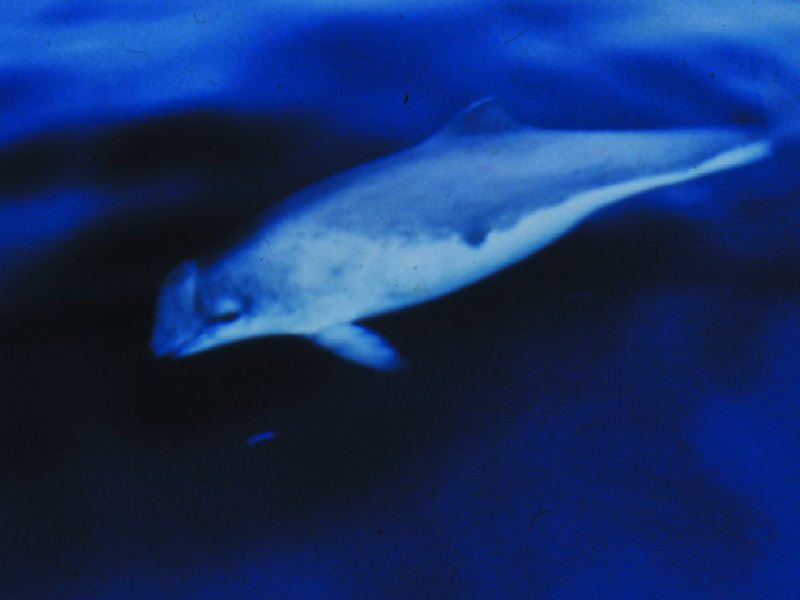
- Body dark grey on back to white below.
- Dorsal fin short, triangular, wide based, upright and set near middle of back.
- Prominent median notch in flukes.
- Upper jaw not extending much or at all past lower jaw.
- Teeth blunt with expanded crowns, laterally compressed, small with 22 to 28 pairs of teeth in upper jaw and 21 to 25 in lower.
- Maximum size to about 2 m.
Additional information
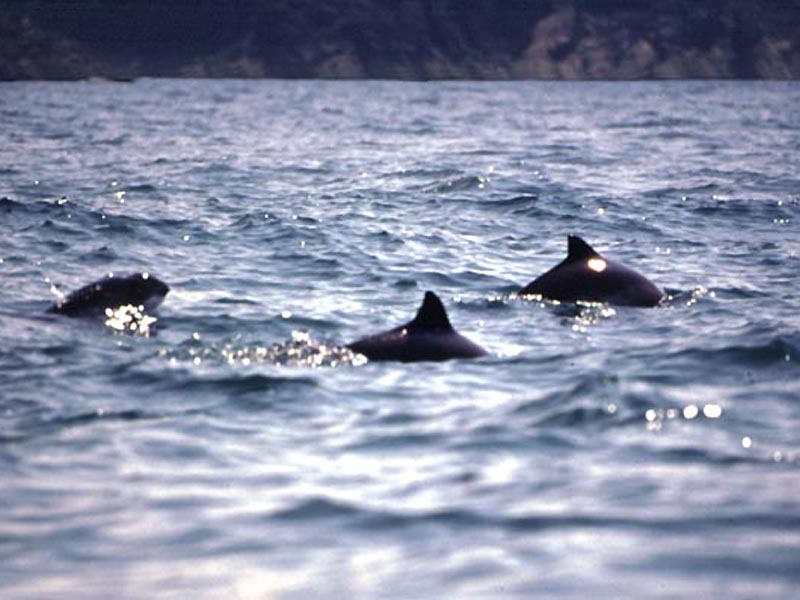
Phocoenids appear to live in smaller groups and have a simpler social structure than most delphinids. Most harbour porpoise are found in small groups consisting of less than 8 individuals but occasionally form large, loose groups of 50 to several hundred for feeding and migration.The harbour porpoise is listed on Appendix II of CITES and Appendix II of the Bern Convention and Annexes II and IV of the EC Habitats Directive. It is also on Appendix 2 of the Bonn Convention (Anon, 1999z). All species of cetaceans are given protection under the Wildlife and Countryside Act 1981 and the Wildlife (Northern Ireland) Order 1985 (Anon, 1999z). All cetacean species are listed on Annex IV (Animal and Plant Species of Community Interest in Need of Strict Protection) of the EC Habitats Directive (Anon, 1999x). All whales are listed on Annex A of EU Council Regulation 338/97 and therefore treated by the EU as if they are on CITES Appendix I thus prohibiting their commercial trade (Anon, 1999x). Whaling is illegal in UK waters (Fisheries Act 1981), but neighbouring countries maintain the right to hunt (Anon, 1999x). An 'Agreement on the Conservation of Small Cetaceans in the Baltic and North Seas' (ASCOBANS), formulated in 1992, has now been signed by seven European countries, including the UK. Under the Agreement, provision is made for protection of specific areas, monitoring, research, information exchange, pollution control and heightening public awareness. Although aimed primarily at dolphins and porpoises, ASCOBANS includes all toothed whales except the sperm whale (Anon, 1999x).
Listed by
Bibliography
Anonymous, 1999z. Harbour porpoise (Phocoena phocoena). Species Action Plan. http://www.ukbap.org.uk/UKPlans.aspx?ID=514, 2001-07-09
Howson, C.M. & Picton, B.E., 1997. The species directory of the marine fauna and flora of the British Isles and surrounding seas. Belfast: Ulster Museum. [Ulster Museum publication, no. 276.]
Jefferson, T.A., Leatherwood, S. & Webber, M.A., 1994. FAO species identification guide. Marine mammals of the world. Rome: United Nations Environment Programme, Food and Agriculture Organization of the United Nations.
Datasets
Bristol Regional Environmental Records Centre, 2017. BRERC species records recorded over 15 years ago. Occurrence dataset: https://doi.org/10.15468/h1ln5p accessed via GBIF.org on 2018-09-25.
Bristol Regional Environmental Records Centre, 2017. BRERC species records within last 15 years. Occurrence dataset: https://doi.org/10.15468/vntgox accessed via GBIF.org on 2018-09-25.
British Trust for Ornithology, 2018. Non-avian taxa (BTO+partners). Occurrence dataset: https://www.bto.org/ accessed via NBNAtlas.org on 2018-09-25.
Cofnod – North Wales Environmental Information Service, 2018. Miscellaneous records held on the Cofnod database. Occurrence dataset: https://doi.org/10.15468/hcgqsi accessed via GBIF.org on 2018-09-25.
Dumfries and Galloway Environmental Resources Centre, 2017. Mammal records for Dumfries and Galloway. Occurrence dataset: https://doi.org/10.15468/oirkpx accessed via GBIF.org on 2018-09-27
Environmental Records Information Centre North East, 2018. ERIC NE Combined dataset to 2017. Occurrence dataset: http://www.ericnortheast.org.ukl accessed via NBNAtlas.org on 2018-09-38
Fife Nature Records Centre, 2018. Fife Nature Records Centre combined dataset. Occurrence dataset: https://doi.org/10.15468/ccc1ip accessed via GBIF.org on 2018-09-27.
Glasgow Museums BRC, 2017. Mammal records for Clyde Faunal Area, 1850 to 2007. Occurrence dataset: https://doi.org/10.15468/fphygc accessed via GBIF.org on 2018-09-27.
Hebridean Whale and Dolphin Trust, 2018. Visual sightings data set 2003-2017. Occurrence dataset: https://hwdt.org/ accessed via NBNAtlas.org on 2018-09-27.
Isle of Wight Local Records Centre, 2017. Isle of Wight Notable Species. Occurrence dataset: https://doi.org/10.15468/sm4ety accessed via GBIF.org on 2018-09-27.
Lancashire Environment Record Network, 2018. LERN Records. Occurrence dataset: https://doi.org/10.15468/esxc9a accessed via GBIF.org on 2018-10-01.
Manx Biological Recording Partnership, 2017. Isle of Man wildlife records from 01/01/2000 to 13/02/2017. Occurrence dataset: https://doi.org/10.15468/mopwow accessed via GBIF.org on 2018-10-01.
Manx Biological Recording Partnership, 2018. Isle of Man historical wildlife records 1995 to 1999. Occurrence dataset: https://doi.org/10.15468/lo2tge accessed via GBIF.org on 2018-10-01.
Merseyside BioBank., 2017. Merseyside BioBank (verified). Occurrence dataset: https://doi.org/10.15468/ar0p6s accessed via GBIF.org on 2018-10-01.
Merseyside BioBank., 2018. Merseyside BioBank (unverified). Occurrence dataset: https://doi.org/10.15468/iou2ld accessed via GBIF.org on 2018-10-01.
National Trust, 2017. National Trust Species Records. Occurrence dataset: https://doi.org/10.15468/opc6g1 accessed via GBIF.org on 2018-10-01.
NBN (National Biodiversity Network) Atlas. Available from: https://www.nbnatlas.org.
Norfolk Biodiversity Information Service, 2017. NBIS Records to December 2016. Occurrence dataset: https://doi.org/10.15468/jca5lo accessed via GBIF.org on 2018-10-01.
North East Scotland Biological Records Centre, 2017. NE Scotland marine mammal records 1800-2010. Occurrence dataset: https://doi.org/10.15468/suphju accessed via GBIF.org on 2018-10-01.
OBIS (Ocean Biodiversity Information System), 2025. Global map of species distribution using gridded data. Available from: Ocean Biogeographic Information System. www.iobis.org. Accessed: 2025-07-04
Outer Hebrides Biological Recording, 2018. Vertebrates (except birds, INNS and restricted records), Outer Hebrides. Occurrence dataset: https://doi.org/10.15468/dax3tf accessed via GBIF.org on 2018-10-01.
South East Wales Biodiversity Records Centre, 2018. SEWBReC Mammals (South East Wales). Occurrence dataset: https://doi.org/10.15468/atlxpp accessed via GBIF.org on 2018-10-02.
South East Wales Biodiversity Records Centre, 2018. Dr Mary Gillham Archive Project. Occurance dataset: http://www.sewbrec.org.uk/ accessed via NBNAtlas.org on 2018-10-02
Suffolk Biodiversity Information Service., 2017. Suffolk Biodiversity Information Service (SBIS) Dataset. Occurrence dataset: https://doi.org/10.15468/ab4vwo accessed via GBIF.org on 2018-10-02.
The Mammal Society., 2017. National Mammal Atlas Project, online recording. Occurrence dataset: https://doi.org/10.15468/i2eosa accessed via GBIF.org on 2018-10-02.
The Wildlife Information Centre, 2017. Biological Recording in Scotland - Scotsman Wildlife Surveys. Occurrence dataset: https://doi.org/10.15468/t50yhv accessed via GBIF.org on 2018-10-02.
West Wales Biodiversity Information Centre, 2018. Seatrust Cetacean Records West Wales. Occurrence dataset: https://doi.org/10.15468/ecsmqh accessed via GBIF.org on 2018-10-02.
Whale and Dolphin Conservation, 2018. WDC Shorewatch Sightings. Occurrence dataset: https://doi.org/10.15468/9vuieb accessed via GBIF.org on 2018-10-02.
Citation
This review can be cited as:
Last Updated: 16/10/2006