
Sugar kelp (Saccharina latissima)
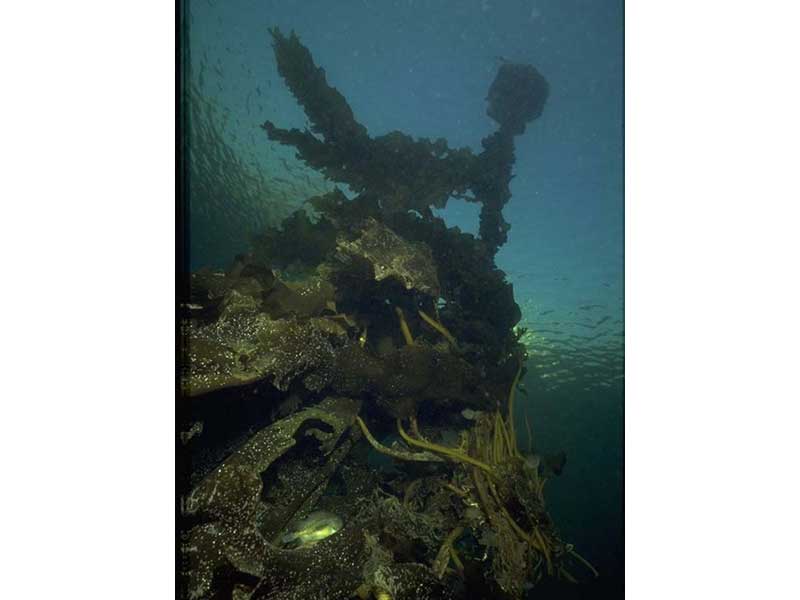
Buoy line with Saccharina latissima.
Photographer: Sue Scott Copyright: Sue Scott
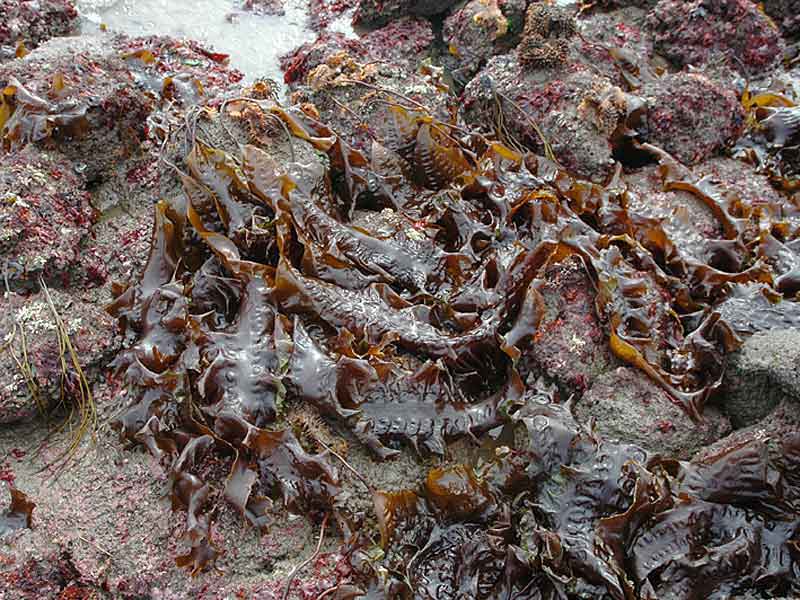
Saccharina latissima exposed at low tide.
Photographer: Dr Keith Hiscock Copyright: Dr Keith Hiscock
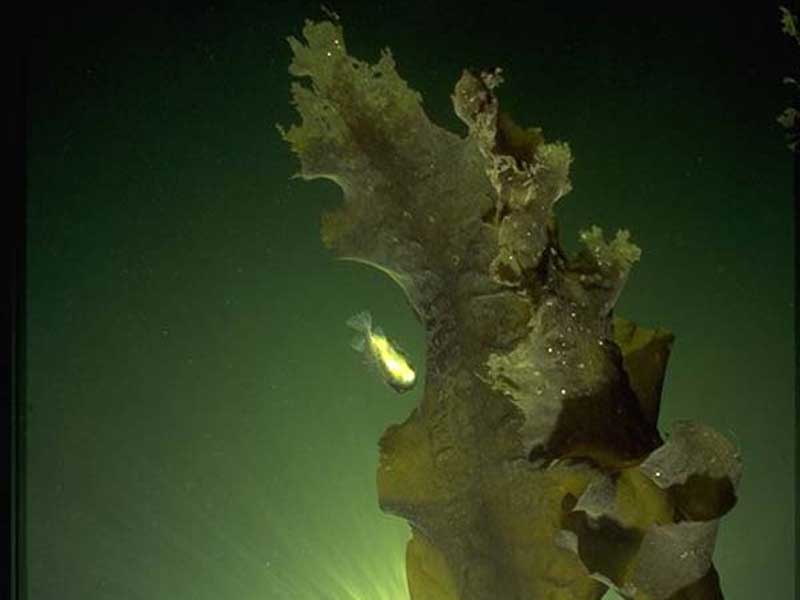
Saccharina latissima frond.
Photographer: Sue Scott Copyright: Sue Scott
Distribution data supplied by the Ocean Biodiversity Information System (OBIS). To interrogate UK data visit the NBN Atlas.Map Help
| Researched by | Nicola White & Charlotte Marshall | Refereed by | Dr Joanna Jones |
| Authority | (Linnaeus) C.E.Lane, C.Mayes, Druehl & G.W.Saunders, 2006 | ||
| Other common names | - | Synonyms | Laminaria saccharina (Linnaeus) C.E.Lane, C.Mayes, Druehl & G.W.Saunders, 2006 |
Summary
Description
A large brown kelp, which has a long undivided frond, without midrib and with a short stipe. The frond of Saccharina latissima has a distinctive frilly undulating margin. It lives for 2 to 4 years and grows quickly from winter to April.
Recorded distribution in Britain and Ireland
All coasts of Britain & Ireland.Global distribution
Recorded from the Atlantic coasts of Europe as far north as Novaya Zemlya and south to northern Portugal and around Iceland. Also found in Greenland, Eastern coast of America down to New Jersey, Pacific coast of America, Bering Straits and Japan.Habitat
Saccharina latissima is usually found from the sublittoral fringe down to a depth of 30 m. More rarely it occurs in rock pools. The species usually occurs in sheltered conditions and may attach to unstable substrata such as boulders and cobbles.Depth range
Less than 30 mIdentifying features
- A long undivided frond with wrinkled surface and wavy margins, rising from a smooth flexible stipe.
- Without midrib.
- Small branching holdfast.
- Yellowish-brown in colour.
- Up to 4 m long.
Additional information
Also known as sugar kelp and sea-belt. The name sugar kelp refers to a whitish, sweet-tasting powder which forms on the dried frond.
Listed by
- none -
Biology review
Taxonomy
| Level | Scientific name | Common name |
|---|---|---|
| Phylum | Ochrophyta | Brown and yellow-green seaweeds |
| Class | Phaeophyceae | |
| Order | Laminariales | |
| Family | Laminariaceae | |
| Genus | Saccharina | |
| Authority | (Linnaeus) C.E.Lane, C.Mayes, Druehl & G.W.Saunders, 2006 | |
| Recent Synonyms | Laminaria saccharina (Linnaeus) C.E.Lane, C.Mayes, Druehl & G.W.Saunders, 2006 | |
Biology
| Parameter | Data | ||
|---|---|---|---|
| Typical abundance | Moderate density | ||
| Male size range | |||
| Male size at maturity | |||
| Female size range | Large(>50cm) | ||
| Female size at maturity | |||
| Growth form | Foliose | ||
| Growth rate | 1.1cm/day | ||
| Body flexibility | |||
| Mobility | Sessile, permanent attachment | ||
| Characteristic feeding method | Autotroph | ||
| Diet/food source | Photoautotroph | ||
| Typically feeds on | |||
| Sociability | |||
| Environmental position | Epilithic | ||
| Dependency | Independent. | ||
| Supports | None | ||
| Is the species harmful? | No | ||
Biology information
Growth. Saccharina latissima (studied as Laminaria saccharina) grows fastest from late winter to spring at a rate of about 1.1 cm/day although growth rates of up to 4.87 cm/day have been recorded. Growth then declines from June onwards and may cease in late summer. The reduction in summer growth rate is thought to be due to nitrate limitation (Sjøtun, 1993). The length:width ratio of newly grown lamina tissue varies throughout the year and is highest during periods of fast growth, that is, December to June (Sjøtun, 1993). By shifting effort towards growth in width in late summer, it is possible that the plant can maximize the lamina area for autumn and winter and therefore increase the amount of stored carbon available for plants at this time (Sjøtun, 1993). The seasonal growth pattern results in annual growth rings or lines in the stipe, which can be used to age the plant. The species may occur as an annual opportunist.
Morphology. The shape of the frond can vary with environmental conditions. Gerard (1987) found that plants subjected to constant longitudinal tension (as would be expected in higher water flow rates) may become morphologically enhanced to a more streamlined shape. In laboratory simulations, he found that plants subjected to longitudinal stress had significantly narrower blades and a significantly higher rate of cell elongation at the end of the six-week experiment, compared to those plants that had not experienced the same stress. Saccharina latissima (studied as Laminaria saccharina) plants from wave exposed sites have short, solid stipes and short, narrow and thick tissued fronds with closely wrinkled blades (Lüning, 1990). In contrast, plants from sheltered sites have a broad thin blade with an undulate surface (Lüning, 1990).
Mobility. The majority of Saccharina latissima plants are permanently attached to the substratum. This may include bedrock and large boulders down to pebbles. Even sand grains can provide an attachment sufficient enough to allow the young sporophytes to segment and develop into new plants (Burrows, 1958). However, Burrows (1958) also described large populations of 'loose lying' Saccharina latissima (studied as Laminaria saccharina) in Port Erin Bay, Isle of Man, which showed no signs of ever having been attached. She concluded that, apart from at the earliest stages of sporophyte development, an attachment to the substratum is not essential for the growth of the plant.
Habitat preferences
| Parameter | Data |
|---|---|
| Physiographic preferences | |
| Biological zone preferences | |
| Substratum / habitat preferences | |
| Tidal strength preferences | |
| Wave exposure preferences | |
| Salinity preferences | |
| Depth range | Less than 30 m |
| Other preferences | No text entered |
| Migration Pattern | Non-migratory or resident |
Habitat Information
Saccharina latissima is often found on unstable substrata such as rocks and boulders. The species is adapted to growing on these by having a flexible stipe which reduces leverage on any boulder to which it is attached, reducing the chance of its being turned over by wave movement. The species can even grow unattached and extensive populations can develop on loose-lying sand in calm conditions. In wave-exposed conditions the species may extend into the lower eulittoral.Life history
Adult characteristics
| Parameter | Data |
|---|---|
| Reproductive type | |
| Reproductive frequency | Annual episodic |
| Fecundity (number of eggs) | |
| Generation time | 1-2 years |
| Age at maturity | 15-20 months to maturity |
| Season | See additional information |
| Life span | 2-5 years |
Larval characteristics
| Parameter | Data |
|---|---|
| Larval/propagule type | - |
| Larval/juvenile development | |
| Duration of larval stage | No information |
| Larval dispersal potential | No information |
| Larval settlement period | Insufficient information |
Life history information
Overview of life history. Saccharina latissima has a typical laminarian life history, in which a macroscopic and structurally complex diploid sporophyte phase alternates with a microscopic haploid gametophyte. The species is a short-lived perennial. Sporophytes (clearly visible adult plants) typically have a lifespan of two to four years, although plants may occur as annuals. Specimens over four years old have been recorded from a fjord in Greenland (Borum et al., 2002).
Timing of reproduction. Saccharina latissima plants usually take eight to 15 months to reach fertility at which point the central portion of the blade is covered in unilocular sporangia, that produce zoospores by meiosis. Lüning (1988) reported that sorus (a group of sporangia) formation in Saccharina latissima (studied as Laminaria saccharina) from Helgoland, in the Southern North Sea, was restricted to autumn conditions whilst Kain (1979) and Parke (1948) reported that, in the British Isles, sorus formation was most frequent in both autumn and winter. It has been suggested that, in the Arctic, Saccharina latissima (studied as Laminaria saccharina) sporophytes may carry sori throughout the year and can therefore produce gametophytes in all seasons (Makarov & Schoschina, 1998, cited in Sjøtun & Schoschina, 2002). Similarly, Parke (1948) reported that in sheltered habitats on the south Devon coast, reproductive tissue was present in all months, although October to April was the most frequent period of spore production in the British Isles for this species.
Reproduction. Key points are listed below.
- Each sporangium contains 32 zoospores that develop into microscopic dioecious haploid gametophytes.
- The gametophyte goes through a 'dumbbell' stage before enlargement (female) or division (male). This stage is characterized by swelling at the distal end of the germination tube, which is separated by a cell wall from the original spore case from which the tube initially arose (Kain, 1979).
- Lüning (1990) recognized three stages in the development of gametophyte:
(1) germination of the embryospore to form the gametophyte;
(2) vegetative growth of the gametophyte to form either a larger single-celled female gametophyte or, in the case of male gametophytes, a few small cells, and
(3) the reproductive phase. If environmental factors do not induce fertility in the gametophyte (see factors affecting reproduction below), filamentous growth occurs. - The filaments of female gametophytes are, on average, approximately 10 µm in diameter and those of males are usually half of that (Kain, 1979). Male gametophytes are more branched than females and have more numerous, smaller and paler cells.
- If the gametophytes become fertile, male gametophytes develop antheridia that produce sperm. The females develop oogonia in which the egg develops (Birkett et al., 1998). This egg is subsequently discharged. After the egg has emerged, the cell wall closes behind it and forms a cushion on which the egg is seated (Bisalputra et al., 1971).
- The external egg is fertilized by the motile sperm and the resultant zygote eventually develops into the new sporophyte.
- After fertilization, a thick cell wall is formed around the zygote and when the zygote reaches 10-16 µm in diameter, it starts to elongate rapidly (Bisalputra et al., 1971).
- Sporophytes first become attached by filamentous rhizoids but later by large branched haptera (Burrows, 1971).
- After rhizoid attachment, an attachment disc is formed from the swollen base of the stipe (Kain, 1979).
- Cell division in the young sporophyte gives rise to a broad flat thallus but eventually, a meristem gives rise to a flat blade above it and a cylindrical stipe below (Burrows, 1971). By this stage, the plant has taken on the recognizable 'kelp shape'.
Light regime. Experimental work using various red and blue light regimes suggests that the onset of fertility in female gametophytes is controlled specifically by blue light above a certain irradiance (Lüning & Dring, 1975). In their experiments, female gametophytes grown in red light for ten days continued to grow vegetatively with no egg production. In contrast, nearly 100% of gametophytes grown in blue light (1.5 nE cm-2 sec-1 (total irradiation per second)) over the same period became fertile. Equally, plants that had been grown in red light for two weeks became fertile after being irradiated with blue light (1-4 nE cm-2 sec-1) for a period of time. After 96 hours of irradiance, almost 100% of gametophytes had become fertile. Lüning (1990) also concluded that only blue light induces fertility.
Lüning (1988) cultivated adult sporophytes near Helgoland in the Southern North Sea and cultivated them under various light regimes. Sori were only formed in the 'short day' regime (8:16 hours light:dark respectively). No sori were formed in the 'long day' (16:8) or 'night break' (8:7.5:1:7.5) regimes.
Lüning (1990) found that at 10°C, the gametophyte could survive at least five months in total darkness.
Temperature. Lee & Brinkhuis (1988) studied the effects of seasonal light and temperature interactions on the development of Saccharina latissima (studied as Laminaria saccharina) gametophytes and juvenile sporophytes in Long Island Sound and found that in general:
- germination of zoospores was inhibited at 20 °C;
- gametophyte growth improved with increasing temperature between 4-17 °C;
- fecundity was totally inhibited at 20 °C;
- sporophyte growth was inhibited at 17 and 20 °C, and
- temperature for optimal growth depended on the time of year.
These authors also found that sex ratio was significantly affected by temperature and between 17-20 °C male gametophytes were more prevalent. Sjøtun & Schoschina (2002) reported 100% germination of embyospores at 0°C in this species suggesting a good adaptation to Arctic conditions.
Sensitivity review
The MarLIN sensitivity assessment approach used below has been superseded by the MarESA (Marine Evidence-based Sensitivity Assessment) approach (see menu). The MarLIN approach was used for assessments from 1999-2010. The MarESA approach reflects the recent conservation imperatives and terminology and is used for sensitivity assessments from 2014 onwards.
Physical pressures
Use / to open/close text displayed
| Intolerance | Recoverability | Sensitivity | Evidence / Confidence | |
Substratum loss [Show more]Substratum lossBenchmark. All of the substratum occupied by the species or biotope under consideration is removed. A single event is assumed for sensitivity assessment. Once the activity or event has stopped (or between regular events) suitable substratum remains or is deposited. Species or community recovery assumes that the substratum within the habitat preferences of the original species or community is present. Further details EvidenceSaccharina latissima is usually permanently attached to the substratum so would be removed upon substratum loss. The species rapidly colonizes cleared areas of the substratum; Kain (1975) recorded that Saccharina latissima (studied as Laminaria saccharina) was abundant six months after the substratum was cleared so recovery should be rapid. In the laboratory, under optimal conditions, it took at least eight months to reach the size of fertile plants in the field with blades between 1-2 m long (Gerard, unpublished, cited in Gerard & Du Bois, 1988). | High | High | Moderate | Moderate |
Smothering [Show more]SmotheringBenchmark. All of the population of a species or an area of a biotope is smothered by sediment to a depth of 5 cm above the substratum for one month. Impermeable materials, such as concrete, oil, or tar, are likely to have a greater effect. Further details. EvidenceThe impact of sedimentation on Saccharina latissima (studied as Laminaria saccharina) was studied by Lyngby & Mortensen (1996). They recorded that deposition of a 1-2 mm thick layer of fine-grained material on the plants caused direct physical damage and rotting and as a result, 25 % of the plants died after 4 weeks. Therefore, smothering by a 5 cm layer of sediment is likely to have a adverse affect on the populations and an intolerance of high has been recorded. On return to normal conditions recovery should be high because the species has been observed to rapidly recruit to cleared areas of the substratum (Kain, 1975). In the laboratory, under optimal conditions, it took at least eight months to reach the size of fertile plants in the field with blades between 1-2 m long (Gerard, unpublished, cited in Gerard & Du Bois, 1988). | High | High | Moderate | Moderate |
Increase in suspended sediment [Show more]Increase in suspended sedimentBenchmark. An arbitrary short-term, acute change in background suspended sediment concentration e.g., a change of 100 mg/l for one month. The resultant light attenuation effects are addressed under turbidity, and the effects of rapid settling out of suspended sediment are addressed under smothering. Further details EvidenceAn increase in the level of suspended sediment was found to reduce growth rates in Saccharina latissima (studied as Laminaria saccharina) by 20 % (Lyngby & Mortensen, 1996). Burrow & Pybus (1971) found that the mean breadths of thalli of Saccharina latissima (studied as Laminaria saccharina) that had grown in the silted waters of Redcar, Souter Point and Robin Hood's Bay (North-East England) were significantly smaller than those grown in the clearer waters of St Abbs (North-East England) and Port Erin (Isle of Man). Adults appear to tolerate silt because they are found in areas of siltation (Birkett et al., 1998) but they cannot tolerate heavy sand scour and the gametophytes and spores are probably even more intolerant. Burrows (1971) found that silt had an adverse effect on zoospore development in this species. In addition, Norton (1978) found that siltation of settled spores inhibited development of gametophytes and spores failed to form an attachment when settling out on silty surfaces. At the benchmark level, the viability of the population may be somewhat reduced but recovery should be high because the species rapidly colonizes cleared areas of the substratum. Kain (1975) recorded that Saccharina latissima (studied as Laminaria saccharina) was abundant six months after substratum was cleared. In the laboratory, under optimal conditions, it took at least eight months to reach the size of fertile plants in the field with blades between 1-2 m long (Gerard, unpublished, cited in Gerard & Du Bois, 1988). | Low | High | Low | Low |
Decrease in suspended sediment [Show more]Decrease in suspended sedimentBenchmark. An arbitrary short-term, acute change in background suspended sediment concentration e.g., a change of 100 mg/l for one month. The resultant light attenuation effects are addressed under turbidity, and the effects of rapid settling out of suspended sediment are addressed under smothering. Further details Evidence | No information | |||
Desiccation [Show more]Desiccation
EvidenceSaccharina latissima can tolerate a small level of desiccation because the species can extend into the lower eulittoral in wave exposed conditions. On exposure to air the species suffers desiccation and decreased growth rate because emergence prevents photosynthesis in Saccharina latissima (studied as Laminaria saccharina) (Kain, 1979). An increase in the level of desiccation would lead to a depression in the upper limit of the species distribution. However, recovery should be high because the species can rapidly colonize cleared areas of the substratum. Kain (1975) recorded that Saccharina latissima (studied as Laminaria saccharina) was abundant six months after substratum was cleared. In the laboratory, under optimal conditions, it took at least eight months to reach the size of fertile plants in the field with blades between 1-2 m long (Gerard, unpublished, cited in Gerard & Du Bois, 1988). | High | High | Moderate | Low |
Increase in emergence regime [Show more]Increase in emergence regimeBenchmark. A one hour change in the time covered or not covered by the sea for a period of one year. Further details EvidenceSaccharina latissima can only tolerate short periods of emergence in wave exposed conditions, where the plants are kept moist by spray. On exposure to air the species suffers desiccation and decreased growth rate because emergence prevents photosynthesis in Saccharina latissima (studied as Laminaria saccharina) (Kain, 1979). An increase in the period of emersion would result in a depression of the species upper limit. However, it is also possible that it an increase in emergence would extend the lower limit of the population through increased irradiances to areas previously too deep for light-saturated photosynthesis. Therefore an intolerance of intermediate has been recorded. Recovery should be high because the species rapidly colonizes cleared areas of the substratum. In Port Erin, Isle of Man, Kain (1975) recorded that Saccharina latissima (studied as Laminaria saccharina) was abundant six months after substratum was cleared. In the laboratory, under optimal conditions, it took at least eight months to reach the size of fertile plants in the field with blades between 1-2 m long (Gerard, unpublished, cited in Gerard & Du Bois, 1988). | Intermediate | High | Low | Low |
Decrease in emergence regime [Show more]Decrease in emergence regimeBenchmark. A one hour change in the time covered or not covered by the sea for a period of one year. Further details Evidence | No information | |||
Increase in water flow rate [Show more]Increase in water flow rateA change of two categories in water flow rate (view glossary) for 1 year, for example, from moderately strong (1-3 knots) to very weak (negligible). Further details EvidenceSaccharina latissima (studied as Laminaria saccharina) can tolerate fairly strong water currents (Kain, 1979). An increase in water currents beyond this may cause the plants to be torn off the substratum. Alternatively, the substratum on which the plants are attached may be mobilized.In Port Erin Bay, Isle of Man, evidence was found that suggested some Saccharina latissima (studied as Laminaria saccharina) plants had been torn away from the rock surface but had grown new hapteron branches which had attached to small stones whilst the fronds were lying on the gravel (Burrows, 1958). Burrows (1958) also suggested that, with the exception of the earliest stages in sporophtye development, attachment to a substratum was not essential for growth in this species. Gerard (1987) found that plants subjected to constant longitudinal tension may become morphologically enhanced to a more streamlined shape. In laboratory simulations, he found that plants subjected to longitudinal stress had significantly narrower blades and a significantly higher rate of cell elongation, at the end of the six week experiment, compared to those plants that had not experienced the same stress. This plasticity would serve to decrease the risk of thallus damage in areas of greater exposure or in stormier conditions.A decrease in the level of water flow is unlikely to have a detrimental effect because the species often grows in areas of low water movement where it may form extensive loose-lying populations (Burrows, 1958). It is unlikely that changes to the water flow rate would adversely affect populations ofSaccharina latissima and an intolerance of low has been recorded. Recovery should be high because the species rapidly colonizes cleared areas of the substratum. Kain (1975) recorded that Saccharina latissima (studied as Laminaria saccharina) was abundant six months after substratum was cleared. In the laboratory, under optimal conditions, it took at least eight months to reach the size of fertile plants in the field with blades between 1-2 m long (Gerard, unpublished, cited in Gerard & Du Bois, 1988). | Low | High | Low | Low |
Decrease in water flow rate [Show more]Decrease in water flow rateA change of two categories in water flow rate (view glossary) for 1 year, for example, from moderately strong (1-3 knots) to very weak (negligible). Further details Evidence | No information | |||
Increase in temperature [Show more]Increase in temperature
For intertidal species or communities, the range of temperatures includes the air temperature regime for that species or community. Further details EvidenceTemperature can affect reproduction, photosynthesis and growth in Laminariales. As water temperature increases, for instance, the photon fluence rates required to achieve light-saturated photosynthesis have been found to increase concomitantly whilst photosynthetic efficiency decreases (Davison et al., 1991). Similarly, at temperatures above 15 °C, higher photon flux densities were required to induce similar proportions of fertility than at lower temperatures (Lüning, 1990).Temperature ecotypes are formed in which the temperature tolerance of the species varies with location depending on the local conditions to which the plant is adapted. Consequently, different populations of the species are likely to react in different ways to environmental stresses such as changes in temperature. Furthermore, sporophytes are much more sensitive to temperature change than meiospores and gametophytes (Lee & Brinkhuis, 1988). Saccharina latissima (studied as Laminaria saccharina) plants from New York, which experience water temperatures in excess of 20 °C each summer, exhibited a much greater tolerance of high temperatures than those from Maine where the plants are rarely exposed to water temperatures exceeding 17 °C (Gerard & Du Bois, 1988). In the field, more than 50% of New York plants survived three weeks in water temperatures exceeding 20 °C whilst the plants from Maine all died (Gerard & Du Bois, 1988). Saccharina latissima (studied as Laminaria saccharina) from Helgoland in the Southern North Sea experienced disintegration of blade tissue after three months at 15 °C (Lüning, 1988).In an experiment looking at the effects of growth temperature on respiration and photosynthesis in Saccharina latissima (studied as Laminaria saccharina) (Davison et al., 1991), sporophytes grown in water with a temperature of 15 °C achieved a net photosynthesis and light-saturated photosynthesis at a lower photon fluence rate at this temperature than plants grown at 5 °C. However, acclimation to growth temperatures compensated for the short term effect of temperature on the compensation point and light-saturated photosynthesis so that plants grown at both 5 and 15 °C were able to achieve similar rates of light-limited photosynthesis, compensation points and light-saturated photosynthesis and their respective growth temperatures (Davison et al., 1991). Lee & Brinkhuis (1988) studied the interaction of light and water temperature on the development of Saccharina latissima gametophytes and juvenile sporophytes in Long Island Sound and found the following.
In the unusually hot summer of 1983, the hottest on meteorological record for seven years, Saccharina latissima (studied as Laminaria saccharina) showed signs of drought bleaching in Plymouth and off the Isle of Man (Hawkins & Hartnoll, 1985).In terms of the effects of lower water temperatures on Saccharina latissima, 100 % of embryos germinated at 0 °C but the growth of primary cells was limited when compared to cells grown at 10 °C (<10 µm and >16 µm after 16 days respectively). Saccharina latissima occurs in a high-arctic Fjord in Greenland where bottom water temperatures are below 0 °C all year (Borum et al., 2002). Therefore, both short term acute changes and longer term, chronic changes may have an adverse effect on populations of Saccharina latissima and an intolerance of intermediate has been recorded accordingly. Recovery should be high because the species rapidly colonizes cleared areas of the substratum. Kain (1975) recorded that Saccharina latissima (studied as Laminaria saccharina) was abundant six months after substratum was cleared. In the laboratory, under optimal conditions, it took at least eight months to reach the size of fertile plants in the field with blades between 1-2 m long (Gerard, unpublished, cited in Gerard & Du Bois, 1988). | Intermediate | High | Low | Moderate |
Decrease in temperature [Show more]Decrease in temperature
For intertidal species or communities, the range of temperatures includes the air temperature regime for that species or community. Further details Evidence | No information | |||
Increase in turbidity [Show more]Increase in turbidity
EvidenceIn general, an increase in the level of turbidity would decrease light available for photosynthesis and so reduce growth rates. Light levels often determine the maximum depth for survival of Saccharina latissima (studied as Laminaria saccharina) at a particular site (Lüning, 1979; Lüning & Dring, 1979; Gerard, 1988) therefore an increase in turbidity may lead to the mortality of some plants towards the deeper end of their depth range. Concomitantly, a decrease in the level of turbidity may allow Saccharina latissima to grow at greater depths.It is likely that a change in turbidity will affect plants from different turbidity regimes in different ways. Gerard (1988), for example, found that population differences in photosynthetic parameters of Saccharina latissima (studied as Laminaria saccharina) resulted in differences in rates of carbon assimilation and growth rates when plants were grown under different light acclimation levels. The photosynthetic capacity and efficiency was generally highest for plants from turbid waters (5 m depth, New York) than plants from deep or shallow waters (5 and 12 m depth respectively, Maine) which allowed rapid growth under low and variable light conditions. Indeed the plants from turbid sites grew faster under all light conditions. Plants from the deep water saw reduced growth rates when daily irradiances exceeded an average of 20 E (radiant flux) / m² / day. Changes in turbidity and the resulting changes in irradiance may also affect the reproductive cycle of this species. Experimental work using various red and blue light regimes suggest that the onset of fertility in female gametophytes is controlled specifically by blue light above a certain irradiance (Lüning & Dring, 1975). In their experiments, female gametophytes grown in red light for ten days continued to grow vegetatively with no egg production. In contrast, nearly 100 % of gametophytes grown in blue light (1.5 nE cm-2 sec-1) over the same period became fertile. Equally, plants that had been grown in red light for two weeks became fertile after being irradiated with blue light (1-4 nE cm-2 sec-1) for a period of time; after 96 hours of irradiance almost 100 % of gametophytes had become fertile. The photon fluence rate (PFR) significantly affected female gametophytic growth with growth rates generally improved at lower PFRs (5-20 µE m-2 sec-1. Therefore, an acute change in turbidity, at certain times of the year, may temporarily affect the fertility of the gametophytes and an intolerance of intermediate has been recorded. On return to normal turbidity levels it is likely that the growth rate and percentage fertility would quickly return to normal. | Low | High | Low | Low |
Decrease in turbidity [Show more]Decrease in turbidity
Evidence | No information | |||
Increase in wave exposure [Show more]Increase in wave exposureA change of two ranks on the wave exposure scale (view glossary) e.g., from Exposed to Extremely exposed for a period of one year. Further details EvidenceSaccharina latissima rarely grows in wave exposed conditions. An increase in the level of wave exposure may cause plants to be torn off the substratum. Alternatively, the substratum on which the plants are attached may be mobilized. However, Saccharina latissima (studied as Laminaria saccharina) may extend their habitat into the lower eulittoral in exposed locations subject to a great deal of wave action (Birkett et al., 1998). Recovery should be high because the species can rapidly colonize cleared areas of the substratum. Kain (1975) recorded that Saccharina latissima (studied as Laminaria saccharina) was abundant six months after substratum was cleared. In the laboratory, under optimal conditions, it took at least eight months to reach the size of fertile plants in the field with blades between 1-2 m long (Gerard, unpublished, cited in Gerard & Du Bois, 1988). | High | High | Moderate | Low |
Decrease in wave exposure [Show more]Decrease in wave exposureA change of two ranks on the wave exposure scale (view glossary) e.g., from Exposed to Extremely exposed for a period of one year. Further details Evidence | No information | |||
Noise [Show more]Noise
EvidenceSeaweeds have no known mechanism for perception of noise. | Tolerant | Not relevant | Not sensitive | Not relevant |
Visual presence [Show more]Visual presenceBenchmark. The continuous presence for one month of moving objects not naturally found in the marine environment (e.g., boats, machinery, and humans) within the visual envelope of the species or community under consideration. Further details EvidenceSeaweeds have no known mechanism for visual perception. | Tolerant | Not relevant | Not sensitive | Not relevant |
Abrasion & physical disturbance [Show more]Abrasion & physical disturbanceBenchmark. Force equivalent to a standard scallop dredge landing on or being dragged across the organism. A single event is assumed for assessment. This factor includes mechanical interference, crushing, physical blows against, or rubbing and erosion of the organism or habitat of interest. Where trampling is relevant, the evidence and trampling intensity will be reported in the rationale. Further details. EvidenceThe fronds of Saccharina latissima are relatively soft so would be damaged by physical disturbance at the benchmark level. Recovery should be high because the species rapidly colonizes cleared areas of the substratum. Kain (1975) recorded that Saccharina latissima (studied as Laminaria saccharina) was abundant six months after substratum was cleared. In the laboratory, under optimal conditions, it took at least eight months to reach the size of fertile plants in the field with blades between 1-2 m long (Gerard, unpublished, cited in Gerard & Du Bois, 1988). | Intermediate | Very high | Low | Low |
Displacement [Show more]DisplacementBenchmark. Removal of the organism from the substratum and displacement from its original position onto a suitable substratum. A single event is assumed for assessment. Further details EvidenceSaccharina latissima is usually permanently attached to the substratum. However, Burrows (1958) also described large populations of 'loose lying' Saccharina latissima (studied as Laminaria saccharina) in Port Erin Bay, Isle of Man, which showed no signs of ever having been attached. In addition, evidence was found to suggested that some Saccharina latissima plants had been torn away from the rock surface but had grown new hapteron branches, which had attached to small stones whilst the fronds were lying on the gravel. She concluded that, apart from at the earliest stages of sporophyte development, an attachment to the substratum is not essential for the growth of the plant. It is, therefore, possible that a few individuals could survive displacement in suitable conditions. Recovery should be high because the species can rapidly colonize cleared areas of the substratum. Kain (1975) recorded that Saccharina latissima (studied as Laminaria saccharina) was abundant six months after substratum was cleared. In the laboratory, under optimal conditions, it took at least eight months to reach the size of fertile plants in the field with blades between 1-2 m long (Gerard, unpublished, cited in Gerard & Du Bois, 1988). | Intermediate | High | Low | Low |
Chemical pressures
Use [show more] / [show less] to open/close text displayed
| Intolerance | Recoverability | Sensitivity | Evidence / Confidence | |
Synthetic compound contamination [Show more]Synthetic compound contaminationSensitivity is assessed against the available evidence for the effects of contaminants on the species (or closely related species at low confidence) or community of interest. For example:
The evidence used is stated in the rationale. Where the assessment can be based on a known activity then this is stated. The tolerance to contaminants of species of interest will be included in the rationale when available; together with relevant supporting material. Further details. EvidenceAdult kelps are generally robust in terms of chemical pollution, although few studies of the effects on Saccharina latissima have been carried out. The gametophytes and young sporophytes are likely to be more intolerant (Holt et al., 1995). A mixed laboratory detergent quickly stopped zoospores swimming at 50 mg/l but settling and development was normal at 10 mg/l (Kain, 1979). Increasing concentrations of the detergent Blusyl depressed the growth rate of Saccharina latissima (studied as Laminaria saccharina); 10 ppm of Blusyl led to only a 60 % increase in surface area compared with a 100 % increase in surface area at 1 ppm and a 200 % increase at 0 ppm. An intolerance of low has been recorded. | Low | High | Low | Low |
Heavy metal contamination [Show more]Heavy metal contaminationEvidenceSporophytes of Saccharina latissima have a low intolerance to heavy metals but the early life stages are more intolerant. The effects of copper, zinc and mercury on Saccharina latissima (studied as Laminaria saccharina) have been investigated by Thompson & Burrows (1984). They observed that the growth of sporophytes was significantly inhibited at 50 µg Cu /l, 1000 µg Zn/l and 50 µg Hg/l. Zoospores were found to be more intolerant and significant reductions in survival rates were observed at 25 µg Cu/l, 1000 µg Zn/l and 5 µg/l. Therefore an intolerance of intermediate has been recorded. | Intermediate | High | Low | High |
Hydrocarbon contamination [Show more]Hydrocarbon contaminationEvidenceSaccharina latissima (studied as Laminaria saccharina) has been observed to show no discernible effects from oil spills, largely due to poor dispersion into the water column and high levels of dilution (Holt et al., 1995). | Low | High | Low | Low |
Radionuclide contamination [Show more]Radionuclide contaminationEvidenceInsufficientinformation | No information | Not relevant | No information | Not relevant |
Changes in nutrient levels [Show more]Changes in nutrient levelsEvidenceA slight increase in nutrient levels may enhance the growth of Saccharina latissima but in excess it may be detrimental. The effects of eutrophication on the species have been studied by Conolly & Drew (1985) on the east coast of Scotland. Plants at most the eutrophicated site, where nutrient levels were 25 percent higher than average, exhibited higher growth rates suggesting that growth is nutrient limited. However, the growth rate of mature plants of Saccharina latissima (studied as Laminaria saccharina) was lower in water collected near a sewage sludge dumping ground in Liverpool Bay, Irish Sea (Burrows, 1971). Read et al. (1983) reported that after removal of a major sewage pollution in the Firth of Forth, Saccharina latissima (studied as Laminaria saccharina) became abundant on rocky shores from which it was previously absent. Eutrophication could affect turbidity which may also adversely affect the species (see Turbidity section.)The importance of nitrogen in high-temperature tolerance of Saccharina latissima (studied as Laminaria saccharina) was shown by (Gerard, 1997). This author found that Saccharina latissima plants from Long Island Sound, New York, (near the southern boundary of its distribution) responded much better to high temperatures than plants from the Atlantic coast of Maine, when nutrients were limited. Saccharina latissima plants from Long Island Sound were found to have a consistently higher nitrogen and protein content than the Maine plants. When plants from both areas were grown in nutrient limited water (i.e. no added nutrients) at temperatures of 22 °C for four days, the plants from Long Island Sound maintained daily carbon fixation at similar levels to those of nitrogen-limited plants at the optimum temperature (12 °C). In contrast, the plants from Maine exhibited a negative rate of daily net carbon fixation. Nitrogen therefore plays a key role in the survival of this species over the hot summer months when nitrogen is also limited. However, it is not known what effect a sustained lack of nutrients would have on the temperature tolerance of these plants. Recovery should be high because the species rapidly colonizes cleared areas of the substratum. Kain (1975) recorded that Saccharina latissima (studied as Laminaria saccharina) was abundant six months after substratum was cleared. In the laboratory, under optimal conditions, it took at least eight months to reach the size of fertile plants in the field with blades between 1-2 m long (Gerard, unpublished, cited in Gerard & Du Bois, 1988). | Intermediate | High | Low | Moderate |
Increase in salinity [Show more]Increase in salinity
EvidenceIt has been observed that Saccharina latissima (studied as Laminaria saccharina) grows fastest at 31 psu, it is severely retarded at 16 psu and plants do not survive below 8 psu. However, the photosynthetic rate of plants from the White Sea was quickly reduced at 2 psu and less quickly at 6 and 8 psu (Kain, 1979). Recovery should be high because the species rapidly colonizes cleared areas of the substratum. Kain (1975) recorded that Saccharina latissima (studied as Laminaria saccharina) was abundant six months after substratum was cleared. In the laboratory, under optimal conditions, it took at least eight months to reach the size of fertile plants in the field with blades between 1-2 m long (Gerard, unpublished, cited in Gerard & Du Bois, 1988). | High | High | Moderate | Moderate |
Decrease in salinity [Show more]Decrease in salinity
Evidence | No information | |||
Changes in oxygenation [Show more]Changes in oxygenationBenchmark. Exposure to a dissolved oxygen concentration of 2 mg/l for one week. Further details. EvidenceInsufficientinformation | No information | Not relevant | No information | Not relevant |
Biological pressures
Use [show more] / [show less] to open/close text displayed
| Intolerance | Recoverability | Sensitivity | Evidence / Confidence | |
Introduction of microbial pathogens/parasites [Show more]Introduction of microbial pathogens/parasitesBenchmark. Sensitivity can only be assessed relative to a known, named disease, likely to cause partial loss of a species population or community. Further details. EvidenceSaccharina latissima (studied as Laminaria saccharina) may be infected by the microscopic brown alga Streblonema aecidioides. Infected algae show symptoms of Streblonema disease, i.e. alterations of the blade and stipe ranging from dark spots to heavy deformations and completely crippled thalli (Peters & Scaffelke, 1996). Infection can reduce growth rates of host algae. | Intermediate | High | Low | Moderate |
Introduction of non-native species [Show more]Introduction of non-native speciesSensitivity assessed against the likely effect of the introduction of alien or non-native species in Britain or Ireland. Further details. EvidenceInsufficientinformation | No information | Not relevant | No information | Not relevant |
Extraction of this species [Show more]Extraction of this speciesBenchmark. Extraction removes 50% of the species or community from the area under consideration. Sensitivity will be assessed as 'intermediate'. The habitat remains intact or recovers rapidly. Any effects of the extraction process on the habitat itself are addressed under other factors, e.g. displacement, abrasion and physical disturbance, and substratum loss. Further details. EvidenceThe species has a fast growth rate and has been observed by Kain (1975) to recolonize cleared substrata within 6 months so recovery would be rapid. In the laboratory, under optimal conditions, it took at least eight months to reach the size of fertile plants in the field with blades between 1-2 m long Gerard, unpublished, cited in Gerard & Du Bois, 1988). | Intermediate | High | Low | Moderate |
Extraction of other species [Show more]Extraction of other speciesBenchmark. A species that is a required host or prey for the species under consideration (and assuming that no alternative host exists) or a keystone species in a biotope is removed. Any effects of the extraction process on the habitat itself are addressed under other factors, e.g. displacement, abrasion and physical disturbance, and substratum loss. Further details. EvidenceInsufficientinformation | No information | Not relevant | No information | Not relevant |
Additional information
.Importance review
Policy/legislation
- no data -
Status
| National (GB) importance | - | Global red list (IUCN) category | - |
Non-native
| Parameter | Data |
|---|---|
| Native | - |
| Origin | - |
| Date Arrived | - |
Importance information
- Saccharina latissima is not harvested at present in Britain and Ireland, but it may be eaten as a sea vegetable. Young stipes are used fresh or the alga is eaten in various forms in coastal western Europe. It has been successfully cultured in Europe and America
- The bryozoan Celleporella hyalina is often found in the depressions of the frond.
Bibliography
Birkett, D.A., Maggs, C.A., Dring, M.J. & Boaden, P.J.S., 1998b. Infralittoral reef biotopes with kelp species: an overview of dynamic and sensitivity characteristics for conservation management of marine SACs. Natura 2000 report prepared by Scottish Association of Marine Science (SAMS) for the UK Marine SACs Project., Scottish Association for Marine Science. (UK Marine SACs Project, vol VI.), 174 pp. Available from: http://ukmpa.marinebiodiversity.org/uk_sacs/pdfs/reefkelp.pdf
Bisalputra, T., Shields, C.M. & Markham, J.M., 1971. In situ observations of the fine structure of Laminaria gametophytes and embryos in culture. Journal de Microscopie, 10, 83-98.
Boden, G.T., 1979. The effect of depth on summer growth of Laminaria saccharina (Phaeophyta, Laminariales). Phycologia, 18, 405-408.
Bolton, J.J. & Lüning, K.A.F., 1982. Optimal growth and maximal survival temperatures of Atlantic Laminaria species (Phaeophyta) in culture. Marine Biology, 66, 89-94.
Borum, J., Pedersen, M.F., Krause-Jensen, D., Christensen, P.B. & Nielsen, K., 2002. Biomass, photosynthesis and growth of Laminaria saccharina in a high-arctic fjord, NE Greenland. Marine Biology, 141, 11-19.
Burrows, E.M. & Pybus, C., 1971. Laminaria saccharina and marine pollution in North-East England. Marine Pollution Bulletin, 2, 53-56.
Burrows, E.M., 1958. Sublittoral algal population in Port Erin Bay, Isle of Man. Journal of the Marine Biological Association of the United Kingdom, 37, 687-703.
Burrows, E.M., 1971. Assessment of pollution effects by the use of algae. Proceedings of the Royal Society of London, Series B, 177, 295-306.
Conolly N.J. & Drew, E.A., 1985. Physiology of Laminaria. III. Effect of a coastal eutrophication on seasonal patterns of growth and tissue composition in Laminaria digitata and L. saccharina. Marine Ecology, Pubblicazioni della Stazione Zoologica di Napoli I, 6, 181-195.
Davison, I.R., Greene, R.M. & Podolak, E.J., 1991. Temperature acclimation of respiration and photosynthesis in the brown alga Laminaria saccharina. Marine Biology, 110, 449-454.
Gerard, V.A. & Du Bois, K.R., 1988. Temperature ecotypes near the southern boundary of the kelp Laminaria saccharina. Marine Biology, 97, 575-580.
Gerard, V.A., 1987. Hydrodynamic streamlining of Laminaria saccharina Lamour. in response to mechanical stress. Journal of Experimental Marine Biology and Ecology, 107, 237-244.
Gerard, V.A., 1988. Ecotypic differentiation in light-related traits of the kelp Laminaria saccharina. Marine Biology, 97, 25-36.
Gerard, V.A., 1997. The role of nitrogen nutrition in high-temperature tolerance of the kelp, Laminaria saccharina (Chromophyta). Journal of Phycology, 33, 800-810.
Guiry, M.D. & Nic Dhonncha, E., 2002. AlgaeBase. World Wide Web electronic publication http://www.algaebase.org,
Hardy, F.G. & Guiry, M.D., 2003. A check-list and atlas of the seaweeds of Britain and Ireland. London: British Phycological Society
Hawkins, S.J. & Hartnoll, R.G., 1985. Factors determining the upper limits of intertidal canopy-forming algae. Marine Ecology Progress Series, 20, 265-271.
Howson, C.M. & Picton, B.E., 1997. The species directory of the marine fauna and flora of the British Isles and surrounding seas. Belfast: Ulster Museum. [Ulster Museum publication, no. 276.]
JNCC (Joint Nature Conservation Committee), 1999. Marine Environment Resource Mapping And Information Database (MERMAID): Marine Nature Conservation Review Survey Database. [on-line] http://www.jncc.gov.uk/mermaid
Kain, J.M., 1975a. Algal recolonization of some cleared subtidal areas. Journal of Ecology, 63, 739-765.
Kain, J.M., 1979. A view of the genus Laminaria. Oceanography and Marine Biology: an Annual Review, 17, 101-161.
Lane, C.E., Mayes, C., Druehl, L.D. & Saunders, G.W., 2006. A multi-gene molecular investigation of the kelp (Laminariales, Phaeophyceae) supports substantial taxonomic re-organization. Journal of Phycology, 42, 493-512.
Lee, J.A. & Brinkhuis, B.H., 1988. Seasonal light and temperature interaction effects on development of Laminaria saccharina (Phaeophyta) gametophytes and juvenile sporophytes. Journal of Phycology, 24, 181-191.
Lüning, K. & Dring, M.J., 1975. Reproduction, growth and photosynthesis of gametophytes of Laminaria saccharina grown in blue and red light. Marine Biology, 29, 195-200.
Lüning, K., 1980. Critical levels of light and temperature regulating the gametogenesis of three laminaria species (Phaeophyceae). Journal of Phycology, 16, 1-15.
Lüning, K., 1988. Photoperiodic control of sorus formation in the brown alga Laminaria saccharina. Marine Ecology Progress Series, 45, 137-144.
Lyngby, J.E. & Mortensen, S.M., 1996. Effects of dredging activities on growth of Laminaria saccharina. Marine Ecology, Publicazioni della Stazione Zoologica di Napoli I, 17, 345-354.
Norton, T.A. (ed.), 1985. Provisional Atlas of the Marine Algae of Britain and Ireland. Huntingdon: Biological Records Centre, Institute of Terrestrial Ecology.
Norton, T.A., 1978. The factors influencing the distribution of Saccorhiza polyschides in the region of Lough Ine. Journal of the Marine Biological Association of the United Kingdom, 58, 527-536.
Parke, M., 1948. Studies on British Laminariaceae. I. Growth in Laminaria saccharina (L.) Lamour. Journal of the Marine Biological Association of the United Kingdom, 27, 651-709.
Peters, A.F. & Schaffelke, B., 1996. Streblonema (Ectocarpales, Phaeophyceae) infection in the kelp Laminaria saccharina in the western Baltic. Hydrobiologia, 326/327, 111-116.
Picton, B.E. & Costello, M.J., 1998. BioMar biotope viewer: a guide to marine habitats, fauna and flora of Britain and Ireland. [CD-ROM] Environmental Sciences Unit, Trinity College, Dublin.
Read, P.A., Anderson, K.J., Matthews, J.E., Watson, P.G., Halliday, M.C. & Shiells, G.M., 1983. Effects of pollution on the benthos of the Firth of Forth. Marine Pollution Bulletin, 14, 12-16.
Sjøtun, K. & Schoschina, E.V., 2002. Gametophytic development of Laminaria spp. (Laminariales, Phaeophyta) at low temperatures. Phycologia, 41, 147-152.
Sjøtun, K., 1993. Seasonal lamina growth in two age groups of Laminaria saccharina (L.) Lamour. in Western Norway. Botanica Marina, 36, 433-441.
Thompson, R.S. & Burrows, E.M., 1984. The toxicity of copper, zinc and mercury to the brown macroalga Laminaria saccharina. In Ecotoxicological testing for the marine environment (ed. G. Persoone, E. Jaspers, & C. Claus), Vol. 2, pp. 259-269. Ghent: Laboratory for biological research in aquatic pollution, State University of Ghent.
Datasets
Centre for Environmental Data and Recording, 2018. Ulster Museum Marine Surveys of Northern Ireland Coastal Waters. Occurrence dataset https://www.nmni.com/CEDaR/CEDaR-Centre-for-Environmental-Data-and-Recording.aspx accessed via NBNAtlas.org on 2018-09-25.
Cofnod – North Wales Environmental Information Service, 2018. Miscellaneous records held on the Cofnod database. Occurrence dataset: https://doi.org/10.15468/hcgqsi accessed via GBIF.org on 2018-09-25.
Environmental Records Information Centre North East, 2018. ERIC NE Combined dataset to 2017. Occurrence dataset: http://www.ericnortheast.org.ukl accessed via NBNAtlas.org on 2018-09-38
Fenwick, 2018. Aphotomarine. Occurrence dataset http://www.aphotomarine.com/index.html Accessed via NBNAtlas.org on 2018-10-01
Fife Nature Records Centre, 2018. St Andrews BioBlitz 2014. Occurrence dataset: https://doi.org/10.15468/erweal accessed via GBIF.org on 2018-09-27.
Fife Nature Records Centre, 2018. St Andrews BioBlitz 2015. Occurrence dataset: https://doi.org/10.15468/xtrbvy accessed via GBIF.org on 2018-09-27.
Fife Nature Records Centre, 2018. St Andrews BioBlitz 2016. Occurrence dataset: https://doi.org/10.15468/146yiz accessed via GBIF.org on 2018-09-27.
Isle of Wight Local Records Centre, 2017. Isle of Wight Notable Species. Occurrence dataset: https://doi.org/10.15468/sm4ety accessed via GBIF.org on 2018-09-27.
Kent Wildlife Trust, 2018. Biological survey of the intertidal chalk reefs between Folkestone Warren and Kingsdown, Kent 2009-2011. Occurrence dataset: https://www.kentwildlifetrust.org.uk/ accessed via NBNAtlas.org on 2018-10-01.
Kent Wildlife Trust, 2018. Kent Wildlife Trust Shoresearch Intertidal Survey 2004 onwards. Occurrence dataset: https://www.kentwildlifetrust.org.uk/ accessed via NBNAtlas.org on 2018-10-01.
Manx Biological Recording Partnership, 2017. Isle of Man wildlife records from 01/01/2000 to 13/02/2017. Occurrence dataset: https://doi.org/10.15468/mopwow accessed via GBIF.org on 2018-10-01.
Manx Biological Recording Partnership, 2018. Isle of Man historical wildlife records 1995 to 1999. Occurrence dataset: https://doi.org/10.15468/lo2tge accessed via GBIF.org on 2018-10-01.
Manx Biological Recording Partnership, 2022. Isle of Man historical wildlife records 1990 to 1994. Occurrence dataset:https://doi.org/10.15468/aru16v accessed via GBIF.org on 2024-09-27.
Merseyside BioBank., 2018. Merseyside BioBank (unverified). Occurrence dataset: https://doi.org/10.15468/iou2ld accessed via GBIF.org on 2018-10-01.
National Trust, 2017. National Trust Species Records. Occurrence dataset: https://doi.org/10.15468/opc6g1 accessed via GBIF.org on 2018-10-01.
NBN (National Biodiversity Network) Atlas. Available from: https://www.nbnatlas.org.
OBIS (Ocean Biodiversity Information System), 2025. Global map of species distribution using gridded data. Available from: Ocean Biogeographic Information System. www.iobis.org. Accessed: 2025-08-10
Outer Hebrides Biological Recording, 2018. Non-vascular Plants, Outer Hebrides. Occurrence dataset: https://doi.org/10.15468/goidos accessed via GBIF.org on 2018-10-01.
Royal Botanic Garden Edinburgh, 2018. Royal Botanic Garden Edinburgh Herbarium (E). Occurrence dataset: https://doi.org/10.15468/ypoair accessed via GBIF.org on 2018-10-02.
South East Wales Biodiversity Records Centre, 2018. SEWBReC Algae and allied species (South East Wales). Occurrence dataset: https://doi.org/10.15468/55albd accessed via GBIF.org on 2018-10-02.
Yorkshire Wildlife Trust, 2018. Yorkshire Wildlife Trust Shoresearch. Occurrence dataset: https://doi.org/10.15468/1nw3ch accessed via GBIF.org on 2018-10-02.
Citation
This review can be cited as:
Last Updated: 06/09/2007