
Gut weed (Ulva intestinalis)
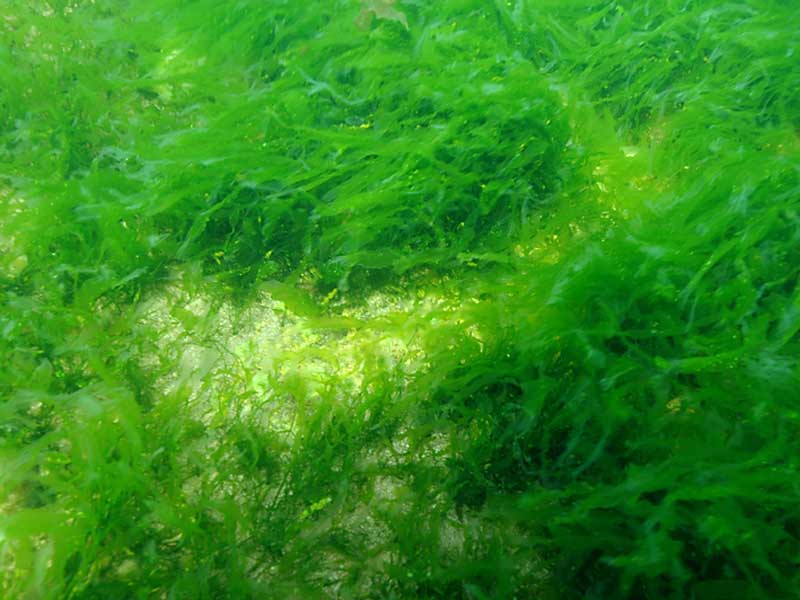
Ulva intestinalis at Bovisand, Devon.
Photographer: Dr Keith Hiscock Copyright: Dr Keith Hiscock
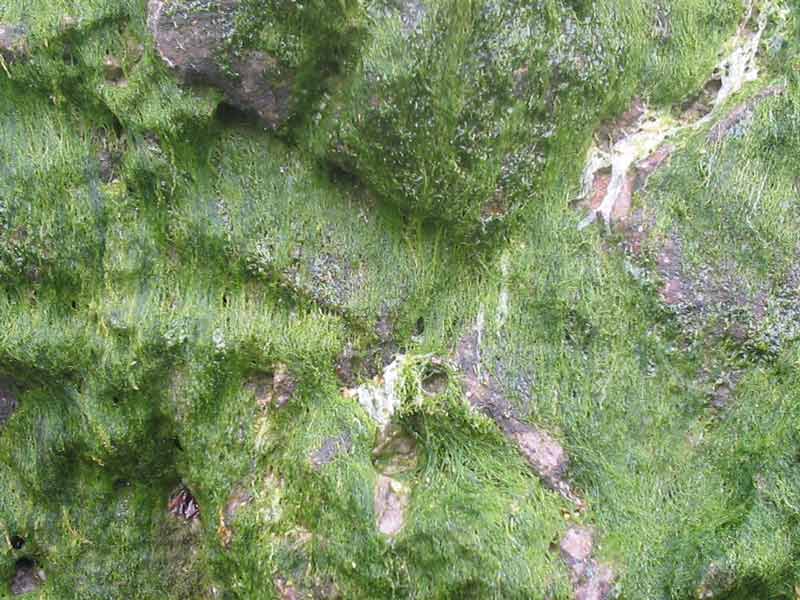
Ulva intestinalis drying out on a rock.
Photographer: Judith Oakley Copyright: Judith Oakley
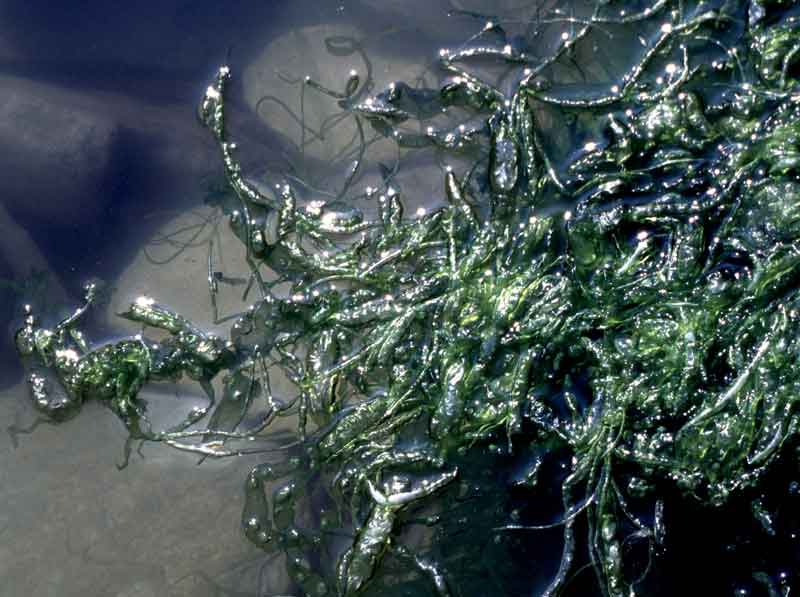
Ulva intestinalis in rock pool.
Photographer: Dr Keith Hiscock Copyright: Dr Keith Hiscock
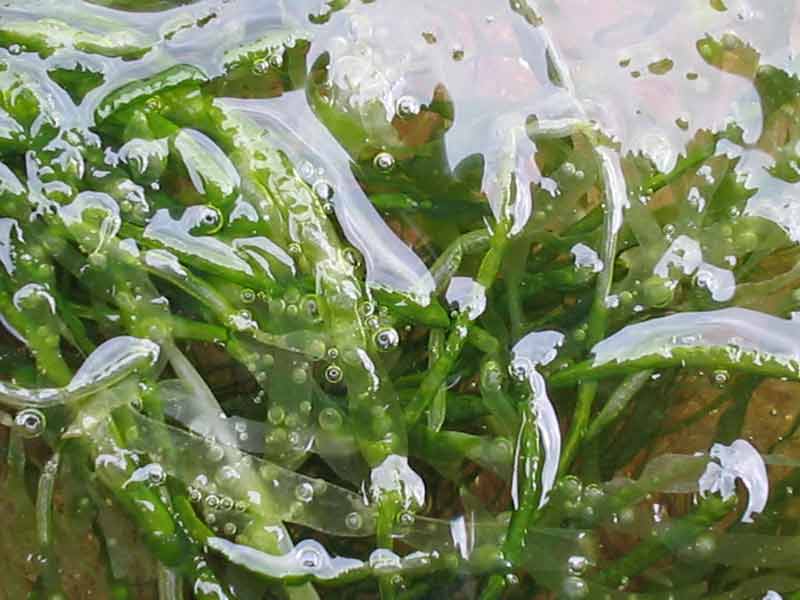
Ulva intestinalis traping small bubbles.
Photographer: Judith Oakley Copyright: Judith Oakley
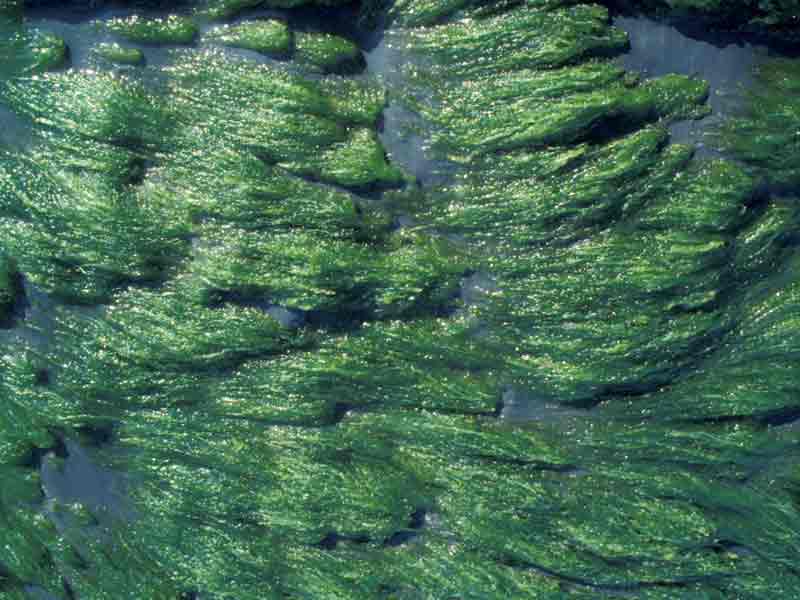
Area of freshwater runoff dominated by Ulva intestinalis in west Cornwall.
Photographer: Dr Keith Hiscock Copyright: Dr Keith Hiscock
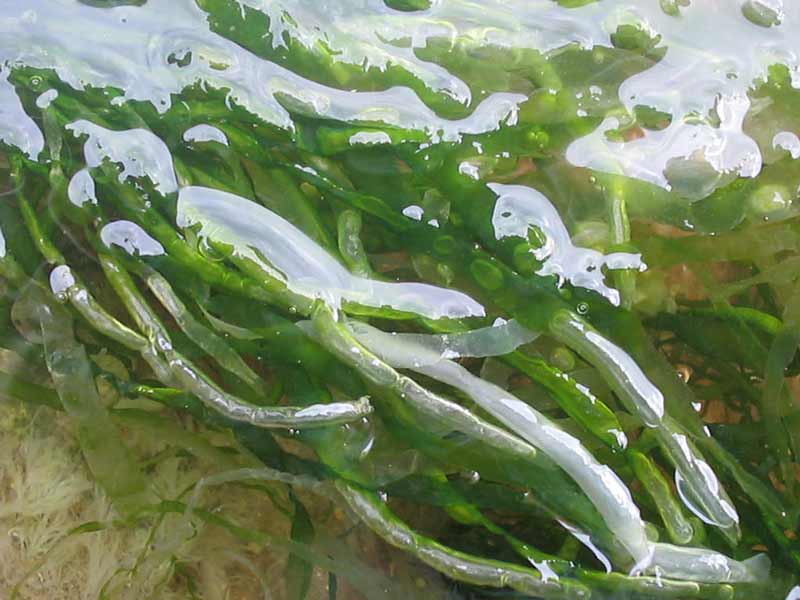
Close up of Ulva intestinalis in very shallow water.
Photographer: Judith Oakley Copyright: Judith Oakley
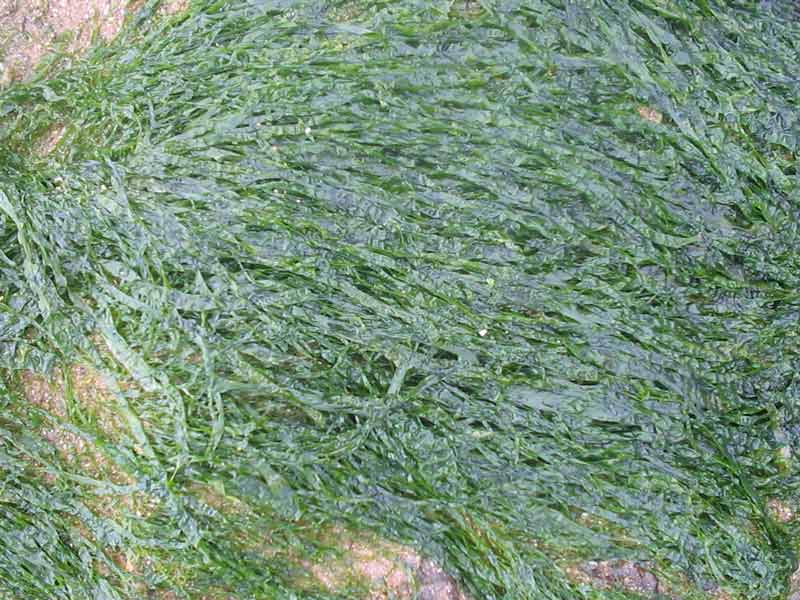
Dense patch of Ulva intestinalis on an intertidal rock.
Photographer: Judith Oakley Copyright: Judith Oakley
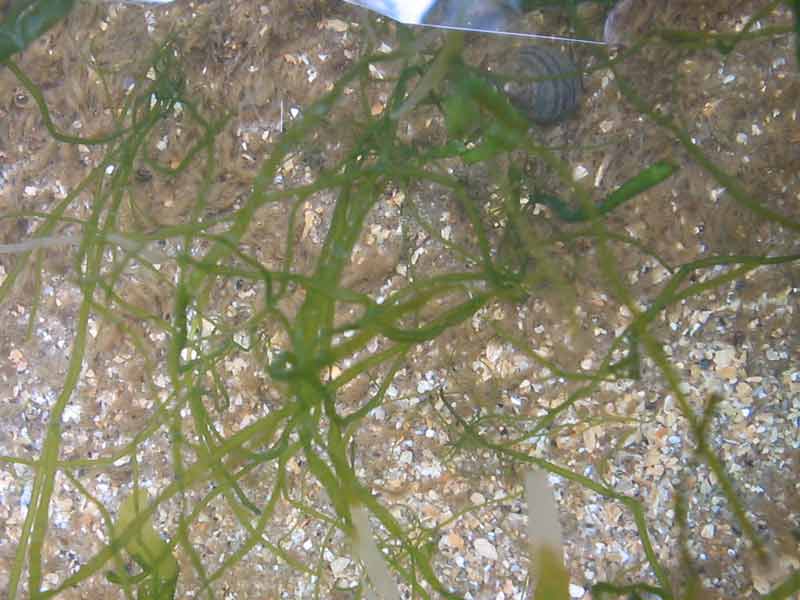
Loose strands of Ulva intestinalis in shallow water.
Photographer: Judith Oakley Copyright: Judith Oakley
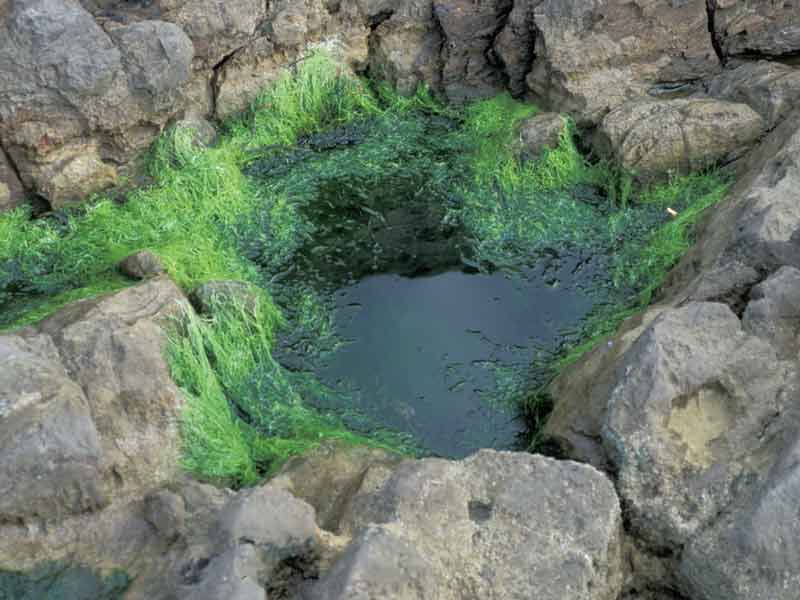
Splash zone pool dominated by Ulva intestinalis.
Photographer: Dr Keith Hiscock Copyright: Dr Keith Hiscock
Distribution data supplied by the Ocean Biodiversity Information System (OBIS). To interrogate UK data visit the NBN Atlas.Map Help
| Researched by | Georgina Budd & Paolo Pizzolla | Refereed by | This information is not refereed |
| Authority | Linnaeus, 1753 | ||
| Other common names | - | Synonyms | Enteromorpha intestinalis Linnaeus, 1753 |
Summary
Description
Ulva intestinalis is a conspicuous bright grass-green seaweed, consisting of inflated irregularly constricted, tubular fronds that grow from a small discoid base. Fronds are typically unbranched. Fronds may be 10-30 cm or more in length and 6-18 mm in diameter, the tips of which are usually rounded. Like other members of the genus, Ulva intestinalis is a summer annual, decaying and forming masses of bleached white fronds towards the end of the season.
Recorded distribution in Britain and Ireland
Common all round the coasts of Britain and Ireland.Global distribution
More or less world-wide in its distribution.Habitat
Occurs in a wide range of habitats on all levels of the shore. Where suitable support is available, it will grow on rocks, mud, sand and in rock pools. It is abundant in brackish water areas, where there is appreciable freshwater run-off and in wet areas of the splash zone. It is also a common epiphyte on other algae and shells. The seaweed may become detached from the substratum, and buoyed up by gas, rises to the surface, where it continues to grow in floating masses.Depth range
Into the sublittoralIdentifying features
Separation of species within the genus is difficult and reliant on cellular features, but
- Simple thalli (fronds) arise from a small discoid base.
- Thalli light to dark grass-green in colour.
- Thallus completely tubular and elongate, increasing in width from base to mid thallus.
- Mature specimens, are 'crisped' and irregularly inflated
- Thalli typically unbranched (see additional information).
Additional information
A recent molecular study suggested that the genus Enteromorpha is synonymous with the genus Ulva (Hayden et al., 2003). Species within the genus Ulva are difficult to identify. Identification is heavily reliant on cell detail and cell arrangement, in addition to gross morphology, but complicated by the fact that the morphology of a single species can vary in response to environmental conditions. For instance, Ulva intestinalis and Ulva compressa (as Enteromorpha) are two distinct, genetically divergent and reproductively isolated species (Blomster et al., 1998). They are, however, difficult to distinguish. The presence or absence of branching fronds was the most useful gross morphological characteristic distinguishing these two species (Ulva intestinalis being unbranched). But ambiguity exists because low salinity or salinity shock can induce branching in Ulva intestinalis. However, if environmental factors, such as salinity are taken into account, branching can be used to identify the great majority of thalli correctly (Blomster et al., 1998).
Listed by
- none -
Biology review
Taxonomy
| Level | Scientific name | Common name |
|---|---|---|
| Phylum | Chlorophyta | Green seaweeds |
| Class | Ulvophyceae | |
| Order | Ulvales | |
| Family | Ulvaceae | |
| Genus | Ulva | |
| Authority | Linnaeus, 1753 | |
| Recent Synonyms | Enteromorpha intestinalis Linnaeus, 1753 | |
Biology
| Parameter | Data | ||
|---|---|---|---|
| Typical abundance | High density | ||
| Male size range | |||
| Male size at maturity | |||
| Female size range | Large(>50cm) | ||
| Female size at maturity | |||
| Growth form | Straplike / Ribbonlike | ||
| Growth rate | 0.15-0.25cm/day | ||
| Body flexibility | High (greater than 45 degrees) | ||
| Mobility | Sessile, permanent attachment | ||
| Characteristic feeding method | Autotroph | ||
| Diet/food source | Photoautotroph | ||
| Typically feeds on | Species is a photoautotroph. | ||
| Sociability | No information | ||
| Environmental position | Epifloral | ||
| Dependency | Independent. | ||
| Supports | None | ||
| Is the species harmful? | No | ||
Biology information
Growth rate. Parchevskij & Rabinovich (1991) cultivated Ulva intestinalis (as Enteromorpha intestinalis) on horizontally and vertically suspended ropes in coastal Black Sea areas polluted with sewage and wastewater effluents. The specific growth rate of the seaweed during the spring-summer period was found to be 0.15-0.25 cm/day. A harvest weight of 2600-3000 g/m2 and 3400-4700 g/m2 was obtained within two weeks on horizontal and vertical ropes respectively.
Associated fauna. Ulva intestinalis provides shelter for the orange harpacticoid copepod, Tigriopus brevicornis, and the chironomid larva, Halocladius fucicola (McAllen, 1999). Ulva intestinalis is often the only seaweed found in supralittoral rockpools, and the copepod and chironomid species utilize the hollow thallus of Ulva intestinalis as a moist refuge from desiccation when the rockpools completely dry out. Several hundred individuals of Tigriopus brevicornis have been observed in a single thallus of Ulva intestinalis (McAllen, 1999). Many other intertidal species are often found amongst dense growths of Ulva in deep splash zone pools.
Floating masses. Ulva intestinalis may become detached from the substratum and buoyed up by gas, float to the surface where they continue to grow. Such mats of unattached Ulva intestinalis are most frequent in summer. For instance, the occurrence of a summer mass of unattached Ulva intestinalis (as Enteromorpha intestinalis) was studied by Baeck et al. (2000) on the Finnish Baltic Sea's west coast. The thalli of the seaweed lost their tubular shape, spread, and formed unattached monostromatic sheets. Mats were between 5-15 cm thick, with a biomass of 97 tonnes in an area of 3.7 km2 in 1993.
Habitat preferences
| Parameter | Data |
|---|---|
| Physiographic preferences | Open coast, Strait or Sound, Ria or Voe, Enclosed coast or Embayment |
| Biological zone preferences | Lower littoral fringe, Mid eulittoral, Supralittoral, Upper eulittoral, Upper littoral fringe |
| Substratum / habitat preferences | Bedrock, Cobbles, Large to very large boulders, Muddy sand, Small boulders |
| Tidal strength preferences | No information |
| Wave exposure preferences | Extremely sheltered, Moderately exposed, Sheltered, Ultra sheltered, Very sheltered |
| Salinity preferences | Full (30-40 psu), Low (<18 psu), Reduced (18-30 psu), See additional Information, Variable (18-40 psu) |
| Depth range | Into the sublittoral |
| Other preferences | No text entered |
| Migration Pattern | Non-migratory or resident |
Habitat Information
Ulva intestinalis is remarkably euryhaline, in that it can grow in freshwater. However, there is evidence for the existence of genetic strains adapted to high and low salinities (Reed & Russell, 1979).Life history
Adult characteristics
| Parameter | Data |
|---|---|
| Reproductive type | Alternation of generations |
| Reproductive frequency | Annual protracted |
| Fecundity (number of eggs) | >1,000,000 |
| Generation time | <1 year |
| Age at maturity | See additional information |
| Season | See additional information |
| Life span | <1 year |
Larval characteristics
| Parameter | Data |
|---|---|
| Larval/propagule type | - |
| Larval/juvenile development | Spores (sexual / asexual) |
| Duration of larval stage | See additional information |
| Larval dispersal potential | Greater than 10 km |
| Larval settlement period | Not relevant |
Life history information
Species of the genus Ulva are rapidly growing opportunists, favoured by the frequency and speed of their reproduction. The short-lived plants reach maturity at a certain stage of development rather than relying on an environmental trigger. Ulva intestinalis can be found in reproductive condition at all times of the year, but maximum development and reproduction occur during the summer months, especially towards the northern end of the distribution of the species (Burrows, 1991). The life history consists of an isomorphic (indistinguishable except for the type of reproductive bodies produced) alternation between haploid gametophytic and diploid sporophytic generations but can be modified by environmental conditions (Burrows, 1959; Moss & Marsland, 1976; Reed & Russell, 1978). McArthur & Moss (1979) examined the process of gametogenesis and gamete structure using scanning and transmission electron microscopy.
The haploid gametophytes of Ulva produce enormous numbers of biflagellate motile gametes which cluster and fuse to produce a sporophyte (diploid zygote). The sporophyte matures and produces by meiosis large numbers of quadriflagellate zoospores that mature as gametophytes, and the cycle is repeated. Both gametes and spores may be released in such quantities into rock pools or slack water that the water mass is coloured green (Little & Kitching, 1996). Together spores and gametes are termed 'swarmers'. Swarmers are often released in relation to tidal cycles, with the release being triggered by the incoming tide as it wets the thallus. However, the degree of release is usually related to the stage of the spring/neap tidal cycle, so allowing regular periodicity and synchronization of reproduction (Little & Kitching, 1996). Christie & Evans (1962) found that swarmer release of Ulva intestinalis (as Enteromorpha intestinalis) from the Menai Straits, Wales, peaked just before the highest tides of each neap-spring cycle. The mobility of swarmers belonging to Ulva intestinalis (as Enteromorpha intestinalis) can be maintained for as long as eight days (Jones & Babb, 1968). Algae such as Ulva intestinalis tend to have large dispersal shadows, with propagules being found far from the nearest adult plants, e.g. 35 km (Amsler & Searles, 1980).
Sensitivity review
The MarLIN sensitivity assessment approach used below has been superseded by the MarESA (Marine Evidence-based Sensitivity Assessment) approach (see menu). The MarLIN approach was used for assessments from 1999-2010. The MarESA approach reflects the recent conservation imperatives and terminology and is used for sensitivity assessments from 2014 onwards.
Physical pressures
Use / to open/close text displayed
| Intolerance | Recoverability | Sensitivity | Evidence / Confidence | |
Substratum loss [Show more]Substratum lossBenchmark. All of the substratum occupied by the species or biotope under consideration is removed. A single event is assumed for sensitivity assessment. Once the activity or event has stopped (or between regular events) suitable substratum remains or is deposited. Species or community recovery assumes that the substratum within the habitat preferences of the original species or community is present. Further details EvidenceUlva intestinalis, forms a permanent attachment to a solid substratum (although the species may continue to grow in mats if displaced from the substratum, it requires a substratum for development), so would be intolerant of substratum loss. Intolerance has been assessed to be high and recoverability very high (see additional information below). | High | Very high | Low | Moderate |
Smothering [Show more]SmotheringBenchmark. All of the population of a species or an area of a biotope is smothered by sediment to a depth of 5 cm above the substratum for one month. Impermeable materials, such as concrete, oil, or tar, are likely to have a greater effect. Further details. EvidenceUlva intestinalis is a filamentous seaweed without structural support for its thalli, therefore it is likely that entire plants would be smothered by an additional covering of 5 cm of sediment. Smothering would interfere with photosynthesis and over the period of one month the seaweed may begin to rot. Intolerance to smothering has been assessed to be high. However, on return to prior conditions the species is likely to rapidly recolonize the available substratum (see additional information below) and recoverability has been assessed to be very high. | High | Very high | Low | Moderate |
Increase in suspended sediment [Show more]Increase in suspended sedimentBenchmark. An arbitrary short-term, acute change in background suspended sediment concentration e.g., a change of 100 mg/l for one month. The resultant light attenuation effects are addressed under turbidity, and the effects of rapid settling out of suspended sediment are addressed under smothering. Further details EvidenceThe effects of increased suspended sediment on adults is likely to be indirect but include smothering (above) as a result of siltation, and increased turbidity and therefore light attenuation (see below). In areas where Ulva intestinalis occurs on the shore, current flows are reduced and siltation is likely to be increased. Spores, germlings and juveniles are likely to be highly intolerant of sediment scour and smothering (Vadas et al. 1992). However, Ulva intestinalis also occurs in estuarine environments where elevated levels of suspended sediment are likely to be experienced, so the species may demonstrate some tolerance. Intolerance has been assessed to be intermediate, as a proportion of the population , especially germlings may be adversely affected by increased suspended sediment. Recoverability has been assessed to be very high (see additional information below). | Intermediate | Very high | Low | Low |
Decrease in suspended sediment [Show more]Decrease in suspended sedimentBenchmark. An arbitrary short-term, acute change in background suspended sediment concentration e.g., a change of 100 mg/l for one month. The resultant light attenuation effects are addressed under turbidity, and the effects of rapid settling out of suspended sediment are addressed under smothering. Further details EvidenceUlva intestinalis is unlikely to be affected by a decrease in suspended sediment concentrations, and an assessment of tolerant has been made. | Tolerant | Not relevant | Not sensitive | Not relevant |
Desiccation [Show more]Desiccation
EvidenceUlva intestinalis is often very abundant on the high shore where desiccation stress is the primary factor controlling seaweed distribution, and may even be found above the tidal limits of the shore. Ulva intestinalis (studied as Enteromorpha intestinalis) can survive several weeks of living in completely dried out rock pools, while becoming completely bleached on the uppermost layers, but remaining moist underneath the bleached fronds. Its ability to survive out of water for so long makes it an ideal refuge for copepods in supralittoral rockpools (McAllen, 1999). Several studies have indicated that stress from aerial exposure can cause high mortality to algal propagules. Baker (1910) found a positive correlation between the vertical distribution of a species and the ability of zygotes to develop in desiccated environments. Hruby & Norton (1979) found that 7-14 day old germlings of Ulva (studied as Enteromorpha) were more tolerant of desiccation than earlier stages, so an increase in desiccation stress may impact more adversely on newly settled germlings than more mature plants. An intolerance assessment of low has been made to the benchmark change in desiccation and recoverability recorded to be very high (see additional information below). | Low | Very high | Very Low | Moderate |
Increase in emergence regime [Show more]Increase in emergence regimeBenchmark. A one hour change in the time covered or not covered by the sea for a period of one year. Further details EvidenceUlva intestinalis is often very abundant on the high shore where desiccation stress is the primary factor controlling seaweed distribution, and may even be found above the tidal limits of the shore, so is tolerant of emergence to some extent. Furthermore, above Mean High Water Springs (MHWS) level, Ulva intestinalis tends to preferentially inhabit rock pools or is associated with trickles of freshwater that cross the shore, and in such positions the risk of desiccation is reduced. Owing to increased emergence, the species that graze on Ulva intestinalis are likely to be less active, owing to risk of desiccation, and the seaweed may benefit from reduced grazing pressure. An assessment of tolerant* has been made. | Tolerant* | Not relevant | Not sensitive* | Low |
Decrease in emergence regime [Show more]Decrease in emergence regimeBenchmark. A one hour change in the time covered or not covered by the sea for a period of one year. Further details EvidenceUlva intestinalis is unlikely to be directly affected by a decrease in the emergence regime, as occurs into the subtidal zone. However, it is the preferred food resource of the snail Littorina littorea (Lubchenco, 1978) and is grazed by other prosobranchs, all of which will probably be more active grazing during periods of immersion, so that the additional grazing pressure is likely to affect the population. An intolerance assessment of low has been made. A recoverability of very high has been recorded (see additional information, below). | Low | Very high | Very Low | Low |
Increase in water flow rate [Show more]Increase in water flow rateA change of two categories in water flow rate (view glossary) for 1 year, for example, from moderately strong (1-3 knots) to very weak (negligible). Further details EvidenceUlva intestinalis is not of a growth form that offers resistance to tidal flow. The fronds would conform to the direction of the flow until drag effects caused tearing of the fronds or dislodgement of the holdfast. Increased scour from sand mobilized by increased tidal streams may cause more damage to the seaweed than increased water flow itself. However, recovery of the species is unlikely to be inhibited by increases water flow. For instance, Houghton et al. (1973) observed that swarmers of Ulva were able to settle onto surfaces subjected to water speeds of up to 10.7 knots. Intolerance has been assessed to be intermediate, as a proportion of the population may be damaged by increased water flow. Recruitment is not likely to be adversely affected and has been assessed to be very high (see additional information, below). | Intermediate | Very high | Low | Very low |
Decrease in water flow rate [Show more]Decrease in water flow rateA change of two categories in water flow rate (view glossary) for 1 year, for example, from moderately strong (1-3 knots) to very weak (negligible). Further details EvidenceUlva intestinalis is unlikely to be adversely affected by a decrease in water flow rate, as it occurs in locations, e.g. rockpools, where water flow is negligible. An assessment of tolerant has been made. | Tolerant | Not relevant | Not sensitive | Not relevant |
Increase in temperature [Show more]Increase in temperature
For intertidal species or communities, the range of temperatures includes the air temperature regime for that species or community. Further details EvidenceUlva intestinalis occurs to the south of the British Isles, so is likely to be tolerant of a chronic increase in temperature of 2°C. Also, it is characteristic of upper shore rock pools, where water and air temperatures are greatly elevated on hot days. Clarke (1992) reviewed the influence of cooling water effluent on shore communities. Effects are usually restricted to the immediate vicinity of the outfall, but brown seaweeds of the genus, e.g. Ascophyllum and Fucus were eliminated from a rocky shore heated to 27-30 °C by a power station in Maine, whilst Ulva intestinalis (as Enteromorpha intestinalis) increased significantly near the outfall (Vadas et al., 1976). The evidence suggests that Ulva intestinalis would probably tolerate the benchmark increase in temperature and may benefit indirectly (through loss of competitors) and an assessment of tolerant* has been made. | Tolerant* | Not relevant | Not sensitive* | High |
Decrease in temperature [Show more]Decrease in temperature
For intertidal species or communities, the range of temperatures includes the air temperature regime for that species or community. Further details EvidenceUlva intestinalis occurs to the north of the British Isles, so is likely to be tolerant of a chronic decrease in temperature of 2°C, and one of the factors contributing to its success as a fouling organism, is its ability to withstand a wide range and variation of temperature Ulva sp. (as Enteromorpha) were reported to be tolerant of a temperature of -20°C (Kylin, 1917). The evidence suggests that Ulva intestinalis would tolerate the benchmark decrease in temperature. | Tolerant | Not relevant | Not sensitive | High |
Increase in turbidity [Show more]Increase in turbidity
EvidenceThe light attenuating effects of increased turbidity are likely to impact on the photosynthetic efficiency of Ulva intestinalis, with consequential effects on growth. An intolerance assessment of low has been made to reflect the effect of increased turbidity on the viability of the species. On return to prior conditions recovery is likely to be rapid and growth resume, a recoverability of very high has been recorded. | Low | Very high | Very Low | Low |
Decrease in turbidity [Show more]Decrease in turbidity
EvidenceAs a photoautotroph, Ulva intestinalis, is likely to benefit from reduced turbidity, as the light attenuating effects of turbid water reduce photosynthesis. An assessment of tolerant* has been made. | Tolerant* | Not relevant | Not sensitive* | Low |
Increase in wave exposure [Show more]Increase in wave exposureA change of two ranks on the wave exposure scale (view glossary) e.g., from Exposed to Extremely exposed for a period of one year. Further details EvidenceWave induced scouring and burial of habitats by sand tends to prevent seaweed growth, except for those that are stress tolerant, robust perennials, or opportunistic ephemeral species such as Ulva intestinalis. This species settles when disturbance is at a minimum and rocks are bare, reproduces and disappears when physical disturbance begins again. In wave exposed locations, it is likely that an increase in wave exposure would inhibit settlement of propagules belonging to Ulva intestinalis so that a population would become impoverished. An intolerance assessment of low has been made to reflect the probable impact on the species recruitment. On return to prior conditions, recovery is likely to occur within a matter of weeks, and recoverability has been assessed to be very high (see additional information, below). | Low | Very high | Very Low | Moderate |
Decrease in wave exposure [Show more]Decrease in wave exposureA change of two ranks on the wave exposure scale (view glossary) e.g., from Exposed to Extremely exposed for a period of one year. Further details EvidenceUlva intestinalis occurs in locations with a variety of wave exposures. It is unlikely that the species would be directly adversely affected by decreased wave exposure. An assessment of tolerant has been made. | Tolerant | Not relevant | Not sensitive | Low |
Noise [Show more]Noise
EvidenceSeaweeds have no known mechanism for noise perception. | Not relevant | Not relevant | Not relevant | Not relevant |
Visual presence [Show more]Visual presenceBenchmark. The continuous presence for one month of moving objects not naturally found in the marine environment (e.g., boats, machinery, and humans) within the visual envelope of the species or community under consideration. Further details EvidenceSeaweeds have no known mechanism for visual perception. | Not relevant | Not relevant | Not relevant | Not relevant |
Abrasion & physical disturbance [Show more]Abrasion & physical disturbanceBenchmark. Force equivalent to a standard scallop dredge landing on or being dragged across the organism. A single event is assumed for assessment. This factor includes mechanical interference, crushing, physical blows against, or rubbing and erosion of the organism or habitat of interest. Where trampling is relevant, the evidence and trampling intensity will be reported in the rationale. Further details. EvidenceUlva intestinalis is likely to be susceptible to abrasion as it is not of a resilient growth form and would easily be scraped from the substratum by dragging objects. Therefore, intolerance has been assessed as high. However, Ulva intestinalis reproduces rapidly to colonize available substrata, and recoverability has been assessed to be very high (see additional information below). | High | Very high | Low | Moderate |
Displacement [Show more]DisplacementBenchmark. Removal of the organism from the substratum and displacement from its original position onto a suitable substratum. A single event is assumed for assessment. Further details EvidenceUlva intestinalis typically forms a permanent attachment to suitable substrata, suggesting that it would be intolerant of displacement. However, in some circumstances, the algae may becomes detached from the substratum, and buoyed-up by gas, it floats up to the surface and continues to grow in mats (e.g. Baeck et al., 2000). The thalli of the seaweed tend to loose their tubular shape, spread, and formed unattached monostromatic sheets. On account of the ability of the algae to continue growing as an unattached mat, following displacement, an assessment of not sensitive has been made. | Tolerant | Not relevant | Not sensitive | Moderate |
Chemical pressures
Use [show more] / [show less] to open/close text displayed
| Intolerance | Recoverability | Sensitivity | Evidence / Confidence | |
Synthetic compound contamination [Show more]Synthetic compound contaminationSensitivity is assessed against the available evidence for the effects of contaminants on the species (or closely related species at low confidence) or community of interest. For example:
The evidence used is stated in the rationale. Where the assessment can be based on a known activity then this is stated. The tolerance to contaminants of species of interest will be included in the rationale when available; together with relevant supporting material. Further details. EvidenceUlva intestinalis has been assessed to have an intermediate intolerance to synthetic chemical pollution as available evidence highlights adverse effects upon the species viability and damage leading to death. | Intermediate | High | Low | High |
Heavy metal contamination [Show more]Heavy metal contaminationEvidenceThe order of metal toxicity to algae varies, with the algal species and experimental conditions, but generally the order is Hg>Cu>Cd>Ag>Pb>Zn (Rice et al., 1973; Rai et al., 1981). The effects of copper on macrophytes have been more extensively studied than the effects of any other metal owing to its use in antifouling paints. Lewis et al. (1998) investigated the influence of copper exposure and heatshock on the physiology and cellular stress response of Ulva intestinalis (as Enteromorpha intestinalis). Heat shock proteins (HSPs) are known to be expressed in response to a variety of stress conditions, including heavy metals (Lewis et al., 1999). Ulva intestinalis was exposed to a range of copper concentrations (0-500 µg -1 for 5 days, to assess the effect of copper exposure on stress proteins (Stress-70 levels) and physiology of the seaweed. Stress-70 was induced by copper exposure, but was found to be no better an indicator of copper exposure than measurement of growth, which is inhibited by copper. | Low | Very high | Very Low | Moderate |
Hydrocarbon contamination [Show more]Hydrocarbon contaminationEvidenceUlva intestinalis is likely to demonstrate intolerance to hydrocarbon contamination. Likely effects include smothering, inhibition of respiration and photosynthesis, bleaching and interference with reproduction, so that affected populations may be destroyed. Intolerance has been assessed to be high. However, the species tends to recover very rapidly from oil pollution incidents. For instance, after the Torrey Canyon tanker oil in 1967, grazing species were killed, and a dense flush of ephemeral green algae (Ulva, Blidingia) appeared on the rocky shore within a few weeks and persisted for up to one year (Smith, 1968). Recoverability has been assessed to be very high (see additional information, below). | High | Very high | Low | High |
Radionuclide contamination [Show more]Radionuclide contaminationEvidenceUlva sp. are known to be able to acquire large concentrations of substances from surrounding water. In the vicinity of the Sellafield nuclear plant, England, Ulva (as Enteromorpha) sp. accumulated zirconium, niobium, cerium and plutonium-239, however the species appeared to be unaffected by the radionuclides (Clark, 1997). | No information | Not relevant | No information | Not relevant |
Changes in nutrient levels [Show more]Changes in nutrient levelsEvidenceNitrogen enrichment enhances growth of Ulva intestinalis (as Enteromorpha intestinalis) (Kamer & Fong, 2001), making the species a useful indicator of nutrient enrichment, although it also thrives in 'un-enriched' water. High levels of nutrient enrichment were found to mitigate the negative effects that reduced salinity can have on the growth of the species (Kamer & Fong, 2001). An assessment of tolerant* has been made as Ulva intestinalis is likely to increase in abundance as a consequence of nutrient enrichment. | Tolerant* | Not relevant | Not sensitive* | Moderate |
Increase in salinity [Show more]Increase in salinity
EvidenceUlva intestinalis has a cosmopolitan distribution throughout coastal areas and estuaries and is considered to be a remarkably euryhaline species, tolerant of extreme salinities ranging from 0 psu to 136 psu.
Increased salinity is most likely to occur in the region of the littoral fringe and supralittoral zone. For instance, during the summer, owing to excessive evaporation brine precipitation may occur in rockpools containing Ulva intestinalisand salinity has been reported to rise as high as 180 psu (Reed & Russell, 1979). In follow-up experiments, littoral fringe specimens showed an increased capacity to survive in media of extreme salinity, a significant decrease in regeneration only being recorded after exposure to concentrated seawater (102 psu and 136 psu) for > 7 days. | Tolerant | Not relevant | Not sensitive | Moderate |
Decrease in salinity [Show more]Decrease in salinity
EvidenceUlva intestinalis has a cosmopolitan distribution throughout coastal areas and estuaries and is considered to be a remarkably euryhaline species, tolerant of extreme salinities ranging from 0 psu to 136 psu. However, on the basis of evidence available, it is likely that some populations of the algae would be more intolerant of reductions in ambient salinity than others. For instance, Reed & Russell (1979) found that the response (ability to regenerate from cut thalli) of individual populations varied according to the salinity conditions of the original habitat, and that the pattern of euryhalinity in parental material and offspring was in broad agreement. This led Reed & Russell (1979) to suggest that salinity tolerances of selected populations have a genetic basis. For example;
Reduced salinity has also been reported to affect the growth rate of Ulva intestinalis. Martins et al. (1999) observed that in years with high precipitation and significant increase of freshwater runoff to the Mondego estuary (west Portugal), that Ulva intestinalis (as Enteromorpha intestinalis) failed to bloom. In the laboratory, the growth rate of Ulva intestinalis was measured against a range of salinities, from 0 to 32 psu. Ulva intestinalis showed the lowest growth rates at extremely low salinity values (less than or equal to 3 psu), and for salinity less than or equal to 1 psu, the algae died. Growth rates at a salinity lower than 5 psu and higher than 25 psu were also low, in comparison to growth between a salinity of 15 and 20 psu, where Ulva intestinalis showed the highest growth rates. Martin et al. (1999) concluded that episodes of reduced salinity were an important external parameter in controlling the growth of Ulva intestinalis. However, elsewhere Ulva intestinalis is known to thrive in areas of the supralittoral zone that receive freshwater runoff. | Tolerant | Not relevant | Not sensitive | Moderate |
Changes in oxygenation [Show more]Changes in oxygenationBenchmark. Exposure to a dissolved oxygen concentration of 2 mg/l for one week. Further details. EvidenceThere is insufficient information available to make an assessment about the effects of reduced oxygen in the water column upon Ulva intestinalis. | No information | Not relevant | No information | Not relevant |
Biological pressures
Use [show more] / [show less] to open/close text displayed
| Intolerance | Recoverability | Sensitivity | Evidence / Confidence | |
Introduction of microbial pathogens/parasites [Show more]Introduction of microbial pathogens/parasitesBenchmark. Sensitivity can only be assessed relative to a known, named disease, likely to cause partial loss of a species population or community. Further details. EvidenceNo information was found concerning the effects of microbial pathogens on Ulva intestinalis. | No information | Not relevant | No information | Not relevant |
Introduction of non-native species [Show more]Introduction of non-native speciesSensitivity assessed against the likely effect of the introduction of alien or non-native species in Britain or Ireland. Further details. EvidenceUlva intestinalis is not known to be adversely affected by non-native species. | Not relevant | Not relevant | Not relevant | Not relevant |
Extraction of this species [Show more]Extraction of this speciesBenchmark. Extraction removes 50% of the species or community from the area under consideration. Sensitivity will be assessed as 'intermediate'. The habitat remains intact or recovers rapidly. Any effects of the extraction process on the habitat itself are addressed under other factors, e.g. displacement, abrasion and physical disturbance, and substratum loss. Further details. EvidenceThe benchmark for extraction is the removal of 50% of the Ulva intestinalis population from the area under consideration. Intolerance has therefore been assessed to be intermediate and recoverability very high as a localized populations of the species will remain from which recruitment can occur (see additional information below). | Intermediate | Very high | Low | Moderate |
Extraction of other species [Show more]Extraction of other speciesBenchmark. A species that is a required host or prey for the species under consideration (and assuming that no alternative host exists) or a keystone species in a biotope is removed. Any effects of the extraction process on the habitat itself are addressed under other factors, e.g. displacement, abrasion and physical disturbance, and substratum loss. Further details. EvidenceNo other species are identified to be host or prey items for Ulva intestinalis. | Not relevant | Not relevant | Not relevant | Not relevant |
Additional information
Recoverability. Ulva intestinalis is generally considered to be an opportunistic species, with an 'r-type' strategy for survival. The r-strategists have a high growth rate and high reproductive rate. For instance, the thalli of Ulva intestinalis, which arise from spores and zygotes, grow within a few weeks into thalli that reproduce again, and the majority of the cell contents are converted into reproductive cells. The species is also capable of dispersal over a considerable distance. For instance, Amsler & Searles (1980) showed that swarmers of a coastal population of Ulva (as Enteromorpha) reached exposed artificial substrata on a submarine plateau 35 km away.
Ulva intestinalis is amongst the first multicellular algae to appear on substrata that have been cleared following a disturbance, e.g. following the Torrey Canyon oil spill in March 1967, species of the genus Ulva rapidly recruited to areas where oil had killed the herbivores that usually grazed on them, so that a rapid greening of the rocks (owing to a thick coating of Ulva) was apparent by mid-May (Smith, 1968). The rapid recruitment of Ulva to areas cleared of herbivorous grazers was also demonstrated by Kitching & Thain (1983). Following the removal of the urchin %Paracentrotus lividus% from areas of Lough Hyne, Ireland, Ulva grew over the cleared area and reached a coverage of 100% within one year. Therefore, evidence suggests that Ulva intestinalis is likely to have considerable ability for recovery within a year.
Importance review
Policy/legislation
- no data -
Status
| National (GB) importance | - | Global red list (IUCN) category | - |
Non-native
| Parameter | Data |
|---|---|
| Native | - |
| Origin | - |
| Date Arrived | - |
Importance information
- Ulva intestinalis is used by the copepod Tigriopus brevicornis as a refuge from desiccation (McAllen, 1999)
- Green algae in the form of membranes or flat tubes (e.g. Ulva and Monostroma) are eaten extensively in Asia (Guiry & Blunden, 1991)
- The potential of Ulva intestinalis (as Enteromorpha intestinalis) for use in the treatment of secondary municipal sewage and biomass for energy conservation has been investigated (Guiry & Blunden, 1991).
Bibliography
Amsler, C.D. & Searles, R.B., 1980. Vertical distribution of seaweed spores in a water column off shore of North Carolina. Journal of Phycology, 16, 617-619.
Baeck, S., Lehvo, A. & Blomster, J., 2000. Mass occurrence of unattached Enteromorpha intestinalis on the Finnish Baltic Sea coast. Annales Botanici Fennici, 37, 155-161.
Blomster, J., Maggs, C.A. & Stanhope, M.J., 1998. Molecular and morphological analysis of Enteromorpha intestinalis and Enteromorpha compressa (Chlorophyta) in the British Isles. Journal of Phycology, 34, 319-340.
Burrows, E.M., 1959. Growth form and environment in Enteromorpha. Botanical Journal of the Linnean Society, 56, 204-206.
Burrows, E.M., 1991. Seaweeds of the British Isles. Volume 2. Chlorophyta. London: British Museum (Natural History).
Clark, R.B., 1997. Marine Pollution, 4th edition. Oxford: Carendon Press.
Clay, E., 1960b. Literature survey of the common flora of estuaries. 1. Species of Enteromorpha. Imperial Chemical Industries Limited Paints Division, Research Department Memorandum PVM45/B/435.
Dickinson, C.I., 1963. British seaweeds. London & Frome: Butler & Tanner Ltd.
Fish, J.D. & Fish, S., 1996. A student's guide to the seashore. Cambridge: Cambridge University Press.
Guiry, M.D. & Blunden, G., 1991. Seaweed Resources in Europe: Uses and Potential. Chicester: John Wiley & Sons.
Guiry, M.D. & Nic Dhonncha, E., 2002. AlgaeBase. World Wide Web electronic publication http://www.algaebase.org,
Hayden, H.S., Blomster, J., Maggs, C.A., Silva, P.C., Stanhope, M.J. & Waaland, J.R., 2003. Linnaeus was right all along: Ulva and Enteromorpha are not distinct genera. European Journal of Phycology, 38, 277-294.
Hayward, P., Nelson-Smith, T. & Shields, C. 1996. Collins pocket guide. Sea shore of Britain and northern Europe. London: HarperCollins.
Houghton, D.R., Pearman, I. & Tierney, D., 1973. The effect of water velocity on the settlement of swarmers of the green alga Enteromorpha. In Proceedings of the third international congress on marine corrosion and fouling (ed. R.F. Acker, B. Floyd Brown, J.R. DePalma & W.P. Iverson), 682-690. Evanston, Northwestern University Press.
Howson, C.M. & Picton, B.E., 1997. The species directory of the marine fauna and flora of the British Isles and surrounding seas. Belfast: Ulster Museum. [Ulster Museum publication, no. 276.]
Hruby, T. & Norton, T.A., 1979. Algal colonization on rocky shores in the Firth of Clyde. Journal of Ecology, 67, 65-77.
JNCC (Joint Nature Conservation Committee), 1999. Marine Environment Resource Mapping And Information Database (MERMAID): Marine Nature Conservation Review Survey Database. [on-line] http://www.jncc.gov.uk/mermaid
Jones, W.E. & Babb, M.S., 1968. The motile period of swarmers of Enteromorpha intestinalis (L.) Link. British Phycological Bulletin, 3, 525-528.
Kamer, K. & Fong, P., 2001. Nitrogen enrichment ameliorates the negative effects of reduced salinity on green macroalga Enteromorpha intestinalis. Marine Ecology Progress Series, 218, 87-93.
Kitching, J.A. & Thain, V.M., 1983. The ecological impact of the sea urchin Paracentrotus lividus (Lamarck) in Lough Ine, Ireland. Philosophical Transactions of the Royal Society of London, Series B, 300, 513-552.
Knight, M. & Parke M.W., 1931. Manx Algae. Liverpool: University Press.
Kylin, H., 1917. Kalteresistenze der Meerealen. Bericht der Deutschen Botanischen Gesellschafter, 35, 370-384.
Lewis, S., Donkin, M.E. & Depledge, M.H., 2001. Hsp70 expression in Enteromorpha intestinalis (Chlorophyta) exposed to environmental stressors. Aquatic Toxicology, 51, 277-291.
Lewis, S., Handy, R.D., Cordi, B., Billinghurst, Z. & Depledge, M.H., 1999. Stress proteins (HSPs): methods of detection and their use as an environmental biomonitor. Ecotoxicology, 8, 351-368.
Lewis, S., May, S., Donkin, M.E. & Depledge, M.H., 1998. The influence of copper and heat shock on the physiology and cellular stress response of Enteromorpha intestinalis. Marine Environmental Research, 46, 421-424.
Little, C. & Kitching, J.A., 1996. The Biology of Rocky Shores. Oxford: Oxford University Press.
Lubchenco, J., 1978. Plant species diversity in a marine intertidal community, importance of herbivore food preference and algal competitive abilities. American Naturalist, 112, 23-39.
Martin, I., Oliveira, J.M., Flindt, M.R. & Marques, J.C., 1999. The effect of salinity on the growth rate of the macroalgae Enteromorpha intestinalis (Chlorophyta) in the Mondego estuary (west Portugal). Acta Oceanologica, 20, 259-265.
McAllen, R., 1999. Enteromorpha intestinalis - a refuge for the supralittoral rockpool harpacticoid copepod Tigriopus brevicornis. Journal of the Marine Biological Association of the United Kingdom, 79, 1125-1126.
McArthur, D.M. & Moss, B.L., 1979. Gametogenesis and gamete structure of Enteromorpha intestinalis (L.) Link. British Phycological Journal, 14, 43-57.
Moss, B. & Marsland, A., 1976. Regeneration of Enteromorpha. British Phycological Journal, 11, 309-313.
Moss, B.L. & Woodhead, P., 1975. The effect of two commercial herbicides on the settlement, germination and growth of Enteromorpha. Marine Pollution Bulletin, 6, 189-192.
Munda, I.M., 1984. Salinity dependent accumulation of Zn, Co and Mn in Scytosiphon lomentaria (Lyngb.) Link and Enteromorpha intestinalis (L.) from the Adriatic Sea. Botanica Marina, 27, 371-376.
Parchevskij, V.P. & Rabinovich, M.A., 1991. Growth rate and harvest of the green alga Enteromorpha intestinalis on artificial substrates in sewage and waste water effluents. Biologiya Morya, 2, 1991.
Rai, L., Gaur, J.P. & Kumar, H.D., 1981. Phycology and heavy-metal pollution. Biological Reviews, 56, 99-151.
Reed, R.H. & Russell, G., 1978. Salinity fluctuations and their influence on "bottle brush" morphogenesis in Enteromorpha intestinalis (L.) Link. British Phycological Journal, 13, 149-153.
Reed, R.H. & Russell, G., 1979. Adaptation to salinity stress in populations of Enteromorpha intestinalis (L.) Link. Estuarine and Coastal Marine Science, 8, 251-258.
Reise, K., 1983. Sewage, green algal mats anchored by lugworms, and the effects on Turbellaria and small Polychaeta. Helgolander Meeresuntersuchungen, 36, 151-162.
Rice, H., Leighty, D.A. & McLeod, G.C., 1973. The effects of some trace metals on marine phytoplankton. CRC Critical Review in Microbiology, 3, 27-49.
Say, P.J., Burrows, I.G. & Whitton, B.A., 1990. Enteromorpha as a monitor of heavy metals in estuaries. Hydrobiologia, 195, 119-126.
Scarlett, A., Donkin, M.E., Fileman, T.W. & Donkin, P., 1997. Occurrence of the marine antifouling agent Irgarol 1051 within the Plymouth Sound locality: implications for the green macroalga Enteromorpha intestinalis. Marine Pollution Bulletin, 38, 645-651.
Smith, J.E. (ed.), 1968. 'Torrey Canyon'. Pollution and marine life. Cambridge: Cambridge University Press.
Soulsby, P.G., Lowthion. D., Houston, M. & Montgomery, H.A.C., 1985. The role of sewage effluent in the accumulation of macroalgal mats on intertidal mudflats in two basins in southern England. Netherlands Journal of Sea Research, 19, 257-263.
Vadas, R.L., Keser, M. & Rusanowski, P.C., 1976. Influence of thermal loading on the ecology of intertidal algae. In Thermal Ecology II, (eds. G.W. Esch & R.W. McFarlane), ERDA Symposium Series (Conf-750425, NTIS), Augusta, GA, pp. 202-212.
Datasets
Bristol Regional Environmental Records Centre, 2017. BRERC species records recorded over 15 years ago. Occurrence dataset: https://doi.org/10.15468/h1ln5p accessed via GBIF.org on 2018-09-25.
Bristol Regional Environmental Records Centre, 2017. BRERC species records within last 15 years. Occurrence dataset: https://doi.org/10.15468/vntgox accessed via GBIF.org on 2018-09-25.
Centre for Environmental Data and Recording, 2018. IBIS Project Data. Occurrence dataset: https://www.nmni.com/CEDaR/CEDaR-Centre-for-Environmental-Data-and-Recording.aspx accessed via NBNAtlas.org on 2018-09-25.
Centre for Environmental Data and Recording, 2018. Ulster Museum Marine Surveys of Northern Ireland Coastal Waters. Occurrence dataset https://www.nmni.com/CEDaR/CEDaR-Centre-for-Environmental-Data-and-Recording.aspx accessed via NBNAtlas.org on 2018-09-25.
Cofnod – North Wales Environmental Information Service, 2018. Miscellaneous records held on the Cofnod database. Occurrence dataset: https://doi.org/10.15468/hcgqsi accessed via GBIF.org on 2018-09-25.
Environmental Records Information Centre North East, 2018. ERIC NE Combined dataset to 2017. Occurrence dataset: http://www.ericnortheast.org.ukl accessed via NBNAtlas.org on 2018-09-38
Fenwick, 2018. Aphotomarine. Occurrence dataset http://www.aphotomarine.com/index.html Accessed via NBNAtlas.org on 2018-10-01
Fife Nature Records Centre, 2018. St Andrews BioBlitz 2014. Occurrence dataset: https://doi.org/10.15468/erweal accessed via GBIF.org on 2018-09-27.
Fife Nature Records Centre, 2018. St Andrews BioBlitz 2015. Occurrence dataset: https://doi.org/10.15468/xtrbvy accessed via GBIF.org on 2018-09-27.
Fife Nature Records Centre, 2018. St Andrews BioBlitz 2016. Occurrence dataset: https://doi.org/10.15468/146yiz accessed via GBIF.org on 2018-09-27.
Kent Wildlife Trust, 2018. Biological survey of the intertidal chalk reefs between Folkestone Warren and Kingsdown, Kent 2009-2011. Occurrence dataset: https://www.kentwildlifetrust.org.uk/ accessed via NBNAtlas.org on 2018-10-01.
Kent Wildlife Trust, 2018. Kent Wildlife Trust Shoresearch Intertidal Survey 2004 onwards. Occurrence dataset: https://www.kentwildlifetrust.org.uk/ accessed via NBNAtlas.org on 2018-10-01.
Lancashire Environment Record Network, 2018. LERN Records. Occurrence dataset: https://doi.org/10.15468/esxc9a accessed via GBIF.org on 2018-10-01.
Manx Biological Recording Partnership, 2017. Isle of Man wildlife records from 01/01/2000 to 13/02/2017. Occurrence dataset: https://doi.org/10.15468/mopwow accessed via GBIF.org on 2018-10-01.
Manx Biological Recording Partnership, 2018. Isle of Man historical wildlife records 1995 to 1999. Occurrence dataset: https://doi.org/10.15468/lo2tge accessed via GBIF.org on 2018-10-01.
Merseyside BioBank., 2018. Merseyside BioBank (unverified). Occurrence dataset: https://doi.org/10.15468/iou2ld accessed via GBIF.org on 2018-10-01.
National Trust, 2017. National Trust Species Records. Occurrence dataset: https://doi.org/10.15468/opc6g1 accessed via GBIF.org on 2018-10-01.
NBN (National Biodiversity Network) Atlas. Available from: https://www.nbnatlas.org.
Norfolk Biodiversity Information Service, 2017. NBIS Records to December 2016. Occurrence dataset: https://doi.org/10.15468/jca5lo accessed via GBIF.org on 2018-10-01.
North East Scotland Biological Records Centre, 2017. NE Scotland fungus and lichen records 1800-2010. Occurrence dataset: https://doi.org/10.15468/v6mt0g accessed via GBIF.org on 2018-10-01.
OBIS (Ocean Biodiversity Information System), 2025. Global map of species distribution using gridded data. Available from: Ocean Biogeographic Information System. www.iobis.org. Accessed: 2025-07-01
Outer Hebrides Biological Recording, 2018. Non-vascular Plants, Outer Hebrides. Occurrence dataset: https://doi.org/10.15468/goidos accessed via GBIF.org on 2018-10-01.
Royal Botanic Garden Edinburgh, 2018. Royal Botanic Garden Edinburgh Herbarium (E). Occurrence dataset: https://doi.org/10.15468/ypoair accessed via GBIF.org on 2018-10-02.
South East Wales Biodiversity Records Centre, 2018. SEWBReC Algae and allied species (South East Wales). Occurrence dataset: https://doi.org/10.15468/55albd accessed via GBIF.org on 2018-10-02.
South East Wales Biodiversity Records Centre, 2018. Dr Mary Gillham Archive Project. Occurance dataset: http://www.sewbrec.org.uk/ accessed via NBNAtlas.org on 2018-10-02
Suffolk Biodiversity Information Service., 2017. Suffolk Biodiversity Information Service (SBIS) Dataset. Occurrence dataset: https://doi.org/10.15468/ab4vwo accessed via GBIF.org on 2018-10-02.
The Wildlife Information Centre, 2018. TWIC Biodiversity Field Trip Data (1995-present). Occurrence dataset: https://doi.org/10.15468/ljc0ke accessed via GBIF.org on 2018-10-02.
Citation
This review can be cited as:
Last Updated: 22/05/2008