
Faunal and algal crusts with Spirobranchus triqueter and sparse Alcyonium digitatum on exposed to moderately wave-exposed circalittoral rock
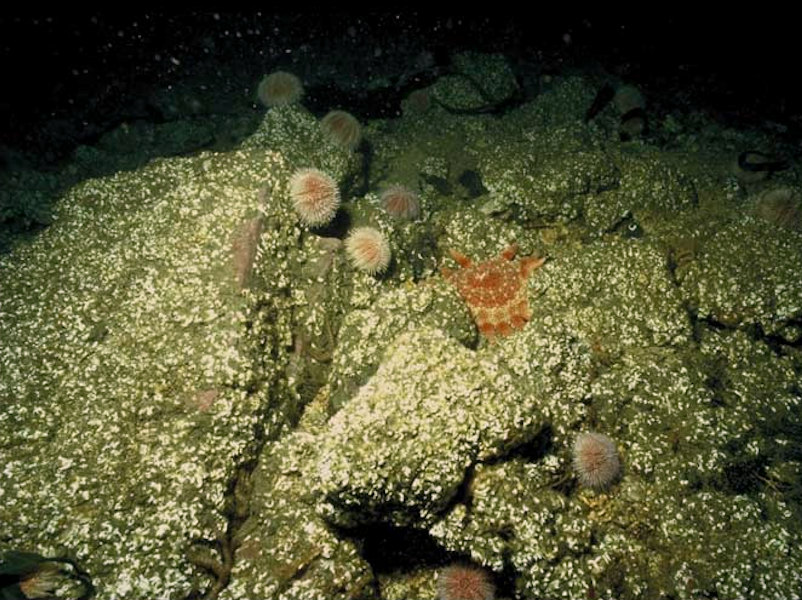
Faunal and algal crusts with Spirobranchus triqueter and sparse Alcyonium digitatum on exposed to moderately wave-exposed circalittoral rock
Photographer: Teresa Bennett Copyright: Joint Nature Conservation Committee (JNCC)
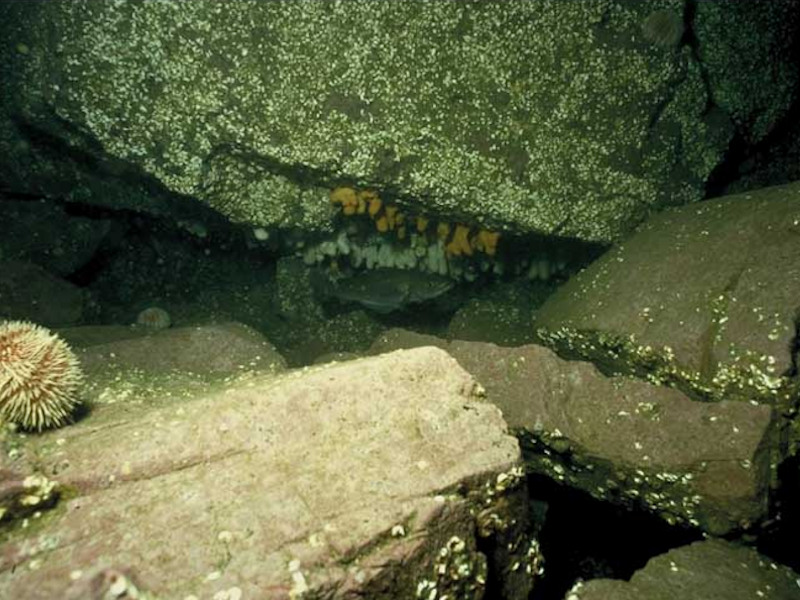
Faunal and algal crusts with Spirobranchus triqueter and sparse Alcyonium digitatum on exposed to moderately wave-exposed circalittoral rock
Photographer: Teresa Bennett Copyright: Joint Nature Conservation Committee (JNCC)

| Researched by | Thomas Stamp, Kelsey Lloyd & Amy Watson | Refereed by | This information is not refereed |
|---|
Summary
UK and Ireland classification
Description
This variant is typically found on the upper faces of exposed and moderately exposed circalittoral bedrock or boulders subjected to moderately strong to weak tidal streams. From afar, the seabed has a rather sparse, grazed appearance, reminiscent of a brittlestar bed after the brittlestars have moved elsewhere. The rocky substratum is generally covered with encrusting red algae and the white, calcareous tubes of the polychaete Spirobranchus triqueter, dotted with the abundant urchin Echinus esculentus. Under closer inspection, Alcyonium digitatum are usually seen attached to the rocky surface underneath rock overhangs and large boulders. Although they may be recorded as abundant or common in some areas, their relatively small size means that their biomass is generally lower than in other biotopes. Sparse clumps of robust hydroids such as Abietinaria abietina are frequently observed, and bryozoan crusts such as Parasmittina trispinosa are occasionally seen. Echinoderms such as the brittlestars Ophiothrix fragilis and Ophiocomina nigra, and the crab Cancer pagurus may be seen within crevices in the boulders/rock whilst the starfish Asterias rubens may be seen on the rock surface. Muddy-gravel patches between boulders (especially within Scottish sealochs) provide a suitable habitat for the anemone Urticina felina. The top shell Gibbula cineraria is occasionally seen grazing on the rock surface. Within this biotope, there is some regional variation. The robust hydroid Abietinaria abietina is typically found in higher abundances in northern (Scottish) regions, especially around the Isle of May. (Information from Connor et al., 2004).
Depth range
5-10 m, 10-20 m, 20-30 m, 30-50 mAdditional information
-
Listed By
Sensitivity review
Sensitivity characteristics of the habitat and relevant characteristic species
CR.MCR.EcCr.FaAlCr.Adig, CR.MCR.EcCr.FaAlCr.Sec, CR.MCR.EcCr.FaAlCr.Spi and CR.MCR.EcCr.FaAlCr.Car are within the “Faunal and algal crusts on exposed to moderately wave-exposed circalittoral rock” FaAlCr habitat complex. All these biotopes have a sparse appearance due to grazing, mainly by Echinus esculentus, which combined with water depth, is thought to be a limiting factor controlling the growth of algae and increasing the dominance of faunal turfs. Their sensitivities are probably similar. Therefore, they are reviewed as a group, and the resultant reviews and sensitivity assessments presented separately.
Encrusting fauna such as Spirobranchus triqueter (syn. Pomatoceros triqueter) and the bryozoan Parasmittina trispinosa are important characterizing species across the CR.MCR.EcCr.FaAlCr biotope complex (Connor et al., 2004). Alcyonium digitatum is common to all biotopes, however, colonies are generally smaller and have lower biomass within CR.MCR.EcCr.FaAlCr.Spi. For sensitivity assessment Alcyonium digitatum, Caryophyllia smithii, Echinus esculentus, the encrusting bryozoan Parasmittina trispinosa, and Spirobranchus triqueter and are the primary foci of research as the important characterizing species defining the Cr.MCr.FaAlCr complex and CR.MCR.EcCr.FaAlCr.Spi.
Spirobranchus triqueter is the most important and dominant characterizing species of the CR.MCR.EcCr.FaAlCr.Spi biotope. Grazing pressure is the most important structuring feature of the biotope after depth. Therefore, the sensitivity of grazers, e.g. Echinus esculentus is probably crucial to the sensitivity of the biotope. Other erect hydroids and bryozoans, e.g. Abietinaria abietina, are also thought important to the character of these biotopes, however, were not assessed within this review.
Resilience and recovery rates of habitat
Spirobranchus triqueter and Parasmittina trispinosa are two visually dominant encrusting species within CR.MCR.EcCr.FaAlCr.Sec and CR.MCR.EcCr.FaAlCr.Spi and CR.MCR.EcCr.FaAlCr.Adig. Spirobranchus triqueter is a species of serpulid worm which forms encrusting tubes, typically 2-3 cm long, on rock and shell surfaces. Once settled onto the substratum the worm forms a temporary delicate semi-transparent tube. Mature tubes are formed by a secretion of calcium carbonate. The growth rate was observed by Dons (1927) to be 1.5 mm per month, although this varied with external conditions. Hayward & Ryland (1995a) and Dons (1927) stated that sexual maturity is reached in approximately 4 months. Spirobranchus triqueter is also a visually dominant species within mobile and/or disturbed biotopes e.g. SS.SCS.CCS.SpiB (Connor et al., 2004), indicating this species is either highly resilient to physical disturbance or has a rapid recolonization rate. In agreement, Hiscock (1983) noted that a community, under conditions of scour and abrasion from stones and boulders moved by storms, developed into a community consisting of fast growing species such as Spirobranchus triqueter. Off Chesil Bank, the epifaunal community dominated by Spirobranchus triqueter, Balanus crenatus and Electra pilosa, decreased in cover in October, was scoured away in winter storms, and was recolonized in May to June (Warner, 1985). Hayward & Ryland (1995a) noted that Spirobranchus triqueter lived approximately 1.5 years. Spirobranchus triqueter are broadcast spawners and are therefore likely to have large dispersal capacity. Larvae are pelagic for about 2-3 weeks in the summer, however, in the winter this amount of time increases to about 2 months (Hayward & Ryland, 1995a). The time of reproduction is variable, Hayward & Ryland (1995a) and Segrove (1941) suggested that Spirobranchus triqueter reproduction probably took place throughout the year, but, peaked in spring and summer. However, Moore (1937) noted Spirobranchus triqueter breeding only took place in April in Port Erin, Isle of Man. Castric-Fey (1983) studied variations in settlement rate and concluded that, although the species settled all year round, very rare settlement was observed during winter and maximum settlement occurred in April, June, August and Sept-Oct. Studies in Bantry Bay revealed a single peak in recruitment during summer (especially July and August) with very little recruitment at other times of the year (Cotter et al., 2003).
Alcyonium digitatum is a colonial species of soft coral with a wide distribution in the North Atlantic, recorded from Portugal (41°N) to Northern Norway (70°N) as well as on the east coast of North America (Hartnoll, 1975; Budd, 2008). Colonies consist of stout “finger-like” projections (Hartnoll, 1975) which can reach up to 20 cm tall (Budd, 2008) and can dominate circalittoral rock habitats (as in CR.HCR.FaT.CTub.Adig; Connor et al., 2004). Alcyonium digitatum colonies are likely to have a lifespan that exceeds 20 years as colonies have been followed for 28 years in marked plots (Lundälv, pers. comm., in Hartnoll, 1998). Colonies that were 10-15 cm in height were aged at between 5 and 10 years old (Hartnoll, unpublished). Most colonies are unisexual, with the majority of individuals being female. Sexual maturity is predicted to occur, at its earliest, when the colony reaches its second year of growth. However the majority of colonies are not predicted to reach maturity until their third year (Hartnoll, 1975). Alcyonium digitatum spawns from December and January. Gametes are released into the water where fertilization occurs. The embryos are neutrally buoyant and float freely for 7 days, when they give rise to actively swimming lecithotrophic planulae which may have an extended pelagic life before they eventually settle (usually within 1 or 2 further days) and metamorphose to polyps (Matthews, 1917; Hartnoll, 1975; Budd, 2008). In laboratory experiments, several larvae of Alcyonium digitatum failed to settle within 10 days, presumably finding the conditions unsuitable. These larvae were able to survive 35 weeks as non-feeding planulae. After 14 weeks some were still swimming and after 24 weeks the surface cilia were still active although they rested on the bottom of the tanks. By the end of the experiment, at 35 weeks the larvae had shrunk to a diameter of 0.3 mm. The ability to survive for long periods in the plankton may favour the dispersal and eventual discovery of a site suitable for settlement (Hartnoll, 1975). The combination of spawning in winter and the long pelagic lifespan may allow a considerable length of time for the planulae to disperse, settle and metamorphose ahead of the spring plankton bloom. Young Alcyonium digitatum will consequently be able to take advantage of an abundant food resource in spring and be well developed before the appearance of other organisms that may otherwise compete for the same substrata. In addition, because the planulae do not feed whilst in the pelagic zone they do not suffer by being released at the time of minimum plankton density. They may also benefit by the scarcity of predatory zooplankton which would otherwise feed upon them (Hartnoll, 1975).
The Scylla was intentionally sunk on the 27th March 2004 in Whitsand Bay, Cornwall to act as an artificial reef. Hiscock et al. (2010) recorded the succession of the biological community on the wreck for five years following the sinking of the ship. Initially, the wreck was colonized by opportunistic species; e.g. filamentous algae, hydroids, serpulid worms and barnacles. Tubularia sp. were early colonizers, appearing within a couple of months after the vessel was sunk. Metridium senile appeared late in the summer of the first year but didn’t become visually dominant until 2007 (three years after the vessel was sunk). Cylista elegans was recorded within the summer of 2005, and by the end of 2006 was well established. Corynactis viridis was first recorded in the summer of the first year and quickly formed colonies via asexual reproduction. Urticina felina was first recorded at the end of august 2006 (two years after the vessel was sunk), and by summer 2008 had increased in abundance. Alcyonium digitatum was first recorded in early summer 2005, a year after the vessel was sunk. Within one year of growth colonies had grown to nearly full size, however, did not become a visually dominant component of the community until 2009 (five years after the vessel had been sunk). The authors noted that erect branching Bryozoa (such as Securiflustra securifrons) are not a common part of rocky reef communities to the west of Plymouth and at the time of writing had not colonized to any great extent on ‘Scylla’ by the end of the study, although several species of encrusting bryozoans were recorded, which included Chartella papyracea in 28/08/2006 (two years after the vessel was sunk). Caryophyllia smithii was noted to colonize the wreck a year after the vessel was sunk.
Parasmittina trispinosa is an encrusting bryozoan which is described as having a “cosmopolitan” distribution by Powell (1971), in the North East Atlantic recorded from all coasts of the British Isles (NBN, 2015) to the Iberian Peninsula (Ramos, 2010). Parasmittina trispinosa is also recorded from the Panama Cana (Powell (1971) to the Gulf of Alaska (Soule & Soule, 2002) in the Pacific ocean. Little information regarding the life history traits of Parasmittina trispinosa was found. Eggleston (1972a) noted In the Isle of Man, a peak in reproductive and vegetative growth was not well marked in Parasmittina trispinosa, and the number of embryos present was fairly constant throughout the year (Eggleston, 1972a), indicating that Parasmittina trispinosa could potentially reproduce annually within the UK. However, due to the lack of available literature regarding Parasmittina trispinosa, it’s resilience cannot be assessed with sufficient confidence.
Echinus esculentus is a sea urchin found within North East Atlantic, recorded from Murmansk Coast, Russia to Portugal (Hansson, 1998). Echinus esculentus is estimated to have a lifespan of 8-16 years (Nichols, 1979; Gage, 1992a) and reach sexual maturity within 1-3 years (Tyler-Walters, 2008). Maximum spawning occurs in spring although individuals may spawn over a protracted period throughout the year. Gonad weight is at its maximum in February/March in English Channel (Comely & Ansell, 1989) but decreases during spawning in spring and then increases again through summer and winter until the next spawning season. Spawning occurs just before the seasonal rise in temperature in temperate zones but is probably not triggered by rising temperature (Bishop, 1985). Echinus esculentus is a broadcast spawner, with a complex larval life history which includes a blastula, gastrula and a characteristic four armed echinopluteus stage that forms an important component of the zooplankton. MacBride (1914) observed planktonic larval development could take 45-60 days in captivity. Recruitment is sporadic or variable depending on locality, e.g. Millport populations showed annual recruitment, whereas few recruits were found in Plymouth populations during Nichols studies between 1980-1981 (Nichols, 1984). Bishop & Earll (1984) suggested that the population of Echinus esculentus at St Abbs had a high density and recruited regularly whereas the Skomer population was sparse, ageing and had probably not successfully recruited larvae in the previous six years (Bishop & Earll, 1984). Comely & Ansell (1988) noted that the largest number of Echinus esculentus occurred below the kelp forest.
Echinus esculentus is a mobile species and could, therefore, migrate and repopulate an area quickly if removed. For example, Lewis & Nichols (1979a) found that adults were able to colonize an artificial reef in small numbers within three months and the population steadily grew over the following year. If completely removed from a site and local populations are naturally sparse then recruitment may be dependent on larval supply which can be highly variable. As suggested by Bishop & Earll (1984) the Skomer, Wales Echinus esculentus population had most likely not successfully recruited for six years which would suggest the mature population would be highly sensitive to removal and may not return for several years. On 19th November 2002, the Prestige oil tanker spilt 63 000t of fuel 130 nautical miles off Galicia, Spain. High wave exposure and strong weather systems increased mixing of the oil to “some” depth within the water column, causing sensitive faunal communities to be affected. Preceding and for nine years following the oil spill, the biological community of Guéthary, France was monitored. Following the oil spill, taxonomic richness decreased significantly from 57 recorded species to 41, which included the loss of Echinus esculentus from the site. Post-spill taxonomic richness had increased to pre-spill levels after 2-3 years and Echinus esculentus had returned (Castège et al., 2014).
Resilience assessment. Spirobranchus triqueter can reportedly reach maturity within approximately four months and is often a dominant component of physically disturbed habitats (Warner, 1985), indicating rapid colonization rates (<1 year) and/or physical robustness. Echinus esculentus can reportedly reach sexual maturity within 1-2 years (Tyler-Walters, 2008), however, as highlighted by Bishop & Earll (1984) and Castège et al. (2014) recovery may take 2-6 years (possibly more if local recruitment is poor). Alcyonium digitatum can recruit onto bare surfaces within two years, however, may take up to five years to become a dominant component of the community (Whomersley & Picken, 2003; Hiscock et al., 2010). However, in FaAlCr.Spi, Alcyonium digitatum is restricted to overhangs and under boulders where it probably escapes grazing. Therefore, the resilience of the community is probably dependent on the recovery of the dominant and opportunistic characteristic species Spirobranchus triqueter. If resistance has been assessed as 'Low', 'Medium' or 'High' then resilience will be assessed as ‘High’ as Spirobranchus triqueter would probably return to dominance and the biotope would be recognizable with 6-12 months, even after significant damage or loss. If the community is completely removed from the habitat (resistance of 'None') resilience has been assessed as ‘Medium’ because, even though Spirobranchus triqueter would probably return to dominance and the biotope would be recognizable with 6-12 months, the other members of the community, e.g. Alcyonium digitatum would take longer to recover. Pressures that result in a significant reduction in (or loss of) the Echinus population would probably result in a change in the character (or loss) of the biotope due to the reduction in grazing pressure, in which case recovery of the biotope would depend on the recovery of the Echinus population.
Hydrological Pressures
Use [show more] / [show less] to open/close text displayed
| Resistance | Resilience | Sensitivity | |
Temperature increase (local) [Show more]Temperature increase (local)Benchmark. A 5°C increase in temperature for one month, or 2°C for one year. Further detail EvidenceMost records of CR.MCR.EcCr.FaAlCr.Spi occur in the north of the British Isles but records also exist from Wales and south-west England (Connor et al., 2004). Sea surface temperature (SST) across this distribution ranges from 8-16°C in summer to 6-13°C in winter (Beszczynska-Möller & Dye, 2013). Spirobranchus triqueter is described as a temperate species by Kupriyanova & Badyaev (1998). Spirobranchus triqueter is recorded as abundant in sub-tidal habitats of Trondheimsfjord (63°N) (Kukliński & Barnes, 2008), no survey reports could be found further north. The most southerly records are from the Iberian peninsula, Spain (Ramos, 2010) as well from the Alexandria coast of Egypt, Mediterranean Sea (Dorgham et al., 2013). Across this latitudinal gradient, Spirobranchus triqueter is likely to experience a range of temperatures from approximately 5-28°C (Seatemperature, 2015). Alcyonium digitatum is described as a northern species by Hiscock et al. (2004) but is distributed from Northern Norway (70°N) to Portugal (41°N) (Hartnoll, 1975; Budd, 2008). Securiflustra securifrons is recorded from Kongsfjorden, Svalbard (Gontar et al., 2001) to the Iberian peninsula in both Spain and Portugal (Ramos, 2010). Across this latitudinal gradient both species are likely to experience a range of temperatures from approximately 5-18°C (Seatemperature, 2015). Bishop (1985) suggested that Echinus esculentus cannot tolerate high temperatures for prolonged periods due to increased respiration rate and resultant metabolic stress. Ursin (1960) reported Echinus esculentus occurred at temperatures between 0-18°C in Limfjord, Denmark. Bishop (1985) noted that gametogenesis occurred at 11-19°C however, continued exposure to 19°C disrupted gametogenesis. Embryos and larvae developed abnormally after 24hr exposure to 15°C but normally at 4, 7 and 11°C (Tyler & Young, 1998). Sensitivity assessment. Spirobranchus triqueter records from the Alexandria coast of Egypt, Mediterranean Sea (Dorgham et al., 2013) indicate the species is unlikely to be affected at the benchmark level. An increase in sea surface temperature of 2°C for a period of 1 year combined with high temperatures may approach the upper temperature threshold of Alcyonium digitatum, Echinus esculentus and may, therefore, cause minor declines in abundance. Biotopes in the North of the UK are unlikely to be affected at the benchmark level. There was insufficient evidence to assess the effect of a short-term increase in temperature of 5°C on Alcyonium digitatum however it may disrupt Echinus esculentus spawning in southern examples of this biotope. Resistance has been assessed as ‘Medium’, resilience has been assessed as ‘High’. Sensitivity has been assessed as ‘Low’. | MediumHelp | HighHelp | LowHelp |
Temperature decrease (local) [Show more]Temperature decrease (local)Benchmark. A 5°C decrease in temperature for one month, or 2°C for one year. Further detail EvidenceMost records of CR.MCR.EcCr.FaAlCr.Spi occur in the north of the British Isles but records also exist from Wales and south-west England (Connor et al., 2004). Sea surface temperature (SST) across this distribution ranges from 8-16°C in summer to 6-13°C in winter (Beszczynska-Möller & Dye, 2013). Alcyonium digitatum is described as a northern species by Hiscock et al. (2004) but is distributed from Northern Norway (70°N) to Portugal (41°N) (Hartnoll, 1975; Budd, 2008). Across this latitudinal gradient, both species are likely to experience a range of temperatures from approximately 5-18°C. Alcyonium digitatum was also reported to be apparently unaffected by the severe winter of 1962-1963 where air temperature reached -5.8°C (Crisp, 1964). Echinus esculentus has been recorded from the Murmansk Coast, Russia. Due to the high latitude at which Echinus esculentus can occur it is unlikely to be affected at the pressure benchmark. Spirobranchus triqueter is described as a temperate species by Kupriyanova & Badyaev (1998). Spirobranchus triqueter is recorded as abundant in sub-tidal habitats of Trondheimsfjord (63°N) (Kukliński & Barnes, 2008), no survey reports could be found further north. Averaged across several years the lowest winter temperature within Trondheimsfjord is 4.9°C (Seatemperature, 2015). Below 7°C Spirobranchus triqueter is unable to build calcareous tubes (Thomas, 1940). Mature adults may survive a decrease at the pressure benchmark, however, larvae may not be able to attach to the substratum (Riley & Ballerstedt, 2005) if a temperature decrease co-occurred with cold winter temperatures in the UK. However, settlement is reportedly low within winter (See resilience section) and, therefore, the effects on recruitment are likely to be minor. Sensitivity assessment. Alcyonium digitatum and Echinus esculentus have northern/boreal distributions and are unlikely to be affected at the benchmark level. Spirobranchus triqueter is unable to build calcareous tubes at low temperatures, however, during winter this is unlikely to have any significant effects on recruitment. Resistance has been assessed as ‘High’, resilience as ‘High’. Sensitivity has been assessed as ‘Not sensitive’. | HighHelp | HighHelp | Not sensitiveHelp |
Salinity increase (local) [Show more]Salinity increase (local)Benchmark. A increase in one MNCR salinity category above the usual range of the biotope or habitat. Further detail EvidenceLyster (1965) tested the tolerance of Spirobranchus triqueter larvae to various hyper and hypo salinity treatments. Larvae were placed in cultures ranging from 0-90‰ and notes were made on the time taken for larvae to die or begin displaying abnormal behaviour. Spirobranchus triqueter larvae were tolerant of salinities ranging from 20-50‰; above 50‰ caused high mortality. Spirobranchus triqueter is, therefore, unlikely to be affected at the pressure benchmark. Echinoderms are generally stenohaline and possess no osmoregulatory organ (Boolootian, 1966). Therefore, an increase in salinity may cause Echinus esculentus mortality. Alcyonium digitatum’ distribution and the depth at which it occurs also suggest it would not likely experience regular salinity fluctuations and, therefore, tolerate significant increases in salinity. Sensitivity assessment. CR.MCR.EcCr.FaAlCr.Adig, CR.MCR.EcCr.FaAlCr.Spi & CR.MCR.EcCr.FaAlCr.Sec are restricted to full salinity (Connor et al., 2004), it, therefore, seems likely that an increase in salinity to >40‰ may cause a decline in the abundance of Alcyonium digitatum and, most importantly, Echinus esculentus. A reduction in Echinus grazing is likely to alter the character of the biotope. Therefore, resistance has been assessed as ‘Low’, resilience as ‘High’ and sensitivity has been assessed as ‘Low’. Due to the lack of information regarding salinity effects on Alcyonium digitatum and Echinus esculentus confidence in this assessment has been assessed as low. | LowHelp | HighHelp | LowHelp |
Salinity decrease (local) [Show more]Salinity decrease (local)Benchmark. A decrease in one MNCR salinity category above the usual range of the biotope or habitat. Further detail EvidenceLyster (1965) tested the tolerance of Spirobranchus triqueter larvae to various hyper and hyposalinity treatments. Larvae were placed in cultures ranging from 0-90‰ and notes were made on the time taken for larvae to die or begin displaying abnormal behaviour. Spirobranchus triqueter larvae can survive very well in salinities down to 20‰, and can tolerate salinities down to 10‰. Adults are tolerant of salinities as low as 3‰, and can be found in areas where salinity ranges from 18-23‰ (Alexander et al., 1935). Alcyonium digitatum does inhabit situations such as the entrances to sea lochs (Budd, 2008) or the entrances to estuaries (Braber & Borghouts, 1977) where salinity may vary occasionally. Furthermore as highlighted the Marine Nature Conservation Review (MNCR) records of 23rd Oct 2014 show Alcyonium digitatum is found within a number of variable salinity biotopes, e.g. MCR.ByH.Flu.Hocu. However, its distribution and the depth at which it occurs suggest that Alcyonium digitatum would not likely often experience salinity fluctuations and, therefore, is unlikely to survive significant reductions in salinity (Budd, 2008). Echinoderms are generally unable to tolerate low salinity (stenohaline) and possess no osmoregulatory organ (Boolootian, 1966). At low salinity, urchins gain weight, and the epidermis loses its pigment as patches are destroyed; prolonged exposure is fatal. However, within Echinus esculentus there is some evidence to suggest intracellular regulation of osmotic pressure due to increased amino acid concentrations. Furthermore, Echinus esculentus is found within a number of variable and reduced salinity biotopes, e.g. IR.LIR.KVS.SlatPsaVS. Ryland (1970) stated that, with a few exceptions, the Gymnolaemata were fairly stenohaline and restricted to full salinity (35 psu) and noted that reduced salinities result in an impoverished bryozoan fauna. Sensitivity assessment. CR.MCR.EcCr.FaAlCr.Adig, CR.MCR.EcCr.FaAlCr.Spi & CR.MCR.EcCr.FaAlCr.Sec are recorded exclusively in full marine conditions (30-40 ‰) (Connor et al., 2004). The lack of records within “Reduced” salinity (18-30‰) suggests the community would not persist/be recognisable if salinity was reduced. Spirobranchus triqueter is likely to be able to tolerate reduced salinity, Records from the MNCR suggest Alcyonium digitatum and Echinus esculentus can occur in reduced salinity habitats, however, the general evidence suggests that these species would decrease in abundance. Therefore, resistance has been assessed as ‘Medium’, resilience as ‘High’ and sensitivity has been assessed as ‘Low’. | MediumHelp | HighHelp | LowHelp |
Water flow (tidal current) changes (local) [Show more]Water flow (tidal current) changes (local)Benchmark. A change in peak mean spring bed flow velocity of between 0.1 m/s to 0.2 m/s for more than one year. Further detail EvidenceCR.MCR.EcCr.FaAlCr.Spi is recorded from weak-moderately strong tidal streams (<0.5-1.5m/sec) (Connor et al., 2004). Alcyonium digitatum and Spirobranchus triqueter are suspension feeders relying on water currents to supply food. These taxa, therefore, thrive in conditions of vigorous water flow e.g. around Orkney and St Abbs, Scotland, where the community may experience tidal currents of 3 and 4 knots during spring tides (De Kluijver, 1993). Spirobranchus triqueter has been recorded in areas with very sheltered to exposed water flow rates (Price et al., 1980). Wood (1988) observed Spirobranchus sp. in strong tidal streams and Hiscock (1983) found that in strong tidal streams or strong wave action where abrasion occurs, fast growing species such as Spirobranchus triqueter occur. Echinus esculentus occurred in kelp beds on the west coast of Scotland in currents of about 0.5 m/sec. Outside the beds specimens were occasionally seen being rolled by the current (Comely & Ansell, 1988), which may have been up to 1.4 m/sec. Urchins are removed from the stipe of kelps by wave and current action. Echinus esculentus are also displaced by storm action. After disturbance Echinus esculentus migrates up the shore, an adaptation to being washed to deeper water by wave action (Lewis & Nichols, 1979). Therefore, increased water flow may remove the population from the affected area; probably to deeper water although individuals would probably not be killed in the process and could recolonize the area quickly. Sensitivity assessment. Due to the range of tidal streams in which CR.MCR.EcCr.FaAlCr.Spi is recorded ( (<0.5-1.5m/sec) a change in tidal velocity of 0.1-0.2 m/s is not likely to have a significant effect on the biological community within these biotopes. Echinus esculentus may become dislodged but are unlikely to be killed and may recolonize quickly. Resistance has been assessed as ‘High’, resilience as ‘High’ and sensitivity has been assessed as ‘Not sensitive’ at the benchmark level. | HighHelp | HighHelp | Not sensitiveHelp |
Emergence regime changes [Show more]Emergence regime changesBenchmark. 1) A change in the time covered or not covered by the sea for a period of ≥1 year or 2) an increase in relative sea level or decrease in high water level for ≥1 year. Further detail EvidenceChanges in emergence are not relevant to CR.MCR.EcCr.FaAlCr.Adig, CR.MCR.EcCr.FaAlCr.Spi & CR.MCR.EcCr.FaAlCr.Sec, which are restricted to fully subtidal/circalittoral conditions. The pressure benchmark is relevant only to littoral and shallow sublittoral fringe biotopes. | Not relevant (NR)Help | Not relevant (NR)Help | Not relevant (NR)Help |
Wave exposure changes (local) [Show more]Wave exposure changes (local)Benchmark. A change in near shore significant wave height of >3% but <5% for more than one year. Further detail EvidenceCR.MCR.EcCr.FaAlCr.Spi is recorded from wave exposed to moderately wave exposed sites (Connor et al., 2004). Alcyonium digitatum and Spirobranchus triqueter are suspension feeders relying on water currents to supply food. These taxa, therefore, thrive in conditions of vigorous water movement. CR.MCR.EcCr.FaAlCr.Spi is a circalittoral habitat, recorded from 5-50 m (Connor et al., 2004). The depth at which these biotopes are recorded may, therefore, also mitigate the direct physical effects of a localised change in wave height; as wave attenuation is directly related to water depth (Hiscock, 1983). Echinus esculentus occurred in kelp beds on the west coast of Scotland in currents of about 0.5 m/sec. Outside the beds specimens were occasionally seen being rolled by the current (Comely & Ansell, 1988), which may have been up to 1.4 m/sec. Urchins are removed from the stipe of kelps by wave and current action. Echinus esculentus are also displaced by storm action. After disturbance Echinus esculentus migrates up the shore, an adaptation to being washed to deeper water by wave action (Lewis & Nichols, 1979). Keith Hiscock (pers. comm.) reported Echinus esculentus occurred in significant numbers as shallow as 15 m below low water at the extremely wave exposed site of Rockall, Scotland. Therefore, localised increases in wave height may remove the population from the affected area, probably to deeper water, although individuals would probably not be killed in the process and could recolonize the area quickly. Sensitivity assessment. Wave action is a fundamental environmental variable controlling the biological community of sublittoral biotopes. A large and significant change in wave height may fundamentally alter the character of CR.MCR.EcCr.FaAlCr.Spi. However, a change in near shore significant wave height of 3-5% is not likely to have a significant effect on the biological community. Resistance has been assessed as ‘High’, resilience has been assessed as ‘High’. Sensitivity has been assessed as ‘Not sensitive’ at the benchmark level. | HighHelp | HighHelp | Not sensitiveHelp |
Chemical Pressures
Use [show more] / [show less] to open/close text displayed
| Resistance | Resilience | Sensitivity | |
Transition elements & organo-metal contamination [Show more]Transition elements & organo-metal contaminationBenchmark. Exposure of marine species or habitat to one or more relevant contaminants via uncontrolled releases or incidental spills. Further detail EvidenceThis pressure is Not assessed but evidence is presented where available. No information on the direct biological effects of heavy metal contamination on Alcyonium digitatum. Possible sub-lethal effects of exposure to heavy metals may result in a change in morphology, growth rate or disruption of the reproductive cycle. The vulnerability of this species to concentrations of pollutants may also depend on variations in other factors e.g. temperature and salinity conditions outside the normal range. Based on the available evidence for several species Bryan (1984) suggested that polychaetes are fairly resistant to heavy metals. Bryozoans are common members of the fouling community and amongst those organisms most resistant to antifouling measures, such as copper containing anti-fouling paints (Soule & Soule, 1979; Holt et al., 1995). Bryozoans were shown to bioaccumulate heavy metals to a certain extent (Holt et al., 1995). For example, Bowerbankia gracialis and Nolella pusilla accumulated Cd, exhibiting sublethal effects (reduced sexual reproduction and inhibited resting spore formation) between 10-100 µg Cd /l and fatality above 500 µg Cd/l (Kayser, 1990). Little is known about the effects of heavy metals on echinoderms. Bryan (1984) reported that early work had shown that echinoderm larvae were sensitive to heavy metals contamination, for example, Migliaccio et al. (2014) reported exposure of Paracentrotus lividis larvae to increased levels of cadmium and manganese caused abnormal larval development and skeletal malformations. Kinne (1984) reported developmental disturbances in Echinus esculentus exposed to waters containing 25 µg / l of copper (Cu). | Not Assessed (NA)Help | Not assessed (NA)Help | Not assessed (NA)Help |
Hydrocarbon & PAH contamination [Show more]Hydrocarbon & PAH contaminationBenchmark. Exposure of marine species or habitat to one or more relevant contaminants via uncontrolled releases or incidental spills. Further detail EvidenceThis pressure is Not assessed but evidence is presented where available. CR.MCR.EcCr.FaAlCr, CR.MCR.EcCr.FaAlCr.Spi & CR.MCR.EcCr.FaAlCr.Sec are sub-tidal biotopes (Connor et al., 2004). Oil pollution is mainly a surface phenomenon its impact upon circalittoral turf communities is likely to be limited. However, as in the case of the Prestige oil spill off the coast of France, high swell and winds can cause oil pollutants to mix with the seawater and potentially negatively affect sublittoral habitats (Castège et al., 2014). Smith (1968) reported dead colonies of Alcyonium digitatum at a depth of 16 m in the locality of Sennen Cove, Cornwall which was likely a result of toxic detergents sprayed along the shoreline to disperse oil from the Torrey Canyon tanker spill (Budd, 2008). At the time of writing little information on the effects of hydrocarbons on bryozoans was found. Ryland & Putron (1998) did not detect adverse effects of oil contamination on the bryozoan Alcyonidium spp. in Milford Haven or St. Catherine's Island, south Pembrokeshire although it did alter the breeding period. Large numbers of dead polychaetes and other fauna were washed up at Rulosquet marsh near Isle de Grand following the Amoco Cadiz oil spill in 1978 (Cross et al., 1978). However, no information was found relating to Spirobranchus triqueter in particular. Echinus esculentus is subtidal and unlikely to be directly exposed to oil spills. However, as with the ‘Prestige’ oil spill rough seas can cause mixing with the oil and the seawater, and therefore, sub-tidal habitats can be affected by the oil spill. Castège et al. (2014) recorded the recovery of rocky shore communities following the Prestige oil spill which impacted the French Atlantic coast. Rough weather at the time of the spill increased mixing between the oil and seawater, causing subtidal communities/habitats to be affected. The urchin Echinus esculentus was reported absent after the oil spill, however, returned after 2-5 years. Large numbers of dead Echinus esculentus were found between 5.5 and 14.5 m in the vicinity of Sennen cove, presumably due to a combination of wave exposure and heavy spraying of dispersants following the ‘Torrey Canyon’ oil spill (Smith, 1968). Smith (1968) also demonstrated that 0.5 -1ppm of the detergent BP1002 resulted in developmental abnormalities in its echinopluteus larvae. Echinus esculentus populations in the vicinity of an oil terminal in A Coruna Bay, Spain, showed developmental abnormalities in the skeleton. The tissues contained high levels of aliphatic hydrocarbons, naphthalenes, pesticides and heavy metals (Zn, Hg, Cd, Pb, and Cu) (Gomez & Miguez-Rodriguez, 1999). | Not Assessed (NA)Help | Not assessed (NA)Help | Not assessed (NA)Help |
Synthetic compound contamination [Show more]Synthetic compound contaminationBenchmark. Exposure of marine species or habitat to one or more relevant contaminants via uncontrolled releases or incidental spills. Further detail EvidenceThis pressure is Not assessed but evidence is presented where available. Smith (1968) reported dead colonies of Alcyonium digitatum at a depth of 16 m in the locality of Sennen Cove, Cornwall resulting from the offshore spread and toxic effect of detergents (a mixture of a surfactant and an organic solvent) e.g. BP 1002 sprayed along the shoreline to disperse oil from the Torrey Canyon tanker spill. Possible sub-lethal effects of exposure to synthetic chemicals may result in a change in morphology, growth rate or disruption of the reproductive cycle. The vulnerability of this species to concentrations of pollutants may also depend on variations in other factors e.g. temperature and salinity conditions outside the normal range (Budd, 2008). Bryozoans are common members of the fouling community and amongst those organisms most resistant to antifouling measures, such as copper containing anti-fouling paints (Soule & Soule, 1979; Holt et al., 1995). Bryan & Gibbs (1991) reported that there was little evidence regarding TBT toxicity in bryozoa with the exception of the encrusting Schizoporella errata, which suffered 50% mortality when exposed for 63 days to 100 ng/l TBT. Rees et al. (2001) reported that the abundance of epifauna (including bryozoans) had increased in the Crouch estuary in the 5 years since TBT was banned from use on small vessels. This last report suggests that bryozoans may be at least inhibited by the presence of TBT. Hoare & Hiscock (1974) suggested that polyzoa (bryozoa) were amongst the most intolerant species to acidified halogenated effluents in Amlwch Bay, Anglesey and reported that Flustra foliacea did not occur less than 165 m from the effluent source. The evidence, therefore, suggests that Securiflustra securifrons would be sensitive to synthetic compounds. Large numbers of dead Echinus esculentus were found between 5.5 and 14.5 m in the vicinity of Sennen, presumably due to a combination of wave exposure and heavy spraying of dispersants in that area following the Torrey Canyon oil spill (Smith, 1968). Smith (1968) also demonstrated that 0.5 -1 ppm of the detergent BP1002 resulted in developmental abnormalities in echinopluteus larvae of Echinus esculentus. Echinus esculentus populations in the vicinity of an oil terminal in A Coruna Bay, Spain, showed developmental abnormalities in the skeleton. The tissues contained high levels of aliphatic hydrocarbons, naphthalenes, pesticides and heavy metals (Zn, Hg, Cd, Pb, and Cu) (Gomez & Miguez-Rodriguez, 1999). | Not Assessed (NA)Help | Not assessed (NA)Help | Not assessed (NA)Help |
Radionuclide contamination [Show more]Radionuclide contaminationBenchmark. An increase in 10µGy/h above background levels. Further detail EvidenceNo Evidence was found. | No evidence (NEv)Help | Not relevant (NR)Help | No evidence (NEv)Help |
Introduction of other substances [Show more]Introduction of other substancesBenchmark. Exposure of marine species or habitat to one or more relevant contaminants via uncontrolled releases or incidental spills. Further detail EvidenceThis pressure is Not assessed. | Not Assessed (NA)Help | Not assessed (NA)Help | Not assessed (NA)Help |
De-oxygenation [Show more]De-oxygenationBenchmark. Exposure to dissolved oxygen concentration of less than or equal to 2 mg/l for one week (a change from WFD poor status to bad status). Further detail EvidenceIn general, respiration in most marine invertebrates do not appear to be significantly affected until extremely low concentrations are reached. For many benthic invertebrates, this concentration is about 2 ml l-1, or even less (Herreid, 1980; Rosenberg et al., 1991; Diaz & Rosenberg, 1995). In August 1978, a dense bloom of a dinoflagellate, Gyrodinium aureolum occurred surrounding Geer reef in Penzance Bay, Cornwall and persisted until September that year. Observations by local divers indicated a decrease in underwater visibility (<1 m) from below 8 m Below Sea Level. It was also noted that many of the faunal species appeared to be affected, e.g. no live Echinus esculentus were observed whereas on surveys prior to August were abundant, Alcyonium sp. and bryozoans were also in an impoverished state. Caryophyllia smithii were also in a contracted state, apparently dead, and with Echinus esculentus were the worst affected species during the bloom. During follow-up surveys conducted in early September Alcyonium sp. were noted to be much healthier and feeding. It was suggested the decay of Gyrodinium aureolum either reduced oxygen levels or physically clogged faunal feeding mechanisms. Adjacent reefs were also surveyed during the same time period and the effects of the Gyrodinium aureolum bloom were less apparent. It was suggested that higher water agitation in shallow water on reefs more exposed to wave action were less affected by the phytoplankton bloom (Griffiths et al., 1979). There is insufficient evidence to assess the sensitivity of Spirobranchus triqueter to deoxygenation. Sensitivity assessment. CR.MCR.EcCr.FaAlCr.Spi is recorded from weak to moderately strong tidal streams (<0.5-1.5 m/sec) and wave exposed to moderately wave exposed conditions (Connor et al., 2004). The high water movement, which is indicative of these biotopes, is likely to increase mixing with surrounding oxygenated water (Griffiths et al., 1979) and may, therefore, decrease the effects of deoxygenation. However, the evidence from Griffiths et al. (1979) suggests that grazing echinoderms such as Echinus may be affected. Therefore, a resistance of Medium is suggested. Resilience is probably High so that sensitivity is assessed as Low. However, because the degree of deoxygenation wasn’t quantified the evidence cannot be compared to the pressure benchmark and confidence in the assessment is 'Low'. | MediumHelp | HighHelp | LowHelp |
Nutrient enrichment [Show more]Nutrient enrichmentBenchmark. Compliance with WFD criteria for good status. Further detail EvidenceThis biotope is considered to be 'Not sensitive' at the pressure benchmark that assumes compliance with good status as defined by the WFD. Alcyonium digitatum and Spirobranchus triqueter are suspension feeders of phytoplankton and zooplankton. Nutrient enrichment of coastal waters that enhances the population of phytoplankton may be beneficial to Alcyonium digitatum and Spirobranchus triqueter in terms of an increased food supply but the effects are uncertain (Hartnoll, 1998). The survival of Alcyonium digitatum and Spirobranchus triqueter may be influenced indirectly. High primary productivity in the water column combined with high summer temperature and the development of thermal stratification (which prevents mixing of the water column) can lead to hypoxia of the bottom waters (see de-oxygenation pressure). Johnston & Roberts (2009) conducted a meta-analysis, which reviewed 216 papers to assess how a variety of contaminants (including sewage and nutrient loading) affected 6 marine habitats (including subtidal reefs). A 30-50% reduction in species diversity and richness was identified from all habitats exposed to the contaminant types. It was suggested by Comely & Ansell (1988), that Echinus esculentus could absorb dissolved organic material for the purposes of nutrition. Nutrient enrichment may encourage the growth of ephemeral and epiphytic algae and therefore increase sea-urchin food availability. Lawrence (1975) reported that sea urchins had persisted over 13 years on barren grounds near sewage outfalls, presumably feeding on dissolved organic material, detritus, plankton and microalgae, although individuals died at an early age. | Not relevant (NR)Help | Not relevant (NR)Help | Not sensitiveHelp |
Organic enrichment [Show more]Organic enrichmentBenchmark. A deposit of 100 gC/m2/yr. Further detail EvidenceAlcyonium digitatum and Spirobranchus triqueter are suspension feeders of phytoplankton and zooplankton. Organic enrichment of coastal waters that enhances the population of phytoplankton may be beneficial to Alcyonium digitatum and Spirobranchus triqueter in terms of an increased food supply but the effects are uncertain (Hartnoll, 1998). The survival of Alcyonium digitatum and Spirobranchus triqueter may be influenced indirectly. High primary productivity in the water column combined with high summer temperature and the development of thermal stratification (which prevents mixing of the water column) can lead to hypoxia of the bottom waters (see de-oxygenation pressure). Johnston & Roberts (2009) conducted a meta-analysis, which reviewed 216 papers to assess how a variety of contaminants (including sewage and nutrient loading) affected 6 marine habitats (including subtidal reefs). A 30-50% reduction in species diversity and richness was identified from all habitats exposed to the contaminant types. It was suggested by Comely & Ansell (1988) that Echinus esculentus could absorb dissolved organic material for the purposes of nutrition. Organic enrichment may encourage the growth of ephemeral and epiphytic algae and therefore increase sea-urchin food availability. Lawrence (1975) reported that sea urchins had persisted over 13 years on barren grounds near sewage outfalls, presumably feeding on dissolved organic material, detritus, plankton and microalgae, although individuals died at an early age. Sensitivity assessment. Organic enrichment is not likely to directly affect the characterizing species within this biotope, however, chronic organic enrichment may cause secondary effects such as hypoxia. Resistance has been assessed as ‘Medium’, resilience as ‘High’ and sensitivity has been assessed as ‘Low’. | MediumHelp | HighHelp | LowHelp |
Physical Pressures
Use [show more] / [show less] to open/close text displayed
| Resistance | Resilience | Sensitivity | |
Physical loss (to land or freshwater habitat) [Show more]Physical loss (to land or freshwater habitat)Benchmark. A permanent loss of existing saline habitat within the site. Further detail EvidenceAll marine habitats and benthic species are considered to have a resistance of ‘None’ to this pressure and to be unable to recover from a permanent loss of habitat (resilience is ‘Very Low’). Sensitivity within the direct spatial footprint of this pressure is therefore ‘High’. Although no specific evidence is described confidence in this assessment is ‘High’, due to the incontrovertible nature of this pressure. | NoneHelp | Very LowHelp | HighHelp |
Physical change (to another seabed type) [Show more]Physical change (to another seabed type)Benchmark. Permanent change from sedimentary or soft rock substrata to hard rock or artificial substrata or vice-versa. Further detail EvidenceIf rock were replaced with sediment, this would represent a fundamental change to the physical character of the biotope and the species would be unlikely to recover. The biotope would be lost. Sensitivity assessment. Resistance to the pressure is considered ‘None’, and resilience ‘Very low’. Sensitivity has been assessed as ‘High’. | NoneHelp | Very LowHelp | HighHelp |
Physical change (to another sediment type) [Show more]Physical change (to another sediment type)Benchmark. Permanent change in one Folk class (based on UK SeaMap simplified classification). Further detail EvidenceNot relevant | Not relevant (NR)Help | Not relevant (NR)Help | Not relevant (NR)Help |
Habitat structure changes - removal of substratum (extraction) [Show more]Habitat structure changes - removal of substratum (extraction)Benchmark. The extraction of substratum to 30 cm (where substratum includes sediments and soft rock but excludes hard bedrock). Further detail EvidenceThe species characterizing this biotope are epifauna or epiflora occurring on rock and would be sensitive to the removal of the habitat. However, extraction of rock substratum is considered unlikely and this pressure is considered to be ‘Not relevant’ to hard substratum habitats. | Not relevant (NR)Help | Not relevant (NR)Help | Not relevant (NR)Help |
Abrasion / disturbance of the surface of the substratum or seabed [Show more]Abrasion / disturbance of the surface of the substratum or seabedBenchmark. Damage to surface features (e.g. species and physical structures within the habitat). Further detail EvidenceCR.MCR.EcCr.FaAlCr.Adig, CR.MCR.EcCr.FaAlCr.Spi & CR.MCR.EcCr.FaAlCr.Sec are subtidal habitats (Connor et al., 2004). Therefore abrasion is most likely to be a result of bottom or pot fishing gear, cable laying etc. which may cause localised mobility of the substrata and mortality of the resident community. The effect would be situation dependent, however, if bottom fishing gear were towed over a site it may mobilise a proportion of the rock substrata and cause high mortality in the resident community. Alcyonium digitatum, Echinus esculentus and Spirobranchus triqueter are sessile or slow-moving species that might be expected to suffer from the effects of dredging. Boulcott & Howell (2011) conducted experimental Newhaven scallop dredging over a circalittoral rock habitat in the sound of Jura, Scotland and recorded the damage to the resident community. The results indicated that the sponge Pachymatisma johnstoni was highly damaged by the experimental trawl. However, only 13% of photographic samples showed visible damage to Alcyonium digitatum. Where Alcyonium digitatum damage was evident it tended to be small colonies that were ripped off the rock. The authors highlight physical damage to faunal turfs (erect bryozoans and hydroids) was difficult to quantify in the study. However, the faunal turf communities did not show large signs of damage and were only damaged by the scallop dredge teeth which was often limited in extent (approximately 2 cm wide tracts). The authors indicated that species such as Alcyonium digitatum and faunal turf communities were not as vulnerable to damage through trawling as sedimentary fauna and whilst damage to circalittoral rock fauna did occur it was of an incremental nature, with the loss of species such as Alcyonium digitatum and faunal turf communities increasing with repeated trawls. Species with fragile tests, such as Echinus esculentus were reported to suffer badly as a result of scallop or queen scallop dredging (Bradshaw et al., 2000; Hall-Spencer & Moore, 2000a). Kaiser et al. (2000) reported that Echinus esculentus were less abundant in areas subject to high trawling disturbance in the Irish Sea. Jenkins et al. (2001) conducted experimental scallop trawling in the North Irish sea and recorded the damage caused to several conspicuous megafauna species, both when caught as bi-catch and when left on the seabed. The authors predicted 16.4% of Echinus esculentus were crushed/dead, 29.3% would have >50% spine loss/minor cracks, 1.1% would have <50% spine loss and the remaining 53.3% would be in good condition. Sea urchins can rapidly regenerate spines, e.g. Psammechinus miliaris were found to re-grow all spines within a period of 2 months (Hobson, 1930). The trawling examples mentioned above were conducted on sedimentary habitats and thus the evidence is not directly relevant to the rock based biotopes CR.MCR.EcCr.FaAlCr.Adig, CR.MCR.EcCr.FaAlCr.Spi & CR.MCR.EcCr.FaAlCr.Sec, however, they indicate the likely effects of abrasion on Echinus esculentus. Sensitivity assessment. Resistance has been assessed ‘Medium’, resilience has been assessed as ‘High’. Sensitivity has been assessed as ‘Low’. Please note, Boulcott & Howell (2011) did not mention the abrasion caused by fully loaded collection bags on the new haven dredges. A fully loaded Newhaven dredge may cause higher damage to the community as indicated in their study. | MediumHelp | HighHelp | LowHelp |
Penetration or disturbance of the substratum subsurface [Show more]Penetration or disturbance of the substratum subsurfaceBenchmark. Damage to sub-surface features (e.g. species and physical structures within the habitat). Further detail EvidenceThe species characterizing this biotope group are epifauna or epiflora occurring on rock, which is resistant to subsurface penetration. The assessment for abrasion at the surface only is therefore considered to equally represent sensitivity to this pressure. This pressure is not thought relevant to hard rock biotopes. | Not relevant (NR)Help | Not relevant (NR)Help | Not relevant (NR)Help |
Changes in suspended solids (water clarity) [Show more]Changes in suspended solids (water clarity)Benchmark. A change in one rank on the WFD (Water Framework Directive) scale e.g. from clear to intermediate for one year. Further detail EvidenceAlcyonium digitatum and Spirobranchus triqueter are not thought highly susceptible to changes in water clarity due to the fact they are suspension feeding organisms and are not directly dependent on sunlight for nutrition. Alcyonium digitatum has been shown to be tolerant of high levels of suspended sediment. Hill et al. (1997) demonstrated that Alcyonium digitatum sloughed off settled particles with a large amount of mucous. Alcyonium digitatum is also known to inhabit the entrances to sea lochs (Budd, 2008) or the entrances to estuaries (Braber & Borghouts, 1977) where water clarity is likely to be highly variable. Moore (1977a) suggested that Echinus esculentus was unaffected by turbid conditions. Echinus esculentus is an important grazer of red macro-algae within CR.MCR.EcCr. Increased turbidity and resultant reduced light penetration is likely to negatively affect algal growth. However, Echinus esculentus can feed on alternative prey, detritus or dissolved organic material (Lawrence, 1975; Comely & Ansell, 1988). According to Bacescu (1972), sabellids are accustomed to turbidity and silt. Spirobranchus triqueter has also recently been recorded by De Kluijver (1993) from Scotland in the aphotic zone, indicating that the species would not be sensitive a change in light attenuation due to an increase in turbidity. Sensitivity assessment. Resistance has been assessed as ‘High’, Resilience as ‘High’. Sensitivity has been assessed as ‘Not Sensitive’. | HighHelp | HighHelp | Not sensitiveHelp |
Smothering and siltation rate changes (light) [Show more]Smothering and siltation rate changes (light)Benchmark. ‘Light’ deposition of up to 5 cm of fine material added to the seabed in a single discrete event. Further detail EvidenceAlcyonium digitatum and Spirobranchus triqueter are sessile and thus, would be unable to avoid the deposition of a smothering layer of sediment. Some Alcyonium digitatum colonies can attain a height of up to 20 cm (Budd, 2008), Securiflustra securifrons colonies can attain a height of 10 cm (Porter, 2012) so would still be able to feed in the event of sediment deposition. However, Spirobranchus triqueter are an encrusting species and would thus likely be smothered, and depending on sediment retention could block larval settlement. Comely & Ansell (1988) recorded large Echinus esculentus from kelp beds on the west coast of Scotland in which the substratum was seasonally covered with "high levels" of silt. This suggests that Echinus esculentus is unlikely to be killed by smothering, however, smaller specimens and juveniles may be less resistant. A layer of sediment may interfere with larval settlement. If retained within the host biotope for extended periods a layer of 5cm of the sediment may negatively affect successive recruitment events. CR.MCR.EcCr.FaAlCr.Spi is recorded from weak to moderately strong tidal streams (<0.5-1.5 m/sec) and wave exposed to moderately wave exposed sites (Connor et al., 2004). Due to the high water movement within the biotope, 5 cm of deposited sediment is likely to be removed from the biotope within a few tidal cycles. Sensitivity assessment. Resistance has been assessed as ‘High’, resilience as ‘High’. Sensitivity has therefore been assessed as ‘Not Sensitive’. | HighHelp | HighHelp | Not sensitiveHelp |
Smothering and siltation rate changes (heavy) [Show more]Smothering and siltation rate changes (heavy)Benchmark. ‘Heavy’ deposition of up to 30 cm of fine material added to the seabed in a single discrete event. Further detail EvidenceAlcyonium digitatum and Spirobranchus triqueter are sessile and thus, would be unable to avoid the deposition of a smothering layer of sediment. Alcyonium digitatum colonies can attain a height of up to 20 cm (Budd, 2008), Securiflustra securifrons colonies can attain a height of 10 cm (Porter, 2012) and Spirobranchus triqueter are encrusting species. Echinus esculentus are large globular urchins which can reach a diameter of 17 cm (Tyler-Walters, 2008). Therefore, it is likely that all characterizing species within CR.MCR.EcCr.FaAlCr.Adig, CR.MCR.EcCr.FaAlCr.Spi & CR.MCR.EcCr.FaAlCr.Sec would be totally inundated. Comely & Ansell (1988) recorded large Echinus esculentus from kelp beds on the west coast of Scotland in which the substratum was seasonally covered with "high levels" of silt. This suggests that Echinus esculentus is unlikely to be killed by smothering, however, smaller specimens and juveniles may be less resistant. A layer of sediment may interfere with larval settlement. If retained within the host biotope for extended periods a layer of 5 cm of the sediment may negatively affect successive recruitment events. CR.MCR.EcCr.FaAlCr.Spi is recorded from weak to moderately strong tidal streams (<0.5-1.5 m/sec) and wave exposed to moderately wave exposed sites (Connor et al., 2004). Due to the high water movement within the biotope, 5 cm of deposited sediment is likely to be removed from the biotope within a year. Sensitivity assessment. Resistance has been assessed as ‘Medium’, resilience as ‘High’. Sensitivity has therefore been assessed as ‘Low’. | MediumHelp | HighHelp | LowHelp |
Litter [Show more]LitterBenchmark. The introduction of man-made objects able to cause physical harm (surface, water column, seafloor or strandline). Further detail EvidenceNot assessed. | Not Assessed (NA)Help | Not assessed (NA)Help | Not assessed (NA)Help |
Electromagnetic changes [Show more]Electromagnetic changesBenchmark. A local electric field of 1 V/m or a local magnetic field of 10 µT. Further detail EvidenceThere was 'no evidence' on which to assess this pressure. | No evidence (NEv)Help | Not relevant (NR)Help | No evidence (NEv)Help |
Underwater noise changes [Show more]Underwater noise changesBenchmark. MSFD indicator levels (SEL or peak SPL) exceeded for 20% of days in a calendar year. Further detail EvidenceAlcyonium digitatum, Echinus esculentus, Securiflustra securifrons & Spirobranchus triqueter have no hearing perception but vibrations may cause an impact, however, no studies exist to support an assessment (where relevant). | Not relevant (NR)Help | Not relevant (NR)Help | Not relevant (NR)Help |
Introduction of light or shading [Show more]Introduction of light or shadingBenchmark. A change in incident light via anthropogenic means. Further detail EvidenceThere is no evidence to suggest that If exposed to anthropogenic light sources algal species would benefit. CR.MCR.EcCr.FaAlCr, CR.MCR.EcCr.FaAlCr.Spi & CR.MCR.EcCr.FaAlCr.Sec are also circalittoral biotopes and are thus by definition naturally shaded environments with low light levels. Increased shading (e.g. by the construction of a pontoon, pier etc) could be beneficial to the characterizing species within these biotopes. Sensitivity assessment. Resistance is probably 'High', with a 'High' resilience and a sensitivity of 'Not Sensitive'. | HighHelp | HighHelp | Not sensitiveHelp |
Barrier to species movement [Show more]Barrier to species movementBenchmark. A permanent or temporary barrier to species movement over ≥50% of water body width or a 10% change in tidal excursion. Further detail EvidenceNot relevant: barriers and changes in tidal excursion are not relevant to biotopes restricted to open waters. | Not relevant (NR)Help | Not relevant (NR)Help | Not relevant (NR)Help |
Death or injury by collision [Show more]Death or injury by collisionBenchmark. Injury or mortality from collisions of biota with both static or moving structures due to 0.1% of tidal volume on an average tide, passing through an artificial structure. Further detail EvidenceNot relevant to seabed habitats. NB. Collision by grounding vessels is addressed under ‘surface abrasion’. | Not relevant (NR)Help | Not relevant (NR)Help | Not relevant (NR)Help |
Visual disturbance [Show more]Visual disturbanceBenchmark. The daily duration of transient visual cues exceeds 10% of the period of site occupancy by the feature. Further detail EvidenceNot relevant | Not relevant (NR)Help | Not relevant (NR)Help | Not relevant (NR)Help |
Biological Pressures
Use [show more] / [show less] to open/close text displayed
| Resistance | Resilience | Sensitivity | |
Genetic modification & translocation of indigenous species [Show more]Genetic modification & translocation of indigenous speciesBenchmark. Translocation of indigenous species or the introduction of genetically modified or genetically different populations of indigenous species that may result in changes in the genetic structure of local populations, hybridization, or change in community structure. Further detail EvidenceAlcyonium digitatum or Spirobranchus triqueter are not cultivated or translocated. Echinus esculentus was identified by Kelly & Pantazis (2001) as a species suitable for culture for the urchin roe industry. However,no evidence was found to suggest that significant Echinus esculentus mariculture was present in the UK. If industrially cultivated it is feasible that Echinus esculentus individuals could be translocated. Translocation also has the potential to transport pathogens to uninfected areas (see pressure ‘introduction of microbial pathogens’). The sensitivity of the ‘donor’ population to harvesting to supply stock for translocation is assessed for the pressure ‘removal of target species’. | No evidence (NEv)Help | Not relevant (NR)Help | No evidence (NEv)Help |
Introduction of microbial pathogens [Show more]Introduction of microbial pathogensBenchmark. The introduction of relevant microbial pathogens or metazoan disease vectors to an area where they are currently not present (e.g. Martelia refringens and Bonamia, Avian influenza virus, viral Haemorrhagic Septicaemia virus). Further detail EvidenceThere was 'no evidence' to suggest that any of the characterizing species within CR.MCR.EcCr.FaAlCr biotopes are sensitive to current/known microbial pathogens. Alcyonium digitatum acts as the host for the endoparasitic species Enalcyonium forbesiand and Enalcyonium rubicundum (Stock, 1988). Parasitisation may reduce the viability of a colony but not to the extent of killing them but no further evidence was found to substantiate this suggestion. Thomas (1940) recorded parasites of Spirobranchus triqueter. Trichodina pediculus (a ciliate) was observed in high numbers moving over the branchial crown. However, this relationship is symbiotic, not parasitic. Parasites found in the worm include gregarines & ciliated protozoa and parasites that had the appearance of sporozoan cysts. However, no information was found about the effects of microbial pathogens on Spirobranchus triqueter. Echinus esculentus is susceptible to 'Bald-sea-urchin disease', which causes lesions, loss of spines, tube feet, pedicellariae, destruction of the upper layer of skeletal tissue and death. It is thought to be caused by the bacteria Vibrio anguillarum and Aeromonas salmonicida. Bald sea-urchin disease was recorded from Echinus esculentus on the Brittany Coast. Although associated with mass mortalities of Strongylocentrotus franciscanus in California and Paracentrotus lividus in the French Mediterranean it is not known if the disease induces mass mortality (Bower, 1996). | No evidence (NEv)Help | Not relevant (NR)Help | No evidence (NEv)Help |
Removal of target species [Show more]Removal of target speciesBenchmark. Removal of species targeted by fishery, shellfishery or harvesting at a commercial or recreational scale. Further detail EvidenceNone of the characterizing species within CR.MCR.EcCr.FaAlCr or CR.MCR.EcCr.FaAlCr.Spi are commercially exploited. This pressure is considered ‘Not Relevant’. | Not relevant (NR)Help | Not relevant (NR)Help | Not relevant (NR)Help |
Removal of non-target species [Show more]Removal of non-target speciesBenchmark. Removal of features or incidental non-targeted catch (by-catch) through targeted fishery, shellfishery or harvesting at a commercial or recreational scale. Further detail EvidenceAlcyonium digitatum and faunal turf communities (which include bryozoans such as Securiflustra securifrons) are probably resistant to abrasion through bottom fishing (see abrasion pressure). Alcyonium digitatum goes through an annual cycle, From February to July all Alcyonium digitatum colonies are feeding, from July to November an increasing number of colonies stop feeding. During this period a large number of polyps can retract and a variety of filamentous algae, hydroids and amphipods can colonize the surface of colonies epiphytically. From December-February the epiphytic community is however sloughed off (Hartnoll, 1975). If Alcyonium digitatum were removed the epiphytic species would likely colonize rock surfaces and are therefore not dependant on Alcyonium digitatum. Sensitivity assessment. The sessile fauna probably compete for space, however, there isn’t any evidence to suggest other interspecific relationships or dependencies between these species. Therefore, removal of one or a number of these species would provide colonization space and most likely benefit the species with rapid colonization rates (e.g. Spirobranchus triqueter). Echinus esculentus is an important red algal grazer (Connor et al., 2004), without which the abundance of red algae may increase and possibly displace some of the faunal turf species. Sensitivity assessment. If Alcyonium digitatum, Spirobranchus triqueter or Echinus were removed (e.g. as incidental by-catch) the character of the biotope would probably change. Therefore, resistance has been assessed as ‘Low’, resilience as ’High’ and sensitivity has been assessed as ‘Low’.
| LowHelp | HighHelp | LowHelp |
Introduction or spread of invasive non-indigenous species (INIS) Pressures
Use [show more] / [show less] to open/close text displayed
| Resistance | Resilience | Sensitivity | |
Other INIS [Show more]Other INISEvidenceCrepidula fornicata larvae require hard substrata for settlement. It prefers muddy gravelly, shell-rich, substrata that include gravel, or shells of other Crepidula, or other species e.g., oysters, and mussels. It is highly gregarious and seeks out adult shells for settlement, forming characteristic ‘stacks’ of adults. But it also recorded from rock, artificial substrata, and Sabellaria alveolata reefs (Blanchard, 1997, 2009; Bohn et al., 2012, 2013a, 2013b, 2015; De Montaudouin et al., 2018; Hinz et al., 2011; Helmer et al., 2019; Powell-Jennings & Calloway, 2018; Preston et al., 2020; Tillin et al., 2020). Close examination of the literature (2023) shows that evidence of its colonization and density on bedrock in the infralittoral or circalittoral was lacking. Tillin et al. (2020) suggested that Crepidula could colonize circalittoral rock due to its presence on tide-swept rough grounds in the English Channel (Hinz et al., 2011). However, Hinz et al. (2011) reported that Crepidula fornicata only dominated one assemblage (with an average of 181 individuals per trawl) on gravel substratum with boulders. Bohn et al. (2015) noted that Crepidula occurred at low density or was absent in areas dominated by boulders, and Bohn et al. (2013a, 2013b, 2015) and Preston et al. (2020) showed that while Crepidula could settle on slate panels or ‘stone’ it preferred shell, especially that of conspecifics. In addition, no evidence was found of the effect of Crepidula populations on faunal turf-dominated habitats. It was only recorded at low density (0.1-0.9/m2) in one faunal turf biotope (CR.MCR.CFaVS.CuSpH.As) (JNCC, 2015). Faunal turfs are dominated by suspension feeders so larval predation is probably high, which may prevent colonization by Crepidula. Also, faunal turf species actively compete for space and many are fast growing and opportunistic, so may out-compete Crepidula for space even if it gained a foothold in the community. Didemnum vexillum is an invasive colonial sea squirt native to Asia which was first recorded in the UK in Darthaven Marina, Dartmouth in 2005. Didemnum vexillum can form extensive mats over the substrata it colonizes; binding boulders and cobbles and altering the host habitat (Griffith et al., 2009). Didemnum vexillum can also grow over and smother the resident biological community. Recent surveys within Holyhead Marina, North Wales have found Didemnum vexillum growing on and smothering native tunicate communities (Griffith et al., 2009). Due to the rapid-re-colonization of Didemnum vexillum eradication attempts have to date failed. Presently Didemnum vexillum is isolated to several sheltered locations in the UK (NBN, 2015), however, Didemnum vexillum has successfully colonized the offshore location of the Georges Bank, USA (Lengyel et al., 2009) which is more exposed than the locations which Didemnum vexillum have colonized in the UK. It is, therefore, possible that Didemnum vexillum could colonize more exposed locations within the UK and could, therefore, pose a threat to CR.MCR.EcCr.FaAlCr biotopes. Sensitivity assessment. The circalittoral rock characterizing this biotope is likely to be unsuitable for the colonization by Crepidula fornicata due to the wave exposed to moderately wave exposed conditions, in which wave action and storms may mitigate or prevent the colonization by Crepidula at high densities, although Crepidula has been recorded from areas of strong tidal streams (Hinz et al., 2011). However, the presence of cobbles (JNCC, 2015), in some examples of the biotope, could provide suitable hard substrata for the colonization by Crepidula but there is no evidence to suggest Crepidula would establish. Crepidula has been recorded from the lower intertidal to ca 160 m in depth but is most common in the shallow subtidal above 50 m (Blanchard, 1997; Thieltges et al., 2003; Bohn et al., 2012, 2015; Hinz et al., 2011; OBIS, 2023; Tillin et al., 2020), therefore, colonization of Crepidula would be limited to low densities in deeper examples of the biotope. In addition, no evidence was found of the effect of Crepidula populations on faunal turf-dominated habitats or infralittoral or circalittoral rock habitats. At present, there is 'Insufficient evidence' to suggest that the circalittoral rock biotopes are sensitive to colonization by Crepidula fornicata or other invasive species; further evidence is required. | Insufficient evidence (IEv)Help | Not relevant (NR)Help | Help |
Bibliography
Alexander, W., Southgate, B.A. & Bassindale, R., 1935. Survey of the River Tees: The Estuary, Chemical and Biological. HM Stationery Office.
Bacescu, M.C., 1972. Substratum: Animals. In: Marine Ecology: A Comprehensive Treatise on Life in Oceans and Coastal Waters. Volume 1 Environmental Factors Part 3. (ed. O. Kinne ). Chichester: John Wiley & Sons.
Beszczynska-Möller, A., & Dye, S.R., 2013. ICES Report on Ocean Climate 2012. In ICES Cooperative Research Report, vol. 321 pp. 73.
Bishop, G.M. & Earll, R., 1984. Studies on the populations of Echinus esculentus at the St Abbs and Skomer voluntary Marine Nature Reserves. Progress in Underwater Science, 9, 53-66.
Bishop, G.M., 1985. Aspects of the reproductive ecology of the sea urchin Echinus esculentus L. Ph.D. thesis, University of Exeter, UK.
Blanchard, M., 2009. Recent expansion of the slipper limpet population (Crepidula fornicata) in the Bay of Mont-Saint-Michel (Western Channel, France). Aquatic Living Resources, 22 (1), 11-19. DOI https://doi.org/10.1051/alr/2009004
Blanchard, M., 1997. Spread of the slipper limpet Crepidula fornicata (L.1758) in Europe. Current state and consequences. Scientia Marina, 61, Supplement 9, 109-118. Available from: http://scimar.icm.csic.es/scimar/index.php/secId/6/IdArt/290/
Bohn, K., Richardson, C. & Jenkins, S., 2012. The invasive gastropod Crepidula fornicata: reproduction and recruitment in the intertidal at its northernmost range in Wales, UK, and implications for its secondary spread. Marine Biology, 159 (9), 2091-2103. DOI https://doi.org/10.1007/s00227-012-1997-3
Bohn, K., Richardson, C.A. & Jenkins, S.R., 2015. The distribution of the invasive non-native gastropod Crepidula fornicata in the Milford Haven Waterway, its northernmost population along the west coast of Britain. Helgoland Marine Research, 69 (4), 313.
Bohn, K., Richardson, C.A. & Jenkins, S.R., 2013a. Larval microhabitat associations of the non-native gastropod Crepidula fornicata and effects on recruitment success in the intertidal zone. Journal of Experimental Marine Biology and Ecology, 448, 289-297. DOI https://doi.org/10.1016/j.jembe.2013.07.020
Bohn, K., Richardson, C.A. & Jenkins, S.R., 2013b. The importance of larval supply, larval habitat selection and post-settlement mortality in determining intertidal adult abundance of the invasive gastropod Crepidula fornicata. Journal of Experimental Marine Biology and Ecology, 440, 132-140. DOI https://doi.org/10.1016/j.jembe.2012.12.008
Boolootian, R.A.,1966. Physiology of Echinodermata. (Ed. R.A. Boolootian), pp. 822. New York: John Wiley & Sons.
Boulcott, P. & Howell, T.R.W., 2011. The impact of scallop dredging on rocky-reef substrata. Fisheries Research (Amsterdam), 110 (3), 415-420.
Bower, S.M., 1996. Synopsis of Infectious Diseases and Parasites of Commercially Exploited Shellfish: Bald-sea-urchin Disease. [On-line]. Fisheries and Oceans Canada. [cited 26/01/16]. Available from:
Braber, L. & Borghouts, C.H., 1977. Distribution and ecology of Anthozoa in the estuarine region of the rivers Rhine, Meuse and Scheldt. Hydrobiologia, 52, 15-21.
Bradshaw, C., Veale, L.O., Hill, A.S. & Brand, A.R., 2000. The effects of scallop dredging on gravelly seabed communities. In: Effects of fishing on non-target species and habitats (ed. M.J. Kaiser & de S.J. Groot), pp. 83-104. Oxford: Blackwell Science.
Bryan, G.W. & Gibbs, P.E., 1983. Heavy metals from the Fal estuary, Cornwall: a study of long-term contamination by mining waste and its effects on estuarine organisms. Plymouth: Marine Biological Association of the United Kingdom. [Occasional Publication, no. 2.]
Bryan, G.W., 1984. Pollution due to heavy metals and their compounds. In Marine Ecology: A Comprehensive, Integrated Treatise on Life in the Oceans and Coastal Waters, vol. 5. Ocean Management, part 3, (ed. O. Kinne), pp.1289-1431. New York: John Wiley & Sons.
Budd, G.C. 2008. Alcyonium digitatum Dead man's fingers. In Tyler-Walters H. and Hiscock K. (eds) Marine Life Information Network: Biology and Sensitivity Key Information Reviews, [on-line]. Plymouth: Marine Biological Association of the United Kingdom. Available from: http://www.marlin.ac.uk/species/detail/1187
Castège, I., Milon, E. & Pautrizel, F., 2014. Response of benthic macrofauna to an oil pollution: Lessons from the “Prestige” oil spill on the rocky shore of Guéthary (south of the Bay of Biscay, France). Deep Sea Research Part II: Topical Studies in Oceanography, 106, 192-197.
Castric-Fey, A., 1983. Recruitment, growth and longevity of Pomatoceros triqueter and Pomatoceros lamarckii (Polychaeta, Serpulidae) on experimental panels in the Concarneau area, South Brittany. Annales de l'Institut Oceanographique, Paris, 59, 69-91.
Comely, C.A. & Ansell, A.D., 1988. Invertebrate associates of the sea urchin, Echinus esculentus L., from the Scottish west coast. Ophelia, 28, 111-137.
Connor, D.W., Allen, J.H., Golding, N., Howell, K.L., Lieberknecht, L.M., Northen, K.O. & Reker, J.B., 2004. The Marine Habitat Classification for Britain and Ireland. Version 04.05. ISBN 1 861 07561 8. In JNCC (2015), The Marine Habitat Classification for Britain and Ireland Version 15.03. [2019-07-24]. Joint Nature Conservation Committee, Peterborough. Available from https://mhc.jncc.gov.uk/
Cotter, E., O’Riordan, R.M. & Myers, A.A., 2003. Recruitment patterns of serpulids (Annelida: Polychaeta) in Bantry Bay, Ireland. Journal of the Marine Biological Association of the United Kingdom, 83 (1), 41- 48. DOI https://doi.org/10.1017/S0025315403006787h
Crisp, D.J. (ed.), 1964. The effects of the severe winter of 1962-63 on marine life in Britain. Journal of Animal Ecology, 33, 165-210.
Cross, F.A., Davis, W.P., Hoss, D.E. & Wolfe, D.A., 1978. Biological Observations, Part 5. In The Amoco Cadiz Oil Spill - a preliminary scientific report (ed. W.N.Ness). NOAA/EPA Special Report, US Department of Commerce and US Environmental Protection Agency, Washington.
De Kluijver, M.J., 1993. Sublittoral hard-substratum communities off Orkney and St Abbs (Scotland). Journal of the Marine Biological Association of the United Kingdom, 73 (4), 733-754.
De Montaudouin, X., Blanchet, H. & Hippert, B., 2018. Relationship between the invasive slipper limpet Crepidula fornicata and benthic megafauna structure and diversity, in Arcachon Bay. Journal of the Marine Biological Association of the United Kingdom, 98 (8), 2017-2028. DOI https://doi.org/10.1017/s0025315417001655
Diaz, R.J. & Rosenberg, R., 1995. Marine benthic hypoxia: a review of its ecological effects and the behavioural responses of benthic macrofauna. Oceanography and Marine Biology: an Annual Review, 33, 245-303.
Dons, C., 1927. Om Vest og voskmåte hos Pomatoceros triqueter. Nyt Magazin for Naturvidenskaberne, LXV, 111-126.
Dorgham, M.M., Hamdy, R., El-Rashidy, H.H. & Atta, M.M., 2013. First records of polychaetes new to Egyptian Mediterranean waters. Oceanologia, 55 (1), 235-267.
Eggleston, D., 1972a. Patterns of reproduction in marine Ectoprocta off the Isle of Man. Journal of Natural History, 6, 31-38.
Gage, J.D., 1992a. Growth bands in the sea urchin Echinus esculentus: results from tetracycline mark/recapture. Journal of the Marine Biological Association of the United Kingdom, 72, 257-260.
Gommez, J.L.C. & Miguez-Rodriguez, L.J., 1999. Effects of oil pollution on skeleton and tissues of Echinus esculentus L. 1758 (Echinodermata, Echinoidea) in a population of A Coruna Bay, Galicia, Spain. In Echinoderm Research 1998. Proceedings of the Fifth European Conference on Echinoderms, Milan, 7-12 September 1998, (ed. M.D.C. Carnevali & F. Bonasoro) pp. 439-447. Rotterdam: A.A. Balkema.
Gontar, V.I., Hop, H. & Voronkov, A.Y., 2001. Diversity and distribution of Bryozoa in Kongsfjorden, Svalbard. Polish Polar Research, 22 (3-4), 187-204.
Griffith, K., Mowat, S., Holt, R.H., Ramsay, K., Bishop, J.D., Lambert, G. & Jenkins, S.R., 2009. First records in Great Britain of the invasive colonial ascidian Didemnum vexillum Kott, 2002. Aquatic Invasions, 4 (4), 581-590. DOI https://doi.org/10.3391/ai.2009.4.4.3
Griffiths, A.B., Dennis, R. & Potts, G.W., 1979. Mortality associated with a phytoplankton bloom off Penzance in Mounts Bay. Journal of the Marine Biological Association of the United Kingdom, 59, 515-528.
Hall-Spencer, J.M. & Moore, P.G., 2000a. Impact of scallop dredging on maerl grounds. In Effects of fishing on non-target species and habitats. (ed. M.J. Kaiser & S.J., de Groot) 105-117. Oxford: Blackwell Science.
Hansson, H., 1998. NEAT (North East Atlantic Taxa): South Scandinavian marine Echinodermata Check-List. Tjärnö Marine Biological Assocation [On-line] [cited 26/01/16]. Available from:
Hartnoll, R.G., 1975. The annual cycle of Alcyonium digitatum. Estuarine and Coastal Marine Science, 3, 71-78.
Hartnoll, R.G., 1998. Circalittoral faunal turf biotopes: an overview of dynamics and sensitivity characteristics for conservation management of marine SACs, Volume VIII. Scottish Association of Marine Sciences, Oban, Scotland, 109 pp. [UK Marine SAC Project. Natura 2000 reports.] Available from: http://ukmpa.marinebiodiversity.org/uk_sacs/pdfs/circfaun.pdf
Hayward, P.J. & Ryland, J.S. (ed.), 1995. The marine fauna of the British Isles and north-west Europe. Volume 2. Molluscs to Chordates. Oxford Science Publications. Oxford: Clarendon Press.
Helmer, L., Farrell, P., Hendy, I., Harding, S., Robertson, M. & Preston, J., 2019. Active management is required to turn the tide for depleted Ostrea edulis stocks from the effects of overfishing, disease and invasive species. Peerj, 7 (2). DOI https://doi.org/10.7717/peerj.6431
Herreid, C.F., 1980. Hypoxia in invertebrates. Comparative Biochemistry and Physiology Part A: Physiology, 67 (3), 311-320. DOI https://doi.org/10.1016/S0300-9629(80)80002-8
Hill, A.S., Brand, A.R., Veale, L.O. & Hawkins, S.J., 1997. Assessment of the effects of scallop dredging on benthic communities. Final Report to MAFF, Contract CSA 2332, Liverpool: University of Liverpool
Hinz, H., Capasso, E., Lilley, M., Frost, M. & Jenkins, S.R., 2011. Temporal differences across a bio-geographical boundary reveal slow response of sub-littoral benthos to climate change. Marine Ecology Progress Series, 423, 69-82. DOI https://doi.org/10.3354/meps08963
Hiscock, K., 1983. Water movement. In Sublittoral ecology. The ecology of shallow sublittoral benthos (ed. R. Earll & D.G. Erwin), pp. 58-96. Oxford: Clarendon Press.
Hiscock, K., 1985. Littoral and sublittoral monitoring in the Isles of Scilly. September 22nd to 29th, 1984. Nature Conservancy Council, Peterborough, CSD Report, no. 562., Field Studies Council Oil Pollution Research Unit, Pembroke.
Hiscock, K., Sharrock, S., Highfield, J. & Snelling, D., 2010. Colonization of an artificial reef in south-west England—ex-HMS ‘Scylla’. Journal of the Marine Biological Association of the United Kingdom, 90 (1), 69-94. DOI https://doi.org/10.1017/S0025315409991457
Hiscock, K., Southward, A., Tittley, I. & Hawkins, S., 2004. Effects of changing temperature on benthic marine life in Britain and Ireland. Aquatic Conservation: Marine and Freshwater Ecosystems, 14 (4), 333-362.
Hoare, R. & Hiscock, K., 1974. An ecological survey of the rocky coast adjacent to the effluent of a bromine extraction plant. Estuarine and Coastal Marine Science, 2 (4), 329-348.
Holme, N.A. & Wilson, J.B., 1985. Faunas associated with longitudinal furrows and sand ribbons in a tide-swept area in the English Channel. Journal of the Marine Biological Association of the United Kingdom, 65, 1051-1072.
Holt, T.J., Jones, D.R., Hawkins, S.J. & Hartnoll, R.G., 1995. The sensitivity of marine communities to man induced change - a scoping report. Countryside Council for Wales, Bangor, Contract Science Report, no. 65.
Jenkins, S.R., Beukers-Stewart, B.D. & Brand, A.R., 2001. Impact of scallop dredging on benthic megafauna: a comparison of damage levels in captured and non-captured organisms. Marine Ecology Progress Series, 215, 297-301. DOI https://doi.org/10.3354/meps215297
JNCC (Joint Nature Conservation Committee), 2022. The Marine Habitat Classification for Britain and Ireland Version 22.04. [Date accessed]. Available from: https://mhc.jncc.gov.uk/
Johnston, E.L. & Roberts, D.A., 2009. Contaminants reduce the richness and evenness of marine communities: a review and meta-analysis. Environmental Pollution, 157 (6), 1745-1752.
Kaiser, M.J., Ramsay, K., Richardson, C.A., Spence, F.E. & Brand, A.R., 2000. Chronic fishing disturbance has changed shelf sea benthic community structure. Journal of Animal Ecology, 69, 494-503.
Kayser, H., 1990. Bioaccumulation and transfer of cadmium in marine diatoms, Bryozoa, and Kamptozoa. In Oceanic processes in marine pollution, vol. 6. Physical and chemical processes: transport and transformation (ed. D.J. Baumgartner & I.W. Duedall), pp. 99-106. Florida: R.E. Krieger Publishing Co.
Kelly, M., Owen, P. & Pantazis, P., 2001. The commercial potential of the common sea urchin Echinus esculentus from the west coast of Scotland. Hydrobiologia, 465 (1-3), 85-94.
Kinne, O. (ed.), 1984. Marine Ecology: A Comprehensive, Integrated Treatise on Life in Oceans and Coastal Waters.Vol. V. Ocean Management Part 3: Pollution and Protection of the Seas - Radioactive Materials, Heavy Metals and Oil. Chichester: John Wiley & Sons.
Kukliński, P. & Barnes, D.K., 2008. Structure of intertidal and subtidal assemblages in Arctic vs temperate boulder shores. Polish Polar Research, 29 (3), 203-218.
Kupriyanova, E.K. & Badyaev, A.V., 1998. Ecological correlates of arctic Serpulidae (Annelida, Polychaeta) distributions. Ophelia, 49 (3), 181-193.
Lawrence, J.M., 1975. On the relationships between marine plants and sea urchins. Oceanography and Marine Biology: An Annual Review, 13, 213-286.
Lengyel, N.L., Collie, J.S. & Valentine, P.C., 2009. The invasive colonial ascidian Didemnum vexillum on Georges Bank - Ecological effects and genetic identification. Aquatic Invasions, 4(1), 143-152. DOI https://doi.org/10.3391/ai.2009.4.1.15
Lewis, G.A. & Nichols, D., 1979a. Colonization of an artificial reef by the sea-urchin Echinus esculentus. Progress in Underwater Science, 4, 189-195.
Lyster, I., 1965. The salinity tolerance of polychaete larvae. Journal of Animal Ecology, 34 (3), 517-527.
MacBride, E.W., 1914. Textbook of Embryology, Vol. I, Invertebrata. London: MacMillan & Co.
Matthews, A., 1917. The development of Alcyonium digitatum with some notes on early colony formation. Quarterly Journal of Microscopial Science, 62, 43-94.
Migliaccio, O., Castellano, I., Romano, G. & Palumbo, A., 2014. Stress response to cadmium and manganese in Paracentrotus lividus developing embryos is mediated by nitric oxide. Aquatic Toxicology, 156, 125-134. DOI https://doi.org/10.1016/j.aquatox.2014.08.007
Moore, H.B., 1937. Marine Fauna of the Isle of Man. Liverpool University Press.
Moore, P.G., 1977a. Inorganic particulate suspensions in the sea and their effects on marine animals. Oceanography and Marine Biology: An Annual Review, 15, 225-363.
NBN, 2015. National Biodiversity Network 2015(20/05/2015). https://data.nbn.org.uk/
Nichols, D., 1979. A nationwide survey of the British Sea Urchin Echinus esculentus. Progress in Underwater Science, 4, 161-187.
Nichols, D., 1984. An investigation of the population dynamics of the common edible sea urchin (Echinus esculentus L.) in relation to species conservation management. Report to Department of the Environment and Nature Conservancy Council from the Department of Biological Sciences, University of Exeter.
OBIS (Ocean Biodiversity Information System), 2025. Global map of species distribution using gridded data. Available from: Ocean Biogeographic Information System. www.iobis.org. Accessed: 2025-07-16
Porter, J., 2012. Seasearch Guide to Bryozoans and Hydroids of Britain and Ireland. Ross-on-Wye: Marine Conservation Society.
Powell, N., 1971. The marine bryozoa near the Panama Canal. Bulletin of Marine Science, 21 (3), 766-778.
Powell-Jennings, C. & Callaway, R., 2018. The invasive, non-native slipper limpet Crepidula fornicata is poorly adapted to sediment burial. Marine Pollution Bulletin, 130, 95-104. DOI https://doi.org/10.1016/j.marpolbul.2018.03.006
Preston, J., Fabra, M., Helmer, L., Johnson, E., Harris-Scott, E. & Hendy, I.W., 2020. Interactions of larval dynamics and substrate preference have ecological significance for benthic biodiversity and Ostrea edulis Linnaeus, 1758 in the presence of Crepidula fornicata. Aquatic Conservation: Marine and Freshwater Ecosystems, 30 (11), 2133-2149. DOI https://doi.org/10.1002/aqc.3446
Price, J.H., Irvine, D.E. & Farnham, W.F., 1980. The shore environment. Volume 2: Ecosystems. London Academic Press.
Ramos, M., 2010. IBERFAUNA. The Iberian Fauna Databank, 2015(2015/12/21). http://iberfauna.mncn.csic.es/
Rees, H.L., Waldock, R., Matthiessen, P. & Pendle, M.A., 2001. Improvements in the epifauna of the Crouch estuary (United Kingdom) following a decline in TBT concentrations. Marine Pollution Bulletin, 42, 137-144. DOI https://doi.org/10.1016/S0025-326X(00)00119-3
Riley, K. & Ballerstedt, S., 2005. Spirobranchus triqueter. Marine Life Information Network: Biology and Sensitivity Key Information Sub-programme [on-line]. Plymouth: Marine Biological Association of the United Kingdom:. [cited 08/01/2016]. Available from: https://www.marlin.ac.uk/species/detail/1794
Rosenberg, R., Hellman, B. & Johansson, B., 1991. Hypoxic tolerance of marine benthic fauna. Marine Ecology Progress Series, 79, 127-131. DOI https://dx.doi.org/10.3354/meps079127
Ryland, J.S. & De Putron, S., 1998. An appraisal of the effects of the Sea Empress oil spillage on sensitive invertebrate communities. Countryside Council for Wales Sea Empress Contract Report, no. 285, 97pp.
Ryland, J.S., 1970. Bryozoans. London: Hutchinson University Library.
Ryland, J.S., 1976. Physiology and ecology of marine bryozoans. Advances in Marine Biology, 14, 285-443.
SeaTemperature, 2015. World Sea Temperatures. (15/10/2015). http://www.seatemperature.org/
Segrove, F., 1941. The development of the serpulid Pomatoceros triqueta L. Quarterly Journal of Microscopical Science, 82, 467-540.
Smith, J.E. (ed.), 1968. 'Torrey Canyon'. Pollution and marine life. Cambridge: Cambridge University Press.
Soule, D.F. & Soule, J.D., 2002. The eastern Pacific Parasmittina trispinosa complex (Bryozoa, Cheilostomatida): new and previously described species. Hancock Institute for Marine Studies, University of Southern California.
Soule, D.F. & Soule, J.D., 1979. Bryozoa (Ectoprocta). In Hart, C.W. & Fuller, S.L.H. (eds), Pollution ecology of estuarine invertebrates. New York: Academic Press, pp. 35-76.
Stebbing, A.R.D., 1971a. Growth of Flustra foliacea (Bryozoa). Marine Biology, 9, 267-273.
Stock, J.H., 1988. Lamippidae (Copepoda : Siphonostomatoida) parasitic in Alcyonium. Journal of the Marine Biological Association of the United Kingdom, 68 (2), 351-359.
Thieltges, D.W., Strasser, M. & Reise, K., 2003. The American slipper-limpet Crepidula fornicata (L.) in the Northern Wadden Sea 70 years after its introduction. Helgoland Marine Research, 57, 27-33
Thomas, J.G., 1940. Pomatoceros, Sabella and Amphitrite. LMBC Memoirs on typical British marine plants and animals no.33. University Press of Liverpool. Liverpool
Tillin, H.M., Kessel, C., Sewell, J., Wood, C.A. & Bishop, J.D.D., 2020. Assessing the impact of key Marine Invasive Non-Native Species on Welsh MPA habitat features, fisheries and aquaculture. NRW Evidence Report. Report No: 454. Natural Resources Wales, Bangor, 260 pp. Available from https://naturalresourceswales.gov.uk/media/696519/assessing-the-impact-of-key-marine-invasive-non-native-species-on-welsh-mpa-habitat-features-fisheries-and-aquaculture.pdf
Tyler, P.A. & Young, C.M., 1998. Temperature and pressure tolerances in dispersal stages of the genus Echinus (Echinodermata: Echinoidea): prerequisites for deep sea invasion and speciation. Deep Sea Research II, 45 (1), 253-277. DOI https://doi.org/10.1016/S0967-0645(97)00091-X
Tyler-Walters, H., 2008. Echinus esculentus. Edible sea urchin. Marine Life Information Network: Biology and Sensitivity Key Information Sub-programme [on-line]. [cited 26/01/16]. Plymouth: Marine Biological Association of the United Kingdom. Available from: http://www.marlin.ac.uk/species/detail/1311
Ursin, E., 1960. A quantitative investigation of the echinoderm fauna of the central North Sea. Meddelelser fra Danmark Fiskeri-og-Havundersogelser, 2 (24), pp. 204.
Warner, G.F., 1985. Dynamic stability in two contrasting epibenthic communities. In Proceedings of the 19th European Marine Biology Symposium, Plymouth, Devon, UK, 16-21 September, 1984 (ed. P.E. Gibbs), pp. 401-410.
Whomersley, P. & Picken, G., 2003. Long-term dynamics of fouling communities found on offshore installations in the North Sea. Journal of the Marine Biological Association of the UK, 83 (5), 897-901.
Wood, E. (ed.), 1988. Sea Life of Britain and Ireland. Marine Conservation Society. IMMEL Publishing, London
Citation
This review can be cited as:
Last Updated: 13/12/2023