
Ophiothrix fragilis and/or Ophiocomina nigra brittlestar beds on sublittoral mixed sediment
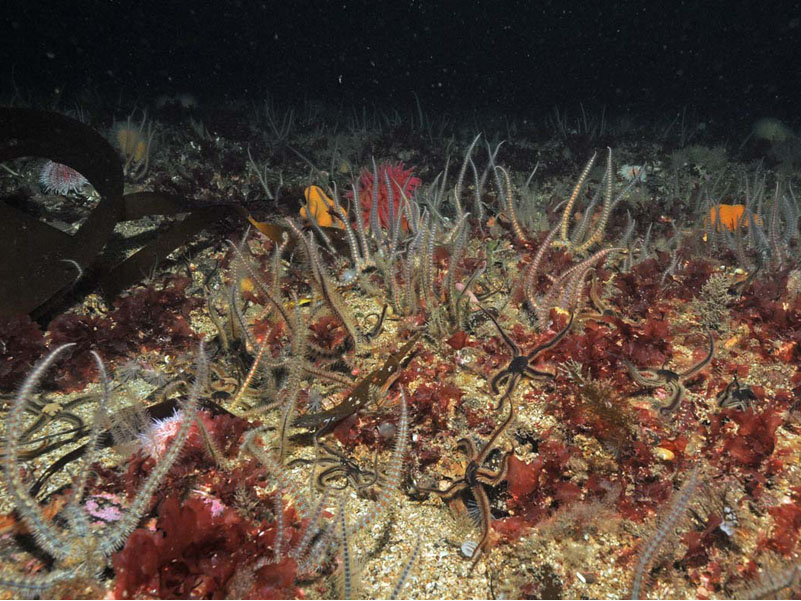
Ophiothrix fragilis and Ophiocomina nigra on sublittoral mixed sediment
Photographer: Dr Keith Hiscock Copyright: Dr Keith Hiscock
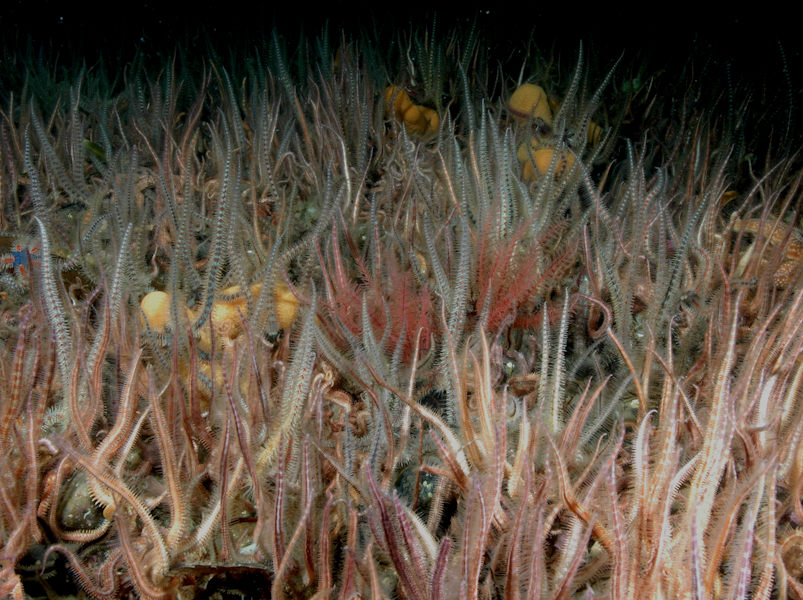
Ophiothrix fragilis and/or Ophiocomina nigra brittlestar beds on sublittoral mixed sediment
Photographer: Dr Keith Hiscock Copyright: Dr Keith Hiscock
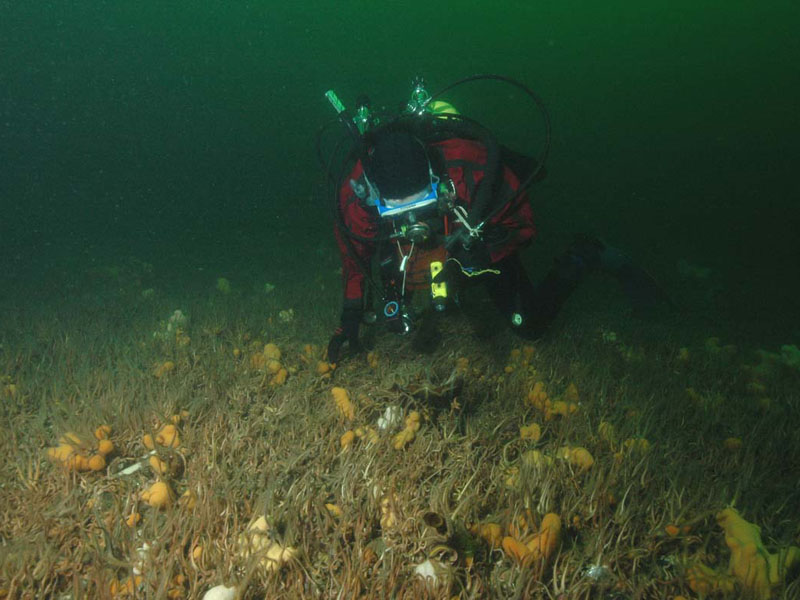
Ophiothrix fragilis bed.
Photographer: Dr Keith Hiscock Copyright: Dr Keith Hiscock

Map Key
- Orange points: Core Records
- Pale Blue points: Non-core, certain determination
- Black points: Non-core, uncertain determination
- Yellow areas: Predicted habitat extent
| Researched by | Eliane De-Bastos, Owen Harris, Jacqueline Hill, Dr Samantha Garrard & Amy Watson | Refereed by | This information is not refereed |
|---|
Summary
UK and Ireland classification
Description
Circalittoral sediment dominated by brittlestars (hundreds or thousands m2) forming dense beds, living epifaunally on the boulder, gravel or sedimentary substrata. Ophiothrix fragilis and Ophiocomina nigra are the main bed-forming species, with rare examples formed by Ophiopholis aculeata. Brittlestar beds vary in size, with the largest extending over hundreds of square metres of sea floor and containing millions of individuals. They usually have a patchy internal structure, with localized concentrations of higher animal density. Ophiothrix fragilis or Ophiocomina nigra may dominate separately or there may be mixed populations of the two species. Ophiothrix beds may consist of large adults and tiny, newly-settled juveniles, with animals of intermediate size living in nearby rock habitats or among sessile epifauna. Unlike brittlestar beds on rock, the sediment based beds may contain a rich associated epifauna (Warner, 1971; Allain, 1974; Davoult & Gounin, 1995). Large suspension feeders such as the octocoral Alcyonium digitatum, the anemone Metridium senile and the hydroid Nemertesia antennina are present mainly on rock outcrops or boulders protruding above the brittlestar-covered substratum. The large anemone Urticina felina may be quite common. This species lives half-buried in the substratum but is not smothered by the brittlestars, usually being surrounded by a 'halo' of clear space (Brun, 1969; Warner, 1971). Large mobile animals commonly found on Ophiothrix beds include the starfish Asterias rubens, Crossaster papposus and Luidia ciliaris, the urchins Echinus esculentus and Psammechinus miliaris, edible crabs Cancer pagurus, swimming crabs Necora puber, Liocarcinus spp., and hermit crabs Pagurus bernhardus. The underlying sediments also contain a diverse infauna including the bivalve Abra alba. Warner (1971) found that the numbers and biomass of sediment-dwelling animals were not significantly reduced under dense brittlestar patches. (Information from JNCC, 2022).
Depth range
5-10 m, 10-20 m, 20-30 m, 30-50 mAdditional information
-
Sensitivity review
Sensitivity characteristics of the habitat and relevant characteristic species
SS.SMx.CMx.OphMx is a circalittoral biotope occurring on mixed sediment, often including cobbles, pebbles, gravel, and sand, and dominated by dense mats of brittlestars (hundreds or thousands/m2). This biotope is mainly found on the upper faces of moderately exposed and sheltered areas, subject to strong to weak tidal streams. Ophiothrix fragilis and Ophiocomina nigra are the main bed-forming species, with rare examples formed by Ophiopholis aculeata. Brittlestar beds vary in size, and Ophiothrix fragilis or Ophiocomina nigra may dominate separately or there may be mixed populations of the two species, with sediment-dwelling Ophiura albida occurring occasionally among them. The underlying fauna in brittlestar beds on mixed sediment does not appear to be restricted in numbers or growth by the carpet of brittlestars (Hughes, 1998b) and unlike brittlestar beds on rock, the sediment-based beds may contain a rich associated epifauna (Warner, 1971; Allain, 1974; Davoult & Gounin, 1995). Large sessile species often observed in this biotope include octocoral Alcyonium digitatum on rock outcrops or boulders protruding above the substratum, and large anemone Urticina felina, which is not smothered by the brittlestars, usually surrounded by a ‘halo’ of clear space.
The dense beds of brittlestars are the main characterizing feature of this biotope and their removal would likely result in the biotope being lost. Additionally, there are no known examples of species that are obligate or specialist associates of brittlestar beds. Therefore, the sensitivity assessment focuses on the main bed-forming species of brittlestar, Ophiothrix fragilis and Ophiocomina nigra.
Resilience and recovery rates of habitat
The biotope is characterized by dense mats of brittlestars. There is disagreement concerning the lifespan of the main bed-forming brittlestar Ophiothrix fragilis. Davoult et al. (1990) suggested a lifespan of 9 to 20 months. Taylor (1958, quoted in Gorzula, 1977) recorded that Ophiothrix fragilis reached a disc diameter of about 14 mm in two years, and that most individuals died after spawning in their second summer. However, other researchers have considered the animals to be much longer-lived. Gorzula (1977) quotes evidence that Swedish Ophiothrix fragilis can live for up to eight years. A lifespan of over nine years has been suggested based on counts of growth bands in the skeletal arm plates of Ophiothrix fragilis (Gage, 1990). It is possible that growth rates may vary widely in different areas, or that the different varieties of Ophiothrix fragilis recognised by French workers may have contrasting population dynamics.
Ophiothrix fragilis has an extended breeding season running roughly from April to October (Smith, 1940; Ball et al., 1995). Lost populations may not always be replaced because settlement of larvae of Ophiothrix fragilis is highly dependent on hydrographic conditions and, hence, unpredictable. In stratified (layered) waters with poor mixing, Ophiothrix fragilis larvae are mostly found above the thermocline, which affects whether they are retained locally or dispersed. In contrast, well‑mixed systems distribute larvae evenly, making retention dependent mainly on tidal cycles (Guillam et al., 2020). In the strong water currents of the English Channel, larvae can disperse up to 70 to 100 km and establish populations elsewhere (Pingree & Maddock, 1977). Therefore, if hydrographic conditions change recruitment may fail and lost populations may not be replaced. Dense aggregations of Ophiothrix fragilis in the Plymouth area have not recovered since their decline in the 1970's. It was suggested that changes in the oceanographic cycle affecting the western Channel resulted in increased predation pressure from Luidia ciliaris and recruitment failure of Ophiothrix fragilis (Holme, 1984).
In the Dover Strait, the main period of Ophiothrix fragilis larval settlement occurred in September throughout most of the year (Davoult et al., 1990). Maximum population densities (approximately 2,000 individuals /m2) were found during the main recruitment period in September. A similar seasonal pattern was found by Brun (1969) in the Isle of Man, where newly-settled juveniles were found in August and September. Peak juvenile numbers occurred in November in a Bristol Channel population (George & Warwick, 1985). In Kinsale Harbour, Ireland, post-settlement juveniles could be found throughout the year, with maximum numbers (up to 1000 juveniles /m2) in October (Ball et al., 1995). Mortality was high, leading to low levels of recruitment into the adult population. All studies agree that recruits initially settle on the arms of adults. If any adults remain, aggregations may re-establish as individual brittlestars can migrate towards one another until conspecifics are found (Broom, 1975).
Ophiocomina nigra larvae, however, can migrate vertically, enabling them to stay inside a bay even in waters with high mixing (Guillam et al., 2020). They grow slowly and live for up to 14 years (Hughes, 1998b). Juvenile Ophiocomina appear not to settle among adults. The Firth of Clyde populations studied by Gorzula (1977) were each dominated by a single size-class of animals, suggesting that each Ophiocomina bed is formed by a single settlement of juveniles, which thereafter receives little or no recruitment.
Other species often observed in this biotope include Asterias rubens, Urticina felina, and Alcyonium digitatum. Hiscock et al. (2010) recorded the succession of the biological community on the wreck for five years following the sinking of the ship Scylla, which was intentionally sunk in March 2004 in Whitsand Bay, Cornwall to act as an artificial reef. Initially the wreck was colonized by opportunistic species /taxa; filamentous algae, hydroids, serpulid worms and barnacles. Asterias rubens settled in large number within the first year of sinking and persisted throughout the observations. Alcyonium digitatum was first recorded within the first year after the vessel was sunk but colonies did not become a visually dominant component of the community until 2009 (5 years after the vessel had been sunk). Urticina felina colonized ex-HMS Scylla in the third of the vessel being on the seabed.
Resilience Assessment
The removal of the brittlestar Ophiothrix fragilis and Ophiocomina nigra would likely result in the biotope being lost and/or reclassified. Minor damage to individual brittlestars is likely to be repaired; missing arms that are shed as part of an escape/disturbance response can be regrown (Tillin & Tyler-Walters, 2014). Recovery from impacts with a small spatial footprint may occur through migration of adults and some species such as Ophiura spp. are mobile, as shown by bait trapping experiments (Groenewold & Fonds, 2000). Where the majority of the population remain (resistance is High), and/or recruitment by adult mobility is possible resilience is likely to be ‘High’. Where impacts remove a significant proportion of the population, recovery will require larval recolonization, as well as adult migration. Sexual maturity is reached within two years and reproduction is annual and protracted providing a supply of larvae. However, brittlestars demonstrate sporadic and unpredictable recruitment (Buchanan, 1964), even though they have long-lived pelagic larvae with a high dispersal potential. The evidence suggests that Ophiothrix fragilis’ recruits initially settle on the arms of adults, but it is not clear whether the presence of adults is a requirement for successful larval recolonization. Therefore, where a significant part of the population is lost (resistance is ‘Low’ or ‘None’), recovery is likely to be ‘Medium’ (2 to 10 years). An exception is made for permanent or ongoing (long-term) pressures where recovery is not possible as the pressure is irreversible, in which case resilience is assessed as ‘Very low’ by default.
The recruitment observations that occurred on Scylla suggest that other species occurring in this biotope, including Asterias rubens, Urticina felina, and Alcyonium digitataum, are likely to have medium resilience, apart from Asterias rubens for which resilience is considered likely to be ‘High’.
Note: The resilience and the ability to recover from human induced pressures is a combination of the environmental conditions of the site, the frequency (repeated disturbances versus a one-off event) and the intensity of the disturbance. Recovery of impacted populations will always be mediated by stochastic events and processes acting over different scales including, but not limited to, local habitat conditions, further impacts and processes such as larval-supply and recruitment between populations. Full recovery is defined as the return to the state of the habitat that existed prior to impact. This does not necessarily mean that every component species has returned to its prior condition, abundance or extent but that the relevant functional components are present and the habitat is structurally and functionally recognizable as the initial habitat of interest. It should be noted that the recovery rates are only indicative of the recovery potential.
Climate Change Pressures
Use [show more] / [show less] to open/close text displayed
| Resistance | Resilience | Sensitivity | |
Global warming (extreme) [Show more]Global warming (extreme)Extreme emission scenario (by the end of this century 2081-2100) benchmark of:
EvidenceOphiothrix fragilis is widely distributed in the eastern Atlantic from Norway to South Africa and the Mediterranean (Hayward & Ryland, 1995b; OBIS 2026). Ophiocomina nigra is mostly distributed around the Northeast Atlantic from from Norway to the Azores and Mediterranean (Hayward & Ryland, 1995b), with very few records in West and South Africa (OBIS 2026). Other component species in the biotope also have a widespread distribution in the Northeast Atlantic. Consequently, these species are exposed to temperatures both above and below those found in the British Isles and their distribution is not limited by temperature. In the Dutch Oosterschelde Estuary, fluctuations in the abundance of Ophiothrix fragilis between 1979 and 1990 appeared to be driven by winter temperatures (Leewis et al., 1994). When winter temperatures increased in 1979 to 1980 and 1987 to 1988, populations of brittlestars increased enormously and occupied 60 to 90% of the available hard substratum in layers up to 5 cm deep. Populations were reduced to less than 10% following the cold winters in 1978 to 1979, 1984 to 1985 and 1985 to 1986. Thus, ocean warming may be beneficial to populations around the UK. However, in the Persian Gulf, Ophiothrix fragilis was negatively associated with higher temperatures (Soltani et al., 2024). Maximum temperatures reported in the study were 25°C, which is also the top of the range of temperatures OBIS (2026) have recorded for Ophiothrix fragilis. Ophiothrix fragilis have been recorded in temperatures ranging from 5 to 25°C, with most records (over 18,000) being in the 10 to 15°C range, and very few (111) in the 20 to 25°C range. Using IPCC scenario A1B, Weinert et al. (2016) predicted that average bottom temperature in the North Sea will increase by 0.15 to 5.4°C, and average bottom salinity by 1.7 PSU, by the year 2099. Their models show that with these changes, there will be a 109 km poleward shift in the centroid of the distribution of Ophiothrix fragilis. However, the 50 m depth contour in the central North Sea will likely act as a barrier which prevents the northward migration of many species including Ophiothrix fragilis, resulting in a 100% reduction in suitable habitat for this species. According to OBIS (2026), Ophiocomina nigra are found in temperatures ranging from 5 to 20°C, with most records (8,755) in the 10 to 15°C range and very few (139) in the 15 to 20°C. Sensitivity AssessmentUnder the middle, high, and extreme emission scenarios seawater temperatures are expected to rise by 3 to 5°C to potential southern summer temperatures of 22 to 24°C. There is no experimental evidence of the impact of ocean warming on the characteristic species, but biogeographic distribution is often a good predictor of temperature tolerance (Jeffree & Jeffree, 1994). The distribution of Ophiothrix fragilis and Ophiocomina nigra suggests that these species are likely to be tolerant of ocean warming. Dense populations of Ophiothrix fragilis and Ophiocomina nigra occur in the infralittoral of the southern coast of Spain (Rodriguez, 1980), where seawater temperatures range from 15 to 25°C (seatemperature.org). However, predictions by Weinert et al. (2016) indicate the entire North Sea population of Ophiothrix fragilis will be lost by the end of the century if they are not able to migrate northward. Therefore, as a precaution, resistance is assessed as ‘Medium’, resilience as ‘Very low’, and sensitivity as ‘Medium’. | MediumHelp | Very LowHelp | MediumHelp |
Global warming (high) [Show more]Global warming (high)High emission scenario (by the end of this century 2081-2100) benchmark of:
EvidenceOphiothrix fragilis is widely distributed in the eastern Atlantic from Norway to South Africa and the Mediterranean (Hayward & Ryland, 1995b; OBIS 2026). Ophiocomina nigra is mostly distributed around the Northeast Atlantic from from Norway to the Azores and Mediterranean (Hayward & Ryland, 1995b), with very few records in West and South Africa (OBIS 2026). Other component species in the biotope also have a widespread distribution in the Northeast Atlantic. Consequently, these species are exposed to temperatures both above and below those found in the British Isles and their distribution is not limited by temperature. In the Dutch Oosterschelde Estuary, fluctuations in the abundance of Ophiothrix fragilis between 1979 and 1990 appeared to be driven by winter temperatures (Leewis et al., 1994). When winter temperatures increased in 1979 to 1980 and 1987 to 1988, populations of brittlestars increased enormously and occupied 60 to 90% of the available hard substratum in layers up to 5 cm deep. Populations were reduced to less than 10% following the cold winters in 1978 to 1979, 1984 to 1985 and 1985 to 1986. Thus, ocean warming may be beneficial to populations around the UK. However, in the Persian Gulf, Ophiothrix fragilis was negatively associated with higher temperatures (Soltani et al., 2024). Maximum temperatures reported in the study were 25°C, which is also the top of the range of temperatures OBIS (2026) have recorded for Ophiothrix fragilis. Ophiothrix fragilis have been recorded in temperatures ranging from 5 to 25°C, with most records (over 18,000) being in the 10 to 15°C range, and very few (111) in the 20 to 25°C range. Using IPCC scenario A1B, Weinert et al. (2016) predicted that average bottom temperature in the North Sea will increase by 0.15 to 5.4°C, and average bottom salinity by 1.7 PSU, by the year 2099. Their models show that with these changes, there will be a 109 km poleward shift in the centroid of the distribution of Ophiothrix fragilis. However, the 50 m depth contour in the central North Sea will likely act as a barrier which prevents the northward migration of many species including Ophiothrix fragilis, resulting in a 100% reduction in suitable habitat for this species. According to OBIS (2026), Ophiocomina nigra are found in temperatures ranging from 5 to 20°C, with most records (8,755) in the 10 to 15°C range and very few (139) in the 15 to 20°C. Sensitivity AssessmentUnder the middle, high, and extreme emission scenarios seawater temperatures are expected to rise by 3 to 5°C to potential southern summer temperatures of 22 to 24°C. There is no experimental evidence of the impact of ocean warming on the characteristic species, but biogeographic distribution is often a good predictor of temperature tolerance (Jeffree & Jeffree, 1994). The distribution of Ophiothrix fragilis and Ophiocomina nigra suggests that these species are likely to be tolerant of ocean warming. Dense populations of Ophiothrix fragilis and Ophiocomina nigra occur in the infralittoral of the southern coast of Spain (Rodriguez, 1980), where seawater temperatures range from 15 to 25°C (seatemperature.org). However, predictions by Weinert et al. (2016) indicate the entire North Sea population of Ophiothrix fragilis will be lost by the end of the century if they are not able to migrate northward. Therefore, as a precaution, resistance is assessed as ‘Medium’, resilience as ‘Very low’, and sensitivity as ‘Medium’. | MediumHelp | Very LowHelp | MediumHelp |
Global warming (middle) [Show more]Global warming (middle)Middle emission scenario (by the end of this century 2081-2100) benchmark of:
EvidenceOphiothrix fragilis is widely distributed in the eastern Atlantic from Norway to South Africa and the Mediterranean (Hayward & Ryland, 1995b; OBIS 2026). Ophiocomina nigra is mostly distributed around the Northeast Atlantic from from Norway to the Azores and Mediterranean (Hayward & Ryland, 1995b), with very few records in West and South Africa (OBIS 2026). Other component species in the biotope also have a widespread distribution in the Northeast Atlantic. Consequently, these species are exposed to temperatures both above and below those found in the British Isles and their distribution is not limited by temperature. In the Dutch Oosterschelde Estuary, fluctuations in the abundance of Ophiothrix fragilis between 1979 and 1990 appeared to be driven by winter temperatures (Leewis et al., 1994). When winter temperatures increased in 1979 to 1980 and 1987 to 1988, populations of brittlestars increased enormously and occupied 60 to 90% of the available hard substratum in layers up to 5 cm deep. Populations were reduced to less than 10% following the cold winters in 1978 to 1979, 1984 to 1985 and 1985 to 1986. Thus, ocean warming may be beneficial to populations around the UK. However, in the Persian Gulf, Ophiothrix fragilis was negatively associated with higher temperatures (Soltani et al., 2024). Maximum temperatures reported in the study were 25°C, which is also the top of the range of temperatures OBIS (2026) have recorded for Ophiothrix fragilis. Ophiothrix fragilis have been recorded in temperatures ranging from 5 to 25°C, with most records (over 18,000) being in the 10 to 15°C range, and very few (111) in the 20 to 25°C range. Using IPCC scenario A1B, Weinert et al. (2016) predicted that average bottom temperature in the North Sea will increase by 0.15 to 5.4°C, and average bottom salinity by 1.7 PSU, by the year 2099. Their models show that with these changes, there will be a 109 km poleward shift in the centroid of the distribution of Ophiothrix fragilis. However, the 50 m depth contour in the central North Sea will likely act as a barrier which prevents the northward migration of many species including Ophiothrix fragilis, resulting in a 100% reduction in suitable habitat for this species. According to OBIS (2026), Ophiocomina nigra are found in temperatures ranging from 5 to 20°C, with most records (8,755) in the 10 to 15°C range and very few (139) in the 15 to 20°C. Sensitivity AssessmentUnder the middle, high, and extreme emission scenarios seawater temperatures are expected to rise by 3 to 5°C to potential southern summer temperatures of 22 to 24°C. There is no experimental evidence of the impact of ocean warming on the characteristic species, but biogeographic distribution is often a good predictor of temperature tolerance (Jeffree & Jeffree, 1994). The distribution of Ophiothrix fragilis and Ophiocomina nigra suggests that these species are likely to be tolerant of ocean warming. Dense populations of Ophiothrix fragilis and Ophiocomina nigra occur in the infralittoral of the southern coast of Spain (Rodriguez, 1980), where seawater temperatures range from 15 to 25°C (seatemperature.org). However, predictions by Weinert et al. (2016) indicate the entire North Sea population of Ophiothrix fragilis will be lost by the end of the century if they are not able to migrate northward. Therefore, as a precaution, resistance is assessed as ‘Medium’, resilience as ‘Very low’, and sensitivity as ‘Medium’. | MediumHelp | Very LowHelp | MediumHelp |
Marine heatwaves (high) [Show more]Marine heatwaves (high)High emission scenario benchmark: A marine heatwave occurring every two years, with a mean duration of 120 days, and a maximum intensity of 3.5°C (Marine heatwave pressure definitions). EvidenceMarine heatwaves due to increased air-sea heat flux are predicted to occur more frequently, last for longer and at increased intensity by the end of this century under both middle and high emission scenarios (Frölicher et al., 2018). Whilst there are no laboratory studies on the upper thermal limit of Ophiothrix fragilis or Ophiocomina nigra, these species appear to be tolerant of a wide range of temperatures. Ophiothrix fragilis and Ophiocomina nigra populations in the western Mediterranean (Hayward & Ryland, 1995b; Koukouras et al., 2007) experience sea temperatures up to 28°C in summer months (seatemperature.org). Furthermore, Ophiothrix fragilis can be found in the intertidal, where they may be exposed to sharp temperature fluctuations over a short period of time during the tidal cycle. Species that occur in the intertidal are therefore generally able to tolerate a range of temperatures (Davenport & Davenport, 2005). However, short-term acute changes in temperature are noted to cause a reduction in the loading of subcutaneous symbiotic bacteria in echinoderms such as Ophiothrix fragilis. Reductions in these bacteria are probably indicative of levels of stress and may lead to mortality (Newton & McKenzie, 1995). Schönbach (2025) showed that faunal communities which included Ophiothrix fragilis exhibited some non-lethal sensitivity to simulated marine heatwave conditions. Ophiothrix fragilis contributed to community-level shifts in respiration, with fauna-only mesocosms showing elevated nighttime metabolic rates, while algae-fauna mesocosms displayed a decline in respiration at higher temperatures, suggesting possible metabolic suppression or increased reliance on the oxygen produced by algae. In an experiment by Martín-Huete et al. (2026), Ophiothrix sp. showed a slow decrease in metabolic rate (measured via oxygen consumption) across four days at an ambient temperature of 16°C, while those in heated treatments (20, 23, and 26°C) showed significantly higher metabolic rates. The highest oxygen consumption recorded was approx. 1540 mg/kg/hour at 23°C. Using the metabolic rates at 16 and 26°C, the authors also measured Q10 for this species, which is a measure of how much an organism’s metabolic rate changes when temperature increases by 10°C. Q10 values above three indicate moderate metabolic response to warming. The Q10 reported for Ophiothrix sp. in this experiment was 4.32, which is more than what is expected (two to three) for echinoderms (Lawrence 1987; Christensen et al., 2011, cited in Martín-Huete et al., 2026). The authors conclude that the Q10 for Ophiothrix sp. indicated that it was close to its upper thermal threshold. In contrast, Ophiocomina nigra showed no significant response to the same temperature increases apart from on the second day, which ruled out temperature as an effect. In addition, Q10 for this species was 3.44. However, due to the lack of temperature effect, these results were attributed to greater variability between individuals in the warming group (Martín-Huete et al., 2026). According to OBIS (2026), Ophiocomina nigra are found in temperatures ranging from 5 to 20°C, with most records (8,755) in the 10 to 15°C range and very few (139) in the 15 to 20°C. Sensitivity AssessmentUnder the middle emission scenario, if heatwaves occurred every three years, with a maximum intensity of 2°C for 80 days by the end of this century, this could lead to summer sea temperatures reaching up to 24°C in southern England. Under the high emission scenario, if heatwaves occurred every two years by the end of this century, reaching a maximum intensity of 3.5°C for 120 days, this could lead to the heatwave lasting the entire summer with temperatures reaching up to 26.5°C. Ophiothrix fragilis and Ophiocomina nigra populations in the western Mediterranean (Hayward & Ryland, 1995b; Koukouras et al., 2007) experience sea temperatures up to 28°C in summer months (seatemperature.org). Therefore, under both the middle and high emission scenarios, resistance is assessed as ‘High’ and resilience as ‘High’, so the biotope is assessed as ‘Not sensitive’. | HighHelp | HighHelp | Not sensitiveHelp |
Marine heatwaves (middle) [Show more]Marine heatwaves (middle)Middle emission scenario benchmark: A marine heatwave occurring every three years, with a mean duration of 80 days, with a maximum intensity of 2°C. EvidenceMarine heatwaves due to increased air-sea heat flux are predicted to occur more frequently, last for longer and at increased intensity by the end of this century under both middle and high emission scenarios (Frölicher et al., 2018). Whilst there are no laboratory studies on the upper thermal limit of Ophiothrix fragilis or Ophiocomina nigra, these species appear to be tolerant of a wide range of temperatures. Ophiothrix fragilis and Ophiocomina nigra populations in the western Mediterranean (Hayward & Ryland, 1995b; Koukouras et al., 2007) experience sea temperatures up to 28°C in summer months (seatemperature.org). Furthermore, Ophiothrix fragilis can be found in the intertidal, where they may be exposed to sharp temperature fluctuations over a short period of time during the tidal cycle. Species that occur in the intertidal are therefore generally able to tolerate a range of temperatures (Davenport & Davenport, 2005). However, short-term acute changes in temperature are noted to cause a reduction in the loading of subcutaneous symbiotic bacteria in echinoderms such as Ophiothrix fragilis. Reductions in these bacteria are probably indicative of levels of stress and may lead to mortality (Newton & McKenzie, 1995). Schönbach (2025) showed that faunal communities which included Ophiothrix fragilis exhibited some non-lethal sensitivity to simulated marine heatwave conditions. Ophiothrix fragilis contributed to community-level shifts in respiration, with fauna-only mesocosms showing elevated nighttime metabolic rates, while algae-fauna mesocosms displayed a decline in respiration at higher temperatures, suggesting possible metabolic suppression or increased reliance on the oxygen produced by algae. In an experiment by Martín-Huete et al. (2026), Ophiothrix sp. showed a slow decrease in metabolic rate (measured via oxygen consumption) across four days at an ambient temperature of 16°C, while those in heated treatments (20, 23, and 26°C) showed significantly higher metabolic rates. The highest oxygen consumption recorded was approx. 1540 mg/kg/hour at 23°C. Using the metabolic rates at 16 and 26°C, the authors also measured Q10 for this species, which is a measure of how much an organism’s metabolic rate changes when temperature increases by 10°C. Q10 values above three indicate moderate metabolic response to warming. The Q10 reported for Ophiothrix sp. in this experiment was 4.32, which is more than what is expected (two to three) for echinoderms (Lawrence 1987; Christensen et al., 2011, cited in Martín-Huete et al., 2026). The authors conclude that the Q10 for Ophiothrix sp. indicated that it was close to its upper thermal threshold. In contrast, Ophiocomina nigra showed no significant response to the same temperature increases apart from on the second day, which ruled out temperature as an effect. In addition, Q10 for this species was 3.44. However, due to the lack of temperature effect, these results were attributed to greater variability between individuals in the warming group (Martín-Huete et al., 2026). According to OBIS (2026), Ophiocomina nigra are found in temperatures ranging from 5 to 20°C, with most records (8,755) in the 10 to 15°C range and very few (139) in the 15 to 20°C. Sensitivity AssessmentUnder the middle emission scenario, if heatwaves occurred every three years, with a maximum intensity of 2°C for 80 days by the end of this century, this could lead to summer sea temperatures reaching up to 24°C in southern England. Under the high emission scenario, if heatwaves occurred every two years by the end of this century, reaching a maximum intensity of 3.5°C for 120 days, this could lead to the heatwave lasting the entire summer with temperatures reaching up to 26.5°C. Ophiothrix fragilis and Ophiocomina nigra populations in the western Mediterranean (Hayward & Ryland, 1995b; Koukouras et al., 2007) experience sea temperatures up to 28°C in summer months (seatemperature.org). Therefore, under both the middle and high emission scenarios, resistance is assessed as ‘High’ and resilience as ‘High’, so the biotope is assessed as ‘Not sensitive’. | HighHelp | HighHelp | Not sensitiveHelp |
Ocean acidification (high) [Show more]Ocean acidification (high)High emission scenario benchmark: a further decrease in pH of 0.35 (annual mean) and corresponding 120% increase in H+ ions, seasonal aragonite saturation of 20% of UK coastal waters and North Sea bottom waters, and the aragonite saturation horizon in the NE Atlantic, off the continental shelf, occurring at a depth of 400 m by the end of this century 2081-2100 (Ocean acidification pressure definitions). EvidenceIncreasing levels of CO2 in the atmosphere have led to the average pH of sea surface waters dropping from 8.25 in the 1700s to 8.14 in the 1990s (Jacobson, 2005). In general, it is thought that calcifying invertebrates will be more sensitive to ocean acidification than non-calcifying invertebrates, which appear to have a more mixed response (Hofmann et al., 2010). It must be noted that many species show variation in their response to pCO2 independent of their taxonomic group or habitat preferences (Widdicombe & Spicer, 2008; Kroeker et al., 2013). The planktonic larval stage is often thought to be the most sensitive stage to ocean acidification in benthic organisms (Kurihara, 2008, Chan et al., 2015), and brittlestar larvae seem to be more sensitive to ocean acidification than sea urchins (Dupont & Thorndyke, 2008, Chan et al., 2015). The larvae of both Ophiothrix fragilis and Ophiocomina nigra have been shown to be sensitive to a small (0.2 unit) experimental pH decrease, leading to a decrease in survival and changes to developmental dynamics (Dupont & Thorndyke, 2008). A 0.2 unit pH decrease led to almost 100% mortality in Ophiothrix fragilis larvae after one week's exposure (Dupont & Thorndyke, 2009). Under low pH conditions, surviving larvae of Ophiothrix fragilis show skeletal malformations (Dupont & Thorndyke, 2008). Sensitivity AssessmentWhilst evidence of the effect of ocean acidification on the adult stages of Ophiothrix fragilis and Ophiocomina nigra are lacking, the fact that even a small decrease in pH (0.2 units) has such a dramatic effect on the survival and normal growth of these species’ larvae suggests that this may well drive these species responses to future acidification. Unfortunately, at present, there are no multi-generational studies to determine whether these species can adapt or acclimate to future pH conditions, but on the evidence available, under both the middle and high emission scenarios (0.15 and 0.35 pH unit decrease, respectively) the biotope is assessed as having a resistance level of ‘None’, and a resilience level of ‘Very low’ because of the long-term nature of ocean acidification, leading to an assessment of ‘High’ at the benchmark level. | NoneHelp | Very LowHelp | HighHelp |
Ocean acidification (middle) [Show more]Ocean acidification (middle)Middle emission scenario benchmark: a further decrease in pH of 0.15 (annual mean) and a corresponding 35% increase in H+ ions with no coastal aragonite undersaturation and the aragonite saturation horizon in the NE Atlantic, off the continental shelf, at a depth of 800 m by the end of this century, 2081-2100. EvidenceIncreasing levels of CO2 in the atmosphere have led to the average pH of sea surface waters dropping from 8.25 in the 1700s to 8.14 in the 1990s (Jacobson, 2005). In general, it is thought that calcifying invertebrates will be more sensitive to ocean acidification than non-calcifying invertebrates, which appear to have a more mixed response (Hofmann et al., 2010). It must be noted that many species show variation in their response to pCO2 independent of their taxonomic group or habitat preferences (Widdicombe & Spicer, 2008; Kroeker et al., 2013). The planktonic larval stage is often thought to be the most sensitive stage to ocean acidification in benthic organisms (Kurihara, 2008, Chan et al., 2015), and brittlestar larvae seem to be more sensitive to ocean acidification than sea urchins (Dupont & Thorndyke, 2008, Chan et al., 2015). The larvae of both Ophiothrix fragilis and Ophiocomina nigra have been shown to be sensitive to a small (0.2 unit) experimental pH decrease, leading to a decrease in survival and changes to developmental dynamics (Dupont & Thorndyke, 2008). A 0.2 unit pH decrease led to almost 100% mortality in Ophiothrix fragilis larvae after one week's exposure (Dupont & Thorndyke, 2009). Under low pH conditions, surviving larvae of Ophiothrix fragilis show skeletal malformations (Dupont & Thorndyke, 2008). Sensitivity AssessmentWhilst evidence of the effect of ocean acidification on the adult stages of Ophiothrix fragilis and Ophiocomina nigra are lacking, the fact that even a small decrease in pH (0.2 units) has such a dramatic effect on the survival and normal growth of these species’ larvae suggests that this may well drive these species responses to future acidification. Unfortunately, at present, there are no multi-generational studies to determine whether these species can adapt or acclimate to future pH conditions, but on the evidence available, under both the middle and high emission scenarios (0.15 and 0.35 pH unit decrease, respectively) the biotope is assessed as having a resistance level of ‘None’, and a resilience level of ‘Very low’ because of the long-term nature of ocean acidification, leading to an assessment of ‘High’ at the benchmark level. | NoneHelp | Very LowHelp | HighHelp |
Sea level rise (extreme) [Show more]Sea level rise (extreme)Extreme scenario benchmark: a 107 cm rise in average UK sea-level by the end of this century (2018-2100) (Sea-level rise pressure definitions). EvidenceSea-level rise is occurring through a combination of thermal expansion and ice melt. Sea levels have risen 1-3 mm/yr. in the last century (Cazenave & Nerem, 2004, Church et al., 2004, Church & White, 2006). Evidence appears to suggest that impacts of sea-level rise on exposure or tidal energy will be non-linear and site-specific (Pickering et al., 2012, Li et al., 2016). This biotope occurs on mixed sediment, in moderately exposed to sheltered areas, subject to strong to weak tidal streams and, therefore, should be reasonably robust to any changes which occur. Furthermore, this biotope occurs at depths of 5-50 m around the UK, and sea-level rises predicted for the end of this century should have limited impact on this biotope. Sensitivity AssessmentAs this biotope can occur from 5-50 m depth, in a range of different energy environments, it is assumed that a sea-level rise of 50 cm, 70 cm or 107 cm (middle and high emission, and extreme scenarios) would have limited effect. Therefore, resistance is assessed as ‘High’ under all three scenarios, so that resilience is ‘High’ and sensitivity assessed as ‘Not sensitive’. | HighHelp | HighHelp | Not sensitiveHelp |
Sea level rise (high) [Show more]Sea level rise (high)High emission scenario benchmark: a 70 cm rise in average UK sea-level by the end of this century (2018-2100). EvidenceSea-level rise is occurring through a combination of thermal expansion and ice melt. Sea levels have risen 1-3 mm/yr. in the last century (Cazenave & Nerem, 2004, Church et al., 2004, Church & White, 2006). Evidence appears to suggest that impacts of sea-level rise on exposure or tidal energy will be non-linear and site-specific (Pickering et al., 2012, Li et al., 2016). This biotope occurs on mixed sediment, in moderately exposed to sheltered areas, subject to strong to weak tidal streams and, therefore, should be reasonably robust to any changes which occur. Furthermore, this biotope occurs at depths of 5-50 m around the UK, and sea-level rises predicted for the end of this century should have limited impact on this biotope. Sensitivity AssessmentAs this biotope can occur from 5-50 m depth, in a range of different energy environments, it is assumed that a sea-level rise of 50 cm, 70 cm or 107 cm (middle and high emission, and extreme scenarios) would have limited effect. Therefore, resistance is assessed as ‘High’ under all three scenarios, so that resilience is ‘High’ and sensitivity assessed as ‘Not sensitive’. | HighHelp | HighHelp | Not sensitiveHelp |
Sea level rise (middle) [Show more]Sea level rise (middle)Middle emission scenario benchmark: a 50 cm rise in average UK sea-level by the end of this century (2081-2100). EvidenceSea-level rise is occurring through a combination of thermal expansion and ice melt. Sea levels have risen 1-3 mm/yr. in the last century (Cazenave & Nerem, 2004, Church et al., 2004, Church & White, 2006). Evidence appears to suggest that impacts of sea-level rise on exposure or tidal energy will be non-linear and site-specific (Pickering et al., 2012, Li et al., 2016). This biotope occurs on mixed sediment, in moderately exposed to sheltered areas, subject to strong to weak tidal streams and, therefore, should be reasonably robust to any changes which occur. Furthermore, this biotope occurs at depths of 5-50 m around the UK, and sea-level rises predicted for the end of this century should have limited impact on this biotope. Sensitivity AssessmentAs this biotope can occur from 5-50 m depth, in a range of different energy environments, it is assumed that a sea-level rise of 50 cm, 70 cm or 107 cm (middle and high emission, and extreme scenarios) would have limited effect. Therefore, resistance is assessed as ‘High’ under all three scenarios, so that resilience is ‘High’ and sensitivity assessed as ‘Not sensitive’. | HighHelp | HighHelp | Not sensitiveHelp |
Hydrological Pressures
Use [show more] / [show less] to open/close text displayed
| Resistance | Resilience | Sensitivity | |
Temperature increase (local) [Show more]Temperature increase (local)Benchmark. A 5°C increase in temperature for one month, or 2°C for one year (Temperature change pressure definition). EvidenceOphiothrix fragilis is widely distributed in the eastern Atlantic from Norway to South Africa and the Mediterranean (Hayward & Ryland, 1995b; OBIS 2026). Ophiocomina nigra is mostly distributed around the Northeast Atlantic from from Norway to the Azores and Mediterranean (Hayward & Ryland, 1995b), with very few records in West and South Africa (OBIS 2026). Other component species in the biotope also have a widespread distribution in the northeast Atlantic. Consequently, these species are exposed to temperatures both above and below those found in the British Isles and their distribution is not limited by temperature. In the Dutch Oosterschelde Estuary fluctuations in the abundance of Ophiothrix fragilis between 1979 and 1990 appeared to be driven by winter temperatures (Leewis et al., 1994). When winter temperatures increased in 1979-80 and 1987-88, populations of brittlestars increased enormously, and occupied 60 to 90% of the available hard substratum in layers up to 5 cm deep. Populations were reduced to less than 10% following the cold winters in 1978 to 1979, 1984 to 1985 and 1985 to 1986. Thus, increases in temperature may be beneficial to populations. However, in the Persian Gulf, Ophiothrix fragilis was negatively associated with higher temperatures (Soltani et al., 2024). Maximum temperatures reported in the study were 25°C, which is also the top of the range of temperatures in which OBIS (2026) have recorded Ophiothrix fragilis. Ophiothrix fragilis have been recorded in temperatures ranging from 5 to 25°C, with most records (over 18,000) being in the 10 to 15°C range, and very few (111) in the 20 to 25°C range. Short-term acute changes in temperature are noted to cause a reduction in the loading of subcutaneous symbiotic bacteria in echinoderms such as Ophiothrix fragilis. Reductions in these bacteria are probably indicative of levels of stress and may lead to mortality (Newton & McKenzie, 1995). According to OBIS (2026), Ophiocomina nigra are found in temperatures ranging from 5 to 20°C, with most records (8,755) in the 10 to 15°C range and very few (139) in the 15 to 20°C. Sensitivity AssessmentThe distribution of Ophiothrix fragilis and Ophiocomina nigra suggests that they are likely to be tolerant of an acute or chronic temperature increase at the pressure benchmark. Resistance is assessed as ‘High’ and resilience as ‘High’ (by default), so the biotope is therefore considered to be ‘Not sensitive’ at the pressure benchmark. | HighHelp | HighHelp | Not sensitiveHelp |
Temperature decrease (local) [Show more]Temperature decrease (local)Benchmark. A 5°C decrease in temperature for one month, or 2°C for one year (Temperature change pressure definition). EvidenceOphiothrix fragilis is widely distributed in the eastern Atlantic from Norway to South Africa and the Mediterranean (Hayward & Ryland, 1995b; OBIS 2026). Ophiocomina nigra is mostly distributed around the Northeast Atlantic from from Norway to the Azores and Mediterranean (Hayward & Ryland, 1995b), with very few records in West and South Africa (OBIS 2026). Other component species in the biotope also have a widespread distribution in the northeast Atlantic. Consequently, these species are exposed to temperatures both above and below those found in the British Isles and their distribution is not limited by temperature. In the Dutch Oosterschelde Estuary fluctuations in the abundance of Ophiothrix fragilis between 1979 and 1990 appeared to be driven by winter temperatures (Leewis et al., 1994). When winter temperatures increased in 1979-80 and 1987-88, populations of brittlestars increased enormously, and occupied 60 to 90% of the available hard substratum in layers up to 5 cm deep. Populations were reduced to less than 10% following the cold winters in 1978 to 1979, 1984 to 1985 and 1985 to 1986. Thus, decreases in temperature may affect population densities. Short-term acute changes in temperature are noted to cause a reduction in the loading of subcutaneous symbiotic bacteria in echinoderms such as Ophiothrix fragilis. Reductions in these bacteria are probably indicative of levels of stress and may lead to mortality (Newton & McKenzie, 1995). Ophiothrix fragilis have been recorded in temperatures ranging from 5 to 25°C, with most records (over 18,000) being in the 10 to 15°C range, and very few (111) in the 20 to 25°C range. Sensitivity AssessmentThe distribution of Ophiothrix fragilis and Ophiocomina nigra, the characterizing species of these biotopes are considered likely to be tolerant of an acute or chronic decrease in temperature at the pressure benchmark. Thus, resistance is assessed as ‘High’ and resilience as ‘High’ (by default) and the biotopes are therefore considered to be ‘Not Sensitive’ at the pressure benchmark. | HighHelp | HighHelp | Not sensitiveHelp |
Salinity increase (local) [Show more]Salinity increase (local)Benchmark. An increase in one MNCR salinity category above the usual range of the biotope or habitat (Salinity regime change pressure definition). EvidenceEchinoderms are stenohaline owing to the lack of an excretory organ and a poor ability to osmo- and ion-regulate (Stickle & Diehl, 1987; Russell, 2013) and unable to tolerate wide fluctuations in salinity. A review by Russell (2013) confirmed that Ophiothrix fragilis and Ophiocomina nigra had not been recorded in hypersaline conditions. Soltani et al. (2024) reported a negative correlation between Ophiothrix fragilis and increased salinity in the Persian Gulf, where salinity was around 40 PSU. According to OBIS (2026), both Ophiothrix fragilis and Ophiocomina nigra occur in salinities ranging from 30 to 40 PSU, with most records in the 30 to 35 PSU range. Sensitivity AssessmentThere is little direct evidence of the effects of hypersaline conditions on Ophiothrix fragilis and Ophiocomina nigra. However, echinoderms are generally considered to be stenohaline (Stickle & Diehl, 1987; Russell, 2013). Therefore, an increase in salinity to >40 PSU is likely to result in mortality, and resistance is assessed as ‘Low’ but with ‘Low’ confidence. Resilience is probably ‘Medium’, so sensitivity is assessed as ‘Medium’. | LowHelp | MediumHelp | MediumHelp |
Salinity decrease (local) [Show more]Salinity decrease (local)Benchmark. A decrease in one MNCR salinity category above the usual range of the biotope or habitat (Salinity regime change pressure definition detail). EvidenceEchinoderms are stenohaline owing to the lack of an excretory organ and a poor ability to osmo- and ion-regulate (Stickle & Diehl, 1987; Russell, 2013). This means that they are unable to tolerate wide fluctuations in salinity. Although brittlestar beds are generally found in fully marine conditions, Wolff (1968) observed dense aggregations of Ophiothrix fragilis occurring in salinities of 16 PSU and even persisting down to 10 PSU in the Oosterschelde Estuary. Russell (2013) reported that Ophiocomina nigra and Ophiura albida can tolerate 27.6 PSU and 20 PSU in experiments, respectively. Pagett (1981) suggested that localised physiological adaption to reduced or variable salinities may occur in near shore areas subject to freshwater runoff. According to OBIS (2026), both Ophiothrix fragilis and Ophiocomina nigra occur in salinities ranging from 30 to 40 PSU, with most records in the 30 to 35 PSU range. Sensitivity AssessmentThe evidence shows that Ophiothrix fragilis and Ophiocomina nigra can survive in salinities as low as 16 and 27.6 PSU, respectively. Therefore, resistance of the biotope is assessed as ‘High’, resilience as ‘High’ no impact to recover from), and sensitivity as ‘Not sensitive’ at the benchmark level. | HighHelp | HighHelp | Not sensitiveHelp |
Water flow (tidal current) changes (local) [Show more]Water flow (tidal current) changes (local)Benchmark. A change in peak mean spring bed flow velocity of between 0.1 m/s and 0.2 m/s for more than one year (Water flow pressure definition). EvidenceDense brittlestar beds are found in a range of water flows from sea lochs with restricted water flows to higher-energy environments on open coastlines (Connor et al., 2004). In the Dover Strait, Ophiothrix beds experience current speeds of up to 1.5 m/s during average spring tides (Davoult & Gounin, 1995). Davoult & Gounin (1995) found that current speeds below 0.2 m/s were optimal for suspension feeding by Ophiothrix fragilis. If the velocity exceeded 0.3 m/s the animals ceased feeding, flattening themselves against the substratum and linking arms, so increasing their collective stability in the current. These values agree with those found by Warner (1971). Similarly strong tidal streams (1.0 to 1.2 m/s) were also recorded over beds in the Isle of Man (Brun, 1969). In both locations (Isle of Man and the Dover Strait), Ophiothrix densities of up to 2000 individuals/m2 were recorded. Hughes (1998b) suggested that high density aggregations could probably only be maintained where strong currents can supply enough suspended food. Food requirements probably set a lower limit on the current regime of areas able to support brittlestar beds. However, above a certain water speed (0.25 m/s) the feeding arms are withdrawn from the water column (Warner & Woodley, 1975; Hiscock, 1983). At water speeds above about 0.28 m/s individuals or even small groups may be displaced from the substratum and they have been observed being rolled along the seabed by the current (Warner, 1971). Living in dense aggregations may reduce displacement by strong currents (Warner & Woodley, 1975). Ophiocomina nigra is usually found in fairly sheltered sites with some water movement, and within these biotopes tends to become more dominant in deeper water than Ophiothrix (Connor et al., 2004), which suggests a lower resistance to changes in water flow. Sensitivity AssessmentThe evidence suggests that brittlestars have behavioural adaptations to changes in water flow (Tillin & Tyler-Walters, 2014). Increased flow rates may increase the suspension and transport of organic particles and can enhance feeding rates. If the flow is too strong, brittlestars may flatten, link arms, or withdraw arms into sediment. The highest category of tidal stream strength experienced by these brittlestar biotopes is strong (3 to 6 kn) (JNCC, 2022). Therefore, an increase to very strong (>6 kn) tidal streams may displace groups of brittlestars. However, this is likely not harmful to their survival as they can re-settle within the timeframe of the pressure benchmark level (one year). At lower flow rates, species may switch to deposit feeding. A decrease in water flow could potentially influence some of the characterizing species of the biotopes and may alter species richness as a result of sediment deposition. However, the characteristic brittlestars occur in very weak tidal streams in the biotope CR.MCR.EcCr.FaAlCr.Bri, so a decrease from weak to very weak tidal streams in SS.SMx.CMx.OphMx is unlikely to lead to a reduction or loss of the brittlestars. The biotopes are considered to have ‘High’ resistance and ‘High’ resilience and are therefore assessed as ‘Not Sensitive’ at the benchmark level. | HighHelp | HighHelp | Not sensitiveHelp |
Emergence regime changes [Show more]Emergence regime changesBenchmark. 1) A change in the time covered or not covered by the sea for a period of ≥1 year, or 2) an increase in relative sea level or decrease in high water level for ≥1 year. (Emergence regime change pressure definition). EvidenceChanges in emergence are 'Not Relevant' to this biotope, which is restricted to fully subtidal/circalittoral conditions. The pressure benchmark is relevant only to littoral and shallow sublittoral fringe biotopes. | Not relevant (NR)Help | Not relevant (NR)Help | Not relevant (NR)Help |
Wave exposure changes (local) [Show more]Wave exposure changes (local)Benchmark. A change in near shore significant wave height of >3% but <5% for more than one year (Wave action pressure definition). EvidenceRecords indicate that CR.MCR.EcCr.CarSp.Bri, CR.MCR.EcCr.FaAlCr.Bri, and SS.SMx.CMx.OphMx occur within a range of wave exposure categories, from moderate to extreme wave exposure (Connor et al., 2004). A decrease may increase siltation and limit food supply for the dominant suspension feeding community, but only where tidal flow is also reduced. Sensitivity AssessmentAn increase or decrease in wave height at the pressure benchmark is unlikely to be significant in wave exposed examples of the biotope. As brittlestar beds require strong to moderate water movements, water flow is probably a more important source of water movement in sheltered examples of the biotope. Therefore, brittlestar beds probably have a ‘High’ resistance to a change in significant wave height at the pressure benchmark. Resilience is assessed as ‘High’, by default, and the biotope is considered ‘Not Sensitive’ at the benchmark level. | HighHelp | HighHelp | Not sensitiveHelp |
Chemical Pressures
Use [show more] / [show less] to open/close text displayed
| Resistance | Resilience | Sensitivity | |
Transition elements & organo-metal contamination [Show more]Transition elements & organo-metal contaminationBenchmark. Exposure of marine species or habitat to one or more relevant Transitional metal or organometal (e.g. TBT) contaminants via uncontrolled releases or incidental spills (Transitional metals and organometals pressure definition). EvidenceThis pressure is Not assessed but evidence is presented where available. Adult echinoderms such as Ophiothrix fragilis are known to be efficient concentrators of heavy metals including those that are biologically active and toxic (Ag, Zn, Cd and Co) (Hutchins et al., 1996). There is no information available regarding the effects of this bioaccumulation. Gounin et al. (1995) studied the transfer of heavy metals (Fe, Mn, Pb, Cu and Cd) through Ophiothrix beds. They concluded that heavy metals ingested or absorbed by the animals transited rapidly through the body and were expelled in the faeces and did not appear to accumulate in their tissues. Studies by Deheyn & Latz (2006) at the Bay of San Diego found that heavy metal accumulation in brittlestars occurs both through dissolved metals as well as through diet, to the arms and disc, respectively. Similarly, Sbaihat et al. (2013) measured concentrations of heavy metals (Cu, Ni, Cd, Co, Cr and Pb) in the body of Ophiocoma scolopendrina collected from the Gulf of Aqaba, and found that most concentration was found in the central disc rather than arms and no simple correlations could be found between contaminant and body length. It is logical to suppose that brittlestar beds would be adversely affected by major pollution incidents such as oil spills, or by continuous exposure to toxic metals, pesticides, or the antiparasite chemicals used in cage aquaculture. So far, however, there are no field observations of epifaunal brittlestar beds being damaged by any of these forms of pollution, and there seems to be no evidence of the toxicity effects of heavy metal accumulation on brittlestars. | Not Assessed (NA)Help | Not assessed (NA)Help | Not assessed (NA)Help |
Hydrocarbon & PAH contamination [Show more]Hydrocarbon & PAH contaminationBenchmark. Exposure of marine species or habitat to one or more relevant hydrocarbon or polyaromatic hydrocarbon (PAH) contaminants via uncontrolled releases or incidental spills (Hydrocarbon & PAH pressure definition). EvidenceThis pressure is Not assessed but evidence is presented where available. Echinoderms tend to be very sensitive to various types of marine pollution (Newton & McKenzie, 1995). Adult Ophiothrix fragilis have been documented to be intolerant to hydrocarbons (Newton & McKenzie, 1995). The sub-cuticular bacteria that are symbiotic with Ophiothrix fragilis are reduced in number following exposure to hydrocarbons. Exposure to 30,000 ppm oil reduces the bacterial load by 50% and brittlestars begin to die (Newton & McKenzie, 1995). The water-accumulated fraction of diesel oil has been found to be acutely toxic to Ophiothrix fragilis and Ophiocomina nigra, although no field observations of beds being damaged by hydrocarbon pollution have been found (Hughes, 1998b). Untreated oil (e.g. from oil spills) is not a risk, since it is concentrated mainly at the surface, and circalittoral biotopes are likely to be protected by their depth. If oil is treated by dispersant, the resulting emulsion will penetrate down the water column, especially under the influence of turbulence (Hartnoll, 1998). | Not Assessed (NA)Help | Not assessed (NA)Help | Not assessed (NA)Help |
Synthetic compound contamination [Show more]Synthetic compound contaminationBenchmark. Exposure of marine species or habitat to one or more synthetic compound contaminants via uncontrolled releases or incidental spills (Synthetic compound contamination pressure definition). EvidenceThis pressure is Not assessed but evidence is presented where available. Echinoderms tend to be very sensitive to various types of marine pollution (Newton & McKenzie, 1995). In laboratory experiments Smith (1968) found the concentration of BP1002 (the detergent used in the Torrey Canyon oil spill clean-up) that killed the majority of Ophiocomina nigra was 5 ppm. Although there are no known examples of brittlestar beds being damaged by chemical pollutants such as pesticides or anti-parasite chemicals used in aquaculture, it is logical to suppose they would be adversely affected. In 24-hour contaminant exposures Ophiothrix fragilis showed no significant changes in oxygen consumption or ammonia excretion when exposed to the herbicide glyphosate (0.5 mg/l) or the disinfectant mercuric chloride (0.5 mg/l) (Schönbach, 2025). These results indicate that Ophiothrix fragilis may be resistant to the contaminant concentrations tested, highlighting the need for longer-term or multi-endpoint assessments to fully characterise its vulnerability to pollution. | Not Assessed (NA)Help | Not assessed (NA)Help | Not assessed (NA)Help |
Radionuclide contamination [Show more]Radionuclide contaminationBenchmark. An increase in 10µGy/h above background levels (Radionuclides contamination pressure definition). EvidenceAdult echinoderms such as Ophiothrix fragilis are known to be efficient concentrators of radionuclides (Hutchins et al., 1996). However, there was no information available about the effect of this bioaccumulation. | No evidence (NEv)Help | Not relevant (NR)Help | No evidence (NEv)Help |
Introduction of other substances [Show more]Introduction of other substancesBenchmark. Exposure of marine species or habitat to one or more relevant "other" substances (solid, liquid or gas) contaminants via uncontrolled releases or incidental spills (Introduction of other substances pressure definition). EvidenceThis pressure is Not assessed. | Not Assessed (NA)Help | Not assessed (NA)Help | Not assessed (NA)Help |
De-oxygenation [Show more]De-oxygenationBenchmark. Exposure to dissolved oxygen concentration of less than or equal to 2 mg/l for one week (a change from WFD poor status to bad status) (deoxygenation pressure definition). EvidenceCole et al. (1999) suggested possible adverse effects on marine species exposed to dissolved oxygen concentrations below 4 mg/l and probable adverse effects below 2 mg/l. Ophiothrix fragilis is known to have a low respiration rate (Migné & Davoult, 1997b), and experiments by Rosenberg et al. (1991, cited in Diaz & Rosenberg, 1995) suggested that the higher tolerance to hypoxia shown by Amphiura chiajei compared to Amphiura filiformis could also be linked to lower respirations rates, although both these brittlestars species were considered to be resistant to moderate hypoxia (Diaz & Rosenberg, 1995). Stachowitsch (1984) observed a mass mortality of benthic organisms in the Gulf of Trieste, northern Adriatic Sea, caused by the onset of severe hypoxia (oxygen depletion) in the near-bottom water. A wide variety of organisms were affected, including burrowing invertebrates, sponges, and the brittlestar Ophiothrix quinquemaculata, a dominant component of the local epifaunal community. This event was likely caused by a combination of unfavourable weather and tidal conditions, at the same time as a period of maximal organic input from coastal pollution and dying phytoplankton. Water exchange in the Gulf was poor, and the area tended to accumulate sediment and suspended organic material. Very high productivity in the water column, combined with sewage input throughout the summer tourist season, probably led to the consumption of most of the dissolved oxygen by microbial activity. Mortality occurred when the oxygen-deficient water mass extended to the sea floor (Stachowitsch, 1984). Ophiothrix fragilis was positively associated with higher levels of dissolved oxygen in the Persian Gulf, where dissolved oxygen ranged between 5.25 and 7.30 mg/L (Soltani et al., 2024). Sensitivity AssessmentThe evidence presented suggests that some species of brittlestar are likely to tolerate moderate levels of hypoxia. However, Stachowitsch (1984) observed a mass mortality of brittlestar Ophiothrix quinquemaculata within two to three days of the onset of a hypoxia event, although the reduction in oxygen concentration was not recorded. Therefore, resistance of the biotope is assessed as ‘Low’, resilience as ‘Medium’, and biotope sensitivity as ‘Medium’ at the pressure benchmark. Confidence in this assessment is ‘Low’ due to the lack of evidence on the characteristic species of these biotopes. | LowHelp | MediumHelp | MediumHelp |
Nutrient enrichment [Show more]Nutrient enrichmentBenchmark. Increased levels of the elements nitrogen, phosphorus, silicon, and iron in the marine environment compared to background concentrations (Nutrient enrichment pressure definition). EvidenceIt is thought that dense Ophiothrix beds may play an important role in local nutrient cycles by filtration and concentration of suspended particulate matter and by excretion of nitrogenous waste (Hughes, 1998b). Brittlestar beds are therefore likely to be able to resist increased nutrient levels in the form of dissolved nutrients or particulate matter. For example, in the Bay of Brest in Brittany, Hily (1991) estimated that Ophiothrix beds with over 400 individuals/m2 could filter the equivalent of 30% of the total water volume of the bay daily. The inflow of nutrient-rich stream water into the bay led to very high primary productivity, but eutrophication did not occur, because of the removal of particulate matter by the benthic community of brittlestars. A dense aggregation of Ophiothrix and Ophiocomina appeared to be unaffected by the presence of a salmon farm within 100 m (B. Ball pers. comm. in Hughes, 1998b). Since such farms often result in an increase in nutrients to the seabed, brittlestar beds appear to be able to resiste some increase in nutrient levels (Hughes, 1998b). Raymont (1950) recorded an increase in populations of Ophiocomina nigra following the addition of fertilizers to the waters of an enclosed basin of Loch Sween, Argyll. Sensitivity AssessmentDue to the resistance of high levels of nutrient input demonstrated by species of brittlestars, brittlestar beds may be able to resiste nutrient enrichment. Resistance is assessed as ‘High’ and resilience as ‘High’ (by default) and the biotopes are considered as ‘Not Sensitive’ at the pressure benchmark level. | HighHelp | HighHelp | Not sensitiveHelp |
Organic enrichment [Show more]Organic enrichmentBenchmark. A deposit of 100 gC/m2/yr (Organic enrichment pressure definition). EvidenceOrganic enrichment may be beneficial to suspension feeders as a direct source of food and may indirectly enhance food supply where enrichment stimulates local growth of phytoplankton and diatoms. A dense aggregation of Ophiothrix fragilis and Ophiocomina nigra was recorded in 1974 from a site at the mouth of Killary Harbour, western Ireland, and was reported to be unchanged following subsequent establishment of a salmon farm within 100 m of the main beds (B. Ball, pers. comm. cited in Hughes, 1998b). Raymont (1950) recorded an increase in Ophiocomina nigra populations following the addition of fertilizers to the waters of an enclosed basin of Loch Sween, Argyll. However, high levels of organic enrichment would be expected to result in excessive sedimentation and hypoxia having deleterious effects on brittlestars and other suspension feeders. Stachowitsch (1984) reported that organic pollution may well have contributed to the environmental oxygen depletion causing mass mortality of the brittlestar Ophiothrix quinquemaculata in the Gulf of Trieste. Similarly, Keeley et al. (2020) found that Ophiocomina nigra density was lowest within 200 m of a salmon farm where sediments were enriched with organic matter. The AZTI Marine Biotic Index (AMBI) is a biotic index to assess disturbance (including organic enrichment). Borja et al. (2000) assigned Ophiothrix fragilis to Ecological Group I (Species very sensitive to organic enrichment and present under unpolluted conditions (initial state) whereas Gittenberger & Van Loon (2011) assigned this species to Ecological Group II (Species indifferent to enrichment, always present in low densities with non-significant variations with time) (from initial state to slight unbalance). Ophiocomina nigra was not assigned an AMBI category. Sensitivity AssessmentThe evidence presented based on the AMBI scores conflicts and considered with caution. This biotope is generally found in areas with some water movement, and this is likely to disperse organic matter reducing organic material load. Therefore, resistance to organic enrichment is assessed as ‘Medium’, resilience as ‘High’, and sensitivity is therefore assessed as ‘Low’, but with ‘Low’ confidence. | MediumHelp | HighHelp | LowHelp |
Physical Pressures
Use [show more] / [show less] to open/close text displayed
| Resistance | Resilience | Sensitivity | |
Physical loss (to land or freshwater habitat) [Show more]Physical loss (to land or freshwater habitat)Benchmark. A permanent loss of existing saline habitat within the site (Physical loss pressure definition). EvidenceAll marine habitats and benthic species are considered to have a resistance of ‘None’ to this pressure and to be unable to recover from a permanent loss of habitat (resilience is ‘Very Low’). Sensitivity within the direct spatial footprint of this pressure is therefore ‘High’. Although no specific evidence is described confidence in this assessment is high, due to the incontrovertible nature of this pressure. | NoneHelp | Very LowHelp | HighHelp |
Physical change (to another seabed type) [Show more]Physical change (to another seabed type)Benchmark. Permanent change from sedimentary or soft rock substrata to hard rock or artificial substrata, or vice versa (Physical change in subtratum type pressure definition). EvidenceIf the mixed sediments were replaced with rock substrata, this would represent a fundamental change to the physical character of the biotope. The biotope would be lost and/or re-classified. Resistance to the pressure is considered ‘None’, and resilience ‘Very low’. Sensitivity has been assessed as ‘High’. | NoneHelp | Very LowHelp | HighHelp |
Physical change (to another sediment type) [Show more]Physical change (to another sediment type)Benchmark. Permanent change in one Folk class (based on UK SeaMap simplified classification) (Physical change in sediment type pressure definition). EvidenceRecords indicate that SS.SMx.CMx.OphMx occurs on a range of substrata, often including boulders, pebbles, cobbles, gravel, sand and mud (Connor et al., 2004).The characterizing species of this biotope, the brittlestars, are epifaunal and not attached to the substratum, and therefore unlikely to be adversely affected by a change in one Folk class from mixed sediment to mud and sandy mud, for example. Sensitivity Assessmentchange in the seabed type at the benchmark level is unlikely to affect the characterizing species, which have been recorded on a wide variety of substrata, ranging from bedrock, through boulders and cobbles to gravel, sand and mud (Hughes, 1998b). Resistance is therefore assessed as ’High’ and resilience as ‘High’ (by default), and the biotope is considered ‘Not Sensitive’ at the pressure benchmark. | HighHelp | HighHelp | Not sensitiveHelp |
Habitat structure changes - removal of substratum (extraction) [Show more]Habitat structure changes - removal of substratum (extraction)Benchmark. The extraction of substratum to 30 cm (where substratum includes sediments and soft rock but excludes hard bedrock) (Removal of substratum pressure definition). EvidenceExtraction of substratum to 30 cm is likely to result in the removal of the biological community along with the substrata, including the characterizing species, the brittlestars, and other component infaunal and epifaunal species. Due to the nature of this pressure it is highly likely that a large amount of the sediment would be removed along with the biological community, resulting in the removal of the biotope. Resistance is assessed as ‘None’ and resilience as ‘Medium’ with a sensitivity of ‘Medium’ | NoneHelp | MediumHelp | MediumHelp |
Abrasion / disturbance of the surface of the substratum or seabed [Show more]Abrasion / disturbance of the surface of the substratum or seabedBenchmark. Damage to surface features (e.g. species and physical structures within the habitat) (Surface abrasion/disturbance pressure definition). EvidenceA review by Jennings & Kaiser (1998) suggested that the main direct effects of fishing on marine ecosystems usually include scraping, scouring and resuspension of substratum. Brittlestars are epifaunal and have fragile arms so are likely to be directly exposed and damaged by abrasion. Brittlestars can tolerate considerable damage to arms and even the disk without suffering mortality and are capable of arm and even some disk regeneration (Sköld, 1998). An average of 36% of individuals in five British brittlestar beds were regenerating arms (Aronson, 1989) showing that the beds can persist following exposure to a pressure. Fishermen tend to avoid brittlestar beds since the animals clog their nets (Jones et al., 2000). However, a passing scallop dredge is likely to remove, displace, or damage brittlestars caught in its path. Although several species of brittlestar were reported to increase in abundance in trawled areas (including Ophiocomina nigra), Bradshaw et al. (2002) noted that the relatively sessile Ophiothrix fragilis decreased in the long-term in areas subject to scallop dredging. Similarly, Jac et al. (2021) gave Ophiothrix fragilis a sensitivity index (SI) of 11 in relation to bottom-trawling pressures, with an SI of seven or above indicating sensitivity. Overall, a proportion of the population is likely to be damaged or removed. SS.SMx.CMx.OphMx occurs in a variety of substrata including boulders, cobbles, pebbles, gravels, sand, and mud (Connor et al., 2004). Sediment resuspension is therefore likely to occur, with associated consequences for the biological community (see suspended solids and siltation pressures), as well as potential changes in the sediment characteristics of the seabed due to the repeated non-targeted removal of sediment (Bradshaw et al., 2002). Furthermore, cobbles and pebbles are likely to be moved and turned due to the passing dredge, leading to further damage to the epifaunal communities. Sensitivity AssessmentEpifaunal species and communities are considered to be amongst the most vulnerable to bottom gears (Jennings & Kaiser, 1998) and the impact of surface abrasion will depend on the footprint, duration, and magnitude of the pressure. Based on the evidence, resistance to a single abrasion event is assessed as ‘Low’ and resilience as ‘Medium’, so that sensitivity is assessed as ‘Medium’. However, Veale et al. (2000) suggested that the abundance, biomass and production of epifaunal assemblages decreased with increasing fishing effort suggesting that, resistance and recovery of the biotope’s species are likely to vary with pressure intensity. Resistance and resilience will therefore be lower (and hence sensitivity greater) to repeated abrasion events. | LowHelp | MediumHelp | MediumHelp |
Penetration or disturbance of the substratum subsurface [Show more]Penetration or disturbance of the substratum subsurfaceBenchmark. Damage to sub-surface features (e.g. species and physical structures within the habitat) (Sub-surface penetration pressure definition). EvidenceDamage to the seabed’s sub-surface is likely to remove both the infaunal and epifaunal communities that occur in this biotope. Additionally, penetrative activities (e.g. anchoring, scallop or suction dredging) are likely to remove or displace the cobbles, pebbles, or small boulders that occur in this biotope. As a result the biotope could be lost or severely damaged, depending on the scale of the activity (see abrasion above). Therefore, a resistance of 'None' is suggested. Resilience is probably 'Medium' therefore the biotope’s sensitive to this pressure if likely to be ‘Medium’. | NoneHelp | MediumHelp | MediumHelp |
Changes in suspended solids (water clarity) [Show more]Changes in suspended solids (water clarity)Benchmark. A change in one rank on the WFD (Water Framework Directive) scale, e.g. from clear to intermediate for one year (Suspended sediment pressure definition). EvidenceOphiothrix fragilis and Ophiocomina nigra are passive suspension feeders and a significant supply of suspended organic material is needed to meet the energetic costs of the great numbers of individuals in a brittlestar bed. Brittlestar beds occur in a variety of water flow regimes from sea lochs to more energetic coastal sites (Connor et al., 2004) so are likely to tolerate a variety of different suspended sediment concentrations. For example, dense brittlestar beds occur in the Dover Straits, where the concentration of suspended particles in the water column changes between 18 to 32 mg/l annually (Davoult & Gounin, 1995). Although some brittlestar species are able to perceive differences in light and dark, visual perception is limited (Tillin & Tyler-Walters, 2014) and brittlestars are unlikely to be directly affected by changes in light resulting from a change in turbidity and suspended solids. Local increases in turbidity in waters previously within the photic zone, may alter local abundances of phytoplankton and surface diatoms and the zooplankton and other small invertebrates that feed on them. Davoult & Gounin (1995) found that the growth rate of Ophiothrix in the Dover Strait was maximal in April/May, coinciding with the spring phytoplankton bloom, which suggests that an increase in suspended solids and resulting increase in turbidity may indirectly reduce feeding efficiency in brittlestars. Nevertheless, since phytoplankton may arrive from distant sources and brittlestars may also feed on organic detritus any effects are expected to be small. In addition, Ophiothrix fragilis has a low respiration rate and can tolerate considerable loss of body mass during reproductive periods (Davoult et al., 1990) suggesting that this species may tolerate feeding restrictions. In the Gulf of Persia, Ophiothrix fragilis was negatively correlated with increases in turbidity, which ranged between approx. 5 to 60 NTU (Soltani et al., 2024). Sensitivity AssessmentThe evidence presented suggests that an increase in suspended organic matter may be beneficial by providing increased food material while a decrease in suspended sediment may reduce food supplies to brittlestar beds. Additionally, increases in suspended solids that involve increase of inorganic particles may interfere with the feeding of brittlestars (Aronson, 1992 cited in Hughes, 1998b), particularly in non-current swept areas. However, the biotope occurs in a wide range of conditions and are likely to be adapted to respond to changes in suspended solids at the pressure benchmark and the overall species richness in the biotope is not likely to change. Resistance is therefore assessed as ‘Medium’ and resilience as ‘High’, so the biotope is assessed as having ‘Low’ sensitivity to a change in turbidity at the pressure benchmark. | MediumHelp | HighHelp | LowHelp |
Smothering and siltation rate changes (light) [Show more]Smothering and siltation rate changes (light)Benchmark. ‘Light’ deposition of up to 5 cm of fine material added to the seabed in a single discrete event (Smothering pressure definition). EvidenceMaterial in suspension can affect the efficiency of filter and suspension feeding (Sherk & Cronin, 1970; Morton, 1976). Effects can include abrasion and clogging of gills, impaired respiration, clogging of filter mechanisms, and reduced feeding and pumping rates. Dense beds of brittlestars tend not to persist in areas of excessive sedimentation, because high levels of sediment foul the brittlestars feeding apparatus (tube feet and arm spines), and ultimately suffocates them (Schäfer, 1962 cited in Aronson, 1992). Aronson (1989) referred to the demise of Warner's (1971) bed in Torbay and tentatively suggested it was due to increased sedimentation caused by the localised dumping of construction materials. In areas of high water flow dispersion of fine sediments may be rapid and this could mitigate the magnitude of this pressure by reducing the time exposed. This would likely be the case in these medium energy biotopes, where ‘light’ deposition of sediments is likely to be cleared in several tidal cycles. In exposed situations suspended material can cause scour, but this is normally a result of the temporary resuspension of relatively coarse bottom material rather than of fine material in long-term suspension. Sensitivity AssessmentThis pressure is not considered to alter the physical reef habitat but there may be effects on the biological community. Brittlestar beds require strong water flow (Hughes, 1998), and these biotopes occur in ‘strong’ to ‘weak’ tidal flow in combination with a range of wave exposures from extremely exposed to sheltered. While a single deposit of 5 cm of fine sediment has the potential to smother brittlestars, the water movement would probably remove the deposit within a few tidal cycles. Hence, resistance is assessed as ‘High’, resilience is likely to be ‘High’, and the habitat sensitivity is assessed as ‘Not sensitive’ at the benchmark level. | HighHelp | HighHelp | Not sensitiveHelp |
Smothering and siltation rate changes (heavy) [Show more]Smothering and siltation rate changes (heavy)Benchmark. ‘Heavy’ deposition of up to 30 cm of fine material added to the seabed in a single discrete event (Smothering pressure definition). EvidenceMaterial in suspension can affect the efficiency of filter and suspension feeding (Sherk & Cronin, 1970; Morton, 1976). Effects can include abrasion and clogging of gills, impaired respiration, clogging of filter mechanisms, and reduced feeding and pumping rates. Dense beds of brittlestars tend not to persist in areas of excessive sedimentation, because high levels of sediment foul the brittlestars feeding apparatus (tube feet and arm spines), and ultimately suffocates them (Schäfer, 1962 cited in Aronson, 1992). Aronson (1989) referred to the demise of Warner's (1971) bed in Torbay and tentatively suggested it was due to increased sedimentation caused by the localised dumping of construction materials. The AZTI Marine Biotic Index (AMBI) is a biotic index to assess disturbance (including sedimentation). In their AMBI Sedimentation review, Gittenberger & Van Loon (2011) assigned Ophiotrhix fragilis to Ecological Group II (species sensitive to high sedimentation. They prefer to live in areas with some sedimentation, but don’t easily recover from strong fluctuations in sedimentation). Ophiocomina nigra was not assigned an AMBI category. In exposed situations suspended material can cause scour, but this is normally a result of the temporary re-suspension of relatively coarse bottom material rather than of fine material in long-term suspension. Sensitivity AssessmentThis pressure is not considered to alter the physical reef habitat but there may be effects on the biological community. The brittlestars forming the dense beds characterizing these biotopes are likely to be adversely affected by the smothering effect of a ‘heavy’ deposition of 30 cm of sediment in a single discrete event. Other small suspension feeders, encrusting species and cup-corals may also be smothered resulting in a decrease in species diversity, depending on the time taken for the deposited sediment to be removed by water flow. Resistance is assessed as ‘Low’, resilience as ‘Medium’, and sensitivity as ‘Medium’. | LowHelp | MediumHelp | MediumHelp |
Litter [Show more]LitterBenchmark. The introduction of man-made objects able to cause physical harm (surface, water column, seafloor or strandline) (Litter pressure definition). EvidenceNot assessed. | Not Assessed (NA)Help | Not assessed (NA)Help | Not assessed (NA)Help |
Electromagnetic changes [Show more]Electromagnetic changesBenchmark. A local electric field of 1 V/m or a local magnetic field of 10 µT (Electromagnetic pressure definition). EvidenceEvidence on the effect of electromagnetic fields (EMFs) on benthic organisms is still severely lacking. No studies examining the effect of EMFs on macroalgae were found. Some studies have investigated the effect of anthropogenically induced EMFs on benthic invertebrates at intensities ranging between 2 nT and 40 mT, which is often much higher than in-situ measurements from subsea cables. While some report changes to behaviour, physiology, reproduction, development, immunology, cytotoxicity and orientation, others demonstrate no effect from exposure to the EMF (Albert et al., 2020; Hutchison et al., 2020), depending on the study species and duration and intensity of exposure. No studies investigating the effect of EMFs at the population or community level for benthic organisms were found. Sensitivity AssessmentGiven the lack of data at the level of individual biotopes, resistance and resilience to EMFs cannot be robustly assessed. Sensitivity is therefore recorded as ‘Insufficient evidence’. | Insufficient evidence (IEv)Help | Not relevant (NR)Help | Help |
Underwater noise changes [Show more]Underwater noise changesBenchmark. MSFD indicator levels (SEL or peak SPL) exceeded for 20% of days in a calendar year. Further detail EvidenceLittle is known about the effects of underwater sound on marine invertebrates. Although there are no records of brittlestars reacting to noise, sound vibrations may trigger some response. However, at the level of the benchmark the biotopes are not likely to be sensitive to noise pollution. For example, brittlestar beds have been recorded from Kinsale Harbour (Hughes, 1998b) on the south coast of Ireland where there is likely to be noise disturbance from passing boat traffic. There is insufficient evidence to assess this pressure. | Insufficient evidence (IEv)Help | Not relevant (NR)Help | Help |
Introduction of light or shading [Show more]Introduction of light or shadingBenchmark. A change in incident light via anthropogenic means (Introduced light or shade pressure definition). EvidenceSS.SMx.CMx.OphMx is sublittoral, so the changes in light or shading could be relevant to this biotope. However, even in the brittlestar species that are able to perceive differences in light and dark, visual perception is still limited (Tillin & Tyler-Walters, 2014). Therefore, the brittlestars are unlikely to be directly affected by change in light. Since 2016, research on artificial light at night (ALAN) has expanded considerably in the marine and coastal environment. Light was previously assumed to be of low ecological significance in subtidal and intertidal habitats, but there is now evidence that ALAN is widespread in the marine environment, with biologically relevant levels of light penetrating to depths of up to 50 m (Davies et al., 2020; Smyth et al., 2021). ALAN can alter biological processes across taxa and at multiple levels of organisation. Documented responses include disruption of diel and circalunar rhythms, changes in activity and foraging, altered predator–prey interactions, shifts in community composition, and impacts on algal growth and phenology (Davies et al., 2014, 2015; Gaston et al., 2017; Tidau et al., 2021; Lynn et al., 2022; Marangoni et al., 2022; Miller & Rice, 2023; Ferretti et al., 2025). Evidence for benthic habitats and assemblages specifically is beginning to emerge (e.g. Trethewy et al., 2023; Schaefer et al., 2025), but remains limited and fragmented, often focusing on single taxa or short-term experiments. Mortality thresholds, long-term consequences, and responses at the biotope scale are rarely addressed, and there are major gaps around indirect effects such as trophic cascades or habitat modification. Sensitivity AssessmentThe biotopes are considered to have ‘High’ resistance and, by default, ‘High’ resilience and therefore is ‘Not Sensitive’ to this pressure. | HighHelp | HighHelp | Not sensitiveHelp |
Barrier to species movement [Show more]Barrier to species movementBenchmark. A permanent or temporary barrier to species movement over ≥50% of water body width or a 10% change in tidal excursion (Barrier to species movement pressure definition). Evidence‘Not Relevant’ to biotopes restricted to open waters. | Not relevant (NR)Help | Not relevant (NR)Help | Not relevant (NR)Help |
Death or injury by collision [Show more]Death or injury by collisionBenchmark. Injury or mortality from collisions of biota with both static or moving structures due to 0.1% of tidal volume on an average tide, passing through an artificial structure (Death for collision pressure definition). Evidence‘Not Relevant’ to seabed habitats. | Not relevant (NR)Help | Not relevant (NR)Help | Not relevant (NR)Help |
Visual disturbance [Show more]Visual disturbanceBenchmark. The daily duration of transient visual cues exceeds 10% of the period of site occupancy by the feature (Visual disturbance pressure definition). EvidenceOphiothrix fragilis and other brittlestars and starfish are likely to have poor facility for visual perception and consequently are probably not sensitive to visual disturbance. Movement of a hand near to Ophiothrix fragilis, for example, elicits no escape response (Sköld, 1998). Although some other species, such as crabs and fish, may respond to visual disturbance such behaviour is not likely to have an impact on the nature and function of a brittlestar bed so the biotope is expected to be not sensitive to the factor. Therefore, this pressure is considered 'Not Relevant'. | Not relevant (NR)Help | Not relevant (NR)Help | Not relevant (NR)Help |
Biological Pressures
Use [show more] / [show less] to open/close text displayed
| Resistance | Resilience | Sensitivity | |
Genetic modification & translocation of indigenous species [Show more]Genetic modification & translocation of indigenous speciesBenchmark. Translocation of indigenous species or the introduction of genetically modified or genetically different populations of indigenous species may result in changes in the genetic structure of local populations, hybridization, or a change in community structure (Translocation pressure definition). EvidenceThe key characterizing species in the biotope are not cultivated or likely to be translocated. This pressure is therefore considered ‘Not Relevant’. | Not relevant (NR)Help | Not relevant (NR)Help | Not relevant (NR)Help |
Introduction of microbial pathogens [Show more]Introduction of microbial pathogensBenchmark. The introduction of relevant microbial pathogens or metazoan disease vectors to an area where they are currently not present (e.g. Martelia refringens and Bonamia, Avian influenza virus, viral Haemorrhagic Septicaemia virus) (pathogen or disease pressure definition). EvidenceIntroduced organisms (especially parasites or pathogens) are a potential threat in all coastal ecosystems. So far, brittlestar beds have not been affected. Dense aggregations of brittlestars would offer ideal conditions for the rapid spread of pathogenic organisms or parasites, but so far no examples of this have been recorded. However, several examples are known of echinoderm populations that have been massively reduced by sudden outbreaks of epidemic disease. Cases include the mass mortality of the sea urchin Diadema antillarum throughout the Caribbean as a result of infection by a water-borne pathogen (Lessios, 1988), and the decimation of urchin populations in the North Atlantic by parasitic amoebae and nematodes (Hagen, 1997). Epidemic disease should therefore be considered as having the potential to significantly affect populations of bed-forming brittlestars (Hughes, 1998b), as even widespread and abundant species can be vulnerable. Lynch et al. (2007) investigated the possible role of benthic macroinvertebrates and zooplankton in the life cycle of Bonamia ostrea, a parasite the European flat oyster Ostrea edulis. Their laboratory studies found that the brittlestar Ophiothrix fragilis was a passive carrier of the parasite but is not infected. Brittlestar mortality in their treatments was not explained, and it was uncertain if parasite infection was to blame. However, they found where the oysters co-habited with the brittlestars, oyster infection by the parasite was lower. It is, however, unlikely that the oyster-specific parasite would be responsible for the brittlestar mortalities recorded (Lynch et al., 2007). Sensitivity AssessmentThe evidence suggests that brittlestars may be exposed to pathogens, but that no mortality has been reported. Therefore brittlestar beds probably have ‘High’ resistance to this pressure. By default resilience is assessed as ‘High’ and the biotope is classed as ‘Not Sensitive’. | HighHelp | HighHelp | Not sensitiveHelp |
Removal of target species [Show more]Removal of target speciesBenchmark. Removal of species targeted by fishery, shellfishery or harvesting at a commercial or recreational scale (targeted removal pressure definition). EvidenceBrittlestar beds are currently not targeted by commercial fisheries and hence not directly affected by this pressure (Tillin & Tyler-Walters, 2014). This pressure is therefore considered ‘Not Relevant’. | Not relevant (NR)Help | Not relevant (NR)Help | Not relevant (NR)Help |
Removal of non-target species [Show more]Removal of non-target speciesBenchmark. Removal of features or incidental non-targeted catch (by-catch) through targeted fishery, shellfishery or harvesting at a commercial or recreational scale (non-targeted removed pressure definition). EvidenceFisheries tend to avoid brittlestar beds since the animals clog nets (Jones et al., 2000). However, brittlestars may be damaged or directly removed by static or mobile gears that are targeting other species. Direct, physical removal is assessed under abrasion and penetration pressures. The sensitivity assessment for this pressure considers any biological and ecological effects resulting from the removal of non-target species. Although several species of brittlestar (including Ophiocomina nigra) were reported to have increased in abundance in trawled areas, Bradshaw et al. (2002) noted that the relatively sessile Ophiothrix fragilis decreased in the long term in areas subject to scallop dredging. Similarly, Jac et al. (2021) gave Ophiothrix fragilis a sensitivity index (SI) of 11 in relation to bottom-trawling pressures, with an SI of seven or above indicating sensitivity. The bed may contract in size as individual brittlestars move to re-establish contact with neighbours or the number of low-density patches could increase. If water currents were very strong some animals may be washed away as the support provided by other individuals in dense aggregations decreases. In addition, commercial fisheries may discard damaged or dead non-target species. This could result in increased available food supply to scavenging brittlestars but may also attract mobile predators and scavengers including fish and crustaceans to habitats supporting brittlestars, which may alter predation rates. Sensitivity AssessmentOnce extraction or fishing has stopped, brittlestars that remain in the bed are likely to be able to re-establish the density observed prior to the event. Based on the evidence presented, the resistance of the biotope is assessed as ‘Low’, with ‘Medium’ resilience and therefore the biotope is considered to have ‘Medium’ sensitivity to this pressure. | LowHelp | MediumHelp | MediumHelp |
Introduction or spread of invasive non-indigenous species (INIS) Pressures
Use [show more] / [show less] to open/close text displayed
| Resistance | Resilience | Sensitivity | |
The American slipper limpet, Crepidula fornicata [Show more]The American slipper limpet, Crepidula fornicataEvidenceThe American slipper limpet Crepidula fornicata was introduced to the UK and Europe in the 1870s from the Atlantic coasts of North America with imports of the eastern oyster Crassostrea virginica. It was recorded in Liverpool in 1870 and the Essex coast in 1887-1890. It has spread through expansion and introductions along the full extent of the English Channel and into the European mainland (Blanchard, 1997, 2009; Bohn et al., 2012, 2013a, 2013b, 2015; De Montaudouin et al., 2018; Helmer et al., 2019; Hinz et al., 2011; McNeill et al., 2010; Powell-Jennings & Calloway, 2018; Preston et al., 2020; Stiger-Pouvreau & Thouzeau, 2015). Abundances at its northern and southern extremes may be low but densities in UK and France are often over 1000/m2 and it may carpet the seafloor in the Solent and Essex. In the UK, it was reported to reach abundances of >1000 /m2 (max. 2,748 /m2) in the Milford Harbour Waterway (Bohn et al., 2012), 84 /m2 in Portsmouth, 174/m2 in Langstone and 306 /m2 in Chichester harbours in 2017 (Helmer et al., 2019). In France, it has been reported to reach >4,700 /m2 in the Bay of Marennes-Oleron, France, 11.6 tonnes /ha in Bay of Mont-Saint-Michel, 8.2 tonnes /ha in the Bay of Brest and 2.8 tonnes /ha in the Bay of Saint-Brieuc (Blanchard, 2009; Bohn et al., 2012, 2015; Powell-Jennings & Calloway, 2018). Its density and ability to spread within and between sites (e.g., Bays) depends on the availability of suitable habitat, completion with other species, larval retention with the site, human activity (e.g., dredging) and summer and winter temperatures (especially in the intertidal). For example, the Crepidula fornicata population in the Bay of Mont-Saint-Michel grew by 50% between 1996 and 2004 and covered 25% at a high density (51-100% cover) aided by local oyster farming and shellfish dredging (Blanchard, 2009). However, in Arcachon Bay, France, Crepidula fornicata was limited to only 155 tonnes in 1999 and 312 tonnes in 2011 (De Montaudouin et al., 2001, 2018). Crepidula was limited to muddy sediments that were only ~8% of the bay and were colonized by Zostera beds and represented only 0.4% of suspension feeder biomass of the oysters Magallana gigas in the bay and did not show signs of increasing biomass at a 12-year scale. In addition, benthic trawling was prohibited in the bay (De Montaudouin et al., 2001, 2018). As a result, De Montaudouin et al. (2018) concluded that Crepidula was not invasive in the Bay of Arcachon. Crepidula fornicata is recorded from shallow, sheltered bays, lagoons and estuaries or the sheltered sides of islands, in variable salinity (from 18 to 40 PSU) although it prefers ~30 PSU (Tillin et al., 2020). Larvae require hard substrata for settlement. It prefers muddy gravelly, shell-rich, substrata that include gravel, or shells of other Crepidula, or other species e.g., oysters, and mussels. It is highly gregarious and seeks out adult shells for settlement, forming characteristic ‘stacks’ of adults. But it also recorded from rock, artificial substrata, and Sabellaria alveolata reefs (Blanchard, 1997, 2009; Bohn et al., 2012, 2013a, 2013b, 2015; De Montaudouin et al., 2018; Hinz et al., 2011; Helmer et al., 2019; Powell-Jennings & Calloway, 2018; Preston et al., 2020; Stiger-Pouvreau & Thouzeau, 2015; Tillin et al., 2020). For example, 75% to 98% of Crepidula larvae settled on dead Crepidula shells, in the eastern Solent harbours of Portsmouth, Langstone, and Chichester, while ~4% settled on stone, 2.5% on live Crepidula, 0.3% oyster shell, 0.6% cockle shell, 0.3% winkle shell and 0.1% perwinkle shell (Preston et al., 2020). However, in the Milford Harbour Waterway, the highest densities of Crepidula were found in areas of sediment with hard substrata, e.g., mixed fine sediment with shell, or gravel or both but, while Crepidula density increased as gravel cover increased in the subtidal, the reverse was found in the intertidal (Bohn et al., 2015). However, gravel formed the base of most stacks of Crepidula in the intertidal, which suggested that initial colonization occurred on available hard substrata (i.e., gravel) in the absence of adult shells of Crepidula. The availability of hard substrata (e.g., gravel) may only restrict initial colonization as higher densities of Crepidula functions as substrata for subsequent colonization (Thieltges et al., 2004; Blanchard, 2009). Bohn et al. (2015) also noted that Crepidula density was low in areas of homogenous fine sediment and absent in areas dominated by boulders. Bohn et al. (2015) suggested that wave action (exposure) probably prevented the establishment of large numbers of Crepidula in high-energy areas. However, Hinz et al. (2011) recorded Crepidula off the Isle of Wight in the English Channel, at ~60 m on rough ground in areas of high tidal flow. Tillin et al. (2020) suggested that the effect of oscillatory wave meditated flow might have a greater effect on Crepidula than tidal flow, presumably due to mobilization of the substratum. Similarly, Crepidula was absent from sandy substrata in Swansea Bay but was most abundant in the shelter of the breakwater at Swansea east site (Powell-Jennings & Calloway, 2018). The density of Crepidula populations in the northern Europe (Germany, Denmark, and Norway) are significantly lower (<100 /m2) than in southern waters. Thieltges et al. (2004) reported that the population of Crepidula was affected strongly by cold winters in the Wadden Sea. The winters of 2001 and 2003 resulted in ~56 to 64% mortality of intertidal Crepidula and up to 97% on one mussel bed, compared to only 11 to 14% in southern areas without frost. Crepidula almost vanished from the Wadden Sea after the 1978/79 winter and took ten years to recover due to moderate winters which regularly affected the population. Similarly, 25% mortality was observed in Crepidula populations on the south coast of the UK after the extreme 1962/63 winter (Crisp, 1964, Bohn et al., 2012). Thieltges et al. (2003) suggested that global warming may allow Crepidula populations become more abundant in northern Europe. Valdizan et al. (2011) noted higher water temperatures between 2000 to 2001 and 2006 to 2007 together with elevated chlorophyll-a corresponded to an increase in gametogenesis and the duration of broods in Crepidula population in Bournerf Bay, France. They suggested that rising temperatures in northern Europe could increase its reproductive success due favourable breeding temperatures and increased phytoplankton (Valdizan et al., 2011). Nehls et al. (2006) noted that the decline in mussel (Mytilus edulis) beds in the Wadden Sea was due to mild winters that favoured non-native oysters (Magellana gigas) and slipper limpets, which co-existed with the mussels. Crepidula fornicata larvae require hard substrata for settlement. It prefers muddy gravelly, shell-rich, substrata that include gravel, or shells of other Crepidula, or other species e.g., oysters, and mussels. It is highly gregarious and seeks out adult shells for settlement, forming characteristic ‘stacks’ of adults. But it also recorded from rock, artificial substrata, and Sabellaria alveolata reefs (Blanchard, 1997, 2009; Bohn et al., 2012, 2013a, 2013b, 2015; De Montaudouin et al., 2018; Hinz et al., 2011; Helmer et al., 2019; Powell-Jennings & Calloway, 2018; Preston et al., 2020; Tillin et al., 2020). Close examination of the literature shows that evidence of its colonization and density on bedrock in the infralittoral or circalittoral was lacking. Tillin et al. (2020) suggested that Crepidula could colonize circalittoral rock due to its presence on tide-swept rough grounds in the English Channel (Hinz et al., 2011). However, Hinz et al. (2011) reported that Crepidula fornicata only dominated one assemblage (with an average of 181 individuals per trawl) on gravel substratum with boulders. Bohn et al. (2015) noted that Crepidula occurred at low density or was absent in areas dominated by boulders, and Bohn et al. (2013a, 2013b, 2015) and Preston et al. (2020) showed that while Crepidula could settle on slate panels or ‘stone’ it preferred shell, especially that of conspecifics. The availability of hard substrata (e.g., gravel) may only restrict initial colonization as higher densities of Crepidula function as substrata for subsequent colonization (Thieltges et al., 2004; Blanchard, 2009). However, Bohn et al. (2015) noted that Crepidula occurred at low density or was absent in areas of homogenous fine sediment and areas dominated by boulders. Bohn et al. (2015) suggested that wave action (exposure) probably prevented the establishment of large numbers of Crepidula in high-energy areas. Blanchard (2009) noted that sandy areas in the Bay of Saint-Mont Michel were not colonized by Crepidula because of surface sand mobility. Thieltges et al. (2003) also noted that storm events removed some clumps of mussels and presumably Crepidula onto tidal flats where they disappeared, which caused their abundance to fluctuate. Similarly, Crepidula was absent from sandy substrata in Swansea Bay but was most abundant in the shelter of the breakwater at the Swansea east site (Powell-Jennings & Calloway, 2018). Powell-Jennings & Calloway (2018) noted that Crepidula is killed by sudden burial and, possibly, burial due to deposition, which could mitigate Crepidula density. Crepidula fornicata has one or two reproductive periods per year (depending on location), is highly fecund, and has long-lived pelagic larvae. Hence, dispersal is potentially high. However, Bohn et al. (2012, 2013a, 2013b, 2015) suggested that lack of suitable habitat rather than larval supply, together with local hydrography may limit the northward spread of Crepidula from Milford Harbour Waterway, and that post-settlement mortality is particularly important in the intertidal. Dupont et al. (2007) reported genetic isolation with distance along the English Channel but a high degree of genetic connectivity between the bays of northern France, which were consistent with hydrographic models of larval transport. They noted marked genetic isolation of the population in the semi-enclosed Bay of Brest. Dupont et al. (2007) suggested that Crepidula populations were isolated by hydrographic barriers over distances of ~100 km. Riel et al. (2009) noted that larval supply was low in the Bay of Mont Saint-Michel partly due to larval mortality and larval export out of the bay, although recruitment was still adequate to maintain the population. Bohn et al. (2012) suggested that homogenous sediments and boulders at the entrance to the Milford Harbour Waterway formed a barrier to dispersal and, together with high larval export probably explained the slow of northward expansion of Crepidula along the Welsh coast. Nevertheless, the initial spread of Crepidula was facilitated by human activities such as shipping, shellfish culture (e.g. oysters and mussels), ballast water (Blanchard, 1997) and fisheries (e.g., dredging) (Blanchard, 1997, 2009; De Montaudouin et al., 2018; Kostecki et al., 2011; McNeill et al., 2010; Preston et al., 2020; Stiger-Pouvreau & Thouzeau, 2015). High densities of Crepidula fornicata cause ecological impacts on sedimentary habitats. The species can form dense carpets that can smother the seabed in shallow bays, changing and modifying the habitat structure. At high densities, the species physically smothers the sediment, and the resultant build-up of silt, pseudofaeces, and faeces is deposited and trapped within the bed (Tillin et al., 2020, Fitzgerald, 2007, Blanchard, 2009, Stiger-Pouvreau & Thouzeau, 2015). The biodeposition rates of Crepidula are extremely high and once deposited, form an anoxic mud, making the environment suitable for other species, including most infauna (Stiger-Pouvreau & Thouzeau, 2015, Blanchard, 2009). For example, in fine sands, the community is replaced by a reef of slipper limpets, that provide hard substrata for sessile suspension-feeders (e.g., sea squirts, tube worms and fixed shellfish), while mobile carnivorous microfauna occupy species between or within shells, resulting in a homogeneous Crepidula dominated habitat (Blanchard, 2009). Blanchard (2009) suggested the transition occurred and became irreversible at 50% cover of the limpet. De Montaudouin et al. (2018) suggested that homogenization occurred above a threshold of 20-50 Crepidula /m2. Impacts on the structure of benthic communities will depend on the type of habitat that Crepidula colonizes. De Montaudouin & Sauriau (1999) reported that in muddy sediment dominated by deposit-feeders, species richness, abundance and biomass increased in the presence of high densities of Crepidula (approx. 562 to 4772 ind./m2), in the Bay of Marennes-Oléron, presumably because the Crepidula bed provided hard substrata in an otherwise sedimentary habitat. In medium sands, Crepidula density was moderate (330 to 1300 ind./m2) but there was no significant difference between communities in the presence of Crepidula. Intertidal coarse sediment was less suitable for Crepidula with only moderate or low abundances (11 ind./m2) and its presence did not affect the abundance or diversity of macrofauna. However, there was a higher abundance of suspension–feeders and mobile Crustacea in the absence of Crepidula (De Montaudouin & Sauriau, 1999). The presence of Crepidula as an ecosystem engineer has created a range of new niche habitats, reducing biodiversity as it modifies habitats (Fitzgerald, 2007). De Montaudouin et al. (1999) concluded that Crepidula did not influence macroinvertebrate diversity or density significantly under experimental conditions, on fine sands in Arcachon Bay, France. De Montaudouin et al. (2018) noted that the limpet reef increased the species diversity in the bed, but homogenised diversity compared to areas where the limpets were absent. In the Milford Haven Waterway (MHW), the highest densities of Crepidula were found in areas of sediment with hard substrata, e.g., mixed fine sediment with shell or gravel or both (grain sizes 16-256 mm) but, while Crepidula density increased as gravel cover increased in the subtidal, the reverse was found in the intertidal (Bohn et al., 2015). Bohn et al. (2015) suggested that high densities of Crepidula in high-energy environments were possible in the subtidal but not the intertidal, suggesting the availability of this substratum type is beneficial for its establishment. Hinz et al. (2011) reported a substantial increase in the occurrence of Crepidula off the Isle of Wight, between 1958 and 2006, at a depth of ca 60 m, on hard substrata (gravel, cobbles, and boulders), swept by strong tidal streams. Presumably, Crepidula is more tolerant of tidal flow than the oscillatory flow caused by wave action which may be less suitable (Tillin et al., 2020). Sensitivity AssessmentThe above evidence suggests that Crepidula could colonize mixed sediment habitats in the subtidal, typical of this biotope, due to the presence of pebbles, cobbles, shells, or any other hard substrata that can be used for larvae settlement (Tillin et al., 2020). This habitat is moderately wave exposed to sheltered, in which wave action and possibly storms may mobilise the sediment (JNCC, 2022). Sediment mobility may mitigate or prevent colonization by Crepidula at high densities, although it has been recorded from areas of strong tidal streams (Hinz et al., 2011). Therefore, the habitat may be suitable for Crepidula in wave sheltered examples of the biotope and where water movement is mediated by tidal flow rather than wave action, e.g., the deeper examples of the biotope. Therefore, Crepidula has the potential to colonize, and modify the more sheltered examples of the habitat and its associated community due to the introduction of Crepidula shell biomass, silt, pseudofaeces and faeces (Blanchard, 2009; Tillin et al., 2020), as occurs in maerl gravels (Grall & Hall-Spencer, 2003), resulting in the loss of the biotope. The density of brittlestar beds may prevent the colonization of Crepidula, as the brittlestars may feed on their larvae but if settlement is successful Crepidula may compete for space. It is unclear if the brittlestar beds could occupy the same space, and develop a bed on top of the Crepidula, possibly using the slipper limpet stacks to keep in the currents for feeding. Therefore, resistance is assessed as ‘Medium’, and resilience is assessed as ‘Very low’ as recovery would depend on the complete removal of Crepidula, probably by artificial means. Hence, the biotope sensitivity is assessed as ‘Medium’ based on the worst-case scenario. Crepidula has not yet been reported to occur in this biotope and there is a lack of direct evidence so the confidence in the assessment is ‘Low’ and further evidence is required. | MediumHelp | Very LowHelp | MediumHelp |
The carpet sea squirt, Didemnum vexillum [Show more]The carpet sea squirt, Didemnum vexillumEvidenceThe carpet sea squirt Didemnum vexillum (syn. Didemnum vestitum; Didemnum vestum) is a colonial ascidian with rapidly expanding populations that have invaded most temperate coastal regions around the world (Kleeman, 2009; Stefaniak et al., 2012; Tillin et al., 2020). It is an ‘ecosystem engineer’ that can change or modify invaded habitats and alter biodiversity (Griffith et al., 2009; Mercer et al., 2009). Didemnum vexillum has colonized and established populations in the northeast Pacific, Canadian and USA coast; New Zealand; France, Spain, and the Wadden Sea, Netherlands; the Mediterranean Sea and Adriatic Sea (Bullard et al., 2007; Coutts & Forrest, 2007; Dijkstra et al., 2007; Valentine et al., 2007a; Valentine et al., 2007b; Lambert, 2009; Hitchin, 2012; Tagliapietra et al., 2012; Gittenberger et al., 2015; Vercaemer et al., 2015; McKenzie et al., 2017; Çinar & Ozgul, 2023; Holt, 2024). In the UK, Didemnum vexillum has colonized Holyhead marina and Milford Haven, Wales; the west coast of Scotland (marinas around Largs, Clyde, Loch Creran and Loch Fyne), South Devon (Plymouth, Yealm, and Dartmouth estuaries), the Solent, northern Kent, Essex, and Suffolk coasts (Griffith et al., 2009; Lambert, 2009; Hitchin, 2012; Micnhin & Nunn, 2013; Bishop et al., 2015; McKenzie et al., 2017; Tillin et al., 2020, Holt, 2024; NBN, 2024). Although a widespread invader, Didemnum vexillum has a limited ability for natural dispersal since the pelagic larvae remain in the water column for a short time (up to 36 hours). Therefore, it has a short dispersal phase that can allow the species to build localized populations (Herborg et al., 2009; Vercaemer et al., 2015; Holt, 2024). However, Bullard et al. (2007) suggested that Didemnum vexillum can form new colonies asexually by fragmentation. Colonies can produce long tendrils from an encrusting colony, which can fragment, disperse and settle, attaching to suitable hard substrata elsewhere (Bullard et al., 2007; Lambert, 2009; Stefaniak & Whitlatch, 2014). A fragmented colony can spread naturally for up to three weeks transported by ocean currents, attached to floating seaweed, seagrass or other floating biota, or as free-floating spherical colonies (Bullard et al., 2007; Lengyel et al., 2009; Stefaniak & Whitlatch, 2014; Holt, 2024). Fragments can reattach to suitable substrata within six hours of contact. Fragments have the potential to disperse around 20 km before reattachment (Lengyel et al., 2009). Valentine et al. (2007a) reported that colonies of Didemnum vexillum enlarged by 6 to 11 times by asexual budding after 15 days and enlarged from 11 to 19 times after 30 days. Valentine et al. (2007a) concluded fragments could successfully grow, survive, and help to spread Didemnum vexillum. While natural fragmentation of tendrils is thought to allow Didemnum vexillum to invade longer distances and increase its dispersal potential, Stefaniak & Whitlatch (2014) found that only a one tendril out of 80 reattached to the flat, bare substrata used in their study, because tendrils required an extensive (at least eight hours) period of contact to reattach. Stefaniak & Whitlatch (2014) suggested that once fragmented from a colony, the success of tendril reattachment was limited and reattachment was not a major contributor to the invasive success of Didemnum vexillum. However, Stefaniak & Whitlatch (2014) also found that larvae-packed tendril fragments may increase natural dispersal distance, reproduction and invasive success of Didemnum vexillum, and increase the distance larvae can travel. Not all colonies produce tendrils at all locations. Human-meditated transport via aquaculture facilities, boat hulls, commercial fishing vessels, ballast water is probably the most important vector that has aided the long-distance dispersal of Didemnum vexillum and explains its prevalence in harbours and marinas (Bullard et al., 2007; Dijstra et al., 2007; Griffith et al., 2009; Herborg et al., 2009). Fragmentation of colonies during transport or human disturbance (such as trawling or dredging) could indirectly disperse the species and enable it to find suitable conditions for establishment (Herborg et al., 2009). Didemnum vexillum was likely introduced into the UK from northern Europe or Ireland via poorly maintained or not antifouled vessels, movement of contaminated shellfish stock and aquaculture equipment, or via marine industries such as oil, gas, renewables and dredging (Holt, 2024). Recent evidence from genetic material suggests human-mediated dispersal, between marinas and shellfish culture sites, is the most likely pathway for connectivity of Didemnum vexillum populations throughout Ireland and Britain (Prentice et al., 2021; Holt, 2024). Didemnum vexillum can disperse away from artificial substrata, invading and colonizing natural substrata in surrounding areas (Tillin et al., 2020). Holt (2024) noted that Didemnum vexillum had not spread as far as feared in the UK since it was first recorded. The current evidence of Didemnum vexillum’s ability to spread on natural habitats in this area is sparse and often conflicting, complicated by genetics and its apparent variable habitat preferences and tolerances and its variable ability to adapt to ‘new’ conditions (Holt 2024). Didemnum vexillum has a seasonal growth cycle that is influenced by temperature (Valentine et al., 2007a). In warmer months (June and July) colonies may be large and well-developed encrusting mats. Populations experience more rapid growth from July to September sometimes continuing into December. Colonies begin to decline in health and ‘die-off’ when temperatures drop below 5°C during winter months from around October to April (Gittenberger, 2007; Valentine et al., 2007a; Herborg et al., 2009). Cold winter months cause colonies to regress and reduce in size, yet they often regenerate as temperatures warm (Griffith et al., 2009; Kleeman, 2009, Mercer et al., 2009), although some populations may not survive winter at all (Dijkstra et al., 2007). The early growth phase, from May to July, is initiated by smaller colonies developing from remnants of colonies that survived the cold winter (Valentine et al., 2007a). The seasonal growth cycle is also likely influenced by location. For example, the Didemnum sp. growth cycle for colonies in Sandwich tide pool (temperature range from -1°C to 24°C, with daily fluctuations), probably does not occur in deep offshore subtidal habitats in Georges Bank (annual temperature range from 4°C to 15°C, and daily fluctuations are minimal) (Valentine et al., 2007a). Larval release and recruitment typically occur between 14 to 20°C and slow or cease below 9 to 11°C as summer ends (Griffith et al., 2009; McKenzie et al., 2017). In New Zealand, recruitment occurs from November to July, where highest average temperatures were recorded in February (18 to 22°C) and the lowest average temperatures were recorded in July (9 to 10°C) (Fletcher et al., 2013a). In this New Zealand study, higher water temperatures were associated with a higher level of recruitment (Fletcher et al., 2013a). Didemnum vexillum requires suitable hard substrata for successful settlement and the establishment of colonies. It can grow quickly and can establish large colonies of dense encrusting mats on a variety of hard substrata (Valentine et al., 2007a; Griffith et al., 2009; Lambert, 2009; Groner et al., 2011; Çinar & Ozgul, 2023). Mats can be up to several meters in area, covering large portions of the seafloor (Mercer et al., 2009). Gittenberger (2007) stated that invasive Didemnum sp. was a threat to native ecosystems by its ability to overgrow virtually all hard substrata present. Suitable hard substrata can include rocky substrata such as bedrock gravel, pebble, cobble, or boulders (Tillin et al., 2020). Didemnum vexillum has been reported colonizing these types of hard substrata in the USA, Canada, northern Kent and the Solent (Bullard et al., 2007; Valentine et al., 2007a; Valentine et al., 2007b; Hitchin, 2012; Vercaemer et al., 2015; Tillin et al., 2020). There are few observations of Didemnum vexillum on soft bottom habitats as evidence suggests it is unable to establish or grow easily on mud, mobile sand or other unstable substrata, and it is vulnerable to smothering by fine sediment (Bullard et al., 2007; Valentine et al., 2007a; Griffith et al., 2009). The species is usually found established in areas where the colony is protected from sedimentation and wave action (Valentine et al., 2007b; McKenzie et al., 2017; Tillin et al., 2020). For example, at Georges Bank, USA the Didemnum vexillum mats were limited to gravelly areas and unable to colonize the sand ridges that bounded the site, which have a mobile surface that is moved daily by the strong tidal currents (Valentine et al., 2007b). In addition, the species is unable survive being buried or smothered by coarse or fine grained sediment. Furthermore, in Holyhead marina, Didemnum vexillum colonies were contained in the harbour and established on artificial pontoons, and they were not present on the natural seabed under the pontoon, which is composed of silty mud or on deeper sections of mooring chains that are immersed in mud at low spring tides (Griffith et al., 2009). However, some studies on Georges Bank, USA and Sandwich, Massachusetts observed colonies were able to survive partial covering by sand (Bullard et al., 2007; Valentine et al., 2007a). Gittenberger et al. (2015) reported that Didemnum vexillum was able to overgrow sandy bottoms (cited Gittenberger, 2007). In the Netherlands the coastal zone is composed of mud and sand, with only shells as hard substrata. Didemnum sp. remained rare until 1996 when populations quickly expanded and it became a dominant invasive species because of an increase in available hard substrata for colonization after a cold winter between 1995 and 1996 caused a decrease in the abundance of many marine animals (Gittenberger, 2007). Thus, Didemnum vexillum was able to colonise and establish in mud and sand habitats where hard substrata were present. Didemnum vexillum has been recorded from less than 1 m to at least 81 m deep (Bullard et al., 2007; Tagliapietra et al., 2012; Tillin et al., 2020). It is abundant across various shore heights, thriving in both nearshore and offshore sites, particularly in subtidal areas. For example, colonies of Didemnum vexillum were dominant at depths between 45 to 60 m, occupying 50 to 90% of available space in two gravelly areas (more than 230 km2) composed of immobile pebble and cobble pavement on Georges Bank fishing ground, USA (Bullard et al., 2007; Valentine et al., 2007b; Lengyel et al., 2009). In addition, patchy mats have been observed covering approximately 1 to 1.5 km2 of the pebble cobble seabed, which is interspersed with large boulders and 30 m deep in Long Island Sound, USA (Mercer et al., 2009). In an offshore scallop dredge survey, Didemnums sp. was found attached to cobbles and boulders at 10 to 34 m (Vercaemer et al., 2015). Sensitivity AssessmentThe evidence suggests that the cobbles, pebbles and gravel which make up some of the mixed sediment in this biotope are suitable for colonization by Didemnum vexillum (Tillin et al., 2020). Gittenberger et al. (2007, 2015) reported Didemnum vexillum colonization on sand when there are sufficient hard substrata such as shells, pebbles, and gravel. Therefore, resistance is assessed as ‘Medium’, resilience as ‘Very low’ as recovery would depend on the removal of Didemnum vexillum, and sensitivity as ‘Medium’, albeit at ‘Low’ confidence due to the lack of direct evidence. | MediumHelp | Very LowHelp | MediumHelp |
The Pacific oyster, Magallana gigas [Show more]The Pacific oyster, Magallana gigasEvidenceThe Pacific oyster, Magallana gigas (syn. Crassostrea gigas) is native to warm temperate regions from the northwest Pacific to Japan and northeast Asia, including Cape Mariya (Russia) to Hong Kong (China) (Carrasco & Baron, 2010; GBNNSIP, 2011, 2012). It is a fast-growing and tolerant species that has become a successful invader in the coastal waters of all continents, aside from Antarctica (Wrange et al., 2010; Carrasco & Baron, 2010; Padilla, 2010). Magallana gigas is recognised as a beneficial and important species in aquaculture worldwide (Padilla, 2010). It was initially introduced for aquaculture in Europe and the UK in the 1960s due to a decline in the Portuguese oyster (Crassostrea angulata) and the European flat oyster (Ostrea edulis) (Spencer et al., 1994; GBNNSIP, 2011, 2012; Humphreys et al., 2014 cited in Alves et al., 2021; Hansen et al., 2023). Since introduction, the species has invaded and established self-sustaining natural populations throughout Europe from the North Sea, Wadden Sea and Scandinavian coastlines to the Atlantic coastlines of Spain and Portugal, as well as the Mediterranean and Adriatic Sea (Wrange et al., 2010; GBNNSIP, 2011, 2012; Ezgeta-Balic et al., 2019; Spagnolo et al., 2019; Bergstrom et al., 2021; Hansen et al., 2023). In the UK, the species predominantly occurs around the southern and western coastlines (OBIS, 2026; NBN, 2024). Shipping activity has also been associated with the introduction of Magallana gigas in the northeastern Adriatic Sea, where it was not introduced for aquaculture (Ezgeta-Balic et al., 2019). It was also suggested that some Magallana gigas populations were established in southwest England from France possibly via fouling on ships (GBNNSIP, 2011, 2012; Padilla, 2010; Ezgeta-Balic et al., 2019). Magallana gigas requires hard substrata for successful settlement and establishment, including littoral rock, bedrock, chalk, bare boulders, cobbles and pebbles and shells (Kochmann, 2012; Kochmann et al., 2013; McKinstry & Jensen, 2013; Herbert et al., 2016; Tillin et al., 2020) because its larvae require hard substrata for successful settlement and development (McKinstry & Jensen, 2013; Tillin et al., 2020). It also prefers mudflats with mixed sediment composed of shingle and sand, attaching to whatever hard substrata are available within otherwise unsuitable fine muddy sediment (Spencer et al., 1994; McKinstry & Jensen, 2013; Tillin et al., 2020). Magallana gigas has been reported from estuaries growing on intertidal mudflats and sandflats, and other soft sediments (Padilla, 2010; Herbert et al., 2016; Cabral et al., 2020). The settlement of spat on hard substrata within sediments has been observed in the estuaries of the River Dart, Exe, Fal, Fowey, Tamar, Teign, and Yealm in Devon and Cornwall, the Menai Straits, Wales and large estuaries of Lough Swilly, Lough Foyle and the Shannon in Ireland, and the Tagus Estuary in Portugal (Spencer et al., 1994; Kochmann, 2012; Kochmann et al., 2013; Cabral et al., 2020). In Lough Swilly, Lough Foyle and the Shannon, the Pacific oyster was often associated with intertidal mud or sandflats (Kochmann et al., 2013). In contrast, the Pacific oysters were absent from sandflat areas in Poole Harbour (McKinstry & Jensens, 2013). Although shorelines comprised of mainly mud were suggested to be unsuitable for spat settlement (Spencer et al., 1994), the presence of smaller hard substrata, such as shells or pebbles, can enable larvae to settle (Tillin et al., 2020). For example, in the River Teign estuary, Pacific oyster settlement was observed on shell-covered ground mainly attached to mussel shells, and occasionally attached to cockles, stones and common periwinkle (Littorina littorea) shells on a mud flat in the estuarine intertidal zone otherwise mainly comprised of sand and mud (Spencer et al., 1994). In addition, the Blue Lagoon on the north shore of Poole Harbour had the highest abundance of oysters on mud mixed with shingle and shell (McKinstry & Jensen, 2013). Outside of the Blue Lagoon, oysters were also recorded on mixed substrata composed of mud, gravel, and shell (McKinstry & Jensen, 2013). Tillin et al. (2020) concluded that while successful invasions occurred on mudflats, Magallana gigas prefers mixed substrata. Fine mud sediments without hard substrata (such as small stones, gravel, and shell) are unlikely to be suitable (Tillin et al., 2020). The speed of Magallana gigas reef formation on soft substrata seems to be dependent on the amount of hard substrata present, developing quicker once there is a sufficient amount (Troost, 2010). Bergstrom et al. (2021) reported that the presence of Magallana gigas was partially dependent on increasing gravel content up to 15% but remained stable with increasing percentages (measured up to 80%). The majority of the evidence indicates that infralittoral rock and other habitats that occur at depths more than 10 m are unlikely to be suitable for Magallana gigas because it is considered an intertidal and shallow subtidal species rarely recorded below extreme low water (Herbert et al., 2012, 2016; Tillin et al., 2020). However, in suitable situations (e.g. Oosterschelde) it may form beds down to 42 m. Sensitivity AssessmentSome of the components of the substratum of this biotope, such as cobbles and pebbles, are suitable for Magallana gigas colonisation (Kochmann, 2012; Kochmann et al., 2013; McKinstry & Jensen, 2013; Herbert et al., 2016; Tillin et al., 2020). However, the majority of evidence indicates that Magallana gigas do not occur in habitats at depths of more than 10 m. Therefore, most records of this biotope are unlikely to be colonized by Magallana gigas. However, shallow examples of the biotope (at 5 to 10 m) may be vulnerable to invasion by Magallana. Hence, the worst-case resistance is assessed as ‘Medium’, albeit with ‘Low’ confidence due the lack of direct evidence. Hence, resilience is assessed as ‘Very low’, and sensitivity is assessed as ‘Medium’. | MediumHelp | Very LowHelp | MediumHelp |
Wireweed, Sargassum muticum [Show more]Wireweed, Sargassum muticumEvidenceSargassum muticum is a circumglobal invasive species (Engelen et al., 2015). It is recorded from Norway to Morocco and into the Mediterranean in the eastern Atlantic and from Alaska to Baja California in the eastern Pacific and from southern Russia to southern China in the western Pacific (Engelen et al., 2015). It colonizes a variety of habitats and can tolerate -1°C to 30°C and survive salinities below 10 ppt. Although fertilization does not occur below 15 ppt and growth of germlings is limited below 10°C it can complete its life cycle as long as temperatures are over 8°C for at least four months of the year (Engelen et al., 2015). However, its distribution is limited by the availability of hard substratum (e.g., stones >10 cm) and light (Staehr et al., 2000; Strong & Dring 2011; Engelen et al., 2015). It is most abundant between 1 and 3 m below mean water. But it has been recorded at 18 m or 30 m in the clear waters of California. However, it is a poor competitor under low light and only develops dense canopies in shallow areas (Engelen et al., 2015). Sensitivity AssessmentThis biotope is found at depths which are unsuitable for Sargassum muticum. Therefore, resistance is assessed as ‘High’, resilience as ‘High’, and sensitivity is assessed as ‘Not Sensitive’. Overall, confidence is assessed as ‘High’. | HighHelp | HighHelp | Not sensitiveHelp |
Wakame, Undaria pinnatifida [Show more]Wakame, Undaria pinnatifidaEvidenceUndaria pinnatifida (Wakame or Asian kelp) is a large brown seaweed and an Invasive Non-Indigenous Species (INIS) that could out-compete native UK kelp species (see Farrell & Fletcher, 2006; Thompson & Schiel, 2012; Brodie et al., 2014; Heiser et al., 2014; Arnold et al., 2016; Epstein & Smale, 2017; Epstein & Smale, 2018; Kraan, 2017; Epstein et al., 2019a,b; Tidbury, 2020). Undaria pinnatifida originates from Japan but is established currently on the coastlines of New Zealand, Australia, Northern France, Spain, Italy, the UK, Portugal, Belgium, Holland, Argentina, Mexico, and the USA (De Leij et al., 2017). Undaria pinnatifida was first recorded in the UK in the Hamble Estuary in 1994 (Macleod et al., 2016) and has since proliferated along UK coastlines. One year after its discovery at the Queen Anne Battery marina, Plymouth, it became a major fouling plant on pontoons (Minchin & Nunn, 2014). Although initially restricted to artificial habitats, such as marinas and ports, it is now widespread in natural habitats in several areas, including Plymouth Sound. Sensitivity AssessmentUndaria pinnatifida is known to grow in the shallow subtidal around the UK but is usually found in areas sheltered from wave action, with a depth range of -1 to 4 m. Therefore, this biotope is unsuitable for the colonization by Undaria pinnatifida. Resistance is assessed as ‘High’, resilience as ‘High’, and sensitivity is assessed as ‘Not Sensitive’. Overall, confidence is assessed as ‘High’. | HighHelp | HighHelp | Not sensitiveHelp |
Other INIS [Show more]Other INISEvidence‘No evidence’ on other INIS was found. | No evidence (NEv)Help | Not relevant (NR)Help | No evidence (NEv)Help |
Bibliography
Davies, T. W., Coleman, M., Griffith, K. M., Jenkins, S. R. 2015. Night-time lighting alters the composition of marine epifaunal communities. Biology Letters 11 (4), 20150080. DOI https://doi.org/10.1098/rsbl.2015.0080
Kostecki, C., Rochette, S., Girardin, R., Blanchard, M., Desroy, N. and Le Pape, O., 2011. Reduction of flatfish habitat as a consequence of the proliferation of an invasive mollusc. Estuarine, Coastal and Shelf Science, 92(1), pp.154-160.
Albert, L., Deschamps, F., Jolivet, A., Olivier, F., Chauvaud, L. & Chauvaud, S., 2020. A current synthesis on the effects of electric and magnetic fields emitted by submarine power cables on invertebrates. Marine Environmental Research, 159. DOI https://doi.org/10.1016/j.marenvres.2020.104958
Allain, J-Y., 1974. Écologie des bancs d'Ophiothrix fragilis (Abildgaard) (Echinodermata: Ophiuroidea) dans le Golfe Normanno-Breton. Cahiers de Biologie Marine, 15, 235-273.
Alves, M. T., Taylor, N. G. H. & Tidbury, H. J., 2021. Understanding drivers of wild oyster population persistence. Sci Rep, 11 (1), 7837. DOI https://doi.org/10.1038/s41598-021-87418-1
Arnold, M., Teagle, H., Brown, M.P. & Smale, D.A., 2016. The structure of biogenic habitat and epibiotic assemblages associated with the global invasive kelp Undaria pinnatifida in comparison to native macroalgae. Biological Invasions, 18 (3), 661-676. DOI https://doi.org/10.1007/s10530-015-1037-6
Aronson, R.B., 1989. Brittlestar beds: low-predation anachronisms in the British Isles. Ecology, 70, 856-865.
Aronson, R.B., 1992. Biology of a scale-independent predator-prey relationship. Marine Ecology Progress Series, 89, 1-13.
Ball, B.J., Costelloe, J., Könnecker, G. & Keegan, B.F., 1995. The rocky subtidal assemblages of Kinsale Harbour (south coast of Ireland). In Proceedings of the 28th European Marine Biology Symposium, Instiitute of Marine Biology of Crete, Iraklio, Crete, 1993. Biology and Ecology of Shallow Coastal Waters (ed. A. Eleftheriou, A.D. Ansell & C.J. Smith), pp.293-302. Fredensborg: Olsen & Olsen.
Bergström, P., Thorngren, L., Strand, Å. & Lindegarth, M., 2021. Identifying high-density areas of oysters using species distribution modeling: Lessons for conservation of the native Ostrea edulis and management of the invasive Magallana (Crassostrea) gigas in Sweden. Ecology and Evolution, 11 (10), 5522–5532. DOI https://doi.org/10.1002/ece3.7451
Blanchard, M., 2009. Recent expansion of the slipper limpet population (Crepidula fornicata) in the Bay of Mont-Saint-Michel (Western Channel, France). Aquatic Living Resources, 22 (1), 11-19. DOI https://doi.org/10.1051/alr/2009004
Blanchard, M., 1997. Spread of the slipper limpet Crepidula fornicata (L.1758) in Europe. Current state and consequences. Scientia Marina, 61, Supplement 9, 109-118. Available from: http://scimar.icm.csic.es/scimar/index.php/secId/6/IdArt/290/
Bohn, K., Richardson, C. & Jenkins, S., 2012. The invasive gastropod Crepidula fornicata: reproduction and recruitment in the intertidal at its northernmost range in Wales, UK, and implications for its secondary spread. Marine Biology, 159 (9), 2091-2103. DOI https://doi.org/10.1007/s00227-012-1997-3
Bohn, K., Richardson, C.A. & Jenkins, S.R., 2015. The distribution of the invasive non-native gastropod Crepidula fornicata in the Milford Haven Waterway, its northernmost population along the west coast of Britain. Helgoland Marine Research, 69 (4), 313.
Bohn, K., Richardson, C.A. & Jenkins, S.R., 2013a. Larval microhabitat associations of the non-native gastropod Crepidula fornicata and effects on recruitment success in the intertidal zone. Journal of Experimental Marine Biology and Ecology, 448, 289-297. DOI https://doi.org/10.1016/j.jembe.2013.07.020
Bohn, K., Richardson, C.A. & Jenkins, S.R., 2013b. The importance of larval supply, larval habitat selection and post-settlement mortality in determining intertidal adult abundance of the invasive gastropod Crepidula fornicata. Journal of Experimental Marine Biology and Ecology, 440, 132-140. DOI https://doi.org/10.1016/j.jembe.2012.12.008
Borja, A., Franco, J. & Perez, V., 2000. A marine biotic index to establish the ecological quality of soft-bottom benthos within European estuarine and coastal environments. Marine Pollution Bulletin, 40 (12), 1100-1114.
Boulcott, P. & Howell, T.R.W., 2011. The impact of scallop dredging on rocky-reef substrata. Fisheries Research (Amsterdam), 110 (3), 415-420.
Bradshaw, C., Veale, L.O., Hill, A.S. & Brand, A.R., 2000. The effects of scallop dredging on gravelly seabed communities. In: Effects of fishing on non-target species and habitats (ed. M.J. Kaiser & de S.J. Groot), pp. 83-104. Oxford: Blackwell Science.
Bradshaw, C., Veale, L.O., Hill, A.S. & Brand, A.R., 2002. The role of scallop-dredge disturbance in long-term changes in Irish Sea benthic communities: a re-analysis of an historical dataset. Journal of Sea Research, 47, 161-184. DOI https://doi.org/10.1016/S1385-1101(02)00096-5
Brodie J., Williamson, C.J., Smale, D.A., Kamenos, N.A., Mieszkowska, N., Santos, R., Cunliffe, M., Steinke, M., Yesson, C. & Anderson, K.M., 2014. The future of the northeast Atlantic benthic flora in a high CO2 world. Ecology and Evolution, 4 (13), 2787-2798. DOI https://doi.org/10.1002/ece3.1105
Broom, D.M., 1975. Aggregation behaviour of the brittle star Ophiothrix fragilis. Journal of the Marine Biological Association of the United Kingdom, 55, 191-197.
Brun, E., 1969. Aggregation of Ophiothrix fragilis (Abildgaard)(Echinodermata: Ophiuroidea). Nytt Magasin Zoologi, 17 (2), 153-160.
Buchanan, J.B., 1964. A comparative study of some of the features of the biology of Amphiura filiformis and Amphiura chiajei (Ophiuroidea) considered in relation to their distribution. Journal of the Marine Biological Association of the United Kingdom, 44, 565-576.
Bullard, S. G., Lambert, G., Carman, M. R., Byrnes, J., Whitlatch, R. B., Ruiz, G., Miller, R. J., Harris, L., Valentine, P. C., Collie, J. S., Pederson, J., McNaught, D. C., Cohen, A. N., Asch, R. G., Dijkstra, J. & Heinonen, K., 2007. The colonial ascidian Didemnum sp. A: Current distribution, basic biology and potential threat to marine communities of the northeast and west coasts of North America. Journal of Experimental Marine Biology and Ecology, 342 (1), 99-108. DOI https://doi.org/10.1016/j.jembe.2006.10.020
Cabral, S., Carvalho, F., Gaspar, M., Ramajal, J., Sá, E., Santos, C., Silva, G., Sousa, A., Costa, J. L. & Chainho, P., 2020. Non-indigenous species in soft-sediments: Are some estuaries more invaded than others?. Ecological Indicators, 110. DOI https://doi.org/10.1016/j.ecolind.2019.105640
Carrasco, Mauro F. & Barón, Pedro J., 2010. Analysis of the potential geographic range of the Pacific oyster Crassostrea gigas (Thunberg, 1793) based on surface seawater temperature satellite data and climate charts: the coast of South America as a study case. Biological Invasions, 12 (8), 2597-2607. DOI https://doi.org/10.1007/s10530-009-9668-0
Cazenave, A. & Nerem, R.S., 2004. Present-day sea-level change: Observations and causes. Reviews of Geophysics, 42 (3). DOI https://doi.org/10.1029/2003rg000139
Chan, K.Y.K., Grünbaum, D., Arnberg, M. & Dupont, S., 2015. Impacts of ocean acidification on survival, growth, and swimming behaviours differ between larval urchins and brittlestars. ICES Journal of Marine Science, 73 (3), 951-961. DOI https://doi.org/10.1093/icesjms/fsv073
Chauvaud, L., Jean, F., Ragueneau, O. & Thouzeau, G., 2000. Long-term variation of the Bay of Brest ecosystem: benthic-pelagic coupling revisited. Marine Ecology Progress Series, 200, 35-48. DOI https://doi.org/10.3354/meps200035
Church, J.A. & White, N.J., 2006. A 20th century acceleration in global sea-level rise. Geophysical Research Letters, 33 (1). DOI https://doi.org/10.1029/2005gl024826
Church, J.A., White, N.J., Coleman, R., Lambeck, K. & Mitrovica, J.X., 2004. Estimates of the Regional Distribution of Sea Level Rise over the 1950–2000 Period. Journal of Climate, 17 (13), 2609-2625.
Cinar, M. E. & Ozgul, A., 2023. Clogging nets Didemnum vexillum (Tunicata: Ascidiacea) is in action in the eastern Mediterranean. Journal of the Marine Biological Association of the United Kingdom, 103. DOI https://doi.org/10.1017/s0025315423000802
Cole, S., Codling, I.D., Parr, W. & Zabel, T., 1999. Guidelines for managing water quality impacts within UK European Marine sites. Natura 2000 report prepared for the UK Marine SACs Project. 441 pp., Swindon: Water Research Council on behalf of EN, SNH, CCW, JNCC, SAMS and EHS. [UK Marine SACs Project.]. Available from: http://ukmpa.marinebiodiversity.org/uk_sacs/pdfs/water_quality.pdf
Connor, D.W., Allen, J.H., Golding, N., Howell, K.L., Lieberknecht, L.M., Northen, K.O. & Reker, J.B., 2004. The Marine Habitat Classification for Britain and Ireland. Version 04.05. ISBN 1 861 07561 8. In JNCC (2015), The Marine Habitat Classification for Britain and Ireland Version 15.03. [2019-07-24]. Joint Nature Conservation Committee, Peterborough. Available from https://mhc.jncc.gov.uk/
Coutts, A.D.M. & Forrest, B.M., 2007. Development and application of tools for incursion response: Lessons learned from the management of the fouling pest Didemnum vexillum. Journal of Experimental Marine Biology and Ecology, 342 (1), 154-162. DOI https://doi.org/10.1016/j.jembe.2006.10.042
Crisp, D.J. (ed.), 1964. The effects of the severe winter of 1962-63 on marine life in Britain. Journal of Animal Ecology, 33, 165-210.
Davenport, J. & Davenport, J.L., 2005. Effects of shore height, wave exposure and geographical distance on thermal niche width of intertidal fauna. Marine Ecology Progress Series, 292, 41-50.
- Davies, J.S., Howell, K.L., Stewart, H.A., Guinan, J. & Golding, N., 2014. Defining biological assemblages (biotopes) of conservation interest in the submarine canyons of the South West Approaches (offshore United Kingdom) for use in marine habitat mapping. Deep Sea Research Part II: Topical Studies in Oceanography, 104, 208-229
Davies, T.W., McKee, D., Fishwick, J., Tidau, S. & Smyth, T., 2020. Biologically important artificial light at night on the seafloor. Scientific Reports, 10 (1). DOI https://doi.org/10.1038/s41598-020-69461-6
Davoult, D., & Gounin, F., 1995. Suspension feeding activity of a dense Ophiothrix fragilis (Abildgaard) population at the water-sediment interface: Time coupling of food availability and feeding behaviour of the species. Estuarine, Coastal and Shelf Science, 41, 567-577.
Davoult, D., Gounin, F. & Richard, A., 1990. Dynamique et reproduction de la population d'Ophiothrix fragilis (Abildgaard) du détroit du Pas de Calais (Manche orientale). Journal of Experimental Marine Biology and Ecology, 138, 201-216.
De Leij, R., Epstein, G., Brown, M.P. & Smale, D.A., 2017. The influence of native macroalgal canopies on the distribution and abundance of the non-native kelp Undaria pinnatifida in natural reef habitats. Marine Biology, 164 (7). DOI https://doi.org/10.1007/s00227-017-3183-0
De Montaudouin, X. & Sauriau, P.G., 1999. The proliferating Gastropoda Crepidula fornicata may stimulate macrozoobenthic diversity. Journal of the Marine Biological Association of the United Kingdom, 79, 1069-1077. DOI https://doi.org/10.1017/S0025315499001319
De Montaudouin, X., Andemard, C. & Labourg, P-J., 1999. Does the slipper limpet (Crepidula fornicata L.) impair oyster growth and zoobenthos diversity ? A revisited hypothesis. Journal of Experimental Marine Biology and Ecology, 235, 105-124.
De Montaudouin, X., Blanchet, H. & Hippert, B., 2018. Relationship between the invasive slipper limpet Crepidula fornicata and benthic megafauna structure and diversity, in Arcachon Bay. Journal of the Marine Biological Association of the United Kingdom, 98 (8), 2017-2028. DOI https://doi.org/10.1017/s0025315417001655
De Montaudoüin, X., Labarraque, D., Giraud, K. & Bachelet, G., 2001. Why does the introduced gastropod Crepidula fornicata fail to invade Arcachon Bay (France)? Journal of the Marine Biological Association of the United Kingdom, 81 (1), 97-104. DOI https://doi.org/10.1017/S0025315401003447
Deheyn, D.D. & Latz, M.I., 2006. Bioavailability of metals along a contamination gradient in San Diego Bay (California, USA). Chemosphere, 63 (5), 818-834. DOI https://doi.org/10.1016/j.chemosphere.2005.07.066
Diaz, R.J. & Rosenberg, R., 1995. Marine benthic hypoxia: a review of its ecological effects and the behavioural responses of benthic macrofauna. Oceanography and Marine Biology: an Annual Review, 33, 245-303.
Dijkstra, J., Harris, L.G. & Westerman, E., 2007. Distribution and long-term temporal patterns of four invasive colonial ascidians in the Gulf of Maine. Journal of Experimental Marine Biology and Ecology, 342 (1), 61-68. DOI https://doi.org/10.1016/j.jembe.2006.10.015
Dupont, L., Ellien, C. & Viard, F., 2007. Limits to gene flow in the slipper limpet Crepidula fornicata as revealed by microsatellite data and a larval dispersal model. Marine Ecology Progress Series, 349, 125-138. DOI https://doi.org/10.3354/meps07098
- Dupont, S. & Thorndyke, M., 2008. Ocean acidification and its impact on the early life-history stages of marine animals. In Briand, F. Impacts of Acidification on Biological, Chemical and Physical Systems in the Mediterranean and Black Seas. CIESM Monographs, CIESM, Monaco, 01/01, pp. 89-97
- Dupont, S. & Thorndyke, M.C., 2009. Impact of CO2‐driven ocean acidification on invertebrates early life‐history‐what we know, what we need to know and what we can do. Biogeosciences, 6, 3109– 3131
Engelen, A.H., Serebryakova, A., Ang, P., Britton-Simmons, K., Mineur, F., Pedersen, M. F., & Toth, G., 2015. Circumglobal invasion by the brown seaweed Sargassum muticum. Oceanography and Marine Biology: An Annual Review, 53, 81-126.
Epstein, G. & Smale, D.A., 2017. Undaria pinnatifida: A case study to highlight challenges in marine invasion ecology and management. Ecology and Evolution, 7 (20), 8624-8642. DOI https://doi.org/10.1002/ece3.3430
Epstein, G. & Smale, D.A., 2018. Environmental and ecological factors influencing the spillover of the non-native kelp, Undaria pinnatifida, from marinas into natural rocky reef communities. Biological Invasions, 20 (4), 1049-1072. DOI https://doi.org/10.1007/s10530-017-1610-2
Epstein, G., Foggo, A. & Smale, D.A., 2019a. Inconspicuous impacts: Widespread marine invader causes subtle but significant changes in native macroalgal assemblages. Ecosphere, 10 (7). DOI https://doi.org/10.1002/ecs2.2814
Epstein, G., Hawkins, S.J. & Smale, D.A., 2019b. Identifying niche and fitness dissimilarities in invaded marine macroalgal canopies within the context of contemporary coexistence theory. Scientific Reports, 9. DOI https://doi.org/10.1038/s41598-019-45388-5
Ezgeta-Balic, D., Segvic-Bubic, T., Staglicic, N., Lin, Y. P., Bojanic Varezic, D., Grubisic, L. & Briski, E., 2019. Distribution of non-native Pacific oyster Magallana gigas (Thunberg, 1793) along the eastern Adriatic coast. Acta Adriatica, 60 (2), 137-146. DOI https://doi.org/10.32582/aa.60.2.3
Farrell, P. & Fletcher, R., 2006. An investigation of dispersal of the introduced brown alga Undaria pinnatifida (Harvey) Suringar and its competition with some species on the man-made structures of Torquay Marina (Devon, UK). Journal of Experimental Marine Biology and Ecology, 334 (2), 236-243.
Ferretti, M., Rossi, F., Benedetti-Cecchi, L. & Maggi, E., 2025. Ecological consequences of artificial light at night on coastal species in natural and artificial habitats: a review. Marine Biology, 172 (1). DOI https://doi.org/10.1007/s00227-024-04568-2
FitzGerald, A., 2007. Slipper Limpet Utilisation and Management. Final Report. Port of Truro Oyster Management Group., Truro, 101 pp. Available from https://www.shellfish.org.uk/files/Literature/Projects-Reports/0701-Slipper_Limpet_Report_Final_Small.pdf
Fletcher, L. M., Forrest, B. M., Atalah, J. & Bell, J. J., 2013a. Reproductive seasonality of the invasive ascidian Didemnum vexillum in New Zealand and implications for shellfish aquaculture. Aquaculture Environment Interactions, 3 (3), 197-211. DOI https://doi.org/10.3354/aei00063
Frölicher, T.L., Fischer, E.M. & Gruber, N., 2018. Marine heatwaves under global warming. Nature, 560 (7718), 360-364. DOI https://doi.org/10.1038/s41586-018-0383-9
Gage, J.D., 1990. Skeletal growth bands in brittle stars: microstructure and significance as age markers. Journal of the Marine Biological Association of the United Kingdom, 70, 209-224. DOI https://doi.org/10.1017/S0025315400034329
Gaston, K.J., Davies, T.W., Nedelec, S.L. & Holt, L.A., 2017. Impacts of artificial light at night on biological timings. In Futuyma, D.J. (eds.). Annual Review of Ecology, Evolution, and Systematics, Vol 48 (1), pp. 49-68. DOI https://doi.org/10.1146/annurev-ecolsys-110316-022745
GBNNSIP, 2011b. Risk assessment for Crassostrea gigas. GB Non-native Species Information Portal, GB Non-native Species Secretariat. Available from: https://www.nonnativespecies.org/assets/Uploads/RA_Crassostrea_gigas_finalpoc.pdf
GBNNSIP, 2012. Pacific oyster Magallana gigas. Factsheet. GB Non-native Species Information Portal, [online] GB Non-native Species Secretariat. [Accessed July 2024]. Available from: https://www.nonnativespecies.org/non-native-species/information-portal/view/1013
George, C.L. & Warwick, R.M., 1985. Annual macrofauna production in a hard-bottom reef community. Journal of the Marine Biological Association of the United Kingdom, 65, 713-735.
Gittenberger, A, Rensing, M, Dekker, R, Niemantsverdriet, P, Schrieken, N & Stegenga, H, 2015. Native and non-native species of the Dutch Wadden Sea in 2014. Issued by Office for Risk Assessment and Research, The Netherlands Food and Consumer Product Safety Authority.
Gittenberger, A., 2007. Recent population expansions of non-native ascidians in The Netherlands. Journal of Experimental Marine Biology and Ecology, 342 (1), 122-126. DOI https://doi.org/10.1016/j.jembe.2006.10.022
Gittenberger, A. & Van Loon, W.M.G.M., 2011. Common marine macrozoobenthos species in the Netherlands, their characteristics and sensitivities to environmental pressures. GiMaRIS Report no 2011.08. DOI: https://doi.org/10.13140/RG.2.1.3135.7521
Gorzula, S., 1977. A study of growth in the brittle-star Ophiocomina nigra. Western Naturalist, 6, 13-33.
Gounin, F., Davoult, D., & Richard, A., 1995. Role of a dense bed of Ophiothrix fragilis (Abildgaard) in the transfer of heavy metals at the water-sediment interface. Marine Pollution Bulletin, 30, 736-741.
Grall J. & Hall-Spencer J.M. 2003. Problems facing maerl conservation in Brittany. Aquatic Conservation: Marine and Freshwater Ecosystems, 13, S55-S64. DOI https://doi.org/10.1002/aqc.568
Griffith, K., Mowat, S., Holt, R.H., Ramsay, K., Bishop, J.D., Lambert, G. & Jenkins, S.R., 2009. First records in Great Britain of the invasive colonial ascidian Didemnum vexillum Kott, 2002. Aquatic Invasions, 4 (4), 581-590.
Groenewold, S. & Fonds, M., 2000. Effects on benthic scavengers of discards and damaged benthos produced by the beam-trawl fishery in the southern North Sea. ICES Journal of Marine Science, 57 (5), 1395-1406.
Groner, F., Lenz, M., Wahl, M. & Jenkins, S.R., 2011. Stress resistance in two colonial ascidians from the Irish Sea: The recent invader Didemnum vexillum is more tolerant to low salinity than the cosmopolitan Diplosoma listerianum. Journal of Experimental Marine Biology and Ecology, 409 (1), 48-52. DOI https://doi.org/10.1016/j.jembe.2011.08.002
Guillam, M., Bessin, C., Blanchet-Aurigny, A., Cugier, P., Nicolle, A., Thiébaut, É. & Comtet, T., 2020. Vertical distribution of brittle star larvae in two contrasting coastal embayments: implications for larval transport. Scientific Reports, 10 (1), 12033. DOI https://doi.org/10.1038/s41598-020-68750-4
Hagen, N., 1997. Sea urchin outbreaks and epizootic disease as regulating mechanisms in coastal ecosystems. Oceanographic Literature Review, 2 (44), 131.
Hansen, B.W., Dolmer, P. & Vismann, B., 2023. Too late for regulatory management on Pacific oysters in European coastal waters? Journal of Sea Research, 191. DOI https://doi.org/10.1016/j.seares.2022.102331
Hartnoll, R.G., 1998. Circalittoral faunal turf biotopes: an overview of dynamics and sensitivity characteristics for conservation management of marine SACs, Volume VIII. Scottish Association of Marine Sciences, Oban, Scotland, 109 pp. [UK Marine SAC Project. Natura 2000 reports.] Available from: http://ukmpa.marinebiodiversity.org/uk_sacs/pdfs/circfaun.pdf
Hayward, P.J. & Ryland, J.S. (ed.) 1995b. Handbook of the marine fauna of North-West Europe. Oxford: Oxford University Press.
Helmer, L., Farrell, P., Hendy, I., Harding, S., Robertson, M. & Preston, J., 2019. Active management is required to turn the tide for depleted Ostrea edulis stocks from the effects of overfishing, disease and invasive species. Peerj, 7 (2). DOI https://doi.org/10.7717/peerj.6431
Herbert, R. J. H., Ma, L., Marston, A., Farnham, W. F., Tittley, I. & Cornes R. C., 2016. The calcareous brown alga Padina pavonica in southern Britain: population change and tenacity over 300 years. Mar Biol 163 (3), 1-15.
Herbert, R.J.H., Roberts, C., Humphreys, J., & Fletcher, S. 2012. The Pacific oyster (Crassostrea gigas) in the UK: economic, legal and environmental issues associated with its cultivation, wild establishment and exploitation. Available from: https://www.daera-ni.gov.uk/publications/pacific-oyster-uk-issues-associated-its-cultivation-wild-establishment-and-exploitation
Herborg, L.M., O’Hara, P. & Therriault, T.W., 2009. Forecasting the potential distribution of the invasive tunicate Didemnum vexillum. Journal of Applied Ecology, 46 (1), 64-72. DOI https://doi.org/10.1111/j.1365-2664.2008.01568.x
Hill, J.M., 2001. Ophiothrix fragilis and/or Ophiocomina nigra beds on slightly tide-swept circalittoral rock or mixed substrata. In Marine Life Information Network: Biology and Sensitivity Key Information Sub-programme [on-line], 2014 Plymouth: Marine Biological Association of the United Kingdom.
Hily, C., 1991. Is the activity of benthic suspension feeders a factor controlling water quality in the Bay of Brest? Marine Ecology Progress Series, 69, 179-188.
Hinz, H., Capasso, E., Lilley, M., Frost, M. & Jenkins, S.R., 2011b. Temporal differences across a bio-geographical boundary reveal slow response of sub-littoral benthos to climate change. Marine Ecology Progress Series, 423, 69-82. DOI https://doi.org/10.3354/meps08963
Hiscock, K., 1983. Water movement. In Sublittoral ecology. The ecology of shallow sublittoral benthos (ed. R. Earll & D.G. Erwin), pp. 58-96. Oxford: Clarendon Press.
Hiscock, K., Sharrock, S., Highfield, J. & Snelling, D., 2010. Colonization of an artificial reef in south-west England—ex-HMS ‘Scylla’. Journal of the Marine Biological Association of the United Kingdom, 90 (1), 69-94. DOI https://doi.org/10.1017/S0025315409991457
Hitchin, B., 2012. New outbreak of Didemnum vexillum in North Kent: on stranger shores. Porcupine Marine Natural History Society Newsletter, 31, 43-48.
Hofmann, G.E., Barry, J.P., Edmunds, P.J., Gates, R.D., Hutchins, D.A., Klinger, T. & Sewell, M.A., 2010. The Effect of Ocean Acidification on Calcifying Organisms in Marine Ecosystems: An Organism-to-Ecosystem Perspective. Annual Review of Ecology, Evolution, and Systematics, 41, 127-147. DOI https://doi.org/10.1146/annurev.ecolsys.110308.120227
Holme, N.A., 1984. Fluctuations of Ophiothrix fragilis in the western English Channel. Journal of the Marine Biological Association of the United Kingdom, 64, 351-378.
Holt, R., 2024. GB Non-native organism risk assessment for Didemnum vexillum. GB Non-native Species Information Portal, GB Non-native Species Secretariat. Available from: https://www.nonnativespecies.org/assets/Uploads/Didemnum-vexillum-final_forwebsite.pdf
Hughes, D.J., 1998b. Subtidal brittlestar beds. An overview of dynamics and sensitivity characteristics for conservation management of marine SACs. Natura 2000 report prepared for Scottish Association of Marine Science (SAMS) for the UK Marine SACs Project., Scottish Association for Marine Science. (UK Marine SACs Project, Vol. 3). Available from: http://ukmpa.marinebiodiversity.org/uk_sacs/pdfs/britstar.pdf
Hutchins, D.A., Teyssié, J-L., Boisson, F., Fowler, S.W., & Fisher, N.S., 1996. Temperature effects on uptake and retention of contaminant radionuclides and trace metals by the brittle star Ophiothrix fragilis. Marine Environmental Research, 41, 363-378.
Hutchison, Z.L., Secor, D.H. & Gill, A.B., 2020. The interaction between resource species an electromagnetic fields associated with electricity production by offshore wind farms. Oceanography, 33 (4), 96–107. DOI https://doi/org/10.5670/oceanog.2020.409
Jac, C., Desroy, N., Duchêne, J., Foveau, A., Labrune, C., Lescure, L. & Vaz, S., 2021. Assessing the impact of trawling on benthic megafauna: comparative study of video surveys vs. scientific trawling. ICES Journal of Marine Science, 78 (5), 1636–1649. DOI https://doi.org/10.1093/icesjms/fsab033
Jacobson, M.Z., 2005. Studying ocean acidification with conservative, stable numerical schemes for nonequilibrium air-ocean exchange and ocean equilibrium chemistry. Journal of Geophysical Research: Atmospheres, 110 (D7). DOI https://doi.org/10.1029/2004JD005220
Jeffree, E.P. & Jeffree, C.E., 1994. Temperature and the Biogeographical Distributions of Species. Functional Ecology, 8 (5), 640-650. DOI https://doi.org/10.2307/2389927
Jennings, S. & Kaiser, M.J., 1998. The effects of fishing on marine ecosystems. Advances in Marine Biology, 34, 201-352.
JNCC (Joint Nature Conservation Committee), 2022. The Marine Habitat Classification for Britain and Ireland Version 22.04. [Date accessed]. Available from: https://mhc.jncc.gov.uk/
Jones, L.A., Hiscock, K. & Connor, D.W., 2000. Marine habitat reviews. A summary of ecological requirements and sensitivity characteristics for the conservation and management of marine SACs. Joint Nature Conservation Committee, Peterborough. (UK Marine SACs Project report.). Available from: http://ukmpa.marinebiodiversity.org/uk_sacs/pdfs/marine-habitats-review.pdf
Keeley, N., Valdemarsen, T., Strohmeier, T., Pochon, X., Dahlgren, T. & Bannister, R., 2020. Mixed-habitat assimilation of organic waste in coastal environments – It#&39;s all about synergy!. Science of The Total Environment, 699, 134281. DOI https://doi.org/10.1016/j.scitotenv.2019.134281
Kleeman, S.N., 2009. Didemnum vexillum - Feasibility of Eradication and/or Control. CCW Contract Science report, 53 pp. Available from: https://www.nonnativespecies.org/assets/Management-documents/Kleeman_2009-1.pdf
Kochmann, J, 2012. Into the Wild Documenting and Predicting the Spread of Pacific Oysters (Crassostrea gigas) in Ireland. PhD Thesis, University College Dublin. Available from: https://www.tcd.ie/research/simbiosys/images/JKPhD.pdf
Kochmann, J., O’Beirn, F., Yearsley, J. & Crowe, T.P., 2013. Environmental factors associated with invasion: modelling occurrence data from a coordinated sampling programme for Pacific oysters. Biological Invasions, 15 (10), 2265-2279. DOI https://doi.org/10.1007/s10530-013-0452-9
Koukouras, A., Sinis, A.I., Bobori, D., Kazantzidis, S. & Kitsos, M.S., 2007. The echinoderm (Deuterostomia) fauna of the Aegean Sea, and comparison with those of the neighbouring seas. Journal of Biological Research, 7, 67-92.
Kraan, S., 2017. Undaria marching on; late arrival in the Republic of Ireland. Journal of Applied Phycology, 29 (2), 1107-1114. DOI https://doi.org/10.1007/s10811-016-0985-2
Kurihara, H., 2008. Effects of CO2-driven ocean acidification on the early developmental stages of invertebrates. Marine Ecology Progress Series, 373, 275-284. DOI https://doi.org/10.3354/meps07802
Lambert, G., 2009. Adventures of a sea squirt sleuth: unraveling the identity of Didemnum vexillum, a global ascidian invader. Aquatic Invaders, 4(1), 5-28. DOI https://doi.org/10.3391/ai.2009.4.1.2
Lawrence, J.M., 1987. A functional biology of echinoderms. New South Wales, Australia: Croom Helm.
Leewis, R.J., Waardenburg, H.W. & van der Tol , M.W.M., 1994. Biomass and standing stock on sublittoral hard substrates in the Oosterschelde estuary (SW Netherlands). Hydrobiologia, 282/283, 397-412.
Lengyel, N.L., Collie, J.S. & Valentine, P.C., 2009. The invasive colonial ascidian Didemnum vexillum on Georges Bank - Ecological effects and genetic identification. Aquatic Invasions, 4(1), 143-152. DOI https://doi.org/10.3391/ai.2009.4.1.15
Lessios, H., 1988. Mass mortality of Diadema antillarum in the Caribbean: what have we learned? Annual Review of Ecology and Systematics, 19, 371-393.
Li, Y., Zhang, H., Tang, C., Zou, T. & Jiang, D., 2016. Influence of Rising Sea Level on Tidal Dynamics in the Bohai Sea. 74 (SI), 22-31. DOI https://doi.org/10.2112/si74-003.1
Lynch, S.A., Armitage, D.V., Coughlan, J., Mulcahy, M.F. & Culloty, S.C., 2007. Investigating the possible role of benthic macroinvertebrates and zooplankton in the life cycle of the haplosporidian Bonamia ostreae. Experimental Parasitology, 115 (4), 359-368.
Lynn, K.D., Quintanilla-Ahumada, D., Duarte, C. & Quijon, P. A., 2022. Hemocyanin as a biological indicator of artificial light at night stress in sandy beach amphipods. Marine Pollution Bulletin, 184. DOI https://doi.org/10.1016/j.marpolbul.2022.114147
MacDonald, D.S., Little, M., Eno, N.C. & Hiscock, K., 1996. Disturbance of benthic species by fishing activities: a sensitivity index. Aquatic Conservation: Marine and Freshwater Ecosystems, 6 (4), 257-268.
Mackin, J.G., 1961. Canal dredging and silting in Louisiana bays. Publications of the Institute of Marine Science, 7, 262-314.
Macleod, A., Cottier-Cook, E., Hughes, D. & Allen, C., 2016. Investigating the impacts of marine invasive non-native species. Natural England Commissioned Report NECR223, Natural England, 58 pp. Available from: https://pureadmin.uhi.ac.uk/ws/portalfiles/portal/3729569/NECR223_edition_1.pdf
Marangoni, L.F.B., Davies, T., Smyth, T., Rodríguez, A., Hamann, M., Duarte, C., Pendoley, K., Berge, J., Maggi, E. & Levy, O., 2022. Impacts of artificial light at night in marine ecosystems - A review. Global Change Biology, 28 (18), 5346–5367. DOI https://doi.org/10.1111/gcb.16264
Martín-Huete, M., Forteza, J., Fernández-Vilert, R., Quesada, J., Leiva, C. & Pérez-Portela, R., 2026. Contrasting metabolic responses to increasing temperature in four mediterranean echinoderms. Marine Biology, 173 (2), 35. DOI https://doi.org/10.1007/s00227-025-04785-3
McKenzie, C.H, Reid, V., Lambert, G., Matheson, K., Minchin, D., Pederson, J., Brown, L., Curd, A., Gollasch, S., Goulletquer, P, Occphipinti-Ambrogi, A., Simard, N. & Therriault, T.W., 2017. Alien species alert: Didemnum vexillum Kott, 2002: Invasion, impact, and control. ICES Cooperative Research Reports (CRR), 33 pp. DOI http://doi.org/10.17895/ices.pub.2138
McKinstry K. & Jensen A., 2013. Distribution, abundance and temporal variation of the Pacific oyster, Crassostrea gigas in Poole Harbour. Available from: https://assets.publishing.service.gov.uk/government/uploads/system/uploads/attachment_data/file/313003/fcf-oyster.pdf
McNeill, G., Nunn, J. & Minchin, D., 2010. The slipper limpet Crepidula fornicata Linnaeus, 1758 becomes established in Ireland. Aquatic Invasions, 5 (Suppl. 1), S21-S25. DOI https://doi.org/10.3391/ai.2010.5.S1.006
Menesguen, A. & Gregoris, T., 2018. Modelling benthic invasion by the colonial gastropod Crepidula fornicata and its competition with the bivalve Pecten maximus. 1. A new 0D model for population dynamics of colony-forming species. Ecological Modelling, 368, 277-287. DOI https://doi.org/10.1016/j.ecolmodel.2017.12.005
Mercer, J.M, Whitlatch, R.B, & Osman, R.W. 2009. Potential effects of the invasive colonial ascidian (Didemnum vexillum Kott, 2002) on pebble-cobble bottom habitats in Long Island Sound, USA. Aquatic Invasions, 4, 133-142. DOI https://doi.org/10.3391/ai.2009.4.1.14
Migné, A. & Davoult, D., 1997b. Carbon dioxide production and metabolic parameters in the ophiurid Ophiothrix fragilis. Marine Biology, 127, 699-704.
Miller, C.R. & Rice, N., 2023. A synthesis of the risks of marine light pollution across organismal and ecological scales. Aquatic Conservation-Marine and Freshwater Ecosystems, 33 (12), 1590–1602. DOI https://doi.org/10.1002/aqc.4011
Minchin, D. & Nunn, J., 2014. The invasive brown alga Undaria pinnatifida (Harvey) Suringar, 1873 (Laminariales: Alariaceae), spreads northwards in Europe. Bioinvasions Records, 3 (2), 57-63. DOI http://dx.doi.org/10.3391/bir.2014.3.2.01
Minchin, D.M & Nunn, J.D., 2013. Rapid assessment of marinas for invasive alien species in Northern Ireland. Northern Ireland Environment Agency Research and Development Series, Northern Ireland Environment Agency.
Morton, J.W., 1976. Ecological impacts of dredging and dredge spoil disposal: A literature review. M. S. thesis, Cornell University, Ithaca, N. Y..
NBN, 2015. National Biodiversity Network 2015(20/05/2015).https://data.nbn.org.uk/
Nehls, G., Diederich, S., Thieltges, David W. & Strasser, M., 2006. Wadden Sea mussel beds invaded by oysters and slipper limpets: competition or climate control? Helgoland Marine Research, 60 (2), 135-143. DOI https://doi.org/10.1007/s10152-006-0032-9
Newton, L.C. & McKenzie, J.D., 1995. Echinoderms and oil pollution: a potential stress assay using bacterial symbionts. Marine Pollution Bulletin, 31, 453-456.
Padilla, D.K., 2010. Context-dependent impacts of a non-native ecosystem engineer, the Pacific Oyster Crassostrea gigas. Integrative and Comparative Biology, 50 (2), 213-225. DOI https://doi.org/10.1093/icb/icq080
Pagett, R.M., 1981. The penetration of brackish-water by the Echinodermata. In Feeding and Survival Strategies of Estuarine Organisms (ed. N.V. Jones & W.J. Wolff), 15, 135-151. New York: Plenum Press.
Pickering, M.D., Wells, N.C., Horsburgh, K.J. & Green, J.A.M., 2012. The impact of future sea-level rise on the European Shelf tides. Continental Shelf Research, 35, 1-15. DOI https://doi.org/10.1016/j.csr.2011.11.011
Pingree, R.D. & Maddock, L., 1977. Tidal residuals in the English Channel Journal of the Marine Biological Association of the United Kingdom, 57, 339-354.
Powell-Jennings, C. & Callaway, R., 2018. The invasive, non-native slipper limpet Crepidula fornicata is poorly adapted to sediment burial. Marine Pollution Bulletin, 130, 95-104. DOI https://doi.org/10.1016/j.marpolbul.2018.03.006
Prentice, M. B., Vye, S. R., Jenkins, S. R., Shaw, P. W. & Ironside, J. E., 2021. Genetic diversity and relatedness in aquaculture and marina populations of the invasive tunicate Didemnum vexillum in the British Isles. Biological Invasions, 23 (12), 3613-3624. DOI https://doi.org/10.1007/s10530-021-02615-3
Preston, J., Fabra, M., Helmer, L., Johnson, E., Harris-Scott, E. & Hendy, I.W., 2020. Interactions of larval dynamics and substrate preference have ecological significance for benthic biodiversity and Ostrea edulis Linnaeus, 1758 in the presence of Crepidula fornicata. Aquatic Conservation: Marine and Freshwater Ecosystems, 30 (11), 2133-2149. DOI https://doi.org/10.1002/aqc.3446
Ragueneau, O., Raimonet, M., Maze, C., Coston-Guarini, J., Chauvaud, L., Danto, A., Grall, J., Jean, F., Paulet, Y. M. & Thouzeau, G., 2018. The Impossible Sustainability of the Bay of Brest? Fifty Years of Ecosystem Changes, Interdisciplinary Knowledge Construction and Key Questions at the Science-Policy-Community Interface. Frontiers in Marine Science, 5. DOI https://doi.org/10.3389/fmars.2018.00124
Raymont, J.E.G., 1950. A fish cultivation experiment in an arm of a sea loch. IV. The bottom fauna of Kyle Scotnish. Proceedings of the Royal Society of Edinburgh (B), 64, 65-108.
Roberts, C., Smith, C., Tillin, H. & Tyler-Walters, H., 2010. Review of existing approaches to evaluate marine habitat vulnerability to commercial fishing activities. Report to the Environment Agency from the Marine Life Information Network and ABP Marine Environmental Research Ltd. Environment Agency Evidence Report: SC080016/R3. Available from https://www.gov.uk/government/publications/review-of-existing-approaches-to-evaluate-marine-habitat-vulnerability-to-commercial-fishing-activities
Rodriguez, J., 1980. Echinoderms (except Holothuridae) of the southern Mediterranean coast of Spain. In Jangoux, M. (ed.) Echinoderms: present and past, Rotterdam: A.A. Balkema, pp. 127-131.
Rosenberg, R., Hellman, B. & Johansson, B., 1991. Hypoxic tolerance of marine benthic fauna. Marine Ecology Progress Series, 79, 127-131. DOI https://dx.doi.org/10.3354/meps079127
Russell, M., 2013. Echinoderm Responses to Variation in Salinity. Advances in Marine Biology, 66, 171-212. DOI http://dx.doi.org/10.1016/B978-0-12-408096-6.00003-1
Sbaihat, M., Reyati, S. & Al-Najjar, T., 2013. Levels of heavy metals in Ophoroidea (Ophiocoma scolopendrina) from the Gulf of Aqaba, Red Sea. Fresenius Environmental Bulletin, 22 (12), 3519-3524.
Schönbach, Y. M., 2025. Assessing the buffering effect of algae Gongolaria barbata against anthropogenic pressures in associated invertebrates. University of Padua, Padua.
Schaefer, N., Hoey, A.S., Bishop, M.J., Bugnot, A.B., Herbert, B., Mayer-Pinto, M., Sherman, C.D.H., Foster-Thorpe, C., Vozzo, M.L. & Dafforn, A., 2025. Shining the light on marine infrastructure: The use of artificial light to manipulate benthic marine communities. Journal of Applied Ecology, 62 (2), 220–230. DOI https://doi.org/10.1111/1365-2664.14843
Sebens, K.P., 1985. Community ecology of vertical rock walls in the Gulf of Maine: small-scale processes and alternative community states. In The Ecology of Rocky Coasts: essays presented to J.R. Lewis, D.Sc. (ed. P.G. Moore & R. Seed), pp. 346-371. London: Hodder & Stoughton Ltd.
Sherk Jr, J.A. & Cronin, L.E., 1970. The effects of suspended and deposited sediments on estuarine organisms. Literature summary and research needs, Contr. 443, Natural Resources Institute, University of Maryland.
Sköld, M., Josefson, A.B. & Loo, L.-O., 2001. Sigmoidal growth in the brittlestar Amphiura filiformis (Echinodermata: Ophiuroidea). Marine Biology, 139
Sköld, M., 1998. Escape responses in four epibenthic brittle stars (Ophiuroidea: Echinodermata). Ophelia, 49, 163-179.
Smith, J., 1940. The reproductive system and associated organs of the brittle-star Ophiothrix fragilis. Quarterly Journal of Microscopical Science, 82, 267-309.
Smith, J.E. (ed.), 1968. 'Torrey Canyon'. Pollution and marine life. Cambridge: Cambridge University Press.
Smyth, T. J., Wright, A. E., McKee, D., Tidau, S., Tamir, R., Dubinsky, Z., Iluz, D. & Davies, T. W., 2021. A global atlas of artificial light at night under the sea. Elementa: Science of the Anthropocene, 9 (1). DOI https://doi.org/10.1525/elementa.2021.00049
Soltani, S., Ghatrami, E. R., Nabavi, S. M. B., Khorasani, N. & Naderi, M., 2024. The correlation between echinoderms diversity and physicochemical parameters in marine pollution: A case study of the Persian Gulf coastline. Marine Pollution Bulletin, 199, 115989. DOI https://doi.org/10.1016/j.marpolbul.2023.115989
Spagnolo, A., Auriemma, R., Bacci, T., Balkovic, I., Bertasi, F., Bolognini, L., Cabrini, M., Cilenti, L., Cuicchi, C., Cvitkovic, I., Despalatovic, M., Grati, F., Grossi, L., Jaklin, A., Lipej, L., Markovic, O., Mavric, B., Mikac, B., Nasi, F., Nerlovic, V., Pelosi, S., Penna, M., Petovic, S., Punzo, E., Santucci, A., Scirocco, T., Strafella, P., Trabucco, B., Travizi, A. & Zuljevic, A., 2019. Non-indigenous macrozoobenthic species on hard substrata of selected harbours in the Adriatic Sea. Marine Pollution Bulletin, 147, 150-158. DOI https://doi.org/10.1016/j.marpolbul.2017.12.031
Spencer, B. E., Edwards, D. B., Kaiser, M. J. & Richardson, C. A., 1994. Spatfalls of the non-native Pacific oyster, Crassostrea gigas, in British waters. Aquatic Conservation: Marine and Freshwater Ecosystems, 4 (3), 203-217. DOI https://doi.org/10.1002/aqc.3270040303
Stachowitsch, M., 1984. Mass mortality in the Gulf of Trieste: the course of community destruction. Marine Ecology, Pubblicazione della Statione Zoologica di Napoli, 5, 243-264.
Staehr, P.A., Pedersen, M.F., Thomsen, M.S., Wernberg, T. & Krause-Jensen, D., 2000. Invasion of Sargassum muticum in Limfjorden (Denmark) and its possible impact on the indigenous macroalgal community. Marine Ecology Progress Series, 207, 79-88. DOI https://doi.org/10.3354/meps207079
Stefaniak, L. M. & Whitlatch, R. B., 2014. Life history attributes of a global invader: factors contributing to the invasion potential of Didemnum vexillum. Aquatic Biology, 21 (3), 221-229. DOI https://doi.org/10.3354/ab00591
Stefaniak, L., Zhang, H., Gittenberger, A., Smith, K., Holsinger, K., Lin, S. & Whitlatch, R.B., 2012. Determining the native region of the putatively invasive ascidian Didemnum vexillum Kott, 2002. Journal of Experimental Marine Biology and Ecology, 422-423, 64-71. DOI https://doi.org/10.1016/j.jembe.2012.04.012
Stickle, W.B. & Diehl, W.J., 1987. Effects of salinity on echinoderms. In Echinoderm Studies, Vol. 2 (ed. M. Jangoux & J.M. Lawrence), pp. 235-285. A.A. Balkema: Rotterdam.
Stiger-Pouvreau, V. & Thouzeau, G., 2015. Marine Species Introduced on the French Channel-Atlantic Coasts: A Review of Main Biological Invasions and Impacts. Open Journal of Ecology, 5, 227-257. DOI https://doi.org/10.4236/oje.2015.55019
Strong, J.A. & Dring, M.J., 2011. Macroalgal competition and invasive success: testing competition in mixed canopies of Sargassum muticum and Saccharina latissima. Botanica Marina, 54 (3), 223-229.
Tagliapietra, D., Keppel, E., Sigovini, M. & Lambert, G., 2012. First record of the colonial ascidian Didemnum vexillum Kott, 2002 in the Mediterranean: Lagoon of Venice (Italy). Bioinvasions Records, 1 (4), 247-254. DOI http://dx.doi.org/10.3391/bir.2012.1.4.02
Taylor, A., 1958. Studies on the biology of the offshore species of Manx Ophiuroidea. Master of Science-thesis. University of Liverpool. Marine Biological Station. Port Erin. Isle of Man, 59.
Thieltges, D.W., Strasser, M., Van Beusekom, J.E. & Reise, K., 2004. Too cold to prosper—winter mortality prevents population increase of the introduced American slipper limpet Crepidula fornicata in northern Europe. Journal of Experimental Marine Biology and Ecology, 311 (2), 375-391. DOI https://doi.org/10.1016/j.jembe.2004.05.018
Thompson, G.A. & Schiel, D.R., 2012. Resistance and facilitation by native algal communities in the invasion success of Undaria pinnatifida. Marine Ecology, Progress Series, 468, 95-105.
Thouzeau, Gérard, Chauvaud, Laurent, Grall, Jacques & Guérin, Laurent, 2000. Rôle des interactions biotiques sur le devenir du pré-recrutement et la croissance de Pecten maximus (L.) en rade de Brest. Comptes Rendus de l#&39;Académie des Sciences - Series III - Sciences de la Vie, 323 (9), 815-825. DOI https://doi.org/10.1016/S0764-4469(00)01232-4
Thouzeau, G., Chavaud, L., Grall, J. & Guerin, L., 2000. Do biotic interactions control pre-recruitment and growth of Pecten maximus (L.) in the Bay of Brest ? Comptes rendus - acadamies des sciences, Paris, 323, 815-825.
Tidau, S., Smyth, T., McKee, D., Wiedenmann, J., D'Angelo, C., Wilcockson, D., Ellison, A., Grimmer, A.J., Jenkins, S.R., Widdicombe, S., Queiros, A.M., Talbot, E., Wright, A. & Davies, T.W., 2021. Marine artificial light at night: An empirical and technical guide. Methods in Ecology and Evolution, 12 (9), 1588–1601. DOI https://doi.org/10.1111/2041-210x.13653
Tidbury, H, 2020. Wakame (Undaria pinnatifida). GB Non-native Species Rapid Risk Assessment., 15 pp. Available from: http://www.nonnativespecies.org/index.cfm?pageid=143
Tillin, H. & Tyler-Walters, H., 2014b. Assessing the sensitivity of subtidal sedimentary habitats to pressures associated with marine activities. Phase 2 Report – Literature review and sensitivity assessments for ecological groups for circalittoral and offshore Level 5 biotopes. JNCC Report No. 512B, 260 pp. Available from: www.marlin.ac.uk/publications
Tillin, H.M., Kessel, C., Sewell, J., Wood, C.A. & Bishop, J.D.D., 2020. Assessing the impact of key Marine Invasive Non-Native Species on Welsh MPA habitat features, fisheries and aquaculture. NRW Evidence Report. Report No: 454. Natural Resources Wales, Bangor, 260 pp. Available from https://naturalresourceswales.gov.uk/media/696519/assessing-the-impact-of-key-marine-invasive-non-native-species-on-welsh-mpa-habitat-features-fisheries-and-aquaculture.pdf
Trethewy, M., Mayer-Pinto, M. & Dafforn, K.A., 2023. Urban shading and artificial light at night alter natural light regimes and affect marine intertidal assemblages. Marine Pollution Bulletin, 193. DOI https://doi.org/10.1016/j.marpolbul.2023.115203
Troost, K., 2010. Causes and effects of a highly successful marine invasion: case-study of the introduced Pacific oyster Crassostrea gigas in continental NW European estuaries. Journal of Sea Research, 64 (3), 145-165. DOI https://doi.org/10.1016/j.seares.2010.02.004
Valdizan, A., Beninger, P. G., Decottignies, P., Chantrel, M. & Cognie, B., 2011. Evidence that rising coastal seawater temperatures increase reproductive output of the invasive gastropod Crepidula fornicata. Marine Ecology Progress Series, 438, 153-165. DOI https://doi.org/10.3354/meps09281
Valentine, P.C., Carman, M.R., Blackwood, D.S. & Heffron, E.J., 2007a. Ecological observations on the colonial ascidian Didemnum sp. in a New England tide pool habitat. Journal of Experimental Marine Biology and Ecology, 342 (1), 109-121. DOI https://doi.org/10.1016/j.jembe.2006.10.021
Valentine, P.C., Collie, J.S., Reid, R.N., Asch, R.G., Guida, V.G. & Blackwood, D.S., 2007b. The occurrence of the colonial ascidian Didemnum sp. on Georges Bank gravel habitat — Ecological observations and potential effects on groundfish and scallop fisheries. Journal of Experimental Marine Biology and Ecology, 342 (1), 179-181. DOI https://doi.org/10.1016/j.jembe.2006.10.038
Veale, L.O., Hill, A.S., Hawkins, S.J. & Brand, A.R., 2000. Effects of long term physical disturbance by scallop fishing on subtidal epifaunal assemblages and habitats. Marine Biology, 137, 325-337.
Vercaemer, B., Sephton, D., Clément, P., Harman, A., Stewart-Clark, S. & DiBacco, C., 2015. Distribution of the non-indigenous colonial ascidian Didemnum vexillum (Kott, 2002) in the Bay of Fundy and on offshore banks, eastern Canada. Management of Biological Invasions, 6, 385-394. DOI https://doi.org/10.3391/mbi.2015.6.4.07
Warner, G.F. & Woodley, J.D., 1975. Suspension feeding in the brittle star Ophiothrix fragilis. Journal of the Marine Biological Association of the United Kingdom, 55, 199-210.
Warner, G.F., 1971. On the ecology of a dense bed of the brittle star Ophiothrix fragilis. Journal of the Marine Biological Association of the United Kingdom, 51, 267-282.
Weinert, M., Mathis, M., Kröncke, I., Neumann, H., Pohlmann, T. & Reiss, H., 2016. Modelling climate change effects on benthos: Distributional shifts in the North Sea from 2001 to 2099. Estuarine, Coastal and Shelf Science, 175, 157–168. DOI https://doi.org/10.1016/j.ecss.2016.03.024
Wolff, W.J., 1968. The Echinodermata of the estuarine region of the rivers Rhine, Meuse and Scheldt, with a list of species occurring in the coastal waters of the Netherlands. The Netherlands Journal of Sea Research, 4, 59-85.
Wrange, A.L., Valero, J., Harkestad, L.S., Strand, Ø., Lindegarth, S., Christensen, H.T., Dolmer, P., Kristensen, P. S. & Mortensen, S., 2010. Massive settlements of the Pacific oyster, Crassostrea gigas, in Scandinavia. Biological Invasions, 12 (5), 1145-1152. DOI https://doi.org/10.1007/s10530-009-9535-z
Citation
This review can be cited as:
Last Updated: 07/10/2026
- brittle stars
- brittle-stars