
Fucus serratus and piddocks on lower eulittoral soft rock
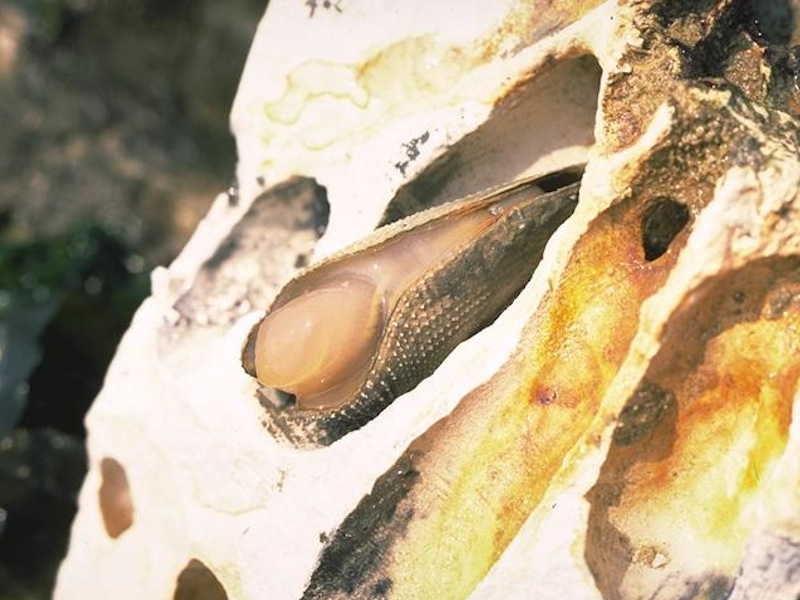
Fucus serratus and piddocks on lower eulittoral soft rock
Photographer: David George Copyright: Joint Nature Conservation Committee (JNCC)

| Researched by | Dr Heidi Tillin & Frances Perry | Refereed by | This information is not refereed |
|---|
Summary
UK and Ireland classification
Description
The lower eulittoral zone on soft rock shores (e.g. chalk) characterized by the wrack Fucus serratus. Much of the community associated with this biotope is the same as the biotope Fserr.FS, but certain taxa are specific to the soft underlying substrata. Rock-boring fauna including the piddocks Barnea spp., Pholas dactylus and Hiatella arctica can occur in dense aggregations. Burrowing polychaetes such as Polydora spp. can also occur in high numbers only visible due to their long, slender palps waving in the water as they occupy holes in the top few centimetres of the rock. A dense red algal turf occurs beneath the Fucus serratus and includes Gelidium pusillum, Osmundea pinnatifida, Palmaria palmata, Lomentaria articulata and Rhodothamniella floridula, but also calcareous algae such as Corallina officinalis and coralline crusts including the red-violet encrusting algae Phymatolithon lenormandii are present. Infaunal taxa such as various amphipods may be common amongst the seaweeds. The empty piddock holes may provide a refuge for species such as the anemone Actinia equina and the mussel Mytilus edulis while the barnacle Semibalanus balanoides, the limpet Patella vulgata can be present on the surface of the soft rock. The whelk Nucella lapillus, the winkles Littorina littorea and Littorina mariae and the top shell Gibbula cineraria are all present on the soft rock among the seaweeds. The high number of characterising species is partly caused by the low number of records used to define this biotope. The high percentage frequency of occurrence is partly a result of the low number of records. More data is needed to validate this biotope description (Connor et al., 2004; JNCC, 2015).
Depth range
Mid shore, Lower shoreAdditional information
-
Listed By
Sensitivity review
Sensitivity characteristics of the habitat and relevant characteristic species
This biotope is found on the lower eulittoral zone on soft rock shores (e.g. chalk). Much of the community associated with this biotope is the same as the biotope Fserr.FS, but the soft underlying substrata also allows characterizing rock-boring bivalves including the piddocks Barnea spp., Pholas dactylus and Hiatella arctica to occur in this habitat (Connor et al., 2004). Burrowing polychaetes such as Polydora spp. can also occur in high numbers. A dense red algal turf occurs beneath the Fucus serratus canopy. and includes Gelidium pusillum, Osmundea pinnatifida, Palmaria palmata, Lomentaria articulata and Rhodothamniella floridula, but also calcareous algae such as Corallina officinalis and coralline crusts including Phymatolithon lenormandii are present. Infaunal taxa such as various amphipods may be common amongst the seaweeds and the empty piddock holes may provide a refuge for species. Other common rocky shore species can be present on the surface including the barnacle Semibalanus balanoides, the limpet Patella vulgata, the whelk Nucella lapillus, the winkles Littorina littorea and Littorina mariae and the top shell Gibbula cineraria.
The sensitivity assessments are based on the algae Fucus serratus as it is considered a key characterizing species that also structures the habitat by providing a physical habitat for attached epibionts and by sheltering other species that occur beneath the canopy where they are provided with some protection from wave action, light, temperature changes and dessication (Hill et al., 1998). Fucus serratus is also considered a key functional species, providing food for grazers. The piddocks are key characterizing species that define the biotope and provide some structure to the habitat by creating holes that may eventually be utilised by other species and thus increase biodiversity (Pinn et al., 2008). Development of this biotope is highly dependent on the presence of suitable substratum, the sensitivity assessments therefore also specifically consider the sensitivity of the soft rock substratum to the pressures, where appropriate.
The red algae and animal species associated with the biotope are commonly found on many different shore types and are either mobile or rapid colonizers. Although these species contribute to the structure and function of the biotope they are not considered key species and are not specifically assessed although sensitivity is discussed generally (more information on many of these can be found for other biotopes on this website).
Resilience and recovery rates of habitat
No evidence for recovery rates of this specific biotope were found. The algae within the biotope can regrow damaged fronds and blades and may regrow from perennial holdfasts or crustose bases, where these remain. The key characterizing species, Fucus serratus and piddocks are attached or sedentary as adults and therefore recovery of populations from impacts will be dependent on recolonization by juveniles. No direct information for recovery rates of the piddocks to perturbations was found and limited information on population dynamics and relevant life history characteristics is available. Adult piddocks remain within permanent burrows and are therefore difficult to observe and sample without destroying the burrows which has limited the extent of observation and experimentation. Greater information on dispersal and recovery was found for Fucus serratus and generic observations of long-term dynamics of rocky shore assemblages are relevant to this species and the associated biological assemblage.
Adults of the mobile species present in the biotope, such as limpets and littorinids may recolonize through adult migration into the habitat from adjacent populations following disturbance or via larval recolonization. Animals within the biotope such as Semibalanus balanoides, produce high numbers of pelagic larvae which are widely distributed by water currents, supporting recolonization from surrounding populations following disturbances. Conversely the characterizing red and brown macroalgae generally produce eggs which sink rapidly to the substratum in the vicinity of the adult plants and dispersal distances are short (Dudgeon et al., 2001). Recovery of algal populations may be rapid where adults remain but prolonged where populations are entirely removed.
Fucus serratus normally lives up to 3 years (Rees, 1932) although in very sheltered areas the plant may live for another couple of years and in very exposed areas may live to only 2 years. High rates of mortality and replacement at all life stages were recorded by Knight & Parke (1950). Fucus serratus is dioecious, perennial and reproduces sexually producing high numbers of eggs (Knight & Parke, 1950 estimated that large plants produce over a million eggs during the breeding season). Reproduction commences in late spring/early summer, with the proportion of first-year plants reproducing varying by latitude (Knight & Parke, 1950) and continues through summer and autumn, peaking in August - October. Eggs and sperm are released into the water and fertilisation occurs in the water column. The zygote then develops into a minute plant that can then settle onto the substratum. Arrontes (1993) determined that the dispersal of Fucus serratus gametes and fertilized eggs was restricted to within 1–2 m from the parent. Average annual expansion rates for Fucus serratus have been estimated at 0.3 to 0.6 km per year (Coyer et al., 2006; Brawley et al., 2009). Dispersal is highly limited as the negatively buoyant eggs are fertilized almost immediately after release and dispersal by rafting reproductive individuals is unlikely (Coyer et al., 2006). Fucus serratus does not float, and thus mature detached individuals cannot transport reproductive material to distant sites as might be the case for other brown algae. However Fucus serratus is found on all British and Irish coasts so there are few mechanisms isolating populations. While poor dispersal is true for medium or large spatial scales (hundreds of metres to kilometres), recruitment at short distances from parental patches is very efficient, as most propagules settle in the vicinity of parent plants (Arrontes, 2002). Many minute germlings are likely to be present under the parent plants (Knight & Parke, 1950).
Clearance experiments s in the UK using cleared areas of 1m2 and clearance of broad strips showed that a population of Fucus serratus restablished in one year and increased to almost pre-clearance levels of biomass by the second year (Knight & Parke, 1950). Recruitment in some instances occurred under a canopy of Ulva spp., which protected the young plants from wave action (Knight & Parke, 1950). The same results were obtained by Hawkins & Harkin, 1985), who found that after experimental (small scale 2 m2) canopy removal of Fucus serratus on a moderately exposed shore, the Fucus serratus cover recovered within one year. Similarly, in a set of clearance experiments (2 x 2m2 plots) on shores in the Isle of Man, that were dominated by Ascophyllum nodosum, Jenkins et al., (2004), found that 2 years after clearance Fucus serratus had colonized, on average, just under 50% of the cleared plots. Once established, the Fucus serratus stands persisted at approximately 50 % mean cover in the cleared areas for the next 10 years of observations, excluding colonization of the plots by Ascophyllum nodosum.
In piddocks the sexes are separate and fertilisation is external, with gametes released into the water column (Pinn et al., 2005 and references therein). The fecundity of female Petricolaria pholadiformis is estimated to be between 3 - 3.5 million eggs per year (Duval, 1963a). Studies report that larval release occurs from April to September (e.g. Pelseneer, 1924; El-Maghraby, 1955; Purchon 1955; Duval 1962; Knight 1984). Knight (1984) reported that the resulting planktonic larval stage spends 45 days in the plankton. No information was found on the factors that induce piddocks to settle. Pinn et al., (2005) observed newly settled individuals between November and February. Pinn et al. (2005) found the smallest sexually mature Pholas dactylus was a one year old measuring 27.4 mm, information on age at sexual maturity was not reported for other species.Although rare in the Romanian Black Sea, Micu (2007) reported the first observations of Pholas dactylus in 34 years at three locations illustrating the recovery potential of this species and ability to colonize or recolonize suitable habitat. The vulnerability of piddocks to episodic events such as the deposition of sediments (Hebda, 2011) and storm damage of sediments (Micu, 2007) and the on-going chronic erosion of suitable sediments (Pinn et al., 2005) indicate that larval dispersal and recruitment of new juveniles from source populations is an effective recovery mechanism allowing persistence of piddocks in suitable habitats.
Richter & Sarnthein (1976) studied the re-colonization of different sediments by various molluscs on suspended platforms in Kiel Bay, Germany. The platforms were suspended at 11, 15 and 19 m water depth, each containing three round containers filled with clay, sand, or gravel. Substratum type was found to be the most important factor for the piddock Barnea candida, although for all other species it was depth. This highlights the significance of the availability of a suitable substratum to the recovery of piddock species and suggests that larvae have some mechanisms for selection of suitable substratum. Richter & Sarnthein (1976) found that within the two year study period the piddocks grew to represent up to 98% of molluscan fauna on clay platforms. Piddock species have also shown very high growth rates of up to 54 mm in 30 months in the laboratory (Arntz & Rumohr, 1973). However, the process of colonization on clay at 15 and 19 m was found to be highly discontinuous, as reflected by the repeated growth and decrease of specimen numbers.
In the Arctic Hiatella arctica may be very long-lived with the oldest individual estimated to be 126 years old (based on annual growth rings) and maximum length was estimated to be achieved at 35 years. Populations in warmer waters are likely to be faster growing (Sejr et al., 2002). In the White Sea, Russia, Hiatella arctica reached a maximum age of 6 years and achieved sexual maturity at 1 year (Matveeva & Maksimovich, 1977, abstract only). In study sites in County Clare, Ireland, Trudgill & Crabtree (1987) found the mean age to be 5 years and 6 years on exposed and sheltered shores, respectively, (estimated based on growth rings). In the Clyde larvae are found all year, (Russell-Hunter 1949) although Lebour (1938) report that maximum abundances of planktonic larvae occurred from July to November.
Red algae in general have complex life histories and exhibit distinct morphological stages over the reproductive life history. Some red algae found within the biotope have life stages that include prostrate creeping bases e.g. encrusting corallines and Osmundea pinnatifida whereas in other species such as Palmaria palmata, the thallus or fronds arise from a small discoid holdfast. The basal crusts and crustose tetrasporphytes are perennial, tough, resistant stages that may prevent other species from occupying the rock surface and allow rapid regeneration. They may therefore provide a significant recovery mechanism. Osmundea pinnatifida turfs may also expand vegetatively where upright fronds bend over, produce rhizoids and colonize adjacent areas of bare rock by acting as stolons (Godin, 1981).
Where holdfasts and basal crusts are removed, recovery will depend on recolonization via spores. Norton (1992) reviewed dispersal by macroalgae and concluded that dispersal potential is highly variable, recruitment usually occurs on a much more local scale, typically within 10 m of the parent plant. Hence, it is expected that the algal turf would normally rely on recruitment from local individuals and that recovery of populations via spore settlement, where adults are removed, could be protracted. Observed expansion rates of Osmundea pinnatifida turfs are very low: 0.015 mm/month in limpet exclusion areas and 0.003 mm/month with limpets (Prathep, 2001).
Corallina officinalis was shown to settle on artificial substances within 1 week of their placement in the intertidal in New England summer (Harlin & Lindbergh, 1977). However, settlement plates laid out in the autumn were not recolonized until the next spring. In the lower rocky intertidal in southern California dominated by Corallina officinalis with foliose overstorey algae present, Littler & Kauker (1984) experimentally cleared plots and followed the recovery for 12 months. Some areas were scraped allowing the basal crusts to remain whereas others were completely sterilised (removal of all material and surfaces then scorched with a blow torch to remove bases). In scraped plots up to 15% cover of Corallina officinalis fronds returned within 3 months after removal of fronds and all other epiflora/fauna (Littler & Kauker, 1984) while in sterilized plots (all basal crusts removed) appearance of articulated fronds occurred 6 months following clearance. At the end of the 12 month observation period Corallina officinalis cover had increased to approximately 18% in plots where basal crusts remained and to approximately 10% in sterilised plots. Similarly Bamber & Irving (1993) reported that new plants grew back in scraped transects within 12 months, although the resistant crustose bases were probably not removed.
Coralline crust refers to nongeniculate (crustose) species from the family Corallinacea that could include Lithophyllum incrustans which is noted to form thick crusts in tidepools, especially in the south west (Adey & Adey, 1973). Although ubiquitous in marine coastal systems little is understood about the taxonomy, biology and ecology of this taxa (Littler & Littler, 2013). Studies by Edyvean & Forde (1987) on populations of Lithophyllum incrustans in Pembroke south-west Wales suggest that reproduction occurs on average early in the third year. Reproduction may be sexual or asexual. Populations release spores throughout the year but spore abundance varies seasonally. Spore survival is extremely low with only a tiny proportion of spores eventually recruiting to the adult population (Edyvean & Ford, 1986). Edyvean & Ford (1984a) found that the age structure of populations sampled from Orkney (Scotland) Berwick (northern England) and Devon (England) were similar, mortality seemed highest in younger year classes with surviving individuals after the age of 10 years appear relatively long-lived (up to 30 years). In St Mary’s Northumberland, the population was dominated by the age 6-7 year classes (Edyvean & Ford, 1984a). Some repair of damaged encrusting coralline occurs through vegetative growth. Chamberlain (1996) observed that although Lithophyllum incrustans was quickly affected by oil during the Sea Empress spill, recovery occurred within about a year. The oil was found to have destroyed about one third of the thallus thickness but regeneration occurred from thallus filaments below the damaged area. Recolonization by propagules is an important recovery mechanism.
Where individuals are removed from a small area, adult limpets and Littorina saxatilis may recolonize from surrounding patches of habitat where these are present. The barnacles and limpets and the winkle Littorina littorea are common, widespread species that spawn annually producing pelagic larvae that can disperse over long distances. It is therefore likely that adjacent populations will provide high numbers of larvae, although recruitment may be low due to habitat unsuitability and the presence of algae preventing settlement on rock surfaces. Littorina saxatilis brood young and do not have a pelagic life stage, recovery will therefore depend on the presence of adults in close proximity to impacted areas. Gibbula cineraria, another grazer within the biotope, is a fast growing species with a short-lifespan (Schöne et al., 2007) and pelagic dispersal stages (Underwood, 1972).
It is likely that habitats where this biotope occurs may undergo annual variation mediated by disturbance (particularly loss of adult macroalgae from storms due to the erodibility of the substratum, Connor et al., 2004), competition for space and grazing. The grazers are a key component of this biotope and will influence the dynamics of the biotope. Changes and recovery trajectories following the removal of species are unpredictable and interactions between the characterizing and associated species may be positive or negative. Due to species interactions, recovery trajectories cannot be predicted by life history characteristics alone. Red algae that form turfs, especially Corallina officinalis, are often highly resilient to disturbance, and can recover and reach greater abundance compared to prior disturbance conditions (Bulleri et al., 2002; Bertocci et al., 2010). Turf algae can then prevent recovery of fucoids and other species by inhibiting recruitment. Mrowicki et al., (2014) found that limpet and barnacle removal allowed ephemeral and fucoid macroalgae to establish on sheltered and wave exposed shores in Ireland. Experimental studies have shown that limpets and other grazers control the development of macroalgae by consuming microscopic phases (Jenkins et al., 2005) or the adult stages (Davies et al., 2007) and can therefore structure biotopes through feeding preferences (Underwood, 1980; Hawkins & Hartnoll, 1985) Exclusion of grazing limpets, on shores in southern Britain (Swanage and Heybrook), led to the colonization of red algal turfs by Himanthalia elongata and Fucus serratus within 2 years (Boaventura et al., 2002). MacFarlane (1952) also recorded a shift to a Corallina officinalis and encrusting coralline biotope following over raking (for harvesting) of Chondrus crispus turf, in these areas gastropods had increased in abundance and prevented the recovery of Chondrus crispus by grazing. A change in the abundance of Patella vulgata or other grazers could therefore prevent or alter the recovery of this biotope. Opportunistic ephemeral green algae such as Ulva sp. can rapidly colonize gaps). These green ephemeral algae are major competitors of Fucus serratus for space colonization and nutrient uptake. Blooms of ephemeral algae facilitated by disturbance, particularly where grazers are removed may then slow the development of longer-lived perennial algae, especially fucoids. On the wave exposed and scoured shores that this biotope occurs on, grazing may limit initial settlement of macroalgae but wave action will limit the presence of adults and larger species through breakage and drag effects leading to loss. Limpets and littorinids may enhance barnacle settlement by grazing and removing algae (Hawkins, 1983) or by depositing pedal mucus trails that attract barnacle larvae (Holmes et al., 2005). Barnacles may enhance survival of small limpets by moderating environmental stresses but they may also have negative effects on recruitment by occupying space and by limiting access to grazing areas (Lewis & Bowman (1975).
Resilience assessment. If resistance is assessed as ‘High’ resilience is considered to be ‘High’, based on no impact to recover from. Where small patches of Fucus serratus are impacted or where disturbance removes the upper or lower margins of the bed, adjacent adults will supply propagules for recolonization. If the entire population of Fucus serratus is lost other species may come to dominate. Where resistance is ‘medium’, loss of (<25% of populations of key species) , resilience of Fucus serratus and red algal turfs is assessed as ‘High’, based on rapid regrowth and recolonization due to efficient fertilization rates and recruitment over short distances. Removal of some of the adult canopy will allow the understorey germlings to grow faster. However, if the population of Fucus serratus is removed (resistance is ‘None’), recovery may take longer, perhaps up to 10 years so the resilience would be scored as ‘Medium’. Recovery rates of red algae will be greatly influenced by whether the crust or holdfasts remain from which the thalli can regrow. Where the bases remain and resistance is assessed as ‘Medium’ (loss of <25% of individuals or cover) then recovery is assessed as ‘High’ based on regrowth from crusts and remaining plants. Where resistance is assessed as ‘Low’ or ‘None’ and a high proportion of bases are lost then recovery may be more protracted.
The sedentary nature of adult piddocks and their vulnerability to episodic impacts such as smothering and chronic erosion suggest that piddocks have evolved effective strategies of larval dispersal and juvenile recruitment with some selectivity for suitable habitats. As recovery of biomass and a typical age-structured population depends on recolonization and subsequent growth to adult size, resilience of the piddocks is assessed as ‘Medium’ (2-10 years) where resistance is None, Low or Medium.
Caveats regarding possible state shifts where species are removed should be considered when applying sensitivity assessments. Identifying tipping points for shifts to alternate stable states is problematic, therefore although the recovery rates based on examples and life history traits are used in the assessments these may underestimate or overestimate recovery time, which will be influenced by pressure and site-specific factors
The biotope is present in soft rock habitats such as chalk. These are formed in prehistoric periods and are therefore unlike sedimentary habitats which may be renewed by water transport of sediment particles. Following removal of the substratum no recovery of habitat is possible, although sub-surface layers of the same substratum type may be exposed. Resilience of the substratum following complete removal is therefore considered to be 'Very Low' (>25 years).
Hydrological Pressures
Use [show more] / [show less] to open/close text displayed
| Resistance | Resilience | Sensitivity | |
Temperature increase (local) [Show more]Temperature increase (local)Benchmark. A 5°C increase in temperature for one month, or 2°C for one year. Further detail EvidenceSpecies found in the intertidal are exposed to extremes of high and low air temperatures during periods of emersion. They must also be able to cope with sharp temperature fluctuations over a short period of time during the tidal cycle. In winter, air temperatures are colder than the sea, conversely in summer air temperatures are much warmer than the sea. Species that occur in this intertidal biotope are therefore generally adapted to tolerate a range of temperatures, although the timing of site-specific factors such as low tides will influence local acclimation. For intertidal species increased temperatures may also result in desiccation when exposed (see changes in emergence pressure). Local populations may be acclimated to the prevailing temperature regime and may therefore exhibit different tolerances to other populations subject to different conditions and therefore caution should be used when inferring tolerances from populations in different regions. Most fucoids are cold-temperate species (Lüning, 1984), and temperatures above 20 °C are generally considered unsuitable for these algae (Zou et al., 2012). The effect of high temperature stress on photosynthesis in brown algae is related to inactivation of enzymes and the induction of reactive oxygen species (ROS), leading to photoinhibition (Suzuki & Mittler, 2006). Growth rates of adult brown macroalgae may be affected by temperature through the increase in metabolic rates (Nygard & Dring, 2008). However, Fucus serratus is found along the Atlantic coast of Europe from Svalbard to Portugal and on the shores of north-east America. The seaweed is thus well within its thermal range in the British Isles. Nielsen et al. (2014) found no negative effects on growth rates of adult Fucus serratus to water temperatures of 22 °C (based on a laboratory experiment with specimen collected from Firth of Forth, Scotland) and Arrontes (1993) observed that Fucus serratus survived in laboratory experiments for 1 week at 25 °C. Nielsen et al. (2014) did, however, report that germlings were negatively affected by increased temperature indicating that early life stages are more vulnerable than mature algae to this pressure. Several studies have observed adverse effects of Fucus serratus as a result of warm thermal stress in terms of growth, physiological performance and reproductive output in Spain and Portugal (Pearson et al., 2009; Viejo et al., 2011; Martínez et al., 2012). Jueterbock et al. (2014) determined that these negative impacts can be explained by restricted within-population genetic diversity. South west Ireland and Brittany are hot-spots of genetic diversity (Coyer et al., 2003; Hoarau et al., 2007) and may thus be more resilient to changes in temperature. Phenotypic plasticity therefore plays an important role in determining the sensitivity of individual populations to changes in temperature. Little direct evidence was found to assess the effects of increased temperature on piddocks and the assessment is based on distribution records and evidence for spawning in response to temperature changes. The American piddock Petricolaria pholadiformis has a wide distribution and is found north as far as the Skaggerak, Kattegat and Limfjord (Jensen, 2010) and is also present in the Mediterranean, Gulf of Mexico and Caribbean (Huber & Gofas, 2015). Pholas dactylus occurs in the Mediterranean and the East Atlantic, from Norway to Cape Verde Islands (Micu, 2007). Barnea candida is distributed from Norway to the Mediterranean and West Africa (Gofas, 2015).The current distribution of Hiatella arctica is predominantly arctic and boreal (Sejr et al., 2004; Gordillo, 2001) and palaeecological reviews describe the genus as ‘consistently linked to cool temperate and polar regions’ (Gordillo, 2001). However, populations of Hiatella arctica occur in the Mediterrannean and have clearly acclimated to the warmer temperatures (Oberlechner, 2008). Laboratory experiments on filtration rates of Hiatella arctica found that activity was strongly linked to temperature (Ali, 1970). Activity rates rose steadily between 0 oC to a maximum between 15 oC and 17 oC and fell sharply to almost no activity at 25 oC (Ali, 1970). Although activity may be reduced Hiatella arctica have very low metabolic rates and may be able to sustain a period of reduced activity. Regression models developed by Bourget et al. (2003) found that temperature and water transparency (measured in metres and indicating the level of inorganic suspended solids) explained only 40% of the variation in biomass of Hiatella arctica fouling navigation buoys in the Gulf of St Lawrence system (Canada). These findings suggest that other variables play a more significant role in determining settlement, survival and growth over a year in this system. However the models did indicate that biomass is higher where temperatures were greater (around 14 oC) although a causal link was not identified (Bourget et al., (2003). There is some evidence that temperature influences the timing of reproduction in Pholas dactylus, which usually spawns between July and August. Increased summer temperatures in 1982 induced spawning in July on the south coast of England (Knight, 1984). Spawning of the piddock Petricolaria pholadiformis is initiated by increasing water temperature (>18 °C) (Duval, 1963a), so elevated temperatures outside of usual seasons may disrupt normal spawning periods. The spawning of B. candida was also reported to be disrupted by changes in temperature. Barnea candida normally spawns in September when temperatures are dropping (El-Maghraby, 1955). However, a rise in temperature in late June of 1956, induced spawning in some specimens of Barnea candida (Duval, 1963b). Disruption from established spawning periods, caused by temperature changes, may be detrimental to the survival of recruits as other factors influencing their survival may not be optimal, and some mortality may result. Established populations may otherwise remain unaffected by elevated temperatures. Littler & Kauker (1984) suggested that the crustose bases of Corallina officinalis are more resistant of desiccation or heating than fronds. Lüning (1990) reported that Corallina officinalis from Helgoland survived one week exposure to temperatures between 0 °C and 28 °C. Latham (2008) investigated the effects of temperature stress on Corallina officinalis through laboratory tests on samples collected in the Autumn in Devon, (England) from rockpools Samples were kept at 15 oC for three days and then exposed to temperatures of 5 oC, 15 oC, 20 oC, 25 oC and 30 oC (the normal range of temperature experienced was suggested to be between 5 and 15 oC). At 35 oC the Corallina was completely bleached after 3 days with a sample kept at 30 oC beginning to bleach. After 7 days (the end of the experiment) the sample kept at 30 oC was partially bleached. Samples kept at 5, 15, 20 and 25 oC showed little change in chemicals produced in reaction to thermal stress and no bleaching suggesting the temperatures in that range had not induced stress reactions. In an exceptionally hot summer (1983, with an increase of between 4.8 and 8.5 °C), Hawkins & Hartnoll (1985) observed no temperature bleaching of adult Himanthalia elongata (although some buttons were bleached) or other canopy forming species. However, understorey red algae showed more signs of damage with bleached Corallina officinalis observed around the edges of pools due to desiccation. Occasional damaged specimens of Palmaria palmata, Osmundea pinnatifida and Mastocarpus stellatus were observed. Palmaria palmata does well in low temperatures, with an optimum between 6 and 15°C, consistent with a distribution in northern temperate and arctic waters. This species is also found in warmer temperate waters as far south as Portugal in Europe and with localized large populations in northern Spain (Garbary et al., 2012 and references therein). Temperatures at or above 15 oC may induce physiological stress (Werner & Dring, 2011; Morgan et al., 1980). In tank cultures of Palmaria palmata at 20°C and above, all plants were dead within a week (Morgan et al., 1980). Populations may be acclimated to typical conditions but it is likely that Palmaria palmata may be bleached or damaged by higher than usual temperatures. Fronds of Osmundea pinnatifida bleach and die-back in summer, while the crustose holdfasts remain, suggesting that the bases are more resistant. The factors responsible for the die-back are a combination of temperature (Flores-Moya, 1992, abstract only) desiccation and irradiance (Prathep, 2001). Limpets, Patella vulgata and littorinids also occur within this biotope. Laboratory studies suggest that adults of these species can tolerate temperature increases. The median upper lethal temperature limit in laboratory tests on Littorina littorea, Littorina saxatilis was approximately 35 oC (Davenport & Davenport, 2005). Patella vulgata can also tolerate high temperatures. The body temperature of Patella vulgata can exceed 36oC in the field, (Davies, 1970); adults become non-responsive at 37-38 C and die at temperatures of 42 oC (Evans, 1948). Semibalanus balanoides and Patella vulgata are 'northern' with their range extending from Portugal or Northern Spain to the Arctic circle. Populations in the southern part of England are therefore relatively close to the southern edge of their geographic range. Reproductive and recruitment success in both species is linked to temperature and long-term changes in temperature (exceeding the duration of the pressure benchmark) may to lead to replacement by the warm water species Chthamalus montagui and Chthamalus stellatus (Southward et al., 1995). In Northern Portugal warming seas appear to be linked to a shortening of the reproductive period and the lack of multiple spawning events in Patella vulgata and other northern species (Ribeiro et al., 2009). Increases in temperature above 12oC induce spawning in Gibbula cineraria (Underwood, 1972; Clare, 1990). Individuals from a population from North East England spawned between late June and early September although females (but not males) could be induced to spawn in winter in response to a temperature increase but males could not (Clare, 1990). An acute increase in temperature that induced spawning in females but not males or that resulted in spawning and fertilization when other conditions were unsuitable would reduce recruitment success (Clare, 1990). This effect, at the duration of the pressure benchmark, is considered to be sub-lethal to the adult population Sensitivity assessment. Fucus serratus are found in the middle of their natural temperature range in the British Isles and are therefore not likely to be affected by an increase in temperature at the pressure benchmark. An increase in acute or chronic temperature above average British and Irish temperatures is not likely to have a detrimental effect of Fucus serratus and associated communities, based on global distribution. However, it should be noted that phenotypic plasticity will influence the tolerance of individual population. Some of the understorey of red algae, such as Palmaria palmata may be lost during acute temperature increases if these occur in the summer when plants are already close to the limit of thermal tolerances. however, this will not alter classification of the biotope.The global distribution of the piddock species, Petricolaria pholadiformis, Pholas dactylus and Barnea candida, suggest that these species can tolerate warmer waters than currently experienced in the UK and may therefore be tolerant of a chronic increase in temperature. Short-term acute increases may, (depending on timing) interfere with temperature driven spawning cues for piddocks and Patella vulgata and Semibalanus balanoides (and possibly other species). The effects will depend on seasonality of occurrence and the species affected. Adult populations may be unaffected and, in such relatively long-lived species, an unfavourable recruitment may be compensated in a following year. Resistance to an acute change in temperature is therefore assessed as ‘High’ (based on Fucus serratus and piddocks) and recovery as ‘High’ (within two years) and the biotope is considered ‘Not Sensitive’. For all species it should be noted that the timing of acute changes may lead to greater impacts, temperature increases in the warmest months may exceed thermal tolerances whilst changes in colder periods may stress individuals acclimated to the lower temperatures. | HighHelp | HighHelp | Not sensitiveHelp |
Temperature decrease (local) [Show more]Temperature decrease (local)Benchmark. A 5°C decrease in temperature for one month, or 2°C for one year. Further detail EvidenceMany intertidal species are tolerant of freezing conditions as they are exposed to extremes of low air temperatures during periods of emersion. They must also be able to cope with sharp temperature fluctuations over a short period of time during the tidal cycle. In winter air temperatures are colder than the sea, conversely in summer air temperatures are much warmer than the sea. Species that occur in the intertidal are therefore generally adapted to tolerate a range of temperatures, with the width of the thermal niche positively correlated with the height of the shore (Davenport & Davenport, 2005). Local populations may be acclimated to the prevailing temperature regime and may therefore exhibit different tolerances to other populations subject to different salinity conditions and therefore caution should be used when inferring tolerances from populations in different regions. Mytilus edulis is a eurytopic species found in a wide temperature range from mild, subtropical regions to areas which frequently experience freezing conditions and are vulnerable to ice scour (Seed & Suchanek, 1992). Lüning (1984) reported that Fucus serratus survived in the laboratory for a week a range temperature between 0°C and 25°C. Fucus serratus is found along the Atlantic coast of Europe from Svalbard to Portugal and on the shores of north-east America. The seaweed is, thus, well within its thermal range in the British Isles. Little empirical evidence was found to assess the effects of decreased temperature on piddocks and the assessment is based on distribution records and evidence for spawning in response to temperature changes.The American piddock Petricolaria pholadiformis has a wide distribution and is found north as far as the Skaggerak, Kattegat and Limfjord (Jensen, 2010) (Huber & Gofas, 2015). Pholas dactylus occurs in the Mediterranean and the East Atlantic, from Norway to Cape Verde Islands (Micu, 2007). Barnea candida is distributed from Norway to the Mediterranean and West Africa (Gofas, 2015). Temperature changes have been observed to initiate spawning by Pholas dactylus, which usually spawns between July and August. Increased summer temperatures in 1982 induced spawning in July on the south coast of England (Knight, 1984). Spawning of Petricolaria pholadiformis is initiated by increasing water temperature (>18 °C) (Duval, 1963a), so decreased temperatures may disrupt normal spawning periods where this coincides with the reproductive season. The spawning of Barnea candida was also reported to be disrupted by changes in temperature. Barnea candida normally spawns in September when temperatures are dropping (El-Maghraby, 1955). Disruption from established spawning periods, caused by decreased temperatures may be detrimental to the survival of recruits as other factors influencing their survival may not be optimal, and some mortality may result. Established populations may otherwise remain unaffected by decreased temperatures. Gordillo & Aitken (2000) in a review of environmental factors relevant to re-interpreting Late Quaternary environments from fossil collections suggest that Hiatella arctica is eurythermal, based on Aitken (1990) and Peacock (1993). The current distribution of Hiatella arctica is predominantly arctic and boreal (Sejr et al., 2004; Gordillo, 2001) and palaeecological reviews describe the genus as ‘consistently linked to cool temperate and polar regions’ (Gordillo, 2001) suggesting that within temperate regions this species would not be sensitive to a decrease in temperature at the pressure benchmark. Regression models developed by Bourget et al. (2003) found that temperature and water transparency (measured in metres and indicating the level of inorganic suspended solids) explained only 40% of the variation in biomass of Hiatella arctica fouling navigation buoys in the Gulf of St Lawrence system (Canada). These findings suggest that other variables play a more significant role in determining settlement, survival and growth over a year in this system. However the models did indicate that biomass is higher where temperatures were greater (around 14 oC) although a causal link was not identified (Bourget et al., (2003). No evidence was found for tolerance of decreased temperatures by Osmundea pinnatifida.Under extremely low temperatures, components of the community demonstrate tolerance. Lüning (1990) reported that Corallina officinalis from Helgoland survived 0 °C when exposed for one week. New Zealand specimens were found to tolerate -4 °C (Frazer et al., 1988). Lüning (1990) suggested that most littoral algal species were tolerant of cold and freezing. The associated species Mastocarpus stellatus has a broad geographical distribution (Guiry & Guiry, 2015) and throughout its range experiences wide variation in temperatures (although local populations may be acclimated to the prevailing thermal regime). The photosynthetic rate of Mastocarpus stellatus higher on the shore fully recovered from 24 hrs at -20 °C (Dudgeon et al.,1989). Photosynthesis in Mastocarpus stellatus also recovered quickly after experimental freezing (Dudgeon et al., 1989, 1995). Palmaria palmata does well in low temperatures, with an optimum between 6 and 15°C, consistent with a distribution in northern temperate and arctic waters. In the laboratory, plants only became fertile if left at temperatures between 5-7 °C with a short light period (Van der Meer, 1979). Acute or chronic changes in temperature below 5°C may therefore reduce reproductive success although reproduction and vegetative growth in warmer months should compensate for any reduction in output. The green algae, Ulva spp. are eurytopic, found in a wide temperature range and in areas which frequently experience freezing conditions and are vulnerable to ice scour (Seed & Suchanek 1992). The cold tolerance of Semibalanus balanoides collected in the winter (and thus acclimated to lower temperatures) was tested in the laboratory. The median lower lethal temperature tolerance was -14.6 oC (Davenport & Davenport, 2005). A decrease in temperature at the pressure benchmark is therefore unlikely to negatively affect this species. The same series of experiments indicated that median lower lethal temperature tolerances for Littorina saxatilis and Littorina littorea were -16.4 and -13 oC respectively. Adults of Patella vulgata are also largely unaffected by short periods of extreme cold. Ekaratne & Crisp (1984) found adult limpets continuing to grow over winter when temperatures fell to -6 °C, and stopped only by still more severe weather. However, loss of adhesion after exposure to -13 °C has been observed with limpets falling off rocks and therefore becoming easy prey to crabs or birds (Fretter & Graham, 1994). However, in the very cold winter of 1962-3 when temperatures repeatedly fell below 0 °C over a period of 2 months large numbers of Patella vulgata were found dead (Crisp, 1964). Periods of frost may also kill juvenile Patella vulgata, resulting in recruitment failures in some years (Bowman & Lewis, 1977). In colder conditions an active migration by mobile species found within the turf may occur down the shore to a zone where exposure time to the air (and hence time in freezing temperatures) is less. Sensitivity assessment. A decrease in acute or chronic temperature above average British and Irish temperatures is not likely to have a detrimental effect of Fucus serratus and associated communities, based on global distribution. However, it should be noted that phenotypic plasticity will influence the tolerance of individual population.The global distribution of the piddock species and Hiatella arctica suggest that these species can tolerate cooler waters than currently experienced in the UK and may therefore be tolerant of a chronic decrease in temperature at the benchmark level. Decreased temperatures may, depending on timing, interfere with spawning cues which appear to be temperature driven. The effects will depend on seasonality of occurrence and the species affected. Adult populations may be unaffected and, in these relatively long-lived species, an unfavourable recruitment may be compensated for in a following year. Based on the characterizing species, resistance to an acute and chronic decrease in temperature at the pressure benchmark is therefore assessed as ‘High’ and recovery as ‘High’ (within two years) and the biotope is considered ‘Not Sensitive’. Based on the characterizing and associated species, this biotope is considered to have ‘High’ resistance and ‘High resilience (by default) to this pressure and is therefore considered to be ‘Not sensitive’. The timing of changes and seasonal weather could result in greater impacts on species. | HighHelp | HighHelp | Not sensitiveHelp |
Salinity increase (local) [Show more]Salinity increase (local)Benchmark. A increase in one MNCR salinity category above the usual range of the biotope or habitat. Further detail EvidenceLittle direct evidence was found to assess sensitivity to this pressure.Local populations may be acclimated to the prevailing salinity regime and may therefore exhibit different tolerances to other populations subject to different salinity conditions and therefore caution should be used when inferring tolerances from populations in different regions. This biotope is found in full (30-35 ppt) salinity (Connor et al., 2004). Biotopes found in the intertidal will naturally experience fluctuations in salinity where evaporation increases salinity and inputs of rainwater expose individuals to freshwater. Species found in the intertidal are therefore likely to have some form of behavioural or physiological adaptations to changes in salinity. Fucoids are able to compensate for changes in salinity by adjusting internal ion concentrations. However this will occur at a cost, reducing photosynthetic rate and hence affecting the growth rate of the seaweed. Fucus serratus, commonly inhabit narrow fjords where salinity can vary widely along a spatial (kms) and/or temporal (hours to daily) scale. Growth rates for Fucus serratus are maximal at a salinity of 20 psu with the critical limit for recruitment set at 7 psu (Malm et al., 2001). An increase in salinity at the pressure benchmark could therefore impact growth. No evidence for the range of physiological tolerances to salinity changes were found for piddocks. Filipov et al., (2003, abstract only) tested the salinity tolerances of Hiatella arctica obtained from the White Sea. The salinity tolerance of individuals kept at 25 ppt was 17-36 ppt. Acclimation of Hiatella arctica allowed them to adapt to higher or lower salinities with the potential tolerance range of acclimated individuals assessed as 13-42 ppt. Tolerances of the red algae vary between species. Corallina officinalis is found in tide pools where salinities may fluctuate markedly during exposure to the air. Kinne (1971) cites maximal growth rates for Corallina officinalis between 33 and 38 psu in Texan lagoons. Laboratory experiments have defined the upper and lethal lower limits for Palmaria palmata as 15 psu and 50 psu, (Karsten et al., 2003) with optimal salinity defined as 23-34 psu (Robbins, 1978). No evidence was found to assess the salinity tolerances of Osmundea pinnatifida. Edyvean & Ford (1984b) suggest that populations of Lithophyllum incrustans are affected by temperature changes and salinity and that temperature and salinity ‘shocks’ induce spawning but no information on thresholds was provided (Edyvean & Ford, 1984b). Populations of Lithophyllum incrustans were less stable in rockpools with a smaller volume of water that were more exposed to temperature and salinity changes due to lower buffering capacity. Sexual plants (or the spores that give rise to them) were suggested to be more susceptible than asexual plants to extremes of local environmental variables (temperature, salinity etc.) as they occur with greater frequency at sites where temperature and salinity were more stable (Edyvean & Ford, 1984b). In the laboratory, Semibalanus balanoides was found to tolerate salinities between 12 and 50 psu (Foster, 1970). Young Littorina littorea inhabit rock pools where salinity may increase above 35psu. Thus, the associated species may be able to tolerate some increase in salinity. Sensitivity assessment. Although some increases in salinity may be tolerated by the species present these are generally short-term and mitigated during tidal inundation. This biotope is considered, based on distribution of Fucus serratus, piddocks and the associated red algal species on the mid to lower shore to be sensitive to a persistent increase in salinity to > 40 ppt (although Hiatella arctica is considered to have greater tolerance). Resistance is therefore assessed as ‘Low’ and recovery as ‘Medium’ (based on recovery of piddocks, fucoids and algal turfs following restoration of usual salinity). Sensitivity is therefore assessed as ‘Medium'. | LowHelp | MediumHelp | MediumHelp |
Salinity decrease (local) [Show more]Salinity decrease (local)Benchmark. A decrease in one MNCR salinity category above the usual range of the biotope or habitat. Further detail EvidenceLocal populations may be acclimated to the prevailing salinity regime and may therefore exhibit different tolerances to other populations subject to different salinity conditions and therefore caution should be used when inferring tolerances from populations in different regions. This biotope is found in full (30-35 ppt) salinity (Connor et al., 2004). A change in full to reduced (18-30 ppt) salinity (the pressure benchmark) may lead to changes in the composition of the biotope. However, biotopes found in the intertidal will naturally experience fluctuations in salinity where evaporation increases salinity and inputs of rainwater expose individuals to freshwater. Species found in the intertidal are therefore likely to have some form of behavioural or physiological adaptations to changes in salinity. Fucoids are able to compensate for changes in salinity by adjusting internal ion concentrations. However this will occur at a cost, reducing photosynthetic rate and hence affecting the growth rate of the seaweed. Growth rates for Fucus serratus are maximal at a salinity of 20 psu with the critical limit for recruitment set at 7 psu (Malm et al., 2001).Sufficient salinity is essential for successful fertilization and germination in Fucus (e.g., Brawley, 1992a; Serrão et al., 1999). Malm et al. (2001) found that fertilization success in Fucus serratus decreased substantially with strongly reduced salinity. Indeed the study found that fertilisation success was 87% at 9 psu but declined to 5% at 6 psu (Malm et al., 2001). Reduced salinity does also affect dispersal by decreasing swimming performance of fucoid sperm (Serrão et al., 1996). No information was found for the salinity tolerance of the of Pholas dactylus. A change in full to reduced (18-30 ppt) salinity (the pressure benchmark) may lead to changes in the composition of the piddock population with replacement of Pholas dactylus (if it is sensitive) by piddocks more tolerant of lower salinities particularly Petricolaria pholadiformis. Petricolaria pholadiformis is particularly common off the Essex and Thames estuary, e.g. the River Medway (Bamber, 1985) suggesting tolerance of brackish waters. Zenetos et al. (2009) suggest that at all sites where Petricolaria pholadiformis has been found there is some freshwater inflow into the sea. According to the literature, the species in its native range inhabits environments with salinities between 29 and 35ppt, while in the Baltic Sea it is reported from salinities 10-30 psu (Gollasch & Mecke, 1996, cited from Zenetos et al. 2009). According to Castagna & Chanley (1973, cited from Zenetos et al. 2009) the lower salinity tolerance of Petricolaria pholadiformis is 7.5-10 psu. It thus appears that reduced salinity facilitates its establishment (Zenetos et al., 2009). Barnea candida is reported to extend in to estuarine environments in salinities down to 20 psu (Fish & Fish, 1996). Filipov et al., (2003, abstract only) tested the salinity tolerances of Hiatella arctica obtained from the White Sea. The salinity tolerance of individuals kept at 25 ppt was 17-36 ppt. Acclimation of Hiatella arctica allowed them to adapt to higher or lower salinities with the potential tolerance range of acclimated individuals assessed as 13-42 ppt. Gordillo & Aitken (2000) in a review of environmental factors relevant to re-interpreting Late Quaternary environments from fossil collections suggest that the normal minimum salinity tolerance of Hiatella arctica is 20 ppt, based on Aitken (1990) and Peacock (1993). Laboratory experiments have defined the upper and lethal lower limits for Palmaria palmata as 15 psu and 50 psu, (Karsten et al., 2003) with optimal salinity defined as 23-34 psu (Robbins, 1978). In-situ Palmaria palmata from the Arctic Kongsfjord (Spitsbergen) exposed for four days to salinities of 15 psu following freshwater run-off suffered high levels of mortality (Karsten et al., 2003). In Danish waters where salinities are lowered by freshwater inputs, cultivation experiments found that Palmaria palmata growth over a seven month period was greatest at a site where mean salinity was 21±3 psu, while no growth occurred at a site where mean salinity was 17±5 psu (Bak, 2014). A decrease in salinity may lead to replacement of more sensitive red algal turf forming species by those more tolerant of the changed conditions. Chondrus crispus occurs in areas of 'low' salinity. For example, the species occurs in estuaries in New Hampshire, USA, where surface water salinity varies from 16-32 psu (Mathieson & Burns, 1975). Mathieson & Burns (1971) recorded maximum photosynthesis of Chondrus crispus in culture at 24 psu, but rates were comparable at 8, 16 and 32 psu. Tasende & Fraga (1999) cultured Chondrus crispus spores from north west Spain and concluded that growth was correlated with salinity between 23 and 33 psu. No evidence was found to assess the salinity tolerances of Osmundea pinnatifida. Corallina officinalis is found in tide pools where salinities may fluctuate markedly during exposure to the air. Kinne (1971) cites maximal growth rates for Corallina officinalis between 33 and 38 psu in Texan lagoons. Ulva species can survive hypersaline conditions in supralittoral rockpools subjected to evaporation and is considered to be a very euryhaline species, tolerant of extreme salinities ranging from 0 psu to 136 psu (Reed & Russell, 1979). Edyvean & Ford (1984b) suggest that populations of Lithophyllum incrustans are affected by temperature changes and salinity and that temperature and salinity ‘shocks’ induce spawning but no information on thresholds was provided (Edyvean & Ford, 1984b). Populations of Lithophyllum incrustans were less stable in tide pools with a smaller volume of water that were more exposed to temperature and salinity changes due to lower buffering capacity. Sexual plants (or the spores that give rise to them) were suggested to be more susceptible than asexual plants to extremes of local environmental variables (temperature, salinity etc.) as they occur with greater frequency at sites where temperature and salinity were more stable (Edyvean & Ford, 1984b). Semibalanus balanoides are tolerant of a wide range of salinity and can survive periodic emersion in freshwater, e.g. from rainfall or freshwater run-off, by closing their opercular valves (Foster, 1971b). They can also withstand large changes in salinity over moderately long periods of time by falling into a ‘salt sleep’ and can be found on shores (example from Sweden) with large fluctuations in salinity around a mean of 24 (Jenkins et al., 2001). In areas of permanently reduced salinity the Australian barnacle Austrominius (formerly Elminius) modestus may be favoured, as this species is more tolerant of lower salinities), although this is balanced against its lower tolerance of wave exposure. Littorina littorea is found in waters of full, variable and reduced salinities (Connor et al., 2004) and so populations are not likely to be highly intolerant of decreases in salinity. Therefore, it appears that the biotope would have low intolerance to a decrease in salinity. On return to normal conditions recovery is likely to be very rapid. Patella vulgata can tolerate varying salinities and its distribution extends into the mouths of estuaries surviving in salinities down to about 20 psu. However, growth and reproduction may be impaired in reduced salinity. Little et al. (1991), for example, observed reduced levels of activity in limpets after heavy rainfall and in the laboratory activity completely stopped at 12 psu. The species can endure periods of low salinity and was found to die only when the salinity was reduced to 3-1 psu (Fretter & Graham, 1994). In experiments where freshwater was trickled over the shell, Arnold (1957) observed limpets withdrawing and clamping the shell onto the substratum. There appears to be an increasing tolerance of low salinities from the lower to the upper limit of distribution of the species on the shore (Fretter & Graham, 1994). Sensitivity assessment, Most of the literature found on this topic considered short-term (days to weeks) impacts of changes to salinity whilst the benchmark refers to a longer-term change. A reduction in salinity at the level benchmark (e.g. from 'Full' to 'Reduced' for one year) could have beneficial effects on Fucus serratus as growth rates are maximal below full saline conditions. Prolonged reduction in salinity at the pressure benchmark is likely to reduce the species richness of the biotope due to loss of less tolerant piddock species, red algae and some intolerant invertebrates. The sensitivity of Palmaria palmata for example, appears to be greater than some other turf-forming species. A change in salinity at the pressure benchmark is considered to lead to some mortality of Palmaria palmata although the tolerance threshold reported in laboratory and cultivation studies is slightly lower than the assessed benchmark. It is considered that the benchmark decrease in salinity would not result in mortality of the key characterizing Fucus serratus species in biotopes that were previously fully marine although some changes in biotope composition may occur and the piddocks or Hiatella arctica may be impacted. Biotope resistance is therefore assessed as 'Low' as the piddocks are a key characterizing componenet and resilience is assessed as 'Medium' , so that biotope sensitivity is assessed as 'Medium'. | LowHelp | MediumHelp | MediumHelp |
Water flow (tidal current) changes (local) [Show more]Water flow (tidal current) changes (local)Benchmark. A change in peak mean spring bed flow velocity of between 0.1 m/s to 0.2 m/s for more than one year. Further detail EvidenceEstablished adult piddocks are, to a large extent, protected from direct effects of increased water flow, owing to their environmental position within the substratum. Increases or decreases in flow rates may affect suspension feeding by altering the delivery of suspended particles or the efficiency of filter feeding. However, no evidence was found to inform the sensitivity assessment although other biotopes characterized by piddocks (IR.MIR.KR.Ldig.Pid and CR.MCR.SfR.Pid) have been found in areas where tidal flows vary between 0.5 -1.5 m/s (Connor et al., 2004), suggesting that changes in flow rates within this range will not negatively impact piddocks. Adult piddocks may become exposed should physical erosion occur at a greater rate than burrowing, and lost from the substratum. At higher densities bioerosion by piddocks may destabilise the substratum increasing vulnerability to erosion and resulting in loss of habitat and Fucus serratus and red algal turf. Moderate water movement is beneficial to seaweeds as it carries a supply of nutrients and gases to the plants and removes waste products. Propagule dispersal, fertilization, settlement, and recruitment are also influenced by water movement (Pearson & Brawley, 1996). Increased water flow can increase scour through increased sediment movement. Small life stages of macroalgae are likely to be affected by removal of new recruits from the substratum reducing successful recruitment (Devinny & Volse, 1978) (see ‘siltation’ pressures). A reduction in water flow can cause a thicker boundary layer resulting in lower absorption of nutrients and CO2 by the macroalgae. Slower water movement can also cause oxygen deficiency directly impacting the fitness of algae (Olsenz, 2011). Higher water flow rates increase mechanical stress on macroalgae by increasing drag. This can result in individuals being torn off the substratum. Jonsson et al. (2006) found that flow speed of 7-8 m/s completely dislodged Fucus vesiculosus individuals larger than 10 cm. Smaller individuals are likely to better withstand increased water flow as they experience less drag. Biogenic habitat structures reduce the effects of water flows on individuals by slowing and disrupting flow. The fronds of Fucus serratus and the red algal turf will reduce the flow experienced by the turf. Boller and Carrington (2006), for example, found that the canopy created by the taller turf of Chondrus cripsus reduced drag forces on individual plants by 15-65%. The crustose holdfasts of Osmundea pinnatifida, Corallina officinalis and the coralline crusts are securely attached and as these are relatively flat, are subject less drag than upright fronds and are likely to tolerate changes in water flows at the pressure benchmark. Moderate water movement is beneficial to seaweeds as it carries a supply of nutrients and gases to the plants and removes waste products. However, if flow becomes too strong, plants may become dislodged. Growth and reproduction of Semibalanus balanoides is influenced by food supply and water velocity (Bertness et al., 1991). Laboratory experiments demonstrate that barnacle feeding behaviour alters over different flow rates but that barnacles can feed at a variety of flow speeds (Sanford et al., 1994). Flow tank experiments using velocities of 0.03, 0.07 and 0.2 m/s showed that a higher proportion of barnacles fed at higher flow rates (Sanford et al., 1994). Feeding was passive, meaning the cirri were held out to the flow to catch particles; although active beating of the cirri to generate feeding currents occurs in still water (Crisp & Southward, 1961). Field observations at sites in southern New England (USA) that experience a number of different measured flow speeds, found that Semibalanus balanoides from all sites responded quickly to higher flow speeds, with a higher proportion of individuals feeding when current speeds were higher. Barnacles were present at a range of sites, varying from sheltered sites with lower flow rates (maximum observed flow rates <0.06- 0.1 m/s), a bay site with higher flow rates (maximum observed flows 0.2-0.3 m/s) and open coast sites (maximum observed flows 0.2-0.4 m/s). Recruitment was higher at the site with flow rates of 0.2-0.3 m/s (although this may be influenced by supply) and at higher flow microhabitats within all sites. Both laboratory and field observations indicate that flow is an important factor with effects on feeding, growth and recruitment in Semibalanus balanoides (Sanford et al., 1994, Leonard et al., 1998), however, the results suggest that flow is not a limiting factor determining the overall distribution of barnacles as they can adapt to a variety of flow speeds. Patella vulgata inhabits a range of tidal conditions and is therefore, likely to tolerate a change in water flow rate. The streamlined profile of limpet shells is of importance in increasing their tolerance of water movement, and this is undoubtedly one factor in determining the different shape of limpets at different exposures. With increasing exposure to wave action the shell develops into a low profile reducing the risk of being swept away. The strong muscular foot and a thin film of mucus between the foot and the rock enables Patella vulgata to grip very strongly to the substratum (Fretter & Graham, 1994). The ability of limpets to resist accelerating, as distinct from constant currents, may set a limit to the kind of habitat which they can occupy and limit the size to which they can grow. Shell morphology within littorinids varies according to environmental conditions, in sheltered areas, where Carcinus maenas is more prevalent, shell apertures are small to inhibit predation. In exposed areas the foot surface is larger to allow greater attachment and the shell spire is lower to reduce drag (Raffaelli 1982, Crothers, 1992). Gibbula cineraria also appear to tolerate a range of wave exposures from exposed sites to those that are very sheltered (Frid & Fordham, 1994), suggesting it can aslo adapt to different water velocities. As with Littorina littorea, the morphology of the shell varies according to wave exposure, allowing individuals to adapt to different conditions in the habitat in which the larvae settle (Frid & Fordham, 1994). Gibbula cineraria is, however, absent from areas with very strong and turbulent flow. Sensitivity assessment. Based on the exposure of Fucus serratus and red algal turfs and piddocks to water flows between 0.5 and 1.5 m/s in other biotopes (Connor et al., 2004), the biotope is considered to be unimpacted by changes within this range as long as these do not lead to increased erosion of the substratum. Resistance is therefore assessed as 'High' and resilience as 'High' (based on no impact to recover from), so that the biotope is considered to be ‘Not sensitive’. | HighHelp | HighHelp | Not sensitiveHelp |
Emergence regime changes [Show more]Emergence regime changesBenchmark. 1) A change in the time covered or not covered by the sea for a period of ≥1 year or 2) an increase in relative sea level or decrease in high water level for ≥1 year. Further detail EvidenceEmergence regime is a key factor structuring intertidal biotopes. Changes in emergence can lead to greater exposure to desiccation, temperature and salinity variation, reduced levels of time for filter feeding and nutrient uptake and photosynthesising opportunities for the characterizing species. Changes in emergence can also alter competitive interactions and trophic interactions such as grazing and predation. This biotope occurs in the mid shore (Connor et al., 2004). This biotope usually occurs immediately below either a Fucus vesiculosus-barnacle mosaic (FvesB) or a Mytilus edulis and piddocks-dominated biotope (MytPid) on moderately exposed shores or a dense canopy of F. vesiculosus (Fves) or Ascophyllum nodosum (Asc.FS) on sheltered shores. The littoral fringe below are on moderately exposed shores dominated by the kelp Laminaria digitata (Ldig.Pid), while the kelp Laminaria saccharina may co-dominate on sheltered shores (Slat.Ldig; Slat.Ft) (JNCC, 2015). Adult piddocks and the algae that characterize this biotope have no mobility and cannot therefore migrate up or down shore to adapt to changes in emergence. Within the chalk substratum, adult piddocks will be afforded some protection from desiccation and temperature increases, following increased emergence, by their burrows which will retain some moisture. The shells of piddocks do not completely enclose the animals however , and therefore cannot be closed to prevent water loss. The tolerance of piddocks to increased and decreased emergence varies between species. Pholas dactylus inhabits the shallow sub-tidal and lower shore and Barnea candida and Petricolaria pholadiformis live slightly higher up the shore than Pholas dactylus (Duval, 1977) . During extended periods of exposure, Pholas dactylus squirt some water from their inhalant siphon and extend their gaping siphons into the air (Knight, 1984). This may result in increased detection and predation by birds. Hiatella arctica occur within the intertidal and subtidally and that the presence of suitable substratum rather than emergence regime is a more significant factor determining the distribution.Fucus serratus is more susceptible to desiccation than other Fucus species that are located further up the shore and subjected more frequently to aerial exposure (Schonbeck & Norton, 1978). In experiments, (Schonbeck & Norton, 1978; Fucus serratus did not survive transplantation further up the shore, e.g. in the Fucus spiralis belt. The critical water content for Fucus serratus is estimated at 40% with water losses past this point causing irreversible damage. Beer et al. (2014) found that Fucus serratus could not regain any positive photosynthetic rates after rehydrating from 10% water content. The upper shore extent of Fucus serratus populations may be replaced by species more tolerant of desiccation and more characteristic of the mid-eulittoral such as Fucus vesiculosus or Ascophyllum nodosum. The red algae within the biotope are likely to be sensitive to increased emergence a. Corallina officinalis are sensitive to desiccation (Dommasnes, 1969) and are generally not found on open rock unless protected by algal canopies or where the surfaces are damp or wet. At Hinkley Point (Somerset, England), for example, seawater run-off from deep pools high in the intertidal supports dense turfs of Corallina spp. lower on the shore (Bamber & Irving, 1993). Fronds are highly intolerant of desiccation and do not recover from a 15 % water loss, which might occur within 40-45 minutes during a spring tide in summer (Wiedemann, 1994). Bleached corallines were observed 15 months after the 1964 Alaska earthquake which elevated areas in Prince William Sound by 10 m. Similarly, increased exposure to air caused by upward movement of 15 cm due to nuclear tests at Armchitka Island, Alaska adversely affected Corallina pilulifera (Johansen, 1974). During an unusually hot summer, Hawkins & Hartnoll (1985) observed damaged Corallina officinalis and other red algae. Littler & Kauker, (1984) suggest that the basal crustose stage is adaptive, allowing individuals to survive periods of physical stress as well as physiological stress such as desiccation and heating. The basal crust stage may persist for extended periods with frond regrowth occurring when conditions are favourable. Osmundea pinnatifida turfs growing on the upper extent of its usual zone in the Isle of Man experience greater desiccation and are shorter and less dense than those lower on the shore (Prathep, 2001), suggesting that habitat quality (measured through growth) decreases with increasing shore height. In laboratory experiments short-term photosynthesis of Osmundea pinnatifida was inhibited where fronds had lost more than 50% of their water content (Prathep, 2001). Following resubmergence fronds that had lost 50 % of water content had fully recovered (measured as photosynthesis reaching maximal value) after 1 hour while fronds exposed to 70% water loss took 5 hours to recover (Prathep, 2001). Repeated exposure to high levels of desiccation would clearly impact growth. Experimental grazer removal has allowed algae including Palmaria palmata, Ceramium sp. and Osmundea (as Laurencia) pinnatifida to grow higher on the shore (during winter and damp summers) than usual suggesting that grazing also limits the upper shore extent of this biotope (Hawkins & Hartnoll, 1985). Palmaria palmata grew more abundantly higher up the shore following the massive mortality of molluscan grazers after the Torrey Canyon oil spill (Hawkins & Hartnoll, 1983). Palmaria palmata also grew more abundantly higher up the shore following the massive mortality of molluscan grazers after the Torrey Canyon oil spill (Hawkins & Hartnoll, 1983). These observations and further grazer removal experiments by Boaventura et al., (2003), indicate that grazing, in combination with physiological tolerances, limits the upper shore extent of biotopes characterized by red algal turfs on moderately and more exposed shores, where grazing is greater than on sheltered shores (Hawkins & Hartnoll, 1983, Boaventura et al., 2003). These results concord with other studies that show grazing and emersion stress limit the height to which red algal turfs can extend (Underwood, 1980, Boaventura, 2000). Occurrence of encrusting coralline algae seems to be critically determined by exposure to air and sunlight. Colonies survive in damp conditions under algal canopies or in pools but not on open rock where desiccation effects are important. Increased emergence leading to drying out of shallow pools would reduce habitat suitability for this group. Spore release by the crusting coralline Lithophyllum incrustans is triggered by small changes in salinity and temperature and therefore changes in emergence may alter patterns in reproduction and recruitment (see relevant pressures for further information). However, this species does occur both high and low in the intertidal (Edyvean & Ford, 1986) and presumably such impacts are limited A decrease in emergence will reduce exposure to desiccation and extremes of temperature and allow the resident Pholas dactylus, Barnea candida and Petricolaria pholadiformis to feed for longer periods and hence grow faster. No information was found on factors controlling the lower limit of piddock populations and it is possible, for example, that predation (predominantly siphon nipping by gobies, and other species, Micu, 2007) may increase at the lower edge of the biotope. Competition for space with species better adapted to the changed conditions may also alter habitat suitability for this biotope. Mobile epifauna are likely to relocate to more suitable habitats. Species such as Patella vulgata and Littorina littorea that are found throughout the intertidal zone are adapted to tolerate desiccation to some extent. For example, littorinids can seal the shell using the operculum while limpets clamped tightly to rock will reduce water loss. Sensitivity assessment. The biotope occurs in the eulittoral zone, where it experiences regular immersion and emersion. Species present are therefore tolerant of periods of emergence to some extent, however changes in emergence regime may alter habitat suitability and increase levels of predation and competition. Other species better able to tolerate desiccation are likely to competitively displace Fucus serratus following increased emergence. A significant, long-term, increase in emergence is therefore considered likely to lead to replacement of this biotope with one that is similar but more typical of the changed conditions with less red algae. Corallina officinalis and associated red algae are intolerant of desiccation but basal crusts may allow individuals to persist in conditions that are unfavourable to frond development until the emergence regime is re-established. Following a decrease in emergence Fucus serratus may be replaced by Laminaria digitata leading to biotope reclassification. Based on these considerations, resistance to changes in emergence is assessed as ‘Medium’ as changes may alter the upper or lower margins of the biotope. Resilience is assessed as ‘Medium’ for piddocks so that sensitivity is assessed as ‘Medium’. | MediumHelp | MediumHelp | MediumHelp |
Wave exposure changes (local) [Show more]Wave exposure changes (local)Benchmark. A change in near shore significant wave height of >3% but <5% for more than one year. Further detail EvidenceNo direct evidence was found to assess sensitivity to this pressure. The biotope typically occurs in moderately wave exposed locations (Connor et al., 2004). The piddocks and Hiatella arctica are unlikely to be directly affected by changes in wave exposure, owing to their environmental position within the substratum, which protects them. Trudgill & Crabtree(1987) found Hiatella arctica at both sheltered and wave exposed sites, suggesting that substratum, rather than wave action is a more significant factor determining distribution. On chalk and clay substrates, it is possible however, that wave action actively erodes the substratum at a faster rate than the piddocks can burrow leaving them exposed to predators or displaced. At higher densities bioerosion by piddocks may destabilise the substratum increasing vulnerability to erosion. Fucus serratus is highly flexible but not physically robust and wave action leads to frequent mechanical damage, breaking fronds or even dislodging algae from the substratum (Knight & Parke, 1950). Fucoids are permanently attached to the substratum and are not able to re-attach if removed. An increase or reduction in wave action at the pressure benchmark is considered to have little effect as Fucus serratus is naturally found in both sheltered conditions and on moderately exposed and exposed shores. Wave action plays a role in determining the shore level at which Fucus serratus is found, with stands tending to occur lower on the shore where it is exposed to greater wave action (Southward & Orton, 1954). Modelled predictions of the change in percentage cover of Fucus serratus in response to climate change induced increases in wind speed (and hence wave height), suggest that Fucus serratus would be resilient to 20% and 40% increases in wind speed (Hawkins et al., 2009). Although this is not directly related to the pressure benchmark it suggests that Fucus serratus occurs across a range of wave exposures and thus wave heights. The Fucus serratus canopy will provide some protection from wave action to the under canopy species assemblage. As water velocity increases algae can flex and reconfigure to reduce the size of the alga when aligned with the direction of flow, this minimises drag and hence the risk of dislodgement (Boller & Carrington, 2007). Within a canopy the friction between the fronds and water slows flow reducing drag. On exposed shores, larger, dense patches of Osmundea pinnatifida were more able to withstand increased wave action in winter than small patches, which were severely damaged, presumably due to the number and density of stolons (Prathep, 2001) These characteristics allow these species to persist on shores that experience a range of wave action levels. Flat growth forms also minimise drag and crustose bases and encrusting corallines are able to withstand high levels of water movement. Colonies of Lithophyllum incrustans appear to thrive in conditions exposed to strong water movement and Irvine & Chamberlain (1994) observe that the species is best developed on wave exposed shores. A decrease in wave exposure may ultimately reduce Patella vulgata abundance because the species does not favour thick algal cover that is often present on more sheltered shores. Alternatively an increase in significant wave height, linked to increased exposure, may result in population changes with fewer macroalgae and with more Chthamalus sp. present than Semibalanus balanoides (Ballantine, 1961) and the limpet Patella ulyssiponensis present, or present in greater numbers, rather than Patella vulgata (Thompson, 1980). These changes are not considered to lead to a significant change in biotope character as species replacements are functionally similar. Potentially the most damaging effect of increased wave heights would be the erosion of the clay substratum as this could eventually lead to loss of the habitat. Increased erosion would lead to the loss of habitat and removal of piddocks. No evidence was found to link significant wave height to erosion. Some erosion will occur naturally and storm events may be more significant in loss and damage of clays than changes in wave height at the pressure benchmark. Micu (2007) for example observed numerous Pholas dactylus that had been washed out of the clay substratum or exposed due to storm damage to the clay in the Romanian Black Sea. Sensitivity assessment. No direct evidence was found to assess this pressure at the benchmark.Based on the distribution of Fucus serratus on shores of varying exposure and the modelled data , Fucus serratus is considered to have ‘High’ resistance’ and ‘High’ resilience to this pressure. This species is therefore considered to be ‘Not sensitive’ at the pressure benchmark. The algal turf and piddocks are also considered to have 'High' resistance to changes at the pressure benchmark where these do not lead to increased erosion of the substratum. Resilience is therefore assessed as 'High' and the biotope is considered to be 'Not sensitive', at the pressure benchmark. | HighHelp | HighHelp | Not sensitiveHelp |
Chemical Pressures
Use [show more] / [show less] to open/close text displayed
| Resistance | Resilience | Sensitivity | |
Transition elements & organo-metal contamination [Show more]Transition elements & organo-metal contaminationBenchmark. Exposure of marine species or habitat to one or more relevant contaminants via uncontrolled releases or incidental spills. Further detail EvidenceThis pressure is Not assessed but evidence is presented where available. However, exposure to contaminants at levels greater than the benchmark may lead to impacts, although no evidence was found for sensitivity of piddocks. Bryan (1984) suggested that the general order for heavy metal toxicity in seaweeds is: Organic Hg > inorganic Hg > Cu > Ag > Zn > Cd > Pb. Cole et al. (1999) reported that Hg was very toxic to macrophytes. The sub-lethal effects of Hg (organic and inorganic) on the sporelings of another intertidal red algae, Plumaria elegans, were reported by Boney (1971), where 100% growth inhibition was caused by 1 ppm Hg in his study. However, no information concerning the effects of heavy metals on Palmaria palmata was found. Heavy metals have the potential to accumulate in plant tissue, therefore it may take some time for tissue levels to fall before recovery can begin. | Not Assessed (NA)Help | Not assessed (NA)Help | Not assessed (NA)Help |
Hydrocarbon & PAH contamination [Show more]Hydrocarbon & PAH contaminationBenchmark. Exposure of marine species or habitat to one or more relevant contaminants via uncontrolled releases or incidental spills. Further detail EvidenceThis pressure is Not assessed but evidence is presented where available. However, exposure to contaminants at levels greater than the benchmark may lead to impacts, although no evidence was found for sensitivity of piddocks. O'Brien & Dixon (1976) suggested that red algae were the most sensitive group of algae to oil or dispersant contamination, possibly due to the susceptibility of phycoerythrins to destruction, but that the filamentous forms were the most sensitive. Laboratory studies of the effects of oil and dispersants on several red algae species, including Palmaria palmata (Grandy, 1984 cited in Holt et al. 1995) concluded that they were all sensitive to oil/ dispersant mixtures, with little differences between adults, sporelings, diploid or haploid life stages.
In areas of moderate oil deposit, up to about 1/2cm thick, on rocks after the Torrey Canyon oil spill, limpets had survived unscathed over a month after the event and feeding continued even though a coating of oil smothered their food source of algae and diatoms (Smith, 1968). Limpets can ingest thick oil and pass it through their gut. However, thick layers of oil smothering individuals will interfere with respiration and spoil normal food supplies for Patella vulgata. After the Braer oil spill, in common with many other oil spills, the major impact in the intertidal zone was on the population of limpets and other grazers. In West Angle Bay, where fresh oil from the Sea Empress tanker reached rocky shores within one day of the spill, limpet mortality was 90% (Glegg et al., 1999). Thus Patella vulgata has higher intolerance to fresh oil which has a high component of volatile hydrocarbons remaining. A significant reduction in the density of juvenile limpets was also observed at all sites known to have been oiled by the Sea Empress spill (Moore, 1997). In longer term studies into the environmental effects of oil refinery effluent discharged into Littlewick Bay, Milford Haven, the number of limpets, usually found in substantial numbers on this type of shore, were considerably reduced in abundance on areas close to the discharge (Petpiroon & Dicks, 1982). In particular only large individuals were found close to the outfall point and juveniles were completely absent, suggesting that observed changes in abundance resulted from effluent effects on larval stages rather than upon adults directly. | Not Assessed (NA)Help | Not assessed (NA)Help | Not assessed (NA)Help |
Synthetic compound contamination [Show more]Synthetic compound contaminationBenchmark. Exposure of marine species or habitat to one or more relevant contaminants via uncontrolled releases or incidental spills. Further detail EvidenceThis pressure is Not assessed but evidence is presented where available. However, exposure to synthetic chemical at levels greater than the benchmark may lead to impacts, although no evidence was found for sensitivity of piddocks. O'Brien & Dixon (1976) suggested that red algae were the most sensitive group of algae to oil contamination, although the filamentous forms were the most sensitive. Laboratory studies of the effects of oil and dispersants on several red algae species (Grandy, 1984 cited in Holt et al., 1995) concluded that they were all intolerant of oil/ dispersant mixtures, with little differences between adults, sporelings, diploid or haploid life stages. Cole et al. (1999) suggested that herbicides, such as simazina and atrazine were very toxic to macrophytes. Hoare & Hiscock (1974) noted that all red algae was excluded from Amlwch Bay, Anglesey by acidified halogenated effluent discharge. Limpets are extremely intolerant of aromatic solvent based dispersants used in oil spill clean-up. During the clean-up response to the Torrey Canyon oil spill nearly all the limpets were killed in areas close to dispersant spraying. Viscous oil will not be readily drawn in under the edge of the shell by ciliary currents in the mantle cavity, whereas detergent, alone or diluted in seawater, would creep in much more readily and be liable to kill the limpet (Smith, 1968). A concentration of 5ppm killed half the limpets tested in 24 hours (Southward & Southward, 1978; Hawkins & Southward, 1992). Acidified seawater affects the motility of Patella vulgata. At a pH of 5.5 motility was reduced whilst submerged but individuals recovered when returned to normal seawater. At a pH of 2.5 total inhibition of movement occurred and when returned to normal seawater half had died (Bonner et al., 1993). Reduced motility reduces time for foraging and may result in decreased survival of individuals. Acidified seawater can also change the shell composition which will lead to a decrease in its protective nature and hence survival (Bonner et al., 1993). Short periods (48 hours) are unlikely to have much effect on a population but long periods (1 year) may cause reduced grazing and an increase in algal growth. However, seawater is unlikely to reach pH 2.5 therefore intolerance to slight changes in pH will be low. Hoare & Hiscock (1974) reported that in Amlwch Bay Patella vulgata was excluded from sites within 100-150m of the discharge of acidified, halogenated effluent. | Not Assessed (NA)Help | Not assessed (NA)Help | Not assessed (NA)Help |
Radionuclide contamination [Show more]Radionuclide contaminationBenchmark. An increase in 10µGy/h above background levels. Further detail EvidenceNo evidence was found to assess this pressure at the benchmark. Algae bioaccumulate radionuclides (with extent depending on the radionuclide and the algae species). Adverse effects have not been reported at low levels. | No evidence (NEv)Help | Not relevant (NR)Help | No evidence (NEv)Help |
Introduction of other substances [Show more]Introduction of other substancesBenchmark. Exposure of marine species or habitat to one or more relevant contaminants via uncontrolled releases or incidental spills. Further detail EvidenceThis pressure is Not assessed. | Not Assessed (NA)Help | Not assessed (NA)Help | Not assessed (NA)Help |
De-oxygenation [Show more]De-oxygenationBenchmark. Exposure to dissolved oxygen concentration of less than or equal to 2 mg/l for one week (a change from WFD poor status to bad status). Further detail EvidenceSpecific information concerning oxygen consumption and reduced oxygen tolerances were not found for important characterizing species within the biotope. Cole et al. (1999) suggested possible adverse effects on marine species below 4 mg O2/l and probable adverse effects below 2mg O2/l . This biotope would only be exposed to low oxygen in the water column intermittently during periods of tidal immersion. In addition, in areas of wave exposure and/or moderately strong current flow, low oxygen levels in the water are unlikely to persist for very long as oxygen levels will be recharged by the incorporation of oxygen in the air into the water column or flushing with oxygenated waters. Duval (1963a) observed that conditions within the borings of Petricolaria pholadiformis were anaerobic and lined with a loose blue/black sludge, suggesting that the species may be relatively tolerant to conditions of reduced oxygen. Reduced oxygen concentrations have been shown to inhibit both photosynthesis and respiration in macroalgae (Kinne, 1977). Despite this, macroalgae are thought to buffer the environmental conditions of low oxygen, thereby acting as a refuge for organisms in oxygen depleted regions especially if the oxygen depletion is short-term (Frieder et al., 2012). The associated invertebrate species also show high tolerances for reduced oxygen at levels that exceed the pressure benchmark. Semibalanus balanoides can respire anaerobically, so they can tolerate some reduction in oxygen concentration (Newell, 1979). When placed in wet nitrogen, where oxygen stress is maximal and desiccation stress is low, Semibalanus balanoides have a mean survival time of 5 days (Barnes et al., 1963). Limpets can also survive for a short time in anoxic seawater; Grenon & Walker, (1981) found that in oxygen free water limpets could survive up to 36 hours, although Marshall & McQuaid (1989) found a lower tolerance for Patella granularis, which survived up to 11 hours in anoxic water. Patella vulgata and littorinids are able to respire in air, mitigating the effects of this pressure during the tidal cycle. Sensitivity assessment. As the biotope will only be exposed to this pressure when emersed and respiration of characterizing and associated will occur in air, biotope resistance was assessed as ‘High’ and resilience as ‘High’ (no effect to recover from), resulting in a sensitivity of 'Not sensitive'. | HighHelp | HighHelp | Not sensitiveHelp |
Nutrient enrichment [Show more]Nutrient enrichmentBenchmark. Compliance with WFD criteria for good status. Further detail EvidenceThis pressure relates to increased levels of nitrogen, phosphorus and silicon in the marine environment compared to background concentrations. The benchmark is set at compliance with WFD criteria for good status, based on nitrogen concentration (UKTAG, 2014). No evidence was found to assess the sensitivity of piddocks to this pressure and it is unlikely that they, and other animal species present in the biotope, would be directly affected by this pressure. Marine algae are often nutrient limited, by nitrogen in particular, so an increase in nutrient levels usually results in increase growth and fecundity. In the Bay of Fundy, for example, where there is a tidal flux of nutrients from the marshes there is luxurious growth of Palmaria palmata. However, very high levels of nutrients can be toxic to macroalgae. (Morgan et al., 1980). In general, the great majority of reports refer to an increase in the number of green algae associated with eutrophicated waters, usually at the expense of red and brown algae. Stimulation of annual ephemerals may accentuate the competition for light and space and hinder perennial species development or harm their recruitment (Kraufvelin et al., 2007). Kraufvelin et al. (2006) found only minor effect on the fucoid community structure as a response to high nutrient levels during the first 3 years of an enrichment experiment. During the 4th year of exposure however, Fucus serratus started to decline and population consequently crashed in the 5th year. The study observed full recovery of algal canopy and animal community in less than 2 year after conditions returned to normal. The results indicate that established rocky shore communities of perennial algae with associated fauna are able to persist for several years, even at very high nutrient levels, but that community shifts may suddenly occur if eutrophication continues. They also indicate that rocky shore communities have the ability to return rapidly to natural undisturbed conditions after the termination of nutrient enhancement. Atalah & Crowe (2010) added nutrients to rockpools occupied by a range of algae including encrusting corallines, turfs of Mastocarpus stellatus, Chondrus crispus and Corallina officinalis and green and red filamentous algae. The invertebrates present were mostly Patella ulyssiponensis, the winkle Littorina littorea and the flat top shell Gibbula umbilicalis. Nitrogen and phosphorous enhancement was via the addition of fertilisers, as either 40 g/litre or 20 g/litre. The treatments were applied for seven month and experimental conditions were maintained every two weeks. The experimental treatments do not directly relate to the pressure benchmark but indicate some general trends in sensitivity. The cover of green filamentous algae was significantly increased both by reduced grazing and increased nutrients, although the effect size was synergistically magnified by the combined effect of grazer removal and nutrients. Nutrient enrichment caused an absolute increase in the average cover of green filamentous algae of 19% (±3.9 S.E.) respect to the control treatments while the cover of red turfing algae was not affected by nutrient addition (Atalah & Crowe, 2010) Sensitivity assessment. The pressure benchmark is relatively protective and may represent a reduced level of nutrient enrichment in previously polluted areas. Resistance to this pressure is therefore assessed as ‘High’ and resilience as ‘High’ so that the biotope is assessed as ‘Not sensitive’. | HighHelp | HighHelp | Not sensitiveHelp |
Organic enrichment [Show more]Organic enrichmentBenchmark. A deposit of 100 gC/m2/yr. Further detail EvidenceOrganic enrichment and nutrient enrichment commonly co-occur, for example sewage deposits or outputs from fish farms may enhance nitrogen and phosphorous and organic matter. Nutrient enrichment alters the selective environment by favouring fast growing, ephemeral species such as Ulva lactuca and Ulva intestinalis (Berger et al., 2004, Kraufvelin, 2007). Rohde et al., (2008) found that both free growing filamentous algae and epiphytic microalgae can increase in abundance with nutrient enrichment. This stimulation of annual ephemerals may accentuate the competition for light and space and hinder perennial species development or harm their recruitment (Berger et al., 2003; Kraufvelin et al., 2007). Nutrient enrichment can also enhance fouling of Fucus fronds by biofilms (Olsenz, 2011). Nutrient enriched environments can not only increase algae abundance, but the abundance of grazing species (Kraufvelin, 2007). High nutrient levels may directly inhibit spore settlement and hinder the initial development of Fucus vesiculosus (Bergström et al., 2003). Bellgrove et al. (2010) found that coralline turfs out-competed fucoids at a site associated with organic enrichment caused by an ocean sewage outfall. No evidence was found to assess the sensitivity of piddocks to this pressure. Sensitivity assessment. The algae within the biotope are not considred likely to be directly affected by an increase in organic matter at the pressure benchmark. The fronds of algae may intercept particles and may remove these from the chalk surfaces, when emmersed, by the movement of fronds. Suspension feeders inccluding barnacles and piddocks may be able to ustilise particles as food. Piddocks are likely to be able to withstand a small level of deposition of organic matter (at the pressure benchmark). Resistance is assessed as 'High' and resilience as 'High' so that the biotope is considered to be 'Not sensitive'.
| HighHelp | HighHelp | Not sensitiveHelp |
Physical Pressures
Use [show more] / [show less] to open/close text displayed
| Resistance | Resilience | Sensitivity | |
Physical loss (to land or freshwater habitat) [Show more]Physical loss (to land or freshwater habitat)Benchmark. A permanent loss of existing saline habitat within the site. Further detail EvidenceAll marine habitats and benthic species are considered to have a resistance of ‘None’ to this pressure and to be unable to recover from a permanent loss of habitat (resilience is ‘Very Low’). Sensitivity within the direct spatial footprint of this pressure is therefore ‘High’. Although no specific evidence is described confidence in this assessment is ‘High’, due to the incontrovertible nature of this pressure. | NoneHelp | Very LowHelp | HighHelp |
Physical change (to another seabed type) [Show more]Physical change (to another seabed type)Benchmark. Permanent change from sedimentary or soft rock substrata to hard rock or artificial substrata or vice-versa. Further detail EvidenceThis biotope is characterized by the soft chalk substratum which supports populations of burrowing piddocks (JNCC, 2015). A change to a sedimentary or hard impenetrable substratum would result in the loss of piddocks significantly altering the character of the biotope. The biotope is therefore considered to have 'No' resistance to this pressure, the change at the pressure benchmark is permanent and resilience is therefore assessed as 'Very low' and sensitivity is assessed as 'High'. | NoneHelp | Very LowHelp | HighHelp |
Physical change (to another sediment type) [Show more]Physical change (to another sediment type)Benchmark. Permanent change in one Folk class (based on UK SeaMap simplified classification). Further detail EvidenceNot relevant. This pressure is relevant only to sedimentary biotopes. | Not relevant (NR)Help | Not relevant (NR)Help | Not relevant (NR)Help |
Habitat structure changes - removal of substratum (extraction) [Show more]Habitat structure changes - removal of substratum (extraction)Benchmark. The extraction of substratum to 30 cm (where substratum includes sediments and soft rock but excludes hard bedrock). Further detail EvidenceThe removal of substratum to 30cm depth will remove the entire biological assemblage in the impact footprint. Resistance is therefore assessed as ‘None’, recovery of the biological assemblage (following habitat restoration) is considered to be 'Medium' (2-10 years) but see caveats in the recovery notes. The biotope is dependent on the presence of chalk or other soft rock, when lost restoration would not be feasible and recovery is therefore categorised as 'Very low'. Sensitivity is therefore assessed as 'High', based on the lack of recovery on substratum. | NoneHelp | Very LowHelp | HighHelp |
Abrasion / disturbance of the surface of the substratum or seabed [Show more]Abrasion / disturbance of the surface of the substratum or seabedBenchmark. Damage to surface features (e.g. species and physical structures within the habitat). Further detail EvidenceWithin this biotope the algae and epifauna could be damaged and removed by surface abrasion. Some species protruding from the surface, e.g. Polydora spp. may also be removed. Although the piddocks are afforded some protection from surface abrasion by living in their burrows, damage to the chalk may leave individuals, especially those near the surface, vulnerable to damage and death through exposure, sediment damage and compaction. Micu (2007) for example observed that after storms in the Romanian Black Sea, the round goby, Neogobius melanostomus, removed clay from damaged or exposed burrows to be able to remove and eat piddocks. The most significant impact may be on the chalk substratum by removing or damaging surface layers resulting in the chalk being more vulnerable to erosion. Natural erosion processes are, however, likely to be on-going within this habitat type. Where abundant the boring activities of piddocks contribute significantly to bioerosion, which can make the substratum habitat more unstable and can result in increased rates of coastal erosion (Evans 1968a; Trudgill 1983; Trudgill & Crabtree, 1987). Pinn et al. (2005) estimated that over the lifespan of a piddock (12 years), up to 41% of the shore could be eroded to a depth of 8.5 mm. Sensitivity assessment. Surface abrasion may remove the algae and epifauna and result in the loss of some piddocks and damge to habitat. Resistance is therefore assessed as ‘Low’ for the algae and ‘Medium’ for piddocks and substratum. The algal mat and surface infauan are predicted to recover within 2 years, so that resilience is considered to be ‘High’ and sensitivity is ‘Low’. As the substratum cannot recover, resilience is assessed as ‘Very Low’ and the sensitivity of the overall biotope is considered to be ‘Medium’. The more precautionary assessments, based on the substratum, are presented in the risk assessment table. | MediumHelp | Very LowHelp | MediumHelp |
Penetration or disturbance of the substratum subsurface [Show more]Penetration or disturbance of the substratum subsurfaceBenchmark. Damage to sub-surface features (e.g. species and physical structures within the habitat). Further detail EvidencePenetration and disturbance below the surface of the substratum will damage and remove the algae and surface fauna and could damage and expose piddocks. Piddocks in damaged burrows or those that are removed from the substratum are unlikely to be able to rebury and will be predated by fish and other mobile species (Micu, 2007). The most significant impact may be the damage and removal of the chalk substratum. Where abundant the boring activities of piddocks can make the substratum habitat more unstable and can exacerbate erosion (Evans 1968a; Trudgill 1983; Trudgill & Crabtree, 1987). Pinn et al. (2005) estimated that over the lifespan of a piddock (12 years), up to 41% of the shore could be eroded to a depth of 8.5 mm. this would make the substratum more vulnerable to damage and removal. Sensitivity assessment. Sub-surface penetration and disturbance will remove and damage algae and surface dwelling fauna and result in the loss of piddocks and damage to the habitat. Resistance is therefore assessed as ‘Low’. The algae and epifauna are predicted to remover relatively rapidly and the piddocks within 2-10 years so that resilience of the biological assemblage is considered to be ‘Medium’ and sensitivity is ‘Medium’. As the substratum cannot recover, resilience is assessed as ‘Very Low’ and sensitivity of the overall biotope is considered to be ‘High’. The more precautionary assessment has been entered into the risk assessment table. | LowHelp | Very LowHelp | HighHelp |
Changes in suspended solids (water clarity) [Show more]Changes in suspended solids (water clarity)Benchmark. A change in one rank on the WFD (Water Framework Directive) scale e.g. from clear to intermediate for one year. Further detail EvidenceIntertidal biotopes will only be exposed to this pressure when submerged during the tidal cycle and thus have limited exposure. Siltation, which may be associated with increased suspended solids and the subsequent deposition of these is assessed separately (see siltation pressures). In general, increased suspended particles reduce light penetration and increase scour and deposition. Changes in suspended solids may enhance food supply to filter or deposit feeders (where the particles are organic in origin) or decrease feeding efficiency (where the particles are inorganic and require greater filtration efforts). This biotope is sand or silt affected (Connor et al., 2004) and may therefore experience episodes with relatively high levels of turbidity from resuspension, an increase at the pressure benchmark for extended periods may exceed tolerances of sensitive species. Changes in suspended solids affecting water clarity will have a direct impact on photosynthesis in Fucus serratus. Irradiance below the light compensation point of photosynthetic species can compromise growth (Middelboe et al., 2006). However turbidity is only relevant when the biotope is covered with water as seaweed photosynthesis declines on emersion and recommences when recovered with water. Increased siltation may cover the frond surface of Fucus serratus and other macroalgae with a layer of sediment further reducing photosynthesis and growth rate. Sediment deposition can also interfere with attachment of microscopic stages of seaweeds reducing recruitment (see ‘siltation’ pressures). In extreme turbidity, such as found in the Bristol Channel, Fucus serratus is excluded from the bottom of the intertidal (below 2m above chart datum) due to the lack of light for sustained growth (Chapman, 1995). Increases in the cover of sediment trapping, turf forming red algae at the expense of canopy forming species has been observed worldwide in temperate systems and has been linked to increased suspended solids linked to human activities worldwide (Airoldi, 2003). As turfs of Osmundea pinnatifida trap sediments (Prathep et al., 2003), it is clear that this species has some resistance to abrasion and scour from sediment particles. Corallina species accumulate more sediment than any other alga (Hicks, 1985). Hence an increase in suspended sediment is likely to accumulate in the patches of Corallina officinalis. A significant increase may result in smothering (see siltation pressures). An accumulation of sediment within the turf may attract more sediment dwelling interstitial invertebrates such as nematodes, harpacticoids and polychaetes, although in more wave exposed locations accumulation of sediment is likely to be minimal. Increased suspended sediment may also result in increased scour, which may adversely affect Fucus vesiculosus and foliose red algae, and interfere with settling spores and recruitment if the factor is coincident with their major reproductive period. However, coralline algae, especially the crustose forms are thought to be resistant of sediment scour (Littler & Kauker, 1984), and will probably not be adversely affected at the benchmark level. Red algae and coralline algae especially are known to be shade tolerant and are common components of the understorey on seaweed dominated shores. Limited shading from suspended sediments is therefore not considered to negatively affect this genus. Palmaria palmata is often found under partially shaded conditions as an epiphyte on the stems of Laminaria spp. (Morgan et al. 1980) in the sublittoral zone (Lüning 1990). In the Bay of Fundy where the tidal flux of nutrients from the marshes includes a high level of suspended sediment, Palmaria palmata grows well despite high turbidity. Irvine (1983), observed morphological adaptation of the plant in fairly sheltered, silty conditions; sometimes the blade divisions are wedge-shaped and finely dissected above or the blade has numerous linear divisions throughout. It is likely that this form reduces possible smothering that may result from increased siltation resulting from increased levels of suspended sediments. In the absence of nutrients short-term increase in turbidity may affect growth and reproduction, however, as a perennial, the adults will probably survive. Other red algal species have high tolerances for high levels of suspended solids. Chondrus crispus occurs in areas of sand covered rock in the subtidal biotope IR.HIR.KSed.ProtAhn suggesting it is very resistant to high levels of turbidity and scour associated with high levels of resuspended particles. On sites affected by high levels of resuspended colliery waste particles, Hyslop et al., (1997) found that Palmaria palmata and Ulva spp. were reduced or absent, although the more tough fucoids were less affected. It is not clear how the levels of suspended solids experienced by these sites relate to the pressure benchmark. No direct evidence was found to assess this pressure for piddocks and other invertebrate species. Increased suspended particles will decrease light penetration, may enhance food supply (where these are organic in origin) or decrease feeding efficiency (where the particles are inorganic and require greater filtration efforts). Very high levels of silt may clog respiratory and feeding organs of some suspension feeders. Increased levels of particles may increase scour and deposition in the biotope depending on local hydrodynamic conditions. The piddocks are protected from scour within burrows and increased organic particles will provide a food subsidy. Pholas dactylus occurs in habitats such as soft chalks where turbidity may be high and is therefore unlikely to be affected by an increase in suspended sediments at the pressure benchmark. Piddocks, in common with other suspension feeding bivalves, have efficient mechanisms to remove inorganic particles via pseudofaeces. Experimental work on Pholas dactylus showed that large particles can either be rejected immediately in the pseudofaeces or passed very quickly through the gut (Knight, 1984). Similarly Petricolaria pholadiformis is able to tolerate high-levels of suspended solids through the production of pseudofaeces (Purchon, 1955). Increased suspended sediments may impose sub-lethal energetic costs on piddocks by reducing feeding efficiency and requiring the production of pseudofaeces with impacts on growth and reproduction. A significant decrease in suspended organic particles may reduce food input to the biotope resulting in reduced growth and fecundity of piddocks. However, local primary productivity may be enhanced where suspended sediments decrease, increasing food supply. Decreased suspended sediment may increase macroalgal competition enhancing diversity but is considered unlikely to significantly change the character of the biotope. Sensitivity assessment. The exposure of this biotope to suspended sediments in the water column will be limited to immersion periods, and wave action will reduce accumulation. The biotope is considered to be ‘Not sensitive’ to a reduction in suspended solids, although this may reduce food supply to piddocks, barnacles and other filter and deposit feeders that occur in this biotope. The piddocks are considered 'Not sensitive' to an increase in suspended solids, although this may lead to some sub-lethal abrasion of fronds of Fucus serratus and some reduction in photosynthesis while submerged with some effects on recruitment. Evidence globally indicates that increase suspended solids favour the turf-forming algae that occur within this biotope (Airoldi, 2003). Resistance is therefore assessed as ‘Low-Medium’ and resilience as ‘High’ so that sensitivity of the biotope is considered to be ‘Low’. An increase in suspended solids at the pressure benchmark may result in a change in species composition with an increase in species seen in very turbid, silty environments e.g. Rhodothamniella floridula which are already found in some examples of this biotope.
| LowHelp | HighHelp | LowHelp |
Smothering and siltation rate changes (light) [Show more]Smothering and siltation rate changes (light)Benchmark. ‘Light’ deposition of up to 5 cm of fine material added to the seabed in a single discrete event. Further detail EvidenceFucus serratus and the red algae present in this biotope are attached to the substratum by a holdfast is thus not able to relocate in response to increased sedimentation. Smothering will prevent photosynthesis resulting in reduced growth and eventually death. Sedimentation of bedrock can impede attachment of Fucus embryos as well as decrease survival and growth of juvenile through both scour and burial (Schiel et al., 2006). An increase in the vertical sediment overburden can also reduce growth whilst hindering the regeneration abilities of adults (Umar et al., 1998). The state of the tide will mediate the extent of impact. If smothering occurs at low tide when the algae is lying flat on the substratum, then most of the organism as well as the associated community will be covered by the deposit of fine material at the level of the benchmark. However, if smothering occurs whilst the alga is submerged standing upright then the photosynthetic surfaces of adult plants will be left uncovered. The resistance of this biotope group to this pressure may thus vary with time of day. Germlings however are likely to be smothered and killed in both scenarios and are inherently most susceptible to this pressure. Smothering will cause direct mortalities in the associated community, particularly in sessile organisms unable to relocate. Lower densities of herbivores such as Patella vulgata have also been attributed to increased sedimentation as silt will reduce their feeding activity and limit their movements (Airoldi & Hawkins, 2007; Schiel et al., 2006). The burrowing mechanisms of the piddocks Pholas dactylus and Barnea candida and other Pholads, mean that the burrows have a narrow entrance excavated by the juvenile. As the individual grows and excavates deeper the burrow widens resulting in a conical burrow from which the adult cannot emerge. Petricolaria pholadiformis excavates a cylindrical burrow (Ansell, 1970) and hence may be able to relocate in sandy sediments, however although burrowing mechanisms have been studied, however no evidence was found to suggest this species can re-emerge through sediments and re-bury. Piddocks cannot therefore emerge from layers of deposited silt as other more mobile bivalves can. No examples of direct empirical evidence or experiments on mortality rates have been found. Sometimes the substratum in which piddocks reside is covered by a thin layer of loose sandy material, through which the piddocks maintain contact with the surface via their siphons. It is likely that the piddocks would be able to extend their siphons through loose material, particularly where tidal movements shift the sand around. Pholas dactylus have been found living under layers of sand in Aberystwyth, Wales, (Knight, 1984) and in Eastbourne, with their siphons protruding at the surface (Pinn et al., 2008). Barnea candida has also been found to survive being covered by shallow layers of sand in Merseyside (Wallace & Wallace, 1983). Wallace & Wallace (1983) were unsure as to how long the Barnea candida could survive smothering but noted that, on the coast of the Wirral, the piddocks have survived smothering after periods of rough weather. Where smothering is constant, survival can be more difficult. The redistribution of loose material following storms off Whitstable Street, in the Thames Estuary, is thought to be responsible for the suffocation of many Petricolaria pholadiformis and it is possible that this species may be the most intolerant of the three piddock species associated with this biotope. However, it was not known how deep the layer of 'loose material' was, nor how long it lasted for or what type of material it was made up of. Indirect indications for the impacts of siltation are provided by studies of Witt et al., (2004) on the impacts of harbour dredge disposal. Petricolaria (syn. Petricola) pholadiformis was absent from the disposal area, and Witt et al. (2004) cite reports by Essink (1996, not seen) that smothering of Petricolaria (syn. Petricola) pholadiformis from siltation could lead to mortality within a few hours. Hebda (2011) also identified that sedimentation may be one of the key threats to Barnea truncata populations. At Agigea (Micu, 2007) reported that smothering of clay beds by sand and finer sediments had removed populations of Pholas dactylus. In this area sand banks up to 1m thick frequently shift position driven by storm events and currents (Micu, 2007). Similar smothering was described in the case of Barnea candida populations boring into clay beds (Gomoiu & Muller 1962, cited from Micu, 2007). Species comprising, and living within the dense algal mat are likely to be intolerant of smothering. Sporelings would certainly be adversely affected as Vadas et al. (1992) stated that algal spores and propagules are adversely affected by a layer of sediment, which can exclude up to 98% of light. Sensitivity assessment. As piddocks are essentially sedentary and as siphons are relatively short, siltation from fine sediments rather than sands, even at low levels for short periods could be lethal. Resistance to siltation is assessed as ‘Low’ for piddocks and the algal mat although effects would be mitigated where water currents and wave exposure rapidly removed the overburden and this will depend on shore height and local hydrodynamic conditions. Resilience is assessed as ‘Medium’ (2-10 years) for piddocks and sensitivity is therefore assessed as ‘Medium’.
| LowHelp | MediumHelp | MediumHelp |
Smothering and siltation rate changes (heavy) [Show more]Smothering and siltation rate changes (heavy)Benchmark. ‘Heavy’ deposition of up to 30 cm of fine material added to the seabed in a single discrete event. Further detail EvidenceFucus serratus and the red algae present in this biotope are attached to the substratum by a holdfast is thus not able to relocate in response to increased sedimentation. Smothering will prevent photosynthesis resulting in reduced growth and eventually death. Sedimentation of bedrock can impede attachment of Fucus embryos as well as decrease survival and growth of juvenile through both scour and burial (Schiel et al., 2006). An increase in the vertical sediment overburden can also reduce growth whilst hindering the regeneration abilities of adults (Umar et al., 1998). The state of the tide will mediate the extent of impact. If smothering occurs at low tide when the algae is lying flat on the substratum, then most of the organism as well as the associated community will be covered by the deposit of fine material at the level of the benchmark. However, if smothering occurs whilst the alga is submerged standing upright then the photosynthetic surfaces of adult plants will be left uncovered. The resistance of this biotope group to this pressure may thus vary with time of day. Germlings however are likely to be smothered and killed in both scenarios and are inherently most susceptible to this pressure. Smothering will cause direct mortalities in the associated community, particularly in sessile organisms unable to relocate. Lower densities of herbivores such as Patella vulgata have also been attributed to increased sedimentation as silt will reduce their feeding activity and limit their movements (Airoldi & Hawkins, 2007; Schiel et al., 2006). The burrowing mechanisms of the piddocks Pholas dactylus and Barnea candida and other Pholads, mean that the burrows have a narrow entrance excavated by the juvenile. As the individual grows and excavates deeper the burrow widens resulting in a conical burrow from which the adult cannot emerge. Petricolaria (syn. Petricola) pholadiformis excavates a cylindrical burrow (Ansell, 1970) and hence may be able to relocate in sandy sediments, however although burrowing mechanisms have been studied, however no evidence was found to suggest this species can re-emerge through sediments and re-bury. Piddocks cannot therefore emerge from layers of deposited silt as other more mobile bivalves can. No examples of direct empirical evidence or experiments on mortality rates in response to siltation have been found for piddocks. Indirect indications for the impacts of siltation are provided by studies of Witt et al., (2004) on the impacts of harbour dredge disposal. Petricolaria (syn. Petricola) pholadiformis was absent from the disposal area, and Witt et al., (2004) cite reports by Essink (1996, not seen) that smothering of Petricolaria (syn. Petricola) pholadiformis from siltation could lead to mortality within a few hours. Hebda (2011) also identified that sedimentation may be one of the key threats to Barnea truncata populations. At Agigea (Micu, 2007) reported that smothering of clay beds by sand and finer sediments had removed populations of Pholas dactylus. In this area sand banks up to 1m thick frequently shift position driven by storm events and currents (Micu, 2007). Similar smothering was described in the case of Barnea candida populations boring into clay beds (Gomoiu & Muller 1962, cited from Micu, 2007). Sensitivity assessment.Siltation at the pressure benchmark is considered to remove most or all of the piddocks and the surface algae and fauna. Resistance to siltation is therefore assessed as ‘None' although effects could be mitigated where water currents and wave exposure rapidly removed the overburden and this will depend on shore height and local hydrodynamic conditions. Resilience is assessed as ‘Medium’ (2-10 years) for piddocks and sensitivity is therefore assessed as ‘Medium’. | NoneHelp | MediumHelp | MediumHelp |
Litter [Show more]LitterBenchmark. The introduction of man-made objects able to cause physical harm (surface, water column, seafloor or strandline). Further detail EvidenceNot assessed. | Not Assessed (NA)Help | Not assessed (NA)Help | Not assessed (NA)Help |
Electromagnetic changes [Show more]Electromagnetic changesBenchmark. A local electric field of 1 V/m or a local magnetic field of 10 µT. Further detail EvidenceNo evidence. | No evidence (NEv)Help | Not relevant (NR)Help | No evidence (NEv)Help |
Underwater noise changes [Show more]Underwater noise changesBenchmark. MSFD indicator levels (SEL or peak SPL) exceeded for 20% of days in a calendar year. Further detail EvidenceNot relevant. | Not relevant (NR)Help | Not relevant (NR)Help | Not relevant (NR)Help |
Introduction of light or shading [Show more]Introduction of light or shadingBenchmark. A change in incident light via anthropogenic means. Further detail EvidenceIncreased levels of diffuse irradiation correlate with increased growth in macroalgae (Aguilera et al., 1999). Macroalgae require light to photosynthesisare so that changes in light intensity are likely to affect photosynthesis, growth, competition and survival. Chapman (1995) noted that too little or too much light are likely to be stresses. There is considerable literature on the light compensation point of marine algae (see Lüning, 1990) but it is difficult to correlate such evidence with 'shading', as light saturation and compensation points depend on light availability, light quality, season and turbidity. As fucoids are out-competed in sublittoral conditions, it is likely that permanent shading woud affect their growth and allow them to be out-competed by other, more shade tolerant species, within the affected area. Red algae, in general, are shade tolerant, often occurring under a macroalgal canopy that reduces light penetration. In areas of higher light levels, the fronds may be lighter in colour due to bleaching (Colhart & Johansen, 1973). Other red algae in the biotope are flexible with regard to light levels. Canopy removal experiments in a rocky sub tidal habitat in Nova Scotia, Canada by Schmidt & Scheibling (2007) did not find a shift in understorey macroalgal turfs (dominated by Corallina officinalis, Chondrus crispus and Mastocarpus stellatus) to more light-adapted species over 18 months. Pholas dactylus can perceive and react to light (Hecht, 1928) however there is no evidence that this pressure would impact the piddocks within the biotope. Sensitivity assessment. As fucoids are out-competed in sublittoral conditions, it is likely that permanent shading would affect their growth and allow them to be out-competed by other, more shade tolerant species, such as red algae within the affected area. The loss of Fucus serratus would lead to biotope reclassification, therefore a biotope resistance of ' Low' is suggested, with low confidence. Resilience is assessed as 'High' so that sensitivity is 'Low. | LowHelp | HighHelp | LowHelp |
Barrier to species movement [Show more]Barrier to species movementBenchmark. A permanent or temporary barrier to species movement over ≥50% of water body width or a 10% change in tidal excursion. Further detail EvidenceNot relevant. | Not relevant (NR)Help | Not relevant (NR)Help | Not relevant (NR)Help |
Death or injury by collision [Show more]Death or injury by collisionBenchmark. Injury or mortality from collisions of biota with both static or moving structures due to 0.1% of tidal volume on an average tide, passing through an artificial structure. Further detail Evidence‘Not relevant’ to seabed habitats. NB. Collision by grounding vessels is addressed under ‘surface abrasion’. | Not relevant (NR)Help | Not relevant (NR)Help | Not relevant (NR)Help |
Visual disturbance [Show more]Visual disturbanceBenchmark. The daily duration of transient visual cues exceeds 10% of the period of site occupancy by the feature. Further detail EvidenceThis pressure is not relevant to the algae within the biotope. Most animals will be able to sense changes in light but atre unlikelyt o be affected by visual disturbance. Pholas dactylus reacts quickly to changes in light intensity, after a couple of seconds, by withdrawing its siphon (Knight, 1984). This reaction is ultimately an adaptation to reduce the risk of predation by, for example, approaching birds (Knight, 1984). However, its visual acuity is probably very limited and it is unlikely to be sensitive to visual disturbance. Birds are highly intolerant of visual presence and are likely to be scared away by increased human activity, therefore reducing the predation pressure on piddocks. Therefore, visual disturbance may be of indirect benefit to piddock populations and the biotope is considered to be ‘Not sensitive’. Resistance and resilience are therefore assessed as ‘High’ by default. | HighHelp | HighHelp | Not sensitiveHelp |
Biological Pressures
Use [show more] / [show less] to open/close text displayed
| Resistance | Resilience | Sensitivity | |
Genetic modification & translocation of indigenous species [Show more]Genetic modification & translocation of indigenous speciesBenchmark. Translocation of indigenous species or the introduction of genetically modified or genetically different populations of indigenous species that may result in changes in the genetic structure of local populations, hybridization, or change in community structure. Further detail EvidenceThe species characterizing this biotope are not farmed or translocated and therefore this pressure is 'Not relevant' to this biotope. | Not relevant (NR)Help | Not relevant (NR)Help | Not relevant (NR)Help |
Introduction of microbial pathogens [Show more]Introduction of microbial pathogensBenchmark. The introduction of relevant microbial pathogens or metazoan disease vectors to an area where they are currently not present (e.g. Martelia refringens and Bonamia, Avian influenza virus, viral Haemorrhagic Septicaemia virus). Further detail EvidenceVery little is known about infections in Fucus (Wahl et al., 2012). Coles (1958) identified parasitic nematodes that caused galls on Fucus serratus in south west Britain. More recently, Zuccaro et al. (2008) detected a number of fungal species associated with Fucus serratus. So far no mortalities have been associated to the introduction of microbial pathogens. However, the potential for increased biotic interactions involving parasites or pathogens is on the rise in many marine systems (Torchin et al., 2002). Sensitivity assessment. Based on the lack of evidence for major pathogens or significant mortalities of the key characterizing species this biotope is considered to have ‘High’ resistance and hence ‘High’ resilience and is classed as ‘Not sensitive’ at the pressure benchmark. | HighHelp | HighHelp | Not sensitiveHelp |
Removal of target species [Show more]Removal of target speciesBenchmark. Removal of species targeted by fishery, shellfishery or harvesting at a commercial or recreational scale. Further detail EvidencePiddocks may be removed as bait and across Europe they have traditionally been harvested for food, however high levels of habitat damage are associated with the removal of boring molluscs (Fanelli et al., 1994) and this practice has largely been banned. The most sensitive component of this biotope to targeted harvesting is the chalk substratum which may be damaged and removed if piddocks were excavated from their burrows, this effect is considered through the physical damage pressures, abrasion and penetration and sub-surface damage. Fucus serratus is one of several harvested and exploited algal species. The commercial harvest removes seaweed canopies which will have direct and indirect effects on the wider ecosystem (Stagnol et al., 2013). Red algae that occur in this biotope may also be harvested. Palmaria palmata (known as dulse) is harvested from the wild both commercially and recreationally. Garbary et al., (2012) studied harvested and non-harvested shores in Nova Scotia, Canada containing stands of Palmaria palmata. They also conducted experimental removal of Palmaria palmata and assessed simulated removal of Palmaria palmata by an experienced commercial harvester. Simulated commercial harvesting reduced cover of Palmaria palmata from 70% to 40%, although experimental removal on shores not usually harvested reduced cover to 20% (Garbary et al., 2012). Harvesting of Osmundea pinnatifida for drying and use as a spice occurs primarily in Scotland, Ireland, and on the Atlantic coast of Canada (www.seaweedindustry.com). The red crustose corraline algae Phymatolithon lenormandii is found in rock pools and shaded areas, removal of the Fucus serratus and red algal turf canopy could result in desiccation leading to bleaching and mortality, depending on the temperatures experienced and degree of insolation. Sensitivity assessment. Removal of the Fucus serratus canopy and red algae will have a negative impact on the primary productivity of the area. As these species are attached and easy to select and remove, resistance is assessed as ‘Low’. If some Fucus serratus population remain recovery will be fairly rapid. However recruitment mortality, grazing by limpets and the presence of turfs and encrusting algae can slow down and limit recovery. A switch to a disturbance community will also slow the recovery of Fucus serratus and associated community. Resilience is thus assessed as ‘Medium’. The biotope therefore scores a ‘Medium’ sensitivity to this pressure. If the entire population of Fucus serratus is removed, other species may come to dominate and the recovery will take considerably longer. Re-establishment of the seaweed may depend on the ability to out-compete other species and this may be dependent on suitable environmental conditions. | LowHelp | MediumHelp | MediumHelp |
Removal of non-target species [Show more]Removal of non-target speciesBenchmark. Removal of features or incidental non-targeted catch (by-catch) through targeted fishery, shellfishery or harvesting at a commercial or recreational scale. Further detail EvidenceDirect, physical impacts from harvesting are assessed through the abrasion and penetration of the seabed pressures. The sensitivity assessment for this pressure considers any biological/ecological effects resulting from the removal of non-target species on this biotope. The loss of characterizing and associated species due to incidental removal as by-catch would alter the character of the habitat from the biotope description. The ecological services such as primary production and habitat structure would also be lost. The red crustose corraline algae Phymatolithon lenormandii is found in rock pools and shaded areas, removal of the Fucus serratus and red algal turf canopy could result in desiccation leading to bleaching and mortality, depending on the temperatures experienced and degree of insolation. Sensitivity assessment. Removal of a large percentage of the characterizing species, resulting in bare rock would alter the character of the biotope, species richness and ecosystem function. Resistance is therefore assessed as ‘Low’ and resilience as ‘Medium’, (based on the loss of fronds and holdfasts and piddocks, but see resilience section for caveats) so that sensitivity is assessed as 'Medium'. If a high proportion of holdfasts remained, recovery would be assessed as ‘High’ and sensitivity would be assessed as ‘Low’. | LowHelp | MediumHelp | MediumHelp |
Introduction or spread of invasive non-indigenous species (INIS) Pressures
Use [show more] / [show less] to open/close text displayed
| Resistance | Resilience | Sensitivity | |
Other INIS [Show more]Other INISEvidenceThe surface of the chalk is friable and subject to on-going erosion and therefore the suitability of this habitat for large, long-lived, attached species is limited. The red algal mat characterizing this biotope consists of small, ephemeral species, replacement of these species by invasive non-indigenous algal species could occur and alter the character of the biotope. However, no evidence was found in the literature to suggest that invasive non-indigenous species are present in UK marine and coastal peat habitats. The presence of The American piddock, Petricolaria pholadiformis is a non-native, boring piddock that was unintentionally introduced from America with the American oyster, Crassostrea virginica, not later than 1890 (Naylor, 1957). Rosenthal (1980) suggested that from the British Isles, the species has colonized several northern European countries by means of its pelagic larva and may also spread via driftwood, although it usually bores into clay, peat or soft rock shores. In Belgium and The Netherlands Petricolaria pholadiformis almost completely displaced the native piddock, Barnea candida (ICES, 1972). However, this has not been observed elsewhere, and later studies have found that Barnea candida is now more common than Petricolaria pholadiformis in Belgium (Wouters, 1993) and there is no documentary evidence to suggest that Barnea candida has been displaced in the British Isles (J. Light & I. Kileen pers. comm. to Eno et al., 1997). Petricolaria pholadiformis is considered unlikely to displace Pholas dactylus which is more likely to occur subtidally. Should Petricolaria pholadiformis is be present in this biotope it is not considered to alter the character or ecological function of the biotope. Although not currently established in UK waters, the whelk Rapana venosa, may spread to habitats. This species has been observed predating on Pholas dactylus in the Romanian Black Sea by Micu (2007). Sensitivity assessment. Based on the lack of records of invasive non-indigenous species in this biotope, and the unsuitability of the habitat for algae and other attached epifauna this biotope is considered to have ‘High’ resistance to this pressure and, by default ‘High’ resilience, this biotope is therefore considered to be ‘Not sensitive’. This assessment may need revising in light of future invasions, e.g. the introduction of the whelk Rapana venosa. | HighHelp | HighHelp | Not sensitiveHelp |
Bibliography
Ansell, A.D., 1970. Boring and burrowing mechanisms in Petricola pholadiformis Lamarck. Journal of Experimental Marine Biology and Ecology, 4 (3), 211-220.
Serrão, E.A., Kautsky, L. & Brawley, S.H., 1996. Distributional success of the marine seaweed Fucus vesiculosus L. in the brackish Baltic Sea correlates with osmotic capabilities of Baltic gametes. Oecologia, 107 (1), 1-12.
Adey, W.H. & Adey, P.J., 1973. Studies on the biosystematics and ecology of the epilithic crustose corallinacea of the British Isles. British Phycological Journal, 8, 343-407.
Aguilera, J., Karsten, U., Lippert, H., Voegele, B., Philipp, E., Hanelt, D. & Wiencke, C., 1999. Effects of solar radiation on growth, photosynthesis and respiration of marine macroalgae from the Arctic. Marine Ecology Progress Series, 191, 109-119.
Airoldi, L., 2003. The effects of sedimentation on rocky coast assemblages. Oceanography and Marine Biology: An Annual Review, 41,161-236
Aitken, A.E., 1990. Fossilization potential of Arctic fiord and continental shelf benthic macrofaunas, p. 155-176. In J.A. Dowdeswell and J.D. Scourse, eds., Glacimarine Environments: Processes and Sediments. Geological Society of London Special Publication,53, 423 pp.
Ali, R. M. 1970. The influence of suspension density and temperature on the filtration rate of Hiatella arctica. Marine Biology, 6 (4), 291-302.
Arnold, D.C., 1957. The response of the limpet, Patella vulgata L., to waters of different salinities. Journal of the Marine Biological Association of the United Kingdom, 36, 121-128.
Arntz, W.E. & Rumohr, H., 1973. Boring clams (Barnea candida (L.) and Zirfaea crispata (L.)) in Kiel Bay. Kiel Meeresforsch, 29, 141-143.
Arrontes, J., 1993. Nature of the distributional boundary of Fucus serratus on the north shore of Spain. Marine Ecology Progress Series, 93, 183-183.
Arrontes, J., 2002. Mechanisms of range expansion in the intertidal brown alga Fucus serratus in northern Spain. Marine Biology, 141 (6), 1059-1067.
Atalah, J. & Crowe, T.P., 2010. Combined effects of nutrient enrichment, sedimentation and grazer loss on rock pool assemblages. Journal of Experimental Marine Biology and Ecology, 388 (1), 51-57.
Bak, U.G., 2014. Suitable cultivation areas for Palmaria palmata (Rhodophyta) and Saccharina latissima (Phaeophyceae) in the inner Danish waters in relation to variations in light, temperature and salinity. Roskilde University. MSc thesis
Ballantine, W., 1961. A biologically-defined exposure scale for the comparative description of rocky shores. Field Studies, 1, 73-84.
Bamber, R.N. & Irving, P.W., 1993. The Corallina run-offs of Bridgewater Bay. Porcupine Newsletter, 5, 190-197.
Bamber, R.N., 1985. Coarse substrate benthos of Kingsnorth outfall lagoon, with observations on Petricola pholadiformis Lamarck. Central Electricity Research Laboratories Report TPRD/L2759/N84., Central Electricity Research Laboratories Report TPRD/L2759/N84.
Barnes, H., Finlayson, D.M. & Piatigorsky, J., 1963. The effect of desiccation and anaerobic conditions on the behaviour, survival and general metabolism of three common cirripedes. Journal of Animal Ecology, 32, 233-252.
Beer, S., Björk, M. & Beardall, J., 2014. Photosynthesis in the Marine Environment. John Wiley & Sons.
Bellgrove, A., McKenzie, P.F., McKenzie, J.L. & Sfiligoj, B.J., 2010. Restoration of the habitat-forming fucoid alga Hormosira banksii at effluent-affected sites: competitive exclusion by coralline turfs. Marine Ecology Progress Series, 419, 47-56.
Berger, R., Bergström, L., Granéli, E. & Kautsky, L., 2004. How does eutrophication affect different life stages of Fucus vesiculosus in the Baltic Sea? - a conceptual model. Hydrobiologia, 514 (1-3), 243-248.
Berger, R., Henriksson, E., Kautsky, L. & Malm, T., 2003. Effects of filamentous algae and deposited matter on the survival of Fucus vesiculosus L. germlings in the Baltic Sea. Aquatic Ecology, 37 (1), 1-11.
Bergström, L., Berger, R. & Kautsky, L., 2003. Negative direct effects of nutrient enrichment on the establishment of Fucus vesiculosus in the Baltic Sea. European Journal of Phycology, 38 (1), 41-46.
Bertness, M.D., Gaines, S.D., Bermudez, D. & Sanford, E., 1991. Extreme spatial variation in the growth and reproductive output of the acorn barnacle Semibalanus balanoides. Marine Ecology Progress Series, 75, 91-100.
Bertocci, I., Arenas, F., Matias, M., Vaselli, S., Araújo, R., Abreu, H., Pereira, R., Vieira, R. & Sousa-Pinto, I., 2010. Canopy-forming species mediate the effects of disturbance on macroalgal assemblages on Portuguese rocky shores. Marine Ecology Progress Series, 414, 107-116.
Boaventura, D., Alexander, M., Della Santina, P., Smith, N.D., Re, P., da Fonseca, L.C. & Hawkins, S.J., 2002. The effects of grazing on the distribution and composition of low-shore algal communities on the central coast of Portugal and on the southern coast of Britain. Journal of Experimental Marine Biology and Ecology, 267 (2), 185-206.
Boller, M.L. & Carrington, E., 2006. In situ measurements of hydrodynamic forces imposed on Chondrus crispus Stackhouse. Journal of Experimental Marine Biology and Ecology, 337 (2), 159-170.
Boller, M.L. & Carrington, E., 2007. Interspecific comparison of hydrodynamic performance and structural properties among intertidal macroalgae. Journal of Experimental Biology, 210 (11), 1874-1884.
Boney, A.D., 1971. Sub-lethal effects of mercury on marine algae. Marine Pollution Bulletin, 2, 69-71.
Bonner, T. M., Pyatt, F. B. & Storey, D. M., 1993. Studies on the motility of the limpet Patella vulgata in acidified sea-water. International Journal of Environmental Studies, 43, 313-320.
Bourget, E., Ardisson, P-L., Lapointe, L. & Daigle, G. 2003. Environmental factors as predictors of epibenthic assemblage biomass in the St. Lawrence system. Estuarine, Coastal and Shelf Science, 57, 641-652.
Bowman, R.S. & Lewis, J.R., 1977. Annual fluctuations in the recruitment of Patella vulgata L. Journal of the Marine Biological Association of the United Kingdom, 57, 793-815.
Brawley, S.H., 1992a. Fertilization in natural populations of the dioecious brown alga Fucus ceranoides and the importance of the polyspermy block. Marine Biology, 113 (1), 145-157.
Brawley, S.H., Coyer, J.A., Blakeslee, A.M., Hoarau, G., Johnson, L.E., Byers, J.E., Stam, W.T. & Olsen, J.L., 2009. Historical invasions of the intertidal zone of Atlantic North America associated with distinctive patterns of trade and emigration. Proceedings of the National Academy of Sciences, 106 (20), 8239-8244.
Brown, C.J., Eaton, R.A. & Thorp, C.H. 2001. Effects of chromated copper arsenate (CCA) wood preservative on early fouling community formation. Marine Pollution Bulletin, 42, 1103-1113.
Bulleri, F., Benedetti-Cecchi, L., Acunto, S., Cinelli, F. & Hawkins, S.J., 2002. The influence of canopy algae on vertical patterns of distribution of low-shore assemblages on rocky coasts in the northwest Mediterranean. Journal of Experimental Marine Biology and Ecology, 267 (1), 89-106.
Castagna, M., & Chanley, P., 1973. Salinity tolerance of some marine bivalves from inshore and estuarine environments in Virginia waters on the western mid- Atlantic coast. Malacologia 12, 47-96
Chamberlain, Y.M., 1996. Lithophylloid Corallinaceae (Rhodophycota) of the genera Lithophyllum and Titausderma from southern Africa. Phycologia, 35, 204-221.
Chapman, A.R.O. (1995). Functional ecology of fucoid algae: twenty-three years of progress. Phycologia, 34(1), 1-32.
Clare, A., 1990. Laboratory-induced spawning of the gastropod Gibbula cineraria as an indicator of field spawning. Marine Ecology Progress Series, 63 (2), 303-304.
Cole, S., Codling, I.D., Parr, W. & Zabel, T., 1999. Guidelines for managing water quality impacts within UK European Marine sites. Natura 2000 report prepared for the UK Marine SACs Project. 441 pp., Swindon: Water Research Council on behalf of EN, SNH, CCW, JNCC, SAMS and EHS. [UK Marine SACs Project.]. Available from: http://ukmpa.marinebiodiversity.org/uk_sacs/pdfs/water_quality.pdf
Coles, J.W., 1958. Nematodes parasitic on sea weeds of the genera Ascophyllum and Fucus. Journal of the Marine Biological Association of the United Kingdom, 37 (1), 145-155.
Colthart, B.J., & Johanssen, H.W., 1973. Growth rates of Corallina officinalis (Rhodophyta) at different temperatures. Marine Biology, 18, 46-49.
Connor, D.W., Allen, J.H., Golding, N., Howell, K.L., Lieberknecht, L.M., Northen, K.O. & Reker, J.B., 2004. The Marine Habitat Classification for Britain and Ireland. Version 04.05. ISBN 1 861 07561 8. In JNCC (2015), The Marine Habitat Classification for Britain and Ireland Version 15.03. [2019-07-24]. Joint Nature Conservation Committee, Peterborough. Available from https://mhc.jncc.gov.uk/
Coyer, J., Hoarau, G., Skage, M., Stam, W. & Olsen, J., 2006a. Origin of Fucus serratus (Heterokontophyta; Fucaceae) populations in Iceland and the Faroes: a microsatellite-based assessment. European Journal of Phycology, 41 (2), 235-246.
Crisp, D.J. & Southward, A.J., 1961. Different types of cirral activity Philosophical Transactions of the Royal Society of London, Series B, 243, 271-308.
Crisp, D.J. (ed.), 1964. The effects of the severe winter of 1962-63 on marine life in Britain. Journal of Animal Ecology, 33, 165-210.
Crothers, J., 1992. Shell size and shape variation in Littorina littorea (L.) from west Somerset. Proceedings of the Third International Symposium on Littorinid Biology, J. Grahame, PJ Mill and D. G. Reid (eds.). The Malacological Society of London, pp. 91-97.
Dame, R.F.D., 1996. Ecology of Marine Bivalves: an Ecosystem Approach. New York: CRC Press Inc. [Marine Science Series.]
Davenport, J. & Davenport, J.L., 2005. Effects of shore height, wave exposure and geographical distance on thermal niche width of intertidal fauna. Marine Ecology Progress Series, 292, 41-50.
Davies, A.J., Johnson, M.P. & Maggs, C.A., 2007. Limpet grazing and loss of Ascophyllum nodosum canopies on decadal time scales. Marine Ecology Progress Series, 339, 131-141.
Davies, S.P., 1970. Physiological ecology of Patella IV. Environmental and limpet body temperatures. Journal of the Marine Biological Association of the United Kingdom, 50 (04), 1069-1077.
Devinny, J. & Volse, L., 1978. Effects of sediments on the development of Macrocystis pyrifera gametophytes. Marine Biology, 48 (4), 343-348.
Dixon P.S. 1960. Studies on marine algae of the British Isles: the genus Ceramium. Journal of the Marine Biological Association of the UK. 39, 331-374.
Dommasnes, A., 1969. On the fauna of Corallina officinalis L. in western Norway. Sarsia, 38, 71-86.
Dudgeon, S.R., Davison. I.R. & Vadas, R.L.,1989. Effect of freezing on photosynthesis of intertidal macroalgae relative tolerance of Chondrus crispus and Mastocarpus stellatus (Rhodophyta). Marine Biology, 101, 107-114. DOI https://doi.org/10.1007/BF00393483
Dudgeon, S.R., Kuebler, J.E., Vadas, R.L. & Davison, I.R., 1995. Physiological responses to environmental variation in intertidal red algae: does thallus morphology matter ? Marine Ecology Progress Series, 117, 193-206.
Duval, D.M., 1962. Observations on the annual cycles of Barnea candida: (Class Lamellibranchiata, Family Pholadidae). Journal of Molluscan Studies, 35 (2-3), 101-102.
Duval, D.M., 1963a. The biology of Petricola pholadiformis Lamarck (Lammellibranchiata: Petricolidae). Proceedings of the Malacological Society, 35, 89-100.
Duval, D.M., 1963b. Observations on the annual cycle of Barnea candida (Class Lamellibranchiata, Family Pholadidae). Proceedings of the Malacological Society, 35, 101-102.
Duval, M., 1977. A historical note - Barnea candida at Whitstable Street. The Conchologists Newsletter, 62, pp. 28.
Edwards, P., 1973. Life history studies of selected Ceramium species. Journal of Phycology, 9, 181-184.
Edyvean, R.G.J. & Ford, H., 1987. Growth rates of Lithophyllum incrustans (Corallinales, Rhodophyta) from south west Wales. British Phycological Journal, 22 (2), 139-146.
Edyvean, R.G.J. & Ford, H., 1984a. Population biology of the crustose red alga Lithophyllum incrustans Phil. 2. A comparison of populations from three areas of Britain. Biological Journal of the Linnean Society, 23 (4), 353-363.
Edyvean, R.G.J. & Ford, H., 1984b. Population biology of the crustose red alga Lithophyllum incrustans Phil. 3. The effects of local environmental variables. Biological Journal of the Linnean Society, 23, 365-374.
Edyvean, R.G.J. & Ford, H., 1986. Population structure of Lithophyllum incrustans (Philippi) (Corallinales Rhodophyta) from south-west Wales. Field Studies, 6, 397-405.
Ekaratne, S.U.K. & Crisp, D.J., 1984. Seasonal growth studies of intertidal gastropods from shell micro-growth band measurements, including a comparison with alternative methods. Journal of the Marine Biological Association of the United Kingdom, 64, 183-210.
El-Maghraby, A., 1955. The inshore plankton of the Thames Estuary. , PhD thesis, University of London.
Eno, N.C., Clark, R.A. & Sanderson, W.G. (ed.) 1997. Non-native marine species in British waters: a review and directory. Peterborough: Joint Nature Conservation Committee.
Essink, K., 1996. Die Auswirkungen von Baggergutablagerungen auf das Makrozoobenthos—Eine Übersicht der niederländischen Untersuchungen. In: BFG (ed) Baggern und Verklappen im Küstenbereich. BFG Mitt 11:12–17
Evans, J.W., 1968. The role of Penitella penita (Conrad 1837)(Family Pholadidae) as eroders along the Pacific coast of North America. Ecology, 49,156-159.
Evans, R.G., 1948. The lethal temperatures of some common British littoral molluscs. The Journal of Animal Ecology, 17, 165-173.
Fanelli, G., Piraino, S., Belmonte, G., Geraci, S. & Boero, F., 1994. Human predation along Apulian rocky coasts (SE Italy): desertification caused by Lithophaga lithophaga (Mollusca) fisheries. Marine Ecology Progress Series. Oldendorf, 110 (1), 1-8.
Filippov, A.A., Komendantov, A.Y. & Khalaman, V.V., 2003. Salinity tolerance of the White Sea mollusk Hiatella arctica L. (Bivalvia, Heterodonta). Zoologichesky Zhurnal, 82 (8), 913-918.
Fish, J.D. & Fish, S., 1996. A student's guide to the seashore. Cambridge: Cambridge University Press.
Fletcher, R.L., 1996. The occurrence of 'green tides' - a review. In Marine Benthic Vegetation. Recent changes and the Effects of Eutrophication (ed. W. Schramm & P.H. Nienhuis). Berlin Heidelberg: Springer-Verlag. [Ecological Studies, vol. 123].
Flores-Moya, A., Fernandez-Garcia, J.A. & Niell, F.X., 1992. Influences of lightintensity and temperature on the summer disappearance of Laurencia pinnatifida (Ceramiales Rhodophyta). Cryptogamic Botany, 2 (4), 345-350.
Foster, B.A., 1970. Responses and acclimation to salinity in the adults of some balanomorph barnacles. Philosophical Transactions of the Royal Society of London, Series B, 256, 377-400.
Foster, B.A., 1971b. On the determinants of the upper limit of intertidal distribution of barnacles. Journal of Animal Ecology, 40, 33-48.
Frazer, A.W.J., Brown, M.T. & Bannister, P., 1988. The frost resistance of some littoral and sub-littoral algae from southern New Zealand. Botanica Marina, 31, 461-464.
Fretter, V. & Graham, A., 1994. British prosobranch molluscs: their functional anatomy and ecology, revised and updated edition. London: The Ray Society.
Frid, C.L.J. & Fordham, E., 1994. The morphology of the sub-littoral gastropod Gibula cineraria (L) along a gradient of wave action. Ophelia, 40 (2), 135-146.
Frieder, C., Nam, S., Martz, T. & Levin, L., 2012. High temporal and spatial variability of dissolved oxygen and pH in a nearshore California kelp forest. Biogeosciences, 9 (10), 3917-3930.
Garbary, D.J., Beveridge, L.F., Flynn, A.D. & White, K.L., 2012. Population ecology of Palmaria palmata (Palmariales, Rhodophyta) from harvested and non-harvested shores on Digby Neck, Nova Scotia, Canada. Algae, 27 (1), 33-42.
Gili, J-M. & Hughes, R.G., 1995. The ecology of marine benthic hydroids. Oceanography and Marine Biology: an Annual Review, 33, 351-426.
Glegg, G. A., Hickman, L. & Rowland, S. J., 1999. Contamination of limpets (Patella vulgata) following the Sea Empress oil spill. Marine Pollution Bulletin, 38, 119-125.
Godin, J., 1981. Modalités de la fixation et de la dispersion du Laurencia pinnatifida (Hudson) Lamouroux (Rhodophycée, Céramiale) sur les substrats rocheux de mode battu. Botanica Marina, 24(5), 245-250.
Gofas, S., 2015. Barnea candida (Linnaeus, 1758). Accessed through: World Register of Marine Species at http://www.marinespecies.org/
Gollasch, S. &, Mecke, R., 1996. Eingeschleppte Organismen. In: Lozan JL, Lampe R, Matthaus W, Rachor E, Rumohr H, v. Westernhagen H (eds), Warnsignale aus der Ostsee. Parey Buchverlag, Berlin, pp 146-150
Gomoiu M.T. & Müller, G.J., 1962. Studies concerning the benthic association dominated by Barnea candida in the Black Sea. Revue Roumaine de Biologie, 7 (2): 255-271.
Gordillo, S., 2001. Puzzling distribution of the fossil and living genus Hiatella (Bivalvia). Palaeogeography, Palaeoclimatology, Palaeoecology, 165 (3), 231-249.
Gordillo, S. & Aitken, A.E., 2000. Palaeoenvironmental interpretation of Late Quaternary marine molluscan assemblages, Canadian Arctic archipelago. Géographie physique et Quaternaire, 54 (3), 301-315.
Grandy, N., 1984. The effects of oil and dispersants on subtidal red algae. Ph.D. Thesis. University of Liverpool.
Grenon, J.F. & Walker, G., 1981. The tenacity of the limpet, Patella vulgata L.: an experimental approach. Journal of Experimental Marine Biology and Ecology, 54, 277-308.
Guiry, M.D. & Guiry, G.M. 2015. AlgaeBase [Online], National University of Ireland, Galway [cited 30/6/2015]. Available from: http://www.algaebase.org/
Harlin, M.M., & Lindbergh, J.M., 1977. Selection of substrata by seaweed: optimal surface relief. Marine Biology, 40, 33-40.
Hawkins, S., 1983. Interactions of Patella and macroalgae with settling Semibalanus balanoides (L.). Journal of Experimental Marine Biology and Ecology, 71 (1), 55-72.
Hawkins, S.J. & Harkin, E., 1985. Preliminary canopy removal experiments in algal dominated communities low on the shore and in the shallow subtidal on the Isle of Man. Botanica Marina, 28, 223-30.
Hawkins, S.J. & Hartnoll, R.G., 1983. Grazing of intertidal algae by marine invertebrates. Oceanography and Marine Biology: an Annual Review, 21, 195-282.
Hawkins, S.J. & Hartnoll, R.G., 1985. Factors determining the upper limits of intertidal canopy-forming algae. Marine Ecology Progress Series, 20, 265-271.
Hawkins, S.J. & Southward, A.J., 1992. The Torrey Canyon oil spill: recovery of rocky shore communities. In Restoring the Nations Marine Environment, (ed. G.W. Thorpe), Chapter 13, pp. 583-631. Maryland, USA: Maryland Sea Grant College.
Hawkins, S.J., Sugden, H.E., Mieszkowska, N., Moore, P.J., Poloczanska, E., Leaper, R., Herbert, R.J.H., Genner, M.J., Moschella, P.S., Thompson, R.C., Jenkins, S.R., Southward, A.J., Burrows, M.T., 2009. Consequences of climate-driven biodiversity changes for ecosystem functioning of North European rocky shores. Marine Ecology Progress Series, 396, 245-259.
Hebda, A., 2011. Information in Support of a Recovery Potential Assessment for Atlantic Mud-piddock (Barnea Truncata) in Canada: Canadian Science Advisory Secretariat.
Hecht, S.,1928. The relation of time, intensity and wave-length in the photosensory system of Pholas. The Journal of General Physiology, 11(5), 657-672.
Hicks, G.R.F., 1985. Meiofauna associated with rocky shore algae. In The Ecology of Rocky Coasts: essays presented to J.R. Lewis, D.Sc., (ed. P.G. Moore & R. Seed, ed.). pp. 36-56. London: Hodder & Stoughton Ltd.
Hill, S., Burrows, S.J. & Hawkins, S.J., 1998. Intertidal Reef Biotopes (Volume VI). An overview of dynamics and sensitivity characteristics for conservation management of marine Special Areas of Conservation. Oban: Scottish Association for Marine Science (UK Marine SACs Project)., Scottish Association for Marine Science (UK Marine SACs Project). Available from: http://ukmpa.marinebiodiversity.org/uk_sacs/pdfs/reefbiot.pdf
Hill, T.O.; Emblow, C.S.; Northen, K.O., 1996. Marine Nature Conservation Review. Sector 6. Inlets in eastern England: area summaries. Peterborough: Joint Nature Conservation Committee. [Coasts and Seas of the United Kingdom MNCR series.]
Hily, C., Potin, P. & Floch, J.Y. 1992. Structure of subtidal algal assemblages on soft-bottom sediments - fauna flora interactions and role of disturbances in the Bay of Brest, France. Marine Ecology Progress Series, 85, 115-130.
Hiscock, K., 1983. Water movement. In Sublittoral ecology. The ecology of shallow sublittoral benthos (ed. R. Earll & D.G. Erwin), pp. 58-96. Oxford: Clarendon Press.
Hoarau, G., Coyer, J., Veldsink, J., Stam, W. & Olsen, J., 2007. Glacial refugia and recolonization pathways in the brown seaweed Fucus serratus. Molecular Ecology, 16 (17), 3606-3616.
Hoare, R. & Hiscock, K., 1974. An ecological survey of the rocky coast adjacent to the effluent of a bromine extraction plant. Estuarine and Coastal Marine Science, 2 (4), 329-348.
Holmes, S.P., Walker, G. & van der Meer, J., 2005. Barnacles, limpets and periwinkles: the effects of direct and indirect interactions on cyprid settlement and success. Journal of Sea Research, 53 (3), 181-204.
Holt, T.J., Jones, D.R., Hawkins, S.J. & Hartnoll, R.G., 1995. The sensitivity of marine communities to man induced change - a scoping report. Countryside Council for Wales, Bangor, Contract Science Report, no. 65.
Huber, M. & Gofas, S., 2015. Petricolaria pholadiformis (Lamarck, 1818). Accessed through: World Register of Marine Species [On-line] at http://www.marinespecies.org/aphia.php?p=taxdetails&id=156961 on 2015-05-01
Hyslop, B.T., Davies, M.S., Arthur, W., Gazey, N.J. & Holroyd, S., 1997. Effects of colliery waste on littoral communities in north-east England. Environmental Pollution, 96 (3), 383-400.
ICES (International Council for the Exploration of the Sea), 1972. Report of the working group on the introduction of non-indigenous marine organisms. ICES: International Council for the Exploration of the Sea., ICES: International Council for the Exploration of the Sea.
Irvine, L. M. & Chamberlain, Y. M., 1994. Seaweeds of the British Isles, vol. 1. Rhodophyta, Part 2B Corallinales, Hildenbrandiales. London: Her Majesty's Stationery Office.
Irvine, L.M., 1983. Seaweeds of the British Isles vol. 1. Rhodophyta Part 2A. Cryptonemiales (sensu stricto), Palmariales, Rhodymeniales. London: British Museum (Natural History).
Jeffries, J.G., 1865. An account of the Mollusca which now inhabit the British Isles and the surrounding seas. Volume 3: Marine shells, Conchifera, the Solenoconcia and \gastropoda as far as Littorina. British Conchology, 3, 93-122
Jenkins, S., Aberg, P., Cervin, G., Coleman, R., Delany, J., Hawkins, S., Hyder, K., Myers, A., Paula, J. & Power, A., 2001b. Population dynamics of the intertidal barnacle Semibalanus balanoides at three European locations: spatial scales of variability. Marine Ecology Progress Series, 217, 207-217.
Jenkins, S., Coleman, R., Della Santina, P., Hawkins, S., Burrows, M. & Hartnoll, R., 2005. Regional scale differences in the determinism of grazing effects in the rocky intertidal. Marine Ecology Progress Series, 287, 77-86.
Jenkins, S.R., Beukers-Stewart, B.D. & Brand, A.R., 2001. Impact of scallop dredging on benthic megafauna: a comparison of damage levels in captured and non-captured organisms. Marine Ecology Progress Series, 215, 297-301. DOI https://doi.org/10.3354/meps215297
Jenkins, S.R., Norton, T.A. & Hawkins, S.J., 2004. Long term effects of Ascophyllum nodosum canopy removal on mid shore community structure. Journal of the Marine Biological Association of the United Kingdom, 84, 327-329. DOI https://doi.org/10.1017/S0025315404009221h
Jensen, K.R., 2010: NOBANIS – Invasive Alien Species Fact Sheet – Petricola pholadiformis – From: Identification key to marine invasive species in Nordic waters – NOBANIS www.nobanis.org, Date of access 23/03/2015.
JNCC (Joint Nature Conservation Committee), 2022. The Marine Habitat Classification for Britain and Ireland Version 22.04. [Date accessed]. Available from: https://mhc.jncc.gov.uk/
Johansen, W.H., 1974. Articulated coralline algae. Oceanography and Marine Biology: an Annual Review, 12, 77-127.
Jonsson, P.R., Granhag, L., Moschella, P.S., Åberg, P., Hawkins, S.J. & Thompson, R.C., 2006. Interactions between wave action and grazing control the distribution of intertidal macroalgae. Ecology, 87 (5), 1169-1178.
Jorde, I. & Klavestad, N., 1963. The natural history of the Hardangerfjord. 4. The benthonic algal vegetation. Sarsia, 9, 1-99.
Karsten, U., Dummermuth, A., Hoyer, K. & Wiencke, C., 2003. Interactive effects of ultraviolet radiation and salinity on the ecophysiology of two Arctic red algae from shallow waters. Polar Biology, 26 (4), 249-258.
Kinne, O. (ed.), 1971a. Marine Ecology: A Comprehensive, Integrated Treatise on Life in Oceans and Coastal Waters. Vol. 1 Environmental Factors, Part 2. Chichester: John Wiley & Sons.
Kinne, O., 1971b. Salinity - invertebrates. In Marine Ecology: A Comprehensive, Integrated Treatise on Life in Oceans and Coastal Waters. Vol. 1 Environmental Factors, Part 2, pp. 821-995. London: John Wiley & Sons.
Kinne, O., 1977. International Helgoland Symposium "Ecosystem research": summary, conclusions and closing. Helgoländer Wissenschaftliche Meeresuntersuchungen, 30(1-4), 709-727.
Knight, J.H., 1984. Studies on the biology and biochemistry of Pholas dactylus L.. , PhD thesis. London, University of London.
Knight, M. & Parke, M., 1950. A biological study of Fucus vesiculosus L. and Fucus serratus L. Journal of the Marine Biological Association of the United Kingdom, 29, 439-514.
Kraufvelin, P., 2007. Responses to nutrient enrichment, wave action and disturbance in rocky shore communities. Aquatic Botany, 87 (4), 262-274.
Kraufvelin, P., Moy, F.E., Christie, H. & Bokn, T.L., 2006. Nutrient addition to experimental rocky shore communities revisited: delayed responses, rapid recovery. Ecosystems, 9 (7), 1076-1093.
Kraufvelin, P., Ruuskanen, A., Nappu, N. & Kiirikki, M., 2007. Winter colonisation and succession of filamentous algae and possible relationships to Fucus vesiculosus settlement in early summer. Estuarine Coastal and Shelf Science, 72, 665-674.
Latham, H., 2008. Temperature stress-induced bleaching of the coralline alga Corallina officinalis: a role for the enzyme bromoperoxidase. Bioscience Horizons, 1-10
Lebour, M.V., 1938. Notes on the breeding of some lamellibranchs from Plymouth and their larvae. Journal of the Marine Biological Association of the United Kingdom, 23, 119-144.
Leonard, G.H., Levine, J.M., Schmidt, P.R. & Bertness, M.D., 1998. Flow-driven variation in intertidal community structure in a Maine estuary. Ecology, 79 (4), 1395-1411.
Lewis, J. & Bowman, R.S., 1975. Local habitat-induced variations in the population dynamics of Patella vulgata L. Journal of Experimental Marine Biology and Ecology, 17 (2), 165-203.
Little, C., Partridge, J.C. & Teagle, L., 1991. Foraging activity of limpets in normal and abnormal tidal regimes. Journal of the Marine Biological Association of the United Kingdom, 71, 537-554.
Littler, M. & Littler, D.S. 2013. The nature of crustose coralline algae and their interactions on reefs. Smithsonian Contributions to the Marine Sciences, 39, 199-212
Littler, M.M., & Kauker, B.J., 1984. Heterotrichy and survival strategies in the red alga Corallina officinalis L. Botanica Marina, 27, 37-44.
Lüning, K., 1990. Seaweeds: their environment, biogeography, and ecophysiology: John Wiley & Sons.
Lüning, K., 1984. Temperature tolerance and biogeography of seaweeds: the marine algal flora of Helgoland (North Sea) as an example. Helgolander Meeresuntersuchungen, 38, 305-317.
MacFarlane, C.I., 1952. A survey of certain seaweeds of commercial importance in southwest Nova Scotia. Canadian Journal of Botany, 30, 78-97.
Maggs, C.A. & Hommersand, M.H., 1993. Seaweeds of the British Isles: Volume 1 Rhodophycota Part 3A Ceramiales. London: Natural History Museum, Her Majesty's Stationary Office.
Malm, T., Kautsky, L. & Engkvist, R., 2001. Reproduction, recruitment and geographical distribution of Fucus serratus L. in the Baltic Sea. Botanica Marina, 44 (2), 101-108.
Marshall, D.J. & McQuaid, C.D., 1989. The influence of respiratory responses on the tolerance to sand inundation of the limpets Patella granularis L.(Prosobranchia) and Siphonaria capensis Q. et G.(Pulmonata). Journal of Experimental Marine Biology and Ecology, 128 (3), 191-201.
Martinez, B., Pato, L.S. & Rico, J.M., 2012. Nutrient uptake and growth responses of three intertidal macroalgae with perennial, opportunistic and summer-annual strategies. Aquatic Botany, 96 (1), 14-22.
Mathieson, A.C. & Burns, R.L., 1971. Ecological studies of economic red algae. 1. Photosynthesis and respiration of Chondrus crispus (Stackhouse) and Gigartina stellata (Stackhouse) Batters. Journal of Experimental Marine Biology and Ecology, 7, 197-206.
Mathieson, A.C. & Burns, R.L., 1975. Ecological studies of economic red algae. 5. Growth and reproduction of natural and harvested populations of Chondrus crispus Stackhouse in New Hampshire. Journal of Experimental Marine Biology and Ecology, 17, 137-156.
Matveeva, T.A. & Maksimovich, N.V., 1977. Ecological and distributional characteristics of Hiatella arctica (Mollusca, Bivalvia, Heterodonta) in the White Sea.. Zoologicheskii Zhurnal, 56 (2), 199-204.
Micu, D., 2007. Recent records of Pholas dactylus (Bivalvia: Myoida: Pholadidae) from the Romanian Black Sea, with considerations on its habitat and proposed IUCN regional status. Acta Zoologica Bulgarica, 59, 267-273.
Middelboe, A.L., Sand-Jensen, K. & Binzer, T., 2006. Highly predictable photosynthetic production in natural macroalgal communities from incoming and absorbed light. Oecologia, 150 (3), 464-476.
Moore, J., 1997. Rocky shore transect monitoring in Milford Haven, October 1996. Impacts of the Sea Empress oil spill. Countryside Council for Wales Sea Empress Contract Report, 241, 90pp.
Morgan, K.C., Shacklock, P.F. & Simpson, F.J., 1980. Some aspects of the culture of Palmaria palmata in greenhouse tanks. Botanica Marina, 23, 765-770.
Mrowicki, R.J., Maggs, C.A. & O'Connor, N.E., 2014. Does wave exposure determine the interactive effects of losing key grazers and ecosystem engineers? Journal of Experimental Marine Biology and Ecology, 461 (0), 416-424.
Murphy, J.P., 1981. Marine Algae on Peat. Irish Naturalists' Journal, 20, 254.
Naylor, E., 1957. Immigrant marine animals in Great Britain. New Scientist, 2, 21-53.
Newell, R.C., 1979. Biology of intertidal animals. Faversham: Marine Ecological Surveys Ltd.
Nielsen, S.L., Nielsen, H.D. & Pedersen, M.F., 2014. Juvenile life stages of the brown alga Fucus serratus L. are more sensitive to combined stress from high copper concentration and temperature than adults. Marine Biology, 161 (8), 1895-1904.
Norton, T.A., 1992. Dispersal by macroalgae. British Phycological Journal, 27, 293-301.
Nygård, C.A. & Dring, M.J., 2008. Influence of salinity, temperature, dissolved inorganic carbon and nutrient concentration on the photosynthesis and growth of Fucus vesiculosus from the Baltic and Irish Seas. European Journal of Phycology, 43 (3), 253-262.
O'Brien, P.J. & Dixon, P.S., 1976. Effects of oils and oil components on algae: a review. British Phycological Journal, 11, 115-142.
Oberlechner, M., 2008. Species delineation and genetic variation of Hiatella "arctica" (Bivalvia, Heterodonta) in the Mediterranean Sea. Ph.D. Thesis, University of Wien.
Olsenz, J.L., 2011. Stress ecology in Fucus: abiotic, biotic and genetic interactions. Advances in Marine Biology, 59, 37-105. DOI https://doi.org/10.1016/B978-0-12-385536-7.00002-9
Peacock, J.D., 1993. Late Quaternary marine mollusca as palaeoenvironmental proxies: A compilation and assessment of basic numerical data for NE Atlantic species found in shallow water, Quaternary Science Reviews, 12, 263-275
Pearson, G.A. & Brawley, S.H., 1996. Reproductive ecology of Fucus distichus (Phaeophyceae): an intertidal alga with successful external fertilization. Marine Ecology Progress Series. Oldendorf, 143 (1), 211-223.
Pearson, G.A., Lago‐Leston, A. & Mota, C., 2009. Frayed at the edges: selective pressure and adaptive response to abiotic stressors are mismatched in low diversity edge populations. Journal of Ecology, 97 (3), 450-462.
Pelseneer, P., 1924. La proportion relative des sexes chez les animaux et particulièrement chez les mollusques: Academie Royale de Belgique. Classe des Sciences Mem Deuxieme Series, 8, 1-258.
Petpiroon, S. & Dicks, B., 1982. Environmental effects (1969 to 1981) of a refinery effluent discharged into Littlewick Bay, Milford Haven. Field Studies, 5, 623-641.
Pinn, E.H., Richardson, C.A., Thompson, R.C. & Hawkins, S.J., 2005. Burrow morphology, biometry, age and growth of piddocks (Mollusca: Bivalvia: Pholadidae) on the south coast of England. Marine Biology, 147(4), 943-953.
Pinn, E.H., Thompson, R. & Hawkins, S., 2008. Piddocks (Mollusca: Bivalvia: Pholadidae) increase topographical complexity and species diversity in the intertidal. Marine Ecology Progress Series, 355, 173-182.
Prathep, A. 2001. Population ecology of a turf-forming red alga, Osmundea pinnatifida from the Isle of Man, British Isles. Ph.D. thesis. University of Liverpool.
Prathep, A., Marrs, R. & Norton, T., 2003. Spatial and temporal variations in sediment accumulation in an algal turf and their impact on associated fauna. Marine Biology, 142 (2), 381-390.
Purchon, R.D., 1955. The functional morphology of the rock-boring Lamellibranch Petricola pholadiformis Lamarck. Journal of the Marine Biological Association of the United Kingdom, 34, 257-278.
Raffaelli, D., 1982. Recent ecological research on some European species of Littorina. Journal of Molluscan Studies, 48 (3), 342-354.
Reed, R.H. & Russell, G., 1979. Adaptation to salinity stress in populations of Enteromorpha intestinalis (L.) Link. Estuarine and Coastal Marine Science, 8, 251-258.
Rees, T.K., 1932. A note on the longevity of certain species of the Fucaceae. Annals of Botany, 4,1062-1064.
Ribeiro, P.A., Xavier, R., Santos, A.M. & Hawkins, S.J., 2009. Reproductive cycles of four species of Patella (Mollusca: Gastropoda) on the northern and central Portuguese coast. Journal of the Marine Biological Association of the United Kingdom, 89 (06), 1215-1221.
Richter, W. & Sarnthein, M., 1976. Molluscan colonization of different sediments on submerged platforms in the Western Baltic Sea. In Biology of benthic organsisms (ed. B.F. Keegan, P.Ó. Céidigh & P.J.S. Boaden), pp. 531-539. Oxford: Pergamon Press.
Robbins, J.V., 1978. Effects of physical and chemical factors on photosynthetic and respiratory rates of Palmaria palmata (Florideophyceae), In Proceedings of the ninth International Seaweed Symposium, Santa Barbara, California, USA, 20-27 August 1977, (ed. Jensen, A. & Stein, J.R.), 273-283. Science Press, Princeton, NJ, USA.
Rohde, S., Hiebenthal, C., Wahl, M., Karez, R. & Bischof, K., 2008. Decreased depth distribution of Fucus vesiculosus (Phaeophyceae) in the Western Baltic: effects of light deficiency and epibionts on growth and photosynthesis. European Journal of Phycology, 43 (2), 143-150.
Rosenthal, H., 1980. Implications of transplantations to aquaculture and ecosystems. Marine Fisheries Review, 42, 1-14.
Russell-Hunter, W., 1949. The structure and behaviour of Hiatella gallicana (Lamarck) and Hiatella arctica (L.), with special reference to the boring habitat. Proceedings of the Royal Society of Edinburgh, 3, 271-289.
Sanford, E., Bermudez, D., Bertness, M.D. & Gaines, S.D., 1994. Flow, food supply and acorn barnacle population dynamics. Marine Ecology Progress Series, 104, 49-49.
Schöne, B.R., Rodland, D.L., Wehrmann, A., Heidel, B., Oschmann, W., Zhang, Z.J., Fiebig, J. & Beck, L., 2007. Combined sclerochronologic and oxygen isotope analysis of gastropod shells (Gibbula cineraria, North Sea): life-history traits and utility as a high-resolution environmental archive for kelp forests. Marine Biology, 150 (6), 1237-1252.
Schiel, D.R., Wood, S.A., Dunmore, R.A. & Taylor, D.I., 2006. Sediment on rocky intertidal reefs: effects on early post-settlement stages of habitat-forming seaweeds. Journal of Experimental Marine Biology and Ecology, 331 (2), 158-172.
Schmidt, A.L. & Scheibling, R.E., 2007. Effects of native and invasive macroalgal canopies on composition and abundance of mobile benthic macrofauna and turf-forming algae. Journal of Experimental Marine Biology and Ecology, 341 (1), 110-130.
Schonbeck, M.W. & Norton, T.A., 1978. Factors controlling the upper limits of fucoid algae on the shore. Journal of Experimental Marine Biology and Ecology, 31, 303-313.
Seed, R. & Suchanek, T.H., 1992. Population and community ecology of Mytilus. In The mussel Mytilus: ecology, physiology, genetics and culture, (ed. E.M. Gosling), pp. 87-169. Amsterdam: Elsevier Science Publ. [Developments in Aquaculture and Fisheries Science, no. 25.]
Sejr, M.K., Sand, M.K., Jensen, K.T., Petersen, J.K., Christensen, P.B. & Rysgaard, S., 2002. Growth and production of Hiatella arctica (Bivalvia) in a high-Arctic fjord (Young Sound, northeast Greenland). Marine Ecology Progress Series, 244, 163-169.
Serrão, E.A., Brawley, S.H., Hedman, J., Kautsky, L. & Samuelsson, G., 1999. Reproductive success of Fucus vesiculosus (Phaeophyceae) in the Baltic Sea. Journal of Phycology, 35 (2), 254-269.
Smith, J.E. (ed.), 1968. 'Torrey Canyon'. Pollution and marine life. Cambridge: Cambridge University Press.
Southward, A.J. & Southward, E.C., 1978. Recolonisation of rocky shores in Cornwall after use of toxic dispersants to clean up the Torrey Canyon spill. Journal of the Fisheries Research Board of Canada, 35, 682-706.
Southward, A.J., & Orton, J. H. , 1954. The effects of wave-action on the distribution and numbers of the commoner plants and animals living on the Plymouth breakwater. Journal of the Marine Biological Association of the United Kingdom, 33, 1-19.
Southward, A.J., Hawkins, S.J. & Burrows, M.T., 1995. Seventy years observations of changes in distribution and abundance of zooplankton and intertidal organisms in the western English Channel in relation to rising sea temperature. Journal of Thermal Biology, 20, 127-155.
Stagnol, D., Renaud, M. & Davoult, D., 2013. Effects of commercial harvesting of intertidal macroalgae on ecosystem biodiversity and functioning. Estuarine, Coastal and Shelf Science, 130, 99-110.
Suzuki, N. & Mittler, R., 2006. Reactive oxygen species and temperature stresses: a delicate balance between signaling and destruction. Physiologia Plantarum, 126 (1), 45-51.
Tasende, M.G. & Fraga, M.I., 1999. The growth of Chondrus crispus Stackhouse (Rhodophyta, Gigartinaceae) in laboratory culture. Ophelia, 51, 203-213.
Thompson, G.B., 1980. Distribution and population dynamics of the limpet Patella vulgata in Bantry Bay. Journal of Experimental Marine Biology and Ecology, 45, 173-217.
Torchin, M., Lafferty, K. & Kuris, A., 2002. Parasites and marine invasions. Parasitology, 124 (07), 137-151.
Trudgill, S. T. 1983. Weathering and erosion. London: Butterworths.
Trudgill, S.T. & Crabtree, R.W., 1987. Bioerosion of intertidal limestone, Co. Clare, Eire - 2: Hiatella arctica. Marine Geology, 74 (1-2), 99-109.
Turner, R.D., 1954. The family Pholadidae in the western Atlantic and the eastern Pacific Part 1 - Pholadinae. Johnsonia, 3, 1-64.
UK BAP, 2008., UK Biodiversity Action Plan; Priority Habitat Descriptions. Report by UK Biodiversity Reporting and Information Group (BRIG) (ed. Ant Maddock) Updated, 2010.
UKTAG, 2014. UK Technical Advisory Group on the Water Framework Directive [online]. Available from: http://www.wfduk.org
Umar, M., McCook, L. & Price, I., 1998. Effects of sediment deposition on the seaweed Sargassum on a fringing coral reef. Coral Reefs, 17 (2), 169-177.
Underwood, A.J., 1972. Observations on the reproductive cycles of Monodonta lineata, Gibbula umbilicalis and G. cineraria. Marine Biology, 17, 333-340.
Underwood, A.J., 1980. The effects of grazing by gastropods and physical factors on the upper limits of distribution of intertidal macroalgae. Oecologia, 46, 210-213.
Vadas, R.L., Johnson, S. & Norton, T.A., 1992. Recruitment and mortality of early post-settlement stages of benthic algae. British Phycological Journal, 27, 331-351.
Vadas, R.L., Keser, M. & Larson, B., 1978. Effects of reduced temperatures on previously stressed populations of an intertidal alga. In Energy and environmental stress in aquatic systems (eds. J.H. Thorp & J.W. Gibbons), DOE Symposium Series 48 (CONF-721114), pp. 434-451., Washington DC: U.S. Government Printing Office.
Vadas, R.L., Keser, M. & Rusanowski, P.C., 1976. Influence of thermal loading on the ecology of intertidal algae. In Thermal Ecology II, (eds. G.W. Esch & R.W. McFarlane), ERDA Symposium Series (Conf-750425, NTIS), Augusta, GA, pp. 202-212.
Van der Meer, J.P. & Chen, C-M., 1979. Evidence for sexual reproduction in the red algae Palmaria palmata and Halosaccion ramentaceum.
Viejo, R.M., Martínez, B., Arrontes, J., Astudillo, C. & Hernández, L., 2011. Reproductive patterns in central and marginal populations of a large brown seaweed: drastic changes at the southern range limit. Ecography, 34 (1), 75-84.
Wahl, M., Goecke, F.R., Labes, A., Dobretsov, S. & Weinberger, F., 2012. The second skin: ecological role of epibiotic biofilms on marine organisms. Frontiers in Microbiology, 3, 292.
Wallace, B. & Wallace, I.D., 1983. The white piddock Barnea candida (L.) found alive on Merseyside. The Conchologists Newsletter, 84, 71-72.
Werner, A. & Dring, M., 2011. Cultivating Palmaria palmata. Aquaculture Explained, 27, Bord Iascaigh Mhara (BIM).
Wiedemann, T., 1994. Oekologische Untersuchungen in Gezeitentuempeln des Helgolaender Nord-Ost Felswatts. , Diploma thesis, University of Kiel, Germany.
Witt, J., Schroeder, A., Knust, R. & Arntz, W.E., 2004. The impact of harbour sludge disposal on benthic macrofauna communities in the Weser estuary. Helgoland Marine Research, 58 (2), 117-128.
Wouters, D., 1993. 100 jaar na de invasie van de Amerikaanse boormossel: de relatie Petricola pholadiformis Lamarck, 1818, Barnea candida, Linnaeus, 1758. De Strandvlo, 13, 3-39.
Zenetos, A., Ovalis, P. & Vardala-Theodorou, E., 2009. The American piddock Petricola pholadiformis Lamarck, 1818 spreading in the Mediterranean Sea. Aquatic Invasions, 4 (2), 385-387.
Zou, D., Liu, S., Du, H. & Xu, J., 2012. Growth and photosynthesis in seedlings of Hizikia fusiformis (Harvey) Okamura (Sargassaceae, Phaeophyta) cultured at two different temperatures. Journal of Applied Phycology, 24 (5), 1321-1327.
Zuccaro, A., Schoch, C.L., Spatafora, J.W., Kohlmeyer, J., Draeger, S. & Mitchell, J.I., 2008. Detection and identification of fungi intimately associated with the brown seaweed Fucus serratus. Applied and Environmental Microbiology, 74 (4), 931-941.
Citation
This review can be cited as:
Last Updated: 23/03/2016