
Sabellaria alveolata reefs on sand-abraded eulittoral rock
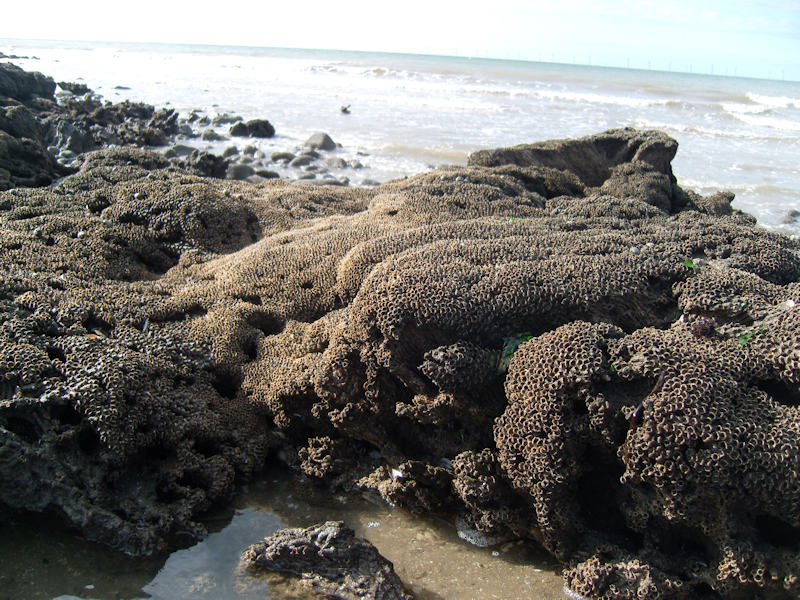
Sabellaria alveolata reefs on sand-abraded eulittoral rock
Photographer: Dr Andrew Davies Copyright: Dr Andrew Davies
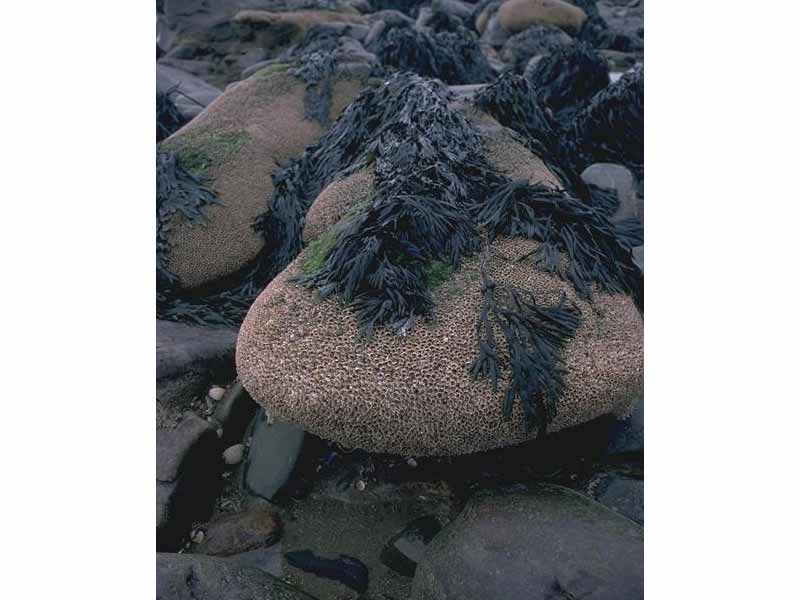
Sabellaria alveolata growing on sand abraded eulittoral rocks.
Photographer: Rohan Holt Copyright: Joint Nature Conservation Committee (JNCC)
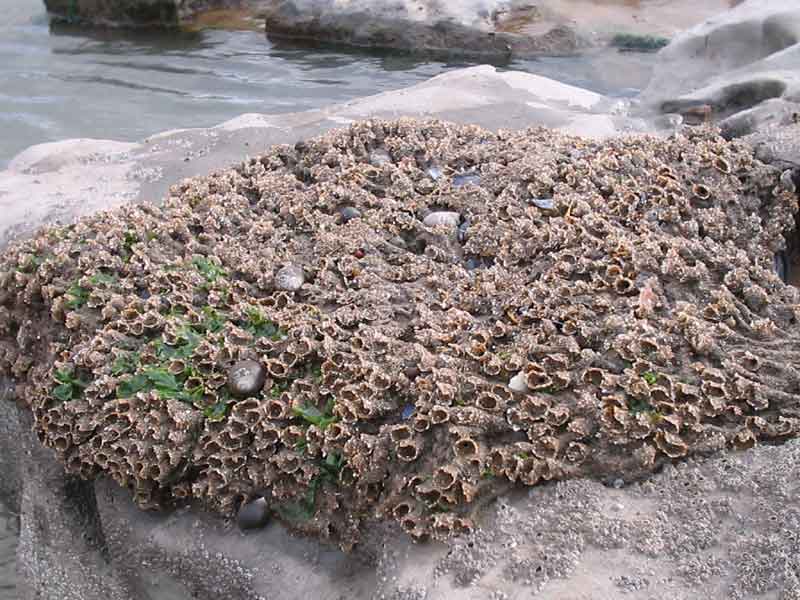
Small hummock of Sabellaria alveolata at Dunraven, Southerndown, south Wales.
Photographer: Judith Oakley Copyright: Judith Oakley

| Researched by | Dr Heidi Tillin, Angus Jackson, Dr Samantha Garrard & Amy Watson | Refereed by | Dr Andrew Davies |
|---|
Summary
UK and Ireland classification
Description
Exposed to moderately exposed bedrock and boulders in the eastern basin of the Irish Sea (and as far south as Cornwall) characterised by reefs of the polychaete Sabellaria alveolata. The sand based tubes formed by Sabellaria alveolata form large reef-like hummocks, which serve to stabilise the boulders and cobbles. Other species in this biotope include the barnacles Semibalanus balanoides and Austrominius modestus, the limpet Patella vulgata, the winkle Littorina littorea, the mussel Mytilus edulis and the whelk Nucella lapillus. The anemone Actinia equina and the crab Carcinus maenas can be present in cracks and crevices on the reef. A low abundance of seaweeds tend to occur in areas of eroded reef. The seaweed diversity can be high and may include the foliose red seaweeds Palmaria palmata, Mastocarpus stellatus, Osmundea pinnatifida, Chondrus crispus and some filamentous species e.g. Polysiphonia spp. and Ceramium spp. Coralline crusts can occur in patches. Wracks such as Fucus vesiculosus, Fucus serratus and the brown seaweed Cladostephus spongiosus may occur along with the ephemeral green seaweeds Ulva intestinalis and Ulva lactuca. On exposed surf beaches in the southwest Sabellaria alveolata forms a crust on the rocks, rather than the classic honeycomb reef form, and may be accompanied by the barnacle Perforatus perforatus (typically common to abundant). On wave-exposed shores in Ireland, the wrack Himanthalia elongata can also occur. These reefs may be susceptible to storm damage in the winter, although they can regenerate remarkably quickly in a season as long as some adults are left as they facilitate the larval settlement. Sabellaria alveolata is tolerant to burial under sand for several weeks. Changes in desiccation over a period of time can cause part of the population to die.
Above LS.LBR.Sab.Salv on the shore are biotopes dominated either by ephemeral seaweeds, such as Ulva spp. and Porphyra spp. or the perennial wrack Fucus vesiculosus on mixed substrata (FvesB; Fves.X; EphX; EntPor). Rockpool biotopes, dominated by the red seaweed Corallina officinalis (Cor), by wracks such as Fucus spp. or by kelp such as Laminaria spp. (FK) can usually be found above this biotope. Beneath this biotope is a community consisting of mixed scour-tolerant like the kelp Laminaria digitata and opportunistic foliose red seaweeds such as Polyides rotunda and Ahnfeltia plicata (Ldig.Ldig; XKScrR; EphR; PolAhn). In adjacent sediment areas, Lanice conchilega may dominate (Lan). (Information from JNCC, 2022).
Depth range
Mid shore, Lower shoreAdditional information
Sabellaria alveolata can perform important stabilization of habitat, particularly when forming raised structures and reefs (see Ecology).
Listed By
Habitat review
Ecology
Ecological and functional relationships
- Ecological relationships within MLR.Salv are not especially complex. Nevertheless, diversity of associated fauna may be high. Collins (2001) found 59 faunal taxa and 18 floral taxa associated with Sabellaria alveolata reefs at Criccieth in North Wales, dominated by annelids, molluscs, nematodes and hexapods. Dias & Paula (2001) recorded a total of 137 taxa in Sabellaria alveolata colonies on two shores on the central coast of Portugal. Sheets of Sabellaria alveolata can form ridges on flat shores which can trap water and create small pools (Cunningham et al., 1984) (see Habitat Complexity). This may also result in an increased species diversity, as might the stabilization of mobile sand, shingles, pebbles and cobbles (Holt et al., 1998) often attributed to the presence of extensive Sabellaria alveolata sheets.
- Algae use older reefs as substratum. Some of these are perennials such as Fucus serratus and others annual ephemerals such as Ulva sp. The attached community may themselves have epifaunal species (Collins, 2001). In addition, the space between the epiphytic algae and the reef provide shelter for mobile organisms.
- Several grazing molluscs, including Patella vulgata and Littorina littorea, feed directly on these algae as well as on epiphytic microalgae.
Seasonal and longer term change
Some temporal changes may be apparent in Sabellaria alveolata reefs with a cycle of decay and settlement over several years. Recruitment is very sporadic so cycles are not very predictable. Decay is primarily through the effects of storms and wave action. There will also be changes with season in the amount of algae growing in the biotope. Annual species will come and go and perennial species such as Fucus serratus exhibit changes in the level of surface cover they provide. Epiflora such as Fucus serratus, particularly if dense, may act as nursery grounds for various species including Nucella lapillus.
Habitat structure and complexity
Habitat complexity varies temporally with the cycles of development and break up of the reefs. When growing actively as sheets or hummocks the entire sea shore can be covered. Ridges can be formed on flat shores which may trap water leading to the formation of pools (Cunningham et al., 1984). These extensive sheets ('placages'), can stabilize otherwise mobile sand, shingle, cobbles and pebbles (Holt et al., 1998). However, increased habitat diversity, and therefore increased species diversity, are found as the reef begins to break up, cracks, crevices and a greater variety of available surfaces develops, creating a more diverse and complex habitat. Collins (2001) found that reefs in poor condition had a significantly higher diversity of associated infauna than intermediate condition reefs at Criccieth in North Wales. Porras et al. (1996) reported similar findings, in addition to the observation that eroded reefs have higher structural complexity. Collins (2001) also reported that, within reefs in poor condition, the sediment size was significantly larger than in other reefs. In contrast, the levels of organic content were found to be significantly higher in reefs in condition. Sabellaria alveolata reefs, due to their structure, maintain a high level of relative humidity during low tide, thereby protecting some associated flora and fauna from desiccation, which may permit some species to occur at higher levels on the shore than normal.
Productivity
Sabellaria alveolata reefs can support diverse communities (see Ecological Relationships). For example, colonies may support several species of annual and perennial algae, particularly if the reefs are older and beginning to break up. This algal growth can support several species of grazing mollusc (including Littorina littorea and Patella vulgata). Where hummocks or reefs form, the density of Sabellaria alveolata can be very high, causing high secondary productivity.
Recruitment processes
Sabellaria alveolata recruits from pelagic larvae that spend from 6 weeks to 6 months in the plankton. Although reproduction occurs each year, recruitment is very sporadic and unpredictable. Larval settlement appears to favour areas with existing Sabellaria alveolata colonies, or their dead remains (e.g. Wilson, 1971; Cunningham et al., 1984). Fucus serratus also recruits from tiny pelagic plants.
Time for community to reach maturity
Sabellaria alveolata has been recorded as living for up to 9 years but most worms survive for four years or so. The growth of Sabellaria alveolata appears to slow after its first year after settle. Wilson (1971) reported that the growth in the second and third years after settlement in some colonies was about half that of growth in the first year. Such active growth effectively prevents any other species from colonizing the reef. When growth is less active then algae can begin to colonize, as the reef begins to break up the available substratum becomes more heterogeneous permitting establishment of more species. If further recruitment does not then occur, allowing new growth, the reef will disintegrate. There is no real 'mature stage' as such, rather a cycle of growth and decay. Although settlement of Sabellaria alveolata is sporadic, areas that are good for Sabellaria alveolata tend to remain so because larval settlement appears to favour areas with existing Sabellaria alveolata colonies, or their dead remains (e.g. Wilson, 1971; Cunningham et al., 1984).
Additional information
Cunningham et al. (1994) noted the presence of large numbers of Mytilus edulis on the remains of Sabellaria alveolata colonies in several locations including Llwyngwril in Wales and at Dubmill Point in West Cumbria. In some circumstances therefore, the mussels could potentially interrupt the usual cycle of growth and decay of the reef.
Preferences & Distribution
Habitat preferences
| Depth Range | Mid shore, Lower shore |
|---|---|
| Water clarity preferences | |
| Limiting Nutrients | No information |
| Salinity preferences | Full (30-40 psu) |
| Physiographic preferences | Open coast |
| Biological zone preferences | Lower eulittoral, Eulittoral |
| Substratum/habitat preferences | Large to very large boulders, Small boulders, Cobbles, Pebbles, Sand |
| Tidal strength preferences | |
| Wave exposure preferences | Exposed, Moderately exposed |
| Other preferences | Availability of sand grains. |
Additional Information
Although identified in the Severn Estuary, the habitat is rather different and the assemblage present is not likely to be the same as in occurrences of the biotope more typically found on open coasts. At Glasdrummand (Northern Ireland), the Sabellaria alveolata reefs extend into the subtidal. Optimal temperatures are probably higher than those typically found in the waters of the British Isles. There needs to be an adequate supply of suspended coarse sand grains in order for Sabellaria alveolata to be able to build their tubes.Temperature preferences
The growth of Sabellaria alveolata is severely restricted below 5 °C (Gruet, 1982, cited in Holt et al., 1998). Cunningham et al. (1984) reported increasing growth rates with temperatures up to 20 °C.
Species composition
Species found especially in this biotope
Rare or scarce species associated with this biotope
-
Additional information
Sensitivity review
Sensitivity characteristics of the habitat and relevant characteristic species
As Sabellaria alveolata is the species that creates the reef habitat the sensitivity assessments are based on Sabellaria alveolata alone and do not consider the sensitivity of associated species that may be free-living or attached to the reef. Although a wide range of species are associated with reef biotopes which provide habitat and food resources, these characterizing species occur in a range of other biotopes and are therefore not considered to be species characterizing this biotope group. The reef and individual Sabellaria alveolata worms are not dependent on associated species to create or modify habitat, provide food or other resources.
Resilience and recovery rates of habitat
Empirical evidence to assess the likely recovery rate of Sabellaria alveolata reefs from impacts is limited and significant information gaps regarding recovery rates, stability and persistence of Sabellaria alveolata reefs were identified. It should also be noted that the recovery rates are only indicative of the recovery potential. Recovery of impacted populations will always be mediated by stochastic events and processes acting over different scales including, but not limited to, local habitat conditions, further impacts and processes such as larval-supply and recruitment between populations.
Studies carried out on reefs of Sabellaria alveolata within the low inter-tidal suggest that areas of small, surficial damage within reefs may be rapidly repaired by the tube building activities of adult worms. Vorberg (2000) found that trawl impressions made by a light trawl in Sabellaria alveolata reefs disappeared four to five days later due to the rapid rebuilding of tubes by the worms. The daily growth rate of the worms during the restoration phase was significantly higher than undisturbed growth (undisturbed: 0.7 mm, after removal of 2 cm of surface: 4.4 mm) and indicates that as long as the reef is not completely destroyed recovery can occur rapidly. Although it should be noted that these recovery rates are as a result of short-term effects following once-only disturbance. Similarly, studies of intertidal reefs of Sabellaria alveolata by Cunningham et al. (1984) found that minor damage to the worm tubes as a result of trampling, (i.e. treading, walking or stamping on the reef structures) was repaired within 23 days. However, severe damage caused by kicking and jumping on the reef structure, resulted in large cracks between the tubes, and removal of sections (ca 15x15x10 cm) of the structure (Cunningham et al., 1984). Subsequent wave action enlarged the holes or cracks. However, after 23 days, at one site, one side of the hole had begun to repair, and tubes had begun to extend into the eroded area.
Where reefs are extensively removed, recovery will rely on recolonization of the site by larvae. Sabellaria alveolata are gonochoristic (sexes separate), reproductive maturity is reached within the first year of life and the species reproduces by external fertilisation of shed gametes. The larvae are free-living within the plankton where they are transported by water movements. Some control over dispersal may be exerted through vertical migration in the water column allowing exposure to different current speeds during daily tidal cycles. Sabellaria alveolata larvae can be stimulated to settle by the presence of adult tubes, tube remnants or the mucoid tubes of juveniles (Quian, 1999). The presence of living Sabellaria alveolata or tubes, therefore, will promote the recovery of reefs and their absence may delay recovery of otherwise suitable habitats. Although larvae may be present every year the degree of settlement varies annually. In 14 years of observations (1961 to 1975), Wilson (1976) observed only three heavy settlements, North Cornwall in 1966, 1970 and 1975 and all were in the period from September to November or December. Observations from other populations concur that intensity of settlement is extremely variable from year to year and place to place (Cunningham et al., 1984; Gruet, 1982). Settlement occurs mainly on existing colonies or their dead remains; chemical stimulation seems to be involved, and this can come from Sabellaria spinulosa tubes as well as Sabellaria alveolata (Cunningham et al., 1984; Gruet, 1982; Wilson, 1971).
The spawning season and duration of the planktonic phase appear to be variable with authors reporting conflicting results from different populations. Dubois et al., (2007) found larvae in the plankton at Bay of Mont-Saint-Saint Michel (France) from the end of April to October, with peak spawning occurring in May, followed by a smaller spawning peak in September. Mean planktonic lifetime was calculated between 4 and 10 weeks from samples taken within the bay (Dubois et al. 2007). These observations fit broadly with those of Gruet and Lassus (1983, cited from Dubois et al. 2007) who indicated two long spawning periods for a population along the French Atlantic coast (Noirmoutier Island): March to April and June to September. In the Bassin d’Arcachon (French Atlantic coast), Sabellaria alveolata larvae with a larval lifespan estimated to be about 12 weeks were reported in plankton samples mainly from October to March (Cazaux 1970, cited from Dubois et al. 2007). Wilson (1971), however, reported a short, single spawning period in July in North Cornwall and suggested that larvae spent between 6 weeks and 6 months in the plankton (Wilson, 1968; Wilson, 1971) so that dispersal could potentially be widespread. Similarly, Culloty et al. (2010) observed one main spawning period by populations in south-west Ireland that was, however, more protracted (June to September) than that observed in North Cornwall by Wilson. Differences between spawning regimes may be due to different water temperatures, where conditions for a more northern population are less favourable to this southern species (Culloty et al. (2010).
Growth is rapid and is promoted by high levels of suspended sand and by higher water temperatures up to 20°C. A mean increase in tube length of up to 12 cm per year has been reported for northern France (Gruet, 1982). Cunningham et al. (1984) stated that growth is probably lower than this in Britain due to the lower water temperatures, although Wilson (1971) reported growth rates (tube length) of 10-15 cm per year in several colonies at Duckpool, North Cornwall for first year colonies, and around 6 cm in second year worms. Wilson (1971) reported that in good situations the worms mature within the first year, spawning in the July following settlement.
A typical lifespan for worms in colonies forming reefs on bedrock and large boulders in Duckpool was 4-5 years (Wilson, 1971), with a likely maximum of around nine years (Gruet, 1982; Wilson, 1971). Intertidal reefs are dynamic, Dubois et al., (2002 and 2006) described three reef forms, where ball-shaped structures created by newly-settled juveniles later merge to form larger reef platforms which then decline to become fissured degraded reefs. Wilson (1976) observed one small reef from its inception as three small individual colonies in 1961, through a period between 1966 and 1975 where it existed as a reef rather greater than 1 metre in extent and up to 60 cm thick, with the major settlement of worms occurring in 1966 and 1970. In the long-term, areas with good Sabellaria reef development tend to remain so. In Ireland, Simkanin et al. (2005) reported no significant change in the intertidal abundance of this species from 1958 to 2003, on the 28 shores they compared around the coast.
Resilience assessment. The evidence for recovery rates of Sabellaria alveolata reefs from different levels of impact is very limited for most pressures and there are no examples of rates at which reefs recover from different levels of impact. Recovery rates are likely to be determined by a range of factors such as the degree of impact, the season of impact, larval supply and local environmental factors including hydrodynamics.
Observations by Vorberg (2000) and Cunningham et al., (1984) suggest that areas of limited damage on a Sabellaria alveolata reef can be repaired rapidly (within weeks) through the tube-building activities of adults. The assessment of resilience in this instance as ‘High’, indicating that recovery would be likely to occur within 2 years, is relatively precautionary.
Predicting the rate of recovery following extensive removal of existing Sabellaria alveolata reef is more problematic. Some thin crusts may be relatively ephemeral and disappear following natural disturbance such as storms but recover the following year (Holt et al. 1998), suggesting that recovery is ‘High’ (within 2 years). In other instances, recolonization has been observed within 16-18 months but full recovery to a state similar to the pre-impact condition of high adult density and adult biomass is suggested to require three to five years where recruitment is annual (Pearce et al., 2007). Recovery from significant impacts (where resistance is assessed as ‘None’ or 'Low') is therefore predicted to be ‘Medium’ (2-10 years). Where resistance is assessed as ‘Medium’, resilience is considered to be ‘High’, based on repair of damaged sections of reefs and rapid recolonization and expansion into damaged areas, facilitated by adults. An exception is made for permanent or ongoing (long-term) pressures where recovery is not possible as the pressure is irreversible, in which case resilience is assessed as ‘Very low’ by default.
Climate Change Pressures
Use [show more] / [show less] to open/close text displayed
| Resistance | Resilience | Sensitivity | |
Global warming (extreme) [Show more]Global warming (extreme)Extreme emission scenario (by the end of this century 2081-2100) benchmark of:
EvidenceThe honeycomb worm, Sabellaria alveolata, is a warm-temperate species and is distributed from Scotland to Morocco, (Gruet, 1986, Firth et al., 2015) including extensive reefs in the Mediterranean (La Porta & Nicoletti, 2009). This suggests that this species will be tolerant of increases in temperature. This appears to be backed up by in situ observations of this species. Studies at Hinkley Point, Somerset, found that growth of the tubes in the winter was considerably greater in the cooling water outfall, where the water temperature was raised by around 8-10°C than at a control site, although the size of the individual worms themselves seemed to be unaffected (Bamber & Irving, 1997). Dubois et al. (2007) observed that in autumn where water temperatures are 8°C higher than in spring, a shorter period was required for larvae to metamorphose. The growth of Sabellaria alveolata is severely restricted below 5°C (Gruet, 1982, cited in Holt et al., 1998). Cunningham et al. (1984) reported increasing growth rates with temperatures up to 20°C. Long-term data for the coast of northern England and Wales shows that Sabellaria alveolata has colonized new locations, recolonizing areas from where it disappeared after the cold winter of 1962/63, and increased its abundance at many locations (Firth et al., 2015). This is possibly in response to recent warming (Firth et al., 2015). Different spawning regimes, which may be due to different water temperatures, have been observed where conditions for a more northern population are less favourable and led to single annual spawning events of shorter duration (Culloty et al., 2010). Populations of Sabellaria alveolata in Morocco and the Mediterranean may be close to their upper thermal limit, as Muir et al., 2016 found that when individuals were exposed to 25°C, changes in lipid composition appeared to show a stress response. Sensitivity assessment. Under the middle and high emission and extreme scenarios, seawater temperatures are expected to rise by 3-5°C to potential southern summer temperatures of 22-24°C and northern summer temperatures of 17-19°C. As this species is intertidal, it would also be affected by an increase in air temperature. Currently, summer temperatures can reach up to an average of 25°C, although the highest temperature recorded in 1961-2010 was 38.5°C (Perry & Golding, 2011). If air temperatures were to rise by 3, 4, or 6°C by the end of the century (middle, high and extreme emission scenarios, respectively), this could lead to temperatures reaching average summer high temperatures of between 28 - 32°C. There is no experimental evidence of the impact of ocean warming on this species but biogeographic distribution is often a good predictor of temperature tolerance (Jeffree & Jeffree, 1994). Sabellaria alveolata is known to form extensive reefs in the Tyrrhenian Sea where summer water temperatures reach 27°C (www.seatemperature.org), although in the Mediterranean this species often occurs in the shallow subtidal (La Porta & Nicoletti, 2009). This species also occurs in Morocco, where air temperatures can regularly reach 28°C in the summer months (www.weather-and-climate.com). In Scotland, this species is at the northern-most edge of its distribution and increases in seawater temperature are likely to be beneficial. This preference for warmer waters is backed up by observations of increased growth at of this species in the cooling waters of the power station at Hinkley Point in Somerset (Bamber & Irving, 1997). Therefore, this biotope is assessed as having a ’High’ resistance to ocean warming. Resilience is assessed as ‘High, as no recovery is necessary. This biotope is assessed as ‘Not sensitive’ under the middle and high emission and extreme scenarios. | HighHelp | HighHelp | Not sensitiveHelp |
Global warming (high) [Show more]Global warming (high)High emission scenario (by the end of this century 2081-2100) benchmark of:
EvidenceThe honeycomb worm, Sabellaria alveolata, is a warm-temperate species and is distributed from Scotland to Morocco, (Gruet, 1986, Firth et al., 2015) including extensive reefs in the Mediterranean (La Porta & Nicoletti, 2009). This suggests that this species will be tolerant of increases in temperature. This appears to be backed up by in situ observations of this species. Studies at Hinkley Point, Somerset, found that growth of the tubes in the winter was considerably greater in the cooling water outfall, where the water temperature was raised by around 8-10°C than at a control site, although the size of the individual worms themselves seemed to be unaffected (Bamber & Irving, 1997). Dubois et al. (2007) observed that in autumn where water temperatures are 8°C higher than in spring, a shorter period was required for larvae to metamorphose. The growth of Sabellaria alveolata is severely restricted below 5°C (Gruet, 1982, cited in Holt et al., 1998). Cunningham et al. (1984) reported increasing growth rates with temperatures up to 20°C. Long-term data for the coast of northern England and Wales shows that Sabellaria alveolata has colonized new locations, recolonizing areas from where it disappeared after the cold winter of 1962/63, and increased its abundance at many locations (Firth et al., 2015). This is possibly in response to recent warming (Firth et al., 2015). Different spawning regimes, which may be due to different water temperatures, have been observed where conditions for a more northern population are less favourable and led to single annual spawning events of shorter duration (Culloty et al., 2010). Populations of Sabellaria alveolata in Morocco and the Mediterranean may be close to their upper thermal limit, as Muir et al., 2016 found that when individuals were exposed to 25°C, changes in lipid composition appeared to show a stress response. Sensitivity assessment. Under the middle and high emission and extreme scenarios, seawater temperatures are expected to rise by 3-5°C to potential southern summer temperatures of 22-24°C and northern summer temperatures of 17-19°C. As this species is intertidal, it would also be affected by an increase in air temperature. Currently, summer temperatures can reach up to an average of 25°C, although the highest temperature recorded in 1961-2010 was 38.5°C (Perry & Golding, 2011). If air temperatures were to rise by 3, 4, or 6°C by the end of the century (middle, high and extreme emission scenarios, respectively), this could lead to temperatures reaching average summer high temperatures of between 28 - 32°C. There is no experimental evidence of the impact of ocean warming on this species but biogeographic distribution is often a good predictor of temperature tolerance (Jeffree & Jeffree, 1994). Sabellaria alveolata is known to form extensive reefs in the Tyrrhenian Sea where summer water temperatures reach 27°C (www.seatemperature.org), although in the Mediterranean this species often occurs in the shallow subtidal (La Porta & Nicoletti, 2009). This species also occurs in Morocco, where air temperatures can regularly reach 28°C in the summer months (www.weather-and-climate.com). In Scotland, this species is at the northern-most edge of its distribution and increases in seawater temperature are likely to be beneficial. This preference for warmer waters is backed up by observations of increased growth at of this species in the cooling waters of the power station at Hinkley Point in Somerset (Bamber & Irving, 1997). Therefore, this biotope is assessed as having a ’High’ resistance to ocean warming. Resilience is assessed as ‘High, as no recovery is necessary. This biotope is assessed as ‘Not sensitive’ under the middle and high emission and extreme scenarios. | HighHelp | HighHelp | Not sensitiveHelp |
Global warming (middle) [Show more]Global warming (middle)Middle emission scenario (by the end of this century 2081-2100) benchmark of:
EvidenceThe honeycomb worm, Sabellaria alveolata, is a warm-temperate species and is distributed from Scotland to Morocco, (Gruet, 1986, Firth et al., 2015) including extensive reefs in the Mediterranean (La Porta & Nicoletti, 2009). This suggests that this species will be tolerant of increases in temperature. This appears to be backed up by in situ observations of this species. Studies at Hinkley Point, Somerset, found that growth of the tubes in the winter was considerably greater in the cooling water outfall, where the water temperature was raised by around 8-10°C than at a control site, although the size of the individual worms themselves seemed to be unaffected (Bamber & Irving, 1997). Dubois et al. (2007) observed that in autumn where water temperatures are 8°C higher than in spring, a shorter period was required for larvae to metamorphose. The growth of Sabellaria alveolata is severely restricted below 5°C (Gruet, 1982, cited in Holt et al., 1998). Cunningham et al. (1984) reported increasing growth rates with temperatures up to 20°C. Long-term data for the coast of northern England and Wales shows that Sabellaria alveolata has colonized new locations, recolonizing areas from where it disappeared after the cold winter of 1962/63, and increased its abundance at many locations (Firth et al., 2015). This is possibly in response to recent warming (Firth et al., 2015). Different spawning regimes, which may be due to different water temperatures, have been observed where conditions for a more northern population are less favourable and led to single annual spawning events of shorter duration (Culloty et al., 2010). Populations of Sabellaria alveolata in Morocco and the Mediterranean may be close to their upper thermal limit, as Muir et al., 2016 found that when individuals were exposed to 25°C, changes in lipid composition appeared to show a stress response. Sensitivity assessment. Under the middle and high emission and extreme scenarios, seawater temperatures are expected to rise by 3-5°C to potential southern summer temperatures of 22-24°C and northern summer temperatures of 17-19°C. As this species is intertidal, it would also be affected by an increase in air temperature. Currently, summer temperatures can reach up to an average of 25°C, although the highest temperature recorded in 1961-2010 was 38.5°C (Perry & Golding, 2011). If air temperatures were to rise by 3, 4, or 6°C by the end of the century (middle, high and extreme emission scenarios, respectively), this could lead to temperatures reaching average summer high temperatures of between 28 - 32°C. There is no experimental evidence of the impact of ocean warming on this species but biogeographic distribution is often a good predictor of temperature tolerance (Jeffree & Jeffree, 1994). Sabellaria alveolata is known to form extensive reefs in the Tyrrhenian Sea where summer water temperatures reach 27°C (www.seatemperature.org), although in the Mediterranean this species often occurs in the shallow subtidal (La Porta & Nicoletti, 2009). This species also occurs in Morocco, where air temperatures can regularly reach 28°C in the summer months (www.weather-and-climate.com). In Scotland, this species is at the northern-most edge of its distribution and increases in seawater temperature are likely to be beneficial. This preference for warmer waters is backed up by observations of increased growth at of this species in the cooling waters of the power station at Hinkley Point in Somerset (Bamber & Irving, 1997). Therefore, this biotope is assessed as having a ’High’ resistance to ocean warming. Resilience is assessed as ‘High, as no recovery is necessary. This biotope is assessed as ‘Not sensitive’ under the middle and high emission and extreme scenarios. | HighHelp | HighHelp | Not sensitiveHelp |
Marine heatwaves (high) [Show more]Marine heatwaves (high)High emission scenario benchmark: A marine heatwave occurring every two years, with a mean duration of 120 days, and a maximum intensity of 3.5°C. Further detail. EvidenceMarine heatwaves due to increased air-sea heat flux are predicted to occur more frequently, last for longer and at increased intensity by the end of this century under both middle and high emission scenarios (Frölicher et al., 2018). Whilst there are no laboratory studies on the upper thermal limit of Sabellaria alveolata, this species appears to be tolerant to a wide range of temperatures. Muir et al. (2016) found that Sabellaria alveolata was able to adapt to a step-change increase in temperature from 15°C to 25°C. However, over the long term (60 days), changes in lipid composition potentially suggested a stress response. Whilst high temperatures may cause stress, there is no evidence of mortality at seawater temperatures of 25°C. For example, when summer temperatures were increased from 18°C to 23°C for Scottish populations of Sabellaria alveolata, mortality remained the same as controls, except when coupled with high levels of chlorine (Last et al., 2016). Similarly, when the density of tube occupancy was used as a proxy for mortality by Muir et al. (2016), an increase in temperatures from 15°C to 25°C in populations from Scotland to North Africa did not lead to a decrease in occupancy in four out of the five populations tested, with a decrease in occupancy only observed for the Bay of Biscay population, which the authors attributed to the poor state of the reef. Sensitivity Assessment. Under the middle emission scenario, if heatwaves occurred every three years, with a maximum intensity of 2°C for 80 days by the end of this century, this could lead to summer sea temperatures reaching up to 24°C in southern England. Under the high emission scenario, if heatwaves occur every two years by the end of this century, reaching a maximum intensity of 3.5°C for 120 days, this could lead to the heatwave lasting the entire summer with temperatures reaching up to 26.5°C, and air temperatures exceeding 30°C across much of the UK. Sabellaria alveolata is known to form extensive reefs in the Tyrrhenian Sea (La Porta & Nicoletti, 2009), where summer water temperatures reach 27°C (www.seatemperature.org) (see Global Warming). As this biotope occurs in the intertidal, this species will not only experience increased sea surface temperatures but will experience extreme air temperature increases also. In the Mediterranean, it can occur in the shallow subtidal (La Porta & Nicoletti, 2009) which may protect it from excessive air temperature increases, although this species also occurs in Morocco, where air temperatures can regularly reach 28°C in the summer months (www.weather-and-climate.com). As Sabellaria alveolata occurs on wave exposed coastlines on the mid and lower shore, wave splash may play an important role in preventing desiccation during emersion. Therefore, this species is likely to be able to cope with future marine heatwaves expected for the end of this century, and under both the middle and high emission scenarios, resistance has been assessed as ‘High’. As no recovery is likely necessary, recovery has been assessed as ‘High’, leading to an assessment of ‘Not sensitive’ for this biotope. | HighHelp | HighHelp | Not sensitiveHelp |
Marine heatwaves (middle) [Show more]Marine heatwaves (middle)Middle emission scenario benchmark: A marine heatwave occurring every three years, with a mean duration of 80 days, with a maximum intensity of 2°C. Further detail. EvidenceMarine heatwaves due to increased air-sea heat flux are predicted to occur more frequently, last for longer and at increased intensity by the end of this century under both middle and high emission scenarios (Frölicher et al., 2018). Whilst there are no laboratory studies on the upper thermal limit of Sabellaria alveolata, this species appears to be tolerant to a wide range of temperatures. Muir et al. (2016) found that Sabellaria alveolata was able to adapt to a step-change increase in temperature from 15°C to 25°C. However, over the long term (60 days), changes in lipid composition potentially suggested a stress response. Whilst high temperatures may cause stress, there is no evidence of mortality at seawater temperatures of 25°C. For example, when summer temperatures were increased from 18°C to 23°C for Scottish populations of Sabellaria alveolata, mortality remained the same as controls, except when coupled with high levels of chlorine (Last et al., 2016). Similarly, when the density of tube occupancy was used as a proxy for mortality by Muir et al. (2016), an increase in temperatures from 15°C to 25°C in populations from Scotland to North Africa did not lead to a decrease in occupancy in four out of the five populations tested, with a decrease in occupancy only observed for the Bay of Biscay population, which the authors attributed to the poor state of the reef. Sensitivity Assessment. Under the middle emission scenario, if heatwaves occurred every three years, with a maximum intensity of 2°C for 80 days by the end of this century, this could lead to summer sea temperatures reaching up to 24°C in southern England. Under the high emission scenario, if heatwaves occur every two years by the end of this century, reaching a maximum intensity of 3.5°C for 120 days, this could lead to the heatwave lasting the entire summer with temperatures reaching up to 26.5°C, and air temperatures exceeding 30°C across much of the UK. Sabellaria alveolata is known to form extensive reefs in the Tyrrhenian Sea (La Porta & Nicoletti, 2009), where summer water temperatures reach 27°C (www.seatemperature.org) (see Global Warming). As this biotope occurs in the intertidal, this species will not only experience increased sea surface temperatures but will experience extreme air temperature increases also. In the Mediterranean, it can occur in the shallow subtidal (La Porta & Nicoletti, 2009) which may protect it from excessive air temperature increases, although this species also occurs in Morocco, where air temperatures can regularly reach 28°C in the summer months (www.weather-and-climate.com). As Sabellaria alveolata occurs on wave exposed coastlines on the mid and lower shore, wave splash may play an important role in preventing desiccation during emersion. Therefore, this species is likely to be able to cope with future marine heatwaves expected for the end of this century, and under both the middle and high emission scenarios, resistance has been assessed as ‘High’. As no recovery is likely necessary, recovery has been assessed as ‘High’, leading to an assessment of ‘Not sensitive’ for this biotope. | HighHelp | HighHelp | Not sensitiveHelp |
Ocean acidification (high) [Show more]Ocean acidification (high)High emission scenario benchmark: a further decrease in pH of 0.35 (annual mean) and corresponding 120% increase in H+ ions , seasonal aragonite saturation of 20% of UK coastal waters and North Sea bottom waters, and the aragonite saturation horizon in the NE Atlantic, off the continental shelf, occurring at a depth of 400 m by the end of this century 2081-2100. Further detail EvidenceIncreasing levels of CO2 in the atmosphere have led to the average pH of sea surface waters dropping from 8.25 in the 1700s to 8.14 in the 1990s (Jacobson, 2005). There is no direct evidence of the impact of ocean acidification on Sabellaria alveolata or any species from the family Sabellariidae. Unlike the tube-dwelling, calcifying polychaetes from the family Serpulidae, Sabellaria alveolata does not form its tubes by calcification. Tubes are formed from coarse sand and shell grains cemented together with an adhesive protein cement secreted by the worm (Becker et al., 2012). Non-calcifying polychaetes are thought to be less sensitive than many other taxa to ocean acidification. When non-calcifying polychaetes were transplanted from control to low pH areas, they showed evidence of either adaptation or acclimation to their conditions (Calosi et al., 2013). There is some evidence that sperm may be affected by ocean acidification at levels expected in the high emission scenario, with percentage sperm motility (Schlegel et al., 2014) and sperm velocity (Campbell et al., 2014) decreasing in the polychaetes Galeolaria caespitosa and Arenicola marina, leading to a decrease in sperm fertility success (Campbell et al., 2014). Reduced sperm fertility and hence recruitment, may lead to some population level effects. However, at natural CO2 vents, the abundance of polychaetes either remained the same (Kroeker et al., 2011) or increased (Garrard et al., 2014, Vizzini et al., 2017). Most species of polychaetes generally exhibit high fecundity and are free spawning (Ramirez-Llodra, 2002), which may help them maintain population levels, even with a decrease in fertilization success. Fecundity is variable among seasons and between females, but Sabellaria alveolata exhibits high fecundity, releasing an average of 100,000 eggs/individuals into the water column during a spawning cycle (Dubois, 2003). Sensitivity Assessment. Direct evidence of the impact of ocean acidification on Sabellaria alveolata is lacking. However, non-calcifying polychaetes appear to be tolerant of changes in pH. Therefore, it is likely that the characterizing species of this biotope will show a ‘High’ resistance to a decrease in pH, even though ocean acidification has been shown to lead to negative impacts on polychaete fertilization success under experimental conditions (Campbell et al., 2014, Schlegel et al., 2014). Hence, based on the evidence available, under both the middle and high emission scenarios the biotope is assessed as ‘High’ resistance to ocean acidification, and ‘High’ resilience, leading to an assessment of ‘Not sensitive’ at the benchmark level. | HighHelp | HighHelp | Not sensitiveHelp |
Ocean acidification (middle) [Show more]Ocean acidification (middle)Middle emission scenario benchmark: a further decrease in pH of 0.15 (annual mean) and corresponding 35% increase in H+ ions with no coastal aragonite undersaturation and the aragonite saturation horizon in the NE Atlantic, off the continental shelf, at a depth of 800 m by the end of this century 2081-2100. Further detail. EvidenceIncreasing levels of CO2 in the atmosphere have led to the average pH of sea surface waters dropping from 8.25 in the 1700s to 8.14 in the 1990s (Jacobson, 2005). There is no direct evidence of the impact of ocean acidification on Sabellaria alveolata or any species from the family Sabellariidae. Unlike the tube-dwelling, calcifying polychaetes from the family Serpulidae, Sabellaria alveolata does not form its tubes by calcification. Tubes are formed from coarse sand and shell grains cemented together with an adhesive protein cement secreted by the worm (Becker et al., 2012). Non-calcifying polychaetes are thought to be less sensitive than many other taxa to ocean acidification. When non-calcifying polychaetes were transplanted from control to low pH areas, they showed evidence of either adaptation or acclimation to their conditions (Calosi et al., 2013). There is some evidence that sperm may be affected by ocean acidification at levels expected in the high emission scenario, with percentage sperm motility (Schlegel et al., 2014) and sperm velocity (Campbell et al., 2014) decreasing in the polychaetes Galeolaria caespitosa and Arenicola marina, leading to a decrease in sperm fertility success (Campbell et al., 2014). Reduced sperm fertility and hence recruitment, may lead to some population level effects. However, at natural CO2 vents, the abundance of polychaetes either remained the same (Kroeker et al., 2011) or increased (Garrard et al., 2014, Vizzini et al., 2017). Most species of polychaetes generally exhibit high fecundity and are free spawning (Ramirez-Llodra, 2002), which may help them maintain population levels, even with a decrease in fertilization success. Fecundity is variable among seasons and between females, but Sabellaria alveolata exhibits high fecundity, releasing an average of 100,000 eggs/individuals into the water column during a spawning cycle (Dubois, 2003). Sensitivity Assessment. Direct evidence of the impact of ocean acidification on Sabellaria alveolata is lacking. However, non-calcifying polychaetes appear to be tolerant of changes in pH. Therefore, it is likely that the characterizing species of this biotope will show a ‘High’ resistance to a decrease in pH, even though ocean acidification has been shown to lead to negative impacts on polychaete fertilization success under experimental conditions (Campbell et al., 2014, Schlegel et al., 2014). Hence, based on the evidence available, under both the middle and high emission scenarios the biotope is assessed as ‘High’ resistance to ocean acidification, and ‘High’ resilience, leading to an assessment of ‘Not sensitive’ at the benchmark level. | HighHelp | HighHelp | Not sensitiveHelp |
Sea level rise (extreme) [Show more]Sea level rise (extreme)Extreme scenario benchmark: a 107 cm rise in average UK by the end of this century (2018-2100). Further detail. EvidenceSea-level rise is occurring through a combination of thermal expansion and ice melt. Sea levels have risen 1-3 mm/yr. in the last century (Cazenave & Nerem, 2004, Church et al., 2004, Church & White, 2006). Sea-level rise is expected to lead to substantial loss of intertidal habitats. Rocky shores backed by cliffs constitute about 80% of oceanic coastlines globally and in Britain, 42% of the coastline is hard rock, with many areas having cliffs behind the shore (Jackson & McIlvenny, 2011). Jackson & McIlvenny (2011) predicted that under a 30 cm sea-level rise, between 10 - 27% of the extent of intertidal rocky shores in Scotland would be lost, whilst under a 190 cm of sea-level rise, between 26 -50% would be lost. Using a modelling-based approach, Kaplanis et al. (2019) found that in San Diego County, loss of intertidal habitat would be most extreme within the first metre of sea-level rise, with 29.9% of intertidal rocky shore lost as a result of 20 cm sea-level rise, and 77.7% as a result of 100 cm of sea-level rise. In the UK, Sabellaria alveolata beds occur on the mid and lower shore of exposed rocky coastlines. Wave action is an important driver of habitat quality for Sabellaria alveolata, supporting reef development by resuspending and transporting suitable sediment particles (Cunningham et al., 1984). High densities of Sabellaria alveolata are found on shores exposed to wave action (Anadόn, 1981; Dias & Paula, 2001), although reefs are generally absent from very exposed peninsulas such as the Lleyn, Pembrokeshire and the extreme south-west of Cornwall, which probably relates to the effect of water movement on recruitment (Cunningham et al., 1984, cited from Holt et al., 1998). Understanding of how sea-level rise will affect exposure or tidal energy is fraught with uncertainty, although evidence appears to suggest that any alterations will be non-linear (Pickering et al., 2012, Li et al., 2016). Modelling potential outcomes of sea-level rise on the tidal and residual currents in the Bohai Sea, China showed effects were site-dependent, with energy either increasing or decreasing (Li et al., 2016). Similarly, Pickering et al. (2012) found a similar pattern around the UK for tidal amplitude. The effects of sea-level rise and increased wave action may be increased further due to storms and storms surges. IPCC (2019) note that the frequency of extreme sea-level events (e.g. due to storms) are predicted to increase as sea-level rises, however, there is no consensus on the future storm and, hence, wave climate around UK coasts (Mossman et al., 2015; Lowe et al., 2018; Palmer et al., 2018). Sensitivity assessment. It is difficult to assess the effect of sea-level rise scenarios on wave exposure or tidal energy as evidence predicts that any changes will be site-specific, therefore this aspect cannot be assessed. As this biotope occurs on the lower and mid-shore of the intertidal zone in the UK and is not in the subtidal, it is likely that an increase in sea level height of 50, 70 and 107 cm could have severe repercussions for the extent of this biotope. Beds may be able to expand their range and migrate upwards to compensate for sea-level rise, if not constrained by lack of suitable habitat (IPCC, 2019). If landward migration is not possible, it is expected that depth distribution of Sabellaria alveolata beds on littoral sediment will shrink in response to a 50, 70 or 107 cm sea-level rise, without the possibility of recovery. In this assessment we have assessed on a worst-case-scenario basis, assuming that landward migration is not possible. The mean tidal range in the UK varies from 127 cm in the Shetland Islands to 972 cm at Avonmouth, in the Bristol Channel (Woodworth et al., 1991). This large difference in tidal amplitudes suggests that this biotope will be more affected in some parts of the UK than others. In Scotland and Ireland, where mean tidal range is generally less than 3 m (Woodworth et al., 1991), more than half of this biotope may be lost under the extreme scenario, whereas in the Bristol Channel, where mean tidal range exceeds 9 m (Woodworth et al., 1991), only a small portion of this biotope may be lost. Under the medium emission scenario, resistance has been assessed as ‘Medium’, as it is likely that less than 25% of this biotope will be lost. Resilience has been assessed as ‘Very low’, due to the long term nature of sea-level rise. Therefore, sensitivity is assessed as ‘Medium’. Under the high emission and extreme scenarios, resistance has been assessed as ‘Low’, as more than 25% of this biotope could be lost. Resilience has been assessed as ‘Very low’, due to the long term nature of sea-level rise. Therefore, sensitivity is assessed as ‘High’. | LowHelp | Very LowHelp | HighHelp |
Sea level rise (high) [Show more]Sea level rise (high)High emission scenario benchmark: a 70 cm rise in average UK by the end of this century (2018-2100). Further detail. EvidenceSea-level rise is occurring through a combination of thermal expansion and ice melt. Sea levels have risen 1-3 mm/yr. in the last century (Cazenave & Nerem, 2004, Church et al., 2004, Church & White, 2006). Sea-level rise is expected to lead to substantial loss of intertidal habitats. Rocky shores backed by cliffs constitute about 80% of oceanic coastlines globally and in Britain, 42% of the coastline is hard rock, with many areas having cliffs behind the shore (Jackson & McIlvenny, 2011). Jackson & McIlvenny (2011) predicted that under a 30 cm sea-level rise, between 10 - 27% of the extent of intertidal rocky shores in Scotland would be lost, whilst under a 190 cm of sea-level rise, between 26 -50% would be lost. Using a modelling-based approach, Kaplanis et al. (2019) found that in San Diego County, loss of intertidal habitat would be most extreme within the first metre of sea-level rise, with 29.9% of intertidal rocky shore lost as a result of 20 cm sea-level rise, and 77.7% as a result of 100 cm of sea-level rise. In the UK, Sabellaria alveolata beds occur on the mid and lower shore of exposed rocky coastlines. Wave action is an important driver of habitat quality for Sabellaria alveolata, supporting reef development by resuspending and transporting suitable sediment particles (Cunningham et al., 1984). High densities of Sabellaria alveolata are found on shores exposed to wave action (Anadόn, 1981; Dias & Paula, 2001), although reefs are generally absent from very exposed peninsulas such as the Lleyn, Pembrokeshire and the extreme south-west of Cornwall, which probably relates to the effect of water movement on recruitment (Cunningham et al., 1984, cited from Holt et al., 1998). Understanding of how sea-level rise will affect exposure or tidal energy is fraught with uncertainty, although evidence appears to suggest that any alterations will be non-linear (Pickering et al., 2012, Li et al., 2016). Modelling potential outcomes of sea-level rise on the tidal and residual currents in the Bohai Sea, China showed effects were site-dependent, with energy either increasing or decreasing (Li et al., 2016). Similarly, Pickering et al. (2012) found a similar pattern around the UK for tidal amplitude. The effects of sea-level rise and increased wave action may be increased further due to storms and storms surges. IPCC (2019) note that the frequency of extreme sea-level events (e.g. due to storms) are predicted to increase as sea-level rises, however, there is no consensus on the future storm and, hence, wave climate around UK coasts (Mossman et al., 2015; Lowe et al., 2018; Palmer et al., 2018). Sensitivity assessment. It is difficult to assess the effect of sea-level rise scenarios on wave exposure or tidal energy as evidence predicts that any changes will be site-specific, therefore this aspect cannot be assessed. As this biotope occurs on the lower and mid-shore of the intertidal zone in the UK and is not in the subtidal, it is likely that an increase in sea level height of 50, 70 and 107 cm could have severe repercussions for the extent of this biotope. Beds may be able to expand their range and migrate upwards to compensate for sea-level rise, if not constrained by lack of suitable habitat (IPCC, 2019). If landward migration is not possible, it is expected that depth distribution of Sabellaria alveolata beds on littoral sediment will shrink in response to a 50, 70 or 107 cm sea-level rise, without the possibility of recovery. In this assessment we have assessed on a worst-case-scenario basis, assuming that landward migration is not possible. The mean tidal range in the UK varies from 127 cm in the Shetland Islands to 972 cm at Avonmouth, in the Bristol Channel (Woodworth et al., 1991). This large difference in tidal amplitudes suggests that this biotope will be more affected in some parts of the UK than others. In Scotland and Ireland, where mean tidal range is generally less than 3 m (Woodworth et al., 1991), more than half of this biotope may be lost under the extreme scenario, whereas in the Bristol Channel, where mean tidal range exceeds 9 m (Woodworth et al., 1991), only a small portion of this biotope may be lost. Under the medium emission scenario, resistance has been assessed as ‘Medium’, as it is likely that less than 25% of this biotope will be lost. Resilience has been assessed as ‘Very low’, due to the long term nature of sea-level rise. Therefore, sensitivity is assessed as ‘Medium’. Under the high emission and extreme scenarios, resistance has been assessed as ‘Low’, as more than 25% of this biotope could be lost. Resilience has been assessed as ‘Very low’, due to the long term nature of sea-level rise. Therefore, sensitivity is assessed as ‘High’. | LowHelp | Very LowHelp | HighHelp |
Sea level rise (middle) [Show more]Sea level rise (middle)Middle emission scenario benchmark: a 50 cm rise in average UK sea-level rise by the end of this century (2081-2100). Further detail. EvidenceSea-level rise is occurring through a combination of thermal expansion and ice melt. Sea levels have risen 1-3 mm/yr. in the last century (Cazenave & Nerem, 2004, Church et al., 2004, Church & White, 2006). Sea-level rise is expected to lead to substantial loss of intertidal habitats. Rocky shores backed by cliffs constitute about 80% of oceanic coastlines globally and in Britain, 42% of the coastline is hard rock, with many areas having cliffs behind the shore (Jackson & McIlvenny, 2011). Jackson & McIlvenny (2011) predicted that under a 30 cm sea-level rise, between 10 - 27% of the extent of intertidal rocky shores in Scotland would be lost, whilst under a 190 cm of sea-level rise, between 26 -50% would be lost. Using a modelling-based approach, Kaplanis et al. (2019) found that in San Diego County, loss of intertidal habitat would be most extreme within the first metre of sea-level rise, with 29.9% of intertidal rocky shore lost as a result of 20 cm sea-level rise, and 77.7% as a result of 100 cm of sea-level rise. In the UK, Sabellaria alveolata beds occur on the mid and lower shore of exposed rocky coastlines. Wave action is an important driver of habitat quality for Sabellaria alveolata, supporting reef development by resuspending and transporting suitable sediment particles (Cunningham et al., 1984). High densities of Sabellaria alveolata are found on shores exposed to wave action (Anadόn, 1981; Dias & Paula, 2001), although reefs are generally absent from very exposed peninsulas such as the Lleyn, Pembrokeshire and the extreme south-west of Cornwall, which probably relates to the effect of water movement on recruitment (Cunningham et al., 1984, cited from Holt et al., 1998). Understanding of how sea-level rise will affect exposure or tidal energy is fraught with uncertainty, although evidence appears to suggest that any alterations will be non-linear (Pickering et al., 2012, Li et al., 2016). Modelling potential outcomes of sea-level rise on the tidal and residual currents in the Bohai Sea, China showed effects were site-dependent, with energy either increasing or decreasing (Li et al., 2016). Similarly, Pickering et al. (2012) found a similar pattern around the UK for tidal amplitude. The effects of sea-level rise and increased wave action may be increased further due to storms and storms surges. IPCC (2019) note that the frequency of extreme sea-level events (e.g. due to storms) are predicted to increase as sea-level rises, however, there is no consensus on the future storm and, hence, wave climate around UK coasts (Mossman et al., 2015; Lowe et al., 2018; Palmer et al., 2018). Sensitivity assessment. It is difficult to assess the effect of sea-level rise scenarios on wave exposure or tidal energy as evidence predicts that any changes will be site-specific, therefore this aspect cannot be assessed. As this biotope occurs on the lower and mid-shore of the intertidal zone in the UK and is not in the subtidal, it is likely that an increase in sea level height of 50, 70 and 107 cm could have severe repercussions for the extent of this biotope. Beds may be able to expand their range and migrate upwards to compensate for sea-level rise, if not constrained by lack of suitable habitat (IPCC, 2019). If landward migration is not possible, it is expected that depth distribution of Sabellaria alveolata beds on littoral sediment will shrink in response to a 50, 70 or 107 cm sea-level rise, without the possibility of recovery. In this assessment we have assessed on a worst-case-scenario basis, assuming that landward migration is not possible. The mean tidal range in the UK varies from 127 cm in the Shetland Islands to 972 cm at Avonmouth, in the Bristol Channel (Woodworth et al., 1991). This large difference in tidal amplitudes suggests that this biotope will be more affected in some parts of the UK than others. In Scotland and Ireland, where mean tidal range is generally less than 3 m (Woodworth et al., 1991), more than half of this biotope may be lost under the extreme scenario, whereas in the Bristol Channel, where mean tidal range exceeds 9 m (Woodworth et al., 1991), only a small portion of this biotope may be lost. Under the medium emission scenario, resistance has been assessed as ‘Medium’, as it is likely that less than 25% of this biotope will be lost. Resilience has been assessed as ‘Very low’, due to the long term nature of sea-level rise. Therefore, sensitivity is assessed as ‘Medium’. Under the high emission and extreme scenarios, resistance has been assessed as ‘Low’, as more than 25% of this biotope could be lost. Resilience has been assessed as ‘Very low’, due to the long term nature of sea-level rise. Therefore, sensitivity is assessed as ‘High’. | MediumHelp | Very LowHelp | MediumHelp |
Hydrological Pressures
Use [show more] / [show less] to open/close text displayed
| Resistance | Resilience | Sensitivity | |
Temperature increase (local) [Show more]Temperature increase (local)Benchmark. A 5°C increase in temperature for one month, or 2°C for one year. Further detail EvidenceSabellaria alveolata are a southern species reaching their northern limit in Britain and Ireland and whose global distribution extends south to Morocco (Gruet, 1982). Studies at Hinkley Point, Somerset, found that growth of the tubes in the winter was considerably greater in the cooling water outfall, where the water temperature was raised by around 8-10°C than at a control site, although the size of the individual worms themselves seemed to be unaffected (Bamber & Irving, 1997). Dubois et al. (2007) observed that in autumn where water temperatures are 8°C higher than in spring, a shorter period was required for larvae to metamorphose. Differences between spawning regimes which may be due to different water temperatures have been observed, where conditions for a more northern population are less favourable and lead to single annual spawning events of shorter duration (Culloty et al., 2010). Intertidal populations of Sabellaria alveolata are susceptible to low temperatures in winter. Sensitivity assessment. Based on distribution and temperature enhancement of duration and frequency of spawning, metamorphosis and growth rates, Sabellaria alveolata is considered to be ‘Not sensitive’ to an increase in temperature at the pressure benchmark (resistance and resilience are therefore both considered to be 'High'). | HighHelp | HighHelp | Not sensitiveHelp |
Temperature decrease (local) [Show more]Temperature decrease (local)Benchmark. A 5°C decrease in temperature for one month, or 2°C for one year. Further detail EvidenceSabellaria alveolata are a southern species reaching their northern limit in Britain and Ireland. Studies at Hinkley Point, Somerset, found that growth of the tubes in the winter was considerably greater in the cooling water outfall, where the water temperature was raised by around 8-10°C than at a control site, although the size of the individual worms themselves seemed to be unaffected (Bamber & Irving, 1997). Dubois et al. (2007) observed that in autumn where water temperatures are 8°C higher than in spring, a shorter period was required for larvae to metamorphose. Differences between spawning regimes which may be due to different water temperatures have been observed, where conditions for a more northern population are less favourable and lead to single annual spawning events of shorter duration (Culloty et al., 2010). Intertidal populations of Sabellaria alveolata are susceptible to low temperatures in winter (Crisp, 1964). Sensitivity assessment. Based on distribution and reported temperature effects on duration and frequency of spawning, metamorphosis and growth rates. The effects of acute decreases in temperature at the benchmark will depend on the seasonality of occurrence. Decreases in winter are likely to stress populations more than decreases in summer (although there may be effects on larval supply). At the centre of their UK range, adult Sabellaria alveolata are considered to have 'High' resistance to both an acute and chronic change at the pressure benchmark in summer, but to have 'Medium' resistance in winter. Resilience is assessed as 'Medium' and sensitivity is therefore assessed as 'Medium'. Adult Sabellaria alveolata are considered to be ‘Not sensitive’ to a chronic decrease in temperature at the pressure benchmark (resistance and resilience are therefore both considered to be 'High'). The more precautionary sensitivity to acute decreases in winter is presented in the table. | MediumHelp | MediumHelp | MediumHelp |
Salinity increase (local) [Show more]Salinity increase (local)Benchmark. A increase in one MNCR salinity category above the usual range of the biotope or habitat. Further detail EvidenceNo empirical evidence was found to assess the impact of increases in salinity on adult, reef-forming populations. This biotope appears to be restricted to areas of full salinity, defined as 30-35 ppt (Connor et al., 2004). The pressure benchmark of an increase in salinity is, therefore, 'Not relevant' to this biotope. However, it should be noted that reefs could be sensitive to hypersaline conditions above this benchmark. Quintino et al. (2008) examined through laboratory experiments the sub-lethal endpoints of brine exposure on Sabellaria alveolata larvae. Natural seawater where salinities had been increased using commercial salts used to prepare artificial seawater were used as the control. At a salinity of 36 (natural seawater artificially concentrated), 20% of Sabellaria alveolata developed abnormally. At a salinity of 40, this increased to about 70% of the larvae developed abnormally, clearly indicating the effect of increasing salinity on larvae. Although not directly relevant to the pressure benchmark the experiments do suggest that increasing salinity would lead to sub-lethal effects on larvae. It is not clear how these supply effects would ramify at the population level. Recruitment success varies between years (see resilience information) and a shortfall in one year may be compensated in another year when salinity returns to normal, providing the source population is unaffected. Sensitivity assessment. This biotope has only been recorded from areas of full salinity (Connor et al., 2004) and, therefore, this pressure is considered ‘Not relevant’ to this biotope at the pressure benchmark. | Not relevant (NR)Help | Not relevant (NR)Help | Not relevant (NR)Help |
Salinity decrease (local) [Show more]Salinity decrease (local)Benchmark. A decrease in one MNCR salinity category above the usual range of the biotope or habitat. Further detail EvidenceIt is likely that Sabellaria alveolata can tolerate small declines in salinity as it occurs intertidally where freshwater inputs may lower salinity, either on a semi-permanent basis where rivers discharge into estuaries and bays, or where rainfall and land run-off cause an acute lowering of salinity. In the Bay of Mont-Saint-Michel, for example, where large reefs are found salinities are lower (at <34.8) than in the open sea. (Dubois et al., 2007). Although this biotope is reported to only occur areas of full salinity (30-25 ppt) by Connor et al. (2004), sublittoral reefs of Sabellaria alveolata are recorded in the Severn Estuary in areas of variable salinity (Connor et al., 2004). Lancaster (1993, cited from Holt et al., 1998) also found extensive, healthy hummocks of Sabellaria at Drigg, Cumbria, where there is a large freshwater input from the Drigg BNFL plant. Sensitivity assessment. The evidence to assess this pressure is limited. Based on distribution with only occasional records within estuaries, this biotope is considered likely to be sensitive at the lower limits of the pressure benchmark (a change to variable salinity; 18-35 ppt). Resistance is therefore assessed as ‘Low', as a reduction in salinity at the pressure benchmark is considered to result in the loss of most of the reef. Resilience (following habitat recovery) is assessed as ‘Medium’. Sensitivity is, therefore, ‘Medium’. The observed distribution of this biotope may be based on other factors than salinity, such as availability of suitable sediments, and confidence in this assessment is low. | LowHelp | MediumHelp | MediumHelp |
Water flow (tidal current) changes (local) [Show more]Water flow (tidal current) changes (local)Benchmark. A change in peak mean spring bed flow velocity of between 0.1 m/s to 0.2 m/s for more than one year. Further detail EvidenceHolt et al. (1998) suggest that for Sabellaria alveolata reefs the importance of currents vs waves in terms of sediment re-suspension and transport for tube-building varies regionally. In many British localities such as the south west of England, much of Wales and the Cumbrian coast waves seem more important, but in other areas such as parts of the Severn Estuary tidal suspension is probably the key factor. Water flow in some areas will be a key driver of habitat suitability for Sabellaria alveolata, due to the requirement for suspended sand for tube building and the supply or organic particles for food. Tests on the mechanical strength and properties of Sabellaria alveolata tubes were performed by Le Cam et al. (2011). These found that the biomineralised cement the worms produce to cement sand grains to form tubes confer wave resistance. Although thresholds of resistance are not known, the visco-elastic behaviour of the cement enables tubes to dissipate the mechanical energy of breaking waves and presumably also confers resistance to increased water flow rates (Le Cam et al. 2011). Tillin (2010) used logistic regression to develop statistical models that indicate how the probability of occurrence of Sabellaria alveolata changes over environmental gradients within the Severn Estuary. The model predicted response surfaces were derived for each biotope for each of the selected habitat variables, using logistic regression. From these response surfaces the optimum habitat range for each biotope could be defined based on the range of each environmental variable where the probability of occurrence, divided by the maximum probability of occurrence, is 0.75 or higher. These results identify the range for each significant variable where the habitat is most likely to occur. The modelled ranges should be interpreted with caution and apply to the Severn Estuary alone (which experiences large tidal ranges, high currents and extremely high suspended sediment loads and is, therefore, distinct from many other estuarine systems). However, these ranges do provide some useful information on environmental tolerances. The models indicate that for subtidal Sabellaria alveolata the maximum optimal current speed (the range in which it is most likely to occur) ranges from 1.26-2.46 m/s and the optimal mean current speed ranges from 0.5-1.22 m/s. Although the results should be interpreted with caution, the modelled habitat suitability for Sabellaria alveolata indicates that the range of water flow tolerances is relatively broad. In general, sediment re-suspension and transport models indicate that sands are suspended by currents around 0.20-0.25 m/s and will stay in suspension until flow drops below 0.15-0.18 m/s (Wright et al., 2001). Sabellaria alveolata may be relatively insensitive to changes above these flow rates (although the upper tolerance limit is not clear). In sheltered habitats where the water flow rates are approaching the lower limits of water flow tolerance a further reduction at the pressure benchmark may have negative impacts. Desroy et al., (2011) suggested that modifications to hydrodynamics (where current speed decreased downstream of new mussel farming infrastructure installations facing the reef) indirectly impacted sedimentary patterns and led to increased silt deposition resulting in the deterioration of Sabellaria alveolata reefs in the Bay of Mont-Saint Michel, France. Changes in water flow potentially have implications for larval transport and recruitment. Sabellaria alveolata is generally absent from very exposed peninsulas such as the Lleyn, Pembrokeshire and the extreme south west of Cornwall, which probably relates to the effect of water movement on recruitment (Cunningham et al., 1984, cited from Holt et al. 1998). However, behavioural responses by larvae to different flow rates may result in some control over movement. Dubois et al. (2007) observed the vertical migration of Sabellaria alveolata larvae during the tidal cycle, where larvae migrate upwards in the water column to faster near-surface currents and migrate down the water column on the ebb flow to where currents are weaker. This migration enhances landward transport of larvae to more suitable habitats and prevents seaward loss. Sensitivity assessment. A long-term decrease in water flow may reduce the viability of populations by limiting growth and tube building. No evidence was found for threshold levels relating to impacts although Tillin (2010) modelled optimal flow speeds of 0.5-1.22 m/s. The worms may retract into tubes to withstand periods of high flows at spring tides and some non-lethal reduction in feeding efficiency and growth rate may occur at the edge of the optimal range. Similarly, a reduction in flow may reduce the supply of tube-building materials and food but again, given the range of reported tolerances a change at the pressure benchmark, mid-range is not considered to result in mortality. Resistance is therefore assessed as ‘High’ and resilience as ‘High’ (no impact to recover from). All the biotopes within this biotope group are therefore considered to be ‘Not sensitive’. | HighHelp | HighHelp | Not sensitiveHelp |
Emergence regime changes [Show more]Emergence regime changesBenchmark. 1) A change in the time covered or not covered by the sea for a period of ≥1 year or 2) an increase in relative sea level or decrease in high water level for ≥1 year. Further detail EvidenceA reduction in the amount of time spent under water could cause a proportion of exposed individual Sabellaria alveolata to die, as the worms can only feed when submerged. Sabellaria alveolata reefs also occur subtidally, a decrease in emergence time may have no physiological effect but may lead to increased predation on the reef. Sensitivity assessment. This biotope is considered sensitive to changes in emergence. No direct evidence was found relating to this pressure and resistance is therefore assessed as ‘Medium’ and recovery as ‘Medium’ (following habitat recovery). Sensitivity is, therefore assessed as ‘Medium’. | MediumHelp | MediumHelp | MediumHelp |
Wave exposure changes (local) [Show more]Wave exposure changes (local)Benchmark. A change in near shore significant wave height of >3% but <5% for more than one year. Further detail EvidenceIn some areas wave action is an important driver of habitat quality for Sabellaria alveolata, supporting reef development by resuspending and transporting suitable sediment particles (Cunningham et al., 1984). High densities of Sabellaria alveolata are found on shores exposed to wave action (Anadόn, 1981; Dias & Paula, 2001), although reefs are generally absent from very exposed peninsulas such as the Lleyn, Pembrokeshire and the extreme south west of Cornwall, which probably relates to the effect of water movement on recruitment (Cunningham et al., 1984, cited from Holt et al., 1998). Tests on the mechanical strength and properties of Sabellaria alveolata tubes were performed by Le Cam et al. (2011). These found that the biomineralised cement the worms produce to cement sand grains to form tubes confer wave resistance. Although thresholds of resistance are not known the visco-elastic behaviour of the cement enables tubes to dissipate the mechanical energy of breaking waves (Le Cam et al., 2011). Sensitivity assessment. At the pressure benchmark, Sabellaria alveolata are considered to be able to mechanically withstand an increase in wave exposure and to be unaffected by a decrease. The biotope group is therefore considered to be ‘Not Sensitive’ at the pressure benchmark (resistance and resilience are assessed as ‘High’ by default). | HighHelp | HighHelp | Not sensitiveHelp |
Chemical Pressures
Use [show more] / [show less] to open/close text displayed
| Resistance | Resilience | Sensitivity | |
Transition elements & organo-metal contamination [Show more]Transition elements & organo-metal contaminationBenchmark. Exposure of marine species or habitat to one or more relevant contaminants via uncontrolled releases or incidental spills. Further detail EvidenceThis pressure is Not assessed but evidence is presented where available. | Not Assessed (NA)Help | Not assessed (NA)Help | Not assessed (NA)Help |
Hydrocarbon & PAH contamination [Show more]Hydrocarbon & PAH contaminationBenchmark. Exposure of marine species or habitat to one or more relevant contaminants via uncontrolled releases or incidental spills. Further detail EvidenceThis pressure is Not assessed but evidence is presented where available. | Not Assessed (NA)Help | Not assessed (NA)Help | Not assessed (NA)Help |
Synthetic compound contamination [Show more]Synthetic compound contaminationBenchmark. Exposure of marine species or habitat to one or more relevant contaminants via uncontrolled releases or incidental spills. Further detail EvidenceThis pressure is Not assessed but evidence is presented where available. | Not Assessed (NA)Help | Not assessed (NA)Help | Not assessed (NA)Help |
Radionuclide contamination [Show more]Radionuclide contaminationBenchmark. An increase in 10µGy/h above background levels. Further detail EvidenceMauchline et al. (1964) examined concentration of radioactive isotopes by organisms on Windscale beach. Sabellaria alveolata built reefs with the smaller particles on the beach which adsorb the greatest amount of radioactivity per weight (due to surface-area effects). Thus Sabellaria reefs could concentrate radioactivity. However the study by Mauchline et al. (1964) did not look for or identify any potential negative effects on the worms such as changes in reproductive success or mortality rates. Sensitivity assessment. No evidence. | No evidence (NEv)Help | Not relevant (NR)Help | No evidence (NEv)Help |
Introduction of other substances [Show more]Introduction of other substancesBenchmark. Exposure of marine species or habitat to one or more relevant contaminants via uncontrolled releases or incidental spills. Further detail EvidenceThis pressure is Not assessed. | Not Assessed (NA)Help | Not assessed (NA)Help | Not assessed (NA)Help |
De-oxygenation [Show more]De-oxygenationBenchmark. Exposure to dissolved oxygen concentration of less than or equal to 2 mg/l for one week (a change from WFD poor status to bad status). Further detail EvidenceNo direct evidence was found to assess this pressure. As Sabellaria alveolata are primarily intertidal, respiration could occur during periods of emmersion so that this species is not exposed permanently to hypoxia/anoxia. This feature also occurs in relatively exposed areas on coarse substrates where water mixing is considered sufficient to prevent deoxygenation. Sensitivity assessment. Based on habitat parameters mitigating this pressure, resistance is assessed as ‘Medium’ and recovery as ‘High’. Sensitivity is therefore assessed as ‘Low’. | MediumHelp | HighHelp | LowHelp |
Nutrient enrichment [Show more]Nutrient enrichmentBenchmark. Compliance with WFD criteria for good status. Further detail EvidenceEutrophication (at levels greater than the pressure benchmark) may support the growth of green algae such as Ulva spp. Dubois et al. (2006) report that algal epibionts reduce recruitment of Sabellaria alveolata, with potential but unknown impacts on long-term maintenance of reefs.Therefore, the biotope is considered to be ‘Not Sensitive’ at the pressure benchmark. | HighHelp | HighHelp | Not sensitiveHelp |
Organic enrichment [Show more]Organic enrichmentBenchmark. A deposit of 100 gC/m2/yr. Further detail EvidenceNo evidence was found to support this sensitivity assessment. Habitat preferences for areas of high water movement suggest that organic matter would not accumulate on reefs, limiting exposure to this pressure. Sabellaria alveolata would be able to consume re-suspended particulate organic matter. This conclusion is supported by the enhanced growth rates observed in the congener Sabellaria spinulosa that have been recorded in the vicinity of sewage disposal areas (Walker & Rees, 1980). Resistance is, therefore assessed as ‘High’ to this pressure and recovery is assessed as ‘High’ (no impact to recover from). Hence, sensitivity is recorded as 'Not sensitive'. | HighHelp | HighHelp | Not sensitiveHelp |
Physical Pressures
Use [show more] / [show less] to open/close text displayed
| Resistance | Resilience | Sensitivity | |
Physical loss (to land or freshwater habitat) [Show more]Physical loss (to land or freshwater habitat)Benchmark. A permanent loss of existing saline habitat within the site. Further detail EvidenceAll marine habitats and benthic species are considered to have ‘No Resistance’ to this pressure and to be unable to recover from a permanent loss of habitat. Sensitivity within the direct spatial footprint of this pressure is, therefore ‘High’. Although no specific evidence is described confidence in the resistance assessment is ‘High’, due to the incontrovertible nature of this pressure. Adjacent habitats and species populations may be indirectly affected where meta-population dynamics and trophic networks are disrupted and where the flow of resources e.g. sediments, prey items, loss of nursery habitat etc. is altered. No recovery is predicted to occur and the rate and confidence in resilience are not assessed. | NoneHelp | Very LowHelp | HighHelp |
Physical change (to another seabed type) [Show more]Physical change (to another seabed type)Benchmark. Permanent change from sedimentary or soft rock substrata to hard rock or artificial substrata or vice-versa. Further detail EvidenceSabellaria alveolata generally requires hard substrata on which to form reefs, but these must be in areas with a good supply of suspended coarse sediment. Reefs therefore commonly form on areas of rock or boulders surrounded by sand: the basis for this biotope group. Sabellaria alveolata reefs may also form on stable sediments. Larsonneur et al., (1984), working in the Bay of St Michel in Normandy, noted that the sand mason Lanice conchilega can stabilise sand well enough to allow subsequent colonisation by Sabellaria alveolata. Settlement is also enhanced by the presence of existing colonies or their dead remains (Holt et al., 1998). Colonies on sand or other sediment may, however, be more short-lived as sediment mobility will disrupt reef formation (Holt et al., 1998). Sensitivity assessment. The biotope classification refers specifically to rock habitats and therefore a change in sediment type from a rock substratum to a sedimentary substratum would significantly alter the biotope type. Due to the reduction in habitat suitability for reefs following permanent or prolonged substratum type changes, Sabellaria alveolata are judged to have ‘Low’ resistance to this pressure, resilience is Very low (the pressure is a permanent change) and sensitivity is assessed as High. | LowHelp | Very LowHelp | HighHelp |
Physical change (to another sediment type) [Show more]Physical change (to another sediment type)Benchmark. Permanent change in one Folk class (based on UK SeaMap simplified classification). Further detail EvidenceSabellaria alveolata generally requires hard substrata on which to form reefs, but these must be in areas with a good supply of suspended coarse sediment. Reefs therefore commonly form on areas of rock or boulders surrounded by sand: the basis for this biotope group. Sabellaria alveolata reefs may also form on stable sediments. Larsonneur et al. (1984), working in the Bay of St Michel in Normandy, noted that the sand mason Lanice conchilega can stabilise sand well enough to allow subsequent colonisation by Sabellaria alveolata. Settlement is also enhanced by the presence of existing colonies or their dead remains (Holt et al. 1998). There is some evidence that newly constructed groynes off Morecambe have resulted in a coarser sediment regime which has allowed Sabellaria alveolata to colonise boulder and cobble grounds in place of Mytilus edulis, which was previously dominant (Lumb, pers. comm.; Andrews, pers. comm., cited from Holt et al., 1998). Increases in coarse fractions are therefore considered to be beneficial for this species, particularly where these are stable. However, an increase in finer sediment has the potential to restrict development and high levels of silt in sediments will not provide a suitable substratum for colonization. Sensitivity assessment. As this biotope specifically occurs on hard substratum, the pressure benchmark (a change in sediment type) is not considered relevant to the biotope group. | Not relevant (NR)Help | Not relevant (NR)Help | Not relevant (NR)Help |
Habitat structure changes - removal of substratum (extraction) [Show more]Habitat structure changes - removal of substratum (extraction)Benchmark. The extraction of substratum to 30 cm (where substratum includes sediments and soft rock but excludes hard bedrock). Further detail EvidenceThe removal of substratum down to 30 cm depth is likely to remove the whole Sabellaria alveolata reef within the extraction footprint. At an expert workshop convened to assess the sensitivity of marine features to support MCZ planning, Sabellaria alveolata reefs were assessed as having no resistance to extraction of the feature (benchmark was the removal of feature/substrate to 50 cm depth) (Tillin et al., 2010). Sensitivity assessment. As Sabellaria alveolata reefs are surface features they will be directly removed by extraction of the reef to 30 cm depth. Resistance to this pressure is therefore assessed as ‘None’. Resilience is considered to be ‘Medium’ to allow for the establishment of reef structure and the potential for variable recruitment and this biotope is therefore considered to have ‘Medium’ sensitivity to this pressure. Confidence in this assessment is assessed as 'High' due to the incontrovertible nature of the pressure.
| NoneHelp | MediumHelp | MediumHelp |
Abrasion / disturbance of the surface of the substratum or seabed [Show more]Abrasion / disturbance of the surface of the substratum or seabedBenchmark. Damage to surface features (e.g. species and physical structures within the habitat). Further detail EvidenceImpacts of surface abrasion from fishing trawls and trampling have been investigated. To address concerns regarding damage from fishing activities in the Wadden Sea, Vorberg (2000) used video cameras to study the effect of shrimp fisheries on Sabellaria alveolata reefs. The imagery showed that the 3 m beam trawl easily ran over a reef that rose to 30 to 40 cm, although the beam was occasionally caught and misshaped on the higher sections of the reef. At low tide, there were no signs of the reef being destroyed and, although the trawl had left impressions, all traces had disappeared four to five days later due to the rapid rebuilding of tubes by the worms. The daily growth rate of the worms during the restoration phase was significantly higher than undisturbed growth (undisturbed: 0.7 mm, after removal of 2 cm of surface: 4.4 mm) and indicates that as long as the reef is not completely destroyed recovery can occur rapidly. These recovery rates are as a result of short-term effects following once-only disturbance. Cunningham et al. (1984) examined the effects of trampling on Sabellaria alveolata reefs. The reef recovered within 23 days from the effects of trampling, (i.e. treading, walking or stamping on the reef structures) repairing minor damage to the worm tube porches. However, severe damage, estimated by kicking and jumping on the reef structure, resulted in large cracks between the tubes, and removal of sections (ca 15x15x10 cm) of the structure (Cunningham et al., 1984). Subsequent wave action enlarged the holes or cracks. However, after 23 days, at one site, one side of the hole had begun to repair, and tubes had begun to extend into the eroded area. At another site, a smaller section (10x10x10 cm) was lost but after 23 days the space was already smaller due to rapid growth. Sensitivity assessment. Based on the evidence above resistance to trampling was assessed as ‘Medium’ as the tubes are able to withstand some damage and be rebuilt, recovery to a single event was considered to take place through tube repair by adults so recovery was assessed as ‘High’ and sensitivity was categorised as ‘Low’. The scale and intensity of impacts would influence the level of resistance and the mechanism of recovery. Where reefs suffer extensive spatial damage requiring larval settlement to return to pre-impact conditions then recovery would be prolonged (years). | MediumHelp | HighHelp | LowHelp |
Penetration or disturbance of the substratum subsurface [Show more]Penetration or disturbance of the substratum subsurfaceBenchmark. Damage to sub-surface features (e.g. species and physical structures within the habitat). Further detail EvidenceThis pressure will result in the surface disturbance effects outlined above but effects will be compounded by the penetration and sub-surface damage aspect of this pressure. No empirical evidence was found to assess impacts however it is considered that the deeper and more significant the damage, the higher the risk of removing complete tubes and limiting recovery of the reefs. Sensitivity assessment. Based on the evidence cited above for abrasion, resistance was assessed as ’Low’ (taking into account deeper penetration of the disturbance), recovery was assessed as ‘Medium’ (2-10 years) to take into account that larval recruitment may be necessary for the reef structure to recover although small, localised areas of repair would take place within months. Sensitivity is, therefore assessed as ‘Medium’. | LowHelp | MediumHelp | MediumHelp |
Changes in suspended solids (water clarity) [Show more]Changes in suspended solids (water clarity)Benchmark. A change in one rank on the WFD (Water Framework Directive) scale e.g. from clear to intermediate for one year. Further detail EvidenceSabellaria alveolata do not rely on light penetration for photosynthesis and their visual perception is believed to be limited. Changes in light penetration or attenuation associated with this pressure are, therefore, not relevant to the Sabellaria alveolata reef biotope, however alterations in the availability of suspended organic matter that can be used as food and the availability of suspended sediment for tube building could either increase or decrease habitat suitability for Sabellaria alveolata reefs. The effect of increased seston concentration on Sabellaria alveolata clearance rates was investigated by Dubois et al. (2009). The range of experimental suspended particulate matter (SPM) concentrations (65-153.8 mg/l) corresponds to clear to medium turbidity at the pressure benchmark scale. The number of polychaetes actively feeding increased between SPM 6.5-12.3 mg/l and no change was observed between SPM 12.3 and 55.5 mg/l. At higher levels of SPM clearance rates were reduced, the decline in filter feeding efficiency (measured as a clearance rate) declined at around SPM 45 mg/l and thereafter remained relatively stable. Tillin (2010) used logistic regression to develop statistical models that indicate how the probability of occurrence of Sabellaria alveolata changes over environmental gradients within the Severn Estuary. The model predicted response surfaces were derived for each biotope for each of the selected habitat variables, using logistic regression. From these response surfaces the optimum habitat range for each biotope could be defined based on the range of each environmental variable where the probability of occurrence, divided by the maximum probability of occurrence, is 0.75 or higher. These results identify the range for each significant variable where the habitat is most likely to occur. The modelled ranges should be interpreted with caution and apply to the Severn Estuary alone (which experiences large tidal ranges, high currents and extremely high suspended sediment loads and is therefore distinct from many other estuarine systems). However, these ranges do provide some useful information on environmental tolerances. The models indicate that for subtidal Sabellaria alveolata the optimal mean neap sediment concentrations range from 515.7-906 mg/l and optimal mean spring sediment concentrations range from 855.3-1631 mg/l. The upper levels of these modelled optima broadly correspond with observations by Cayocca et al. (2008, cited in Dubois et al. 2009) who recorded SPM peaks ranging between 200 and 1000 mg/l depending on the flow and ebb conditions, in the vicinity of the largest Sabellaria alveolata reef in the Bay of Mont-Saint-Michel. Outside of these peaks, the SPM remained around 50 mg/l the level at which Dubois et al. (2009) recorded changes in clearance rate. Sensitivity assessment. Sabellaria alveolata is adapted to turbid systems and can maintain its filtering activity under high seston loads (Dubois et al., 2009). A supply of suspended sediment is a requirement for the development of reefs (Cunningham et al. 1984). Based on Cayocca et al. (2008, cited in Dubois et al., 2009) the normal range of SPM in which Sabellaria alveolata reefs occur is probably in the intermediate range (based on UKTAG, 2014 ranks) with increases in SPM at the beginning of ebb and flow periods. It is therefore considered that Sabellaria alveolata reef biotopes are ‘Not sensitive’ to increases in peak suspended sediment concentration to the medium turbidity level (100-300 mg/l) at the pressure benchmark. However, if the increase was constant then reductions in filtration efficiency may negatively affect a proportion of the population, resistance was therefore assessed as ‘Medium’ and recovery as ‘High’ following habitat recovery. Sensitivity is therefore considered to be ‘Low’. A reduction from intermediate levels to clear (<10 mg/l) where the reduction is due to a reduced supply of organic matter and particulate matter suitable for tube building and food may restrict reef development and reduce the food supply to this species. Resistance was assessed as ‘Low’ and recovery as ‘Medium’ so that sensitivity is considered to be ‘Medium’. | LowHelp | MediumHelp | MediumHelp |
Smothering and siltation rate changes (light) [Show more]Smothering and siltation rate changes (light)Benchmark. ‘Light’ deposition of up to 5 cm of fine material added to the seabed in a single discrete event. Further detail EvidenceSabellaria alveolata was reported to survive short-term burial for days and even weeks in the south west of England as a result of storms that altered sand levels up to two meters, they were, however, killed by longer-term burial (Earll & Erwin 1983). In Brittany, intensive mussel cultivation on ropes wound around intertidal oak stakes affected nearby Sabellaria alveolata reefs by smothering with faeces and pseudofaeces, though it was not clear if this resulted in any harm, (cited from Holt et al. 1998, no reference was given). It should be noted that if siltation is associated with altered water flows to allow accumulation, then long-term habitat suitability for this species would be unfavourably altered. Sensitivity assessment. Sabellaria alveolata reefs occur in littoral wave exposed or moderately exposed locations. Where siltation does occur, wave action is likely to rapidly remove silty deposits. As reefs have some resistance to periodic smothering and burial, resistance to siltation is assessed as ‘High’ and recovery as ‘High’, so that this biotope is considered to be ‘Not Sensitive’. | HighHelp | HighHelp | Not sensitiveHelp |
Smothering and siltation rate changes (heavy) [Show more]Smothering and siltation rate changes (heavy)Benchmark. ‘Heavy’ deposition of up to 30 cm of fine material added to the seabed in a single discrete event. Further detail EvidenceSabellaria alveolata was reported to survive short-term burial for days and even weeks in the south west of England as a result of storms that altered sand levels up to two meters, they were, however, killed by longer-term burial (Earll & Erwin 1983). Sabellaria alveolata has been identified as sensitive to changes in sediment regime in the Mediterranean Gulf of Valencia, Spain, where Sabellaria alveolata populations were lost as a result of sand level rise resulting from the construction of seawalls, marinas/harbours, and beach nourishment projects (Porras et al., 1996). It is likely that the length of survival, while dependent on the length of burial, may be influenced by temperatures and oxygen levels so that seasonality and the depth and character of overburden partially determine sensitivity. Sensitivity assessment. Natural events such as storms may lead to episodic burial by coarse sediments with subsequent removal by water action and the degree of mortality will depend on a number of factors including the length of burial. As fine sediments may be relatively cohesive and as water and air penetration are limited, the addition of an overburden of 30 cm is considered to potentially lead to some mortality if large areas are impacted. Resistance is therefore assessed as ‘Low’ and recovery is assessed as ‘Medium’, and sensitivity to this pressure is categorised as ‘Medium’. | LowHelp | MediumHelp | MediumHelp |
Litter [Show more]LitterBenchmark. The introduction of man-made objects able to cause physical harm (surface, water column, seafloor or strandline). Further detail EvidenceNot assessed. | Not Assessed (NA)Help | Not assessed (NA)Help | Not assessed (NA)Help |
Electromagnetic changes [Show more]Electromagnetic changesBenchmark. A local electric field of 1 V/m or a local magnetic field of 10 µT. Further detail EvidenceNo evidence. | No evidence (NEv)Help | Not relevant (NR)Help | No evidence (NEv)Help |
Underwater noise changes [Show more]Underwater noise changesBenchmark. MSFD indicator levels (SEL or peak SPL) exceeded for 20% of days in a calendar year. Further detail EvidenceNo evidence. | Not relevant (NR)Help | Not relevant (NR)Help | Not relevant (NR)Help |
Introduction of light or shading [Show more]Introduction of light or shadingBenchmark. A change in incident light via anthropogenic means. Further detail EvidenceNo evidence. | No evidence (NEv)Help | Not relevant (NR)Help | No evidence (NEv)Help |
Barrier to species movement [Show more]Barrier to species movementBenchmark. A permanent or temporary barrier to species movement over ≥50% of water body width or a 10% change in tidal excursion. Further detail EvidenceBarriers that reduce the degree of tidal excursion may reduce the supply of Sabellaria alveolata larvae moving landwards to suitable habitats from source populations. However, the presence of barriers may enhance local population supply by preventing the seaward loss of larvae. The residual tidal currents in Bay of Mont-Saint-Saint Michel (France) naturally prevent the loss of larvae from the bay and are believed to enhance settlement locally (Dubois et al., 2007). This species is therefore potentially sensitive to barriers that restrict water movements, whether this will lead to beneficial or negative effects will depend on whether enclosed populations are sources of larvae or are ‘sink’ populations that depend on outside supply of larvae to sustain the local population. Sensitivity assessment. As this habitat is potentially sensitive to changes in tidal excursion and exchange, resistance is assessed as ‘Medium’ and resilience as ‘High’, sensitivity is, therefore ‘Low’. | MediumHelp | HighHelp | LowHelp |
Death or injury by collision [Show more]Death or injury by collisionBenchmark. Injury or mortality from collisions of biota with both static or moving structures due to 0.1% of tidal volume on an average tide, passing through an artificial structure. Further detail EvidenceNot relevant’ to seabed habitats. NB. Collision by grounding vessels is addressed under ‘surface abrasion’. | Not relevant (NR)Help | Not relevant (NR)Help | Not relevant (NR)Help |
Visual disturbance [Show more]Visual disturbanceBenchmark. The daily duration of transient visual cues exceeds 10% of the period of site occupancy by the feature. Further detail EvidenceNot relevant. | Not relevant (NR)Help | Not relevant (NR)Help | Not relevant (NR)Help |
Biological Pressures
Use [show more] / [show less] to open/close text displayed
| Resistance | Resilience | Sensitivity | |
Genetic modification & translocation of indigenous species [Show more]Genetic modification & translocation of indigenous speciesBenchmark. Translocation of indigenous species or the introduction of genetically modified or genetically different populations of indigenous species that may result in changes in the genetic structure of local populations, hybridization, or change in community structure. Further detail EvidenceSabellaria alveolata is not farmed or translocated, therefore this pressure is 'Not relevant'. | Not relevant (NR)Help | Not relevant (NR)Help | Not relevant (NR)Help |
Introduction of microbial pathogens [Show more]Introduction of microbial pathogensBenchmark. The introduction of relevant microbial pathogens or metazoan disease vectors to an area where they are currently not present (e.g. Martelia refringens and Bonamia, Avian influenza virus, viral Haemorrhagic Septicaemia virus). Further detail EvidenceNo evidence found for pathogens or diseases impacting Sabellaria alveolata. | No evidence (NEv)Help | Not relevant (NR)Help | No evidence (NEv)Help |
Removal of target species [Show more]Removal of target speciesBenchmark. Removal of species targeted by fishery, shellfishery or harvesting at a commercial or recreational scale. Further detail EvidenceSabellaria alveolata biotopes may be removed or damaged by people harvesting species such as mussels within the biotope or by contact with static or mobile gears that are targeting other species. These direct, physical impacts are assessed through the abrasion and penetration of the seabed pressures. Extraction of Sabellaria alveolata by bait digging is a possibility. Damage to colonies by people opening tubes with knives and removing the worms for use as fishing bait has been observed, though nowhere has this been seen on any intensive scale (references in Holt et al., 1998). No evidence was found for trophic or other ecological interactions between commercially targeted species and Sabellaria alveolata. Sensitivity assessment. As hand gathering and occurs at a low intensity and Sabellaria alveolata is not commercially targeted the habitat is assessed as ‘Not Sensitive’. Resistance is therefore assessed as ‘High’ and resilience as ‘High’. | HighHelp | HighHelp | Not sensitiveHelp |
Removal of non-target species [Show more]Removal of non-target speciesBenchmark. Removal of features or incidental non-targeted catch (by-catch) through targeted fishery, shellfishery or harvesting at a commercial or recreational scale. Further detail EvidenceSabellaria alveolata biotopes may be removed or damaged by static or mobile gears that are targeting other species. These direct, physical impacts are assessed through the abrasion and penetration of the seabed pressures. Sabellaria alveolata creates the biogenic reefs that characterise this biotope, removal of this species as by-catch would, therefore, remove the biotope. No evidence was found for key trophic or other ecological interactions between other species within the biotope and Sabellaria alveolata. Sensitivity assessment. Removal of the worms and tubes as by-catch would remove the biotope and hence this group is considered to have ‘No’ resistance to this pressure and to have ‘Medium’ recovery. Sensitivity is, therefore ‘Medium’. | NoneHelp | MediumHelp | MediumHelp |
Introduction or spread of invasive non-indigenous species (INIS) Pressures
Use [show more] / [show less] to open/close text displayed
| Resistance | Resilience | Sensitivity | |
Other INIS [Show more]Other INISEvidenceThe Pacific oyster, Magallana (syn. Crassostrea) gigas, is native to warm temperate regions from the northwest Pacific to Japan and northeast Asia, including Cape Mariya (Russia) to Hong Kong (China) (Carrasco & Baron, 2010; GBNNSS, 2011, 2012). It is a fast-growing and tolerant species that has become a successful invader in the coastal waters of all continents, aside from Antarctica (Wrange et al., 2010; Carrasco & Baron, 2010; Padilla, 2010). Magallana gigas is recognised as a beneficial and important species in aquaculture worldwide (Padilla, 2010). It was initially introduced for aquaculture in Europe and the UK in the 1960s due to a decline in the Portuguese oyster (Crassostrea angulata) and the European flat oyster (Ostrea edulis) (Spencer et al., 1994; GBNNSS, 2011, 2012; Humphreys et al., 2014 cited in Alves et al., 2021; Hansen et al., 2023). Since introduction, the species has invaded and established self-sustaining natural populations throughout Europe from the North Sea, Wadden Sea and Scandinavian coastlines to the Atlantic coastlines of Spain and Portugal, as well as the Mediterranean and Adriatic Sea (Wrange et al., 2010; GBNNSS, 2011, 2012; Ezgeta-Balic et al., 2019; Spagnolo et al., 2019; Bergstrom et al., 2021; Hansen et al., 2023). In the UK, the species predominantly occurs around the southern and western coastlines (OBIS, 2024; NBN, 2024). Shipping activity has also been associated with the introduction of Magallana gigas in the northeastern Adriatic Sea, where it was not introduced for aquaculture (Ezgeta-Balic et al., 2019). It was also suggested that some Magallana gigas populations were established in southwest England from France possibly via fouling on ships (GBNNSS, 2011, 2012; Padilla, 2010; Ezgeta-Balic et al., 2019). Magallana gigas has a high fecundity, a long-lived pelagic larval phase (2 to 4 weeks) and can produce up to 200 million eggs during spawning (Herbert et al., 2012, 2016; Alves et al., 2021; Wood et al., 2021; Hansen et al., 2023). Hence, as a broadcast spawner, it has a high dispersal potential of more than 1000 km (Padilla, 2010; Wood et al., 2021). Larval mortality can be as large as 99%, as larvae are sensitive to environmental conditions (Alves et al., 2021). However, adults are long-lived so populations can survive with infrequent recruitment (Padilla, 2010). Larval dispersal and mass spawning events have facilitated the settlement and establishment of Pacific oysters, as seen in the Oosterschelde estuary, Netherlands (Hansen et al., 2023). It has been suggested that the spread of the Pacific oyster in Scandinavia is due to northward larval drift on tidal and wind-driven currents (Hansen et al., 2023). Wood et al. (2021) suggested that larval dispersal of the Pacific oyster from populations within and outside the UK was possible via unaided (passive) transport by currents, but that aquaculture and offshore structures (e.g. windfarms) increased the risk of the invasive species spreading and the geographical extent of spread. Magallana gigas is an ecosystem engineer and can dramatically change habitat structure when it invades. Once successfully settled, groups of Pacific oysters may form dense aggregations, potentially forming a reef, which in some regions can reach densities of 700 individuals m2 (Herbert et al., 2012, 2016). Once, the density of live or dead Pacific oysters reaches or exceeds 200 ind./m2 little of the underlying substratum remains visible (Herbert et al., 2016). These reefs can stabilize the sediment surface locally (Troost, 2010). When such reefs are formed or, particularly when the species colonizes soft sediments such as mud or sand, it can change and affect local communities, by creating hard substrata for mobile species, which might not otherwise be present before the invasion (Padilla, 2010). However, Hansen et al. (2023) suggested that where the Pacific oyster occurs sporadically, no immediate ecosystem risk is observed. Magallana gigas also colonizes littoral intertidal biogenic reefs formed by the blue mussel Mytilus edulis or honeycomb worm Sabellaria alveolata (GBNNSS, 2011, 2012; Kochmann, 2012; Kochmann et al., 2013; Herbert et al., 2016; Tillin et al., 2020). The colonization and overgrowth of Magallana gigas may have impacts on Sabellaria alveolata and its habitat formation (Herbert et al., 2012, 2016). Pacific oysters may smother Sabellaria alveolata because it grows over tube ends and could outcompete it for space (Dubois et al., 2006; Desroy et al., 2011). Colonization by the Pacific oyster has been linked to the degradation and deterioration of Sabellaria reef health (Desroy et al., 2011). Desroy et al. (2011) reported several contributing factors, including an increase in silt deposits and fine particles in the sediment from pseudo-faeces produced by the oysters, which can cause increased sedimentation and nutrient enrichment (Green & Crowe, 2013). It has been suggested the increased sediment from oysters might explain why some species normally found in muddy-sand environments were present, further creating new species associations (Dubois et al., 2006). Dubois et al. (2006) found that Magallana gigas had invaded some Sabellaria alveolata reefs in the Bay of Mont-Saint Michel, France, resulting in densities of more than 100 oysters /m2 on some of them. In this area, Sabellaria alveolata reefs were the only available hard substratum for settlement by the Pacific oyster. The study found that an intermediate covering of the Pacific oyster introduced greater species richness and heterogeneity of diversity on the Sabellaria reefs by creating hard substrata habitats and refuges for sessile or mobile species not usually present (Dubois et al., 2006). Green & Crowe (2013) found a lower percentage cover of Sabellaria alveolata on boulders colonized by Magallana gigas in Ireland. The presence of other filter feeders such as Magallana gigas increases trophic competition (Desroy et al., 2011, Green & Crowe, 2013). However, high densities of filter-feeding species alter the settlement of particulate matter and larvae as turbulence in the water column is increased (Green & Crowe, 2013). The physical structure of the oyster beds changes the hydrography and provides refuge from predators for oyster larvae, which increases their recruitment (Soniat et al., 2004). Pacific oysters might improve the recruitment of Sabellaria alveolata by increasing the probability of Sabellaria larvae swimming or sinking down the water column (Tillin et al., 2020). However, Dubois et al. (2006) reported that the abundance of smaller class sizes of Sabellaria alveolata was reduced in Sabellaria reefs with epibionts (Pacific oyster or Ulva spp.) indicating negative impacts of Pacific oysters on recruitment, although not as marked as in the presence of algae (Padilla, 2010; Tillin et al., 2020). Secondary impacts have also been reported, including increased recreational harvesting of the oysters on Sabellaria reefs, which led to reef trampling, physical damage and fragmentation (Dubois et al., 2006; Desroy et al., 2011). In the northern part of Bourgneuf Bay, France Magallana gigas was observed in rocky areas usually occupied by Sabellaria alveolata (Cognie et al., 2006; Herbert et al., 2012, 2016). Cognie et al. (2006) suggested that Magallana gigas could compete with Sabellaria alveolata for food and space, leading Herbert et al. (2012) to suggest that the Pacific oyster may prevent new colonization by Sabellaria alveolata. The slipper limpet Crepidula fornicata was recorded on intertidal Sabellaria alveolata reefs in Champeaux, west Cotentin coast, northern France, at a low density of ca 0.75+/-2 /m2 (Schlund et al., 2016). Powell-Jennings & Calloway (2018) reported that Crepidula had a preference for hard grounds colonized by Sabellaria alveolata in Swansea Bay, south Wales, with over 80% of the records of Crepidula associated with the Sabellaria alveolata reef. However, no evidence of their relationship was available and they may be in competition or facilitate each other's presence (Powell-Jennings & Calloway, 2018). Sensitivity assessment. The evidence above suggests that both Crepidula and Magallana have the potential to colonize intertidal Sabellaria alveolata reefs. There is no evidence to suggest that Crepidula has a detrimental effect on the reefs. The presence of sand combined with wave exposure and storm-related scour may limit the ability of Crepidula to colonize the habitat and its density. Therefore, the resistance to colonization by Crepidula fornicata is assessed as ‘Medium’. Resilience is likely to be 'Very low' as a bed of Crepidula fornicata would need to be removed (by human intervention) before recovery could begin. Therefore, sensitivity is considered to be ‘Medium’. However, the confidence in this assessment is 'Low' due to the lack of evidence of deleterious effects. The presence of Magallana gigas at low densities can increase the species richness and diversity on Sabellaria alveolata reefs, but higher densities of the Pacific oyster may smother Sabellaria alveolata, and outcompete it for space and food (Cognie et al., 2006; Dubois et al., 2006; Desroy et al., 2011). Magallana gigas may prevent the colonization of Sabellaria alveolata in some areas (Herbert et al., 2012). Therefore, the resistance to colonization by Magallana gigas is assessed as 'Low' as a precaution. Resilience is likely to be ‘Very low’ as the Magallana gigas population would need to be removed for recovery to occur. Therefore, the sensitivity of Sabellaria alveolata reef biotopes is assessed as ‘High’. | LowHelp | Very LowHelp | HighHelp |
Bibliography
Alves, M. T., Taylor, N. G. H. & Tidbury, H. J., 2021. Understanding drivers of wild oyster population persistence. Sci Rep, 11 (1), 7837. DOI https://doi.org/10.1038/s41598-021-87418-1
Anadon, N., 1981. Contribucion al conocimiento de la fauna bentonica de la ria de Vigo [Espana], 3: Estudio de los arrecifes de Sabellaria alveolata (L.) (Polychaeta, Sedentaria). Investigación pesquera, v.45.
Andriana, R., van der Ouderaa, I. & Eriksson, B. K., 2020. A Pacific oyster invasion transforms shellfish reef structure by changing the development of associated seaweeds. Estuarine Coastal and Shelf Science, 235. DOI https://doi.org/10.1016/j.ecss.2019.106564
Anonymous, 1999m. Sabellaria alveolata reefs. Habitat Action Plan. In UK Biodiversity Group. Tranche 2 Action Plans. English Nature for the UK Biodiversity Group, Peterborough., English Nature for the UK Biodiversity Group, Peterborough.
Bamber, R.N. & Irving, P.W., 1997. The differential growth of Sabellaria alveolata (L.) reefs at a power station outfall. Polychaete Research, 17, 9-14.
Becker, P.T., Lambert, A., Lejeune, A., Lanterbecq, D. & Flammang, P., 2012. Identification, Characterization, and Expression Levels of Putative Adhesive Proteins From the Tube-Dwelling Polychaete Sabellaria alveolata. The Biological Bulletin, 223 (2), 217-225. DOI https://doi.org/10.1086/BBLv223n2p217
Bergström, P., Thorngren, L., Strand, Å & Lindegarth, M., 2021. Identifying high-density areas of oysters using species distribution modeling: Lessons for conservation of the native Ostrea edulis and management of the invasive Magallana (Crassostrea) gigas in Sweden. Ecology and Evolution, 11 (10), 5522-5532. DOI https://doi.org/10.1002/ece3.7451
Calosi, P., Rastrick, S.P.S., Lombardi, C., Guzman, H.J.d., Davidson, L., Jahnke, M., Giangrande, A., Hardege, J.D., Schulze, A., Spicer, J.I. & Gambi, M.-C., 2013. Adaptation and acclimatization to ocean acidification in marine ectotherms: an in situ transplant experiment with polychaetes at a shallow CO2 vent system. 368 (1627), 20120444. DOI https://doi.org/10.1098/rstb.2012.0444
Campbell, A.L., Mangan, S., Ellis, R.P. & Lewis, C., 2014. Ocean acidification increases copper toxicity to the early life history stages of the Polychaete Arenicola marina in artificial seawater. Environmental Science & Technology, 48 (16), 9745-9753.
Carrasco, Mauro F. & Barón, Pedro J., 2010. Analysis of the potential geographic range of the Pacific oyster Crassostrea gigas (Thunberg, 1793) based on surface seawater temperature satellite data and climate charts: the coast of South America as a study case. Biological Invasions, 12 (8), 2597-2607. DOI https://doi.org/10.1007/s10530-009-9668-0
Cayocca, F., Bassoullet, P., Le Hir, P., Jestin, H. & Cann, P., 2008. Sedimentary processes in a shellfish farming environment, Mont Saint Michel Bay, France. Proceedings in Marine Science, 9, 431-446.
Cazeau, C., 1970. Recherches sur l'écologie et le developpement larvaire des Polychétes d'Arcachon. , These de Doctorat es Sciences, Bordeaux, 295, 1-395.
Cazenave, A. & Nerem, R.S., 2004. Present-day sea-level change: Observations and causes. Reviews of Geophysics, 42 (3). DOI https://doi.org/10.1029/2003rg000139
Chandrasekara, W.U. & Frid, C.L.J., 1998. A laboratory assessment of the survival and vertical movement of two epibenthic gastropod species, Hydrobia ulvae, (Pennant) and Littorina littorea (Linnaeus), after burial in sediment. Journal of Experimental Marine Biology and Ecology, 221, 191-207.
Church, J.A. & White, N.J., 2006. A 20th century acceleration in global sea-level rise. Geophysical Research Letters, 33 (1). DOI https://doi.org/10.1029/2005gl024826
Church, J.A., White, N.J., Coleman, R., Lambeck, K. & Mitrovica, J.X., 2004. Estimates of the Regional Distribution of Sea Level Rise over the 1950–2000 Period. Journal of Climate, 17 (13), 2609-2625.
Cognie, B., Haure, J. & Barillé, L., 2006. Spatial distribution in a temperate coastal ecosystem of the wild stock of the farmed oyster Crassostrea gigas (Thunberg). Aquaculture, 259 (1), 249-259. DOI https://doi.org/10.1016/j.aquaculture.2006.05.037
Collins, P.M., 2001. A quantitative survey of the associated flora and fauna of Sabellaria alveolata (L.) reefs at Criccieth, North Wales. MSc thesis, University of Wales, Bangor., MSc thesis, University of Wales, Bangor.
Connor, D.W., Allen, J.H., Golding, N., Howell, K.L., Lieberknecht, L.M., Northen, K.O. & Reker, J.B., 2004. The Marine Habitat Classification for Britain and Ireland. Version 04.05. ISBN 1 861 07561 8. In JNCC (2015), The Marine Habitat Classification for Britain and Ireland Version 15.03. [2019-07-24]. Joint Nature Conservation Committee, Peterborough. Available from https://mhc.jncc.gov.uk/
Connor, D.W., Brazier, D.P., Hill, T.O., & Northen, K.O., 1997b. Marine biotope classification for Britain and Ireland. Vol. 1. Littoral biotopes. Joint Nature Conservation Committee, Peterborough, JNCC Report no. 229, Version 97.06., Joint Nature Conservation Committee, Peterborough, JNCC Report No. 230, Version 97.06.
Cornelius, A. & Buschbaum, C., 2020. Introduced marine ecosystem engineers change native biotic habitats but not necessarily associated species interactions. Estuarine Coastal and Shelf Science, 245. DOI https://doi.org/10.1016/j.ecss.2020.106936
Crisp, D.J. (ed.), 1964. The effects of the severe winter of 1962-63 on marine life in Britain. Journal of Animal Ecology, 33, 165-210.
Culloty, S.C., Favier, E., Ni Riada, M., Ramsay, N.F. & O'Riordan, R.M., 2010. Reproduction of the biogenic reef-forming honeycomb worm Sabellaria alveolata in Ireland. Journal of the Marine Biological Association of the United Kingdom, 90 (3), 503-507.
Cunningham, P.N., Hawkins, S.J., Jones, H.D. & Burrows, M.T., 1984. The geographical distribution of Sabellaria alveolata (L.) in England, Wales and Scotland, with investigations into the community structure of and the effects of trampling on Sabellaria alveolata colonies. Nature Conservancy Council, Peterborough, Contract Report no. HF3/11/22., University of Manchester, Department of Zoology.
Dauvin, J.C., Bellan, G., Bellan-Santini, D., Castric, A., Francour, P., Gentil, F., Girard, A., Gofas, S., Mahe, C., Noel, P., & Reviers, B. de., 1994. Typologie des ZNIEFF-Mer. Liste des parametres et des biocoenoses des cotes francaises metropolitaines. 2nd ed. Secretariat Faune-Flore, Museum National d'Histoire Naturelle, Paris (Collection Patrimoines Naturels, Serie Patrimoine Ecologique, No. 12). Coll. Patrimoines Naturels, vol. 12, Secretariat Faune-Flore, Paris.
Davies, C.E. & Moss, D., 1998. European Union Nature Information System (EUNIS) Habitat Classification. Report to European Topic Centre on Nature Conservation from the Institute of Terrestrial Ecology, Monks Wood, Cambridgeshire. [Final draft with further revisions to marine habitats.], Brussels: European Environment Agency.
Desroy, N., Dubois, S.F., Fournier, J., Ricquiers, L., Le Mao, P., Guerin, L., Gerla, D., Rougerie, M. & Legendre, A., 2011. The conservation status of Sabellaria alveolata (L.) (Polychaeta: Sabellariidae) reefs in the Bay of Mont-Saint-Michel. Aquatic Conservation-Marine and Freshwater Ecosystems, 21 (5), 462-471. DOI https://doi.org/10.1002/aqc.1206
Dias, A.S. & Paula, J., 2001. Associated fauna of Sabellaria alveolata colonies on the central coast of Portugal. Journal of the Marine Biological Association of the United Kingdom, 81, 169-170.
Dubois, S., 2003. Écologie des formations récifales à Sabellaria alveolata (L. ) : valeur fonctionnelle et patrimoniale. Thèse de doctorat, Muséum National d’Histoire Naturelle, Paris.
Dubois, S., Barille, L. & Cognie, B., 2009. Feeding response of the polychaete Sabellaria alveolata (Sabellariidae) to changes in seston concentration. Journal of Experimental Marine Biology and Ecology, 376 (2), 94-101.
Dubois, S., Barille, L. & Retiere, C., 2003. Efficiency of particle retention and clearance rate in the polychaete Sabellaria alveolata L. Comptes Rendus Biologies, 326 (4), 413-421.
Dubois, S., Commito, J.A., Olivier, F. & Retière, C., 2006. Effects of epibionts on Sabellaria alveolata (L.) biogenic reefs and their associated fauna in the Bay of Mont Saint-Michel. Estuarine, Coastal and Shelf Science, 68 (3), 635-646. DOI https://doi.org/10.1016/j.ecss.2006.03.010
Dubois, S., Comtet, T., Retiere, C. & Thiebaut, E., 2007. Distribution and retention of Sabellaria alveolata larvae (Polychaeta: Sabellariidae) in the Bay of Mont-Saint-Michel, France. Marine Ecology Progress Series, 346, 243-254.
Earll R. & Erwin, D.G. 1983. Sublittoral ecology: the ecology of the shallow sublittoral benthos. Oxford University Press, USA.
Ezgeta-Balic, D., Segvic-Bubic, T., Staglicic, N., Lin, Y. P., Bojanic Varezic, D., Grubisic, L. & Briski, E., 2019. Distribution of non-native Pacific oyster Magallana gigas (Thunberg, 1793) along the eastern Adriatic coast. Acta Adriatica, 60 (2), 137-146. DOI https://doi.org/10.32582/aa.60.2.3
Firth, L.B., Mieszkowska, N., Grant, L.M., Bush, L.E., Davies, A.J., Frost, M.T., Moschella, P.S., Burrows, M.T., Cunningham, P.N., Dye, S.R. & Hawkins, S.J., 2015. Historical comparisons reveal multiple drivers of decadal change of an ecosystem engineer at the range edge. 5 (15), 3210-3222. DOI https://doi.org/10.1002/ece3.1556
Frölicher, T.L., Fischer, E.M. & Gruber, N., 2018. Marine heatwaves under global warming. Nature, 560 (7718), 360-364. DOI https://doi.org/10.1038/s41586-018-0383-9
Garrard, S.L., Gambi, M.C., Scipione, M.B., Patti, F.P., Lorenti, M., Zupo, V., Paterson, D.M. & Buia, M.C., 2014. Indirect effects may buffer negative responses of seagrass invertebrate communities to ocean acidification. Journal of Experimental Marine Biology and Ecology, 461, 31-38. DOI https://doi.org/10.1016/j.jembe.2014.07.011
GBNNSS, 2011. Risk assessment for Crassostrea gigas. GB Non-native Species Information Portal, GB Non-native Species Secretariat. Available from: https://www.nonnativespecies.org/assets/Uploads/RA_Crassostrea_gigas_finalpoc.pdf
GBNNSS, 2012. Pacific oyster Magallana gigas. Factsheet. GB Non-native Species Information Portal, [online] GB Non-native Species Secretariat. [Accessed July 2024]. Available from: https://www.nonnativespecies.org/non-native-species/information-portal/view/1013
Green, D.S. & Crowe, T.P., 2013. Physical and biological effects of introduced oysters on biodiversity in an intertidal boulder field. Marine Ecology Progress Series, 482, 119-132. DOI https://doi.org/10.3354/meps10241
Gruet, Y. & Lassus, P., 1983. Contribution a l'etude de la biologie reproductive d'une population naturelle de l'Annelide Polychete, Sabellaria alveolata (Linnaeus). Annals of the Institute of Oceanography, Monaco, 59, 127 - 140.
Gruet, Y., 1982. Recherches sur l'ecologie des "recifs" édifié par l'annélide polychète Sabellaria alveolata (Linnhé). , Université de Nantes.
Gruet, Y., 1985. Recherches sur l'é cologie des ré cifs d'hermelles édifiés par l'annélide polychète Sabellaria alveolata (Linné). Journal de Recherche Oceanographique, 10, 32-35.
Gruet, Y., 1986. Spatio-temporal changes of sabellarian reefs built by the sedentary polychaete Sabellaria alveolata (Linnaeus) Marine Ecology, Pubblicazioni della Stazione Zoologica di Napoli I, 7, 303-319.
Hansen, B.W., Dolmer, P. & Vismann, B., 2023. Too late for regulatory management on Pacific oysters in European coastal waters? Journal of Sea Research, 191. DOI https://doi.org/10.1016/j.seares.2022.102331
Herbert, R.J.H., Humphreys, J., Davies, C.J., Roberts, C., Fletcher, S. & Crowe, T.P., 2016. Ecological impacts of non-native Pacific oysters (Crassostrea gigas) and management measures for protected areas in Europe. Biodiversity and Conservation, 25 (14), 2835-2865. DOI https://doi.org/10.1007/s10531-016-1209-4
Herbert, R.J.H., Roberts, C., Humphreys, J., & Fletcher, S. 2012. The Pacific oyster (Crassostra gigas) in the UK: economic, legal and environmental issues associated with its cultivation, wild establishment and exploitation. Available from: https://www.daera-ni.gov.uk/publications/pacific-oyster-uk-issues-associated-its-cultivation-wild-establishment-and-exploitation
Holt, T.J., Rees, E.I., Hawkins, S.J. & Seed, R., 1998. Biogenic reefs (Volume IX). An overview of dynamic and sensitivity characteristics for conservation management of marine SACs. Scottish Association for Marine Science (UK Marine SACs Project), 174 pp. Available from: http://ukmpa.marinebiodiversity.org/uk_sacs/pdfs/biogreef.pdf
IPCC (Intergovernmental Panel on Climate Change), 2019. IPCC Special Report on the Ocean and Cryosphere in a Changing Climate. Intergovernmental Panel on Climate Change, Geneva, Switzerland, 1170 pp. Available from https://www.ipcc.ch/srocc/home/
Jackson, A.C. & McIlvenny, J., 2011. Coastal squeeze on rocky shores in northern Scotland and some possible ecological impacts. Journal of Experimental Marine Biology and Ecology, 400 (1), 314-321. DOI https://doi.org/10.1016/j.jembe.2011.02.012
Jacobson, M.Z., 2005. Studying ocean acidification with conservative, stable numerical schemes for nonequilibrium air-ocean exchange and ocean equilibrium chemistry. Journal of Geophysical Research: Atmospheres, 110 (D7). DOI https://doi.org/10.1029/2004JD005220
Jeffery, S. & Revill, A., 2002. The vertical distribution of the southern North Sea Crangon crangon (brown shrimp) in relation to towed fishing gears as influenced by water temperature. Fisheries Research, 55, 319-323.
Jeffree, E.P. & Jeffree, C.E., 1994. Temperature and the Biogeographical Distributions of Species. Functional Ecology, 8 (5), 640-650. DOI https://doi.org/10.2307/2389927
JNCC (Joint Nature Conservation Committee), 2022. The Marine Habitat Classification for Britain and Ireland Version 22.04. [Date accessed]. Available from: https://mhc.jncc.gov.uk/
Joyce, P. W. S., Smyth, D. M., Dick, J. T. A. & Kregting, L. T., 2021. Coexistence of the native mussel, Mytilus edulis, and the invasive Pacific oyster, Crassostrea (Magallana) gigas, does not affect their growth or mortality, but reduces condition of both species. Hydrobiologia, 848 (8), 1859-1871. DOI https://doi.org/10.1007/s10750-021-04558-1
Kaplanis, N., Edwards, C., Eynaud, Y. & Smith, J., 2019. Future sea-level rise drives rocky intertidal habitat loss and benthic community change. Preprint. Bioxiv. DOI https://doi.org/10.1101/553933
Kochmann, J, 2012. Into the Wild Documenting and Predicting the Spread of Pacific Oysters (Crassostrea gigas) in Ireland. PhD Thesis, University College Dublin. Available from: https://www.tcd.ie/research/simbiosys/images/JKPhD.pdf
Kochmann, J., O’Beirn, F., Yearsley, J. & Crowe, T.P., 2013. Environmental factors associated with invasion: modelling occurrence data from a coordinated sampling programme for Pacific oysters. Biological Invasions, 15 (10), 2265-2279. DOI https://doi.org/10.1007/s10530-013-0452-9
Kroeker, K.J., Micheli, F., Gambi, M.C. & Martz, T.R., 2011. Divergent ecosystem responses within a benthic marine community to ocean acidification. Proceedings of the National Academy of Sciences, 108 (35), 14515. DOI https://doi.org/10.1073/pnas.1107789108
Kroeker, K.J., Micheli, F., Gambi, M.C. & Martz, T.R., 2011. Divergent ecosystem responses within a benthic marine community to ocean acidification. Proceedings of the National Academy of Sciences, 108 (35), 14515. DOI https://doi.org/10.1073/pnas.1107789108
La Porta, B. & Nicoletti, L., 2009. Sabellaria alveolata (Linnaeus) reefs in the central Tyrrhenian Sea (Italy) and associated polychaete fauna. Zoosymposia, 2. DOI https://doi.org/10.11646/zoosymposia.2.1.36
Larsonneur, C., Auffret, J.-P., Caline, B., Gruet, Y. & Lautridou, J.-P., 1994. The Bay of Mont-Saint-Michel: A sedimentation model in a temperate macrotidal environment. Senckenbergiana Maritima. Frankfurt/Main, 24 (1), 3-63.
Last, K.S., Hendrick, V.J., Beveridge, C.M., Roberts, D.A. & Wilding, T.A., 2016. Lethal and sub-lethal responses of the biogenic reef forming polychaete Sabellaria alveolata to aqueous chlorine and temperature. Marine Environmental Research, 117, 44-53. DOI https://doi.org/10.1016/j.marenvres.2016.04.001
Le Cam, J.-B., Fournier, J., Etienne, S. & Couden, J., 2011. The strength of biogenic sand reefs: Visco-elastic behaviour of cement secreted by the tube building polychaete Sabellaria alveolata, Linnaeus, 1767. Estuarine, Coastal and Shelf Science, 91 (2), 333-339.
Li, Y., Zhang, H., Tang, C., Zou, T. & Jiang, D., 2016. Influence of Rising Sea Level on Tidal Dynamics in the Bohai Sea. 74 (SI), 22-31. DOI https://doi.org/10.2112/si74-003.1
Muir, A.P., Nunes, F.L.D., Dubois, S.F. & Pernet, F., 2016. Lipid remodelling in the reef-building honeycomb worm, Sabellaria alveolata, reflects acclimation and local adaptation to temperature. Scientific reports, 6, 35669-35669. DOI https://doi.org/10.1038/srep35669
NBN (National Biodiversity Network) Atlas. Available from: https://www.nbnatlas.org.
Nehls, G., Diederich, S., Thieltges, David W. & Strasser, M., 2006. Wadden Sea mussel beds invaded by oysters and slipper limpets: competition or climate control? Helgoland Marine Research, 60 (2), 135-143. DOI https://doi.org/10.1007/s10152-006-0032-9
OBIS (Ocean Biodiversity Information System), 2025. Global map of species distribution using gridded data. Available from: Ocean Biogeographic Information System. www.iobis.org. Accessed: 2025-07-21
Padilla, D.K., 2010. Context-dependent impacts of a non-native ecosystem engineer, the Pacific Oyster Crassostrea gigas. Integrative and Comparative Biology, 50 (2), 213-225. DOI https://doi.org/10.1093/icb/icq080
Pearce, B., Taylor, J., Seiderer, L.J. 2007. Recoverability of Sabellaria spinulosa Following Aggregate Extraction: Marine Ecological Surveys Limited.
Perkins, E.J., 1988. The impact of suction dredging upon the population of cockles Cerastoderma edule in Auchencairn Bay. Report to the Nature Conservancy Council, South-west Region, Scotland, no. NC 232 I).
Pickering, M.D., Wells, N.C., Horsburgh, K.J. & Green, J.A.M., 2012. The impact of future sea-level rise on the European Shelf tides. Continental Shelf Research, 35, 1-15. DOI https://doi.org/10.1016/j.csr.2011.11.011
Porras, R., Batalier, J.V., Murgui, E. & Torregrosa, M.T., 1996. Trophic structure and community composition of polychaetes inhabiting some Sabellaria alveolata (L.) reefs along the Valencia Gulf coast, western Mediterranean. Marine Ecology, Pubblicazione della Statione Zoologica di Napoli, 17, 583-602.
Powell-Jennings, C. & Callaway, R., 2018. The invasive, non-native slipper limpet Crepidula fornicata is poorly adapted to sediment burial. Marine Pollution Bulletin, 130, 95-104. DOI https://doi.org/10.1016/j.marpolbul.2018.03.006
Qian, P.Y., 1999. Larval settlement of polychaetes. In Dorresteijn, A.W.C. & Westheide, W. (eds). Reproductive Strategies and Developmental Patterns in Annelids. Dordrecht, Springer Netherlands., pp. 239-253.
Quintino, V., Rodrigues, A.M., Freitas, R. & Re, A., 2008. Experimental biological effects assessment associated with on-shore brine discharge from the creation of gas storage caverns. Estuarine, Coastal and Shelf Science, 79 (3), 525-532.
Ramirez-Llodra, E., 2002. Fecundity and life-history strategies in marine invertebrates. Advances in marine biology, 43, 87-170. DOI https://doi.org/10.1016/S0065-2881(02)43004-0
Reise, K., Buschbaum, C., Büttger, H. & Wegner, K. M., 2017. Invading oysters and native mussels: from hostile takeover to compatible bedfellows. Ecosphere, 8 (9), e01949. DOI https://doi.org/10.1002/ecs2.1949
Schlegel, P., Havenhand, J.N., Obadia, N. & Williamson, J.E., 2014. Sperm swimming in the polychaete Galeolaria caespitosa shows substantial inter-individual variability in response to future ocean acidification. Marine Pollution Bulletin, 78 (1), 213-217. DOI https://doi.org/10.1016/j.marpolbul.2013.10.040
Schlund, E., Basuyaux, O., Lecornu, B., Pezy, J-P., Baffreau, A. & Dauvin, J-C., 2016. Macrofauna associated with temporary Sabellaria alveolata reefs on the west coast of Cotentin (France). SpringerPlus, 5 (1), 1260. DOI https://doi.org/10.1186/s40064-016-2885-y
Simkanin, C., Power, A.M., Myers, A., McGrath, D., Southward, A., Mieszkowska, N., Leaper, R. & O'Riordan, R., 2005. Using historical data to detect temporal changes in the abundances of intertidal species on Irish shores. Journal of the Marine Biological Association of the United Kingdom, 85 (06), 1329-1340.
Soniat,T.M., Finelli, C.M., Ruiz, J.T. 2004. Vertical structure and predator refuge mediate oyster reef development and community dynamics. Journal of Experimental Marine Biology and Ecology 310(2):163-182 DOI https://doi.org/10.1016/j.jembe.2004.04.007
Spagnolo, A., Auriemma, R., Bacci, T., Balkovic, I., Bertasi, F., Bolognini, L., Cabrini, M., Cilenti, L., Cuicchi, C., Cvitkovic, I., Despalatovic, M., Grati, F., Grossi, L., Jaklin, A., Lipej, L., Markovic, O., Mavric, B., Mikac, B., Nasi, F., Nerlovic, V., Pelosi, S., Penna, M., Petovic, S., Punzo, E., Santucci, A., Scirocco, T., Strafella, P., Trabucco, B., Travizi, A. & Zuljevic, A., 2019. Non-indigenous macrozoobenthic species on hard substrata of selected harbours in the Adriatic Sea. Marine Pollution Bulletin, 147, 150-158. DOI https://doi.org/10.1016/j.marpolbul.2017.12.031
Spencer, B. E., Edwards, D. B., Kaiser, M. J. & Richardson, C. A., 1994. Spatfalls of the non-native Pacific oyster, Crassostrea gigas, in British waters. Aquatic Conservation: Marine and Freshwater Ecosystems, 4 (3), 203-217. DOI https://doi.org/10.1002/aqc.3270040303
Tillin, H.M., 2010. Marine Ecology: Annex 4 Ecological (logistic regression and HABMAP) modelling based predictions., Parsons Brinkerhoff Ltd, Bristol.
Tillin, H.M. & Hull, S.C., (2013) Tools for Appropriate Assessment of Fishing and Aquaculture Activities in Marine and Coastal Natura 2000 sites. Report VI: Biogenic Reefs (Sabellaria, Native Oyster, Maerl). Report No. R.2068. Report by ABPmer for the Marine Institute (Galway).
Tillin, H.M., Hull, S.C. & Tyler-Walters, H., 2010. Development of a sensitivity matrix (pressures-MCZ/MPA features). Report to the Department of the Environment, Food and Rural Affairs from ABPmer, Southampton and the Marine Life Information Network (MarLIN) Plymouth: Marine Biological Association of the UK., Defra Contract no. MB0102 Task 3A, Report no. 22., London, 145 pp.
Tillin, H.M., Kessel, C., Sewell, J., Wood, C.A. & Bishop, J.D.D., 2020. Assessing the impact of key Marine Invasive Non-Native Species on Welsh MPA habitat features, fisheries and aquaculture. NRW Evidence Report. Report No: 454. Natural Resources Wales, Bangor, 260 pp. Available from https://naturalresourceswales.gov.uk/media/696519/assessing-the-impact-of-key-marine-invasive-non-native-species-on-welsh-mpa-habitat-features-fisheries-and-aquaculture.pdf
Troost, K., 2010. Causes and effects of a highly successful marine invasion: case-study of the introduced Pacific oyster Crassostrea gigas in continental NW European estuaries. Journal of Sea Research, 64 (3), 145-165. DOI https://doi.org/10.1016/j.seares.2010.02.004
UKTAG, 2014. UK Technical Advisory Group on the Water Framework Directive [online]. Available from: http://www.wfduk.org
Vizzini, S., Martínez-Crego, B., Andolina, C., Massa-Gallucci, A., Connell, S.D. & Gambi, M.C., 2017. Ocean acidification as a driver of community simplification via the collapse of higher-order and rise of lower-order consumers. Scientific reports, 7 (1), 4018. DOI https://doi.org/10.1038/s41598-017-03802-w
Vorberg, R., 2000. Effects of shrimp fisheries on reefs of Sabellaria spinulosa (Polychaeta). ICES Journal of Marine Science, 57, 1416-1420.
Walker, A.J.M. & Rees, E.I.S., 1980. Benthic ecology of Dublin Bay in relation to sludge dumping. Irish Fisheries Investigations, Series B (Marine), 22, 1-59. Available from http://oar.marine.ie/handle/10793/146
Wilson, D.P., 1929. The larvae of the British sabellarians. Journal of the Marine Biological Association of the United Kingdom, 16, 221-269.
Wilson, D.P., 1968. Some aspects of the development of the eggs and larvae of Sabellaria alveolata (L.). Journal of the Marine Biological Association of the United Kingdom, 48, 367-86.
Wilson, D.P., 1971. Sabellaria colonies at Duckpool, North Cornwall 1961 - 1970 Journal of the Marine Biological Association of the United Kingdom, 54, 509-580.
Wood, L. E., Silva, T. A. M., Heal, R., Kennerley, A., Stebbing, P., Fernand, L. & Tidbury, H. J., 2021. Unaided dispersal risk of Magallana gigas into and around the UK: combining particle tracking modelling and environmental suitability scoring. Biological Invasions, 23 (6), 1719-1738. DOI https://doi.org/10.1007/s10530-021-02467-x
Woodworth, P.L., Shaw, S.M. & Blackman, D.L., 1991. Secular trends in mean tidal range around the British Isles and along the adjacent European coastline. Geophysical Journal International, 104 (3), 593-609. DOI https://doi.org/10.1111/j.1365-246X.1991.tb05704.x
Wrange, Anna-Lisa, Valero, Johanna, Harkestad, Lisbeth S., Strand, Øivind, Lindegarth, Susanne, Christensen, Helle Torp, Dolmer, Per, Kristensen, Per Sand & Mortensen, Stein, 2010. Massive settlements of the Pacific oyster, Crassostrea gigas, in Scandinavia. Biological Invasions, 12 (5), 1145-1152. DOI https://doi.org/10.1007/s10530-009-9535-z
Citation
This review can be cited as:
Last Updated: 02/08/2024