
Bifurcaria bifurcata in shallow eulittoral rockpools
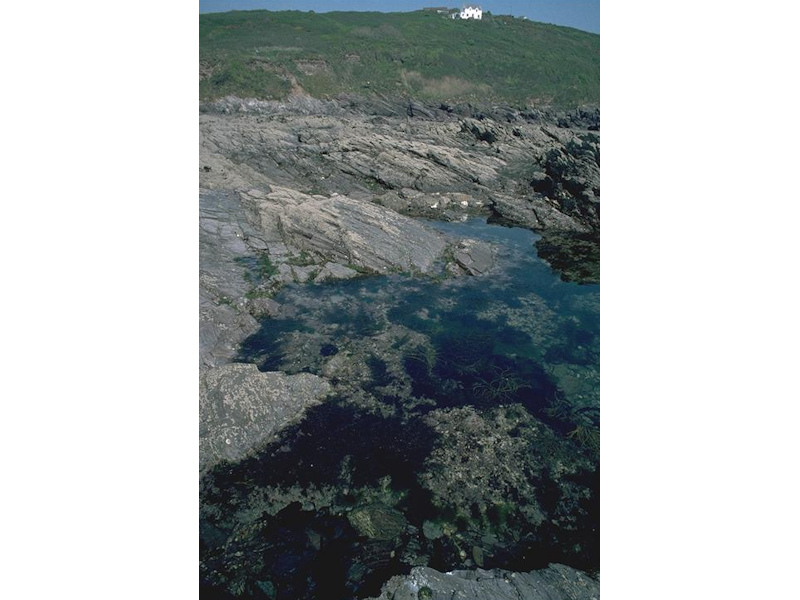
Bifurcaria bifurcata in shallow eulittoral rockpools
Photographer: Dr Keith Hiscock Copyright: Joint Nature Conservation Committee (JNCC)
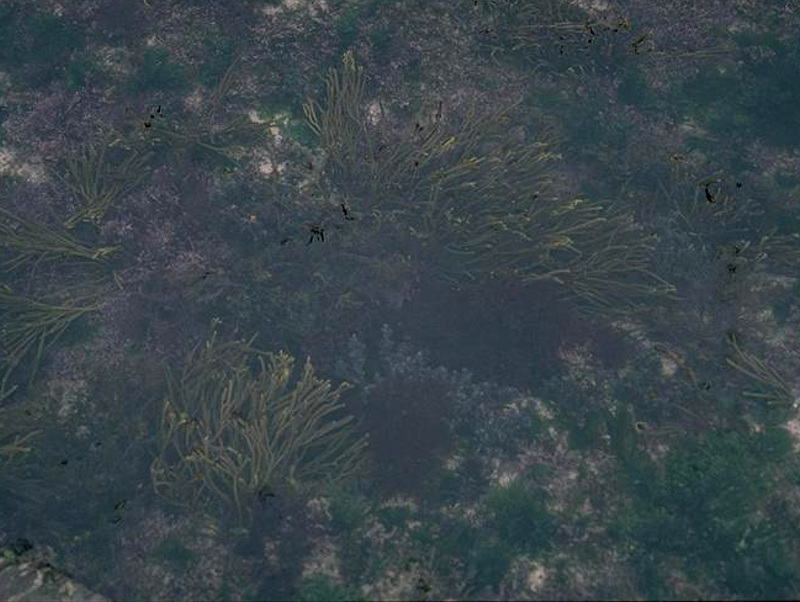
Bifurcaria bifurcata in shallow eulittoral rockpools
Photographer: Dr Keith Hiscock Copyright: Joint Nature Conservation Committee (JNCC)
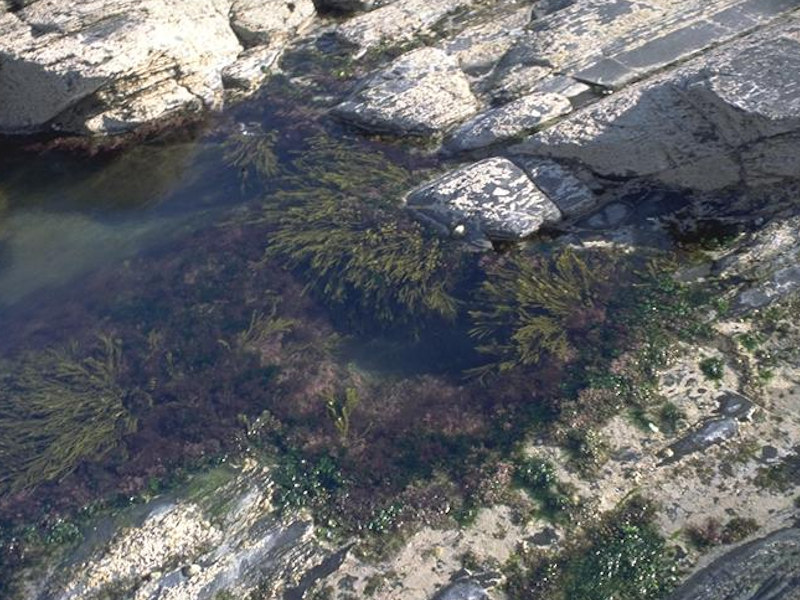
Bifurcaria bifurcata in shallow eulittoral rockpools
Photographer: Kate Northen Copyright: Joint Nature Conservation Committee (JNCC)

| Researched by | Dr Heidi Tillin & Georgina Budd | Refereed by | Admin |
|---|
Summary
UK and Ireland classification
Description
Eulittoral rockpools in south-west Britain on very exposed to moderately exposed shores dominated by the brown seaweed Bifurcaria bifurcata and encrusting coralline algae and Corallina officinalis. Kelps are present and include the species Laminaria digitata, Saccharina latissima and the wrack Himanthalia elongata. Underneath the canopy formed by these species is a high diversity of red seaweeds including the foliose species Chondrus crispus, Palmaria palmata, Osmundea pinnatifida and Mastocarpus stellatus. Other red seaweeds include Gastroclonium ovatum, Ceramium nodulosum, Calliblepharis jubata and Mesophyllum lichenoides. The green seaweeds Ulva lactuca and Ulva intestinalis occur where space allows. Often found in small cracks and crevices are the anemones Actinia equina and Anemonia viridis, while the limpet Patella vulgata can be found on the rock surface. Coarse gravel, cobbles and mobile boulders often cover the bottom of these rockpools, where Gibbula umbilicalis can be found (Information from Connor et al., 2004; JNCC, 2015).
Depth range
Mid shore, Lower shoreAdditional information
-
Listed By
Sensitivity review
Sensitivity characteristics of the habitat and relevant characteristic species
The biotope description and information on characterizing species are taken from Connor et al. (2004). Eulittoral rockpools in south-west Britain on very exposed to moderately exposed shores dominated by the brown seaweed Bifurcaria bifurcata and encrusting coralline algae and Corallina officinalis. The coralline crusts and turfs of Corallina officinalis and Bifurcaria bifurcata spp. are considered the key characterizing and structuring species within the biotope and the sensitivity assessments focus on these species (although information on coralline crusts is limited). Kelps are present and include the species Laminaria digitata, Saccharina latissima and the wrack Himanthalia elongata. Underneath the canopy formed by these species is a high diversity of red seaweeds including the foliose species Chondrus crispus, Palmaria palmata, Osmundea pinnatifida and Mastocarpus stellatus. Other red seaweeds include Gastroclonium ovatum, Ceramium nodulosum, Calliblepharis jubata and Mesophyllum lichenoides. The sensitivity of these species is considered generally. The green seaweeds Ulva lactuca and Ulva intestinalis occur where space allows. Often found in small cracks and crevices are the anemones Actinia equina and Anemonia viridis, while the limpet Patella vulgata can be found on the rock surface. These common rocky shore species while contributing to species diversity and ecological function within the biotope are not considered to be key to the biotope and are therefore only generally referred to within the assessments.
Resilience and recovery rates of habitat
Coralline algae are red algae (Rhodophyta) characterized by a ‘stony’ thallus because of calcareous deposits contained within the cell walls. Although ubiquitous in marine coastal systems little is understood about the taxonomy, biology and ecology of this taxa (Littler & Littler, 2013). Coralline crust is a generic term that in UK biotopes refers to nongeniculate (crustose) species from the family Corallinacea that could include Lithophyllum incrustans which is noted to form thick crusts in tidepools, especially in the south west (Adey & Adey, 1973), Lithothamnion spp. and Phymatolithon spp. Throughout the sensitivity assessments the term coralline crust is used to refer to the Corallinacea within the biotope. Due to the lack of evidence for species the assessments are generic, although species specific information is presented where available. Corallina officinalis is a geniculate (articulated) species that occurs as a dense turf in this biotope. The fronds grow from a crustose base, similar to a coralline crust.
The canopy of Cystoseira spp. typically shows seasonal changes, where the plants reach their largest size in summer and early autumn and decline in winter when fronds are removed by storms (Cecchi & Cinelli, 1992). Regrowth the following year occurs from the crustose base. In controlled experiments removal of Cystoseira spp. from pools where this genus dominated, allowed the red algal turf to increase in abundance and cover while encrusting corallines were unaffected (Cecchi & Cinelli, 1992). The coralline algae Corallina elongata particularly benefitted. According to Luning (1990), eggs of most large perennial algae are adapted for rapid sinking. In Sargassum muticum, a brown algae belonging to the same family as Cystoseira, and for which egg diameter is similar to that of Cystoseira species (Norton & Fetter, 1981), eggs have a dispersal range of as little as 3 m in the intertidal region (Critchley, 1981). Though this distance can increase significantly with water movement (Norton & Fetter, 1981; Deysher & Norton, 1982). Recovery may therefore be prolonged where disturbances remove Cystoseira spp. from broad areas and there are no adults to provide propagules. Removal of Cystoseira spp. from rockpools would mean that the biotope reverted to the similar Corallina officinalis and coralline crust dominated biotope LR.FLR.Rkp.Cor.Cor. Successful recruitment of Cystoseira spp. to rockpools may also be episodic and dependent on a number of factors in addition to supply of propagules. In a series of experiments Benedetti-Cinelli & Cinelli (1992) found that settlement and recruitment of Cystoseira spp. was reduced under existing canopies. Settlement was enhanced by the presence of algal turfs rather than encrusting corallines but survival (recruitment) was greater on the corallines and in areas where grazers were removed. Some natural variation in this biotope and cycling between canopy dominated and algal turf dominated variants (LR.FLR.Rkp.Cor.Cor) may therefore occur and be mediated by disturbance that creates patches in turf allowing Cystoseira spp. to invade (Benedetti-Cinelli & Cinelli 1992).
Where this biotope is impacted by pressures, recolonization of the key structuring and characterizing coralline crust and the turf of Corallina officinalis and Cystoseira canopy will require either regrowth from surviving holdfast or basal crusts or recolonization by propagules. The crustose holdfast or base of the characterizing species Corallina officinalis is perennial and grows apically (continuous growth at tips) , similar to encrusting corallines such as Lithothamnia sp. The basal crust may grow continuously until stimulated to produce fronds (Littler & Kauker 1984; Colhart & Johanssen 1973). Littler & Kauker (1984) suggest that the crustose bases were adapted to resist grazing and desiccation whereas the fronds were adapted for higher primary productivity and reproduction. The basal crusts are tougher than the upright fronds (requiring a pressure of 94 g/mm2 to penetrate compared to 43 g/mm2). Regeneration of the basal crusts provides a more rapid route to recovery than recolonization. Experiments in the intertidal in southern California found that areas scraped back to crusts recovered four times more rapidly than sterilised plots where the crusts were removed (Littler & Kauker, 1984).
In culture Corallina officinalis fronds exhibited an average growth rate of 2.2 mm/month at 12 and 18 oC. Growth rate was only 0.2 mm/month at 6 oC and no growth was observed at 25 oC (Colhart & Johanssen 1973). Similarly, Blake & Maggs (2003) observed much higher growth rates of 2 mm/month over 6 months starting from September in Corallina officinalis grown in Strangford Lough (Northern Ireland) at 5 and 10m depth, these rates are similar to those observed by Andrake & Johansen, (1980) in winter in New Hampshire. The evidence for growth rate suggests that to achieve a height of 10 cm the turf would be at least 4 years old (probably older as higher temperatures appear to slow growth. A lower level turf of, for example 5 cm, could theoretically be achieved within 2 years.
Where the bases are removed, recovery will depend on recolonization. Areas that are cleared during the reproductive period have the potential to be rapidly colonized. Corallina officinalis was shown to settle on artificial substances within 1 week of their placement in the intertidal in New England summer (Harlin & Lindbergh, 1977). However, settlement plates laid out in the autumn were not recolonized until the next spring. In the lower rocky intertidal in southern California dominated by Corallina officinalis with foliose overstorey algae present, Littler & Kauker (1984) experimentally cleared plots and followed the recovery for 12 months. Some areas were scraped allowing the basal crusts to remain whereas others were completely sterilised (removal of all material and surfaces then scorched with a blow torch to remove bases). In scraped plots up to 15% cover of Corallina officinalis fronds returned within 3 months after removal of fronds and all other epiflora/fauna (Littler & Kauker, 1984) while in sterilized plots (all basal crusts removed) appearance of articulated fronds occurred 6 months following clearance. At the end of the 12 month observation period Corallina officinalis cover had increased to approximately 18 % in plots where basal crusts remained and to approximately 10 % in sterilised plots. Similarly Bamber & Irving (1993) reported that new plants grew back in scraped transects within 12 months, although the resistant crustose bases were probably not removed.
Once established turfs of Corallina spp. can persist for a long time, surveys of rocky intertidal ledges at Hinkley Point, Somerset in England have found that the patches mapped in the 1980s (Bamber & Irving, 1993) had not changed position when resurveyed 18 years later (Burdon et al., 2009). It has been speculated but not definitively demonstrated that turf-forming algae and canopy forming algae may represent alternate stable states on temperate rocky shores and a shift in balance to the alternate state may prevent recovery. Lubchenco (1980) for example, on shores in New England, found that the removal of Chondrus crispus turf allowed the establishment of Fucus spp. Removal of grazers and the turf allowed Fucus spp. to establish 100% cover, highlighting the significance of grazers in structuring the biotope. Some potential mechnaisms for inhibition of canopy forming species are space pre-emption by turfs that prevent recruitment of taller algae (Perkol-Finkel & Airoldi, 2010, Kennelly, 1987) due to the coverage of suitable rock surfaces and the presence of sediments within the turf (Airoldi, 2003). Clearance experiments on rocky, intertidal shores in Southern California (Sousa, 1979) found that Ulva species which have a longer reproductive season could colonize cleared areas preventing the establishment of perennial red algae. However grazing by crabs removed the green algae (Sousa, 1979), again highlighting the potential importance of grazers to the re-establishment of this biotope.
A number of papers by Edyvean & Ford (1984a & b; 1986; 1987) describe aspects of reproduction and growth of encrusting coralline, Lithophyllum incrustans. Studies by Edyvean & Ford (1987) in populations of Lithophyllum incrustans in Pembroke south-west Wales suggest that reproduction occurs on average early in the third year. Reproduction may be sexual or asexual. Populations release spores throughout the year but abundance varies seasonally, with the populations studied in Cullercoats Bay, and Lannacombe Bay (North East and South West England, respectively) producing less spores in the summer. Spore release is initiated by changes in temperature or salinity (see relevant pressure information) at low tide so that spore dispersal is restricted to within the tide pool enhancing local recruitment. Spore survival is extremely low with only a tiny proportion of spores eventually recruiting to the adult population (Edyvean & Ford, 1986). The spores are released from structures on the surface called conceptacles, these are formed annually and subsequently buried by the new layer of growth. Plants can be aged by counting the number of layers of conceptacles. Edyvean & Ford (1984a) found that the age structure of populations sampled from Orkney (Scotland) Berwick (northern England) and Devon (England) were similar, mortality seemed highest in younger year classes with surviving individuals after the age of 10 years appear relatively long-lived (up to 30 years). In St Mary’s Northumberland, the population was dominated by the age 6-7 year classes (Edyvean & Ford, 1984a). Growth rates were highest in young plants measured at Pembroke (south-west Wales) with an approximate increase in diameter of plants of 24 mm in year class 0 and 155 mm in year 1 and slowing towards an annual average horizontal growth rate of 3mm/year (Edyvean & Ford, 1987).
Some repair of damaged encrusting coralline occurs through vegetative growth. Chamberlain (1996) observed that although Lithophyllum incrustans was quickly affected by oil during the Sea Empress spill, recovery occurred within about a year. The oil was found to have destroyed about one third of the thallus thickness but regeneration occurred from thallus filaments below the damaged area. Recolonization by propagules is an important recovery mechanism, Airoldi (2000) observed that encrusting coralline algae recruited rapidly on to experimentally cleared subtidal rock surfaces in the Mediterranean Sea, reaching up to 68% cover in 2 months. As encrusting corallines are sensitive to desiccation (Dethier, 1994) it should be noted that these subtidal habitats are probably more favourable for recruitment, growth and survival than intertidal rock pools.
Resilience assessment. Resilience of the biotope is assessed as ‘High’ where resistance is ‘High’ (no significant impact) or ‘Medium’ (where <25 % of the Cystoseira canopy and Corallina officinalis fronds or encrusting corallines are removed, based on regrowth from the basal crusts and/or vegetative growth from surrounding turfs or crusts. Where resistance is assessed as ‘Low’ or ‘None’ then resilience is assessed as ‘Medium’ (2-10 years) for the Cystoseira canopy Corallina officinalis turf and encrusting corallines. Recovery of the age structure of the coralline crusts may require longer time as these can be long-lived but where recolonization and cover by younger crusts has occurred this is not considered to substantially alter the character of the biotope. Once a coralline turf has developed it will probably be colonized by epiphytic invertebrates such as harpacticoids, amphipods and isopods relatively quickly from the surrounding area. Therefore, the biotope would be recognizable once the coralline turf has regrown, which is likely to be quite rapid if the resistant crustose bases remain. The clearance experiments by Littler & Kauker (1984) suggest that recovery of a dense turf cover whether basal crusts remained or were totally removed would require more than 2 years. Presumably, as crusts can grow in all directions percentage cover is not a linear function and that gap closure would speed up with greater cover. Recruitment of associated species of red algae is probably equally rapid, and once the algal turf has developed most of the epiphytic invertebrates would colonize quickly, although some species e.g. small brooding gastropods would take longer. The ephemeral green algae associated with the biotope are opportunist colonizers of gaps and would be expected to recover within a year.
NB: The resilience and the ability to recover from human induced pressures is a combination of the environmental conditions of the site, the frequency (repeated disturbances versus a one-off event) and the intensity of the disturbance. Recovery of impacted populations will always be mediated by stochastic events and processes acting over different scales including, but not limited to, local habitat conditions, further impacts and processes such as larval-supply and recruitment between populations. Full recovery is defined as the return to the state of the habitat that existed prior to impact. This does not necessarily mean that every component species has returned to its prior condition, abundance or extent but that the relevant functional components are present and the habitat is structurally and functionally recognizable as the initial habitat of interest. It should be noted that the recovery rates are only indicative of the recovery potential.
Hydrological Pressures
Use [show more] / [show less] to open/close text displayed
| Resistance | Resilience | Sensitivity | |
Temperature increase (local) [Show more]Temperature increase (local)Benchmark. A 5°C increase in temperature for one month, or 2°C for one year. Further detail EvidenceSpecies found in the intertidal are exposed to extremes of high and low air temperatures during periods of emersion. They must also be able to cope with sharp temperature fluctuations over a short period of time during the tidal cycle. In winter, air temperatures are colder than the sea, conversely in summer air temperatures are much warmer than the sea. Species that occur in this intertidal biotope are therefore generally adapted to tolerate a range of temperatures, although the timing of site-specific factors such as low tides will influence local acclimation. For intertidal species increased temperatures may also result in desiccation when exposed (see changes in emergence pressure). The key characterizing species, Corallina officinalis has a cosmopolitan distribution (Guiry & Guiry, 2015) and throughout its range experiences wide variation in temperatures, although local populations may be acclimated to the prevailing thermal regime. Coralline crusts, including Lithophyllum incrustans are found further south than the UK and are considered to tolerate increased temperatures (although they may be more sensitive to drying rather than higher temperatures). Edyvean & Ford (1984b) suggest that populations of Lithophyllum incrustans are affected by temperature changes and salinity and that temperature and salinity ‘shocks’ induce spawning but no information on thresholds was provided (Edyvean & Ford, 1984b). Populations of Lithophyllum incrustans were less stable in tide pools with a smaller volume of water that were more exposed to temperature and salinity changes due to lower buffering capacity. Sexual plants (or the spores that give rise to them) were suggested to be more susceptible than asexual plants to extremes of local environmental variables (temperature, salinity etc.) as they occur with greater frequency at sites where temperature and salinity were more stable (Edyvean & Ford, 1984b). Lithophyllum incrustans is close to the northern edge of its range in the UK and is likely to tolerate increased temperatures. Similarly, Bifurcaria bifurcata is a southern species and where it occurs in south west England is at the edge of its northern range. Range oscillations have been recorded for this species for the past 100 years, with retractions in south west England during colder phases followed by short range extensions during warmer periods (Helmuth et al., 2006). Littler & Kauker (1984) suggested that the crustose bases of Corallina officinalis are more resistant of desiccation or heating than fronds. Severe damage was noted in Corallina officinalis fronds as a result of desiccation during unusually hot and sunny weather in summer 1983. An abrupt increase in temperature of 10 °C caused by the hot, dry 'Santa Anna' winds (between January and February) in Santa Cruz, California resulted in die back of several species of algae exposed at low tide (Seapy & Littler, 1982). Lüning (1990) reported that Corallina officinalis from Helgoland survived one week exposure to temperatures between 0 °C and 28 °C. In an exceptionally hot summer (1983, with an increase of between 4.8 and 8.5 °C) Hawkins & Hartnoll (1985) observed no temperature bleaching of adult Himanthalia elongata (although some buttons were bleached) or other canopy forming species. However, understorey red algae showed more signs of damage with bleached Corallina officinalis and ‘lithothamnia’ observed around the edges of pools due to dessication. Occasional damaged specimens of Palmaria palmata, Osmundea pinnatifida and mastocarpus stellatus were observed. Latham (2008) investigated the effects of temperature stress on Corallina officinalis through laboratory tests on samples collected in the Autumn in Devon, England from rockpools Samples were kept at 15 oC for three days and then exposed to temperatures of 5 oC, 15 oC, 20 oC, 25 oC and 30 oC (the normal range of temperature experienced was suggested to be between 5 and 15 oC). At 35 oC the Corallina was completely bleached after 3 days with a sample kept at 30 oC beginning to bleach. After 7 days (the end of the experiment) the sample kept at 30 oC was partially bleached. Samples kept at 5, 15, 20 and 25 oC showed little change in chemicals produced in reaction to thermal stress and no bleaching suggesting the temperatures in that range had not induced stress reactions. Most of the other species within the biotope are distributed to the north and south of Britain and Ireland and unlikely to be adversely affected by a chronic long-term temperature change. Ulva spp. are characteristic of upper shore rock pools, where water and air temperatures are greatly elevated on hot days. Empirical evidence for thermal tolerance to anthropogenic increases in temperature is provided by the effects of heated effluents on rocky shore communities in Maine, USA. Ascophyllum and Fucus were eliminated from a rocky shore heated to 27-30 °C by a power station whilst Ulva intestinalis (as Enteromorpha intestinalis) increased significantly near the outfall (Vadas et al., 1976). Limpets, Patella vulgata, also occur within this biotope. Laboratory studies suggest that adults of these species can tolerate temperature increases. The body temperature of Patella vulgata can exceed 36 oC in the field, (Davies, 1970); adults become non-responsive at 37-38 oC and die at temperatures of 42 oC (Evans, 1948). The top shell Gibbula umbilicalis has shown recent range expansions and increases in abundance following warmer temperatures (Mieszkowska et al., 2006) and a change at the pressure benchmark may benefit this species. Sensitivity assessment. Based on the global distribution of Corallina officinalis and the experiments by Latham (2008) which approximate to the pressure benchmark more than the observations of extreme events (Seapy & Littler, 1982; Hawkins & Hartnoll, 1985) it is suggested that Corallina officinalis would not be sensitive to either an acute or chronic increase in temperature at the pressure benchmark. Littler & Littler, (1983) suggest that the basal crustose stage is adaptive as resisters of sand scour and wave shearing as well as physiological stressors such as desiccation and heating. Where these survive any increases in temperature above the pressure benchmark they would provide a mechanism for biotope recovery. The distribution of Bifurcaria bifurcata Lithophyllum incrustans and other crusting corallines in southern Europe and the Mediterranean suggest that these are tolerant of higher temperatures and within pools, rather than open rock, will be protected from desiccation. The biotope assessment is based on the key characterizing Bifurcaria bifurcata and Corallina turf and encrusting corallines but it should be noted that many of the associated species are considered to have ‘High’ resistance to changes in temperature at the pressure benchmark. Biotope resistance is assessed as 'High' and resilience as 'High' and the biotope is considered to be 'Not sensitive'. It should be noted that the timing of acute and chronic increases would alter the degree of impact and hence sensitivity. An acute change occurring on the hottest day of the year and exceeding thermal tolerances would lead to mortality. Sensitivity of Patella vulgata to longer-term, broad-scale perturbations would potentially be greater due to effects on reproduction but these changes may lead to species replacements and are not considered to significantly affect the character of the biotope. | HighHelp | HighHelp | Not sensitiveHelp |
Temperature decrease (local) [Show more]Temperature decrease (local)Benchmark. A 5°C decrease in temperature for one month, or 2°C for one year. Further detail EvidenceMany intertidal species are tolerant of freezing conditions as they are exposed to extremes of low air temperatures during periods of emersion. They must also be able to cope with sharp temperature fluctuations over a short period of time during the tidal cycle. In winter air temperatures are colder than the sea, conversely in summer air temperatures are much warmer than the sea. Species that occur in the intertidal are therefore generally adapted to tolerate a range of temperatures, with the width of the thermal niche positively correlated with the height of the shore (Davenport & Davenport, 2005). Under extremely low temperatures, components of the community demonstrate tolerance. Lüning (1990) reported that Corallina officinalis from Helgoland survived 0 °C when exposed for one week. New Zealand specimens were found to tolerate -4 °C (Frazer et al., 1988). Lüning (1990) suggested that most littoral algal species were tolerant of cold and freezing. For example, the photosynthetic rate of Chondrus crispus recovered after 3hrs at -20 °C but not after 6 hrs (Dudgeon et al., 1990). The photosynthetic rate of Mastocarpus stellatus higher on the shore fully recovered from 24 hrs at -20 °C. Edyvean & Ford (1984b) suggest that populations of Lithophyllum incrustans are affected by temperature changes and salinity and that temperature and salinity ‘shocks’ induce spawning but no information on thresholds was provided (Edyvean & Ford, 1984b). Bifurcaria bifurcata is a southern species and mainly occurs in the south-west of England and range retractions have been recorded from cooler periods (Helmuth et al., 2006). Based on distribution this species may be sensitive to decreases in temperature although it is not clear whether a decrease at the pressure benchmark would be biologically significant. The loss of Bifurcaria bifurcata would lead to reclassification to one of the very similar rockpool biotopes e.g. LR.FLR.Rkp.Cor.Cor. The associated species are also likely to be tolerant of a decrease in temperature at the pressure benchmark. Ulva spp. are eurytopic, found in a wide temperature range and in areas which frequently experience freezing conditions and are vulnerable to ice scour (Seed & Suchanek 1992). The top shell Gibbula umbilicalis has shown recent range expansions and increases in abundance following warmer temperatures (Mieszkowska et al., 2006) and a change at the pressure benchmark may impact this species. Adults of Patella vulgata are also largely unaffected by short periods of extreme cold. Ekaratne & Crisp (1984) found adult limpets continuing to grow over winter when temperatures fell to -6 °C, and stopped only by still more severe weather. However, loss of adhesion after exposure to -13 °C has been observed with limpets falling off rocks and therefore becoming easy prey to crabs or birds (Fretter & Graham, 1994). However, in the very cold winter of 1962-3 when temperatures repeatedly fell below 0 °C over a period of 2 months large numbers of Patella vulgata were found dead (Crisp, 1964). Periods of frost may also kill juvenile Patella vulgata, resulting in recruitment failures in some years (Bowman & Lewis, 1977). In colder conditions an active migration by mobile species may occur down the shore to a zone where exposure time to the air (and hence time in freezing temperatures) is less. Sensitivity assessment. Based on the southern distribution of the key characterizing species Bifurcaria bifurcata, this biotope is judged to have ‘Medium’ resistance to a decrease in temperature at the pressure benchmark to either an acute of chronic decrease in temperature. Resilience is assessed as 'High' as it is judged that bases may be more resistant and would allow regrowth when temperatures return to the usual regime. It should be noted that the timing of acute changes would mediate effect with a decrease occurring at warmer times potentially having less effect than a decrease in colder months that exceeded thermal tolerances. A decrease in temperature that eliminated Bifurcaria bifurcata alone could result in biotope reversion to the very similar LR.FLR.Rkp.Cor.Cor. | MediumHelp | HighHelp | LowHelp |
Salinity increase (local) [Show more]Salinity increase (local)Benchmark. A increase in one MNCR salinity category above the usual range of the biotope or habitat. Further detail EvidenceLocal populations may be acclimated to the prevailing salinity regime and may therefore exhibit different tolerances to other populations subject to different salinity conditions and therefore caution should be used when inferring tolerances from populations in different regions. This biotope is found in full (30-35 ppt) salinity (Connor et al., 2004). High air temperatures cause surface evaporation of water from pools, so that salinity steadily increases. The extent of temperature and salinity change is affected by the frequency and time of day at which tidal inundation occurs. If high tide occurs in early morning and evening the diurnal temperature follows that of the air, whilst high water at midday suddenly returns the temperature to that of the sea (Pyefinch, 1943). Heavy rainfall, followed by tidal inundation can cause dramatic fluctuations in salinity, and values ranging from 5-30 psu have been recorded in rockpools over a period of 24 hrs (Ranade, 1957). As a consequence of such a regime, the entire LR.FLR.H community will be adapted, to a certain degree, to fluctuating salinities. It should be noted however that local populations may be acclimated to the prevailing salinity regime and may therefore exhibit different tolerances to other populations subject to different salinity conditions and therefore caution should be used when inferring tolerances. The characterizing species, Bifurcaria bifurcata and Corallina officinalis are found in rockpools, such as this biotope, where salinities may fluctuate markedly during exposure to the air. Kinne (1971) cites maximal growth rates for Corallina officinalis between 33 and 38 psu in Texan lagoons. Edyvean & Ford (1984b) suggest that populations of Lithophyllum incrustans are affected by temperature changes and salinity and that temperature and salinity ‘shocks’ induce spawning but no information on thresholds was provided (Edyvean & Ford, 1984b). Populations of the encrusting coralline Lithophyllum incrustans were less stable in rockpools with a smaller volume of water that were more exposed to temperature and salinity changes due to lower buffering capacity. Sexual plants (or the spores that give rise to them) were suggested to be more susceptible than asexual plants to extremes of local environmental variables (temperature, salinity etc.) as they occur with greater frequency at sites where temperature and salinity were more stable (Edyvean & Ford, 1984b). The associated species are typically found in a range of salinities. Ulva species can survive hypersaline conditions in supralittoral rockpools subjected to evaporation and is considered to be a very euryhaline species, tolerant of extreme salinities ranging from 0 psu to 136 psu (Reed & Russell, 1979). Sensitivity assessment. No direct evidence was found to assess sensitivity to this pressure. Although some increases in salinity may be tolerated by the associated species present the natural variation, (rather than the pressure benchmark) is generally short-term and mitigated during tidal inundation. This biotope is considered, based on distribution of Corallina officinalis and the encrusing corallines on the mid to lower shore, rather than the upper littoral to be sensitive to a persistent increase in salinity to > 40 ppt. Resistance is therefore assessed as ‘Low’ and recovery as ‘Medium’ (following restoration of usual salinity). Sensitivity is therefore assessed as ‘Medium’. | LowHelp | MediumHelp | MediumHelp |
Salinity decrease (local) [Show more]Salinity decrease (local)Benchmark. A decrease in one MNCR salinity category above the usual range of the biotope or habitat. Further detail EvidenceThis biotope is recorded in full salinity habitats (Connor et al., 2004). However, high rainfall will reduce salinity in rockpools when exposed to air and may create a surface layer of brackish/nearly freshwater for a period. Heavy rainfall, followed by tidal inundation can cause dramatic fluctuations in salinity, and values ranging from 5-30 psu have been recorded in rockpools over a period of 24 hrs (Ranade, 1957). As a consequence of such a regime, the entire assemblage will be adapted, to a certain degree, to fluctuating salinities. In the Baltic, Corallina officinalis is confined to deeper waters as surface salinity decreases (Kinne, 1971), suggesting that full salinity is required in the long-term although short-term fluctuations may be tolerated (although the thresholds of this tolerance are not clear). Kinne (1971) cites maximal growth rates for Corallina officinalis between 33 and 38 psu in Texan lagoons, so that a decrease in salinity at the pressure benchmark would be predicted to lead to reduced growth. Edyvean & Ford (1984b) suggest that populations of Lithophyllum incrustans are affected by temperature changes and salinity and that temperature and salinity ‘shocks’ induce spawning but no information on thresholds was provided (Edyvean & Ford, 1984b). Populations of Lithophyllum incrustans were less stable in tide pools with a smaller volume of water that were more exposed to temperature and salinity changes due to lower buffering capacity. Sexual plants (or the spores that give rise to them) were suggested to be more susceptible than asexual plants to extremes of local environmental variables (temperature, salinity etc.) as they occur with greater frequency at sites where temperature and salinity were more stable (Edyvean & Ford, 1984b). Prolonged reduction in salinity, e.g. from full (30-40 ppt) to reduced (18-30 ppt), is likely to reduce the species richness of the biotope due to loss of some intolerant invertebrates from the assemblage associated with the Corallina officinalis turf. Based on occurrence in estuaries it is clear that some of the species associated with this biotope have a high tolerance for this pressure. However, it should be noted that local populations may be acclimated to the prevailing salinity regime and may therefore exhibit different tolerances to other populations subject to different salinity conditions so that caution should be used when inferring tolerances from populations in different regions. Ulva species are considered to be a very euryhaline species, tolerant of extreme salinities ranging from 0 psu to 136 psu (Reed & Russell, 1979). although some variation in salinity tolerance between populations of Ulva intestinalis have been found indicating that plants have some adaptation to the local salinity regime (Reed & Russell, 1979). Littorina littorea is found in waters of full, variable and reduced salinities (Connor et al., 2004) and so populations are considered tolerant of decreases in salinity at the pressure benchmark. Sensitivity assessment. Although some daily changes in salinity may be experienced these will be mitigated during tidal inundation. This biotope is considered, based on Corallina officinalis distribution and the evidence from Kinne (1971), to be sensitive to a decrease in salinity at the pressure benchmark. Resistance is therefore assessed as ‘Low’ and recovery as ‘Medium’ (following restoration of usual salinity). Sensitivity is therefore assessed as ‘Medium’. | LowHelp | MediumHelp | MediumHelp |
Water flow (tidal current) changes (local) [Show more]Water flow (tidal current) changes (local)Benchmark. A change in peak mean spring bed flow velocity of between 0.1 m/s to 0.2 m/s for more than one year. Further detail EvidenceNo evidence to assess this pressure was found. The rockpool habitat will provide some protection from water flows although surface topography may create some turbulence disrupting currents. The coralline crusts characterizing this biotope are securely attached and as these are flat are subject to little or no drag. As biotopes dominated by turfs of Corallina officinalis and containing similar associated species are found in a range of flow rates from 'moderately strong' (0.5-1.5 m/s) to very 'weak' (negligible) (Connor et al., 2004, Dommasnes, 1969) this key characterizing and structuring species and the associated red and green algae and limpets and littorinids are considered tolerant of changes in water flow at the pressure benchmark. Moderate water movement is beneficial to seaweeds as it carries a supply of nutrients and gases to the plants and removes waste products. However, if flow becomes too strong, plants may become displaced. Additionally, an increase to stronger flows may inhibit settlement of spores and remove adults or germlings. However, Corallina officinalis and the red algae have a compact, turf forming growth which reduce water flow through turbulence and friction and are probably resistant to displacement by an increase in water flow. Sensitivity assessment. This biotope is considered to have ‘High’ resistance and ‘High’ resilience to this pressure at the benchmark and is therefore assessed as ‘Not sensitive. Changes in water flow at the pressure benchmark may result in increased or decreased sediment deposition, these are not considered to alter the character of the biotope but may alter species richness of the small invertebrates associated with the turf or any sediment deposits. | HighHelp | HighHelp | Not sensitiveHelp |
Emergence regime changes [Show more]Emergence regime changesBenchmark. 1) A change in the time covered or not covered by the sea for a period of ≥1 year or 2) an increase in relative sea level or decrease in high water level for ≥1 year. Further detail EvidenceThe emergence regime over the tidal cycle is an important factor structuring this, and other, intertidal biotopes. An increase in emergence may lead to shallow pools drying out, greater exposure to air temperatures with corresponding fluctuations in water temperature and changes in salinity following evaporation or dilution by rainfall. Mobile species within this biotope could relocate to preferred shore heights but an increase or decrease in abundance of predators and grazers may alter the structure of the assemblage. Connor et al., (2004) report that this biotope occurs in the eulittoral zone and therefore it is likely to have some tolerance for increased or decreased emergence. Corallina officinalis and many of the associated species are found subtidally. Decreased emergence is likely to lead to the habitat the biotope is found in becoming more suitable for the lower shore species typically the kelps that occur in this biotope, leading to replacement by a fully subtidal kelp dominated biotope with red algae and Corallina officinalis surviving under the canopy. Occurrence of encrusting coralline algae seems to be critically determined by exposure to air and sunlight and this group are considered sensitive to desiccation (Dethier, 1994). Colonies survive in damp conditions under algal canopies or in pools but not on open rock where desiccation effects are important. Increased emergence leading to drying out of shallow pools would reduce habitat suitability for this group. Spore release by the crusting coralline Lithophyllum incrustans is triggered by small changes in salinity and temperature and therefore changes in emergency may alter patterns in reproduction and recruitment (see relevant pressures for further information). However, this species does occur both high and low in the intertidal (Edyvean & Ford, 1986) and presumably such impacts are limited. The kelp species found within this biotope are typical of lower shore and subtidal biotopes and an increase in emergence is likely to negatively impact this group and lead to their loss. The associated Ulva spp. are able to tolerate desiccation stress they are often very abundant on the high shore where desiccation stress is the primary factor controlling seaweed distribution, and may even be found above the tidal limits of the shore. Ulva intestinalis (studied as Enteromorpha intestinalis) can survive several weeks of living in completely dried out rock pools, while becoming completely bleached on the uppermost layers, but remaining moist underneath the bleached fronds. However, desiccation stress of germlings may be lower than adults. Hruby & Norton (1979) found that 7-14 day old germlings of Ulva (studied as Enteromorpha) were more tolerant of desiccation than earlier stages, so an increase in desiccation stress may impact more adversely on newly settled germlings than more mature plants. A significant, long-term, increase in emergence placing this biotope in the upper intertidal is therefore likely to lead to replacement of this biotope with one more typical of the changed conditions, barnacles and mussels or green algae for example. Mobile epifauna are likely to seek shelter elsewhere and species such as Patella vulgata and Littorina littorea are found throughout the intertidal zone are likely to tolerate increased emergence particularly where the pool ameliorates desiccation stress and temperature increases. An increase in emergence may result in migration downshore, while decreased emergence may increase habitat suitability of upper littoral fringe biotopes for these species. Grazing by littorinids and other species can have a significant structuring impact on this biotope by removing red and green algae (Robles 1982, Albrecht, 1998). An increase in grazers and grazing within this biotope may removal large amounts of algal biomass. However this would not alter the classification of this biotope but may alter classification between the variant sub-biotopes. Sensitivity assessment. A decrease in emergence would mean that shallow rockpools would be at less risk of desiccation. In addition, depending on the nature of the surrounding bedrock, the rockpool may become slightly deeper. As a result, it is possible that species diversity could increase but, on the whole biotopes at the upper and mid-shore are likely to be tolerant of a decrease in emergence at the benchmark level. Pre-emption of space by Bifurcaria bifurcata, Corallina officinalis and other red algae may reduce the establishment of lower shore species including kelps, resistance is therefore assessed as ‘Medium’ to decreased emergence and recovery as ‘High’ so that sensitivity is assessed as ‘Low’. Resistance to increased emergence is assessed as ‘Medium’ as the coralline crusts Corallina officinalis and associated red algae are intolerant of desiccation but are generally protected by the pool environment. Some of the associated species, such as the kelps are likely to be lost in response to a significant increase in emergence. Recovery is assessed as ‘High’ and sensitivity is therefore assessed as ‘Low’. An increase in emergence repositioning the biotope at an upper shore level would be likely to significantly affect the species composition due to increased temperatures and greater variation in salinity and sensitivity would be greater. This could lead to replacement by a similar biotope within this group such as LR.FLR.Rkp.Cor.Cor. | MediumHelp | HighHelp | LowHelp |
Wave exposure changes (local) [Show more]Wave exposure changes (local)Benchmark. A change in near shore significant wave height of >3% but <5% for more than one year. Further detail EvidenceThis biotope is recorded from locations that are judged to range from very exposed, moderately exposed or exposed (Connor et al., 2004), while Dommasnes, (1969) recorded Corallina officinalis turfs from very wave sheltered areas in Norway. Colonies of Lithophyllum incrustans appear to thrive in conditions exposed to strong water movement. Irvine & Chamberlain (1994) observe that the species is best developed on wave exposed shores. The degree of wave exposure influences wave height, as in more exposed areas with a longer fetch waves would be predicted to be higher. As this biotope occurs across a range of exposures, this was therefore considered to indicate, by proxy, that biotopes in the middle of the wave exposure range would tolerate either an increase or decrease in significant wave height at the pressure benchmark. Sensitivity assessment. The biotope is found across a range of wave exposures, mid-range populations are considered to have 'High' resistance to a change in significant wave height at the pressure benchmark. Resilience is assessed as ‘High’, by default, and the biotope is considered ‘Not sensitive’. | HighHelp | HighHelp | Not sensitiveHelp |
Chemical Pressures
Use [show more] / [show less] to open/close text displayed
| Resistance | Resilience | Sensitivity | |
Transition elements & organo-metal contamination [Show more]Transition elements & organo-metal contaminationBenchmark. Exposure of marine species or habitat to one or more relevant contaminants via uncontrolled releases or incidental spills. Further detail EvidenceThis pressure is Not assessed but evidence is presented where available. Contamination at levels greater than the pressure benchmark may adversely impact the biotope. No information was found concerning the effects of heavy metals on turf forming and encrusting coralline algae. Bryan (1984) suggested that the general order for heavy metal toxicity in seaweeds is: organic Hg> inorganic Hg > Cu > Ag > Zn> Cd>Pb. Contamination at levels greater than the pressure benchmark may adversely impact the biotope. Little information was found concerning the intolerance of Chondrus crispus to heavy metals. Burdin & Bird (1994) reported that both gametophyte and tetrasporophyte forms accumulated Cu, Cd, Ni, Zn, Mn and Pb when immersed in 0.5 mg/l solutions for 24 hours. No effects were reported however, and no relationship was detected between hydrocolloid characteristics and heavy metal accumulation. Cole et al. (1999) reported that Hg was very toxic to macrophytes. The sub-lethal effects of Hg (organic and inorganic) on the sporelings of an intertidal red algae, Plumaria elegans, were reported by Boney (1971). 100% growth inhibition was caused by 1 ppm Hg. Most of the information available suggests that adult gastropod molluscs are rather tolerant of heavy-metal toxicity (Bryan, 1984). Winkles may absorb metals from the surrounding water by absorption across the gills or from their diet, and evidence from experimental studies on Littorina littorea suggest that diet is the most important source (Bryan et al., 1983). The species has been suggested as a suitable bioindicator species for some heavy metals in the marine environment. Bryan et al. (1983) suggested that the species is a reasonable indicator for Ag, Cd, Pb and perhaps As. In the Fal estuary Patella vulgata occurs at, or just outside, Restronguet Point, at the end of the creek where metal concentrations are in the order: Zinc (Zn) 100-2000 µg/l, copper (Cu) 10-100µg/l and cadmium (Cd) 0.25-5µg/l (Bryan & Gibbs, 1983). However, in the laboratory Patella vulgata was found to be intolerant of small changes in environmental concentrations of Cd and Zn by Davies (1992). At concentrations of 10µg/l pedal mucus production and levels of activity were both reduced, indicating a physiological response to metal concentrations. Exposure to Cu at a concentration of 100 µg/l for one week resulted in progressive brachycardia (slowing of the heart beat) and the death of limpets. Zn at a concentration of 5500 µg/l produced the same effect (Marchan et al., 1999). | Not Assessed (NA)Help | Not assessed (NA)Help | Not assessed (NA)Help |
Hydrocarbon & PAH contamination [Show more]Hydrocarbon & PAH contaminationBenchmark. Exposure of marine species or habitat to one or more relevant contaminants via uncontrolled releases or incidental spills. Further detail EvidenceThis pressure is Not assessed but evidence is presented where available However contamination at levels that exceed the benchmark may lead to greater impacts. Where exposed to direct contact with fresh hydrocarbons, encrusting coralline algae appear to have a high intolerance. Crump et al. (1999) described "dramatic and extensive bleaching" of 'Lithothamnia' following the Sea Empress oil spill. Observations following the Don Marika oil spill (K. Hiscock, pers. comm.) were of rockpools with completely bleached coralline algae. However, Chamberlain (1996) observed that although Lithophyllum incrustans was affected in a short period of time by oil during the Sea Empress spill, recovery occurred within about a year. The oil was found to have destroyed about one third of the thallus thickness but regeneration occurred from thallus filaments below the damaged area. Following the Torrey Canyon oil spill in 1967, oil and detergent dispersants affected high shore specimens of Corallina officinalis more than low shore specimens. Plants in deep pools were afforded some initial protection, although probably later affected by contaminated runoff. In areas of heavy spraying, however, Corallina officinalis was killed (Smith 1968). Intolerance to hydrocarbon pollution has been assessed to be high, as key structural and important characterizing coralline algal species will be lost and the biotope not be recognized in their absence. The long-term effects on Chondrus crispus of continuous doses of the water accommodated fraction (WAF) of diesel oil were determined in experimental mesocosms (Bokn et al., 1993). Mean hydrocarbon concentrations tested were 30.1 µg/l and 129.4 µg/l. After 2 years, there were no demonstrable differences in the abundance patterns of Chondrus crispus. Kaas (1980, cited in Holt et al., 1995) reported that the reproduction of adult Chondrus crispus plants on the French coast was normal following the Amoco Cadiz oil spill. However, it was suggested that the development of young stages to adult plants was slow, with biomass still reduced 2 years after the event. O'Brien & Dixon (1976) and Grandy (1984, cited in Holt et al., 1995) comment on the high intolerance of red algae to oil/dispersant mixtures, but it is unclear which factor is responsible for the intolerance. | Not Assessed (NA)Help | Not assessed (NA)Help | Not assessed (NA)Help |
Synthetic compound contamination [Show more]Synthetic compound contaminationBenchmark. Exposure of marine species or habitat to one or more relevant contaminants via uncontrolled releases or incidental spills. Further detail EvidenceThis pressure is Not assessed but evidence is presented where available. Contamination at levels greater than the pressure benchmark may adversely impact the biotope. Smith (1968) reported that oil and detergent dispersants from the Torrey Canyon spill affected high water plans of Corallina officinalis more than low shore plants and some plants were protected in deep pools. In areas of heavy spraying, however, Corallina officinalis was killed (Smith, 1968). Regrowth of fronds had begun within two months after spraying ceased (Smith, 1968). O'Brien & Dixon (1976) suggested that red algae were the most sensitive group of algae to oil or dispersant contamination, possibly due to the susceptibility of phycoerythrins to destruction. They also reported that red algae are effective indicators of detergent damage since they undergo colour changes when exposed to relatively low concentration of detergent. However, Smith (1968) reported that red algae such as Chondrus crispus, Mastocarpus stellatus and Laurencia pinnatifida were amongst the algae least affected by detergents. Laboratory studies by Grandy (1984) on the effects of oil and dispersants on several red algal species concluded that they were all sensitive to oil/dispersant mixtures, with little difference between adults, sporelings, diploid or haploid life stages. Cole et al. (1999) suggested that herbicides were (not surprisingly) very toxic to algae and macrophytes. Hoare & Hiscock (1974) noted that with the exception of Phyllophora species, all red algae including encrusting coralline forms, were excluded from the vicinity of an acidified halogenated effluent discharge in Amlwch Bay, Anglesey and that intertidal populations of Corallina officinalis occurred in significant amounts only 600m east of the effluent. Chamberlain (1996) observed that although Lithophyllum incrustans was quickly affected by oil during the Sea Empress spill, recovery occurred within about a year. The oil was found to have destroyed about one third of the thallus thickness but regeneration occurred from thallus filaments below the damaged area. Most pesticides and herbicides were suggested to be very toxic for invertebrates, especially crustaceans (amphipods isopods, mysids, shrimp and crabs) and fish (Cole et al., 1999). | Not Assessed (NA)Help | Not assessed (NA)Help | Not assessed (NA)Help |
Radionuclide contamination [Show more]Radionuclide contaminationBenchmark. An increase in 10µGy/h above background levels. Further detail EvidenceNo evidence was found to assess this pressure at the benchmark. Algae bioaccumulate radionuclides (with extent depending on the radionuclide and the algae species). Adverse effects have not been reported at low levels. | No evidence (NEv)Help | Not relevant (NR)Help | No evidence (NEv)Help |
Introduction of other substances [Show more]Introduction of other substancesBenchmark. Exposure of marine species or habitat to one or more relevant contaminants via uncontrolled releases or incidental spills. Further detail EvidenceThis pressure is Not assessed. | Not Assessed (NA)Help | Not assessed (NA)Help | Not assessed (NA)Help |
De-oxygenation [Show more]De-oxygenationBenchmark. Exposure to dissolved oxygen concentration of less than or equal to 2 mg/l for one week (a change from WFD poor status to bad status). Further detail EvidenceThe effects of reduced oxygenation on algae are not well studied. Plants require oxygen for respiration, but this may be provided by production of oxygen during periods of photosynthesis. Lack of oxygen may impair both respiration and photosynthesis (see review by Vidaver, 1972). This biotope would only be exposed to low oxygen in the water column intermittently during periods of tidal immersion. In addition, in areas of wave exposure and moderately strong current flow low oxygen levels in the water are unlikely to persist for very long as oxygen levels will be recharged by the incorporation of oxygen in the air into the water column or flushing with oxygenated waters. No evidence was found to assess this pressure for the red algae turfs. However, the associated species are unlikely to be impacted by this pressure, at the benchmark. Experiments have shown that thallus discs of Ulva lactuca plants can survive prolonged exposure to anoxia and hypoxia (Vermaat & Sand-Jensen, 1987; Corradi et al., 2006). Following resumption of normal oxygen conditions gametes were produced. The associated invertebrate species also show high tolerances for reduced oxygen at levels that exceed the pressure benchmark. Littorina littorea can easily survive 3-6 days of anoxia (Storey et al., 2013). Limpets can also survive for a short time in anoxic seawater; Grenon & Walker, (1981) found that in oxygen free water limpets could survive up to 36 hours, although Marshall & McQuaid (1989) found a lower tolerance for Patella granularis, which survived up to 11 hours in anoxic water. Patella vulgata and Littorina littorea are able to respire in air, mitigating the effects of this pressure during the tidal cycle. Sensitivity assessment. No direct evidence for the effects of hypoxia on red algal turfs was found. As the biotope will only be exposed to this pressure when submerged and respiration will occur in air, biotope resistance was assessed as ‘High’ and resilience as ‘High’ (no effect to recover from), resulting in a sensitivity of 'Not sensitive'. | HighHelp | HighHelp | Not sensitiveHelp |
Nutrient enrichment [Show more]Nutrient enrichmentBenchmark. Compliance with WFD criteria for good status. Further detail EvidenceOver geological timescales periods of increased nutrient availability have experienced increases in the distribution of crustose coralline species at the expense of corals (Littler & Littler, 2013), suggesting that this group have some tolerance for enhanced nutrient levels. Overall. Littler & Littler (2013) suggest that corallines as a group can tolerate both low and elevated levels of nutrients. The key characterizing Corallina officinalis and the associated green algae species have been identified worldwide as species that occur in areas subject to increased nutrient input within the vicinity of sewage outfalls and at intermediately polluted sites (Bellgrove et al., 2010; Littler & Murray, 1975; May, 1985; Brown et al., 1990; Bellgrove et al., 1997, Arevalo et al., 2007). For example Kindig & Littler (1980) demonstrated that Corallina officinalis var. chilensis in South California showed equivalent or enhanced health indices, highest productivity and lowest moralities (amongst the species examined) when exposed to primary or secondary sewage effluent. Corallina elongata and the crusting coralline Lithophyllum incrustans were present at sites dominated by Ulva spp. in the Mediterranean exposed to high levels of nutrient enrichment from domestic sewage (Arévalo et al., 2007). Grazers in the biotope may benefit from increased availability of food resources, due to enhanced growth. European studies have reported that the abundance of Cystoseira typically decreases across pollution gradients including nutrient enrichment gradients and the genus is absent from eutrophicated sites (Díez et al., 1999; Arévalo et al., 2007). Because of this sensitivity the genus has been used as an indicator of high water quality in a number of metrics used to support implementation of the Water Framework Directive (Panayotidis et al., 2004; Ballesteros et al., 2007). Atalah & Crowe (2012) added nutrients to rockpools in controlled experiments. The rockpools were occupied by a range of algae including encrusting corallines, turfs of Mastocarpus stellatus, Chondrus crispus and Corallina officinalis and green and red filamentous algae. The invertebrates present were mostly Patella ulyssiponensis, the winkle Littorina littorea and the flat top shell Gibbula umbilicalis. Nitrogen and phosphorous enhancement was via the addition of fertilisers, as either 40 g/litre or 20 g/litre. The treatments were applied for seven month and experimental conditions were maintained every two weeks. A grazer and nutrient addition treatments was also applied where grazers were removed manually from pools and a 1 m strip bordering the pools. The experimental treatments do not directly relate to the pressure benchmark but indicate some general trends in sensitivity. In the pools the chronic addition of nutrients had no significant effect on the cover of crustose coralline algae or the red turfing algae. There was a significant interactive effect of grazing and nutrients however on the cover of crustose coralline algae. Pair-wise comparisons showed that cover of crustose coralline algae was significantly reduced where nutrients were added only under reduced grazing conditions, with an absolute decrease of 44% (±8.0 S.E.) relative to the controls (P<,0.05). Grazers limit the effects of nutrient enrichment and in their absence significant changes in the structure of the algal assemblage may emerge following eutrophication. Sensitivity assessment. The pressure benchmark is relatively protective and may represent a reduced level of nutrient enrichment in previously polluted areas. Due to the tolerance of high levels of nutrient input demonstrated generally by coralline turfs and encrusting corallines, e.g. Bellgrove et al., (2010) and Atalah & Crowe, (2010) and the presence of Cystoseira spp. at unpolluted sites where nutrient levels are low, resistance to this pressure is assessed as ‘High’ and resilience as ‘High’ so that the biotope is assessed as ‘Not sensitive’. | HighHelp | HighHelp | Not sensitiveHelp |
Organic enrichment [Show more]Organic enrichmentBenchmark. A deposit of 100 gC/m2/yr. Further detail EvidenceWhere the biotope occurs in tide swept or wave exposed areas (Connor et al., 2004) water movements will disperse organic matter reducing the level of exposure. The canopy forming Cystoseira spp. are indicators of high water quality and have disappeared from sites adjacent to sewage outfalls where particulate organic matter and effluents are high (Rodriguez-Prieto & Polo, 1996). Even low levels of fine organic matter may inhibit survival of early life stages. Irving et al., (2009) found that survival of Cystoseira barbata germlings was negatively impacted (approximately 83% mortality) when exposed to thin layers of sediments (approximately 8.5 g per petri dish) while Moss et al., (1973) found that growth of zygotes of Himanthalia elongata were inhibited by a layer of silt 1-2 mm thick and that attachment on silt was insecure. However, it is not clear how the addition of organic matter at the pressure benchmark would impact mature Cystoseira spp. where these are present within algal turfs. The key characterizing species Corallina officinalis has been noted to increase in abundance and may form extensive turfs within the vicinity of sewage outfalls and at intermediately polluted sites (Belgrove et al., 2010; Littler & Murray, 1975; May, 1985; Brown et al., 1990). Corallina elongata and the crusting coralline Lithophyllum incrustans were present at sites dominated by Ulva spp. in the Mediterranean exposed to high levels of organic pollution from domestic sewage (Arévalo et al., 2007). As turf forming algae including the red algal turf and particularly Corallina spp. trap large amounts of sediment the turf is not considered sensitive to sedimentation. The turfs host a variety of associated species and deposit feeders amongst these would be able to consume inputs of organic matter. Sensitivity assessment. Based on resistance to sedimentation, exposure to wave action, the presence of detrital consumers and the dominance of turfs in areas subject to sewage inputs, resistance is assessed as ‘High’ and resilience as ‘High’ (by default). The biotope is therefore considered to be ‘Not sensitive’ to this pressure at the benchmark. | HighHelp | HighHelp | Not sensitiveHelp |
Physical Pressures
Use [show more] / [show less] to open/close text displayed
| Resistance | Resilience | Sensitivity | |
Physical loss (to land or freshwater habitat) [Show more]Physical loss (to land or freshwater habitat)Benchmark. A permanent loss of existing saline habitat within the site. Further detail EvidenceAll marine habitats and benthic species are considered to have a resistance of ‘None’ to this pressure and to be unable to recover from a permanent loss of habitat (resilience is ‘Very Low’). Sensitivity within the direct spatial footprint of this pressure is therefore ‘High’. Although no specific evidence is described confidence in this assessment is ‘High’, due to the incontrovertible nature of this pressure. | NoneHelp | Very LowHelp | HighHelp |
Physical change (to another seabed type) [Show more]Physical change (to another seabed type)Benchmark. Permanent change from sedimentary or soft rock substrata to hard rock or artificial substrata or vice-versa. Further detail EvidenceIn the absence of hard substratum crustose corralines can propagate as free-living rhodolith nodules and can form extensive subtidal habitats (Littler & Littler, 2013). However, these biogenic reefs are not analogous to this habitat type. The loss of hard substratum would remove the rockpool habitat and sediments would be unsuitable for the crustose corallines and other attached algae that characterize this biotope. Other associated species such as anemones and limpets would also be lost as these are associated with rock habitats. Artificial hard substratum may also differ in character from natural hard substratum, so that replacement of natural surfaces with artificial may lead to changes in the biotope through changes in species composition, richness and diversity (Green et al., 2012; Firth et al., 2013) or the presence of non-native species (Bulleri & Airoldi, 2005). Many species have specific preferences for substratum type. Corallina officinalis shows optimal settlement on finely rough artificial substrata (0.5 - 1 mm surface particle diameter). Although spores will settle and develop as crustose bases on smooth surfaces, fronds were only initiated on rough surfaces. Corallina officinalis settled on artificial substrata within one week in the field in summer months in New England (Harlin & Lindbergh, 1977). However, in the laboratory fronds can grow from bases attached to smooth surfaces (Wiedeman pers comm. Previous MarLIN review) Similarly, tests with stone panels fixed to the sublittoral, mid-tide and high-tide levels of varying roughness found that Ulva species settle preferentially on smother, fine grained substratum (chalk, mottled sandstone) and Porphyra purpurea on rougher, granulated substratum (limestone, granite, basaltic larvae) (Luther, 1976). A change to a sedimentary substratum would significantly alter the character of the biotope and would lead to the development of a biological assemblage more typical of the changed conditions. A change to an artificial substratum could also impact the development of this biotope as species may have settlement preferences for particular surface textures. Changes in substratum type can also lead to indirect effects. For example, Shanks & Wright (1986) observed that limpet mortalities were much higher at sites where the supply of loose cobbles and pebbles were greater, leading to increased abrasion through wave action 'throwing' rocks onto surfaces. Sensitivity assessment. A change to a soft sedimentary habitat would remove the habitat for this biotope, while a change to an artificial substratum could also impact the development of this biotope as species may have settlement preferences for particular surface textures. Sheer artificial structures will be free draining and not offer pool habitats to support this biotope. Resistance is assessed as ‘None’ and resilience as ‘Very Low’ as the change is considered to be permanent. Sensitivity is therefore assessed as 'High'. | NoneHelp | Very LowHelp | HighHelp |
Physical change (to another sediment type) [Show more]Physical change (to another sediment type)Benchmark. Permanent change in one Folk class (based on UK SeaMap simplified classification). Further detail EvidenceNot relevant to biotopes occurring on bedrock. | Not relevant (NR)Help | Not relevant (NR)Help | Not relevant (NR)Help |
Habitat structure changes - removal of substratum (extraction) [Show more]Habitat structure changes - removal of substratum (extraction)Benchmark. The extraction of substratum to 30 cm (where substratum includes sediments and soft rock but excludes hard bedrock). Further detail EvidenceThe species characterizing this biotope are epifauna or epiflora occurring on rock and would be sensitive to the removal of the habitat. However, extraction of rock substratum is considered unlikely and this pressure is considered to be ‘Not relevant’ to hard substratum habitats. | Not relevant (NR)Help | Not relevant (NR)Help | Not relevant (NR)Help |
Abrasion / disturbance of the surface of the substratum or seabed [Show more]Abrasion / disturbance of the surface of the substratum or seabedBenchmark. Damage to surface features (e.g. species and physical structures within the habitat). Further detail EvidenceThe species characterizing this biotope occur on the rock and therefore have no shelter from abrasion at the surface. Littler & Littler, 1983) suggest that the basal crustose stage of Corallina officinalis is adaptive to resist sand scour and wave shearing (as well as physiological stressors such as desiccation and heating). The base is much tougher than the fronds shown by experiments that demonstrate that the base has nearly twice the mechanical resistance (measured by penetration) of fronds (Littler & Kauker, 1984). In general, studies show that Corallina and other turf forming algae appear to be relatively resistant to single events and low levels of trampling although canopy forming algae are more likely to be damaged and removed (Milazzo et al., 2002). Brosnan & Crumrine (1994), for example, found that in experimentally trampled plots the cover of foliose and canopy forming species declined while turf forming algae were relatively resistant. No evidence was found to assess the effects of abrasion on Bifurcaria bifurcata. A comparison of rocky intertidal ledges that received different amounts of visitors in Dorset, England, found that Corallina officinalis and encrusting corallines were present on both heavily visited and less visited ledges suggesting that these species has some resistance to trampling (Pinn & Rodgers, 2005). Povey & Keough (1991) in Mornington Peninsula, Australia investigated the effects of sustained trampling on intertidal coralline algal mats where upright branching Corallina spp. formed a turf with other red algae with sand and encrusting coralline algae between turfs. The experimental strips were 2 m long and 0.5 m wide. The percentage cover of upright Corallina spp. was significantly affected by 25 passages of a strip per day after 12 and 33 days. The algae appeared flattened and were shorter (1-2 cm high) compared with the low intensity and control plots (3-4 cm high). However low intensity trampling within a strip (2 passages/ day) did not significantly affect the coralline turf. Brown & Taylor (1999) found that higher intensities of trampling damaged turfs. Moderate (50 steps per 0.09 sq. metres) or more trampling on intertidal articulated coralline algal turf in New Zealand reduced turf height by up to 50%, and weight of sand trapped within turf to about one third of controls. This resulted in declines in densities of the meiofaunal community within two days of trampling. Although the community returned to normal levels within 3 months of trampling events, it was suggested that the turf would take longer to recover its previous cover (Brown & Taylor 1999). Similarly, Schiel & Taylor (1999) noted that trampling had a direct detrimental effect on coralline turf species on the New Zealand rocky shore. At one site coralline bases were seen to peel from the rocks (Schiel & Taylor 1999), however, this was probably due to increased desiccation caused by loss of the algal canopy. Fletcher and Frid (1996b; 1996a) noted a decrease in the understorey algal community of encrusting coralline algae and red algae, which was probably an indirect effect due to increased desiccation after removal of the normally protective fucoid canopy (Hawkins & Harkin, 1985) by trampling. Schiel & Taylor (1999) reported the death of encrusting corallines one month after trampling due to removal of their protective canopy of fucoids by trampling (10-200 tramples where one trample equals one transect walked by one person). A higher proportion of corallines died back in spring treatments presumably due to the higher levels of desiccation stress expected at this time of year. However, encrusting corallines increased within the following year and cover returned to control levels within 21 months (Schiel & Taylor, 1999). Mechanical abrasion from scuba divers was also reported to impact encrusting corallines, with cover of Lithophyllum stictaeforme greater in areas where diving was forbidden than visited areas (abundance, 6.36 vs 1.4; it is presumed this refers to proportion of cover, although this is not clear from the text, Guarinieri et al., 2012). Dethier (1994) experimentally manipulated surface abrasion on a range of encrusting algae including Lithophyllum impressum. Crusts were brushed with either a nylon or steel brush for 1 minute a month for 24 months. Unbrushed controls grew by approximately 50% where the cover of nylon brushed crusts and steel brushed crusts decreased by approximately 25% and 40% respectively (interpreted from figures in Dethier,1994). In laboratory tests on chips of Lithophyllum impressum brushing with a steel brush for 1 minute once a week for 3 weeks, resulted in no cover loss of two samples while a third ‘thinned and declined’ (Dethier, 1994). Species associated with the coralline turf may be more sensitive. The limpets and littorinids that occur in low densities in this biotope, have some protection from hard shells or plates but abrasion may damage and kill individuals or detach these. Removal of limpets may result in these being displaced to a less favourable habitat and injuries to foot muscles in limpets may prevent reattachment. Although limpets may be able to repair shell damage, broken shells while healing will expose the individual to more risk of desiccation and predation. Evidence for the effects of abrasion are provided by a number of experimental studies on trampling (a source of abrasion) and on abrasion by wave thrown rocks and pebbles. Povey & Keough (1991) in experiments on shores in Mornington peninsula, Victora, Australia, found that, few individuals of the limpet Cellana trasomerica, (similar size to Patella vulgata) suffered damage or relocated following kicking and trampling experiments (Povey & Keough, 1991). One kicked limpet (out of 80) was broken and 2 (out of 80) limpets that were stepped on could not be relocated the following day (Povey & Keough, 1991). Shanks & Wright (1986), found that even small pebbles (<6 cm) that were thrown by wave action in Southern California shores could create patches in aggregations of the barnacle, Chthamalus fissus, and could smash owl limpets (Lottia gigantea). Average, estimated survivorship of limpets at a wave exposed site, with many loose cobbles and pebbles allowing greater levels of abrasion was 40% lower than at a sheltered site. Severe storms were observed to lead to almost total destruction of local populations of limpets through abrasion by large rocks and boulders. In sites with mobile cobbles and boulders increased scour results in lower densities of Littorina spp. compared with other, local sites with stable substratum (Carlson et al., 2006). Sensitivity assessment. The impact of surface abrasion will depend on the footprint, duration and magnitude of the pressure. Based on evidence from the step experiments resistance, to a single abrasion event of the canopy, turf and encrusting corallines is assessed as ‘Medium’ (loss of <25% cover/abundance) and recovery as ‘High’, so that sensitivity is assessed as ‘Low’. This assessment was considered to equally apply to Bifurcaria bifurcata as this seaweed is relatively tough compared with very thin foliose algae. Resistance and resilience will be lower (and hence sensitivity greater) to abrasion events that exert a greater crushing force and remove the bases. Increased abrasion that altered the density of grazers may enhance growth of red and green algae and may lead to changes in classification at the sub-biotope level. | MediumHelp | HighHelp | LowHelp |
Penetration or disturbance of the substratum subsurface [Show more]Penetration or disturbance of the substratum subsurfaceBenchmark. Damage to sub-surface features (e.g. species and physical structures within the habitat). Further detail EvidenceThe species characterizing this biotope group are epifauna and epiflora occurring in tide pools on rock which is resistant to subsurface penetration. The assessment for abrasion at the surface only is therefore considered to equally represent sensitivity to this pressure. | Not relevant (NR)Help | Not relevant (NR)Help | Not relevant (NR)Help |
Changes in suspended solids (water clarity) [Show more]Changes in suspended solids (water clarity)Benchmark. A change in one rank on the WFD (Water Framework Directive) scale e.g. from clear to intermediate for one year. Further detail EvidenceIntertidal biotopes will only be exposed to this pressure when submerged during the tidal cycle and thus have limited exposure. Siltation, which may be associated with increased suspended solids and the subsequent deposition of these is assessed separately (see siltation pressures). In general, increased suspended particles reduce light penetration and increase scour and deposition. They may enhance food supply to filter or deposit feeders (where the particles are organic in origin) or decrease feeding efficiency (where the particles are inorganic and require greater filtration efforts). Increases in the cover of sediment trapping, turf forming algae at the expense of canopy forming species has been observed worldwide in temperate systems and has been linked to increased suspended solids linked to human activities worldwide (Airoldi, 2003). European studies have reported that the abundance of Bifurcaria bifuracata typically decreases across pollution gradients and the genus is absent from highly polluted sites where turbidity is greater (Díez et al., 1999). Because of this sensitivity the genus has been used as an indicator of high water quality in a number of metrics used to support implementation of the Water Framework Directive (Neto et al., 2012; Guinda et al., 2008). Therefore the characterizing species Bifurcaria bifurcata is considered more sensitive to this pressure than the algal turf and crustose corallines. Corallina species accumulate more sediment than any other alga (Hicks, 1985). Hence an increase in suspended sediment is likely to accumulate in the coralline turf. A significant increase may result in smothering (see relevant pressure). An accumulation of sediment within the turf may attract more sediment dwelling interstitial invertebrates such as nematodes, harpacticoids and polychaetes, although in more wave exposed locations accumulation of sediment is likely to be minimal. Increased suspended sediment may also result in increased scour, which may adversely affect foliose red algae, and interfere with settling spores and recruitment, however, coralline algae, especially the crustose forms are thought to be resistant of sediment scour (Littler & Kauker, 1984), and will probably not be adversely affected at the benchmark level. This community is unlikely to be dependent on suspended sediment. Although accumulated sediment within coralline turf habitats is likely to increase the species diversity of the epiphytic fauna, in very wave exposed locations, accumulated sediment in the habitat is likely to be minimal. A reduction in suspended sediment will probably reduce the risk of scour, and reduce food availability for the few suspension feeding species in the biotope (e.g. barnacles and spirorbids present), although effects are not likely to be lethal. The biotope occurs in shallow waters where light attenuation due to increases in turbidity is probably low. Red algae and coralline algae especially are known to be shade tolerant and are common components of the understorey on seaweed dominated shores. Therefore, a decrease in light intensity is unlikely to adversely affect the biotope. An increase in light intensity is unlikely to adversely affect the biotope as plants can acclimate to different light levels. Sensitivity assessment. The exposure of biotope to suspended sediments in the water column will be limited to immersion periods allowing the suspended solids to settle (see siltation pressures). The biotope is considered to be ‘Not sensitive’ to a reduction in suspended solids, although this may reduce food supply to the spirorbid polychaetes, sponges and other filter feeders that occur in this biotope. An increase in suspended solids at the pressure benchmark (a change from clear to intermediate on the UK TAG, 2014 scale) is considered likely to negatively impact Bifurcaria bifurcata as this genus is sensitive to pollution including increased turbidity. Evidence globally indicates that increase suspended solids favour the turf-forming algae that characterize this biotope (Airoldi, 2003), exposure to this pressure may therefore lead to reversion to the very similar biotope LR.FLR.Rkp.Cor.Cor . Resistance, based on the defining species, Bifurcaria bifurcata, is therefore assessed as ‘Low’ and resilience as ‘Medium’ so that sensitivity of the biotope is considered to be ‘Medium’. | LowHelp | MediumHelp | MediumHelp |
Smothering and siltation rate changes (light) [Show more]Smothering and siltation rate changes (light)Benchmark. ‘Light’ deposition of up to 5 cm of fine material added to the seabed in a single discrete event. Further detail EvidenceIncreased abundance of algal turfs worldwide has been linked to sediment perturbations although not all the pathways and mechanisms of these effects are clear (see review by Airoldi, 2003). However, even the most tolerant of organisms would eventually suffer from inhibition and mortality following smothering although the thresholds for these effects have has not been identified (Airoldi, 2003). Corallina officinalis and others within the genus (e.g. Corallina pinnatifolia and Corallina vancouveriensis) are found on shores subject to high rates of sedimentation that are periodically disturbed by sand burial and scour (Stewart, 1989). Coralline turfs also trap sediments within the turf. The amount of sediment present and the associated fauna varies naturally depending on local conditions such as wave exposure (Dommasnes, 1969). On intertidal shores in southern California the amount of sediment trapped within turfs of Corallina spp. varied seasonally from < 5mm to >4.5 cm and was closely related to species composition and the structure of the turf. Airoldi (2003) identified a number of morphological, physiological and life history traits that conferred high levels of tolerance to sedimentation. Those shared by Corallina spp are the regeneration of upright fronds from a perennial basal crust resistant to burial and scour, calcified thalli, apical meristems, large reproductive ouptuts, lateral vegetative growth and slow growth rates (Airoldi, 2003). European studies have reported that the abundance of Bifurcaria bifurcata typically decreases across pollution gradients and the genus is absent from highly polluted sites where turbidity and sedientation are greater (Díez et al., 1999). Early life stages are likely to be more sensitive to sedimentation than adult plants which may,depending on the deposition regime, float above the layer of sediment. Early life stages of macroalgae may be more sensitive than adult plants. Irving et al., (2009) found that survival of Cystoseira barbata germlings was negatively impacted (approximately 83% mortality) when exposed to thin layers of sediments (approximately 8.5 g per petri dish) while Moss et al., (1973) found that growth of zygotes of Himanthalia elongata were inhibited by a layer of silt 1-2 mm thick and that attachment on silt was insecure. In a review of the effects of sedimentation on rocky coast assemblages, Airoldi (2003) outlined the evidence for the sensitivity of coralline algae to sedimentation. The reported results are contradictory with some authors suggesting that coralline algae are negatively affected by sediments while others report that encrusting corallines are often abundant or even dominant in a variety of sediment impacted habitats (Airoldi, 2003 and references therein). Crustose corallines have been reported to survive under a turf of filamentous algae and sediment for 58 days (the duration of experiment) in the Galapagos (species not identified, Kendrick, 1991). The crustose coralline Hydrolithon reinboldii, has also been reported to survive deposition of silty sediments on subtidal reefs off Hawaii (Littler, 1973). Other species within the biotope, particularly limpets and littorinids are considered more sensitive to sedimentation. Field observations and laboratory experiments have highlighted the sensitivity of limpets to sediment deposition Airoldi & Hawkins (2007) tested the effects of different grain sizes and deposit thickness in laboratory experiments using Patella vulgata. At 1 and 2 mm thicknesses, fine sediments decreased grazing by 40 and 77 %. The addition of approximately 4 mm of fine sediment completely inhibited grazing. Limpets tried to escape the sediment but lost attachment and died after a few days (Airoldi & Hawkins, 2007) Observations on exposed and sheltered shores with patches of sediment around Plymouth in the south west of England confirmed that Patella vulgata abundances were higher where deposits were absent. The limpets were locally absent in plots with 50-65% sediment cover (Airoldi & Hawkins, 2007). Atalah & Crowe (2010) added sediment to rockpools (without a canopy forming alga) in controlled experiments that appear to be very similar to this biotope. The rockpools were occupied by a range of algae including encrusting corallines, turfs of Mastocarpus stellatus, Chondrus crispus and Corallina officinalis and green and red filamentous algae. The invertebrates present were mostly Patella ulyssiponensis, the winkle Littorina littorea and the flat top shell Gibbula umbilicalis. Sediment treatment involved the addition of a mixture of coarse and fine sand of either 300 mg/cm2/month or 600 mg/cm2 every 15 days (the depth of sediment was not reported). The experimental treatments do not directly relate to the pressure benchmark but indicate some general trends in sensitivity. In the pools the chronic addition of both levels of sediment led to a significant decrease in grazers and crustose coralline algae also decreased. Sedimentation had no significant effect on the cover of green filamentous algae (Ulva sp.) but led to an increase in the mean cover of red turfing algae (Mastocarpus stellatus and Chondrus crispus and Corallina officinalis) from 11.7% (±1.0 S.E.) in controls to 26.1% (±4.7 S.E.) in sedimented assemblages, but there were no differences between the two levels of sedimentation. The cover of red filamentous algae (Ceramium spp. Gelidium spp.) was also significantly increased in the sedimentation experiments. The experimental results support the general trend of greater sensitivity of grazers and encrusting corallines to sedimentation than turf-forming algae. Sensitivity assessment. Where sediments are added to tide pools they may be removed rapidly in wave exposed environments where pools are flushed or they may remain in-situ increasing the level of exposure. These effects are site specific and will mediate the level of impact. Within the biotope the associated limpets are probably the most sensitive element, littorinids may also be negatively impacted but his will depend on the character of the deposit. Where grazing is reduced then the algal assemblage is likely to change. The encrusting corallines may be sensitive to sedimentation but the level of sensitivity is difficult to ascertain from the evidence base. The turf-forming species are generally tolerant of some sedimentation but the threshold in relation to the benchmark is not easily determined, especially as this biotope occurs in rockpools which may increase the exposure. Bifurcaria bifurcata, encrusting corallines and grazers are considered to have ‘Low’ resistance to this pressure and ‘medium’ resilience, while the algal turf is considered to have ‘Medium’ resistance and ‘High’ resilience. The more precautionary assessment of ‘Medium’ sensitivity is presented in the sensitivity assessment table.
| LowHelp | MediumHelp | MediumHelp |
Smothering and siltation rate changes (heavy) [Show more]Smothering and siltation rate changes (heavy)Benchmark. ‘Heavy’ deposition of up to 30 cm of fine material added to the seabed in a single discrete event. Further detail EvidenceThe available evidence for siltation pressures is outlined for the ‘light’ deposition pressure. At the pressure benchmark ‘heavy deposition’ represents a considerable thickness of deposit and may fill shallow pools. Complete burial of algal turf and encrusting corallines and associated animals would occur and it is likely that burial of Bifurcaria bifurcata would also occur. Removal of the sediments by wave action and tidal currents would result in considerable scour. The effect of this pressure is likely to be mediated by the length of exposure to the deposit. Resistance is assessed as ‘Low’ as the impact is likely to be significant and would almost certainly result in the loss of grazers and a high proportion of the encrusting corallines. Resilience is assessed as ‘Medium’ and sensitivity is assessed as ‘Medium’. | LowHelp | MediumHelp | MediumHelp |
Litter [Show more]LitterBenchmark. The introduction of man-made objects able to cause physical harm (surface, water column, seafloor or strandline). Further detail EvidenceNot assessed. | Not Assessed (NA)Help | Not assessed (NA)Help | Not assessed (NA)Help |
Electromagnetic changes [Show more]Electromagnetic changesBenchmark. A local electric field of 1 V/m or a local magnetic field of 10 µT. Further detail EvidenceNo evidence. | No evidence (NEv)Help | Not relevant (NR)Help | No evidence (NEv)Help |
Underwater noise changes [Show more]Underwater noise changesBenchmark. MSFD indicator levels (SEL or peak SPL) exceeded for 20% of days in a calendar year. Further detail EvidenceNot relevant. | Not relevant (NR)Help | Not relevant (NR)Help | Not relevant (NR)Help |
Introduction of light or shading [Show more]Introduction of light or shadingBenchmark. A change in incident light via anthropogenic means. Further detail EvidenceCoralline crusts and Corallina officinalis are shade tolerant algae, often occurring under a macralgal canopy that reduces light penetration. These species can acclimate to different levels of light intensity and quality and encrusting corallines can occur in deeper water than other algae where light penetration is limited. Samples of Lithophyllum impressum suspended from a raft and shaded (50-75% light reduction) continued to grow over two years (Dethier, 1994). In areas of higher light levels, the fronds may be lighter in colour due to bleaching (Colhart & Johansen, 1973). Other red algae in the biotope are flexible with regard to light levels and can also acclimate to different light levels. Canopy removal experiments in a rocky sub tidal habitat in Nova Scotia, Canada by Schmidt & Scheibling (2007) did not find a shift in understorey macraoalgal turfs (dominated by Corallina officinalis, Chondrus crispus and Mastocarpus stellatus) to more light-adapted species over 18 months. Sensitivity assessment. As the key structuring and characterizing species colonize a broad range of light environments from intertidal to deeper sub tidal and shaded understorey habitats the biotope is considered to have ‘High’ resistance and, by default, ‘High’ resilience and therefore is ‘Not sensitive’ to this pressure. | HighHelp | HighHelp | Not sensitiveHelp |
Barrier to species movement [Show more]Barrier to species movementBenchmark. A permanent or temporary barrier to species movement over ≥50% of water body width or a 10% change in tidal excursion. Further detail EvidenceBarriers that reduce the degree of tidal excursion may alter larval supply to suitable habitats from source populations. Conversely the presence of barriers may enhance local population supply by preventing the loss of larvae from enclosed habitats. Barriers and changes in tidal excursion are not considered relevant to the characterizing crusting corallines and Corallina officinalis as species dispersal is limited by the rapid rate of settlement and vegetative growth from bases rather than reliance on recruitment from outside of populations. Other species associated with the biotope are widely distributed and produce large numbers of larvae capable of long distance transport and survival, resistance to this pressure is assessed as 'High' and resilience as 'High' by default. This biotope is therefore considered to be 'Not sensitive'. | HighHelp | HighHelp | Not sensitiveHelp |
Death or injury by collision [Show more]Death or injury by collisionBenchmark. Injury or mortality from collisions of biota with both static or moving structures due to 0.1% of tidal volume on an average tide, passing through an artificial structure. Further detail EvidenceNot relevant’ to seabed habitats. NB. Collision by grounding vessels is addressed under ‘surface abrasion. | Not relevant (NR)Help | Not relevant (NR)Help | Not relevant (NR)Help |
Visual disturbance [Show more]Visual disturbanceBenchmark. The daily duration of transient visual cues exceeds 10% of the period of site occupancy by the feature. Further detail EvidenceNot relevant. | Not relevant (NR)Help | Not relevant (NR)Help | Not relevant (NR)Help |
Biological Pressures
Use [show more] / [show less] to open/close text displayed
| Resistance | Resilience | Sensitivity | |
Genetic modification & translocation of indigenous species [Show more]Genetic modification & translocation of indigenous speciesBenchmark. Translocation of indigenous species or the introduction of genetically modified or genetically different populations of indigenous species that may result in changes in the genetic structure of local populations, hybridization, or change in community structure. Further detail EvidenceThe key characterizing species Bifurcaria bifurcata and coralline crusts are not cultivated. No information was found on current production of the associated species Mastocarpus stellatus, Chondrus crispus or other turf forming red seaweeds in the UK and it is understood that wild harvesting rather than cultivation is the method of production for these and littorinids. No evidence was found for the effects of gene flow between cultivated species and wild populations. Although cultivation of different genotypes may lead to gene flow between wild and cultivated populations the limited dispersal may reduce exposure. Some negative effects may arise from hybridisation between very geographically separated populations but there is no evidence to suggest that gene flow between different UK haplotypes would lead to negative effects. This pressure is therefore considered ‘Not relevant’ to this biotope group. | Not relevant (NR)Help | Not relevant (NR)Help | Not relevant (NR)Help |
Introduction of microbial pathogens [Show more]Introduction of microbial pathogensBenchmark. The introduction of relevant microbial pathogens or metazoan disease vectors to an area where they are currently not present (e.g. Martelia refringens and Bonamia, Avian influenza virus, viral Haemorrhagic Septicaemia virus). Further detail EvidenceSeveral coralline and non-coralline species are epiphytic on Corallina officinalis. Irvine & Chamberlain (1994) cite tissue destruction caused by Titanoderma corallinae. However, no information on pathogenic organisms in the UK was found. In Rhodophyta, viruses have been identified by means of electron microscopy (Lee, 1971) and they are probably widespread. However, nothing is known of their effects on growth or reproduction in red algae and experimental transfer from an infected to an uninfected specimen has not been achieved (Dixon & Irvine, 1977). Corallina officinalis, like many other algal species has been demonstrated to produce antibacterial substances (Taskin et al., 2007). Diseased encrusting corallines were first observed in the tropics in the early 1990’s when the bacterial pathogen Coralline Lethal Orange Disease (CLOD) was discovered (Littler & Littler, 1995). All species of articulated and crustose species tested to date are easily infected by CLOD and it has been increasing in occurrence at sites where first observed and spreading through the tropics. Another bacterial pathogen causing a similar CLOD disease has been observed with a greater distribution and a black fungal pathogen first discovered in American Samoa has been dispersing (Littler & Littler, 1998). An unknown pathogen has also been reported to lead to white ‘target-shaped’ marks on crusting corallines, again in the tropic (Littler et al., 2007). No evidence was found that these are impacting temperate coralline habitats. Many macroalgae produce substanges that inhibit pathogens. Bifurcaria bifurcata extracts have been shown to produce antiprotozoal substances (Galle et al., 2013). Epiphytic bacteria associated with Bifurcaria bifurcata also produce antimicrobial compounds (Horta et al., 2014). The algae therefore have some inherent protection against pathogens. Other species associated with this biotope such as littorinids, patellid limpets and other algae experience low levels of infestation by pathogens but mass-mortalities have not been recorded. For example, parasitism by trematodes may cause sterility in Littorina littorea. Littorina littorea are also parasitized by the boring polychaete, Polydora ciliata and Cliona sp, which weakens the shell and increases crab predation. Outbreaks of the shellfish pathogen Martelia spp. may cause widespread mortality of Mytilus edulis (Mainwaring et al., 2014) but populations within the UK have not been significantly impacted. No evidence was found for pathogens of Mastocarpus stellatus but Craigie & Correa (1996) described 'green spot' disease in Chondrus crispus, caused by the interaction of several biotic agents including fungi, bacteria, algal endophytes and grazers, and resulting in tissue necrosis. Correa & McLachlan (1992) infected Chondrus crispus with the green algal endophytes Acrochaete operculata and Acrochaete heteroclada. Infections resulted in detrimental effects on host performance, including slower growth, reduced carrageenan yield, reduced generation capacity and tissue damage. Stanley (1992) described the fungus Lautita danica being parasitic on cystocarpic Chondrus crispus and Molina (1986) was the first to report Petersenia pollagaster, a fungal invasive pathogen of cultivated Chondrus crispus. At usual levels of infestation in wild populations these are not considered to lead to high levels of mortality. Sensitivity assessment. Based on the lack of reported infection and mortality in temperate coralline habitats, resistance of this biotope is assessed as ‘High’ and resilience as ‘High’ by default. Although currently considered ‘Not sensitive’ this assessment may require updating in the future if the currently tropical pathogens spread. | HighHelp | HighHelp | Not sensitiveHelp |
Removal of target species [Show more]Removal of target speciesBenchmark. Removal of species targeted by fishery, shellfishery or harvesting at a commercial or recreational scale. Further detail EvidenceThe key characterizing and structuring species Corallina officinalis is is collected for medical purposes; the fronds are dried and converted to hydroxyapatite and used as bone forming material (Ewers et al. 1987). It is also sold as a powder for use in the cosmetic industry. Some species present in the biotope may also be targeted. The blue mussel Mytilus edulis is too small and patchy in this biotope to be targeted for commercial harvesting. However, some, unregulated recreational hand-gathering of this species and limpets, Patella spp., may occur. Littorina littorea may be targeted by commercial or recreational harvesters. Red and green algae may also be collected, Mastocarpus stellatus, for example is harvested to produce carrageen. Mastocarpus stellatus and Chondrus crispus are both harvested commercially in Scotland and Ireland, the stipe is removed but the base is left intact to allow the algae to re-grow. Palmaria palmata and Osmundea pinnatifida are also collected by hand commercially and recreationally for consumption. As the key characterizing and structuring species extensive removal of Mastocarpus stellatus and Chondrus crispus would alter the character of the biotope. The effect of harvesting Chondrus crispus has been best studied in Canada. Prior to 1980, the seaweed beds of Prince Edward Island were dominated by Chondrus crispus and the species was heavily exploited. Recently, there has been a marked increase in abundance of another red seaweed, Furcellaria lumbricalis, which is avoided by the commercial harvest, and an associated decline in abundance of Chondrus crispus (Sharp et al., 1993). The authors suggested that harvesting has brought about the shift in community structure. Sharp et al. (1986) reported that the first drag rake harvest of the season, on a Nova Scotian Chondrus crispus bed, removed 11% of the fronds and 40% of the biomass. Efficiency declined as the harvesting season progressed. Chopin et al. (1988) noted that non-drag raked beds of Chondrus crispus in the Gulf of St Lawrence showed greater year round carposporangial reproductive capacity than a drag raked bed. In the short-term, therefore, harvesting of Chondrus crispus may remove biomass and impair reproductive capacity, while in the long-term, it has the potential to alter community structure and change the dominant species. Removal of other associated algae such as Palmaria palmata and Osmundea pinnatifida will reduce cover of turf forming red algae in this biotope. Littorinids are one of the most commonly harvested species of the rocky shore. Large scale removal of Littorina littorea may allow a proliferation of opportunistic green algae, such as Ulva, on which it preferentially feeds. Experiments designed to test the effects of harvesting by removing individuals at Strangford Lough found that there was no effect of experimental treatments (either harvesting or simulated disturbance) on Littorina littorea abundance or body size over a 12 week period (Crossthwaite et al. 2012). This suggests that these animals are generally abundant and highly mobile; thus, animals that were removed were quickly replaced by dispersal from surrounding, un-harvested areas. However, long-term exploitation, as inferred by background levels of harvest intensity, did significantly influence population abundance and age structure (Crossthwaite et al. 2012). A broadscale study of harvesting in Ireland using field studies and interviews with wholesalers and pickers did suggest that some areas were over harvested but the lack of background data and quantitative records make this assertion difficult to test (Cummins et al., 2002). Changes in grazer abundance can alter the character of the assemblage. Grazer removal (manual removal of all gastropods in pool and a 1m surrounding perimeter) caused strong and highly significant changes in assemblage structure in rockpools that contained red turf forming algae mainly due to an increase in the cover of green filamentous algae and a decrease in cover of live crustose coralline algae (25.40%) (Atalah & Crowe, 2010). Sensitivity assessment. . The species that are harvested in this biotope are all attached, sedentary or slow moving and relatively conspicuous. A single event of targeted harvesting could therefore efficiently remove individuals and resistance is assessed as ‘Low’. This assessment is supported by evidence from Sharp et al., (1993) on the proportion of biomass of Mastocarpus stellatus and Chondrus crispus removed commercially. Resilience of the turf forming red seaweeds is assessed as ‘High’ (based on evidence for recovery from harvesting that did not damage the algal bases although see caveats in the resilience section) and biotope sensitivity is assessed as ‘Low'. This assessment refers to a single collection event, long-term harvesting over wide spatial scales will lead to greater impacts, with lower resistance and longer recovery times. Intense harvesting of littorinids, coupled with removal of limpets would be likely to result in enhance growth of ephemeral algae based on Atalah & Crowe (2010). | LowHelp | HighHelp | LowHelp |
Removal of non-target species [Show more]Removal of non-target speciesBenchmark. Removal of features or incidental non-targeted catch (by-catch) through targeted fishery, shellfishery or harvesting at a commercial or recreational scale. Further detail EvidenceIncidental removal of the key characterizing species and associated species would alter the character of the biotope. The biotope is characterized by the Cystoseira canopy, encrusting corallines and Corallina officinalis and the red algae turf. The loss of the biological assemblage due to incidental removal as by-catch would therefore alter the character of the habitat and result in the loss of species richness. The ecological services such as primary production and the habitat provided by these species would also be lost. Sensitivity assessment. Removal of a large percentage of the characterizing species resulting in bare rock would alter the character of the biotope, species richness and ecosystem function. Resistance is, therefore, assessed as ‘Low’ and recovery as ‘Medium’ (based on the removal of encrusting corallines and coralline turf and subsequent slow recovery), so that sensitivity is assessed as 'Medium'. | LowHelp | MediumHelp | MediumHelp |
Introduction or spread of invasive non-indigenous species (INIS) Pressures
Use [show more] / [show less] to open/close text displayed
| Resistance | Resilience | Sensitivity | |
Other INIS [Show more]Other INISEvidenceWithin rockpools temperature and salinity may be subject to rapid variation and these conditions will largely exclude species that are adapted to more stable, subtidal environments. Invasive non-indigenous species (INIS) that can alter habitats (ecological engineers), or out-compete native macroalgae for space and other resources such as light and nutrients, are the most likely species to negatively affect this biotope. Space pre-emption by encrusting corallines and the crustose bases of the macroalgae forming the turf, as well as the trapped sediment within the turf, may prevent settlement of INIS until disturbance events create gaps for invasion. However, in the Mediterranean crustose corallines and algal turfs facilitate attachment of Caulerpa racemosa by providing a more complex substratum than bare rock (Bulleri & Benedetti-Cecchi, 2008). Algal species which may have overlapping habitat requirements include the green seaweed Codium fragile subsp tormentosoides (now renamed as Codium fragile fragile) and the red seaweed Heterosiphonia japonica, neither of these have so far been recorded in nuisance densities (Sweet, 2011j). Beneath a canopy of the invasive Codium fragile ssp. tomentosoides on subtidal rocky shores in Nova Scotia, Corallina officinalis was the dominant species comprising 78-80% of the turf biomass, while Chondrus crispus and Mastocarpus stellatus comprised 18% (Schmidt & Scheibling, 2007). The biomass of Corallina officinalis was similar to those under a canopy of the native Laminaria species on the same shore (Laminaria longicruris and Laminaria digitata), suggesting little negative effect on turf forming algae. Wireweed, Sargassum muticum, grows best on sheltered shores and in rockpools (Sewell, 2011c), where this species dominates rockpools the character of the biotope will be different to the description and the biotope would be reclassified as LR.FLR.Rkp.FK.Sar. The presence of Bifurcaria bifurcata has been shown to prevent the colonization of Sargassum muticum, however, Sargassum muticum recruits better under Bifurcaria bifurcata. The invasive red seaweeds Heterosiphonia japonica and Neosiphonia harveyi may also occur in this biotope but again no impacts have been reported. The red seaweed Grateloupia turuturu occurs on the lower shore in pools. No ecosystem impacts have been reported in Great Britain; however this large, fast-growing seaweed may have the potential to displace native seaweed species and shade neighbouring species. In North America this species is a major competitor of Chondrus crispus which provides an important winter food source for littorinids and other invertebrates. As Grateloupia turuturu dies-back in the winter, the dispolacement of other species may therefore affect grazers (Sweet, 2011g). The tunicates Didemnum vexillum and Asterocarpa humilis, the hydroid Schizoporella japonica and the bryozoan Watersipora subatra (Bishop, 2012c, Bishop, 2015a and b; Wood, 2015) are currently only recorded from artificial hard substratum in the UK and it is not clear what their established range and impacts in the UK would be. Didemnum vexillum occurs in tide pools in other countries where it has become established (Bishop, 2012c) and can have substantial effects on communities. Similarly the tunicates Corella eumyota and Botrylloides violaceus can smother rock habitats (Bishop, 2011b and 2012b). A significant potential INIS is the Pacific oyster Magallana gigas, as its distribution and environmental tolerances are considered to overlap with this biotope and this reef forming species can alter habitat structure. This species may also affect the grazers present in the biotope. No evidence was found for effects on rock pools, although on the Mediterranean coast Magallana gigas is cultivated in micro-tidal lagoons and has established wild populations (Miossec et al., 2009, cited from Herbert et al., 2012). In the Wadden Sea and North Sea, Magallana gigas overgrows mussel beds in the intertidal zone (Diederich, 2005, 2006; Kochmann et al., 2008), although larvae did show preference for settling on conspecifics before the mussels and struggled to settle on mussels with a fucoid covering. It has been observed that mussel beds in the Wadden Sea that are adjacent to oyster farms were quickly converted to oyster beds (Kochmann et al., 2008). Dense aggregations of Magallana gigas on a former mussel bed showed increased abundance and biomass of Littorina littorea in the Wadden Sea (Markert et al. 2010). However, Eschweiler & Buschbaum (2011) found that juvenile Littorina littorea could carry Magallana gigas and Crepidula fornicata as epibionts. Body dry weight of snails without oyster overgrowth was twice as high compared to winkles covered with oysters. Also crawling speed of snails with oyster epigrowth was significantly slowed down and about ten times lower than in unfouled periwinkles. Additionally, oyster epibionts caused a strong decrease in reproductive output. In laboratory experiments, egg production of fouled Littorina littorea was about 100-fold lower than in affected individuals. Field surveys in different years and habitats demonstrated that up to 10% of individuals occurring on epibenthic bivalve beds and up to 25% of snails living on sand flats may be fouled by Magallana gigas. The non-native crab Hemigrapsus sanguineus has recently been recorded in the UK (Sweet & Sewell, 2014) and has the potential to be a significant predator of intertidal invertebrates. Significant reductions in common shore crab abundance and mussel density have been reported where the Asian shore crab has achieved high densities in mainland Europe (Sweet & Sewell, 2014). In Rye, New York, declines of approximately 80% of Littorina littorea in the intertidal were reported to coincide with an expansion of the Hemigrapsus sanguineus population (Kraemer et al., 2007). This crab occurs on exposed shores and may therefore occur in this biotope when established. If predation of littorinids was significantly increased this could impact the algal composition and abundance of this biotope by altering the level of grazing pressure. Sensitivity assessment. Little evidence was found to assess the impact of INIS on this biotope and much of the evidence comes from intertidal habitats in other countries. The conversion of this biotope to a Magallana gigas reef would present a significantly negative impact. Replacement of red algal turfs by other similar species may lead to some subtle effects on local ecology but at low abundances the biotope would still be recognisable from the description. An increase in Sargassum muticum would lead to reclassification to the specific biotope. Based on Crassostrea gigas and Sargassum muticum, resistance to this pressure is assessed as ‘Low’. The biotope will only recover if these species are removed, either through active management or natural processes. To recognise that recovery may be prolonged, resilience is assessed as ‘Very Low’ and sensitivity is therefore assessed as ‘High’. | LowHelp | Very LowHelp | HighHelp |
Bibliography
Adey, W.H. & Adey, P.J., 1973. Studies on the biosystematics and ecology of the epilithic crustose corallinacea of the British Isles. British Phycological Journal, 8, 343-407.
Airoldi, L., 2003. The effects of sedimentation on rocky coast assemblages. Oceanography and Marine Biology: An Annual Review, 41,161-236
Airoldi, L., 2000. Responses of algae with different life histories to temporal and spatial variability of disturbance in subtidal reefs. Marine Ecology Progress Series, 195 (8), 81-92.
Airoldi, L. & Hawkins, S.J., 2007. Negative effects of sediment deposition on grazing activity and survival of the limpet Patella vulgata. Marine Ecology Progress Series, 332, 235-240. DOI https://doi.org/10.3354/meps332235
Albrecht, A. & Reise, K., 1994. Effects of Fucus vesiculosus covering intertidal mussel beds in the Wadden Sea. Helgoländer Meeresuntersuchungen, 48 (2-3), 243-256.
Albrecht, A.S., 1998. Soft bottom versus hard rock: Community ecology of macroalgae on intertidal mussel beds in the Wadden Sea. Journal of Experimental Marine Biology and Ecology, 229 (1), 85-109.
Almada-Villela P.C., 1984. The effects of reduced salinity on the shell growth of small Mytilus edulis L. Journal of the Marine Biological Association of the United Kingdom, 64, 171-182.
Andrake, W. & Johansen, H.W., 1980. Alizarin red dye as a marker for measuring growth in Corallina officinalis L. (Corallinaceae, Rhodophyta). Journal of Phycology, 16 (4), 620-622.
Arévalo, R., Pinedo, S. & Ballesteros, E. 2007. Changes in the composition and structure of Mediterranean rocky-shore communities following a gradient of nutrient enrichment: descriptive study and test of proposed methods to assess water quality regarding macroalgae. Marine Pollution Bulletin, 55(1), 104-113.
Atalah, J. & Crowe,T.P. (2012). Nutrient enrichment and variation in community structure on rocky shores: The potential of molluscan assemblages for biomonitoring. Estuarine, Coastal and Shelf Science 99: 162-170.
Atalah, J. & Crowe, T.P., 2010. Combined effects of nutrient enrichment, sedimentation and grazer loss on rock pool assemblages. Journal of Experimental Marine Biology and Ecology, 388 (1), 51-57.
Bailey, J., Parsons, J. & Couturier, C., 1996. Salinity tolerance in the blue mussel, Mytilus edulis. Rep. Report no. 0840-5417, Aquaculture Association of Canada, New Brunswick, Canada
Ballesteros, E., Torras, X., Pinedo, S., García, M., Mangialajo, L. & De Torres, M., 2007. A new methodology based on littoral community cartography dominated by macroalgae for the implementation of the European Water Framework Directive. Marine Pollution Bulletin, 55 (1), 172-180.
Bamber, R.N. & Irving, P.W., 1993. The Corallina run-offs of Bridgewater Bay. Porcupine Newsletter, 5, 190-197.
Bamber, R.N., 1988. A comparison of epifaunal arthropods from sixteen potential community associations at Cullercoats. Porcupine Newsletter, 4, 45-48.
Bamber, R.N., 1993. Changes in the infauna of a sandy beach. Journal of Experimental Marine Biology and Ecology, 172, 93-107.
Bellgrove, A., Clayton, M.N. & Quinn, G., 1997. Effects of secondarily treated sewage effluent on intertidal macroalgal recruitment processes. Marine and Freshwater Research, 48 (2), 137-146.
Bellgrove, A., McKenzie, P.F., McKenzie, J.L. & Sfiligoj, B.J., 2010. Restoration of the habitat-forming fucoid alga Hormosira banksii at effluent-affected sites: competitive exclusion by coralline turfs. Marine Ecology Progress Series, 419, 47-56.
Benedetti-Cecchi, L. & Cinelli, F., 1992. Effects of canopy cover, herbivores and substratum type on patterns of Cystoseira spp. settlement and recruitment in littoral rockpools. Marine Ecology Progress Series, 90 (2), 183-191.
Bishop J., 2011b. Orange-tipped sea squirt, Corella eumyota. Great Britain Non-native Species Secretariat. [cited 16/06/2015]. Available from: http://www.nonnativespecies.org
Bishop, J., 2012b. Botrylloides violaceus. Great Britain Non-native Species Secretariat. [On-line] [cited 16/06/2015]. Available from: http://www.nonnativespecies.org
Bishop, J., 2012c. Carpet Sea-squirt, Didemnum vexillum.Great Britain Non-native Species Secretariat [On-line]. [cited 30/10/2018]. Available from: http://www.nonnativespecies.org/factsheet/factsheet.cfm?speciesId=1209
Bishop, J., 2015a. Compass sea squirt, Asterocarpa humilis. Great Britain Non-native Species Secretariat. [On-line] [cited 16/06/2015]. Available from: http://www.nonnativespecies.org
Bishop, J., 2015b. Watersipora subatra. Great Britain Non-native Species Secretariat. [On-line][cited 16/06/2015]. Available from: http://www.nonnativespecies.org
Blake, C. & Maggs, C.A., 2003. Comparative growth rates and internal banding periodicity of maerl species (Corallinales, Rhodophyta) from northern Europe. Phycologia, 42 (6), 606-612.
Bokn, T.L., Moy, F.E. & Murray, S.N., 1993. Long-term effects of the water-accommodated fraction (WAF) of diesel oil on rocky shore populations maintained in experimental mesocosms. Botanica Marina, 36 (4), 313-319. DOI https://doi.org./10.1515/botm.1993.36.4.313
Boney, A.D., 1971. Sub-lethal effects of mercury on marine algae. Marine Pollution Bulletin, 2, 69-71.
Bowman, R.S. & Lewis, J.R., 1977. Annual fluctuations in the recruitment of Patella vulgata L. Journal of the Marine Biological Association of the United Kingdom, 57, 793-815.
Bowman, R.S., 1981. The morphology of Patella spp. juveniles in Britain, and some phylogenetic inferences. Journal of the Marine Biological Association of the United Kingdom, 61, 647-666.
Brawley, S.H., 1992b. Mesoherbivores. In Plant-animal interactions in the marine benthos (ed. D.M John, S.J. Hawkins & J.H. Price), pp. 235-263. Oxford: Clarendon Press. [Systematics Association Special Volume, no. 46.]
Brosnan, D.M. & Crumrine, L.L., 1994. Effects of human trampling on marine rocky shore communities. Journal of Experimental Marine Biology and Ecology, 177, 79-97.
Brown, P.J. & Taylor, R.B., 1999. Effects of trampling by humans on animals inhabiting coralline algal turf in the rocky intertidal. Journal of Experimental Marine Biology and Ecology, 235, 45-53.
Brown, V., Davies, S. & Synnot, R., 1990. Long-term monitoring of the effects of treated sewage effluent on the intertidal macroalgal community near Cape Schanck, Victoria, Australia. Botanica Marina, 33 (1), 85-98.
Bryan, G.W. & Gibbs, P.E., 1983. Heavy metals from the Fal estuary, Cornwall: a study of long-term contamination by mining waste and its effects on estuarine organisms. Plymouth: Marine Biological Association of the United Kingdom. [Occasional Publication, no. 2.]
Bryan, G.W., 1984. Pollution due to heavy metals and their compounds. In Marine Ecology: A Comprehensive, Integrated Treatise on Life in the Oceans and Coastal Waters, vol. 5. Ocean Management, part 3, (ed. O. Kinne), pp.1289-1431. New York: John Wiley & Sons.
Bryan, G.W., Langston, W.J., Hummerstone, L.G., Burt, G.R. & Ho, Y.B., 1983. An assessment of the gastropod Littorina littorea (L.) as an indicator of heavy metal contamination in United Kingdom estuaries. Journal of the Marine Biological Association of the United Kingdom, 63, 327-345.
Bulleri, F. & Airoldi, L., 2005. Artificial marine structures facilitate the spread of a non‐indigenous green alga, Codium fragile ssp. tomentosoides, in the north Adriatic Sea. Journal of Applied Ecology, 42 (6), 1063-1072.
Bulleri, F. & Benedetti-Cecchi, L., 2008. Facilitation of the introduced green alga Caulerpa racemosa by resident algal turfs: experimental evaluation of underlying mechanisms. Marine Ecology Progress Series, 364, 77-86.
Burdin, K.S. & Bird, K.T., 1994. Heavy metal accumulation by carrageenan and agar producing algae. Botanica Marina, 37, 467-470.
Burdon, D., Dawes, O., Eades, R., Leighton, A., Musk, M. & Thompson, S., 2009. BEEMS WP6 Intertidal Studies; Hinkley Survey-Report to Cefas. Institute of Estuarine and Coastal Studies, University of Hull.
Carlson, R.L., Shulman, M.J. & Ellis, J.C., 2006. Factors Contributing to Spatial Heterogeneity in the Abundance of the Common Periwinkle Littorina Littorea (L.). Journal of Molluscan Studies, 72 (2), 149-156.
Carvalho, G.R., 1989. Microgeographic genetic differentiation and dispersal capacity in the intertidal isopod, Jaera albifrons Leach. In Proceedings of the 23rd European Marine Biology Symposium, Swansea, 5-9 September 1988. Reproduction, Genetics and Distribution of Marine Organisms (ed. J.S. Ryland & P.A. Tyler), pp. 265-271. Denmark: Olsen & Olsen.
Cecchi, L.B. & Cinelli, F., 1992. Canopy removal experiments in Cystoseira-dominated rockpools from the Western coast of the Mediterranean (Ligurian Sea). Journal of Experimental Marine Biology and Ecology, 155 (1), 69-83.
Chamberlain, Y.M., 1996. Lithophylloid Corallinaceae (Rhodophycota) of the genera Lithophyllum and Titausderma from southern Africa. Phycologia, 35, 204-221.
Chandrasekara, W.U. & Frid, C.L.J., 1998. A laboratory assessment of the survival and vertical movement of two epibenthic gastropod species, Hydrobia ulvae, (Pennant) and Littorina littorea (Linnaeus), after burial in sediment. Journal of Experimental Marine Biology and Ecology, 221, 191-207.
Choat, J.H. & Kingett, P.D., 1982. The influence of fish predation on the abundance cycles of an algal turf invertebrate fauna. Oecologia, 54, 88-95.
Chopin, T., Pringle, J.D. & Semple, R.E., 1988. Reproductive capacity of dragraked and non-dragraked Irish moss (Chondrus crispus Stackhouse) beds in the southern Gulf of St Lawrence. Canadian Journal of Fisheries and Aquatic Sciences, 45, 758-766.
Cole, S., Codling, I.D., Parr, W. & Zabel, T., 1999. Guidelines for managing water quality impacts within UK European Marine sites. Natura 2000 report prepared for the UK Marine SACs Project. 441 pp., Swindon: Water Research Council on behalf of EN, SNH, CCW, JNCC, SAMS and EHS. [UK Marine SACs Project.]. Available from: http://ukmpa.marinebiodiversity.org/uk_sacs/pdfs/water_quality.pdf
Colthart, B.J., & Johanssen, H.W., 1973. Growth rates of Corallina officinalis (Rhodophyta) at different temperatures. Marine Biology, 18, 46-49.
Connor, D.W., Allen, J.H., Golding, N., Howell, K.L., Lieberknecht, L.M., Northen, K.O. & Reker, J.B., 2004. The Marine Habitat Classification for Britain and Ireland. Version 04.05. ISBN 1 861 07561 8. In JNCC (2015), The Marine Habitat Classification for Britain and Ireland Version 15.03. [2019-07-24]. Joint Nature Conservation Committee, Peterborough. Available from https://mhc.jncc.gov.uk/
Connor, D.W., Brazier, D.P., Hill, T.O., & Northen, K.O., 1997b. Marine biotope classification for Britain and Ireland. Vol. 1. Littoral biotopes. Joint Nature Conservation Committee, Peterborough, JNCC Report no. 229, Version 97.06., Joint Nature Conservation Committee, Peterborough, JNCC Report No. 230, Version 97.06.
Corradi, M.G., Gorbi, G. & Zanni, C., 2006. Hypoxia and sulphide influence gamete production in Ulva sp. Aquatic Botany, 84 (2), 144-150.
Correa, J.A. & McLachlan, J.L., 1992. Endophytic algae of Chondrus crispus (Rhodophyta). 4. Effects on the host following infections by Acrochaete operculata and A. heteroclada (Chlorophyta). Marine Ecology Progress Series, 81, 73-87.
Craigie, J.S. & Correa, J.A., 1996. Etiology of infectious diseases in cultivated Chondrus crispus (Gigartinales, Rhodophyta). Hydrobiologia, 326-327, 97-104.
Crisp, D.J. & Mwaiseje, B., 1989. Diversity in intertidal communities with special reference to the Corallina officinalis community. Scientia Marina, 53, 365-372.
Crisp, D.J. (ed.), 1964. The effects of the severe winter of 1962-63 on marine life in Britain. Journal of Animal Ecology, 33, 165-210.
Critchley, A., 1981. Observations on the colonization of Warden Point, Isle of Wight, by the introduced brown alga Sargassum muticum (Yendo) Fensholt. Phycologia, 20, 102-102.
Crossthwaite, S.J., Reid, N. & Sigwart, J.D., 2012. Assessing the impact of shore-based shellfish collection on under-boulder communities in Strangford Lough. Report prepared by the Natural Heritage Research Partnership (NHRP) between Quercus, Queen’s University Belfast and the Northern Ireland Environment Agency (NIEA) for the Research and Development Series No. 13/03.
Crump, R.G., Morley, H.S., & Williams, A.D., 1999. West Angle Bay, a case study. Littoral monitoring of permanent quadrats before and after the Sea Empress oil spill. Field Studies, 9, 497-511.
Cummins, V., Coughlan, S., McClean, O., Connolly, N., Mercer, J. & Burnell, G., 2002. An assessment of the potential for the sustainable development of the edible periwinkle, Littorina littorea, industry in Ireland.Report by the Coastal and Marine Resources Centre, Environmental Research Institute, University College Cork.
Cunningham, P.N., Hawkins, S.J., Jones, H.D. & Burrows, M.T., 1984. The geographical distribution of Sabellaria alveolata (L.) in England, Wales and Scotland, with investigations into the community structure of and the effects of trampling on Sabellaria alveolata colonies. Nature Conservancy Council, Peterborough, Contract Report no. HF3/11/22., University of Manchester, Department of Zoology.
Daly, M.A. & Mathieson, A.C., 1977. The effects of sand movement on intertidal seaweeds and selected invertebrates at Bound Rock, New Hampshire, USA. Marine Biology, 43, 45-55.
Davenport, J. & Davenport, J.L., 2005. Effects of shore height, wave exposure and geographical distance on thermal niche width of intertidal fauna. Marine Ecology Progress Series, 292, 41-50.
Davies, C.E. & Moss, D., 1998. European Union Nature Information System (EUNIS) Habitat Classification. Report to European Topic Centre on Nature Conservation from the Institute of Terrestrial Ecology, Monks Wood, Cambridgeshire. [Final draft with further revisions to marine habitats.], Brussels: European Environment Agency.
Davies, M.S., 1992. Heavy metals in seawater: effects on limpet pedal mucus production. Water Research, 26, 1691-1693.
Davies, S.P., 1970. Physiological ecology of Patella IV. Environmental and limpet body temperatures. Journal of the Marine Biological Association of the United Kingdom, 50 (04), 1069-1077.
Dethier, M.N., 1994. The ecology of intertidal algal crusts: variation within a functional group. Journal of Experimental Marine Biology and Ecology, 177 (1), 37-71.
Deysher, L. & Norton, T.A., 1982. Dispersal and colonization in Sargassum muticum (Yendo) Fensholt. Journal of Experimental Marine Biology and Ecology, 56, 179-195.
Diederich, S., 2005. Differential recruitment of introduced Pacific oysters and native mussels at the North Sea coast: coexistence possible? Journal of Sea Research, 53 (4), 269-281.
Diederich, S., 2006. High survival and growth rates of introduced Pacific oysters may cause restrictions on habitat use by native mussels in the Wadden Sea. Journal of Experimental Marine Biology and Ecology, 328 (2), 211-227.
Diez, I., Secilla, A., Santolaria, A. & Gorostiaga, J.M. (1999). Phytobenthic intertidal community structure along an environmental pollution gradient. Marine Pollution Bulletin, 38 (6), 463-472.
Dixon, P.S. & Irvine, L.M., 1977. Seaweeds of the British Isles. Volume 1 Rhodophyta. Part 1 Introduction, Nemaliales, Gigartinales. London: British Museum (Natural History) London.
Dommasnes, A., 1968. Variation in the meiofauna of Corallina officinalis with wave exposure. Sarsia, 34, 117-124.
Dommasnes, A., 1969. On the fauna of Corallina officinalis L. in western Norway. Sarsia, 38, 71-86.
Dudgeon, S.R., Davison, I.R. & Vadas, R.L., 1990. Freezing tolerance in the intertidal red algae Chondrus crispus and Mastocarpus stellatus: relative importance of acclimation and adaptation. Marine Biology, 106, 427-436. DOI https://doi.org/10.1007/BF01344323
Edyvean, R.G.J. & Ford, H., 1987. Growth rates of Lithophyllum incrustans (Corallinales, Rhodophyta) from south west Wales. British Phycological Journal, 22 (2), 139-146.
Edyvean, R.G.J. & Ford, H., 1984a. Population biology of the crustose red alga Lithophyllum incrustans Phil. 2. A comparison of populations from three areas of Britain. Biological Journal of the Linnean Society, 23 (4), 353-363.
Edyvean, R.G.J. & Ford, H., 1984b. Population biology of the crustose red alga Lithophyllum incrustans Phil. 3. The effects of local environmental variables. Biological Journal of the Linnean Society, 23, 365-374.
Edyvean, R.G.J. & Ford, H., 1986. Population structure of Lithophyllum incrustans (Philippi) (Corallinales Rhodophyta) from south-west Wales. Field Studies, 6, 397-405.
Ekaratne, S.U.K. & Crisp, D.J., 1984. Seasonal growth studies of intertidal gastropods from shell micro-growth band measurements, including a comparison with alternative methods. Journal of the Marine Biological Association of the United Kingdom, 64, 183-210.
English, T.E., Storey, K.B., 1998. Gene up-regulation in response to anoxia or freezing stresses in the marine snail, Littorina littorea. http://www.mcmaster.ca/inabis98/oxidative/english0445/, 2000-05-17
Eschweiler, N. & Buschbaum, C., 2011. Alien epibiont (Crassostrea gigas) impacts on native periwinkles (Littorina littorea). Aquatic Invasions, 6 (3), 281-290.
Evans, R.G., 1948. The lethal temperatures of some common British littoral molluscs. The Journal of Animal Ecology, 17, 165-173.
Ewers, R., Kasperk, C. & Simmons, B., 1987. Biologishes Knochenimplantat aus Meeresalgen. Zahnaerztliche Praxis, 38, 318-320.
Firth, L., Thompson, R., Bohn, K., Abbiati, M., Airoldi, L., Bouma, T., Bozzeda, F., Ceccherelli, V., Colangelo, M. & Evans, A., 2014. Between a rock and a hard place: Environmental and engineering considerations when designing coastal defence structures. Coastal Engineering, 87, 122-135.
Firth, L.B., Thompson, R.C., White, F.J., Schofield, M., Skov, M.W., Hoggart, S.P.G., Jackson, J., Knights, A.M. & Hawkins, S.J., 2013. The importance of water-retaining features for biodiversity on artificial intertidal coastal defence structures. Diversity and Distributions, 19 (10), 1275-1283.
Fish, J. D., 1972. The breeding cycle and growth of open coast and estuarine populations of Littorina littorea. Journal of the Marine Biological Association of the United Kingdom, 52, 1011-1019.
Fletcher, H. & Frid, C.L.J., 1996b. The response of an inter-tidal algal community to persistent trampling and the implications for rocky shore management. In Jones, P.S., Healy, M.G. & Williams, A.T. (ed.) Studies in European coastal management., Cardigan, Wales: Samara Publishing
Fletcher, H. & Frid, C.L.J., 1996a. Impact and management of visitor pressure on rocky intertidal algal communities. Aquatic Conservation: Marine and Freshwater Ecosystems, 6, 287-297.
Fletcher, R.L. & Callow, M.E., 1992. The settlement, attachment and establishment of marine algal spores. British Phycological Journal, 27, 303-329.
Frazer, A.W.J., Brown, M.T. & Bannister, P., 1988. The frost resistance of some littoral and sub-littoral algae from southern New Zealand. Botanica Marina, 31, 461-464.
Fretter, V. & Graham, A., 1994. British prosobranch molluscs: their functional anatomy and ecology, revised and updated edition. London: The Ray Society.
Gallé, J.-B., Attioua, B., Kaiser, M., Rusig, A., Lobstein, A. & Vonthron-Sénécheau, C. (2013). Eleganolone, a diterpene from the French marine alga Bifurcaria bifurcata inhibits growth of the human pathogens Trypanosoma brucei and Plasmodium falciparum. Marine drugs 11(3): 599-610.
Grahame, J., & Hanna, F.S., 1989. Factors affecting the distribution of the epiphytic fauna of Corallina officinalis (L.) on an exposed rocky shore. Ophelia, 30, 113-129.
Grandy, N., 1984. The effects of oil and dispersants on subtidal red algae. Ph.D. Thesis. University of Liverpool.
Green, D., Chapman, M. & Blockley, D., 2012. Ecological consequences of the type of rock used in the construction of artificial boulder-fields. Ecological Engineering, 46, 1-10.
Grenon, J.F. & Walker, G., 1981. The tenacity of the limpet, Patella vulgata L.: an experimental approach. Journal of Experimental Marine Biology and Ecology, 54, 277-308.
Guarnieri, G., Terlizzi, A., Bevilacqua, S. & Fraschetti, S., 2012. Increasing heterogeneity of sensitive assemblages as a consequence of human impact in submarine caves. Marine Biology, 159 (5), 1155-1164.
Guinda, X., Juanes, J.A., Puente, A. & Revilla, J.A. (2008). Comparison of two methods for quality assessment of macroalgae assemblages, under different pollution types. Ecological Indicators 8(5): 743-753.
Guiry, M.D. & Blunden, G., 1991. Seaweed Resources in Europe: Uses and Potential. Chicester: John Wiley & Sons.
Guiry, M.D. & Guiry, G.M. 2015. AlgaeBase [Online], National University of Ireland, Galway [cited 30/6/2015]. Available from: http://www.algaebase.org/
Hagerman, L., 1968. The ostracod fauna of Corallina officinalis L. in western Norway. Sarsia, 36, 49-54.
Hammer, L., 1972. Anaerobiosis in marine algae and marine phanerograms. In Proceedings of the Seventh International Seaweed Symposium, Sapporo, Japan, August 8-12, 1971 (ed. K. Nisizawa, S. Arasaki, Chihara, M., Hirose, H., Nakamura V., Tsuchiya, Y.), pp. 414-419. Tokyo: Tokyo University Press.
Harlin, M.M., & Lindbergh, J.M., 1977. Selection of substrata by seaweed: optimal surface relief. Marine Biology, 40, 33-40.
Hawkins, S.J. & Harkin, E., 1985. Preliminary canopy removal experiments in algal dominated communities low on the shore and in the shallow subtidal on the Isle of Man. Botanica Marina, 28, 223-30.
Hawkins, S.J. & Hartnoll, R.G., 1985. Factors determining the upper limits of intertidal canopy-forming algae. Marine Ecology Progress Series, 20, 265-271.
Helmuth, B., Mieszkowska, N., Moore, P. & Hawkins, S.J. (2006). Living on the edge of two changing worlds: forecasting the responses of rocky intertidal ecosystems to climate change. Annual Review of Ecology, Evolution, and Systematics 37 373-404.
Herbert, R.J.H., Roberts, C., Humphreys, J., & Fletcher, S. 2012. The Pacific oyster (Crassostra gigas) in the UK: economic, legal and environmental issues associated with its cultivation, wild establishment and exploitation. Available from: https://www.daera-ni.gov.uk/publications/pacific-oyster-uk-issues-associated-its-cultivation-wild-establishment-and-exploitation
Hicks, G.R.F., 1985. Meiofauna associated with rocky shore algae. In The Ecology of Rocky Coasts: essays presented to J.R. Lewis, D.Sc., (ed. P.G. Moore & R. Seed, ed.). pp. 36-56. London: Hodder & Stoughton Ltd.
Hoare, R. & Hiscock, K., 1974. An ecological survey of the rocky coast adjacent to the effluent of a bromine extraction plant. Estuarine and Coastal Marine Science, 2 (4), 329-348.
Holt, T.J., Jones, D.R., Hawkins, S.J. & Hartnoll, R.G., 1995. The sensitivity of marine communities to man induced change - a scoping report. Countryside Council for Wales, Bangor, Contract Science Report, no. 65.
Holt, T.J., Rees, E.I., Hawkins, S.J. & Seed, R., 1998. Biogenic reefs (Volume IX). An overview of dynamic and sensitivity characteristics for conservation management of marine SACs. Scottish Association for Marine Science (UK Marine SACs Project), 174 pp. Available from: http://ukmpa.marinebiodiversity.org/uk_sacs/pdfs/biogreef.pdf
Horta, A., Pinteus, S., Alves, C., Fino, N., Silva, J., Fernandez, S., Rodrigues, A. & Pedrosa, R., 2014. Antioxidant and antimicrobial potential of the Bifurcaria bifurcata epiphytic bacteria. Marine Drugs, 12 (3), 1676-1689.
Hruby, T. & Norton, T.A., 1979. Algal colonization on rocky shores in the Firth of Clyde. Journal of Ecology, 67, 65-77.
Huggett, J. & Griffiths, C.L., 1986. Some relationships between elevation, physico-chemical variables and biota of intertidal rockpools. Marine Ecology Progress Series, 29, 198-197.
Hull, S., 1997. Seasonal changes in diversity and abundance of ostracodes on four species of intertidal algae with differing structural complexity. Marine Ecology Progress Series, 161, 71-82.
Irvine, L. M. & Chamberlain, Y. M., 1994. Seaweeds of the British Isles, vol. 1. Rhodophyta, Part 2B Corallinales, Hildenbrandiales. London: Her Majesty's Stationery Office.
Irving, A.D., Balata, D., Colosio, F., Ferrando, G.A. & Airoldi, L., 2009. Light, sediment, temperature, and the early life-history of the habitat-forming alga Cystoseira barbata. Marine Biology, 156 (6), 1223-1231.
JNCC (Joint Nature Conservation Committee), 2022. The Marine Habitat Classification for Britain and Ireland Version 22.04. [Date accessed]. Available from: https://mhc.jncc.gov.uk/
JNCC (Joint Nature Conservation Committee), 2022. The Marine Habitat Classification for Britain and Ireland Version 22.04. [Date accessed]. Available from: https://mhc.jncc.gov.uk/
JNCC (Joint Nature Conservation Committee), 1999. Marine Environment Resource Mapping And Information Database (MERMAID): Marine Nature Conservation Review Survey Database. [on-line] http://www.jncc.gov.uk/mermaid
Johansen, W.H., 1974. Articulated coralline algae. Oceanography and Marine Biology: an Annual Review, 12, 77-127.
Jones, W.E., & Moorjani, S.A., 1973. The attachment and early development of tetraspores of some coralline red algae. Special Publication of the Marine Biological Association of India, 293-304.
Kaas, R., 1980. Les consequences de l'echouement de l'Amoco Cadiz" sur les peuplements algaux exploitables. Revue des Travaux de l'Institut des Pêches Maritimes, 44 (2), 157-194.
Kain, J.M., & Norton, T.A., 1990. Marine Ecology. In Biology of the Red Algae, (ed. K.M. Cole & Sheath, R.G.). Cambridge: Cambridge University Press.
Kendrick, G.A., 1991. Recruitment of coralline crusts and filamentous turf algae in the Galapagos archipelago: effect of simulated scour, erosion and accretion. Journal of Experimental Marine Biology and Ecology, 147 (1), 47-63
Kennelly, S.J., 1987. Inhibition of kelp recruitment by turfing algae and consequences for an Australian kelp community. Journal of Experimental Marine Biology and Ecology, 112 (1), 49-60.
Kindig, A.C., & Littler, M.M., 1980. Growth and primary productivity of marine macrophytes exposed to domestic sewage effluents. Marine Environmental Research, 3, 81-100.
Kinne, O. (ed.), 1971a. Marine Ecology: A Comprehensive, Integrated Treatise on Life in Oceans and Coastal Waters. Vol. 1 Environmental Factors, Part 2. Chichester: John Wiley & Sons.
Kochmann, J., Buschbaum, C., Volkenborn, N. & Reise, K., 2008. Shift from native mussels to alien oysters: differential effects of ecosystem engineers. Journal of Experimental Marine Biology and Ecology, 364 (1), 1-10. DOI https://doi.org/10013/epic.31007.d001
Kraemer, G.P., Sellberg, M., Gordon, A. & Main, J., 2007. Eight-year record of Hemigrapsus sanguineus (Asian shore crab) invasion in western Long Island sound estuary. Northeastern Naturalist, 14 (2), 207-224.
Latham, H., 2008. Temperature stress-induced bleaching of the coralline alga Corallina officinalis: a role for the enzyme bromoperoxidase. Bioscience Horizons, 1-10
Lee, R.E., 1971. Systemic viral material in the cells of the freshwater alga Sirodotia tenuissima (Holden) Skuja. Journal of Cell Science, 8, 623-631.
Lewis, J.R., 1964. The Ecology of Rocky Shores. London: English Universities Press.
Little, C. & Kitching, J.A., 1996. The Biology of Rocky Shores. Oxford: Oxford University Press.
Littler, M. & Littler, D., 1998. An undescribed fungal pathogen of reef-forming crustose corraline algae discovered in American Samoa. Coral Reefs, 17 (2), 144-144.
Littler, M. & Littler, D.S. 2013. The nature of crustose coralline algae and their interactions on reefs. Smithsonian Contributions to the Marine Sciences, 39, 199-212
Littler, M. & Murray, S., 1975. Impact of sewage on the distribution, abundance and community structure of rocky intertidal macro-organisms. Marine Biology, 30 (4), 277-291.
Littler, M., & Littler, D., 1995. CLOD (Coralline Lethal Orange Disease). http://www.botany.uwc.ac.za/clines/clnews/cnews20.htm, 2000-10-15
Littler, M.M., 1973. The population and community structure of Hawaiian fringing-reef crustose Corallinaceae (Rhodophyta, Cryptonemiales). Journal of Experimental Marine Biology and Ecology, 11 (2), 103-120.
Littler, M.M. & Littler, D.S., 1983. Heteromorphic life?history strategies in the brown alga Scytosiphon lomentaria (lynbg.) Link1. Journal of Phycology 19(4): 425-431.
Littler, M.M. & Littler, D.S., 1995. Impact of CLOD pathogen on Pacific coral reefs. Science, 267, 1356-1356.
Littler, M.M., & Kauker, B.J., 1984. Heterotrichy and survival strategies in the red alga Corallina officinalis L. Botanica Marina, 27, 37-44.
Littler, M.M., Littler, D.S. & Brooks, B.L. 2007. Target phenomena on south Pacific reefs: strip harvesting by prudent pathogens? Reef Encounter, 34, 23-24
Lubchenco, J., 1980. Algal zonation in the New England rocky intertidal community: an experimental analysis. Ecology, 61, 333-344.
Lüning, K., 1990. Seaweeds: their environment, biogeography, and ecophysiology: John Wiley & Sons.
Luther, G., 1976. Bewuchsuntersuchungen auf Natursteinsubstraten im Gezeitenbereich des Nordsylter Wattenmeeres: Algen. Helgoländer Wissenschaftliche Meeresuntersuchungen, 28 (3-4), 318-351.
MacDonald, J. A. & Storey, K. B., 1999. Cyclic AMP-dependent protein kinase: role in anoxia and freezing tolerance of the marine periwinkle Littorina littorea. Marine Biology, 133, 193-203.
Mainwaring, K., Tillin, H. & Tyler-Walters, H., 2014. Assessing the sensitivity of blue mussel beds to pressures associated with human activities. Joint Nature Conservation Committee, JNCC Report No. 506., Peterborough, 96 pp. Available from: https://www.marlin.ac.uk/assets/pdf/JNCC_Report_506_web.pdf or http://jncc.defra.gov.uk/pdf/JNCC_Report_506_web.pdf
Marchan, S., Davies, M.S., Fleming, S. & Jones, H.D., 1999. Effects of copper and zinc on the heart rate of the limpet Patella vulgata (L.) Comparative Biochemistry and Physiology, 123A, 89-93.
Markert, A., Wehrmann, A. & Kröncke, I., 2010. Recently established Crassostrea-reefs versus native Mytilus-beds: differences in ecosystem engineering affects the macrofaunal communities (Wadden Sea of Lower Saxony, southern German Bight). Biological Invasions, 12 (1), 15-32. DOI https://doi.org/10.1007/s10530-009-9425-4
Marshall, D.J. & McQuaid, C.D., 1989. The influence of respiratory responses on the tolerance to sand inundation of the limpets Patella granularis L.(Prosobranchia) and Siphonaria capensis Q. et G.(Pulmonata). Journal of Experimental Marine Biology and Ecology, 128 (3), 191-201.
Marshall, D.J. & McQuaid, C.D., 1993. Effects of hypoxia and hyposalinity on the heart beat of the intertidal limpets Patella granvlaris (Prosobranchia) and Siphonaria capensis (Pulmonata). Comparative Biochemistry and Physiology Part A: Physiology, 106 (1), 65-68
May, V., 1985. Observations on algal floras close to two sewerage outlets. Cunninghamia, 1, 385-394.
Mieszkowska, N., Kendall, M.A., Hawkins, S.J., Leaper, R., Williamson, P., Hardman-Mountford, N.J. & Southward, A.J. (2006). Changes in the range of some common rocky shore species in Britain–a response to climate change? Hydrobiologia 555(1): 241-251
Milazzo, M., Chemello, R., Badalamenti, F. & Riggio, S., 2002. Short-term effect of human trampling on the upper infralittoral macroalgae of Ustica Island MPA (western Mediterranean, Italy). Journal of the Marine Biological Association of the UK, 82 (05), 745-748.
Miossec, L., Le Deuff, R.-M. & Goulletquer, P., 2009. Alien species alert: Crassostrea gigas (Pacific oyster). ICES Cooperative Research Report, 299
Molina, F.I., 1986. Petersenia pollagaster (Oomycetes): an invasive fungal pathogen of Chondrus crispus (Rhodophyceae). In The Biology of Marine Fungi (ed. S.T. Moss), 165-175.
Morris, S. & Taylor, A.C. 1983. Diurnal and seasonal variations in physico-chemical conditions within intertidal rock pools. Estuarine, Coastal and Shelf Science, 17, 339-355.
Moss, B., Mercer, S., & Sheader, A., 1973. Factors Affecting the Distribution of Himanthalia elongata (L.) S.F. Gray on the North-east Coast of England. Estuarine and Coastal Marine Science, 1, 233-243.
Naylor, E. & Slinn, D.J., 1958. Observations on the ecology of some brackish water organisms in pools at Scarlett Point, Isle of Man. Journal of Animal Ecology, 27, 15-25.
Neto, J. M., Gaspar, R., Pereira, L. & Marques, J.C. (2012). Marine Macroalgae Assessment Tool (MarMAT) for intertidal rocky shores. Quality assessment under the scope of the European Water Framework Directive. Ecological Indicators 19: 39-47.
Newell, R.C., 1979. Biology of intertidal animals. Faversham: Marine Ecological Surveys Ltd.
Norton, T.A. & Fetter, R., 1981. The settlement of Sargassum muticum propagules in stationary and flowing water. Journal of the Marine Biological Association of the United Kingdom, 61 (04), 929-940.
Norton, T.A., 1992. Dispersal by macroalgae. British Phycological Journal, 27, 293-301.
O'Brien, P.J. & Dixon, P.S., 1976. Effects of oils and oil components on algae: a review. British Phycological Journal, 11, 115-142.
Panayotidis, P., Montesanto, B. & Orfanidis, S., 2004. Use of low-budget monitoring of macroalgae to implement the European Water Framework Directive. Journal of Applied Phycology, 16 (1), 49-59.
Perkol-Finkel, S. & Airoldi, L., 2010. Loss and recovery potential of marine habitats: an experimental study of factors maintaining resilience in subtidal algal forests at the Adriatic Sea. PLoS One, 5 (5), e10791.
Pinn, E.H. & Rodgers, M., 2005. The influence of visitors on intertidal biodiversity. Journal of the Marine Biological Association of the United Kingdom, 85 (02), 263-268.
Povey, A. & Keough, M.J., 1991. Effects of trampling on plant and animal populations on rocky shores. Oikos, 61: 355-368.
Pyefinch, K. A., 1943. The intertidal ecology of Bardsey Island, North Wales, with special reference to the recolonization of rock surfaces, and the rock pool environment. Journal of Animal Ecology, 12, 82-108.
Raffaelli, D.G. & Hawkins, S.J., 1999. Intertidal Ecology 2nd edn.. London: Kluwer Academic Publishers.
Ranade, M.R., 1957. Observations on the resistance of Tigriopus fulvus (Fischer) to changes in temperature and salinity. Journal of the Marine Biological Association of the United Kingdom, 36, 115-119.
Reed, R.H. & Russell, G., 1979. Adaptation to salinity stress in populations of Enteromorpha intestinalis (L.) Link. Estuarine and Coastal Marine Science, 8, 251-258.
Riisgård, H.U., Bondo Christensen, P., Olesen, N.J., Petersen, J.K, Moller, M.M. & Anderson, P., 1993. Biological structure in a shallow cove (Kertinge Nor, Denmark) - control by benthic nutrient fluxes and suspension-feeding ascidians and jellyfish. Ophelia, 41, 329-344.
Robles, C., 1982. Disturbance and predation in an assemblage of herbivorous Diptera and algae on rocky shores. Oecologia, 54 (1), 23-31.
Rodríguez Prieto, C. & Polo Albertí, L. (1996). Effects of the sewage pollution in the structure and dynamics of the community of Cystoseira mediterranea (Fucales, Phaeophyceae). Scientia marina, 60(2-3): 253-263.
Schiel, D.R. & Taylor, D.I., 1999. Effects of trampling on a rocky intertidal algal assemblage in southern New Zealand. Journal of Experimental Marine Biology and Ecology, 235, 213-235.
Schmidt, A.L. & Scheibling, R.E., 2007. Effects of native and invasive macroalgal canopies on composition and abundance of mobile benthic macrofauna and turf-forming algae. Journal of Experimental Marine Biology and Ecology, 341 (1), 110-130.
Seapy , R.R. & Littler, M.M., 1982. Population and Species Diversity Fluctuations in a Rocky Intertidal Community Relative to Severe Aerial Exposure and Sediment Burial. Marine Biology, 71, 87-96.
Seed, R. & Suchanek, T.H., 1992. Population and community ecology of Mytilus. In The mussel Mytilus: ecology, physiology, genetics and culture, (ed. E.M. Gosling), pp. 87-169. Amsterdam: Elsevier Science Publ. [Developments in Aquaculture and Fisheries Science, no. 25.]
Sewell, J. 2011c. Wireweed, Sargassum muticum. Great Britain Non-native Species Secretariat. [cited 16/06/2015]. Available from: <http://www.nonnativespecies.org
Shanks, A.L. & Wright, W.G., 1986. Adding teeth to wave action- the destructive effects of wave-bourne rocks on intertidal organisms. Oecologia, 69 (3), 420-428.
Sharp, G.J., Tetu, C., Semple, R. & Jones, D., 1993. Recent changes in the seaweed community of western Prince Edward Island: implications for the seaweed industry. Hydrobiologia, 260-261, 291-296.
Sharp, G.J., Tremblay, D.M. & Roddick, D.L., 1986. Vulnerability of the southwestern Nova Scotia Chondrus crispus resource to handraking. Botanica Marina, 29, 449-453.
Smith, J.E. (ed.), 1968. 'Torrey Canyon'. Pollution and marine life. Cambridge: Cambridge University Press.
Sousa, W.P., 1979a. Disturbance in marine intertidal boulder fields: the nonequilibrium maintenance of species diversity. Ecology, 60, 1225-1239.
Southward, A.J. & Southward, E.C., 1978. Recolonisation of rocky shores in Cornwall after use of toxic dispersants to clean up the Torrey Canyon spill. Journal of the Fisheries Research Board of Canada, 35, 682-706.
Stanley, S.J., 1992. Observations on the seasonal occurrence of marine endophytic and parasitic fungi. Canadian Journal of Botany, 70, 2089-2096.
Steneck, R.S., 1986. The ecology of coralline algal crusts: convergent patterns and adaptive strategies. Annual Review of Ecology and Systematics, 17, 273-303.
Stewart, J.G., 1989. Establishment, persistence and dominance of Corallina (Rhodophyta) in algal turf. Journal of Phycology, 25 (3), 436-446.
Storey, K.B., Lant, B., Anozie, O.O. & Storey, J.M., 2013. Metabolic mechanisms for anoxia tolerance and freezing survival in the intertidal gastropod, Littorina littorea. Comparative Biochemistry and Physiology Part A: Molecular & Integrative Physiology, 165 (4), 448-459.
Suchanek, T.H., 1978. The ecology of Mytilus edulis L. in exposed rocky intertidal communities. Journal of Experimental Marine Biology and Ecology, 31, 105-120.
Sverdrup, H.U., Johnson, M.W. & Fleming, R.H., 1942. The Oceans. New York: Prentice Hall.
Sweet, N.S. 2011j. Green sea-fingers (tomentosoides), Codium fragile subsp. tomentosoides. Great Britain Non-native Species Secretariat. [cited 16/06/2015]. Available from: <http://www.nonnativespecies.org
Sweet, N.S. 2011g. Devil’s Tongue Weed, Grateloupia turuturu . Great Britain Non-native Species Secretariat. [cited 16/06/2015]. Available from:
Sweet, N.S. & Sewell, J. 2014. Asian shore crab, Hemigrapsus sanguineus. Great Britain Non-native Species Secretariat. [cited 16/06/2015]. Available from: <http://www.nonnativespecies.org
Taskin, E., Ozturk, M. & Kurt, O., 2007. Antibacterial activities of some marine algae from the Aegean Sea (Turkey). African Journal of Biotechnology, 6 (24), 2746-2751.
Vadas, R.L., Keser, M. & Rusanowski, P.C., 1976. Influence of thermal loading on the ecology of intertidal algae. In Thermal Ecology II, (eds. G.W. Esch & R.W. McFarlane), ERDA Symposium Series (Conf-750425, NTIS), Augusta, GA, pp. 202-212.
Vermaat J.E. & Sand-Jensen, K., 1987. Survival, metabolism and growth of Ulva lactuca under winter conditions: a laboratory study of bottlenecks in the life cycle. Marine Biology, 95 (1), 55-61.
Vidaver, W., 1972. Dissolved gases - plants. In Marine Ecology. Volume 1. Environmental factors (3), (ed. O. Kinne), 1471-1490. Wiley-Interscience, London.
Wiedemann, T., 1994. Oekologische Untersuchungen in Gezeitentuempeln des Helgolaender Nord-Ost Felswatts. , Diploma thesis, University of Kiel, Germany.
Williams, G.A. & Seed, R., 1992. Interactions between macrofaunal epiphytes and their host algae. In Plant-animal interactions in the marine benthos (ed. D.M John, S.J. Hawkins & J.H. Price), pp. 189-211. Oxford: Clarendon Press. [Systematics Association Special Volume, no. 46.]
Wood, C., 2015. The red ripple bryozoan Watersipora subatra. Great Britain Non-native Species Secretariat. [On-line][cited 16/06/2015]. Available from: http://www.nonnativespecies.org/factsheet/factsheet.cfm?speciesId=3748
Citation
This review can be cited as:
Last Updated: 30/03/2016