
Fucus serratus on full salinity sheltered lower eulittoral rock
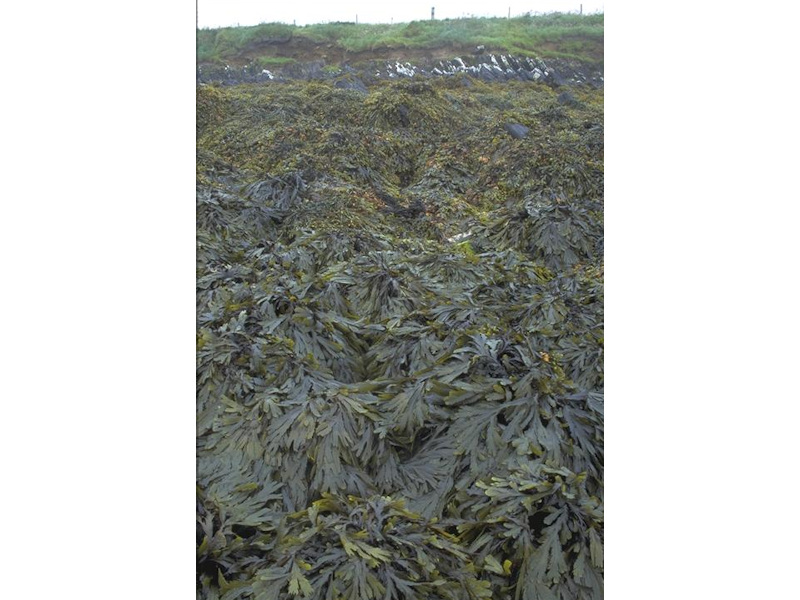
Fucus serratus on full salinity sheltered lower eulittoral rock
Photographer: Sue Scott Copyright: Joint Nature Conservation Committee (JNCC)

| Researched by | Emilia d'Avack, Dr Samantha Garrard & Amy Watson | Refereed by | This information is not refereed |
|---|
Summary
UK and Ireland classification
Description
Sheltered lower eulittoral rock subject to fully marine conditions characterised by a dense canopy of the wrack Fucus serratus. There is a wide range of associated species found on the surface of the rock underneath the canopy, including the barnacle Semibalanus balanoides, limpets Patella vulgata, winkles Littorina littorea, and even mussels Mytilus edulis can be present in cracks and crevices. These species are usually found in higher abundance further up on the shore. There may also be a number of other seaweeds present, including the reds Corallina officinalis and Mastocarpus stellatus, the wrack Fucus vesiculosus and the greens Ulva intestinalis, Ulva lactuca or Cladophora rupestris, though these usually are present in low numbers if present at all. The sponge Halichondria panicea can be present underneath the Fucus serratus canopy in moist cracks or minor overhangs. Polychaetes such as Spirobranchus triqueter and Spirorbis spp. are present in their white calcareous tubes on the rock.
This biotope usually occurs immediately below a Fucus vesiculosus-barnacle mosaic (FvesB) on moderately exposed shores or a dense canopy of Fucus vesiculosus (Fves) or Ascophyllum nodosum (Asc.FS) on sheltered shores; consequently, low densities of these species (typically less than Frequent) may also occur in this biotope. The sublittoral fringe below on moderately exposed shores is dominated by the kelp Laminaria digitata (Ldig; Ldig.LdigBo), while the kelp Saccharina latissima may co-dominate on sheltered shores (Lsac.Ldig; Lsac.Ft). Fluctuations from year to year in the abundance of the Fucus serratus and the red seaweeds due to e.g. severe storms may convert this biotope into either Fser.R or into a red seaweed dominated biotope on moderately exposed shores. (Information from Connor et al., 2004; JNCC, 2015).
Depth range
Lower shoreAdditional information
-
Listed By
Sensitivity review
Sensitivity characteristics of the habitat and relevant characteristic species
This biotope group is dominated by the brown seaweed Fucus serratus. Fucus serratus provides habitat and food for a highly diverse community of species (Fredriksen et al., 2005). As ecosystem engineers fucoid algal canopies modify habitat conditions, facilitating the existence and survival of other intertidal species and therefore strongly influencing the structure and functioning of coastal ecosystems (Jenkins et al., 2008). Associated fauna include the limpet Patella vulgata, the barnacle Semibalanus balanoides, the whelk Nucella lapillus, the anemone Actinia equina and the sponge Halichondria panicea.
The loss of Fucus serratus canopy will have both short and long-term consequences for associated benthic communities, resulting in the loss of biogenic habitat, reduction in diversity, simplification of vertical structure and reduction or loss of ecosystem functioning such as primary productivity (Lilley & Schiel, 2006). The removal of macroalgae canopy exposes understorey species to sunlight and aerial conditions resulting in bleaching and eventual die backs. The assessments are based largely on the sensitivity of Fucus serratus, as this is the key species characterizing the biotope and providing habitat. Other species associated with the biotope are found in a range of hard substratum biotopes, therefore, although these species contribute to the structure and function of the biotope they are not considered key species and their sensitivities are not specifically assessed.
Note as the available evidence, for most pressures, does not distinguish between this biotope LR.LLR.F.Fserr and its sub-biotope LR.LLR.F.Fserr.FS, all assessments are considered to apply to both the biotopes, unless otherwise indicated. The sensitivity of the other sub-biotope LR.LLR.F.Fserr.X is presented separately, as it is found on mixed substrata.
Resilience and recovery rates of habitat
The loss of Fucus serratus canopy will have both short and long-term consequences for associated benthic communities, resulting in the loss of habitat, reduction in diversity, simplification of vertical structure and reduction or loss of ecosystem functioning such as primary productivity (Hawkins & Harkin, 1985; Lilley & Schiel, 2006). The removal of macroalgae canopy exposes understorey species to sunlight and aerial conditions during low tides resulting in bleaching and eventual die backs.
Schiel & Foster (2006) observed long-term demographic lags in recovery after important losses of fucoids. Recovery of lost or severely reduced species can be slow, with species replacement common. Indeed the loss of fucoids can cause systems shifts to a state dominated by low-lying turf or filamentous ephemeral algae (Airoldi et al., 2008; Mangialajo et al., 2008; Perkol-Finkel & Airoldi, 2010). Turf algae, especially corallines, are often highly resilient and positively associated with perturbed areas, and can recover and reach greater abundance compared to prior disturbance conditions (Bulleri et al., 2002; Bertocci et al., 2010). These turf algae can then prevent canopy recovery by inhibiting recruitment. Stagnol et al. (2013) observed Patella vulgata recruiting in bare patches of disturbed plots. Experimental studies have shown that limpets control the development of macroalgae by consuming microscopic phases (Jenkins et al., 2005) or the adult stages (Davies et al., 2007). The increase in Patella vulgata abundance could thus limit the recruitment and growth of Fucus serratus on the impact zone. Stagnol et al. (2013) found that opportunistic ephemeral green algae such as Ulva sp. responded positively to disturbance (removal of the canopy). These green ephemeral algae are major competitors of Fucus serratus for space colonization and nutrient uptake. Blooms of ephemeral algae facilitated by disturbance may then slow the development of longer-lived perennial algae, especially fucoids.
Disturbance is a structuring factor in intertidal habitats. Perturbation events often remove organisms, increasing mortality, and also release resources such as space, nutrients and light that may enhance the appearance of new colonists (Connell et al., 1997). As a result of these contrasting effects, post-disturbance communities are frequently different from initial communities in terms of composition and dominance of species. Overall, disturbance causes a shift towards a disturbance tolerant seaweed community (Little et al., 2009). The changes in dominant species and community structure take some time to develop and, although some effects occur rapidly, many are manifested over a period of several years (Schiel & Lilley, 2011). Hawkins & Southward (1992) found that, after the Torrey Canyon oil spill, it took between 10 and 15 years for the Fucus sp. to return to 'normal' levels of spatial and variation in cover on moderately exposed shores. Therefore, for pressures that totally destroy the biotope, recovery is likely to be low.
Fucus serratus is dioecious, perennial and reproduces sexually. Reproduction commences in late spring/early summer and continues through summer and autumn, peaking in August - October. Eggs and sperm are released into the water and fertilization occurs in the water column. The zygote then develops into a minute plant that can then settle onto the substratum. Arrontes (1993) determined that the dispersal of Fucus serratus gametes and fertilized eggs was restricted to within 1–2 m from the parent. Average annual expansion rates for Fucus serratus have been estimated at 0.3 to 0.6 km per year (Coyer et al., 2006; Brawley et al., 2009). Dispersal is highly limited as the negatively buoyant eggs are fertilized almost immediately after release and dispersal by rafting reproductive individuals is unlikely (Coyer et al., 2006). Fucus serratus does not float, and thus mature detached individuals cannot transport reproductive material to distant sites as might be the case for other brown algae. However, Fucus serratus is found on all British and Irish coasts so there are few mechanisms isolating populations. While poor dispersal is true for medium or large spatial scales (hundreds of metres to kilometres), recruitment at short distances from parental patches is very efficient, as most propagules settle in the vicinity of parent plants (Arrontes, 2002).
Chondrus crispus has an extended reproductive period (e.g. Pybus, 1977; Fernandez & Menendez, 1991; Scrosati et al., 1994) and produces large numbers of spores (Fernandez & Menendez, 1991). Recovery of a population of Chondrus crispus following a perturbation is likely to be largely dependent on whether holdfasts remain, from which new thalli can regenerate (Holt et al., 1995). In addition, the spores of red algae are non-motile (Norton, 1992) and therefore entirely reliant on the hydrographic regime for dispersal. Hence, similar to Fucus serratus, Chondrus crispus would normally only recruit from local populations slowing down the recovery of remote populations. Minchinton et al. (1997) documented the recovery of Chondrus crispus after a rocky shore in Nova Scotia, Canada, was totally denuded by an ice scouring event. Initial recolonization was dominated by diatoms and ephemeral macroalgae, followed by fucoids and then perennial red seaweeds. After 2 years, Chondrus crispus had re-established approximately 50% cover on the lower shore and after 5 years it was the dominant macroalga at this height, with approximately 100% cover. Minchinton et al. (1997) concluded that although Chondrus crispus was a poor colonizer, it was the best competitor.
The larvae of the sea squirt Ascidiella aspersa have a short free-swimming planktonic stage. Fertilization to settlement and metamorphosis is estimated to only take about 24 hours at 20 °C (Niermann-Kerkenberg & Hofmann, 1989). The sea squirt Ascidiella scabra has a high fecundity and settles readily, probably for an extended period from spring to autumn. Svane (1988) describes it as "an annual ascidian" and demonstrated recruitment onto artificial and scraped natural substrata. It is also likely that Ascidiella scabra larvae are attracted by existing populations and settle near to adults (Svane et al., 1987). Fast growth means that a dense cover could be established within about 2 months. However, if mortality occurs at a time when larvae are not being produced, other species may settle and dominate in the freed spaces. The settlement of new colonies of the breadcrumb sponge Halichondria panicea is likely to occur within one year with growth rate ranging from − 0.1 to 0.4 cm2/day. Knowlton & Highsmith (2005) found a rapid response to tissue damage from nudibranch grazing with the sponge recovering within 4 weeks from grazing impacts.
Resilience assessment. Fucus serratus is the main structural species as its removal will lead cause the decline of associated species and eventually to a change towards a different biotope. If the entire population of Fucus serratus is lost other species may come to dominate. Where resistance is ‘None’, then resilience is likely to be ‘Low’ based on the low long-distance dispersal range of Fucus serratus. Re-establishment of the seaweed may depend on the ability to out-compete other species and this may be dependent on suitable environmental conditions. Upon arrival, the success of the new population is explained by (1) rapid establishment of monospecific patches in the immediate vicinity of the founding plants, (2) high colonization rates of disturbed areas, (3) the ability to recruit to undisturbed canopies, (4) the ability to outgrow resident canopy species (particularly Fucus vesiculosus) and (5) the increase in size and number of dispersal centres (Arrontes, 2002).
If some of the population remains it is unlikely that other species will come to dominate due to efficient recruitment over a short distance. Removal of some of the adult canopy will allow the understorey germling to grow faster. After experimental (small scale 2 sq. metre) canopy removal of Fucus serratus on a moderately exposed shore, the Fucus serratus cover recovered within one year (Hawkins & Harkin, 1985). Therefore, recovery from small-scale disturbance will probably take no more than two years. Therefore, when resistance is ‘Medium’, recovery will be rapid resulting in a ‘High’ resilience score due to the efficient colonization of areas adjacent to Fucus serratus patches. If resistance is assessed as ‘High’, resilience is automatically ‘High’ as there are no impacts to recover from.
Moderately strong tidal currents, characteristic of this biotope, encourage communities of sponges and ascidians. Changes to the hydrological regime are therefore likely to directly influence the presence of these species. Once removed, these species are however likely to rapidly recolonize due to planktonic larvae thereby facilitating recruitment. Most species associated with this biotope are poor long-distance dispersers. However, the moderately strong tidal currents of this biotope enable these species to disperse over greater distances than in slow flowing environments.
Note, the resilience and the ability to recover from human induced pressures is a combination of the environmental conditions of the site, the frequency (repeated disturbances versus a one-off event) and the intensity of the disturbance. Recovery of impacted populations will always be mediated by stochastic events and processes acting over different scales including, but not limited to, local habitat conditions, further impacts and processes such as larval-supply and recruitment between populations. Full recovery is defined as the return to the state of the habitat that existed prior to impact. This does not necessarily mean that every component species has returned to its prior condition, abundance or extent but that the relevant functional components are present and the habitat is structurally and functionally recognisable as the initial habitat of interest. It should be noted that the recovery rates are only indicative of the recovery potential.
Hydrological Pressures
Use [show more] / [show less] to open/close text displayed
| Resistance | Resilience | Sensitivity | |
Temperature increase (local) [Show more]Temperature increase (local)Benchmark. A 5°C increase in temperature for one month, or 2°C for one year. Further detail EvidenceMost fucoids are cold-temperate species (Lüning, 1984) and temperatures above 20°C are generally considered unsuitable for these algae (Zou et al., 2012). The effect of high temperature stress on photosynthesis in brown algae is related to inactivation of enzymes and the induction of reactive oxygen species (ROS), leading to photoinhibition (Suzuki & Mittler, 2006). Growth rates of adult brown macroalgae may be affected by temperature through the increase in metabolic rates (Nygard & Dring, 2008). However, Fucus serratus is found along the Atlantic coast of Europe from Svalbard to Portugal and on the shores of north-east America. Hence, this seaweed is within its thermal range in the British Isles. Nielsen et al. (2014) found no negative effects on growth rates of adult Fucus serratus to water temperatures of 22°C (based on a laboratory experiment with specimen collected from Firth of Forth, Scotland) and Arrontes (1993) observed that Fucus serratus survived in laboratory experiments for one week at 25°C. Nielsen et al. (2014) did, however, report that germlings were negatively affected by increased temperature indicating that early life stages are more vulnerable than mature algae to this pressure. Several studies have observed adverse effects on the of growth, physiological performance and reproductive output of Fucus serratus, as a result, of warm thermal stress in Spain and Portugal (Pearson et al., 2009; Viejo et al., 2011; Martínez et al., 2012). Jueterbock et al. (2014) determined that these negative impacts were explained by restricted within-population genetic diversity. Southwest Ireland and Brittany are hot-spots of genetic diversity (Coyer et al., 2003; Hoarau et al., 2007) and may thus be more resilient to changes in temperature. Phenotypic plasticity, therefore, plays an important role in determining the sensitivity of individual populations to changes in temperature. Sensitivity assessment. An increase in acute or chronic temperature above average British and Irish temperatures is not likely to have a detrimental effect of Fucus serratus and associated communities, based on global distribution. However, it should be noted that phenotypic plasticity will influence the tolerance of individual population. Resistance and resilience are therefore both assessed as ‘High’ (no impacts to recover from) and the biotope is assessed as ‘Not Sensitive’ to a change in temperature at the pressure benchmark. | HighHelp | HighHelp | Not sensitiveHelp |
Temperature decrease (local) [Show more]Temperature decrease (local)Benchmark. A 5°C decrease in temperature for one month, or 2°C for one year. Further detail EvidenceLüning (1984) reported that Fucus serratus survived in the laboratory for a week a range temperature between 0°C and 25°C. Fucus serratus is found along the Atlantic coast of Europe from Svalbard to Portugal and on the shores of north-east America. Hence, the seaweed is within its thermal range in the British Isles. Lüning (1984) placed this species in his 'Cold temperature North Atlantic group'. Sensitivity assessment. A decrease in acute or chronic temperature above average British and Irish temperatures is not likely to have a detrimental effect of Fucus serratus and associated communities, based on global distribution. However, it should be noted that phenotypic plasticity will influence the tolerance of individual population. Resistance and resilience are therefore both assessed as ‘High’ (no impacts to recover from) and the biotope is assessed as ‘Not Sensitive’ to a change in temperature at the pressure benchmark. | HighHelp | HighHelp | Not sensitiveHelp |
Salinity increase (local) [Show more]Salinity increase (local)Benchmark. A increase in one MNCR salinity category above the usual range of the biotope or habitat. Further detail EvidenceThis biotope group is found in the intertidal and is, therefore, likely to experience cyclical periods of hypo- and hyper-salinity. Fucoids are able to compensate for changes in salinity by adjusting internal ion concentrations. However, this will occur at a cost, reducing the photosynthetic rate and hence affecting the growth rate of the seaweed. Growth rates for Fucus serratus are maximal at a salinity of 20 psu with the critical limit for recruitment set at 7 psu (Malm et al., 2001). Sensitivity assessment. Fucus serratus commonly inhabit narrow fjords where salinity can vary widely along a spatial (km) and/or temporal (hours to daily) scale. At the level of the benchmark, both resistance and resilience are assessed as ‘High’ (no impacts to recover from). The biotope is, therefore ‘Not Sensitive’ to a decrease in salinity at the pressure benchmark. | HighHelp | HighHelp | Not sensitiveHelp |
Salinity decrease (local) [Show more]Salinity decrease (local)Benchmark. A decrease in one MNCR salinity category above the usual range of the biotope or habitat. Further detail EvidenceThis biotope group is found in the intertidal and is therefore likely to experience cyclical periods of hypo- and hyper-salinity. Fucoids are able to compensate for changes in salinity by adjusting internal ion concentrations. However, this will occur at a cost, reducing the photosynthetic rate and hence affecting the growth rate of the seaweed. Growth rates for Fucus serratus are maximal at a salinity of 20 psu with the critical limit for recruitment set at 7 psu (Malm et al., 2001). Sufficient salinity is essential for successful fertilization and germination in Fucus (e.g. Brawley, 1992; Serrão et al., 1999). Malm et al. (2001) found that fertilization success in Fucus serratus decreased substantially with strongly reduced salinity. Indeed the study found that fertilization success was 87% at 9 psu but declined to 5% at 6 psu (Malm et al., 2001). Reduced salinity also affects dispersal by decreasing the swimming performance of fucoid sperm (Serrão et al., 1996). Sensitivity assessment. Fucus serratus commonly inhabits narrow fjords where salinity can vary widely along a spatial (km) and/or temporal (hours to daily) scale. A reduction in salinity at the level benchmark (e.g. from 'Full' to 'Reduced' for one year) could have beneficial effects on Fucus serratus as growth rates are maximal below full saline conditions. Other characterizing species associated with this biotope are also likely to be tolerant of a reduction in salinity. Resistance and resilience are therefore both assessed as ‘High’ (no impacts to recover from). The biotope is assessed as ‘Not Sensitive’ to a decrease in salinity at the pressure benchmark. | HighHelp | HighHelp | Not sensitiveHelp |
Water flow (tidal current) changes (local) [Show more]Water flow (tidal current) changes (local)Benchmark. A change in peak mean spring bed flow velocity of between 0.1 m/s to 0.2 m/s for more than one year. Further detail EvidenceWater motion is a key determinant of marine macroalgal production, directly or indirectly influencing physiological rates and community structure (Hurd, 2000). Higher water flow rates increase mechanical stress on macroalgae by increasing drag. This can result in individuals being torn off the substratum. Once removed, algae cannot re-attach and will die. Any sessile organism attached to the algae is also lost. Fucoids are highly flexible and are able to reorientate their position in the water column to become more streamlined, which reduces the relative velocity between the algae and the surrounding water, thereby reducing drag and lift (Denny et al., 1998). Jonsson et al. (2006) found that a flow speed of 7-8 m/s completely dislodged Fucus vesiculosus and Fucus spiralis individuals larger than 10 cm. Smaller individuals are likely to better withstand increased water flow as they experience less drag. Propagule dispersal, fertilization, settlement, and recruitment are also influenced by water movement (Pearson & Brawley, 1996). In addition, increased water flow will cause scour through increased sediment movement affecting, in particular, small life stages of macroalgae by removing new recruits from the substratum and, hence, reducing successful recruitment (Devinny & Volse, 1978) (see ‘siltation’ pressures). Changes in water motion can thus strongly influence local distribution patterns of Fucus spp. (Ladah et al., 2008). A reduction in water flow can cause a thicker boundary layer resulting in lower absorption of nutrients and CO2 by the macroalgae. Slower water movement can also cause oxygen deficiency directly impacting the fitness of algae (Wahl et al., 2011). Sensitivity assessment. An increase in water flow to or above 7 m/s is likely to dislodge algae resulting in a net reduction of habitat provided by this biotope. The biotope is recorded from moderately strong (0.5-1.5 m/s) to weak (<0.5 m/s) tidal streams so that a change of 0.1-0.2 m/s is unlikely to be significant, especially in moderately wave exposed conditions. Therefore, resistance is considered to be 'High', so that resilience is 'High' and the biotope is overall 'Not sensitive' at the benchmark level. | HighHelp | HighHelp | Not sensitiveHelp |
Emergence regime changes [Show more]Emergence regime changesBenchmark. 1) A change in the time covered or not covered by the sea for a period of ≥1 year or 2) an increase in relative sea level or decrease in high water level for ≥1 year. Further detail EvidenceThis biotope is found in the eulittoral zone from MTL (mean tide level) to MLWN (mean low water neap) and is, therefore, subjected to cyclical immersion and emersion over the tidal cycle. Fucoids can tolerate periodic desiccation but only to a limited extent. Fucus serratus is more susceptible to desiccation than other Fucus species that are located further up the shore and subjected more frequently to aerial exposure (Schonbeck & Norton, 1978). In experiments, Fucus serratus did not survive transplantation further up the shore, e.g. in the Fucus spiralis belt (Schonbeck & Norton, 1978). The critical water content for Fucus serratus was estimated at 40% with water losses past this point causing irreversible damage. Beer et al. (2014) found that Fucus serratus could not regain any positive photosynthetic rates after rehydrating from 10% water content. The upper shore extent of Fucus serratus populations may be replaced by species more tolerant of desiccation and more characteristic of the mid-eulittoral such as Fucus vesiculosus or Ascophyllum nodosum. Early life history stages will be more susceptible to this pressure (Henry & Van Alstyne, 2004). Germlings are however protected from desiccation by the canopy of adults. A study by Brawley & Jonhnson (1991) showed that germling survival under adult canopy was close to 100% whereas survival on the adjacent bare rock was close to 0% during exposure to aerial conditions. The Fucus canopy is also likely to protect other underlying species to a great extent. Mortalities of other components of the community will, however, occur if the canopy is removed (see ‘abrasion’ pressure). Sensitivity assessment. Severe desiccation and associated osmotic stress can increase mortality (Perason et al., 2009). Other species better able to tolerate desiccation will competitively displace Fucus serratus following changes in emergence regime. Juvenile stages are more susceptible but are largely protected from desiccation by the canopy of adults. Resistance is thus assessed as ‘Low’, as most of the Fucus serratus cover will probably be lost or replaced by other species. Resilience is thus assessed as ‘High’. The biotope groups as a ‘Low’ sensitivity to changes in emersion regime at the level of the benchmark. | LowHelp | HighHelp | LowHelp |
Wave exposure changes (local) [Show more]Wave exposure changes (local)Benchmark. A change in near shore significant wave height of >3% but <5% for more than one year. Further detail EvidenceThis biotope is limited to coasts with moderate exposure or less. Fucus serratus is highly flexible but not physically robust and an increase in wave exposure above this level will cause mechanical damage, breaking fronds or even dislodging algae from the substratum. Fucoids are permanently attached to the substratum and would not be able to re-attach if removed. Organisms living on the fronds and holdfasts will be washed away with the algae whereas free-living community components could find new habitat in surrounding areas. Wave exposure has been shown to limit the size of fucoids (Blanchette, 1997) as smaller individuals create less resistance to wave action. Mature plants are therefore more sensitive to this pressure. As exposure increases the fucoid population would become dominated by small juvenile algae. An increase in wave action beyond this would lead to the dominance of the community by grazers and barnacles at the expense of fucoids. Increased wave action may also reduce light penetration thereby lower overall photosynthesis (see ‘changes in suspended solids’ pressure). A reduction in wave action would have little effect as the species is naturally found in sheltered conditions. Sensitivity assessment. Fucus serratus and associated communities are sensitive to an increase in wave action as increased exposure would result in important losses both in biomass and species richness. However, a 3-5% change in significant wave height is unlikely to be significant and the biotope is considered to be 'Not sensitive' at the benchmark level. | HighHelp | HighHelp | Not sensitiveHelp |
Chemical Pressures
Use [show more] / [show less] to open/close text displayed
| Resistance | Resilience | Sensitivity | |
Transition elements & organo-metal contamination [Show more]Transition elements & organo-metal contaminationBenchmark. Exposure of marine species or habitat to one or more relevant contaminants via uncontrolled releases or incidental spills. Further detail EvidenceThis pressure is Not assessed but evidence is presented where available. | Not Assessed (NA)Help | Not assessed (NA)Help | Not assessed (NA)Help |
Hydrocarbon & PAH contamination [Show more]Hydrocarbon & PAH contaminationBenchmark. Exposure of marine species or habitat to one or more relevant contaminants via uncontrolled releases or incidental spills. Further detail EvidenceThis pressure is Not assessed but evidence is presented where available | Not Assessed (NA)Help | Not assessed (NA)Help | Not assessed (NA)Help |
Synthetic compound contamination [Show more]Synthetic compound contaminationBenchmark. Exposure of marine species or habitat to one or more relevant contaminants via uncontrolled releases or incidental spills. Further detail EvidenceThis pressure is Not assessed but evidence is presented where available | Not Assessed (NA)Help | Not assessed (NA)Help | Not assessed (NA)Help |
Radionuclide contamination [Show more]Radionuclide contaminationBenchmark. An increase in 10µGy/h above background levels. Further detail EvidenceNo evidence | No evidence (NEv)Help | Not relevant (NR)Help | No evidence (NEv)Help |
Introduction of other substances [Show more]Introduction of other substancesBenchmark. Exposure of marine species or habitat to one or more relevant contaminants via uncontrolled releases or incidental spills. Further detail EvidenceThis pressure is Not assessed | Not Assessed (NA)Help | Not assessed (NA)Help | Not assessed (NA)Help |
De-oxygenation [Show more]De-oxygenationBenchmark. Exposure to dissolved oxygen concentration of less than or equal to 2 mg/l for one week (a change from WFD poor status to bad status). Further detail EvidenceThe sustained reduction of dissolved oxygen can lead to hypoxic or anoxic conditions. Sustained or repeated episodes of reduced dissolved oxygen have the potential to severely degrade an ecosystem (Cole et al., 1999). Little information on the effect of deoxygenation on fucoids was found. Sensitivity assessment. The macroalgal component of the biotope produce oxygen via photosynthesis in light and respire in darkness and are exposed to air at low tide. Therefore, hypoxic conditions in the water column may be alleviated by aerial exposure at low tide. Also, wave action will result in mixing and aeration of the water column The epifaunal community is probably more sensitive to hypoxia so that hypoxic conditions will probably reduce species richness but the biotope will remain. Therefore, a resistance of 'High' is suggested, with a resistance of 'High', so that sensitivity is assessed as 'Not sensitive'. | HighHelp | HighHelp | Not sensitiveHelp |
Nutrient enrichment [Show more]Nutrient enrichmentBenchmark. Compliance with WFD criteria for good status. Further detail EvidenceNutrient enrichment generally stimulates ephemeral macroalgae growth (Duarte, 1995). This stimulation of annual ephemerals may accentuate the competition for light and space and hinder perennial species development or harm their recruitment (Kraufvelin et al., 2007). Krauflin et al. (2006) found only minor effects on the fucoid community structure as a response to high nutrient levels during the first three years of the experiment. However, during the 4th year of exposure, Fucus serratus started to decline and population consequently crashed in the 5th year. The study observed full recovery of algal canopy and animal community in less than two years after conditions returned to normal. The results indicate that established rocky shore communities of perennial algae with associated fauna are able to persist for several years, even at very high nutrient levels, but that community shifts may suddenly occur if eutrophication continues. They also indicate that rocky shore communities have the ability to return rapidly to natural undisturbed conditions after the termination of nutrient enhancement. Sensitivity assessment. The benchmark of this pressure (compliance with WFD ‘good’ status) allows for a slightly less diverse community of red, green and brown seaweeds with cover variable depending on local physical conditions. Therefore, at the level of the benchmark both resistance and resilience are assessed as ‘High’. The biotope group is therefore ‘Not Sensitive’ to this pressure at the pressure benchmark. | HighHelp | HighHelp | Not sensitiveHelp |
Organic enrichment [Show more]Organic enrichmentBenchmark. A deposit of 100 gC/m2/yr. Further detail EvidenceOrganic enrichment can stimulate the production of primary consumers and may lead to eutrophication (see ‘nutrient enrichment’ pressure). Husa et al. (2014) found that the macroalgal communities beyond the immediate proximity of fish farms in Hardangerfjord, Norway, seemed to be little affected by the deposition of organic matter from the salmon farming industry. Bellgrove et al. (2010) however determined that coralline turfs out-competed fucoids at a site associated with organic enrichment caused by an ocean sewage outfall. Sensitivity assessment. At the level of the benchmark, resistance is assessed as ‘Medium’ as some mortalities are likely to occur. Recovery will be rapid resulting in ‘High’ resilience score. The biotope has thus a ‘Low’ sensitivity to organic enrichment at the level of the benchmark. | MediumHelp | HighHelp | LowHelp |
Physical Pressures
Use [show more] / [show less] to open/close text displayed
| Resistance | Resilience | Sensitivity | |
Physical loss (to land or freshwater habitat) [Show more]Physical loss (to land or freshwater habitat)Benchmark. A permanent loss of existing saline habitat within the site. Further detail EvidenceAll marine habitats and benthic species are considered to have a resistance of ‘None’ to this pressure and to be unable to recover from a permanent loss of habitat (resilience is ‘Very low’). Sensitivity within the direct spatial footprint of this pressure is, therefore ‘High’. Although no specific evidence is described confidence in this assessment is ‘High’, due to the incontrovertible nature of this pressure. | NoneHelp | Very LowHelp | HighHelp |
Physical change (to another seabed type) [Show more]Physical change (to another seabed type)Benchmark. Permanent change from sedimentary or soft rock substrata to hard rock or artificial substrata or vice-versa. Further detail EvidenceThis biotope occurs on rock substratum. A change towards a sedimentary substratum would lead to the direct loss of suitable attachment areas resulting in the loss of Fucus serratus and associated communities. Resistance is assessed as ‘None’. As this pressure represents a permanent change, recovery is impossible as a suitable substratum for fucoids is lacking. Consequently, resilience is assessed as ‘Very low’. Therefore, the habitat is assessed as a ‘High’ sensitivity. Although no specific evidence is described confidence in this assessment is ‘High’, due to the incontrovertible nature of this pressure. | NoneHelp | Very LowHelp | HighHelp |
Physical change (to another sediment type) [Show more]Physical change (to another sediment type)Benchmark. Permanent change in one Folk class (based on UK SeaMap simplified classification). Further detail EvidenceNot relevant to biotopes found on hard rock substratum. | Not relevant (NR)Help | Not relevant (NR)Help | Not relevant (NR)Help |
Habitat structure changes - removal of substratum (extraction) [Show more]Habitat structure changes - removal of substratum (extraction)Benchmark. The extraction of substratum to 30 cm (where substratum includes sediments and soft rock but excludes hard bedrock). Further detail EvidenceNot relevant to biotopes found on hard rock substratum.
| Not relevant (NR)Help | Not relevant (NR)Help | Not relevant (NR)Help |
Abrasion / disturbance of the surface of the substratum or seabed [Show more]Abrasion / disturbance of the surface of the substratum or seabedBenchmark. Damage to surface features (e.g. species and physical structures within the habitat). Further detail EvidenceThis biotope LR.LLR.F.Fserr is found in the lower intertidal, an area easily accessible by humans, especially at low tide. Most macroalgae are very flexible but not physically robust. The trampling of shores by humans will result in increased breakage of algal thalli, decreased thallus height and a net reduction in biomass (see Tyler-Walters & Arnold, 2005 for review). In the UK, Boalch et al. (1974) and Boalch & Jephson (1981) noted a reduction in the cover of fucoids at Wembury, South Devon, when compared to surveys conducted by Colman (1933). The size ranges of Ascophyllum nodosum, Fucus vesiculosus and Fucus serratus were skewed to a smaller length, and the abundance of Ascophyllum nodosum, in particular, was reduced (Boalch & Jephson, 1981). It was suggested that visitor pressure, especially after the construction of a car park, was responsible for the reduced cover of fucoids (Boalch et al., 1974). They suggested that the raised edges of the slatey rock severed fronds when the rocks were walked over. However, no quantitative data was provided. Pinn & Rodgers (2005) compared a heavily visited ledge with a less visited ledge at Kimmeridge Bay, Dorset. Although the mean species richness was similar at both sites, the total number of species was greater at the less utilized site. Comparatively, the heavily utilized ledge displayed a reduction in larger, branching algal species (e.g. Fucus serratus) and increased abundances of ephemeral and crustose species (e.g. Ulva linza and Lithothamnia spp. respectively). Fletcher & Frid (1996a; 1996b) examined the effects of persistent trampling on two sites on the northeast coast of England. The trampling treatments used were 0, 20, 80, and 160 steps per m2 per spring tide for 8 months between March and November. Using multivariate analysis, they noted that changes in the community dominated by fucoids (Fucus vesiculosus, Fucus spiralis and Fucus serratus) could be detected within 1 to 4 months of trampling, depending on intensity. Intensive trampling (160 steps/m2 /spring tide) resulted in a decrease in species richness at one site. The area of bare substratum also increased within the first two months of trampling but declined afterwards, although bare space was consistently most abundant in plots subject to the greatest trampling (Fletcher & Frid, 1996a, 1996b). The abundance of fucoids was consistently lower in trampled plots than in untrampled plots. Fletcher and Frid (1996a) noted that the species composition of the algal community was changed by as little as 20 steps per m2 per spring tide of continuous trampling since recolonization could not occur. A trampling intensity of 20 steps per m2 per spring tide could be exceeded by only five visitors taking the same route out and back again across the rocky shore in each spring tide. Both of the sites studied receive hundreds of visitors per year and damage is generally visible as existing pathways, which are sustained by continuous use (Fletcher & Frid, 1996a, 1996b). However, the impact was greatest at the site with the lower original abundance of fucoids. Brosnan & Crumrine (1994) noted that trampling significantly reduced algal cover within 1 month of trampling. Foliose algae were particularly affected and decreased in cover from 75% to 9.1% in trampled plots. Mastocarpus papillatus decreased in abundance from 9% to 1% in trampled plots but increased in control plots. Fucus distichus decreased in the summer months only to recover in winter but in trampled plots remained in low abundance (between 1 and 3% cover). Trampling resulted in a decrease in the cover of Pelvetiopsis limitata from 16% to 1.5%. Iridaea cornucopiae decreased from 38 to 14% cover within a month and continued to decline to 4-8% cover. However, after trampling ceased, recovery of algal cover including Iridaea cornucopiae and Mastocarpus papillatus was rapid (ca 12 months) (Brosnan & Crumrine, 1994). Fletcher & Frid (1996a; 1996b) reported a decrease in the understorey algal community of encrusting coralline algae and red algae, which was probably an indirect effect due to increased desiccation after removal of the normally protective fucoid canopy (see Hawkins & Harkin, 1985) by trampling. They also noted that opportunistic algae (e.g. Ulva sp.) increased in abundance. Schiel & Taylor (1999) also observed a decrease in understorey algae (erect and encrusting corallines) after 25 or more tramples, probably due to an indirect effect of increased desiccation as above. However, Schiel & Taylor (1999) did not detect any variation in other algal species due to trampling effects. Similarly, Keough & Quinn (1998) did not detect any effect of trampling on algal turf species. Algal turfs seem to be relatively tolerant of the direct effects of trampling (based on the available evidence) and some species may benefit from the removal of canopy-forming algae (Tyler-Walters, 2005). Their tolerance may result from their growth form as has been shown for vascular plants and corals (Liddle, 1997). Brosnan (1993) suggested that algal turf dominated areas (on shores usually dominated by fucoids) were indicative of trampling on the rocky shores of Oregon. However, tolerance is likely to vary with species and their growth form and little species-specific data was found. Furthermore, algal turfs may suffer negative indirect effects where they form an understorey below canopy forming species. Conversely, fucoid algae are particularly intolerant of trampling, depending on intensity. Fucoid algae demonstrate a rapid (days to months) detrimental response to the effects of trampling, depending on species, which has been attributed to either the breakage of their fronds across rock surfaces (Boalch et al., 1974) or their possession of small discoid holdfasts that offer little resistance to repeated impacts (Brosnan & Crumrine, 1992; Fletcher & Frid, 1996b). Foliose species such as Mastocarpus papillatus, Pelvetiopsis limitata and Iridaea cornucopiae are also likely to be intolerant of trampling (Brosnan & Crumrine, 1994). Brosnan (1993) suggested that the presence or absence of foliose algae (e.g. fucoids) could be used to indicate the level of trampling on the rocky shores of Oregon. Once Fucus serratus has been removed, understorey algae will become exposed. Macroalgae canopies buffer the effects of high temperatures and water loss on organisms below their fronds in particular when exposed to air. For instance, Bertness et al. (1999) determined that the substratum temperature was on average 8-10°C lower under the canopy than on bare rock. Desiccation of understorey algae will create bare patches (see ‘changes in emergence regime’ pressure). These bare patches can lead to invasions by grazing limpets which in turn can promote even greater changes in community composition (Little et al., 2009). The removal of the macroalgal canopy due to abrasion will thus have a direct impact on the entire community. However, cracks and crevices are ideal places for germlings to develop and sessile species to settle as these sites may be protected from abrasion. Stagnol et al. (2013) found that opportunistic ephemeral green algae such as Ulva sp. responded positively to disturbance. These green ephemeral algae are major competitors of Fucus serratus for space colonization and nutrient uptake. Blooms of ephemeral algae facilitated by disturbance may then slow the development of longer-lived perennial algae, especially fucoids. Disturbance is a structuring factor in intertidal habitats. Perturbation events often remove organisms, increase mortality, and release resources such as space, nutrients and light that may enhance the appearance of new colonists (Connell et al., 1997). As a result of these contrasting effects, post-disturbance communities are frequently different from initial communities in terms of composition and dominance of species. Overall, disturbance causes a shift towards a disturbance tolerant seaweed community (Little et al., 2009). Epifaunal species have been found to be particularly adversely affected by physical disturbance, either due to direct damage or modification of the habitat (Jennings & Kaiser, 1998). Similarly, Dayton (1971) observed greatly reduced abundance of species living on, under, and among fucoids following large disturbance events. Hydroids, bryozoans and encrusting fauna are easily ripped from the substratum and are unlikely to re-attach and will die. The shells of limpets, tubeworms and periwinkles may be crushed by the weight and force of the abrasion. However, some epifaunal species have been reported to exhibit increased abundances on high fishing effort areas, probably due to their ability to colonize and grow rapidly (Bradshaw et al., 2000). For instance, Ascidiella species had increased in abundance in an area subject to scallop dredging (Bradshaw et al., 2002). The breadcrumb sponge Halichondria panicea is attached to the substratum and will not survive abrasion and physical disturbance. Hiscock (1983) noted that a community, under conditions of scour and abrasion from stones and boulders moved by storms, developed into a community consisting of fast-growing species such as Spirobranchus triqueter due to decreased competition. A shift in community composition is thus expected immediately after the disturbance event. The effects of trampling are dependent on intensity, expressed as frequency and force per unit area of the impacting 'foot print' (see Liddle, 1997, Tyler-Walters & Arnold, 2008). Clearly, mechanical abrasion due to vehicles, jack-up-barges, or grounding vessels will exceed the abrasive 'intensity' of trampling by humans or livestock. Sensitivity assessment. Physical disturbance resulting from activities such as trampling (by humans and livestock) or abrasive activities (e.g. vehicles, jack-up-barges, or grounding vessels) could cause a significant loss of fucoid cover and an important reduction in species abundance and diversity. Resistance is thus assessed as ‘Low’. If some Fucus serratus population remain recovery will be fairly rapid. However, recruitment mortality, grazing by limpets and the presence of turfs and encrusting algae can slow down and limit recovery. Resilience is thus assessed as ‘Medium’. The biotope, therefore, scores a ‘Medium’ sensitivity to abrasion pressure. If the entire population of Fucus serratus is removed, other species may come to dominate and the recovery will take considerably longer. Re-establishment of the seaweed may depend on the ability to out-compete other species and this may be dependent on suitable environmental conditions. | LowHelp | MediumHelp | MediumHelp |
Penetration or disturbance of the substratum subsurface [Show more]Penetration or disturbance of the substratum subsurfaceBenchmark. Damage to sub-surface features (e.g. species and physical structures within the habitat). Further detail EvidenceThe species characterizing this biotope occur on hard rock which is resistant to subsurface penetration. Therefore, this pressure is not relevant but any penetrative activities may cause 'abrasion', which is discussed above. | Not relevant (NR)Help | Not relevant (NR)Help | Not relevant (NR)Help |
Changes in suspended solids (water clarity) [Show more]Changes in suspended solids (water clarity)Benchmark. A change in one rank on the WFD (Water Framework Directive) scale e.g. from clear to intermediate for one year. Further detail EvidenceLight is an essential resource for all photo-autotrophic organisms. Changes in suspended solids affecting water clarity will have a direct impact on photosynthesis in Fucus serratus. Irradiance below the light compensation point of photosynthetic species can compromise carbon accumulation (Middelboe et al., 2006). However, turbidity is only relevant when the biotope is covered with water as seaweed photosynthesis declines on emersion and recommences when recovered with water. Increased siltation may cover the frond surface of Fucus serratus with a layer of sediment further reducing photosynthesis and growth rate. Sediment deposition can also interfere with the attachment of microscopic stages of seaweeds reducing recruitment (see ‘siltation’ pressures). In extreme turbidity, such as found in the Bristol Channel, Fucus serratus is excluded from the bottom of the intertidal (below 2 m above chart datum) due to the lack of light for sustained growth (Chapman, 1995). Other characterizing species will also be adversely affected. In particular filter feeding organisms will have their feeding apparatus clogged with suspended particles leading to a reduction in total ingestion and a reduced scope for growth especially since cleaning the feeding apparatus is likely to be energetically expensive. Sensitivity assessment. Changes in suspended solids reducing water clarity will have adverse effects on the biotope group reducing Fucus serratus photosynthesis as well as species richness. Resistance is thus assessed as ‘Medium’ at the benchmark level. Once conditions return to 'normal' Fucus serratus is likely to rapidly regain photosynthesis and growth rate. Associated communities will also rapidly recover as most of the intolerant species produce planktonic larvae and are therefore likely to be able to recolonize quickly from surrounding areas. Resilience is thus assessed as ‘High’. Overall this biotope group scores a ‘Low’ sensitivity to this pressure. | MediumHelp | HighHelp | LowHelp |
Smothering and siltation rate changes (light) [Show more]Smothering and siltation rate changes (light)Benchmark. ‘Light’ deposition of up to 5 cm of fine material added to the seabed in a single discrete event. Further detail EvidenceSedimentation can directly affect assemblages inhabiting rocky shores by the burial/smothering and scour/abrasion of organisms. Fucus serratus is attached to the substratum by a holdfast is thus not able to relocate in response to increased sedimentation. Smothering will prevent photosynthesis resulting in reduced growth and eventually death. Sedimentation of bedrock can impede attachment of Fucus embryos, and decrease the survival and growth of juveniles through both, scour and burial (Schiel et al., 2006). An increase in the vertical sediment overburden can also reduce growth whilst hindering the regeneration abilities of adults (Umar et al., 1998). The state of the tide will mediate the extent of the impact. If smothering occurs at low tide when the algae are lying flat on the substratum, then most of the organism as well as the associated community will be covered by the deposit of fine material at the level of the benchmark. However, if smothering occurs whilst the alga is submerged standing upright then the photosynthetic surfaces of adult plants will be left uncovered. The resistance of this biotope group to this pressure may thus vary with time of day. Germlings, however, are likely to be smothered and killed in both scenarios and are inherently most susceptible to this pressure. Smothering will cause direct mortalities in the associated community, particularly in sessile organisms unable to relocate. Lower densities of herbivores have also been attributed to increased sedimentation as silt will reduce their feeding activity and limit their movements (Airoldi & Hawkins, 2007; Schiel et al., 2006). The biotope group occurs in sheltered to moderately exposed conditions. In areas with greater water flow, excess sediments can be readily removed, reducing the time of exposure to this pressure. Sensitivity assessment. Burial will lower survival and germination rates of spores and cause some mortality in early life stages. Adults are more resistant but will experience a decrease in growth and photosynthetic rates. Resistance is, therefore, assessed as ‘Medium’. Recovery will be rapid once conditions return to normal, resulting in a ‘High’ resilience score. Overall the biotope probably has a ‘Low’ sensitivity to smothering at the level of the benchmark. | MediumHelp | HighHelp | LowHelp |
Smothering and siltation rate changes (heavy) [Show more]Smothering and siltation rate changes (heavy)Benchmark. ‘Heavy’ deposition of up to 30 cm of fine material added to the seabed in a single discrete event. Further detail EvidenceSeveral studies found that increasing the vertical sediment burden negatively impact fucoids survival and associated communities (see above). At the level of the benchmark (30 cm of fine material added to the seabed in a single event), smothering could result in significant mortalities, especially in sheltered examples of the biotope where the sediment burden could remain for many tidal cycles. Resistance is assessed as ‘Low’ as all individuals exposed to siltation at the benchmark level are predicted to die. Hence, resilience is probably ‘Low’ and sensitivity is assessed as ‘High’. | LowHelp | LowHelp | HighHelp |
Litter [Show more]LitterBenchmark. The introduction of man-made objects able to cause physical harm (surface, water column, seafloor or strandline). Further detail EvidenceNot assessed. | Not Assessed (NA)Help | Not assessed (NA)Help | Not assessed (NA)Help |
Electromagnetic changes [Show more]Electromagnetic changesBenchmark. A local electric field of 1 V/m or a local magnetic field of 10 µT. Further detail EvidenceNo evidence | No evidence (NEv)Help | Not relevant (NR)Help | No evidence (NEv)Help |
Underwater noise changes [Show more]Underwater noise changesBenchmark. MSFD indicator levels (SEL or peak SPL) exceeded for 20% of days in a calendar year. Further detail EvidenceFucus serratus and associated species have no hearing perception but vibrations may cause an impact, however, no studies exist to support an assessment | Not relevant (NR)Help | Not relevant (NR)Help | Not relevant (NR)Help |
Introduction of light or shading [Show more]Introduction of light or shadingBenchmark. A change in incident light via anthropogenic means. Further detail EvidenceFucoids are dependent on light, so that changes in light intensity are likely to affect photosynthesis, growth, competition and survival. Chapman (1995) noted that too little or too much light is likely to cause stress. There is considerable literature on the light compensation point of marine algae (see Luning, 1990) but it is difficult to correlate such evidence with 'shading', as light saturation and compensation points depend on light availability, light quality, season and turbidity. As fucoids are out-competed in sublittoral conditions, it is likely that permanent shading would affect their growth and allow them to be out-competed by other, more shade tolerant species, within the affected area. Therefore a resistance of 'Medium' is suggested albeit at low confidence. Resilience is likely to be 'High' so that sensitivity is assessed as 'Low. | MediumHelp | HighHelp | LowHelp |
Barrier to species movement [Show more]Barrier to species movementBenchmark. A permanent or temporary barrier to species movement over ≥50% of water body width or a 10% change in tidal excursion. Further detail EvidenceNot relevant – this pressure is considered applicable to mobile species, e.g. fish and marine mammals rather than seabed habitats. Physical and hydrographic barriers may limit propagule dispersal. But propagule dispersal is not considered under the pressure definition and benchmark. | Not relevant (NR)Help | Not relevant (NR)Help | Not relevant (NR)Help |
Death or injury by collision [Show more]Death or injury by collisionBenchmark. Injury or mortality from collisions of biota with both static or moving structures due to 0.1% of tidal volume on an average tide, passing through an artificial structure. Further detail EvidenceNot relevant to seabed habitats. Note collision by grounding vessels is addressed under ‘surface abrasion’. | Not relevant (NR)Help | Not relevant (NR)Help | Not relevant (NR)Help |
Visual disturbance [Show more]Visual disturbanceBenchmark. The daily duration of transient visual cues exceeds 10% of the period of site occupancy by the feature. Further detail EvidenceNot relevant | Not relevant (NR)Help | Not relevant (NR)Help | Not relevant (NR)Help |
Biological Pressures
Use [show more] / [show less] to open/close text displayed
| Resistance | Resilience | Sensitivity | |
Genetic modification & translocation of indigenous species [Show more]Genetic modification & translocation of indigenous speciesBenchmark. Translocation of indigenous species or the introduction of genetically modified or genetically different populations of indigenous species that may result in changes in the genetic structure of local populations, hybridization, or change in community structure. Further detail EvidenceKey characterizing species within this biotope are not cultivated or translocated. Therefore, this pressure is considered ‘Not relevant’ to this biotope. | Not relevant (NR)Help | Not relevant (NR)Help | Not relevant (NR)Help |
Introduction of microbial pathogens [Show more]Introduction of microbial pathogensBenchmark. The introduction of relevant microbial pathogens or metazoan disease vectors to an area where they are currently not present (e.g. Martelia refringens and Bonamia, Avian influenza virus, viral Haemorrhagic Septicaemia virus). Further detail EvidenceVery little is known about infections in Fucus (Wahl et al., 2012). Coles (1958) identified parasitic nematodes that caused galls on Fucus serratus in south-west Britain. More recently, Zuccaro et al. (2008) detected a number of fungal species associated with Fucus serratus. So far no mortalities have been associated with the introduction of microbial pathogens. However, the potential for increased biotic interactions involving parasites or pathogens is on the rise in many marine systems (Torchin et al., 2002). Both resistance and resilience are assessed as ‘High’; the biotope is therefore ‘Not Sensitive’ to this pressure. However, the assessment has a low confidence score as more research is needed into the effects of a microbial pathogen on Fucus serratus and associated communities. | HighHelp | HighHelp | Not sensitiveHelp |
Removal of target species [Show more]Removal of target speciesBenchmark. Removal of species targeted by fishery, shellfishery or harvesting at a commercial or recreational scale. Further detail EvidenceFucus serratus is one of several harvested and exploited algal species. Seaweeds were collected from the middle of the 16th century for the iodine industry. Nowadays seaweeds are harvested for their alginates, which are used in the cosmetic and pharmaceutical industries, for agricultural supply, water treatment, and for human food and health supplements (Bixler & Porse, 2010). The commercial harvest removes seaweed canopies which will have important direct and indirect effects on the wider ecosystem. Stagnol et al. (2013) investigated the effects of commercial harvesting of intertidal Fucus serratus on ecosystem biodiversity and functioning. The study found that the removal of macroalgae affected the metabolic flux of the area. Flows from primary production and community respiration were lower on the impacted area as the removal of the canopy caused changes in temperature and humidity conditions. Suspension feeders were the most affected by the canopy removal as canopy-forming algae are crucial habitats for these species, most of them being sessile organisms. Other studies confirm that loss of canopy had both short and long-term consequences for benthic communities in terms of diversity resulting in shifts in community composition and a loss of ecosystem functioning such as primary productivity (Lilley & Schiel, 2006; Gollety et al., 2008). Removal of the canopy caused bleaching and death of understorey red turfing algae. Stagnol et al. (2013) observed Patella vulgata recruiting in bare patches of disturbed plots. Experimental studies have shown that limpets control the development of macroalgae by consuming microscopic phases (Jenkins et al., 2005) or the adult stages (Davies et al., 2007). The increase in Patella vulgata abundance could thus limit the recruitment and growth of Fucus serratus on the impact zone. Due to the high intolerance of macroalgae communities to human exploitation, the European Union put in place a framework to regulate the exploitation of algae establishing an organic label that implies that ‘harvest shall not cause any impact on ecosystems’ (no. 710/2009 and 834/2007). Sensitivity assessment. Removal of the Fucus serratus canopy will have a negative impact on the diversity of the animal community and the metabolism of the area. The harvesting impact on the animal community was amplified by the settlement of an ephemeral canopy of Ulva spp., a seasonal opportunistic green alga (ref). Resistance is thus assessed as ‘Low’. If some Fucus serratus population remain recovery will be fairly rapid. However, recruitment mortality, grazing by limpets and the presence of turfs and encrusting algae can slow down and limit recovery. A switch to a disturbance community will also slow the recovery of Fucus serratus and associated community. Resilience is thus assessed as ‘Medium’. Therefore, the biotope is assessed as a ‘Medium’ sensitivity to this pressure. If the entire population of Fucus serratus is removed, other species may come to dominate and the recovery will take considerably longer. Re-establishment of the seaweed may depend on the ability to out-compete other species and this may be dependent on suitable environmental conditions. | LowHelp | MediumHelp | MediumHelp |
Removal of non-target species [Show more]Removal of non-target speciesBenchmark. Removal of features or incidental non-targeted catch (by-catch) through targeted fishery, shellfishery or harvesting at a commercial or recreational scale. Further detail EvidenceThe harvest of algae, crabs snails, mussels, and many species of fish from the shore is a widespread practice. Fucus serratus has no known obligate relationships and the removal of non-target species will therefore not have a significant impact. Resistance to this pressure is deemed ‘High’. Resilience is also ‘High’ as there are no ecological impacts to recover from, resulting in a ‘Not sensitive’ score. The assessment is based on expert knowledge resulting in a 'Low' confidence score. Fucoids may be directly removed or damaged by static or mobile gears that are targeting other species, as well as access (trampling) across the biotope. These direct, physical impacts are assessed through the abrasion and penetration of the seabed pressures. The sensitivity assessment for this pressure considers any biological/ecological effects resulting from the removal of non-target species on this biotope. | HighHelp | HighHelp | Not sensitiveHelp |
Introduction or spread of invasive non-indigenous species (INIS) Pressures
Use [show more] / [show less] to open/close text displayed
| Resistance | Resilience | Sensitivity | |
Other INIS [Show more]Other INISEvidenceThe carpet sea squirt Didemnum vexillum (syn. Didemnum vestitum; Didemnum vestum) is a colonial ascidian with rapidly expanding populations that have invaded most temperate coastal regions around the world (Kleeman, 2009; Stefaniak et al., 2012; Tillin et al., 2020). It is an ‘ecosystem engineer’ that can change or modify invaded habitats and alter biodiversity (Griffith et al., 2009; Mercer et al., 2009). Didemnum vexillum has colonized and established populations in the northeast Pacific, Canadian and USA coast; New Zealand; France, Spain, and the Wadden Sea, Netherlands; the Mediterranean Sea and Adriatic Sea (Bullard et al., 2007; Coutts & Forrest, 2007; Dijkstra et al., 2007; Valentine et al., 2007a; Valentine et al., 2007b; Lambert, 2009; Hitchin, 2012; Tagliapietra et al., 2012; Gittenberger et al., 2015; Vercaemer et al., 2015; Mckenzie et al., 2017; Cinar & Ozgul, 2023; Holt, 2024). In the UK, Didemnum vexillum has colonized Holyhead marina and Milford Haven, Wales; the west coast of Scotland (marinas around Largs, Clyde, Loch Creran and Loch Fyne), South Devon (Plymouth, Yealm, and Dartmouth estuaries), the Solent, northern Kent, Essex, and Suffolk coasts (Griffith et al., 2009; Lambert, 2009; Hitchin, 2012; Michin & Nunn, 2013; Bishop et al., 2015; Mckenzie et al., 2017; Tillin et al., 2020, Holt, 2024; NBN, 2024). Although a widespread invader, Didemnum vexillum has a limited ability for natural dispersal since the pelagic larvae remain in the water column for a short time (up to 36 hours). Therefore, it has a short dispersal phase that can allow the species to build localized populations (Herborg et al., 2009; Vercaemer et al., 2015; Holt, 2024). However, Bullard et al. (2007) suggested that Didemnum vexillum can form new colonies asexually by fragmentation. Colonies can produce long tendrils from an encrusting colony, which can fragment, disperse and settle, attaching to suitable hard substrata elsewhere (Bullard et al., 2007; Lambert, 2009; Stefaniak & Whitlatch, 2014). A fragmented colony can spread naturally for up to three weeks transported by ocean currents, attached to floating seaweed, seagrass or other floating biota, or as free-floating spherical colonies (Bullard et al., 2007; Lengyel et al., 2009; Stefaniak & Whitlatch, 2014; Holt, 2024). Fragments can reattach to suitable substrata within six hours of contact. Fragments have the potential to disperse around 20 km before reattachment (Lengyel et al., 2009). Valentine et al. (2007a) reported that colonies of Didemnum vexillum enlarged by 6 to 11 times by asexual budding after 15 days and enlarged 11 to 19 times after 30 days. Valentine et al. (2007a) concluded fragments could successfully grow, survive, and help to spread Didemnum vexillum. While natural fragmentation of tendrils is thought to allow Didemnum vexillum to invade longer distances and increase its dispersal potential, Stefaniak & Whitlatch (2014) found that only one tendril out of 80 reattached to the flat, bare substrata used in their study, because tendrils required an extensive (at least eight hour) period of contact to reattach. Stefaniak & Whitlatch (2014) suggested that once fragmented from a colony, the success of tendril reattachment was limited, and reattachment was not a major contributor to the invasive success of Didemnum vexillum. However, Stefaniak & Whitlatch (2014) also found that larvae-packed tendril fragments may increase natural dispersal distance, reproduction, and invasive success of Didemnum vexillum, and increase the distance larvae can travel. Not all colonies produce tendrils at all locations. Human-meditated transport via aquaculture facilities, boat hulls, commercial fishing vessels, and ballast water is probably the most important vector that has aided the long-distance dispersal of Didemnum vexillum and explains its prevalence in harbours and marinas (Bullard et al., 2007; Dijkstra et al., 2007; Griffith et al., 2009; Herborg et al., 2009). Fragmentation of colonies during transport or human disturbance (such as trawling or dredging) could indirectly disperse the species and enable it to find suitable conditions for establishment (Herborg et al., 2009). For example, in oyster farms in British Columbia, large fragments of Didemnum sp. come off oyster strings when they are pulled out of water and other fragments can be pulled off oysters and mussels and thrown back into the water, which is likely to aid dispersal of the invasive species (Bullard et al., 2007). Dijkstra et al. (2007) hypothesised that Didemnum sp. was introduced to the Gulf of Maine with oyster aquaculture in the Damariscotta River and transported via Pacific oysters. Didemnum vexillum was likely introduced into the UK from northern Europe or Ireland via poorly maintained or not antifouled vessels, movement of contaminated shellfish stock and aquaculture equipment, or via marine industries such as oil, gas, renewables, and dredging (Holt, 2024). Recent evidence from genetic material suggests that human-mediated dispersal, between marinas and shellfish culture sites, is the most likely pathway for connectivity of Didemnum vexillum populations throughout Ireland and Britain (Prentice et al., 2021; Holt, 2024). Didemnum vexillum can disperse away from artificial substrata, invading and colonizing natural substrata in surrounding areas (Tillin et al., 2020). Holt (2024) noted that Didemnum vexillum had not spread as far as feared in the UK since it was first recorded. The current evidence of Didemnum vexillum’s ability to spread on natural habitats in this area is sparse and often conflicting, complicated by genetics and its apparent variable habitat preferences and tolerances and its variable ability to adapt to ‘new’ conditions (Holt 2024). Didemnum vexillum has a seasonal growth cycle influenced by temperature (Valentine et al., 2007a). In warmer months (June and July) colonies may be large and well-developed encrusting mats. Populations experience more rapid growth from July to September sometimes continuing into December. Colonies begin to decline in health and ‘die-off’ when temperatures drop below 5°C during winter months from around October to April (Gittenberger, 2007; Valentine et al., 2007a; Herborg et al., 2009). Cold water months cause colonies to regress and reduce in size, yet they often regenerate as temperatures warm (Griffith et al., 2009; Kleeman, 2009, Mercer et al., 2009), although some populations may not survive winter at all (Dijkstra et al., 2007). The early growth phase, from May to July, is initiated by smaller colonies developing from remnants of colonies that survived the cold water (Valentine et al., 2007a). The seasonal growth cycle is also likely influenced by location. For example, the Didemnum sp. growth cycle for colonies in Sandwich tide pool (temperature range from -1 °C to 24 °C, with daily fluctuations), probably does not occur in deep offshore subtidal habitats in Georges Bank (annual temperature range from 4 °C to 15°C, and daily fluctuations are minimal) (Valentine et al., 2007a). Larval release and recruitment typically occur between 14 to 20°C and slow or cease below 9 to 11°C as summer ends (Griffith et al., 2009; Mckenzie et al., 2017). In New Zealand, recruitment occurs from November to July, where the highest average temperatures were recorded in February (18 to 22°C) and the lowest average temperatures were recorded in July (9 to 10°C) (Fletcher et al., 2013a). In this New Zealand study, higher water temperatures were associated with a higher level of recruitment (Fletcher et al., 2013a). Didemnum vexillum requires suitable hard substrata for successful settlement and the establishment of colonies. It can grow quickly and establish large colonies of dense encrusting mats on a variety of hard substrata (Valentine et al., 2007a; Griffith et al., 2009; Lambert, 2009; Groner et al., 2011; Cinar & Ozgul, 2023). Gittenberger (2007) stated that invasive Didemnum sp. was a threat to native ecosystems because of its ability to overgrow virtually all hard substrata present. Suitable hard substrata can include rocky substrata such as bedrock gravel, pebble, cobble, or boulders or artificial substrata such as a variety of maritime structures such as pontoons, docks, wood and metal pilings, chains, ropes and moorings, plastic and ship hulls and at aquaculture facilities (Valentine et al., 2007 a&b; Bullard et al., 2007; Griffith et al., 2009; Lambert, 2009; Tagliapietra et al., 2012; Tillin et al., 2020). Didemnum vexillum has been reported colonizing these types of hard substrata in the USA, Canada, northern Kent, and the Solent (Bullard et al., 2007; Valentine et al., 2007a; Valentine et al., 2007b; Hitchin, 2012; Vercaemer et al., 2015; Tillin et al., 2020). Didemnum vexillum has the ability to rapidly overgrow and displace on other sessile organisms such as other colonial ascidians (Ciona intestinalis, Styela clava, Ascidiella aspera, Botrylloides violaceus, Botryllus schlosseri, Diplosoma listerianium and Aplidium spp.), bryozoan, hydroids, sponges (Clione celata and Halichrondria sp.), anemone (Diadumene cincta), calcareous tube worms, eelgrass (Zostera marina), kelp (Laminaria spp. and Agarum sp.), green algae (Codium fragile subsp. fragile), red algae (Plocamium, Chondrus crispus and bush weed Agardhiella subulata), brown algae (Ascophyllum nodosum, Sargassum, Halidrys, Fucus evanescens and Fucus serratus), calcareous algae (Corallina officinalis), mussels (Mytilus galloprovincialis, Perna canaliculus and Mytilus edulis), barnacles, oysters (Magallana gigas, Ostrea edulis and Crassostrea virginica), sea scallops (Placopecten magellanicus), or dead shells (Dijkstra et al., 2007; Gittenberger, 2007; Valentine et al., 2007a; Valentine et al., 2007b; Griffith et al., 2009; Carman & Grunden, 2010; Dijkstra & Nolan, 2011; Groner et al., 2011; Hitchin, 2012; Tagliapietra et al., 2012; Minchin & Nunn, 2013; Gittenberger et al., 2015; Long & Groholz, 2015; Vercaemer et al., 2015). In contrast to Didemnum vexillum’s preference for sheltered conditions, established colonies observed in Georges Bank and Long Island Sound were exposed to moderately strong tidal currents (1 to 2 knots; ca 0.5 to 1 m/s recorded at both sites) that may mobilise sediment (Valentine et al., 2007b; Mercer et al., 2009; Tillin et al., 2020). However, Valentine et al. (2007b) describe the substratum as immobile, presumably consolidated gravel, cobbles and pebbles. Kleeman (2009), stated that the presence of a consistent mild wave action or ‘swash zone’ appears to favour Didemnum sp. establishment in the intertidal. Although some evidence suggests that waves and currents can facilitate the fragmentation and spread of Didemnum vexillum (Mckenzie et al., 2017), the tidal current velocities at some sites where Didemnum vexillum has been reported (for example, New England, where current velocities reach up to around 3 m/s) is lower than the current velocity required for the dislodgement of Didemnum vexillum fragments (around 7.6 m/s) (Reinhardt et al., 2012). This suggests that not all tidal currents are likely to dislodge Didemnum vexillum fragments. When on boat hulls the species can experience higher current velocities which is enough to cause dislodgement (Reinhardt et al., 2012). The Sandwich tide pools (USA) were subject to air exposure at low tide, and daily changes in water depth and temperatures (Valentine et al., 2007a). Didemnum vexillum colonies survived exposure to air at low tides for a short time (not exceeding two hours) during rapid colony growth in the summer months of July to September (Valentine et al., 2007a). However, parts of the large established colonies, which were artificially exposed to air for two to three hours in October, were observed desiccated or predated on by grazing periwinkles 30 days later, in the winter month of November (Valentine et al., 2007a). They suggested that the invasive tunicates’ ability to tolerate exposure to air varies with the seasonal growth cycle. Didemnum vexillum also tolerated emersion in Kent, as colonies on the mid-shore at Reculver flourish and survive in air exposure for up to three hours per cycle during springs (Hitchin, 2012). Hitchin (2012) suggested the porous nature of the sandstone boulders the species colonized retained water. The Kent shore was sheltered but held water due to its shallow slope and flats, which may allow Didemnum sp. to survive in the low to mid-shore. There is evidence that Didemnum vexillum died when exposed to air for more than six hours (Laing et al., 2010). Undaria pinnatifida and Sargassum muticum Thompson & Schiel (2012) found that native fucoids show high resistance to invasions by Undaria pinnatifida. However, the cover of Fucus vesiculosus was inversely correlated with the cover of the invasive Sargassum muticum indicating competitive interaction between the two species (Stæhr et al., 2000). Stæhr et al. (2000) determined that the invasion of Sargassum muticum could affect local algal communities through competition mainly for light and space. The Portuguese oyster Magallana gigas was introduced in England in 1926 for cultivation purposes and is now found in the wild. The species can form dense beds covering large patches on the shore. In areas where the biotope coincides with the distribution of Magallana gigas, i.e. the south coast of Devon and the coast of Essex, the oyster could become dominant. Sensitivity assessment. Resistance is assessed as ‘Medium’ since invasive species have the potential to alter the recognizable biotope. Resilience is likely to be 'Very low' as invasive species such as Magallana would need to be physically removed to allow recovery. Hence, sensitivity to invasion by invasives is assessed as 'Medium'. Didemnum vexillum requires hard substrata for successful colonization, therefore, it could colonize the rock and mixed sediment substratum typical of this biotope. Also, Didemnum vexillum has a preference for wave sheltered conditions. Didemnum vexillum has been recorded in the lower intertidal but in the mid-shore examples of the biotope, the abundance and extent of colonies may be limited due to emersion. Didemnum vexillum colonies can survive exposure to air at low tides for a short time (not exceeding two hours) (Valentine et al., 2007a). However, wave splash may mitigate the Didemnum vexillum decline in the mid-shore by providing moisture. There is evidence that Didemnum vexillum can overgrow and displace sessile organisms, including brown algae species Ascophyllum nodosum, Sargassum, Fucus evanescens and Fucus serratus. However, there is no evidence on how Didemnum vexillum affects fucoids or if it causes fucoid mortality. However, Didemnum vexillum competing for light and space with fucoids and epifauna will potentially interfere with recruitment, which could lead to mortality and a reduction in biodiversity. Therefore, a resistance of 'Medium' (some mortality, <25%) is suggested as a precaution. Resilience is likely to be 'Very low' as Didemnum vexillum would need to be physically removed for recovery to occur. Hence, sensitivity to invasion by Didemnum is assessed as 'Medium'. | MediumHelp | Very LowHelp | MediumHelp |
Bibliography
Airoldi, L. & Hawkins, S.J., 2007. Negative effects of sediment deposition on grazing activity and survival of the limpet Patella vulgata. Marine Ecology Progress Series, 332, 235-240. DOI https://doi.org/10.3354/meps332235
Airoldi, L., Balata, D. & Beck, M.W., 2008. The Gray Zone: relationships between habitat loss and marine diversity and their applications in conservation. Journal of Experimental Marine Biology and Ecology, 366 (1), 8-15.
Arrontes, J., 1993. Nature of the distributional boundary of Fucus serratus on the north shore of Spain. Marine Ecology Progress Series, 93, 183-183.
Arrontes, J., 2002. Mechanisms of range expansion in the intertidal brown alga Fucus serratus in northern Spain. Marine Biology, 141 (6), 1059-1067.
Beer, S., Björk, M. & Beardall, J., 2014. Photosynthesis in the Marine Environment. John Wiley & Sons.
Bellgrove, A., McKenzie, P.F., McKenzie, J.L. & Sfiligoj, B.J., 2010. Restoration of the habitat-forming fucoid alga Hormosira banksii at effluent-affected sites: competitive exclusion by coralline turfs. Marine Ecology Progress Series, 419, 47-56.
Bertness, M.D., Leonard, G.H., Levine, J.M., Schmidt, P.R. & Ingraham, A.O., 1999. Testing the relative contribution of positive and negative interactions in rocky intertidal communities. Ecology, 80 (8), 2711-27
Bertocci, I., Arenas, F., Matias, M., Vaselli, S., Araújo, R., Abreu, H., Pereira, R., Vieira, R. & Sousa-Pinto, I., 2010. Canopy-forming species mediate the effects of disturbance on macroalgal assemblages on Portuguese rocky shores. Marine Ecology Progress Series, 414, 107-116.
Bishop, J. D. D., Wood, C. A., Yunnie, A. L. E. & Griffiths, C. A., 2015. Unheralded arrivals: non-native sessile invertebrates in marinas on the English coast. Aquatic Invasions, 10 (3), 249-264. DOI https://doi.org/10.3391/ai.2015.10.3.01
Bixler, H.J. & Porse, H., 2010. A decade of change in the seaweed hydrocolloids industry. Journal of Applied Phycology, 23 (3), 321-335.
Blanchette, C.A., 1997. Size and survival of intertidal plants in response to wave action: a case study with Fucus gardneri. Ecology, 78 (5), 1563-1578.
Boalch, G.T. & Jephson, N.A., 1981. A re-examination of the seaweeds on Colman's traverses at Wembury. Proceedings of the International Seaweed Symposium, 8, 290-293.
Boalch, G.T., Holme, N.A., Jephson, N.A. & Sidwell, J.M.C., 1974. A resurvey of Colman's intertidal traverses at Wembury, South Devon. Journal of the Marine Biological Association of the United Kingdom, 5, 551-553.
Brawley, S.H., 1992a. Fertilization in natural populations of the dioecious brown alga Fucus ceranoides and the importance of the polyspermy block. Marine Biology, 113 (1), 145-157.
Brawley, S.H. & Johnson, L.E., 1991. Survival of fucoid embryos in the intertidal zone depends upon developmental stages and microhabitat. Journal of Phycology, 27 (2), 179-186.
Brawley, S.H., Coyer, J.A., Blakeslee, A.M., Hoarau, G., Johnson, L.E., Byers, J.E., Stam, W.T. & Olsen, J.L., 2009. Historical invasions of the intertidal zone of Atlantic North America associated with distinctive patterns of trade and emigration. Proceedings of the National Academy of Sciences, 106 (20), 8239-8244.
Brosnan, D.M., 1993. The effect of human trampling on biodiversity of rocky shores: monitoring and management strategies. Recent Advances in Marine Science and Technology, 1992, 333-341.
Brosnan, D.M. & Crumrine, L.L., 1992. Human impact and a management strategy for Yaquina Head Outstanding Natural Area (summary only). A report to the Bureau of Land Management, Department of the Interior, Salem, Oregon.
Brosnan, D.M. & Crumrine, L.L., 1994. Effects of human trampling on marine rocky shore communities. Journal of Experimental Marine Biology and Ecology, 177, 79-97.
Bullard, S. G., Lambert, G., Carman, M. R., Byrnes, J., Whitlatch, R. B., Ruiz, G., Miller, R. J., Harris, L., Valentine, P. C., Collie, J. S., Pederson, J., McNaught, D. C., Cohen, A. N., Asch, R. G., Dijkstra, J. & Heinonen, K., 2007. The colonial ascidian Didemnum sp. A: Current distribution, basic biology and potential threat to marine communities of the northeast and west coasts of North America. Journal of Experimental Marine Biology and Ecology, 342 (1), 99-108. DOI https://doi.org/10.1016/j.jembe.2006.10.020
Bulleri, F., Benedetti-Cecchi, L., Acunto, S., Cinelli, F. & Hawkins, S.J., 2002. The influence of canopy algae on vertical patterns of distribution of low-shore assemblages on rocky coasts in the northwest Mediterranean. Journal of Experimental Marine Biology and Ecology, 267 (1), 89-106.
Carman, M.R. & Grunden, D.W., 2010. First occurrence of the invasive tunicate Didemnum vexillum in eelgrass habitat. Aquatic Invasions, 5 (1), 23-29. DOI https://doi.org/10.3391/ai.2010.5.1.4
Chapman, A.R.O. (1995). Functional ecology of fucoid algae: twenty-three years of progress. Phycologia, 34(1), 1-32.
Cinar, M. E. & Ozgul, A., 2023. Clogging nets Didemnum vexillum (Tunicata: Ascidiacea) is in action in the eastern Mediterranean. Journal of the Marine Biological Association of the United Kingdom, 103. DOI https://doi.org/10.1017/s0025315423000802
Cole, S., Codling, I.D., Parr, W. & Zabel, T., 1999. Guidelines for managing water quality impacts within UK European Marine sites. Natura 2000 report prepared for the UK Marine SACs Project. 441 pp., Swindon: Water Research Council on behalf of EN, SNH, CCW, JNCC, SAMS and EHS. [UK Marine SACs Project.]. Available from: http://ukmpa.marinebiodiversity.org/uk_sacs/pdfs/water_quality.pdf
Coles, J.W., 1958. Nematodes parasitic on sea weeds of the genera Ascophyllum and Fucus. Journal of the Marine Biological Association of the United Kingdom, 37 (1), 145-155.
Colman, J., 1933. The nature of the intertidal zonation of plants and animals. Journal of the Marine Biological Association of the United Kingdom, 18, 435-476.
Connell, J.H., Hughes, T.P. & Wallace, C.C., 1997. A 30-year study of coral abundance, recruitment, and disturbance at several scales in space and time. Ecological Monographs, 67 (4), 461-488.
Connor, D.W., Allen, J.H., Golding, N., Howell, K.L., Lieberknecht, L.M., Northen, K.O. & Reker, J.B., 2004. The Marine Habitat Classification for Britain and Ireland. Version 04.05. ISBN 1 861 07561 8. In JNCC (2015), The Marine Habitat Classification for Britain and Ireland Version 15.03. [2019-07-24]. Joint Nature Conservation Committee, Peterborough. Available from https://mhc.jncc.gov.uk/
Coutts, A.D.M. & Forrest, B.M., 2007. Development and application of tools for incursion response: Lessons learned from the management of the fouling pest Didemnum vexillum. Journal of Experimental Marine Biology and Ecology, 342 (1), 154-162. DOI https://doi.org/10.1016/j.jembe.2006.10.042
Coyer, J., Hoarau, G., Skage, M., Stam, W. & Olsen, J., 2006a. Origin of Fucus serratus (Heterokontophyta; Fucaceae) populations in Iceland and the Faroes: a microsatellite-based assessment. European Journal of Phycology, 41 (2), 235-246.
Coyer, J., Peters, A., Stam, W. & Olsen, J., 2003. Post‐ice age recolonization and differentiation of Fucus serratus L. (Phaeophyceae; Fucaceae) populations in Northern Europe. Molecular Ecology, 12 (7), 1817-1829.
Davies, A.J., Johnson, M.P. & Maggs, C.A., 2007. Limpet grazing and loss of Ascophyllum nodosum canopies on decadal time scales. Marine Ecology Progress Series, 339, 131-141.
Dayton, P.K., 1971. Competition, disturbance, and community organization: the provision and subsequent utilization of space in a rocky intertidal community. Ecological Monographs, 41 (4), 351-389.
Denny, M., Gaylord, B., Helmuth, B. & Daniel, T., 1998. The menace of momentum: dynamic forces on flexible organisms. Limnology and Oceanography, 43 (5), 955-968.
Devinny, J. & Volse, L., 1978. Effects of sediments on the development of Macrocystis pyrifera gametophytes. Marine Biology, 48 (4), 343-348.
Dijkstra, J. A. & Nolan, R., 2011. Potential of the invasive colonial ascidian, Didemnum vexillum, to limit escape response of the sea scallop, Placopecten magellanicus. Aquatic Invasions, 6 (4), 451-456. DOI https://doi.org/10.3391/ai.2011.6.4.10
Dijkstra, J., Harris, L.G. & Westerman, E., 2007. Distribution and long-term temporal patterns of four invasive colonial ascidians in the Gulf of Maine. Journal of Experimental Marine Biology and Ecology, 342 (1), 61-68. DOI https://doi.org/10.1016/j.jembe.2006.10.015
Duarte, C.M., 1995. Submerged aquatic vegetation in relation to different nutrient regimes. Ophelia, 41 (1), 87-112.
Fernandez, C. & Menendez, M.P., 1991. Ecology of Chondrus crispus on the northern coast of Spain. 2. Reproduction. Botanica Marina, 34, 303-310.
Fletcher, H. & Frid, C.L.J., 1996b. The response of an inter-tidal algal community to persistent trampling and the implications for rocky shore management. In Jones, P.S., Healy, M.G. & Williams, A.T. (ed.) Studies in European coastal management., Cardigan, Wales: Samara Publishing
Fletcher, H. & Frid, C.L.J., 1996a. Impact and management of visitor pressure on rocky intertidal algal communities. Aquatic Conservation: Marine and Freshwater Ecosystems, 6, 287-297.
Fletcher, L. M., Forrest, B. M., Atalah, J. & Bell, J. J., 2013a. Reproductive seasonality of the invasive ascidian Didemnum vexillum in New Zealand and implications for shellfish aquaculture. Aquaculture Environment Interactions, 3 (3), 197-211. DOI https://doi.org/10.3354/aei00063
Fredersdorf, J., Müller, R., Becker, S., Wiencke, C. & Bischof, K., 2009. Interactive effects of radiation, temperature and salinity on different life history stages of the Arctic kelp Alaria esculenta (Phaeophyceae). Oecologia, 160 (3), 483-492.
Fredriksen, S., Christie, H. & Andre Sæthre, B., 2005. Species richness in macroalgae and macrofauna assemblages on Fucus serratus L.(Phaeophyceae) and Zostera marina L.(Angiospermae) in Skagerrak, Norway. Marine Biology Research, 1 (1), 2-19.
Gittenberger, A, Rensing, M, Dekker, R, Niemantsverdriet, P, Schrieken, N & Stegenga, H, 2015. Native and non-native species of the Dutch Wadden Sea in 2014. Issued by Office for Risk Assessment and Research, The Netherlands Food and Consumer Product Safety Authority.
Gittenberger, A., 2007. Recent population expansions of non-native ascidians in The Netherlands. Journal of Experimental Marine Biology and Ecology, 342 (1), 122-126. DOI https://doi.org/10.1016/j.jembe.2006.10.022
Gollety, C., Migne, A. & Davoult, D., 2008. Benthic metabolism on a sheltered rocky shore: Role of the canopy in the carbon budget. Journal of Phycology, 44 (5), 1146-1153.
Griffith, K., Mowat, S., Holt, R.H., Ramsay, K., Bishop, J.D., Lambert, G. & Jenkins, S.R., 2009. First records in Great Britain of the invasive colonial ascidian Didemnum vexillum Kott, 2002. Aquatic Invasions, 4 (4), 581-590. DOI https://doi.org/10.3391/ai.2009.4.4.3
Groner, F., Lenz, M., Wahl, M. & Jenkins, S.R., 2011. Stress resistance in two colonial ascidians from the Irish Sea: The recent invader Didemnum vexillum is more tolerant to low salinity than the cosmopolitan Diplosoma listerianum. Journal of Experimental Marine Biology and Ecology, 409 (1), 48-52. DOI https://doi.org/10.1016/j.jembe.2011.08.002
Haring, R.N., Dethier, M.N. & Williams, S.L., 2002. Desiccation facilitates wave-induced mortality of the intertidal alga Fucus gardneri. Marine Ecology Progress Series, 232, 75-82.
Hawkins, S.J. & Harkin, E., 1985. Preliminary canopy removal experiments in algal dominated communities low on the shore and in the shallow subtidal on the Isle of Man. Botanica Marina, 28, 223-30.
Hawkins, S.J. & Southward, A.J., 1992. The Torrey Canyon oil spill: recovery of rocky shore communities. In Restoring the Nations Marine Environment, (ed. G.W. Thorpe), Chapter 13, pp. 583-631. Maryland, USA: Maryland Sea Grant College.
Henry, B.E. & Van Alstyne, K.L., 2004. Effects of UV radiation on growth and phlorotannins in Fucus gardneri (Phaeophyceae) juveniles and embryos. Journal of Phycology, 40 (3), 527-533.
Herborg, L.M., O’Hara, P. & Therriault, T.W., 2009. Forecasting the potential distribution of the invasive tunicate Didemnum vexillum. Journal of Applied Ecology, 46 (1), 64-72. DOI https://doi.org/10.1111/j.1365-2664.2008.01568.x
Hitchin, B., 2012. New outbreak of Didemnum vexillum in North Kent: on stranger shores. Porcupine Marine Natural History Society Newsletter, 31, 43-48.
Hoarau, G., Coyer, J., Veldsink, J., Stam, W. & Olsen, J., 2007. Glacial refugia and recolonization pathways in the brown seaweed Fucus serratus. Molecular Ecology, 16 (17), 3606-3616.
Holt, R., 2024. GB Non-native organism risk assessment for Didemnum vexillum. GB Non-native Species Information Portal, GB Non-native Species Secretariat.
Hurd, C.L., 2000. Water motion, marine macroalgal physiology, and production. Journal of Phycology, 36 (3), 453-472.
Jenkins, C., Haas, M., Olson, A. & Ruesink, J., 2002. Impacts of trampling on a rocky shoreline of San Juan Island, Washington, USA. Natural Areas Journal, 22 (4), 260-269.
Jenkins, S., Coleman, R., Della Santina, P., Hawkins, S., Burrows, M. & Hartnoll, R., 2005. Regional scale differences in the determinism of grazing effects in the rocky intertidal. Marine Ecology Progress Series, 287, 77-86.
Jenkins, S.R., Moore, P., Burrows, M.T., Garbary, D.J., Hawkins, S.J., Ingólfsson, A., Sebens, K.P., Snelgrove, P.V., Wethey, D.S. & Woodin, S.A., 2008. Comparative ecology of North Atlantic shores: do differences in players matter for process? Ecology, 89 (11), 3-S23. DOI https://doi.org/10.1890/07-1155.1
JNCC (Joint Nature Conservation Committee), 2022. The Marine Habitat Classification for Britain and Ireland Version 22.04. [Date accessed]. Available from: https://mhc.jncc.gov.uk/
JNCC (Joint Nature Conservation Committee), 2022. The Marine Habitat Classification for Britain and Ireland Version 22.04. [Date accessed]. Available from: https://mhc.jncc.gov.uk/
Jonsson, P.R., Granhag, L., Moschella, P.S., Åberg, P., Hawkins, S.J. & Thompson, R.C., 2006. Interactions between wave action and grazing control the distribution of intertidal macroalgae. Ecology, 87 (5), 1169-1178.
Josefson, A. & Widbom, B., 1988. Differential response of benthic macrofauna and meiofauna to hypoxia in the Gullmar Fjord basin. Marine Biology, 100 (1), 31-40.
Jueterbock, A., Kollias, S., Smolina, I., Fernandes, J.M., Coyer, J.A., Olsen, J.L. & Hoarau, G., 2014. Thermal stress resistance of the brown alga Fucus serratus along the North-Atlantic coast: Acclimatization potential to climate change. Marine Genomics, 13, 27-36.
Keough, M.J. & Quinn, G.P., 1998. Effects of periodic disturbances from trampling on rocky intertidal algal beds. Ecological Applications, 8 (1), 141-161.
Knowlton, A.L. & Highsmith, R.C., 2005. Nudibranch-sponge feeding dynamics: Benefits of symbiont-containing sponge to Archidoris montereyensis (Cooper, 1862) and recovery of nudibranch feeding scars by Halichondria panicea (Pallas, 1766). Journal of Experimental Marine Biology and Ecology, 327 (1), 36-46.
Kraufvelin, P., Moy, F.E., Christie, H. & Bokn, T.L., 2006. Nutrient addition to experimental rocky shore communities revisited: delayed responses, rapid recovery. Ecosystems, 9 (7), 1076-1093.
Kraufvelin, P., Ruuskanen, A., Nappu, N. & Kiirikki, M., 2007. Winter colonisation and succession of filamentous algae and possible relationships to Fucus vesiculosus settlement in early summer. Estuarine Coastal and Shelf Science, 72, 665-674.
Ladah, L., Feddersen, F., Pearson, G. & Serrão, E., 2008. Egg release and settlement patterns of dioecious and hermaphroditic fucoid algae during the tidal cycle. Marine Biology, 155 (6), 583-591.
Laing, I., Bussell, J. & Somerwill, K., 2010. Project report: Assessment of the impacts of Didemnum vexillum and options for the management of the species in England. CEFAS. 62 pp.
Lambert, G., 2009. Adventures of a sea squirt sleuth: unraveling the identity of Didemnum vexillum, a global ascidian invader. Aquatic Invaders, 4(1), 5-28. DOI https://doi.org/10.3391/ai.2009.4.1.2
Lamote, M., Johnson, L.E. & Lemoine, Y., 2007. Interspecific differences in the response of juvenile stages to physical stress: fluorometric responses of fucoid embryos to variation in meteorological conditions. Journal of Phycology, 43 (6), 1164-1176.
Lengyel, N.L., Collie, J.S. & Valentine, P.C., 2009. The invasive colonial ascidian Didemnum vexillum on Georges Bank - Ecological effects and genetic identification. Aquatic Invasions, 4(1), 143-152. DOI https://doi.org/10.3391/ai.2009.4.1.15
Liddle, M.J., 1997. Recreational ecology. The ecological impact of outdoor recreation and ecotourism. London: Chapman & Hall.
Lilley, S.A. & Schiel, D.R., 2006. Community effects following the deletion of a habitat-forming alga from rocky marine shores. Oecologia, 148 (4), 672-681.
Little, C., Williams, G.A. & Trowbridge, C.D., 2009. The biology of rocky shores: Oxford University Press New York.
Long, H. A. & Grosholz, E. D., 2015. Overgrowth of eelgrass by the invasive colonial tunicate Didemnum vexillum: Consequences for tunicate and eelgrass growth and epifauna abundance. Journal of Experimental Marine Biology and Ecology, 473, 188-194. DOI https://doi.org/10.1016/j.jembe.2015.08.014
Lüning, K., 1990. Seaweeds: their environment, biogeography, and ecophysiology: John Wiley & Sons.
Lüning, K., 1984. Temperature tolerance and biogeography of seaweeds: the marine algal flora of Helgoland (North Sea) as an example. Helgolander Meeresuntersuchungen, 38, 305-317.
Malm, T., Kautsky, L. & Engkvist, R., 2001. Reproduction, recruitment and geographical distribution of Fucus serratus L. in the Baltic Sea. Botanica Marina, 44 (2), 101-108.
Mangialajo, L., Chiantore, M. & Cattaneo-Vietti, R., 2008. Loss of fucoid algae along a gradient of urbanisation, and structure of benthic assemblages. Marine Ecology Progress Series, 358, 63.
Martínez, B., Arenas, F., Rubal, M., Burgués, S., Esteban, R., García-Plazaola, I., Figueroa, F., Pereira, R., Saldaña, L. & Sousa-Pinto, I., 2012. Physical factors driving intertidal macroalgae distribution: physiological stress of a dominant fucoid at its southern limit. Oecologia, 170 (2), 341-353.
McKenzie, C.H, Reid, V., Lambert, G., Matheson, K., Minchin, D., Pederson, J., Brown, L., Curd, A., Gollasch, S., Goulletquer, P, Occphipinti-Ambrogi, A., Simard, N. & Therriault, T.W., 2017. Alien species alert: Didemnum vexillum Kott, 2002: Invasion, impact, and control. ICES Cooperative Research Reports (CRR), 33 pp. DOI http://doi.org/10.17895/ices.pub.2138
Mercer, J.M, Whitlatch, R.B, & Osman, R.W. 2009. Potential effects of the invasive colonial ascidian (Didemnum vexillum Kott, 2002) on pebble-cobble bottom habitats in Long Island Sound, USA. Aquatic Invasions, 4, 133-142. DOI https://doi.org/10.3391/ai.2009.4.1.14
Middelboe, A.L., Sand-Jensen, K. & Binzer, T., 2006. Highly predictable photosynthetic production in natural macroalgal communities from incoming and absorbed light. Oecologia, 150 (3), 464-476.
Minchin, D.M & Nunn, J.D., 2013. Rapid assessment of marinas for invasive alien species in Northern Ireland. Northern Ireland Environment Agency Research and Development Series, Northern Ireland Environment Agency.
Minchinton, T.E., Schiebling, R.E. & Hunt, H.L., 1997. Recovery of an intertidal assemblage following a rare occurrence of scouring by sea ice in Nova Scotia, Canada. Botanica Marina, 40, 139-148.
NBN (National Biodiversity Network) Atlas. Available from: https://www.nbnatlas.org.
Nielsen, S.L., Nielsen, H.D. & Pedersen, M.F., 2014. Juvenile life stages of the brown alga Fucus serratus L. are more sensitive to combined stress from high copper concentration and temperature than adults. Marine Biology, 161 (8), 1895-1904.
Niermann-Kerkenberg, E. & Hofmann, D.K., 1989. Fertilization and normal development in Ascidiella aspersa (Tunicata) studied with Nomarski-optics. Helgoländer Meeresuntersuchungen, 43, 245-258.
Norton, T.A., 1992. Dispersal by macroalgae. British Phycological Journal, 27, 293-301.
Nygård, C.A. & Dring, M.J., 2008. Influence of salinity, temperature, dissolved inorganic carbon and nutrient concentration on the photosynthesis and growth of Fucus vesiculosus from the Baltic and Irish Seas. European Journal of Phycology, 43 (3), 253-262.
Pearson, G.A. & Brawley, S.H., 1996. Reproductive ecology of Fucus distichus (Phaeophyceae): an intertidal alga with successful external fertilization. Marine Ecology Progress Series. Oldendorf, 143 (1), 211-223.
Pearson, G.A., Lago‐Leston, A. & Mota, C., 2009. Frayed at the edges: selective pressure and adaptive response to abiotic stressors are mismatched in low diversity edge populations. Journal of Ecology, 97 (3), 450-462.
Perkol-Finkel, S. & Airoldi, L., 2010. Loss and recovery potential of marine habitats: an experimental study of factors maintaining resilience in subtidal algal forests at the Adriatic Sea. PLoS One, 5 (5), e10791.
Pinn, E.H. & Rodgers, M., 2005. The influence of visitors on intertidal biodiversity. Journal of the Marine Biological Association of the United Kingdom, 85 (02), 263-268.
Prentice, M. B., Vye, S. R., Jenkins, S. R., Shaw, P. W. & Ironside, J. E., 2021. Genetic diversity and relatedness in aquaculture and marina populations of the invasive tunicate Didemnum vexillum in the British Isles. Biological Invasions, 23 (12), 3613-3624. DOI https://doi.org/10.1007/s10530-021-02615-3
Pybus, C., 1977. The ecology of Chondrus crispus and Gigartina stellata (Rhodophyta) in Galway Bay. Journal of the Marine Biological Association of the United Kingdom, 57, 609-628.
Reinhardt, J.F., Gallagher, K.L., Stefaniak, L.M., Nolan, R., Shaw, M.T. & Whitlatch, R. B., 2012. Material properties of Didemnum vexillum and prediction of tendril fragmentation. Marine Biology, 159 (12), 2875-2884. DOI https://doi.org/10.1007/s00227-012-2048-9
Kleeman, S.N., 2009. Didemnum vexillum - Feasibility of Eradication and/or Control. CCW Contract Science report, 53 pp.
Schiel, D.R. & Foster, M.S., 2006. The population biology of large brown seaweeds: ecological consequences of multiphase life histories in dynamic coastal environments. Annual Review of Ecology, Evolution, and Systematics, 343-372.
Schiel, D.R. & Lilley, S.A., 2011. Impacts and negative feedbacks in community recovery over eight years following removal of habitat-forming macroalgae. Journal of Experimental Marine Biology and Ecology, 407 (1), 108-115.
Schiel, D.R. & Taylor, D.I., 1999. Effects of trampling on a rocky intertidal algal assemblage in southern New Zealand. Journal of Experimental Marine Biology and Ecology, 235, 213-235.
Schiel, D.R., Wood, S.A., Dunmore, R.A. & Taylor, D.I., 2006. Sediment on rocky intertidal reefs: effects on early post-settlement stages of habitat-forming seaweeds. Journal of Experimental Marine Biology and Ecology, 331 (2), 158-172.
Schonbeck, M.W. & Norton, T.A., 1978. Factors controlling the upper limits of fucoid algae on the shore. Journal of Experimental Marine Biology and Ecology, 31, 303-313.
Scrosati, R., Garbary, D.J. & McLachlan, J., 1994. Reproductive ecology of Chondrus crispus (Rhodophyta, Gigartinales) from Nova Scotia, Canada. Botanica Marina, 37, 293-300.
Serrão, E.A., Brawley, S.H., Hedman, J., Kautsky, L. & Samuelsson, G., 1999. Reproductive success of Fucus vesiculosus (Phaeophyceae) in the Baltic Sea. Journal of Phycology, 35 (2), 254-269.
Stagnol, D., Renaud, M. & Davoult, D., 2013. Effects of commercial harvesting of intertidal macroalgae on ecosystem biodiversity and functioning. Estuarine, Coastal and Shelf Science, 130, 99-110.
Steen, H., 2003. Apical hair formation and growth of Fucus evanescens and F. serratus (Phaeophyceae) germlings under various nutrient and temperature regimes. Phycologia, 42 (1), 26-30.
Stefaniak, L. M. & Whitlatch, R. B., 2014. Life history attributes of a global invader: factors contributing to the invasion potential of Didemnum vexillum. Aquatic Biology, 21 (3), 221-229. DOI https://doi.org/10.3354/ab00591
Stefaniak, L., Zhang, H., Gittenberger, A., Smith, K., Holsinger, K., Lin, S. & Whitlatch, R.B., 2012. Determining the native region of the putatively invasive ascidian Didemnum vexillum Kott, 2002. Journal of Experimental Marine Biology and Ecology, 422-423, 64-71. DOI https://doi.org/10.1016/j.jembe.2012.04.012
Suzuki, N. & Mittler, R., 2006. Reactive oxygen species and temperature stresses: a delicate balance between signaling and destruction. Physiologia Plantarum, 126 (1), 45-51.
Svane, I, Havenhund, J.N. & Jorgensen, A.J., 1987. Effects of tissue extract of adults on metamorphosis in Ascidia mentula O.F. Mueller and Ascidiella scabra (O.F. Müller). Journal of Experimental Marine Biology and Ecology, 110, 171-181.
Tagliapietra, D., Keppel, E., Sigovini, M. & Lambert, G., 2012. First record of the colonial ascidian Didemnum vexillum Kott, 2002 in the Mediterranean: Lagoon of Venice (Italy). Bioinvasions Records, 1 (4), 247-254. DOI http://dx.doi.org/10.3391/bir.2012.1.4.02
Thompson, G.A. & Schiel, D.R., 2012. Resistance and facilitation by native algal communities in the invasion success of Undaria pinnatifida. Marine Ecology, Progress Series, 468, 95-105.
Tillin, H.M., Kessel, C., Sewell, J., Wood, C.A. & Bishop, J.D.D., 2020. Assessing the impact of key Marine Invasive Non-Native Species on Welsh MPA habitat features, fisheries and aquaculture. NRW Evidence Report. Report No: 454. Natural Resources Wales, Bangor, 260 pp. Available from https://naturalresourceswales.gov.uk/media/696519/assessing-the-impact-of-key-marine-invasive-non-native-species-on-welsh-mpa-habitat-features-fisheries-and-aquaculture.pdf
Torchin, M., Lafferty, K. & Kuris, A., 2002. Parasites and marine invasions. Parasitology, 124 (07), 137-151.
Tyler-Walters, H., 2005b. Assessment of the potential impacts of coasteering on rocky intertidal habitats in Wales. Report to Cyngor Cefn Gwlad Cymru / Countryside Council for Wales from the Marine Life Information Network (MarLIN). Marine Biological Association of the United Kingdom, Plymouth, 129 pp.
Tyler-Walters, H. & Arnold, C., 2008. Sensitivity of Intertidal Benthic Habitats to Impacts Caused by Access to Fishing Grounds. Report to Cyngor Cefn Gwlad Cymru / Countryside Council for Wales from the Marine Life Information Network (MarLIN) [Contract no. FC 73-03-327], Marine Biological Association of the UK, Plymouth, 48 pp. Available from: www.marlin.ac.uk/publications
Umar, M., McCook, L. & Price, I., 1998. Effects of sediment deposition on the seaweed Sargassum on a fringing coral reef. Coral Reefs, 17 (2), 169-177.
Valentine, P.C., Carman, M.R., Blackwood, D.S. & Heffron, E.J., 2007a. Ecological observations on the colonial ascidian Didemnum sp. in a New England tide pool habitat. Journal of Experimental Marine Biology and Ecology, 342 (1), 109-121. DOI https://doi.org/10.1016/j.jembe.2006.10.021
Valentine, P.C., Collie, J.S., Reid, R.N., Asch, R.G., Guida, V.G. & Blackwood, D.S., 2007b. The occurrence of the colonial ascidian Didemnum sp. on Georges Bank gravel habitat — Ecological observations and potential effects on groundfish and scallop fisheries. Journal of Experimental Marine Biology and Ecology, 342 (1), 179-181. DOI https://doi.org/10.1016/j.jembe.2006.10.038
Vercaemer, B., Sephton, D., Clément, P., Harman, A., Stewart-Clark, S. & DiBacco, C., 2015. Distribution of the non-indigenous colonial ascidian Didemnum vexillum (Kott, 2002) in the Bay of Fundy and on offshore banks, eastern Canada. Management of Biological Invasions, 6, 385-394. DOI https://doi.org/10.3391/mbi.2015.6.4.07
Viejo, R.M., Martínez, B., Arrontes, J., Astudillo, C. & Hernández, L., 2011. Reproductive patterns in central and marginal populations of a large brown seaweed: drastic changes at the southern range limit. Ecography, 34 (1), 75-84.
Wahl, M., Jormalainen, V., Eriksson, B.K., Coyer, J.A., Molis, M., Schubert, H., Dethier, M., Karez, R., Kruse, I., Lenz, M., Pearson, G., Rohde, S., Wikström, S.A. & Olsen, J.L., 2011. Chapter Two - Stress Ecology in Fucus: Abiotic, Biotic and Genetic Interactions. In Lesser, M. (ed.) Advances in Marine Biology. 59, 37-105.
Zou, D., Liu, S., Du, H. & Xu, J., 2012. Growth and photosynthesis in seedlings of Hizikia fusiformis (Harvey) Okamura (Sargassaceae, Phaeophyta) cultured at two different temperatures. Journal of Applied Phycology, 24 (5), 1321-1327.
Zuccaro, A., Schoch, C.L., Spatafora, J.W., Kohlmeyer, J., Draeger, S. & Mitchell, J.I., 2008. Detection and identification of fungi intimately associated with the brown seaweed Fucus serratus. Applied and Environmental Microbiology, 74 (4), 931-941.
Citation
This review can be cited as:
Last Updated: 02/12/2024
- Toothed wrack