
Alaria esculenta forest with dense anemones and crustose sponges on extremely exposed infralittoral bedrock
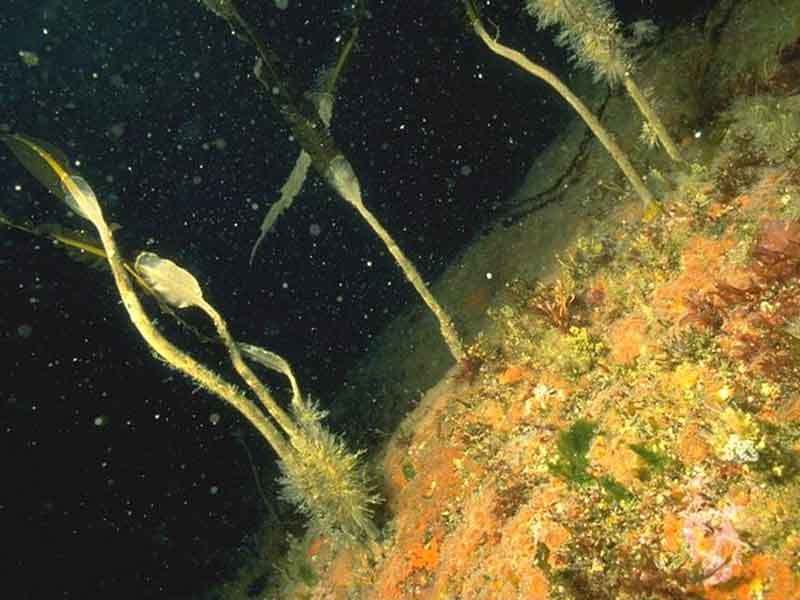
Alaria esculenta forest with dense anemones and sponge crusts on extremely exposed infralittoral bedrock.
Photographer: Dan Laffoley Copyright: Joint Nature Conservation Committee (JNCC)
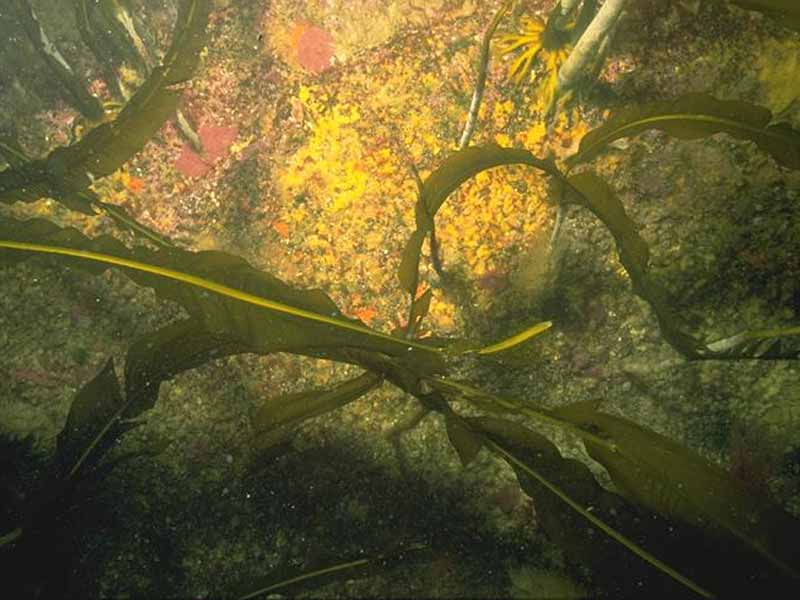
Alaria esculenta forest with dense anemones and sponge crusts on extremely exposed infralittoral bedrock.
Photographer: Dan Laffoley Copyright: Joint Nature Conservation Committee (JNCC)
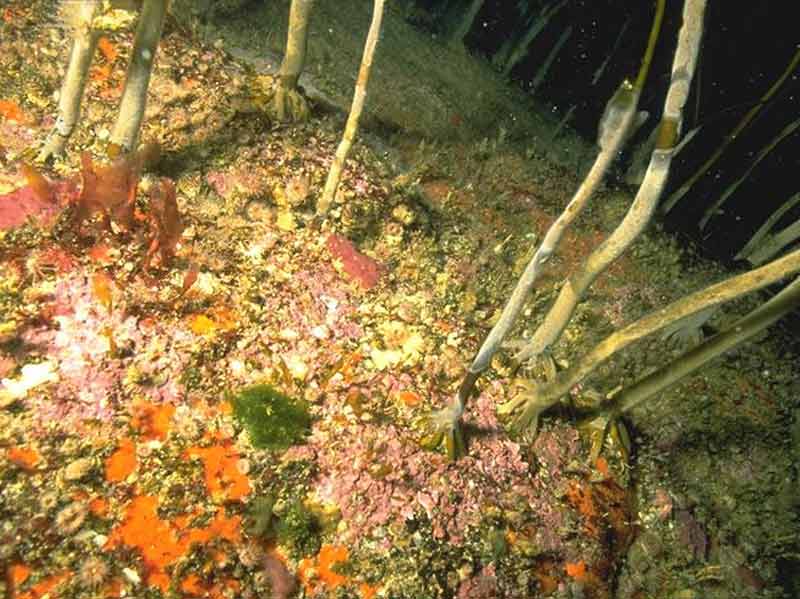
Alaria esculenta forest with dense anemones and sponge crusts on extremely exposed infralittoral bedrock.
Photographer: Anon. Copyright: Joint Nature Conservation Committee (JNCC)
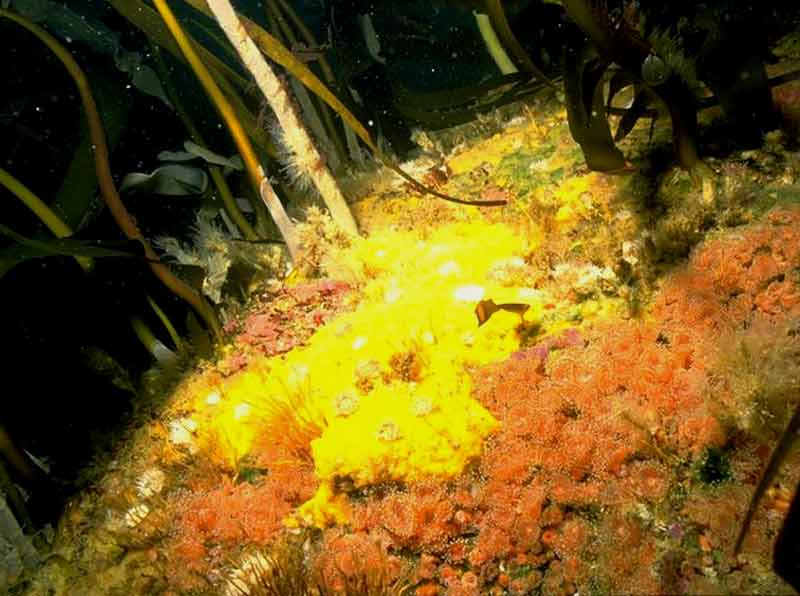
Alaria esculenta forest with dense anemones and sponge crusts on extremely exposed infralittoral bedrock.
Photographer: Anon. Copyright: Joint Nature Conservation Committee (JNCC)
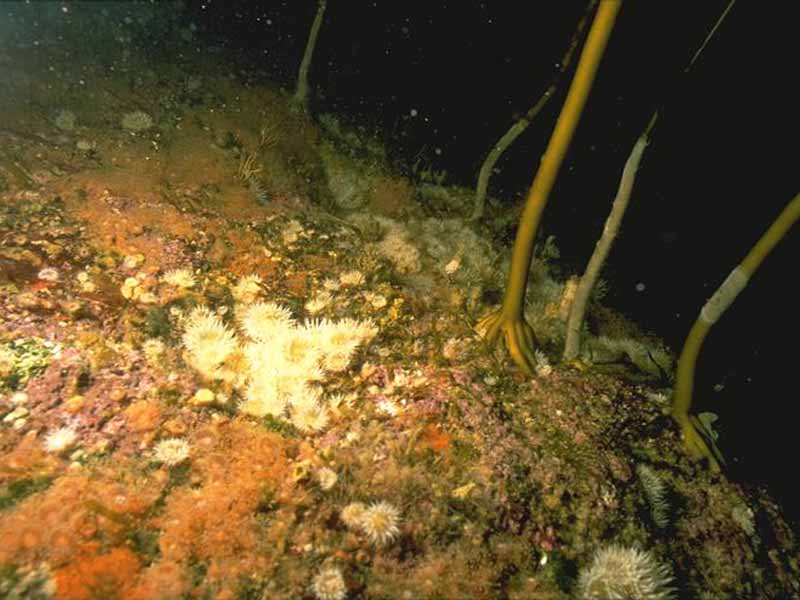
Alaria esculenta forest with dense anemones and sponge crusts on extremely exposed infralittoral bedrock.
Photographer: Anon. Copyright: Joint Nature Conservation Committee (JNCC)

Map Key
- Orange points: Core Records
- Pale Blue points: Non-core, certain determination
- Black points: Non-core, uncertain determination
- Yellow areas: Predicted habitat extent
| Researched by | Owen Harris, Thomas Stamp, Emma Williams, Dr Harvey Tyler-Walters & Ellie Burdett | Refereed by | This information is not refereed |
|---|
Summary
UK and Ireland classification
Description
This biotope has only been recorded from Rockall, where Alaria appears to replace L. hyperborea as the dominant kelp forest species on the extremely wave exposed steep and vertical rock. Some Laminaria is reported to occur mixed with Alaria on the nearby Helen's reef. Beneath the Alaria, the rock surface is covered by a dense turf of anemones (such as Cylista elegans, Phellia gausapata and Corynactis viridis) and encrusting sponges. Tubularia indivisa also occurs, but it does not form such a dense turf as in shallower waters. Cryptopleura ramosa is the dominant red seaweed on horizontal surfaces. This zone extends from 14 m - 35 m. Above this zone (about 5 m to 13 m) Alaria still dominates, but it more closely resembles the typical sublittoral fringe Alaria biotope (EIR.Ala.Myt), though it has a very dense turf of small hydroids and few foliose algae. Towards the lower part of this Alaria forest (30 m to 35 m) the Alaria thins and the rock surface is characterized by a dense turf of red algae (Information from Connor et al., 2004; JNCC, 2015, 2022).
Depth range
10-20 m, 20-30 m, 30-50 mAdditional information
None entered
Sensitivity review
Sensitivity characteristics of the habitat and relevant characteristic species
KFaR.AlaAnCrSp is characterized by the northern/boreal kelp Alaria esculenta and has only been recorded on steep/vertical bedrock at Rockall, Scotland. This biotope is distinct from other Alaria-dominated biotopes because the extreme wave exposure at Rockall excludes Laminaria hyperborea and allows KFaR.AlaAnCrSp to extend to 35 m depth. The understory community beneath Alaria esculenta canopies is defined by the degree of wave exposure at the site. In KFaR.AlaAnCrSp, the rock surface develops a dense turf of anthozoans such as Cylista elegans, Phellia gausapata and Corynactis viridis, encrusting sponges and coralline algae.
In this sensitivity assessment, Alaria is the focus of research, but Cylista elegans, Phellia gausapata, and Corynactis viridis, and examples of other turf species are also included because without them, the biotope would not be recognized.
Resilience and recovery rates of habitat
Alaria esculenta
Alaria esculenta is a perennial kelp found in the North Atlantic (Birkett et al., 1998b), which dominates the sublittoral fringe in areas exposed to severe wave action or where water surges along the sides of gullies or steep/vertical bedrock (Lewis, 1964; Connor et al., 2004; JNCC, 2022). In extreme wave action Laminaria digitata & Laminaria hyperborea are likely to become damaged and die back, whereas morphological features and high growth rates allow Alaria esculenta to survive in such conditions (Birkett et al., 1998b). Alaria esculenta has a compact holdfast, a flexible “short” stipe, and a flexible frond with a conspicuous reinforcing midrib (Birkett et al., 1998). Maximum growth rates are recorded in April-May, which can exceed 20 cm/month (Birkett et al., 1998b). From June-July, growth rates slow and continual erosion along the frond margins can reduce the sporophyte to a holdfast, stipe, and short length of the blade, in which state the sporophyte overwinters. In extremely wave exposed conditions, especially in winter months, the blade may be reduced to just the midrib. The sporophyte can reach a total length of 4 m (Werner & Kraan, 2004), fronds can reach a total length of 2 m, however, growth rates are locally variable, and fronds are more typically 30 to 90 cm in length (Birkett et al., 1998b). Alaria esculenta can reach maturity rapidly in 10 to 14 months and lives for 4 to 7 years (Birkett et al., 1998b; Baardseth, 1956).
Alaria esculenta has a heteromorphic life history (Fredersorf et al., 2009). Between November to March a vast number of meiotic haploid zoospores are released from sori located on sporophylls (found at the top of the stipe). Zoospore dispersal is greatly influenced by local water movements and zoospore densities. Laminarian spores also need to settle in high density so that the resultant gametophytes are close enough to cross-fertilize (Fredriksen et al., 1995). Recruitment of Alaria esculenta may, therefore, be influenced by the proximity of mature sporophytes producing viable zoospores (Kain, 1979; Fredriksen et al., 1995). Laminarians are expected to disperse zoospores over considerable distances. However, Alaria esculenta may have a lower dispersal capacity than other laminarians due to the basal location of the sporophylls (Norton, 1992). Sundene (1962) also observed that Alaria esculenta germlings were restricted to within 10 m of the parental source in an Alaria esculenta translocation experiment conducted in a Norwegian fjord.
Alaria esculenta is an opportunistic colonizing species (Kain 1975; Hawkins & Harkin 1985; Hill 1993). Alaria esculenta can settle on bare surfaces, including mobile boulders and in deeper water than the infralittoral fringe. Alaria esculenta often appears early in the algal succession (approx. 3 months after clearance of dominant algae) before being outcompeted by other kelp species in moderately wave exposed shores. During kelp canopy removal experiments in the Isle of Man, Hawkins & Harkin (1985) found that in moderately wave exposed areas cleared of Laminaria digitata (the dominant canopy-forming species) Alaria esculenta became the dominant canopy algae within nine months (October to June) and Laminaria digitata did not re-establish dominance within the study period (15 months). In areas of moderate to sheltered wave exposure Alaria esculenta colonized the blocks within one month of clearance and reached 25% coverage within five months. However, within seven months, Laminaria digitata had outcompeted Alaria esculenta and re-established dominance within the community reaching 90 to 95% coverage.
The resilience of this Alaria esculenta can depend on any combination of factors that could be unrelated causes of disturbance. These factors can strongly affect the success of gametophytes and their development into sporophytes.
The development of Alaria esculenta gametophytes into sporophytes can also depend on light. Martins et al. (2022) showed that gametophyte growth increased with increasing daylength to a limit. While continuous light with no dark period resulted in faster growth, it also produced abnormal recruits with irregular form and reduced pigmentation. They also found that the direction of photoperiod effects on Alaria esculenta changed with life stage. Sporophytes that developed from the gametophytes under the increased daylengths grew slower than those that were cultured under the reduced daylengths. In addition, temperature was found to have an interactive effect with light. Elevated temperatures reduced growth, therefore exacerbating the effects of suboptimal light regimes experienced during the gametophyte stage.
Gametophytes are more likely to be more sensitive to siltation and smothering than mature sporophytes. Picard et al. (2022) showed that the addition of just 2.5 g of fine-grained sediment to petri dishes resulted in a single-grain layer of sediment as small as 63 to 125 μm in thickness which was enough to significantly hinder Alaria esculenta spore development. Moreover, Zacher et al. (2016) found that 10 g of sediment in petri dishes with Alaria esculenta gametophytes was enough to significantly reduce germination and sporophyte density.
Different optimum temperatures for gametophyte growth have been reported. Park et al. (2017) reported higher growth rates at 10 to 15°C than at 5°C in Alaria esculenta gametophytes sourced from Arctic waters. In addition, they reported gametophyte mortality at 20°C. Zacher et al. (2019) found that in Arctic populations, gametogenesis and sporophyte growth was reduced at 15°C compared to 9 to 10°C. They also found that co-cultivation with Laminaria digitata enhanced growth.
Sporophytes show rapid recovery of growth and photosynthetic activity after the return of light following polar night, where kelps spend months in total darkness, but this can be diminished by elevated temperatures by as little as 4°C (Gordillo et al., 2022; Cobos et al., 2026).
The timing of disturbance is likely to have significant effects on the resilience of Alaria esculenta. Silva et al. (2022) found that Alaria esculenta gametophytes cultured from sporophytes originating from Spitsbergen, Norway, showed no significant growth and no gametogenesis under natural winter conditions (2°C in complete darkness for 60 days). During the first 38 days, gametophyte density decreased by 42%, indicating limited resistance to prolonged darkness. However, density did not continue to decline during the remaining 22 days, suggesting an ability of surviving gametophytes to tolerate extended dark periods once initial mortality had occurred. Gametophytes did not become fertile after being returned to spring conditions (5°C a 12:12 h light:dark regime for 36 days), indicating limited resilience of this life stage to prolonged winter darkness and suggesting that sporogenesis, sexual reproduction and recruitment must occur during summer or autumn. Therefore, recovery following disturbance during winter may be more constrained than recovery following disturbance later in the year.
Cylista elegans
Limited information was found on the elegant sea anemone, Cylista elegans. It is found in temperate waters, typically between 5 and 20°C up to 190 m deep, and salinities between 15 and 40 PSU (OBIS, 2026). However, Cylista elegans has the ability to detach from the substratum and move location (Wood, 2005; MarLIN, 2015). Cylista elegans can grow up to 20 cm and is recorded as a protandrous (male gametes mature and are shed before female gametes mature) hermaphrodite that also reproduces by budding (MarLIN, 2015). Cylista elegans was recorded in the summer of 2005 on the artificial reef of HMS Scylla, in Whitsand Bay, West Cornwall (intentionally sunk on the 27th of March 2004), and by the end of 2006 was well established (Hiscock et al., 2010).
Corynactis viridis
Corynactis viridis is a small anemone, with a base up to 10 mm in diameter and up to 15 mm in height (Ager, 2007). It is found on rocks, caves, shipwrecks, or beneath overhangs sheltered from the light, forming dense aggregations, and its depth range goes from the lower shore down to about 80 m (Wood, 2007; Hill and White, 2008 cited in Palladino et al., 2021). Corynactis viridis’s typical habitat encompasses the northeastern Atlantic Ocean (Palladino et al., 2021) and is distributed from North Shetland, UK (Ager, 2007) to the Iberian Peninsula (Ramos, 2010) and Greece (Koukouras, 2010). Little is known about sexual reproduction or recruitment within this species. Corynactis viridis was recorded in the summer of 2005 on the artificial reef of HMS Scylla, in Whitsand Bay, West Cornwall (intentionally sunk on the 27th of March 2004), and quickly formed colonies via asexual reproduction (Hiscock et al., 2010). Corynactis viridis can reproduce via asexual budding, which can cause dense aggregations of unicoloured clones.
Climate Change Pressures
Use [show more] / [show less] to open/close text displayed
| Resistance | Resilience | Sensitivity | |
Global warming (extreme) [Show more]Global warming (extreme)Extreme emission scenario (by the end of this century 2081-2100) benchmark of:
EvidenceThe distribution of kelp is strongly influenced by climatic conditions; therefore, kelp species are extremely sensitive to the ongoing ocean warming (Kain, 1979; Van Den Hoek, 1982; Breeman, 1990; Lüning, 1990; Assis et al., 2016; Smale, 2020). Northern distribution boundaries are set by winter temperatures that are lethal, or summer temperatures too low for growth and/or reproduction, whilst southern limits are set by high lethal summer temperatures or winter temperatures too high for induction of a crucial step in the life cycle (Breeman, 1990). Kelps have a high dependence on ocean temperatures, which make them highly vulnerable to ocean warming (Assis et al., 2014). As temperatures increase, populations found towards the upper limit of their temperature range may be adversely affected by warming as physiological thresholds are exceeded (Wiens, 2016). Thermal stress can lead to mortality and consequent population-level effects, such as decreased abundance, altered size structure, local extinction and range contractions (Smale, 2020). Alaria esculenta is a northern/boreal species that has been recorded from Brittany, France to Northern Norway (Birkett et al., 1998). Its approximate mid-range is within southern Norway (60° to 65° North) (Birkett et al., 1998), so these biotopes are in Alaria esculenta’s southern range. Throughout the UK, northern to southern Sea Surface Temperature (SST) ranges from 8 to 16°C in summer and 6 to 13°C in winter (Beszczynska-Möller & Dye, 2013). Sea temperature regulates Alaria esculenta metabolism and reproduction (Fredersdorf et al., 2009). Their southern limit has been defined at the 20°C isotherm (Munda & Lüning, 1977; Fredersdorf et al., 2009), but it is common north of the 16°C isotherm (Munda & Lüning, 1977). As a result of this upper temperature threshold, Alaria esculenta is largely absent from the southern North Sea and English Channel where summer temperatures can exceed 16°C. According to OBIS (2026), Alaria esculenta occurs in waters ranging from -5 to 15°C, with most records in the 10 to 15°C range. A study by Zacher et al. (2019) observed gametogenesis and sporophyte formation of Alaria esculenta to be inhibited at 15°C. Zacher et al. (2019) also observed sporophyte growth to be slower at 10°C than at 4°C. Equally, Park et al. (2017) noted Alaria esculenta female gametophytes to produce more sporophytes at 5°C than at 10°C, and with no sporophytes at 15°C. However, Kraan. (2020) reports Alaria esculenta gametophytes to able to survive -1.5 to 20 °C. The literature suggests that the distribution of Alaria esculenta is possibly determined by the temperature requirements for gametogenesis or reproduction rather than the temperature tolerance of the gametophyte or sporophyte (Zacher et al., 2019; Kraan, 2020). Alaria esculenta is nearing its southern limits in the UK, with this species only occurring as far south as Brittany, France. Sea surface temperatures (SST) around the UK currently fall between 6 to 19°C (Huthnance, 2010). If winter temperatures exceed 12°C this is likely to inhibit germination, whilst summer temperatures greater than 20°C will cause mortality of Alaria esculenta. Yesson et al. (2015) reported no significant change in Alaria esculenta abundance in the UK from 1974 to 2010, and no relationship between abundance and summer and winter sea surface temperatures. Despite this, they noted the contrast between their findings and those of previous research that reported declines in Alaria esculenta around the UK and Ireland, and suggested that if temperatures increase in the future, then abundances could change. Alaria esculenta has already shown signs of contracting its range in the UK as a result of ocean warming (Mieszkowska, 2016). The abundance of Alaria esculenta has declined in shallow subtidal zones around the western English Channel and is predicted to disappear from south-west England and the coasts of western and southern Ireland (Mieszkowska et al., 2005; Birchenough, et al., 2013). Sensitivity AssessmentAlaria esculenta is nearing its southern limits in the UK, with this species only occurring as far south as Brittany, France. Sea surface temperatures (SST) around the UK currently fall between 6 to 19°C (Huthnance, 2010). The available evidence suggests that the effects of ocean warming may occur throughout the year. If winter temperatures exceed 12°C this is likely to inhibit germination, whilst summer temperatures greater than 20°C will cause mortality of Alaria esculenta. Alaria esculenta is competitively inferior to Laminaria digitata in the northeast Atlantic (Hawkins & Harkin, 1985) where it is confined to more exposed shores and can colonize sheltered environments only if Laminaria digitata is removed. As temperatures rise to up to 20°C, it is expected that the competitive ability of this species will decrease further, while as temperatures rise above 20°C Alaria esculenta will be lost, with more warm-adapted algae taking its place. Brodie et al. (2014) predict that Alaria esculenta will be completely lost from Boreal habitats by the end of this century, whilst all kelp species will be lost from the Lusitanian region, replaced by smaller, fleshy algae. Sea surface temperatures around the UK are currently between 6 to 19°C (Huthnance, 2010). Under the middle emission scenario, Alaria esculenta is likely to be lost from most of the UK, although Alaria esculenta might manage to maintain some populations in Scotland where current summer temperatures often reach 14°C, leading to potential summer temperatures of 17°C. Resistance is assessed as ‘Low’ under this scenario. Resilience is assessed as ‘Very Low’, as the loss is likely to be a long-term decline due to the long-term nature of ocean warming. Therefore, this biotope is assessed as having ‘High’ sensitivity to ocean warming under a middle emission scenario. For the high emission scenario and extreme scenario, sea temperatures may rise by 4 to 5°C to give potential southern summer temperatures of 23 to 24°C and northern summer temperatures of 18 to 19°C. Under these scenarios, it is likely that Alaria esculenta will be lost almost completely from the UK, with large losses across England, Ireland, and Wales. Therefore, resistance is assessed as ‘None’, and resilience is assessed as ‘Very low’. Overall, this biotope AlaAnCrSp is assessed as having ‘High’ sensitivity to ocean warming for the high emission scenario and the extreme scenario. | NoneHelp | Very LowHelp | HighHelp |
Global warming (high) [Show more]Global warming (high)High emission scenario (by the end of this century 2081-2100) benchmark of:
EvidenceThe distribution of kelp is strongly influenced by climatic conditions; therefore, kelp species are extremely sensitive to the ongoing ocean warming (Kain, 1979; Van Den Hoek, 1982; Breeman, 1990; Lüning, 1990; Assis et al., 2016; Smale, 2020). Northern distribution boundaries are set by winter temperatures that are lethal, or summer temperatures too low for growth and/or reproduction, whilst southern limits are set by high lethal summer temperatures or winter temperatures too high for induction of a crucial step in the life cycle (Breeman, 1990). Kelps have a high dependence on ocean temperatures, which make them highly vulnerable to ocean warming (Assis et al., 2014). As temperatures increase, populations found towards the upper limit of their temperature range may be adversely affected by warming as physiological thresholds are exceeded (Wiens, 2016). Thermal stress can lead to mortality and consequent population-level effects, such as decreased abundance, altered size structure, local extinction and range contractions (Smale, 2020). Alaria esculenta is a northern/boreal species that has been recorded from Brittany, France to Northern Norway (Birkett et al., 1998). Its approximate mid-range is within southern Norway (60° to 65° North) (Birkett et al., 1998), so these biotopes are in Alaria esculenta’s southern range. Throughout the UK, northern to southern Sea Surface Temperature (SST) ranges from 8 to 16°C in summer and 6 to 13°C in winter (Beszczynska-Möller & Dye, 2013). Sea temperature regulates Alaria esculenta metabolism and reproduction (Fredersdorf et al., 2009). Their southern limit has been defined at the 20°C isotherm (Munda & Lüning, 1977; Fredersdorf et al., 2009), but it is common north of the 16°C isotherm (Munda & Lüning, 1977). As a result of this upper temperature threshold, Alaria esculenta is largely absent from the southern North Sea and English Channel where summer temperatures can exceed 16°C. According to OBIS (2026), Alaria esculenta occurs in waters ranging from -5 to 15°C, with most records in the 10 to 15°C range. A study by Zacher et al. (2019) observed gametogenesis and sporophyte formation of Alaria esculenta to be inhibited at 15°C. Zacher et al. (2019) also observed sporophyte growth to be slower at 10°C than at 4°C. Equally, Park et al. (2017) noted Alaria esculenta female gametophytes to produce more sporophytes at 5°C than at 10°C, and with no sporophytes at 15°C. However, Kraan. (2020) reports Alaria esculenta gametophytes to able to survive -1.5 to 20 °C. The literature suggests that the distribution of Alaria esculenta is possibly determined by the temperature requirements for gametogenesis or reproduction rather than the temperature tolerance of the gametophyte or sporophyte (Zacher et al., 2019; Kraan, 2020). Alaria esculenta is nearing its southern limits in the UK, with this species only occurring as far south as Brittany, France. Sea surface temperatures (SST) around the UK currently fall between 6 to 19°C (Huthnance, 2010). If winter temperatures exceed 12°C this is likely to inhibit germination, whilst summer temperatures greater than 20°C will cause mortality of Alaria esculenta. Yesson et al. (2015) reported no significant change in Alaria esculenta abundance in the UK from 1974 to 2010, and no relationship between abundance and summer and winter sea surface temperatures. Despite this, they noted the contrast between their findings and those of previous research that reported declines in Alaria esculenta around the UK and Ireland, and suggested that if temperatures increase in the future, then abundances could change. Alaria esculenta has already shown signs of contracting its range in the UK as a result of ocean warming (Mieszkowska, 2016). The abundance of Alaria esculenta has declined in shallow subtidal zones around the western English Channel and is predicted to disappear from south-west England and the coasts of western and southern Ireland (Mieszkowska et al., 2005; Birchenough, et al., 2013). Sensitivity AssessmentAlaria esculenta is nearing its southern limits in the UK, with this species only occurring as far south as Brittany, France. Sea surface temperatures (SST) around the UK currently fall between 6 to 19°C (Huthnance, 2010). The available evidence suggests that the effects of ocean warming may occur throughout the year. If winter temperatures exceed 12°C this is likely to inhibit germination, whilst summer temperatures greater than 20°C will cause mortality of Alaria esculenta. Alaria esculenta is competitively inferior to Laminaria digitata in the northeast Atlantic (Hawkins & Harkin, 1985) where it is confined to more exposed shores and can colonize sheltered environments only if Laminaria digitata is removed. As temperatures rise to up to 20°C, it is expected that the competitive ability of this species will decrease further, while as temperatures rise above 20°C Alaria esculenta will be lost, with more warm-adapted algae taking its place. Brodie et al. (2014) predict that Alaria esculenta will be completely lost from Boreal habitats by the end of this century, whilst all kelp species will be lost from the Lusitanian region, replaced by smaller, fleshy algae. Sea surface temperatures around the UK are currently between 6 to 19°C (Huthnance, 2010). Under the middle emission scenario, Alaria esculenta is likely to be lost from most of the UK, although Alaria esculenta might manage to maintain some populations in Scotland where current summer temperatures often reach 14°C, leading to potential summer temperatures of 17°C. Resistance is assessed as ‘Low’ under this scenario. Resilience is assessed as ‘Very Low’, as the loss is likely to be a long-term decline due to the long-term nature of ocean warming. Therefore, this biotope is assessed as having ‘High’ sensitivity to ocean warming under a middle emission scenario. For the high emission scenario and extreme scenario, sea temperatures may rise by 4 to 5°C to give potential southern summer temperatures of 23 to 24°C and northern summer temperatures of 18 to 19°C. Under these scenarios, it is likely that Alaria esculenta will be lost almost completely from the UK, with large losses across England, Ireland, and Wales. Therefore, resistance is assessed as ‘None’, and resilience is assessed as ‘Very low’. Overall, this biotope AlaAnCrSp is assessed as having ‘High’ sensitivity to ocean warming for the high emission scenario and the extreme scenario. | NoneHelp | Very LowHelp | HighHelp |
Global warming (middle) [Show more]Global warming (middle)Middle emission scenario (by the end of this century 2081-2100) benchmark of:
EvidenceThe distribution of kelp is strongly influenced by climatic conditions; therefore, kelp species are extremely sensitive to the ongoing ocean warming (Kain, 1979; Van Den Hoek, 1982; Breeman, 1990; Lüning, 1990; Assis et al., 2016; Smale, 2020). Northern distribution boundaries are set by winter temperatures that are lethal, or summer temperatures too low for growth and/or reproduction, whilst southern limits are set by high lethal summer temperatures or winter temperatures too high for induction of a crucial step in the life cycle (Breeman, 1990). Kelps have a high dependence on ocean temperatures, which make them highly vulnerable to ocean warming (Assis et al., 2014). As temperatures increase, populations found towards the upper limit of their temperature range may be adversely affected by warming as physiological thresholds are exceeded (Wiens, 2016). Thermal stress can lead to mortality and consequent population-level effects, such as decreased abundance, altered size structure, local extinction and range contractions (Smale, 2020). Alaria esculenta is a northern/boreal species that has been recorded from Brittany, France to Northern Norway (Birkett et al., 1998). Its approximate mid-range is within southern Norway (60° to 65° North) (Birkett et al., 1998), so these biotopes are in Alaria esculenta’s southern range. Throughout the UK, northern to southern Sea Surface Temperature (SST) ranges from 8 to 16°C in summer and 6 to 13°C in winter (Beszczynska-Möller & Dye, 2013). Sea temperature regulates Alaria esculenta metabolism and reproduction (Fredersdorf et al., 2009). Their southern limit has been defined at the 20°C isotherm (Munda & Lüning, 1977; Fredersdorf et al., 2009), but it is common north of the 16°C isotherm (Munda & Lüning, 1977). As a result of this upper temperature threshold, Alaria esculenta is largely absent from the southern North Sea and English Channel where summer temperatures can exceed 16°C. According to OBIS (2026), Alaria esculenta occurs in waters ranging from -5 to 15°C, with most records in the 10 to 15°C range. A study by Zacher et al. (2019) observed gametogenesis and sporophyte formation of Alaria esculenta to be inhibited at 15°C. Zacher et al. (2019) also observed sporophyte growth to be slower at 10°C than at 4°C. Equally, Park et al. (2017) noted Alaria esculenta female gametophytes to produce more sporophytes at 5°C than at 10°C, and with no sporophytes at 15°C. However, Kraan. (2020) reports Alaria esculenta gametophytes to able to survive -1.5 to 20 °C. The literature suggests that the distribution of Alaria esculenta is possibly determined by the temperature requirements for gametogenesis or reproduction rather than the temperature tolerance of the gametophyte or sporophyte (Zacher et al., 2019; Kraan, 2020). Alaria esculenta is nearing its southern limits in the UK, with this species only occurring as far south as Brittany, France. Sea surface temperatures (SST) around the UK currently fall between 6 to 19°C (Huthnance, 2010). If winter temperatures exceed 12°C this is likely to inhibit germination, whilst summer temperatures greater than 20°C will cause mortality of Alaria esculenta. Yesson et al. (2015) reported no significant change in Alaria esculenta abundance in the UK from 1974 to 2010, and no relationship between abundance and summer and winter sea surface temperatures. Despite this, they noted the contrast between their findings and those of previous research that reported declines in Alaria esculenta around the UK and Ireland, and suggested that if temperatures increase in the future, then abundances could change. Alaria esculenta has already shown signs of contracting its range in the UK as a result of ocean warming (Mieszkowska, 2016). The abundance of Alaria esculenta has declined in shallow subtidal zones around the western English Channel and is predicted to disappear from south-west England and the coasts of western and southern Ireland (Mieszkowska et al., 2005; Birchenough, et al., 2013). Sensitivity AssessmentAlaria esculenta is nearing its southern limits in the UK, with this species only occurring as far south as Brittany, France. Sea surface temperatures (SST) around the UK currently fall between 6 to 19°C (Huthnance, 2010). The available evidence suggests that the effects of ocean warming may occur throughout the year. If winter temperatures exceed 12°C this is likely to inhibit germination, whilst summer temperatures greater than 20°C will cause mortality of Alaria esculenta. Alaria esculenta is competitively inferior to Laminaria digitata in the northeast Atlantic (Hawkins & Harkin, 1985) where it is confined to more exposed shores and can colonize sheltered environments only if Laminaria digitata is removed. As temperatures rise to up to 20°C, it is expected that the competitive ability of this species will decrease further, while as temperatures rise above 20°C Alaria esculenta will be lost, with more warm-adapted algae taking its place. Brodie et al. (2014) predict that Alaria esculenta will be completely lost from Boreal habitats by the end of this century, whilst all kelp species will be lost from the Lusitanian region, replaced by smaller, fleshy algae. Sea surface temperatures around the UK are currently between 6 to 19°C (Huthnance, 2010). Under the middle emission scenario, Alaria esculenta is likely to be lost from most of the UK, although Alaria esculenta might manage to maintain some populations in Scotland where current summer temperatures often reach 14°C, leading to potential summer temperatures of 17°C. Resistance is assessed as ‘Low’ under this scenario. Resilience is assessed as ‘Very Low’, as the loss is likely to be a long-term decline due to the long-term nature of ocean warming. Therefore, this biotope is assessed as having ‘High’ sensitivity to ocean warming under a middle emission scenario. For the high emission scenario and extreme scenario, sea temperatures may rise by 4 to 5°C to give potential southern summer temperatures of 23 to 24°C and northern summer temperatures of 18 to 19°C. Under these scenarios, it is likely that Alaria esculenta will be lost almost completely from the UK, with large losses across England, Ireland, and Wales. Therefore, resistance is assessed as ‘None’, and resilience is assessed as ‘Very low’. Overall, this biotope AlaAnCrSp is assessed as having ‘High’ sensitivity to ocean warming for the high emission scenario and the extreme scenario. | LowHelp | Very LowHelp | HighHelp |
Marine heatwaves (high) [Show more]Marine heatwaves (high)High emission scenario benchmark: A marine heatwave occurring every two years, with a mean duration of 120 days, and a maximum intensity of 3.5°C (Marine heatwave pressure definitions). EvidenceMarine heatwaves are extreme weather events defined as periods of extreme sea surface temperature that persists for days to months (Frölicher et al., 2018). Marine heatwaves are predicted to increase in intensity, occur more frequently and last for longer periods of time by the end of this century under both middle and high emission scenarios (Hobday et al., 2016; Frölicher et al., 2018). Marine heatwaves are known to cause significant impacts to kelp forests, particularly if a population is found towards the edge of its southern limit (Smale et al., 2019). Lebrun et al. (2025) studied marine heatwave (MHW) effects on three kelp species including Alaria esculenta. In their mesocosm experiment, water flow was supplied directly from the ocean, ensuring that the control treatment reflected natural conditions. Control temperatures ranged from approx. 7.5 to 10°C. Additional treatments included a constant high-temperature treatment (HT; +1.8°C above control), a single 13-day MHW treatment (1MH; +2.8°C above control), and a treatment simulating two consecutive 5-day MHWs (2MH; +3.9°C above control). No mortality was reported, but physiological responses varied. Net photosynthetic rates declined significantly between the beginning and end of the experiment in all treatments, with a significant decline occurring by the midpoint of the experiment in the HT treatment. Photosynthetic efficiency (FV/FM) remained above 0.7 throughout, indicating good physiological condition. Chlorophyll-a content differed significantly between the beginning and end of the experiment only in the 2MH treatment, while significant differences in C:N ratios were detected only between the 1MH and 2MH treatments at the end of the experiment. Growth rates did not differ among treatments. Overall, these findings suggest that Alaria esculenta remained physiologically healthy and maintained growth under the simulated MHW conditions, although some changes in photosynthetic performance, pigmentation, and C:N ratios occurred. In situ monitoring of a population of Alaria esculenta observed temperatures of 16-17°C, sustained over 2 weeks to be lethal to resident Alaria esculenta (Munda & Lüning, 1977). Similarly, experimental observations showed acute exposure to ≥21°C is lethal to Alaria esculenta causing bleaching and disintegration (Sundene, 1962; Fredersdorf et al., 2009). Studies have observed gametogenesis and sporophyte formation of Alaria esculenta to be inhibited at 15°C (Zacher et al., 2019). However, Alaria esculenta gametophytes have been reported to be able to survive -1.5 to 20°C (Kraan, 2020). In Baja California, Mexico, an extreme heat even between 2014-16, led to both a decrease in density of Macrocystis pyrifera and a decrease in the number of fronds per individual in Baja California, Mexico (Arafeh-Dalmau et al., 2019). Additionally, there was a significant change to the understory algal composition, and half of the fish and invertebrates associated with this habitat disappeared. The same heatwave, coupled with a loss of starfish through disease and an increase in urchin grazing, led to the loss of more than 90% of Macrocystis pyrifera from 350 km of coastline in northern California (Rogers-Bennett & Catton, 2019). Sensitivity AssessmentUnder the middle emission scenario, if heatwaves occurred every three years, with a maximum intensity of 2°C for 80 days by the end of this century, this could lead to summer sea temperatures reaching up to 24°C in southern England and 19°C in Scotland. Under the middle emission scenario, Alaria esculenta is likely to be lost from the southern parts of the UK (see Global warming pressure). Any remaining populations of Alaria esculenta are likely to suffer severe mortality as a result of a heatwave of this magnitude. Therefore, resistance has been assessed as ‘None’. As a further heatwave is likely to affect this habitat before full recovery, resilience has been assessed as ‘Low.’ Therefore, this biotope is assessed as having ‘High’ sensitivity to marine heatwaves under the middle emission scenario. Under the high emission scenario, if heatwaves occur every two years by the end of this century, reaching a maximum intensity of 3.5°C for 120 days, this could lead to the heatwave lasting the entire summer with temperatures reaching up to 26.5°C in southern England and 21.5°C in Scotland. Under the high emission scenario, Alaria esculenta is likely to be almost wiped out in the UK. Therefore, resistance has been assessed as ‘None’. As widespread mortality may lead to a lack of viable sporophytes for recruitment, resilience has been assessed as ‘Very low.’ Therefore, this biotope is assessed as having ‘High’ sensitivity to marine heatwaves under the high emission scenario. | NoneHelp | Very LowHelp | HighHelp |
Marine heatwaves (middle) [Show more]Marine heatwaves (middle)Middle emission scenario benchmark: A marine heatwave occurring every three years, with a mean duration of 80 days, with a maximum intensity of 2°C. EvidenceMarine heatwaves are extreme weather events defined as periods of extreme sea surface temperature that persists for days to months (Frölicher et al., 2018). Marine heatwaves are predicted to increase in intensity, occur more frequently and last for longer periods of time by the end of this century under both middle and high emission scenarios (Hobday et al., 2016; Frölicher et al., 2018). Marine heatwaves are known to cause significant impacts to kelp forests, particularly if a population is found towards the edge of its southern limit (Smale et al., 2019). Lebrun et al. (2025) studied marine heatwave (MHW) effects on three kelp species including Alaria esculenta. In their mesocosm experiment, water flow was supplied directly from the ocean, ensuring that the control treatment reflected natural conditions. Control temperatures ranged from approx. 7.5 to 10°C. Additional treatments included a constant high-temperature treatment (HT; +1.8°C above control), a single 13-day MHW treatment (1MH; +2.8°C above control), and a treatment simulating two consecutive 5-day MHWs (2MH; +3.9°C above control). No mortality was reported, but physiological responses varied. Net photosynthetic rates declined significantly between the beginning and end of the experiment in all treatments, with a significant decline occurring by the midpoint of the experiment in the HT treatment. Photosynthetic efficiency (FV/FM) remained above 0.7 throughout, indicating good physiological condition. Chlorophyll-a content differed significantly between the beginning and end of the experiment only in the 2MH treatment, while significant differences in C:N ratios were detected only between the 1MH and 2MH treatments at the end of the experiment. Growth rates did not differ among treatments. Overall, these findings suggest that Alaria esculenta remained physiologically healthy and maintained growth under the simulated MHW conditions, although some changes in photosynthetic performance, pigmentation, and C:N ratios occurred. In situ monitoring of a population of Alaria esculenta observed temperatures of 16-17°C, sustained over 2 weeks to be lethal to resident Alaria esculenta (Munda & Lüning, 1977). Similarly, experimental observations showed acute exposure to ≥21°C is lethal to Alaria esculenta causing bleaching and disintegration (Sundene, 1962; Fredersdorf et al., 2009). Studies have observed gametogenesis and sporophyte formation of Alaria esculenta to be inhibited at 15°C (Zacher et al., 2019). However, Alaria esculenta gametophytes have been reported to be able to survive -1.5 to 20°C (Kraan, 2020). In Baja California, Mexico, an extreme heat even between 2014-16, led to both a decrease in density of Macrocystis pyrifera and a decrease in the number of fronds per individual in Baja California, Mexico (Arafeh-Dalmau et al., 2019). Additionally, there was a significant change to the understory algal composition, and half of the fish and invertebrates associated with this habitat disappeared. The same heatwave, coupled with a loss of starfish through disease and an increase in urchin grazing, led to the loss of more than 90% of Macrocystis pyrifera from 350 km of coastline in northern California (Rogers-Bennett & Catton, 2019). Sensitivity AssessmentUnder the middle emission scenario, if heatwaves occurred every three years, with a maximum intensity of 2°C for 80 days by the end of this century, this could lead to summer sea temperatures reaching up to 24°C in southern England and 19°C in Scotland. Under the middle emission scenario, Alaria esculenta is likely to be lost from the southern parts of the UK (see Global warming pressure). Any remaining populations of Alaria esculenta are likely to suffer severe mortality as a result of a heatwave of this magnitude. Therefore, resistance has been assessed as ‘None’. As a further heatwave is likely to affect this habitat before full recovery, resilience has been assessed as ‘Low.’ Therefore, this biotope is assessed as having ‘High’ sensitivity to marine heatwaves under the middle emission scenario. Under the high emission scenario, if heatwaves occur every two years by the end of this century, reaching a maximum intensity of 3.5°C for 120 days, this could lead to the heatwave lasting the entire summer with temperatures reaching up to 26.5°C in southern England and 21.5°C in Scotland. Under the high emission scenario, Alaria esculenta is likely to be almost wiped out in the UK. Therefore, resistance has been assessed as ‘None’. As widespread mortality may lead to a lack of viable sporophytes for recruitment, resilience has been assessed as ‘Very low.’ Therefore, this biotope is assessed as having ‘High’ sensitivity to marine heatwaves under the high emission scenario. | NoneHelp | LowHelp | HighHelp |
Ocean acidification (high) [Show more]Ocean acidification (high)High emission scenario benchmark: a further decrease in pH of 0.35 (annual mean) and corresponding 120% increase in H+ ions, seasonal aragonite saturation of 20% of UK coastal waters and North Sea bottom waters, and the aragonite saturation horizon in the NE Atlantic, off the continental shelf, occurring at a depth of 400 m by the end of this century 2081-2100 (Ocean acidification pressure definitions). EvidenceIncreasing levels of CO2 in the atmosphere have led to the average pH of sea surface waters dropping from 8.25 in the 1700s to 8.14 in the 1990s (Jacobson, 2005), with it expected to drop up to a further 0.35 units by the end of this century, dependent on the emission scenario. Marine autotrophs will generally benefit from ocean acidification, through an increase in the availability of aqueous CO2 for photosynthesis (Koch et al., 2013). Most species of kelp appear to be under-saturated in respect to carbon dioxide, although they can generally utilise HCO3 and have external carbonic anhydrase for extracellular dehydration of HCO3 to CO2 (Koch et al., 2013). Under experimental conditions, Iñiguez et al. (2016a) found that although photosynthesis remained stable in Alaria esculenta in response to increasing CO2, and the growth rate increased. Similarly, Gordillo et al. (2015) found heightened growth rates in Alaria esculenta when exposed to increased CO2, although this increase was not significant and less pronounced than in Saccharina lattisima. Research on other kelp species has revealed a positive or neutral effect of ocean acidification (Roleda et al., 2012, Fernández et al., 2015, Nunes et al., 2015, Iñiguez et al., 2016a, b), except for one study, which found that ocean acidification negatively impacted photosynthesis and growth in the southern hemisphere species, Ecklonia radiata (Britton et al., 2016). Corallina officinalis is a highly calcified, erect, red algae. Results of experimental CO2 enrichment suggest that this species could be significantly negatively affected by future ocean acidification. Hofmann et al. (2012) found that growth and photosynthesis decreased as a result of a 0.3 unit decrease in pH. Further investigation showed that skeletal CaCO3 decreased with increasing CO2 at levels expected for both the middle emission and high emission scenarios, although this decrease was small (< 2%) (Hofmann et al., 2013). Yildiz et al. (2013) showed that although CaCO3 decreased in Corallina officinalis as a result of ocean acidification, photosynthesis increased. When ocean acidification was combined with an increase in UV radiation, which led to an increase in growth rate. They summarised that a decrease in CaCO3 content may not be negative but may lead to this species absorbing and using light differently. Brodie et al. (2014) reports Corallina species to be more resilient to ocean acidification than other calcified algae species, although competition from flesh algal species that benefit from high CO2 may indirectly cause the loss of calcified species from biotopes. Similarly, observations have indicated Corallinales to be adversely affected at locations where CO2 gradients occur naturally, with evidence of Corallinales being outcompeted by heterokont algae at Mediterranean CO2 seeps (Martin & Hall-Spencer, 2017). Sensitivity assessment. Kelp forests occur in a naturally variable pH habitat, with diel fluctuations of 0.3 - 0.45 pH units (Krause-Jensen et al., 2015, Britton et al., 2016), and boundary layer pH fluctuation of up to 0.8 units (Krause-Jensen et al., 2015). The kelps Alaria esculenta and Laminaria digitata are not expected to suffer negative impacts from future acidification, and whilst calcium carbonate content of Corallina officinalis may reduce as a result of acidification, this species is expected to survive future CO2 enrichment of the oceans. Therefore, under both the middle and high emission scenario resistance is assessed as ‘High’, and resilience is assessed as ‘High’ leading to a score of ‘Not sensitive’. | HighHelp | HighHelp | Not sensitiveHelp |
Ocean acidification (middle) [Show more]Ocean acidification (middle)Middle emission scenario benchmark: a further decrease in pH of 0.15 (annual mean) and a corresponding 35% increase in H+ ions with no coastal aragonite undersaturation and the aragonite saturation horizon in the NE Atlantic, off the continental shelf, at a depth of 800 m by the end of this century, 2081-2100. EvidenceIncreasing levels of CO2 in the atmosphere have led to the average pH of sea surface waters dropping from 8.25 in the 1700s to 8.14 in the 1990s (Jacobson, 2005), with it expected to drop up to a further 0.35 units by the end of this century, dependent on the emission scenario. Marine autotrophs will generally benefit from ocean acidification, through an increase in the availability of aqueous CO2 for photosynthesis (Koch et al., 2013). Most species of kelp appear to be under-saturated in respect to carbon dioxide, although they can generally utilise HCO3 and have external carbonic anhydrase for extracellular dehydration of HCO3 to CO2 (Koch et al., 2013). Under experimental conditions, Iñiguez et al. (2016a) found that although photosynthesis remained stable in Alaria esculenta in response to increasing CO2, and the growth rate increased. Similarly, Gordillo et al. (2015) found heightened growth rates in Alaria esculenta when exposed to increased CO2, although this increase was not significant and less pronounced than in Saccharina lattisima. Research on other kelp species has revealed a positive or neutral effect of ocean acidification (Roleda et al., 2012, Fernández et al., 2015, Nunes et al., 2015, Iñiguez et al., 2016a, b), except for one study, which found that ocean acidification negatively impacted photosynthesis and growth in the southern hemisphere species, Ecklonia radiata (Britton et al., 2016). Corallina officinalis is a highly calcified, erect, red algae. Results of experimental CO2 enrichment suggest that this species could be significantly negatively affected by future ocean acidification. Hofmann et al. (2012) found that growth and photosynthesis decreased as a result of a 0.3 unit decrease in pH. Further investigation showed that skeletal CaCO3 decreased with increasing CO2 at levels expected for both the middle emission and high emission scenarios, although this decrease was small (< 2%) (Hofmann et al., 2013). Yildiz et al. (2013) showed that although CaCO3 decreased in Corallina officinalis as a result of ocean acidification, photosynthesis increased. When ocean acidification was combined with an increase in UV radiation, which led to an increase in growth rate. They summarised that a decrease in CaCO3 content may not be negative but may lead to this species absorbing and using light differently. Brodie et al. (2014) reports Corallina species to be more resilient to ocean acidification than other calcified algae species, although competition from flesh algal species that benefit from high CO2 may indirectly cause the loss of calcified species from biotopes. Similarly, observations have indicated Corallinales to be adversely affected at locations where CO2 gradients occur naturally, with evidence of Corallinales being outcompeted by heterokont algae at Mediterranean CO2 seeps (Martin & Hall-Spencer, 2017). Sensitivity assessment. Kelp forests occur in a naturally variable pH habitat, with diel fluctuations of 0.3 - 0.45 pH units (Krause-Jensen et al., 2015, Britton et al., 2016), and boundary layer pH fluctuation of up to 0.8 units (Krause-Jensen et al., 2015). The kelps Alaria esculenta and Laminaria digitata are not expected to suffer negative impacts from future acidification, and whilst calcium carbonate content of Corallina officinalis may reduce as a result of acidification, this species is expected to survive future CO2 enrichment of the oceans. Therefore, under both the middle and high emission scenario resistance is assessed as ‘High’, and resilience is assessed as ‘High’ leading to a score of ‘Not sensitive’. | HighHelp | HighHelp | Not sensitiveHelp |
Sea level rise (extreme) [Show more]Sea level rise (extreme)Extreme scenario benchmark: a 107 cm rise in average UK sea-level by the end of this century (2018-2100) (Sea-level rise pressure definitions). EvidenceSea-level rise is occurring through a combination of thermal expansion and ice melt. Sea levels have risen 1-3 mm/yr in the last century (Cazenave & Nerem, 2004, Church et al., 2004, Church & White, 2006). Sea-level rise is expected to lead to substantial loss of intertidal habitats. Rocky shores backed by cliffs constitute about 80% of oceanic coastlines globally and in Britain, 42% of the coastline is hard rock, with many areas having cliffs behind the shore (Jackson & McIlvenny, 2011). Jackson & McIlvenny (2011) predicted that under a 30 cm sea-level rise, between 10 - 27% of the extent of intertidal rocky shores in Scotland would be lost, whilst under a 190 cm sea-level rise, between 26 -50% would be lost. Using a modelling-based approach, Kaplanis et al. (2019) found that in San Diego County loss of intertidal habitat would be most extreme within the first metre of sea-level rise, with 29.9% of intertidal rocky shore lost as a result of a 20 cm sea-level rise, and 77.7% as a result of a 100 cm sea-level rise. Sensitivity assessment. This biotope is found on extremely exposed very steep and vertical infralittoral rock, therefore an increase in sea level height of 50, 70 and 107 cm could have severe repercussions for the extent of this biotope. Beds may be able to expand their range and migrate upwards to compensate for sea-level rise, if not constrained by lack of suitable habitat (IPCC, 2019). In this assessment we have assessed on a worst-case-scenario basis, assuming that landward migration is not possible, which is likely to lead to the depth distribution of Alaria esculenta shrinking significantly in response to a 50, 70 or 107 cm sea-level rise, without the possibility of recovery. Under the middle emission, high emission and extreme scenarios (50, 70 and 107 cm sea-level rise), it is expected that between 25 - 75% of this biotope is likely to be lost. Therefore, for all three scenarios, resistance has been assessed as ‘Low’, and resilience as ‘Very low’, and sensitivity is assessed as ‘High’. | LowHelp | Very LowHelp | HighHelp |
Sea level rise (high) [Show more]Sea level rise (high)High emission scenario benchmark: a 70 cm rise in average UK sea-level by the end of this century (2018-2100). EvidenceSea-level rise is occurring through a combination of thermal expansion and ice melt. Sea levels have risen 1-3 mm/yr in the last century (Cazenave & Nerem, 2004, Church et al., 2004, Church & White, 2006). Sea-level rise is expected to lead to substantial loss of intertidal habitats. Rocky shores backed by cliffs constitute about 80% of oceanic coastlines globally and in Britain, 42% of the coastline is hard rock, with many areas having cliffs behind the shore (Jackson & McIlvenny, 2011). Jackson & McIlvenny (2011) predicted that under a 30 cm sea-level rise, between 10 - 27% of the extent of intertidal rocky shores in Scotland would be lost, whilst under a 190 cm sea-level rise, between 26 -50% would be lost. Using a modelling-based approach, Kaplanis et al. (2019) found that in San Diego County loss of intertidal habitat would be most extreme within the first metre of sea-level rise, with 29.9% of intertidal rocky shore lost as a result of a 20 cm sea-level rise, and 77.7% as a result of a 100 cm sea-level rise. Sensitivity assessment. This biotope is found on extremely exposed very steep and vertical infralittoral rock, therefore an increase in sea level height of 50, 70 and 107 cm could have severe repercussions for the extent of this biotope. Beds may be able to expand their range and migrate upwards to compensate for sea-level rise, if not constrained by lack of suitable habitat (IPCC, 2019). In this assessment we have assessed on a worst-case-scenario basis, assuming that landward migration is not possible, which is likely to lead to the depth distribution of Alaria esculenta shrinking significantly in response to a 50, 70 or 107 cm sea-level rise, without the possibility of recovery. Under the middle emission, high emission and extreme scenarios (50, 70 and 107 cm sea-level rise), it is expected that between 25 - 75% of this biotope is likely to be lost. Therefore, for all three scenarios, resistance has been assessed as ‘Low’, and resilience as ‘Very low’, and sensitivity is assessed as ‘High’. | LowHelp | Very LowHelp | HighHelp |
Sea level rise (middle) [Show more]Sea level rise (middle)Middle emission scenario benchmark: a 50 cm rise in average UK sea-level by the end of this century (2081-2100). EvidenceSea-level rise is occurring through a combination of thermal expansion and ice melt. Sea levels have risen 1-3 mm/yr in the last century (Cazenave & Nerem, 2004, Church et al., 2004, Church & White, 2006). Sea-level rise is expected to lead to substantial loss of intertidal habitats. Rocky shores backed by cliffs constitute about 80% of oceanic coastlines globally and in Britain, 42% of the coastline is hard rock, with many areas having cliffs behind the shore (Jackson & McIlvenny, 2011). Jackson & McIlvenny (2011) predicted that under a 30 cm sea-level rise, between 10 - 27% of the extent of intertidal rocky shores in Scotland would be lost, whilst under a 190 cm sea-level rise, between 26 -50% would be lost. Using a modelling-based approach, Kaplanis et al. (2019) found that in San Diego County loss of intertidal habitat would be most extreme within the first metre of sea-level rise, with 29.9% of intertidal rocky shore lost as a result of a 20 cm sea-level rise, and 77.7% as a result of a 100 cm sea-level rise. Sensitivity assessment. This biotope is found on extremely exposed very steep and vertical infralittoral rock, therefore an increase in sea level height of 50, 70 and 107 cm could have severe repercussions for the extent of this biotope. Beds may be able to expand their range and migrate upwards to compensate for sea-level rise, if not constrained by lack of suitable habitat (IPCC, 2019). In this assessment we have assessed on a worst-case-scenario basis, assuming that landward migration is not possible, which is likely to lead to the depth distribution of Alaria esculenta shrinking significantly in response to a 50, 70 or 107 cm sea-level rise, without the possibility of recovery. Under the middle emission, high emission and extreme scenarios (50, 70 and 107 cm sea-level rise), it is expected that between 25 - 75% of this biotope is likely to be lost. Therefore, for all three scenarios, resistance has been assessed as ‘Low’, and resilience as ‘Very low’, and sensitivity is assessed as ‘High’. | LowHelp | Very LowHelp | HighHelp |
Hydrological Pressures
Use [show more] / [show less] to open/close text displayed
| Resistance | Resilience | Sensitivity | |
Temperature increase (local) [Show more]Temperature increase (local)Benchmark. A 5°C increase in temperature for one month, or 2°C for one year (Temperature change pressure definition). EvidenceAlaria esculentaAlaria esculenta is a northern/boreal species that has been recorded from Brittany, France to Northern Norway (Birkett et al., 1998). Its approximate mid-range is within southern Norway (60° to 65° North) (Birkett et al., 1998), so these biotopes are in Alaria esculenta’s southern range. Throughout the UK, northern to southern Sea Surface Temperature (SST) ranges from 8 to 16°C in summer and 6 to 13°C in winter (Beszczynska-Möller & Dye, 2013). Sea temperature regulates Alaria esculenta metabolism and reproduction (Fredersdorf et al., 2009). Their southern limit has been defined at the 20°C isotherm (Munda & Lüning, 1977; Fredersdorf et al., 2009), but it is common north of the 16°C isotherm (Munda & Lüning, 1977). As a result of this upper temperature threshold, Alaria esculenta is largely absent from the southern North Sea and English Channel where summer temperatures can exceed 16°C. According to OBIS (2026), Alaria esculenta occurs in waters ranging from -5 to 15°C, with most records in the 10 to 15°C range. Much of the research on Alaria esculenta responses to increased temperatures was based on Arctic populations where temperatures are far cooler than those experienced by this biotope in the UK. The temperature treatments used in these studies are reflective of the current and predicted future temperatures (under global warming scenarios) of the study region. As this biotope occurs throughout the UK, caution is needed when basing assessments on evidence from colder Arctic regions, where characteristic species may have different physiological responses and thermal tolerances to populations occurring around the UK where Alaria esculenta are living closer to the upper limit of their thermal tolerance. Munda & Lüning (1977) observed temperatures of 16 to 17°C sustained over two weeks in Helgoland, Germany, were lethal to resident Alaria esculenta. Experimental observations showed that acute exposure to ≥21°C is lethal to Alaria esculenta causing bleaching and disintegration (Sundene, 1962; Fredersdorf et al., 2009). Experimental observations conducted by Fredersdorf et al. (2009) found the optimal temperature for sporophyte photosynthesis was within the range of 13 to 17°C. However, the optimal temperatures for Alaria esculenta germination is 2 to 12°C (Fredersdorf et al., 2009). Park et al. (2017) reported higher growth rates at 10 to 15°C than at 5°C in Alaria esculenta gametophytes sourced from Arctic waters. In addition, they reported gametophyte mortality at 20°C. Zacher et al. (2019) found that in Arctic populations, gametogenesis and sporophyte growth was reduced at 15°C compared to 9 to 10°C. They also found that co-cultivation with Laminaria digitata enhanced growth. Sporophytes show rapid recovery of growth and photosynthetic activity after the return of light following polar night, where kelps spend months in total darkness, but this can be diminished by elevated temperatures by as little as 4°C (Gordillo et al., 2022; Cobos et al., 2026). Martins et al. (2022) investigated whether photoperiod conditions during gametophyte development influence the response of Alaria esculenta sporophytes to temperature. Sporophyte growth was highest at 6°C and declined steadily with increasing temperature, with minimal growth at 21 to 22°C. The photoperiod experienced during the gametophyte stage influenced subsequent sporophyte performance, particularly at 6°C, where growth increased under shorter day lengths. However, elevated temperatures generally reduced growth across all photoperiod treatments. These findings demonstrate that warming strongly limits Alaria esculenta growth and can interact with environmental conditions experienced during earlier life stages to affect later performance. Park et al. (2017) examined the thermal tolerance of Arctic Alaria esculenta gametophytes from Spitsbergen by culturing them at 5, 10, 15, and 20°C. Gametophytes survived and grew best at 10 to 15°C, with greater germling size and cell numbers than at the control temperature (5°C), while all individuals died at 20°C. Photosynthetic performance remained stable across 5 to 15°C but collapsed at 20°C. These results suggest that Arctic Alaria esculenta can maintain growth and photosynthetic function at temperatures 5 to 10°C above those currently experienced in its natural habitat, although temperatures of 20°C exceed its thermal tolerance. A 5°C increase in temperature was enough to result in an approximate 50% loss of Alaria esculenta biomass over simulated Arctic winter conditions where kelps spend months in total darkness (Gordillo et al., 2022). Kelps lost 21% more biomass during the prolonged darkness at 8°C than those kept at 3°C. Towards the end of the dark period, Alaria esculenta produced new blade tissue in the 3°C treatment, which continued to grow for two months after light returned. However, in the 8°C treatment, only the holdfast and midrib were left, and growth was unable to resume. In a similar experiment, Cobos et al. (2026) also found that elevated temperatures negatively affected Alaria esculenta during the polar night. In the 2-week light period following the dark period, Alaria esculenta growth resumed in both 1 and 5°C treatments, but more so in the cold treatment. These studies show that warming can have a strong negative effect on Alaria esculenta even in colder and darker areas, and this effect can persist even after light levels return to normal. Some studies have shown that the effects of temperature on Alaria esculenta can vary depending on other pressures. Silva et al. (2022) showed that warming partially offset the negative effects of high light on gametophyte density under low-nutrient conditions. However, under high-nutrient conditions, warming intensified the negative effects of high light. Moreover, Gordillo et al. (2016) showed that higher CO₂ levels partially offset some negative physiological effects of warming. Furthermore, Zacher et al. (2016) showed that warming by itself increased Alaria esculenta germination and sporophyte growth and that warming can partially offset the negative effects of grazing and sedimentation. Cylista elegansLimited information was found on the elegant sea anemone, Cylista elegans. It is found in temperate waters, from Scandinavia to the Mediterranean (Picton & Morrow 2015b), typically between 5 and 20°C up to 190 m deep, and salinities between 15 and 40 PSU (OBIS, 2026). Corynactis viridisCorynactis viridis is recorded from the northeastern Atlantic Ocean (Palladino et al., 2021) and is distributed from North Shetland, UK (Ager, 2007) to the Iberian Peninsula (Ramos, 2010) and Greece (Koukouras, 2010). Palladino et al. (2021) sampled Corynactis viridis in three different seasons (in December 2018, winter, May 2019, spring, and July 2019, summer) at the “Il Paguro” site in the North Adriatic Sea. Seawater temperature during the three sampling times varied between 10 and 12°C in winter, 15 and 17°C in spring, and 26 and 28°C in summer. According to OBIS (2026), it is found in waters from 5 to 25°C, with most records in the 10 to 15°C range. Sensitivity AssessmentThe available evidence suggests that the effects of an increase in temperature would be seasonally variable. A 5°C increase in temperature for one month during the summer may cause significant mortality and reproductive failure in Alaria esculenta, while a 2°C increase in temperature for one year may limit germination. Cylista elegans and Corynactis viridis are likely to be less affected by a benchmark level increase in temperature, so this biotope’s sensitivity assessment is based on Alaria esculenta’s response to the pressure. Resistance is ‘None’, resilience is ‘Medium’, and sensitivity is ‘Medium’. | NoneHelp | MediumHelp | MediumHelp |
Temperature decrease (local) [Show more]Temperature decrease (local)Benchmark. A 5°C decrease in temperature for one month, or 2°C for one year (Temperature change pressure definition). EvidenceAlaria esculentaAlaria esculenta is a northern/boreal species that has been recorded from Brittany, France to Northern Norway (Birkett et al., 1998). Sea temperature has been cited as an influential abiotic stressor; responsible for regulating metabolism and reproduction, plus defining the regional distribution of Alaria esculenta (Fredersdorf et al., 2009). At Alaria esculenta’s northern range edge (Svalbard) it is a prominent macroalgae on sub-littoral fringe bedrock. At these latitudes, average summer temperature can reach 5°C, and average annual sea temperature 3°C (1980 to 2014, Beszczynska-Möller & Dye, 2013). Experimental observations conducted by Fredersdorf et al., (2009) found the optimal temperature for sporophyte photosynthesis was within the range of 13 to 17°C, however, the optimal temperatures for Alaria esculenta germination are 2 to12°C (Fredersdorf et al., 2009). According to OBIS (2026), Alaria esculenta occurs in waters ranging from -5 to 15°C, with most records in the 10 to 15°C range. Alaria esculenta has an approximate mid-range within southern Norway (60° to 65° North) (Birkett et al., 1998), and as such UK biotopes (IR.HIR.KFaR.Ala and IR.HIR.KFaR.AlaAnCrSp) have a southerly distribution when considering the geographic distribution of Alaria esculenta. Throughout the UK northern to southern Sea Surface Temperature (SST) ranges from 8 to 16°C in summer and 6 to 13°C in winter (Beszczynska-Möller & Dye, 2013). Cylista elegansLimited information was found on the elegant sea anemone, Cylista elegans. It is found in temperate waters, from Scandinavia to the Mediterranean (Picton & Morrow 2015b), typically between 5 and 20°C up to 190 m deep, and salinities between 15 and 40 PSU (OBIS, 2026). Corynactis viridisCorynactis viridis is recorded from the northeastern Atlantic Ocean (Palladino et al., 2021) and is distributed from North Shetland, UK (Ager, 2007) to the Iberian Peninsula (Ramos, 2010) and Greece (Koukouras, 2010). Palladino et al. (2021) sampled Corynactis viridis in three different seasons (in December 2018, winter, May 2019, spring, and July 2019, summer) at the “Il Paguro” site in the North Adriatic Sea. Seawater temperature during the three sampling times varied between 10 and 12°C in winter, 15 and 17°C in spring, and 26 and 28°C in summer. According to OBIS (2026), it is found in waters from 5 to 25°C, with most records in the 10 to 15°C range. Sensitivity AssessmentA 5°C decrease in temperature for one month or a 2°C decrease for one year is unlikely to significantly affect populations of the characterising species of this biotope. Resistance is therefore ‘High’, resilience is ‘High’, and sensitivity is assessed as ‘Not Sensitive’. | HighHelp | HighHelp | Not sensitiveHelp |
Salinity increase (local) [Show more]Salinity increase (local)Benchmark. An increase in one MNCR salinity category above the usual range of the biotope or habitat (Salinity regime change pressure definition). EvidenceThe biotope has only been recorded from conditions of full salinity (Connor et al., 2004; JNCC, 2015, 2022). Intertidal examples of these biotopes will naturally experience fluctuations in salinity where evaporation increases salinity and inputs of rainwater reduces salinity. Species found in the intertidal likely have some form of behavioural or physiological adaptations to changes in salinity. Lüning (1990) suggest that kelps are stenohaline, their general tolerance to salinity as a phenotypic group covering 16 to 50 PSU over a 24-hour period. Optimal growth probably occurs between 30 to 35 PSU (MNCR category: Full Salinity) and growth rates are likely to be affected by periodic salinity stress. Alaria esculentaAccording to OBIS (2026), Alaria esculenta occurs in waters ranging from 15 to 40 PSU, with most records in the 30 to 35 PSU range. Karsten (2007) tested the photosynthetic ability of Alaria esculenta under acute 2 and 5-day exposures to salinity treatments ranging from 5 to 60 PSU. A control experiment was also carried at 34 PSU. Between 10 to 50 PSU, Alaria esculenta showed high photosynthetic ability at 83 to 94% of the control. Hypersaline treatments with 55 to 60 PSU led to a 30% reduction in photosynthetic ability, approx. 70% of the control level. At 5 PSU, Alaria esculenta showed a low photosynthetic ability at 15.8% of the control. After 5 days at 5 PSU, all Alaria esculenta specimens were bleached and none survived. Karsten (2007) suggested that Alaria esculenta photosynthetic ability is highly affected by acute exposure to hyposaline conditions (<10 PSU). The effect of long-term salinity changes (>5 days) or the effect of salinity >60 PSU on Alaria esculenta’s photosynthetic ability was not tested. The experiment was conducted in the Arctic, and the authors suggest that at extremely low water temperatures (1 to 5°C) macroalgal acclimation to rapid salinity changes could be slower than at temperate latitudes. It is therefore possible that Alaria esculenta maybe be able to acclimate to salinity changes more effectively and quicker in UK waters, however evidence for this is limited. Cylista elegansLimited information was found on the elegant sea anemone, Cylista elegans. It is found in temperate waters, from Scandinavia to the Mediterranean (Picton & Morrow 2015b), typically between 5 and 20°C up to 190 m deep, and salinities between 15 and 40 PSU (OBIS, 2026). Corynactis viridisCorynactis viridis’s typical habitat encompasses the northeastern Atlantic Ocean (Connor et al., 2004; Palladino et al., 2021) and therefore are used to full salinity environments. According to OBIS (2026), it is found in salinities ranging from 30 to 40 PSU, with most records in the 30 to 35 PSU range. Sensitivity AssessmentAlaria esculenta has been shown to photosynthesise in experiments with salinities up to 50 PSU (Karsten, 2007). However, there was no evidence of Cylista elegans and Corynactis viridis occurring in salinities above 40 PSU, and this biotope is only recorded in full salinity (JNCC, 2022). Therefore, a change from full to hypersaline conditions (>40 PSU) for a year could result in changes to the biotope. As a precaution, a resistance of ‘Medium’ is suggested, with a resilience of ‘Medium’ and a resultant sensitivity of ‘Medium’. However, in the absence of direct evidence, the overall confidence in the assessment is 'Low'. | MediumHelp | MediumHelp | MediumHelp |
Salinity decrease (local) [Show more]Salinity decrease (local)Benchmark. A decrease in one MNCR salinity category above the usual range of the biotope or habitat (Salinity regime change pressure definition detail). EvidenceThe biotope has only been recorded from conditions of full salinity (Connor et al., 2004; JNCC, 2015, 2022). Intertidal examples of these biotopes will naturally experience fluctuations in salinity where evaporation increases salinity and inputs of rainwater reduces salinity. Species found in the intertidal likely have some form of behavioural or physiological adaptations to changes in salinity. Lüning (1990) suggest that kelps are stenohaline, their general tolerance to salinity as a phenotypic group covering 16 to 50 PSU over a 24-hour period. Optimal growth probably occurs between 30 to 35 PSU (MNCR category: Full Salinity) and growth rates are likely to be affected by periodic salinity stress. Alaria esculentaAccording to OBIS (2026), Alaria esculenta occurs in waters ranging from 15 to 40 PSU, with most records in the 30 to 35 PSU range. Karsten (2007) tested the photosynthetic ability of Alaria esculenta under acute 2 and 5-day exposures to salinity treatments ranging from 5 to 60 PSU. A control experiment was also carried at 34 PSU. Between 10 to 50 PSU, Alaria esculenta showed high photosynthetic ability at 83 to 94% of the control. Hypersaline treatments with 55 to 60 PSU led to a 30% reduction in photosynthetic ability, approx. 70% of the control level. At 5 PSU, Alaria esculenta showed a low photosynthetic ability at 15.8% of the control. After 5 days at 5 PSU, all Alaria esculenta specimens were bleached and none survived. Karsten (2007) suggested that Alaria esculenta photosynthetic ability is highly affected by acute exposure to hyposaline conditions (<10 PSU). The effect of long-term salinity changes (>5 days) or the effect of salinity >60 PSU on Alaria esculenta’s photosynthetic ability was not tested. The experiment was conducted in the Arctic, and the authors suggest that at extremely low water temperatures (1 to 5°C) macroalgal acclimation to rapid salinity changes could be slower than at temperate latitudes. It is therefore possible that Alaria esculenta maybe be able to acclimate to salinity changes more effectively and quicker in UK waters, however evidence for this is limited. Moreover, Sundene (1962) found that Alaria esculenta sporophytes grew poorly below 25 PSU. Lebrun et al. (2024) investigated the combined effects of warming, salinity, and light on four kelp species, including Alaria esculenta. For six weeks, kelps collected from Kongsfjorden, Norway, were exposed to an unmanipulated control treatment which had ambient seawater flowing into the tank at roughly 5.3°C, 33.8 PSU, with an irradiance of 47.8 µmol photons/m2/s, and three additional treatments: T1 = moderate warming (+3.3°C), reduced salinity (-2.5 PSU, and reduced light (-25% irradiance); T2 = stronger warming (+5.3°C), greater salinity reduction (-5 PSU), and lower light (-40% irradiance); and T3 = stronger warming alone (+5.3°C) without changes in salinity or irradiance. These conditions were chosen to reflect future global warming scenarios in which warming increases ice-melt, causing an addition of freshwater and suspended particles into the ocean. Chlorophyll-a declined in the control, reflecting normal seasonal changes, and showed similar patterns in T1 and T3. However, chlorophyll-a remained significantly higher in T2 (stronger warming with reduced salinity and light). Growth rates and carbon:nitrogen ratios were stable across the experiment. These results suggest that Alaria esculenta could potentially be resistant to the combined effects of global warming, reduced salinity, and reduced light. Cylista elegansLimited information was found on the elegant sea anemone, Cylista elegans. It is found in temperate waters, from Scandinavia to the Mediterranean (Picton & Morrow 2015b), typically between 5 and 20°C up to 190 m deep, and salinities between 15 and 40 PSU (OBIS, 2026). Corynactis viridisCorynactis viridis’s typical habitat encompasses the northeastern Atlantic Ocean (Connor et al., 2004; Palladino et al., 2021) and therefore are used to full salinity environments. According to OBIS (2026), it is found in salinities ranging from 30 to 40 PSU, with most records in the 30 to 35 PSU range. Sensitivity AssessmentKarsten (2007) suggests that at salinities ranging from 10 to 50 PSU, Alaria esculenta photosynthetic ability was high. However, their experiment duration was only 5 days while the pressure benchmark duration is one year. At 5 PSU, Alaria esculenta showed a dramatic decline in photosynthetic ability and after 5 days specimens bleached and did not survive. Sundene (1962) noted that Alaria esculenta sporophytes grew poorly below 25 PSU. A decrease of one MNCR salinity scale to “Reduced” (18 to 30 PSU) may reduce growth rates but not cause mortality. Cylista elegans has been found in salinities as low as 15 PSU, but Corynactis viridis has only been found in salinities above 30 PSU. Moreover, this biotope is only recorded in full salinity (JNCC, 2022). A precautionary resistance of ‘Medium’ is suggested due to the effects of reduced salinity on Alaria esculenta, with ‘High’ resilience and, ‘Low’ sensitivity. | MediumHelp | HighHelp | LowHelp |
Water flow (tidal current) changes (local) [Show more]Water flow (tidal current) changes (local)Benchmark. A change in peak mean spring bed flow velocity of between 0.1 m/s and 0.2 m/s for more than one year (Water flow pressure definition). EvidenceAlaria esculenta dominates the sublittoral fringe in areas exposed to severe wave action or where water surges along the sides of gullies/steep bedrock faces (Lewis, 1964; Connor et al., 2004). The high degree of wave exposure that defines IR.HIR.KFaR.AlaAnCrSp damages other laminarians and generally excludes them. In less wave exposed locations Alaria esculenta is outcompeted by other laminarians, e.g. Laminaria digitata and Laminaria hyperborea (Connor et al., 2004). IR.HIR.KFaR.AlaAnCrSp is only found at Rockall (Scotland), an extremely wave exposed site with a weak tidal stream. Other Alaria esculenta biotopes are found in wave exposure levels ranging from moderately to extremely exposed, sometimes in combination with moderately strong tidal streams, so it is possible that an increase in tidal stream in KFaR.AlaAnCrSp may not negatively affect the Alaria canopy. The filter-feeding fauna which characterise this biotope may benefit from the increase in food supply due to an increase in water flow. Corynactis viridis have been recorded in biotopes from very weak to very strong water flow (0 to >3 m/s) and are therefore most likely to be resistant to this pressure. Increased tidal flow may remove fronds of Corallina officinalis, although calcification is thought to be an adaptation to mechanical damage (Littler & Kauker, 1984). Increases in water flow rate may facilitate the colonization of filter-feeding organisms within the understorey and decreases in water flow may have the opposite effect (Connor et al., 2004). Sensitivity AssessmentThis biotope only occurs in weak tidal streams. Hence, the characteristic species will probably not be affected by a change of 0.1 to 0.2 m/s in peak mean spring bed flow velocity. Therefore, resistance is assessed as ‘High’, resilience as ‘High’, and the biotope is assessed as ‘Not Sensitive’ at the benchmark level. Prolonged increase in flow could result in loss of the biotope due to reduced local recruitment and competition from other species. | HighHelp | HighHelp | Not sensitiveHelp |
Emergence regime changes [Show more]Emergence regime changesBenchmark. 1) A change in the time covered or not covered by the sea for a period of ≥1 year, or 2) an increase in relative sea level or decrease in high water level for ≥1 year. (Emergence regime change pressure definition). EvidenceThis pressure is ‘Not Relevant’ to this biotope due to its 15 to 35 m (below chart datum) depth range (Connor et al., 2004). | Not relevant (NR)Help | Not relevant (NR)Help | Not relevant (NR)Help |
Wave exposure changes (local) [Show more]Wave exposure changes (local)Benchmark. A change in near shore significant wave height of >3% but <5% for more than one year (Wave action pressure definition). EvidenceIR.HIR.KFaR.AlaAnCrSp occurs at one site, Rockall (Scotland) where extreme oceanic swell excludes Laminaria hyperborea in the infralittoral from 14 to 35 m. Alaria esculenta dominates the sublittoral fringe in areas exposed to severe wave action or where water surges along the sides of gullies (Lewis, 1964). A decrease in local wave height will increase spatial competition from other laminarians (Connor et al., 2004; JNCC, 2022). Increased wave exposure may remove fronds of Corallina officinalis, but calcification is thought to an adaptation to mechanical damage (Littler & Kauker 1984) and the fronds grow as a compact (short) turf in wave exposed conditions. IR.HIR.KFaR.Ala and its sub-biotopes occur in high energy sites from very exposed to moderately exposed. The sub-biotopes are separated based on wave exposure. KFar.Ala.Myt occurs predominantly on sub-littoral fringe bedrock in very exposed conditions. In extremely wave exposed conditions KFaR.Ala.Myt can extend to 15 m below chart datum where Alaria esculenta replaces Laminaria hyperborea as the assemblage dominant, but as depth increases Tubularia spp. becomes more abundant and Mytilus abundance decreases (Bégin et al., 2004, Connor et al., 2004; JNCC, 2022). KFaR.Ala.Ldig occurs predominately at very exposed to moderately wave exposed sites, where Laminaria digitata can spatially compete with Alaria esculenta, and represents an intermediate community between more exposed KFaR.Ala.Myt and pure Laminaria digitata (Ldig) (Connor et al., 2004; JNCC, 2022). Sensitivity AssessmentThis biotope already exists at the highest degree of wave exposure. A decrease in exposure could allow other laminarians to colonise the biotope in cases where Alaria esculenta are less abundant and therefore result in reclassification of the biotope (for example, KFaR.Ala.Ldig. However, this change may not occur without the removal of the Alaria esculenta canopy and would most likely not happen within the one-year timeframe of the pressure benchmark. Resistance is ‘High’, resilience ‘High’, so the biotope is ‘Not Sensitive’ to this pressure. Note: Kain (1975) demonstrated that recruitment rates vary with wave exposure in several kelp species including those that characterise these biotopes. It is therefore possible that a decrease in wave exposure for more than one year could change the relative abundances of Alaria esculenta and Laminaria digitata, resulting in a change in biotope. However, a change on this scale is beyond that of the pressure benchmark. | HighHelp | HighHelp | Not sensitiveHelp |
Chemical Pressures
Use [show more] / [show less] to open/close text displayed
| Resistance | Resilience | Sensitivity | |
Transition elements & organo-metal contamination [Show more]Transition elements & organo-metal contaminationBenchmark. Exposure of marine species or habitat to one or more relevant Transitional metal or organometal (e.g. TBT) contaminants via uncontrolled releases or incidental spills (Transitional metals and organometals pressure definition). EvidenceThis pressure is Not Assessed but evidence is presented where available. Very few studies have investigated whether these contaminants are harmful to kelp. Most studies on this topic instead focus on implications for human health and other trophic levels in kelp forest ecosystems. Several transition elements have been detected in Alaria esculenta tissues, including arsenic (As), cadmium (Cd), chromium (Cr), copper (Cu), lead (Pb), mercury (Hg), and nickel (Ni) (Roleda et al., 2019; Kreissig et al., 2021; da Silva Junior et al., 2023; Jönsson & Nordberg, 2024), but their harmful effects on Alaria esculenta were not investigated. Johnston & Roberts (2009) conducted a meta-analysis, which reviewed 216 papers to assess how a variety of contaminants (including metal contamination) affected six marine habitats (including intertidal and subtidal reefs). A 30 to 50% reduction in species diversity and richness was identified from all habitats exposed to the contaminant types. Johnston & Roberts (2009) also highlighted that macroalgal communities are relatively tolerant to contamination, but that metal- and nutrient-impacted intertidal communities can have low diversity assemblages which are dominated by opportunistic and fast-growing species (Johnston & Roberts, 2009 and references therein). Mercury (organic > inorganic) is highly toxic to macrophytes (Bryan 1984; Cole et al. 1999). Mercury and copper were lethal at 0.05 mg/l and 0.1 mg/l respectively and toxic at 0.05 mg/l and 0.01 mg/l respectively in Laminaria hyperborea. Zinc and cadmium were lethal at 5 mg/l and 10 mg/l respectively. The presence of alginates in kelp tissue is thought to sequester heavy metals in a biologically unavailable form. It is likely that laminarians such as Alaria esculenta are relatively tolerant of heavy metals except at high concentrations at high levels. | Not Assessed (NA)Help | Not assessed (NA)Help | Not assessed (NA)Help |
Hydrocarbon & PAH contamination [Show more]Hydrocarbon & PAH contaminationBenchmark. Exposure of marine species or habitat to one or more relevant hydrocarbon or polyaromatic hydrocarbon (PAH) contaminants via uncontrolled releases or incidental spills (Hydrocarbon & PAH pressure definition). EvidenceThis pressure is Not Assessed but evidence is presented where available. The mucilaginous coating on kelp fronds is thought to protect them from coatings of oil. Hydrocarbons in solution reduce photosynthesis and may be algicidal. Reduction in photosynthesis is dependent on the type of oil, its concentration and length of exposure, oil-water mixture and irradiance in experimental trials (Lobban & Harrison, 1994). Subtidal populations are only exposed to oil emulsions or oil adsorbed particles. Kelps are relatively insensitive to dispersants (Birkett et al., 1998) e.g. Laminaria digitata exposed to diesel oil at 0.130 mg/l reduced growth by 50% in a 2-year experiment. No growth inhibition was noted at 0.03 mg/l and the plants recovered completely in oil free conditions. Corallina officinalis, however, exhibited dramatic bleaching after the Sea Empress oil spill and died after the Torrey Canyon spill (Crump et al., 1999; Smith 1968). Encrusting corallines and Corallina officinalis recovered from the Sea Empress spill quickly, bleaching only affecting the fronds or surface of crustose forms. Grazing gastropods, e.g. limpets are highly intolerant of oil spillage and if not killed are narcotinized and washed offshore and/or consumed by predators. The lower littoral populations are likely to be most vulnerable to oil spill and sublittoral fringe would be particularly affected at low tide. Although Alara esculenta may not be affected severely, the articulated coralline turf may be lost but recover quickly although the red algae may be intolerant. Grazers such as limpets, barnacles and meiofaunal crustaceans may also be lost from the community. | Not Assessed (NA)Help | Not assessed (NA)Help | Not assessed (NA)Help |
Synthetic compound contamination [Show more]Synthetic compound contaminationBenchmark. Exposure of marine species or habitat to one or more synthetic compound contaminants via uncontrolled releases or incidental spills (Synthetic compound contamination pressure definition). EvidenceThis pressure is Not Assessed but evidence is presented where available. There is currently insufficient evidence of harmful effects of synthetic compound contamination in the kelps that characterise this biotope. Studies that investigate the presence of these compounds in seafood, including kelps, focus on implications for human health (see Alvarez-Munoz et al., 2015) rather than their effects on the species or ecosystems themselves. However, Anacleto et al. (2017) did investigate the effects of a range of pollutants on Laminaria digitata health but found no significant reduction in photosynthetic activity in response to pesticides (diflubenzuron and lindane). Cole et al. 1999 suggest that macrophytes are generally intolerant of herbicides such as atrazine, simazine, diuron and linuron e.g. atrazine was lethal to Laminaria hyperborea sporophytes at 1mg/l and suppressed growth at 0.01 mg/l (Hopkin & Kain, 1978). Smith (1968) noted that Corallina officinalis was killed in areas of heavy spraying after the Torrey Canyon oil spill and affected at 6 m depth in areas of high wave action. High water specimens were more affected than low water specimens, presumably because they are emersed for longer and had more contact with oil and dispersants. Hiscock & Hoare (1975) noted that almost all red algal species and many animal species were absent from Amlwch Bay in North Wales adjacent to an acidified halogenated effluent. Red algae have also been found to be sensitive to oil spill dispersants (O'Brien & Dixon, 1976). Gastropods are known to be highly sensitive to endocrine disrupters such as TBT. Crustaceans (e.g. amphipods, isopods, ostracods, copepods and barnacles) are also susceptible to endocrine disruption by synthetic chemicals. It is therefore likely that some of the characterising species within IR.HIR.KFaR.AlaAnCrSp will be intolerant of synthetic chemical contamination. | Not Assessed (NA)Help | Not assessed (NA)Help | Not assessed (NA)Help |
Radionuclide contamination [Show more]Radionuclide contaminationBenchmark. An increase in 10µGy/h above background levels (Radionuclides contamination pressure definition). EvidenceNo evidence | No evidence (NEv)Help | Not relevant (NR)Help | No evidence (NEv)Help |
Introduction of other substances [Show more]Introduction of other substancesBenchmark. Exposure of marine species or habitat to one or more relevant "other" substances (solid, liquid or gas) contaminants via uncontrolled releases or incidental spills (Introduction of other substances pressure definition). EvidenceThis pressure is Not assessed. | Not Assessed (NA)Help | Not assessed (NA)Help | Not assessed (NA)Help |
De-oxygenation [Show more]De-oxygenationBenchmark. Exposure to dissolved oxygen concentration of less than or equal to 2 mg/l for one week (a change from WFD poor status to bad status) (deoxygenation pressure definition). EvidenceReduced oxygen concentrations have been shown to inhibit both photosynthesis and respiration in macroalgae (Kinne, 1977). Despite this, macroalgae are thought to buffer the environmental conditions of low oxygen, thereby acting as a refuge for organisms in oxygen depleted regions especially if the oxygen depletion is short-term (Frieder et al., 2012). A rapid recovery from a state of low oxygen is expected if the conditions are transient, which is likely given the wave exposure levels of IR.HIR.KFaR.Ala and its sub-biotopes. If dissolved oxygen concentrations drop below 4 mg/l, negative effects on these organisms may occur, with more severe adverse effects expected below 2 mg/l (Cole et al., 1999). Reduced oxygen levels are likely to inhibit photosynthesis and respiration but not cause a loss of the macroalgae population directly. However, small invertebrate epifauna may be lost, causing a reduction in species richness. Sensitivity AssessmentNo evidence of mortality was found in any characteristic species. Sublethal effects were found, such as reduced photosynthesis and respiration in macroalgae. However, at the pressure benchmark level (1-week exposure to oxygen concentrations of ≤2 mg/l), resistance and resilience of these biotopes is considered to be ‘High’ and so sensitivity is assessed as ‘Not Sensitive’. | HighHelp | HighHelp | Not sensitiveHelp |
Nutrient enrichment [Show more]Nutrient enrichmentBenchmark. Increased levels of the elements nitrogen, phosphorus, silicon, and iron in the marine environment compared to background concentrations (Nutrient enrichment pressure definition). EvidenceEutrophication is associated with loss of perennial algae and replacement by mussels or opportunistic algae (Fletcher 1996). Johnston & Roberts (2009) conducted a meta-analysis that reviewed 216 papers to assess how a variety of contaminants (including sewage and nutrient loading) affected 6 marine habitats (including intertidal and subtidal reefs). A 30 to 50% reduction in species diversity and richness was identified from all habitats exposed to the contaminant types. Johnston & Roberts (2009) also highlighted that macroalgal communities are relatively tolerant to contamination, but that metal and nutrient impacted intertidal communities can have low diversity assemblages which are dominated by opportunistic and fast-growing species (Johnston & Roberts, 2009 and references therein). Silva et al. (2022) demonstrated that nutrient availability influences the response of Alaria esculenta gametophytes to temperature and light. They used a full factorial experiment to test the combined effects of nutrient availability, temperature, and light intensity on Alaria esculenta gametophytes. The experiment crossed three irradiance levels (0.5, 35 and 100 μmol photons m²/s), two temperatures (5°C control and 9°C future-warming treatment), and two nutrient regimes: low nutrients (2 μM N and 0.2 μM P) and an unspecified high-nutrient treatment simulating increased inputs from mixing, river discharge, and permafrost melt. Gametophyte density was generally lower under high nutrient conditions than under low nutrient conditions, regardless of temperature. Under high nutrient conditions, densities were broadly similar across temperatures and low and medium light treatments, while high light resulted in reduced densities, particularly at 9°C. These findings indicate that responses of Alaria esculenta gametophytes to higher nutrient availability may be exacerbated by higher temperatures and light availability. Sensitivity AssessmentEvidence shows that Alaria esculenta gametophyte density can be reduced by elevated nutrient levels (Silva et al., 2022), and this effect can be more pronounced in clearer waters with more available light. However, no evidence was found of nutrient loading negatively affecting the sporophyte stage of Alaria esculenta, so it may only affect the recruitment of juveniles rather than the health or survival of mature kelps. As a precaution, due to the effects of elevated nutrients on Alaria esculenta gametophytes, resistance is assessed as ‘Medium’, resilience as ‘High’, and sensitivity as ‘Medium’ in a worst-case scenario where elevated nutrient levels persist for over a year. If the pressure is removed within the timescale of Alaria esculenta’s recruitment cycle, the biotope would be considered as ‘Not Sensitive’. Confidence in this assessment is ‘Medium’ due to the lack of further evidence. | MediumHelp | HighHelp | LowHelp |
Organic enrichment [Show more]Organic enrichmentBenchmark. A deposit of 100 gC/m2/yr (Organic enrichment pressure definition). EvidenceOrganic enrichment is associated with eutrophication, increased siltation and turbidity (Fletcher 1996). Eutrophication is associated with loss of perennial algae and replacement by mussels or opportunistic algae (Fletcher 1996). Johnston & Roberts (2009) conducted a meta-analysis that reviewed 216 papers to assess how a variety of contaminants (including sewage and nutrient loading) affected six marine habitats (including intertidal and subtidal reefs). A 30 to 50% reduction in species diversity and richness was identified from all habitats exposed to the contaminant types. Johnston & Roberts (2009) also highlighted that macroalgal communities are relatively tolerant to contamination, but that contaminated intertidal communities can have low diversity assemblages which are dominated by opportunistic and fast-growing species (Johnston & Roberts, 2009 and references therein). Sensitivity AssessmentDue to the high wave exposure that defines IR.HIR.KFaR.AlaAnCrSp, it is likely that additional organic input to the system may be dispersed out of the biotope’s local vicinity (Johnston & Roberts, 2009). Resistance and resilience are deemed to be ‘High’, so the biotope is deemed to be ‘Not Sensitive’. | HighHelp | HighHelp | Not sensitiveHelp |
Physical Pressures
Use [show more] / [show less] to open/close text displayed
| Resistance | Resilience | Sensitivity | |
Physical loss (to land or freshwater habitat) [Show more]Physical loss (to land or freshwater habitat)Benchmark. A permanent loss of existing saline habitat within the site (Physical loss pressure definition). EvidenceAll marine habitats and benthic species are considered to have a resistance of ‘None’ to this pressure and to be unable to recover from a permanent loss of habitat (resilience is ‘Very Low’). Sensitivity within the direct spatial footprint of this pressure is therefore ‘High’. Although no specific evidence is described confidence in this assessment is ‘High’, due to the incontrovertible nature of this pressure. | NoneHelp | Very LowHelp | HighHelp |
Physical change (to another seabed type) [Show more]Physical change (to another seabed type)Benchmark. Permanent change from sedimentary or soft rock substrata to hard rock or artificial substrata, or vice versa (Physical change in subtratum type pressure definition). EvidenceIf rock substrata were replaced with sedimentary substrata this would represent a fundamental change in habitat type, which Alaria esculenta would not tolerate (Birkett et al., 1998). The biotope would be lost. Sensitivity assessment. Resistance to the pressure is considered ’None‘, and resilience ’Very low‘ or ‘None’. The sensitivity of this biotope to change from hard rock or artificial substrata to sedimentary or soft rock substrata is assessed as ’High’. | NoneHelp | Very LowHelp | HighHelp |
Physical change (to another sediment type) [Show more]Physical change (to another sediment type)Benchmark. Permanent change in one Folk class (based on UK SeaMap simplified classification) (Physical change in sediment type pressure definition). EvidenceNot relevant to hard rock biotopes. | Not relevant (NR)Help | Not relevant (NR)Help | Not relevant (NR)Help |
Habitat structure changes - removal of substratum (extraction) [Show more]Habitat structure changes - removal of substratum (extraction)Benchmark. The extraction of substratum to 30 cm (where substratum includes sediments and soft rock but excludes hard bedrock) (Removal of substratum pressure definition). EvidenceNot relevant to hard rock biotopes. | Not relevant (NR)Help | Not relevant (NR)Help | Not relevant (NR)Help |
Abrasion / disturbance of the surface of the substratum or seabed [Show more]Abrasion / disturbance of the surface of the substratum or seabedBenchmark. Damage to surface features (e.g. species and physical structures within the habitat) (Surface abrasion/disturbance pressure definition). EvidenceIf exposed to moorings, groundings, or passing fishing gear, the resultant abrasion may result in the physical removal of a proportion of the Alaria esculenta canopy and the faunal community, depending on the scale of the impact, although no evidence of these specific disturbances was found. Ronowicz et al. (2022) found morphological differences in Alaria esculenta between 5 and 10 m depth at sites of varying levels of glacial influence. At the site with the most glacial influence (frequent iceberg scour and the highest load of suspended sediment), Alaria esculenta plants were significantly shorter, had reduced biomass, and had less morphological variability within the population. The authors observed no significant difference in these metrics between the non-impacted and intermediate-impacted (high sediment input alone) sites, suggesting that ice scour was the cause of the reduced size of Alaria esculenta at the highest-impacted site. Sensitivity AssessmentResistance is assessed as ‘Low’ as a precaution. The biotope has ‘Medium’ resilience, and therefore sensitivity to this pressure is ‘Medium’. | LowHelp | MediumHelp | MediumHelp |
Penetration or disturbance of the substratum subsurface [Show more]Penetration or disturbance of the substratum subsurfaceBenchmark. Damage to sub-surface features (e.g. species and physical structures within the habitat) (Sub-surface penetration pressure definition). EvidenceNot relevant to hard rock biotopes. | Not relevant (NR)Help | Not relevant (NR)Help | Not relevant (NR)Help |
Changes in suspended solids (water clarity) [Show more]Changes in suspended solids (water clarity)Benchmark. A change in one rank on the WFD (Water Framework Directive) scale, e.g. from clear to intermediate for one year (Suspended sediment pressure definition). EvidenceSuspended Particle Matter (SPM) concentration has a linear relationship with sub surface light attenuation (Kd) (Devlin et al., 2008). Light penetration influences the maximum depth at which kelp species can grow, and it has been reported that laminarians grow at depths at which the light levels are reduced to 1% of incident light at the surface. Maximal depth distribution of laminarians varies from 100 m in the Mediterranean to only 6 to 7 m in the silt-laden German Bight. In European Atlantic waters, the depth limit is typically 35 m. The kelp Ecklonia radiata has shown a decrease of 50% photosynthetic activity when turbidity increases by 0.1/m (light attenuation coefficient = 0.1 to 0.2/m; Staehr & Wernberg, 2009). An increase in water turbidity would therefore likely affect the photosynthetic ability of Alaria esculenta and Laminaria digitata and over time, possibly decrease their abundance and density. Alaria esculenta is not found in areas of siltation and sediment scour (Birkett et al., 1998). Increased siltation and sediment scour inhibits photosynthesis and algal growth, interfere with spore or larval recruitment plus smother germlings and gametophytes (Fletcher, 1996). However, the high degree of wave exposure that typically defines IR.HIR.KFaR.AlaAnCrSp and IR.HIR.KFaR.Ala plus associated sub-biotopes is likely to clear suspended sediments relatively quickly. If low water clarity is persistent and wave exposure decreased, then low energy silted kelp biotopes (IR.LIR.K) may proliferate. Once siltation returns to its pre-disturbance level the biotope is likely to recover its canopy within a year and the rest of the community in no more than five years. Increased turbidity is likely to reduce the depth to which Alaria esculenta can grow. However, an increase of one level in WFD water clarity scale for a period of one year is unlikely to affect the population since Alaria esculenta’s lower limit, is generally determined by competition from other laminarians rather than light penetration. Melting glaciers in the Arctic due to global warming releases turbid, fresh-melt waters, and inorganic material into the water column. In a study by Ronowicz et al. (2018), this had no effect on Arctic kelps (including Alaria esculenta and Laminaria digitata), but it did significantly affect the composition of faunal communities associated with the holdfast of the kelp. Species richness remained similar across sites and levels of disturbance, but the dominant taxa were different. In the lowest impacted sites, kelp holdfast communities were dominated by Hydrozoa, while the highest impacted sites were dominated by Bryozoa. Although IR.HIR.KFaR.AlaAnCrSp is characterized by anemones and crustose sponges, this serves as evidence of faunal community changes due to suspended sediments. Ronowicz et al. (2022) investigated Alaria esculenta morphological differences between 5 and 10 m depth at sites of varying levels of glacial influence. At the site with the most glacial influence (frequent iceberg scour and the highest load of suspended sediment), Alaria esculenta plants were significantly shorter, had reduced biomass, and had less morphological variability within the population. The authors observed no significant difference in these metrics between the non-impacted and intermediate-impacted (high sediment input alone) sites, suggesting that ice scour was the cause of the reduced size of Alaria esculenta at the highest-impacted site. Interestingly, the intermediate-impacted site had the greatest overall blade length and biomass values across the three levels of impact. Moreover, these metrics were greater at 10 m depth than at 5 m. While the levels of suspended sediment were not quantified, these morphological adaptations could serve as indirect evidence of resistance to suspended sediments and a reduction of light availability. Sensitivity AssessmentAn increase in water clarity from clear to intermediate (10 to 100 mg/l) represents a change in light attenuation of approx. 0.67 to 6.7 Kd/m and could result in a significant reduction in photosynthesis of kelps. Therefore, the dominant kelp species may suffer a significant decline and resistance to this pressure is assessed as ‘Low’ as a precaution. Resilience to this is ‘High’, resulting in ‘Low’ sensitivity. | LowHelp | HighHelp | LowHelp |
Smothering and siltation rate changes (light) [Show more]Smothering and siltation rate changes (light)Benchmark. ‘Light’ deposition of up to 5 cm of fine material added to the seabed in a single discrete event (Smothering pressure definition). EvidenceAlaria esculenta is not found in areas of siltation and sediment scour (Birkett et al., 1998). Increased siltation and sediment scour inhibits photosynthesis and algal growth, interfere with spore or larval recruitment plus smother germlings and gametophytes (Fletcher 1996). However, the high degree of wave exposure that typically defines IR.HIR.KFaR.AlaAnCrSp & IR.HIR.KFaR.Ala plus associated sub-biotopes is likely to clear suspended sediments relatively quickly. If low water clarity is persistent and wave exposure decreased, then low energy silted kelp biotopes (IR.LIR.K) may proliferate. Once siltation returns to its pre-effect level the biotope is likely to recover its canopy within a year and the rest of the community in no more than five years. Increased siltation will also increase turbidity. Melting glaciers in the Arctic due to global warming releases turbid, fresh-melt waters and inorganic material into the water column. In a study by Ronowicz et al. (2018), this had no effect on Arctic kelps (including Alaria esculenta and Laminaria digitata), but it did significantly affect the composition of faunal communities associated with the holdfast of the kelp. Species richness remained similar across sites and levels of disturbance, but the dominant taxa were different. In the lowest impacted sites, kelp holdfast communities were dominated by Hydrozoa, while the highest impacted sites were dominated by Bryozoa. Although IR.HIR.KFaR.AlaAnCrSp is characterised by anemones and crustose sponges, this serves as evidence of faunal community changes due to suspended sediments. Sedimentation has additional negative effects on the zoospores of brown algae, with spores attaching to the only substratum available. Hence, fine sediment could interfere with recruitment, by preventing and deterring spores attachment to a hard substratum; resulting in their subsequent loss due to waves and currents (Devinny & Volse, 1978, Norton, 1978; Bartsch et al., 2008). Field observations reveal that kelp is associated with accelerating sediment deposition and additionally prevent sediments being washed away because of their influence on local water current by increasing drag and thus particulate fall out (Airoldi, 2003 and references therein). However, this sediment is associated with the holdfasts of the kelp and not the fronds. At higher levels of wave exposure, whiplash by kelp is common, and this, in turn, reduces sediment accumulation at these sites (Kennelly 1989; Melville & Connell, 2001; cited in Airoldi, 2003). Alaria esculentaPicard et al. (2022) investigated the effects of different levels of sediment loading on Alaria esculenta zoospores in petri dishes. They placed seawater with different concentrations of sediment into the dishes: 0g (control), 1.5 and 2.5g of sediment in 50 ml seawater, which corresponded to approx. 0, 75, and 100% sediment coverage of the dish surface. The authors stated that the highest sediment level provided 100% cover of the dishes in a single-grain layer, therefore it was estimated that the sediment layer depth was 63 to 125 μm. Dishes were maintained in gently moving seawater and were kept in darkness (to exclude turbidity effects) for 89 hours. At the end of the experiment, attached spore density, gametophyte density, and the proportion of attached spores that had germinated (development ratio) were measured. While sediment levels had an insignificant effect on attached spore density and gametophyte density, the latter still saw a decrease from 14 gametophytes/mm2 in the no sediment treatment to 10 gametophytes/mm2 in the maximum sediment treatment. However, spore development ratio did significantly decline with sediment loading (from 38 to 24% between the no sediment and maximum sediment treatments, respectively). In summary, this study showed that a sediment layer of 63 to 125 μm was enough to significantly reduce the development of gametophytes, and that the impacts of sediment on Alaria esculenta recruitment success occurs after the settlement stage (Picard et al., 2022). Zacher et al. (2016) investigated the combined effects of warming, grazing, and sedimentation on early life stages of Alaria esculenta. In their full factorial experiment, they tested temperatures of 5 and 9°C with and without the grazing gastropod Margarites helicinus, and three levels of sedimentation (no sediment, 1 g, and 10 g per petri dish). They measured the proportion of germinated spores after five days and counted the density of juvenile sporophytes after 14 days. The authors observed a statistically significant interaction between temperature and grazing, but no interaction was observed between sedimentation and the other variables. By itself, however, sedimentation had a significant negative effect on germination. In the 5°C grazed treatment, germination was the same between no sediment and 1g sediment, but it was significantly lower with 10g sediment. The 9°C treatment showed similar patterns with and without grazers as the 5°C ungrazed treatment, where germination declined with increasing levels of sedimentation, but the decline was less pronounced in the 9°C treatments. Sedimentation also negatively affected the density of sporophytes across all temperature and grazing levels. Sporophyte density was zero in all 10g sediment treatments apart from in the grazed treatments. Corynactis viridisCorynactis viridis are small (approx. <5 cm height from the seabed) and would therefore likely be inundated in a “light” sedimentation event. Sensitivity AssessmentWhile the evidence shows that ‘light’ deposition of up to 5 cm of sediment (as per the pressure benchmark) could have a severe impact on Alaria esculenta, the high degree of wave exposure that typically this biotope is likely to clear 5 cm of deposited sediment quickly (within one tidal cycle). Therefore, resistance is assessed as ‘High’, resilience as ‘High’ and the biotope is probably ‘Not Sensitive’ at the benchmark level. | HighHelp | HighHelp | Not sensitiveHelp |
Smothering and siltation rate changes (heavy) [Show more]Smothering and siltation rate changes (heavy)Benchmark. ‘Heavy’ deposition of up to 30 cm of fine material added to the seabed in a single discrete event (Smothering pressure definition). EvidenceAlaria esculenta is not found in areas of siltation and sediment scour (Birkett et al., 1998). Increased siltation and sediment scour inhibits photosynthesis and algal growth, interfere with spore or larval recruitment plus smother germlings and gametophytes (Fletcher 1996). However, the high degree of wave exposure that typically defines IR.HIR.KFaR.AlaAnCrSp & IR.HIR.KFaR.Ala plus associated sub-biotopes is likely to clear suspended sediments relatively quickly. If low water clarity is persistent and wave exposure decreased, then low energy silted kelp biotopes (IR.LIR.K) may proliferate. Once siltation returns to its pre-effect level the biotope is likely to recover its canopy within a year and the rest of the community in no more than five years. Increased siltation will also increase turbidity. Melting glaciers in the Arctic due to global warming release turbid, fresh-melt waters and inorganic material into the water column. In a study by Ronowicz et al. (2018), this had no effect on arctic kelps (including Laminaria digitata), but it did significantly affect the composition of faunal communities associated with the holdfast of the kelp. Species richness remained similar across sites and levels of disturbance, but the dominant taxa were different. In the lowest impacted sites, kelp holdfast communities were dominated by Hydrozoa, while the highest impacted sites were dominated by Bryozoa. Sedimentation has additional negative effects on the zoospores of brown algae, with spores attaching to the only substratum available. Hence, fine sediment could interfere with recruitment, by preventing and deterring spores attachment to a hard substratum; resulting in their subsequent loss due to waves and currents (Devinny & Volse, 1978, Norton, 1978; Bartsch et al., 2008). Field observations reveal that kelp is associated with accelerating sediment deposition and additionally prevent sediments being washed away because of their influence on local water current by increasing drag and thus particulate fall out (Airoldi, 2003 and references therein). However, this sediment is associated with the holdfasts of the kelp and not the fronds. At higher levels of wave exposure, whiplash by kelp is common, and this, in turn, reduces sediment accumulation at these sites (Kennelly 1989; Melville & Connell, 2001; cited in Airoldi, 2003). Corynactis viridis are small (approx. <5 cm height from the seabed) and would therefore likely be inundated in a “light” sedimentation event. Sensitivity AssessmentWhile the evidence shows that ‘heavy’ deposition of up to 30 cm of sediment (as per the pressure benchmark) could have a severe impact on Alaria esculenta, the high degree of wave exposure that typically defines IR.HIR.KFaR.Ala and associated sub-biotopes is likely to clear the deposited sediment quickly (within one tidal cycle). Therefore, resistance is assessed as ‘High’, resilience as ‘High’ and the biotope is probably ‘Not Sensitive’ at the benchmark level. | HighHelp | HighHelp | Not sensitiveHelp |
Litter [Show more]LitterBenchmark. The introduction of man-made objects able to cause physical harm (surface, water column, seafloor or strandline) (Litter pressure definition). EvidenceNot assessed. | Not Assessed (NA)Help | Not assessed (NA)Help | Not assessed (NA)Help |
Electromagnetic changes [Show more]Electromagnetic changesBenchmark. A local electric field of 1 V/m or a local magnetic field of 10 µT (Electromagnetic pressure definition). EvidenceEvidence on the effect of electromagnetic fields (EMFs) on benthic organisms is still severely lacking. There have been no studies examining the effect of EMFs on macroalgae. Some studies have investigated the effect of anthropogenically induced EMFs on benthic invertebrates at intensities ranging between 2 nT and 40 mT, which is often much higher than in situ measurements from subsea cables. While some report changes to behaviour, physiology, reproduction, development, immunology, cytotoxicity, and orientation, others demonstrate no effect from exposure to the EMF (Albert et al., 2020; Hutchison et al., 2020), depending on the study species and duration and intensity of exposure. Sensitivity AssessmentGiven the lack of data at the level of individual biotopes, resistance and resilience to EMFs cannot be robustly assessed. Sensitivity is therefore recorded as ‘Insufficient Evidence’. | Insufficient evidence (IEv)Help | Insufficient evidence (IEv)Help | Help |
Underwater noise changes [Show more]Underwater noise changesBenchmark. MSFD indicator levels (SEL or peak SPL) exceeded for 20% of days in a calendar year. Further detail EvidenceNot relevant | Not relevant (NR)Help | Not relevant (NR)Help | Not relevant (NR)Help |
Introduction of light or shading [Show more]Introduction of light or shadingBenchmark. A change in incident light via anthropogenic means (Introduced light or shade pressure definition). EvidenceIt is feasible that localised light sources (e.g. post or harbour side lighting) might increase the length of time available for photosynthesis in shallow examples of the biotope that are in the vicinity. The effects of artificial light on kelp are not yet fully understood, but there is now a growing body of evidence to show that artificial light at night (ALAN) is widespread in the marine environment, with biologically relevant levels of light penetrating to depths of up to 50m (Davies et al., 2020; Smyth et al., 2021). ALAN has been shown to change the timing of Ascophyllum nodosum and Fucus serratus reproduction, with receptacles (the reproductive tissues of fucoid macroalgae) continuing to ripen into the winter months instead of peaking in the summer (Moyse et al., 2025). This change in the timing of reproduction could result in gametes being released during suboptimal conditions, such as winter storms, and therefore reduce fertilisation success. Reduced recruitment may lead to shifts in macroalgal assemblages in favour of species which are less sensitive to ALAN, such as Fucus vesiculosus, which seems to be unaffected (Moyse et al., 2025). ALAN can also vary significantly on small spatial scales and therefore affect some macroalgal forests more than others even if they are close to one another. It is therefore possible that ALAN could cause changes in macroalgal assemblages over time. Shading of the biotope (e.g. by coastal development) could adversely affect the biotope in areas already low in water clarity. This may lead to a decline in Alaria esculenta abundance in shaded areas and a shift in dominance towards shade-tolerant red algae or faunal turfs. Staehr & Wernberg (2009) showed that, across typical coastal water clarity, an increase in the diffuse light attenuation coefficient KD from 0.1 /m to 0.2 /m (representing a shift from clear to slightly more turbid water) can reduce the depth limit of the kelp Ecklonia radiata by around 50%. Alaria esculentaAlaria esculenta gametophytes cultured from sporophytes originating from Spitsbergen, Norway, showed no significant growth and no gametogenesis under natural winter conditions (2°C in complete darkness for 60 days) (Silva et al., 2022). In the first 38 days, gametophyte density decreased by 42%, suggesting a strong lack of resistance to darkness, but density did not continue to decrease for the remaining 22 days of darkness, indicating that gametophyte density was sensitive to darkness only to an extent. Gametophytes did not become fertile after returning to spring conditions (5°C a 12:12-hour light:dark regime for 36 days), suggesting that sporogenesis, reproduction and recruitment must occur during summer or autumn. In their full factorial experiment, Silva et al. (2022) also tested the combined effects of light intensity, temperature, and nutrient availability on Alaria esculenta gametophytes. The experiment crossed three irradiance levels (0.5, 35 and 100 μmol photons m²/s), two temperatures (5°C control and 9°C future-warming treatment), and two nutrient regimes: low nutrients (2 μM N and 0.2 μM P) and an unspecified high-nutrient treatment simulating increased inputs from mixing, river discharge, and permafrost melt. At 5°C under low nutrient conditions, gametophyte density decreased significantly with increasing irradiance. In contrast, at 9°C under low nutrient conditions, densities were similar under low and medium light levels, and higher under high light than at 5°C. Under high nutrient conditions, densities were generally lower overall, but high irradiance still resulted in reduced gametophyte density, particularly at 9°C. These findings indicate that the effects of irradiance may depend on temperature and nutrient availability. Gordillo et al. (2022) observed an approximate 50% loss of Alaria esculenta biomass at 8°C, which was 21% more than the biomass loss of those at 3°C, in an experiment simulating the arctic winter. Towards the end of the dark period, Alaria esculenta produced new blade tissue in the 3°C treatment which continued to grow for two months after light returned. However, in the 8°C treatment, only the holdfast and midrib were left, and growth was unable to resume, so further measurements were not possible. Physiological responses to prolonged darkness included declines in respiration and photosynthetic performance (both of which were more pronounced with warming), chlorophyll-a, and carbon content. Nitrogen content remained unaffected. Similarly, Cobos et al. (2026) simulated a transition out of polar night, where kelps spend two months in total darkness, followed by increasing light exposure. In both 1°C and 5°C treatments, biomass fell to 70 to 80% of the starting fresh weight, while respiration photosynthetic parameters, and pigment concentrations declined similarly. However, the loss of nitrogen in 5°C was double that of the 1°C treatment, while the loss of nitrate reserves was much lower. In addition, carbon content decreased slightly instead of increasing. In the 2-week light period following the dark period, Alaria esculenta growth resumed in both treatments, more so in the cold treatment. The 1°C treatment saw rapid photosynthetic reactivation, positive carbon balance, and a strong growth recovery, while the warming scenario resulted in higher respiration costs, greater nitrogen depletion, loss of photosynthetically active tissue, and a much lower growth recovery. This shows that warming can have a strong negative effect on Alaria esculenta even in colder regions, and this effect can persist even after light levels return to normal. This indicates that recovery after periods of darkness may be rapid under colder conditions and more constrained when darkness is combined with elevated temperature. Ronowicz et al. (2022) found morphological differences between Alaria esculenta plants at 5 and 10 m depth at sites of varying levels of glacial influence. At the site with the most glacial influence (frequent iceberg scour and the highest load of suspended sediment), Alaria esculenta plants were significantly shorter, had reduced biomass, and had less morphological variability within the population. The authors observed no significant difference in these metrics between the non-impacted and intermediate-impacted (high sediment input alone) sites, suggesting that ice scour was the cause of the reduced size of Alaria esculenta at the highest-impacted site. Interestingly, the intermediate-impacted site had the greatest overall blade length and biomass values across the three levels of impact. Moreover, these metrics were greater at 10 m depth than at 5 m. While the levels of suspended sediment were not quantified, these morphological adaptations could serve as indirect evidence of resistance to suspended sediments and a reduction of light availability. The development of Alaria esculenta gametophytes into sporophytes can also vary with the amount of light they receive during the gametophyte stage. Martins et al. (2022) showed that gametophyte growth increased with increasing daylength to a limit. While continuous light with no dark period resulted in faster growth, it also produced abnormal recruits with irregular form and reduced pigmentation. They also found that the direction of photoperiod effects on Alaria esculenta changed with life stage. Sporophytes that developed from the gametophytes under the increased daylengths grew slower than those that were cultured under the reduced daylengths. In addition, temperature was found to have an interactive effect with light. Elevated temperatures reduced growth, therefore exacerbating the effects of suboptimal light regimes experienced during the gametophyte stage. Laeseke et al. (2019) investigated whether Alaria esculenta canopies protect kelp spores from harmful solar radiation in Kongsfjorden, Norway. They measured underwater light at 3 m depth beneath different canopy densities (very dense, dense, intermediate, sparse, and no canopy) and then used these measurements for realistic laboratory simulations. Alaria esculenta zoospores were then exposed to each light regime for 4, 8, 16, or 24 hours at ambient seawater temperature (4°C). Germination remained largely unaffected, so it was concluded that natural radiation conditions in Kongsfjorden are unlikely to severely reduce recruitment, despite some physiological parameters being affected. UV exposure can have an interactive effect with increased CO2 levels in the water column. Gordillo et al. (2015) investigated the combined effects of UV radiation and ocean acidification on Alaria esculenta from Kongsfjorden. The experiment consisted of two levels of light and acidification which were fully crossed: PAR at 30 μmol m²/s with no UV, and PAR with UV supplementation (2 W/m² UVA and 0.2 W/m² UVB); ambient CO2 (pH 8.1 to 8.3) and high elevated CO2 (pH 7.7 to 7.8). Alaria esculenta growth rate increased by 57% in the UV-enriched + elevated CO2 treatment, while the UV-enriched alone and the elevated CO2 alone reduced growth compared to the no-UV + low-CO2 treatment, therefore indicating a synergistic effect. Photosynthetic efficiency was not affected in the low-CO2 treatments, while the high-CO2 treatments saw a significant decline after two days, most notably in the UV-enriched + elevated CO2 treatment, indicating stress. However, after six days of exposure, photosynthetic efficiency recovered almost to pre-exposure levels. Pigment concentrations (chlorophyll-a and carotenoids) declined under all treatments, but losses were greatest under elevated CO₂ alone and were moderated in UV-exposed treatments. Internal carbon content increased under both elevated CO₂ and UV exposure, while nitrogen content and nitrate reductase activity were largely unaffected by treatment. Overall, increases in UV or CO₂ alone cause physiological stress in Alaria esculenta, but when they are combined, they are beneficial. Lebrun et al. (2024) investigated the combined effects of warming, salinity, and light on four kelp species, including Alaria esculenta. For six weeks, kelps collected from Kongsfjorden, were exposed to an unmanipulated control treatment which had ambient seawater flowing into the tank at roughly 5.3°C, 33.8 PSU, with an irradiance of 47.8 µmol photons/m2/s, and three additional treatments: T1 = moderate warming (+3.3°C), reduced salinity (-2.5 PSU, and reduced light (-25% irradiance); T2 = stronger warming (+5.3°C), greater salinity reduction (-5 PSU), and lower light (-40% irradiance); and T3 = stronger warming alone (+5.3°C) without changes in salinity or irradiance. These conditions were chosen to reflect future global warming scenarios in which warming increases ice-melt, causing an addition of freshwater and suspended sediments and particles into the marine environment. Chlorophyll-a concentration declined in the control, reflecting normal seasonal changes, and showed similar patterns in T1 and T3. However, chlorophyll-a remained significantly higher in T2 (stronger warming with reduced salinity and light). Growth rates and carbon:nitrogen ratios were stable across the experiment. These results suggest that Alaria esculenta could potentially be resistant to the combined effects of global warming, reduced salinity, and reduced light. Sensitivity AssessmentAlaria esculenta has mixed responses to increases in light, for example due to increased solar radiation, reduced turbidity, the removal of coastal infrastructure, or artificial light sources. Changes in light regimes have also been shown to produce abnormal recruits with lower growth rates (Martins et al., 2022), while increased irradiance can reduce gametophyte density under elevated temperatures and nutrient concentrations (Silva et al., 2022). Elevated UV levels may additionally cause physiological stress (Gordillo et al., 2015). There is currently no evidence of Alaria esculenta’s response to artificial light at night (ALAN), but evidence from other macroalgae suggests that ALAN can alter reproductive timing and affect assemblage structure (Moyse et al., 2025). Therefore, the biotope’s resistance to an increase in light is assessed as ‘Medium’ as a precaution due to the potential effects of ALAN on the characterising species’ reproductive cycles, resilience as ‘Medium’ if the source of the light is removed quickly, but ‘Very Low’ if permanent. Therefore, in a worst-case scenario where an increase in light is permanent, sensitivity is assessed as ‘Medium’. Shading of the biotope would certainly negatively affect Alaria esculenta. The evidence shows that Alaria esculenta does not grow and cannot produce gametes in prolonged periods of darkness (Silva et al., 2022), whilst also experiencing declines in physiological performance and biomass, and that recovery from darkness can be constrained in higher temperatures (Gordillo et al., 2022; Cobos et al., 2026). Therefore, resistance to shading is ‘Low’ and resilience is ‘High’ if the source of the shading is removed quickly, but ‘Very Low’ if permanent. Therefore, in a worst-case scenario where shading is permanent, sensitivity to shading is assessed as ‘High’. | LowHelp | Very LowHelp | HighHelp |
Barrier to species movement [Show more]Barrier to species movementBenchmark. A permanent or temporary barrier to species movement over ≥50% of water body width or a 10% change in tidal excursion (Barrier to species movement pressure definition). EvidenceNot relevant. This pressure is considered applicable to mobile species, e.g. fish and marine mammals rather than seabed habitats. Physical and hydrographic barriers may limit the dispersal of spores. But spore dispersal is not considered under the pressure definition and benchmarks, e.g. fish and marine mammals rather than seabed habitats. Physical and hydrographic barriers may limit the dispersal of spores. But spore dispersal is not considered under the pressure definition and benchmark. | Not relevant (NR)Help | Not relevant (NR)Help | Not relevant (NR)Help |
Death or injury by collision [Show more]Death or injury by collisionBenchmark. Injury or mortality from collisions of biota with both static or moving structures due to 0.1% of tidal volume on an average tide, passing through an artificial structure (Death for collision pressure definition). EvidenceNot relevant. Collision from grounding vessels is addressed under abrasion above. | Not relevant (NR)Help | Not relevant (NR)Help | Not relevant (NR)Help |
Visual disturbance [Show more]Visual disturbanceBenchmark. The daily duration of transient visual cues exceeds 10% of the period of site occupancy by the feature (Visual disturbance pressure definition). EvidenceNot relevant | Not relevant (NR)Help | Not relevant (NR)Help | Not relevant (NR)Help |
Biological Pressures
Use [show more] / [show less] to open/close text displayed
| Resistance | Resilience | Sensitivity | |
Genetic modification & translocation of indigenous species [Show more]Genetic modification & translocation of indigenous speciesBenchmark. Translocation of indigenous species or the introduction of genetically modified or genetically different populations of indigenous species may result in changes in the genetic structure of local populations, hybridization, or a change in community structure (Translocation pressure definition). EvidenceNo evidence | No evidence (NEv)Help | Not relevant (NR)Help | No evidence (NEv)Help |
Introduction of microbial pathogens [Show more]Introduction of microbial pathogensBenchmark. The introduction of relevant microbial pathogens or metazoan disease vectors to an area where they are currently not present (e.g. Martelia refringens and Bonamia, Avian influenza virus, viral Haemorrhagic Septicaemia virus) (pathogen or disease pressure definition). EvidenceThere is no evidence in the literature that infection by microbial pathogens results in the mass death of kelp populations and the kelp themselves are known to regulate bacterial infections through iodine metabolism (Cosse et al., 2009). Laminariocolax aecidioides (syn. Streblonema aecidioides and Gononema aecidioides) is a filamentous brown alga that causes spot disease in kelps (Lein et al., 1991). Laminariocolax sp. (syn. Entonema, Streblonema, or Myrionema) has been found in Alaria esculenta, Laminaria digitata, and Saccharina latissima (studied as Laminaria saccharina) (Levring, 1937; Jaasund, 1965; Jorde, 1975; cited in Lein et al., 1991). The endophytic brown microalga Microspongium alariae has been described to “infect” the tissues of many kelp species including Alaria esculenta, sometimes causing the appearance of warts (Murúa et al., 2018). However, it is not currently known if this infection is detrimental to the host kelp. Microspongium alariae has been found in Alaria esculenta hosts in Scotland and in Brittany (France). Sensitivity AssessmentThere was no evidence of mortality in Alaria esculenta due to microbial infections. Therefore, this biotope’s resistance and resilience are ‘High’, so they are likely ‘Not Sensitive’ to this pressure. | HighHelp | HighHelp | Not sensitiveHelp |
Removal of target species [Show more]Removal of target speciesBenchmark. Removal of species targeted by fishery, shellfishery or harvesting at a commercial or recreational scale (targeted removal pressure definition). EvidenceAlaria esculenta has recently received commercial interest as a consumable product called “Sea Vegetables” or “Atlantic Wakame Kelp”. However, no studies examining the effect of commercial extraction of Alaria esculenta biotopes were found. Removal of the algal canopy would expose the understorey fauna and flora to increased desiccation during low tide. Experimental macroalgal canopy removal experiments conducted in the Isle of Man (Hawkings & Harkin, 1985) found that following the removal of the macroalgal canopy the understorey encrusting red algae became bleached and died within a week. Mytilus edulis settlement has also been found significantly higher near Alaria esculenta and is thought to increase beneath Alaria esculenta canopies (Bégin et al., 2004). Therefore, any loss of Alaria esculenta due to commercial extraction may dramatically affect the understorey community. Sensitivity AssessmentEvidence of the effects of harvesting Alaria esculenta was lacking. The targeted removal of Alaria esculenta would most likely also remove the characteristic anemones. If it is assumed that the effects of Alaria harvesting are similar to those of harvesting other kelps, then resistance of this biotope would be assessed as ‘None’. Resilience is ‘Medium’, so sensitivity is ‘Medium’. | NoneHelp | MediumHelp | MediumHelp |
Removal of non-target species [Show more]Removal of non-target speciesBenchmark. Removal of features or incidental non-targeted catch (by-catch) through targeted fishery, shellfishery or harvesting at a commercial or recreational scale (non-targeted removed pressure definition). EvidenceIncidental/accidental removal of Alaria esculenta is likely to cause similar effects to that of direct harvesting; hence the same evidence has been used for both pressure assessments. Alaria esculenta has recently received commercial interest as a consumable product called “Sea Vegetables” or “Atlantic Wakame Kelp”. However no studies examining the effect of commercial extraction of Alaria esculenta biotopes were found. Removal of the algal canopy would expose the understorey fauna and flora to increased desiccation. Experimental macroalgal canopy removal experiments conducted in the Isle of Man (Hawkings & Harkin, 1985) found that following removal of the macroalgal canopy the understorey encrusting red algae became bleached and died within a week. Mytilus edulis settlement has also been found significantly higher in close proximity to Alaria esculenta and is thought to increase beneath Alaria esculenta canopies (Bégin et al., 2004). Therefore, any loss of Alaria esculenta, as a result of commercial extraction, may dramatically affect the understorey community. Traditionally Laminaria digitata was added to agricultural lands as fertilizers; now Laminaria species are used in a range of different products, with its alginates used in the cosmetic, pharmaceutical and agri-food industries (Kervarec et al., 1999; McHugh, 2003). Laminaria digitata is harvested with a ‘Scoubidou’ (a curved iron hook which is mechanically operated) in France. This device is considered to be selective- only harvesting individuals older than 2 years (Arzel, 2002). France reportedly harvests 75,000t kelp, mainly consisting of Laminaria digitata annually (FAO, 2007). The loss of Laminaria digitata would represent as significant change to IR.HIR.KFaR.Ala.Ldig. Corallina officinalis is collected for medical purposes; the fronds are dried and converted to hydroxyapatite and used as bone forming material (Ewers et al. 1987). It is also sold as a powder for use in the cosmetic industry. Moderate trampling on articulated coralline algal turf in the New Zealand intertidal (Brown & Taylor 1999; Schiel & Taylor 1999) resulted in reduced turf height, declines in turf densities, and loss of crustose bases in some case probably due to loss of the canopy algae and resultant desiccation. Calcification is thought to be an adaptation to grazing and sediment scour (Littler & Kauker 1984). Corallina officinalis produces spores over a protracted period and can colonize artificial substratum within one week in the intertidal (Harkin & Lindbergh 1977; Littler & Kauker 1984). The crustose base enables Corallina officinalis to survive loss of fronds. Sensitivity assessment. There is little published evidence for the effects of commercial harvesting of Alaria esculenta. If it is assumed that all canopy forming kelp are removed then resistance would be assessed as ’None‘, resilience would be assessed as ’Medium‘. Sensitivity has been assessed as ’Medium‘. Within IR.HIR.KFaR.AlaAnCrSp and IR.HIR.KFaR.Ala.Myt, monospecific canopies of Alaria esculenta are expected to recover quicker than mixed canopies of Laminaria digitata (as in IR.HIR.KFaR.Ala.Ldig) Sensitivity of the latter would be assessed as follows; resistance ’None‘, resilience as ’High‘, Sensitivity as ’Medium’. | NoneHelp | MediumHelp | MediumHelp |
Introduction or spread of invasive non-indigenous species (INIS) Pressures
Use [show more] / [show less] to open/close text displayed
| Resistance | Resilience | Sensitivity | |
The American slipper limpet, Crepidula fornicata [Show more]The American slipper limpet, Crepidula fornicataEvidenceThe American slipper limpet Crepidula fornicata was introduced to the UK and Europe in the 1870s from the Atlantic coasts of North America with imports of the eastern oyster Crassostrea virginica. It was recorded in Liverpool in 1870 and the Essex coast in 1887-1890 and has spread into waters around mainland Europe (Blanchard, 1997, 2009; Bohn et al., 2012, 2013a, 2013b, 2015; De Montaudouin et al., 1999, 2018; Hinz et al., 2011; Helmer et al., 2019; McNeill et al., 2010; Powell-Jennings & Calloway, 2018; Preston et al., 2020; Stiger-Pouvreau & Thouzeau, 2015). It ranges from the Baltic Sea, the Kattegat and Skagerrak, the North Sea coasts of the UK, Germany, and Belgium, through the English Channels and into the Irish sea coasts of Ireland and south Wales with records in east and west Scotland, Northern Ireland, northwest France, Spain and south into the Mediterranean (NBN, 2024; OBIS, 2026). Abundances at its northern and southern extremes may be low but densities in UK and France are often over 1000 individuals/m2 and it may carpet the seafloor in the Solent and Essex. In the UK, it was reported to reach abundances of >1000 individuals/m2 (max. 2,748 individuals/m2) in the Milford Harbour Waterway (Bohn et al., 2012), 84 individuals/m2 in Portsmouth, 174 individuals/m2 in Langstone and 306 individuals/m2 in Chichester harbours in 2017 (Helmer et al., 2019). In France, it has been reported to reach >4,700 individuals/m2 in the Bay of Marennes-Oleron, France, 11.6 tonnes/ha in Bay of Mont-Saint-Michel, 8.2 tonnes/ha in the Bay of Brest and 2.8 tonnes/ha in the Bay of Saint-Brieuc (Blanchard, 2009; Bohn et al., 2012, 2015; Powell-Jennings & Calloway, 2018). Its density and ability to spread within and between sites (e.g., bays) depend on the availability of suitable habitat, competition with other species, larval retention within the site, human activities (e.g., dredging), and seasonal temperatures, particularly in the intertidal zone. For example, the Crepidula fornicata population in the Bay of Mont-Saint-Michel grew by 50% between 1996 and 2004, covering 25% of the area at high density (51 to 100% cover), aided by local oyster farming and shellfish dredging (Blanchard, 2009). However, in Arcachon Bay, France, Crepidula fornicata was limited to only 155 tonnes in 1999 and 312 tonnes in 2011 (De Montaudouin et al., 2001, 2018). It was confined to muddy sediments, which accounted for only approx. 8% of the bay and were colonized by Zostera beds. These areas represented just 0.4% of the suspension feeder biomass compared to the oysters Magallana gigas in the bay, and there was no indication of increasing biomass over a 12-year period. In addition, benthic trawling was prohibited in the bay (De Montaudouin et al., 2001, 2018). As a result, De Montaudouin et al. (2018) concluded that Crepidula fornicata was not invasive in the Bay of Arcachon. Crepidula fornicata is recorded from shallow, sheltered bays, lagoons and estuaries or the sheltered sides of islands, in variable salinity (from 18 to 40 PSU) although it prefers around 30 PSU (Tillin et al., 2020). Larvae require hard substrata for settlement. It prefers muddy gravelly, shell-rich, substrata that include gravel, or shells of other Crepidula, or other species e.g., oysters, and mussels. It is highly gregarious and seeks out adult shells for settlement, forming characteristic ‘stacks’ of adults. It has also recorded from rock, artificial substrata, and Sabellaria alveolata reefs (Blanchard, 1997, 2009; Bohn et al., 2012, 2013a, 2013b, 2015; De Montaudouin et al., 2018; Hinz et al., 2011; Helmer et al., 2019; Powell-Jennings & Calloway, 2018; Preston et al., 2020; Stiger-Pouvreau & Thouzeau, 2015; Tillin et al., 2020). In the eastern Solent harbours of Portsmouth, Langstone, and Chichester, 75% to 98% of Crepidula larvae settled on dead Crepidula shells, while approx. 4% settled on stone, 2.5% on live Crepidula, 0.3% oyster shell, 0.6% cockle shell, 0.3% winkle shell and 0.1% periwinkle shell (Preston et al., 2020). In the Milford Harbour Waterway, the highest densities of Crepidula were found in areas of sediment with hard substrata, e.g., mixed fine sediment with shell, or gravel or both but, while Crepidula density increased as gravel cover increased in the subtidal, the reverse was found in the intertidal (Bohn et al., 2015). However, gravel formed the base of most stacks of Crepidula in the intertidal, which suggested that initial colonization occurred on available hard substrata (i.e., gravel) in the absence of adult shells of Crepidula. The availability of hard substrata (e.g., gravel) may only restrict initial colonization as higher densities of Crepidula functions as substrata for subsequent colonization (Thieltges et al., 2004; Blanchard, 2009). Bohn et al. (2015) also noted that Crepidula density was low in areas of homogenous fine sediment and absent in areas dominated by boulders. Bohn et al. (2015) suggested that wave action (exposure) probably prevented the establishment of large numbers of Crepidula in high-energy areas. However, Hinz et al. (2011) recorded Crepidula off the Isle of Wight in the English Channel, at approx. 60 m on rough ground in areas of high tidal flow. Tillin et al. (2020) suggested that the effect of oscillatory wave meditated flow might have a greater effect on Crepidula than tidal flow, presumably due to mobilization of the substratum. Similarly, Crepidula was absent from sandy substrata in Swansea Bay but was most abundant in the shelter of the breakwater at Swansea east site (Powell-Jennings & Calloway, 2018). Crepidula fornicata has been recorded from the lower intertidal to approx. 160 m in depth but it most common in the shallow subtidal and low water springs (Blanchard, 1997; Thieltges et al., 2003; Bohn et al., 2012, 2015; Hinz et al., 2011; OBIS, 2026; Tillin et al., 2020). Bohn et al. (2012, 2013a, 2013b, 2015) suggested that extreme conditions in the intertidal limited its upward distribution due to early post-settlement mortality. It reached its highest densities in the lower shore (below approx. 0.7 m) and was absent from high tidal level (approx. 1.8 m) in the Milford Harbour Waterway (Bohn et al., 2015).
The density of Crepidula populations in the northern Europe (Germany, Denmark, and Norway) is significantly lower (<100 individuals/m2) than in southern waters. Thieltges et al. (2004) reported that the population of Crepidula was affected strongly by cold winters in the Wadden Sea. The winters of 2001 and 2003 resulted in approx. 56 to 64% mortality of intertidal Crepidula and up to 97% on one mussel bed, compared to only 11 to 14% in southern areas without frost. Crepidula almost vanished from the Wadden Sea after the 1978/79 winter and took ten years to recover due to moderate winters which regularly affected the population. Similarly, 25% mortality was observed in Crepidula populations on the south coast of the UK after the extreme 1962/63 winter (Crisp, 1964, Bohn et al., 2012). Thieltges et al. (2003) suggested that global warming way allow Crepidula populations become more abundant in northern Europe. Valdizan et al. (2011) noted higher water temperatures between 2000 to 2001 and 2006 to 2007 together with elevated chlorophyll-a corresponded to an increase in gametogenesis and the duration of broods in Crepidula population in Bournerf Bay, France. They suggested that rising temperatures in northern Europe could increase its reproductive success due favourable breeding temperatures and increased phytoplankton (Valdizan et al., 2011). There is currently a lack of evidence of Crepidula fornicata colonization on bedrock in the infralittoral or circalittoral. Tillin et al. (2020) suggested that Crepidula could colonize circalittoral rock due to its presence on tide-swept rough grounds in the English Channel (Hinz et al., 2011). However, Hinz et al. (2011) reported that Crepidula fornicata only dominated one assemblage (with an average of 181 individuals per trawl) on gravel substratum with boulders. Bohn et al. (2015) noted that Crepidula occurred at low density or was absent in areas dominated by boulders, and Bohn et al. (2013a, 2013b, 2015) and Preston et al. (2020) showed that while Crepidula could settle on slate panels or ‘stone’ it preferred shell, especially that of conspecifics. Sensitivity AssessmentThere is currently a lack of evidence of Crepidula fornicata colonization on bedrock in the infralittoral or circalittoral. Tillin et al. (2020) suggested that Crepidula could colonize circalittoral rock due to its presence on tide-swept rough grounds in the English Channel (Hinz et al., 2011), but considered high energy wave action and macroalgal communities would render these habitats unsuitable. At present, there is ‘Insufficient Evidence’ to suggest that this biotope is sensitive to colonization by Crepidula fornicata. | Insufficient evidence (IEv)Help | Insufficient evidence (IEv)Help | Help |
The carpet sea squirt, Didemnum vexillum [Show more]The carpet sea squirt, Didemnum vexillumEvidenceThe carpet sea squirt Didemnum vexillum (syn. Didemnum vestitum; Didemnum vestum) is a colonial ascidian with rapidly expanding populations that have invaded most temperate coastal regions around the world (Kleeman, 2009; Stefaniak et al., 2012; Tillin et al., 2020). It is an ecosystem engineer that can change or modify invaded habitats and alter biodiversity (Griffith et al., 2009; Mercer et al., 2009). A lack of published descriptions and an incomplete historical record has led to the widespread misidentification of Didemnum vexillum and it is often recorded as Didemnum spp. Hence, the native range of the species is not known conclusively (Lambert, 2009; Stefaniak et al., 2012; McKenzie et al., 2017; Holt, 2024). However, molecular data and limited historical evidence have suggested that the species may be native to Japan with its native range possibly extending into continental Asia and north-western Pacific (Stefaniak et al., 2012; Tillin et al., 2020; Holt, 2024). Previously unrecorded populations of a colonial ascidian have been recently identified as Didemnum vexillum (Tillin et al., 2020). Didemnum vexillum has colonized and established populations in the northeast Pacific, Canadian and USA coast; New Zealand; France, Spain, and the Wadden Sea, Netherlands; the Mediterranean Sea and Adriatic Sea (Bullard et al., 2007; Coutts & Forrest, 2007; Dijkstra et al., 2007; Valentine et al., 2007a; Valentine et al., 2007b; Lambert, 2009; Hitchin, 2012; Tagliapietra et al., 2012; Gittenberger et al., 2015; Vercaemer et al., 2015; McKenzie et al., 2017; Cinar & Ozgul, 2023; Holt, 2024). In the UK, Didemnum vexillum has colonized Holyhead marina and Milford Haven, Wales; the west coast of Scotland (marinas around Largs, Clyde, Loch Creran and Loch Fyne), South Devon (Plymouth, Yealm, and Dartmouth estuaries), the Solent, northern Kent, Essex, and Suffolk coasts (Griffith et al., 2009; Lambert, 2009; Hitchin, 2012; Minchin & Nunn, 2013; Bishop et al., 2015; McKenzie et al., 2017; Tillin et al., 2020, Holt, 2024; NBN, 2024). Didemnum vexillum has the ability to rapidly overgrow and displace on other sessile organisms such as other colonial ascidians (Ciona intestinalis, Styela clava, Ascidiella aspera, Botrylloides violaceus, Botryllus schlosseri, Diplosoma listerianium and Aplidium spp.), bryozoan, hydroids, sponges (Clione celata and Halichrondria sp.), anemone (Diadumene cincta), calcareous tube worms, eelgrass (Zostera marina), kelp (Laminaria spp. and Agarum sp.), green algae (Codium fragile subsp. fragile), red algae (Plocamium, Chondrus crispus and bush weed Agardhiella subulata), brown algae (Ascophyllum nodosum, Sargassum, Halidrys, Fucus evanescens and Fucus serratus), calcareous algae (Corallina officinalis), mussels (Mytilus galloprovincialis, Perna canaliculus and Mytilus edulis), barnacles, oysters (Magallana gigas, Ostrea edulis and Crassostrea virginica), sea scallops (Placopecten magellanicus), or dead shells (Dijkstra et al., 2007; Gittenberger, 2007; Valentine et al., 2007a; Valentine et al., 2007b; Griffith et al., 2009; Carman & Grunden, 2010; Dijkstra & Nolan, 2011; Groner et al., 2011; Hitchin, 2012; Tagliapietra et al., 2012; Minchin & Nunn, 2013; Gittenberger et al., 2015; Long & Grosholz, 2015; Vercaemer et al., 2015). Didemnum vexillum has been found colonizing the stipes of Laminaria spp. in the Gulf of Maine (Dijkstra et al., 2007) and in Norway (Legrand et al., 2025). However, it has not been recorded in sites exposed to wave action, that is ‘very wave exposed’, ‘wave exposed’ and ‘moderately wave exposed’ (sensu MNCR, Hiscock, 1996), especially in the intertidal where wave action is not ameliorated by depth (see Hiscock, 1983). This species requires suitable hard substrata for successful settlement and the establishment of colonies. It can grow quickly and can establish large colonies of dense encrusting mats on a variety of hard substrata (Valentine et al., 2007a; Griffith et al., 2009; Lambert, 2009; Groner et al., 2011; Cinar & Ozgul, 2023). Mats can be up to several meters in area, covering large portions of the seafloor (Mercer et al., 2009). Gittenberger (2007) stated that invasive Didemnum sp. was a threat to native ecosystems by its ability to overgrow virtually all hard substrata present. Suitable hard substrata can include rocky substrata such as bedrock gravel, pebble, cobble, or boulders (Tillin et al., 2020). Didemnum vexillum has been reported colonizing these types of hard substrata in the USA, Canada, northern Kent and the Solent (Bullard et al., 2007; Valentine et al., 2007a; Valentine et al., 2007b; Hitchin, 2012; Vercaemer et al., 2015; Tillin et al., 2020). It is therefore likely that the substrate in this biotope is suitable for Didemnum vexillum colonisation. In addition, the depth range at which Laminaria hyperborea biotopes are found (0 to 30 m) overlaps with the depth range that is suitable for suitable for Didemnum vexillum colonization. Didemnum vexillum has been recorded from less than 1 m to at least 81 m deep (Bullard et al., 2007; Tagliapietra et al., 2012; Tillin et al., 2020). Didemnum vexillum tolerates a wide range of environmental conditions including temperature and salinity (Herborg et al., 2009; Tillin et al., 2020). Didemnum vexillum can withstand a wide range of salinities from 20 to 44 PSU, is commonly found in marine waters around 33 PSU but is unable to survive in salinities below 20 PSU (Bullard & Whitlatch, 2009; Groner et al., 2011; Tillin et al., 2020). It has been recorded in estuarine conditions and tidal lagoons (Dijkstra et al., 2007; Tillin et al., 2020). In the Lagoon of Venice, Mediterranean, Didemnum vexillum is found in a mean salinity value of 30 PSU. It was absent in low salinity, such as the estuary and around the saltmarshes, but well established in the euhaline and tidally well flushed zones of the Lagoon of Venice (Tagliapietra et al., 2012). Similar results were found in Connecticut and Rhode Island where Didemnum vexillum was not found in environments with salinity less than 20 PSU (Bullard & Whitlatch, 2009). However, in the Wadden Sea, colonies of Didemnum vexillum were abundant in salinities between 17.91 to 25.97 PSU (Gittenberger, 2007; Gittenberger et al., 2015). Didemnum vexillum is a temperate species that can survive a broad temperature range of -2 to 24°C, with an upper survival limit suggested to be 25°C (Bullard et al., 2007; Valentine et al., 2007a; Herborg et al., 2009; Kleeman, 2009; McKenzie et al., 2017; Holt, 2024). It thrives best at 14 to 20°C, with optimal growth temperature between 14 to 18°C during summer months (May, June, September, October) (Gittenberger, 2007; Kleeman, 2009; McKenzie et al., 2017). Reinhardt et al. (2012) examined the effects of water flow and hydrodynamics on the encrusting and tendril forms of Didemnum vexillum. They reported that a current speed of approx. 7.6 m/s was required to induce fragmentation of tendrils, but that natural tidal flow alone was insufficient to cause fragmentation of tendrils. They suggested that rare instances of wave action such as storms that resulted in wave orbital velocities of approx. 8 m/s or (more likely) human activity could cause fragmentation of tendrils. Reinhardt et al. (2012) noted that the tensile strength of Didemnum vexillum was an order of magnitude higher than Botrylloides sp. and was similar to that of Alcyonium digitatum. Alcyonium digitatum is reported from sheltered to very wave exposed conditions, but in the sublittoral. Reinhardt et al. (2012) also suggested that seasonal changes in the condition of Didemnum vexillum reduced the tensile strength of colonies and was associated with the period of greater larval production, and implied that fragmentation aided dispersal. The oscillatory nature of wave-mediated water flow (wave orbital velocities) combined with wave pressure in the lacerating zone, where breaking wave causes multidirectional strong water movement (Hiscock, 1983), would probably dislodge and break up Didemnum vexillum colonies, prevent them from forming suffocating mats, and restrict the colonies to crevices and overhangs. However, it is unclear if moderately wave exposed conditions would be adequate to prevent Didemnum vexillum from developing extensive mats in the summer months when wave action is typically reduced. Hitchin (2012) suggested that the presence of Didemnum vexillum in Whitstable, Kent was contrary to its then known habitat preferences. Sensitivity AssessmentThere is no evidence of Didemnum vexillum colonizing this biotope in the UK. However, it has been recorded in similar kelp habitats in Norway (Järnegren et al., 2023). Didemnum vexillum requires hard substrata for successful colonization, so it could colonize the bedrock that characterizes this biotope. Didemnum vexillum can overgrow sessile organisms, including kelp Laminaria sp. However, no direct evidence was found on how Didemnum vexillum affects kelp or if it contributes to mortality (Järnegren et al., 2023), although epifaunal growth by Membranacea membrancea was reported to reduce the physical strength of Laminaria digitata fronds and make them susceptible to removal by wave action (Krumhansl et al., 2011). In addition, overgrowth by epiphytes contributed to the decline of Saccharina latissima in Norway (Andersen et al., 2011). However, Didemnum vexillum may compete for light and space with kelp and epifauna and could interfere with recruitment, which could lead to the mortality of some epifauna, the loss of kelp, and a reduction in biodiversity. Didemnum prefer sheltered conditions so the wave exposed and tidally swept conditions that characterize this biotope may mitigate its abundance. Therefore, a resistance of ‘Medium’ (some mortality, <25%) is suggested as a precaution. Resilience is likely to be ‘Very low’ as Didemnum vexillum would need to be physically removed to allow recovery. Hence, sensitivity to invasion by Didemnum is assessed as ‘Medium’. However, confidence in the assessment is ‘Low’ due to the lack of direct evidence of damage to kelp beds. | MediumHelp | Very LowHelp | MediumHelp |
The Pacific oyster, Magallana gigas [Show more]The Pacific oyster, Magallana gigasEvidenceThe Pacific oyster, Magallana (syn. Crassostrea) gigas, is native to warm temperate regions from the northwest Pacific to Japan and northeast Asia, including Cape Mariya (Russia) to Hong Kong (China) (Carrasco & Baron, 2010; GBNNSIP, 2011, 2012). It is a fast-growing and tolerant species that has become a successful invader in the coastal waters of all continents, aside from Antarctica (Wrange et al., 2010; Carrasco & Baron, 2010; Padilla, 2010). It was initially introduced for aquaculture in Europe and the UK in the 1960s due to a decline in the Portuguese oyster (Crassostrea angulata) and the European flat oyster (Ostrea edulis) (Spencer et al., 1994; GBNNSIP, 2011, 2012; Humphreys et al., 2014, cited in Alves et al., 2021; Hansen et al., 2023). It was also introduced to the northeast Adriatic Sea (Ezgeta-Balic et al., 2019) and southwest England from France, possibly via fouling on ships (GBNNSIP, 2011, 2012; Padilla, 2010; Ezgeta-Balic et al., 2019). Magallana gigas has a high fecundity, a long-lived pelagic larval phase (2 to 4 weeks) and can produce up to 200 million eggs during spawning (Herbert et al., 2012, 2016; Alves et al., 2021; Wood et al., 2021; Hansen et al., 2023). Hence, as a broadcast spawner, it has a high dispersal potential of more than 1000 km (Padilla, 2010; Wood et al., 2021). Although larval mortality can be as large as 99% due to sensitivity to environmental conditions (Alves et al., 2021), adults are long-lived so that populations can survive with infrequent recruitment (Padilla, 2010). Larval dispersal has facilitated the establishment of populations in various regions, such as the Oosterschelde estuary in the Netherlands and the Scandinavian coastlines, where northward drift on tidal and wind-driven currents has been suggested (Hansen et al., 2023). Offshore structures and aquaculture operations can enhance spread (Wood et al., 2021). Magallana gigas is an ecosystem engineer and can dramatically change habitat structure when it invades. Once successfully settled, groups of Pacific oysters may form dense aggregations, potentially forming a reef, which in some regions can reach densities of 700 individuals/m2 (Herbert et al., 2012, 2016). Once, the density of live or dead Pacific oysters reaches or exceeds 200 individuals/m2, little of the underlying substratum remains visible (Herbert et al., 2016). These reefs can stabilize the sediment surface locally (Troost, 2010). When such reefs are formed or, particularly when the species colonizes soft sediments such as mud or sand, it can change and affect local communities, by creating hard substrata for mobile species, which might not otherwise be present before the invasion (Padilla, 2010). However, Hansen et al. (2023) suggested that no immediate ecosystem risk is observed where the Pacific oyster occurs sporadically. Settlement requires hard substrata, including rock, bedrock, chalk, bare boulders, cobbles and pebbles and shells (Kochmann, 2012; Kochmann et al., 2013; McKinstry & Jensen, 2013; Herbert et al., 2016; Tillin et al., 2020). Magallana gigas also attaches to available hard materials in mixed sediment environments such as shingle and sand within otherwise unsuitable mudflats (Spencer et al., 1994; McKinstry & Jensen, 2013; Tillin et al., 2020). Populations of Magallana gigas have been found wave exposed rocky shores to wave sheltered soft sediment environments and it has been described as a habitat generalist (Troost, 2010; Kochmann, 2012; Kochmann et al., 2013). For example, in Scotland, wild Magallana gigas are mainly located in the lower intertidal on bedrock, bedrock encrusted with barnacles, within bedrock crevices, and large and small boulders (Cook et al., 2014). Patches of Pacific oyster reefs have been recorded on littoral rock in Kent, southern England and on littoral sediments in southern England, the North Sea, and the English Channel (Herbert et al., 2012, 2016; Morgan et al., 2021). Magallana gigas has been reported from estuaries growing on intertidal mudflats and sandflats, and other soft sediments (Padilla, 2010; Herbert et al., 2016; Cabral et al., 2020). The settlement of spat on hard substrata within sediments has been observed in the estuaries of the River Dart, Exe, Fal, Fowey, Tamar, Teign, and Yealm in Devon and Cornwall, the Menai Straits, Wales and large estuaries of Lough Swilly, Lough Foyle and the Shannon in Ireland, and the Tagus Estuary in Portugal (Spencer et al., 1994; Kochmann, 2012; Kochmann et al., 2013; Cabral et al., 2020). In Lough Swilly, Lough Foyle and the Shannon, the Pacific oyster was often associated with intertidal mud or sandflats (Kochmann et al., 2013). In contrast, the Pacific oysters were absent from sandflat areas in Poole Harbour (McKinstry & Jensen, 2013). Although shorelines comprised of mainly mud were suggested to be unsuitable for spat settlement (Spencer et al., 1994), the presence of smaller hard substrata, such as shells or pebbles, can enable larvae to settle (Tillin et al., 2020). For example, in the River Teign estuary, Pacific oyster settlement was observed on shell-covered ground mainly attached to mussel shells, and occasionally attached to cockles, stones and common periwinkle (Littorina littorea) shells on a mud flat in the estuarine intertidal zone otherwise mainly comprised of sand and mud (Spencer et al., 1994). In addition, the Blue Lagoon on the north shore of Poole Harbour had the highest abundance of oysters on mud mixed with shingle and shell (McKinstry & Jensen, 2013). Outside of the Blue Lagoon, oysters were also recorded on mixed substrata composed of mud, gravel, and shell (McKinstry & Jensen, 2013). Tillin et al. (2020) concluded that while successful invasions occurred on mudflats, Magallana gigas prefers mixed substrata. Fine mud sediments without hard substrata (such as small stones, gravel, and shell) are unlikely to be suitable (Tillin et al., 2020). The speed of Magallana gigas reef formation on soft substrata seems to be dependent on the amount of hard substrata present (Troost, 2010). Bergstrom et al. (2021) reported that the presence of Magallana gigas was partially dependent on increasing gravel content up to 15% but remained stable with increasing percentages (measured up to 80%). While often described as an intertidal and shallow subtidal species, Magallana gigas has been observed across a broader depth range. Although rocky habitats deeper than 10 m are generally considered unsuitable, it has been recorded down to 42 m in the Oosterschelde, Netherlands (Herbert et al., 2012, 2016; Tillin et al., 2020; Smaal et al., 2009). It frequently occurs between Mean High Water and Mean Low Water in intertidal zones but has also been recorded at 1 to 10 m depth in regions like Sweden, Ireland, and the UK (Kochmann et al., 2013; Herbert et al., 2016; Bergstrom et al., 2021). In Lough Swilly and Lough Foyle, Ireland, oysters were found on shallow subtidal mussel beds and mixed mud and sand habitats (Kochmann, 2012). In the Thames Estuary and parts of Essex and Kent, oysters have also been found subtidally, 2 to 3 m below chart datum (Tillin et al., 2020). Bergstrom et al. (2021) suggested the optimal depth in the Skagerrak is around 0.5 m, although presence is documented down to 5 m. In Lim Bay (Adriatic Sea), M. gigas occurs in the intertidal and shallow subtidal (down to 1 m), but not beyond 3 m depth (Stagličić et al., 2020). The species has not been recorded below extreme low water on rocky habitats, although it has been found subtidally on soft sediments in some areas (Herbert et al., 2012). The Pacific oyster prefers wide intertidal areas with shallow gradients; it is generally absent from steep shores (McKinstry & Jensen, 2013; Herbert et al., 2016; Tillin et al., 2020). In Ireland and the Solway Firth, it is more commonly found on intertidal shores over 40 to 50 m wide (Kochmann et al., 2013; Cook et al., 2014). It has been suggested that recruitment is enhanced, and abundances are higher in wave sheltered conditions (Robinson et al., 2005; Ruesink, 2007 cited in Teschke et al., 2020; Tillin et al., 2020). Teschke et al. (2020) found the abundance of Magallana gigas was significantly higher at wave-protected sites within the artificial harbours of Helgoland, North Sea, compared to wave exposed sites outside the harbours. The authors suggested that the successful colonization in wave-protected sites could be due to the relative retention of water masses in the harbours that reduces larval drift and whiplash effect on newly settled larvae. In addition, better growth and higher survival rates were observed at wave-protected sites, whereas mortality rates increased at wave exposed sites, due to the wave exposure causing dislodgement or detachment from the settlement substratum (Teschke et al., 2020; Tillin et al., 2020). Similarly, Bergstrom et al. (2021) noted that the occurrence of high densities of both Ostrea edulis and Magallana gigas decreased with increasing wave exposure. Magallana gigas can withstand a wide range of salinities (from 11 to 34 PSU), but no oysters were observed in areas on the west Swedish coast which had salinities less than 20 PSU (Wrange et al., 2010; Kochmann, 2012; Chu et al., 1996 cited in Tillin et al., 2020). Bergstrom et al. (2021) noted that in the Skagerrak, native and Pacific oyster densities increased with rising salinity above 15 to 27 PSU. Larvae can survive salinities between 19 to 35 PSU (Troost, 2010; Tillin et al., 2020). Growth of Pacific oysters can occur between 10 to 30 PSU (Troost, 2010). Carrasco & Baron (2010) suggested that Magallana gigas has successfully adapted to colonize a range of thermal niches. Temperature is important for the life cycle of the Pacific oyster and influences the establishment of feral and wild populations (Alves et al., 2021). Within its native range, Magallana gigas occurs in areas where the sea surface temperatures range from 14.0°C to 28.6°C in the warmest month of the year, and between -1.9°C and 19.8°C in the coldest month (Carrasco & Baron, 2010). Magallana gigas has a seasonal reproductive cycle (Alves et al., 2021). Spawning occurs in the summer months, when temperatures are 16 to 34°C and larvae require a water temperature of 18°C or above for successful development (Mann 1979; Troost, 2010; Kochmann, 2012; Ezgeta-Balic et al., 2020; Alves & Tidbury, 2022). In Poole, UK, spawning temperatures were estimated at 19.7°C (Alves & Tidbury, 2022). Ezgeta-Balic et al.’s (2020) study indicated that temperatures in the Mediterranean and the Adriatic were favourable for Pacific oyster larval development, with gametogenesis initiated at temperatures from around 10 to 15°C and spawning initiated at around 24°C. However, the lower thermal limit for spawning was recognized as 16°C (Carrasco & Baron, 2010) and once settled, larvae are unable to survive in temperatures below 3°C (Alves & Tidbury, 2022). Adults can survive in water temperatures up to 40°C and at low tide, freezing air temperatures as low as -17°C, depending on the salinity of the water in their shells (Troost, 2010; Tillin et al., 2020; Hansen et al., 2023). Growth of Pacific oysters occurs between 3 to 40°C (Troost, 2010; Kochmann, 2012). Dense macroalgal cover is unsuitable for the Magallana gigas (Herbert et al., 2012, 2016; Tillin et al., 2020), being rarely found under macroalgal cover in Northern Ireland, absent from exposed bedrock or large boulders with macroalgae cover in the Solway Firth, Scotland, and absent in Poole Harbour where there was competition with macroalgae (Kochmann, 2012; Kochmann et al., 2013; McKinstry & Jensen, 2013; Cook et al., 2014; Tillin et al., 2020). Fucus cover significantly reduced larval recruitment of the Pacific oyster in the Wadden Sea (Diederich, 2005). Hence, the Pacific oyster is more likely to colonize bare rock, boulders, or mussel beds without macroalgae (Diederich, 2005; Cook et al., 2014). Kochmann et al. (2013) suggested that macrophyte canopies prevent larvae from settling on the rock underneath and macroalgae fronds inhibit settlement and recruitment by exuding metabolites. Sensitivity AssessmentWhile most of the evidence suggests the environmental conditions within these biotopes are suitable for Magallana gigas, it is unlikely that they would be able to colonize this biotope without the removal of the macroalgal canopy. In addition, populations may be limited to low densities due to very wave exposed to wave exposed conditions. Therefore, this biotope is assessed as ‘Not Sensitive’ to this pressure. | HighHelp | HighHelp | Not sensitiveHelp |
Wireweed, Sargassum muticum [Show more]Wireweed, Sargassum muticumEvidenceSargassum muticum is a circumglobal invasive species (Engelen et al., 2015). It is recorded (2015) from Norway to Morocco and into the Mediterranean in the eastern Atlantic and from Alaska to Baja California in the eastern Pacific and from southern Russia to southern China in the western Pacific (Engelen et al., 2015). It colonizes a variety of habitats and can tolerate -1°C to 30°C and survive salinities below 10 PSU. Although fertilization does not occur below 15 PSU and growth of germlings is limited below 10°C it can complete its life cycle if temperatures are over 8°C for at least four months of the year (Engelen et al., 2015). However, its distribution is limited by the availability of hard substratum (e.g., stones >10 cm) and light (Staehr et al., 2000; Strong & Dring 2011; Engelen et al., 2015). It is most abundant between 1 and 3 m below mean water. But it has been recorded at 18 m or 30 m in the clear waters of California. However, it is a poor competitor under low light and only develops dense canopies in shallow areas (Engelen et al., 2015). Sargassum muticum was shown to replace and outcompete leathery, canopy-forming macroalgae such as Saccharina latissima, Halidrys siliquosa, and Fucus spp. and, to a lesser degree, understorey species such as Codium fragile, Chondrus crispus and Dictyota dichotoma in Limfjorden, Denmark between 1984 and 1997 (Staehr et al., 2000; Engelen et al., 2015; De Bettignies et al., 2021). The invasion in Limfjorden had stabilized by 2005 although many of the native macroalgal species continued to decline (Engelen et al., 2015). In Limfjorden, the distribution of Sargassum muticum was limited to areas with hard substratum, in particular stones >10 cm in diameter, while smaller stones, gravel and sand were unsuitable. It was most abundant between 1 and 4 m in depth but had low cover at 0 to 0.5 m and 4 to 6 m, in the turbid waters of the Limfjorden. Limfjorden is wave sheltered but wave exposure has been reported to restrict the growth and survival of Sargassum muticum (Staehr et al., 2000). Viejo et al. (1995) reported that Sargassum muticum transplanted to wave exposed shores in Spain experienced >80% breakages within a month and that the growth of undamaged plants was significantly lower than that of plants on sheltered shores. Similarly, Andrew & Viejo (1998) noted that Sargassum muticum was restricted to intertidal rockpools in wave exposed sites in the Bay of Biscay. Strong & Dring (2011) used canopy removal experiments to investigate inter- and intra-species competition between Sargassum muticum and Saccharina latissima in the Dorn, Strangford Lough, N. Ireland. The Dorn consists of tidal pools, very sheltered from wave action but with moderately strong tidal streams (1 to 2 knots). Sargassum muticum grew better in mixed stands with Saccharina latissima than in the highest-density monospecific stands examined. However, the growth of Saccharina was not affected by the proportion of Sargassum in mixed stands. They concluded that Saccharina was not impacted significantly by the alien species while Sargassum benefited from growth in mixed stands. Experimental manipulation of subtidal algal canopies in the San Juan Islands, Washington State, USA, showed that Sargassum muticum reduced the abundance of native macroalgae, including the kelp Laminaria bongardiana due to shading. However, the experimental removal of Sargassum resulted in the recovery of native species within about one year (Britton-Simmons, 2004; Engelen et al., 2015). The negative effects of Sargassum muticum on native macroalgae are mainly due to competition for light, rather than changes in nutrient availability, sedimentation or water flow (Britton-Simmons, 2004; Engelen et al., 2015). Sensitivity AssessmentThis biotope is found within the sublittoral with extreme to moderate wave exposure and strong tidal streams. The evidence above suggests that Sargassum muticum prefers wave sheltered, shallow sites in the sublittoral fringe. Competition with Sargassum is probably site-specific and dependent on local conditions, but it is highly unlikely that Sargassum will be able to colonize and survive in this biotope due to the high degree of wave exposure and tidal streams that characterize these biotopes. Therefore, resistance is assessed as ‘High’, resilience as ‘High’, and sensitivity is assessed as ‘Not Sensitive’. Overall, confidence is assessed as ‘Low’ due to evidence of variation and the site-specific nature of competition between native kelps and Sargassum muticum. | HighHelp | HighHelp | Not sensitiveHelp |
Wakame, Undaria pinnatifida [Show more]Wakame, Undaria pinnatifidaEvidenceUndaria pinnatifida (Wakame or Asian kelp) is a large brown seaweed and an Invasive Non-Indigenous Species (INIS) that could outcompete native UK kelp species (see Farrell & Fletcher, 2006; Thompson & Schiel, 2012; Brodie et al., 2014; Hieser et al., 2014; Arnold et al., 2016; Epstein & Smale, 2017; Epstein & Smale, 2018; Kraan, 2017; Epstein et al., 2019a,b; Tidbury, 2020). Undaria pinnatifida originates from Japan but is established currently on the coastlines of New Zealand, Australia, Northern France, Spain, Italy, the UK, Portugal, Belgium, Holland, Argentina, Mexico, and the USA (De Leij et al., 2017). Undaria pinnatifida was first recorded in the UK in the Hamble Estuary in 1994 (Macleod et al., 2016) and has since proliferated along UK coastlines. One year after its discovery at the Queen Anne Battery marina, Plymouth, it became a major fouling plant on pontoons (Minchin & Nunn, 2014). Although initially restricted to artificial habitats, such as marinas and ports, it is now widespread in natural habitats in several areas, including Plymouth Sound. Undaria pinnatifida seems to settle better on artificial substrata (e.g., floats, marinas or piers) than on natural rocky shores among local kelps (Vaz-Pinto et al., 2014). It is found predominantly in low intertidal to shallow subtidal habitats (Epstein et al., 2019b) and is significantly more abundant on artificial substrata compared to natural rocky substrata (Heiser et al., 2014; Epstein & Smale, 2018). James (2017) suggested that Undaria pinnatifida could outcompete native species on artificial substrata (such as marinas and wharf structures). In Plymouth, UK, De Leij et al. (2017) found that natural habitats with dense native macroalgal canopies, such as Laminaria hyperborea, Laminaria ochroleuca, Laminaria digitata and Saccharina latissima had more resistance to Undaria pinnatifida invasion than disturbed or sparse canopies, due to limited space and light availability for Undaria pinnatifida recruits. However, the dense canopies did not always prevent the invasion of Undaria pinnatifida as sporophytes were still recorded within dense Laminaria canopies, so that canopy disturbance was not always required (De Leij et al., 2017; Epstein & Smale, 2018). Undaria behaves as a winter annual, and recruitment occurs in winter followed by rapid growth through spring, maturity and then senescence through summer, with only the microscopic life stages persisting through autumn. It exhibits multiple dispersal strategies, such as short-range spore dispersal, and long-range dispersal as whole drift plants or fragments. Undaria pinnatifida has spread rapidly across the UK and Europe, resulting in community-wide responses and impacts (Vaz-Pinto et al., 2014; Epstein & Smale, 2017). Its impacts are complex and context-specific, depending on space, time, and taxa present in the introduced location (Epstein & Smale, 2017; Teagle et al., 2017; Tidbury, 2020). Undaria pinnatifida has a wide physiological niche meaning it can occur in both coastal and estuarine environments showing tolerance for varying salinities, turbidity and siltation (Heiser et al., 2014; Epstein & Smale, 2018). Undaria pinnatifida has a greater preference for sites sheltered with low wave exposure and weak tidal streams (Heiser et al., 2014; Epstein & Smale, 2018). In natural habitats, Undaria pinnatifida was not recorded if the wave fetch was greater than 642 km but increased in abundance and cover in very sheltered sites (Epstein & Smale, 2018). In St Malo, France, there was evidence that Undaria pinnatifida coexisted with Laminaria hyperborea under certain conditions (Castric-Fey et al., 1993). Epstein & Smale (2018) also observed that Undaria pinnatifida was relatively common (abundance of >70 individuals per 25 m transect) at three sites in Devon, UK (Jennycliff, Bovisand and Beacon Cove) where Laminaria spp. were abundant (40 to 79%) or superabundant (>80%), which suggested that Undaria pinnatifida could coexist within refugia amongst areas with dense Laminaria spp. In Plymouth Sound, UK, Heiser et al. (2014) observed that Laminaria hyperborea was significantly less abundant at sites with the presence of Undaria pinnatifida, with only approx. 0.5 Laminaria hyperborea individuals per m2 present compared to approx. 8 individuals per m2 at sites without the presence of Undaria pinnatifida. However, the results from their correlation study only showed that the species were not found together (pers. comm., Epstein, 2021). Whereas exclusion and succession experiments on reefs tell us that Laminaria spp. exclude Undaria pinnatifida, not the other way around. Epstein & Smale (2018) reported that in Devon, UK, persistent, dense, and intact Laminaria spp. canopies in rocky reef habitats exerted a strong influence over the presence/absence, abundance, and percentage cover of Undaria pinnatifida. A dense canopy of native kelp restricts the proliferation of Undaria pinnatifida and disturbance of the canopy is often the key to the recruitment of Undaria pinnatifida. Epstein et al. (2019b) reported that Undaria pinnatifida density and biomass were significantly negatively correlated with the sum of all Laminaria spp. in Plymouth, UK. The evidence indicated that native Laminaria spp. canopies in the UK inhibited Undaria pinnatifida and that Undaria pinnatifida was opportunistic but competitively inferior (Farrell & Fletcher, 2006; Heiser et al., 2014; Minchin & Nunn, 2014; De Leij et al., 2017; Epstein & Smale, 2018; Epstein et al., 2019b). However, Epstein et al. (2019b) also noted that Laminaria hyperborea had a non-significant positive relationship with Undaria pinnatifida due to low densities of Laminaria hyperborea across the study area, resulting in insufficient data. In Plymouth Sound (UK), Epstein et al. (2019b) found that within its depth range (+1 to –4 m), Undaria pinnatifida coexisted with seven species of canopy-forming brown macroalgae, including Laminaria hyperborea. De Leij et al. (2017) found that natural habitats with dense native macroalgal canopies, such as Laminaria hyperborea had more resistance to Undaria pinnatifida invasion than disturbed or sparse canopies, due to limited space and light availability for Undaria recruits. However, the dense canopies will not prevent the invasion of Undaria, as sporophytes were still recorded within dense Laminaria canopies, and this suggests that canopy disturbance is not always required. Undaria pinnatifida was successfully eradicated on a sunken ship in Chatham Islands, New Zealand, by applying a heat treatment of 70°C (Wotton et al., 2004). However, numerous other eradication attempts have failed and as noted by Fletcher & Farrell (1998), once established Undaria pinnatifida resists most attempts at long-term removal. Sensitivity AssessmentUndaria pinnatifida has the potential to colonize and coexist in refugia within kelp habitats, especially in shallow examples of their biotopes that are within its depth range (1 to 4 m) and sheltered from wave action. A dense kelp canopy may restrict or slow the proliferation of Undaria pinnatifida. A lower abundance of native macroalgae may result in increased Undaria pinnatifida growth. However, it is highly unlikely that Undaria pinnatifida will be able to colonize or survive the degree of wave exposure that characterizes these biotopes. Therefore, sensitivity is assessed as ‘Not Sensitive’. Overall, confidence is assessed as ‘Low’ due to evidence of variation and the site-specific nature of competition between native kelps and Undaria pinnatifida. | HighHelp | HighHelp | Not sensitiveHelp |
Other INIS [Show more]Other INISEvidenceThe golden kelp Laminaria ochroleuca is a warm-temperate Lusitanian kelp with a distribution ranging from Morocco to the south of the UK. It was first recorded in the southwest UK in 1946 (Parke, 1948) and is projected to expand further northwards under future climate change scenarios (Franco et al., 2018). A small population was recorded in northwest Ireland in 2018 (Schoenrock et al., 2019), further suggesting ongoing poleward expansion. While not considered a traditional invasive species, its northward expansion into the UK has led to competition with Laminaria hyperborea. In Plymouth Sound, southwest UK, estimates of Laminaria ochroleuca standing stock are now comparable to those of Laminaria hyperborea (Taylor-Robinson et al., 2024; also see Smale et al., 2016 for standing stock of Laminaria hyperborea). It is suggested that Laminaria ochroleuca may have a competitive advantage over Laminaria hyperborea due to its tolerance of warmer waters. Barrientos et al. (2025) investigated changes in kelp forests in northwest Spain between 1997 and 2023. They found that kelp forests had disappeared or severely declined in density at 29 of 50 sites, and the canopy was now dominated by Laminaria ochroleuca at the surviving sites, while Laminaria hyperborea is almost entirely absent, occurring at only two sites. These changes were linked to sea surface temperature (an average increase of 0.01 to 0.02°C per year over the 26-year study period), which suggested that Laminaria ochroleuca was more resistant to warming and could, therefore, outcompete Laminaria hyperborea under global warming scenarios. There is contrasting evidence on the relative resilience of Laminaria ochroleuca and Laminaria hyperborea to storm damage. Pereira et al. (2017) reported no recovery of Laminaria hyperborea populations in the two years following a storm in northern Portugal, whereas Laminaria ochroleuca showed partial recovery. In contrast, Smale & Vance (2015) found that Laminaria hyperborea was highly resistant to severe storms in the UK during the 2013 to 2014 winter season. The breakage of mature Laminaria hyperborea stipes ranged between 2.3 and 6.9%, while broken Laminaria ochroleuca stipes were on average 8.7 times more prevalent. Given this conflicting evidence, it remains unclear whether Laminaria ochroleuca biotopes could displace Laminaria hyperborea biotopes following storm events. Another potential advantage of Laminaria ochroleuca is its greater average stipe length compared to Laminaria hyperborea, potentially reducing light availability for Laminaria hyperborea recruits in mixed-population forests (Smale et al., 2015). This shading effect may exaggerate the impacts of marine heatwaves on Laminaria hyperborea, as elevated temperatures increase metabolic demands that cannot be met under light-limited conditions (Bass et al., 2023). The introduction of Laminaria ochroleuca into Laminaria hyperborea forests can have negative impacts on biodiversity. Kelp stipe assemblages differ significantly between the two species due to the texture of the stipe. Laminaria hyperborea stipes are rough and pitted and, therefore, have a larger surface area, while Laminaria ochroleuca stipes are uniformly smooth. Teagle & Smale (2018) found species from up to 15 different taxonomic groups on Laminaria hyperborea stipes in spring, compared to 2 taxa at most on Laminaria ochroleuca stipes all year round. In addition, the biomass of Laminaria hyperborea stipe assemblages was >3600 more than Laminaria ochroleuca stipe assemblages. Therefore, the proliferation of Laminaria ochroleuca could reduce available habitat space for epibionts that are associated with Laminaria hyperborea biotopes. Sensitivity AssessmentNo evidence was found of Laminaria ochroleuca competing against the macroalgae species that characterise this biotope. KFaR.Ala and its sub-biotopes occur across a range of wave exposure levels, from extremely exposed to moderately exposed. At present, Laminaria ochroleuca is abundant only in KFaR.LhypLoch, which occurs in sheltered to moderately exposed conditions, and is less abundant in KFaR.LhypR.Loch, which occurs in exposed to very exposed conditions (JNCC, 2022). Evidence also suggests that Laminaria ochroleuca is less resistant to wave action than Laminaria hyperborea (see Wave Exposure Changes section in IR.HIR.KFaR.LhypR.Loch). Since Laminaria hyperborea is excluded from KFaR.Ala biotopes by the high wave action of the sublittoral fringe, these conditions are also likely to exclude Laminaria ochroleuca. Resistance is therefore assessed as ‘High’, resilience as ‘High’ by default (no impact to recover from), and sensitivity as ‘Not Sensitive’. | HighHelp | HighHelp | Not sensitiveHelp |
Bibliography
Ager, O.E.D. 2007. Alcyonidium diaphanum, Sea chervil. In Tyler-Walters H. and Hiscock K. (eds) Marine Life Information Network: Biology and Sensitivity Key Information Reviews, [on-line]. Plymouth: Marine Biological Association of the United Kingdom. Available from: http://www.marlin.ac.uk/species/detail/1738
Airoldi, L., 2003. The effects of sedimentation on rocky coast assemblages. Oceanography and Marine Biology: An Annual Review, 41,161-236
Albert, L., Deschamps, F., Jolivet, A., Olivier, F., Chauvaud, L. & Chauvaud, S., 2020. A current synthesis on the effects of electric and magnetic fields emitted by submarine power cables on invertebrates. Marine Environmental Research, 159. DOI https://doi.org/10.1016/j.marenvres.2020.104958
Alvarez-Munoz, D., Rodriguez-Mozaz, S., Maulvault, A. L., Tediosi, A., Fernandez-Tejedor, M., Van den Heuvel, F., Kotterman, M., Marques, A. & Barcelo, D., 2015. Occurrence of pharmaceuticals and endocrine disrupting compounds in macroalgaes, bivalves, and fish from coastal areas in Europe. Environmental Research, 143, 56–64. DOI https://doi.org/10.1016/j.envres.2015.09.018
Alves, M. T. & Tidbury, H. J., 2022. Invasive non-native species management under climatic and anthropogenic pressure: application of a modelling framework. Management of Biological Invasions, 13 (2), 259-273. DOI https://doi.org/10.3391/mbi.2022.13.2.01
Alves, M. T., Taylor, N. G. H. & Tidbury, H. J., 2021. Understanding drivers of wild oyster population persistence. Sci Rep, 11 (1), 7837. DOI https://doi.org/10.1038/s41598-021-87418-1
- Anacleto, P., Van Den Heuvel, F. H. M., Oliveira, C., Rasmussen, R. R., Fernandes, J. O., Sloth, J. J., Barbosa, V., Alves, R. N., Marques, A. & Cunha, S. C., 2017. Exploration of the Phycoremediation Potential of Laminaria digitata Towards Diflubenzuron, Lindane, Copper and Cadmium in a Multitrophic Pilot-Scale Experiment. Food and Chemical Toxicology, 104, 95–108. DOI https://doi.org/10.1016/j.fct.2017.01.030
Andersen, G.S., Steen, H., Christie, H., Fredriksen, S. & Moy, F.E., 2011. Seasonal patterns of sporophyte growth, fertility, fouling, and mortality of Saccharina latissima in Skagerrak, Norway: implications for forest recovery. Journal of Marine Biology, 2011, Article ID 690375, 8 pages. DOI: https://doi.org/10.1155/2011/690375
Andrew, N.L. & Viejo, R.M., 1998. Ecological limits to the invasion of Sargassum muticum in northern Spain. Aquatic Botany, 60 (3), 251-263. DOI https://doi.org/10.1016/S0304-3770(97)00088-0
Arafeh-Dalmau, N., Montaño-Moctezuma, G., Martínez, J.A., Beas-Luna, R., Schoeman, D.S. & Torres-Moye, G., 2019. Extreme Marine Heatwaves Alter Kelp Forest Community Near Its Equatorward Distribution Limit. Frontiers in Marine Science, 6 (499). DOI https://doi.org/10.3389/fmars.2019.00499
Arnold, M., Teagle, H., Brown, M.P. & Smale, D.A., 2016. The structure of biogenic habitat and epibiotic assemblages associated with the global invasive kelp Undaria pinnatifida in comparison to native macroalgae. Biological Invasions, 18 (3), 661-676. DOI https://doi.org/10.1007/s10530-015-1037-6
Arzel, P., 2002. La laminaire digitée. Les nouvelles de l’Ifremer, 33 (4).
Arzel, P., 1998. Les laminaires sur les côtes bretonnes. Évolution de l'exploitation et de la flottille de pêche, état actuel et perspectives. Plouzané, France: Ifremer.
Assis, J., Araújo, M.B. & Serrão, E.A., 2018. Projected climate changes threaten ancient refugia of kelp forests in the North Atlantic. Global Change Biology, 24 (1), e55-e66. DOI https://doi.org/10.1111/gcb.13818
Assis, J., Lucas, A.V., Bárbara, I. & Serrão, E.Á., 2016. Future climate change is predicted to shift long-term persistence zones in the cold-temperate kelp Laminaria hyperborea. Marine Environmental Research, 113, 174-182. DOI https://doi.org/10.1016/j.marenvres.2015.11.005
Assis, J., Serrão, E.A., Claro, B., Perrin, C. & Pearson, G.A., 2014. Climate-driven range shifts explain the distribution of extant gene pools and predict future loss of unique lineages in a marine brown alga. Molecular Ecology, 23 (11), 2797-2810. DOI https://doi.org/10.1111/mec.12772
Baardseth, E., 1956. The growth rings in Alaria stipes. In Proceedings of the International Seaweed Symposium, 2, Trondheim (eds T. Braarud & N.A. Sorensen) pp. 153-157. London: Pergamon Press.
Bamber, R.N. & Irving, P.W., 1993. The Corallina run-offs of Bridgewater Bay. Porcupine Newsletter, 5, 190-197.
Barrientos, S., Piñeiro-Corbeira, C. & Barreiro, R., 2025. Twenty-five years on: Widespread kelp forest decline revealed in a potential climatic refugium. Journal of Environmental Management, 373. DOI https://doi.org/10.1016/j.jenvman.2024.123734
Bartsch, I., Vogt, J., Pehlke, C. & Hanelt, D., 2013. Prevailing sea surface temperatures inhibit summer reproduction of the kelp Laminaria digitata at Helgoland (North Sea). Journal of Phycology, 49 (6), 1061-1073.
Bartsch, I., Wiencke, C., Bischof, K., Buchholz, C.M., Buck, B.H., Eggert, A., Feuerpfeil, P., Hanelt, D., Jacobsen, S. & Karez, R., 2008. The genus Laminaria sensu lato: recent insights and developments. European Journal of Phycology, 43 (1), 1-86.
Bass, A.V., Smith, K.E. & Smale, D.A., 2023. Marine heatwaves and decreased light availability interact to erode the ecophysiological performance of habitat-forming kelp species. Journal of Phycology, 59 (3), 481–495. DOI https://doi.org/10.1111/jpy.13332
Bégin, C., Johnson, L.E. & Himmelman, J.H., 2004. Macroalgal canopies: distribution and diversity of associated invertebrates and effects on the recruitment and growth of mussels. Marine Ecology Progress Series, 271 (1), 121-132.
Bergström, P., Thorngren, L., Strand, Å. & Lindegarth, M., 2021. Identifying high-density areas of oysters using species distribution modeling: Lessons for conservation of the native Ostrea edulis and management of the invasive Magallana (Crassostrea) gigas in Sweden. Ecology and Evolution, 11 (10), 5522–5532. DOI https://doi.org/10.1002/ece3.7451
Beszczynska-Möller, A., & Dye, S.R., 2013. ICES Report on Ocean Climate 2012. In ICES Cooperative Research Report, vol. 321 pp. 73.
Birchenough, S., Bremner, J., Henderson, P., Hinz, H., D, S., Mieszkowska, N., Roberts, J., Kamenos, N. & Plenty, S., 2013. Impacts of climate change on shallow and shelf subtidal habitats. Marine Climate Change Impacts Partnership: Science Review, 2013. DOI http://doi.org/10.14465/2013.arc20.193-203
Birkett, D.A., Maggs, C.A. & Dring, M.J., 1998a. Maerl. an overview of dynamic and sensitivity characteristics for conservation management of marine SACs. Natura 2000 report prepared by Scottish Association of Marine Science (SAMS) for the UK Marine SACs Project., Scottish Association for Marine Science. (UK Marine SACs Project, vol V.). Available from: http://ukmpa.marinebiodiversity.org/uk_sacs/publications.htm
Birkett, D.A., Maggs, C.A., Dring, M.J. & Boaden, P.J.S., 1998b. Infralittoral reef biotopes with kelp species: an overview of dynamic and sensitivity characteristics for conservation management of marine SACs. Natura 2000 report prepared by Scottish Association of Marine Science (SAMS) for the UK Marine SACs Project., Scottish Association for Marine Science. (UK Marine SACs Project, vol VI.), 174 pp. Available from: http://ukmpa.marinebiodiversity.org/uk_sacs/pdfs/reefkelp.pdf
Bishop, J. D. D., Wood, C. A., Yunnie, A. L. E. & Griffiths, C. A., 2015. Unheralded arrivals: non-native sessile invertebrates in marinas on the English coast. Aquatic Invasions, 10 (3), 249-264. DOI https://doi.org/10.3391/ai.2015.10.3.01
Blanchard, M., 2009. Recent expansion of the slipper limpet population (Crepidula fornicata) in the Bay of Mont-Saint-Michel (Western Channel, France). Aquatic Living Resources, 22 (1), 11-19. DOI https://doi.org/10.1051/alr/2009004
Blanchard, M., 1997. Spread of the slipper limpet Crepidula fornicata (L.1758) in Europe. Current state and consequences. Scientia Marina, 61, Supplement 9, 109-118. Available from: http://scimar.icm.csic.es/scimar/index.php/secId/6/IdArt/290/
Bohn, K., Richardson, C. & Jenkins, S., 2012. The invasive gastropod Crepidula fornicata: reproduction and recruitment in the intertidal at its northernmost range in Wales, UK, and implications for its secondary spread. Marine Biology, 159 (9), 2091-2103. DOI https://doi.org/10.1007/s00227-012-1997-3
Bohn, K., Richardson, C.A. & Jenkins, S.R., 2015. The distribution of the invasive non-native gastropod Crepidula fornicata in the Milford Haven Waterway, its northernmost population along the west coast of Britain. Helgoland Marine Research, 69 (4), 313.
Bohn, K., Richardson, C.A. & Jenkins, S.R., 2013a. Larval microhabitat associations of the non-native gastropod Crepidula fornicata and effects on recruitment success in the intertidal zone. Journal of Experimental Marine Biology and Ecology, 448, 289-297. DOI https://doi.org/10.1016/j.jembe.2013.07.020
Bohn, K., Richardson, C.A. & Jenkins, S.R., 2013b. The importance of larval supply, larval habitat selection and post-settlement mortality in determining intertidal adult abundance of the invasive gastropod Crepidula fornicata. Journal of Experimental Marine Biology and Ecology, 440, 132-140. DOI https://doi.org/10.1016/j.jembe.2012.12.008
Bower, S.M., 1996. Synopsis of Infectious Diseases and Parasites of Commercially Exploited Shellfish: Bald-sea-urchin Disease. [On-line]. Fisheries and Oceans Canada. [cited 26/01/16]. Available from:
Breeman, A.M., 1990. Expected Effects of Changing Seawater Temperatures on the Geographic Distribution of Seaweed Species. In Beukema, J.J., et al. (eds.). Expected Effects of Climatic Change on Marine Coastal Ecosystems, Dordrecht: Springer Netherlands, pp. 69-76. DOI: https://doi.org/10.1007/978-94-009-2003-3_9
Britton, D., Cornwall, C.E., Revill, A.T., Hurd, C.L. & Johnson, C.R., 2016. Ocean acidification reverses the positive effects of seawater pH fluctuations on growth and photosynthesis of the habitat-forming kelp, Ecklonia radiata. Scientific reports, 6 (1), 26036. DOI: https://doi.org/10.1038/srep26036
Britton-Simmons, K.H., 2004. Direct and indirect effects of the introduced alga Sargassum muticum on benthic, subtidal communities of Washington State, USA. Marine Ecology Progress Series, 277, 61-78. DOI https://doi.org/10.3354/meps277061
Brodie J., Williamson, C.J., Smale, D.A., Kamenos, N.A., Mieszkowska, N., Santos, R., Cunliffe, M., Steinke, M., Yesson, C. & Anderson, K.M., 2014. The future of the northeast Atlantic benthic flora in a high CO2 world. Ecology and Evolution, 4 (13), 2787-2798. DOI https://doi.org/10.1002/ece3.1105
Brown, P.J. & Taylor, R.B., 1999. Effects of trampling by humans on animals inhabiting coralline algal turf in the rocky intertidal. Journal of Experimental Marine Biology and Ecology, 235, 45-53.
Bryan, G.W., 1984. Pollution due to heavy metals and their compounds. In Marine Ecology: A Comprehensive, Integrated Treatise on Life in the Oceans and Coastal Waters, vol. 5. Ocean Management, part 3, (ed. O. Kinne), pp.1289-1431. New York: John Wiley & Sons.
Bullard, S. G. & Whitlatch, R. B., 2009. In situ growth of the colonial ascidian Didemnum vexillum under different environmental conditions. Aquatic Invasions, 4, 275-278. DOI https://doi.org/10.3391/ai.2009.4.1.27
Bullard, S. G., Lambert, G., Carman, M. R., Byrnes, J., Whitlatch, R. B., Ruiz, G., Miller, R. J., Harris, L., Valentine, P. C., Collie, J. S., Pederson, J., McNaught, D. C., Cohen, A. N., Asch, R. G., Dijkstra, J. & Heinonen, K., 2007. The colonial ascidian Didemnum sp. A: Current distribution, basic biology and potential threat to marine communities of the northeast and west coasts of North America. Journal of Experimental Marine Biology and Ecology, 342 (1), 99-108. DOI https://doi.org/10.1016/j.jembe.2006.10.020
Burrows, M.T., Smale, D., O’Connor, N., Rein, H.V. & Moore, P., 2014. Marine Strategy Framework Directive Indicators for UK Kelp Habitats Part 1: Developing proposals for potential indicators. Joint Nature Conservation Comittee, Peterborough. Report no. 525.
Cabral, S., Carvalho, F., Gaspar, M., Ramajal, J., Sá, E., Santos, C., Silva, G., Sousa, A., Costa, J. L. & Chainho, P., 2020. Non-indigenous species in soft-sediments: Are some estuaries more invaded than others?. Ecological Indicators, 110. DOI https://doi.org/10.1016/j.ecolind.2019.105640
Carman, M.R. & Grunden, D.W., 2010. First occurrence of the invasive tunicate Didemnum vexillum in eelgrass habitat. Aquatic Invasions, 5 (1), 23-29. DOI https://doi.org/10.3391/ai.2010.5.1.4
Carrasco, Mauro F. & Barón, Pedro J., 2010. Analysis of the potential geographic range of the Pacific oyster Crassostrea gigas (Thunberg, 1793) based on surface seawater temperature satellite data and climate charts: the coast of South America as a study case. Biological Invasions, 12 (8), 2597-2607. DOI https://doi.org/10.1007/s10530-009-9668-0
Casado-Amezúa, P., Araújo, R., Bárbara, I., Bermejo, R., Borja, Á, Díez, I., Fernández, C., Gorostiaga, J. M., Guinda, X., Hernández, I., Juanes, J. A., Peña, V., Peteiro, C., Puente, A., Quintana, I., Tuya, F., Viejo, R. M., Altamirano, M., Gallardo, T. & Martínez, B., 2019. Distributional shifts of canopy-forming seaweeds from the Atlantic coast of Southern Europe. Biodiversity and Conservation, 28 (5), 1151–1172. DOI https://doi.org/10.1007/s10531-019-01716-9
Casas, G., Scrosati, R. & Piriz, M.L., 2004. The invasive kelp Undaria pinnatifida (Phaeophyceae, Laminariales) reduces native seaweed diversity in Nuevo Gulf (Patagonia, Argentina). Biological Invasions, 6 (4), 411-416.
Castric-Fey, A., Girard, A. & L'Hardy-Halos, M.T., 1993. The Distribution of Undaria pinnatifida (Phaeophyceae, Laminariales) on the Coast of St. Malo (Brittany, France). Botanica Marina, 36 (4), 351-358. DOI https://doi.org/10.1515/botm.1993.36.4.351
Cazenave, A. & Nerem, R.S., 2004. Present-day sea-level change: Observations and causes. Reviews of Geophysics, 42 (3). DOI https://doi.org/10.1029/2003rg000139
Chapman, A.R.O., 1981. Stability of sea urchin dominated barren grounds following destructive grazing of kelp in St. Margaret's Bay, Eastern Canada. Marine Biology, 62, 307-311.
Christie, H., Fredriksen, S. & Rinde, E., 1998. Regrowth of kelp and colonization of epiphyte and fauna community after kelp trawling at the coast of Norway. Hydrobiologia, 375/376, 49-58.
Chu, F. E., Volety, A. K. & Constantin, G., 1996. A comparison of Crassostrea gigas and Crassostrea virginica: effects of temperature asalinity on susceptibility to the protozoan parasite, Perkinsus marinus. Journal of Shellfish Research, 15 (2), 375–380.
Church, J.A. & White, N.J., 2006. A 20th century acceleration in global sea-level rise. Geophysical Research Letters, 33 (1). DOI https://doi.org/10.1029/2005gl024826
Church, J.A., White, N.J., Coleman, R., Lambeck, K. & Mitrovica, J.X., 2004. Estimates of the Regional Distribution of Sea Level Rise over the 1950–2000 Period. Journal of Climate, 17 (13), 2609-2625.
Cinar, M. E. & Ozgul, A., 2023. Clogging nets Didemnum vexillum (Tunicata: Ascidiacea) is in action in the eastern Mediterranean. Journal of the Marine Biological Association of the United Kingdom, 103. DOI https://doi.org/10.1017/s0025315423000802
Cobos, P., Gordillo, F. J. L., Steiner, N., Bartsch, I. & Iñiguez, C., 2026. Photosynthesis and growth reactivation of kelps after the Polar Night in a warming Arctic. Environmental and Experimental Botany, 248, 106392. DOI https://doi.org/10.1016/j.envexpbot.2026.106392
Cole, S., Codling, I.D., Parr, W. & Zabel, T., 1999. Guidelines for managing water quality impacts within UK European Marine sites. Natura 2000 report prepared for the UK Marine SACs Project. 441 pp., Swindon: Water Research Council on behalf of EN, SNH, CCW, JNCC, SAMS and EHS. [UK Marine SACs Project.]. Available from: http://ukmpa.marinebiodiversity.org/uk_sacs/pdfs/water_quality.pdf
Colthart, B.J., & Johanssen, H.W., 1973. Growth rates of Corallina officinalis (Rhodophyta) at different temperatures. Marine Biology, 18, 46-49.
Connor, D.W., Allen, J.H., Golding, N., Howell, K.L., Lieberknecht, L.M., Northen, K.O. & Reker, J.B., 2004. The Marine Habitat Classification for Britain and Ireland. Version 04.05. ISBN 1 861 07561 8. In JNCC (2015), The Marine Habitat Classification for Britain and Ireland Version 15.03. [2019-07-24]. Joint Nature Conservation Committee, Peterborough. Available from https://mhc.jncc.gov.uk/
Connor, D.W., Dalkin, M.J., Hill, T.O., Holt, R.H.F. & Sanderson, W.G., 1997a. Marine biotope classification for Britain and Ireland. Vol. 2. Sublittoral biotopes. Joint Nature Conservation Committee, Peterborough, JNCC Report no. 230, Version 97.06., Joint Nature Conservation Committee, Peterborough, JNCC Report no. 230, Version 97.06.
Cook, E., Beveridge, C., Lamont, P., O'Higgins, T. & Wilding, T., 2014. Survey of wild Pacific Oyster (Crassostrea gigas) in Scotland. Scottish Aquaculture Research Forum. DOI https://doi.org/10.13140/RG.2.1.1371.7369
Cosse, A., Potin, P. & Leblanc, C., 2009. Patterns of gene expression induced by oligoguluronates reveal conserved and environment‐specific molecular defence responses in the brown alga Laminaria digitata. New Phytologist, 182 (1), 239-250.
Coutts, A.D.M. & Forrest, B.M., 2007. Development and application of tools for incursion response: Lessons learned from the management of the fouling pest Didemnum vexillum. Journal of Experimental Marine Biology and Ecology, 342 (1), 154-162. DOI https://doi.org/10.1016/j.jembe.2006.10.042
Crisp, D.J. & Mwaiseje, B., 1989. Diversity in intertidal communities with special reference to the Corallina officinalis community. Scientia Marina, 53, 365-372.
Crisp, D.J. (ed.), 1964. The effects of the severe winter of 1962-63 on marine life in Britain. Journal of Animal Ecology, 33, 165-210.
Crump, R.G., Morley, H.S., & Williams, A.D., 1999. West Angle Bay, a case study. Littoral monitoring of permanent quadrats before and after the Sea Empress oil spill. Field Studies, 9, 497-511.
Da Silva Junior, E. C., Babaahmadifooladi, M., Folens, K., dos Reis, A. R., Guilherme, L. R. G., Van de Wiele, T., Jacxsens, L. & Du Laing, G., 2023. Content, speciation and in vitro bioaccessibility of trace elements in seaweeds and derived food products. Journal of Food Composition and Analysis, 118, 105162. DOI https://doi.org/10.1016/j.jfca.2023.105162
Dauvin, J.C., Bellan, G., Bellan-Santini, D., Castric, A., Francour, P., Gentil, F., Girard, A., Gofas, S., Mahe, C., Noel, P., & Reviers, B. de., 1994. Typologie des ZNIEFF-Mer. Liste des parametres et des biocoenoses des cotes francaises metropolitaines. 2nd ed. Secretariat Faune-Flore, Museum National d'Histoire Naturelle, Paris (Collection Patrimoines Naturels, Serie Patrimoine Ecologique, No. 12). Coll. Patrimoines Naturels, vol. 12, Secretariat Faune-Flore, Paris.
Davies, C.E. & Moss, D., 1998. European Union Nature Information System (EUNIS) Habitat Classification. Report to European Topic Centre on Nature Conservation from the Institute of Terrestrial Ecology, Monks Wood, Cambridgeshire. [Final draft with further revisions to marine habitats.], Brussels: European Environment Agency.
Davies, T.W., McKee, D., Fishwick, J., Tidau, S. & Smyth, T., 2020. Biologically important artificial light at night on the seafloor. Scientific Reports, 10 (1). DOI https://doi.org/10.1038/s41598-020-69461-6
Dayton, P.K., Tegner, M.J., Parnell, P.E. & Edwards, P.B., 1992. Temporal and spatial patterns of disturbance and recovery in a kelp forest community. Ecological Monographs, 62, 421-445.
De Bettignies, T., De Bettignies, F., Bartsch, I., Bekkby, T., Boiffin, A., Casado de Amezúa, P., Christie, H., Edwards, H., Fournier, N., García, A., Gauthier, L., Gillham, K., Halling, C., Harrald, M., Hennicke, J., Hernández, S., Kilnäs, M., Martinez, B., Mieszkowska, N., Moore, P., Moy, F., Mueller, M., Norderhaug, K.M., Ó Cadhla, O., Parry, M., Ramsay, K., Robertson, M., Russel, T., Serrão, E., Smale, D., Sousa Pinto, I., Steen, H., Street, M., Walday, M., Werner, T. & La Rivière, M., 2021. Background Document for Kelp Forests. OSPAR Commission, London, OSPAR 788/2021, 66 pp. Available from: https://www.ospar.org/documents?v=46796
De Leij, R., Epstein, G., Brown, M.P. & Smale, D.A., 2017. The influence of native macroalgal canopies on the distribution and abundance of the non-native kelp Undaria pinnatifida in natural reef habitats. Marine Biology, 164 (7). DOI https://doi.org/10.1007/s00227-017-3183-0
De Montaudouin, X., Andemard, C. & Labourg, P-J., 1999. Does the slipper limpet (Crepidula fornicata L.) impair oyster growth and zoobenthos diversity ? A revisited hypothesis. Journal of Experimental Marine Biology and Ecology, 235, 105-124.
De Montaudouin, X., Blanchet, H. & Hippert, B., 2018. Relationship between the invasive slipper limpet Crepidula fornicata and benthic megafauna structure and diversity, in Arcachon Bay. Journal of the Marine Biological Association of the United Kingdom, 98 (8), 2017-2028. DOI https://doi.org/10.1017/s0025315417001655
De Montaudoüin, X., Labarraque, D., Giraud, K. & Bachelet, G., 2001. Why does the introduced gastropod Crepidula fornicata fail to invade Arcachon Bay (France)? Journal of the Marine Biological Association of the United Kingdom, 81 (1), 97-104. DOI https://doi.org/10.1017/S0025315401003447
Devinny, J. & Volse, L., 1978. Effects of sediments on the development of Macrocystis pyrifera gametophytes. Marine Biology, 48 (4), 343-348.
Devlin, M.J., Barry, J., Mills, D.K., Gowen, R.J., Foden, J., Sivyer, D. & Tett, P., 2008. Relationships between suspended particulate material, light attenuation and Secchi depth in UK marine waters. Estuarine, Coastal and Shelf Science, 79 (3), 429-439.
Dieck, T.I., 1992. North Pacific and North Atlantic digitate Laminaria species (Phaeophyta): hybridization experiments and temperature responses. Phycologia, 31, 147-163.
Dieck, T.I., 1993. Temperature tolerance and survival in darkness of kelp gametophytes (Laminariales: Phaeophyta) - ecological and biogeographical implications. Marine Ecology Progress Series, 100, 253-264.
Diederich, S., Nehls, G., van Beusekom, J.E. & Reise, K., 2005. Introduced Pacific oysters (Crassostrea gigas) in the northern Wadden Sea: Invasion accelerated by warm summers? Helgoland Marine Research, 59 (2), 97-106. DOI https://doi.org/10.1007/s10152-004-0195-1
Dijkstra, J. A. & Nolan, R., 2011. Potential of the invasive colonial ascidian, Didemnum vexillum, to limit escape response of the sea scallop, Placopecten magellanicus. Aquatic Invasions, 6 (4), 451-456. DOI https://doi.org/10.3391/ai.2011.6.4.10
Dijkstra, J., Harris, L.G. & Westerman, E., 2007. Distribution and long-term temporal patterns of four invasive colonial ascidians in the Gulf of Maine. Journal of Experimental Marine Biology and Ecology, 342 (1), 61-68. DOI https://doi.org/10.1016/j.jembe.2006.10.015
Dommasnes, A., 1968. Variation in the meiofauna of Corallina officinalis with wave exposure. Sarsia, 34, 117-124.
Eckman, J.E. & Duggins, D.O., 1991. Life and death beneath macrophyte canopies: effects of understory kelps on growth rates and survival of marine, benthic suspension feeders. Oecologia, 87, 473-487.
Edwards, A., 1980. Ecological studies of the kelp Laminaria hyperborea and its associated fauna in south-west Ireland. Ophelia, 9, 47-60.
Elner, R.W. & Vadas, R.L., 1990. Inference in ecology: the sea urchin phenomenon in the northwest Atlantic. American Naturalist, 136, 108-125.
Engelen, A.H., Leveque, L., Destombe, C. & Valer, M., 2011. Spatial and temporal patterns of recovery of low intertidal Laminaria digitata after experimental spring and autumn removal. Cahiers De Biologie Marine, 52 (4), 441-453.
Engelen, A.H., Serebryakova, A., Ang, P., Britton-Simmons, K., Mineur, F., Pedersen, M. F., & Toth, G., 2015. Circumglobal invasion by the brown seaweed Sargassum muticum. Oceanography and Marine Biology: An Annual Review, 53, 81-126.
Epstein, G. & Smale, D.A., 2017. Undaria pinnatifida: A case study to highlight challenges in marine invasion ecology and management. Ecology and Evolution, 7 (20), 8624-8642. DOI https://doi.org/10.1002/ece3.3430
Epstein, G. & Smale, D.A., 2018. Environmental and ecological factors influencing the spillover of the non-native kelp, Undaria pinnatifida, from marinas into natural rocky reef communities. Biological Invasions, 20 (4), 1049-1072. DOI https://doi.org/10.1007/s10530-017-1610-2
Epstein, G., Foggo, A. & Smale, D.A., 2019a. Inconspicuous impacts: Widespread marine invader causes subtle but significant changes in native macroalgal assemblages. Ecosphere, 10 (7). DOI https://doi.org/10.1002/ecs2.2814
Epstein, G., Hawkins, S.J. & Smale, D.A., 2019b. Identifying niche and fitness dissimilarities in invaded marine macroalgal canopies within the context of contemporary coexistence theory. Scientific Reports, 9. DOI https://doi.org/10.1038/s41598-019-45388-5
Erwin, D.G., Picton, B.E., Connor, D.W., Howson, C.M., Gilleece, P. & Bogues, M.J., 1990. Inshore Marine Life of Northern Ireland. Report of a survey carried out by the diving team of the Botany and Zoology Department of the Ulster Museum in fulfilment of a contract with Conservation Branch of the Department of the Environment (N.I.)., Ulster Museum, Belfast: HMSO.
Ewers, R., Kasperk, C. & Simmons, B., 1987. Biologishes Knochenimplantat aus Meeresalgen. Zahnaerztliche Praxis, 38, 318-320.
Ezgeta-Balic, D., Radonic, I., Varezic, D. B., Zorica, B., Arapov, J., Staglicic, N., Jozic, S., Peharda, M., Briski, E., Lin, Y. P. & Segvic-Bubic, T., 2020. Reproductive cycle of the non-native Pacific oyster, Crassostrea gigas, in the Adriatic Sea. Mediterranean Marine Science, 21 (1), 146-156. DOI https://doi.org/10.12681/mms.21304
Ezgeta-Balic, D., Segvic-Bubic, T., Staglicic, N., Lin, Y. P., Bojanic Varezic, D., Grubisic, L. & Briski, E., 2019. Distribution of non-native Pacific oyster Magallana gigas (Thunberg, 1793) along the eastern Adriatic coast. Acta Adriatica, 60 (2), 137-146. DOI https://doi.org/10.32582/aa.60.2.3
FAO (Food and Agriculture Organization of the United Nations), 2007. Aquaculture production: values 1984-2005. FISHSTAT Plus - Universal software for fishery statistical time series [online or CD-ROM]. Fishery Information, Data and Statistics Unit. Food and Agriculture Organization of the United Nations, Rome, Italy.
Farrell, P. & Fletcher, R., 2006. An investigation of dispersal of the introduced brown alga Undaria pinnatifida (Harvey) Suringar and its competition with some species on the man-made structures of Torquay Marina (Devon, UK). Journal of Experimental Marine Biology and Ecology, 334 (2), 236-243.
Fernández, P.A., Roleda, M.Y. & Hurd, C.L., 2015. Effects of ocean acidification on the photosynthetic performance, carbonic anhydrase activity and growth of the giant kelp Macrocystis pyrifera. 124 (3), 293-304. DOI https://doi.org/10.1007/s11120-015-0138-5
Filbee-Dexter, K., Feehan, C.J. & Scheibling, R.E., 2016. Large-scale degradation of a kelp ecosystem in an ocean warming hotspot. Marine Ecology Progress Series, 543, 141–152. DOI https://doi.org/10.3354/meps11554
Fletcher, R. & Farrell, P., 1998. Introduced brown algae in the North East Atlantic, with particular respect to Undaria pinnatifida (Harvey) Suringar. Helgolander Meeresuntersuchungen, 52 (3-4), 259-275.
Fletcher, R.L., 1996. The occurrence of 'green tides' - a review. In Marine Benthic Vegetation. Recent changes and the Effects of Eutrophication (ed. W. Schramm & P.H. Nienhuis). Berlin Heidelberg: Springer-Verlag. [Ecological Studies, vol. 123].
Franco, J. N., Tuya, F., Bertocci, I., Rodríguez, L., Martínez, B., Sousa-Pinto, I. & Arenas, F., 2018. The ‘golden kelp’ Laminaria ochroleuca under global change: integrating multiple eco-physiological responses with species distribution models. Journal of Ecology, 106 (1), 47–58. DOI https://doi.org/10.1111/1365-2745.12810
Fredersdorf, J., Müller, R., Becker, S., Wiencke, C. & Bischof, K., 2009. Interactive effects of radiation, temperature and salinity on different life history stages of the Arctic kelp Alaria esculenta (Phaeophyceae). Oecologia, 160 (3), 483-492.
Fredriksen, S., Sjøtun, K., Lein, T.E. & Rueness, J., 1995. Spore dispersal in Laminaria hyperborea (Laminariales, Phaeophyceae). Sarsia, 80 (1), 47-53.
Fredriksen, S., Sjøtun, K., Lein, T.E. & Rueness, J., 1995. Spore dispersal in Laminaria hyperborea (Laminariales, Phaeophyceae). Sarsia, 80 (1), 47-53.
Frieder, C., Nam, S., Martz, T. & Levin, L., 2012. High temporal and spatial variability of dissolved oxygen and pH in a nearshore California kelp forest. Biogeosciences, 9 (10), 3917-3930.
Frölicher, T.L., Fischer, E.M. & Gruber, N., 2018. Marine heatwaves under global warming. Nature, 560 (7718), 360-364. DOI https://doi.org/10.1038/s41586-018-0383-9
GBNNSIP, 2011b. Risk assessment for Crassostrea gigas. GB Non-native Species Information Portal, GB Non-native Species Secretariat. Available from: https://www.nonnativespecies.org/assets/Uploads/RA_Crassostrea_gigas_finalpoc.pdf
GBNNSIP, 2012. Pacific oyster Magallana gigas. Factsheet. GB Non-native Species Information Portal, [online] GB Non-native Species Secretariat. [Accessed July 2024]. Available from: https://www.nonnativespecies.org/non-native-species/information-portal/view/1013
Gittenberger, A, Rensing, M, Dekker, R, Niemantsverdriet, P, Schrieken, N & Stegenga, H, 2015. Native and non-native species of the Dutch Wadden Sea in 2014. Issued by Office for Risk Assessment and Research, The Netherlands Food and Consumer Product Safety Authority.
Gittenberger, A., 2007. Recent population expansions of non-native ascidians in The Netherlands. Journal of Experimental Marine Biology and Ecology, 342 (1), 122-126. DOI https://doi.org/10.1016/j.jembe.2006.10.022
Gommez, J.L.C. & Miguez-Rodriguez, L.J., 1999. Effects of oil pollution on skeleton and tissues of Echinus esculentus L. 1758 (Echinodermata, Echinoidea) in a population of A Coruna Bay, Galicia, Spain. In Echinoderm Research 1998. Proceedings of the Fifth European Conference on Echinoderms, Milan, 7-12 September 1998, (ed. M.D.C. Carnevali & F. Bonasoro) pp. 439-447. Rotterdam: A.A. Balkema.
Gordillo, F. J. L., Carmona, R., Viñegla, B., Wiencke, C. & Jiménez, C., 2016. Effects of simultaneous increase in temperature and ocean acidification on biochemical composition and photosynthetic performance of common macroalgae from Kongsfjorden (Svalbard). Polar Biology, 39 (11), 1993–2007. DOI https://doi.org/10.1007/s00300-016-1897-y
Gordillo, F., Carmona, R. & Jimenez, C., 2022. A Warmer Arctic Compromises Winter Survival of Habitat-Forming Seaweeds. Frontiers in Marine Science, 8. DOI https://doi.org/10.3389/fmars.2021.750209
Gordillo, F.J.L., Aguilera, J., Wiencke, C. & Jiménez, C., 2015. Ocean acidification modulates the response of two Arctic kelps to ultraviolet radiation. Journal of Plant Physiology, 173, 41-50. DOI https://doi.org/10.1016/j.jplph.2014.09.008
Gorman, D., Bajjouk, T., Populus, J., Vasquez, M. & Ehrhold, A., 2013. Modeling kelp forest distribution and biomass along temperate rocky coastlines. Marine Biology, 160 (2), 309-325.
Grahame, J., & Hanna, F.S., 1989. Factors affecting the distribution of the epiphytic fauna of Corallina officinalis (L.) on an exposed rocky shore. Ophelia, 30, 113-129.
Grandy, N., 1984. The effects of oil and dispersants on subtidal red algae. Ph.D. Thesis. University of Liverpool.
Griffith, K., Mowat, S., Holt, R.H., Ramsay, K., Bishop, J.D., Lambert, G. & Jenkins, S.R., 2009. First records in Great Britain of the invasive colonial ascidian Didemnum vexillum Kott, 2002. Aquatic Invasions, 4 (4), 581-590.
Groner, F., Lenz, M., Wahl, M. & Jenkins, S.R., 2011. Stress resistance in two colonial ascidians from the Irish Sea: The recent invader Didemnum vexillum is more tolerant to low salinity than the cosmopolitan Diplosoma listerianum. Journal of Experimental Marine Biology and Ecology, 409 (1), 48-52. DOI https://doi.org/10.1016/j.jembe.2011.08.002
Guiry, M.D. & Blunden, G., 1991. Seaweed Resources in Europe: Uses and Potential. Chicester: John Wiley & Sons.
Hammer, L., 1972. Anaerobiosis in marine algae and marine phanerograms. In Proceedings of the Seventh International Seaweed Symposium, Sapporo, Japan, August 8-12, 1971 (ed. K. Nisizawa, S. Arasaki, Chihara, M., Hirose, H., Nakamura V., Tsuchiya, Y.), pp. 414-419. Tokyo: Tokyo University Press.
Hansen, B.W., Dolmer, P. & Vismann, B., 2023. Too late for regulatory management on Pacific oysters in European coastal waters? Journal of Sea Research, 191. DOI https://doi.org/10.1016/j.seares.2022.102331
Harkin, E., 1981. Fluctuations in epiphyte biomass following Laminaria hyperborea canopy removal. In Proceedings of the Xth International Seaweed Symposium, Gø teborg, 11-15 August 1980 (ed. T. Levring), pp.303-308. Berlin: Walter de Gruyter.
Harlin, M.M., & Lindbergh, J.M., 1977. Selection of substrata by seaweed: optimal surface relief. Marine Biology, 40, 33-40.
Hawkins, S.J. & Harkin, E., 1985. Preliminary canopy removal experiments in algal dominated communities low on the shore and in the shallow subtidal on the Isle of Man. Botanica Marina, 28, 223-30.
Hawkins, S.J. & Hartnoll, R.G., 1985. Factors determining the upper limits of intertidal canopy-forming algae. Marine Ecology Progress Series, 20, 265-271.
Hayward, P.J. 1988. Animals on seaweed. Richmond, Surrey: Richmond Publishing Co. Ltd. [Naturalists Handbooks 9].
Heiser, S., Hall-Spencer, J.M. & Hiscock, K., 2014. Assessing the extent of establishment of Undaria pinnatifida in Plymouth Sound Special Area of Conservation, UK. Marine Biodiversity Records, 7, e93. DOI https://doi.org/10.1017/S1755267214000608
Helmer, L., Farrell, P., Hendy, I., Harding, S., Robertson, M. & Preston, J., 2019. Active management is required to turn the tide for depleted Ostrea edulis stocks from the effects of overfishing, disease and invasive species. Peerj, 7 (2). DOI https://doi.org/10.7717/peerj.6431
Herbert, R.J.H., Humphreys, J., Davies, C.J., Roberts, C., Fletcher, S. & Crowe, T.P., 2016. Ecological impacts of non-native Pacific oysters (Crassostrea gigas) and management measures for protected areas in Europe. Biodiversity and Conservation, 25 (14), 2835-2865. DOI https://doi.org/10.1007/s10531-016-1209-4
Herborg, L.M., O’Hara, P. & Therriault, T.W., 2009. Forecasting the potential distribution of the invasive tunicate Didemnum vexillum. Journal of Applied Ecology, 46 (1), 64-72. DOI https://doi.org/10.1111/j.1365-2664.2008.01568.x
Hill, T., 1993. Algal zonation in the sublittoral fringe: the importance of competition. Ph.D. Thesis., University of Liverpool, Liverpool, UK.
Hinz, H., Capasso, E., Lilley, M., Frost, M. & Jenkins, S.R., 2011b. Temporal differences across a bio-geographical boundary reveal slow response of sub-littoral benthos to climate change. Marine Ecology Progress Series, 423, 69-82. DOI https://doi.org/10.3354/meps08963
Hiscock, K. & Hoare, R., 1975. The ecology of sublittoral communities at Abereiddy Quarry, Pembrokeshire. Journal of the Marine Biological Association of the United Kingdom, 55 (4), 833-864.
Hiscock, K. & Mitchell, R., 1980. The Description and Classification of Sublittoral Epibenthic Ecosystems. In The Shore Environment, Vol. 2, Ecosystems, (ed. J.H. Price, D.E.G. Irvine, & W.F. Farnham), 323-370. London and New York: Academic Press. [Systematics Association Special Volume no. 17(b)].
Hiscock, K., 1983. Water movement. In Sublittoral ecology. The ecology of shallow sublittoral benthos (ed. R. Earll & D.G. Erwin), pp. 58-96. Oxford: Clarendon Press.
Hiscock, K. (ed.), 1996. Marine Nature Conservation Review: Rationale and Methods. Coasts and seas of the United Kingdom. MNCR series, Joint Nature Conservation Committee, Peterborough, 167 pp.
Hiscock, K., Sharrock, S., Highfield, J. & Snelling, D., 2010. Colonization of an artificial reef in south-west England—ex-HMS ‘Scylla’. Journal of the Marine Biological Association of the United Kingdom, 90 (1), 69-94. DOI https://doi.org/10.1017/S0025315409991457
Hitchin, B., 2012. New outbreak of Didemnum vexillum in North Kent: on stranger shores. Porcupine Marine Natural History Society Newsletter, 31, 43-48.
Hobday, A.J., Alexander, L.V., Perkins, S.E., Smale, D.A., Straub, S.C., Oliver, E.C.J., Benthuysen, J.A., Burrows, M.T., Donat, M.G., Feng, M., Holbrook, N.J., Moore, P.J., Scannell, H.A., Sen Gupta, A. & Wernberg, T., 2016. A hierarchical approach to defining marine heatwaves. Progress in Oceanography, 141, 227-238. DOI https://doi.org/10.1016/j.pocean.2015.12.014
Hofmann, L.C., Straub, S. & Bischof, K., 2013. Elevated CO2 levels affect the activity of nitrate reductase and carbonic anhydrase in the calcifying rhodophyte Corallina officinalis. Journal of Experimental Botany, 64 (4), 899-908. DOI https://doi.org/10.1093/jxb/ers369
Holt, R., 2024. GB Non-native organism risk assessment for Didemnum vexillum. GB Non-native Species Information Portal, GB Non-native Species Secretariat. Available from: https://www.nonnativespecies.org/assets/Uploads/Didemnum-vexillum-final_forwebsite.pdf
Holt, T.J., Jones, D.R., Hawkins, S.J. & Hartnoll, R.G., 1995. The sensitivity of marine communities to man induced change - a scoping report. Countryside Council for Wales, Bangor, Contract Science Report, no. 65.
Hopkin, R. & Kain, J.M., 1978. The effects of some pollutants on the survival, growth and respiration of Laminaria hyperborea. Estuarine and Coastal Marine Science, 7, 531-553.
Hull, S., 1997. Seasonal changes in diversity and abundance of ostracodes on four species of intertidal algae with differing structural complexity. Marine Ecology Progress Series, 161, 71-82.
Humphreys, J., Herbert, R. J. H., Roberts, C. & Fletcher, S., 2014. A reappraisal of the history and economics of the Pacific oyster in Britain. Aquaculture, 428-429, 117–124. DOI https://doi.org/10.1016/j.aquaculture.2014.02.034
Hutchison, Z.L., Secor, D.H. & Gill, A.B., 2020. The interaction between resource species an electromagnetic fields associated with electricity production by offshore wind farms. Oceanography, 33 (4), 96–107. DOI https://doi/org/10.5670/oceanog.2020.409
Huthnance, J., 2010. Ocean Processes Feeder Report. London, DEFRA on behalf of the United Kingdom Marine Monitoring and Assessment Strategy (UKMMAS) Community.
Iñiguez, C., Carmona, R., Lorenzo, M.R., Niell, F.X., Wiencke, C. & Gordillo, F.J.L., 2016b. Increased temperature, rather than elevated CO2, modulates the carbon assimilation of the Arctic kelps Saccharina latissima and Laminaria solidungula. 163 (12), 248. DOI https://doi.org/10.1007/s00227-016-3024-6
Järnegren, J.; Gulliksen, B.; Husa, V.; Malmstrøm, M.; Oug, E.; Berg, P.R.; Bryn, A.; Geange, S.R.; Hindar, K.; Hole, L.R.; Kausrud, K.L.; Kirkendall, L.R.; Nielsen, A.; Sandercock, B.K.; Thorstad, E.B.; Velle, G., 2023. Assessment of risk and risk-reducing measures related to the introduction and dispersal of the invasive alien carpet tunicate Didemnum vexillum in Norway. Scientific Opinion of the Panel on Biodiversity of the Norwegian Scientific Committee for Food and Environment.
Jönsson, M. & Nordberg, E. K., 2024. Chemical food safety of seaweed: Species, spatial and thallus dependent variation of potentially toxic elements (PTEs) and techniques for their removal. Journal of Applied Phycology, 36 (2), 765–781. DOI https://doi.org/10.1007/s10811-023-03131-8
Jackson, A.C. & McIlvenny, J., 2011. Coastal squeeze on rocky shores in northern Scotland and some possible ecological impacts. Journal of Experimental Marine Biology and Ecology, 400 (1), 314-321. DOI https://doi.org/10.1016/j.jembe.2011.02.012
Jacobson, M.Z., 2005. Studying ocean acidification with conservative, stable numerical schemes for nonequilibrium air-ocean exchange and ocean equilibrium chemistry. Journal of Geophysical Research: Atmospheres, 110 (D7). DOI https://doi.org/10.1029/2004JD005220
James, K, 2017. A review of the impacts from invasion by the introduced kelp Undaria pinnatifida. Waikato Regional Council Technical Report 2016/40, Institute of Marine Science, University of Auckland, Hamilton, 40 pp. Available from: https://www.waikatoregion.govt.nz/assets/WRC/WRC-2019/TR201640.pdf
JNCC (Joint Nature Conservation Committee), 1999. Marine Environment Resource Mapping And Information Database (MERMAID): Marine Nature Conservation Review Survey Database. [on-line] http://www.jncc.gov.uk/mermaid
JNCC (Joint Nature Conservation Committee), 2022. The Marine Habitat Classification for Britain and Ireland Version 22.04. [Date accessed]. Available from: https://mhc.jncc.gov.uk/
Johnston, E.L. & Roberts, D.A., 2009. Contaminants reduce the richness and evenness of marine communities: a review and meta-analysis. Environmental Pollution, 157 (6), 1745-1752.
Jones, C.G., Lawton, J.H. & Shackak, M., 1994. Organisms as ecosystem engineers. Oikos, 69, 373-386.
Jones, D.J., 1971. Ecological studies on macro-invertebrate communities associated with polluted kelp forest in the North Sea. Helgolander Wissenschaftliche Meersuntersuchungen, 22, 417-431.
Jones, L.A., Hiscock, K. & Connor, D.W., 2000. Marine habitat reviews. A summary of ecological requirements and sensitivity characteristics for the conservation and management of marine SACs. Joint Nature Conservation Committee, Peterborough. (UK Marine SACs Project report.). Available from: http://ukmpa.marinebiodiversity.org/uk_sacs/pdfs/marine-habitats-review.pdf
Jones, N.S. & Kain, J.M., 1967. Subtidal algal recolonisation following removal of Echinus. Helgolander Wissenschaftliche Meeresuntersuchungen, 15, 460-466.
Kain, J.M., 1964. Aspects of the biology of Laminaria hyperborea III. Survival and growth of gametophytes. Journal of the Marine Biological Association of the United Kingdom, 44 (2), 415-433.
Kain, J.M. & Svendsen, P., 1969. A note on the behaviour of Patina pellucida in Britain and Norway. Sarsia, 38, 25-30.
Kain, J.M., 1971a. Synopsis of biological data on Laminaria hyperborea. FAO Fisheries Synopsis, no. 87.
Kain, J.M., 1975a. Algal recolonization of some cleared subtidal areas. Journal of Ecology, 63, 739-765.
Kain, J.M., 1979. A view of the genus Laminaria. Oceanography and Marine Biology: an Annual Review, 17, 101-161.
Kain, J.M., 1987. Photoperiod and temperature as triggers in the seasonality of Delesseria sanguinea. Helgolander Meeresuntersuchungen, 41, 355-370.
Kain, J.M., & Norton, T.A., 1990. Marine Ecology. In Biology of the Red Algae, (ed. K.M. Cole & Sheath, R.G.). Cambridge: Cambridge University Press.
Kain, J.M., Drew, E.A. & Jupp, B.P., 1975. Light and the ecology of Laminaria hyperborea II. In Proceedings of the Sixteenth Symposium of the British Ecological Society, 26-28 March 1974. Light as an Ecological Factor: II (ed. G.C. Evans, R. Bainbridge & O. Rackham), pp. 63-92. Oxford: Blackwell Scientific Publications.
Kaplanis, N., Edwards, C., Eynaud, Y. & Smith, J., 2019. Future sea-level rise drives rocky intertidal habitat loss and benthic community change. Preprint. Bioxiv. DOI https://doi.org/10.1101/553933
Karsten, U., 2007. Research note: salinity tolerance of Arctic kelps from Spitsbergen. Phycological Research, 55 (4), 257-262.
Kervarec, F., Arzel, P. & Guyader, O., 1999. Fisher Behaviour and Economic Interactions Between Fisheries: Examining Seaweed and Scallop Fisheries of the Brest District (Western Brittany, France). The XIth Annual Conference of the European Association of Fisheries Economists. 6th-10th April 1999, Dublin, pp.
Kindig, A.C., & Littler, M.M., 1980. Growth and primary productivity of marine macrophytes exposed to domestic sewage effluents. Marine Environmental Research, 3, 81-100.
Kinne, O. (ed.), 1971a. Marine Ecology: A Comprehensive, Integrated Treatise on Life in Oceans and Coastal Waters. Vol. 1 Environmental Factors, Part 2. Chichester: John Wiley & Sons.
Kinne, O., 1977. International Helgoland Symposium "Ecosystem research": summary, conclusions and closing. Helgoländer Wissenschaftliche Meeresuntersuchungen, 30(1-4), 709-727.
Kitching, J., 1941. Studies in sublittoral ecology III. Laminaria forest on the west coast of Scotland; a study of zonation in relation to wave action and illumination. The Biological Bulletin, 80 (3), 324-337
Kleeman, S.N., 2009. Didemnum vexillum - Feasibility of Eradication and/or Control. CCW Contract Science report, 53 pp. Available from: https://www.nonnativespecies.org/assets/Management-documents/Kleeman_2009-1.pdf
Koch, M., Bowes, G., Ross, C. & Zhang, X.-H., 2013. Climate change and ocean acidification effects on seagrasses and marine macroalgae. Global Change Biology, 19 (1), 103-132. DOI https://doi.org/10.1111/j.1365-2486.2012.02791.x
Kochmann, J, 2012. Into the Wild Documenting and Predicting the Spread of Pacific Oysters (Crassostrea gigas) in Ireland. PhD Thesis, University College Dublin. Available from: https://www.tcd.ie/research/simbiosys/images/JKPhD.pdf
Kochmann, J., O’Beirn, F., Yearsley, J. & Crowe, T.P., 2013. Environmental factors associated with invasion: modelling occurrence data from a coordinated sampling programme for Pacific oysters. Biological Invasions, 15 (10), 2265-2279. DOI https://doi.org/10.1007/s10530-013-0452-9
Koukouras, A., 2010. Check-list of marine species from Greece. Aristotle University of Thessaloniki. Assembled in the framework of the EU FP7 PESI project.
Kraan, S., 2017. Undaria marching on; late arrival in the Republic of Ireland. Journal of Applied Phycology, 29 (2), 1107-1114. DOI https://doi.org/10.1007/s10811-016-0985-2
Kraan, S., 2020. Concise review of the genus Alaria Greville, 1830. JOURNAL OF APPLIED PHYCOLOGY, 32 (6), 3543-3560. DOI http://doi.org/10.1007/s10811-020-02222-0
Krause-Jensen, D., Duarte, C.M., Hendriks, I.E., Meire, L., Blicher, M.E., Marbà, N. & Sejr, M.K., 2015. Macroalgae contribute to nested mosaics of pH variability in a subarctic fjord. Biogeosciences, 12 (16), 4895-4911. DOI https://doi.org/10.5194/bg-12-4895-2015
Kregting, L., Blight, A., Elsäßer, B. & Savidge, G., 2013. The influence of water motion on the growth rate of the kelp Laminaria hyperborea. Journal of Experimental Marine Biology and Ecology, 448, 337-345.
Kreissig, K. J., Hansen, L. T., Jensen, P. E., Wegeberg, S., Geertz-Hansen, O. & Sloth, J. J., 2021. Characterisation and chemometric evaluation of 17 elements in ten seaweed species from Greenland. PLOS ONE, 16 (2), e0243672. DOI https://doi.org/10.1371/journal.pone.0243672
Krumhansl, K.A., Brooks, C.M., Lowen, J.B., O’Brien, J.M., Wong, M.C. & DiBacco, C., 2023. Loss, resilience and recovery of kelp forests in a region of rapid ocean warming. Annals of botany, 133 (1), 73–92. DOI https://doi.org/10.1093/aob/mcad170
Krumhansl, K.A., Lee, J.M. & Scheibling, R.E., 2011. Grazing damage and encrustation by an invasive bryozoan reduce the ability of kelps to withstand breakage by waves. Journal of Experimental Marine Biology and Ecology, 407 (1), 12-18. DOI: https://doi.org/10.1016/j.jembe.2011.06.033
Kruuk, H., Wansink, D. & Moorhouse, A., 1990. Feeding patches and diving success of otters, Lutra lutra, in Shetland. Oikos, 57, 68-72.
Laeseke, P., Bartsch, I. & Bischof, K., 2019. Effects of kelp canopy on underwater light climate and viability of brown algal spores in Kongsfjorden (Spitsbergen). Polar Biology, 42 (8), 1511–1527. DOI https://doi.org/10.1007/s00300-019-02537-w
Lambert, G., 2009. Adventures of a sea squirt sleuth: unraveling the identity of Didemnum vexillum, a global ascidian invader. Aquatic Invaders, 4(1), 5-28. DOI https://doi.org/10.3391/ai.2009.4.1.2
Lang, C. & Mann, K., 1976. Changes in sea urchin populations after the destruction of kelp beds. Marine Biology, 36 (4), 321-326.
Lebrun, A., Miller, C. A., Gazeau, F., Urrutti, P., Alliouane, S., Gattuso, J. P. & Comeau, S., 2025. Tolerance of organisms composing an Arctic kelp community to ocean warming and marine heatwaves. Journal of Ecology. DOI https://doi.org/10.1111/1365-2745.70074
Lebrun, A., Miller, C. A., Meynadier, M., Comeau, S., Urrutti, P., Alliouane, S., Schlegel, R., Gattuso, J. P. & Gazeau, F., 2024. Multifactorial effects of warming, low irradiance, and low salinity on Arctic kelps. Biogeosciences, 21 (20), 4605–4620. DOI https://doi.org/10.5194/bg-21-4605-2024
Legrand, E., Svensen, Ø., Husa, V., Lelièvre, Y. & Svensen, R., 2025. In situ growth dynamics of the invasive ascidian Didemnum vexillum in Norway: Insights from a two-year monitoring study. Marine Pollution Bulletin, 211, 117440. DOI https://doi.org/10.1016/j.marpolbul.2024.117440
Lein, T.E., Sjøtun, K. & Wakili, S., 1991. Mass-occurrence of a brown filamentous endophyte in the lamina of the kelp Laminaria hyperborea (Gunnerus) Foslie along the southwestern coast of Norway. Sarsia, 76 (3), 187-193. DOI https://doi.org/10.1080/00364827.1991.10413474
Leinaas, H.P. & Christie, H., 1996. Effects of removing sea urchins (Strongylocentrotus droebachiensis): stability of the barren state and succession of kelp forest recovery in the east Atlantic. Oecologia, 105(4), 524-536.
Lewis, J.R., 1964. The Ecology of Rocky Shores. London: English Universities Press.
Littler, M.M., & Kauker, B.J., 1984. Heterotrichy and survival strategies in the red alga Corallina officinalis L. Botanica Marina, 27, 37-44.
Lobban, C.S. & Harrison, P.J. (eds.), 1994. Seaweed Ecology and Physiology. Cambridge, uk: Cambridge University Press, pp. 366.
Lobban, C.S. & Harrison, P.J., 1997. Seaweed ecology and physiology. Cambridge: Cambridge University Press.
Long, H. A. & Grosholz, E. D., 2015. Overgrowth of eelgrass by the invasive colonial tunicate Didemnum vexillum: Consequences for tunicate and eelgrass growth and epifauna abundance. Journal of Experimental Marine Biology and Ecology, 473, 188-194. DOI https://doi.org/10.1016/j.jembe.2015.08.014
Lüning, K., 1990. Seaweeds: their environment, biogeography, and ecophysiology: John Wiley & Sons.
Lüning, K., 1990. Seaweeds: their environment, biogeography, and ecophysiology: John Wiley & Sons.
Macleod, A., Cottier-Cook, E., Hughes, D. & Allen, C., 2016. Investigating the impacts of marine invasive non-native species. Natural England Commissioned Report NECR223, Natural England, 58 pp. Available from: https://pureadmin.uhi.ac.uk/ws/portalfiles/portal/3729569/NECR223_edition_1.pdf
Mann, K.H., 1982. Kelp, sea urchins, and predators: a review of strong interactions in rocky subtidal systems of eastern Canada, 1970-1980. Netherlands Journal of Sea Research, 16, 414-423.
MarLIN, 2015. MarLIN (Marine Life Network). (13-10-2015). http://www.marlin.ac.uk
Martins, N., Barreto, L., Bartsch, I., Bernard, J., Serrao, E. A. & Pearson, G. A., 2022. Daylength influences reproductive success and sporophyte growth in the Arctic kelp species Alaria esculenta. Marine Ecology Progress Series, 683, 37–52. DOI https://doi.org/10.3354/meps13950
McKenzie, C.H, Reid, V., Lambert, G., Matheson, K., Minchin, D., Pederson, J., Brown, L., Curd, A., Gollasch, S., Goulletquer, P, Occphipinti-Ambrogi, A., Simard, N. & Therriault, T.W., 2017. Alien species alert: Didemnum vexillum Kott, 2002: Invasion, impact, and control. ICES Cooperative Research Reports (CRR), 33 pp. DOI http://doi.org/10.17895/ices.pub.2138
McKinstry K. & Jensen A., 2013. Distribution, abundance and temporal variation of the Pacific oyster, Crassostrea gigas in Poole Harbour. Available from: https://assets.publishing.service.gov.uk/government/uploads/system/uploads/attachment_data/file/313003/fcf-oyster.pdf
McNeill, G., Nunn, J. & Minchin, D., 2010. The slipper limpet Crepidula fornicata Linnaeus, 1758 becomes established in Ireland. Aquatic Invasions, 5 (Suppl. 1), S21-S25. DOI https://doi.org/10.3391/ai.2010.5.S1.006
Melville, A. & Connell, S., 2001. Experimental effects of kelp canopies on subtidal coralline algae. Austral Ecology, 26 (1), 102-108.
Mercer, J.M, Whitlatch, R.B, & Osman, R.W. 2009. Potential effects of the invasive colonial ascidian (Didemnum vexillum Kott, 2002) on pebble-cobble bottom habitats in Long Island Sound, USA. Aquatic Invasions, 4, 133-142. DOI https://doi.org/10.3391/ai.2009.4.1.14
Mieszkowska, N., 2016. Chapter 14 - Intertidal Indicators of Climate and Global Change. In Letcher, T.M. (ed.) Climate Change (Second Edition), Boston: Elsevier, pp. 213-229.
Mieszkowska, N., Leaper, R., Moore, P., Kendall, M., Burrows, M., Lear, D., Poloczanska, E., Hiscock, K., Moschella, P. & Thompson, R., 2005. Marine Biodiversity and Climate Change (MarClim) Assessing and predicting the influence of climatic change using intertidal rocky shore biota. Final Report for United Kingdom Funders. Marine Biological Association Occasional Publications, 20, 53p.
Miller III, H.L., Neale, P.J. & Dunton, K.H., 2009. Biological weighting functions for UV inhibtion of photosynthesis in the kelp Laminaria hyperborea (Phaeophyceae) 1. Journal of Phycology, 45 (3), 571-584.
Minchin, D. & Nunn, J., 2014. The invasive brown alga Undaria pinnatifida (Harvey) Suringar, 1873 (Laminariales: Alariaceae), spreads northwards in Europe. Bioinvasions Records, 3 (2), 57-63. DOI http://dx.doi.org/10.3391/bir.2014.3.2.01
Minchin, D.M & Nunn, J.D., 2013. Rapid assessment of marinas for invasive alien species in Northern Ireland. Northern Ireland Environment Agency Research and Development Series, Northern Ireland Environment Agency.
Moore, P.G., 1973a. The kelp fauna of north east Britain I. Function of the physical environment. Journal of Experimental Marine Biology and Ecology, 13, 97-125.
Moore, P.G., 1973b. The kelp fauna of north east Britain. II. Multivariate classification: turbidity as an ecological factor. Journal of Experimental Marine Biology and Ecology, 13, 127-163.
Moore, P.G., 1978. Turbidity and kelp holdfast Amphipoda. I. Wales and S.W. England. Journal of Experimental Marine Biology and Ecology, 32, 53-96.
Moore, P.G., 1985. Levels of heterogeneity and the amphipod fauna of kelp holdfasts. In The Ecology of Rocky Coasts: essays presented to J.R. Lewis, D.Sc. (ed. P.G. Moore & R. Seed), 274-289. London: Hodder & Stoughton Ltd.
Morgan, A., Slater, M., Mortimer, N., McNie, F., Singfield, C., Bailey, L., Covey, R., McNair, S., Waddell, C., Crundwell, R., Gall, A., Selley, H. & Packer, N., 2021. Partnership led strategy to monitor and manage spread of Pacific oyster populations in south Devon and Cornwall. Natural England Research Reports, NERR100. Natural England Research Reports, NERR100, Natural England, Truro, Cornwall, 258 pp. Available from: https://publications.naturalengland.org.uk/publication/4889256448491520#:~:text=Between 2017 and 2020, volunteers,method of controlling population expansion.
Moyse, E., Firth, L. B., Smyth, T. & Davies, T.W., 2025. Artificial light at night alters seaweed reproductive phenology. Environmental Pollution, 385, 127155. DOI https://doi.org/10.1016/j.envpol.2025.127155
Munda, I.M. & Luning, K., 1977. Growth performance of Alaria esculenta off Helgoland. Helgolander Wissenschaftliche Meeresuntersuchungen, 29, 311-314.
Murúa, P., Küpper, F. C., Muñoz, L. A., Bernard, M. & Peters, A. F., 2018. Microspongium alariae in Alaria esculenta: a widely-distributed non-parasitic brown algal endophyte that shows cell modifications within its host. Botanica Marina, 61 (4), 343–354. DOI https://doi.org/doi:10.1515/bot-2017-0095
NBN, 2015. National Biodiversity Network 2015(20/05/2015).https://data.nbn.org.uk/
NBN, 2024. National Biodiversity Network 2024(20/05/2024).https://data.nbn.org.uk/
Nehls, G., Diederich, S., Thieltges, David W. & Strasser, M., 2006. Wadden Sea mussel beds invaded by oysters and slipper limpets: competition or climate control? Helgoland Marine Research, 60 (2), 135-143. DOI https://doi.org/10.1007/s10152-006-0032-9
Nichols, D., 1981. The Cornish Sea-urchin Fishery. Cornish Studies, 9, 5-18.
Norderhaug, K., 2004. Use of red algae as hosts by kelp-associated amphipods. Marine Biology, 144 (2), 225-230.
Norderhaug, K.M. & Christie, H.C., 2009. Sea urchin grazing and kelp re-vegetation in the NE Atlantic. Marine Biology Research, 5 (6), 515-528.
Norderhaug, K.M., Christie, H. & Fredriksen, S., 2007. Is habitat size an important factor for faunal abundances on kelp (Laminaria hyperborea)? Journal of Sea Research, 58 (2), 120-124.
Nordheim, van, H., Andersen, O.N. & Thissen, J., 1996. Red lists of Biotopes, Flora and Fauna of the Trilateral Wadden Sea area, 1995. Helgolander Meeresuntersuchungen, 50 (Suppl.), 1-136.
Norton, T.A., 1992. Dispersal by macroalgae. British Phycological Journal, 27, 293-301.
Norton, T.A., Hiscock, K. & Kitching, J.A., 1977. The Ecology of Lough Ine XX. The Laminaria forest at Carrigathorna. Journal of Ecology, 65, 919-941.
Nunes, J., McCoy, S.J., Findlay, H.S., Hopkins, F.E., Kitidis, V., Queirós, A.M., Rayner, L. & Widdicombe, S., 2016. Two intertidal, non-calcifying macroalgae (Palmaria palmata and Saccharina latissima) show complex and variable responses to short-term CO2 acidification. ICES Journal of Marine Science, 73 (3), 887-896. DOI https://doi.org/10.1093/icesjms/fsv081
O'Brien, P.J. & Dixon, P.S., 1976. Effects of oils and oil components on algae: a review. British Phycological Journal, 11, 115-142.
OBIS (Ocean Biodiversity Information System), 2026. OBIS (Ocean Biodiversity Information System). Available from: www.iobis.org
Padilla, D.K., 2010. Context-dependent impacts of a non-native ecosystem engineer, the Pacific Oyster Crassostrea gigas. Integrative and Comparative Biology, 50 (2), 213-225. DOI https://doi.org/10.1093/icb/icq080
Palladino, G., Biagi, E., Rampelli, S., Musella, M., D'Amico, F., Turroni, S., Brigidi, P., Luna, G. & Candela, M., 2021. Seasonal Changes in Microbial Communities Associated With the Jewel Anemone Corynactis viridis. Frontiers in Marine Science, 8. DOI http://doi.org/10.3389/fmars.2021.627585
Park, J., Kim, J., Kong, J.-A., Depuydt, S., Brown, M. & Han, T., 2017. Implications of rising temperatures for gametophyte performance of two kelp species from Arctic waters. Botanica Marina, 60. DOI http://doi.org/10.1515/bot-2016-0103
Parke, M., 1948. Studies on British Laminariaceae. I. Growth in Laminaria saccharina (L.) Lamour. Journal of the Marine Biological Association of the United Kingdom, 27, 651-709.
Pedersen, M.F., Nejrup, L.B., Fredriksen, S., Christie, H. & Norderhaug, K.M., 2012. Effects of wave exposure on population structure, demography, biomass and productivity of the kelp Laminaria hyperborea. Marine Ecology Progress Series, 451, 45-60.
Penfold, R., Hughson, S., & Boyle, N., 1996. The potential for a sea urchin fishery in Shetland. http://www.nafc.ac.uk/publish/note5/note5.htm, 2000-04-14
Pereira, T.R., Engelen, A.H., Pearson, G.A., Valero, M. & Serrao, E.A., 2017. Population dynamics of temperate kelp forests near their low-latitude limit. Aquatic Botany, 139, 8–18. DOI https://doi.org/10.1016/j.aquabot.2017.02.006
Pérez, R., 1971. Écologie, croissance et régénération, teneurs en acide alginique de Laminaria digitata sur les cotes de la Manche. Revue des Travaux de l'Institut des Peches Maritimes, 35, 287-346.
Philippart, C.J., Anadón, R., Danovaro, R., Dippner, J.W., Drinkwater, K.F., Hawkins, S.J., Oguz, T., O'Sullivan, G. & Reid, P.C., 2011. Impacts of climate change on European marine ecosystems: observations, expectations and indicators. Journal of Experimental Marine Biology and Ecology, 400 (1), 52-69.
Picard, M. M. M., Johnson, L. E. & Côté, I. M., 2022. Effects of sediment on spore performance as a potential constraint on kelp distribution. Marine Pollution Bulletin, 185, 114336. DOI https://doi.org/10.1016/j.marpolbul.2022.114336
Picton, B.E. & Morrow, C.C., 2015b. Amphilectus fucorum (Esper, 1794). [In] Encyclopedia of Marine Life of Britain and Ireland. [accessed 24/06/16] http://www.habitas.org.uk/marinelife/species.asp?item=C5960
Powell-Jennings, C. & Callaway, R., 2018. The invasive, non-native slipper limpet Crepidula fornicata is poorly adapted to sediment burial. Marine Pollution Bulletin, 130, 95-104. DOI https://doi.org/10.1016/j.marpolbul.2018.03.006
Preston, J., Fabra, M., Helmer, L., Johnson, E., Harris-Scott, E. & Hendy, I.W., 2020. Interactions of larval dynamics and substrate preference have ecological significance for benthic biodiversity and Ostrea edulis Linnaeus, 1758 in the presence of Crepidula fornicata. Aquatic Conservation: Marine and Freshwater Ecosystems, 30 (11), 2133-2149. DOI https://doi.org/10.1002/aqc.3446
Raffaelli, D.G. & Hawkins, S.J., 1999. Intertidal Ecology 2nd edn.. London: Kluwer Academic Publishers.
Ramos, M., 2010. IBERFAUNA. The Iberian Fauna Databank, 2015(2015/12/21). http://iberfauna.mncn.csic.es/
Reinhardt, J.F., Gallagher, K.L., Stefaniak, L.M., Nolan, R., Shaw, M.T. & Whitlatch, R. B., 2012. Material properties of Didemnum vexillum and prediction of tendril fragmentation. Marine Biology, 159 (12), 2875-2884. DOI https://doi.org/10.1007/s00227-012-2048-9
Rinde, E. & Sjøtun, K., 2005. Demographic variation in the kelp Laminaria hyperborea along a latitudinal gradient. Marine Biology, 146 (6), 1051-1062.
Rogers-Bennett, L. & Catton, C.A., 2019. Marine heatwave and multiple stressors tip bull kelp forest to sea urchin barrens. Scientific Reports, 9 (1), 15050. DOI https://doi.org/10.1038/s41598-019-51114-y
Roleda, M. Y., Marfaing, H., Desnica, N., Jónsdóttir, R., Skjermo, J., Rebours, C. & Nitschke, U., 2019. Variations in polyphenol and heavy metal contents of wild-harvested and cultivated seaweed bulk biomass: Health risk assessment and implication for food applications. Food Control, 95, 121–134. DOI https://doi.org/10.1016/j.foodcont.2018.07.031
Roleda, M.Y., Morris, J.N., McGraw, C.M. & Hurd, C.L., 2012. Ocean acidification and seaweed reproduction: increased CO2 ameliorates the negative effect of lowered pH on meiospore germination in the giant kelp Macrocystis pyrifera (Laminariales, Phaeophyceae). Global Change Biology, 18 (3), 854-864. DOI https://doi.org/10.1111/j.1365-2486.2011.02594.x
Ronowicz, M., Kukliński, P. & Włodarska-Kowalczuk, M., 2018. Diversity of kelp holdfast-associated fauna in an Arctic fjord - inconsistent responses to glacial mineral sedimentation across different taxa. Estuarine, Coastal and Shelf Science, 205, 100–109. DOI https://doi.org/10.1016/j.ecss.2018.01.024
Ronowicz, M., Kukliński, P. & Włodarska-Kowalczuk, M., 2022. Morphological variation of kelps (Alaria esculenta, cf. Laminaria digitata, and Saccharina latissima) in an Arctic glacial fjord. Estuarine, Coastal and Shelf Science, 268, 107802. DOI https://doi.org/10.1016/j.ecss.2022.107802
Rostron, D.M. & Bunker, F. St P.D., 1997. An assessment of sublittoral epibenthic communities and species following the Sea Empress oil spill. A report to the Countryside Council for Wales from Marine Seen & Sub-Sea Survey., Countryside Council for Wales, Bangor, CCW Sea Empress Contact Science, no. 177.
Ruesink, J.L., 2007. Biotic resistance and facilitation of a non-native oyster on rocky shores. Marine Ecology Progress Series, 331, 1–9. DOI https://doi.org/10.3354/meps331001
Schiel, D.R. & Foster, M.S., 1986. The structure of subtidal algal stands in temperate waters. Oceanography and Marine Biology: an Annual Review, 24, 265-307.
Schiel, D.R. & Taylor, D.I., 1999. Effects of trampling on a rocky intertidal algal assemblage in southern New Zealand. Journal of Experimental Marine Biology and Ecology, 235, 213-235.
Schoenrock, K.M., O’Callaghan, T., O’Callaghan, R. & Krueger-Hadfield, S.A., 2019. First record of Laminaria ochroleuca Bachelot de la Pylaie in Ireland in Béal an Mhuirthead, county Mayo. Marine Biodiversity Records, 12 (1), 9. DOI https://doi.org/10.1186/s41200-019-0168-3
Seapy , R.R. & Littler, M.M., 1982. Population and Species Diversity Fluctuations in a Rocky Intertidal Community Relative to Severe Aerial Exposure and Sediment Burial. Marine Biology, 71, 87-96.
Seapy , R.R. & Littler, M.M., 1982. Population and Species Diversity Fluctuations in a Rocky Intertidal Community Relative to Severe Aerial Exposure and Sediment Burial. Marine Biology, 71, 87-96.
Sebens, K.P., 1986. Spatial relationships among encrusting marine organisms in the New England subtidal zone. Ecological Monographs, 56, 73-96. DOI https://doi.org/10.2307/2937271
Sheppard, C.R.C., Bellamy, D.J. & Sheppard, A.L.S., 1980. Study of the fauna inhabiting the holdfasts of Laminaria hyperborea (Gunn.) Fosl. along some environmental and geographical gradients. Marine Environmental Research, 4, 25-51.
Silva, C. F., Pearson, G. A., Serrão, E. A., Bartsch, I. & Martins, N., 2022. Microscopic life stages of Arctic kelp differ in their resilience and reproductive output in response to Arctic seasonality. European Journal of Phycology, 57 (4), 381–395. DOI https://doi.org/10.1080/09670262.2021.2014983
Sivertsen, K., 1997. Geographic and environmental factors affecting the distribution of kelp beds and barren grounds and changes in biota associated with kelp reduction at sites along the Norwegian coast. Canadian Journal of Fisheries and Aquatic Sciences, 54, 2872-2887.
Sjøtun, K., Christie, H. & Helge Fosså, J., 2006. The combined effect of canopy shading and sea urchin grazing on recruitment in kelp forest (Laminaria hyperborea). Marine Biology Research, 2 (1), 24-32.
Sjøtun, K. & Schoschina, E.V., 2002. Gametophytic development of Laminaria spp. (Laminariales, Phaeophyta) at low temperatures. Phycologia, 41, 147-152.
Smaal, A. C., Kater, B. J. & Wijsman, J., 2009. Introduction, establishment and expansion of the Pacific oyster Crassostrea gigas in the Oosterschelde (SW Netherlands). Helgoland Marine Research, 63 (1), 75-83. DOI https://doi.org/10.1007/s10152-008-0138-3
Smale, D.A. & Vance, T., 2015. Climate-driven shifts in species’ distributions may exacerbate the impacts of storm disturbances on North-east Atlantic kelp forests. Marine and Freshwater Research, 67 (1), 65-74. DOI https://doi.org/10.1071/MF14155
Smale, D.A., 2020. Impacts of ocean warming on kelp forest ecosystems. New Phytologist, 225, 1447-1454. DOI https://doi.org/10.1111/nph.16107
Smale, D.A., Burrows, M.T., Evans, A.J., King, N., Sayer, M.D.J., Yunnie, A.L.E. & Moore, P.J., 2016. Linking environmental variables with regional-scale variability in ecological structure and standing stock of carbon within UK kelp forests. Marine Ecology Progress Series, 542, 79–95. DOI https://doi.org/10.3354/meps11544
Smale, D.A., Burrows, M.T., Moore, P., O'Connor, N. & Hawkins, S.J., 2013. Threats and knowledge gaps for ecosystem services provided by kelp forests: a northeast Atlantic perspective. Ecology and evolution, 3 (11), 4016-4038.
Smale, D.A., Wernberg, T., Oliver, E.C.J., Thomsen, M., Harvey, B.P., Straub, S.C., Burrows, M.T., Alexander, L.V., Benthuysen, J.A., Donat, M.G., Feng, M., Hobday, A.J., Holbrook, N.J., Perkins-Kirkpatrick, S.E., Scannell, H.A., Sen Gupta, A., Payne, B.L. & Moore, P.J., 2019. Marine heatwaves threaten global biodiversity and the provision of ecosystem services. Nature Climate Change, 9 (4), 306-312. DOI https://doi.org/10.1038/s41558-019-0412-1
Smale, D.A., Wernberg, T., Yunnie, A.L. & Vance, T., 2014. The rise of Laminaria ochroleuca in the Western English Channel (UK) and comparisons with its competitor and assemblage dominant Laminaria hyperborea. Marine ecology.
Smale, D.A., Wernberg, T., Yunnie, A.L.E. & Vance, T., 2015. The rise of Laminaria ochroleuca in the Western English Channel (UK) and comparisons with its competitor and assemblage dominant Laminaria hyperborea. Marine Ecology, 36 (4), 1033-1044. DOI https://doi.org/10.1111/maec.12199
Smith, J.E. (ed.), 1968. 'Torrey Canyon'. Pollution and marine life. Cambridge: Cambridge University Press.
Smyth, T. J., Wright, A. E., McKee, D., Tidau, S., Tamir, R., Dubinsky, Z., Iluz, D. & Davies, T. W., 2021. A global atlas of artificial light at night under the sea. Elementa: Science of the Anthropocene, 9 (1). DOI https://doi.org/10.1525/elementa.2021.00049
Somerfield, P.J. & Warwick, R.M., 1999. Appraisal of environmental impact and recovery using Laminaria holdfast faunas. Sea Empress, Environmental Evaluation Committee., Countryside Council for Wales, Bangor, CCW Sea Empress Contract Science, Report no. 321.
Spencer, B. E., Edwards, D. B., Kaiser, M. J. & Richardson, C. A., 1994. Spatfalls of the non-native Pacific oyster, Crassostrea gigas, in British waters. Aquatic Conservation: Marine and Freshwater Ecosystems, 4 (3), 203-217. DOI https://doi.org/10.1002/aqc.3270040303
Staehr, P.A. & Wernberg, T., 2009. Physiological responses of Ecklonia radiata (Laminariales) to a latitudinal gradient in ocean temperature. Journal of Phycology, 45, 91-99.
Staehr, P.A., Pedersen, M.F., Thomsen, M.S., Wernberg, T. & Krause-Jensen, D., 2000. Invasion of Sargassum muticum in Limfjorden (Denmark) and its possible impact on the indigenous macroalgal community. Marine Ecology Progress Series, 207, 79-88. DOI https://doi.org/10.3354/meps207079
Stagličić, N., Segvic-Bubic, T., Ezgeta-Balic, D., Varezic, D. B., Grubisic, L., Zuvic, L., Lin, Y. P. & Briski, E., 2020. Distribution patterns of two co-existing oyster species in the northern Adriatic Sea: The native European flat oyster Ostrea edulis and the non-native Pacific oyster Magallana gigas. Ecological Indicators, 113. DOI https://doi.org/10.1016/j.ecolind.2020.106233
Stefaniak, L., Zhang, H., Gittenberger, A., Smith, K., Holsinger, K., Lin, S. & Whitlatch, R.B., 2012. Determining the native region of the putatively invasive ascidian Didemnum vexillum Kott, 2002. Journal of Experimental Marine Biology and Ecology, 422-423, 64-71. DOI https://doi.org/10.1016/j.jembe.2012.04.012
Steneck, R.S., Graham, M.H., Bourque, B.J., Corbett, D., Erlandson, J.M., Estes, J.A. & Tegner, M.J., 2002. Kelp forest ecosystems: biodiversity, stability, resilience and future. Environmental conservation, 29 (04), 436-459.
Steneck, R.S., Vavrinec, J. & Leland, A.V., 2004. Accelerating trophic-level dysfunction in kelp forest ecosystems of the western North Atlantic. Ecosystems, 7 (4), 323-332.
Stiger-Pouvreau, V. & Thouzeau, G., 2015. Marine Species Introduced on the French Channel-Atlantic Coasts: A Review of Main Biological Invasions and Impacts. Open Journal of Ecology, 5, 227-257. DOI https://doi.org/10.4236/oje.2015.55019
Strong, J.A. & Dring, M.J., 2011. Macroalgal competition and invasive success: testing competition in mixed canopies of Sargassum muticum and Saccharina latissima. Botanica Marina, 54 (3), 223-229.
Sundene, O., 1962. The implications of transplant and culture experiments on the growth and distribution of Alaria esculenta. Nytt Magasin for Botanik, 9, 155-174.
Tagliapietra, D., Keppel, E., Sigovini, M. & Lambert, G., 2012. First record of the colonial ascidian Didemnum vexillum Kott, 2002 in the Mediterranean: Lagoon of Venice (Italy). Bioinvasions Records, 1 (4), 247-254. DOI http://dx.doi.org/10.3391/bir.2012.1.4.02
Taylor-Robinson, C., King, N.G., Foggo, A. & Smale, D.A., 2024. Spatiotemporal variability in the population demography of the golden kelp, Laminaria ochroleuca (Phaeophyceae), at its leading range edge. European Journal of Phycology, 60 (1), 24–34. DOI https://doi.org/10.1080/09670262.2024.2433471
Teagle, H. & Smale, D.A., 2018. Climate-driven substitution of habitat-forming species leads to reduced biodiversity within a temperate marine community. Diversity and Distributions, 24 (10), 1367–1380. DOI https://doi.org/10.1111/ddi.12775
Teagle, H., Hawkins, S. J., Moore, P. J. & Smale, D. A., 2017. The role of kelp species as biogenic habitat formers in coastal marine ecosystems. Journal of Experimental Marine Biology and Ecology, 492, 81-98. DOI https://doi.org/10.1016/j.jembe.2017.01.017
Teschke, K., Karez, R., Schubert, P. R. & Beermann, J., 2020. Colonisation success of introduced oysters is driven by wave-related exposure. Biological Invasions, 22 (7), 2121-2127. DOI https://doi.org/10.1007/s10530-020-02246-0
Thieltges, D.W., Strasser, M. & Reise, K., 2003. The American slipper-limpet Crepidula fornicata (L.) in the Northern Wadden Sea 70 years after its introduction. Helgoland Marine Research, 57, 27-33
Thieltges, D.W., Strasser, M., Van Beusekom, J.E. & Reise, K., 2004. Too cold to prosper—winter mortality prevents population increase of the introduced American slipper limpet Crepidula fornicata in northern Europe. Journal of Experimental Marine Biology and Ecology, 311 (2), 375-391. DOI https://doi.org/10.1016/j.jembe.2004.05.018
Thompson, G.A. & Schiel, D.R., 2012. Resistance and facilitation by native algal communities in the invasion success of Undaria pinnatifida. Marine Ecology, Progress Series, 468, 95-105.
Tidbury, H, 2020. Wakame (Undaria pinnatifida). GB Non-native Species Rapid Risk Assessment., 15 pp. Available from: http://www.nonnativespecies.org/index.cfm?pageid=143
Tillin, H.M., Kessel, C., Sewell, J., Wood, C.A. & Bishop, J.D.D., 2020. Assessing the impact of key Marine Invasive Non-Native Species on Welsh MPA habitat features, fisheries and aquaculture. NRW Evidence Report. Report No: 454. Natural Resources Wales, Bangor, 260 pp. Available from https://naturalresourceswales.gov.uk/media/696519/assessing-the-impact-of-key-marine-invasive-non-native-species-on-welsh-mpa-habitat-features-fisheries-and-aquaculture.pdf
Troost, K., 2010. Causes and effects of a highly successful marine invasion: case-study of the introduced Pacific oyster Crassostrea gigas in continental NW European estuaries. Journal of Sea Research, 64 (3), 145-165. DOI https://doi.org/10.1016/j.seares.2010.02.004
Vadas, R.L. & Elner, R.W., 1992. Plant-animal interactions in the north-west Atlantic. In Plant-animal interactions in the marine benthos, (ed. D.M. John, S.J. Hawkins & J.H. Price), 33-60. Oxford: Clarendon Press. [Systematics Association Special Volume, no. 46].
Vadas, R.L., Johnson, S. & Norton, T.A., 1992. Recruitment and mortality of early post-settlement stages of benthic algae. British Phycological Journal, 27, 331-351.
Valdizan, A., Beninger, P. G., Decottignies, P., Chantrel, M. & Cognie, B., 2011. Evidence that rising coastal seawater temperatures increase reproductive output of the invasive gastropod Crepidula fornicata. Marine Ecology Progress Series, 438, 153-165. DOI https://doi.org/10.3354/meps09281
Valentine, P.C., Carman, M.R., Blackwood, D.S. & Heffron, E.J., 2007a. Ecological observations on the colonial ascidian Didemnum sp. in a New England tide pool habitat. Journal of Experimental Marine Biology and Ecology, 342 (1), 109-121. DOI https://doi.org/10.1016/j.jembe.2006.10.021
Valentine, P.C., Collie, J.S., Reid, R.N., Asch, R.G., Guida, V.G. & Blackwood, D.S., 2007b. The occurrence of the colonial ascidian Didemnum sp. on Georges Bank gravel habitat — Ecological observations and potential effects on groundfish and scallop fisheries. Journal of Experimental Marine Biology and Ecology, 342 (1), 179-181. DOI https://doi.org/10.1016/j.jembe.2006.10.038
Van den Hoek, C., 1982. The distribution of benthic marine algae in relation to the temperature regulation of their life histories. Biological Journal of the Linnean Society, 18, 81-144.
Vaz-Pinto, F., Rodil, I.F., Mineur, F., Olabarria, C. & Arenas, F., 2014. Understanding biological invasions by seaweeds. In Pereira, L. & Neto, J.M. (eds.). Marine algae: biodiversity, taxonomy, environmental assessment and biotechnology. Boca Raton, Florida: CRC Press, pp. 140-177.
Vercaemer, B., Sephton, D., Clément, P., Harman, A., Stewart-Clark, S. & DiBacco, C., 2015. Distribution of the non-indigenous colonial ascidian Didemnum vexillum (Kott, 2002) in the Bay of Fundy and on offshore banks, eastern Canada. Management of Biological Invasions, 6, 385-394. DOI https://doi.org/10.3391/mbi.2015.6.4.07
Viejo, R.M., Arrontes, J. & Andrew, N.L., 1995. An Experimental Evaluation of the Effect of Wave Action on the Distribution of Sargassum muticum in Northern Spain. , 38 (1-6), 437-442. DOI https://doi.org/10.1515/botm.1995.38.1-6.437
Vost, L.M., 1983. The influence of Echinus esculentus grazing on subtidal algal communities. British Phycological Journal, 18, 211.
Werner, A. & Kraan, S., 2004. Review of the potential mechanisation of kelp harvesting in Ireland. Marine Environment and Health Series, (No. 17).
Whittick, A., 1983. Spatial and temporal distributions of dominant epiphytes on the stipes of Laminaria hyperborea (Gunn.) Fosl. (Phaeophyta: Laminariales) in S.E. Scotland. Journal of Experimental Marine Biology and Ecology, 73, 1-10.
- Wiens, J.J., 2016. Climate-Related Local Extinctions Are Already Widespread among Plant and Animal Species. PLOS Biology, 14 (12), e2001104. DOI https://doi.org/10.1371/journal.pbio.2001104
Wood, C., 2007. Seasearch Observer's Guide to Marine Life of Britain and Ireland, Ross-on-Wye: Marine Conservation Society.
Wood, L. E., Silva, T. A. M., Heal, R., Kennerley, A., Stebbing, P., Fernand, L. & Tidbury, H. J., 2021. Unaided dispersal risk of Magallana gigas into and around the UK: combining particle tracking modelling and environmental suitability scoring. Biological Invasions, 23 (6), 1719-1738. DOI https://doi.org/10.1007/s10530-021-02467-x
Wood. C., 2005. Seasearch guide to sea anemones and corals of Britain and Ireland. Ross-on-Wye: Marine Conservation Society.
Wotton, D.M., O'Brien, C., Stuart, M.D. & Fergus, D.J., 2004. Eradication success down under: heat treatment of a sunken trawler to kill the invasive seaweed Undaria pinnatifida. Marine Pollution Bulletin, 49 (9), 844-849.
Wrange, A.L., Valero, J., Harkestad, L.S., Strand, Ø., Lindegarth, S., Christensen, H.T., Dolmer, P., Kristensen, P. S. & Mortensen, S., 2010. Massive settlements of the Pacific oyster, Crassostrea gigas, in Scandinavia. Biological Invasions, 12 (5), 1145-1152. DOI https://doi.org/10.1007/s10530-009-9535-z
Yesson, C., Bush, L.E., Davies, A.J., Maggs, C.A. & Brodie, J., 2015b. Large brown seaweeds of the British Isles: Evidence of changes in abundance over four decades. Estuarine, Coastal and Shelf Science, 155, 167-175.
Zacher, K., Bernard, M., Bartsch, I. & Wiencke, C., 2016. Survival of early life history stages of Arctic kelps (Kongsfjorden, Svalbard) under multifactorial global change scenarios. Polar Biology, 39 (11), 2009–2020. DOI https://doi.org/10.1007/s00300-016-1906-1
Zacher, K., Bernard, M., Daniel Moreno, A. & Bartsch, I., 2019. Temperature mediates the outcome of species interactions in early life-history stages of two sympatric kelp species. Marine Biology, 166 (12), 161. DOI http://doi.org/10.1007/s00227-019-3600-7
Citation
This review can be cited as:
Last Updated: 18/09/2026