
Cordylophora caspia and Einhornia crustulenta on reduced salinity infralittoral rock
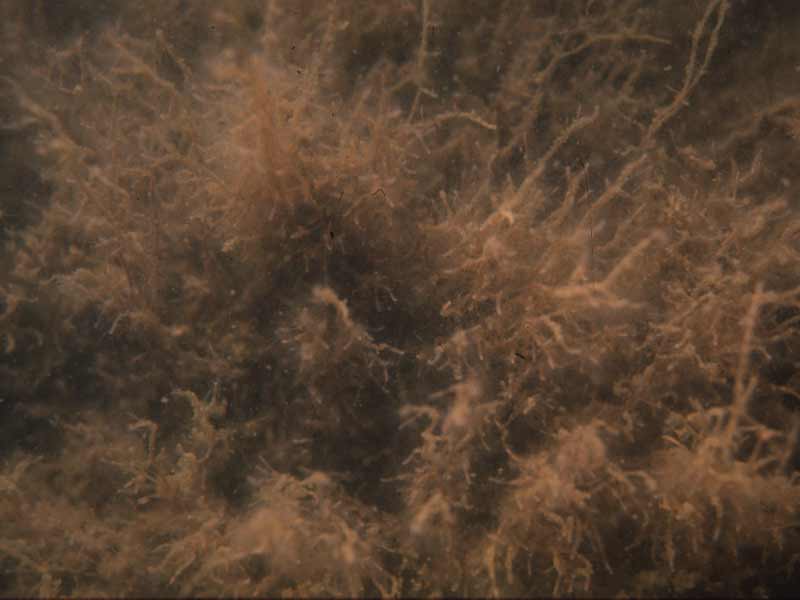
Cordylophora caspia and Electra crustulenta on reduced salinity infralittoral rock.
Photographer: Dr Keith Hiscock Copyright: Dr Keith Hiscock
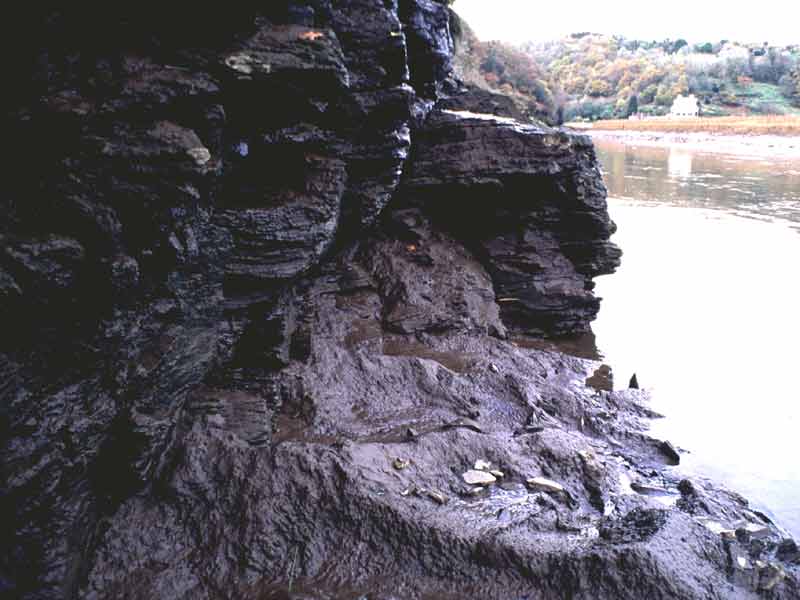
SIR.CorEle exposed at low tide.
Photographer: Dr Keith Hiscock Copyright: Dr Keith Hiscock

| Researched by | Dr Harvey Tyler-Walters | Refereed by | This information is not refereed |
|---|
Summary
UK and Ireland classification
Description
Shallow sublittoral rock in the upper estuary of one of the south-west inlets (Tamar) with very high turbidity and, therefore, no seaweeds. The brackish-water hydroid Cordylophora caspia and small colonies of the encrusting bryozoan Einhornia crustulenta and a few Balanus crenatus characterize this biotope. (Information taken from the Marine Biotope Classification for Britain and Ireland, Version 97.06: Connor et al., 1997a, b).
Depth range
0-5 mAdditional information
Little direct information on the ecology of this biotope was available and reference has been made to other hydroid communities, especially estuarine fouling communities where appropriate. The biotope has been described from only two records in the MNCR database (JNCC, 1999). Notably, the brackish water barnacle Balanus improvisus was once found in the same area as this biotope (MBA, 1957) and may sometimes be a characteristic species in this biotope.
Listed By
Habitat review
Ecology
Ecological and functional relationships
Hydroids may be important in transferring energy from the plankton to the benthos (bentho-pelagic coupling), due to their high feeding rates (Gili & Hughes, 1995), and bryozoans may be equally important in this community. For example, Obelia was reported to be an important regulator of local populations of copepods (Gili & Hughes, 1995). Bryozoans such as Einhornia crustulenta are active suspension feeders on bacteria, small flagellate phytoplankton, algal spores and small pieces of abraded macroalgae or detritus, although they are probably dependant on currents to bring adequate food within reach (Winston, 1977; McKinney, 1986; Best & Thorpe, 1994; Hayward & Ryland, 1998). Hydroids such as Cordylophora caspia are passive carnivores that capture prey that swim into, or are brought into contact with their tentacles by currents. Prey are then killed or stunned by the nematocysts born on the tentacles and swallowed. Diet varies but is likely to include small zooplankton (e.g. nauplii, copepods), small crustaceans, chironomid larvae, detritus and oligochaetes, but may include a wide variety of other organisms such as the larvae or small adults of numerous groups (see Gili & Hughes, 1995). The barnacle Balanus crenatus is also a suspension feeder on phytoplankton, zooplankton and detritus.The three species recorded in the biotope probably compete for space when they occupy the same hard substrata and all grow rapidly. However, Cordylophora caspia can probably grow on the shells of Balanus crenatus and encrusting bryozoans may survive overgrowth by other species (Gordon, 1972; Todd & Turner, 1988). However, in the Tamar estuary Cordylophora caspia dominated the shallower areas of the biotope, while Einhornia crustulenta and Balanus crenatus occurred in deeper water, presumably removed from the lowest salinities and freshwater influence at nearer the surface.
Few of the typical predators of hydroids and bryozoans (Ryland, 1976; Gili & Hughes, 1995) are present in the low, variable salinities characteristic of this biotope. Roos (1979) reported that the freshwater amphipod Gammarus tigrinus ate the polyps of Cordylophora caspia in the low and variable salinity river system of western Holland. It is likely that estuarine and freshwater amphipods and fish (e.g. sticklebacks) are potential predators on the hydroid in this biotope. The lagoonal sea slug Tenellia adspersa feeds on Cordylophora caspia in lagoons and brackish waters (Gaulin et al., 1986; Chester et al., 2000) and tolerates salinities as low as 3 psu (see MarLIN, review). Arndt (1989) suggested that the marine distribution of the brackish water hydroid Cordylophora caspia was probably limited by food availability, competition from Clava spp. or Laomedea spp. and predation e.g. from the nudibranch Tenellia adspersa (as Embletonia pallida). However, Tenellia adspersa, Clava spp or Laomedea spp. were not recorded in this biotope.
Seasonal and longer term change
Cordylophora caspia shows a clear annual cycle. It dies back in late autumn and overwinters as dormant stolons and resting stages (menonts) inside the remnants of the uprights (Roos, 1979; Arndt, 1989; Jormalainen et al. 1994). Arndt (1989) reported that colonies died back in autumn when the temperature fell to about 10 C only to germinate in spring when the temperature exceeded 5 C. Roos (1979) reported that colonies died back in October and new polyps budded again in early spring in the Netherlands. In the Baltic Sea growth was maximal in spring, uprights reaching maximal height at the peak of sexual reproduction in July, with a decline in growth after sexual reproduction (and regression to dormancy in one observation), and subsequent growth in August (Jormalainen et al., 1994).Einhornia crustulenta breeds between March and July in British waters (Hayward & Ryland, 1998). Einhornia crustulenta probably has a similar life history to Electra pilosa, and is probably adapted to ephemeral habitats, growing and reproducing rapidly, although the colony may potentially survive for many years.
The barnacle Balanus crenatus reproduces between February and September, larvae settling in a peak in April from October. Balanus crenatus has a lifespan of only 18 months, and unless recruitment is continuous, the population probably fluctuates but no evidence was found.The biotope probably experiences seasonal changes in physical conditions, with increased riverine input and hence suspended sediment, nutrients, and reduced salinity in winter months, followed by reduced riverine input, water levels and water flow rates in the summer months.
Habitat structure and complexity
This community is impoverished and does not exhibit the degree of species diversity and habitat complexity characteristic of other epifaunal communities. In the Tamar estuary, Cordylophora caspia dominated the steep bedrock (ca 100% cover) from +1 to 3m deep. However, from 3-4m the bedrock and small boulders were almost bare except for a few scattered colonies of Cordylophora caspia, frequent Einhornia crustulenta and rare Balanus crenatus (Moore & Hiscock, 1986). The upper waters in the upper estuary are probably more liable to variations in salinity due to freshwater runoff and riverine input, while the deeper waters may be more saline, allowing Einhornia crustulenta and Balanus crenatus to survive, albeit at the limit of their range.- Hydroid branches form a turf that slow water flow within it and may accumulate a modicum of sediment that may itself support some meiofauna, while branches provide substratum for sessile ciliates (Roos, 1979).
- Hydroid turf may also support 'crowds' of the freshwater amphipod Gammarus tigrinus (Roos, 1979).
- Balanus crenatus provides additional surface roughness and creates spatial refuges for other species if present (Standing, 1976; Roos, 1979; Brault & Bourget, 1985).
Productivity
The majority of productivity within the biotope is secondary through suspension feeding on phytoplankton by bryozoans and passive carnivory by hydroids. Gili & Hughes (1995) suggested that hydroid turfs were important in transferring energy from the plankton to the benthos, however, productivity in this impoverished community is probably low.Recruitment processes
Hydroids are often initial colonizing organisms in settlement experiments and fouling communities (Jensen et al., 1994; Gili & Hughes, 1995; Hatcher, 1998). In settlement experiments in the Warnow estuary, Cordylophora caspia was found to colonize artificial substrata within ca one month of deployment, its abundance increasing from June to the end of September with a peak in July (Sandrock et al., 1991). Long-term panels at their low salinity station became dominated by Cordylophora caspia, Balanus improvisus and Nais elinguis. Similarly, Roos (1979) reported that Cordylophora caspia recruited to and grew luxuriantly on water lily stalks in summer after early reproduction of nearby colonies in early spring.Cordylophora caspia releases a planula larva, no medusoid phase in formed, although planula may occasionally develop in the parent gonophores being released as juvenile polyps. Planula larvae swim or crawl for short periods (e.g. <24hrs) so that while local recruitment may be good, dispersal away from the parent colony is probably very limited (Gili & Hughes, 1995). Fragmentation may also provide another route for short distance dispersal. However, it has been suggested that rafting on floating debris (or hitch hiking on ships hulls or in ship ballast water) as dormant stages or reproductive adults, together with their potentially long lifespan, may have allowed hydroids to disperse over a wide area in the long-term and explain the near cosmopolitan distributions of many hydroid species, including Cordylophora caspia (Gili & Hughes, 1995; Folino, 1999).Balanus crenatus releases planktonic nauplii that develop into a specialized settlement phase, the cyprid (see review). The nauplii may spend >30 days in the plankton, and cyprids settle between April and October with a peak in April. Therefore, dispersal potential is high, depending on the local hydrographic regime. Balanus crenatus also colonized settlement plates or artificial reefs within 1-3 months of deployment in summer, (Brault & Bourget, 1985; Hatcher, 1998), and became abundant on settlement plates shortly afterwards (Standing, 1976; Brault & Bourget, 1985). In this biotope most recruits probably come from other populations within the Tamar and Plymouth Sound.
Einhornia crustulenta probably has a similar life history to that of Electra pilosa, which has a planktonic larvae with a protracted life in the plankton and potentially extended dispersal, and can colonize a wide variety of substrata. It is probably adapted to rapid growth and reproduction (r-selected), capable of colonizing ephemeral habitats, but may also be long lived in ideal conditions (Hayward & Ryland, 1998). In settlement studies, Einhornia crustulenta (as Electra crustulenta) recruited to plates within 5 -6months of deployment, although it did not recruit to the low salinity panels occupied by Cordylophora caspia in their study (Sandrock et al, 1991). Standing (1976) noted that the branches of Obelia longissima physically interfered with recruitment in Balanus crenatus and dense Cordylophora caspia branches may have a similar effect as well as potentially consuming larvae of other species such as Einhornia crustulenta. However, in the riverine/estuarine transition occupied by this biotope, Balanus crenatus and Einhornia crustulenta are probably at their limit of salinity tolerance and recruitment is probably low.Time for community to reach maturity
All the species present in the biotope colonize, grow and occupy space rapidly. The community is largely dominated by the hydroid Cordylophora caspia, which while perennial, dies back in the winter months, only to grow back in the spring months. Therefore, the visible cover of Cordylophora caspia probably develops within the first few months of spring, rapidly occupying space. Balanus crenatus grows rapidly in winter (see review) and probably benefits from the lack of competition for food with the hydroid. Overall, the community is species poor and not known to support more than sessile ciliates and mobile amphipods (see habitat complexity) and hence reaches maturity within only a few months in spring.Additional information
No textPreferences & Distribution
Habitat preferences
| Depth Range | 0-5 m |
|---|---|
| Water clarity preferences | Low clarity / High turbidity |
| Limiting Nutrients | Data deficient |
| Salinity preferences | Reduced (18-30 psu) |
| Physiographic preferences | Enclosed coast or Embayment |
| Biological zone preferences | Infralittoral |
| Substratum/habitat preferences | Bedrock, Cobbles, Large to very large boulders, Small boulders |
| Tidal strength preferences | Moderately strong 1 to 3 knots (0.5-1.5 m/sec.), Strong 3 to 6 knots (1.5-3 m/sec.) |
| Wave exposure preferences | Extremely sheltered, Very sheltered |
| Other preferences | Low / Reduced salinity |
Additional Information
This biotope was recorded at the riverine/estuarine transition, from steeply broken shale bedrock at +1 to 3m deep, dominated by a 100% cover of Cordylophora caspia (as lacustris), and from deeper sloping horizontal bedrock with scattered Cordylophora caspia, frequent Electra crustulenta and rare Balanus spp. (Hiscock & Moore, 1986; Moore et al., 1999). At this site the salinity was reported to always below 20psu and could drop to zero. In nature, well developed colonies of Cordylophora caspia are usually found in water of 2 -12psu where tidal influence is considerable or between 2 -6psu where conditions are constant (Arndt, 1989). Arndt (1989) regarded Cordylophora caspia to be truly brackish water species, requiring eutrophic or hypertrophic conditions to maintain growth and reproduction, thermophilic but limited by low temperatures declining once temperatures drop below 5 °C and not regrowing in winter until temperatures exceed 10 °C (see species review for detail). Hayward & Ryland (1998) note that Electra crustulenta is limited to estuarine habitats but euryhaline in tolerance and probably widespread in distribution but commonly confused with other brackish water and estuarine species of encrusting bryozoans (e.g. Conopeum spp.).
Species composition
Species found especially in this biotope
- Cordylophora caspia
- Electra crustulenta
Rare or scarce species associated with this biotope
-
Additional information
This biotope is represented by only two records from the Tamar estuary, Plymouth, Devon (Hiscock & Moore, 1986; Connor et al., 1997; JNCC, 1999; Moore et al., 1999). The biotope description only includes the species listed above and is very impoverished: in one record the biotope consisted of Cordylophora caspia alone (Hiscock & Moore, 1986). However, the biotope probably supports a species of meiofauna and microfauna/flora that were not recorded in the original survey. Also survey conditions should be taken into account, as the original survey was carried out by diving in the highly turbid waters of the upper Tamar estuary.Sensitivity review
Sensitivity characteristics of the habitat and relevant characteristic species
Cordylophora caspia is the dominant species in this biotope, and if lost would result in loss of the biotope. Einhornia crustulenta is a characteristic species that probably competes for space with Cordylophora caspia. In the absence of a full key information for Einhornia crustulenta, Electra pilosa has been used to represent its sensitivity except its estuarine habitat preferences. Balanus crenatus is probably another competitor for space. However, in one of the two records of this biotope, Cordylophora caspia was the only macrofauna recorded. Therefore, the sensitivity of this biotope is based on the sensitivity of Cordylophora caspia.
Note Cordylophora caspia and other hydroids have the ability to produce dormant resting stages (menonts) that are far more resistant to environmental change than the colony itself. Therefore, although colonies may be removed or destroyed, the resting stages may survive in remnants of the hydrorhizae attached to the substratum. For the sake of assessment, the sensitivity of the branched colonies themselves ( the clearly visible component) has been recorded. The resting stages provide a mechanism for rapid recovery.
In addition, recent genetic analysis has identified at least four genetic lineages of Cordylophora spp., which may represent cryptic species, in Europe and both North and South America (Folino-Rorem et al., 2009; cited in Fofonoff et al., 2015). The distribution of most of the lineages overlapped, but one was recorded only from the Pacific coast of North America. They also exhibit differences in ecological preferences, e.g. one was restricted to freshwater, while two were restricted to brackish waters, while another was found in both. However, Fofonoff et al. (2015) concluded that further analysis was required before it could be treated as separate species. Therefore, the sensitivity assessments consider Cordylophora caspia as a single species.
Resilience and recovery rates of habitat
Hydroids are often initial colonizing organisms in settlement experiments and fouling communities (Jensen et al., 1994; Gili & Hughes, 1995; Hatcher, 1998). In settlement experiments in the Warnow estuary, Cordylophora caspia was found to colonize artificial substrata within ca one month of deployment, its abundance increasing from June to the end of September with a peak in July (Sandrock et al., 1991). long-term panels at their low salinity station became dominated by Cordylophora caspia, Balanus improvisus and Nais elinguis. Similarly, Roos (1979) reported that Cordylophora caspia recruited to and grew luxuriantly on water lily stalks in summer after early reproduction of nearby colonies in early spring. In laboratory experiments, Cordylophora caspia colonies regenerated from thermal and chlorine treatments that removed polyps with 3 -20 days (depending on treatment) (Folino-Rorem & Indelicata, 2005; Mant et al., 2012).
Early seasonal growth from winter dormancy in early spring is rapidly followed by formation of gonophores and sexual reproduction in midsummer followed by active growth in late summer. However, sexual reproductive effort may retard growth (see general biology). Jormalainen et al. (1994) reported that reproduction began in early June, peaked in July (80% uprights with gonophores) and rapidly reduced by August (30% uprights with gonophores). Similar reproductive periods have been reported by other authors (Allman, 1871-1872; MBA, 1957; Roos, 1979; Foster-Smith, 2000). Roos (1979) and Jormalainen et al. (1994) reported that the sex ratio was biased in favour of females. Each upright branch may bear between 1-3 gonophores each with between 10 - 6 eggs, the number decreasing in autumn (Hincks, 1868; Jormalainen et al., 1994). Therefore, fecundity is dependant on the number of branches and hence the number of gonophores, and in large colonies of 70-2000 polyps (Fulton, 1962), may be high.
Cordylophora caspia releases a planula larva, no medusoid phase in formed, although planula may occasionally develop in the parent gonophores being released as juvenile polyps. Planula larvae swim or crawl for short periods (e.g. <24hrs) so that while local recruitment may be good, dispersal away from the parent colony is probably very limited (Gili & Hughes, 1995). Hydroids exhibit remarkable powers of regeneration and Cordylophora caspia can be cloned in culture from detached uprights or excised tissue (Moore, 1952; Fulton, 1961, 1962). Asexual reproduction by fission or mechanical fragmentation of the colony may be an important factor in dispersal (Gili & Hughes, 1995). In addition, Cordylophora caspia (as most hydroids) forms highly resistant dormant stages (menonts).
However, it has been suggested that rafting on floating debris (or hitch hiking on ships hulls or in ship ballast water) as dormant stages or reproductive adults, together with their potentially long lifespan, may have allowed hydroids to disperse over a wide area in the long-term and explain the near cosmopolitan distributions of many hydroid species, including Cordylophora caspia (Gili & Hughes, 1995; Folino, 1999). Cordylophora caspia is presumed to orginate from the Caspian Sea but has spread through the waters of Europe, inc. British Isles, across North and South America, China, Australia and New Zealand (Fofonoff et al., 2015) probably due to shipping. It is reported as biofouling species, particulary in power plant cooling water systems, and as an invasive species resulting in competiion for space with native species and habitat modification (Folino-Rorem & Indelicata, 2005; Mant et al., 2012; Fofonoff et al., 2015). It is, therefore, an adaptive, resistant and resilient species.
Balanus crenatus releases planktonic nauplii that develop into a specialized settlement phase, the cyprid (see review). The nauplii may spend >30 days in the plankton, and cyprids settle between April and October with a peak in April. Therefore, dispersal potential is high, depending on the local hydrographic regime. Balanus crenatus also colonized settlement plates or artificial reefs within 1-3 months of deployment in summer, (Brault & Bourget, 1985; Hatcher, 1998), and became abundant on settlement plates shortly afterwards (Standing, 1976; Brault & Bourget, 1985). In this biotope most recruits probably come from other populations within the Tamar and Plymouth Sound. Einhornia crustulenta probably has a similar life history to that of Electra pilosa, which has a planktonic larvae with a protracted life in the plankton and potentially extended dispersal, and can colonize a wide variety of substrata. It is probably adapted to rapid growth and reproduction (r-selected), capable of colonizing ephemeral habitats, but may also be long lived in ideal conditions (Hayward & Ryland, 1998). In settlement studies, Einhornia crustulenta recruited to plates within 5 -6months of deployment, although it did not recruit to the low salinity panels occupied by Cordylophora caspia in their study (Sandrock et al., 1991). Standing (1976) noted that the branches of Obelia longissima physically interfered with recruitment in Balanus crenatus and dense Cordylophora caspia branches may have a similar effect as well as potentially consuming larvae of other species such as Einhornia crustulenta. However, in the riverine/estuarine transition occupied by this biotope, Balanus crenatus and Einhornia crustulenta are probably at their limit of salinity tolerance and recruitment is probably low.
All the species present in the biotope colonize, grow and occupy space rapidly. The community is largely dominated by the hydroid Cordylophora caspia, which while perennial, dies back in the winter months, only to grow back in the spring months. Therefore, the visible cover of Cordylophora caspia probably develops within the first few months of spring, rapidly occupying space. Balanus crenatus grows rapidly in winter (see review) and probably benefits from the lack of competition for food with the hydroid. Overall, the community is species poor and not known to support more than sessile ciliates and mobile amphipods (see habitat complexity) and hence reaches maturity within only a few months in spring.
Resilience assessment. The biotope and its dominant species (Cordylophora caspia) could probably recover from disturbance within days or months, due to regeneration from dormant stages, remaining hydrorhiza, vertical stolons or fragments. Even where the species had been completely erradicated, there is the potential for rapid recruitment and colonization from surrounding colonies. So that recovery is likely to be rapid, and resilience 'High'.
Hydrological Pressures
Use [show more] / [show less] to open/close text displayed
| Resistance | Resilience | Sensitivity | |
Temperature increase (local) [Show more]Temperature increase (local)Benchmark. A 5°C increase in temperature for one month, or 2°C for one year. Further detail EvidenceCordylophora caspia can survive as resistant dormant stages (menonts) at -10°C and at 35°C. Colonies tolerate 5 to 35°C, and reproduce between 10 to 28°C (Kinne, 1971; reviewed by Arndt, 1986, 1989). Arndt (1989) reported that colonies died back in autumn when the temperature fell to about 10°C only to germinate in spring when the temperature exceeded 5°C. Arndt (1989) concluded that Cordylophora caspia was thermophilic but that low temperature had an important influence on growth and reproduction. In addition, the distribution of Cordylophora caspia extends into subtropical habitats (Arndt, 1986, 1989). In laboratory experiments, colonies degenerated but recovered after 1-8 hr exposure to 35°C and 36.1°C, but died (and did not regenerate within seven days) after exposure to 1-2 hr at 37.7°C and 40.5°C. However, it was unknow if they would have regenerated if examined for longer than seven days (Folino-Rorem & Indelicato, 2005). Therefore, this species is unlikely to be adversely affected by chronic or acute temperature change at the benchmark level in British waters. Growth rates were reported to increase with temperature in several bryozoans species, however, zooid size decreased, which may be due to increased metabolic costs at higher temperature (Menon, 1972; Ryland, 1976; Hunter & Hughes, 1994). The recorded distribution of Einhornia crustulenta is limited from southern England to Orkney but may be more widespread (Hayward & Ryland, 1998; JNCC, 1999). Balanus crenatus, however, is a boreal species and may be lost due to long-term increases in temperature at the benchmark level, causing a minor decline in species richness. Overall, the biotope is unlikely to be adversely afected at the benchmark level. Therefore a resistance of 'High', resilience of 'High' and hence sensitivity of 'Not sensitive' is recorded at the benchmark level. | HighHelp | HighHelp | Not sensitiveHelp |
Temperature decrease (local) [Show more]Temperature decrease (local)Benchmark. A 5°C decrease in temperature for one month, or 2°C for one year. Further detail EvidenceCordylophora caspia can survive as resistant dormant stages (menonts) at -10°C and at 35°C. Colonies tolerate 5 to 35°C, and reproduce between 10 to 28°C (Kinne, 1971; reviewed by Arndt, 1986, 1989). Arndt (1989) reported that colonies died back in autumn when the temperature fell to about 10°C only to germinate in spring when the temperature exceeded 5°C. Arndt (1989) concluded that Cordylophora caspia was thermophilic but that low temperature had an important influence on growth and reproduction. Electra pilosa was reported to survive below freezing temperatures (Menon, 1972) although colonies are probably more tolerant of low temperatures in winter than summer (see review for details). Electra crustulenta may exhibit a similar response. Brault & Bourget (1985) noted that recruitment was delayed until spring on settlement plates deployed in winter. However, all the dominant species within the biotope are boreal or recorded from north of the British Isles. Therefore, although growth and reproduction may be reduced, they are unlikely to be adversely affected by reductions in temperature in British waters. Therefore, while low temperatures may trigger premature die back or regression, colonies are likely to survive changes in temperature at the benchmark level. A resistance of 'High' is suggested, with a resilience of 'High' and a sensitvity of 'Not sensitive'. | HighHelp | HighHelp | Not sensitiveHelp |
Salinity increase (local) [Show more]Salinity increase (local)Benchmark. A increase in one MNCR salinity category above the usual range of the biotope or habitat. Further detail EvidenceCordylophora caspia can survive 0 to 35 psu as resistant stages, grow between 0.2-30 psu, reproduce between 0.2-20psu and possesses the ability to ionic regulate (Kinne, 1971; reviewed by Arndt, 1986, 1989). In nature, well developed colonies are usually found in water of 2 -12 psu where tidal influence is considerable or between 2 -6 psu where conditions are constant (Arndt, 1989) but it may also occur at full salinities. Kinne (1971) noted that high salinities (24 or 30 psu) occasionally resulted in developmental abnormalities in older colonies in the laboratory. Arndt (1989) suggested that its marine distribution was probably limited by food availability, competition from Clava spp. or Laomedea spp. and predation e.g. from the nudibranch Tenellia adspersa (as Embletonia pallida). Therefore, a change in salinity from reduced to variable in the long-term (see benchmark) or from full to hypersaline (>40 units) may result in loss of a proportion of the population due to die back or competitive exclusion and predation, and an resistance of 'Low' has been recorded. Survival of resting stages is likely to result in rapid recovery, so resilience is 'High' resulting in a sensitivity of 'Low'. | LowHelp | HighHelp | LowHelp |
Salinity decrease (local) [Show more]Salinity decrease (local)Benchmark. A decrease in one MNCR salinity category above the usual range of the biotope or habitat. Further detail EvidenceCordylophora caspia can survive 0 to 35 psu as resistant stages, grow between 0.2-30 psu, reproduce between 0.2-20 psu and possesses the ability to ionic regulate (Kinne, 1971; reviewed by Arndt, 1986; 1989). In nature, well developed colonies are usually found in water of 2 -12 psu where tidal influence is considerable or between 2 -6 psu where conditions are constant (Arndt, 1989). It may also occur at full salinities, and fast flowing, well oxygenated freshwater containing Ca, Mg, Na, Cl and K ions (Fulton, 1962; Arndt, 1989). It has been reported from estuaries that receive significant seasonal freshwater input, and tolerates variable salinities (Arndt, 1986; 1989). Therefore, it is probably relatively tolerant of a change in salinity at the benchmark level. A reduction from full to reduced salinity may be beneficial and allow Cordylophora caspia to colonize new habitats. In addition, this biotope was recorded at the riverine/estuarine transition where the salinity was reported to be always below 20 psu but could drop to zero (Hiscock & Moore, 1986; Moore et al., 1999). Therefore, a long-term change in salinity (see benchmark) from full to variable, or variable to reduced or low to freshwater is unlikely to adversely affect the dominant species (Cordylophora caspia) and may allow it to extend its range. Therefore, the biotope is probably 'Not sensitive' at the benchmark level (resistance and resilience are 'High'). | HighHelp | HighHelp | Not sensitiveHelp |
Water flow (tidal current) changes (local) [Show more]Water flow (tidal current) changes (local)Benchmark. A change in peak mean spring bed flow velocity of between 0.1 m/s to 0.2 m/s for more than one year. Further detail EvidenceWater movement is essential for suspension feeding species to supply adequate food, remove metabolic waste products, prevent accumulation of sediment and disperse larvae. Hydroids are expected to be abundant where water movement is sufficient to supply adequate food but not cause damage (Hiscock, 1983; Gili & Hughes, 1995). In Cordylophora caspia, flexibility of the otherwise rigid perisarc of hydroids is provided by annulations at the base of branches. In addition, in athecates, the neck of the polyp is flexible enough to allow the polyp adopt an efficient 'lee-side' feeding posture in water flow. However, most hydroids have a narrow range of water flow rates for effective feeding. For example in the athecate Tubularia indivisa, food capture rate increased up to 20 cm/s, but decreased as water flow rates increased (Hiscock, 1983). In Cordylophora inkermania food capture rates were higher in fluctuating flows than in unidirectional flows (Gili & Hughes, 1995), presumably because more polyps were brought into play in fluctuating flow, than in unidirectional flow where upstream branches 'shaded' down stream branches. Loomis (in Fulton, 1961) noted that Cordylophora caspia did not grow in still water cultures presumably because of the build up of CO2 from respiration. Electra pilosa (and by inference Einhornia crustulenta) was able to grow in strong water flows (e.g. Menai Strait and Lough Ine rapids) (Ryland, 1970; Hermansen et al., 2001). Balanus crenatus is found in a wide range of water flow rates is often dominant in very strong tidal streams. This biotope occurs in moderately strong to strong tidal streams (i.e. between 0.5 and 3 m/s). Therefore, a change of 0.1-0.2 m/s is unlikely to adversely affect the biotope, although a reduction may decrease feeding and hence growth rates. Therefore, a resistance of 'High' is recorded, with a resilience of 'High' and a sensitivity of 'Not sensitive' at the benchmark level. | HighHelp | HighHelp | Not sensitiveHelp |
Emergence regime changes [Show more]Emergence regime changesBenchmark. 1) A change in the time covered or not covered by the sea for a period of ≥1 year or 2) an increase in relative sea level or decrease in high water level for ≥1 year. Further detail EvidenceThis biotope was recorded from steeply broken shale bedrock at +1 to 3m deep, dominated by a 100% cover of Cordylophora caspia (as lacustris), and from deeper sloping horizontal bedrock with scattered Cordylophora caspia, frequent Einhornia crustulenta and rare Balanus spp. (Hiscock & Moore, 1986; Moore et al., 1999). Intertidal populations of Cordylophora caspia are restricted to damp habitats such as underboulders and overhangs. The branched growth form of this species is likely to retain water on emersion (see image). However, an increase in desiccation (associated with increased emergence) is likely to result in drying and death of the uprights. Increased desiccation may result in the formation of resistant, dormant stages, however, no information on their desiccation tolerance was found. Sensitivity assessment. An increase in emergence is likely to result in death of a proportion of the population and reduction in its upper shore extent. Therefore, a resistance of Low is recorded. However, recovery from resting stages and recolonization is likely to be rapid, so that resilience is probably 'High and sensitivity, therefore, 'Low'. | LowHelp | HighHelp | LowHelp |
Wave exposure changes (local) [Show more]Wave exposure changes (local)Benchmark. A change in near shore significant wave height of >3% but <5% for more than one year. Further detail EvidenceThe very sheltered situations in which this biotope occurs are unlikely to experience an increase in wave exposure at the benchmark level due to natural causes, except perhaps extreme storm conditions. However, an increase in large or fast boat traffic and the resultant wash may have a similar effect to an increase in wave exposure. Balanus crenatus is tolerant of a wide range of wave exposures. However, Cordylophora caspia and Einhornia crustulenta have only been recorded from very or extremely wave sheltered habitats, and this biotope has only been recorded in very to extremely wave sheltered conditions. Therefore, it is likely than an increase in wave exposure at the benchmark level is likely to result in loss or damage of the their colonies. Populations occupying small rocks, cobbles or pebbles are likely to be more sensitive and the resultant movement of the substratum and sediment scour may also remove attached hydrorhizae, the resting stages of the hydroid, and encrusting bryozoan colonies. Therefore, resitance of 'Low' has been recorded. Recovery of the biotope will depend on recruitment of Cordylophora caspia from other areas. However, any resting stages and fragments of colonies remaining may contribute to the recovery. Therefore, resilience is probably 'High' and sensitivity 'Low'. | LowHelp | HighHelp | LowHelp |
Chemical Pressures
Use [show more] / [show less] to open/close text displayed
| Resistance | Resilience | Sensitivity | |
Transition elements & organo-metal contamination [Show more]Transition elements & organo-metal contaminationBenchmark. Exposure of marine species or habitat to one or more relevant contaminants via uncontrolled releases or incidental spills. Further detail EvidenceThis pressure is Not assessed but evidence is presented where available. | Not Assessed (NA)Help | Not assessed (NA)Help | Not assessed (NA)Help |
Hydrocarbon & PAH contamination [Show more]Hydrocarbon & PAH contaminationBenchmark. Exposure of marine species or habitat to one or more relevant contaminants via uncontrolled releases or incidental spills. Further detail EvidenceThis pressure is Not assessed but evidence is presented where available. Although subtidal, this biotope is relatively shallow and may be exposed to oils and hydrocarbons adsorbed onto particulates and ingested or through the water soluble fractions of oils and hydrocarbons. The water soluble fractions of Monterey crude oil and drilling muds were reported to cause polyp shedding and other sublethal effects in the athecate Tubularia crocea in laboratory tests (Michel & Case, 1984; Michel et al., 1986; Holt et al., 1995). The athecate Cordylophora caspia may show similar sublethal effects assuming similar physiology. Species of the encrusting bryozoan Membranipora and the erect bryozoan Bugula were reported to be lost or excluded from areas subject to oil spills (Mohammad, 1974; Soule & Soule, 1979). Houghton et al.(1996) reported a reduction in the abundance of intertidal encrusting bryozoans (no species given) at oiled sites after the Exxon Valdez oil spill. Littoral populations of encrusting bryozoans and hydroids are also probably intolerant of the smothering effects of oil pollution, resulting in suffocation of colonies. Littoral barnacles generally have a high tolerance to oil (Holt et al., 1995) and were little impacted by the Torrey Canyon oil spill (Smith, 1968) so Balanus crenatus is probably fairly resistant to oil. | Not Assessed (NA)Help | Not assessed (NA)Help | Not assessed (NA)Help |
Synthetic compound contamination [Show more]Synthetic compound contaminationBenchmark. Exposure of marine species or habitat to one or more relevant contaminants via uncontrolled releases or incidental spills. Further detail EvidenceThis pressure is Not assessed but evidence is presented where available. Stebbing (1981) reported that Cu, Cd, and tributyl tin fluoride affected growth regulators in Laomedea (asCampanularia) flexuosa resulting in increased growth. Bryan & Gibbs (1991) reported that virtually no hydroids were present on hard bottom communities in TBT contaminated sites and suggested that some hydroids were intolerant of TBT levels between 100 and 500 ng/l. Bryozoans are common members of the fouling community, and amongst those organisms most resistant to antifouling measures, such as copper containing anti-fouling paints (Soule & Soule, 1977; Holt et al., 1995). Bryan & Gibbs (1991) reported that there was little evidence regarding TBT toxicity in bryozoans with the exception of the encrusting Schizoporella errata, which suffered 50% mortality when exposed for 63 days to 100ng/l TBT. However, Hoare & Hiscock (1974) suggested that Polyzoa (Bryozoa) were amongst the most intolerant species to acidified halogenated effluents in Amlwch Bay, Anglesey. Hoare & Hiscock (1974) found that Balanus crenatus survived near to an acidified halogenated effluent discharge where many other species were killed, suggesting a high tolerance to chemical contamination. However, barnacles have a low resilience to chemicals such as dispersants, dependant on the concentration and type of chemical involved and Holt et al. (1995) concluded that barnacles were fairly intolerant of chemical pollution. Therefore, hydroids are probably intolerant of TBT contamination (which may be highest in estuarine environments) and bryozoans and barnacles are probably intolerant of chemical pollution. Cordylophora caspia was also a dominant species on settlement plates placed on a floating shipyard dock in Warnock river (Sandrock et al., 1991). Floating docks are likely to result in local contamination with heavy metals and antifouling agents from ship paints, as well as oils and other chemicals used in ship maintenance. Hydroid species adapted to a wide variation in environmental factors and with cosmopolitan distributions tend to be more tolerant of polluted waters (Boero, 1984; Gili & Hughes, 1995). | Not Assessed (NA)Help | Not assessed (NA)Help | Not assessed (NA)Help |
Radionuclide contamination [Show more]Radionuclide contaminationBenchmark. An increase in 10µGy/h above background levels. Further detail EvidenceNo evidence was found. | No evidence (NEv)Help | Not relevant (NR)Help | No evidence (NEv)Help |
Introduction of other substances [Show more]Introduction of other substancesBenchmark. Exposure of marine species or habitat to one or more relevant contaminants via uncontrolled releases or incidental spills. Further detail EvidenceThis pressure is Not assessed. | Not Assessed (NA)Help | Not assessed (NA)Help | Not assessed (NA)Help |
De-oxygenation [Show more]De-oxygenationBenchmark. Exposure to dissolved oxygen concentration of less than or equal to 2 mg/l for one week (a change from WFD poor status to bad status). Further detail EvidenceFulton (1962) found that some polyps of Cordylophora caspia fell off or were reabsorbed after 7 days in the complete absence of oxygen but remaining polyps began feeding shortly after the re-introduction of oxygen. Fulton (1962) concluded that Cordylophora caspia had a low oxygen requirement for growth and was able to grow at oxygen levels of >2 mg/l (ca 1.4 ml/l). Similarly, the hydroid Melicertum octocostatum annually over-summers as stolons in anoxic conditions in Abereiddy Quarry, growing back in autumn (Hiscock & Hoare, 1975). Sagasti et al. (2000) reported that epifauna communities, including dominant species such as the bryozoans Conopeum tenuissimum and Membranipora tenuis, and the hydroid Obelia bicuspidata were unaffected by periods of moderate hypoxia (ca 0.35 -1.4 ml/l) and short periods of hypoxia (<0.35 ml/l) in the York River, Chesapeake Bay. Their study suggests that estuarine epifaunal communities are relatively tolerant of hypoxia. However, Balanus crenatus was reported to survive an average of 3.2 days in the absence of oxygen (Barnes et al., 1963), and it is probable that a proportion of the Balanus crenatus population would be lost, resulting in a loss of species richness. Overall, Cordylophora caspia is probably resistant of low oxygen levels resitance of 'High' is recorded. Therefore, resilience is 'High' and the biotope is probably ' Not sensitive' at the benchmark level. | HighHelp | HighHelp | Not sensitiveHelp |
Nutrient enrichment [Show more]Nutrient enrichmentBenchmark. Compliance with WFD criteria for good status. Further detail EvidenceCordylophora caspia became one of the dominant species to colonize settlement plates placed beneath a floating dock in the Warnock river (Sandrock et al., 1991). This station was characterized by low salinities, and higher organic and mineral nutrient loads (ca 20-100 µmol NO3/l) than their other experimental station. Arndt (1986, 1989) suggested that food intake in Cordylophora caspia was high in comparison to other hydroids so that growth and reproduction rates required for the survival of the species could only occur in eutrophic or hypertrophic waters where food is plentiful. Therefore, Cordylophora caspia is likely to tolerate relatively high nutrient levels, and may benefit from moderate increases in nutrients. The biotope is 'Not sensitive' at the pressure benchmark that assumes compliance with good status as defined by the WFD. | Not relevant (NR)Help | Not relevant (NR)Help | Not sensitiveHelp |
Organic enrichment [Show more]Organic enrichmentBenchmark. A deposit of 100 gC/m2/yr. Further detail EvidenceCordylophora caspia became one of the dominant species to colonize settlement plates placed beneath a floating dock in the Warnock river (Sandrock et al., 1991). This station was characterized by low salinities, and higher organic and mineral nutrient loads (ca 20-100 µmol NO3/l) than their other experimental station. Arndt (1986, 1989) suggested that food intake in Cordylophora caspia was high in comparison to other hydroids so that growth and reproduction rates required for the survival of the species could only occur in eutrophic or hypertrophic waters where food is plentiful. Therefore, Cordylophora caspia is may tolerate relatively high nutrient levels, and may benefit from moderate increases in organic enrichment, although no direct evidence was found. Therefore, a resistance of High is suggested, with a resilience of 'High', resulting in a sensitivity rank of 'Not sensitive'. | HighHelp | HighHelp | Not sensitiveHelp |
Physical Pressures
Use [show more] / [show less] to open/close text displayed
| Resistance | Resilience | Sensitivity | |
Physical loss (to land or freshwater habitat) [Show more]Physical loss (to land or freshwater habitat)Benchmark. A permanent loss of existing saline habitat within the site. Further detail EvidenceAll marine habitats and benthic species are considered to have a resistance of ‘None’ to this pressure and to be unable to recover from a permanent loss of habitat (resilience is ‘Very Low’). Sensitivity within the direct spatial footprint of this pressure is therefore ‘High’. Although no specific evidence is described confidence in this assessment is ‘High’, due to the incontrovertible nature of this pressure. | NoneHelp | Very LowHelp | HighHelp |
Physical change (to another seabed type) [Show more]Physical change (to another seabed type)Benchmark. Permanent change from sedimentary or soft rock substrata to hard rock or artificial substrata or vice-versa. Further detail EvidenceThis biotope is recorded from hard substrata, that is, bedrock, small to large boulders and cobbles. The key species, Cordylophora caspia, also grows on artificial hard substrata, ships hulls, plants, wood and debris (see species review). However, a permanent change to soft substrata (muds, sands etc.) would result in exclusion of the species from the habitat. It may colonize areas where boulder remain, but removal or loss of the available substratum (the benchmark) would result in loss of all encrusting species and hence loss of the biotope. Therefore, resistance is 'None', and resilience 'Very low' (it is a permanent change), and hence sensitivity is 'High'. | NoneHelp | Very LowHelp | HighHelp |
Physical change (to another sediment type) [Show more]Physical change (to another sediment type)Benchmark. Permanent change in one Folk class (based on UK SeaMap simplified classification). Further detail EvidenceThis biotope is recorded from hard substrata, that is, bedrock, small to large boulders and cobbles. Therefore a change in sediment type is not relevant. | Not relevant (NR)Help | Not relevant (NR)Help | Not relevant (NR)Help |
Habitat structure changes - removal of substratum (extraction) [Show more]Habitat structure changes - removal of substratum (extraction)Benchmark. The extraction of substratum to 30 cm (where substratum includes sediments and soft rock but excludes hard bedrock). Further detail EvidenceThe species characterizing this biotope are epifauna or epiflora occurring on rock and would be sensitive to the removal of the habitat. However, extraction of rock substratum is considered unlikely and this pressure is considered to be ‘Not relevant’ to hard substratum habitats. | Not relevant (NR)Help | Not relevant (NR)Help | Not relevant (NR)Help |
Abrasion / disturbance of the surface of the substratum or seabed [Show more]Abrasion / disturbance of the surface of the substratum or seabedBenchmark. Damage to surface features (e.g. species and physical structures within the habitat). Further detail EvidenceAbrasion by a passing anchor or fishing gear, or by trampling on the lower shore is likely to remove relatively delicate uprights of hydroids, damage bryozoan colonies and crush barnacles. However, in hydroids the surface covering of hydrorhizae may remain largely intact, from which new uprights are likely to grow. In addition, the resultant fragments of hydroid colonies may be able to develop into new colonies. Populations on small hard substrata (e.g. cobbles) may be removed by fishing gear, constituting substratum loss. Overall, a proportion of the hydroid and bryozoan colonies or barnacles are likely to be destroyed and an resistance of 'Low' has been recorded. However, recovery from surviving hydrorhizae and occasional fragments is likely to be rapid so that resilience is probably 'High', resulting in a sensitivity of 'Low'. | LowHelp | HighHelp | LowHelp |
Penetration or disturbance of the substratum subsurface [Show more]Penetration or disturbance of the substratum subsurfaceBenchmark. Damage to sub-surface features (e.g. species and physical structures within the habitat). Further detail EvidenceThe species characterizing this biotope group are epifauna or epiflora occurring on rock which is resistant to subsurface penetration. The assessment for abrasion at the surface only is therefore considered to equally represent sensitivity to this pressure. | Not relevant (NR)Help | Not relevant (NR)Help | Not relevant (NR)Help |
Changes in suspended solids (water clarity) [Show more]Changes in suspended solids (water clarity)Benchmark. A change in one rank on the WFD (Water Framework Directive) scale e.g. from clear to intermediate for one year. Further detail EvidenceCordylophora caspia and Einhornia crustulenta are found in estuarine and sheltered lagoonal habitats, which are characterized by relatively high suspended sediment loads. This biotope probably experiences marked changes in suspended sediment loads between winter and summer, due to winter storms and rainfall. Cordylophora caspia was also reported in saltmarsh pools (JNCC, 1999) and salt marshes are a depositional environment characterized by siltation. Therefore, Cordylophora caspia and Einhornia crustulenta are probably not sensitive to increases in suspended sediment loads at the benchmark level. Balanus crenatus is found a wide variety of habitats including estuaries and on the back of crustaceans in sedimentary habitats, although increased sediment loads may reduce growth rates. A reduction in suspended sediment is unlikely to directly affect the biotope. A decrease in suspended sediment may reduce the availability of organic particulates and hence reduce food availability. Arndt (1986, 1989) suggested that Cordylophora caspia had a high food requirement for growth and reproduction and that the species could only occur in eutrophic or hypertrophic waters where food is plentiful. It is therefore, likely to be intolerant of any reduction in food availability. Overall, a reduction in suspended sediment may reduce food availability and hence growth and reproduction in all the species in the biotope. Estuarine environments are typically very turbid in comparison to coastal waters, therefore a change in turbidity of one rank in the UKTAG scale (the benchmark) may not be significant. In addition the biotope probably experiences marked changes in sedimentary loads between the winter and summer months. Therefore, the resistance is probably 'High', resilience is 'High', and the biotope 'Not sensitive' at the benchmark level. | HighHelp | HighHelp | Not sensitiveHelp |
Smothering and siltation rate changes (light) [Show more]Smothering and siltation rate changes (light)Benchmark. ‘Light’ deposition of up to 5 cm of fine material added to the seabed in a single discrete event. Further detail EvidenceAt low salinities Cordylophora caspia forms short, un-branched colonies and smothering by 5 cm of sediment is likely to cover a large proportion of the colony, preventing feeding and hence reducing growth and reproduction in the hydroid, while local hypoxic conditions are also likely to inhibit growth (Fulton, 1961, 1963). Smothering will also prevent feeding and growth in both Einhornia crustulenta and Balanus crenatus. The encrusting bryozoan grows rapidly and may be adversely affected, while Balanus crenatus was considered to be resistant (see review). The hydroid colony is likely to survive or become dormant, and recover rapidly once the sediment is removed. Examples of the biotope on overhangs and other vertical or near vertical surfaces are unlikely to be affected, while examples on small boulders and cobbles that retain the sediment will probably be the most affected. In estuarine conditions, tidal flow is likely to remove 5 cm of deposited sediment within a number of tidal cycles, depending on site, so the duration of smothering is probably fairly short. Therefore, a resistance of 'Moderate' is suggested, with a 'High' resilience', so that sensitivity is probably 'Low'. | MediumHelp | HighHelp | LowHelp |
Smothering and siltation rate changes (heavy) [Show more]Smothering and siltation rate changes (heavy)Benchmark. ‘Heavy’ deposition of up to 30 cm of fine material added to the seabed in a single discrete event. Further detail EvidenceAt low salinities Cordylophora caspia forms short, un-branched colonies and smothering by 5 cm of sediment is likely to cover a large proportion of the colony, preventing feeding and hence reducing growth and reproduction in the hydroid, while local hypoxic conditions are also likely to inhibit growth (Fulton, 1961, 1963). Smothering will also prevent feeding and growth in both Einhornia crustulenta and Balanus crenatus. The encrusting bryozoan grows rapidly and may be adversely affected, while Balanus crenatus was considered to be resistant (see review). The hydroid colony is likely to survive or become dormant, and recover rapidly once the sediment is removed. Examples of the biotope on overhangs and other vertical or near vertical surfaces are unlikely to be affected, while examples on small boulders and cobbles that retain the sediment will probably be the most affected. In estuarine conditions, tidal flow is likely to remove 30 cm of deposited sediment within several months, depending on site, so the duration of smothering is probably variable. Therefore, a resistance of 'Low' is suggested, with a 'High' resilience', so that sensitivity is probably 'Low'. | LowHelp | HighHelp | LowHelp |
Litter [Show more]LitterBenchmark. The introduction of man-made objects able to cause physical harm (surface, water column, seafloor or strandline). Further detail EvidenceNot assessed | Not Assessed (NA)Help | Not assessed (NA)Help | Not assessed (NA)Help |
Electromagnetic changes [Show more]Electromagnetic changesBenchmark. A local electric field of 1 V/m or a local magnetic field of 10 µT. Further detail EvidenceNo evidence | No evidence (NEv)Help | Not relevant (NR)Help | No evidence (NEv)Help |
Underwater noise changes [Show more]Underwater noise changesBenchmark. MSFD indicator levels (SEL or peak SPL) exceeded for 20% of days in a calendar year. Further detail EvidenceThe characterizing epifauna have no known ability to perceive noise. although they can perceive localised vibration, changes in noise levels are probably 'Not relevant' to this biotope. | Not relevant (NR)Help | Not relevant (NR)Help | Not relevant (NR)Help |
Introduction of light or shading [Show more]Introduction of light or shadingBenchmark. A change in incident light via anthropogenic means. Further detail EvidenceThe dominant characterizing epifauna are predators and filter feeders with no direct dependency on light. Although, phytoplankotn productivity may be locally reduced by shading or possibly increase by additional illumination, most of their food supply is transported by the local currents. Therefore, this pressure is probably 'Not relevant' to this biotope. | Not relevant (NR)Help | Not relevant (NR)Help | Not relevant (NR)Help |
Barrier to species movement [Show more]Barrier to species movementBenchmark. A permanent or temporary barrier to species movement over ≥50% of water body width or a 10% change in tidal excursion. Further detail EvidenceBarrier to water flow may restrict larval recruitment for this biotope. However, Cordylophora caspia is a potentially invasive non-indigenous species,thought to have been transported in ballast water and on ship hulls, as larvae, fragments or dormant stages. Therefore, only complete cessation of water flow and water transport is likely to adversely affect recruitment of the dominant characteristic species. In addition, the hydroid colony (or colonies) is probably not dependent on external recruitment for it continued survival, except if severely damaged. Therefore, this pressure is 'Not relevant' to this biotope. | Not relevant (NR)Help | Not relevant (NR)Help | Not relevant (NR)Help |
Death or injury by collision [Show more]Death or injury by collisionBenchmark. Injury or mortality from collisions of biota with both static or moving structures due to 0.1% of tidal volume on an average tide, passing through an artificial structure. Further detail EvidenceNot relevant’ to seabed habitats. NB. Collision by grounding vessels is addressed under ‘surface abrasion’ | Not relevant (NR)Help | Not relevant (NR)Help | Not relevant (NR)Help |
Visual disturbance [Show more]Visual disturbanceBenchmark. The daily duration of transient visual cues exceeds 10% of the period of site occupancy by the feature. Further detail EvidenceThe characteristic epifaunal species have no known visual perception. | Not relevant (NR)Help | Not relevant (NR)Help | Not relevant (NR)Help |
Biological Pressures
Use [show more] / [show less] to open/close text displayed
| Resistance | Resilience | Sensitivity | |
Genetic modification & translocation of indigenous species [Show more]Genetic modification & translocation of indigenous speciesBenchmark. Translocation of indigenous species or the introduction of genetically modified or genetically different populations of indigenous species that may result in changes in the genetic structure of local populations, hybridization, or change in community structure. Further detail EvidenceCordylophora caspia is considered to be a invasive non-indigenous species in Europe, and both South and North America, probably transported by shipping (Fofonoff et al., 2015). Its 'translocation' has probably extended its geographic range and can be regarded as beneficial to the species. Therefore, this biotope is probably 'Not sensitive' to this pressure. | Not relevant (NR)Help | Not relevant (NR)Help | Not sensitiveHelp |
Introduction of microbial pathogens [Show more]Introduction of microbial pathogensBenchmark. The introduction of relevant microbial pathogens or metazoan disease vectors to an area where they are currently not present (e.g. Martelia refringens and Bonamia, Avian influenza virus, viral Haemorrhagic Septicaemia virus). Further detail EvidenceNo evidence found. | No evidence (NEv)Help | Not relevant (NR)Help | No evidence (NEv)Help |
Removal of target species [Show more]Removal of target speciesBenchmark. Removal of species targeted by fishery, shellfishery or harvesting at a commercial or recreational scale. Further detail EvidenceIt is extremely unlikely that any of the species indicative of sensitivity (i.e. Cordylophora caspia) would be targeted by a fishery or other commercial activity. Therefore, this pressure (as defined in the benchmark) is 'Not relevant' to this biotope. However, in areas where the Cordylophora caspia is regarded as an invasive or biofouling species, physical removal might be adopted as a control measure but his is not considered here. | Not relevant (NR)Help | Not relevant (NR)Help | Not relevant (NR)Help |
Removal of non-target species [Show more]Removal of non-target speciesBenchmark. Removal of features or incidental non-targeted catch (by-catch) through targeted fishery, shellfishery or harvesting at a commercial or recreational scale. Further detail EvidenceThis biotope is unlikely to be exposed to commercial fisheries or shell fisheries, angling or harvesting activities (as defined in the benchmark) . Therefore, this pressure is 'Not relevant'. Any potential abrasion to the habitat via canoe or boat landing points, recreational access etc., is considered under the abrasion pressure above. | Not relevant (NR)Help | Not relevant (NR)Help | Not relevant (NR)Help |
Introduction or spread of invasive non-indigenous species (INIS) Pressures
Use [show more] / [show less] to open/close text displayed
| Resistance | Resilience | Sensitivity | |
Other INIS [Show more]Other INISEvidenceCordylophora caspia is regarded as an invasive non-indigenous species (INIS) in parts of Europe and both North and South America. However, no evidence on the effects of other INIS on Cordylophora caspia was found. | No evidence (NEv)Help | Not relevant (NR)Help | No evidence (NEv)Help |
Bibliography
Allman, G.J., 1871-1872. A monograph of the Gymnoblastic or Tubularian hydroids, Vol. I & II. London: Ray Society.
Arndt, E.A., 1984. The ecological niche of Cordylophora caspia (Pallas, 1771). Limnologica, 15, 469-477.
Arndt, E.A., 1989. Ecological, physiological and historical aspects of brackish water fauna distribution. In Proceedings of the 23rd European Marine Biology Symposium, Swansea, 5-9 September 1988. Reproduction, Genetics and Distribution of Marine Organisms, (ed. J.S. Ryland & P.A. Tyler), pp. 327-338. Denmark: Olsen & Olsen.
Barnes, H., Finlayson, D.M. & Piatigorsky, J., 1963. The effect of desiccation and anaerobic conditions on the behaviour, survival and general metabolism of three common cirripedes. Journal of Animal Ecology, 32, 233-252.
Best, M.A. & Thorpe, J.P., 1994. An analysis of potential food sources available to intertidal bryozoans in Britain. In Proceedings of the 9th International Bryozoology conference, Swansea, 1992. Biology and Palaeobiology of Bryozoans (ed. P.J. Hayward, J.S. Ryland & P.D. Taylor), pp. 1-7. Fredensborg: Olsen & Olsen.
Boero, F., 1984. The ecology of marine hydroids and effects of environmental factors: a review. Marine Ecology, 5, 93-118.
Brault, S. & Bourget, E., 1985. Structural changes in an estuarine subtidal epibenthic community: biotic and physical causes. Marine Ecology Progress Series, 21, 63-73.
Bryan, G.W. & Gibbs, P.E., 1991. Impact of low concentrations of tributyltin (TBT) on marine organisms: a review. In: Metal ecotoxicology: concepts and applications (ed. M.C. Newman & A.W. McIntosh), pp. 323-361. Boston: Lewis Publishers Inc.
Bryan, G.W., 1984. Pollution due to heavy metals and their compounds. In Marine Ecology: A Comprehensive, Integrated Treatise on Life in the Oceans and Coastal Waters, vol. 5. Ocean Management, part 3, (ed. O. Kinne), pp.1289-1431. New York: John Wiley & Sons.
Connor, D.W., Dalkin, M.J., Hill, T.O., Holt, R.H.F. & Sanderson, W.G., 1997a. Marine biotope classification for Britain and Ireland. Vol. 2. Sublittoral biotopes. Joint Nature Conservation Committee, Peterborough, JNCC Report no. 230, Version 97.06., Joint Nature Conservation Committee, Peterborough, JNCC Report no. 230, Version 97.06.
Fofonoff, P.W., Ruiz, G.M., Steves, B., & Carlton, J.T., 2015. National Exotic Marine and Estuarine Species Information System (NEMESIS). Available from http://invasions.si.edu/nemesis/ Access Date: 26-Aug -2015
Folino, N.C., 1999. The freshwater expansion and classification of the colonial hydroid Cordylophora (Phylum Cnidaria, Class Hydrozoa). In Proceedings of the first National Conference, Massachusetts Institiute of Technology, Cambridge, MA, 1999. Marine Bioinvasions, pp. 139-144.
Folino-Rorem, N.C. & Indelicato, J., 2005. Controlling biofouling caused by the colonial hydroid Cordylophora caspia. Water Research, 39 (12), 2731-2737.
Folino-Rorem, N.C., Darling, J.A. & D’Ausilio, C.A., 2009. Genetic analysis reveals multiple cryptic invasive species of the hydrozoan genus Cordylophora. Biological Invasions, 11, 1869-1882.
Foster, B.A., 1971a. Desiccation as a factor in the intertidal zonation of barnacles. Marine Biology, 8, 12-29.
Foster, B.A., 1971b. On the determinants of the upper limit of intertidal distribution of barnacles. Journal of Animal Ecology, 40, 33-48.
Foster, P., Hunt, D.T.E. & Morris, A.W., 1978. Metals in an acid mine stream and estuary. Science of the Total Environment, 9, 75-86.
Fulton, C., 1962. Environmental factors influencing the growth of Cordylophora. Journal of Experimental Zoology, 151, 61-78.
Gili, J-M. & Hughes, R.G., 1995. The ecology of marine benthic hydroids. Oceanography and Marine Biology: an Annual Review, 33, 351-426.
Gordon, D.P., 1972. Biological relationships of an intertidal bryozoan population. Journal of Natural History, 6, 503-514.
Hatcher, A.M., 1998. Epibenthic colonization patterns on slabs of stabilised coal-waste in Poole Bay, UK. Hydrobiologia, 367, 153-162.
Hayward, P.J. & Ryland, J.S. 1998. Cheilostomatous Bryozoa. Part 1. Aeteoidea - Cribrilinoidea. Shrewsbury: Field Studies Council. [Synopses of the British Fauna, no. 10. (2nd edition)]
Hermansen, P., Larsen, P.S. & Riisgård, H.U., 2001. Colony growth rate of encrusting bryozoans (Electra pilosa and Celleporella hyalina). Journal of Experimental Marine Biology and Ecology, 263, 1-23.
Hiscock, K. & Hoare, R., 1975. The ecology of sublittoral communities at Abereiddy Quarry, Pembrokeshire. Journal of the Marine Biological Association of the united Kingdom, 55, 833-864.
Hiscock, K. & Moore, J. 1986. Surveys of harbours, rias and estuaries in southern Britain: Plymouth area including the Yealm. Nature Conservancy Council, CSD Report, no. 752.
Hiscock, K., 1983. Water movement. In Sublittoral ecology. The ecology of shallow sublittoral benthos (ed. R. Earll & D.G. Erwin), pp. 58-96. Oxford: Clarendon Press.
Hoare, R. & Hiscock, K., 1974. An ecological survey of the rocky coast adjacent to the effluent of a bromine extraction plant. Estuarine and Coastal Marine Science, 2 (4), 329-348.
Holt, T.J., Jones, D.R., Hawkins, S.J. & Hartnoll, R.G., 1995. The sensitivity of marine communities to man induced change - a scoping report. Countryside Council for Wales, Bangor, Contract Science Report, no. 65.
Houghton, J.P., Lees, D.C., Driskell, W.B., Lindstrom & Mearns, A.J., 1996. Recovery of Prince William Sound intertidal epibiota from Exxon Valdez oiling and shoreline treatments, 1989 through 1992. In Proceedings of the Exxon Valdez Oil Spill Symposium. American Fisheries Society Symposium, no. 18, Anchorage, Alaska, USA, 2-5 February 1993, (ed. S.D. Rice, R.B. Spies, D.A., Wolfe & B.A. Wright), pp.379-411.
Hunter, E. & Hughes, R.N., 1994. Influence of temperature, food ration and genotype on zooid size in Celleporella hyalina (L.). In Proceedings of the 9th International Bryozoology Conference, Swansea, 1992. Biology and Palaeobiology of Bryozoans (ed. P.J. Hayward, J.S. Ryland & P.D. Taylor), pp. 83-86. Fredensborg: Olsen & Olsen.
Jensen, A.C., Collins, K.J., Lockwood, A.P.M., Mallinson, J.J. & Turnpenny, W.H., 1994. Colonization and fishery potential of a coal-ash artificial reef, Poole Bay, United Kingdom. Bulletin of Marine Science, 55, 1263-1276.
JNCC (Joint Nature Conservation Committee), 2022. The Marine Habitat Classification for Britain and Ireland Version 22.04. [Date accessed]. Available from: https://mhc.jncc.gov.uk/
JNCC (Joint Nature Conservation Committee), 1999. Marine Environment Resource Mapping And Information Database (MERMAID): Marine Nature Conservation Review Survey Database. [on-line] http://www.jncc.gov.uk/mermaid
Jormalainen, V., Honkanen, T., Vuorisalo, T. & Laihonen, P., 1994. Growth and reproduction of an estuarine population of the colonial hydroid Cordylophora caspia (Pallas) in the northern Baltic Sea. Helgoländer Meeresuntersuchungen, 48, 407-418.
Mant, R.C., Moggridge, G.D. & Aldridge, D.C., 2012. Control of biofouling by Cordylophora caspia in freshwater using one-off, pulsed and intermittent dosing of chlorine: laboratory evaluation. Biofouling, 28 (5), 433-440.
MBA (Marine Biological Association), 1957. Plymouth Marine Fauna. Plymouth: Marine Biological Association of the United Kingdom.
McKinney, F.K., 1986. Evolution of erect marine bryozoan faunas: repeated success of unilaminate species The American Naturalist, 128, 795-809.
Menon, N.R., 1972. Heat tolerance, growth and regeneration in three North Sea bryozoans exposed to different constant temperatures. Marine Biology, 15, 1-11.
Michel, W.C. & Case, J.F., 1984. Effects of a water-soluble petroleum fraction on the behaviour of the hydroid coelenterate Tubularia crocea. Marine Environmental Research, 13, 161-176.
Michel, W.C., Sanfilippo, K. & Case, J.F., 1986. Drilling mud evoked hydranth shedding in the hydroid Tubularia crocea. Marine Pollution Bulletin, 17, 415-419.
Mohammad, M-B.M., 1974. Effect of chronic oil pollution on a polychaete. Marine Pollution Bulletin, 5, 21-24.
Moore, J., 1952. The induction of regeneration in the hydroid Cordylophora lacustris. Journal of Experimental Biology, 29, 79-93.
Moore, J., Smith, J. & Northen, K.O., 1999. Marine Nature Conservation Review Sector 8. Inlets in the western English Channel: area summaries. Peterborough: Joint Nature Conservation Committee. [Coasts and seas of the United Kingdom. MNCR Series.]
Olenin, S., Daunys, D. & Dauniene, E., 2000. Baltic Sea alien species database. [On-line] http://www.ku.lt/nemo/mainnemo.htm, 2002-03-28
Rainbow, P.S., 1987. Heavy metals in barnacles. In Barnacle biology. Crustacean issues 5 (ed. A.J. Southward), 405-417. Rotterdam: A.A. Balkema.
Ringelband, U., 2001. Salinity dependence of vanadium toxicity against the brackish water hydroid Cordylophora caspia. Ecotoxicology and Environmental Safety, 48, 18-26.
Roos, P.J., 1979. Two-stage life cycle of a Cordylophora population in the Netherlands. Hydrobiologia, 62, 231-239.
Ryland, J.S., 1970. Bryozoans. London: Hutchinson University Library.
Ryland, J.S., 1976. Physiology and ecology of marine bryozoans. Advances in Marine Biology, 14, 285-443.
Sagasti, A., Schaffner, L.C. & Duffy, J.E., 2000. Epifaunal communities thrive in an estuary with hypoxic episodes. Estuaries, 23 (4), 474-487.
Sandrock, S., Scharf, E-M., von Oertzen, J.A., 1991. Short-term changes in settlement of micro- and macro-fouling organisms in brackish waters. Acta Ichthyologica et Piscatoria, 21(Suppl.), 221-235.
Sebens, K.P., 1985. Community ecology of vertical rock walls in the Gulf of Maine: small-scale processes and alternative community states. In The Ecology of Rocky Coasts: essays presented to J.R. Lewis, D.Sc. (ed. P.G. Moore & R. Seed), pp. 346-371. London: Hodder & Stoughton Ltd.
Sebens, K.P., 1986. Spatial relationships among encrusting marine organisms in the New England subtidal zone. Ecological Monographs, 56, 73-96. DOI https://doi.org/10.2307/2937271
Smith, J.E. (ed.), 1968. 'Torrey Canyon'. Pollution and marine life. Cambridge: Cambridge University Press.
Soule, D.F. & Soule, J.D., 1979. Bryozoa (Ectoprocta). In Hart, C.W. & Fuller, S.L.H. (eds), Pollution ecology of estuarine invertebrates. New York: Academic Press, pp. 35-76.
Standing, J.D., 1976. Fouling community structure: effect of the hydroid Obelia dichotoma on larval recruitment. In Coelenterate ecology and behaviour (ed. G.O. Mackie), pp. 155-164. New York: Plenum Press.
Todd, C.D. & Turner, S.J., 1988. Ecology of intertidal and sublittoral cryptic epifaunal assemblages. II. Non-lethal overgrowth of encrusting bryozoans by colonial ascidians. Journal of Experimental Marine Biology and Ecology, 115, 113-126.
Winston, J.E., 1977. Feeding in marine bryozoans. In Biology of Bryozoans (ed. R.M. Woollacott & R.L. Zimmer), pp. 233-271.
Citation
This review can be cited as:
Last Updated: 02/09/2015
- hydroid
- bryozoan
- turf