
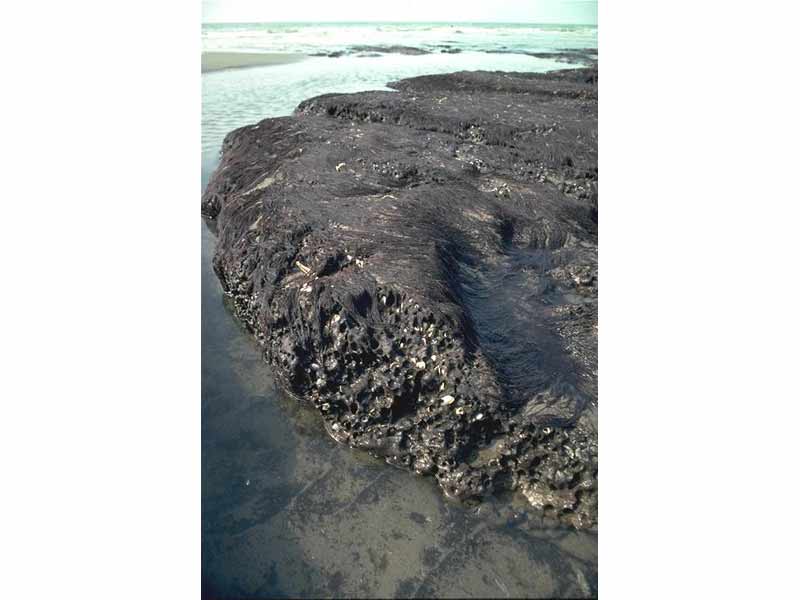
Ceramium sp. and piddocks on eulittoral fossilised peat
Summary

UK and Ireland classification

Description

Outcrops of fossilized peat in the eulittoral are soft enough to allow a variety of piddocks (such as Barnea candida and Petricolaria pholadiformis) to bore into them. The surface of the peat is characterized by a dense algal mat, predominantly Ceramium spp. but also with Ulva spp. and Polysiphonia spp. Damp areas amongst the algal mat are covered by aggregations of the sand mason worm Lanice conchilega and the fan worm Sabella pavonina. The anemone Sagartia troglodytes and the crabs Carcinus maenas and Cancer pagurus occur in crevices in the peat. Small pools on the peat may contain hydroids, such as Obelia longissima and Kirchenpaueria pinnata, the brown alga Dictyota dichotoma and the prawn Crangon crangon.(Connor et al., 2004; JNCC)

Depth range

-

Additional information

No text entered.

Habitat review

Ecology

Ecological and functional relationships

  • Little information was found concerning the community of this biotope.
  • All boring piddocks begin excavation following settling of the larva and slowly enlarge and deepen the burrow with growth (Pinn et al., 2005). They are forever locked within their burrows, and only the siphons project to the surface opening (Barnes, 1980). A relationship exists between the distribution of piddock species and substratum type. Duval (1963a) examined the penetrability of a variety of substrata by Petricolaria (syn. Petricola) pholadiformis. It may bore into London Clay, Thanet Sandstone, softer chalk and peaty substrata. It was unable to bore into abnormally hard clays, soft loose mud, shifting sand, gritty and Lower Greensand Gault clay, hard chalk and Blue Lower Lias. Thus its distribution is determined by changes in the substratum of the shore rather than by tidal level (the piddock may flourish from extreme low water to mid-tide level).
  • Hydroids living in pools in the peat are opportunistic carnivores mainly catching suspended plankton as food.
  • Filter / suspension feeding organisms such as the piddocks, Barnea candida and Petricolaria (syn. Petricola) pholadiformis; the peacock worm, Sabella pavonina and sand mason worm, Lanice conchilega, are the dominant trophic group in the biotope, indicating the importance of planktonic inputs to the community. Piddocks probably contribute to the creation of a relatively high silt environment through burrowing activities.
  • Crabs, such as Carcinus maenas and Cancer pagurus, are the predominant mobile species in the biotope, travelling through as they scavenge for food.
  • The anemone, Sagartia troglodytes, which may occur in crevices of the peat, uses 'catch tentacles to prey upon small shrimps and crabs. In turn, Sagartia troglodytes is preyed upon by the grey sea slug, Aeolidia papillosa, and attacked by the tompot blenny, Parablennius gattorugine (BMLSS, 2002c) that may frequent the biotope
  • Algae that grows on the surface of the peat may provide shelter for small crustaceans and possibly a source of food for grazing prosobranchs, such as Littorina littorea, which may occasionally occur in the biotope but is not characteristic.
  • Species of isopod and amphipod may also feed on detrital matter within the dense algal mat and prey upon each other.

Seasonal and longer term change

  • One of the characteristic species of this biotope, Petricolaria pholadiformis, has a longevity of up to 10 years (Duval, 1963a) and whose established populations may not exhibit significant seasonal changes, besides spawning in the summer. Variations in the abundance and seaweed species present would be expected to vary between and within locations according to the season. For instance, following storms, the peat may be covered by a layer of sand which could adversely affect the surface of algal species, especially propagules.

    Habitat structure and complexity

    Outcrops of fossilized peat in the eulittoral may project above sand level by > 15 cm and form extensive platforms up to 100 m in length across the shore. Fossilized peat tends to be firm and relatively erosion resistant (Murphy, 1981), and occur in localities backed by extensive beach and dune systems, so that the patches of peat exposed varies according to sand movement. The peat is likely to have pits, crevices and undulations in surface level in addition to vacant piddock burrows. Empty piddock burrows can influence the abundance of other species by providing additional habitats and refuges. For instance, Pinn et al. (in press) found a statistically significant increase in species diversity in areas where old piddock burrows were present compared to where they were absent. Pools of water may accumulate in surface depressions which favour hydroids (e.g. Obelia longissima and prawns such as Crangon crangon). The covering of red and ephemeral green algae probably provide cover for cryptic fauna.

    Productivity

    Algal species, Ceramium, Ulva, form a characteristic mat over the surface of the peat substratum so primary production is a component of productivity. Many of the characterizing species that are present in the biotope are suspension/filter feeders, so productivity of the biotope would probably be largely dependent on detrital input. However, specific information about the productivity of characterizing species or about the biotope in general was not found.

    Recruitment processes

    Most of the characterizing species in the biotope are sessile or sedentary. Consequently, recruitment must occur primarily through dispersive larval or spore stages. Examples of characterizing species are given below.
    • Duval (1963a) reviewed the biology of Petricolaria (syn. Petricola) pholadiformis. The sexes of Petricolaria pholadiformis are separate. Females are estimated to produce between 3,000,000 and 3,500,000 eggs annually. Gametogenesis takes place between April and early June and a waiting period ensues before spawning occurs towards late July and during August, lasting just over six weeks in total. The juvenile trochophore stage is reached within 28 hours, and the veliger stage in 44 hours. Length of planktonic life was estimated to be in the region of only one and a half to two weeks in duration, after which the young Petricolaria pholadiformis assume a benthic lifestyle, but remain extremely active. Juveniles of 0.4 cm length possess a very strongly ciliated and mobile foot and large amounts of mucus aid adherence to the substratum. Shell growth may begin in April or during May and continues until after June. Thereafter, growth rings are laid down annually, and annual growth in younger specimens is in the region of 0.7 - 0.9 cm.
      Similarly, the white piddock, Barnea candida, has separate sexes and fertilization occurs externally (Duval, 1963b). Many bivalves spawn during the part of the year when sea temperatures are rising. No information was found concerning length of planktonic life in Barnea candida but El-Maghraby (1955) showed that in southern England Barnea candida spawned in September, being unusual that it started to spawn when the temperature fell at the beginning of the autumn. The maximum age estimated for Barnea candida is 4 years with growth rates ranging from 0.1-6.8 mm per year (Pinn et al., 2005).
    • Edwards (1973) reported that the red seaweed, Ceramium virgatum (as Ceramium nodulosum), has a triphasic life history consisting of a sequence of gametophytic, carposporophytic and tetrasporophytic phases in which the first and the third are morphologically similar. Maggs & Hommersand (1993) reported spermatangia in January, March-April, June and August-September; cystocarps in January-February and April-September; tetrasporangia in February-September. Although no information on dispersal has been found directly for Ceramium virgatum, Norton (1992) concluded that dispersal potential is highly variable in seaweeds, but recruitment probably occurs on a local scale, typically within 10m of the parent plant.
    • The green seaweed, Ulva is considered to be opportunistic in its colonization of available substrata, its rapid recruitment made feasible by its life cycle, which consists of both sexual and asexual generations. Reproduction can occur throughout the year, but is maximal in summer. The haploid gametophytes (arising from sexual reproduction) of Ulva produce enormous numbers of motile gametes that fuse and germinate to produce sporophytes. Sporophytes also produce large numbers of motile spores that are released in such great numbers that the water can become green (Little & Kitching, 1996). The dispersal potential of such spores is great (> 10 km) so that the species may recruit from distant populations.
    • Hydroids, such as Obelia longissima, are often the first organisms to colonize available space in settlement experiments (Gili & Hughes, 1995). The hydroid phase of Obelia longissima releases dioecious sexual medusae that swim for up to 21 days (Sommer, 1992) and release sperm or eggs into the sea (fertilization is external). The resultant embryos then develop into planulae larvae that swim for 2-20 days (Sommer, 1992). Therefore, their potential dispersal is much greater than those species that only produce planulae. In addition, few species of hydroids have specific substratum requirements and many are generalists, for example Obelia longissima has been reported from a variety of rock and mud substrata.

    Time for community to reach maturity

    Little information was found concerning community development. However, piddocks, Barnea candida and Petricolaria pholadiformis are likely to settle readily. These piddocks breed annually and produce a large number of gametes. Once established individuals may live for a considerable length of time; Petricolaria pholadiformis of length 5-6 cm are likely to be between 6-10 years old (Duval, 1963a). Another characteristic component of the biotope is the algal mat of Ceramium and Ulva that caps the peat and development of this algal mat would be expected to be rapid. For instance, panels were colonized by Ceramium virgatum (as Ceramium nodulosum) within a month of being placed in Langstone Harbour (Brown et al., 2001), whilst Ulva spp. Are known to colonize available substrata rapidly. Barnea candida grows rapily to a length of approximately 25-35 mm within 2 to 3 years, living for a maximum of 4 years (Pinn et al., 2005).

    Additional information

    No text entered.

Preferences & Distribution

Habitat preferences

Depth Range
Water clarity preferences
Limiting Nutrients Field unresearched
Salinity preferences Full (30-40 psu)
Physiographic preferences
Biological zone preferences Eulittoral
Substratum/habitat preferences Peat (fossilized)
Tidal strength preferences
Wave exposure preferences Moderately exposed
Other preferences Fossilized peat.

Additional Information

Further records of this biotope are required.

Species composition

Species found especially in this biotope

Rare or scarce species associated with this biotope

-

Additional information

No text entered.

Sensitivity review

Sensitivity characteristics of the habitat and relevant characteristic species

This biotope is present on fossilised peats, an unusual coastal habitat, which is restricted to a few locations. As the occurrence of piddock biotopes are highly dependent on the presence of suitable substratum, the sensitivity assessments specifically consider the sensitivity of fossilised peats to the pressures, where appropriate.

The piddocks associated with the biotope are key characterizing species and if these were removed the biotope classification would change. Piddocks are also important structuring species as their empty holes can provide habitats for other species (Pinn et al., 2008) and they are bioeroders, destabilising the substratum through burrowing allowing it to be more easily eroded by water flow and wave action (Pinn et al., 2005; Evans, 1968, Trudgill, 1983, Trudgill & Crabtree, 1987). Pinn et al. (2005) estimated that over the lifespan of a piddock (12 years), up to 41% of the shore could be eroded to a depth of 8.5 mm). 

The sensitivity assessment therefore primarily considers the fossilised peat habitat and piddocks when developing assessments. The common piddock species Barnea candidaPholas dactylus and the introduced American piddock Petricolaria pholadiformis (formerly Petricola pholadiformis) are likely to occur in this biotope and the available evidence for each of these has been used to develop the sensitivity assessment. Ceramium sp. are named in the biotope description and are therefore also considered characteristic of the biotope and are included in the assessments. Other species associated with the biotope are commonly found on many different shore types and are either mobile or rapid colonizers. Although these species contribute to the structure and function of the biotope, they are not considered key species and are not specifically assessed.

Resilience and recovery rates of habitat

Ceramium spp. may regenerate from very small fragments of thalli attached to the substratum or the development of germlings from settled spores (Dixon, 1960). Ceramium virgatum has been shown to recruit rapidly to cleared surfaces. For instance, experimental panels were colonized by Ceramium virgatum (as Ceramium nodulosum) within a month of being placed in both Langstone Harbour (Brown et al., 2001) and in the outer harbour of the Isle of Helgoland (Wollgast et al., 2008). Resilience of this species has therefore been assessed to be ‘High’ in all instances where suitable habitat is present. Recolonization may, however, be delayed if the hydrodynamic regime does not allow a supply of spores from distant populations when local extirpation occurs.

No direct information for recovery rates of piddocks to perturbations was found and limited information on population dynamics and relevant life history characteristics is available. Adult piddocks remain within permanent burrows and are therefore difficult to observe and sample without destroying the burrows which has limited the extent of observation and experimentation.

The burrowing mechanisms of the piddocks Pholas dactylus and Barnea candida and other Pholads, mean that the burrows have a narrow entrance excavated by the juvenile. As the individual grows and excavates deeper the burrow widens resulting in a conical burrow from which the adult cannot emerge. Recovery of impacted populations will therefore depend on recolonization by juveniles rather than adult migration. Petricolaria pholadiformis excavates a cylindrical burrow (Ansell, 1970) and hence may be able to relocate. Burrowing mechanisms have been studied for Petricolaria pholadiformis (studied as Petricola pholadiformis) individuals placed on sand, chalk and clay (Ansell, 1970). Animals placed on clay and chalk could only reburrow where holes of a suitable size had already been excavated. The relatively slow burial rate means that individuals would be vulnerable to predation when all or parts of the individual are exposed at the substratum surface. As Piddocks are unable to relocate to avoid impacts recovery through migration of adults into an impacted area is not considered possible.

Recovery of impacted populations will depend on recolonization by juveniles. In piddocks the sexes are separate, and fertilisation is external, with gametes released into the water column (Pinn et al., 2005 and references therein). The fecundity of female Petricolaria pholadiformis is estimated to be between 3 to 3.5 million eggs per year (Duval, 1963a). Studies report that larval release occurs from April to September (e.g. Pelseneer, 1924; El-Maghraby, 1955; Purchon 1955; Duval 1962; Knight 1984). Knight (1984) reported that the resulting planktonic larval stage spends 45 days in the plankton. Pinn et al., (2005) observed newly settled individuals between November and February and found the smallest sexually mature Pholas dactylus was a one-year-old measuring 27.4 mm. Information on age at sexual maturity was not reported for other species.

Piddocks are relatively long-lived; Petricolaria pholadiformis, has a longevity of up to 10 years (Duval, 1963a) while Pholas dactylus lives to an estimated 14 years of age, based on annual growth lines (Pinn et al., 2005). The smaller Barnea candida has a shorter lifespan of 6 years (estimated from annual growth lines) (Pinn et al., 2005). Pinn et al., (2005) estimated age and growth rates for Pholas dactylusBarnea candida and Barnea parva from chalk and clay sites in Southern England. They showed that Pholas dactylus are slow growing, whereas Barnea candida are fast growing, although shorter lived and therefore reaching a smaller final length than Pholas dactylus. Jefferies (1865) reported that Pholas dactylus in the UK reached a maximum length of 150 mm, although 125 mm was a more commonly encountered size with a length to width ratio of 2.8. Turner (1954) reported that Pholas dactylus in the USA attained a maximum length of 130 mm. The maximum size of Barnea candida reported by Pinn et al., (2005) of 38.2 mm and a ratio of 2.4 to 2.6, is much smaller than that found by Jefferies (1865; 56 mm and a ratio of 2.7), and Turner (1954; 68 mm and a ratio of 2.7 to 2.8) which may be due to substratum erosion at the site preventing piddocks reaching their potential lifespan and attaining full-size. 

Duval (1977) proposed that extensive borings of Barnea candida facilitated the colonization of an area in the Thames Estuary by the introduced American piddock, Petricolaria pholadiformis. This suggests that Barnea candida is a more competitive colonizing species in clay environments than Petricolaria pholadiformis and it is possible that this species will appear first on cleared substrates. No other information on species interactions was found, although Pinn et al., (2005) noted that burrow morphology is altered (stunted, elongated, J-shaped or highly convoluted) in high density populations to avoid interconnecting with burrows of other individuals, suggesting that piddocks can detect the activities of local individuals (Pinn et al., 2005).

Richter & Sarnthein (1976) looked at the re-colonization of different sediments by various molluscs on suspended platforms in Kiel Bay, Germany. The platforms were suspended at 11, 15 and 19 m water depth, each containing three round containers filled with clay, sand, or gravel. Substratum type was found to be the most important factor for the piddock Barnea candida, although for all other species it was depth. This highlights the significance of the availability of a suitable substratum to the recovery of piddock species and suggests that larvae have some mechanisms for selection of suitable substratum. Richter & Sarnthein (1976) found that within the two-year study period the piddocks grew to represent up to 98% of molluscan fauna on clay platforms. Piddock species have also shown very high growth rates of up to 54 mm in 30 months in the laboratory (Arntz & Rumohr, 1973). However, the process of colonization on clay at 15 and 19 m was found to be highly discontinuous, as reflected by the repeated growth and decrease of specimen numbers.

Although rare in the Romanian Black Sea, Micu (2007) reported the first observations of Pholas dactylus in 34 years at three locations illustrating the recovery potential of this species and ability for long-range dispersal, allowing colonization or recolonization of suitable habitat. The vulnerability of piddocks to episodic events such as the deposition of sediments (Hebda, 2011; Clark et al., 2019) and storm damage of sediments (Micu, 2007) and the on-going chronic erosion of suitable sediments (Pinn et al., 2005) indicate that larval dispersal and recruitment of new juveniles from source populations is an effective recovery mechanism allowing persistence of piddocks in suitable habitats.

Resilience assessment. The key characterizing species Ceramium virgatum, was considered to have ‘High’ resilience (recovery within 2 years) based on settlement studies. The sedentary nature of adult piddocks and their vulnerability to episodic events and chronic erosion suggest that piddocks have evolved effective strategies of larval dispersal and juvenile recruitment with some selectivity for suitable habitats. As recovery depends on recolonization and subsequent growth to adult size, resilience is assessed as ‘Medium’ (2 to 10 years) for all levels of resistance.

However, this biotope only occurs in areas where fossilised peat is exposed at the surface. This habitat type is restricted in distribution, and the thickness of the peat layers varies. Peat exposures were identified as irreplaceable habitats (Tillin et al., 2022). When removed, there is no mechanism by which the substratum can be replaced, unlike other sedimentary habitats which may be renewed by water transport of sediment particles. Therefore, when removed in part or entirely, no recovery of habitat is possible, and resilience is assessed as 'Very Low' (>25 years).

Hydrological Pressures

Use [show more] / [show less] to open/close text displayed

ResistanceResilienceSensitivity
Temperature increase (local) [Show more]

Temperature increase (local)

Benchmark. A 5°C increase in temperature for one month, or 2°C for one year. Further detail

Evidence

Little direct evidence was found to assess the effects of increased temperature on piddocks, and the assessment is based on distribution records and evidence for spawning in response to temperature changes. The American piddock Petricolaria pholadiformis has a wide distribution and is found north as far as the Skaggerak, Kattegat and Limfjord (Jensen, 2010) and is also present in the Mediterranean, Gulf of Mexico and Caribbean (Huber & Gofas, 2015). Pholas dactylus occurs in the Mediterranean and the East Atlantic, from Norway to Cape Verde Islands (Micu, 2007). Barnea candida is distributed from Norway to the Mediterranean and West Africa (Gofas, 2015). Species distribution models show that the distribution of Pholas dactylus could expand northward in the next century due to ocean warming (Schultz et al., 2024).

Temperature influences the timing of reproduction in Pholas dactylus, which usually spawns between July and August. Increased summer temperatures in 1982 induced spawning in July on the south coast of England (Knight, 1984). Spawning of the piddock Petricolaria pholadiformis is initiated by increasing water temperature (>18 °C) (Duval, 1963a), so elevated temperatures outside of usual seasons may disrupt normal spawning periods. The spawning of Barnea candida was also reported to be disrupted by changes in temperature. Barnea candida normally spawns in September when temperatures are dropping (El-Maghraby, 1955). However, a rise in temperature in late June of 1956, induced spawning in some specimens of Barnea candida (Duval, 1963b). Disruption from established spawning periods, caused by temperature changes, may be detrimental to the survival of recruits as other factors influencing their survival may not be optimal, and some mortality may result. Established populations may otherwise remain unaffected by elevated temperatures.

Lüning (1990) reported that Ceramium virgatum (as Ceramium rubrum) survived temperatures from 0 to 25 °C with optimal growth at about 15 °C. According to OBIS (2025), Ceramium virgatum has been recorded in temperature ranges from 5 to 20 °C, with the most records occurring in the 10 to 15 °C range. The species is therefore likely to be tolerant of higher temperatures than it experiences in the seas around Britain and Ireland.

Gallon et al. (2014) recorded a change in red algae assemblages in Brittany, western France from 1992 to 2012, where sea surface temperatures range between 5 and 22 °C. The algal assemblage changes were linked to an increase of 0.7 °C in average sea surface temperature in that period. Among the many changes to these assemblages was a significant reduction in the frequency of Ceramium spp. observations. At a water-cooling discharge site in the Baltic Sea, the percentage cover of Ceramium tenuicorne overall decreased along a water temperature gradient from 18 to 26 °C except for in the winter where it increased slightly (Kibria, 2024). In the Galapagos Islands, Carr et al. (2018) found a significant negative relationship between temperature and the percentage cover of the red algae assemblage which included Ceramium spp. The temperature range observed was 18 to 30 °C.

Sensitivity assessment. The global distribution of the piddock species, Petricolaria pholadiformisPholas dactylus and Barnea candida, suggest that these species can tolerate warmer waters than currently experienced in the UK and may therefore be tolerant of a chronic increase in temperature. Short-term acute increases may, (depending on timing) interfere with spawning cues which appear to be temperature driven. The effects will depend on seasonality of occurrence and the species affected. Adult populations may be unaffected, and in such long-lived species, an unfavourable recruitment may be compensated for in a following year. The available evidence shows that in most cases, the macroalgae found within this biotope respond negatively to elevated temperatures. However, Ceramium rubrum survives a wide temperature range and is also distributed north and south of UK waters. Hence, resistance to a change in temperature is assessed as ‘High’ and recovery as ‘High’, and the biotope is considered ‘Not Sensitive’. For all characterizing species it should be noted that the timing of acute changes may lead to greater impacts. Temperature increases in the warmest months may exceed thermal tolerances whilst changes in colder periods may stress individuals acclimated to the lower temperatures.

High
Medium
Medium
High
Help
High
High
High
High
Help
Not sensitive
Medium
Medium
High
Help
Temperature decrease (local) [Show more]

Temperature decrease (local)

Benchmark. A 5°C decrease in temperature for one month, or 2°C for one year. Further detail

Evidence

Little empirical evidence was found to assess the effects of decreased temperature on piddocks and the assessment is based on distribution records and evidence for spawning in response to temperature changes. 

The American piddock Petricolaria pholadiformis has a wide distribution and is found north as far as the Skaggerak, Kattegat and Limfjord (Jensen, 2010) (Huber & Gofas, 2015). Pholas dactylus occurs in the Mediterranean and the East Atlantic, from Norway to Cape Verde Islands (Micu, 2007).   Barnea candida is distributed from Norway to the Mediterranean and West Africa (Gofas, 2015).

Temperature changes have been observed to initiate spawning by Pholas dactylus, which usually spawns between July and August. Increased summer temperatures in 1982 induced spawning in July on the south coast of England (Knight, 1984). Spawning of Petricolaria pholadiformis is initiated by increasing water temperature (>18 °C) (Duval, 1963a), so decreased temperatures may disrupt normal spawning periods where this coincides with the reproductive season. The spawning of Barnea candida was also reported to be disrupted by changes in temperature. Barnea candida normally spawns in September when temperatures are dropping (El-Maghraby, 1955). Disruption from established spawning periods, caused by decreased temperatures may be detrimental to the survival of recruits as other factors influencing their survival may not be optimal, and some mortality may result. Established populations may otherwise remain unaffected by decreased temperatures.

Lüning (1990) reported that Ceramium virgatum (as Ceramium rubrum) survived temperatures from 0 to 25 °C with optimal growth at about 15 °C. The species is therefore likely to be tolerant of lower temperatures than it experiences in the seas around Britain and Ireland. Sub-optimal temperatures may delay or slow reproduction.

Sensitivity assessment. Based on the wide range of temperature tolerance of Ceramium virgatum, it is concluded that the acute and chronic changes described by the benchmark would have limited effect.  The global distribution of the piddock species also suggest that these species can tolerate cooler waters than currently experienced in the UK and may therefore be tolerant of a chronic decrease in temperature at the benchmark level. Decreased temperatures may, depending on timing, interfere with spawning cues which appear to be temperature driven.  The effects will depend on seasonality of occurrence and the species affected. Adult populations may be unaffected and, in such long-lived species, an unfavourable recruitment may be compensated for in a following year. Based on the characterizing species, resistance to an acute and chronic decrease in temperature at the pressure benchmark is therefore assessed as ‘High’ and recovery as ‘High’ (within two years) and the biotope is considered ‘Not Sensitive’. 

High
Low
NR
NR
Help
High
High
High
High
Help
Not sensitive
Low
Low
Low
Help
Salinity increase (local) [Show more]

Salinity increase (local)

Benchmark. A increase in one MNCR salinity category above the usual range of the biotope or habitat. Further detail

Evidence

The biotope has only been recorded from conditions of full salinity (Connor et al., 2004; JNCC, 2015, 2022). However, intertidal biotopes will naturally experience fluctuations in salinity where evaporation increases salinity and inputs of reduces salinity. Species found in the intertidal are therefore likely to have some form of behavioural or physiological adaptations to changes in salinity. No direct empirical evidence was found to assess this pressure, and the assessment is based on the reported distribution of characterizing species. 

Pholas dactylus has been recorded in salinities ranging from 30 to 40 PSU, with most records being in the 30 to 35 PSU range (OBIS, 2025). Barnea candida is reported to extend into estuarine environments in salinities down to 20 PSU (Fish & Fish, 1996). Petricolaria pholadiformis is particularly common off the Essex and Thames estuary, e.g. the River Medway (Bamber, 1985) suggesting tolerance of brackish waters. Zenetos et al. (2009) suggest that at all sites where Petricolaria pholadiformis has been found has some freshwater inflow into the sea. According to the literature, the species in its native range inhabits environments with salinities between 29 and 35 PSU, while in the Baltic Sea it is reported from salinities 10 to 30 PSU (Gollasch & Mecke, 1996, cited from Zenetos et al. 2009). According to Castagna & Chanley (1973, cited from Zenetos et al. 2009) the lower salinity tolerance of Petricolaria pholadiformis is 7.5 to 10 PSU. It thus appears that reduced salinity facilitates its establishment (Zenetos et al., 2009).

The characteristic piddock species may be found in estuarine, reduced salinity conditions (see below) but no evidence of hypersaline resistance was found. However, the characteristic macroalgae may respond negatively to increased salinity. A study on macroalgae in saltwork ponds showed that Ceramium spp. abundance decreased with increasing salinity from 37.3 to 52.31 PSU (de Melo Soares et al., 2023). According to OBIS (2025), Ceramium virgatum occurs in salinity levels from 5 to 40 PSU, with most records being in the 25 to 30 PSU range.

Sensitivity assessment. This biotope occurs in waters with full salinity (30 TO 40 PSU) and in the intertidal zone, where tide pools form and can reach salinity levels up to 60 PSU due to evaporation (Terry et al., 2024). The evidence shows that the characteristic macroalgae of this biotope are affected by salinity levels similar to those of tide pools. There is no evidence of resistance to the pressure at the benchmark level for the characteristic piddock species. Therefore, there is Insufficient Evidence to assess the sensitivity of this biotope to this pressure at the benchmark level.

Insufficient evidence (IEv)
NR
NR
NR
Help
Not relevant (NR)
NR
NR
NR
Help
Insufficient evidence (IEv)
NR
NR
NR
Help
Salinity decrease (local) [Show more]

Salinity decrease (local)

Benchmark. A decrease in one MNCR salinity category above the usual range of the biotope or habitat. Further detail

Evidence

The biotope has only been recorded from conditions of full salinity (Connor et al., 2004; JNCC, 2015, 2022). However, intertidal biotopes will naturally experience fluctuations in salinity where evaporation increases salinity and inputs of rainwater reduces salinity. Species found in the intertidal are therefore likely to have some form of behavioural or physiological adaptations to changes in salinity. No direct empirical evidence was found to assess this pressure, and the assessment is based on the reported distribution of characterizing species. 

Barnea candida is reported to extend into estuarine environments in salinities down to 20 PSU (Fish & Fish, 1996). Petricolaria pholadiformis is particularly common off the Essex and Thames estuary, e.g. the River Medway (Bamber, 1985) suggesting tolerance of brackish waters. Zenetos et al. (2009) suggest that at all sites where Petricolaria pholadiformis has been found has some freshwater inflow into the sea. According to the literature, the species in its native range inhabits environments with salinities between 29 and 35 PSU, while in the Baltic Sea it is reported from salinities 10 to 30 PSU (Gollasch & Mecke, 1996, cited from Zenetos et al. 2009). According to Castagna & Chanley (1973, cited from Zenetos et al. 2009) the lower salinity tolerance of Petricolaria pholadiformis is 7.5 to 10 PSU. It thus appears that reduced salinity facilitates its establishment (Zenetos et al., 2009). No information was found for the salinity tolerance of Pholas dactylus.

The characterizing species Ceramium virgatum occurs over a very wide range of salinities. The species penetrates almost to the innermost part of Hardanger Fjord in Norway where it experiences very low salinity values and large salinity fluctuations due to the influence of snowmelt in spring (Jorde & Klavestad, 1963). According to OBIS (2025), Ceramium virgatum occurs in salinity levels from 5 to 40 PSU, with most records being in the 25 to 30 PSU range.

Sensitivity assessment. Based on the evidence and reported distributions of Ceramium sp. and piddocks it is considered that the benchmark decrease in salinity (from full to reduced) may not cause significant changes in the abundance of the characterising species. In areas experiencing prolonged decreases in salinity, the ratio of Petricolaria pholadiformis to other species may change due to its greater tolerance to reduced salinities, but this would not lead to re-classification of biotope. Therefore, resistance is assessed as 'High', resilience as 'High', and the biotope as 'Not Sensitive'

High
Medium
Low
Medium
Help
High
High
High
High
Help
Not sensitive
Medium
Low
Medium
Help
Water flow (tidal current) changes (local) [Show more]

Water flow (tidal current) changes (local)

Benchmark. A change in peak mean spring bed flow velocity of between 0.1 m/s to 0.2 m/s for more than one year. Further detail

Evidence

Established adult piddocks are, to a large extent, protected from direct effects of increased water flow, owing to their environmental position within the substratum. Increases or decreases in flow rates may affect suspension feeding by altering the delivery of suspended particles or the efficiency of filter feeding.  However, no evidence was found to inform the sensitivity assessment although other biotopes characterized by piddocks (IR.MIR.KR.Ldig.Pid and CR.MCR.SfR.Pid) have been found in areas where tidal flows vary between 0.5 -1.5 m/s (Connor et al., 2004), suggesting that changes in  flow rates within this range will not negatively impact piddocks.  Adult piddocks may become exposed should physical erosion occur at a greater rate than burrowing, and lost from the substratum. At higher densities bioerosion by piddocks may destabilise the substratum increasing vulnerability to erosion.  Increased scour, as a consequence of increased water flow could also inhibit settlement of juveniles and seaweed spores. The fronds of adults and germlings may also be damaged. Where the algal mat is dense some mitigation of water flow through friction and protection of the surface may occur although this effect will be lower than in biotopes characterized by robust species such as bivalves and fucoids and kelps.

The most damaging effect of increased flow rate would be the erosion of the peat substratum as this could eventually lead to loss of the habitat. Increased erosion would lead to the loss of habitat and removal of piddocks and the algal mat. No evidence was found to assess the water velocities at which erosion of peat occurs. Some erosion will occur naturally and storm events and wave action may be more significant in loss and damage of peats that surface water flow. Periodically peats are removed in storms to expose preserved submerged prehistoric landscapes around the UK.

Sensitivity assessment. No direct evidence was found to assess this pressure at the benchmark. Based on the exposure of piddocks in other biotopes to water flows between 0.5 and 1.5 m/s, the piddocks and algal mat are considered to be not sensitive to changes within this range as long as these do not lead to increased erosion of the substratum. Resistance is therefore assessed as 'High' and resilience as 'High' (based on no impact to recover from).

High
Medium
Low
NR
Help
High
High
High
High
Help
Not sensitive
Medium
Low
Low
Help
Emergence regime changes [Show more]

Emergence regime changes

Benchmark.  1) A change in the time covered or not covered by the sea for a period of ≥1 year or 2) an increase in relative sea level or decrease in high water level for ≥1 year. Further detail

Evidence

Adult piddocks and the algae that characterize this biotope have no mobility and cannot, therefore, migrate up or down the shore to adapt to changes in emergence. Within the peat substratum, adult piddocks will be afforded some protection from desiccation and temperature increases following increased emergence by their burrows, which will retain some moisture. The shells of piddocks do not completely enclose the animals, however , and, therefore, cannot be closed to prevent water loss. The tolerance of piddocks to increased and decreased emergence varies between species.  Pholas dactylus inhabits the shallow sub-tidal and lower shore and  Barnea candida and Petricolaria pholadiformis live slightly higher up the shore than Pholas dactylus (Duval, 1977) .  During extended periods of exposure, Pholas dactylus squirt some water from their inhalant siphon and extend their gaping siphons into the air (Knight, 1984). This may result in increased detection and predation by birds.  Changes in emergence may, therefore, alter species abundances and ratios although the biotope will remain recognisable as a piddock biotope. The algal mat covering the substratum, predominantly of the red seaweed Ceramium virgatum, may be more intolerant of an increase in desiccation. Ceramium virgatum occurs profusely in rockpools, on the lower shore and in the subtidal but not on the open shore away from damp places suggesting that it is intolerant of desiccation. As a consequence of an increase in emergence, the algal cover may become diminished.

A decrease in emergence will reduce exposure to desiccation and extremes of temperature and allow the resident  Pholas dactylus, Barnea candida, and Petricolaria pholadiformis to feed for longer periods and hence grow faster.  No information was found on factors controlling the lower limit of piddock populations and it is possible, for example, that predation (predominantly siphon nipping by gobies, and other species, Micu, 2007) may increase at the lower edge of the biotope. Competition for space with species better adapted to the changed conditions may also alter habitat suitability for this biotope.

Sensitivity assessment. The biotope occurs in the eulittoral zone, where it experiences regular immersion and emersion. Species present are therefore tolerant of periods of emergence to some extent, however, changes in emergence regime may alter habitat suitability and increase levels of predation and competition. Based on these considerations, resistance to changes in emergence is assessed as ‘Medium’ as changes may alter the upper or lower margins of the biotope. Resilience is assessed as ‘Medium’ for piddocks so that sensitivity is assessed as ‘Medium’.

Medium
Low
NR
NR
Help
Medium
Medium
Low
Medium
Help
Medium
Medium
Low
NR
Help
Wave exposure changes (local) [Show more]

Wave exposure changes (local)

Benchmark. A change in near shore significant wave height of >3% but <5% for more than one year. Further detail

Evidence

No direct evidence was found to assess sensitivity to this pressure. The biotope typically occurs in moderately wave exposed locations (Connor et al, 2004). The piddocks are unlikely to be directly affected by changes in wave exposure, owing to their environmental position within the peat substratum, which protects them. At higher densities, bioerosion by piddocks may destabilise the substratum and increase vulnerability to erosion.

Ceramium virgatum occurs in extremely wave sheltered conditions (Connor et al., 2004) and is recorded in some of the most sheltered parts of Hardangerfjord in Norway (Jorde & Klavestad, 1963). Strong wave action could potentially cause some damage to fronds resulting in reduced photosynthesis and compromised growth. Furthermore, individuals may be damaged or dislodged by scour from sand and gravel mobilized by increased wave action (Hiscock, 1983).

However, an increase in wave height may facilitate upward expansion of biotope margins where wave splash ameliorates effects of emergence and desiccation, but this is not considered significant at the pressure benchmark.

The most damaging effect of increased wave height could be the erosion of the peat substratum as this could eventually lead to loss of the habitat and the removal of piddocks and the algal mat. No evidence was found to link significant wave height to erosion. Some erosion will occur naturally and storm events may be more significant in loss and damage of peats than changes in wave height at the pressure benchmark.

Sensitivity assessment. No direct evidence was found to assess this pressure at the benchmark. Based on the occurrence of this biotope in moderately wave exposed habitats the piddocks and algal mat are considered to have 'High' resistance to changes at the pressure benchmark where these do not lead to increased erosion of the substratum. Resilience is therefore assessed as 'High' and the biotope is considered to be 'Not sensitive', at the pressure benchmark.

High
Low
NR
NR
Help
High
High
High
High
Help
Not sensitive
Low
NR
NR
Help

Chemical Pressures

Use [show more] / [show less] to open/close text displayed

ResistanceResilienceSensitivity
Transition elements & organo-metal contamination [Show more]

Transition elements & organo-metal contamination

Benchmark. Exposure of marine species or habitat to one or more relevant contaminants via uncontrolled releases or incidental spills. Further detail

Evidence

No empirical evidence was found for the effects of heavy metal contamination in the piddocks found in this biotope. There was however some evidence of impaired growth in contaminated samples of Ceramium spp.

Heavy metals have been detected in Ceramium virgatum (as C. rubrum) (Cadar et al., 2018; Cadar et al., 2019) but it is currently unclear how these contaminants effect this species. Ceramium tenuicorne has been used as a bioindicator to investigate the toxicity of sediments in harbours by using a growth inhibition method. Eklund et al. (2016) found that concentrations of copper (Cu), zinc (Zn) and tri-butyltins (TBT) as low as 20 g wet weight/L of sediments were enough to inhibit Ceramium tenuicorne 50%.

Copper (Cu) toxicity in Ceramium tenuicorne can vary depending on the total organic carbon content of the surrounding water and the origin of the alga. Marine clones of Ceramium tenuicorne have shown greater tolerance to Cu exposure, exhibiting less growth inhibition than their brackish water counterparts. In addition, increased organic carbon concentrations in the water significantly reduced Cu toxicity, suggesting that dissolved organic matter can mitigate the stress effects of heavy metals (Ytreberg et al., 2011).

Sensitivity assessment: There is no evidence that heavy metal contamination has led to the mortality of any of the species which are main features of this biotope. The only evidence found for any effect of this pressure was the inhibition of growth in Ceramium tenuicorne. There is therefore Insufficient Evidence to make a sensitivity assessment.

Insufficient evidence (IEv)
NR
NR
NR
Help
Not relevant (NR)
NR
NR
NR
Help
Insufficient evidence (IEv)
NR
NR
NR
Help
Hydrocarbon & PAH contamination [Show more]

Hydrocarbon & PAH contamination

Benchmark. Exposure of marine species or habitat to one or more relevant contaminants via uncontrolled releases or incidental spills. Further detail

Evidence

This pressure is Not assessed but evidence is presented where available.

Not Assessed (NA)
NR
NR
NR
Help
Not assessed (NA)
NR
NR
NR
Help
Not assessed (NA)
NR
NR
NR
Help
Synthetic compound contamination [Show more]

Synthetic compound contamination

Benchmark. Exposure of marine species or habitat to one or more relevant contaminants via uncontrolled releases or incidental spills. Further detail

Evidence

This pressure is Not assessed but evidence is presented where available.

Synthetic compounds have been shown to cause oxidative stress in Ceramium virgatum (as C. rubrum), Ceramium virgatum was the most sensitive to detergent pollution, showing the highest level of antioxidant activity, up to 1.623 nmol Trolox equivalents/sample, indicating a strong stress response. In all three species, chlorophyll content also decreased with higher detergent concentrations, further suggesting physiological stress (Biris-Dorhoi et al., 2018).

Not Assessed (NA)
NR
NR
NR
Help
Not assessed (NA)
NR
NR
NR
Help
Not assessed (NA)
NR
NR
NR
Help
Radionuclide contamination [Show more]

Radionuclide contamination

Benchmark. An increase in 10µGy/h above background levels. Further detail

Evidence

No evidence.

No evidence (NEv)
NR
NR
NR
Help
Not relevant (NR)
NR
NR
NR
Help
No evidence (NEv)
NR
NR
NR
Help
Introduction of other substances [Show more]

Introduction of other substances

Benchmark. Exposure of marine species or habitat to one or more relevant contaminants via uncontrolled releases or incidental spills. Further detail

Evidence

This pressure is Not assessed.

Not Assessed (NA)
NR
NR
NR
Help
Not assessed (NA)
NR
NR
NR
Help
Not assessed (NA)
NR
NR
NR
Help
De-oxygenation [Show more]

De-oxygenation

Benchmark. Exposure to dissolved oxygen concentration of less than or equal to 2 mg/l for one week (a change from WFD poor status to bad status). Further detail

Evidence

Specific information concerning oxygen consumption and reduced oxygen tolerances were not found for important characterizing species within the biotope. Cole et al. (1999) suggested possible adverse effects on marine species below 4 mg O2/l  and probable adverse effects below 2mg O2/l . Duval (1963a) observed that conditions within the borings of Petricolaria pholadiformis were anaerobic and lined with a loose blue/black sludge, suggesting that the species may be relatively tolerant to conditions of reduced oxygen. However, insufficient information has been recorded. As this biotope occurs in the intertidal, emergence will mitigate the effects of hypoxic surface waters as will the exposure to wave action and water flows and this pressure is considered to be 'Not relevant'.

Not relevant (NR)
NR
NR
NR
Help
Not relevant (NR)
NR
NR
NR
Help
Not relevant (NR)
NR
NR
NR
Help
Nutrient enrichment [Show more]

Nutrient enrichment

Benchmark. Compliance with WFD criteria for good status. Further detail

Evidence

This pressure relates to increased levels of nitrogen, phosphorus and silicon in the marine environment compared to background concentrations. No evidence was found to assess the sensitivity of piddocks to this pressure. Hily et al. (1992) found that, in conditions of high nutrients, Ceramium virgatum (as Ceramium rubrum) and Ulva sp. dominated substrata in the Bay of Brest, France. Ceramium spp. are also mentioned by Holt et al. (1995) as likely to smother other species of macroalgae in nutrient enriched waters. Fletcher (1996) quoted Ceramium virgatum (as Ceramium rubrum) to be associated with nutrient enriched waters. It therefore seems that algal stands of Ceramium virgatum are likely to benefit from elevated levels of nutrients. Furthermore, nutrient enrichment that enhances productivity of phytoplankton may indirectly benefit the suspension feeding piddocks by increasing food supply.

Sensitivity assessment. No evidence of the effects of nutrient enrichment on the characteristic piddock species was found. Although, Ceramium spp. may increase in abundance in nutrient rich waters. Nutrient enrichment is unlikely to adversely affect the piddock community, and there is no other evidence of the effects of nutrients on the community as whole. Therefore, there is Insufficient Evidence to support an assessment.

Insufficient evidence (IEv)
NR
NR
NR
Help
Not relevant (NR)
NR
NR
NR
Help
Insufficient evidence (IEv)
NR
NR
NR
Help
Organic enrichment [Show more]

Organic enrichment

Benchmark. A deposit of 100 gC/m2/yr. Further detail

Evidence

No evidence was found to assess this pressure. 

No evidence (NEv)
NR
NR
NR
Help
Not relevant (NR)
NR
NR
NR
Help
No evidence (NEv)
NR
NR
NR
Help

Physical Pressures

Use [show more] / [show less] to open/close text displayed

ResistanceResilienceSensitivity
Physical loss (to land or freshwater habitat) [Show more]

Physical loss (to land or freshwater habitat)

Benchmark. A permanent loss of existing saline habitat within the site. Further detail

Evidence

All marine habitats and benthic species are considered to have a resistance of ‘None’ to this pressure and to be unable to recover from a permanent loss of habitat (resilience is ‘Very Low’).  Sensitivity within the direct spatial footprint of this pressure is therefore ‘High’.  Although no specific evidence is described confidence in this assessment is ‘High’, due to the incontrovertible nature of this pressure.  

None
High
High
High
Help
Very Low
High
High
High
Help
High
High
High
High
Help
Physical change (to another seabed type) [Show more]

Physical change (to another seabed type)

Benchmark. Permanent change from sedimentary or soft rock substrata to hard rock or artificial substrata or vice-versa. Further detail

Evidence

This biotope is characterized by the fossilised peat substratum, which supports populations of burrowing piddocks. A change to a sedimentary, rock or artificial substratum results in the loss of piddocks, significantly altering the character of the biotope. The biotope is therefore considered to have 'No' resistance to this pressure; recovery of the biological assemblage (following habitat restoration) is considered to be 'Medium' (2-10 years), but see caveats in the recovery notes. The biotope is dependent on the presence of fossilised peat. If lost, restoration would not be feasible, and recovery is therefore categorised as 'Very low'. Sensitivity is therefore assessed as 'High', based on the lack of recovery on peat substratum. Although no specific evidence is described, confidence in this assessment is ‘High’, due to the incontrovertible nature of this pressure.

None
High
High
High
Help
Very Low
High
High
High
Help
High
High
High
High
Help
Physical change (to another sediment type) [Show more]

Physical change (to another sediment type)

Benchmark. Permanent change in one Folk class (based on UK SeaMap simplified classification). Further detail

Evidence

This biotope is characterized by the fossilised peat substratum which supports populations of burrowing piddocks. A change to a sedimentary substratum would result in the loss of piddocks significantly altering the character of the biotope. The biotope is therefore considered to have 'No' resistance to this pressure; recovery of the biological assemblage (following habitat restoration) is considered to be 'Medium' (2-10 years), but see caveats in the recovery notes. The biotope is dependent on the presence of fossilised peat; when lost, restoration would not be feasible and recovery is therefore categorised as 'Very low'. Sensitivity is therefore assessed as 'High', based on the lack of recovery on peat substratum. Although no specific evidence is described, confidence in this assessment is ‘High’, due to the incontrovertible nature of this pressure.

None
High
High
High
Help
Very Low
High
High
High
Help
High
High
High
High
Help
Habitat structure changes - removal of substratum (extraction) [Show more]

Habitat structure changes - removal of substratum (extraction)

Benchmark. The extraction of substratum to 30 cm (where substratum includes sediments and soft rock but excludes hard bedrock). Further detail

Evidence

The removal of substratum  to 30cm depth will remove the entire surface algal mat, associated biological assemblage and the piddocks, in the impact footprint.  Resistance is therefore assessed as ‘None’, recovery of the biological assemblage (following habitat restoration) is considered to be 'Medium' (2-10 years) but see caveats in the recovery notes. The biotope is dependent on the presence of fossilised peat, when lost restoration would not be feasible and  recovery is therefore categorised as 'Very low'. Sensitivity is therefore assessed as 'High', based on the lack of recovery on peat substratum. Although no specific evidence is described confidence in this assessment is ‘High’, due to the incontrovertible nature of this pressure.  

None
High
High
High
Help
Very Low
High
High
High
Help
High
High
High
High
Help
Abrasion / disturbance of the surface of the substratum or seabed [Show more]

Abrasion / disturbance of the surface of the substratum or seabed

Benchmark. Damage to surface features (e.g. species and physical structures within the habitat). Further detail

Evidence

Within this biotope the dense algal mat of red and green seaweed could be damaged and removed by surface abrasion.  Some species protruding from the surface, e.g. Lanice conchilega, Sabella pavonina may also be removed.  Although the piddocks are afforded some protection from surface abrasion by living in their burrows, the peat is soft which leaves many individuals, especially those near the surface of the clay, vulnerable to damage and death through exposure, sediment damage and compaction.   Micu (2007) for example observed that after storms in the Romanian Black Sea, the round goby, Neogobius melanostomus, removed clay from damaged or exposed burrows to be able to remove and eat piddocks.

The most significant impact from abrasion may be the habitat effects of removal and damage to the peat substratum. Natural erosion processes are, however, likely to be on-going within this habitat type. Where abundant the boring activities of piddocks contribute significantly to bioerosion, which can make the substratum habitat more unstable and can result in increased rates of coastal erosion (Evans 1968, Trudgill 1983, Trudgill & Crabtree, 1987).  Pinn et al. (2005) estimated that over the lifespan of a piddock (12 years), up to 41% of the shore could be eroded to a depth of 8.5 mm. The burrowing activities of piddocks may therefore weaken the substratum increasing the potential damage from substratum abrasion.

Sensitivity assessment. Surface abrasion may remove the algal mat and surface infauna and result in the loss of some piddocks and damge to habitat. Resistance is therefore assessed as ‘Low’ for the algal mat and ‘Medium’ for piddocks and substratum.  The algal mat and surface infauan are predicted to remover within 2 years, so that resilience is considered to be ‘High’ and sensitivity is ‘Low’. As the substratum  cannot recover, resilience is assessed as ‘Very Low’ and sensitivity of the overall biotope is considered to be  ‘Medium’.  

Medium
Low
NR
NR
Help
Very Low
Low
NR
NR
Help
Medium
Low
NR
NR
Help
Penetration or disturbance of the substratum subsurface [Show more]

Penetration or disturbance of the substratum subsurface

Benchmark. Damage to sub-surface features (e.g. species and physical structures within the habitat). Further detail

Evidence

Penetration and disturbance below the surface of the substratum will damage and remove the dense algal mat and surface fauna and could damage and expose piddocks. Piddocks in damaged burrows or those that are removed from the substratum are unlikely to be able to rebury and will be predated by fish and other mobile species (Micu, 2007). 

The most significant impact may be the damage to, and removal of, the peat substratum. Where abundant the boring activities of piddocks can make the substratum habitat more unstable and can exacerbate erosion (Evans 1968, Trudgill 1983,Trudgill & Crabtree, 1987).  Pinn et al. (2005) estimated that over the lifespan of a piddock (12 years), up to 41% of the shore could be eroded to a depth of 8.5 mm. The piddock burrowing activities may therefore weaken the substratum so that it is more vulnerable to damage and erosion.

Sensitivity assessment. Sub-surface penetration and disturbance will remove and damage the algal mat and surface infauna and result in the loss of piddocks and damage to the habitat. Resistance is therefore assessed as ‘Low’ for the algal mat piddocks and substratum.  The algal mat and surface infauana are predicted to remover relatively rapidly and the piddocks within 2-10 years so that resilience of the biological assemblage is considered to be ‘Medium’ and sensitivity is ‘Medium’. As the substratum cannot recover, resilience is assessed as ‘Very Low’ and sensitivity of the overall biotope is considered to be  ‘High’.  

Low
Low
NR
NR
Help
Very Low
Low
NR
NR
Help
High
Low
NR
NR
Help
Changes in suspended solids (water clarity) [Show more]

Changes in suspended solids (water clarity)

Benchmark. A change in one rank on the WFD (Water Framework Directive) scale e.g. from clear to intermediate for one year. Further detail

Evidence

No direct evidence was found to assess this pressure. Increased suspended particles will decrease light penetration, may enhance food supply (where these are organic in origin) or decrease feeding efficiency (where the particles are inorganic and require greater filtration efforts). Very high levels of silt may clog respiratory and feeding organs of some suspension feeders. Increased levels of particles may increase scour and deposition in the biotope depending on local hydrodynamic conditions. The piddocks are protected from scour within burrows and increased organic particles will provide a food subsidy.  Pholas dactylus occurs in habitats such as soft chalks where turbidity may be high and is therefore unlikely to be affected by an increase in suspended sediments at the pressure benchmark. Piddocks, in common with other suspension feeding bivalves, have efficient mechanisms to remove inorganic particles via pseudofaeces. Experimental work on Pholas dactylus showed that large particles can either be rejected immediately in the pseudofaeces or passed very quickly through the gut (Knight, 1984). Similarly Petricolaria pholadiformis is able to tolerate high-levels of suspended solids through the production of pseudofaeces (Purchon, 1955). Increased suspended sediments may impose sub-lethal  energetic costs on piddocks by reducing feeding efficiency and requiring the production of pseudofaeces with impacts on growth and reproduction.

Macroalgae within the biotope may be sensitive to decreased light penetration, however Hily et al. (1992) found that, in conditions of high turbidity, the characterizing species Ceramium virgatum (as Ceramium rubrum) (and Ulva sp.) dominated sediments in the Bay of Brest, France. It is most likely that Ceramium virgatum thrived because other species of algae could not. Whilst the field observations in the Bay of Brest suggested that an increase in abundance of Ceramium virgatum might be expected in conditions of increased turbidity, populations where light becomes limiting will be adversely affected. However, in shallow depths and the intertidal , photosynthesis can occur during low tides (as long as sediments are not deposited) and Ceramium virgatum may benefit from increased turbidity through decreased competition.

A significant decrease in suspended organic particles may reduce food input to the biotope resulting in reduced growth and fecundity of piddocks. However, local primary productivity may be enhanced where suspended sediments decrease, increasing food supply.  Decreased suspended sediment may increase macroalgal competition enhancing diversity but is considered unlikely to significantly change the character of the biotope.

Sensitivity assessment. No direct evidence was found to assess sensitivity to this pressure however, based on the tolerance of Ceramium sp. to increased turbidity and the occurrence of Pholas dactylus in turbid areas and evidence for the production of pseudofaeces by piddocks, resistance is assessed as ‘High’ and resilience as High (no impact to recover from). The biotope is therefore considered to be ‘Not sensitive’.  

High
High
Low
Medium
Help
High
High
High
High
Help
Not sensitive
High
Low
Medium
Help
Smothering and siltation rate changes (light) [Show more]

Smothering and siltation rate changes (light)

Benchmark. ‘Light’ deposition of up to 5 cm of fine material added to the seabed in a single discrete event. Further detail

Evidence

The burrowing mechanisms of the piddocks Pholas dactylus and Barnea candida and other Pholads, mean that the burrows have a narrow entrance excavated by the juvenile. As the individual grows and excavates deeper the burrow widens resulting in a conical burrow from which the adult cannot emerge. Petricolaria pholadiformis excavates a cylindrical burrow (Ansell, 1970) and hence may be able to relocate in sandy sediments. Burrowing mechanisms have been studied but no evidence was found to suggest this species can re-emerge through sediments and re-bury. Piddocks cannot therefore emerge from layers of deposited silt as other more mobile bivalves can.

No examples of direct empirical evidence or experiments on mortality rates in response to siltation have been found for piddocks. Sometimes the substratum in which piddocks reside is covered by a thin layer of loose sandy material, through which the piddocks maintain contact with the surface via their siphons. It is likely that the piddocks would be able to extend their siphons through loose material, particularly where tidal movements shift the sand around. Pholas dactylus have been found living under layers of sand in Aberystwyth, Wales, (Knight, 1984) and in Eastbourne, with their siphons protruding at the surface (Pinn et al., 2008). Barnea candida has also been found to survive being covered by shallow layers of sand in Merseyside (Wallace & Wallace, 1983). Wallace & Wallace (1983) were unsure as to how long the Barnea candida could survive smothering but noted that, on the coast of the Wirral, the piddocks have survived smothering after periods of rough weather. Where smothering is constant, survival may be more difficult. The redistribution of loose material following storms off Whitstable Street, in the Thames Estuary, is thought to be responsible for the suffocation of many Petricolaria pholadiformis and it is possible that this species may be the most intolerant of the three piddock species associated with this biotope. However, it was not known how deep the layer of loose material was, nor how long it lasted for or what type of material it was made of.

Indirect indications for the impacts of siltation are provided by studies of Witt et al., (2004) on the impacts of harbour dredge disposal. Petricolaria (syn. Petricola) pholadiformis was absent from the disposal area, and Witt et al., (2004) cite reports by Essink (1996, not seen) that smothering of Petricolaria (as Petricola) pholadiformis from siltation could lead to mortality within a few hours. Hebda (2011) also identified that sedimentation may be one of the key threats to Barnea truncata populations. In Agigea, Romania, the smothering of clay beds by sand and finer sediments removed populations of Pholas dactylus. In this area, sand banks up to 1m thick frequently shift position driven by storm events and currents (Micu, 2007). Similar smothering was described in the case of Barnea candida populations boring into clay beds (Gomoiu & Muller 1962, cited from Micu, 2007).

Species comprising and living within the dense algal mat are likely to be intolerant of smothering. Sporelings would certainly be adversely affected as Vadas et al. (1992) stated that algal spores and propagules are adversely affected by a layer of sediment, which can exclude up to 98% of light.

Sensitivity assessment. As piddocks are essentially sedentary and as siphons are relatively short, siltation from fine sediments rather than sands, even at low levels for short periods could be lethal. Resistance to siltation is assessed as ‘Low’ for piddocks and the algal mat although effects would be mitigated where water currents and wave exposure rapidly removed the overburden and this will depend on shore height and local hydrodynamic conditions. Resilience is assessed as ‘Medium’ (2 to 10 years) for piddocks and sensitivity is therefore assessed as ‘Medium’

Low
High
Medium
Low
Help
Medium
High
Medium
Low
Help
Medium
High
Medium
Low
Help
Smothering and siltation rate changes (heavy) [Show more]

Smothering and siltation rate changes (heavy)

Benchmark. ‘Heavy’ deposition of up to 30 cm of fine material added to the seabed in a single discrete event. Further detail

Evidence

The burrowing mechanisms of the piddocks Pholas dactylus and Barnea candida and other Pholads, mean that the burrows have a narrow entrance excavated by the juvenile. As the individual grows and excavates deeper the burrow widens resulting in a conical burrow from which the adult cannot emerge. Petricolaria pholadiformis excavates a cylindrical burrow (Ansell, 1970) and hence may be able to relocate in sandy sediments. Burrowing mechanisms have been studied but no evidence was found to suggest this species can re-emerge through sediments and re-bury. Piddocks cannot therefore emerge from layers of deposited silt as other more mobile bivalves can.

No examples of direct empirical evidence or experiments on mortality rates in response to siltation have been found for piddocks. Sometimes the substratum in which piddocks reside is covered by a thin layer of loose sandy material, through which the piddocks maintain contact with the surface via their siphons. It is likely that the piddocks would be able to extend their siphons through loose material, particularly where tidal movements shift the sand around. 

Indirect indications for the impacts of siltation are provided by studies of Witt et al., (2004) on the impacts of harbour dredge disposal. Petricolaria (syn. Petricola) pholadiformis was absent from the disposal area, and Witt et al., (2004) cite reports by Essink (1996, not seen) that smothering of Petricola pholadiformis from siltation could lead to mortality within a few hours. Hebda (2011) also identified that sedimentation may be one of the key threats to Barnea truncata populations. At Agigea (Micu, 2007) reported that smothering of clay beds by sand and finer sediments had removed populations of Pholas dactylus. In this area sand banks up to 1m thick frequently shift position driven by storm events and currents (Micu, 2007). Similar smothering was described in the case of Barnea candida populations boring into clay beds (Gomoiu & Muller 1962, cited from Micu, 2007).

Species comprising and living within the dense algal mat are likely to be intolerant of smothering. Sporelings would certainly be adversely affected as Vadas et al. (1992) stated that algal spores and propagules are adversely affected by a layer of sediment, which can exclude up to 98% of light.

Sensitivity assessment. Siltation at the pressure benchmark is considered to remove most or all of the piddocks and the surface algae and fauna. Resistance to siltation is therefore assessed as ‘None' although effects could be mitigated where water currents and wave exposure rapidly removed the overburden and this will depend on shore height and local hydrodynamic conditions. Resilience is assessed as ‘Medium’ (2 to 10 years) for piddocks and sensitivity is therefore assessed as ‘Medium’

None
High
Medium
Low
Help
Medium
High
Medium
Low
Help
Medium
High
Medium
Low
Help
Litter [Show more]

Litter

Benchmark. The introduction of man-made objects able to cause physical harm (surface, water column, seafloor or strandline). Further detail

Evidence

Not assessed.

Not Assessed (NA)
NR
NR
NR
Help
Not assessed (NA)
NR
NR
NR
Help
Not assessed (NA)
NR
NR
NR
Help
Electromagnetic changes [Show more]

Electromagnetic changes

Benchmark. A local electric field of 1 V/m or a local magnetic field of 10 µT. Further detail

Evidence

Evidence on the effect of electromagnetic fields (EMFs) on benthic organisms is still severely lacking. No studies examining the effect of EMFs on macroalgae were found. Some studies have investigated the effect of anthropogenically induced EMFs on benthic invertebrates at intensities ranging between 2 nT and 40 mT, which is often much higher than in-situ measurements from subsea cables. While some report changes to behaviour, physiology, reproduction, development, immunology, cytotoxicity and orientation, others demonstrate no effect from exposure to the EMF (Albert et al., 2020; Hutchison et al., 2020), depending on the study species and duration and intensity of exposure. No studies investigating the effect of EMFs at the population or community level for benthic organisms were found.

Sensitivity assessment. Given the lack of data at the level of individual biotopes, resistance and resilience to EMFs cannot be robustly assessed. Sensitivity is therefore recorded as 'Insufficient Evidence'.

Insufficient evidence (IEv)
NR
NR
NR
Help
Not relevant (NR)
NR
NR
NR
Help
Insufficient evidence (IEv)
NR
NR
NR
Help
Underwater noise changes [Show more]

Underwater noise changes

Benchmark. MSFD indicator levels (SEL or peak SPL) exceeded for 20% of days in a calendar year. Further detail

Evidence

Not relevant.

Not relevant (NR)
NR
NR
NR
Help
Not relevant (NR)
NR
NR
NR
Help
Not relevant (NR)
NR
NR
NR
Help
Introduction of light or shading [Show more]

Introduction of light or shading

Benchmark. A change in incident light via anthropogenic means. Further detail

Evidence

Since 2016, research on artificial light at night (ALAN) has expanded considerably in the marine and coastal environment. Light was previously assumed to be of low ecological significance in subtidal and intertidal habitats, but there is now evidence that ALAN is widespread in the marine environment, with biologically relevant levels of light penetrating to depths of up to 50m (Davies et al., 2020; Smyth et al., 2021). ALAN can alter biological processes across taxa and at multiple levels of organisation. Documented responses include disruption of diel and circalunar rhythms, changes in activity and foraging, altered predator–prey interactions, shifts in community composition, and impacts on algal growth and phenology (Davies et al., 2014, 2015; Gaston et al., 2017; Tidau et al., 2021; Lynn et al., 2022; Marangoni et al., 2022; Miller & Rice, 2023; Ferretti et al., 2025). Evidence for benthic habitats and assemblages specifically is beginning to emerge (e.g. Trethewy et al., 2023; Schaefer et al., 2025), but remains limited and fragmented, often focusing on single taxa or short-term experiments. Mortality thresholds, long-term consequences, and responses at the biotope scale are rarely addressed, and there are major gaps around indirect effects such as trophic cascades or habitat modification.

Sensitivity assessment. Given the rapid expansion of the evidence base but the continuing lack of data at the level of individual biotopes, resistance and resilience cannot be robustly assessed. Sensitivity is therefore recorded as Insufficient Evidence.

Insufficient evidence (IEv)
NR
NR
NR
Help
Not relevant (NR)
NR
NR
NR
Help
Insufficient evidence (IEv)
NR
NR
NR
Help
Barrier to species movement [Show more]

Barrier to species movement

Benchmark. A permanent or temporary barrier to species movement over ≥50% of water body width or a 10% change in tidal excursion. Further detail

Evidence

Not relevant.


Not relevant (NR)
NR
NR
NR
Help
Not relevant (NR)
NR
NR
NR
Help
Not relevant (NR)
NR
NR
NR
Help
Death or injury by collision [Show more]

Death or injury by collision

Benchmark. Injury or mortality from collisions of biota with both static or moving structures due to 0.1% of tidal volume on an average tide, passing through an artificial structure. Further detail

Evidence

 ‘Not relevant’ to seabed habitats.  NB. Collision by grounding vessels is addressed under ‘surface abrasion’. 

Not relevant (NR)
NR
NR
NR
Help
Not relevant (NR)
NR
NR
NR
Help
Not relevant (NR)
NR
NR
NR
Help
Visual disturbance [Show more]

Visual disturbance

Benchmark. The daily duration of transient visual cues exceeds 10% of the period of site occupancy by the feature. Further detail

Evidence

Pholas dactylus reacts quickly to changes in light intensity, after a couple of seconds, by withdrawing its siphon (Knight, 1984). This reaction is ultimately an adaptation to reduce the risk of predation by, for example, approaching birds (Knight, 1984). However, its visual acuity is probably very limited and it is unlikely to be sensitive to visual disturbance. Birds are highly intolerant of visual presence and are likely to be scared away by increased human activity, therefore reducing the predation pressure on piddocks. Therefore, visual disturbance may be of indirect benefit to piddock populations and the biotope is considered to be ‘Not sensitive’. Resistance and resilience are therefore assessed as ‘High’ by default.

High
Low
NR
NR
Help
High
High
High
High
Help
Not sensitive
Low
NR
NR
Help

Biological Pressures

Use [show more] / [show less] to open/close text displayed

ResistanceResilienceSensitivity
Genetic modification & translocation of indigenous species [Show more]

Genetic modification & translocation of indigenous species

Benchmark. Translocation of indigenous species or the introduction of genetically modified or genetically different populations of indigenous species that may result in changes in the genetic structure of local populations, hybridization, or change in community structure. Further detail

Evidence

The species characterizing this biotop are not farmed or translocated and therefore this pressure is 'Not relevant' to this biotope.

Not relevant (NR)
NR
NR
NR
Help
Not relevant (NR)
NR
NR
NR
Help
Not relevant (NR)
NR
NR
NR
Help
Introduction of microbial pathogens [Show more]

Introduction of microbial pathogens

Benchmark. The introduction of relevant microbial pathogens or metazoan disease vectors to an area where they are currently not present (e.g. Martelia refringens and Bonamia, Avian influenza virus, viral Haemorrhagic Septicaemia virus). Further detail

Evidence

No evidence was found for the impact of microbial pathogens on characterizing species, based on the lack of evidence for outbreaks of disease or significant mortality this biotope was considered to have 'High' resistance to this pressure and 'High' resilience (by default), and is therefore assessed as 'Not sensitive'.

High
Low
NR
NR
Help
High
High
High
High
Help
Not sensitive
Low
Low
Low
Help
Removal of target species [Show more]

Removal of target species

Benchmark. Removal of species targeted by fishery, shellfishery or harvesting at a commercial or recreational scale. Further detail

Evidence

Piddocks may be removed as bait and across Europe they have traditionally been harvested for food, however high levels of habitat damage are associated with the removal of boring molluscs (Fanelli et al., 1994) and this practice has largely been banned. The most sensitive component of this biotope to targeted harvesting is the peat substratum which may be damaged and removed if piddocks were excavated from their burrows, this effect is considered through the physical damage pressures, abrasion and penetration and sub-surface damage.

Sensitivity assessment. Removal of piddocks will result in loss of targeted individuals and damage to the habitat. Resistance is  assessed as ‘Low’ as piddocks are sedentary and burrow openings are readily detected.  Piddocks are predicted to recover within 2-10 years so that resilience is considered to ‘Medium’ and sensitivity is ‘Medium’. Resistance of the habitat to removal of substratum to extract sediments is assessed as 'Low' and resilience as 'Very Low' based on no recovery, so that sensitivity is 'High'. The more sensitive habitat assessment and associated confidence is presented in the table.

Low
Low
NR
NR
Help
Very Low
Low
NR
NR
Help
High
Low
Low
Low
Help
Removal of non-target species [Show more]

Removal of non-target species

Benchmark. Removal of features or incidental non-targeted catch (by-catch) through targeted fishery, shellfishery or harvesting at a commercial or recreational scale. Further detail

Evidence

Surface algal mats and infauna may be removed or damaged by activities targeting other species. These direct, physical impacts are assessed through the abrasion and penetration of the seabed pressures. Removal of the algal mat may alter the character of the biotope but it is unlikely that targeted harvesting of other species would remove all of the mat or unintentionally remove piddocks. Resistance of surface fauna and flora is  assessed as 'Medium' and resilience as 'High' so that sensitivity is assessed as 'Low' (based on the algal mat). 

Medium
Low
NR
NR
Help
High
High
Medium
High
Help
Low
Low
NR
NR
Help

Introduction or spread of invasive non-indigenous species (INIS) Pressures

Use [show more] / [show less] to open/close text displayed

ResistanceResilienceSensitivity
The American slipper limpet, Crepidula fornicata [Show more]

The American slipper limpet, Crepidula fornicata

Evidence

The American slipper limpet Crepidula fornicata was introduced to the UK and Europe in the 1870s from the Atlantic coasts of North America with imports of the eastern oyster Crassostrea virginica. It was recorded in Liverpool in 1870 and the Essex coast in 1887-1890. It has spread through expansion and introductions along the full extent of the English Channel and into the European mainland (Blanchard, 1997, 2009; Bohn et al., 2012, 2013a, 2013b, 2015; De Montaudouin et al., 1999, 2018; Hinz et al., 2011; Helmer et al., 2019; McNeill et al., 2010; Powell-Jennings & Calloway, 2018; Preston et al., 2020; Stiger-Pouvreau & Thouzeau, 2015). It ranges from the Baltic Sea, the Kattegat and Skagerrak, the North Sea coasts of the UK, Germany, and Belgium, through the English Channels and into the Irish sea coasts of Ireland and south Wales with records in east and west Scotland, Northern Ireland, northwest France, Spain and south into the Mediterranean (NBN, 2024; OBIS, 2025).

Abundances at its northern and southern extremes may be low but densities in UK and France are often over 1000/m2 and it may carpet the seafloor in the Solent and Essex. In the UK, it was reported to reach abundances of >1000/m2 (max. 2,748/m2) in the Milford Harbour Waterway (Bohn et al., 2012), 84 /m2 in Portsmouth, 174/m2 in Langstone and 306/m2 in Chichester harbours in 2017 (Helmer et al., 2019). In France, it has been reported to reach >4,700/m2 in the Bay of Marennes-Oleron, France, 11.6 tonnes/ha in Bay of Mont-Saint-Michel, 8.2 tonnes/ha in the Bay of Brest and 2.8 tonnes/ha in the Bay of Saint-Brieuc (Blanchard, 2009; Bohn et al., 2012, 2015; Powell-Jennings & Calloway, 2018).

Its density and ability to spread within and between sites (e.g., Bays) depends on the availability of suitable habitat, completion with other species, larval retention with the site, human activity (e.g., dredging) and summer and winter temperatures (especially in the intertidal). For example, the Crepidula fornicata population in the Bay of Mont-Saint-Michel grew by 50% between 1996 and 2004 and covered 25% at a high density (51 to 100% cover) aided by local oyster farming and shellfish dredging (Blanchard, 2009). However, in Arcachon Bay, France, Crepidula fornicata was limited to only 155 tonnes in 1999 and 312 tonnes in 2011 (De Montaudouin et al., 2001, 2018). Crepidula was limited to muddy sediments that were only ~8% of the bay and were colonized by Zostera beds and represented only 0.4% of suspension feeder biomass of the oysters Magallana gigas in the bay and did not show signs of increasing biomass at a 12-year scale. In addition, benthic trawling was prohibited in the bay (De Montaudouin et al., 2001, 2018). As a result, De Montaudouin et al. (2018) concluded that Crepidula was not invasive in the Bay of Arcachon.

Crepidula fornicata is recorded from shallow, sheltered bays, lagoons and estuaries or the sheltered sides of islands, in variable salinity (from 18 to 40) although it prefers ~30 (Tillin et al., 2020). Larvae require hard substrata for settlement. It prefers muddy gravelly, shell-rich, substrata that include gravel, or shells of other Crepidula, or other species e.g., oysters, and mussels. It is highly gregarious and seeks out adult shells for settlement, forming characteristic ‘stacks’ of adults, but it is also recorded from rock, artificial substrata, and Sabellaria alveolata reefs (Blanchard, 1997, 2009; Bohn et al., 2012, 2013a, 2013b, 2015; De Montaudouin et al., 2018; Hinz et al., 2011; Helmer et al., 2019; Powell-Jennings & Calloway, 2018; Preston et al., 2020; Stiger-Pouvreau & Thouzeau, 2015; Tillin et al., 2020).

For example, 75% to 98% of Crepidula larvae settled on dead Crepidula shells, in the eastern Solent harbours of Portsmouth, Langstone, and Chichester, while ~4% settled on stone, 2.5% on live Crepidula, 0.3% oyster shell, 0.6% cockle shell, 0.3% winkle shell and 0.1% perwinkle shell (Preston et al., 2020). However, in the Milford Harbour Waterway, the highest densities of Crepidula were found in areas of sediment with hard substrata (e.g., mixed fine sediment with shell, gravel, or both). While Crepidula density increased with increasing gravel cover in the subtidal zone, the opposite pattern was observed in the intertidal zone (Bohn et al., 2015). Gravel formed the base of most stacks of Crepidula in the intertidal, which suggested that initial colonization occurred on available hard substrata (i.e., gravel) in the absence of adult shells of Crepidula. The availability of hard substrata (e.g., gravel) may only restrict initial colonization as higher densities of Crepidula functions as substrata for subsequent colonization (Thieltges et al., 2004; Blanchard, 2009). Bohn et al. (2015) also noted that Crepidula density was low in areas of homogenous fine sediment and absent in areas dominated by boulders. Bohn et al. (2015) suggested that wave action (exposure) probably prevented the establishment of large numbers of Crepidula in high-energy areas. However, Hinz et al. (2011) recorded Crepidula off the Isle of Wight in the English Channel, at ~60 m on rough ground in areas of high tidal flow. Tillin et al. (2020) suggested that the effect of oscillatory wave meditated flow might have a greater effect on Crepidula than tidal flow, presumably due to mobilization of the substratum. Similarly, Crepidula was absent from sandy substrata in Swansea Bay but was most abundant in the shelter of the breakwater at Swansea east site (Powell-Jennings & Calloway, 2018).

It is recorded from the lower intertidal to ~160 m in depth but it most common in the shallow subtidal and low water springs (Blanchard, 1997; Thieltges et al., 2003; Bohn et al., 2012, 2015; Hinz et al., 2011; OBIS, 2025; Tillin et al., 2020). Bohn et al. (2012, 2013a, 2013b, 2015) suggested that extreme conditions in intertidal limited its upward distribution due to early post-settlement mortality. It reached its highest densities in the lower shore (below ~0.7 m) and was absent from high tidal level (~1.8 m) in the Milford Harbour Waterway (Bohn et al., 2015). Bohn et al. (2013b) noted that Crepidula spat in their experimental intertidal panels suffered high mortality 78 to 100% during emersion by low water spring tides. Thieltges et al. (2003) noted that Crepidula abundance at the intertidal to subtidal transition zone (~21 /m2) was significantly higher than in the upper, mid, and lower intertidal <3 /m2). Similarly, Diederich & Pechenik (2013) noted that Crepidula densities were not significantly different in the low intertidal (+0.2 m) and shallow subtidal (-1 m) but became lower at +0.4 and were absent above +0.6 m in Bissel Cove, Rhode Island where the mean high water was +1.38 m. They reported that intertidal adults experienced temperatures of ~42 °C, which were 15 °C higher than subtidal adults. However, there was no significant difference in the tolerance of subtidal and intertidal adults with a lethal range of 33 to 37 °C after 3 hours in the laboratory. Diederich & Pechenik, (2013) suggested that adult Crepidula were living close to their upper thermal limit in Rhode Island and would be driven into the subtidal due to climate change. Diederich et al. (2015) reported that most juvenile Crepidula died after aerial exposure under laboratory conditions (20 °C, 75% relative humidity), while adults from the intertidal and subtidal survived (26 °C, 75% relative humidity). Franklin et al. (2023) noted that the body mass index of adult Crepidula did not decrease significantly in winter months in New Hampshire, USA, but did decrease in spring and summer, probably due to its investment in reproduction.

The density of Crepidula populations in the northern Europe (Germany, Denmark, and Norway) are significantly lower (<100 /m2) than in southern waters. Thieltges et al. (2004) reported that the population of Crepidula was affected strongly by cold winters in the Wadden Sea. The winters of 2001 and 2003 resulted in ~56 to 64% mortality of intertidal Crepidula and up to 97% on one mussel bed, compared to only 11 to 14% in southern areas without frost. Crepidula almost vanished from the Wadden Sea after the 1978/79 winter and took ten years to recover due to moderate winters which regularly affected the population. Similarly, 25% mortality was observed in Crepidula populations on the south coast of the UK after the extreme 1962/63 winter (Crisp, 1964, Bohn et al., 2012). Thieltges et al. (2003) suggested that global warming may allow Crepidula populations become more abundant in northern Europe. Valdizan et al. (2011) noted higher water temperatures between 2000 to 2001 and 2006 to 2007 together with elevated chlorophyll-a corresponded to an increase in gametogenesis and the duration of broods in Crepidula population in Bournerf Bay, France. They suggested that rising temperatures in northern Europe could increase its reproductive success due favourable breeding temperatures and increased phytoplankton (Valdizan et al., 2011). Nehls et al. (2006) noted that the decline in mussel (Mytilus edulis) beds in the Wadden Sea was due to mild winters that favoured non-native oysters (Magellana gigas) and slipper limpets, which co-existed with the mussels.

Crepidula fornicata has one or two reproductive periods per year (depending on location), is highly fecund, and has long-lived pelagic larvae. Hence, dispersal is potentially high. However, Bohn et al. (2012, 2013a, 2013b, 2015) suggested that lack of suitable habitat rather than larval supply, together with local hydrography may limit the northward spread of Crepidula from Milford Harbour Waterway, and that post-settlement mortality is particularly important in the intertidal. Dupont et al. (2007) reported genetic isolation with distance along the English Channel but a high degree of genetic connectivity between the bays of northern France, which were consistent with hydrographic models of larval transport. They noted marked genetic isolation of the population in the semi-enclosed Bay of Brest. Dupont et al. (2007) suggested that Crepidula populations were isolated by hydrographic barriers over distances of ~100 km. Riel et al. (2009) noted that larval supply was low in the Bay of Mont Saint-Michel partly due to larval mortality and larval export out of the bay, although recruitment was still adequate to maintain the population. Bohn et al. (2012) suggested that homogenous sediments and boulders at the entrance to the Milford Harbour Waterway formed a barrier to dispersal and, together with high larval export probably explained the slow of northward expansion of Crepidula along the Welsh coast. Nevertheless, the initial spread of Crepidula was facilitated by human activities such as shipping, shellfish culture (e.g. oysters and mussels), ballast water (Blanchard, 1997) and fisheries (e.g., dredging) (Blanchard, 1997, 2009; De Montaudouin et al., 2018; Kostecki et al., 2011; McNeill et al., 2010; Preston et al., 2020; Stiger-Pouvreau & Thouzeau, 2015).

The availability of hard substrata (e.g., gravel) may only restrict initial colonization as higher densities of Crepidula function as substrata for subsequent colonization (Thieltges et al., 2004; Blanchard, 2009). However, Bohn et al. (2015) noted that Crepidula occurred at low density or was absent in areas of homogenous fine sediment and areas dominated by boulders. Bohn et al. (2015) suggested that wave action (exposure) probably prevented the establishment of large numbers of Crepidula in high-energy areas. Blanchard (2009) noted that sandy areas in the Bay of Saint-Mont Michel were not colonized by Crepidula because of surface sand mobility. Thieltges et al. (2003) also noted that storm events removed some clumps of mussels and presumably Crepidula onto tidal flats where they disappeared, which caused their abundance to fluctuate. Similarly, Crepidula was absent from sandy substrata in Swansea Bay but was most abundant in the shelter of the breakwater at the Swansea east site (Powell-Jennings & Calloway, 2018). Powell-Jennings & Calloway (2018) noted that Crepidula is killed by sudden burial and, possibly, burial due to deposition, which could mitigate Crepidula density.

Crepidula fornicata larvae require hard substrata for settlement. It prefers muddy gravelly, shell-rich, substrata that include gravel, or shells of other Crepidula, or other species e.g., oysters, and mussels. It is highly gregarious and seeks out adult shells for settlement, forming characteristic ‘stacks’ of adults. But it also recorded from rock, artificial substrata, and Sabellaria alveolata reefs (Blanchard, 1997, 2009; Bohn et al., 2012, 2013a, 2013b, 2015; De Montaudouin et al., 2018; Hinz et al., 2011; Helmer et al., 2019; Powell-Jennings & Calloway, 2018; Preston et al., 2020; Tillin et al., 2020). Close examination of the literature shows that evidence of its colonization and density on bedrock in the infralittoral or circalittoral was lacking. Tillin et al. (2020) suggested that Crepidula could colonize circalittoral rock due to its presence on tide-swept rough grounds in the English Channel (Hinz et al., 2011). However, Hinz et al. (2011) reported that Crepidula fornicata only dominated one assemblage (with an average of 181 individuals per trawl) on gravel substratum with boulders. Bohn et al. (2015) noted that Crepidula occurred at low density or was absent in areas dominated by boulders, and Bohn et al. (2013a, 2013b, 2015) and Preston et al. (2020) showed that while Crepidula could settle on slate panels or ‘stone’ it preferred shell, especially that of conspecifics.

Sensitivity Assessment. No evidence was found in the literature to suggest that invasive non-indigenous species are present in UK marine and coastal peat habitats. According to Tillin et al. (2020), peat and clay exposures are unsuitable for Crepidula fornicata settlement, although this is stated with low confidence. Crepidula fornicata requires hard substrate for colonisation. The features of this biotope, i.e. fossilised peat with a Ceramium sp. turf are most likely unsuitable for Crepidula fornicata colonisation. Therefore, resistance is assessed as ‘High’, resilience as ‘High’ by default, and sensitivity as ‘Not Sensitive’.

High
High
Low
High
Help
High
High
High
High
Help
Not sensitive
High
Low
High
Help
The carpet sea squirt, Didemnum vexillum [Show more]

The carpet sea squirt, Didemnum vexillum

Evidence

The carpet sea squirt Didemnum vexillum (syn. Didemnum vestitum; Didemnum vestum) is a colonial ascidian with rapidly expanding populations that have invaded most temperate coastal regions around the world (Kleeman, 2009; Stefaniak et al., 2012; Tillin et al., 2020). It is an ‘ecosystem engineer’ that can change or modify invaded habitats and alter biodiversity (Griffith et al., 2009; Mercer et al., 2009).

A lack of published descriptions and an incomplete historical record, has led to the widespread misidentification of Didemnum vexillum and it is often recorded as Didemnum spp. Hence, the native range of the species is not known conclusively (Lambert, 2009; Stefaniak et al., 2012; Mckenzie et al., 2017; Holt, 2024). However, molecular data and limited historical evidence have suggested that the species may be native to Japan with its native range possibly extending into continental Asia and north-western Pacific (Stefaniak et al., 2012; Tillin et al., 2020; Holt, 2024). Previously unrecorded populations of a colonial ascidian have been recently identified as Didemnum vexillum (Tillin et al., 2020).

Didemnum vexillum has colonized and established populations in the northeast Pacific, Canadian and USA coast; New Zealand; France, Spain, and the Wadden Sea, Netherlands; the Mediterranean Sea and Adriatic Sea (Bullard et al., 2007; Coutts & Forrest, 2007; Dijkstra et al., 2007; Valentine et al., 2007a; Valentine et al., 2007b; Lambert, 2009; Hitchin, 2012; Tagliapietra et al., 2012; Gittenberger et al., 2015; Vercaemer et al., 2015; Mckenzie et al., 2017; Cinar & Ozgul, 2023; Holt, 2024).

In the UK, Didemnum vexillum has colonized Holyhead marina and Milford Haven, Wales; the west coast of Scotland (marinas around Largs, Clyde, Loch Creran and Loch Fyne), South Devon (Plymouth, Yealm, and Dartmouth estuaries), the Solent, northern Kent, Essex, and Suffolk coasts (Griffith et al., 2009; Lambert, 2009; Hitchin, 2012; Michin & Nunn, 2013; Bishop et al., 2015; Mckenzie et al., 2017; Tillin et al., 2020, Holt, 2024; NBN, 2024).

Although a widespread invader, Didemnum vexillum has a limited ability for natural dispersal since the pelagic larvae remain in the water column for a short time (up to 36 hours). Therefore, it has a short dispersal phase that can allow the species to build localized populations (Herborg et al., 2009; Vercaemer et al., 2015; Holt, 2024). However, Bullard et al. (2007) suggested that Didemnum vexillum can form new colonies asexually by fragmentation. Colonies can produce long tendrils from an encrusting colony, which can fragment, disperse and settle, attaching to suitable hard substrata elsewhere (Bullard et al., 2007; Lambert, 2009; Stefaniak & Whitlatch, 2014). A fragmented colony can spread naturally for up to three weeks transported by ocean currents, attached to floating seaweed, seagrass or other floating biota, or as free-floating spherical colonies (Bullard et al., 2007; Lengyel et al., 2009; Stefaniak & Whitlatch, 2014; Holt, 2024). Fragments can reattach to suitable substrata within six hours of contact. Fragments have the potential to disperse around 20 km before reattachment (Lengyel et al., 2009). Valentine et al. (2007a) reported that colonies of Didemnum vexillum enlarged by 6 to 11 times by asexual budding after 15 days and enlarged from 11 to 19 times after 30 days. Valentine et al. (2007a) concluded fragments could successfully grow, survive, and help to spread Didemnum vexillum.

While natural fragmentation of tendrils is thought to allow Didemnum vexillum to invade longer distances and increase its dispersal potential, Stefaniak & Whitlatch (2014) found that only a one tendril out of 80 reattached to the flat, bare substrata used in their study, because tendrils required an extensive (at least eight hour) period of contact to reattach. Stefaniak & Whitlatch (2014) suggested that once fragmented from a colony, the success of tendril reattachment was limited and reattachment was not a major contributor to the invasive success of Didemnum vexillum. However, Stefaniak & Whitlatch (2014) also found that larvae-packed tendril fragments may increase natural dispersal distance, reproduction and invasive success of Didemnum vexillum, and increase the distance larvae can travel. Not all colonies produce tendrils at all locations.

Human-meditated transport via aquaculture facilities, boat hulls, commercial fishing vessels, ballast water is probably the most important vector that has aided the long-distance dispersal of Didemnum vexillum and explains its prevalence in harbours and marinas (Bullard et al., 2007; Dijstra et al., 2007; Griffiths et al., 2009; Herborg et al., 2009). Fragmentation of colonies during transport or human disturbance (such as trawling or dredging) could indirectly disperse the species and enable it to find suitable conditions for establishment (Herborg et al., 2009). For example, in oyster farms in British Columbia, large fragments of Didemnum sp. come off oyster strings when they are pulled out of water and other fragments can be pulled off oysters and mussels and thrown back into the water, which is likely to aid dispersal of the invasive species (Bullard et al., 2007). Dijkstra et al. (2007) hypothesised that Didemnum sp. was introduced to the Gulf of Maine with oyster aquaculture in the Damariscotta River and transported via Pacific oysters.

Didemnum vexillum was likely introduced into the UK from northern Europe or Ireland via poorly maintained or not antifouled vessels, movement of contaminated shellfish stock and aquaculture equipment, or via marine industries such as oil, gas, renewables and dredging (Holt, 2024). Recent evidence from genetic material suggests human-mediated dispersal, between marinas and shellfish culture sites, is the most likely pathway for connectivity of Didemnum vexillum populations throughout Ireland and Britain (Prentice et al., 2021; Holt, 2024). Didemnum vexillum can disperse away from artificial substrata, invading and colonizing natural substrata in surrounding areas (Tillin et al., 2020). Holt (2024) noted that Didemnum vexillum had not spread as far as feared in the UK since it was first recorded. The current evidence of Didemnum vexillum’s ability to spread on natural habitats in this area is sparse and often conflicting, complicated by genetics and its apparent variable habitat preferences and tolerances and its variable ability to adapt to ‘new’ conditions (Holt 2024).

Didemnum vexillum has a seasonal growth cycle that is influenced by temperature (Valentine et al., 2007a). In warmer months (June and July) colonies may be large and well-developed encrusting mats. Populations experience more rapid growth from July to September sometimes continuing into December. Colonies begin to decline in health and ‘die-off’ when temperatures drop below 5 °C during winter months from around October to April (Gittenberger, 2007; Valentine et al., 2007a; Herborg et al., 2009). Cold winter months cause colonies to regress and reduce in size, yet they often regenerate as temperatures warm (Griffith et al., 2009; Kleeman, 2009, Mercer et al., 2009), although some populations may not survive winter at all (Dijkstra et al., 2007). The early growth phase, from May to July, is initiated by smaller colonies developing from remnants of colonies that survived the cold winter (Valentine et al., 2007a). The seasonal growth cycle is also likely influenced by location. For example, the Didemnum sp. growth cycle for colonies in Sandwich tide pool (temperature range from -1 °C to 24 °C, with daily fluctuations), probably does not occur in deep offshore subtidal habitats in Georges Bank (annual temperature range from 4 °C to 15 °C, and daily fluctuations are minimal) (Valentine et al., 2007a). Larval release and recruitment typically occur between 14 to 20 °C and slow or cease below 9 to 11 °C as summer ends (Griffith et al., 2009; Mckenzie et al., 2017). In New Zealand, recruitment occurs from November to July, where highest average temperatures were recorded in February (18 to 22 °C) and the lowest average temperatures were recorded in July (9 to 10 °C) (Fletcher et al., 2013a). In this New Zealand study, higher water temperatures were associated with a higher level of recruitment (Fletcher et al., 2013a).

Didemnum vexillum requires suitable hard substrata for successful settlement and the establishment of colonies. It can grow quickly and establish large colonies of dense encrusting mats on a variety of hard substrata (Valentine et al., 2007a; Griffith et al., 2009; Lambert, 2009; Groner et al., 2011; Cinar & Ozgul, 2023). Mats can be up to several meters in area, covering large portions of the seafloor (Mercer et al., 2009). Gittenberger (2007) stated that invasive Didemnum sp. was a threat to native ecosystems by its ability to overgrow virtually all hard substrata present. Suitable hard substrata can include rocky substrata such as bedrock gravel, pebble, cobble, or boulders (Tillin et al., 2020). Didemnum vexillum has been reported colonizing these types of hard substrata in the USA, Canada, northern Kent and the Solent (Bullard et al., 2007; Valentine et al., 2007a; Valentine et al., 2007b; Hitchin, 2012; Vercaemer et al., 2015; Tillin et al., 2020).

In addition, Didemnum vexillum is commonly found associated with artificial hard substrata, being mostly found in harbours and marinas where it covers a variety of maritime structures such as pontoons, docks, wood and metal pilings, chains, ropes and moorings, plastic and ships hulls and at aquaculture facilities (Valentine et al., 2007 a&b; Bullard et al., 2007; Griffith et al., 2009; Lambert, 2009; Tagliapietra et al., 2012). Didemnum vexillum was abundant in the marinas at Terschelling, Texel, and Vlieland, in the Wadden Sea, (Gittenberger et al., 2015). In the UK, Didemnum vexillum was initially recorded in marinas and adjacent shallow man-made structures (Tillin et al., 2020). In Wales, it was first recorded in Holyhead marina, then subsequently reported in Plymouth marina and other marinas around the UK (Griffith et al., 2009; Minchin & Nunn, 2013; Bishop et al., 2015).

Didemnum sp. can colonize both horizontal and vertical surfaces of fouling and benthic communities, commonly occurring on upper horizontal surfaces in benthic habitats (Dijkstra et al., 2007; Tillin et al., 2020). It has been recorded on overhangs or the underside of boulders (Hitchin, 2012) or on the underside of docks, boat hulls, pontoons (Griffiths et al., 2009; Minchin & Nunn, 2013). In sheltered areas, colonies are lobed and beard-like, forming long tendrils that drop down from the underside of docks or other artificial substrata to establish new colonies if there is suitable substrata available (Valentine et al., 2007a). In areas of stronger current, colonies are low undulating mats (Valentine et al., 2007 a&b).

Didemnum vexillum has the ability to rapidly overgrow and displace on other sessile organisms such as other colonial ascidians (Ciona intestinalis, Styela clava, Ascidiella aspera, Botrylloides violaceus, Botryllus schlosseri, Diplosoma listerianium and Aplidium spp.), bryozoan, hydroids, sponges (Clione celata and Halichrondria sp.), anemone (Diadumene cincta), calcareous tube worms, eelgrass (Zostera marina), kelp (Laminaria spp. and Agarum sp.), green algae (Codium fragile subsp. fragile), red algae (Plocamium, Chondrus crispus and bush weed Agardhiella subulata), brown algae (Ascophyllum nodosum, Sargassum, Halidrys, Fucus evanescens and Fucus serratus), calcareous algae (Corallina officinalis), mussels (Mytilus galloprovincialis, Perna canaliculus and Mytilus edulis), barnacles, oysters (Magallana gigas, Ostrea edulis and Crassostrea virginica), sea scallops (Placopecten magellanicus), or dead shells (Dijkstra et al., 2007; Gittenberger, 2007; Valentine et al., 2007a; Valentine et al., 2007b; Griffith et al., 2009; Carman & Grunden, 2010; Dijkstra & Nolan, 2011; Groner et al., 2011; Hitchin, 2012; Tagliapietra et al., 2012; Minchin & Nunn, 2013; Gittenberger et al., 2015; Long & Groholz, 2015; Vercaemer et al., 2015).

In aquaculture, Didemnum sp. has been recorded on fish farm gear, cages, nets and other equipment (Tillin et al., 2020). In British Columbia, oyster and mussel culture facilities are known to be heavily fouled by Didemnum sp. (Bullard et al., 2007). Didemnum sp. has been recorded densely covering nets of bluefin tuna cages in the Aegean Sea, almost clogging the opening on some parts of the nets (Cinar & Ozgul, 2023). These examples demonstrate economic impacts for oyster and mussel aquaculture operations through decline in farmed species and removal of biofouling on equipment (Tillin et al., 2020).

There are few observations of Didemnum vexillum on soft bottom habitats as evidence suggests it is unable to establish or grow easily on mud, mobile sand or other unstable substrata, and it is vulnerable to smothering by fine sediment (Bullard et al., 2007; Valentine et al., 2007a; Griffith et al., 2009). The species is usually found in areas where the colony is protected from sedimentation and wave action (Valentine et al., 2007b; McKenzie et al., 2017; Tillin et al., 2020). For example, at Georges Bank, USA the Didemnum vexillum mats were limited to gravelly areas and unable to colonize the surrounding sand ridges, which have a mobile surface that is moved daily by the strong tidal currents (Valentine et al., 2007b). Evidence also indicates that the species cannot survive being buried or smothered by coarse or fine-grained sediment. Furthermore, in Holyhead marina, Didemnum vexillum colonies were contained in the harbour and established on artificial pontoons; they were absent from the natural seabed beneath the pontoon, composed of silty mud, and from deeper sections of mooring chains that became immersed in mud at low spring tides (Griffiths et al., 2009).

However, some studies on Georges Bank, USA, and in Sandwich, Massachusetts, observed that colonies were able to survive partial burial by sand (Bullard et al., 2007; Valentine et al., 2007a). Gittenberger et al. (2015) reported that Didemnum vexillum was able to overgrow sandy bottoms (citing Gittenberger, 2007). In the Netherlands, the coastal zone is composed primarily of mud and sand, with shells providing the only hard substrata. Didemnum sp. remained rare until 1996, when populations rapidly expanded and the species became a dominant invader. This expansion was attributed to an increase in available hard substrata for colonization following a cold winter between 1995 and 1996 that reduced the abundance of many marine animals (Gittenberger, 2007). Thus, Didemnum vexillum was able to colonize and establish in mud and sand habitats where hard substrata were present.

In contrast to Didemnum vexillum’s preference to sheltered conditions, established colonies observed in Georges Bank and Long Island Sound were exposed to moderately strong tidal currents (1 to 2 knots; ~0.5 to 1 m/s recorded at both sites) that may mobilise sediment (Valentine et al., 2007b; Mercer et al., 2009; Tillin et al., 2020). However, Valentine et al. (2007b) describe the substratum as immobile, presumably consolidated gravel, cobbles and pebbles.

Kleeman (2009), stated that the presence of a consistent mild wave action or ‘swash zone’ appears to favour Didemnum sp. establishment in the intertidal. Although some evidence suggests that waves and currents can facilitate the fragmentation and spread of Didemnum vexillum (Mckenzie et al., 2017), the tidal current velocities at some sites where Didemnum vexillum has been reported (for example, New England, where current velocities reach up to around 3 m/s) is lower than the current velocity required for the dislodgement of Didemnum vexillum fragments (around 7.6 m/s) (Reinhardt et al., 2012). This suggests that not all tidal currents are likely to dislodge Didemnum vexillum fragments. When on boat hulls the species can experience higher current velocities which is enough to cause dislodgement (Reinhardt et al., 2012). 

Didemnum vexillum has been recorded from less than 1 m to at least 81 m deep (Bullard et al., 2007; Tagliapietra et al., 2012; Tillin et al., 2020). It is abundant across various shore heights, thriving in both nearshore and offshore sites, particularly in subtidal areas. For example, colonies of Didemnum vexillum were dominant at depths between 45 to 60 m, occupying 50 to 90% of available space in two gravelly areas (more than 230 km2) composed of immobile pebble and cobble pavement on Georges Bank fishing ground, USA (Bullard et al., 2007; Valentine et al., 2007b; Lengyel et al., 2009). In addition, patchy mats have been observed covering approximately 1 to 1.5 km2 of the pebble cobble seabed, which is interspersed with large boulders and 30 m deep in Long Island Sound, USA (Mercer et al., 2009). In an offshore scallop dredge survey, Didemnum sp. was found attached to cobbles and boulders at 10 to 34 m (Vercaemer et al., 2015).

The species can extend into the lower intertidal zone, where colonies survive exposure to air during low tides, particularly in sheltered areas such as harbours and marinas (Bullard et al., 2007; Tagliapietra et al., 2012). Didemnum sp. colonies have been observed and are dominant in shallow subtidal tide pools in Sandwich, Massachusetts, New England (Valentine et al., 2007a). The tide pools are characterized by gravel, pebbles, cobbles boulders and small patches of sand. Most sand is predominantly in the channel adjacent to the pools. In an experiment, fragments of Didemnum sp. that were deployed in the Sandwich tidepool reattached and grew vigorously within the tidepools (Bullard et al., 2007). This site is susceptible to storm waves and experienced sedimentation during the experiment which filled their containers with sand. Their results showed that parts of Didemnum sp. colonies covered by sand died, while parts of the colonies which had successfully grown out of the containers onto the surrounding walls continued to thrive and grow. They concluded that Didemnum sp. colonies could withstand some sediment movement as long as they were not fully buried (Bullard et al., 2007, unpublished data).

In northern Kent, Didemnum vexillum has been recorded covering London clay boulders on Whitstable Flats, West Beach; tabulate sandstone boulders (0.5 to 2 m across) on the mid shore; and sediment mounds on the low shore, characterized by larger areas of sand, mud, and low-lying sediment at Reculver and Bishopstone (Hitchin, 2012). It was also recorded in muddy substrata at that site. Hitchin (2012) noted that the site was exposed to enough waves and currents to cause sedimentation. However, Didemnum vexillum grew hanging from the underside of sandstone boulders nestled on sediment, on consolidated sediment mounds and firm clays, hence burial may prevent colonization and its survival rather than sedimentation alone.

An experiment in the Thames River estuary, Connecticut, found a significant difference between Didemnum vexillum growth rates at different depths, with faster growth rates seen in shallow water (1.0 m) compared to deeper depths (4.0 m) (Bullard & Whitlatch, 2009). It was also found that although Didemnum vexillum grew faster in shallow depths during the experiment, it grew well at all depths examined (1.0 m, 2.5 m and 4.0 m) and there was no significant difference in survival between the depths.

The Sandwich tide pools were subject to air exposure at low tide, daily changes in water depth and temperature (Valentine et al., 2007a). Didemnum vexillum colonies can survive exposure to air at low tides during rapid colony growth in summer months July to September (Valentine et al., 2007a). However, parts of the large established colonies, which were artificially exposed to air for two to three hours in October, were observed desiccated or predated on by grazing periwinkles 30 days later, in the winter month November (Valentine et al., 2007a). They suggested that the invasive tunicates’ ability to tolerate exposure to air varies with the seasonal growth cycle. Didemnum vexillum also tolerated emersion in Kent, as colonies on the mid-shore at Reculver flourish and survive in air exposure for up to three hours per cycle during spring tides (Hitchin, 2012). Hitchin (2012) suggested the porous nature of the sandstone boulders the species colonized retained water. The Kent shore was sheltered but held water due to its shallow slope and flats, which may allow Didemnum sp. to survive in the low to mid-shore. There is evidence that Didemnum vexillum died when exposed to air for more than 6 hours (Laing et al., 2010).

Zhang et al. (2020) suggested that in the current climate conditions (based on depth, current, temperature and salinity) Didemnum vexillum had not yet occupied their predicted suitable habitats, and suggested many suitable habitats around the world, are at risk due. Zhang et al. (2020) predicted that the Northern Atlantic coast is susceptible to invasion by Didemnum vexillum and that climate change will cause a poleward expansion of Didemnum vexillum.

Didemnum vexillum tolerates a wide range of environmental conditions including temperature and salinity (Herborg et al., 2009; Tillin et al., 2020). Didemnum vexillum can withstand a wide range of salinities from 20 to 44 ppt, is commonly found in marine waters around 33 ppt but is unable to survive in salinities below 20 ppt (Bullard & Whitlatch, 2009; Groner et al., 2011; Tillin et al., 2020). It has been recorded in estuarine conditions and tidal lagoons (Dijkstra et al., 2007; Tillin et al., 2020). In the Lagoon of Venice, Didemnum vexillum is found in waters at 30 PSU. It was absent in low salinity, such as the estuary and around the saltmarshes, but well established in the euhaline and tidally well flushed zones of the Lagoon of Venice (Tagliapietra et al., 2012). Similar results were found in Connecticut and Rhode Island where Didemnum vexillum was not found in environments with salinity less than 20 ppt (Bullard & Whitlatch, 2009). However, in the Wadden Sea, colonies of Didemnum vexillum were abundant in salinities between 17.91 to 25.97 ppt (Gittenberger, 2007; Gittenberger et al., 2015).

Salinity can influence the growth rates of Didemnum vexillum. For example, in an experiment in the Thames River estuary, Connecticut, Bullard & Whitlatch (2009) found growth rates were significantly higher in high salinity areas (26 to 30 ppt) and although survival at different salinities was not significantly different, the Didemnum vexillum colonies in low (10 to 26 ppt) and medium (15 to 28 ppt) salinities were bloated, discoloured and appeared to be dying. In unpublished data from Bullard & Whitlatch (2009), similar results were found in the laboratory as most colonies appeared to be dying after one week in 20 ppt and healthy in 30 ppt.

A study on Didemnum vexillum colonies from Holyhead Marina, Isle of Anglesey, found colony growth within a week was significantly impaired and reduced by two thirds at lower salinities (27 PSU and 20 PSU), while in ambient Holyhead Marina salinity (34 PSU) the growth increased and surface area doubled (Groner et al., 2011). Mortality was described as negligible in colonies of Didemnum vexillum in ambient salinity (34 PSU) after two weeks. However, mortality increased as salinity decreased. At the end of the two-week experiment, 72% of invasive colonies survived in 27 PSU and 55% of colonies survived in 20 ppt (Groner et al., 2011). When exposed to severe low salinity of 10 PSU for two hours, Didemnum vexillum showed no mortality, which suggested the duration of exposure influences mortality, not the stress intensity (Groner et al., 2011). Colonies of Didemnum vexillum collected from Angelsey, Wales, experienced more mortality under severe hypo-salinity (20 PSU, 38% colonies survived) compared to moderate hypo-salinity (27 PSU, 82% colonies survived) after two weeks, showing severe hypo-salinity creates more stressful conditions for Didemnum vexillum (Lenz et al., 2011). Therefore, Didemnum vexillum can tolerate a short-term severe decline in salinity but prolonged exposure over two weeks caused chronic stress and increases in mortality.

Didemnum vexillum is a temperate species that can survive a broad temperature range of -2 to 24 °C, with an upper survival limit suggested to be 25 °C (Bullard et al., 2007; Valentine et al., 2007a; Herborg et al., 2009; Kleeman, 2009; Mckenzie et al., 2017; Holt, 2024). It thrives best at 14 to 20 °C, with optimal growth temperature between 14 to 18 °C during summer months (May, June, September, October) (Gittenberger, 2007; Kleeman, 2009; Mckenzie et al., 2017). Didemnum vexillum has been recorded surviving in 4 to 15 °C in Georges Bank and 5 to 22 °C in Holyhead (Bullard et al., 2007; Valentine et al., 2007b; Griffith et al., 2009).

In New England, colonies tolerate temperatures as low as -2 °C (Bullard et al., 2007), but reports from the Netherlands show colonies “die-off” when temperatures drop below 5 °C during winter months from November to April (Gittenberger, 2007; Herborg et al., 2009). Cold winter months cause colonies to regress and reduce in size, yet they often regenerate as temperatures warm (Griffith et al., 2009; Kleeman, 2009, Mercer et al., 2009), although some populations may not survive winter at all (Dijkstra et al., 2007). Temperature changes are an important factor influencing the seasonal growth cycle and reproduction of Didemnum vexillum (Valentine et al., 2007a).

Didemnum sp. is known to affect aquaculture habitats by overgrowing shellfish and infrastructure but little is known of its effects on seabed habitats (Valentine et al., 2007b; Fletcher et al., 2013b).

Didemnum vexillum requires suitable hard substrata for successful settlement and establishment of invasive populations. It grows quickly and can establish large colonies of dense encrusting mats on a variety of hard substrata (Valentine et al., 2007a; Griffith et al., 2009; Lambert, 2009; Groner et al., 2011; Cinar & Ozgul, 2023). Mats can be up to several meters in area, covering large portions of the seafloor (Mercer et al., 2009). Gittenberger (2007) stated that invasive Didemnum sp. was a threat to native ecosystems due to its ability to overgrow virtually all hard substrata present. Suitable hard substrata can include rocky substrata, gravel, pebble, cobble or boulders (Tillin et al., 2020). The extensive mats formed by the invasive species over cobble-pebble substrata can bind or ‘glue’ small pebbles and cobbles together by filling spaces between the sediment particles, which alters the habitat complexity of the seafloor turning it into a more homogenous two-dimensional habitat rather than heterogeneous three-dimensional one (Griffith et al., 2009; Mercer et al., 2009; Lengyel et al., 2009).

Once established, Didemnum vexillum can expand rapidly, taking over most available hard substrata. Studies have hypothesized that this may alter species diversity and community composition and may decrease species abundance and biodiversity. In the Oosterschelde, Netherlands, populations of the brittlestar (Ophiotrix fragilis) declined from hundreds per m2 to almost no specimens after a cold winter of 1995 to 1996, which resulted in a decrease in the abundance of many marine populations. This created large amounts of available space for Didemnum sp. colonies to expand, taking over newly available hard substrata (Gittenberger, 2007). Gittenberger (2007) stated that at this site, Didemnum sp. could cover around 95% of hard substrata, leaving little space for recruitment and growth of other species.

On Georges Bank, USA, Didemnum vexillum has altered the benthic community (Lengyel et al., 2009; Tillin et al., 2020). The pebble gravel substrata on Georges Bank is important to the success and survival of haddock (Melanogrammus aeglefinus) and Atlantic cod (Gadus morhua), and the settlement of sea scallop larvae (Placopecten magellanicus). Therefore, the invasion of Didemnum vexillum and its ability to change the habitat complexity of the seafloor, may in turn negatively impact the benthic community (Lengyel et al., 2009). In Georges Bank Lengyel et al. (2009)’s analysed photographs of the seabed and suggested that Didemnum vexillum outcompeted other epifaunal and macrofaunal species. Changes were seen in hydroids, the second most abundant epifaunal species at the location, which were overgrown by the invasive tunicate and negatively correlated with the percentage cover of Didemnum vexillum (Lengyel et al., 2009). The number of non-colonial macrofauna was also negatively related to the percentage cover of Didemnum vexillum (Lengyel et al., 2009). Dredge samples revealed clear differences in benthic species composition and revealed a significant difference in the species abundance before and after the colonization of Didemnum vexillum (Lengyel et al., 2009). Invasion of Didemnum vexillum also provided a new habitat for species not normally present, such as two polychaete species Nereis zonata and Harmothoe extenuata, changing the species composition. The increase in abundance of polychaetes Nereis zonata and Harmothoe extenuata were also seen in dredge samples collected from Georges Bank (Valentine et al., 2007b).

In contrast, some studies have suggested that potentially the overgrowth of Didemnum vexillum has little impact to benthic communities. In Long Island Sound, USA, Mercer et al. (2009) found the total abundance and richness of native epifaunal and infaunal species were either not different or significantly higher in samples taken inside Didemnum vexillum mats compared with samples collected outside the mats. While the mats did lead to subtle changes in community structure and shifts in species dominance, the authors suggested that benthic species may use Didemnum vexillum mats as a novel habitat and species living beneath the mats may use it for shelter and protection from epibenthic predators (Mercer et al., 2009). The predator protection could explain the high abundance of infaunal invertebrates found under the mats as well as the reduced abundance of crabs and demersal fish predators in areas dominated by Didemnum vexillum compared to uncolonized areas (Mercer et al., 2009). In addition, dredge samples taken from Georges Bank found 15 polychaete species and seven bivalve species living beneath the Didemnum vexillum mat (Valentine et al., 2007b). The comparisons of 85 benthic megafauna collected from dredge samples before and after Didemnum sp. became abundant in Georges Bank fishing ground showed slight changes in abundance, but changes to the invertebrate species composition were statistically marginally insignificant (Valentine et al., 2007b).

Some species have shown to tolerate overgrowth by Didemnum vexillum. Such as anemones (did not specify species name) which were observed in high densities of 10 to 339 individuals in transects with high percentage cover of Didemnum vexillum (Lengyel et al., 2009). In the Netherlands, the sea anemone Sagartia elegans and Sabella pavonia tubes were not overgrown by Didemnum sp. (Gittenberger, 2007). Botrylloides violaceus can overgrow Didemnum sp. (Gittenberger, 2007) although it was noted to be overgrown in other studies (Valentine et al., 2007a). In addition, Styela clava and Ascidiella aspera survived overgrowth by Didemnum vexillum as long as their siphons remained free (Gittenberger, 2007). However, Gittenberger (2007) stated that the boring sponge Clione celata, the sea anemone Diadumene cincta, Mytilus edulis, Magallana (syn. Crassostrea) gigas, Ostrea edulis, a variety of hydroids, the colonial ascidians Aplidium (Fig. 4) and Diplosoma listerianum and the solitary ascidians Ciona intestinalis start to die on contact with Didemnum sp.

A shift in species dominance was also seen in a long-term experiment comparing species diversity using deployed panels in New Hampshire, USA. No Didemnum vexillum was recorded between 1979 to 1982, but after invasion it became one of the most common and dominant species on the deployed panels and displaced native Mytilus edulis (Dijkstra & Harris, 2009). Coexistence was maintained as seasonal populations changed and Didemnum vexillum and other invasive sea squirts would die off, which would open up space for other species to move in (Dijkstra & Harris, 2009). The author concluded that the increase in space was facilitated by the regression of seasonally dominant Didemnum vexillum and other invasive ascidians (Dijkstra & Harris, 2009).

Didemnum vexillum mats may alter the flux of materials by creating a barrier from the water column to the sediment column, influencing the biogeochemical cycling of many nutrients. This barrier can prevent light and food from reaching the sessile community underneath it, prevents predators from feeding on the bottom and hinders larvae settlement (Mercer et al., 2009; Dijkstra, 2009 cited in Tillin et al., 2020). This has been seen in Zostera marina (Carman & Grunden, 2010; Long & Grosholz, 2015). The barrier may also influence the dissolved oxygen exchange between sediments and overlaying water, creating hypoxic conditions (Mercer et al., 2009).

Even though knowledge on the ecology of Didemnum vexillum is limited, information is available for other Didemnum species (Bullard et al., 2007). This evidence suggests that many Didemnum species have chemical defences and a highly acidic tunic (Bullard et al., 2007; Mercer et al., 2009). Toxic organic compounds found in congeneric species can affect invertebrate and vertebrate predators (e.g. fish, crabs, sea stars) that forage on or near the seafloor (Mercer et al., 2009). Therefore, the toxic characteristics of Didemnum vexillum may reduce natural predation.

Didemnum vexillum can overgrow bivalve species, such as oysters, scallops and mussels, as the hard shells can provide suitable hard substrata for settlement. It has been described as a ‘shellfish pest’ by the aquaculture industry because it is likely to completely encapsulate bivalves and smother them resulting in death or partially encapsulate and partially smother them resulting in reduced bivalve growth (Auker, 2010; Bullard et al., 2007; Coutts & Forrest, 2007, Valentine et al., 2007a; Carman et al., 2009; Kleeman, 2009; Fletcher et al., 2013b; Tillin et al., 2020). Didemnum vexillum has been recorded overgrowing mussels in Strangford Lough, Northern Ireland (Minchin & Nunn, 2013) and recorded forming large mats over Blue Mussel beds in the Gulf of Maine, completely covering individuals (Auker et al., 2014).

Limited evidence was found on Didemnum vexillum populations established and growing on eelgrass, and what ecological impacts this may cause, but most reported evidence of other tunicates overgrowing eelgrass and macroalgae. Didemnum vexillum was first reported growing on the stalk and blade on live or dead eelgrass and on detached pieces of eelgrass Zostera marina, in Lake Tashmoo on Martha’s Vineayard, New England, which is described as a marine pond with an expansive eelgrass meadow and shellfish aquaculture site, and a seabed composed of a fine-grained sediment (Carman & Grunden, 2010; Carman et al., 2014). The colonies of Didemnum vexillum were mainly found growing on the bottom of a dingy for public landing (eastern shore) and on an aquaculture float (western shore). Here, pieces of eelgrass were growing and incorporated into the Didemnum vexillum colonies. Didemnum vexillum was not found near the north or south shore end of the pond. This suggested that the little artificial hard substrata available has allowed Didemnum to colonize the natural substratum that surrounded the artificial substrata (Carman & Grunden, 2010). Didemnum vexillum was not observed attached to the fine sediment (Carman & Grunden, 2010).

There is little direct evidence on how the invasive species may impact eelgrass beds. However, it was suggested that as Didemnum vexillum smothers bivalves and other sessile organisms, it can probably smother plants too (Carman & Grunden, 2010). Based on evidence from other invasive tunicates, it is also suggested that fouling by Didemnum vexillum and other invasive tunicates may block light, reducing photosynthesis and eelgrass shoot growth and survival (Wong & Vercaemer, 2012; Long & Grosholz, 2015; Tillin et al., 2020). This may also affect the other epifauna associated with eelgrass and eelgrass beds (Long & Grosholz, 2015).

In the field, Long & Grosholz (2015), found a negative effect of Didemnum vexillum overgrowth on eelgrass when it covers up to around 20% of the length of an individual eelgrass shoot. The eelgrass aboveground growth rate and biomass production was lower for eelgrass overgrown by Didemnum vexillum. Where Didemnum vexillum occurred on intertidal eelgrass the invasive species can grow in large clumps and ‘glue’ together multiple eelgrass shoots (Long & Grosholz, 2015).

In mesocosm experiments, a significant decrease in the aboveground biomass in eelgrass was observed due to overgrowth by Didemnum vexillum, even though mesocosms had relatively lower cover of Didmenum vexillum compared to the field. However, there was no significant difference in the effect of overgrowth on eelgrass length production index (Long & Grosholz, 2015). Overall, the overgrowth did not have significant effects on biomass or morphology metrics in the experiment. However, Long & Grosholz (2015) suggested that more overgrowth on the terminal shoot, rather than on its rhizomes or other parts of the eelgrass may reveal trends in the growth rate.

Carman et al. (2014) found that the presence of eelgrass Zostera marina and artificial substrata helped to facilitate the reattachment of Didemnum vexillum in early winter when colonies begin to regress, and temperatures are between 6 to 10 °C.

Sensitivity Assessment. No evidence was found in the literature to suggest that invasive non-indigenous species are present in UK marine and coastal peat habitats. According to Tillin et al. (2020), peat and clay exposures are potentially suitable substrates for Didemnum vexillum colonisation, although this is stated with low confidence. Didemnum vexillum has been able to colonise macroalgae (Gittenberger, 2007) and seagrass (Carman & Grunden, 2010; Carman et al., 2014; Long & Grosholz, 2015). It is therefore possible that the Ceramium sp. component of this biotope makes it the biotope suitable for Didemnum vexillum invasion. Resistance is therefore ‘Low’, resilience is ‘Very Low’ as Didemnum vexillum would need to physically be removed to allow recovery, and sensitivity is assessed as ‘High’, albeit with low confidence due to a lack of direct evidence.

Low
High
Low
High
Help
Very Low
High
High
High
Help
High
High
Low
High
Help
The Pacific oyster, Magallana gigas [Show more]

The Pacific oyster, Magallana gigas

Evidence

The Pacific oyster, Magallana (syn. Crassostrea) gigas, is native to warm temperate regions from the northwest Pacific to Japan and northeast Asia, including Cape Mariya (Russia) to Hong Kong (China) (Carrasco & Baron, 2010; GBNNSIP, 2011, 2012). It is a fast-growing and tolerant species that has become a successful invader in the coastal waters of all continents, aside from Antarctica (Wrange et al., 2010; Carrasco & Baron, 2010; Padilla, 2010). Magallana gigas is recognised as a beneficial and important species in aquaculture worldwide (Padilla, 2010). It was initially introduced for aquaculture in Europe and the UK in the 1960s due to a decline in the Portuguese oyster (Crassostrea angulata) and the European flat oyster (Ostrea edulis) (Spencer et al., 1994; GBNNSIP, 2011, 2012; Humphreys et al., 2014 cited in Alves et al., 2021; Hansen et al., 2023).

Since introduction, the species has invaded and established self-sustaining natural populations throughout Europe from the North Sea, Wadden Sea and Scandinavian coastlines to the Atlantic coastlines of Spain and Portugal, as well as the Mediterranean and Adriatic Sea (Wrange et al., 2010; GBNNSIP, 2011, 2012; Ezgeta-Balic et al., 2019; Spagnolo et al., 2019; Bergstrom et al., 2021; Hansen et al., 2023). In the UK, the species predominantly occurs around the southern and western coastlines (OBIS, 2025; NBN, 2024).

Shipping activity has also been associated with the introduction of Magallana gigas in the northeastern Adriatic Sea, where it was not introduced for aquaculture (Ezgeta-Balic et al., 2019). It was also suggested that some Magallana gigas populations were established in southwest England from France possibly via fouling on ships (GBNNSIP, 2011, 2012; Padilla, 2010; Ezgeta-Balic et al., 2019).

Magallana gigas has a high fecundity, a long-lived pelagic larval phase (2 to 4 weeks) and can produce up to 200 million eggs during spawning (Herbert et al., 2012, 2016; Alves et al., 2021; Wood et al., 2021; Hansen et al., 2023). Hence, as a broadcast spawner, it has a high dispersal potential of more than 1000 km (Padilla, 2010; Wood et al., 2021). Larval mortality can be as large as 99%, as larvae are sensitive to environmental conditions (Alves et al., 2021). But adults are long-lived so that populations can survive with infrequent recruitment (Padilla, 2010). Larval dispersal and mass spawning events have facilitated the settlement and establishment of Pacific oysters, as seen in the Oosterschelde estuary, Netherlands (Hansen et al., 2023). It has been suggested that the spread of the Pacific oyster in Scandinavia is due to northward larval drift on tidal and wind-driven currents (Hansen et al., 2023). Wood et al. (2021) suggested that larval dispersal of the Pacific oyster from populations within and outside the UK was possible via unaided (passive) transport by currents, but that aquaculture and offshore structures (e.g. windfarms) increased the risk of the invasive species spreading and the geographical extent of spread.

Magallana gigas is an ecosystem engineer and can dramatically change habitat structure when it invades. Once successfully settled, groups of Pacific oysters may form dense aggregations, potentially forming a reef, which in some regions can reach densities of 700 individuals/m2 (Herbert et al., 2012, 2016). Once, the density of live or dead Pacific oysters reaches or exceeds 200 ind./m2, little of the underlying substratum remains visible (Herbert et al., 2016). These reefs can stabilize the sediment surface locally (Troost, 2010). When such reefs are formed or, particularly when the species colonizes soft sediments such as mud or sand, it can change and affect local communities, by creating hard substrata for mobile species, which might not otherwise be present before the invasion (Padilla, 2010). However, Hansen et al. (2023) suggested that no immediate ecosystem risk is observed where the Pacific oyster occurs sporadically.

Magallana gigas also colonizes littoral intertidal biogenic reefs formed by the blue mussel Mytilus edulis or honeycomb worm Sabellaria alveolata (GBNNSIP, 2011, 2012; Kochmann, 2012; Kochmann et al., 2013; Herbert et al., 2016; Tillin et al., 2020). Evidence suggests the Pacific oyster can out-compete Mytilus edulis, particularly for food and space, as the faster growth rates of the oyster make it more competitive when food or space is limiting (Nehls et al., 2006; Padilla, 2010; Tillin et al., 2020; Joyce et al., 2021). The invasion of Magallana gigas may alter the structure and function of these intertidal reefs but can create a multi-layered structure of a mixture of oysters and blue mussels that is more resilient and accumulates a higher biodiversity of flora and fauna and supports the densities of other native species such as Littorina littorea (Reise et al., 2017; Andriana et al., 2020; Cornelius & Buschbaum, 2020; Hansen et al., 2023).

Magallana gigas requires hard substrata for successful settlement and establishment, including littoral rock, bedrock, chalk, bare boulders, cobbles and pebbles and shells (Kochmann, 2012; Kochmann et al., 2013; McKinstry & Jensen, 2013; Herbert et al., 2016; Tillin et al., 2020). It also prefers mudflats with mixed sediment composed of shingle and sand, attaching to whatever hard substrata are available within otherwise unsuitable fine muddy sediment (Spencer et al., 1994; McKinstry & Jensen, 2013; Tillin et al., 2020). Invasive populations of Magallana gigas has been found wave-exposed rocky shores to wave-sheltered soft sediment environments and it has been described as a habitat generalist (Troost, 2010; Kochmann, 2012; Kochmann et al., 2013). For example, in Scotland, wild Magallana gigas are mainly located in the lower intertidal on bedrock, bedrock encrusted with barnacles, within bedrock crevices, and large and small boulders (Cook et al., 2014). They are unlikely to occur under boulders as they require access to the water column (Tillin et al., 2020). Patches of Pacific oyster reefs have been recorded on littoral rock in Kent, southern England and on littoral sediments in southern England, the North Sea, and the English Channel (Herbert et al., 2012, 2016; Morgan et al., 2021).

Magallana gigas has been reported from estuaries growing on intertidal mudflats and sandflats, and other soft sediments (Padilla, 2010; Herbert et al., 2016; Cabral et al., 2020). The settlement of spat on hard substrata within sediments has been observed in the estuaries of the River Dart, Exe, Fal, Fowey, Tamar, Teign, and Yealm in Devon and Cornwall, the Menai Straits, Wales and large estuaries of Lough Swilly, Lough Foyle and the Shannon in Ireland, and the Tagus Estuary in Portugal (Spencer et al., 1994; Kochmann, 2012; Kochmann et al., 2013; Cabral et al., 2020). In Lough Swilly, Lough Foyle and the Shannon, the Pacific oyster was often associated with intertidal mud or sandflats (Kochmann et al., 2013). In contrast, the Pacific oysters were absent from sandflat areas in Poole Harbour (McKinstry & Jensens, 2013).

Although shorelines comprised of mainly mud were suggested to be unsuitable for spat settlement (Spencer et al., 1994), the presence of smaller hard substrata, such as shells or pebbles, can enable larvae to settle (Tillin et al., 2020). For example, in the River Teign estuary, Pacific oyster settlement was observed on shell-covered ground mainly attached to mussel shells, and occasionally attached to cockles, stones and common periwinkle (Littorina littorea) shells on a mud flat in the estuarine intertidal zone otherwise mainly comprised of sand and mud (Spencer et al., 1994). In addition, the Blue Lagoon on the north shore of Poole Harbour had the highest abundance of oysters on mud mixed with shingle and shell (McKinstry & Jensen, 2013). Outside of the Blue Lagoon, oysters were also recorded on mixed substrata composed of mud, gravel, and shell (McKinstry & Jensen, 2013). Tillin et al. (2020) concluded that while successful invasions occurred on mudflats, Magallana gigas prefers mixed substrata. Fine mud sediments without hard substrata (such as small stones, gravel, and shell) are unlikely to be suitable (Tillin et al., 2020). The speed of Magallana gigas reef formation on soft substrata seems to be dependent on the amount of hard substrata present, developing quicker once there is a sufficient amount (Troost, 2010). Bergstrom et al. (2021) reported that the presence of Magallana gigas was partially dependent on increasing gravel content up to 15% but remained stable with increasing percentages (measured up to 80%).

Pacific oysters prefer shallow gradients and, hence, extensive intertidal shores. In Poole Harbour, the species was recorded on shallow gradient shores in a relatively expansive intertidal area but absent from steep gradients (McKinstry & Jensen, 2013; Herbert et al., 2016; Tillin et al., 2020). Similarly, in some Irish estuaries, oysters had a greater presence on intertidal shores wider than 50 m and in the Solway Firth all Pacific oysters were found in areas with intertidal widths greater than 40 m (Kochmann et al., 2013; Cook et al., 2014; Tillin et al., 2020).

Dense macroalgal cover is unsuitable for the Magallana gigas (Herbert et al., 2012, 2016; Tillin et al., 2020), being rarely found under macroalgal cover in Northern Ireland, absent from exposed bedrock or large boulders with macroalgae cover in the Solway Firth, Scotland, and absent in Poole Harbour where there was competition with macroalgae (Kochmann, 2012; Kochmann et al., 2013; McKinstry & Jensen, 2013; Cook et al., 2014; Tillin et al., 2020). Fucus cover significantly reduced larval recruitment of the Pacific oyster in the Wadden Sea (Diederich, 2005). Hence, the Pacific oyster is more likely to colonize bare rock, boulders, or mussel beds without macroalgae (Diederich, 2005; Cook et al., 2014). Kochmann et al. (2013) suggested that macrophyte canopies prevent larvae from settling on the rocks underneath and macroalgal fronds inhibit settlement and recruitment by exuding metabolites.

In summary, the majority of the evidence indicates that infralittoral rock and other habitats that occur at depths more than 10 m are unlikely to be suitable for Magallana gigas because it is considered an intertidal and shallow subtidal species rarely recorded below extreme low water (Herbert et al., 2012, 2016; Tillin et al., 2020). However, in suitable situations (e.g. Oosterschelde) it may form beds down to 42 m.

On littoral rock in Brittany, the Pacific oyster colonizes all intertidal levels from Mean High Water to Mean Low Water on sheltered (low energy), moderately exposed (moderate energy) and high energy rock shores (Herbert et al., 2012). However, in the northwest Pacific, Magallana gigas is commonly found on sheltered low energy littoral rock and has less than 10% cover on exposed high energy littoral rock shores (Herbert et al., 2012, 2016). Magallana gigas was recorded in the mid intertidal on hard rock and artificial harbour structures in the northern and eastern Adriatic but absent from subtidal beam trawl surveys off the coast of Istria (Ezgeta-Balic et al., 2019). Ezgeta-Balic et al. (2019) noted that the only oyster found in their trawls were large Ostrea edulis, often confused for Magallana gigas by local fishers. Magallana gigas has not been found at extreme low water levels or subtidally beneath rocky habitats, as it has been in soft sediment areas (Herbert et al., 2012).

The oyster reefs, in the Wadden Sea and Brittany, on littoral muddy and sandy habitats formed predominantly at lower tidal levels from Mean Low Water levels to the shallow subtidal (Herbert et al., 2012, 2016). Pacific oyster spatfall was recorded in the estuarine intertidal zone on areas with hard substrata of stone and shell, particularly between the low water of spring tides and high-water of neap tides, such as in the Menai Strait (Spencer et al., 1994). In Lim Bay, Adriatic Sea, Magallana gigas is only found in the intertidal and on the sublittoral edge (at a depth of 1 m) and not at 3 m or 6 m depth (Stagličić et al., 2020; Tillin et al., 2020). It coexists here with Ostrea edulis which is abundant in the subtidal (Stagličić et al., 2020). Bergstrom et al. (2021) found that depth was one of the most important predictors of occurrence of Magallana gigas in the Skagerrak and suggested the optimal depth of the species was 0.5 m in the shallow subtidal, although it occurred down to 5 m.

It has been suggested that recruitment is enhanced, and abundances are higher in wave-sheltered conditions (Robinson et al., 2005; Ruesink, 2007 cited in Teschke et al., 2020; Tillin et al., 2020). Teschke et al. (2020) found the abundance of Magallana gigas was significantly higher at wave-protected sites within the artificial harbours of Helgoland, North Sea, compared to wave exposed sites outside the harbours. The authors suggested that the successful colonization in wave-protected sites could be due to the relative retention of water masses in the harbours that reduces larval drift and whiplash effect on newly settled larvae. In addition, better growth and higher survival rates were observed at wave-protected sites, whereas mortality rates increased at wave exposed sites, due to the wave exposure causing dislodgement or detachment from the settlement substratum (Teschke et al., 2020; Tillin et al., 2020). Similarly, Bergstrom et al. (2021) noted that the occurrence of high densities of both Ostrea edulis and Magallana gigas decreased with increasing wave exposure.

Temperature and salinity affect spawning and recruitment of Magallana gigas populations. While Pacific oyster larvae are vulnerable to environmental change and less adaptable, it has been suggested that Magallana gigas adults and established populations are more resilient (GBNNSIP, 2011, 2012; Hansen et al., 2023). The broad geographical spread of Magallana gigas indicates the invasive species has a wide environmental tolerance.

The Pacific oyster can withstand a wide range of salinities (from 11 to 34 PSU) but no oysters were observed in areas which had salinities less than 20 PSU and most abundant populations occur in salinities above 20 PSU on the Swedish west coastline (Wrange et al., 2010; Kochmann, 2012; Chu et al., 1996 cited in Tillin et al., 2020). Bergstrom et al. (2021) noted that in the Skagerrak, Sweden native and Pacific oyster densities increased with rising salinity above 15 to 21 PSU up to the full range measured (27 PSU). Larvae can survive salinities between 19 to 35 PSU (Troost, 2010; Tillin et al., 2020). Kochmann (2012) reported 11 to 35 PSU as the optimal salinity range for Magallana gigas (cited in Wood et al. (2021). Growth of Pacific oysters can occur between 10 to 30 PSU (Troost, 2010).

Carrasco & Baron (2010) suggested that Magallana gigas has successfully adapted to colonize a range of thermal niches. Temperature is important for the life cycle of the Pacific oyster and influences the establishment of feral and wild populations (Alves et al., 2021). Within its native range, Magallana gigas occurs in areas where the sea surface temperature ranges from 14.0 °C and 28.6 °C in the warmest month of the year, and between -1.9 °C and 19.8 °C in the coldest month (Carrasco & Baron, 2010).

Magallana gigas has a seasonal reproductive cycle (Alves et al., 2021). Spawning occurs in the summer months, when temperatures are 16 to 34 °C and larvae require a water temperature of 18 °C or above for successful development (Mann 1979; Troost, 2010; Kochmann, 2012; Ezgeta-Balic et al., 2020; Alves & Tidbury, 2022). In Poole, UK, spawning temperatures were estimated at 19.7 °C (Alves & Tidbury, 2022). Ezgeta-Balic et al.‘s (2020) study indicated that temperatures in the Mediterranean and the Adriatic were favourable for Pacific oyster larval development, with gametogenesis initiated at temperatures from around 10 to 15 °C and spawning initiated at around 24 °C. However, the lower thermal limit for spawning was recognized as 16 °C (Carrasco & Baron, 2010) and once settled, larvae are unable to survive in temperatures below 3 °C (Alves & Tidbury, 2022).

Adults can survive in water temperatures up to 40 °C and at low tide, freezing air temperatures as low as -17 °C, depending on the salinity of the water in their shells (Troost, 2010; Tillin et al., 2020; Hansen et al., 2023). Growth of Pacific oysters occurs between 3 to 40 °C (Troost, 2010; Kochmann, 2012).

Increasing temperatures are associated with the spread of Pacific oysters in Europe (Diederich et al. 2005, Kochmann et al., 2013; Herbert et al., 2016; Pack et al., 2021; Alves & Tidbury, 2022). The decision to introduce Magallana gigas in Europe initially was based on the prediction that the lower seawater temperatures in Europe would reduce the risk of spreading by the Pacific oyster to natural neighbouring habitats, as predicted temperatures were lower than required for successful reproduction. However, an increase in mean seawater temperature allowed successful reproduction and increased the frequency of spawning events that led to the established populations in the Wadden Sea, margins of the Skagerrak and the Atlantic coast off Norway (Wrange et al., 2010; Carrasco & Baron, 2010, Alves et al., 2021).

The evidence suggests that invasion risks of Magallana gigas are likely to increase due to temperature increases associated with climate change (Alves & Tidbury, 2022; Glamuzina et al., 2024). Glamuzina et al. (2024) identified a high risk of invasion by Magallana gigas in the Mediterranean Sea, under IPCC climate change predicted scenarios. Reproduction and larval success are improved at warmer summer temperatures, so recent warming trends due to climate change may increase spawning frequency, recruitment, and settlement, furthering the spread of this invasive species, particularly to more northern colder regions such as Scotland, Denmark, and Norway (King et al., 2021; Alves & Tidbury, 2022). King et al. (2021) predicted a progressive northward expansion of Magallana gigas within the northwest European shelf by the end of the century under IPCC RCP 8.5 scenario, as the majority of the coastlines would be within the species’ thermal recruitment niche.

In the Bay of Brest, Pacific oyster reefs on rock had a greater diversity, species richness and biomass than the surrounding bare rock habitats (Lejart & Hily, 2011). There was an increase in macrograzers, suspension feeders, carnivores, deposit feeders and detritivores in the present on oyster reefs on rock compared with the surrounding bare rock. Lejart & Hily (2011) found that 15% of species present in the oyster reefs on rock were characteristic of mud habitats. In addition, they the surface available for epibenthic species in the Bay of Brest, increased 4-fold when oysters were present on rock, for every 1 m2 of colonized substrata the oyster reef added 3.97 m2 of surface area on rock. An increase in available settlement substrata, which is clean free of epibiota, could be the reason oyster reefs cause an increase in the macrofaunal abundance. Zwerschke et al. (2018) found at intertidal rocky sites and sites with gravel around the UK, Ireland and northern France, densities of Pacific oysters more than 10 m2 had a different macrofaunal assemblage structure than sites with low density or no Magallana gigas. Their results showed a greater abundance of species such as barnacles in mud, rock, and gravel sites when Pacific oysters were superabundant (oyster density more than 99 /m2). However, a decrease in abundance of kelp, Fucus vesiculosus and periwinkle Littorina sp. was observed on the rocky shore sites colonized by the oysters (Zwerschke et al., 2018). In addition, settlement of Magallana gigas in the barnacle zone of exposed rocky shores in the Strait of Georgia, Canada provided a greater surface area for settlement while neighbouring species at the rocky sites facilitated the survival of the Pacific oyster, by reducing predation and physical stress (Ruesink et al., 2005; Herbert et al., 2012).

Similarly, in rocky habitats, in Argentina, four epifaunal species (crabs Cyrtograpsus angulatus, Chasmagnathus granulatus, isopod Melita palmata and snail Helebia australis) showed higher densities and abundance within Magallana gigas beds than outside these areas (Escapa et al., 2004; Herbert et al., 2012).

Magallana gigas is a trophic competitor of other bivalves and other filter feeders (Decottignies et al., 2007 cited in Tillin et al., 2020), likely to compete with native species including native oyster and filter feeders such as Sabellaria alveolata (Cognie et al., 2006; Tillin et al., 2020). However, evidence has suggested Magallana gigas and some native species coexist, often forming more diverse reefs and habitats (e.g. Mytilus edulis and Ostrea edulis). For example, all sites studied in the Skagerrak area, Sweden colonized by Magallana gigas contained thriving populations of native oyster Ostrea edulis (Bergstrom et al., 2021) and there is no spatial competition identified between native Ostrea edulis and the Pacific oyster in the Northern Adriatic Sea, although densities of the Pacific oyster were significantly higher (Stagličić et al., 2020). In Balgzand, Wadden Sea the impact on the food web and the biomass of Magallana gigas remained low (Jung et al., 2020).

The global spread of the Pacific oyster has facilitated the introduction of macrospecies, microparasites associated with oysters, including harmful algae and disease agents (Padilla, 2010). It is recognised that copepod parasites of Magallana gigas, Mytilicola orientalis and Myicola ostreae were introduced with imports of the oyster from France to Ireland (Tillin et al., 2020). Mytilicola orientalis was introduced into the Wadden Sea by Magallana gigas and infected blue mussels (Goedknegt et al., 2020). Predator avoidance by blue mussels in biogenic oyster reefs can indirectly affect parasite-host interactions. For example, in the Wadden Sea, one mixed mussel and oyster reef had significantly higher abundance of parasitic Mytilicola spp. in mussels at the top of the reef compared to at the bottom (Goedknegt et al., 2020). In contrast, with increasing oyster density, an increase in the presence of the trematode Renicola roscovita was seen in mussels (Goedknegt et al., 2019). Magallana gigas is also the predominant host of the shell-boring parasites Polydora ciliata and Polydora websteri in the Wadden Sea, with relatively higher densities of Polydora ciliata found in the Pacific oyster compared to the blue mussels (Waser et al., 2021).

Sensitivity Assessment. No evidence was found in the literature to suggest that invasive non-indigenous species are present in UK marine and coastal peat habitats. Tillin et al. (2020) believe that peat and clay exposures are potentially suitable for Magallana gigas, although this is stated with medium confidence. However, this biotope is found on moderately wave exposed shores, while Magallana gigas settlement is more successful on wave sheltered shores. In addition, the macroalgal feature of this biotope makes the Magallana gigas invasion less likely (Herbert et al., 2012, 2016; Tillin et al., 2020). Based on the evidence, resistance is assessed as ‘High’, resilience as ‘High’ by default, and sensitivity as ‘Not Sensitive’ with medium confidence.

High
Medium
Medium
Medium
Help
High
High
High
High
Help
Not sensitive
Medium
Medium
Medium
Help
Wireweed, Sargassum muticum [Show more]

Wireweed, Sargassum muticum

Evidence

Sargassum muticum is a circumglobal invasive species (Engelen et al., 2015). It is recorded from Norway to Morocco and into the Mediterranean in the eastern Atlantic and from Alaska to Baja California in the eastern Pacific and from southern Russia to southern China in the western Pacific (Engelen et al., 2015). It colonizes a variety of habitats, can tolerate temperatures from -1° C to 30 °C, and survive salinities below 10 ppt. Although fertilization does not occur below 15 ppt and growth of germlings is limited below 10 °C, it can complete its life cycle as long as temperatures are over 8 °C for at least four months of the year (Engelen et al., 2015).Its distribution is limited by the availability of hard substratum (e.g., stones >10 cm) and light (Staehr et al., 2000; Strong & Dring 2011; Engelen et al., 2015). It is most abundant between 1 and 3 m below mean water, but it has been recorded at 18 m or 30 m in the clear waters of California. However, it is a poor competitor under low light and only develops dense canopies in shallow areas (Engelen et al., 2015). 

Sargassum muticum was shown to replace and out-compete leathery, canopy-forming macroalgae such as Saccharina latissima, Halidrys siliquosa, and Fucus spp. and, to a lesser degree, understorey species such as Codium fragile, Chondrus crispus and Dictyota dichotoma in Limfjorden, Denmark between 1984 and 1997 (Staehr et al., 2000; Engelen et al., 2015; de Bettignies et al., 2021). The invasion in Limfjorden had stabilized by 2005 although many of the native macroalgal species continued to decline (Engelen et al., 2015). In Limfjorden, the distribution of Sargassum muticum was limited to areas with hard substratum, in particular stones >10 cm in diameter, while smaller stones, gravel and sand were unsuitable. It was most abundant between 1 and 4 m in depth but had low cover at 0 to 0.5 m and 4 to 6 m, in the turbid waters of the Limfjorden. Limfjorden is wave sheltered but wave exposure has been reported to restrict the growth and survival of Sargassum muticum (Staehr et al., 2000). Viejo et al. (1995) reported that Sargassum muticum transplanted to wave exposed shores in Spain experienced >80% breakages within a month and that the growth of undamaged plants was significantly lower than that of plants on sheltered shores. Similarly, Andrew & Viejo (1998) noted that Sargassum muticum was restricted to intertidal rockpools in wave exposed sites in the Bay of Biscay. 

Sensitivity Assessment. While Sargassum muticum has the potential to settle on hard substrates such as fossilised peat and outcompete understorey macroalgae, there is no evidence of it doing so in this biotope. In addition, the level of wave exposure experienced by this biotope are generally unfavourable for Sargassum muticum which thrives better in sheltered sites. Based on the evidence, resistance is assessed as ‘High’, resilience as ‘High’  by default, and sensitivity is assessed as ‘Not Sensitive’, albeit with low confidence.

High
High
Medium
High
Help
High
High
High
High
Help
Not sensitive
High
Medium
High
Help
Wakame, Undaria pinnatifida [Show more]

Wakame, Undaria pinnatifida

Evidence

Undaria pinnatifida (Wakame or Asian kelp) is a large brown seaweed and an Invasive Non-Indigenous Species (INIS) that could out-compete native UK kelp species (see Farrell & Fletcher, 2006; Thompson & Schiel, 2012; Brodie et al., 2014; Heiser et al., 2014; Arnold et al., 2016; Epstein & Smale, 2017; Epstein & Smale, 2018; Kraan, 2017; Epstein et al., 2019a,b; Tidbury, 2020). Undaria pinnatifida originates from Japan but is established currently on the coastlines of New Zealand, Australia, Northern France, Spain, Italy, the UK, Portugal, Belgium, Holland, Argentina, Mexico, and the USA (De Leij et al., 2017). Undaria pinnatifida was first recorded in the UK in the Hamble Estuary in 1994 (Macleod et al., 2016) and has since proliferated along UK coastlines. One year after its discovery at the Queen Anne Battery marina, Plymouth, it became a major fouling plant on pontoons (Minchin & Nunn, 2014). Although initially restricted to artificial habitats, such as marinas and ports, it is now widespread in natural habitats in several areas, including Plymouth Sound. 

Undaria pinnatifida seems to settle better on artificial substrata (e.g., floats, marinas or piers) than on natural rocky shores among local kelps (Vaz-Pinto et al., 2014). It is found predominantly in low intertidal to shallow subtidal habitats (Epstein et al., 2019b) and is significantly more abundant on artificial substrata compared to natural rocky substrata (Heiser et al., 2014; Epstein & Smale, 2018). James (2017) suggested that Undaria pinnatifida could out-compete native species on artificial substrata (such as marinas and wharf structures). In Plymouth, UK, De Leij et al. (2017) found that natural habitats with dense native macroalgal canopies, such as Laminaria hyperborea, Laminaria ochroleuca, Laminaria digitata and Saccharina latissima had more resistance to Undaria pinnatifida invasion than disturbed or sparse canopies, due to limited space and light availability for Undaria pinnatifida recruits. However, the dense canopies did not always prevent the invasion of Undaria pinnatifida as sporophytes were still recorded within dense Laminaria canopies, so canopy disturbance was not always required (De Leij et al., 2017; Epstein & Smale, 2018).

Undaria behaves as a winter annual, and recruitment occurs in winter followed by rapid growth through spring, maturity and then senescence through summer, with only the microscopic life stages persisting through autumn. It exhibits multiple dispersal strategies, such as short-range spore dispersal, and long-range dispersal as whole drift plants or fragments. Undaria pinnatifida has spread rapidly across the UK and Europe, resulting in community-wide responses and impacts (Vaz-Pinto et al., 2014; Epstein & Smale, 2017). Its impacts are complex and context-specific, depending on space, time, and taxa present in the introduced location (Epstein & Smale, 2017; Teagle et al., 2017; Tidbury, 2020). 

Undaria pinnatifida has a wide physiological niche meaning it can occur in both coastal and estuarine environments showing tolerance for varying salinities, turbidity and siltation (Heiser et al., 2014; Epstein & Smale, 2018). Undaria pinnatifida has a greater preference for sites sheltered with low wave exposure and weak tidal streams (Heiser et al., 2014; Epstein & Smale, 2018). In natural habitats, Undaria pinnatifida was not recorded if the wave fetch was greater than 642 km but increased in abundance and cover in very sheltered sites (Epstein & Smale, 2018). 

Sensitivity Assessment. It is unlikely that fossilised peat would provide the same attachment stability as rocky or artificial substrata which favour Undaria pinnatifida. In addition, the Ceramium sp. turf would most likely inhibit the settlement of Undaria pinnatifida. Lastly, Undaria pinnatifida prefers low wave exposure and weak tidal streams (Heiser et al., 2014; Epstein & Smale, 2018; Epstein et al., 2019a). It is therefore unlikely that Undaria pinnatifida poses a threat to this biotope. Resistance is assessed as ‘High’, resilience as ‘High’ by default, and sensitivity as ‘Not Sensitive’.

High
High
Medium
High
Help
High
High
High
High
Help
Not sensitive
High
Medium
High
Help
Other INIS [Show more]

Other INIS

Evidence

The surface of the peat is friable and subject to on-going erosion and therefore this habitat does not support large, long-lived, attached species. The algal mat characterizing this biotope consists of small, ephemeral species, replacement of these species by invasive non-indigenous algal species could occur and alter the character of the biotope. However, no evidence was found in the literature to suggest that invasive non-indigenous species are present in UK marine and coastal peat habitats.

The presence of The American piddock, Petricolaria pholadiformis is a non-native, boring piddock that was unintentionally introduced from America with the American oyster, Crassostrea virginica, not later than 1890 (Naylor, 1957). Rosenthal (1980) suggested that from the British Isles, the species has colonized several northern European countries by means of its pelagic larva and may also spread via driftwood, although it usually bores into clay, peat or soft rock shores. In Belgium and The Netherlands Petricolaria pholadiformis  almost completely displaced the native piddock, Barnea candida (ICES, 1972). However, this has not been observed elsewhere, and later studies have found that Barnea candida is now more common than Petricolaria pholadiformis in Belgium (Wouters, 1993) and there is no documentary evidence to suggest that Barnea candida has been displaced in the British Isles (J. Light & I. Kileen pers. comm. to Eno et al., 1997). Petricolaria pholadiformis is considered unlikely to displace Pholas dactylus which is more likely to occur subtidally. Should Petricolaria pholadiformis is be present in this biotope it is not considered to alter the character or ecological function of the biotope.

Although not currently established in UK waters, the whelk Rapana venosa, may spread to habitats. This species has been observed predating on Pholas dactylus in the Romanian Black Sea by Micu (2007).

Sensitivity assessment. Based on the lack of records of invasive non-indigenous species in this biotope, and the unsuitability of the habitat for algae and other attached epifauna this biotope is considered to have ‘High’ resistance to this pressure and, by default ‘High’ resilience, this biotope is therefore considered to be ‘Not sensitive’. This assessment may need revising in light of future invasions, e.g. the introduction of the whelk Rapana venosa.

High
Low
NR
NR
Help
High
High
High
High
Help
Not sensitive
Low
NR
NR
Help

Bibliography

  1. Ansell, A.D., 1970. Boring and burrowing mechanisms in Petricola pholadiformis Lamarck. Journal of Experimental Marine Biology and Ecology, 4 (3), 211-220.

  2. Albert, L., Deschamps, F., Jolivet, A., Olivier, F., Chauvaud, L. & Chauvaud, S., 2020. A current synthesis on the effects of electric and magnetic fields emitted by submarine power cables on invertebrates. Marine Environmental Research, 159. DOI https://doi.org/10.1016/j.marenvres.2020.104958

  3. Alves, M. T. & Tidbury, H. J., 2022. Invasive non-native species management under climatic and anthropogenic pressure: application of a modelling framework. Management of Biological Invasions, 13 (2), 259-273. DOI https://doi.org/10.3391/mbi.2022.13.2.01

  4. Alves, M. T., Taylor, N. G. H. & Tidbury, H. J., 2021. Understanding drivers of wild oyster population persistence. Sci Rep, 11 (1), 7837. DOI https://doi.org/10.1038/s41598-021-87418-1

  5. Andrew, N.L. & Viejo, R.M., 1998. Ecological limits to the invasion of Sargassum muticum in northern Spain. Aquatic Botany, 60 (3), 251-263. DOI https://doi.org/10.1016/S0304-3770(97)00088-0

  6. Andriana, R., van der Ouderaa, I. & Eriksson, B. K., 2020. A Pacific oyster invasion transforms shellfish reef structure by changing the development of associated seaweeds. Estuarine Coastal and Shelf Science, 235. DOI https://doi.org/10.1016/j.ecss.2019.106564

  7. Arnold, M., Teagle, H., Brown, M.P. & Smale, D.A., 2016. The structure of biogenic habitat and epibiotic assemblages associated with the global invasive kelp Undaria pinnatifida in comparison to native macroalgae. Biological Invasions, 18 (3), 661-676. DOI https://doi.org/10.1007/s10530-015-1037-6

  8. Arntz, W.E. & Rumohr, H., 1973. Boring clams (Barnea candida (L.) and Zirfaea crispata (L.)) in Kiel Bay. Kiel Meeresforsch, 29, 141-143.

  9. Auker, L.A., Majkut, A. L. & Harris, L. G., 2014. Exploring Biotic Impacts from Carcinus maenas Predation and Didemnum vexillum Epibiosis on Mytilus edulis in the Gulf of Maine. Northeastern Naturalist, 21 (3), 479-494. DOI https://doi.org/10.1656/045.021.0314

  10. Bamber, R.N., 1985. Coarse substrate benthos of Kingsnorth outfall lagoon, with observations on Petricola pholadiformis Lamarck. Central Electricity Research Laboratories Report TPRD/L2759/N84., Central Electricity Research Laboratories Report TPRD/L2759/N84.

  11. Bergström, P., Thorngren, L., Strand, Å & Lindegarth, M., 2021. Identifying high-density areas of oysters using species distribution modeling: Lessons for conservation of the native Ostrea edulis and management of the invasive Magallana (Crassostrea) gigas in Sweden. Ecology and Evolution, 11 (10), 5522-5532. DOI https://doi.org/10.1002/ece3.7451

  12. Biris-Dorhoi, S., Tofana, M., Popoviciu, D.R. & Negreanu-Pirjol, T., 2018. Oxidative stress evaluation in organic pollution conditions on some marine algae species. Journal of Environmental Protection and Ecology, 19, 592–600.
  13. Bishop, J. D. D., Wood, C. A., Yunnie, A. L. E. & Griffiths, C. A., 2015. Unheralded arrivals: non-native sessile invertebrates in marinas on the English coast. Aquatic Invasions, 10 (3), 249-264. DOI https://doi.org/10.3391/ai.2015.10.3.01

  14. Blanchard, M., 2009. Recent expansion of the slipper limpet population (Crepidula fornicata) in the Bay of Mont-Saint-Michel (Western Channel, France). Aquatic Living Resources, 22 (1), 11-19. DOI https://doi.org/10.1051/alr/2009004

  15. Blanchard, M., 1997. Spread of the slipper limpet Crepidula fornicata (L.1758) in Europe. Current state and consequences. Scientia Marina, 61, Supplement 9, 109-118. Available from: http://scimar.icm.csic.es/scimar/index.php/secId/6/IdArt/290/

  16. Bohn, K., Richardson, C. & Jenkins, S., 2012. The invasive gastropod Crepidula fornicata: reproduction and recruitment in the intertidal at its northernmost range in Wales, UK, and implications for its secondary spread. Marine Biology, 159 (9), 2091-2103. DOI https://doi.org/10.1007/s00227-012-1997-3

  17. Bohn, K., Richardson, C.A. & Jenkins, S.R., 2015. The distribution of the invasive non-native gastropod Crepidula fornicata in the Milford Haven Waterway, its northernmost population along the west coast of Britain. Helgoland Marine Research, 69 (4), 313.

  18. Bohn, K., Richardson, C.A. & Jenkins, S.R., 2013a. Larval microhabitat associations of the non-native gastropod Crepidula fornicata and effects on recruitment success in the intertidal zone. Journal of Experimental Marine Biology and Ecology, 448, 289-297. DOI https://doi.org/10.1016/j.jembe.2013.07.020

  19. Bohn, K., Richardson, C.A. & Jenkins, S.R., 2013b. The importance of larval supply, larval habitat selection and post-settlement mortality in determining intertidal adult abundance of the invasive gastropod Crepidula fornicata. Journal of Experimental Marine Biology and Ecology, 440, 132-140. DOI https://doi.org/10.1016/j.jembe.2012.12.008

  20. Brodie J., Williamson, C.J., Smale, D.A., Kamenos, N.A., Mieszkowska, N., Santos, R., Cunliffe, M., Steinke, M., Yesson, C. & Anderson, K.M., 2014. The future of the northeast Atlantic benthic flora in a high CO2 world. Ecology and Evolution, 4 (13), 2787-2798. DOI  https://doi.org/10.1002/ece3.1105

  21. Brown, C.J., Eaton, R.A. & Thorp, C.H. 2001. Effects of chromated copper arsenate (CCA) wood preservative on early fouling community formation. Marine Pollution Bulletin, 42, 1103-1113.

  22. Bullard, S. G. & Whitlatch, R. B., 2009. In situ growth of the colonial ascidian Didemnum vexillum under different environmental conditions. Aquatic Invasions, 4, 275-278. DOI https://doi.org/10.3391/ai.2009.4.1.27

  23. Bullard, S. G., Lambert, G., Carman, M. R., Byrnes, J., Whitlatch, R. B., Ruiz, G., Miller, R. J., Harris, L., Valentine, P. C., Collie, J. S., Pederson, J., McNaught, D. C., Cohen, A. N., Asch, R. G., Dijkstra, J. & Heinonen, K., 2007. The colonial ascidian Didemnum sp. A: Current distribution, basic biology and potential threat to marine communities of the northeast and west coasts of North America. Journal of Experimental Marine Biology and Ecology, 342 (1), 99-108. DOI https://doi.org/10.1016/j.jembe.2006.10.020

  24. Cabral, S., Carvalho, F., Gaspar, M., Ramajal, J., Sá, E., Santos, C., Silva, G., Sousa, A., Costa, J. L. & Chainho, P., 2020. Non-indigenous species in soft-sediments: Are some estuaries more invaded than others?. Ecological Indicators, 110. DOI https://doi.org/10.1016/j.ecolind.2019.105640

  25. Cadar, E., Mustafa, A., Tomescu, A. & Cherim, M., 2018. Studies regarding polluting agents in Black Sea algae. Journal of Science and Arts (1), 255–264.
  26. Cadar, Emin, Pîrjol, Ticuta Negreanu, Tomescu, Aneta, Paris, Stelian, Erimia, Cristina Luiza & Pîrjol, Bogdan Negreanu Stefan, 2019. Heavy Metals Existing in the Seaweed from the Romanian Coast of the Black Sea. European Journal of Natural Scinces and Medicine Articles, 2 (1), 20–31. DOI https://doi.org/10.26417/ejis.v4i1.p92-99

  27. Carman, M. R., Grunden, D. W. & Ewart, D., 2014. Coldwater reattachment of colonial tunicate Didemnum vexillum fragments to natural (eelgrass) and artificial (plastic) substrates in New England. Aquatic Invasions, 9 (1), 105-110. DOI https://doi.org/10.3391/ai.2014.9.1.09

  28. Carman, M.R. & Grunden, D.W., 2010. First occurrence of the invasive tunicate Didemnum vexillum in eelgrass habitat. Aquatic Invasions, 5 (1), 23-29. DOI https://doi.org/10.3391/ai.2010.5.1.4

  29. Carr, L. A., Gittman, R. K. & Bruno, J. F., 2018. Temperature Influences Herbivory and Algal Biomass in the Galápagos Islands. Frontiers in Marine Science, 5. DOI https://doi.org/10.3389/fmars.2018.00279

  30. Carrasco, Mauro F. & Barón, Pedro J., 2010. Analysis of the potential geographic range of the Pacific oyster Crassostrea gigas (Thunberg, 1793) based on surface seawater temperature satellite data and climate charts: the coast of South America as a study case. Biological Invasions, 12 (8), 2597-2607. DOI https://doi.org/10.1007/s10530-009-9668-0

  31. Castagna, M., & Chanley, P., 1973. Salinity tolerance of some marine bivalves from inshore and estuarine environments in Virginia waters on the western mid- Atlantic coast. Malacologia 12, 47-96

  32. Chu, F. E., Volety, A. K. & Constantin, G., 1996. A comparison of Crassostrea gigas and Crassostrea virginica: effects of temperature asalinity on susceptibility to the protozoan parasite, Perkinsus marinus. Journal of Shellfish Research, 15 (2), 375–380.

  33. Cinar, M. E. & Ozgul, A., 2023. Clogging nets Didemnum vexillum (Tunicata: Ascidiacea) is in action in the eastern Mediterranean. Journal of the Marine Biological Association of the United Kingdom, 103. DOI https://doi.org/10.1017/s0025315423000802

  34. Clark, C.M., Hebda, A., Jones, G., Butler, S., & Pardy, G., 2019. Identification of Atlantic Mud-piddock Habitat in Atlantic Canadian Waters. Canadian Technical Report Fisheries Aquatic Sciences, 3295.

  35. Cole, S., Codling, I.D., Parr, W. & Zabel, T., 1999. Guidelines for managing water quality impacts within UK European Marine sites. Natura 2000 report prepared for the UK Marine SACs Project. 441 pp., Swindon: Water Research Council on behalf of EN, SNH, CCW, JNCC, SAMS and EHS. [UK Marine SACs Project.]. Available from: http://ukmpa.marinebiodiversity.org/uk_sacs/pdfs/water_quality.pdf

  36. Connor, D.W., Allen, J.H., Golding, N., Howell, K.L., Lieberknecht, L.M., Northen, K.O. & Reker, J.B., 2004. The Marine Habitat Classification for Britain and Ireland. Version 04.05. ISBN 1 861 07561 8. In JNCC (2015), The Marine Habitat Classification for Britain and Ireland Version 15.03. [2019-07-24]. Joint Nature Conservation Committee, Peterborough. Available from https://mhc.jncc.gov.uk/

  37. Connor, D.W., Dalkin, M.J., Hill, T.O., Holt, R.H.F. & Sanderson, W.G., 1997a. Marine biotope classification for Britain and Ireland. Vol. 2. Sublittoral biotopes. Joint Nature Conservation Committee, Peterborough, JNCC Report no. 230, Version 97.06., Joint Nature Conservation Committee, Peterborough, JNCC Report no. 230, Version 97.06.

  38. Cook, E., Beveridge, C., Lamont, P., O'Higgins, T. & Wilding, T., 2014. Survey of wild Pacific Oyster (Crassostrea gigas) in Scotland. Scottish Aquaculture Research Forum. DOI https://doi.org/10.13140/RG.2.1.1371.7369

  39. Cornelius, A. & Buschbaum, C., 2020. Introduced marine ecosystem engineers change native biotic habitats but not necessarily associated species interactions. Estuarine Coastal and Shelf Science, 245. DOI https://doi.org/10.1016/j.ecss.2020.106936

  40. Coutts, A.D.M. & Forrest, B.M., 2007. Development and application of tools for incursion response: Lessons learned from the management of the fouling pest Didemnum vexillum. Journal of Experimental Marine Biology and Ecology, 342 (1), 154-162. DOI https://doi.org/10.1016/j.jembe.2006.10.042

  41. Crisp, D.J. (ed.), 1964. The effects of the severe winter of 1962-63 on marine life in Britain. Journal of Animal Ecology, 33, 165-210.

  42. Dame, R.F.D., 1996. Ecology of Marine Bivalves: an Ecosystem Approach. New York: CRC Press Inc. [Marine Science Series.]

  43. Davies, T.W., Duffy, J.P., Bennie, J. & Gaston, K.J., 2014. The nature, extent, and ecological implications of marine light pollution. Frontiers in Ecology and the Environment, 12 (6), 347–355. DOI https://doi.org/10.1890/130281

  44. Davies, T.W., McKee, D., Fishwick, J., Tidau, S. & Smyth, T., 2020. Biologically important artificial light at night on the seafloor. Scientific Reports, 10 (1). DOI https://doi.org/10.1038/s41598-020-69461-6

  45. Davies, T.W., Coleman, M., Griffith, K.M. & Jenkins, S.R., 2015. Night-time lighting alters the composition of marine epifaunal communities. Biology Letters, 11 (4), 20150080. DOI https://doi.org/10.1098/rsbl.2015.0080

  46. De Bettignies, T., de Bettignies, F., Bartsch, I., Bekkby, T., Boiffin, A., Casado de Amezúa, P., Christie, H., Edwards, H., Fournier, N., García, A., Gauthier, L., Gillham, K., Halling, C., Harrald, M., Hennicke, J., Hernández, S., Kilnäs, M., Martinez, B., Mieszkowska, N., Moore, P., Moy, F., Mueller, M., Norderhaug, K.M., Ó Cadhla, O., Parry, M., Ramsay, K., Robertson, M., Russel, T., Serrão, E., Smale, D., Sousa Pinto, I., Steen, H., Street, M., Walday, M., Werner, T. & La Rivière, M., 2021. Background Document for Kelp Forests. OSPAR Commission, London, OSPAR 788/2021, 66 pp. Available from: https://www.ospar.org/documents?v=46796

  47. De Leij, R., Epstein, G., Brown, M.P. & Smale, D.A., 2017. The influence of native macroalgal canopies on the distribution and abundance of the non-native kelp Undaria pinnatifida in natural reef habitats. Marine Biology, 164 (7). DOI https://doi.org/10.1007/s00227-017-3183-0

  48. de Melo Soares, R. H. Rodrigues, de Oliveira Fernandes, F., de Assunção, C. A., Borburema, H. D. S., do Amaral Carneiro, M. A. & Marinho-Soriano, E., 2023. Macroalgal diversity along an environmental gradient in a saltwork. Estuarine, Coastal and Shelf Science, 288, 108377. DOI https://doi.org/10.1016/j.ecss.2023.108377

  49. De Montaudouin, X. & Sauriau, P.G., 1999. The proliferating Gastropoda Crepidula fornicata may stimulate macrozoobenthic diversity. Journal of the Marine Biological Association of the United Kingdom, 79, 1069-1077. DOI https://doi.org/10.1017/S0025315499001319

  50. De Montaudouin, X., Andemard, C. & Labourg, P-J., 1999. Does the slipper limpet (Crepidula fornicata L.) impair oyster growth and zoobenthos diversity ? A revisited hypothesis. Journal of Experimental Marine Biology and Ecology, 235, 105-124.

  51. De Montaudouin, X., Blanchet, H. & Hippert, B., 2018. Relationship between the invasive slipper limpet Crepidula fornicata and benthic megafauna structure and diversity, in Arcachon Bay. Journal of the Marine Biological Association of the United Kingdom, 98 (8), 2017-2028. DOI https://doi.org/10.1017/s0025315417001655

  52. De Montaudoüin, X., Labarraque, D., Giraud, K. & Bachelet, G., 2001. Why does the introduced gastropod Crepidula fornicata fail to invade Arcachon Bay (France)? Journal of the Marine Biological Association of the United Kingdom, 81 (1), 97-104. DOI https://doi.org/10.1017/S0025315401003447

  53. Diederich, C. M. & Pechenik, J. A., 2013. Thermal tolerance of Crepidula fornicata (Gastropoda) life history stages from intertidal and subtidal subpopulations. Marine Ecology Progress Series, 486, 173-187. DOI https://doi.org/10.3354/meps10355

  54. Diederich, S., 2005. Differential recruitment of introduced Pacific oysters and native mussels at the North Sea coast: coexistence possible? Journal of Sea Research, 53 (4), 269-281.

  55. Diederich, S., 2006. High survival and growth rates of introduced Pacific oysters may cause restrictions on habitat use by native mussels in the Wadden Sea. Journal of Experimental Marine Biology and Ecology, 328 (2), 211-227.

  56. Dijkstra, J. A. & Harris, L. G., 2009. Maintenance of diversity altered by a shift in dominant species: implications for species coexistence. Marine Ecology Progress Series, 387, 71-80. DOI https://doi.org/10.3354/meps08117

  57. Dijkstra, J. A. & Nolan, R., 2011. Potential of the invasive colonial ascidian, Didemnum vexillum, to limit escape response of the sea scallop, Placopecten magellanicus. Aquatic Invasions, 6 (4), 451-456. DOI https://doi.org/10.3391/ai.2011.6.4.10

  58. Dijkstra, J., Harris, L.G. & Westerman, E., 2007. Distribution and long-term temporal patterns of four invasive colonial ascidians in the Gulf of Maine. Journal of Experimental Marine Biology and Ecology, 342 (1), 61-68. DOI https://doi.org/10.1016/j.jembe.2006.10.015

  59. Dixon P.S. 1960. Studies on marine algae of the British Isles: the genus Ceramium. Journal of the Marine Biological Association of the UK. 39, 331-374.

  60. Dupont, L., Ellien, C. & Viard, F., 2007. Limits to gene flow in the slipper limpet Crepidula fornicata as revealed by microsatellite data and a larval dispersal model. Marine Ecology Progress Series, 349, 125-138. DOI https://doi.org/10.3354/meps07098

  61. Duval, D.M., 1962. Observations on the annual cycles of Barnea candida: (Class Lamellibranchiata, Family Pholadidae). Journal of Molluscan Studies, 35 (2-3), 101-102.

  62. Duval, D.M., 1963a. The biology of Petricola pholadiformis Lamarck (Lammellibranchiata: Petricolidae). Proceedings of the Malacological Society, 35, 89-100.

  63. Duval, D.M., 1963b. Observations on the annual cycle of Barnea candida (Class Lamellibranchiata, Family Pholadidae). Proceedings of the Malacological Society, 35, 101-102.

  64. Duval, M., 1977. A historical note - Barnea candida at Whitstable Street. The Conchologists Newsletter, 62, pp. 28.

  65. Edwards, P., 1973. Life history studies of selected Ceramium species. Journal of Phycology, 9, 181-184.

  66. Eklund, B., Hansson, T., Bengtsson, H. & Wiklund, A.E., 2016. Pollutant Concentrations and Toxic Effects on the Red Alga Ceramium tenuicorne of Sediments from Natural Harbors and Small Boat Harbors on the West Coast of Sweden. Archives of Environmental Contamination and Toxicology, 70 (3), 583–594. DOI https://doi.org/10.1007/s00244-016-0262-z

  67. El-Maghraby, A., 1955. The inshore plankton of the Thames Estuary. , PhD thesis, University of London.

  68. Engelen, A.H., Serebryakova, A., Ang, P., Britton-Simmons, K., Mineur, F., Pedersen, M. F., & Toth, G., 2015. Circumglobal invasion by the brown seaweed Sargassum muticum. Oceanography and Marine Biology: An Annual Review, 53, 81-126.

  69. Eno, N.C., Clark, R.A. & Sanderson, W.G. (ed.) 1997. Non-native marine species in British waters: a review and directory. Peterborough: Joint Nature Conservation Committee.

  70. Epstein, G. & Smale, D.A., 2017. Undaria pinnatifida: A case study to highlight challenges in marine invasion ecology and management. Ecology and Evolution, 7 (20), 8624-8642. DOI https://doi.org/10.1002/ece3.3430

  71. Epstein, G. & Smale, D.A., 2018. Environmental and ecological factors influencing the spillover of the non-native kelp, Undaria pinnatifida, from marinas into natural rocky reef communities. Biological Invasions, 20 (4), 1049-1072. DOI https://doi.org/10.1007/s10530-017-1610-2

  72. Epstein, G., Foggo, A. & Smale, D.A., 2019a. Inconspicuous impacts: Widespread marine invader causes subtle but significant changes in native macroalgal assemblages. Ecosphere, 10 (7). DOI https://doi.org/10.1002/ecs2.2814

  73. Epstein, G., Hawkins, S.J. & Smale, D.A., 2019b. Identifying niche and fitness dissimilarities in invaded marine macroalgal canopies within the context of contemporary coexistence theory. Scientific Reports, 9. DOI https://doi.org/10.1038/s41598-019-45388-5

  74. Escapa, M., Isacch, J.P., Daleo, P., Alberti, J., Iribarne, O., Borges, M., Dos Santos, E.P., Gagliardini, D.A. & Lasta, M., 2004. The distribution and ecological effects of the introduced Pacific oyster Crassostrea gigas (Thunberg, 1793) in Northern Patagonia. Journal of Shelfish Research, 23 (3), 765-722.

  75. Essink, K., 1996. Die Auswirkungen von Baggergutablagerungen auf das Makrozoobenthos—Eine Übersicht der niederländischen Untersuchungen. In: BFG (ed) Baggern und Verklappen im Küstenbereich. BFG Mitt 11:12–17

  76. Evans, J.W., 1968. The role of Penitella penita (Conrad 1837)(Family Pholadidae) as eroders along the Pacific coast of North America. Ecology, 49,156-159.

  77. Ezgeta-Balic, D., Radonic, I., Varezic, D. B., Zorica, B., Arapov, J., Staglicic, N., Jozic, S., Peharda, M., Briski, E., Lin, Y. P. & Segvic-Bubic, T., 2020. Reproductive cycle of the non-native Pacific oyster, Crassostrea gigas, in the Adriatic Sea. Mediterranean Marine Science, 21 (1), 146-156. DOI https://doi.org/10.12681/mms.21304

  78. Ezgeta-Balic, D., Segvic-Bubic, T., Staglicic, N., Lin, Y. P., Bojanic Varezic, D., Grubisic, L. & Briski, E., 2019. Distribution of non-native Pacific oyster Magallana gigas (Thunberg, 1793) along the eastern Adriatic coast. Acta Adriatica, 60 (2), 137-146. DOI https://doi.org/10.32582/aa.60.2.3

  79. Fanelli, G., Piraino, S., Belmonte, G., Geraci, S. & Boero, F., 1994. Human predation along Apulian rocky coasts (SE Italy): desertification caused by Lithophaga lithophaga (Mollusca) fisheries. Marine Ecology Progress Series. Oldendorf, 110 (1), 1-8.

  80. Farrell, P. & Fletcher, R., 2006. An investigation of dispersal of the introduced brown alga Undaria pinnatifida (Harvey) Suringar and its competition with some species on the man-made structures of Torquay Marina (Devon, UK). Journal of Experimental Marine Biology and Ecology, 334 (2), 236-243.

  81. Ferretti, M., Rossi, F., Benedetti-Cecchi, L. & Maggi, E., 2025. Ecological consequences of artificial light at night on coastal species in natural and artificial habitats: a review. Marine Biology, 172 (1). DOI https://doi.org/10.1007/s00227-024-04568-2

  82. Fish, J.D. & Fish, S., 1996. A student's guide to the seashore. Cambridge: Cambridge University Press.

  83. FitzGerald, A., 2007. Slipper Limpet Utilisation and Management. Final Report. Port of Truro Oyster Management Group., Truro, 101 pp. Available from https://www.shellfish.org.uk/files/Literature/Projects-Reports/0701-Slipper_Limpet_Report_Final_Small.pdf

  84. Fletcher, L. M., Forrest, B. M. & Bell, J. J., 2013b. Impact of the invasive ascidian Didemnum vexillum on green-lipped mussel Perna canaliculus aquaculture in New Zealand. Aquaculture Environment Interactions, 4, 17-30. DOI https://doi.org/10.3354/aei00069

  85. Fletcher, L. M., Forrest, B. M., Atalah, J. & Bell, J. J., 2013a. Reproductive seasonality of the invasive ascidian Didemnum vexillum in New Zealand and implications for shellfish aquaculture. Aquaculture Environment Interactions, 3 (3), 197-211. DOI https://doi.org/10.3354/aei00063

  86. Fletcher, R. & Farrell, P., 1998. Introduced brown algae in the North East Atlantic, with particular respect to Undaria pinnatifida (Harvey) Suringar. Helgolander Meeresuntersuchungen, 52 (3-4), 259-275.

  87. Fletcher, R.L., 1996. The occurrence of 'green tides' - a review. In Marine Benthic Vegetation. Recent changes and the Effects of Eutrophication (ed. W. Schramm & P.H. Nienhuis). Berlin Heidelberg: Springer-Verlag. [Ecological Studies, vol. 123].

  88. Franklin, A. M., Rivera, A., Robbins, J. & Pechenik, J. A., 2023. Body mass index does not decline during winter for the sedentary marine gastropod Crepidula fornicata. Biology Letters, 19 (6). DOI https://doi.org/10.1098/rsbl.2023.0026

  89. Gallon, R.K., Robuchon, M., Leroy, B., Le Gall, L., Valero, M. & Feunteun, E., 2014. Twenty years of observed and predicted changes in subtidal red seaweed assemblages along a biogeographical transition zone: inferring potential causes from environmental data. Journal of Biogeography, 41(12), 2293-2306.

  90. Gaston, K.J., Davies, T.W., Nedelec, S.L. & Holt, L.A., 2017. Impacts of artificial light at night on biological timings. In Futuyma, D.J. (eds.). Annual Review of Ecology, Evolution, and Systematics, Vol 48 (1), pp. 49-68. DOI https://doi.org/10.1146/annurev-ecolsys-110316-022745

  91. GBNNSIP, 2011b. Risk assessment for Crassostrea gigas. GB Non-native Species Information Portal, GB Non-native Species Secretariat. Available from: https://www.nonnativespecies.org/assets/Uploads/RA_Crassostrea_gigas_finalpoc.pdf

  92. Gili, J-M. & Hughes, R.G., 1995. The ecology of marine benthic hydroids. Oceanography and Marine Biology: an Annual Review, 33, 351-426.

  93. Gittenberger, A, Rensing, M, Dekker, R, Niemantsverdriet, P, Schrieken, N & Stegenga, H, 2015. Native and non-native species of the Dutch Wadden Sea in 2014. Issued by Office for Risk Assessment and Research, The Netherlands Food and Consumer Product Safety Authority.

  94. Gittenberger, A., 2007. Recent population expansions of non-native ascidians in The Netherlands. Journal of Experimental Marine Biology and Ecology, 342 (1), 122-126. DOI https://doi.org/10.1016/j.jembe.2006.10.022

  95. Glamuzina, B., Vilizzi, L., Piria, M., Zuljevic, A., Cetinic, A. B., Pesic, A., Dragicevic, B., Lipej, L., Pecarevic, M., Bartulovic, V., Grdan, S., Cvitkovic, I., Dobroslavic, T., Fortic, A., Glamuzina, L., Mavric, B., Tomanic, J., Despalatovic, M., Trkov, D., Scepanovic, M. B., Vidovic, Z., Simonovic, P., Matic-Skoko, S. & Tutman, P., 2024. Global warming scenarios for the Eastern Adriatic Sea indicate a higher risk of invasiveness of non-native marine organisms relative to current climate conditions. Marine Life Science & Technology. DOI https://doi.org/10.1007/s42995-023-00196-9

  96. Goedknegt, M. A., Buschbaum, C., van der Meer, J., Wegner, K. M. & Thieltges, D. W., 2020. Introduced marine ecosystem engineer indirectly affects parasitism in native mussel hosts. Biological Invasions, 22 (11), 3223-3237. DOI https://doi.org/10.1007/s10530-020-02318-1

  97. Goedknegt, M. A., Nauta, R., Markovic, M., Buschbaum, C., Folmer, E. O., Luttikhuizen, P. C., van der Meer, J., Waser, A. M., Wegner, K. M. & Thieltges, D. W., 2019. How invasive oysters can affect parasite infection patterns in native mussels on a large spatial scale. Oecologia, 190 (1), 99-113. DOI https://doi.org/10.1007/s00442-019-04408-x

  98. Gofas, S., 2015. Barnea candida (Linnaeus, 1758). Accessed through: World Register of Marine Species at http://www.marinespecies.org/

  99. Gollasch, S. &, Mecke, R., 1996. Eingeschleppte Organismen. In: Lozan JL, Lampe R, Matthaus W, Rachor E, Rumohr H, v. Westernhagen H (eds), Warnsignale aus der Ostsee. Parey Buchverlag, Berlin, pp 146-150

  100. Gomoiu M.T. & Müller, G.J., 1962. Studies concerning the benthic association dominated by Barnea candida in the Black Sea.  Revue Roumaine de Biologie, 7 (2): 255-271.

  101. Green, D.S. & Crowe, T.P., 2013. Physical and biological effects of introduced oysters on biodiversity in an intertidal boulder field. Marine Ecology Progress Series, 482, 119-132. DOI https://doi.org/10.3354/meps10241

  102. Griffith, K., Mowat, S., Holt, R.H., Ramsay, K., Bishop, J.D., Lambert, G. & Jenkins, S.R., 2009. First records in Great Britain of the invasive colonial ascidian Didemnum vexillum Kott, 2002. Aquatic Invasions, 4 (4), 581-590.

  103. Groner, F., Lenz, M., Wahl, M. & Jenkins, S.R., 2011. Stress resistance in two colonial ascidians from the Irish Sea: The recent invader Didemnum vexillum is more tolerant to low salinity than the cosmopolitan Diplosoma listerianum. Journal of Experimental Marine Biology and Ecology, 409 (1), 48-52. DOI https://doi.org/10.1016/j.jembe.2011.08.002

  104. Hansen, B.W., Dolmer, P. & Vismann, B., 2023. Too late for regulatory management on Pacific oysters in European coastal waters? Journal of Sea Research, 191. DOI https://doi.org/10.1016/j.seares.2022.102331

  105. Hebda, A., 2011. Information in Support of a Recovery Potential Assessment for Atlantic Mud-piddock (Barnea Truncata) in Canada: Canadian Science Advisory Secretariat.

  106. Hecht, S.,1928. The relation of time, intensity and wave-length in the photosensory system of Pholas. The Journal of General Physiology, 11(5), 657-672.

  107. Heiser, S., Hall-Spencer, J.M. & Hiscock, K., 2014. Assessing the extent of establishment of Undaria pinnatifida in Plymouth Sound Special Area of Conservation, UK. Marine Biodiversity Records, 7, e93.

  108. Helmer, L., Farrell, P., Hendy, I., Harding, S., Robertson, M. & Preston, J., 2019. Active management is required to turn the tide for depleted Ostrea edulis stocks from the effects of overfishing, disease and invasive species. Peerj, 7 (2). DOI https://doi.org/10.7717/peerj.6431

  109. Herbert, R.J.H., Humphreys, J., Davies, C.J., Roberts, C., Fletcher, S. & Crowe, T.P., 2016. Ecological impacts of non-native Pacific oysters (Crassostrea gigas) and management measures for protected areas in Europe. Biodiversity and Conservation, 25 (14), 2835-2865. DOI https://doi.org/10.1007/s10531-016-1209-4

  110. Herbert, R.J.H., Roberts, C., Humphreys, J., & Fletcher, S. 2012. The Pacific oyster (Crassostrea gigas) in the UK: economic, legal and environmental issues associated with its cultivation, wild establishment and exploitation. Available from: https://www.daera-ni.gov.uk/publications/pacific-oyster-uk-issues-associated-its-cultivation-wild-establishment-and-exploitation

  111. Herborg, L.M., O’Hara, P. & Therriault, T.W., 2009. Forecasting the potential distribution of the invasive tunicate Didemnum vexillum. Journal of Applied Ecology, 46 (1), 64-72. DOI https://doi.org/10.1111/j.1365-2664.2008.01568.x

  112. Hill, T.O.; Emblow, C.S.; Northen, K.O., 1996. Marine Nature Conservation Review. Sector 6. Inlets in eastern England: area summaries. Peterborough: Joint Nature Conservation Committee. [Coasts and Seas of the United Kingdom MNCR series.]

  113. Hily, C., Potin, P. & Floch, J.Y. 1992. Structure of subtidal algal assemblages on soft-bottom sediments - fauna flora interactions and role of disturbances in the Bay of Brest, France. Marine Ecology Progress Series, 85, 115-130.

  114. Hinz, H., Capasso, E., Lilley, M., Frost, M. & Jenkins, S.R., 2011b. Temporal differences across a bio-geographical boundary reveal slow response of sub-littoral benthos to climate change. Marine Ecology Progress Series, 423, 69-82. DOI https://doi.org/10.3354/meps08963

  115. Hiscock, K., 1983. Water movement. In Sublittoral ecology. The ecology of shallow sublittoral benthos (ed. R. Earll & D.G. Erwin), pp. 58-96. Oxford: Clarendon Press.

  116. Hitchin, B., 2012. New outbreak of Didemnum vexillum in North Kent: on stranger shores. Porcupine Marine Natural History Society Newsletter, 31, 43-48.

  117. Holt, R., 2024. GB Non-native organism risk assessment for Didemnum vexillum. GB Non-native Species Information Portal, GB Non-native Species Secretariat.

  118. Holt, T.J., Jones, D.R., Hawkins, S.J. & Hartnoll, R.G., 1995. The sensitivity of marine communities to man induced change - a scoping report. Countryside Council for Wales, Bangor, Contract Science Report, no. 65.

  119. Humphreys, J., Herbert, R. J. H., Roberts, C. & Fletcher, S., 2014. A reappraisal of the history and economics of the Pacific oyster in Britain. Aquaculture, 428-429, 117–124. DOI https://doi.org/10.1016/j.aquaculture.2014.02.034

  120. Hutchison, Z.L., Secor, D.H. & Gill, A.B., 2020. The interaction between resource species an electromagnetic fields associated with electricity production by offshore wind farms. Oceanography, 33 (4), 96–107. DOI https://doi/org/10.5670/oceanog.2020.409

  121. ICES (International Council for the Exploration of the Sea), 1972. Report of the working group on the introduction of non-indigenous marine organisms. ICES: International Council for the Exploration of the Sea., ICES: International Council for the Exploration of the Sea.

  122. James, K, 2017. A review of the impacts from invasion by the introduced kelp Undaria pinnatifida. Waikato Regional Council Technical Report 2016/40, Institute of Marine Science, University of Auckland, Hamilton, 40 pp. Available from: https://www.waikatoregion.govt.nz/assets/WRC/WRC-2019/TR201640.pdf

  123. Jeffries, J.G., 1865. An account of the Mollusca which now inhabit the British Isles and the surrounding seas. Volume 3: Marine shells, Conchifera, the Solenoconcia and \gastropoda as far as Littorina. British Conchology, 3, 93-122

  124. Jensen, K.R., 2010: NOBANIS – Invasive Alien Species Fact Sheet – Petricola pholadiformis – From: Identification key to marine invasive species in Nordic waters – NOBANIS www.nobanis.org, Date of access 23/03/2015.

  125. JNCC (Joint Nature Conservation Committee), 2022.  The Marine Habitat Classification for Britain and Ireland Version 22.04. [Date accessed]. Available from: https://mhc.jncc.gov.uk/

  126. Jorde, I. & Klavestad, N., 1963. The natural history of the Hardangerfjord. 4. The benthonic algal vegetation. Sarsia, 9, 1-99.

  127. Joyce, P. W. S., Smyth, D. M., Dick, J. T. A. & Kregting, L. T., 2021. Coexistence of the native mussel, Mytilus edulis, and the invasive Pacific oyster, Crassostrea (Magallana) gigas, does not affect their growth or mortality, but reduces condition of both species. Hydrobiologia, 848 (8), 1859-1871. DOI https://doi.org/10.1007/s10750-021-04558-1

  128. Jung, A. S., van der Veer, H. W., Philippart, C. J. M., Waser, A. M., Ens, B. J., de Jonge, V. N. & Schückel, U., 2020. Impacts of macrozoobenthic invasions on a temperate coastal food web. Marine Ecology Progress Series, 653, 19-39. DOI https://doi.org/10.3354/meps13499

  129. Kibria, G., 2024. Consequences of increased temperature on the abundances of epilithic cyanobacteria and macroalgae in the Baltic Sea. Discover Environment, 2 (1), 42. DOI https://doi.org/10.1007/s44274-024-00063-z

  130. King, N. G., Wilmes, S. B., Smyth, D., Tinker, J., Robins, P. E., Thorpe, J., Jones, L. & Malham, S. K., 2021. Climate change accelerates range expansion of the invasive non-native species, the Pacific oyster, Crassostrea gigas. Ices Journal of Marine Science, 78 (1), 70-81. DOI https://doi.org/10.1093/icesjms/fsaa189

  131. Knight, J.H., 1984. Studies on the biology and biochemistry of Pholas dactylus L.. , PhD thesis. London, University of London.

  132. Kochmann, J, 2012. Into the Wild Documenting and Predicting the Spread of Pacific Oysters (Crassostrea gigas) in Ireland. PhD Thesis, University College Dublin. Available from: https://www.tcd.ie/research/simbiosys/images/JKPhD.pdf

  133. Kochmann, J., Buschbaum, C., Volkenborn, N. & Reise, K., 2008. Shift from native mussels to alien oysters: differential effects of ecosystem engineers. Journal of Experimental Marine Biology and Ecology, 364 (1), 1-10. DOI https://doi.org/10013/epic.31007.d001

  134. Kraan, S., 2017. Undaria marching on; late arrival in the Republic of Ireland. Journal of Applied Phycology, 29 (2), 1107-1114. DOI https://doi.org/10.1007/s10811-016-0985-2

  135. Laing, I., Bussell, J. & Somerwill, K., 2010. Project report: Assessment of the impacts of Didemnum vexillum and options for the management of the species in England. CEFAS. 62 pp.

  136. Lambert, G., 2009. Adventures of a sea squirt sleuth: unraveling the identity of Didemnum vexillum, a global ascidian invader. Aquatic Invaders, 4(1), 5-28. DOI https://doi.org/10.3391/ai.2009.4.1.2

  137. Lejart, M. & Hily, C., 2011. Differential response of benthic macrofauna to the formation of novel oyster reefs (Crassostrea gigas, Thunberg) on soft and rocky substrate in the intertidal of the Bay of Brest, France. Journal of Sea Research, 65 (1), 84-93. DOI https://doi.org/10.1016/j.seares.2010.07.004

  138. Lengyel, N.L., Collie, J.S. & Valentine, P.C., 2009. The invasive colonial ascidian Didemnum vexillum on Georges Bank - Ecological effects and genetic identification. Aquatic Invasions, 4(1), 143-152. DOI https://doi.org/10.3391/ai.2009.4.1.15

  139. Lenz, M., da Gama, B. A. P., Gerner, N. V., Gobin, J., Gröner, F., Harry, A., Jenkins, S. R., Kraufvelin, P., Mummelthei, C., Sareyka, J., Xavier, E. A. & Wahl, M., 2011. Non-native marine invertebrates are more tolerant towards environmental stress than taxonomically related native species: Results from a globally replicated study. Environmental Research, 111 (7), 943-952. DOI https://doi.org/10.1016/j.envres.2011.05.001

  140. Long, H. A. & Grosholz, E. D., 2015. Overgrowth of eelgrass by the invasive colonial tunicate Didemnum vexillum: Consequences for tunicate and eelgrass growth and epifauna abundance. Journal of Experimental Marine Biology and Ecology, 473, 188-194. DOI https://doi.org/10.1016/j.jembe.2015.08.014

  141. Lüning, K., 1990. Seaweeds: their environment, biogeography, and ecophysiology: John Wiley & Sons.

  142. Lynn, K.D., Quintanilla-Ahumada, D., Duarte, C. & Quijon, P. A., 2022. Hemocyanin as a biological indicator of artificial light at night stress in sandy beach amphipods. Marine Pollution Bulletin, 184. DOI https://doi.org/10.1016/j.marpolbul.2022.114147

  143. Macleod, A., Cottier-Cook, E., Hughes, D. & Allen, C., 2016. Investigating the impacts of marine invasive non-native species. Natural England Commissioned Report NECR223, Natural England, 58 pp. Available from: https://pureadmin.uhi.ac.uk/ws/portalfiles/portal/3729569/NECR223_edition_1.pdf

  144. Maggs, C.A. & Hommersand, M.H., 1993. Seaweeds of the British Isles: Volume 1 Rhodophycota Part 3A Ceramiales. London: Natural History Museum, Her Majesty's Stationary Office.

  145. Mann, R., 1979. Some biochemical and physiological aspects of growth and gametogenesis in Crassostrea gigas and Ostrea edulis grown at sustained elevated temperatures. Journal of the Marine Biological Association of the United Kingdom, 59 (1), 95-110. DOI https://doi.org/10.1017/S0025315400046208

  146. Marangoni, L.F.B., Davies, T., Smyth, T., Rodríguez, A., Hamann, M., Duarte, C., Pendoley, K., Berge, J., Maggi, E. & Levy, O., 2022. Impacts of artificial light at night in marine ecosystems - A review. Global Change Biology, 28 (18), 5346–5367. DOI https://doi.org/10.1111/gcb.16264

  147. Martin, S., Clavier, J., Chauvaud, L. & Thouzeau, G., 2007b. Community metabolism in temperate maerl beds. II. Nutrient fluxes. Marine Ecology progress Series, 335, 31-41.

  148. McKenzie, C.H, Reid, V., Lambert, G., Matheson, K., Minchin, D., Pederson, J., Brown, L., Curd, A., Gollasch, S., Goulletquer, P, Occphipinti-Ambrogi, A., Simard, N. & Therriault, T.W., 2017. Alien species alert: Didemnum vexillum Kott, 2002: Invasion, impact, and control. ICES Cooperative Research Reports (CRR), 33 pp. DOI http://doi.org/10.17895/ices.pub.2138

  149. McKinstry K. & Jensen A., 2013. Distribution, abundance and temporal variation of the Pacific oyster, Crassostrea gigas in Poole Harbour. Available from: https://assets.publishing.service.gov.uk/government/uploads/system/uploads/attachment_data/file/313003/fcf-oyster.pdf

  150. McNeill, G., Nunn, J. & Minchin, D., 2010. The slipper limpet Crepidula fornicata Linnaeus, 1758 becomes established in Ireland. Aquatic Invasions, 5 (Suppl. 1), S21-S25. DOI https://doi.org/10.3391/ai.2010.5.S1.006

  151. Mercer, J.M, Whitlatch, R.B, & Osman, R.W. 2009. Potential effects of the invasive colonial ascidian (Didemnum vexillum Kott, 2002) on pebble-cobble bottom habitats in Long Island Sound, USA. Aquatic Invasions, 4, 133-142. DOI https://doi.org/10.3391/ai.2009.4.1.14

  152. Micu, D., 2007. Recent records of Pholas dactylus (Bivalvia: Myoida: Pholadidae) from the Romanian Black Sea, with considerations on its habitat and proposed IUCN regional status. Acta Zoologica Bulgarica, 59, 267-273.

  153. Miller, C.R. & Rice, N., 2023. A synthesis of the risks of marine light pollution across organismal and ecological scales. Aquatic Conservation-Marine and Freshwater Ecosystems, 33 (12), 1590–1602. DOI https://doi.org/10.1002/aqc.4011

  154. Minchin, D. & Nunn, J., 2014. The invasive brown alga Undaria pinnatifida (Harvey) Suringar, 1873 (Laminariales: Alariaceae), spreads northwards in Europe. Bioinvasions Records, 3 (2), 57-63. DOI http://dx.doi.org/10.3391/bir.2014.3.2.01

  155. Minchin, D.M & Nunn, J.D., 2013. Rapid assessment of marinas for invasive alien species in Northern Ireland. Northern Ireland Environment Agency Research and Development Series, Northern Ireland Environment Agency.

  156. Morgan, A., Slater, M., Mortimer, N., McNie, F., Singfield, C., Bailey, L., Covey, R., McNair, S., Waddell, C., Crundwell, R., Gall, A., Selley, H. & Packer, N., 2021. Partnership led strategy to monitor and manage spread of Pacific oyster populations in south Devon and Cornwall. Natural England Research Reports, NERR100. Natural England Research Reports, NERR100, Natural England, Truro, Cornwall, 258 pp. Available from: https://publications.naturalengland.org.uk/publication/4889256448491520#:~:text=Between 2017 and 2020, volunteers,method of controlling population expansion.

  157. Murphy, J.P., 1981. Marine Algae on Peat. Irish Naturalists' Journal, 20, 254.

  158. Naylor, E., 1957. Immigrant marine animals in Great Britain. New Scientist, 2, 21-53.

  159. NBN, 2024. National Biodiversity Network 2024(20/05/2024).https://data.nbn.org.uk/

  160. Nehls, G., Diederich, S., Thieltges, David W. & Strasser, M., 2006. Wadden Sea mussel beds invaded by oysters and slipper limpets: competition or climate control? Helgoland Marine Research, 60 (2), 135-143. DOI https://doi.org/10.1007/s10152-006-0032-9

  161. Norton, T.A., 1992. Dispersal by macroalgae. British Phycological Journal, 27, 293-301.

  162. OBIS 2025. Data from the Ocean Biogeographic Information System. Intergovernmental Oceanographic Commission of UNESCO. [online]. Available from: http://www.obis.org

  163. Pack, K. E., Rius, M. & Mieszkowska, N., 2021. Long-term environmental tolerance of the non-indigenous Pacific oyster to expected contemporary climate change conditions. Marine Environmental Research, 164. DOI https://doi.org/10.1016/j.marenvres.2020.105226

  164. Padilla, D.K., 2010. Context-dependent impacts of a non-native ecosystem engineer, the Pacific Oyster Crassostrea gigas. Integrative and Comparative Biology, 50 (2), 213-225. DOI https://doi.org/10.1093/icb/icq080

  165. Pelseneer, P., 1924. La proportion relative des sexes chez les animaux et particulièrement chez les mollusques: Academie Royale de Belgique. Classe des Sciences Mem Deuxieme Series8, 1-258.

  166. Pinn, E.H., Richardson, C.A., Thompson, R.C. & Hawkins, S.J., 2005. Burrow morphology, biometry, age and growth of piddocks (Mollusca: Bivalvia: Pholadidae) on the south coast of England. Marine Biology, 147(4), 943-953.

  167. Pinn, E.H., Thompson, R. & Hawkins, S., 2008. Piddocks (Mollusca: Bivalvia: Pholadidae) increase topographical complexity and species diversity in the intertidal. Marine Ecology Progress Series, 355, 173-182.

  168. Powell-Jennings, C. & Callaway, R., 2018. The invasive, non-native slipper limpet Crepidula fornicata is poorly adapted to sediment burial. Marine Pollution Bulletin, 130, 95-104. DOI https://doi.org/10.1016/j.marpolbul.2018.03.006

  169. Prentice, M. B., Vye, S. R., Jenkins, S. R., Shaw, P. W. & Ironside, J. E., 2021. Genetic diversity and relatedness in aquaculture and marina populations of the invasive tunicate Didemnum vexillum in the British Isles. Biological Invasions, 23 (12), 3613-3624. DOI https://doi.org/10.1007/s10530-021-02615-3

  170. Preston, J., Fabra, M., Helmer, L., Johnson, E., Harris-Scott, E. & Hendy, I.W., 2020. Interactions of larval dynamics and substrate preference have ecological significance for benthic biodiversity and Ostrea edulis Linnaeus, 1758 in the presence of Crepidula fornicata. Aquatic Conservation: Marine and Freshwater Ecosystems, 30 (11), 2133-2149. DOI https://doi.org/10.1002/aqc.3446

  171. Purchon, R.D., 1955. The functional morphology of the rock-boring Lamellibranch Petricola pholadiformis Lamarck. Journal of the Marine Biological Association of the United Kingdom, 34, 257-278.

  172. Ragueneau, O., Raimonet, M., Maze, C., Coston-Guarini, J., Chauvaud, L., Danto, A., Grall, J., Jean, F., Paulet, Y. M. & Thouzeau, G., 2018. The Impossible Sustainability of the Bay of Brest? Fifty Years of Ecosystem Changes, Interdisciplinary Knowledge Construction and Key Questions at the Science-Policy-Community Interface. Frontiers in Marine Science, 5. DOI https://doi.org/10.3389/fmars.2018.00124

  173. Reinhardt, J.F., Gallagher, K.L., Stefaniak, L.M., Nolan, R., Shaw, M.T. & Whitlatch, R. B., 2012. Material properties of Didemnum vexillum and prediction of tendril fragmentation. Marine Biology, 159 (12), 2875-2884. DOI https://doi.org/10.1007/s00227-012-2048-9

  174. Richter, W. & Sarnthein, M., 1976. Molluscan colonization of different sediments on submerged platforms in the Western Baltic Sea. In Biology of benthic organsisms (ed. B.F. Keegan, P.Ó. Céidigh & P.J.S. Boaden), pp. 531-539. Oxford: Pergamon Press.

  175. Rosenthal, H., 1980. Implications of transplantations to aquaculture and ecosystems. Marine Fisheries Review, 42, 1-14.

  176. Kleeman, S.N., 2009. Didemnum vexillum - Feasibility of Eradication and/or Control. CCW Contract Science report, 53 pp.

  177. Schaefer, N., Hoey, A.S., Bishop, M.J., Bugnot, A.B., Herbert, B., Mayer-Pinto, M., Sherman, C.D.H., Foster-Thorpe, C., Vozzo, M.L. & Dafforn, A., 2025. Shining the light on marine infrastructure: The use of artificial light to manipulate benthic marine communities. Journal of Applied Ecology, 62 (2), 220–230. DOI https://doi.org/10.1111/1365-2664.14843

  178. Schultz, Lotta, Wessely, Johannes, Dullinger, Stefan & Albano, Paolo G., 2024. The climate crisis affects Mediterranean marine molluscs of conservation concern. Diversity and Distributions, 30 (3), e13805. DOI https://doi.org/10.1111/ddi.13805

  179. Smyth, T.J., Wright, A.E., McKee, D., Tidau, S., Tamir, R., Dubinsky, Z., Iluz, D. & Davies, T.W., 2021. A global atlas of artificial light at night under the sea. Elementa: Science of the Anthropocene, 9 (1). DOI https://doi.org/10.1525/elementa.2021.00049

  180. Solomieu, V.B., Renault, T. & Travers, M.A., 2015. Mass mortality in bivalves and the intricate case of the Pacific oyster, Crassostrea gigas. Journal of Invertebrate Pathology, 131, 2-10. DOI https://doi.org/10.1016/j.jip.2015.07.011

  181. Spencer, B. E., Edwards, D. B., Kaiser, M. J. & Richardson, C. A., 1994. Spatfalls of the non-native Pacific oyster, Crassostrea gigas, in British waters. Aquatic Conservation: Marine and Freshwater Ecosystems, 4 (3), 203-217. DOI https://doi.org/10.1002/aqc.3270040303

  182. Staehr, P.A., Pedersen, M.F., Thomsen, M.S., Wernberg, T. & Krause-Jensen, D., 2000. Invasion of Sargassum muticum in Limfjorden (Denmark) and its possible impact on the indigenous macroalgal community. Marine Ecology Progress Series, 207, 79-88. DOI https://doi.org/10.3354/meps207079

  183. Stagličić, N., Segvic-Bubic, T., Ezgeta-Balic, D., Varezic, D. B., Grubisic, L., Zuvic, L., Lin, Y. P. & Briski, E., 2020. Distribution patterns of two co-existing oyster species in the northern Adriatic Sea: The native European flat oyster Ostrea edulis and the non-native Pacific oyster Magallana gigas. Ecological Indicators, 113. DOI https://doi.org/10.1016/j.ecolind.2020.106233

  184. Stefaniak, L. M. & Whitlatch, R. B., 2014. Life history attributes of a global invader: factors contributing to the invasion potential of Didemnum vexillum. Aquatic Biology, 21 (3), 221-229. DOI https://doi.org/10.3354/ab00591

  185. Stefaniak, L., Zhang, H., Gittenberger, A., Smith, K., Holsinger, K., Lin, S. & Whitlatch, R.B., 2012. Determining the native region of the putatively invasive ascidian Didemnum vexillum Kott, 2002. Journal of Experimental Marine Biology and Ecology, 422-423, 64-71. DOI https://doi.org/10.1016/j.jembe.2012.04.012

  186. Stiger-Pouvreau, V. & Thouzeau, G., 2015. Marine Species Introduced on the French Channel-Atlantic Coasts: A Review of Main Biological Invasions and Impacts. Open Journal of Ecology, 5, 227-257. DOI https://doi.org/10.4236/oje.2015.55019

  187. Strong, J.A. & Dring, M.J., 2011. Macroalgal competition and invasive success: testing competition in mixed canopies of Sargassum muticum and Saccharina latissima. Botanica Marina, 54 (3), 223-229.

  188. Tagliapietra, D., Keppel, E., Sigovini, M. & Lambert, G., 2012. First record of the colonial ascidian Didemnum vexillum Kott, 2002 in the Mediterranean: Lagoon of Venice (Italy). Bioinvasions Records, 1 (4), 247-254. DOI http://dx.doi.org/10.3391/bir.2012.1.4.02

  189. Teagle, H., Hawkins, S. J., Moore, P. J. & Smale, D. A., 2017. The role of kelp species as biogenic habitat formers in coastal marine ecosystems. Journal of Experimental Marine Biology and Ecology, 492, 81-98. DOI https://doi.org/10.1016/j.jembe.2017.01.017

  190. Terry, C. E., Liebzeit, J. A., Purvis, E. M. & Dowd, W. W., 2024. Interactive effects of temperature and salinity on metabolism and activity of the copepod Tigriopus californicus. Journal of Experimental Biology, 227 (17). DOI https://doi.org/10.1242/jeb.248040

  191. Teschke, K., Karez, R., Schubert, P. R. & Beermann, J., 2020. Colonisation success of introduced oysters is driven by wave-related exposure. Biological Invasions, 22 (7), 2121-2127. DOI https://doi.org/10.1007/s10530-020-02246-0

  192. Thieltges, D.W., Strasser, M. &  Reise, K., 2003. The American slipper-limpet Crepidula fornicata (L.) in the Northern Wadden Sea 70 years after its introduction. Helgoland Marine Research57, 27-33

  193. Thieltges, D.W., Strasser, M., Van Beusekom, J.E. & Reise, K., 2004. Too cold to prosper—winter mortality prevents population increase of the introduced American slipper limpet Crepidula fornicata in northern Europe. Journal of Experimental Marine Biology and Ecology, 311 (2), 375-391. DOI https://doi.org/10.1016/j.jembe.2004.05.018

  194. Thompson, G.A. & Schiel, D.R., 2012. Resistance and facilitation by native algal communities in the invasion success of Undaria pinnatifida. Marine Ecology, Progress Series, 468, 95-105.

  195. Tidau, S., Smyth, T., McKee, D., Wiedenmann, J., D'Angelo, C., Wilcockson, D., Ellison, A., Grimmer, A.J., Jenkins, S.R., Widdicombe, S., Queiros, A.M., Talbot, E., Wright, A. & Davies, T.W., 2021. Marine artificial light at night: An empirical and technical guide. Methods in Ecology and Evolution, 12 (9), 1588–1601. DOI https://doi.org/10.1111/2041-210x.13653

  196. Tidbury, H, 2020. Wakame (Undaria pinnatifida). GB Non-native Species Rapid Risk Assessment., 15 pp. Available from: http://www.nonnativespecies.org/index.cfm?pageid=143

  197. Tillin, H.M., Kessel, C., Sewell, J., Wood, C.A. & Bishop, J.D.D., 2020. Assessing the impact of key Marine Invasive Non-Native Species on Welsh MPA habitat features, fisheries and aquaculture. NRW Evidence Report. Report No: 454. Natural Resources Wales, Bangor, 260 pp. Available from https://naturalresourceswales.gov.uk/media/696519/assessing-the-impact-of-key-marine-invasive-non-native-species-on-welsh-mpa-habitat-features-fisheries-and-aquaculture.pdf

  198. Tillin, H.M., Watson, A., Tyler-Walters, H., Mieszkowska, N. and Hiscock, K., 2022. Defining maring irreplaceable habitats. Natural England, 151 pp.

  199. Trethewy, M., Mayer-Pinto, M. & Dafforn, K.A., 2023. Urban shading and artificial light at night alter natural light regimes and affect marine intertidal assemblages. Marine Pollution Bulletin, 193. DOI https://doi.org/10.1016/j.marpolbul.2023.115203

  200. Troost, K., 2010. Causes and effects of a highly successful marine invasion: case-study of the introduced Pacific oyster Crassostrea gigas in continental NW European estuaries. Journal of Sea Research, 64 (3), 145-165. DOI https://doi.org/10.1016/j.seares.2010.02.004

  201. Trudgill, S. T. 1983. Weathering and erosion. London: Butterworths. 

  202. Trudgill, S.T. & Crabtree, R.W., 1987. Bioerosion of intertidal limestone, Co. Clare, Eire - 2: Hiatella arctica. Marine Geology, 74 (1-2), 99-109.

  203. Turner, R.D., 1954. The family Pholadidae in the western Atlantic and the eastern Pacific Part 1 - Pholadinae. Johnsonia, 3, 1-64.

  204. UKTAG, 2014. UK Technical Advisory Group on the Water Framework Directive [online]. Available from: http://www.wfduk.org

  205. Vadas, R.L., Johnson, S. & Norton, T.A., 1992. Recruitment and mortality of early post-settlement stages of benthic algae. British Phycological Journal, 27, 331-351.

  206. Vadas, R.L., Keser, M. & Larson, B., 1978. Effects of reduced temperatures on previously stressed populations of an intertidal alga. In Energy and environmental stress in aquatic systems (eds. J.H. Thorp & J.W. Gibbons), DOE Symposium Series 48 (CONF-721114), pp. 434-451., Washington DC: U.S. Government Printing Office.

  207. Vadas, R.L., Keser, M. & Rusanowski, P.C., 1976. Influence of thermal loading on the ecology of intertidal algae. In Thermal Ecology II, (eds. G.W. Esch & R.W. McFarlane), ERDA Symposium Series (Conf-750425, NTIS), Augusta, GA, pp. 202-212.

  208. Valdizan, A., Beninger, P. G., Decottignies, P., Chantrel, M. & Cognie, B., 2011. Evidence that rising coastal seawater temperatures increase reproductive output of the invasive gastropod Crepidula fornicata. Marine Ecology Progress Series, 438, 153-165. DOI https://doi.org/10.3354/meps09281

  209. Valentine, P.C., Carman, M.R., Blackwood, D.S. & Heffron, E.J., 2007a. Ecological observations on the colonial ascidian Didemnum sp. in a New England tide pool habitat. Journal of Experimental Marine Biology and Ecology, 342 (1), 109-121. DOI https://doi.org/10.1016/j.jembe.2006.10.021

  210. Valentine, P.C., Collie, J.S., Reid, R.N., Asch, R.G., Guida, V.G. & Blackwood, D.S., 2007b. The occurrence of the colonial ascidian Didemnum sp. on Georges Bank gravel habitat — Ecological observations and potential effects on groundfish and scallop fisheries. Journal of Experimental Marine Biology and Ecology, 342 (1), 179-181. DOI https://doi.org/10.1016/j.jembe.2006.10.038

  211. Vaz-Pinto, F., Rodil, I.F., Mineur, F., Olabarria, C. & Arenas, F., 2014. Understanding biological invasions by seaweeds. In Pereira, L. & Neto, J.M. (eds.). Marine algae: biodiversity, taxonomy, environmental assessment and biotechnology. Boca Raton, Florida: CRC Press, pp. 140-177.

  212. Vercaemer, B., Sephton, D., Clément, P., Harman, A., Stewart-Clark, S. & DiBacco, C., 2015. Distribution of the non-indigenous colonial ascidian Didemnum vexillum (Kott, 2002) in the Bay of Fundy and on offshore banks, eastern Canada. Management of Biological Invasions, 6, 385-394. DOI https://doi.org/10.3391/mbi.2015.6.4.07

  213. Viejo, R.M., Arrontes, J. & Andrew, N.L., 1995. An Experimental Evaluation of the Effect of Wave Action on the Distribution of Sargassum muticum in Northern Spain. , 38 (1-6), 437-442. DOI https://doi.org/10.1515/botm.1995.38.1-6.437

  214. Wallace, B. & Wallace, I.D., 1983. The white piddock Barnea candida (L.) found alive on Merseyside. The Conchologists Newsletter, 84, 71-72.

  215. Waser, A. M., Knol, J., Dekker, R. & Thieltges, D. W., 2021. Invasive oysters as new hosts for native shell-boring polychaetes: Using historical shell collections and recent field data to investigate parasite spillback in native mussels in the Dutch Wadden Sea. Journal of Sea Research, 175. DOI https://doi.org/10.1016/j.seares.2021.102086

  216. Weniger, E., Cornelius, A., Rolff, J. & Buschbaum, C., 2022. Soft-bottom tidepools within mixed reefs of native mussels and introduced oysters - refuge for associated species and parasites?. Journal of the Marine Biological Association of the United Kingdom, 101 (7), 1019-1028. DOI https://doi.org/10.1017/s0025315422000091

  217. Witt, J., Schroeder, A., Knust, R. & Arntz, W.E., 2004. The impact of harbour sludge disposal on benthic macrofauna communities in the Weser estuary. Helgoland Marine Research, 58 (2), 117-128.

  218. Wollgast, S., Lenz, M., Wahl, M., & Molis, M., 2008. Effects of regular and irregular temporal patterns of disturbance on biomass accrual and species composition of a subtidal hard-bottom assemblage. Helgoland Marine Research62(4), 309-319.

  219. Wong, M. & Vercaemer, B., 2012. Effects of invasive colonial tunicates and a native sponge on the growth, survival, and light attenuation of eelgrass (Zostera marina). Aquatic Invasions, 7. DOI https://doi.org/10.3391/ai.2012.7.3.003

  220. Wood, L. E., Silva, T. A. M., Heal, R., Kennerley, A., Stebbing, P., Fernand, L. & Tidbury, H. J., 2021. Unaided dispersal risk of Magallana gigas into and around the UK: combining particle tracking modelling and environmental suitability scoring. Biological Invasions, 23 (6), 1719-1738. DOI https://doi.org/10.1007/s10530-021-02467-x

  221. Wouters, D., 1993. 100 jaar na de invasie van de Amerikaanse boormossel: de relatie Petricola pholadiformis Lamarck, 1818, Barnea candida, Linnaeus, 1758. De Strandvlo, 13, 3-39.

  222. Wrange, A.L., Valero, J., Harkestad, L.S., Strand, Ø., Lindegarth, S., Christensen, H.T., Dolmer, P., Kristensen, P. S. & Mortensen, S., 2010. Massive settlements of the Pacific oyster, Crassostrea gigas, in Scandinavia. Biological Invasions, 12 (5), 1145-1152. DOI https://doi.org/10.1007/s10530-009-9535-z

  223. Ytreberg, E., Karlsson, J., Ndungu, K., Hassellöv, M., Breitbarth, E. & Eklund, B., 2011. Influence of salinity and organic matter on the toxicity of Cu to a brackish water and marine clone of the red macroalga Ceramium tenuicorne. Ecotoxicology and Environmental Safety, 74 (4), 636–642. DOI https://doi.org/10.1016/j.ecoenv.2010.09.013

  224. Zenetos, A., Ovalis, P. & Vardala-Theodorou, E., 2009. The American piddock Petricola pholadiformis Lamarck, 1818 spreading in the Mediterranean Sea. Aquatic Invasions, 4 (2), 385-387.

  225. Zhang, Z., Capinha, C., Karger, D. N., Turon, X., MacIsaac, H. J. & Zhan, A., 2020. Impacts of climate change on geographical distributions of invasive ascidians. Marine Environmental Research, 159, 104993. DOI https://doi.org/10.1016/j.marenvres.2020.104993

  226. Zwerschke, N., Eagling, L., Roberts, D. & O'Connor, N., 2020. Can an invasive species compensate for the loss of a declining native species? Functional similarity of native and introduced oysters. Marine Environmental Research, 153. DOI https://doi.org/10.1016/j.marenvres.2019.104793

  227. Zwerschke, N., Hollyman, P.R., Wild, R., Strigner, R., Turner, J.R. & King, J.W., 2018. Limited impact of an invasive oyster on intertidal assemblage structure and biodiversity: the importance of environmental context and functional equivalency with native species. Marine Biology, 165 (5), 89. DOI https://doi.org//10.1007/s00227-018-3338-7

Citation

This review can be cited as:

Tillin, H.M., Harris, O. & Budd, G.C. 2025. Ceramium sp. and piddocks on eulittoral fossilised peat. In Tyler-Walters H. Marine Life Information Network: Biology and Sensitivity Key Information Reviews, [on-line]. Plymouth: Marine Biological Association of the United Kingdom. [cited 16-01-2026]. Available from: https://www.marlin.ac.uk/habitat/detail/369

 Download PDF version


Last Updated: 28/11/2025