
Hartlaubella gelatinosa and Conopeum reticulum on low salinity infralittoral mixed substrata
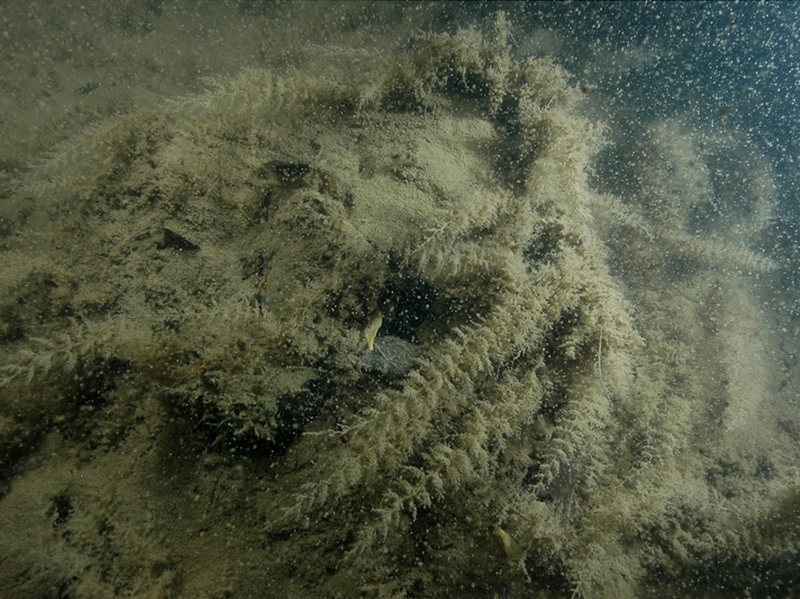
Hartlaubella gelatinosa and Conopeum reticulum on low salinity infralittoral mixed substrata
Photographer: Dr Keith Hiscock Copyright: Dr Keith Hiscock

| Researched by | Dr Harvey Tyler-Walters | Refereed by | This information is not refereed |
|---|
Summary
UK and Ireland classification
Description
Upper estuarine mixed hard substrata colonized by very sparse communities of animals with low species richness and with a few seaweeds in very shallow water. In the Tamar estuary the hydroid Hartlaubella gelatinosa and bryozoan Conopeum reticulum are found on stones. In the River Dart the bryozoan Bowerbankia imbricata is most abundant. A similar brackish-water rocky biotope is recorded from the Bann Estuary, Northern Ireland. There are considerable differences in species composition between sites, but all occur in brackish turbid-water conditions. (Information taken from the Marine Biotope Classification for Britain and Ireland, Version 97.06: Connor et al., 1997a, b).
Depth range
0-5 mAdditional information
Little direct information on the ecology of this biotope was available and reference has been made to other hydroid communities, especially estuarine fouling communities where appropriate. The biotope has been described from only two records in the MNCR database (JNCC, 1999). Similarly, the hydroid Hartlaubella gelatinosa has been little studied and inferences have been made from similar species of Obelia (Gili & Hughes, 1995; Stephanjants, 1998). Other frequently occurring species in the few records of the biotope are Alcyonium mytili, Balanus crenatus, Einhornia crustulenta, Lanice conchilega, Clava multicornis and Obelia dichotoma. The distribution of Conopeum reticulum with respect to salinity is imprecisely known, since it has been confused with other brackish water bryozoans e.g. Conopeum seurati and Einhornia crustulenta (Ryland, 1970; Hayward & Ryland, 1998) and could have been mis-identified in this biotope.
Listed By
Habitat review
Ecology
Ecological and functional relationships
Little information regarding the ecology of this community was found. The information that follows is based on survey data (Hiscock & Moore, 1986, Moore et al., 1999), the ecology of hydroid and bryozoans communities (Ryland, 1970, 1976; Gordon, 1972; Boero, 1984; Sebens, 1985, 1986; Gili & Hughes, 1995; Stephanjants, 1998) and the biology of individual species.
This biotope is dominated by suspension feeding bryozoans and hydroids and few macroalgae are found in this biotope due to the high turbidity of the water. Hydroids may be important in transferring energy from the plankton to the benthos (bentho-pelagic coupling), due to their high feeding rates (Gili & Hughes, 1995), and bryozoans may be equally important in this community. For example, a species of Obelia was reported to be an important regulator of local populations of copepods (Gili & Hughes, 1995).
- Bryozoans such as Conopeum reticulum, Einhornia crustulenta and Bowerbankia imbricata are active suspension feeders on bacteria, small flagellate phytoplankton, algal spores and small pieces of abraded macroalgae or detritus, although they are probably dependant on currents to bring adequate food within reach (Winston, 1977; McKinney, 1986; Best & Thorpe, 1994; Hayward & Ryland, 1998).
- Hydroids such as Hartlaubella gelatinosa, Clava multicornis, Obelia longissima and Obelia dichotoma are passive carnivores that capture prey that swim into, or are brought into contact with their tentacles by currents. Prey are then killed or stunned by the nematocysts born on the tentacles and swallowed. Diet varies but is likely to include small zooplankton (e.g. nauplii, copepods), small crustaceans, chironomid larvae, detritus and oligochaetes, but may include a wide variety of other organisms such as the larvae or small adults of numerous groups (see Gili & Hughes, 1995).
- Other suspension feeders include the barnacle Balanus crenatus, the sand mason worm Lanice conchilega and ,if present, Mytilus edulis spat and the tube worms Spirobranchus spp.
- The crab Carcinus maenas and the shrimp Palaemon serratus are probably scavengers within the biotope, although Carcinus maenas may prey on Balanus crenatus.
Hydroids and bryozoan communities are generally preyed on by sea spiders (pycnogonids) and sea slugs (nudibranchs), however, they are probably excluded from this biotope by the low salinities (see Arndt, 1989). Amphipods and grazing fish such as shannies and wrasse have been reported to take hydroids or bryozoans (e.g. Ryland, 1976; Roos, 1979). Although the reported species may not be present in this biotope, it is likely that estuarine and freshwater amphipods and fish (e.g. sticklebacks) are predators.
Competition for space
Space occupying species such as the hydroids, bryozoans and barnacles probably compete for available space and are early initial colonizers of available hard substratum.
- Balanus crenatus and Obelia spp. colonized flat substratum, modifying the surface roughness and complexity (see habitat complexity) and attracting the settlement of other species (Standing, 1976; Brault & Bourget, 1985).
- Obelia spp. could settle on any surface, including the barnacles, however, the uprights of Obelia spp. physically discouraged settlement of Balanus crenatus cyprids, resulting in increased settlement by ascidians which preferred the reduced water flow conditions between the interstices of the hydroid turf (Standing, 1976).
- The hydroid turf provides a potential, filamentous, settlement substratum for Mytilus edulis spat (Standing, 1976; Brault & Bourget, 1985).
- The hydroid species found in the biotope probably compete for both space and food, although the upright growth probably maximises their growth, and their relative abundance is probably due to differences in growth rate and their tolerance of variable salinity.
- Conopeum reticulum grows rapidly to secure space, and encrusting bryozoans may survive overgrowth by other organisms (Gordon, 1972; Todd & Turner, 1988)
- In the strong tidal streams of this biotope Conopeum reticulum may benefit from its proximity to hydroid turf. which results in reduced local water flow and improved feeding efficiency.
Overall, Sebens (1986) suggested that encrusting bryozoans and hydroids were early colonizers but poor competitors that were generally overgrown or out-competed by other species. However, their success in this biotope in probably due to the absence of other competitive organisms and predators due to low and variable salinity.
Seasonal and longer term change
Hydroids and encrusting bryozoans are early colonizers of hard substrata. In settlement experiments in Poole Bay, Dorset, Jensen et al. (1994) noted that hydroids and encrusting bryozoans were most abundant in summer, decreasing in abundance over winter. Brault & Bourget (1985) noted that most settlement of Obelia longissima and Balanus crenatus occurred in spring in the St Lawrence estuary, however, Obelia longissima showed annual variation in settlement intensity, and in one year experienced high mortality in summer only to recover due to new settlement in late autumn. In addition, the length of Obelia longissima branches was maximal in winter and minimal in summer in the St Lawrence estuary. Mortality of Obelia longissima and Balanus crenatus resulted in major changes and loss of species from the community (Brault & Bourget, 1985). In British waters, Balanus crenatus cyprid larvae settle between April and October, while the larvae of Conopeum reticulum are present in the plankton from July to September, Hartlaubella gelatinosa reproduces between May to November, Obelia longissima and Obelia dichotoma reproduce in summer (see species reviews, Gili & Hughes, 1995; Cornelius, 1995b).
Overall, there is likely to be seasonal variation in abundance of the hydroids and encrusting bryozoans and their settlement, probably peaking in the summer months in temperate waters. Seasonal changes in freshwater runoff, in winter months, will probably affect the extent of the biotope into the upper estuary, with species tolerant of reduced salinities that invade the biotope in summer being excluded by lower salinities in winter.
Habitat structure and complexity
Little information regarding the ecology of this community was found. The information that follows is based on survey data (Hiscock & Moore, 1986, Moore et al., 1999), the ecology of hydroid and bryozoans communities (Ryland, 1970, 1976; Gordon, 1972; Boero, 1984; Sebens, 1985, 1986; Gili & Hughes, 1995; Stephanjants, 1998) and the biology of individual species.
The estuarine epifaunal communities are relatively impoverished and do not exhibit the degree of species diversity and habitat complexity characteristic of other epifaunal communities (e.g. Gordon, 1972; Sebens, 1985, 1986).
- Hydroid branches form a turf that slow water flow within it and may accumulate a modicum of sediment that may itself support some meiofauna, while branches provide substratum for ciliates.
- Hydroid turf may also provide suitable settlement substratum for Mytilus edulis spat and refuges for amphipods.
- Balanus crenatus provides additional surface roughness and creates spatial refuges for other species (Standing, 1976; Roos, 1979; Brault & Bourget, 1985).
- Where present Bowerbankia imbricata may cover all available surfaces, including other species.
- The underlying muddy sediments support deposit feeding Arenicola marina in burrows and Lanice conchilega that protrudes from the sediment surface.
Productivity
The majority of productivity within the biotope is secondary production through suspension feeding on phytoplankton by bryozoans and passive carnivory by hydroids. Gili & Hughes (1995) suggested that hydroid turfs were important in transferring energy from the plankton to the benthos, however, productivity in this impoverished community is probably low.
Recruitment processes
The bryozoans Conopeum reticulum and species of Electra produce pelagic cyphonautes larvae with an extended planktonic life of between one to three months in the plankton (Reed, 1991). Colonies of Electra pilosa containing eggs and sperm are present in August and September and cyphonautes larvae are present in the plankton throughout the year, settling between April and the end of November, with peaks in May/June and July to August (Ryland, 1967; Hayward & Ryland, 1998). Einhornia crustulenta breeds between March and July. Conopeum reticulum breeds between June and early October in the British Isles and larvae were present in the plankton in the same period (July to September) in the River Crouch and River Blackwater (Cook, 1964). Both Conopeum reticulum and Electra spp. are members of fouling communities and probably exhibit good dispersal and potentially very rapid recruitment.
Hydroids are often the first organisms to colonize available space in settlement experiments (Gili & Hughes, 1995). Hartlaubella gelatinosa lacks a medusa stage, releasing planula larvae. Planula larvae swim or crawl for short periods (e.g. <24hrs) so that dispersal away from the parent colony is probably very limited (Sommer, 1992; Gili & Hughes, 1995). However, in Obelia longissima and Obelia dichotoma, the hydroid phase releases dioecious sexual medusae, which swim for up to 21 days (Sommer, 1992) and release sperm or eggs into the sea (fertilization is external), the resultant embryos then develop into planulae larvae that swim for 2-20 days (Sommer, 1992). Therefore, their potential dispersal is much greater than those species that only produce planulae. In addition, few species of hydroids have specific substrata requirements and many are generalists, for example Hartlaubella gelatinosa, Obelia longissima and Obelia dichotoma were reported from a variety of hard substrata, together with mud and sand in the case of Hartlaubella gelatinosa (Cornelius, 1992; Cornelius, 1995b). Hydroids are also capable of asexual reproduction and many species produce dormant, resting stages, that are very resistant of environmental perturbation (Gili & Hughes, 1995). Rapid growth, budding and the formation of stolons allows hydroids to colonize space rapidly. Fragmentation may also provide another route for short distance dispersal. However, it has been suggested that rafting on floating debris (or hitch hiking on ships hulls or in ship ballast water) as dormant stages or reproductive adults, together with their potentially long lifespan, may have allowed hydroids to disperse over a wide area in the long-term and explain the near cosmopolitan distributions of many hydroid species (Cornelius, 1992; Gili & Hughes, 1995).
Balanus crenatus is an obligate cross-fertilizing hermaphrodite that releases nauplii larvae between February and September, with peaks in April and late summer when phytoplankton levels are highest. Peak settlement occurs in April and declines until October. April-settled individuals may release larvae the same July and reach full size before their first winter. Individuals that settled later reach maximum size by the end of spring the following year, although they only live for 18 months (see review).
The polychaetes Arenicola marina and Lanice conchilega are both probably at the limit of their salinity range in this biotope. In both species external fertilization results in formation of a trochophore larvae, which is pelagic in Lanice conchilega, with potentially wide dispersal, but in Arenicola marina develops within the female burrow, and crawls away as a juvenile (see reviews for detail).
Time for community to reach maturity
Hydroids are often initial colonizing organisms in settlement experiments and fouling communities (Standing, 1976; Brault & Bourget, 1985; Sebens, 1986; Jensen et al., 1994; Hatcher, 1998). In settlement experiments the hydroids Cordylophora caspia, Obelia dichotoma and Obelia longissima colonized artificial substrata within ca 1-3 months of deployment (Standing, 1976; Brault & Bourget, 1985: Sandrock et al., 1991). Brault & Bourget (1985) reported that Obelia longissima reached a stable abundance within ca 3 months, whereas Jensen et al. (1994) noted that hydroid abundance increased during summer after deployment but increased markedly in the following summer. Once colonized the hydroids ability to grow rapidly and reproduce asexually is likely to allow it to occupy space and sexually reproduce quickly. Conopeum reticulum probably exhibits good dispersal and potentially very rapid recruitment. Hatcher (1998) reported that spring recruitment to an artificial reef in Poole Bay was dominated by tubeworms and encrusting bryozoans including Conopeum reticulum. Conopeum reticulum colonized artificial reef surfaces within 6 months from May to October 1991 (Hatcher, 1998). Balanus crenatus also colonized settlement plates or artificial reefs within 1-3 months of deployment in summer, (Brault & Bourget, 1985; Hatcher, 1998), and became abundant on settlement plates shortly afterwards (Standing, 1976; Brault & Bourget, 1985). Mobile fauna and diatoms were reported to occupy the hydroid/ barnacle covered plates within 12 months (Brault & Bourget, 1985). In a detailed study of subtidal epifaunal communities, Sebens (1986) noted that rapid colonizers, including encrusting bryozoans, tube mat forming polychaetes and amphipods and erect hydroids, covered previously cleared (scraped) areas within 1-4 months in spring and autumn. Overall, it appears that the dominant species within the community are likely to establish and grow to maximum abundance rapidly and given the small number of species recorded within the community, reach maturity within 6 months at the most.
Additional information
None entered.
Preferences & Distribution
Habitat preferences
| Depth Range | 0-5 m |
|---|---|
| Water clarity preferences | Low clarity / High turbidity |
| Limiting Nutrients | Data deficient |
| Salinity preferences | Low (<18 psu) |
| Physiographic preferences | Enclosed coast or Embayment |
| Biological zone preferences | Infralittoral |
| Substratum/habitat preferences | Cobbles, Large to very large boulders, Mixed, Small boulders |
| Tidal strength preferences | Moderately strong 1 to 3 knots (0.5-1.5 m/sec.) |
| Wave exposure preferences | Extremely sheltered, Very sheltered |
| Other preferences | Low / Reduced salinity |
Additional Information
In the Tamar estuary, Devon, available hard substrata consisted of small areas of bedrock, shells, underwater tree remains (stump and branches), and rubbish (e.g. tyres). The area was characterized by a relatively impoverished community of estuarine invertebrates, with low to reduced salinity between 30 to 5 psu and high turbidity with macroalgae restricted to very shallow water (Hiscock & Moore, 1986; Moore et al., 1998).
Species composition
Species found especially in this biotope
- Bowerbankia imbricata
- Conopeum reticulum
- Hartlaubella gelatinosa
Rare or scarce species associated with this biotope
Additional information
This biotope is relatively impoverished and the community is restricted to brackish water tolerant species. Only 14 species were recorded within this biotope (Hiscock & Moore, 1986; JNCC, 1999).Sensitivity review
Sensitivity characteristics of the habitat and relevant characteristic species
This biotope is characterized by a encrusting bryozoan and hydroid turf. Hydroids such as Hartlaubella gelatinosa, Obelia longissima and Obelia dichotoma are important space occupying species that modify the substratum with respect to recruitment in other species, e.g. Balanus crenatus and whose loss may result in degradation of the community. Therefore, the characterizing species Hartlaubella gelatinosa has been included as key structuring. However, in the absence of a full key information review on the species reference was made to key information reviews of Cordylophora caspia and Nemertesia ramosa, together with reviews of hydroid biology. Conopeum reticulum has been included as important characterizing, since its loss would probably result in loss of the biotope. Sediment dwelling polychaetes are probably at the extreme limit of their salinity tolerance within the biotope and their loss would not result in loss, or re-identification of the biotope. Therefore, the effects of factors on polychaetes is not considered indicative of biotope sensitivity. Therefore, the sensitivity of the biotope is dependent the important characterizing Hartlaubella gelatinosa and Obelia spp. and Conopeum reticulum.
Resilience and recovery rates of habitat
The bryozoans Conopeum reticulum and species of Electra spp. produce pelagic cyphonautes larvae with an extended planktonic life of between one to three months in the plankton (Reed, 1991). Colonies of Electra pilosa containing eggs and sperm are present in August and September and cyphonautes larvae are present in the plankton throughout the year, settling between April and the end of November, with peaks in May/June and July to August (Ryland, 1967; Hayward & Ryland, 1998). Einhornia crustulenta breeds between March and July. Conopeum reticulum breeds between June and early October in the British Isles and larvae were present in the plankton in the same period (July to September) in the River Crouch and River Blackwater (Cook, 1964). Both Conopeum reticulum and Electra spp. are members of fouling communities and probably exhibit good dispersal and potentially very rapid recruitment.
Hydroids are often the first organisms to colonize available space in settlement experiments and fouling communities (Standing, 1976; Brault & Bourget, 1985; Sebens, 1986; Jensen et al., 1994; Gili & Hughes, 1995; Hatcher, 1998). Hartlaubella gelatinosa lacks a medusa stage, releasing planula larvae. Planula larvae swim or crawl for short periods (e.g. <24hrs) so that dispersal away from the parent colony is probably very limited (Sommer, 1992; Gili & Hughes, 1995). However, in Obelia longissima and Obelia dichotoma, the hydroid phase releases dioecious sexual medusae, which swim for up to 21 days (Sommer, 1992) and release sperm or eggs into the sea (fertilization is external), the resultant embryos then develop into planulae larvae that swim for 2-20 days (Sommer, 1992). Therefore, their potential dispersal is much greater than those species that only produce planulae. In addition, few species of hydroids have specific substrata requirements and many are generalists, for example Hartlaubella gelatinosa, Obelia longissima and Obelia dichotoma were reported from a variety of hard substrata, together with mud and sand in the case of Hartlaubella gelatinosa (Cornelius, 1992; Cornelius, 1995b). Hydroids are also capable of asexual reproduction and many species produce dormant, resting stages, that are very resistant of environmental perturbation (Gili & Hughes, 1995). Rapid growth, budding and the formation of stolons allows hydroids to colonize space rapidly. Fragmentation may also provide another route for short distance dispersal. However, it has been suggested that rafting on floating debris (or hitch hiking on ships hulls or in ship ballast water) as dormant stages or reproductive adults, together with their potentially long lifespan, may have allowed hydroids to disperse over a wide area in the long-term and explain the near cosmopolitan distributions of many hydroid species (Cornelius, 1992; Gili & Hughes, 1995).
Balanus crenatus is an obligate cross-fertilizing hermaphrodite that releases nauplii larvae between February and September, with peaks in April and late summer when phytoplankton levels are highest. Peak settlement occurs in April and declines until October. April-settled individuals may release larvae the same July and reach full size before their first winter. Individuals that settled later reach maximum size by the end of spring the following year, although they only live for 18 months (see species review).
The polychaetes Arenicola marina and Lanice conchilega are both probably at the limit of their salinity range in this biotope. In both species external fertilization results in formation of a trochophore larvae, which is pelagic in Lanice conchilega, with potentially wide dispersal, but inArenicola marina develops within the female burrow, and crawls away as a juvenile (see individual species reviews for detail).
In settlement experiments the hydroids Obelia dichotoma and Obelia longissima colonized artificial substrata within ca 1-3 months of deployment (Standing, 1976; Brault & Bourget, 1985: Sandrock et al., 1991). Brault & Bourget (1985) reported that Obelia longissima reached a stable abundance within ca 3 months, whereas Jensen et al. (1994) noted that hydroid abundance increased during summer after deployment but increased markedly in the following summer. Once colonized the hydroids' ability to grow rapidly and reproduce asexually is likely to allow it to occupy space and sexually reproduce quickly. Hatcher (1998) reported that spring recruitment to an artificial reef in Poole Bay was dominated by tubeworms and encrusting bryozoans including Conopeum reticulum. Conopeum reticulum colonized artificial reef surfaces within 6 months from May to October 1991 (Hatcher, 1998). Balanus crenatus also colonized settlement plates or artificial reefs within 1-3 months of deployment in summer (Brault & Bourget, 1985; Hatcher, 1998), and became abundant on settlement plates shortly afterwards (Standing, 1976; Brault & Bourget, 1985). Mobile fauna and diatoms were reported to occupy the hydroid/ barnacle covered plates within 12 months (Brault & Bourget, 1985). In a detailed study of subtidal epifaunal communities, Sebens (1986) noted that rapid colonizers, including encrusting bryozoans, tube mat forming polychaetes and amphipods and erect hydroids, covered previously cleared (scraped) areas within 1-4 months in spring and autumn. Overall, it appears that the dominant species within the community are likely to establish and grow to maximum abundance rapidly and given the small number of species recorded within the community, reach maturity within 6 months at the most. Therefore, resilience is likely to be 'High, even if the community is removed.
Hydrological Pressures
Use [show more] / [show less] to open/close text displayed
| Resistance | Resilience | Sensitivity | |
Temperature increase (local) [Show more]Temperature increase (local)Benchmark. A 5°C increase in temperature for one month, or 2°C for one year. Further detail EvidenceGrowth rates were reported to increase with temperature in several bryozoans species, however, zooid size decreased, which may be due to increased metabolic costs at higher temperature (Menon, 1972; Ryland, 1976; Hunter & Hughes, 1994). Temperature is also a critical factor stimulating or inhibiting reproduction in hydroids, most of which have an optimum temperature range for reproduction (Gili & Hughes, 1995). Most of the hydroid and bryozoan species within the biotope are recorded to the north or south of the British Isles and are unlikely to be adversely affected by long-term increases in temperature at the benchmark level, e.g. Hartlaubella gelatinosa has been recorded from southeast Sweden to the Mediterranean (Cornelius, 1995b). Several members of the community may also survive acute temperature change, e.g. in Conopeum reticulum and Electra pilosa upper lethal temperatures of 30-32°C and 25-29°C respectively were reported (Menon, 1972, 1974). Therefore, an increase in temperature at the benchmark level is likely to affect growth and reproduction in the encrusting bryozoan and hydroid species but otherwise have few adverse effects. Therefore, a resistance of 'High' has been recorded. Resilience is likely to be 'High', and, therefore, the biotope is probably 'Not sensitive' at the benchmark level. | HighHelp | HighHelp | Not sensitiveHelp |
Temperature decrease (local) [Show more]Temperature decrease (local)Benchmark. A 5°C decrease in temperature for one month, or 2°C for one year. Further detail EvidenceConopeum reticulum and Electra pilosa were reported to survive below freezing temperatures (Menon, 1972) although colonies are probably more tolerant of low temperatures in winter than summer (see sprecies review for details). Low temperatures may trigger regression or dormancy in hydroids (e.g. Cordylophora caspia). Brault & Bourget (1985) noted that recruitment was delayed until spring on settlement plates deployed in winter. However, all the dominant species within the biotope are boreal or recorded from north of the British Isles. Therefore, although growth and reproduction may be reduced, they are unlikely to be adversely affected by reductions in temperature in British waters. Therefore, resistance and resilience are likely to be 'High' and the biotope is probably 'Not sensitive' at the benchmark level. | HighHelp | HighHelp | Not sensitiveHelp |
Salinity increase (local) [Show more]Salinity increase (local)Benchmark. A increase in one MNCR salinity category above the usual range of the biotope or habitat. Further detail EvidenceThe hydroids and bryozoans present in the biotope are characteristic of brackish waters. The biotope itself is only recorded from 'low' or 'reduced' salinity environments. The dominance of hydroid and bryozoans species in this biotope is probably due to the exclusion of predators and competitors (con-specifics and ascidians) by reduced and variable salinity. An increase in salinity at the benchmark level (i.e from 'reduced' to 'variable' to 'full') is likely to allow more marine species to colonize the biotope and potentially out-compete the hydroid and bryozoan members of the community. A year long increase in salinity will probably result in loss of the community at the marine limit of its range. It may be able to colonize new space at the upper estuarine limit of its range providing suitable hard substrata are present. Therefore, a resistance of 'Low'has been recorded to represent a loss of the extent of the biotope and/or the change in abundance of characteristic species. Resilience is probably 'High'. Therefore, an overall sensitivity of 'Low' is recorded. | LowHelp | HighHelp | LowHelp |
Salinity decrease (local) [Show more]Salinity decrease (local)Benchmark. A decrease in one MNCR salinity category above the usual range of the biotope or habitat. Further detail EvidenceThe hydroids and bryozoans present in the biotope are characteristic of brackish waters. Lower limits of tolerance include, for example, 6.2 psu for Hartlaubella gelatinosa, 1 psu for Obelia geniculata, 12 psu for Obelia dichotoma, 21.5 psu for Conopeum reticulum and 13.7 psu in Einhornia crustulenta (as Electra crustulenta) (Ryland, 1970; Cornelius, 1995b; Hayward & Ryland, 1998). [Please note:Conopeum seurati is considered a truly brackish water species surviving down to 1 psu, and often confused with Conopeum reticulum (Ryland, 1970; Hayward & Ryland, 1998)]. Therefore, they are tolerant of the low and variable salinities experienced within the habitat and probably not sensitive to short-term changes in the salinity for a week. However, a long-term change in salinity from e.g. low to <5psu for a year is likely to adversely affect the community. In the Tamar estuary, Devon, this biotope (IR.LIR.IFaVS.HarCon) is replaced by the IR.LIR.IFaVS.CcasEin at the riverine/estuarine transition where the salinity is always below 20 psu and can drop to 0 psu (Hiscock & Moore, 1986). Therefore, a long-term decrease in salinity is likely to result in loss of the biotope in the upper most parts of the estuary although it may extend its range into reduced salinity waters further down the estuary. Therefore, a resistance of 'None' is suggested. However, resilience is probably 'High', so that sensitivity is 'Medium'. | NoneHelp | HighHelp | MediumHelp |
Water flow (tidal current) changes (local) [Show more]Water flow (tidal current) changes (local)Benchmark. A change in peak mean spring bed flow velocity of between 0.1 m/s to 0.2 m/s for more than one year. Further detail EvidenceWater movement is essential for hydroids and other suspension feeders such as encrusting bryozoans and barnacles, to supply adequate food, remove metabolic waste products, prevent accumulation of sediment and disperse larvae or medusae. Most hydroids have a narrow range of water flow rates for effective feeding, and feeding efficiency decreasing a high water flow rates (Gili & Hughes, 1995). Hydroids are expected to be abundant where water movement is sufficient to supply adequate food but not cause damage (Hiscock, 1983; Gili & Hughes, 1995). Okamura (1985) noted that encrusting bryozoans live and feed in the boundary layer, so that the water flow rates they experience are much lower than that of the surrounding environment. In the laboratory, feeding efficiency of Conopeum reticulum colonies was higher at slow water flow (0.01-0.02 m/s) that fast (0.1-0.2 m/s), depending on colony size, with large colonies experiencing less effect (Okamura, 1985). However, Conopeum reticulum has been reported in strong to weak tidal streams (JNCC, 1999). Therefore, it is probably tolerant of a wide range of water flow rates. Similarly, Hartlaubella gelatinosa has been recorded in very strong, moderately strong and weak tidal streams (JNCC, 1999). Therefore, the characteristic species in the biotope are probably tolerant of changes in the water flow. This biotope is recorded from moderately strong tidal flow (0.5-1.5 m/s), so a change of 0.1-0.2 m/s is probably not significant. Therefore, a resistance of 'High' is recorded to represent potential changes in feeding efficiency, while resilience is probably 'High', and the biotope is probably 'Not sensitive' at the benchmark level. | HighHelp | HighHelp | Not sensitiveHelp |
Emergence regime changes [Show more]Emergence regime changesBenchmark. 1) A change in the time covered or not covered by the sea for a period of ≥1 year or 2) an increase in relative sea level or decrease in high water level for ≥1 year. Further detail EvidenceThis biotope is subtidal occurring from 0-5 m. However, its upper extent may be exposed during periods of low water level. Intertidal populations of hydroids, Conopeum reticulum, and Electra sp. are restricted to damp habitats such as underboulders, overhangs or the interstices between macroalgae. The branched growth form of hydroids is likely to retain water on emersion (e.g. see Cordylophora caspia). The biotope is found on a mixture of hard substrata, included cobbles and small boulder, so that damp areas probably exist to protect parts of the population form dessication. A decrease in emergence may allow the biotope to extent its range if suitable habitat exists. Nevertheless, hydroids and bryozoans are likely to be adversely affected by desiccation as a result of increase in emergence at the benchmark level and the upper limit of the population may be removed. Therefore a resistance of 'Low' has been recorded to represent the potential loss of a proportion of the biotope. Resilience is probably 'High' so that the biotope has a 'Low' sensitivity to this pressure. | LowHelp | HighHelp | LowHelp |
Wave exposure changes (local) [Show more]Wave exposure changes (local)Benchmark. A change in near shore significant wave height of >3% but <5% for more than one year. Further detail EvidenceThe biotope occurs in very wave sheltered situations, although storms may create significant oscillatory water movement in shallow depths. The oscillatory water flow caused by wave action is potentially more damaging to delicate marine organisms than unidirectional flow. The encrusting bryozoans are tolerant of a wide range of wave exposures (e.g. see Electra pilosa review). Wave exposed conditions tend to favour small, less branched species of hydroid than are found in this biotope (Boero, 1984; Gili & Hughes, 1995). Hartlaubella gelatinosa has only been recorded from wave sheltered conditions. The most likely adverse effect of wave action is the displacement of hard substrata (e.g. small rocks, cobbles or pebbles) and attached organisms. The resultant movement of the substratum and sediment scour may remove attached hydrorhizae and even resting stages of hydroids but many are likely to survive. Therefore, it is likely than an small increase in wave exposure at the benchmark level is likely to result in loss or damage of the hydroid and bryozoan colonies. Therefore, a resistance of 'Medium' is suggested, so that with a resilience of 'High', sensitivity to this pressure is probably 'Low'. | MediumHelp | HighHelp | LowHelp |
Chemical Pressures
Use [show more] / [show less] to open/close text displayed
| Resistance | Resilience | Sensitivity | |
Transition elements & organo-metal contamination [Show more]Transition elements & organo-metal contaminationBenchmark. Exposure of marine species or habitat to one or more relevant contaminants via uncontrolled releases or incidental spills. Further detail EvidenceVarious heavy metals have been show to have sublethal effects on growth in the few hydroids studied experimentally (Stebbing, 1981; Bryan, 1984; Ringelband, 2001). Bryozoans are common members of the fouling community and amongst those organisms most resistant to antifouling measures, such as copper containing anti-fouling paints, and bryozoans were also shown to bioaccumulate heavy metals to a certain extent (Soule & Soule, 1977; Holt et al., 1995). Bryan & Gibbs (1991) reported that virtually no hydroids were present on hard bottom communities in TBT contaminated sites and suggested that some hydroids were intolerant of TBT levels between 100 and 500 ng/l. Rees et al. (2001) reported that the abundance of epifauna had increased in the Crouch estuary in the five years since TBT was banned from use on small vessels. This last report suggests that several species of epifauna may be at least inhibited by the presence of TBT. However, Hartlaubella gelatinosa has been recorded in the Crouch estuary where TBT were very high, and was recorded under boat moorings at Cargreen in the river Tamar, and may be relatively tolerant of TBT (Keith Hiscock pers. comm.). Bryan & Gibbs (1991) reported that there was little evidence regarding TBT toxicity in bryozoans with the exception of the encrusting Schizoporella errata, which suffered 50% mortality when exposed for 63 days to 100 ng/l TBT. Howethis pressure is Not assessed. | Not Assessed (NA)Help | Not assessed (NA)Help | Not assessed (NA)Help |
Hydrocarbon & PAH contamination [Show more]Hydrocarbon & PAH contaminationBenchmark. Exposure of marine species or habitat to one or more relevant contaminants via uncontrolled releases or incidental spills. Further detail EvidenceThis pressure is Not assessed but evidence is presented where available. Although subtidal, this biotope is relatively shallow and may be exposed to oils and hydrocarbons adsorbed onto particulates and ingested or through the water soluble fractions of oils and hydrocarbons. Species of the encrusting bryozoan Membranipora and the erect bryozoan Bugula were reported to be lost or excluded from areas subject to oil spills (Mohammad, 1974; Soule & Soule, 1979). Houghton et al. (1996) reported a reduction in the abundance of intertidal encrusting bryozoans (no species given) at oiled sites after the Exxon Valdez oil spill. Encrusting bryozoans are also probably intolerant of the smothering effects of oil pollution, resulting in suffocation of colonies. The water soluble fractions of Monterey crude oil and drilling muds were reported to cause polyp shedding and other sublethal effects in the athecate Tubularia crocea in laboratory tests (Michel & Case, 1984; Michel et al., 1986; Holt et al., 1995). However, hydroid species adapted to a wide variation in environmental factors and with cosmopolitan distributions tend to be more tolerant of polluted waters (Boero, 1984; Gili & Hughes, 1995). Calder (1976) suggested that hydroids found in the low salinity areas of south Carolina, such as Cordylophora caspia, were also present in relatively polluted waters, such as Charleston Harbour. Loss of the dominant, abundant species Conopeum reticulum and Electra spp. from the biotope would result in significant change in the community and perhaps loss of the biotope as described. | Not Assessed (NA)Help | Not assessed (NA)Help | Not assessed (NA)Help |
Synthetic compound contamination [Show more]Synthetic compound contaminationBenchmark. Exposure of marine species or habitat to one or more relevant contaminants via uncontrolled releases or incidental spills. Further detail EvidenceThis pressure is Not assessed but evidence is presented where available. Chemical contaminants are likely to affect different species inthe biotope to varying degrees, depending on the nature of the contaminant and its concentration.
The species richness of hydroid communities decreases with increasing pollution but hydroid species adapted to a wide variation in environmental factors and with cosmopolitan distributions tend to be more tolerant of polluted waters (Boero, 1984; Gili & Hughes, 1995). Bryozoans are probably intolerant of chemical pollution. | Not Assessed (NA)Help | Not assessed (NA)Help | Not assessed (NA)Help |
Radionuclide contamination [Show more]Radionuclide contaminationBenchmark. An increase in 10µGy/h above background levels. Further detail EvidenceNo evidence | No evidence (NEv)Help | Not relevant (NR)Help | No evidence (NEv)Help |
Introduction of other substances [Show more]Introduction of other substancesBenchmark. Exposure of marine species or habitat to one or more relevant contaminants via uncontrolled releases or incidental spills. Further detail EvidenceThis pressure is Not assessed. | Not Assessed (NA)Help | Not assessed (NA)Help | Not assessed (NA)Help |
De-oxygenation [Show more]De-oxygenationBenchmark. Exposure to dissolved oxygen concentration of less than or equal to 2 mg/l for one week (a change from WFD poor status to bad status). Further detail EvidenceSagasti et al. (2000) reported that epifauna communities, including dominant species such as the bryozoans Conopeum tenuissimum and Membranipora tenuis, and the hydroid Obelia bicuspidata were unaffected by periods of moderate hypoxia (ca 0.35 -1.4 ml/l) and short periods of hypoxia (<0.35 ml/l) in the York River, Chesapeake Bay. Although the exact species examined differ, their study suggests that estuarine epifaunal communities are relatively tolerant of hypoxia. Therefore, a resistance of 'High' is suggested. As resilience is 'High' the biotope is recorded as 'Not sensitive' at the benchmark level. | HighHelp | HighHelp | Not sensitiveHelp |
Nutrient enrichment [Show more]Nutrient enrichmentBenchmark. Compliance with WFD criteria for good status. Further detail EvidenceEstuarine habitats are generally higher in nutrient levels than coastal waters. A moderate increase in nutrients may increase food availability for suspension feeders, in the form of organic particulates. Eutrophication may result in local hypoxic conditions (see below) and /or blooms of ephemeral algae. However, in this turbid environment, ephemeral algae are likely to be limited to the very shallow water near the top of the shore, and unlikely to adversely affect the biotope. Therefore, 'Not sensitive' has been recorded based on expert judgement. | HighHelp | HighHelp | Not sensitiveHelp |
Organic enrichment [Show more]Organic enrichmentBenchmark. A deposit of 100 gC/m2/yr. Further detail EvidenceLittle direct evidence was found. Hartlaubella gelatinosa was recorded from both reference and disposal sites examined in the Weser estuary (Witt et al., 2004). The disposal sample sites had consistently higher silt and organic content compared to reference sites (dominated by find sand) yet there was no significant difference in the abundance of Hartlaubella gelatinosa between reference and disposal sites, while Obelia sp. was more abundant at disposal sites (Witt et al., 2004). This evidence suggests that Hartlaubella gelatinosa is either resistant of both silt deposition and a high organic content or can recover quickly from disturbance by regrowth or rapid colonization. Nevertheless, Conopeum reticulum was not recorded. Therefore, it suggests that a proportion of the community in the biotope is resistant of organic enrichment and siltation, while other members of the community are probalby adversely affected. Therefore, a resistance of 'Medium' is suggested. However, as resilience is likely to be 'High', sensitivity is, therefore, 'Low'. | MediumHelp | HighHelp | LowHelp |
Physical Pressures
Use [show more] / [show less] to open/close text displayed
| Resistance | Resilience | Sensitivity | |
Physical loss (to land or freshwater habitat) [Show more]Physical loss (to land or freshwater habitat)Benchmark. A permanent loss of existing saline habitat within the site. Further detail EvidenceAll marine habitats and benthic species are considered to have a resistance of ‘None’ to this pressure and to be unable to recover from a permanent loss of habitat (resilience is ‘Very Low’). Sensitivity within the direct spatial footprint of this pressure is therefore ‘High’. Although no specific evidence is described confidence in this assessment is ‘High’, due to the incontrovertible nature of this pressure. | NoneHelp | Very LowHelp | HighHelp |
Physical change (to another seabed type) [Show more]Physical change (to another seabed type)Benchmark. Permanent change from sedimentary or soft rock substrata to hard rock or artificial substrata or vice-versa. Further detail EvidenceAll members of this biotope require hard substratum for attachment, ranging from bedrock and cobbles, to shell, artificial substrata and plants. Therefore a permanent change from a hard rock (or similar substratum) to soft (sedimentary) substratum would result in loss of the biotope. Members of the biotope may survive on scattered shell and stones on a sedimentary substratum but the biotope would not remain. Therefore, a resistance of 'None' is recorded. As the change in permanent, the resilience is 'Very low' (by definition) and sensitivity is 'High'. | NoneHelp | Very LowHelp | HighHelp |
Physical change (to another sediment type) [Show more]Physical change (to another sediment type)Benchmark. Permanent change in one Folk class (based on UK SeaMap simplified classification). Further detail EvidenceAll members of this biotope require hard substratum for attachment, ranging from bedrock and cobbles, to shell, artificial substrata and plants. Where the biotope occurs on mixed substrata, the characterizing species occur on stones, shell and debris. Therefore, a change in one Folk class from mixed to sand or gravel dominated sediment that resulted in removal of stones or other suitable hard substrata, would result in loss of the biotope. A change to fine sediment may also increase localised scour resutling in loss of the part of the biotope. Therefore, a resistance of 'Low' is recorded. As the change in permanent, the resilience is 'Very low' (by definition) and sensitivity is 'High'. | LowHelp | Very LowHelp | HighHelp |
Habitat structure changes - removal of substratum (extraction) [Show more]Habitat structure changes - removal of substratum (extraction)Benchmark. The extraction of substratum to 30 cm (where substratum includes sediments and soft rock but excludes hard bedrock). Further detail EvidenceWhere the biotope occured on bedrock or other hard substrata, extraction is unlikely, and the pressure is not relevant. However, where the biotopes occurs on stones, shell and other hard substrata on mixed sediment then extraction (to 30 cm) would probably remove the biotope completely within the affected area. The biotope would be lost and resistance is 'None'. Resilience is probably 'High' so that sensitivity is 'Medium'. | NoneHelp | HighHelp | MediumHelp |
Abrasion / disturbance of the surface of the substratum or seabed [Show more]Abrasion / disturbance of the surface of the substratum or seabedBenchmark. Damage to surface features (e.g. species and physical structures within the habitat). Further detail EvidenceAbrasion by an anchor or fishing gear is likely to remove relatively delicate uprights of hydroids, and damage bryozoan colonies, and erect epifauna are considered particularly sensitive to physical abrasion. For example, drop down video surveys of Scottish reefs exposed to trawling showed that visual evidence of damage to bryozoans and hydroids on rock surfaces was generally limited and restricted to scrape scars on boulders (Boulcott & Howell, 2011). The study showed that damage is incremental with damage increasing with frequency of trawls rather than a blanket effect occurring on the pass of the first trawls. The level of impact may be mediated by the rugosity of the attachment, surfaces with greater damage occurring over smooth terrains where the fishing gear can move unimpeded across a flat surface. Veale et al. (2000) reported that the abundance, biomass and production of epifaunal assemblages decreased with increasing fishing effort. Erect epifauna can be directly removed and brought to the surface in trawl hauls. De Groot (1984), for example, found that beam trawls with or without tickler chains removed the hydrozoan Tubularia spp. (mostly Tubularia indivisa). He suggested that nearly all individuals in the path of a beam trawl would be destroyed. This study was based on observations of species caught as by-catch and did not assess in-situ damage rates. Re-sampling of grounds that were historically studied (from the 1930s) indicates that some upright species have increased in areas subject to scallop fishing (Bradshaw et al., 2002). This study also found increases in the tough stemmed hydroids including Nemertesia spp., whose morphology may prevent excessive damage. Bradshaw et al. (2002) suggested that as well as having high resistance to abrasion pressures, Nemertesia spp. have benthic larvae that could rapidly colonize disturbed areas with newly exposed substrata close to the adult. Other population level effects have also been recorded. The scallop fishery has been implicated for altering genetic diversity within Sertularia cupressina populations on commercial scallop grounds in Atlantic Canada where increased damage rates have increased clonality from injury-induced fragmentation (Henry & Kenchington 2004). This means that genetic diversity in fished areas is lower than unfished areas. No specific information was available to assess the resistance of the characteristic species within this biotope. But erect epifauna exposed to abrasion could displace, damage and remove individuals (De Groot 1984; Veale et al., 2001; Boulcott & Howell, 2011). Colonies of hydroids and bryozoans attached to mobile substrata may suffer damage during displacement of stones and small boulders but are likely to survive. However, removal of a bryozoan of hydroid colony from its substratum would probably be fatal, and encrusting bryozoans are not known to be able to reattach. Fragmentation is thought to be a possible mode of asexual reproduction in hydroids (Gili & Hughes, 1995) and it is possible that a proportion of displaced hydroid fragments may attach to new substrata, enhancing recovery. However, the encrusting bryozoans, hydroids and barnacles are likely to be lost and an intolerance of high has been recorded. Although, trawling activities may be unlikely where this biotope occurs, anchoring and dredging activities may have simialr effects. Overall, the biotope is likely to have a 'Low' resistance to this pressure. However, resilience is likely to be 'High', so that sensitivity is probably 'Low. | LowHelp | HighHelp | LowHelp |
Penetration or disturbance of the substratum subsurface [Show more]Penetration or disturbance of the substratum subsurfaceBenchmark. Damage to sub-surface features (e.g. species and physical structures within the habitat). Further detail EvidenceSubsurface penetrative activities are not relevant where this biotope occurs on bedrock and other hard substratum. Where the biotope occurs on small boulders, cobbles and stones on mixed substrata, then sub-surface penetrative activities may physically displace or remove the biotope (see abrasion above). However, where suitable substrata remain, the biotope is highly resilient. Therefore, a resistance of 'Low' is suggested, with 'High' resilience and hence 'Low' sensitivity. | LowHelp | HighHelp | LowHelp |
Changes in suspended solids (water clarity) [Show more]Changes in suspended solids (water clarity)Benchmark. A change in one rank on the WFD (Water Framework Directive) scale e.g. from clear to intermediate for one year. Further detail EvidenceThe biotope occurs in high turbidity estuarine waters. Estuarine waters can exhibit high turbidities, measured in grammes per litre rather than milligrammes per litre and probably exceed the lower limit of 'very turbid' (>300 mg/l) on the UKTAG scale (see benchmark). Therefore, an increase in turbidity is unlikely. If a decrease is turbidity was to occur, then conditions may favour macroalgae, which would compete for space with the dominant epifauna and potentially grow over the epifauna. However, records of the biotope suggest that it contains bare areas and the hydroid and bryozoan epifauna can probably tolerate being grown over, so that the effects are limited. If conditions return to prior norm aftera year, then recovery will be rapid. Therefore, a resistance of 'Medium' is suggested to represent changes in the abundance epifauna, but with a resilience of 'High', sensitivity is 'Low'. | MediumHelp | HighHelp | LowHelp |
Smothering and siltation rate changes (light) [Show more]Smothering and siltation rate changes (light)Benchmark. ‘Light’ deposition of up to 5 cm of fine material added to the seabed in a single discrete event. Further detail EvidenceNo direct evidence was found to assess the impact of this pressure at the pressure benchmark. The characteristic species are attached to the substratum and are usually shorter than 30 cm (e.g. Obelia dicotoma can form large, erect and loosely fan-shaped or elongate up to 35 cm in height, or short and either bushy or unbranched colonies up to 5 cm in height in British waters (see review), and Hartlaubella gelatinosa can grow up to 20 cm in height (see review). Encrusting bryozoans are easily buried. Siltation by fine sediments would also prevent larval settlement by the characteristic species which require hard substratum (Berghahn & Offermann, 1999). The intensity and duration of siltation will be mediated by site-specific hydrodynamic conditions, such as water-flow and wave action that determine the dispersal of deposits. In general it appears that hydroids are sensitive to silting (Boero, 1984; Gili & Hughes, 1995) and decline in beds in the Wadden Sea has been linked to environmental changes including siltation. Round et al. (1961) reported that the hydroid Sertularia (now Amphisbetia) operculata died when covered with a layer of silt after being transplanted to sheltered conditions. Boero (1984) suggested that deep water hydroid species develop upright, thin colonies that accumulate little sediment, while species in turbulent water movement were adequately cleaned of silt by water movement. However, Hartlaubella gelatinosa was recorded from both reference and disposal sites examined in the Weser estuary (Witt et al., 2004). The disposal sample sites had consistently higher silt and organic content compared to reference sites (dominated by find sand) yet there was no significant difference in the abundance of Hartlaubella gelatinosa between reference and disposal sites, while Obelia sp. was more abundant at disposal sites (Witt et al., 2004). This evidence suggests that Hartlaubella gelatinosa is either resistant of both silt deposition and a high organic content or can recover quickly from disturbance by regrowth or rapid colonization. Smothering by 5 cm of sediment (see benchmark) is likely to prevent feeding and hence reduce growth and reproduction in encrusting bryozoans. The hydroid hydranths are relatively large and some parts of the colony are likely to protrude above 5 cm of sediment. However reduced feeding, together with local hypoxic conditions under the sediment layer will probably reduce growth and reproduction rates. In addition, associated sediment abrasion may remove the bryozoan colonies. Therefore, a biotope resistance of ' Medium' has been recorded, as a proportion of the community may be adversely affected. The resilience is probably 'High' so that the sensitivity is likely to be 'Low'. | MediumHelp | HighHelp | LowHelp |
Smothering and siltation rate changes (heavy) [Show more]Smothering and siltation rate changes (heavy)Benchmark. ‘Heavy’ deposition of up to 30 cm of fine material added to the seabed in a single discrete event. Further detail EvidenceNo direct evidence was found to assess the impact of this pressure at the pressure benchmark. The characteristic species are attached to the substratum and are usually shorter than 30 cm (e.g. Obelia dicotoma can form large, erect and loosely fan-shaped or elongate up to 35 cm in height, or short and either bushy or unbranched colonies up to 5 cm in height in British waters (see review), and Hartlaubella gelatinosa can grow up to 20 cm in height (see review). Encrusting bryozoans are easily buried. Siltation by fine sediments would also prevent larval settlement by the characteristic species which require hard substratum (Berghahn & Offermann, 1999). The intensity and duration of siltation will be mediated by site-specific hydrodynamic conditions, such as water-flow and wave action that determine the dispersal of deposits. In general it appears that hydroids are sensitive to silting (Boero, 1984; Gili & Hughes, 1995) and decline in beds in the Wadden Sea has been linked to environmental changes including siltation. Round et al. (1961) reported that the hydroid Sertularia (now Amphisbetia) operculata died when covered with a layer of silt after being transplanted to sheltered conditions. Boero (1984) suggested that deep water hydroid species develop upright, thin colonies that accumulate little sediment, while species in turbulent water movement were adequately cleaned of silt by water movement. However, Hartlaubella gelatinosa was recorded from both reference and disposal sites examined in the Weser estuary (Witt et al., 2004). The disposal sample sites had consistently higher silt and organic content compared to reference sites (dominated by find sand) yet there was no significant difference in the abundance of Hartlaubella gelatinosa between reference and disposal sites, while Obelia sp. was more abundant at disposal sites (Witt et al., 2004). This evidence suggests that Hartlaubella gelatinosa is either resistant of both silt deposition and a high organic content or can recover quickly from disturbance by regrowth or rapid colonization. Smothering by 30 cm of sediment (see benchmark) is likely smother encrusting bryozoans. The hydroid hydranths are relatively large and a limited number may protrude above even 30 cm of sediment. However reduced feeding, together with local hypoxic conditions under the sediment layer will probably reduce growth and reproduction rates. In the moderately strong tidal flow the sediment may remain for some time, so that the hydroid uprights may die back. In addition, associated sediment abrasion may remove the bryozoan colonies. Therefore, while Hartlaubella gelatinosa and Obelia sp.may be tolerant, other members of the community are likely to be removed, so a resistance of 'Low' is suggested. As resilience is probably 'High, sensitivity is likely to be 'Low'. | LowHelp | HighHelp | LowHelp |
Litter [Show more]LitterBenchmark. The introduction of man-made objects able to cause physical harm (surface, water column, seafloor or strandline). Further detail EvidenceNot assessed | Not Assessed (NA)Help | Not assessed (NA)Help | Not assessed (NA)Help |
Electromagnetic changes [Show more]Electromagnetic changesBenchmark. A local electric field of 1 V/m or a local magnetic field of 10 µT. Further detail EvidenceNo evidence | No evidence (NEv)Help | Not relevant (NR)Help | No evidence (NEv)Help |
Underwater noise changes [Show more]Underwater noise changesBenchmark. MSFD indicator levels (SEL or peak SPL) exceeded for 20% of days in a calendar year. Further detail EvidenceNot relevant to the charaterizing species of this biotope. | Not relevant (NR)Help | Not relevant (NR)Help | Not relevant (NR)Help |
Introduction of light or shading [Show more]Introduction of light or shadingBenchmark. A change in incident light via anthropogenic means. Further detail EvidenceThis is a epifaunal dominated biotope with any macroalgae present restricted to shallow water due to the high turbidity conditions in which the biotope occurs. Artificial light sources are unlikely to affect light availability for algae as the turbidity is the may reason for poor light penetration. Shading may restrict macroalgal growth further, but is unlikely to adversely affect the biotope. Therefore a resistance of 'High' is recorded, with a resilience of 'High', so that the biotope is probably 'Not sensitive'. | HighHelp | HighHelp | Not sensitiveHelp |
Barrier to species movement [Show more]Barrier to species movementBenchmark. A permanent or temporary barrier to species movement over ≥50% of water body width or a 10% change in tidal excursion. Further detail EvidenceBarrier to water flow may restrict larval recruitment for this biotope. The hydroid or colonies are probably not dependent on external recruitment for it continued survival, except if severely damaged. In addition, members of this biotope are typical of fouling communities and noted for high rates of recovery and recruitment. Therefore, only complete cessation of water flow and water transport is likely to adversely affect recruitment of the dominant characteristic species. Therefore, this pressure is 'Not relevant' to this biotope. | Not relevant (NR)Help | Not relevant (NR)Help | Not relevant (NR)Help |
Death or injury by collision [Show more]Death or injury by collisionBenchmark. Injury or mortality from collisions of biota with both static or moving structures due to 0.1% of tidal volume on an average tide, passing through an artificial structure. Further detail Evidence'Not relevant’ to seabed habitats. NB. Collision by grounding vessels is addressed under ‘surface abrasion’ | Not relevant (NR)Help | Not relevant (NR)Help | Not relevant (NR)Help |
Visual disturbance [Show more]Visual disturbanceBenchmark. The daily duration of transient visual cues exceeds 10% of the period of site occupancy by the feature. Further detail EvidenceNone of the charateristic species within this biotope have any know visual acuity, and while they may react to shading of the polyps themselves, this presure is 'Not relevant'. | Not relevant (NR)Help | Not relevant (NR)Help | Not relevant (NR)Help |
Biological Pressures
Use [show more] / [show less] to open/close text displayed
| Resistance | Resilience | Sensitivity | |
Genetic modification & translocation of indigenous species [Show more]Genetic modification & translocation of indigenous speciesBenchmark. Translocation of indigenous species or the introduction of genetically modified or genetically different populations of indigenous species that may result in changes in the genetic structure of local populations, hybridization, or change in community structure. Further detail EvidenceNone of the characteristic species are known to be 'translocated', subject to breeding programmes, or liable to hybridize with other species. Therefore this pressure is 'Not relevant' to this biotope. | Not relevant (NR)Help | Not relevant (NR)Help | Not relevant (NR)Help |
Introduction of microbial pathogens [Show more]Introduction of microbial pathogensBenchmark. The introduction of relevant microbial pathogens or metazoan disease vectors to an area where they are currently not present (e.g. Martelia refringens and Bonamia, Avian influenza virus, viral Haemorrhagic Septicaemia virus). Further detail EvidenceNo evidence found | No evidence (NEv)Help | Not relevant (NR)Help | No evidence (NEv)Help |
Removal of target species [Show more]Removal of target speciesBenchmark. Removal of species targeted by fishery, shellfishery or harvesting at a commercial or recreational scale. Further detail EvidenceIt is extremely unlikely that any of the species indicative of sensitivity would be targeted and we have no evidence for the indirect effects of removal of other species on this biotope. Therefore, this pressure is not relevant. | Not relevant (NR)Help | Not relevant (NR)Help | Not relevant (NR)Help |
Removal of non-target species [Show more]Removal of non-target speciesBenchmark. Removal of features or incidental non-targeted catch (by-catch) through targeted fishery, shellfishery or harvesting at a commercial or recreational scale. Further detail EvidenceIt is extremely unlikely that any of the species indicative of sensitivity would be targeted and we have no evidence for the indirect effects of removal of other species on this biotope. Therefore, this pressure is not relevant. | Not relevant (NR)Help | Not relevant (NR)Help | Not relevant (NR)Help |
Introduction or spread of invasive non-indigenous species (INIS) Pressures
Use [show more] / [show less] to open/close text displayed
| Resistance | Resilience | Sensitivity | |
Other INIS [Show more]Other INISEvidenceThis epifaunal dominated biotope could be threatened by other more aggresive epifauna,e.g. Didemnum vexillum or Perophora japonica. However, the latter species have not been reported from the upper and mid Tamar estuary where the biotope is found. No evidence of impact was found, although the evidence may need to be revisited in the future. | No evidence (NEv)Help | Not relevant (NR)Help | No evidence (NEv)Help |
Bibliography
Arndt, E.A., 1989. Ecological, physiological and historical aspects of brackish water fauna distribution. In Proceedings of the 23rd European Marine Biology Symposium, Swansea, 5-9 September 1988. Reproduction, Genetics and Distribution of Marine Organisms, (ed. J.S. Ryland & P.A. Tyler), pp. 327-338. Denmark: Olsen & Olsen.
Barnes, H., Finlayson, D.M. & Piatigorsky, J., 1963. The effect of desiccation and anaerobic conditions on the behaviour, survival and general metabolism of three common cirripedes. Journal of Animal Ecology, 32, 233-252.
Berghahn, R. & Offermann, U. 1999. Laboratory investigations on larval development, motility and settlement of white weed (Sertularia cupressina L.) - in view of its assumed decrease in the Wadden Sea. Hydrobiogia, 392(2), 233–239.
Best, M.A. & Thorpe, J.P., 1986. Effects of food particle concentration on feeding current velocity in six species of marine Bryozoa. Marine Biology, 93, 255-262.
Boero, F., 1984. The ecology of marine hydroids and effects of environmental factors: a review. Marine Ecology, 5, 93-118.
Boulcott, P. & Howell, T.R.W., 2011. The impact of scallop dredging on rocky-reef substrata. Fisheries Research (Amsterdam), 110 (3), 415-420.
Bradshaw, C., Veale, L.O., Hill, A.S. & Brand, A.R., 2002. The role of scallop-dredge disturbance in long-term changes in Irish Sea benthic communities: a re-analysis of an historical dataset. Journal of Sea Research, 47, 161-184. DOI https://doi.org/10.1016/S1385-1101(02)00096-5
Brault, S. & Bourget, E., 1985. Structural changes in an estuarine subtidal epibenthic community: biotic and physical causes. Marine Ecology Progress Series, 21, 63-73.
Bryan, G.W. & Gibbs, P.E., 1991. Impact of low concentrations of tributyltin (TBT) on marine organisms: a review. In: Metal ecotoxicology: concepts and applications (ed. M.C. Newman & A.W. McIntosh), pp. 323-361. Boston: Lewis Publishers Inc.
Calder, D.R., 1976. The zonation of hydroid colonies along salinity gradients in South Carolina estuaries. In Coelenterate ecology and behaviour (ed. G.O. Mackie), pp. 165-174. New York: Plenum Press.
Connor, D.W., Dalkin, M.J., Hill, T.O., Holt, R.H.F. & Sanderson, W.G., 1997a. Marine biotope classification for Britain and Ireland. Vol. 2. Sublittoral biotopes. Joint Nature Conservation Committee, Peterborough, JNCC Report no. 230, Version 97.06., Joint Nature Conservation Committee, Peterborough, JNCC Report no. 230, Version 97.06.
Cook, P.L., 1964. The development of Electra monostachys (Busk) and Conopeum reticulum (Linnaeus), Polyzoa, Anasca. Cahiers de Biologie Marine, 5, 391-397.
Cornelius, P.F.S., 1992. Medusa loss in leptolid Hydrozoa (Cnidaria), hydroid rafting, and abbreviated life-cycles among their remote island faunae: an interim review.
Cornelius, P.F.S., 1995b. North-west European thecate hydroids and their medusae. Part 2. Sertulariidae to Campanulariidae. Shrewsbury: Field Studies Council. [Synopses of the British Fauna no. 50]
Davies, C.E. & Moss, D., 1998. European Union Nature Information System (EUNIS) Habitat Classification. Report to European Topic Centre on Nature Conservation from the Institute of Terrestrial Ecology, Monks Wood, Cambridgeshire. [Final draft with further revisions to marine habitats.], Brussels: European Environment Agency.
De Groot, S.J., 1984. The impact of bottom trawling on benthic fauna of the North Sea. Ocean Management, 9 (3/4), 177-190.
Erwin, D.G., Picton, B.E., Connor, D.W., Howson, C.M., Gilleece, P. & Bogues, M.J., 1990. Inshore Marine Life of Northern Ireland. Report of a survey carried out by the diving team of the Botany and Zoology Department of the Ulster Museum in fulfilment of a contract with Conservation Branch of the Department of the Environment (N.I.)., Ulster Museum, Belfast: HMSO.
Foster, B.A., 1971a. Desiccation as a factor in the intertidal zonation of barnacles. Marine Biology, 8, 12-29.
Foster, P., Hunt, D.T.E. & Morris, A.W., 1978. Metals in an acid mine stream and estuary. Science of the Total Environment, 9, 75-86.
Gili, J-M. & Hughes, R.G., 1995. The ecology of marine benthic hydroids. Oceanography and Marine Biology: an Annual Review, 33, 351-426.
Gordon, D.P., 1972. Biological relationships of an intertidal bryozoan population. Journal of Natural History, 6, 503-514.
Hatcher, A.M., 1998. Epibenthic colonization patterns on slabs of stabilised coal-waste in Poole Bay, UK. Hydrobiologia, 367, 153-162.
Hayward, P.J. & Ryland, J.S. 1998. Cheilostomatous Bryozoa. Part 1. Aeteoidea - Cribrilinoidea. Shrewsbury: Field Studies Council. [Synopses of the British Fauna, no. 10. (2nd edition)]
Henry, L.A. & Kenchington, E.L.R. 2004. Ecological and genetic evidence for impaired sexual reproduction and induced clonality in the hydroid Sertularia cupressina (Cnidaria: Hydrozoa) on commercial scallop grounds in Atlantic Canada. Marine Biology, 145, 1107-1118
Hiscock, K. & Moore, J. 1986. Surveys of harbours, rias and estuaries in southern Britain: Plymouth area including the Yealm. Nature Conservancy Council, CSD Report, no. 752.
Hoare, R. & Hiscock, K., 1974. An ecological survey of the rocky coast adjacent to the effluent of a bromine extraction plant. Estuarine and Coastal Marine Science, 2 (4), 329-348.
Holt, T.J., Jones, D.R., Hawkins, S.J. & Hartnoll, R.G., 1995. The sensitivity of marine communities to man induced change - a scoping report. Countryside Council for Wales, Bangor, Contract Science Report, no. 65.
Hunter, E. & Hughes, R.N., 1994. Influence of temperature, food ration and genotype on zooid size in Celleporella hyalina (L.). In Proceedings of the 9th International Bryozoology Conference, Swansea, 1992. Biology and Palaeobiology of Bryozoans (ed. P.J. Hayward, J.S. Ryland & P.D. Taylor), pp. 83-86. Fredensborg: Olsen & Olsen.
Jensen, A.C., Collins, K.J., Lockwood, A.P.M., Mallinson, J.J. & Turnpenny, W.H., 1994. Colonization and fishery potential of a coal-ash artificial reef, Poole Bay, United Kingdom. Bulletin of Marine Science, 55, 1263-1276.
JNCC (Joint Nature Conservation Committee), 2022. The Marine Habitat Classification for Britain and Ireland Version 22.04. [Date accessed]. Available from: https://mhc.jncc.gov.uk/
JNCC (Joint Nature Conservation Committee), 1999. Marine Environment Resource Mapping And Information Database (MERMAID): Marine Nature Conservation Review Survey Database. [on-line] http://www.jncc.gov.uk/mermaid
Judge, M.L. & Craig, S.F., 1997. Positive flow dependence in the initial colonization of a fouling community: results from in situ water current manipulations. Journal of Experimental Marine Biology and Ecology, 210, 209-222.
McKinney, F.K., 1986. Evolution of erect marine bryozoan faunas: repeated success of unilaminate species The American Naturalist, 128, 795-809.
Menon, N.R., 1972. Heat tolerance, growth and regeneration in three North Sea bryozoans exposed to different constant temperatures. Marine Biology, 15, 1-11.
Menon, N.R., 1974. Clearance rates of food suspension and food passage rates as a function of temperature in two North Sea bryozoans. Marine Biology, 24, 65-67.
Michel, W.C. & Case, J.F., 1984. Effects of a water-soluble petroleum fraction on the behaviour of the hydroid coelenterate Tubularia crocea. Marine Environmental Research, 13, 161-176.
Michel, W.C., Sanfilippo, K. & Case, J.F., 1986. Drilling mud evoked hydranth shedding in the hydroid Tubularia crocea. Marine Pollution Bulletin, 17, 415-419.
Moore, J., Smith, J. & Northen, K.O., 1999. Marine Nature Conservation Review Sector 8. Inlets in the western English Channel: area summaries. Peterborough: Joint Nature Conservation Committee. [Coasts and seas of the United Kingdom. MNCR Series.]
Rainbow, P.S., 1987. Heavy metals in barnacles. In Barnacle biology. Crustacean issues 5 (ed. A.J. Southward), 405-417. Rotterdam: A.A. Balkema.
Reed, C.G., 1991. Bryozoa. In Reproduction of marine invertebrates, vol. VI. Echinoderms and Lophophorates (ed. A.C. Geise, J.S. Pearse & V.B. Pearse), pp. 85-245. California: Boxwood Press.
Rees, H.L., Waldock, R., Matthiessen, P. & Pendle, M.A., 2001. Improvements in the epifauna of the Crouch estuary (United Kingdom) following a decline in TBT concentrations. Marine Pollution Bulletin, 42, 137-144. DOI https://doi.org/10.1016/S0025-326X(00)00119-3
Ringelband, U., 2001. Salinity dependence of vanadium toxicity against the brackish water hydroid Cordylophora caspia. Ecotoxicology and Environmental Safety, 48, 18-26.
Roos, P.J., 1979. Two-stage life cycle of a Cordylophora population in the Netherlands. Hydrobiologia, 62, 231-239.
Round, F.E., Sloane, J.F., Ebling, F.J. & Kitching, J.A., 1961. The ecology of Lough Ine. X. The hydroid Sertularia operculata (L.) and its associated flora and fauna: effects of transference to sheltered water. Journal of Ecology, 49, 617-629.
Ryland, J.S., 1967. Polyzoa. Oceanography and Marine Biology: an Annual Review, 5, 343-369.
Ryland, J.S., 1970. Bryozoans. London: Hutchinson University Library.
Ryland, J.S., 1976. Physiology and ecology of marine bryozoans. Advances in Marine Biology, 14, 285-443.
Sagasti, A., Schaffner, L.C. & Duffy, J.E., 2000. Epifaunal communities thrive in an estuary with hypoxic episodes. Estuaries, 23 (4), 474-487.
Sandrock, S., Scharf, E-M., von Oertzen, J.A., 1991. Short-term changes in settlement of micro- and macro-fouling organisms in brackish waters. Acta Ichthyologica et Piscatoria, 21(Suppl.), 221-235.
Sebens, K.P., 1986. Spatial relationships among encrusting marine organisms in the New England subtidal zone. Ecological Monographs, 56, 73-96. DOI https://doi.org/10.2307/2937271
Smith, J.E. (ed.), 1968. 'Torrey Canyon'. Pollution and marine life. Cambridge: Cambridge University Press.
Sommer, C., 1992. Larval biology and dispersal of Eudendrium racemosum (Hydrozoa, Eudendriidae). Scientia Marina, 56, 205-211. [Proceedings of 2nd International Workshop of the Hydrozoan Society, Spain, September 1991. Aspects of hydrozoan biology (ed. J. Bouillon, F. Cicognia, J.M. Gili & R.G. Hughes).]
Soule, D.F. & Soule, J.D., 1979. Bryozoa (Ectoprocta). In Hart, C.W. & Fuller, S.L.H. (eds), Pollution ecology of estuarine invertebrates. New York: Academic Press, pp. 35-76.
Standing, J.D., 1976. Fouling community structure: effect of the hydroid Obelia dichotoma on larval recruitment. In Coelenterate ecology and behaviour (ed. G.O. Mackie), pp. 155-164. New York: Plenum Press.
Stepanjants, S.D., 1998. Obelia (Cnidaria, Medusozoa, Hydrozoa): phenomenon, aspects of investigations, perspectives for utilization. Oceanography and Marine Biology: an Annual Review, 36, 179-215.
Todd, C.D. & Turner, S.J., 1988. Ecology of intertidal and sublittoral cryptic epifaunal assemblages. II. Non-lethal overgrowth of encrusting bryozoans by colonial ascidians. Journal of Experimental Marine Biology and Ecology, 115, 113-126.
Veale, L.O., Hill, A.S., Hawkins, S.J. & Brand, A.R., 2000. Effects of long term physical disturbance by scallop fishing on subtidal epifaunal assemblages and habitats. Marine Biology, 137, 325-337.
Winston, J.E., 1977. Feeding in marine bryozoans. In Biology of Bryozoans (ed. R.M. Woollacott & R.L. Zimmer), pp. 233-271.
Witt, J., Schroeder, A., Knust, R. & Arntz, W.E., 2004. The impact of harbour sludge disposal on benthic macrofauna communities in the Weser estuary. Helgoland Marine Research, 58 (2), 117-128.
Citation
This review can be cited as:
Last Updated: 07/09/2015