
Knotted wrack (Ascophyllum nodosum)
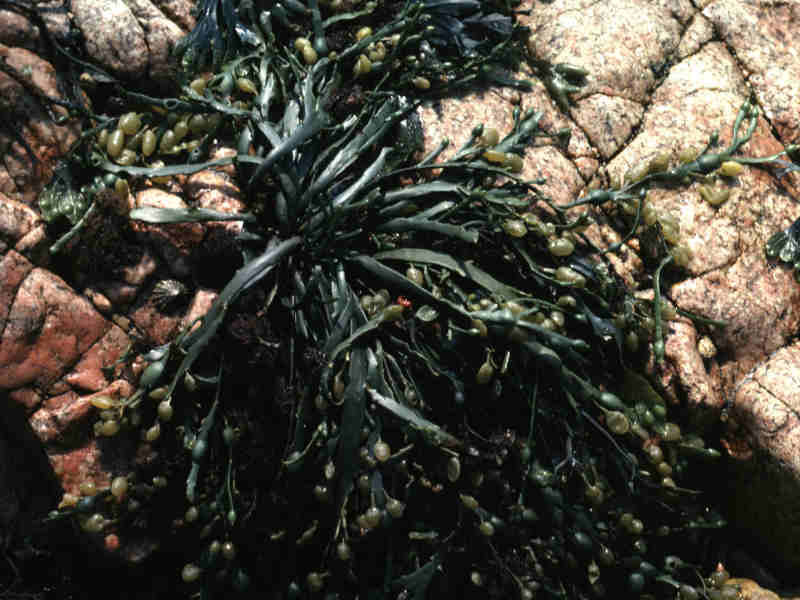
Isolated growth of Ascophyllum nodosum on rock.
Photographer: Dr Keith Hiscock Copyright: Dr Keith Hiscock
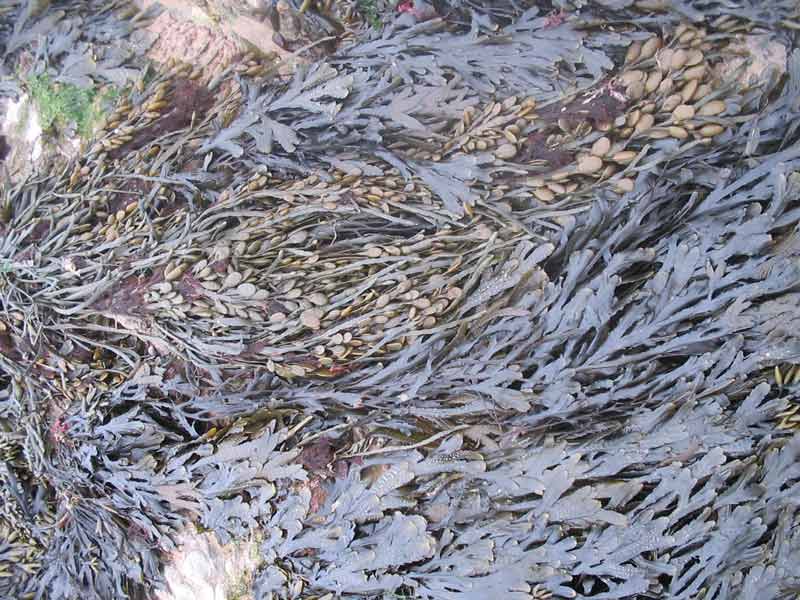
Ascophyllum nodosum with Fucus serratus.
Photographer: Judith Oakley Copyright: Judith Oakley
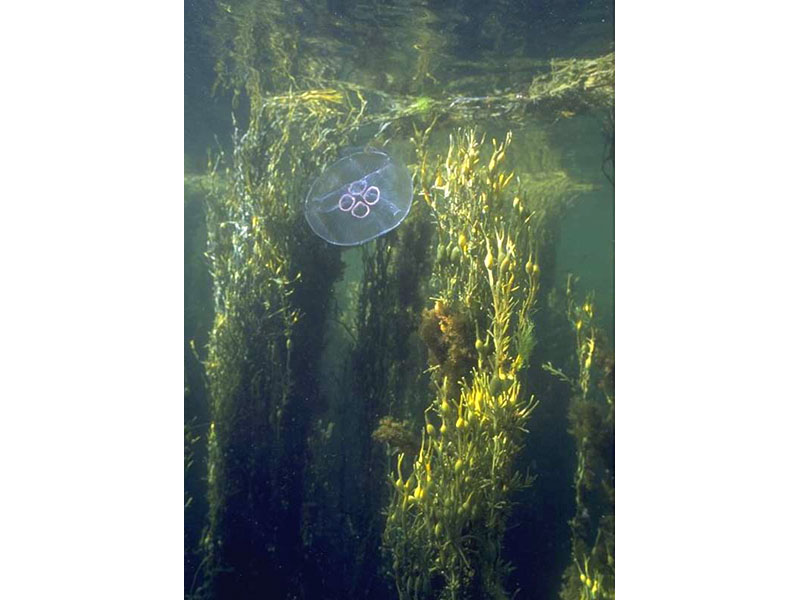
Ascophyllum nodosum at high tide with Aurelia aurita, the moon jellyfish.
Photographer: Sue Scott Copyright: Sue Scott
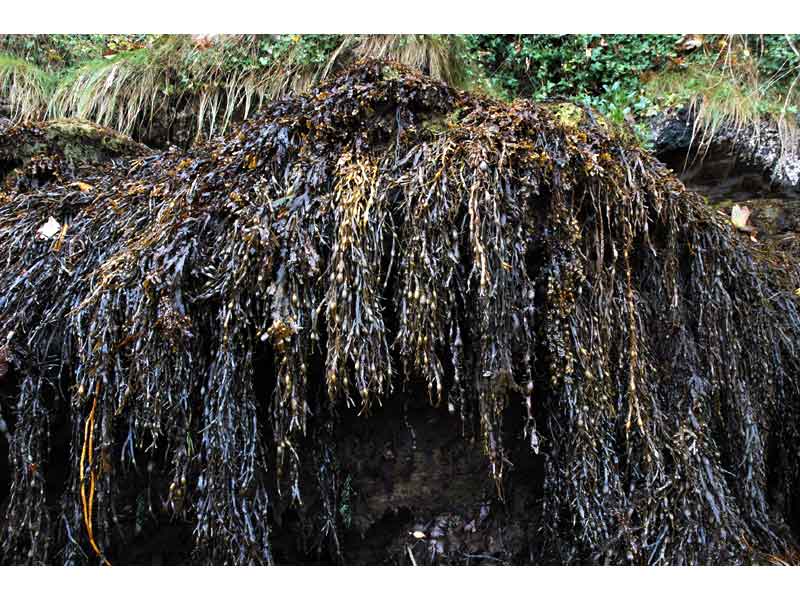
Ascophyllum nodosum at Noss Mayo, Devon.
Photographer: Dr Keith Hiscock Copyright: Dr Keith Hiscock
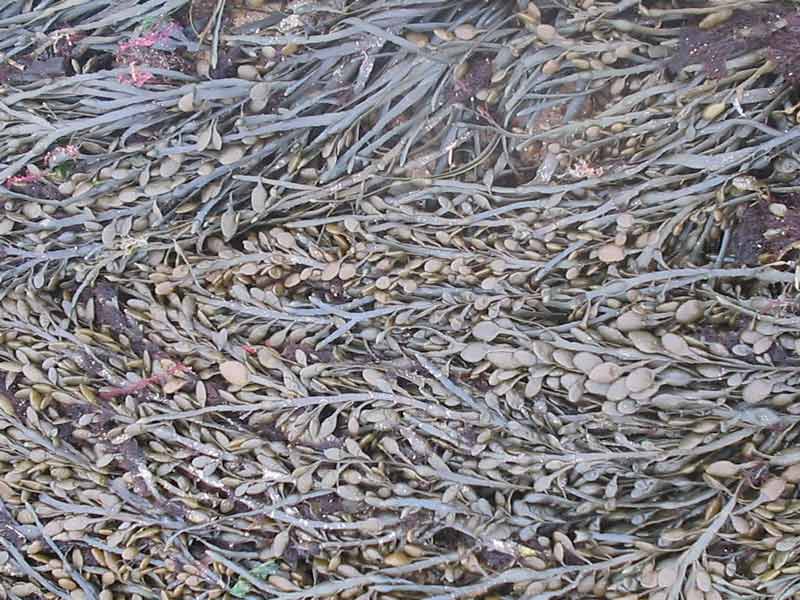
Ascophyllum nodosum on the sea shore.
Photographer: Judith Oakley Copyright: Judith Oakley
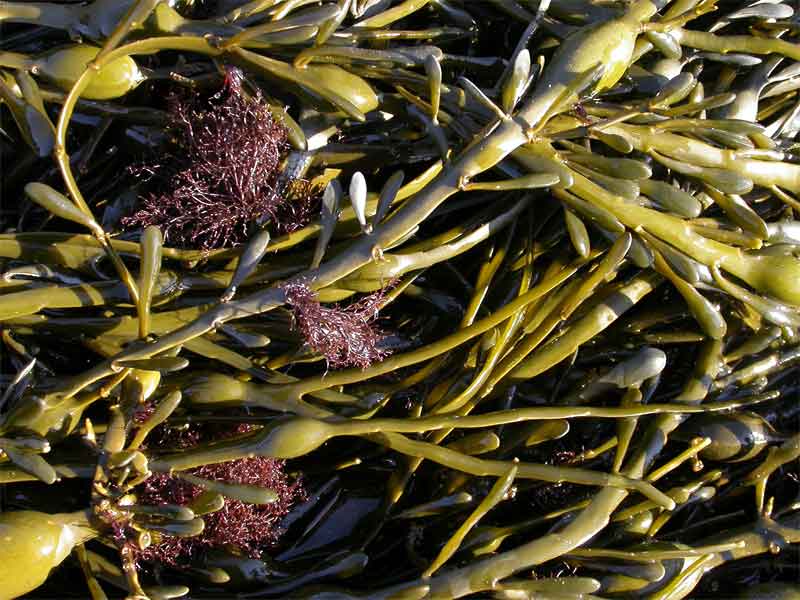
Ascophyllum nodosum with the epiphyte Polysiphonia lanosa.
Photographer: Peter Barfield Copyright: Peter Barfield
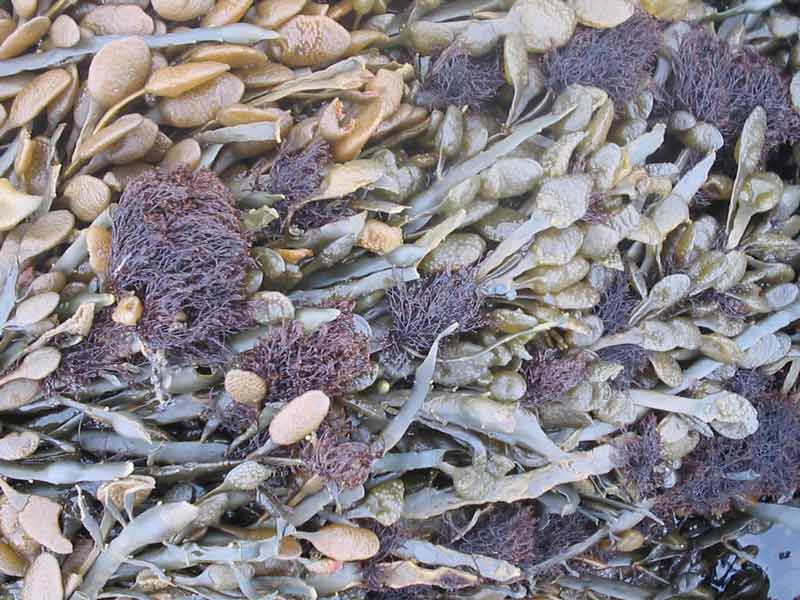
Ascophyllum nodosum with the red seaweed Polysiphonia lanosa.
Photographer: Judith Oakley Copyright: Judith Oakley
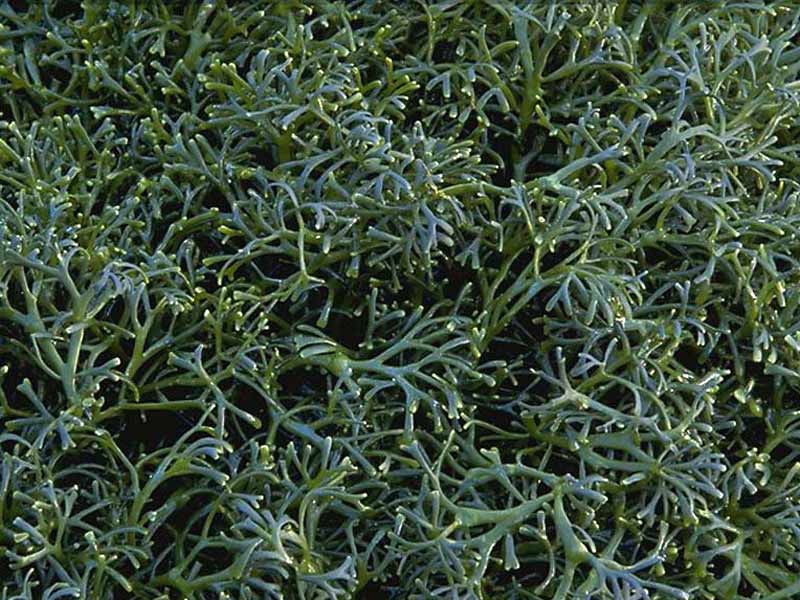
A close up view of Ascophyllum nodosum ecad mackaii.
Photographer: Sue Scott Copyright: Sue Scott
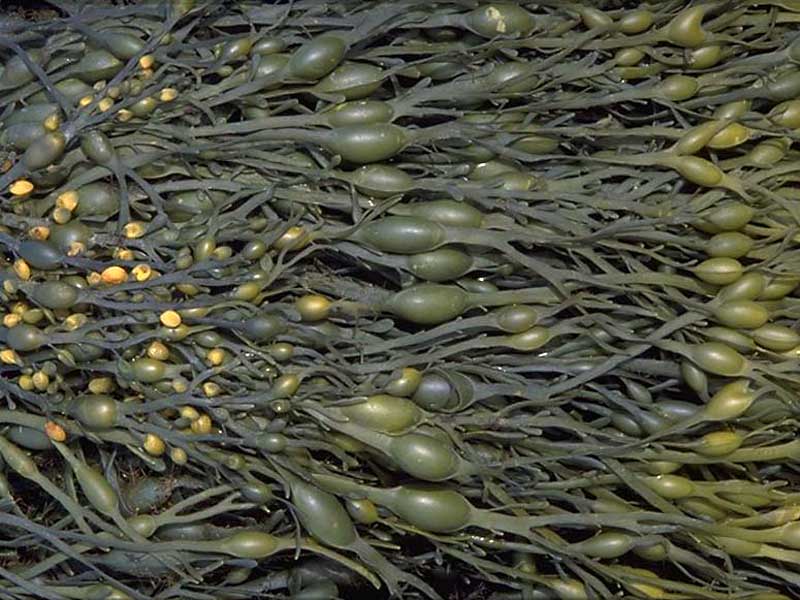
A thick bed of Ascophyllum nodosum showing the flotation bladders.
Photographer: Sue Scott Copyright: Sue Scott
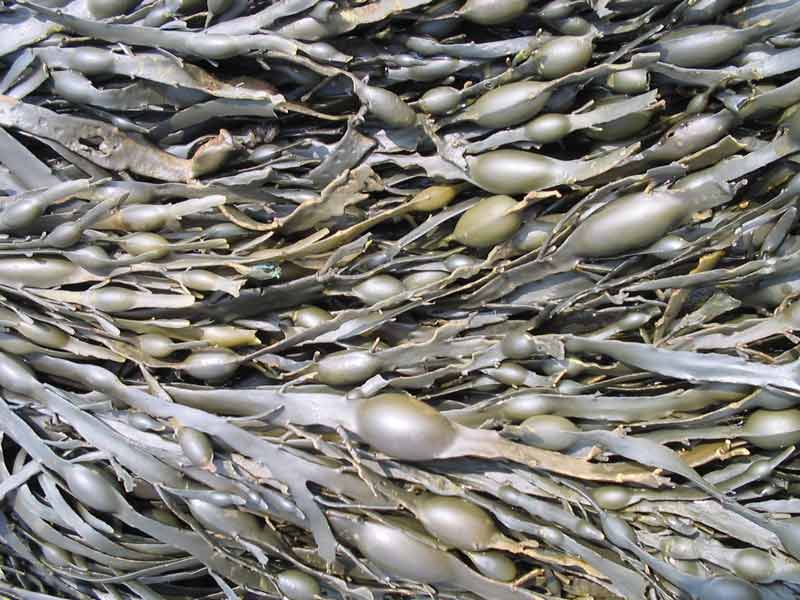
Dark green Ascophyllum nodosum.
Photographer: Judith Oakley Copyright: Judith Oakley
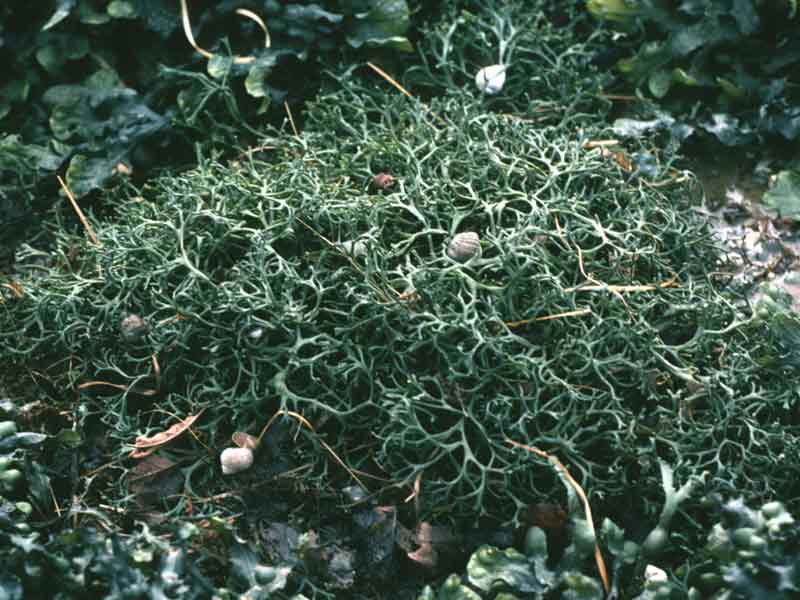
Free-living Ascophyllum nodosum mackaii plant amongst upper shore fucoids.
Photographer: Dr Keith Hiscock Copyright: Dr Keith Hiscock
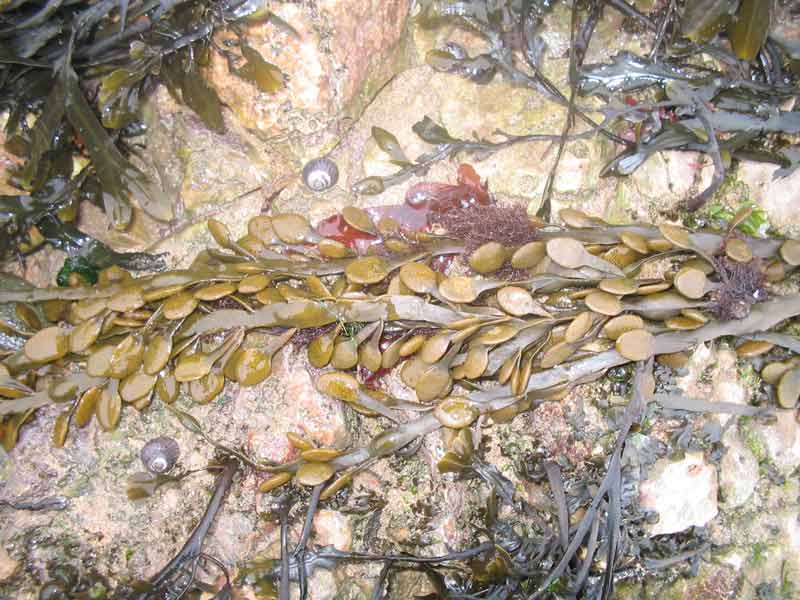
Light brown Ascophyllum nodosum on an intertidal rock.
Photographer: Judith Oakley Copyright: Judith Oakley
Distribution data supplied by the Ocean Biodiversity Information System (OBIS). To interrogate UK data visit the NBN Atlas.Map Help
| Researched by | Jacqueline Hill & Nicola White | Refereed by | Dr Dagmar Stengel |
| Authority | (Linnaeus) Le Jolis, 1863 | ||
| Other common names | - | Synonyms | - |
Summary
Description
A common large brown seaweed, dominant on sheltered rocky shores. The species has long strap like fronds with large egg-shaped air bladders at regular intervals. The fronds of Ascophyllum nodosum are typically between 0.5 and 2m in length. The species often bears tufts of the small reddish-brown filamentous epiphytic algae Polysiphonia lanosa. Ascophyllum nodosum occurs on the middle of the shore, often with Fucus vesiculosus. The species grows slowly and plants can live to be several decades old. Individual fronds can become up to 15 years old before breakage.
Recorded distribution in Britain and Ireland
All coasts of Britain and Ireland.Global distribution
Global distribution is restricted to the North Atlantic Ocean. Its northern limits are the White Sea in the east and Baffin Island in the west. Southern distributions extend to northern Portugal and New Jersey.Habitat
The species attaches to rocks and boulders on the middle shore in a range of habitats, from estuaries to relatively exposed coasts. It occupies a similar shore height as Fucus vesiculosus. Subtidal populations have been reported, for example in the very clear waters of Rhode Island, USA. However, an intertidal habit is more usual.Depth range
Not relevantIdentifying features
- Frond narrow without midrib.
- Large swollen egg shaped air bladders at intervals along middle of the frond.
- Reproductive bodies rounded on short stalks.
- Dichotomously branched.
Additional information
Detached forms of Ascophyllum nodosum are known from several habitats. Ascophyllum nodosum var. mackayi is found on very sheltered shores, in sea lochs and is sometimes common on the west coasts of Ireland and Scotland. The frond has extensive dichotomous branching and bears few air bladders. The plants drift in large, spherical masses in sheltered waters. Ascophyllum nodosum var. scorpioides, which is abundant in New Hampshire (U.S.A.), is often associated with the marsh grass Spartina alterniflora. According to Gibb (1957) the major difference between the ecads mackayi and scorpioides is the proportion of apical to lateral branching. If branching is both 'apical and lateral' the algae would be designated as mackayi while if it is 'almost entirely lateral' it would be designated as scorpioides. Unattached forms arise when detached fragments of Ascophyllum nodosum are deposited onto the shore where they continue to multiply and branch independently of the original fragment (Chock & Mathieson, 1976).
Chock & Mathieson (1979) demonstrated the physiological responses of Ascophyllum nodosum and its detached ecad scorpioides were similar under varying conditions of light intensity, temperature and salinity.
Ascophyllum nodosum var. mackayi
The presence of the ecad in any particular situation depends on the combination of a number of conditions applying at a tide level between high and low water neaps:
- frequent alternation of high and low salinities so a supply of freshwater is of primary importance;
- good shelter from wave action because of the unattached state of the ecad;
- absence of fast moving water, whether caused by freshwater streams or tidal conditions;
- flat, undulating or slightly sloping shore profile where stability is high, and
- substratum type, the porosity of which affects the conditions of salinity and also influences, to some extent, the development of the ecad.
Very sheltered conditions are often found at loch heads on the west coast of Scotland and in these situations the ecad is sometimes present in great abundance. Sheltered or land-locked bays or situations in the lee of small islands are other favourable positions (Gibb, 1957).
Listed by
Biology review
Taxonomy
| Level | Scientific name | Common name |
|---|---|---|
| Phylum | Ochrophyta | Brown and yellow-green seaweeds |
| Class | Phaeophyceae | |
| Order | Fucales | |
| Family | Fucaceae | |
| Genus | Ascophyllum | |
| Authority | (Linnaeus) Le Jolis, 1863 | |
| Recent Synonyms | ||
Biology
| Parameter | Data | ||
|---|---|---|---|
| Typical abundance | High density | ||
| Male size range | Up to 2m | ||
| Male size at maturity | |||
| Female size range | Large(>50cm) | ||
| Female size at maturity | |||
| Growth form | Shrub | ||
| Growth rate | 5 - 15cm/year | ||
| Body flexibility | |||
| Mobility | |||
| Characteristic feeding method | Autotroph | ||
| Diet/food source | |||
| Typically feeds on | |||
| Sociability | |||
| Environmental position | Epifloral | ||
| Dependency | Independent. | ||
| Supports | Substratum epiphytic algae Polysiphonia lanosa and ascomycete fungus Mycosphaerella ascophylli. | ||
| Is the species harmful? | No Ascophyllum nodosum is an edible species and alginates from the algae are used in a range of edible products. Also widely used as an animal feed, on its own or as a supplement. | ||
Biology information
- The species is very long lived and has low recruitment. Growth rate is very slow in germlings but increases as the plant ages. During the first year growth takes place at 0.2 cm per year, rising to 1.5 cm per year in the second year (Sundene, 1973). The first air bladder is formed within the first and second years, after which they are produced annually. The holdfasts of Ascophyllum nodosum are thought to persist for several decades from which new fronds regenerate.
- Growth is apical. 90% of the apical elongation takes place in the 0 to 5mm zone behind the apex. Growth rate is maximal in the morning, followed by a continuous decline throughout the day (Strmgren & Nielsen, 1986). In Strangford Lough in Northern Ireland, Stengel & Dring (1997) observed growth to be highly seasonal with low growth rates during November and December, and highest growth rates in late spring and early summer. A decline in growth in mid-summer was observed at all shore levels.
- Ascophyllum nodosum repeatedly sloughs its entire outer epidermis, a phenomenon not exhibited by other related seaweeds. (Filion-Myclebust & Norton, 1981). Despite its longevity Ascophyllum nodosum is remarkably free of epiphytes even when adjacent plants of other species of fucoid algae are heavily infested. Shedding activity appears to contribute to this difference. The authors frequently observed that when the outer layers are shed, potential epiphytes including spores and germlings of other algae that had settled on the surface were discarded with the epidermis. Only those epiphytes with deeply penetrating rhizoids, such as Polysiphonia lanosa (see below), are able to maintain a hold.
- Polysiphona lanosa is an obligate epiphyte that occurs primarily on Ascophyllum nodosum. The rhizoids of Polysiphonia lanosa penetrate the host and obtain some nutrition from Ascophyllum nodosum. However, the quantity of carbon obtained is minimal and Polysiphonia is pigmented and can photosynthesize itself (Levin & Mathieson, 1991).
- The thalli of Ascophyllum nodosum contain an endophytic fungus, the ascomycete Mycosphaerella ascophylli Cotton, that penetrates throughout the thallus (Fries, 1988). Garbary & MacDonald (1995) provided experimental evidence for an obligate mutualistic symbiosis where infected thalli were longer, had greater apical diameters and more apical hairs than non-infected thalli. Garbary & London (1995) also suggest that the fungus may protect Ascophyllum nodosum from desiccation.
Habitat preferences
| Parameter | Data |
|---|---|
| Physiographic preferences | Open coast, Strait or Sound, Sea loch or Sea lough, Ria or Voe, Estuary |
| Biological zone preferences | Mid eulittoral, Upper eulittoral |
| Substratum / habitat preferences | Bedrock, Cobbles, Large to very large boulders, Small boulders |
| Tidal strength preferences | Moderately strong 1 to 3 knots (0.5-1.5 m/sec.), Strong 3 to 6 knots (1.5-3 m/sec.), Very weak (negligible), Weak < 1 knot (<0.5 m/sec.) |
| Wave exposure preferences | Extremely sheltered, Moderately exposed, Sheltered, Ultra sheltered, Very sheltered |
| Salinity preferences | Full (30-40 psu), Reduced (18-30 psu), Variable (18-40 psu) |
| Depth range | Not relevant |
| Other preferences | No text entered |
| Migration Pattern | Non-migratory or resident |
Habitat Information
The local distribution of Ascophyllum nodosum is largely determined by wave exposure. As exposure to wave action increases the number of plants becomes progressively less and they consist increasingly of stumps and short lived shoots. On sheltered shores Ascophyllum nodosum may competitively exclude Fucus vesiculosus. The species can tolerate salinities down to 15 psu and can tolerate constant immersion but thrives better when exposed to air at low tide.Life history
Adult characteristics
| Parameter | Data |
|---|---|
| Reproductive type | Gonochoristic (dioecious) |
| Reproductive frequency | Annual episodic |
| Fecundity (number of eggs) | No information |
| Generation time | 5-10 years |
| Age at maturity | 5 years |
| Season | April - June |
| Life span | 10-20 years |
Larval characteristics
| Parameter | Data |
|---|---|
| Larval/propagule type | - |
| Larval/juvenile development | Spores (sexual / asexual) |
| Duration of larval stage | 2-10 days |
| Larval dispersal potential | No information |
| Larval settlement period |
Life history information
Lifespan. Ascophyllum nodosum fronds can become up to 15 years old before breakage. The holdfasts, from which new fronds regenerate, are observed to exist for much longer so whole plants may live to be several decades old. Sundene (1973) found Ascophyllum nodosum needed five years to develop into fertile plants.
Time of first gametes. Mainly March and April, sometimes as early as January and February (D. Stengel pers. comm.). Ascophyllum nodosum is dioecious and like all other species of fucoids has only a sexual generation. Receptacles are initiated in April and may take one year to become fertile. Thus, receptacles are present on the plant for 12 to 14 months and ripen in April to June of the following year. Gametes are released from April onwards and the release of gametes is triggered by the exposure of ripe receptacles to air overnight. Fertilization takes place externally and zygotes settle and form a rhizoid within ten days. The receptacles are then shed during June.
Recruitment. Recruitment in Ascophyllum nodosum is very poor with few germlings found on the shore. The reason for this poor recruitment is unclear because the species invests the same high level of energy in reproduction as other fucoids and is extremely fertile every year (Printz, 1959). However, the reproductive period lasts about two months, much shorter than for other fucoids. Printz (1959) suggests that it must be assumed that some special combination of climatic or environmental conditions is needed for an effective recolonization of Ascophyllum nodosum. The slow growth rate of germlings, which increases the chance of their being covered by diatoms or grazed by Littorina, may also help to explain the scarcity of germlings (Baardseth, 1970).
Ascophyllum nodosum var. mackayi. In Europe, direct reproduction of the ecad mackayi is vegetative and sexual reproduction gives rise to attached Ascophyllum nodosum. The formation of receptacles on intermediate ecad stages appears to be a frequent phenomenon, although abnormalities in receptacle shape and position usually accompany this (South & Hill, 1970). Sexual reproduction of intermediate and advanced forms of ecad mackayi in Newfoundland is relatively rare (South & Hill, 1970).
Sensitivity review
The MarLIN sensitivity assessment approach used below has been superseded by the MarESA (Marine Evidence-based Sensitivity Assessment) approach (see menu). The MarLIN approach was used for assessments from 1999-2010. The MarESA approach reflects the recent conservation imperatives and terminology and is used for sensitivity assessments from 2014 onwards.
Physical pressures
Use / to open/close text displayed
| Intolerance | Recoverability | Sensitivity | Evidence / Confidence | |
Substratum loss [Show more]Substratum lossBenchmark. All of the substratum occupied by the species or biotope under consideration is removed. A single event is assumed for sensitivity assessment. Once the activity or event has stopped (or between regular events) suitable substratum remains or is deposited. Species or community recovery assumes that the substratum within the habitat preferences of the original species or community is present. Further details EvidenceAscophyllum nodosum is permanently attached to the substratum so would be removed upon substratum loss. The species has poor recruitment rates and is slow growing, limiting recovery (Holt et al., 1997). The lack of recovery of Ascophyllum nodosum from harvesting is well documented. For example, in their work on fucoid recolonization of cleared areas at Port Erin, Knight and Parke (1950) observed that even eight years after the original clearance there was still no sign of the establishment of an Ascophyllum nodosum population. The species is extremely fertile every year and Printz (1959) suggests it must be assumed that some special combination of climatic or environmental conditions is needed for an effective recolonization. | High | Low | High | High |
Smothering [Show more]SmotheringBenchmark. All of the population of a species or an area of a biotope is smothered by sediment to a depth of 5 cm above the substratum for one month. Impermeable materials, such as concrete, oil, or tar, are likely to have a greater effect. Further details. EvidenceIf smothering occurred while the tide was out, the whole plant would be covered in sediment preventing photosynthesis and damaging the plant. If smothering occurred while the plant was immersed, fewer surfaces would be covered allowing some surfaces to be unaffected. Recovery is slow in Ascophyllum nodosum due to its slow growth rate and poor recruitment (Holt et al., 1997). | High | Low | High | Moderate |
Increase in suspended sediment [Show more]Increase in suspended sedimentBenchmark. An arbitrary short-term, acute change in background suspended sediment concentration e.g., a change of 100 mg/l for one month. The resultant light attenuation effects are addressed under turbidity, and the effects of rapid settling out of suspended sediment are addressed under smothering. Further details EvidenceSiltation may cover some surfaces of the plant, reducing photosynthesis rates which may reduce growth rates. However, the species naturally occurs in places of high siltation, such as estuaries and very sheltered areas, so is likely to be tolerant of this factor. Upon return to normal conditions the photosynthesis rate would quickly return to normal. | Low | Immediate | Not sensitive | Moderate |
Decrease in suspended sediment [Show more]Decrease in suspended sedimentBenchmark. An arbitrary short-term, acute change in background suspended sediment concentration e.g., a change of 100 mg/l for one month. The resultant light attenuation effects are addressed under turbidity, and the effects of rapid settling out of suspended sediment are addressed under smothering. Further details Evidence | No information | |||
Desiccation [Show more]Desiccation
EvidenceAscophyllum nodosum regularly becomes exposed to air during tidal cycles and so is tolerant of some desiccation. Brinkhuis et al. (1976) concluded that productivity is affected by desiccation, but only when water loss exceeds 50%. Stengel & Dring (1997) found that growth was lowest in those plants highest up the shore. In transplantation experiments Stengel & Dring (1997) found that 80% of plants moved from the lower shore to the upper shore died within 3 months, whereas all transplants from the upper to the lower shore and all controls survived. However, the photosynthetic and growth rates of those plants that survived on the upper shore had acclimated to the new conditions, but whether the plants survived or not seemed to be determined by thallus morphology which may be genetically fixed. An increase in desiccation at the level of the benchmark, equivalent to a change in position of one vertical biological zone on the shore, will kill a large proportion of plants at the upper end of the populations range depressing the upper limit. Other species, which are better able to tolerate desiccation are likely to competitively displace Ascophyllum nodosum. However, some plants are likely to be able to acclimate to the new conditions and survive so intolerance is assessed as intermediate. Conversely, a decrease in the level of desiccation may result in the upper limit of the species extending further up the shore. Recovery would be slow due to the slow growth rate and poor recruitment of the species (Holt et al., 1997). | Intermediate | Moderate | Moderate | Moderate |
Increase in emergence regime [Show more]Increase in emergence regimeBenchmark. A one hour change in the time covered or not covered by the sea for a period of one year. Further details EvidenceAscophyllum nodosum is normally exposed to air for no more than a few hours (Lüning, 1990). An increase in the period of emersion would subject the species to greater desiccation and nutrient stress, leading to a depression in the upper limit of the species distribution on the shore. A reduction in the period of emersion may result in the species being competitively displaced by faster growing species and may allow the upper limit of the population of Ascophyllum nodosum to extend up the shore. Recovery would be slow due to the slow growth rate and poor recruitment of the species (Holt et al., 1997). | High | Low | High | Moderate |
Decrease in emergence regime [Show more]Decrease in emergence regimeBenchmark. A one hour change in the time covered or not covered by the sea for a period of one year. Further details Evidence | No information | |||
Increase in water flow rate [Show more]Increase in water flow rateA change of two categories in water flow rate (view glossary) for 1 year, for example, from moderately strong (1-3 knots) to very weak (negligible). Further details EvidenceAn increase in water flow rate may cause plants to be torn off the substratum or the plant with the substratum will be mobilised and may be moved to conditions unsuitable for the growth of the species. However, a certain degree of water flow is required to supply nutrients and remove waste products so a reduction in the water flow below a certain level may have an adverse effect on the species. Recovery would be slow due to the slow growth rate and poor recruitment of the species (Holt et al., 1997). | Intermediate | Low | High | Moderate |
Decrease in water flow rate [Show more]Decrease in water flow rateA change of two categories in water flow rate (view glossary) for 1 year, for example, from moderately strong (1-3 knots) to very weak (negligible). Further details Evidence | No information | |||
Increase in temperature [Show more]Increase in temperature
For intertidal species or communities, the range of temperatures includes the air temperature regime for that species or community. Further details EvidenceIntertidal algae, such as Ascophyllum nodosum, are regularly exposed to rapid and short-term variations in temperature. Both exposure at low tide or rising tide on a sun-heated shore may involve considerable temperature changes, and during winter the air temperature may be far below freezing point. Growth has been measured between 2.5 and 35°C with an optimum between 10 and 17°C (Strömgren, 1977). In the North Sea Ascophyllum nodosum can tolerate a maximum temperature of 28°C and the optimum growth rate is at 15°C (Lüning, 1990). Laboratory experiments in New Hampshire showed that Ascophyllum nodosum exhibits a eurythermal response to temperature with a more pronounced optimum occurring during the summer than the winter (Chock & Mathieson, 1979). Overall, summer plants showed a higher rate of net photosynthesis than winter specimens. Therefore, the species is likely to be quite tolerant of a long term change in temperature of 2°C. The species is unlikely to be affected by a short term change of 5°C, as it was not damaged during the unusually hot summer of 1983 when the average temperature was 8.3°C higher than normal (Hawkins & Hartnoll, 1985). However, the species has been found to be damaged by thermal pollution if the water temperature is above 24°C for several weeks (Lobban & Harrison, 1997) and the southern limit of the species distribution is controlled by the maximum summer temperature of about 22°C (Baardseth, 1970). The species can tolerate freezing as it has been observed to survive in a block of ice for several days. However, temperature is important for reproduction in Ascophyllum nodosum. David (1943) suggests that temperature could provide the stimulus for gamete release. Studies in Maine, USA (Bacon & Vadas, 1991) and in Norway (Printz, 1959) have shown that gamete release in both countries commences at 6°C and in Maine terminated at about 15°C. Provided the temperature has not exceeded the critical limits it will soon recover on return to normal conditions. | Low | Moderate | Low | Moderate |
Decrease in temperature [Show more]Decrease in temperature
For intertidal species or communities, the range of temperatures includes the air temperature regime for that species or community. Further details Evidence | No information | |||
Increase in turbidity [Show more]Increase in turbidity
EvidenceChanges in turbidity would alter the light available for photosynthesis during immersion. In laboratory experiments Strömgren & Nielsen (1986) observed that there was a strong correlation between the total radiant energy during the day and the average daily growth rates and Ramus et al., (1977) observed reduced growth rates of fucoid algae with depth. However, at low tide, when the plants are emersed, Ascophyllum nodosum can continue to photosynthesize as long as the plant has a sufficiently high water content and so will be unaffected during this period. Upon return to previous turbidity levels the photosynthesis rate would return immediately to normal. | Low | Immediate | Not sensitive | Moderate |
Decrease in turbidity [Show more]Decrease in turbidity
Evidence | No information | |||
Increase in wave exposure [Show more]Increase in wave exposureA change of two ranks on the wave exposure scale (view glossary) e.g., from Exposed to Extremely exposed for a period of one year. Further details EvidenceAscophyllum nodosum cannot resist very heavy wave action so exposure to wave action is an important factor controlling the distribution of the species. In moving from protected sites to the open sea the number of plants become progressively reduced, and individual plants become increasingly short and stumpy (Baardseth, 1970) and with a higher percentage of injured tissue (Levin & Mathieson, 1991). Thus, the species is only present in sheltered or moderately exposed locations and increased wave exposure causes plants to be torn off the substratum and replaced by Fucus vesiculosus. Intolerance to wave exposure is therefore high. In moderately exposed locations all Ascophyllum nodosum fronds produce few vegetative laterals, but are prolific reproducers even at an early age. Such an allocation of resources is to be expected in habitats where environmental severity is extreme and life expectancy of fronds is likely to be short (Cousens, 1985). In populations sheltered from wave action reproduction does not occur until they have reached a greater age and size. Recovery is slow due to the poor recruitment and slow growth rate of the species (Holt et al., 1997). Wave exposure may also be important in preventing settlement of zygotes and therefore recruitment. | High | Low | High | Moderate |
Decrease in wave exposure [Show more]Decrease in wave exposureA change of two ranks on the wave exposure scale (view glossary) e.g., from Exposed to Extremely exposed for a period of one year. Further details Evidence | No information | |||
Noise [Show more]Noise
EvidenceSeaweeds have no known mechanism for the perception of noise. | Tolerant | Not relevant | Not sensitive | Not relevant |
Visual presence [Show more]Visual presenceBenchmark. The continuous presence for one month of moving objects not naturally found in the marine environment (e.g., boats, machinery, and humans) within the visual envelope of the species or community under consideration. Further details EvidenceSeaweeds have no known mechanism for visual perception. | Tolerant | Not relevant | Not sensitive | Not relevant |
Abrasion & physical disturbance [Show more]Abrasion & physical disturbanceBenchmark. Force equivalent to a standard scallop dredge landing on or being dragged across the organism. A single event is assumed for assessment. This factor includes mechanical interference, crushing, physical blows against, or rubbing and erosion of the organism or habitat of interest. Where trampling is relevant, the evidence and trampling intensity will be reported in the rationale. Further details. EvidenceAbrasion may damage the fronds and kill germlings of seaweeds. Ascophyllum nodosum is particularly intolerant of abrasion from trampling (Holt et al., 1997). It is also likely to be removed if shores are mechanically cleaned following oil spills. Recovery would be slow due to the slow growth rate and poor recruitment of the species. | High | Low | High | Moderate |
Displacement [Show more]DisplacementBenchmark. Removal of the organism from the substratum and displacement from its original position onto a suitable substratum. A single event is assumed for assessment. Further details EvidenceAscophyllum nodosum is normally permanently attached to the substratum and cannot re-establish itself if detached. Only the unattached forms, such as Ascophyllum nodosum var. mackaii, can tolerate displacement. Recovery would be slow due to the slow growth rate and poor recruitment of the species. The lack of recovery of Ascophyllum nodosum from harvesting is well documented. For example, in their work on fucoid recolonization of cleared areas at Port Erin, Knight and Parke (1950) observed that even eight years after the original clearance there was still no sign of the establishment of an Ascophyllum nodosum population. The species is extremely fertile every year and Printz (1959) suggests it must be assumed that some special combination of climatic or environmental conditions is needed for an effective recolonization. | High | Low | High | Moderate |
Chemical pressures
Use [show more] / [show less] to open/close text displayed
| Intolerance | Recoverability | Sensitivity | Evidence / Confidence | |
Synthetic compound contamination [Show more]Synthetic compound contaminationSensitivity is assessed against the available evidence for the effects of contaminants on the species (or closely related species at low confidence) or community of interest. For example:
The evidence used is stated in the rationale. Where the assessment can be based on a known activity then this is stated. The tolerance to contaminants of species of interest will be included in the rationale when available; together with relevant supporting material. Further details. EvidenceThe disappearance of Ascophyllum nodosum from Oslofjord has been attributed to the reduced ability of germlings to recruit at highly polluted sites (Sjoetun & Lein, 1993). However, Hoare & Hiscock (1974) observed that Ascophyllum nodosum was found within 100m of an acidified, halogenated effluent discharge, although plants had abnormal and retarded growth. Recovery is slow due to the low growth rate and poor recruitment levels of this species (Holt et al., 1997). | Intermediate | Low | High | Low |
Heavy metal contamination [Show more]Heavy metal contaminationEvidenceThe disappearance of Ascophyllum nodosum from Oslofjord has been attributed to an increase in pollution and copper at concentrations of 1039nM (66µg/L) have been found to inhibit the growth of Ascophyllum nodosum (Strömgren, 1979a). However, adult plants appear to be fairly robust in the face of heavy metal pollution (Holt et al., 1997) and so intolerance is reported to be low. For example, the species penetrates into the metal polluted middle reaches of Restronguet Creek in the Fal estuary system where concentrations of both copper and zinc are in the region of 1000-2000µg/g in the sediment and 10-100µg/l in seawater (Bryan & Gibbs, 1983). Although Ascophyllum nodosum accumulates copper this can be removed because the species naturally sheds its epidermis at regular intervals (Stengel & Dring, 2000). Earlier life stages of Ascophyllum nodosum are probably more sensitive than adult plants. Therefore on return to normal conditions growth rates should gradually return to normal. | Low | High | Low | Moderate |
Hydrocarbon contamination [Show more]Hydrocarbon contaminationEvidenceExperimental studies have found that long-term exposure to low levels of diesel reduces the growth rate in Ascophyllum nodosum. For example, in mesocosm experiments, Bokn (1987) observed growth inhibition at a diesel concentration of 130 ppb and that inhibition stops when the oil is removed. Thus, a limited amount of oil pollution need not be detrimental to a population with good recruitment (Sjoetun & Lein, 1993). However, Ascophyllum nodosum generally has poor recruitment so populations may take a long time to recover and hydrocarbon contamination may also prevent fertilization and germination and hence recruitment. If plants are heavily oiled the fronds can become severely overweighted by oil and be broken by waves. This may be no more detrimental than a severe storm if a few blades are lost, but the loss of too many blades can be harmful (Lobban & Harrison, 1997). | Low | Moderate | Low | Moderate |
Radionuclide contamination [Show more]Radionuclide contaminationEvidenceInsufficientinformation. | No information | No information | No information | Not relevant |
Changes in nutrient levels [Show more]Changes in nutrient levelsEvidenceAscophyllum nodosum, like several other intertidal algae, is able to accumulate nitrogen in its tissues in response to seasonal availability. A reduction in the level of nutrients could reduce growth rates in Ascophyllum nodosum. A slight increase in nutrients may enhance growth rates but high nutrient concentrations could lead to the overgrowth of the algae by ephemeral green algae. Ascophyllum nodosum plants, when transplanted into sewage-stressed areas have become heavily infested with epiphytes and frequently overgrown by Ulva species and there are reports of a decline in populations of the species in the North Atlantic as a result of increased eutrophication (Fletcher, 1996). On return to normal nutrient levels the growth rate would be quickly restored. | Intermediate | High | Low | Moderate |
Increase in salinity [Show more]Increase in salinity
EvidenceAscophyllum nodosum is euryhaline with a salinity tolerance of about 15 to 37 psu (Baardseth, 1970). The species can also withstand periodic emersion in freshwater (Baardseth, 1970) and frequently inhabits estuaries where salinity is variable. Doty & Newhouse (1954) reported Ascophyllum nodosum from estuarine waters with a maximum salinity of 17.3psu and a minimum of 0psu. Further evidence is provided by Chock & Mathieson (1979) who found Ascophyllum nodosum plants in the laboratory exhibited net photosynthesis at salinities from 0 to 40 psu although the long term effects within this range were not evaluated. Intolerance to salinity changes is therefore assessed at low. Once salinity levels have returned to normal the seaweed will rapidly recover. | Low | High | Low | Moderate |
Decrease in salinity [Show more]Decrease in salinity
Evidence | No information | |||
Changes in oxygenation [Show more]Changes in oxygenationBenchmark. Exposure to a dissolved oxygen concentration of 2 mg/l for one week. Further details. EvidenceThere is insufficient information to make an assessment. | No information | No information | No information | Not relevant |
Biological pressures
Use [show more] / [show less] to open/close text displayed
| Intolerance | Recoverability | Sensitivity | Evidence / Confidence | |
Introduction of microbial pathogens/parasites [Show more]Introduction of microbial pathogens/parasitesBenchmark. Sensitivity can only be assessed relative to a known, named disease, likely to cause partial loss of a species population or community. Further details. EvidenceAlthough bacteria and fungi are associated with Ascophyllum nodosum no information could be found on any disease causing microbes. Nematodes have been associated with small, round galls, usually located near the air vesicles in Ascophyllum nodosum (Barton, 1892). | No information | Not relevant | No information | Not relevant |
Introduction of non-native species [Show more]Introduction of non-native speciesSensitivity assessed against the likely effect of the introduction of alien or non-native species in Britain or Ireland. Further details. EvidenceInsufficientinformation | No information | Not relevant | No information | Not relevant |
Extraction of this species [Show more]Extraction of this speciesBenchmark. Extraction removes 50% of the species or community from the area under consideration. Sensitivity will be assessed as 'intermediate'. The habitat remains intact or recovers rapidly. Any effects of the extraction process on the habitat itself are addressed under other factors, e.g. displacement, abrasion and physical disturbance, and substratum loss. Further details. EvidenceHarvesting of Ascophyllum nodosum will severely affect the population if the whole plant is removed. If stumps 10-20cm high are left the plants will re-sprout and harvesting is possible in 3 to 6 years (Baardseth, 1970). Where the whole plant is removed recovery is slow due to the slow growth rate and poor recruitment of Ascophyllum nodosum. In their work on fucoid recolonization of cleared areas at Port Erin, Knight and Parke (1950) observed that even eight years after the original clearance there was still no sign of the establishment of an Ascophyllum nodosum population. Even in an area where many plants remained after harvesting no repopulation was seen for several years (Printz, 1959). The species is extremely fertile every year and Printz (1959) suggests it must be assumed that some special combination of climatic or environmental conditions is needed for an effective recolonization. Recovery of the population to original abundance and biomass is therefore, likely to take a very long time. | Intermediate | Low | High | High |
Extraction of other species [Show more]Extraction of other speciesBenchmark. A species that is a required host or prey for the species under consideration (and assuming that no alternative host exists) or a keystone species in a biotope is removed. Any effects of the extraction process on the habitat itself are addressed under other factors, e.g. displacement, abrasion and physical disturbance, and substratum loss. Further details. EvidenceThere are no other species that are required as a host or prey for Ascophyllum nodosum. | Tolerant | Not relevant | Not sensitive | Not relevant |
Additional information
Importance review
Policy/legislation
| Designation | Support |
|---|---|
| Northern Ireland Priority Species | Yes |
Status
| National (GB) importance | Not rare or scarce | Global red list (IUCN) category | - |
Non-native
| Parameter | Data |
|---|---|
| Native | - |
| Origin | - |
| Date Arrived | - |
Importance information
- Ascophyllum nodosum ecad mackayi occurs only in specific conditions. Its habitat is, therefore rare, and the beds small. The UK populations are also important in an international context. Therefore, Ascophyllum nodosum ecad mackayi beds are protected under Schedule 8 of the Wildlife & Countryside Act (1981) and included in the UK Biodiversity Action Plan.
- Ascophyllum nodosum is harvested in Ireland and Scotland for use in alginates, fertilisers and for the manufacture of seaweed meal for animal and human consumption. Around 32,000 t is harvested per year. The species is also harvested in Europe, Canada and the north-west Atlantic. Poor resource management and over-exploitation have led to severely depleted populations in many regions. These factors, together with the long-recognised shortage of sporelings (David, 1943) and the failure of the species to recolonize denuded areas for decades, illustrate the need to have good management strategies and reseeding techniques.
- The ecological effects of harvesting have been noted by Boaden & Dring (1980) who concluded that harvesting has a significant and persistent effect on shore ecology. Even several years after small scale cutting shore cover was reduced and there were significant decreases in the cover of other species like Cladophora, Halichondria and Balanus crenatus. Under boulder diversity of species had also declined by one-third per boulder.
- Production rates of Ascophyllum nodosum in Nova Scotia were estimated to be between 0.61 and 2.82 kg/m² (Cousens, 1984). Westlake (1963) estimated an annual production in south west Nova Scotia of 2.0 - 2.6 kg/m² for a standing crop of 8kg/m² by assuming recovery from harvesting takes 3-4 years.
- The fronds of Ascophyllum nodosum are narrow, flexible and slimy, offering a poor support for most encrusting animals. The species is unattractive to most intertidal species with the exception of Clava multicornis, Bowerbankia imbricata and on sheltered shores Spirorbis spirorbis. It also supports the red alga Polysiphonia lanosa, which penetrates the fronds with root-like fibres.
Bibliography
Baardseth, E., 1970. Synopsis of the biological data on knotted wrack Ascophyllum nodosum (L.) Le Jolis. FAO Fisheries Synopsis, no. 38, Rev. 1.
Bacon, L.M. & Vadas, R.L., 1991. A model for gamete release in Ascophyllum nodosum (Phaeophyta). Journal of Phycology, 27, 166-173.
Barton, E.S., 1892. On malformations of Ascophyllum and Desmarestia. Phycological Memoirs, London, Part I, 21-24.
Boaden, P.J.S. & Dring, M.T., 1980. A quantitative evaluation of the effects of Ascophyllum harvesting on the littoral ecosystem. Helgolander Meerestuntersuchungen, 33, 700-710.
Bokn, T., 1987. Effects of diesel oil and subsequent recovery of commercial benthic algae. Hydrobiologia, 151/152, 277-284.
Brinkhuis, B.H., Tempel, N.R. & Jones, R.F., 1976. Photosynthesis and respiration of exposed salt-marsh fucoids. Marine Biology, 34, 339-348.
Bryan, G.W. & Gibbs, P.E., 1983. Heavy metals from the Fal estuary, Cornwall: a study of long-term contamination by mining waste and its effects on estuarine organisms. Plymouth: Marine Biological Association of the United Kingdom. [Occasional Publication, no. 2.]
Chock, J.S. & Mathieson, A.C., 1976. Ecological studies of the salt marsh ecad scorpioides (Hornemann) Hauck of Ascophyllum nodosum (L.) Le Jolis. Journal of Experimental Marine Biology and Ecology, 23, 171-190.
Chock, J.S. & Mathieson, A.C., 1979. Physiological ecology of Ascophyllum nodosum (L.) Le Jolis and its detached ecad scorpioides (Hornemann) Hauck (Fucales, Phaeophyta). Botanica Marina, 22, 21-26.
Cousens, R., 1984. Estimation of annual production by the intertidal brown algae Ascophyllum nodosum (L.) Le Jolis. Botanica Marina, 27, 217-227.
Cousens, R., 1985. Frond size distributions and the effects of the algal canopy on the behaviour of Ascophyllum nodosum (L.) Le Jolis. Journal of Experimental Marine Biology and Ecology, 92, 231-249.
David, H.M., 1943. Studies in the autecology of Ascophyllum nodosum. Journal of Ecology, 31, 178-198.
Doty, S. & Newhouse, J., 1954. The distribution of marine algae into estuarine waters. American Journal of Botany, 41, 508-515.
Filion-Myclebust, C. & Norton, T.A., 1981. Epidermis shedding in the brown seaweed Ascophyllum nodosum (L.) Le Jolis, and its ecological significance. Marine Biology Letters, 2, 45-51.
Fish, J.D. & Fish, S., 1996. A student's guide to the seashore. Cambridge: Cambridge University Press.
Fletcher, R.L., 1996. The occurrence of 'green tides' - a review. In Marine Benthic Vegetation. Recent changes and the Effects of Eutrophication (ed. W. Schramm & P.H. Nienhuis). Berlin Heidelberg: Springer-Verlag. [Ecological Studies, vol. 123].
Fries, L., 1988. Ascophyllum nodosum (Phaeophyta) in Axenic culture and its response to the endophytic fungus Mycosphaerella ascophylli and epiphytic bacteria. Journal of Phycology, 24, 333-337.
Garbary, D.J. & London, J.F., 1995. The Ascophyllum/Polysiphonia/Mycosphaerella symbiosis. V. Fungal infection protects A. nodosum from desiccation. Botanica Marina, 38, 529-533.
Garbary, D.J. & MacDonald, K.A., 1995. The Ascophyllum/Polysiphonia/Mycosphaerella symbiosis. IV. Mutualism in the Ascophyllum/Mycosphaerella interaction. Botanica Marina, 38, 221-225.
Gibb, D.C., 1957. The free-living forms of Ascophyllum nodosum (L.) Le Jolis. Journal of Ecology, 45, 49-83.
Hardy, F.G. & Guiry, M.D., 2003. A check-list and atlas of the seaweeds of Britain and Ireland. London: British Phycological Society
Hawkins, S.J. & Hartnoll, R.G., 1985. Factors determining the upper limits of intertidal canopy-forming algae. Marine Ecology Progress Series, 20, 265-271.
Hoare, R. & Hiscock, K., 1974. An ecological survey of the rocky coast adjacent to the effluent of a bromine extraction plant. Estuarine and Coastal Marine Science, 2 (4), 329-348.
Holt, T.J., Hartnoll, R.G. & Hawkins, S.J., 1997. The sensitivity and vulnerability to man-induced change of selected communities: intertidal brown algal shrubs, Zostera beds and Sabellaria spinulosa reefs. English Nature, Peterborough, English Nature Research Report No. 234.
Knight, M. & Parke, M., 1950. A biological study of Fucus vesiculosus L. and Fucus serratus L. Journal of the Marine Biological Association of the United Kingdom, 29, 439-514.
Levin, P.S. & Mathieson, A.C., 1991. Variation in host-epiphyte relationship along a wave exposure gradient. Marine Ecology Progress Series, 77, 271-278.
Lobban, C.S. & Harrison, P.J., 1997. Seaweed ecology and physiology. Cambridge: Cambridge University Press.
Peckol, P., 1988. Physiological and population ecology of intertidal and subtidal Ascophyllum nodosum (Phaeophyta). Journal of Phycology, 24, 192-198.
Printz, H.S., 1959. Investigations of the failure of recuperation and re-populating in cropped Ascophyllum areas. Avhandlinger utgitt av Det Norske Videnskap-Akademi i Oslo No. 3.
Ramus, J., Lemons, F. & Zimmerman, C., 1977. Adaptation of light-harvesting pigments to downwelling light and the consequent photosynthetic performance of the eulittoral rockweeds Ascophyllum nodosum and Fucus vesiculosus. Marine Biology, 42, 293-303.
Sjøtun, K. & Lein., T.E., 1993. Experimental oil exposure of Ascophyllum nodosum. Journal of Experimental Marine Biology and Ecology, 170, 197-212.
South, G.R. & Hill, R.D., 1970. Studies on marine algae of Newfoundland. I. Occurrence and distribution of free-living Ascophyllum nodosum in Newfoundland. Canadian Journal of Botany, 48, 1697-1701.
Stengel, D.B. & Dring, M.J., 1997. Morphology and in situ growth rates of plants of Ascophyllum nodosum (Phaeophyta) from different shore levels and responses of plants to vertical transplantation. European Journal of Phycology, 32, 193-202.
Stengel, D.B. & Dring, M.J., 2000. Copper and iron concentrations in Ascophyllum nodosum (Fucales, Phaeophyta) from different sites in Ireland and after culture experiments in relation to thallus age and epiphytism. Journal of Experimental Marine Biology and Ecology, 246, 145-161.
Strömgren, T., 1977. Short-term effects of temperature upon the growth of intertidal fucales. Journal of Experimental Marine Biology and Ecology, 29 (2), 181-195. DOI https://doi.org/10.1016/0022-0981(77)90047-8
Strömgren, T. & Nielsen, M.V., 1986. Effect of diurnal variation in natural irradiance on the apical length growth and light saturation of growth in five species of benthic macroalgae. Marine Biology, 90, 467-472.
Strömgren, T., 1979a. The effect of copper on the increase in length of Ascophyllum nodosum. Journal of Experimental Marine Biology and Ecology, 37, 153-159.
Sundene, O., 1973. Growth and reproduction in Ascophyllum nodosum (Phaeophyceae). Norwegian Journal of Botany, 20, 249-255.
Westlake, D.F., 1963. Comparisons of plant productivity Biological Reviews, 38, 385-425.
Datasets
Bristol Regional Environmental Records Centre, 2017. BRERC species records recorded over 15 years ago. Occurrence dataset: https://doi.org/10.15468/h1ln5p accessed via GBIF.org on 2018-09-25.
Bristol Regional Environmental Records Centre, 2017. BRERC species records within last 15 years. Occurrence dataset: https://doi.org/10.15468/vntgox accessed via GBIF.org on 2018-09-25.
Centre for Environmental Data and Recording, 2018. Ulster Museum Marine Surveys of Northern Ireland Coastal Waters. Occurrence dataset https://www.nmni.com/CEDaR/CEDaR-Centre-for-Environmental-Data-and-Recording.aspx accessed via NBNAtlas.org on 2018-09-25.
Cofnod – North Wales Environmental Information Service, 2018. Miscellaneous records held on the Cofnod database. Occurrence dataset: https://doi.org/10.15468/hcgqsi accessed via GBIF.org on 2018-09-25.
Environmental Records Information Centre North East, 2018. ERIC NE Combined dataset to 2017. Occurrence dataset: http://www.ericnortheast.org.ukl accessed via NBNAtlas.org on 2018-09-38
Fenwick, 2018. Aphotomarine. Occurrence dataset http://www.aphotomarine.com/index.html Accessed via NBNAtlas.org on 2018-10-01
Fife Nature Records Centre, 2018. St Andrews BioBlitz 2014. Occurrence dataset: https://doi.org/10.15468/erweal accessed via GBIF.org on 2018-09-27.
Fife Nature Records Centre, 2018. St Andrews BioBlitz 2015. Occurrence dataset: https://doi.org/10.15468/xtrbvy accessed via GBIF.org on 2018-09-27.
Fife Nature Records Centre, 2018. St Andrews BioBlitz 2016. Occurrence dataset: https://doi.org/10.15468/146yiz accessed via GBIF.org on 2018-09-27.
Kent Wildlife Trust, 2018. Kent Wildlife Trust Shoresearch Intertidal Survey 2004 onwards. Occurrence dataset: https://www.kentwildlifetrust.org.uk/ accessed via NBNAtlas.org on 2018-10-01.
Lancashire Environment Record Network, 2018. LERN Records. Occurrence dataset: https://doi.org/10.15468/esxc9a accessed via GBIF.org on 2018-10-01.
Manx Biological Recording Partnership, 2017. Isle of Man wildlife records from 01/01/2000 to 13/02/2017. Occurrence dataset: https://doi.org/10.15468/mopwow accessed via GBIF.org on 2018-10-01.
Manx Biological Recording Partnership, 2018. Isle of Man historical wildlife records 1990 to 1994. Occurrence dataset: https://doi.org/10.15468/aru16v accessed via GBIF.org on 2018-10-01.
Manx Biological Recording Partnership, 2018. Isle of Man historical wildlife records 1995 to 1999. Occurrence dataset: https://doi.org/10.15468/lo2tge accessed via GBIF.org on 2018-10-01.
Merseyside BioBank., 2018. Merseyside BioBank (unverified). Occurrence dataset: https://doi.org/10.15468/iou2ld accessed via GBIF.org on 2018-10-01.
Merseyside BioBank., 2018. Merseyside BioBank Active Naturalists (unverified). Occurrence dataset: https://doi.org/10.15468/smzyqf accessed via GBIF.org on 2018-10-01.
National Trust, 2017. National Trust Species Records. Occurrence dataset: https://doi.org/10.15468/opc6g1 accessed via GBIF.org on 2018-10-01.
NBN (National Biodiversity Network) Atlas. Available from: https://www.nbnatlas.org.
OBIS (Ocean Biodiversity Information System), 2025. Global map of species distribution using gridded data. Available from: Ocean Biogeographic Information System. www.iobis.org. Accessed: 2025-05-09
Outer Hebrides Biological Recording, 2018. Non-vascular Plants, Outer Hebrides. Occurrence dataset: https://doi.org/10.15468/goidos accessed via GBIF.org on 2018-10-01.
Royal Botanic Garden Edinburgh, 2018. Royal Botanic Garden Edinburgh Herbarium (E). Occurrence dataset: https://doi.org/10.15468/ypoair accessed via GBIF.org on 2018-10-02.
South East Wales Biodiversity Records Centre, 2018. SEWBReC Algae and allied species (South East Wales). Occurrence dataset: https://doi.org/10.15468/55albd accessed via GBIF.org on 2018-10-02.
South East Wales Biodiversity Records Centre, 2018. Dr Mary Gillham Archive Project. Occurance dataset: http://www.sewbrec.org.uk/ accessed via NBNAtlas.org on 2018-10-02
Suffolk Biodiversity Information Service., 2017. Suffolk Biodiversity Information Service (SBIS) Dataset. Occurrence dataset: https://doi.org/10.15468/ab4vwo accessed via GBIF.org on 2018-10-02.
Yorkshire Wildlife Trust, 2018. Yorkshire Wildlife Trust Shoresearch. Occurrence dataset: https://doi.org/10.15468/1nw3ch accessed via GBIF.org on 2018-10-02.
Citation
This review can be cited as:
Last Updated: 29/05/2008