
Edible sea urchin (Echinus esculentus)
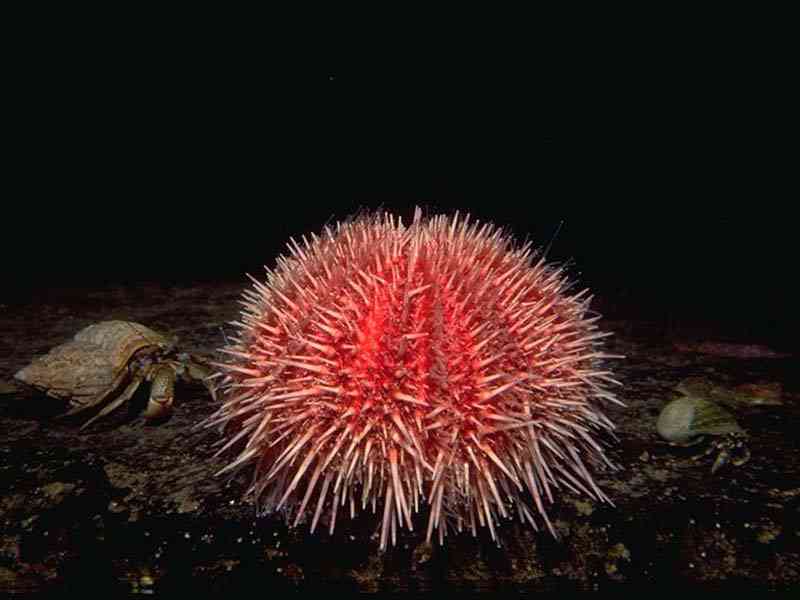
Echinus esculentus and hermit crabs on grazed rock.
Photographer: Sue Scott Copyright: Sue Scott
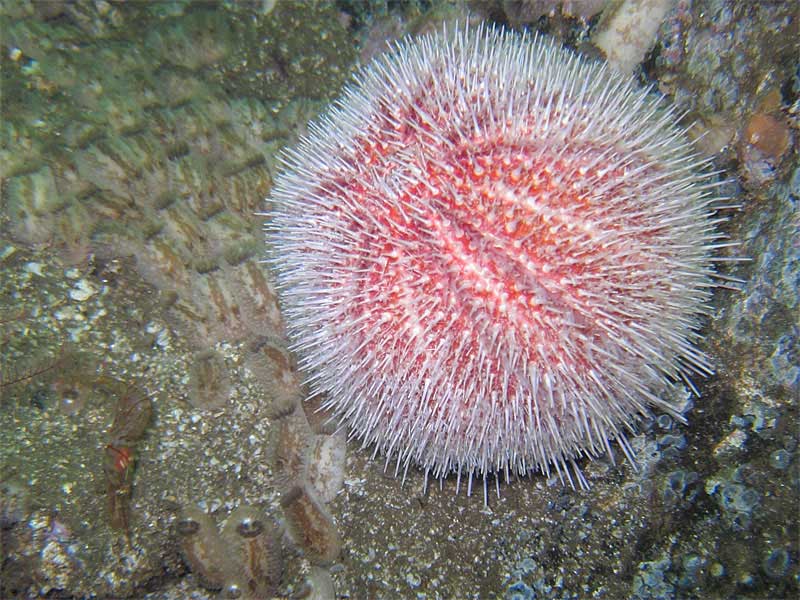
Echinus esculentus
Photographer: Gordon Lang Copyright: Gordon Lang
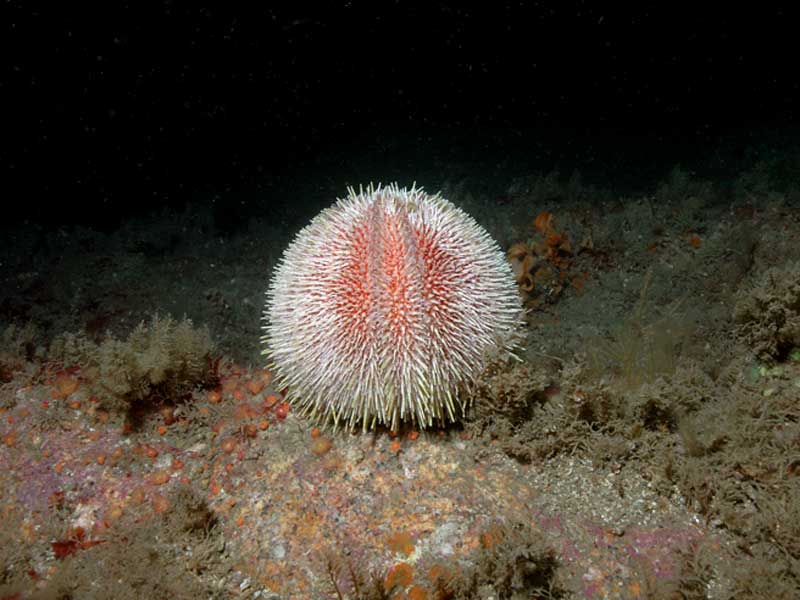
Echinus esculentus at Lundy.
Photographer: Dr Keith Hiscock Copyright: Dr Keith Hiscock
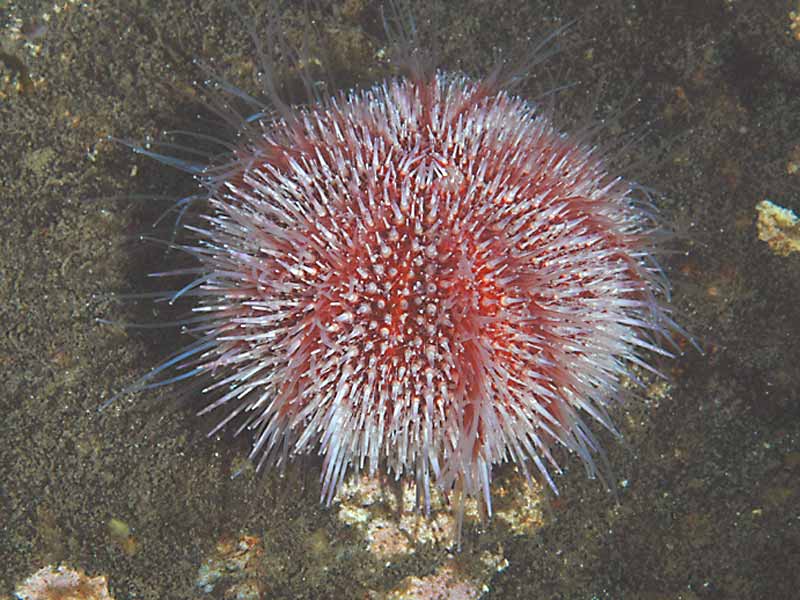
Echinus esculentus at Strome Narrows, Loch Carron on the west Scottish coast.
Photographer: Dr Keith Hiscock Copyright: Dr Keith Hiscock
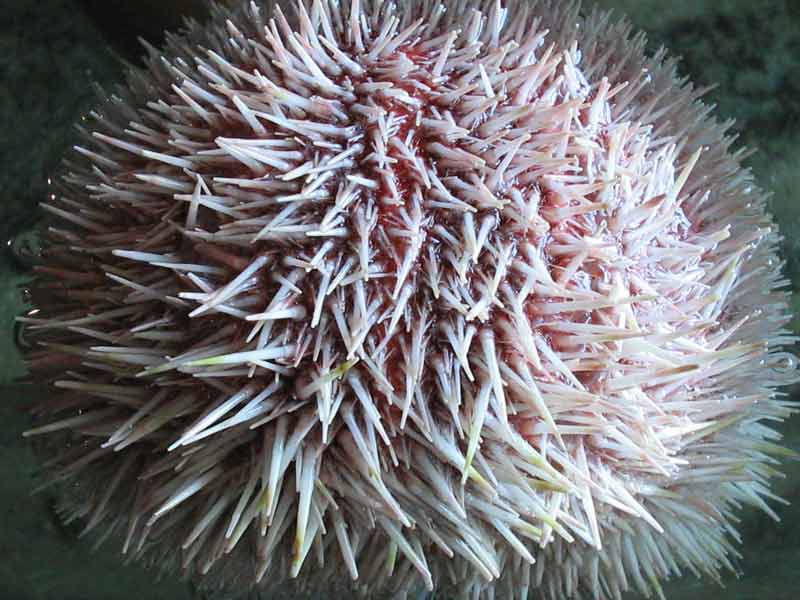
Echinus esculentus in a laboratory.
Photographer: Judith Oakley Copyright: Judith Oakley
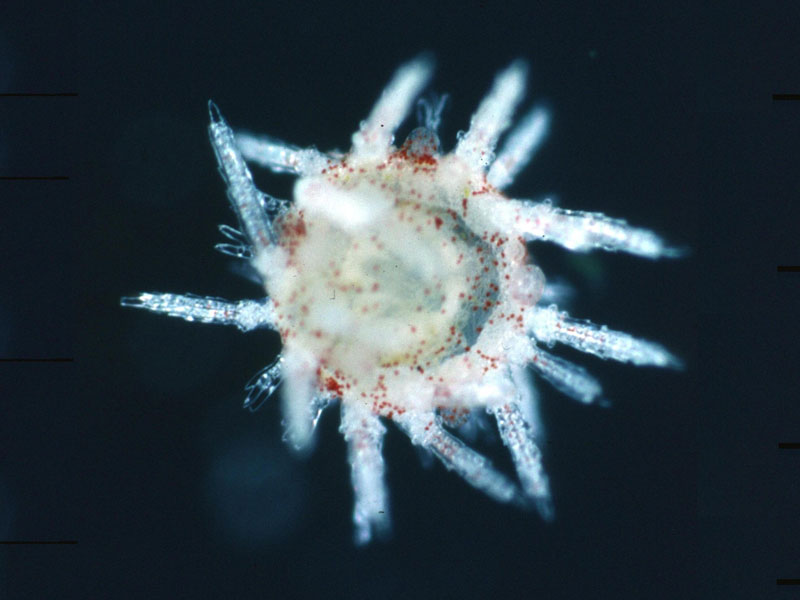
Echinus esculentus larva.
Photographer: John Rundle Copyright: John Rundle
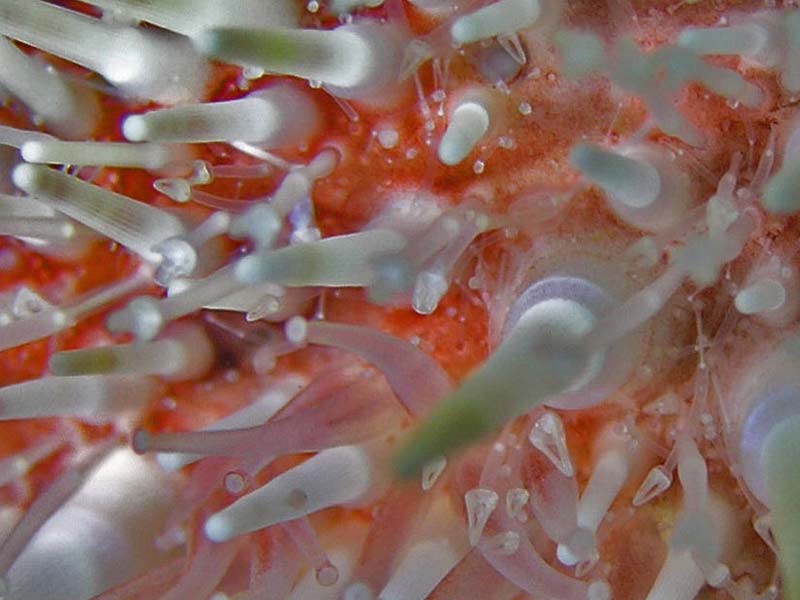
Echinus esculentus showing tube feet and pedicellaria.
Photographer: Paul Newland Copyright: Paul Newland
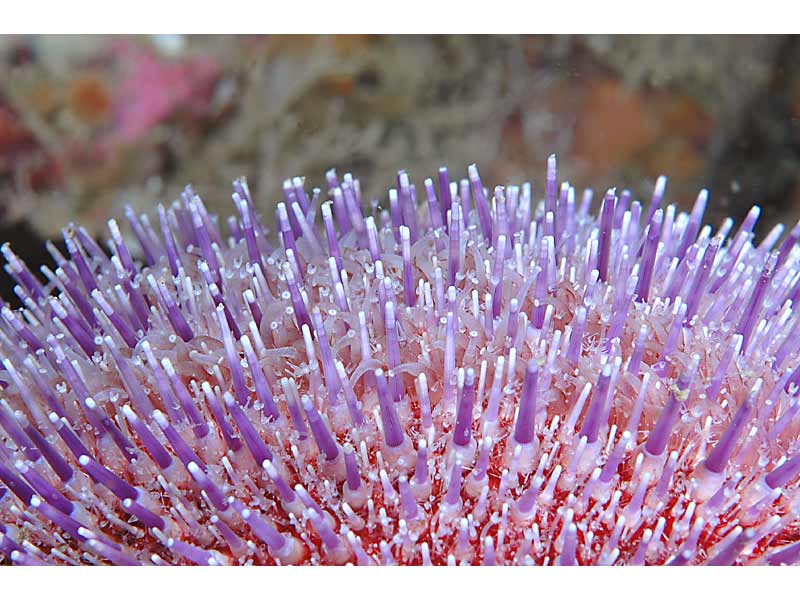
Echinus esculentus showing tube feet, spines and pedicellaria at the Mewstone in Plymouth.
Photographer: Dr Keith Hiscock Copyright: Dr Keith Hiscock
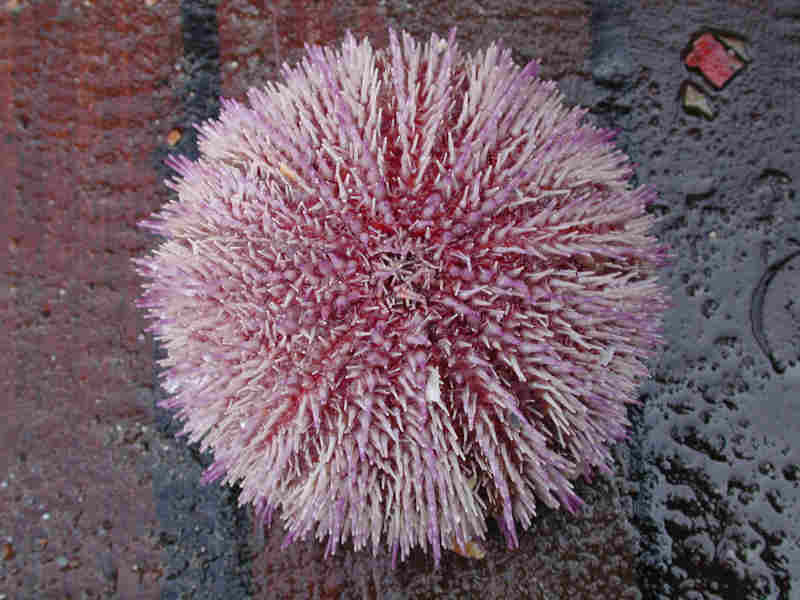
Echinus esculentus, the edible sea urchin.
Photographer: Crown copyright Copyright: Crown copyright
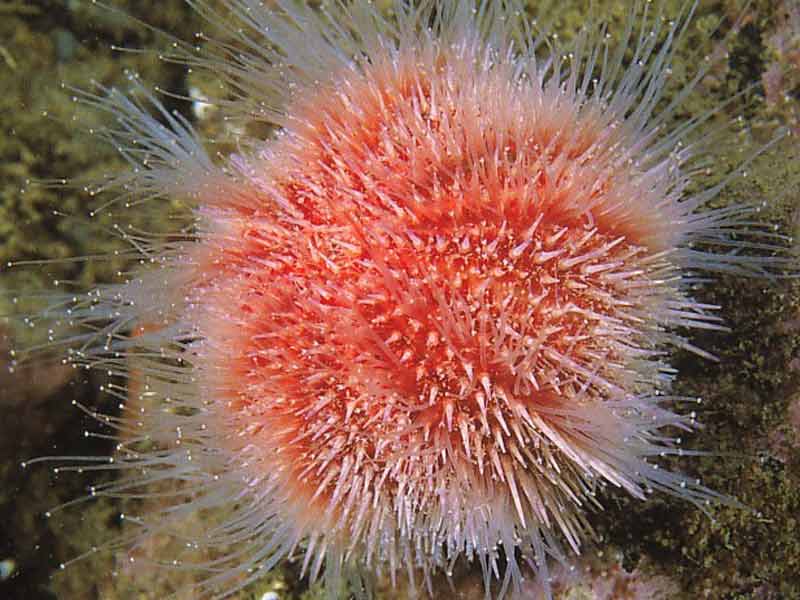
Bright red Echinus esculentus individual.
Photographer: John Rundle Copyright: John Rundle
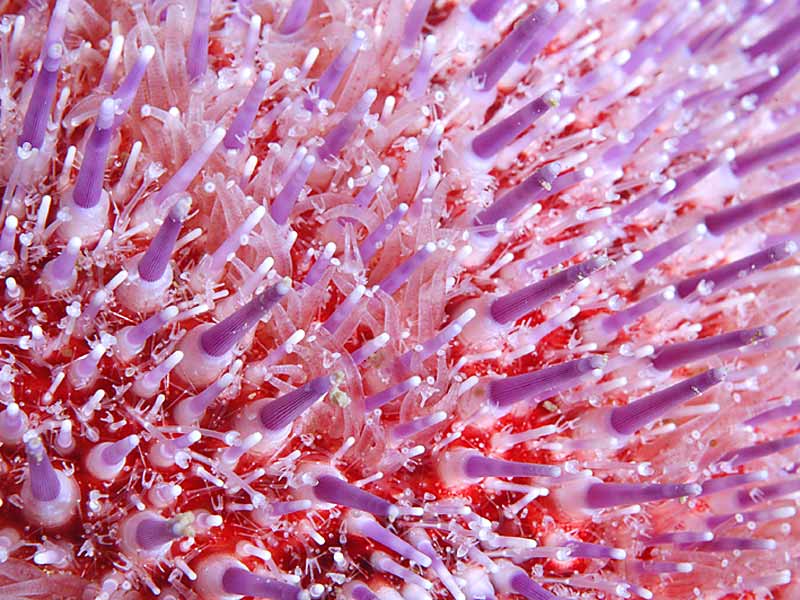
Close up of Echinus esculentus showing tube feet, spines and pedicellaria at the Mewstone, Plymouth.
Photographer: Dr Keith Hiscock Copyright: Dr Keith Hiscock
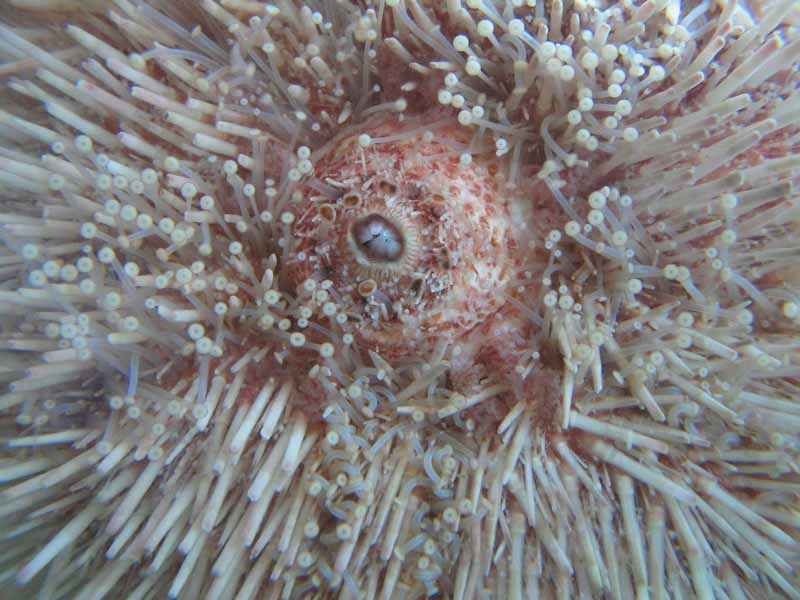
Mouth region of Echinus esculentus.
Photographer: Judith Oakley Copyright: Judith Oakley
Distribution data supplied by the Ocean Biodiversity Information System (OBIS). To interrogate UK data visit the NBN Atlas.Map Help
| Researched by | Dr Harvey Tyler-Walters | Refereed by | Prof. David Nichols |
| Authority | Linnaeus, 1758 | ||
| Other common names | - | Synonyms | - |
Summary
Description
A large globular sea urchin, up to 15 -16 cm in diameter at seven to eight years of age, although the largest diameter recorded was 17.6 cm. The test may be relatively flat in shallow water but taller in deep water. Test pinkish-red but occasionally yellow, green or purple. Spines closely cover the test and are reddish, usually with violet points and white bosses. Primary and secondary spines and their bosses are similar in size, except in small specimens in which the primaries are conspicuous. Ambulacral plates bear three pairs of pores. Primary tubercles (bosses) are found on every second or third ambulacral plate. All coronal plates bear pedicellariae (modified spines). Plates covering the mouth membrane bear small, club-shaped spines as well as pedicellariae. Globeriferous pedicellariae bear 1 lateral tooth below the terminal tooth. The polychaete Flabelligera affinis may be found amongst its spines.
Recorded distribution in Britain and Ireland
Common on most coasts of the British Isles but absent from most of east coast of England, the eastern English Channel and some parts of north Wales.Global distribution
Abundant in the N.E. Atlantic from Iceland, north to Finmark, Norway and south to Portugal. Absent from the Mediterranean.Habitat
Found on rocky substrata from the sublittoral fringe to circa 40 m, although it may be found at depths of 100 m or more.Depth range
Low water to circa 40mIdentifying features
- Rounded and radially symmetrical test slightly flattened but overall globular.
- Test reddish in colour.
- Each ambulacral plate with three pairs of pores.
- Globiferous pedicellariae with one lateral tooth below terminal tooth.
- Primary and secondary spines and their bosses are similar in size, except in small specimens.
- Buccal spines bear short, club-shaped spines.
Additional information
The genus Echinus is derived from the Greek 'echinos' meaning 'a hedgehog'. An omnivorous grazer feeding on seaweeds (e.g. Laminaria spp. sporelings), Bryozoa, barnacles and other encrusting invertebrates. Size range varies depending on age and locality, e.g. ca 4 cm at one year, 4 to 7 cm at two years, 7 to 9 cm at three years and 9 to 11 cm at four years. This species may hybridize with Echinus acutus if sympatric.
Listed by
Biology review
Taxonomy
| Level | Scientific name | Common name |
|---|---|---|
| Phylum | Echinodermata | Starfish, brittlestars, sea urchins & sea cucumbers |
| Class | Echinoidea | Sea urchins, heart urchins and sand dollars |
| Order | Camarodonta | |
| Family | Echinidae | |
| Genus | Echinus | |
| Authority | Linnaeus, 1758 | |
| Recent Synonyms | ||
Biology
| Parameter | Data | ||
|---|---|---|---|
| Typical abundance | High density | ||
| Male size range | |||
| Male size at maturity | circa 4cm | ||
| Female size range | circa 4cm | ||
| Female size at maturity | |||
| Growth form | Globose | ||
| Growth rate | See text | ||
| Body flexibility | |||
| Mobility | Creeper, Mobile | ||
| Characteristic feeding method | Grazer, Scavenger | ||
| Diet/food source | Omnivore | ||
| Typically feeds on | Recorded feeding on; worms, barnacles (e.g. Balanus spp.), hydroids, tunicates, bryozoans (e.g. Membranipora spp.), macroalgae (e.g. Laminaria spp.), bottom material and detritus (reviewed by Lawrence 1975). | ||
| Sociability | Solitary | ||
| Environmental position | Epifaunal | ||
| Dependency | Independent. | ||
| Supports | Host Turbellarian parasites Syndesmis rubida sp. nov. and Syndesmis albida sp. nov. (Kozloff & Westervelt 1990), the parasitic nematode Echinomermella grayi and external parasitic amphipod Euonyx chelatus (Comely & Ansell 1988) | ||
| Is the species harmful? | No Edible | ||
Biology information
Growth rates are variable depending on time of larval settlement, food availability, water temperature and age. Growth rates vary with locality although there is evidence to suggest that largest specimens are found in the south west (Nichols 1979). Growth rates based on growth lines in skeletal plates are probably underestimates (Gage 1992a & b). In the UK population growth is continuous in the first year after metamorphosis and considerably faster than adults in their 2nd year. In adults maximal growth occurs in a few months in spring and early summer but mature adults are slow growing. Comely & Ansell (1988) recorded 28 invertebrate species associated with Echinus esculentus from the west cost of Scotland near Oban. These included the parasites Echinomermella grayi and Euonyx chelatus mentioned above and in additional; 4 species of commensal polychaetes, a copepod and 10 amphipod species. The polychaete Adyte assimilis and the copepod Pseudoanthessius liber were regular commensals amongst the spines. Hyman (1955) states that Echinus esculentus is often infested with parasitic copepods e.g. Asterocheres echinola.
Habitat preferences
| Parameter | Data |
|---|---|
| Physiographic preferences | Open coast, Strait or Sound, Sea loch or Sea lough, Ria or Voe, Enclosed coast or Embayment |
| Biological zone preferences | Lower circalittoral, Lower infralittoral, Sublittoral fringe, Upper circalittoral, Upper infralittoral |
| Substratum / habitat preferences | Artificial (man-made), Bedrock, Caves, Crevices / fissures, Large to very large boulders, Overhangs, Rockpools, Small boulders, Under boulders |
| Tidal strength preferences | Moderately strong 1 to 3 knots (0.5-1.5 m/sec.) |
| Wave exposure preferences | Exposed, Moderately exposed, Sheltered |
| Salinity preferences | Full (30-40 psu) |
| Depth range | Low water to circa 40m |
| Other preferences | At very wave exposed sites, Echinus esculentus is unlikely to be present in shallow depths because of displacement by wave action. However, presence of this species as shallow as 15m depth at Rockall suggests an ability to withstand severe wave action (Keith Hiscock pers. comm.). |
| Migration Pattern | Non-migratory or resident |
Habitat Information
No text enteredLife history
Adult characteristics
| Parameter | Data |
|---|---|
| Reproductive type | Gonochoristic (dioecious) |
| Reproductive frequency | Annual episodic |
| Fecundity (number of eggs) | >1,000,000 |
| Generation time | 1-2 years |
| Age at maturity | 1-3 years |
| Season | February - June |
| Life span | 5-10 years |
Larval characteristics
| Parameter | Data |
|---|---|
| Larval/propagule type | - |
| Larval/juvenile development | Planktotrophic |
| Duration of larval stage | 1-2 months |
| Larval dispersal potential | Greater than 10 km |
| Larval settlement period |
Life history information
- Nichols (1979) estimates the maximum lifespan to be between 8-10 years, whereas Gage (1992a) reports a specimen (based on growth bands) of at least 16 years of age.
- The number of eggs produced will vary with location and nutritive state of the adult but it is likely to be high. MacBride (1903) states that a well-grown female contains about 20 million eggs.
- Maximum spawning occurs in spring although individuals may spawn over a protracted period. Gonad weight is maximal in February / March in English Channel (Comely & Ansell 1989) but decreases during spawning in spring and then increases again through summer and winter until the next spawning; there is no resting phase. Spawning occurs just before the seasonal rise in temperature in temperate zones but is probably not triggered by rising temperature (Bishop 1985). Spawning may coincide with spring phytoplankton bloom although there is no evidence to substantiate this suggestion.
- Comely & Ansell (1989) demonstrated differences in reproductive condition between sites and habitats. Emson & Moore (1998) noted that gonad size varied with diet in the Isle of Cumbrae, Scotland; specimens feeding on barnacles had a higher gonad index than those feeding within the kelp forest.
- Planktonic development is complex and takes between 45 -60 days in captivity (MacBride 1914). Development includes a blastula, gastrula and a characteristic, four armed echinopluteus stage that forms an important component of the zooplankton. The development of Echinus esculentus is described in detail by MacBride (1903, 1914). Photographs of the echinopluteus and fully formed juveniles are given by Todd et al. (1996).
- Recruitment is sporadic or variable depending on locality, e.g. Millport populations showed annual recruitment, whereas few recruits were found in Plymouth populations during Nichols studies between 1980-1981 (Nichols 1984). Bishop & Earll (1984) suggested that the population of Echinus esculentus at St Abbs had a high density and recruited regularly whereas the Skomer population was sparse, ageing and had probably not successfully recruited larvae in the previous 6 years.
- Settlement is thought to occur in autumn and winter (Comely & Ansell, 1988). Newly settled juveniles have an ambital diameter of 0.68 - 0.95mm (Nichols 1984).
- Comely & Ansell (1988) noted that the largest number of Echinus esculentus occurred below the kelp forest. Similarly, Lang & Mann (1978) noted that young Strongylocentrotus droebachiensis recruited in urchin barrens, suggesting that urchin recruitment is improved in the absence of kelp, presumably due to differences in microclimate, the absence of suspension feeders and other predators associated with kelp beds.
Sensitivity review
The MarLIN sensitivity assessment approach used below has been superseded by the MarESA (Marine Evidence-based Sensitivity Assessment) approach (see menu). The MarLIN approach was used for assessments from 1999-2010. The MarESA approach reflects the recent conservation imperatives and terminology and is used for sensitivity assessments from 2014 onwards.
Physical pressures
Use / to open/close text displayed
| Intolerance | Recoverability | Sensitivity | Evidence / Confidence | |
Substratum loss [Show more]Substratum lossBenchmark. All of the substratum occupied by the species or biotope under consideration is removed. A single event is assumed for sensitivity assessment. Once the activity or event has stopped (or between regular events) suitable substratum remains or is deposited. Species or community recovery assumes that the substratum within the habitat preferences of the original species or community is present. Further details EvidenceSea urchins are slow moving and unlikely to escape removal of their substratum. However, a proportion of the population would probably survive removal of algal substratum. Investigation of the effects of algal destruction on populations of Strongylocentrotus droebachiensis suggested that populations of urchins do not migrate away from or starve in areas devoid of kelp, presumably because they are able to feed on alternative prey. Areas lacking algae were dominated by young urchins up to 4 years after removal of the kelp suggesting that kelp barrens afforded improved recruitment (Lang & Mann 1978), presumably because of the lack of suspension feeding organisms associated with kelp beds. The presence of coralline algae in 'urchin barrens' may encourage larval metamorphosis in echinoids (Pearce & Scheibling 1990). | High | High | Moderate | Very low |
Smothering [Show more]SmotheringBenchmark. All of the population of a species or an area of a biotope is smothered by sediment to a depth of 5 cm above the substratum for one month. Impermeable materials, such as concrete, oil, or tar, are likely to have a greater effect. Further details. EvidenceThe adults are slow moving and unlikely to be able to avoid smothering. A 5 cm layer of sediment is likely to affect smaller specimens more than large specimens. Smothered individuals are unlikely to be able to move through sediment. However, individuals are unlikely to starve within a month. Comely & Ansell (1988) recorded large Echinus esculentus from kelp beds on the west coast of Scotland in which the substratum was seasonally covered with "high levels" of silt. This suggests that Echinus esculentus is unlikely to be killed by smothering, however, smaller specimens and juveniles may be more intolerant. A layer of sediment may interfere with larval settlement. Lewis & Nichols (1979) found that adults were able to colonize an artificial reef in small numbers within 3 months and the population steadily grew over the following year. Recruitment is sporadic or annual depending on locality and factors affecting larval pre-settlement and post-settlement survival. | Intermediate | High | Low | Low |
Increase in suspended sediment [Show more]Increase in suspended sedimentBenchmark. An arbitrary short-term, acute change in background suspended sediment concentration e.g., a change of 100 mg/l for one month. The resultant light attenuation effects are addressed under turbidity, and the effects of rapid settling out of suspended sediment are addressed under smothering. Further details EvidenceMoore (1977) suggested that Echinus esculentus was unaffected by turbid conditions. Similarly, Comely & Ansell (1988) recorded this species in the presence of suspended material up to 5-6 mg/l. Echinoderm pedicellariae keep the test clear of settling larvae, spores and presumably sediment particles. Echinus esculentus is known to ingest sediment (Comely & Ansell, 1988) possibly to extract microalgae. Therefore, an increase in siltation may not kill this species but is likely to interfere with feeding and additional scour may reduce larval settlement. The increased turbidity associated with siltation is likely to adversely affect its main food species, the kelps, benthic macroalgae and epi-fauna. | Low | Very high | Very Low | Low |
Decrease in suspended sediment [Show more]Decrease in suspended sedimentBenchmark. An arbitrary short-term, acute change in background suspended sediment concentration e.g., a change of 100 mg/l for one month. The resultant light attenuation effects are addressed under turbidity, and the effects of rapid settling out of suspended sediment are addressed under smothering. Further details Evidence | No information | |||
Desiccation [Show more]Desiccation
EvidenceThe majority of Echinus esculentus are subtidal although they occur occasionally in the lower intertidal. They are slow moving and unlikely to be able to return to water quickly. If exposed to desiccation it is likely to be intolerant of exposure to air and sunshine for 1 hour. | Intermediate | High | Low | Very low |
Increase in emergence regime [Show more]Increase in emergence regimeBenchmark. A one hour change in the time covered or not covered by the sea for a period of one year. Further details EvidenceThe majority of Echinus esculentus are subtidal although they occur occasionally in the lower intertidal. An increase in emergence will depress the height up the shore that this species can occur. | Low | Very high | Very Low | Very low |
Decrease in emergence regime [Show more]Decrease in emergence regimeBenchmark. A one hour change in the time covered or not covered by the sea for a period of one year. Further details Evidence | No information | |||
Increase in water flow rate [Show more]Increase in water flow rateA change of two categories in water flow rate (view glossary) for 1 year, for example, from moderately strong (1-3 knots) to very weak (negligible). Further details EvidenceEchinus esculentus occurred in kelp beds on the west coast of Scotland in currents of about 1 knot. Outside the beds specimens were occasionally seen being rolled by the current (Comely & Ansell 1988), which may have been up to 2.6 knots. Urchins are removed from the stipe of kelps by wave and current action. Echinus esculentus are also displaced by storm action. However, urchins were found to feed normally only when provided with 'good' water flow (Boolootian 1966). After disturbance Echinus esculentus migrates up the shore, an adaptation to being washed to deeper water by wave action (Lewis & Nichols 1979b). Therefore, increased water flow may remove the population from the affected area; probably to deeper water although individuals would probably not be killed in the process and could recolonize the area if the factor returned to its pre-impact condition. | Low | Very high | Very Low | Low |
Decrease in water flow rate [Show more]Decrease in water flow rateA change of two categories in water flow rate (view glossary) for 1 year, for example, from moderately strong (1-3 knots) to very weak (negligible). Further details Evidence | No information | |||
Increase in temperature [Show more]Increase in temperature
For intertidal species or communities, the range of temperatures includes the air temperature regime for that species or community. Further details EvidenceEchinus esculentus occurred at temperatures between 0 - 18 °C in the Limfjord, Denmark (Ursin 1960). Bishop (1985) noted that gametogenesis proceeded at temperatures between 11 - 19 °C although continued exposure to 19 °C destroyed synchronicity of gametogenesis between individuals. Embryos and larvae developed abnormally after up to 24hr at 15 °C (Tyler & Young 1998) but normally at the other temperatures tested (4, 7 and 11 °C at 1 atmosphere). Tyler & Young (1998) concluded that embryos and larvae were more tolerant of depth and temperature than adults. Bishop (1985) suggested that this species cannot tolerate high temperatures for prolonged periods due to increased respiration rate and resultant metabolic stress. Therefore, Echinus esculentus is likely to exhibit a 'low' intolerance to chronic long term temperature change but would probably be more intolerant of sudden or short term acute change (e.g. 5 °C for 3 days) in temperature. | Intermediate | High | Low | Low |
Decrease in temperature [Show more]Decrease in temperature
For intertidal species or communities, the range of temperatures includes the air temperature regime for that species or community. Further details Evidence | No information | |||
Increase in turbidity [Show more]Increase in turbidity
EvidenceMoore (1977) suggested that Echinus esculentus was unaffected by turbid conditions. However, increased turbidity and resultant reduced light penetration is likely to affect macroalgal populations e.g. kelps, which are a preferred food species for Echinus esculentus. However, it can feed on alternative prey, detritus or dissolved organic material (Lawrence, 1975, Comely & Ansell, 1988). | Low | Very high | Very Low | Low |
Decrease in turbidity [Show more]Decrease in turbidity
Evidence | No information | |||
Increase in wave exposure [Show more]Increase in wave exposureA change of two ranks on the wave exposure scale (view glossary) e.g., from Exposed to Extremely exposed for a period of one year. Further details EvidenceWave exposure prevents urchins invading the sub-littoral fringe in exposed sites. Higher levels of wave action are likely to depress the upper extent of Echinus esculentus populations. Decreased wave action is likely to allow the local urchin population to migrate into shallow water depths with resultant impact of algal communities. Lewis & Nichols (1979b) reported that Echinus esculentus migrated to shallow water after disturbance, an adaptation to being washed to deeper water by wave action. However, in the most wave exposed location in the British Isles at Rockall, Echinus esculentus occurred in significant numbers as shallow as 15m below low water level (Keith Hiscock pers. comm.). | Low | Very high | Very Low | Low |
Decrease in wave exposure [Show more]Decrease in wave exposureA change of two ranks on the wave exposure scale (view glossary) e.g., from Exposed to Extremely exposed for a period of one year. Further details Evidence | No information | |||
Noise [Show more]Noise
EvidenceNo evidence of sound or vibration reception in echinoids was found. | Tolerant | Not relevant | Not sensitive | Not relevant |
Visual presence [Show more]Visual presenceBenchmark. The continuous presence for one month of moving objects not naturally found in the marine environment (e.g., boats, machinery, and humans) within the visual envelope of the species or community under consideration. Further details EvidenceBright light and shading elicit well studied reactions in echinoderms. In echinoids shading results in the 'shadow reaction' in which the pedicellariae and spines are pointed in the direction of the shade in a defensive reaction. Echinoids move away from bright light and seek out crevices and / or cover themselves with debris such as shells and drift algae, the 'covering reaction' (see Boolootian (1966) for discussion). Movement of boats is unlikely to be noticed, especially under a kelp canopy in which light may penetrate intermittently with passing currents. If echinoids such as Echinus esculentus react to the approach of divers and snorkelers at closer proximity, the reaction is likely to be short lived and insignificant. | Low | Immediate | Not sensitive | Low |
Abrasion & physical disturbance [Show more]Abrasion & physical disturbanceBenchmark. Force equivalent to a standard scallop dredge landing on or being dragged across the organism. A single event is assumed for assessment. This factor includes mechanical interference, crushing, physical blows against, or rubbing and erosion of the organism or habitat of interest. Where trampling is relevant, the evidence and trampling intensity will be reported in the rationale. Further details. EvidenceSpecies with fragile tests, such as Echinus esculentus and Echinocardium cordatum were reported to suffer badly as a result of impact with passing scallop or queen scallop dredges (Bradshaw et al., 2000; Hall-Spencer & Moore, 2000a). Adults can repair non-lethal damage to the test and spines can be re-grown but most dredge impact is likely to be lethal. Therefore, physical abrasion due to a passing anchor or dredge is likely to kill a proportion of the population and an intolerance of intermediate has been recorded. Lewis & Nichols (1979) found that adults were able to colonize an artificial reef in small numbers within 3 months and the population steadily grew over the following year. Recoverability is probably high. However, recruitment is sporadic or annual depending on locality and factors affecting larval pre-settlement and post-settlement survival. | Intermediate | High | Low | Low |
Displacement [Show more]DisplacementBenchmark. Removal of the organism from the substratum and displacement from its original position onto a suitable substratum. A single event is assumed for assessment. Further details EvidenceEchinus esculentus is probably regularly displaced to deeper water by storms. Displaced specimens are able to move up the shore after displacement (Lewis & Nichols 1979b). | Low | Very high | Very Low | Moderate |
Chemical pressures
Use [show more] / [show less] to open/close text displayed
| Intolerance | Recoverability | Sensitivity | Evidence / Confidence | |
Synthetic compound contamination [Show more]Synthetic compound contaminationSensitivity is assessed against the available evidence for the effects of contaminants on the species (or closely related species at low confidence) or community of interest. For example:
The evidence used is stated in the rationale. Where the assessment can be based on a known activity then this is stated. The tolerance to contaminants of species of interest will be included in the rationale when available; together with relevant supporting material. Further details. EvidenceEchinus esculentus is subtidal and unlikely to be directly exposed to oil spills, except from dissolved oil or oil adsorbed to particulates. However, large numbers of dead Echinus esculentus were found between 5.5 and 14.5 m in the vicinity of Sennen, presumably due to a combination of wave exposure and heavy spraying of dispersants in that area (Smith 1968). Smith (1968) also demonstrated that 0.5 -1ppm of the detergent BP1002 resulted in developmental abnormalities in echinopluteus larvae of Echinus esculentus. Echinus esculentus populations in the vicinity of an oil terminal in A Coruna Bay, Spain, showed developmental abnormalities in the skeleton. The tissues contained high levels of aliphatic hydrocarbons, naphthalenes, pesticides and heavy metals (Zn, Hg, Cd, Pb, and Cu) (Gomez & Miguez-Rodriguez 1999). However, the observed effects may have been due to a single contaminant or synergistic effects of all present. Sea-urchins, especially the eggs and larvae are used for toxicity testing and environmental monitoring (reviewed by Dinnel et al. 1988). It is likely therefore that Echinus esculentus and especially its larvae are highly intolerant of synthetic contaminants. | High | High | Moderate | Moderate |
Heavy metal contamination [Show more]Heavy metal contaminationEvidenceLittle is known about the effects of heavy metals on echinoderms. Bryan (1984) reported that early work had shown that echinoderm larvae were intolerant of heavy metals, e.g. the intolerance of larvae of Paracentrotus lividus to copper (Cu) had been used to develop a water quality assessment. Kinne (1984) reported developmental disturbances in Echinus esculentus exposed to waters containing 25 µg / l of copper (Cu). Sea-urchins, especially the eggs and larvae, are used for toxicity testing and environmental monitoring (reviewed by Dinnel et al. 1988). Taken together with the findings of Gomez & Miguez-Rodriguez (1999) above it is likely that Echinus esculentus is intolerant of heavy metal contamination. | High | High | Moderate | Very low |
Hydrocarbon contamination [Show more]Hydrocarbon contaminationEvidenceEchinus esculentus is subtidal and unlikely to be directly exposed to oil spills, except from dissolved oil or oil adsorbed to particulates. However, large numbers of dead Echinus esculentus were found between 5.5 and 14.5 m in the vicinity of Sennen, presumably due to a combination of wave exposure and heavy spraying of dispersants in that area (Smith 1968). Smith (1968) also demonstrated that 0.5 -1ppm of the detergent BP1002 resulted in developmental abnormalities in its echinopluteus larvae. Echinus esculentus populations in the vicinity of an oil terminal in A Coruna Bay, Spain, showed developmental abnormalities in the skeleton. The tissues contained high levels of aliphatic hydrocarbons, naphthalenes, pesticides and heavy metals (Zn, Hg, Cd, Pb, and Cu) (Gomez & Miguez-Rodriguez 1999). However, the observed effects may have been due to a single contaminant or synergistic effects of all present. Sea-urchins, especially the eggs and larvae, are used for toxicity testing and environmental monitoring (reviewed by Dinnel et al. 1988). It is likely therefore that Echinus esculentus and especially its larvae are highly intolerant of hydrocarbon contamination. | High | High | Moderate | Moderate |
Radionuclide contamination [Show more]Radionuclide contaminationEvidenceInsufficientinformation. | No information | No information | No information | Not relevant |
Changes in nutrient levels [Show more]Changes in nutrient levelsEvidenceThe addition of nutrients may encourage the growth of ephemeral and epiphytic algae and therefore increase the food available to sea-urchin populations. Lawrence (1975) reported that sea urchins had persisted over 13 years on barren grounds near sewage outfalls, presumably feeding on dissolved organic material, detritus, plankton and microalgae, although individuals died at an early age. The ability to absorb dissolved organic material was suggested by Comely & Ansell (1988). | Tolerant* | Not relevant | Not sensitive* | Very low |
Increase in salinity [Show more]Increase in salinity
EvidenceEchinoderms are generally unable to tolerate low salinity (stenohaline) and possess no osmoregulatory organ (Boolootian 1966). At low salinity urchins gain weight, and the epidermis loses its pigment as patches are destroyed; prolonged exposure is fatal. The coelomic fluid of Echinus esculentus is isotonic with seawater (Stickle & Diehl 1987). There is some evidence for intracellular regulation of osmotic pressure due to increased amino acid concentrations. Populations in the sublittoral fringe probably encounter reduced salinity due to low water and fresh water runoff or heavy rain and may tolerate low salinity for short periods. However, echinoderm larvae have a narrow range of salinity tolerance and develop abnormally and die if exposed to reduced or increased salinity. | Intermediate | High | Low | Low |
Decrease in salinity [Show more]Decrease in salinity
Evidence | No information | |||
Changes in oxygenation [Show more]Changes in oxygenationBenchmark. Exposure to a dissolved oxygen concentration of 2 mg/l for one week. Further details. EvidenceUnder hypoxic conditions echinoderms become less mobile and stop feeding. Death of a bloom of the phytoplankton Gyrodinium aureolum in Mounts Bay, Penzance in 1978 produced a layer of brown slime on the sea bottom. This resulted in the death of fish and invertebrates, including Echinus esculentus, presumably due to anoxia caused by the decay of the dead dinoflagellates (Griffiths et al. 1979). | Intermediate | High | Low | Low |
Biological pressures
Use [show more] / [show less] to open/close text displayed
| Intolerance | Recoverability | Sensitivity | Evidence / Confidence | |
Introduction of microbial pathogens/parasites [Show more]Introduction of microbial pathogens/parasitesBenchmark. Sensitivity can only be assessed relative to a known, named disease, likely to cause partial loss of a species population or community. Further details. EvidenceEchinus esculentus is susceptible to 'Bald-sea-urchin disease', which causes lesions, loss of spines, tube feet, pedicellariae, destruction of the upper layer of skeletal tissue and death. It is thought to be caused by the bacteria Vibrio anguillarum and Aeromonas salmonicida. Bald sea-urchin disease was recorded from Echinus esculentus on the Brittany Coast. Although associated with mass mortalites of Strongylocentrotus franciscanus in California and Paracentrotus lividus in the French Mediterranean it is not known if the disease induces mass mortality (Bower 1996). However, no evidence of mass mortalities of Echinus esculentus associated with disease have been recorded in Britain and Ireland. | Intermediate | High | Low | Moderate |
Introduction of non-native species [Show more]Introduction of non-native speciesSensitivity assessed against the likely effect of the introduction of alien or non-native species in Britain or Ireland. Further details. EvidenceNo alien or non-native species is known to compete with Echinus esculentus. | Not relevant | Not relevant | Not relevant | Not relevant |
Extraction of this species [Show more]Extraction of this speciesBenchmark. Extraction removes 50% of the species or community from the area under consideration. Sensitivity will be assessed as 'intermediate'. The habitat remains intact or recovers rapidly. Any effects of the extraction process on the habitat itself are addressed under other factors, e.g. displacement, abrasion and physical disturbance, and substratum loss. Further details. EvidenceCollecting of Echinus esculentus for the curio trade was studied by Nichols (1984). He concluded that the majority of divers collected only large specimens that are seen quickly and often missed individuals covered by seaweed or under rocks, especially if small. As a result, a significant proportion of the population remains. He suggested that exploited populations should not be allowed to fall below 0.2 individuals per square metre. | Intermediate | High | Low | Moderate |
Extraction of other species [Show more]Extraction of other speciesBenchmark. A species that is a required host or prey for the species under consideration (and assuming that no alternative host exists) or a keystone species in a biotope is removed. Any effects of the extraction process on the habitat itself are addressed under other factors, e.g. displacement, abrasion and physical disturbance, and substratum loss. Further details. EvidencePopulations of Strongylocentrotus droebachiensis do not migrate away after destroying an area of kelp, although individuals growth rate and gonad production decreases. Over the next 3-4 years the population became dominated by younger urchins, suggesting that recruitment (larval settlement and post-settlement survival) was improved within the 'urchin barren' (Lang & Mann, 1979). Since Echinus esculentus is an omnivore it is likely that kelp harvesting will have little effect on the population and may improve recruitment in the short term.Species with fragile tests, such as Echinus esculentus and Echinocardium cordatum were reported to suffer badly as a result of impact with passing scallop or queen scallop dredges (Bradshaw et al., 2000; Hall-Spencer & Moore, 2000a). Kaiser et al. (2000) reported that Echinus esculentus were less abundant in areas subject to high trawling disturbance in the Irish Sea. Adults can repair non-lethal damage to the test and spines can be re-grown but most dredge impact is likely to be lethal. Therefore, Echinus esculentus is likely to be of intermediate intolerance to the effects of fishing activities for other species. | Intermediate | High | Low | Low |
Additional information
Importance review
Policy/legislation
| Designation | Support |
|---|---|
| IUCN Red List | Near Threatened (NT) |
Status
| National (GB) importance | Not rare or scarce | Global red list (IUCN) category | Near Threatened (NT) |
Non-native
| Parameter | Data |
|---|---|
| Native | - |
| Origin | - |
| Date Arrived | - |
Importance information
- Echinus esculentus is an important grazer of epiflora and epifauna in the subtidal. It may have a keystone role in kelp communities, where grazing by sea urchins may control the lower limit of Laminaria hyperborea beds, increase species diversity in the understorey epiflora/fauna, and habitat diversity through the formation of 'urchin barrens' (see Birkett et al., 1998b and EIR.LhypR Key Information review for discussion).
- The roe of Echinus was eaten in many parts of England (Pennant 1777 cited in Nichols 1981) and may continue today locally. References to use in Roman times may refer to Paracentrotus lividus (Nichols 1981). There is little evidence of medicinal use of Echinus although other species may have been used in the past.
- Mainly sold as a curio, ornament or occasionally as a receptacle and was collected by divers around the UK for the curio trade. It was the object of a specific fishery in Cornwall in the 1980s. Nichols (1981) pointed out that although most divers missed small specimens within kelp beds, population densities should not be allowed to fall below 0.2 per metre to conserve the species in the UK.
- The possibility of a sea urchin fishery in Shetland for the Japanese market has been investigated recently (Penfold et al. 1996).
- Sea urchin development has been well studied (MacBride 1914) and echinoids form an important research organism in embryology, developmental biology, evolution, biochemistry and molecular biology studies.
Bibliography
Birkett, D.A., Maggs, C.A., Dring, M.J. & Boaden, P.J.S., 1998b. Infralittoral reef biotopes with kelp species: an overview of dynamic and sensitivity characteristics for conservation management of marine SACs. Natura 2000 report prepared by Scottish Association of Marine Science (SAMS) for the UK Marine SACs Project., Scottish Association for Marine Science. (UK Marine SACs Project, vol VI.), 174 pp. Available from: http://ukmpa.marinebiodiversity.org/uk_sacs/pdfs/reefkelp.pdf
Bishop, G.M. & Earll, R., 1984. Studies on the populations of Echinus esculentus at the St Abbs and Skomer voluntary Marine Nature Reserves. Progress in Underwater Science, 9, 53-66.
Bishop, G.M., 1985. Aspects of the reproductive ecology of the sea urchin Echinus esculentus L. Ph.D. thesis, University of Exeter, UK.
Boolootian, R.A.,1966. Physiology of Echinodermata. (Ed. R.A. Boolootian), pp. 822. New York: John Wiley & Sons.
Bower, S.M., 1996. Synopsis of Infectious Diseases and Parasites of Commercially Exploited Shellfish: Bald-sea-urchin Disease. [On-line]. Fisheries and Oceans Canada. [cited 26/01/16]. Available from:
Bradshaw, C., Veale, L.O., Hill, A.S. & Brand, A.R., 2000. The effects of scallop dredging on gravelly seabed communities. In: Effects of fishing on non-target species and habitats (ed. M.J. Kaiser & de S.J. Groot), pp. 83-104. Oxford: Blackwell Science.
Comely, C.A. & Ansell, A.D., 1988. Invertebrate associates of the sea urchin, Echinus esculentus L., from the Scottish west coast. Ophelia, 28, 111-137.
Dinnel, P.A., Pagano, G.G., & Oshido, P.S., 1988. A sea urchin test system for marine environmental monitoring. In Echinoderm Biology. Proceedings of the Sixth International Echinoderm Conference, Victoria, 23-28 August 1987, (R.D. Burke, P.V. Mladenov, P. Lambert, Parsley, R.L. ed.), pp 611-619. Rotterdam: A.A. Balkema.
Emson, R.H., & Moore, P.G., 1998. Diet and gonad size in three populations of Echinus esculentus. In Proceedings of the Ninth International Echinoderm Conference San Francisco, California, USA, 5-9 August 1996. Echinoderms: San Francisco (ed. R. Mooi & M. Telford), pp. 641-644. Rotterdam: A.A. Balkena.
Fish, J.D. & Fish, S., 1996. A student's guide to the seashore. Cambridge: Cambridge University Press.
Gage, J.D., 1992a. Growth bands in the sea urchin Echinus esculentus: results from tetracycline mark/recapture. Journal of the Marine Biological Association of the United Kingdom, 72, 257-260.
Gage, J.D., 1992b. Natural growth bands and growth variability in the sea urchin Echinus esculentus: results from tetracycline tagging. Marine Biology, 114, 607-616.
Gommez, J.L.C. & Miguez-Rodriguez, L.J., 1999. Effects of oil pollution on skeleton and tissues of Echinus esculentus L. 1758 (Echinodermata, Echinoidea) in a population of A Coruna Bay, Galicia, Spain. In Echinoderm Research 1998. Proceedings of the Fifth European Conference on Echinoderms, Milan, 7-12 September 1998, (ed. M.D.C. Carnevali & F. Bonasoro) pp. 439-447. Rotterdam: A.A. Balkema.
Griffiths, A.B., Dennis, R. & Potts, G.W., 1979. Mortality associated with a phytoplankton bloom off Penzance in Mounts Bay. Journal of the Marine Biological Association of the United Kingdom, 59, 515-528.
Hall-Spencer, J.M. & Moore, P.G., 2000a. Impact of scallop dredging on maerl grounds. In Effects of fishing on non-target species and habitats. (ed. M.J. Kaiser & S.J., de Groot) 105-117. Oxford: Blackwell Science.
Hayward, P.J. & Ryland, J.S. (ed.) 1995b. Handbook of the marine fauna of North-West Europe. Oxford: Oxford University Press.
Howson, C.M. & Picton, B.E., 1997. The species directory of the marine fauna and flora of the British Isles and surrounding seas. Belfast: Ulster Museum. [Ulster Museum publication, no. 276.]
Hyman, L.V., 1955. The Invertebrates: Vol. IV. Echinodermata. The coelomate Bilateria. New York: McGraw Hill.
JNCC (Joint Nature Conservation Committee), 1999. Marine Environment Resource Mapping And Information Database (MERMAID): Marine Nature Conservation Review Survey Database. [on-line] http://www.jncc.gov.uk/mermaid
Kaiser, M.J., Ramsay, K., Richardson, C.A., Spence, F.E. & Brand, A.R., 2000. Chronic fishing disturbance has changed shelf sea benthic community structure. Journal of Animal Ecology, 69, 494-503.
Kinne, O. (ed.), 1984. Marine Ecology: A Comprehensive, Integrated Treatise on Life in Oceans and Coastal Waters.Vol. V. Ocean Management Part 3: Pollution and Protection of the Seas - Radioactive Materials, Heavy Metals and Oil. Chichester: John Wiley & Sons.
Kozloff, E.N. & Westervelt, C.A. Jr., 1990. Syndesmis rubida sp. nov. and S. albida sp. nov. (Turbellaria: Neorhabdocoela: Umagillidae) from the sea urchin Echinus esculentus. Cahiers de Biologie Marine, 31, 323-332.
Lawrence, J.M., 1975. On the relationships between marine plants and sea urchins. Oceanography and Marine Biology: An Annual Review, 13, 213-286.
Lewis, G.A. & Nichols, D., 1980. Geotactic movement following disturbance in the European sea-urchin, Echinus esculentus (Echinodermata: Echinoidea). Progress in Underwater Science, 5, 171-186.
MacBride, E.W., 1903. The development of Echinus esculentus together with some points on the development of E. miliaris and E. acutus. Philosophical Transactions of the Royal Society of London, Series B, 195, 285-327.
MacBride, E.W., 1914. Textbook of Embryology, Vol. I, Invertebrata. London: MacMillan & Co.
Moore, P.G., 1977a. Inorganic particulate suspensions in the sea and their effects on marine animals. Oceanography and Marine Biology: An Annual Review, 15, 225-363.
Mortensen, T.H., 1927. Handbook of the echinoderms of the British Isles. London: Humphrey Milford, Oxford University Press.
Nichols, D., 1969. Echinoderms (4th ed.). London: Hutchinson & Co.
Nichols, D., 1979. A nationwide survey of the British Sea Urchin Echinus esculentus. Progress in Underwater Science, 4, 161-187.
Nichols, D., 1981. The Cornish Sea-urchin Fishery. Cornish Studies, 9, 5-18.
Nichols, D., 1984. An investigation of the population dynamics of the common edible sea urchin (Echinus esculentus L.) in relation to species conservation management. Report to Department of the Environment and Nature Conservancy Council from the Department of Biological Sciences, University of Exeter.
Pearce, C.M., & Scheibling, R.E., 1990. Induction of Metamorphosis of Larvae of the Green Sea Urchin, Strongylocentrotus droebachiensis, by Coralline Red Algae. Biological Bulletin, Marine Biological Laboratory, Woods Hole, 179, 304-311.
Penfold, R., Hughson, S., & Boyle, N., 1996. The potential for a sea urchin fishery in Shetland. http://www.nafc.ac.uk/publish/note5/note5.htm, 2000-04-14
Picton, B.E. & Costello, M.J., 1998. BioMar biotope viewer: a guide to marine habitats, fauna and flora of Britain and Ireland. [CD-ROM] Environmental Sciences Unit, Trinity College, Dublin.
Smith, J.E. (ed.), 1968. 'Torrey Canyon'. Pollution and marine life. Cambridge: Cambridge University Press.
Todd, C.D., Laverack, M.S. & Boxshall, G.A., 1996. Coastal Marine Zooplankton: A practical manual for students. 2nd Ed. Cambridge: Cambridge University Press.
Tyler, P.A. & Young, C.M., 1998. Temperature and pressure tolerances in dispersal stages of the genus Echinus (Echinodermata: Echinoidea): prerequisites for deep sea invasion and speciation. Deep Sea Research II, 45 (1), 253-277. DOI https://doi.org/10.1016/S0967-0645(97)00091-X
Ursin, E., 1960. A quantitative investigation of the echinoderm fauna of the central North Sea. Meddelelser fra Danmark Fiskeri-og-Havundersogelser, 2 (24), pp. 204.
Datasets
Centre for Environmental Data and Recording, 2018. IBIS Project Data. Occurrence dataset: https://www.nmni.com/CEDaR/CEDaR-Centre-for-Environmental-Data-and-Recording.aspx accessed via NBNAtlas.org on 2018-09-25.
Centre for Environmental Data and Recording, 2018. Ulster Museum Marine Surveys of Northern Ireland Coastal Waters. Occurrence dataset https://www.nmni.com/CEDaR/CEDaR-Centre-for-Environmental-Data-and-Recording.aspx accessed via NBNAtlas.org on 2018-09-25.
Environmental Records Information Centre North East, 2018. ERIC NE Combined dataset to 2017. Occurrence dataset: http://www.ericnortheast.org.ukl accessed via NBNAtlas.org on 2018-09-38
Fenwick, 2018. Aphotomarine. Occurrence dataset http://www.aphotomarine.com/index.html Accessed via NBNAtlas.org on 2018-10-01
Isle of Wight Local Records Centre, 2017. IOW Natural History & Archaeological Society Marine Invertebrate Records 1853- 2011. Occurrence dataset: https://doi.org/10.15468/d9amhg accessed via GBIF.org on 2018-09-27.
Manx Biological Recording Partnership, 2022. Isle of Man historical wildlife records 1990 to 1994. Occurrence dataset:https://doi.org/10.15468/aru16v accessed via GBIF.org on 2024-09-27.
Merseyside BioBank., 2018. Merseyside BioBank (unverified). Occurrence dataset: https://doi.org/10.15468/iou2ld accessed via GBIF.org on 2018-10-01.
NBN (National Biodiversity Network) Atlas. Available from: https://www.nbnatlas.org.
OBIS (Ocean Biodiversity Information System), 2025. Global map of species distribution using gridded data. Available from: Ocean Biogeographic Information System. www.iobis.org. Accessed: 2025-08-01
Outer Hebrides Biological Recording, 2018. Invertebrates (except insects), Outer Hebrides. Occurrence dataset: https://doi.org/10.15468/hpavud accessed via GBIF.org on 2018-10-01.
Yorkshire Wildlife Trust, 2018. Yorkshire Wildlife Trust Shoresearch. Occurrence dataset: https://doi.org/10.15468/1nw3ch accessed via GBIF.org on 2018-10-02.
Citation
This review can be cited as:
Last Updated: 29/04/2008