
Oarweed (Laminaria digitata)
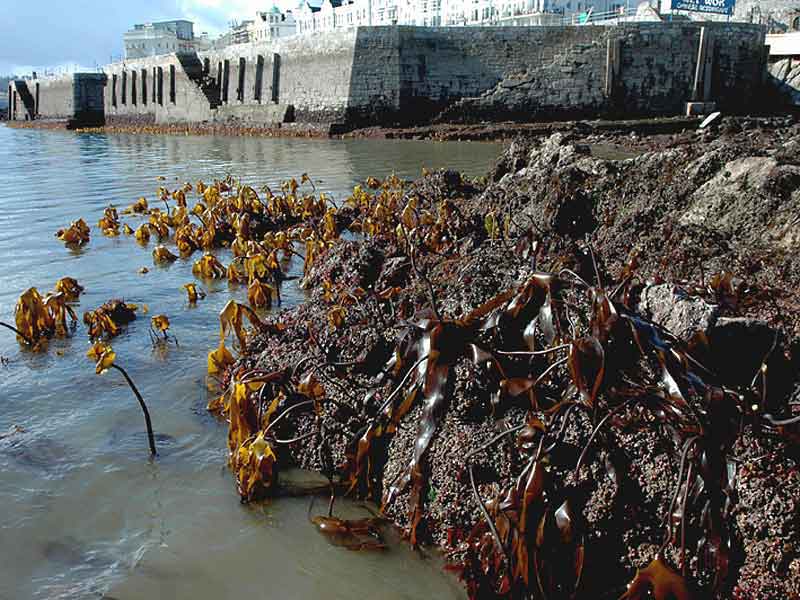
Laminaria digitata (foreground) and Laminaria ochroleuca (background) at West Hoe, Plymouth.
Photographer: Keith Hiscock Copyright: Dr Keith Hiscock
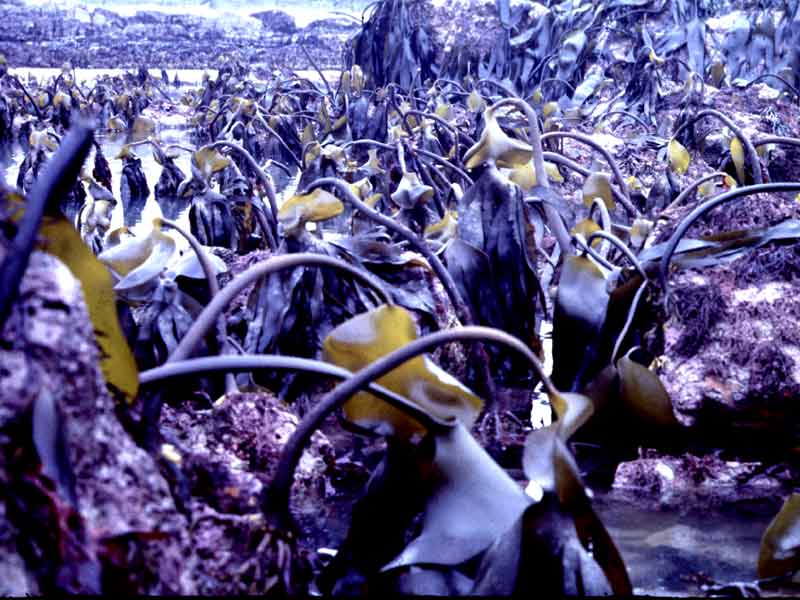
Laminaria digitata at low tide.
Photographer: Keith Hiscock Copyright: Dr Keith Hiscock
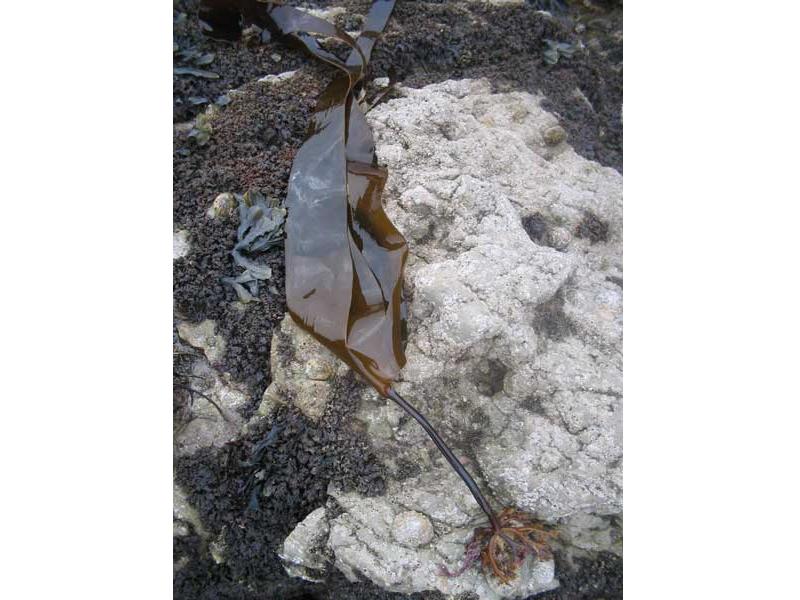
Laminaria digitata attached to an exposed rock.
Photographer: Judith Oakley Copyright: Judith Oakley
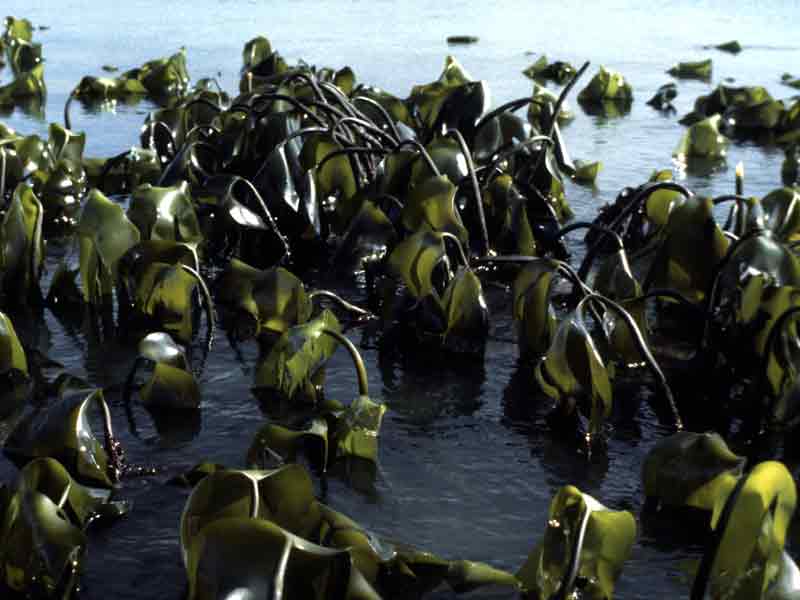
Laminaria digitata fronds at low water.
Photographer: Keith Hiscock Copyright: Dr Keith Hiscock
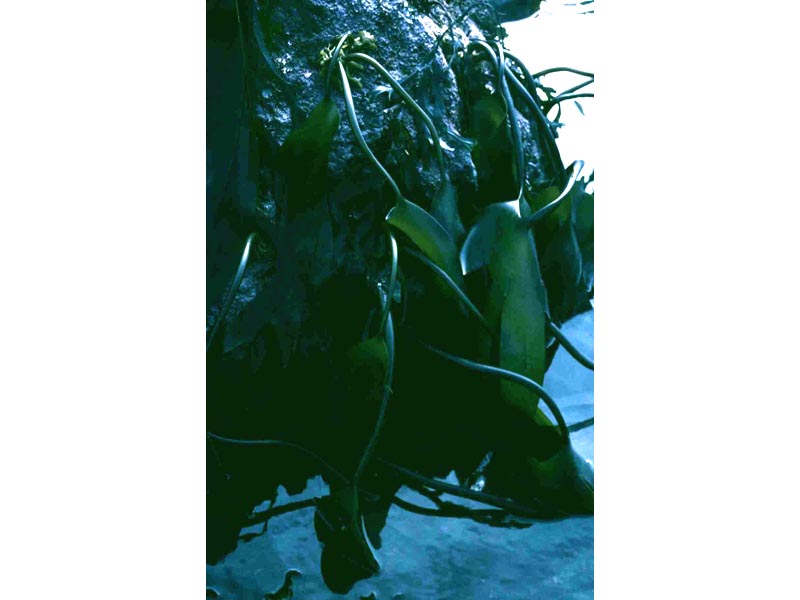
Laminaria digitata, oarweed.
Photographer: Keith Hiscock Copyright: Dr Keith Hiscock
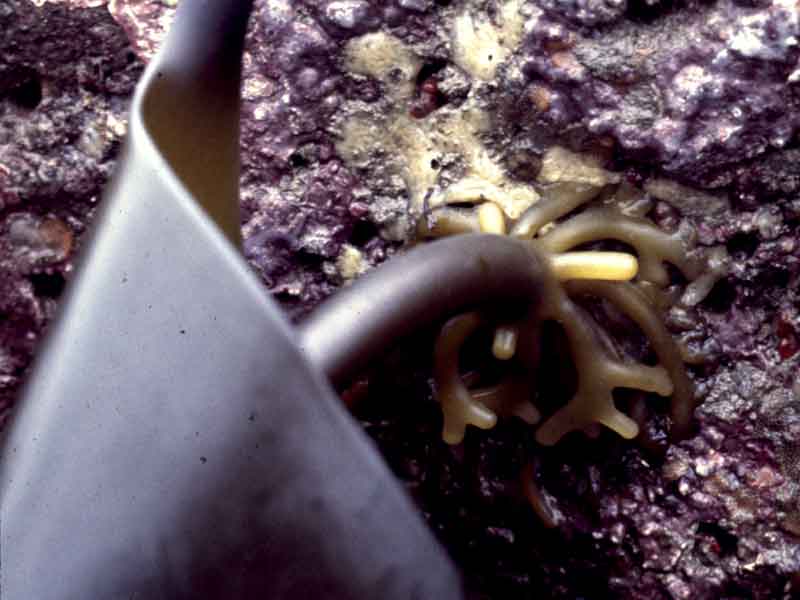
Close up of a holdfast of Laminaria digitata.
Photographer: Keith Hiscock Copyright: Dr Keith Hiscock
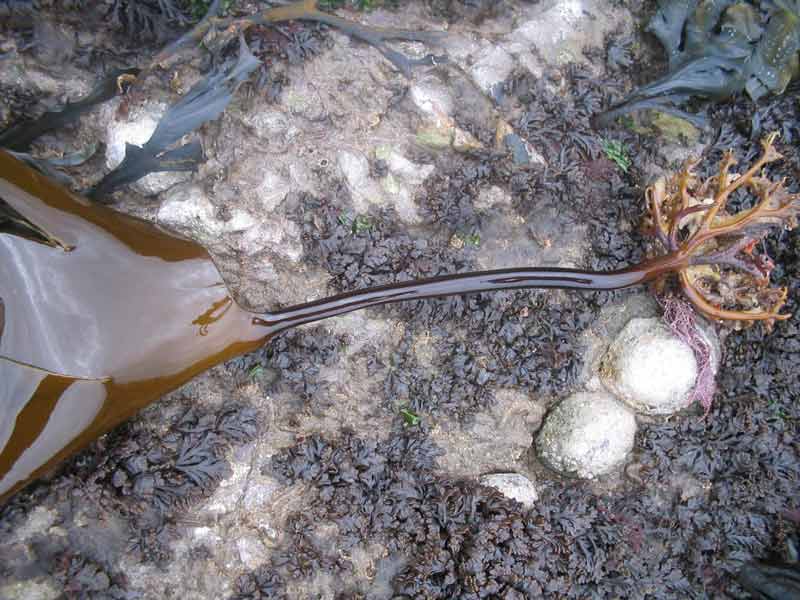
Close up view of the base of a lone Laminaria digitata individual.
Photographer: Judith Oakley Copyright: Judith Oakley
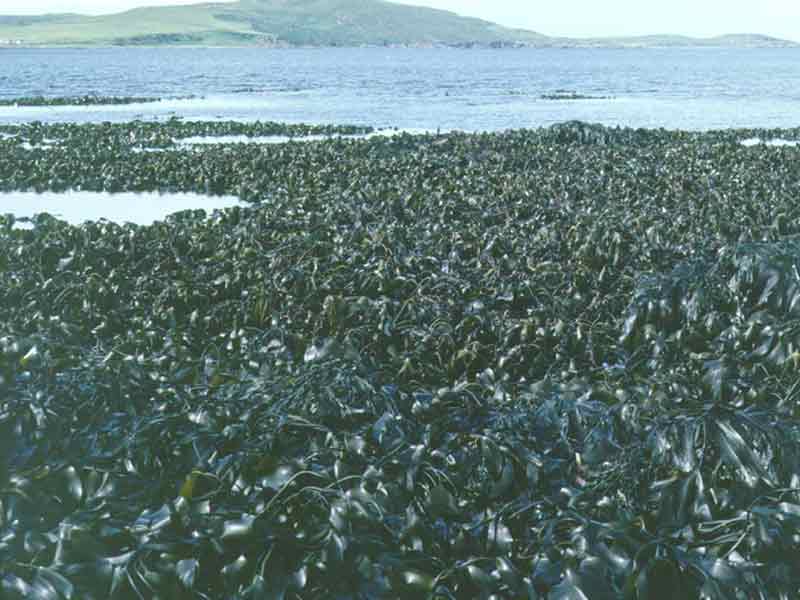
Forest of Laminaria digitata.
Photographer: Steve Knight Copyright: Scottish Association for Marine Science (SAMS)
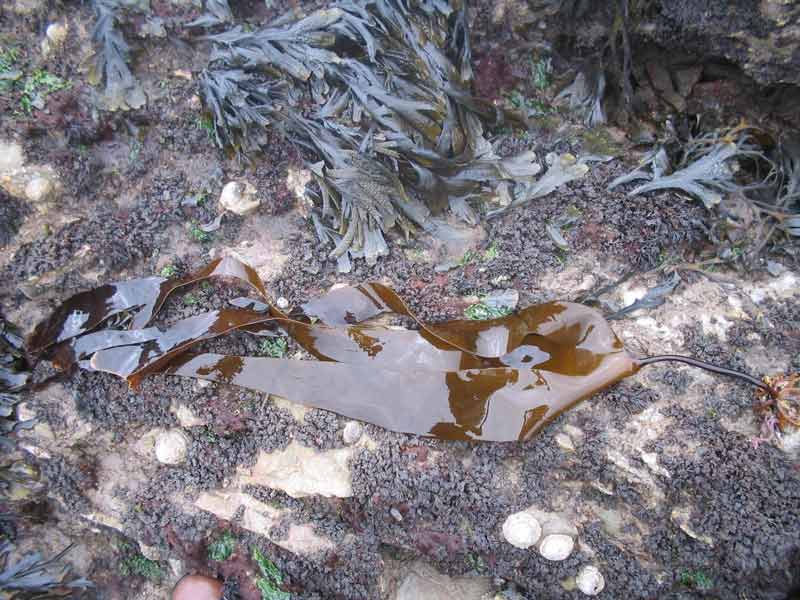
Lone Laminaria digitata individual.
Photographer: Judith Oakley Copyright: Judith Oakley
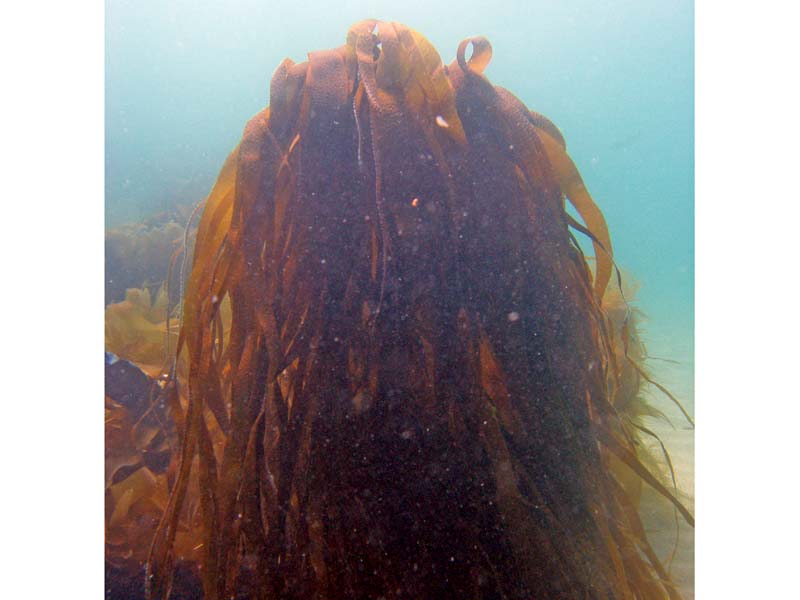
Underwater view of Laminaria digitata.
Photographer: Paul Newland Copyright: Paul Newland
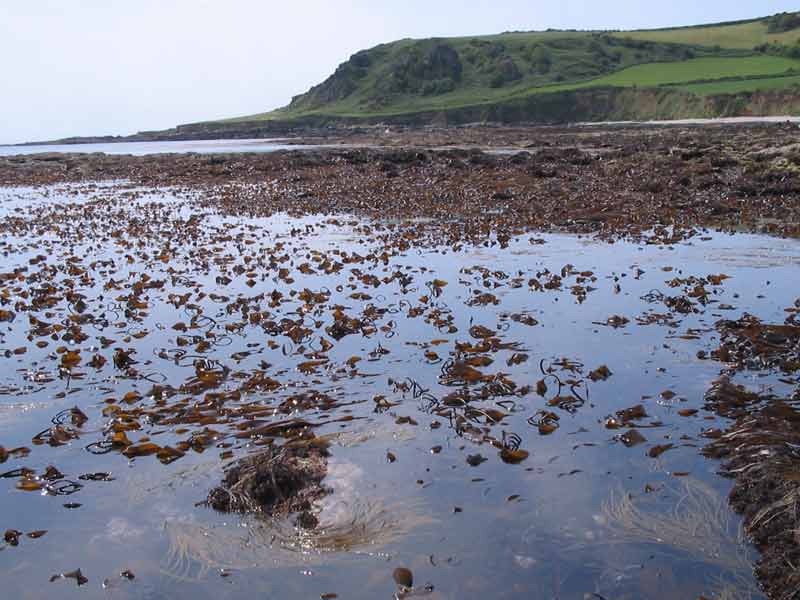
Vast Laminaria digitata patch at low tide.
Photographer: Judith Oakley Copyright: Judith Oakley
Distribution data supplied by the Ocean Biodiversity Information System (OBIS). To interrogate UK data visit the NBN Atlas.Map Help
| Researched by | Jacqueline Hill | Refereed by | Dr Stefan Kraan |
| Authority | (Hudson) J.V.Lamouroux, 1813 | ||
| Other common names | - | Synonyms | Laminaria cucullata (Hudson) J.V.Lamouroux, 1813, Laminaria cucullata (Hudson) J.V.Lamouroux, 1813 |
Summary
Description
A large conspicuous kelp growing up to 2 m in length commonly found at low water during spring tides on rocky shores. The frond is broad and digitate, glossy and dark brown in colour and lacks a midrib. The stipe is oval in cross section, smooth and flexible and is usually free of epiphytes, although old stipes which have become slightly roughened may support a few epiphytes, notably Palmaria palmata. The kelp is attached by freely branched haptera, which spread out to form a shallow dome-shaped holdfast. Laminaria digitata may be confused with young Laminaria hyperborea plants. However, the stipe of Laminaria hyperborea is circular in cross section, is stiff and snaps easily when bent (although you won't see that in younger plants).
Recorded distribution in Britain and Ireland
Most coasts of Britain and Ireland, including Rockall. Scarce along the east coast of England, particularly between Ouse and Thames estuaries, due to turbidity and lack of hard substrata. Absent from Liverpool Bay and Severn estuary due to turbidity. Also scarce on the south-east coast of Ireland, in particular Counties Wicklow and Wexford, due to lack of hard substrata.
Global distribution
Recorded from the Atlantic coasts of Europe as far north as Novaya Zemlya and south to the Canary Islands including the Baltic and Black Sea. It has also been recorded in Romania. Also found in southern Greenland and east coast Canada, Quebec and North America from Hudson Straits to New York.
Habitat
Found attached to bedrock or other suitable hard substrata in the lower intertidal and sublittoral fringe, down to a maximum depth of 20 m in clear waters. Laminaria digitata flourishes in moderately exposed areas or at sites with strong water currents. In exposed locations with strong wave action the species may extend upwards into the lower eulittoral. Occurs in rockpools up to mid-tide level and higher on wave-exposed coasts.
Depth range
+1-20mIdentifying features
- Frond is broad, leathery and digitate.
- Lacks a midrib.
- Stipe is flexible and smooth, oval in cross section and free of epiphytes except maybe Palmaria palmata in older kelps.
- Holdfast of freely branched haptera which spread out to form a shallow dome.
- May be confused with young Laminaria hyperborea plants. However, the stipe of Laminaria hyperborea is circular in cross section and stiff.
Additional information
Common names in England also include Tangle, Red ware and Sea girdle. In Ireland common names include Leath and Learach. The length of the frond varies with season, age of plant and location, reaching over 1 m in suitable conditions. The number of frond digits vary with amount of exposure. In shelter these are few and short, but with increasing exposure, they are more numerous (up to 10 or 12) and extend almost to the base of the frond. Reported to store sodium glutamate and thus tasty when dried.
Listed by
- none -
Biology review
Taxonomy
| Level | Scientific name | Common name |
|---|---|---|
| Phylum | Ochrophyta | Brown and yellow-green seaweeds |
| Class | Phaeophyceae | |
| Order | Laminariales | |
| Family | Laminariaceae | |
| Genus | Laminaria | |
| Authority | (Hudson) J.V.Lamouroux, 1813 | |
| Recent Synonyms | Laminaria cucullata (Hudson) J.V.Lamouroux, 1813Laminaria cucullata (Hudson) J.V.Lamouroux, 1813 | |
Biology
| Parameter | Data | ||
|---|---|---|---|
| Typical abundance | High density | ||
| Male size range | |||
| Male size at maturity | Gametophyte size circa 0.005 mm | ||
| Female size range | Gametophyte size circa 0.01 mm | ||
| Female size at maturity | |||
| Growth form | Digitate | ||
| Growth rate | See additional information | ||
| Body flexibility | High (greater than 45 degrees) | ||
| Mobility | Sessile, permanent attachment | ||
| Characteristic feeding method | Autotroph | ||
| Diet/food source | Autotroph | ||
| Typically feeds on | Not relevant | ||
| Sociability | |||
| Environmental position | Epilithic | ||
| Dependency | Independent. | ||
| Supports | No information | ||
| Is the species harmful? | No Edible | ||
Biology information
Kelps of the family Laminariaceae exhibit an alternation of generations, which involves dissimilar (heteromorphic) phases; an asexual diploid phase (the sporophyte) is usually of considerable size and a haploid dioecious phase (the gametophyte) that is microscopic. Sporophytes of Laminaria digitata can grow to a length of 2-4 m. In the sporophyte, new growth takes place at the base of the lamina (blade) (Dickinson, 1963).
Growth. The growth rate is seasonally controlled with a period of rapid growth from February to July and one of slower growth from August to January. A mean growth rate of 1.3 cm/day has been reported during the season of maximal growth (Pérez, 1971; cited in Kain, 1979).
Habitat preferences
| Parameter | Data |
|---|---|
| Physiographic preferences | Enclosed coast or Embayment, Open coast, Ria or Voe, Strait or Sound |
| Biological zone preferences | Lower eulittoral, Sublittoral fringe, Upper infralittoral |
| Substratum / habitat preferences | Artificial (man-made), Bedrock, Cobbles, Large to very large boulders, Pebbles, Small boulders |
| Tidal strength preferences | Moderately strong 1 to 3 knots (0.5-1.5 m/sec.), Strong 3 to 6 knots (1.5-3 m/sec.), Very strong > 6 knots (>3 m/sec.), Weak < 1 knot (<0.5 m/sec.) |
| Wave exposure preferences | Exposed, Moderately exposed, Sheltered, Very exposed |
| Salinity preferences | Full (30-40 psu), See additional Information |
| Depth range | +1-20m |
| Other preferences | No text entered |
| Migration Pattern | Non-migratory or resident |
Habitat Information
There is a marked difference in the lower depth limit of Laminaria digitata between the various parts of its geographical range. The lower depth limit for growth and survival is determined by water clarity, competition and grazers. In the Isle of Man the lower limit is at 1-2 m below the lowest astronomical tide and at Milford Haven it has been recorded at 5 m. At the northern distribution limit Laminaria digitata extends to depths of 15-20 m (Birkett et al., 1998b). Where Laminaria hyperborea thrives it out-competes Laminaria digitata limiting the lower limit of Laminaria digitata (Kain, 1975). The salinity optimum for Laminaria digitata is full salinity. However, on the Norwegian coast, which is subjected to seasonal fluctuations in salinity, healthy Laminaria digitata plants were found growing at 15-25 psu (Sundene, 1964).
Life history
Adult characteristics
| Parameter | Data |
|---|---|
| Reproductive type | Gonochoristic (dioecious) |
| Reproductive frequency | Annual protracted |
| Fecundity (number of eggs) | >1,000,000 |
| Generation time | 1-2 years |
| Age at maturity | 18-20 months |
| Season | See additional text |
| Life span | 6-10 years |
Larval characteristics
| Parameter | Data |
|---|---|
| Larval/propagule type | - |
| Larval/juvenile development | Spores (sexual / asexual) |
| Duration of larval stage | 1 day |
| Larval dispersal potential | 100 -1000 m |
| Larval settlement period | All year (see additional information) |
Life history information
- Laminaria digitata is a perennial and lives for 4 to 6 years (Gatral & Cosson, 1973; cited in Birkett et al., 1998b).
- Laminarians exhibit alternation of generations with morphologically dissimilar (heteromorphic) reproductive phases. The diploid phase (the sporophyte) is usually of considerable size and a haploid dioecious phase (the gametophyte) is microscopic.
- The sporophyte produces vast numbers of haploid zoospores from sporangia which develop in small patches on the lamina called sori.
- The flagellated zoospores are about five microns in diameter and may be transported at least 200 m from the parent (Birkett et al., 1998b). They loose their flagella after 24 hrs and settle on any available substrata.
- The zoospores develop into microscopic dioecious haploid gametophytes, male plants producing spermatozoid and female plants developing oogonia. The gametophytes become fertile in under 10 days in optimal conditions i.e. low temperatures and blue light.
- Maturation of the gametophytes can be delayed under less optimal conditions, for example in red light development remains vegetative. Fragments of damaged vegetative gametophytes may develop into separate gametophytes (only a few cells are required) hence reproductive potential may be increased. If optimal conditions return the gametophyte may become fertile and produce gametes (Hoek van den et al., 1995).
- Male and female gametes must settle at a high density (within 1 mm of each other) if the maturing gametangial egg is to be fertilized (Reed, 1990; cited in Birkett et al., 1998b). On fertilization of the extruded egg, young sporophytes start to grow in-situ.
- Sori are produced over most of the blade surface (except most distal or proximal areas) all year round with maxima in July - August and November - December.
- Young sporophytes (germlings) appear all year with maxima in spring and autumn.
- Chapman (1981) demonstrated that substantial recruitment of Laminaria digitata plants to areas barren of kelp plants was possible up to 600 m away from reproductive plants.
Sensitivity review
The MarLIN sensitivity assessment approach used below has been superseded by the MarESA (Marine Evidence-based Sensitivity Assessment) approach (see menu). The MarLIN approach was used for assessments from 1999-2010. The MarESA approach reflects the recent conservation imperatives and terminology and is used for sensitivity assessments from 2014 onwards.
Physical pressures
Use / to open/close text displayed
| Intolerance | Recoverability | Sensitivity | Evidence / Confidence | |
Substratum loss [Show more]Substratum lossBenchmark. All of the substratum occupied by the species or biotope under consideration is removed. A single event is assumed for sensitivity assessment. Once the activity or event has stopped (or between regular events) suitable substratum remains or is deposited. Species or community recovery assumes that the substratum within the habitat preferences of the original species or community is present. Further details EvidenceLaminaria digitata is permanently attached to hard substrata and so would be completely removed by any substratum loss. They cannot re-attach once removed and would be swept away. Plants are able to rapidly re-colonize gaps in the upper infralittoral which result from storm damage (Birkett et al., 1998b) and after plant cutting the standing crop of Laminaria digitata was re-established within 18-20 months (Kain, 1979). In macroalgae clearance experiments at Port Erin, Isle of Man (Kain, 1975) recolonization of Laminaria digitata on concrete blocks had taken place within 2 years. In France, Ciam (le Comité interprofessionel des algues marines) proposed that , regardless of collection method, the restoration of stands of Laminariales took up to 18 months after harvesting (from Arzel, 1998). Recovery of cleared plots in Helgoland to original density took longer, 25 months, probably because plots were burned to ensure all spores and germlings were also removed (Markham & Munda, 1980). However, although the density of algal cover had returned to pre-clearance levels the Laminaria digitata plants were smaller than those on undisturbed plots. This suggests full population recovery is longer than 25 months. | High | High | Moderate | High |
Smothering [Show more]SmotheringBenchmark. All of the population of a species or an area of a biotope is smothered by sediment to a depth of 5 cm above the substratum for one month. Impermeable materials, such as concrete, oil, or tar, are likely to have a greater effect. Further details. EvidenceSmothering of mature sporophytes by a 5 cm layer of sediment on the substratum is unlikely to have an impact on photosynthetic activity because only the holdfast of the plant is likely to be covered. Germlings, spores and gametophytes are intolerant of smothering inhibiting development and so intolerance has been assessed as intermediate. Recoverability should be high as Laminaria digitata can rapidly re-colonize suitable substrata. | Intermediate | High | Low | Low |
Increase in suspended sediment [Show more]Increase in suspended sedimentBenchmark. An arbitrary short-term, acute change in background suspended sediment concentration e.g., a change of 100 mg/l for one month. The resultant light attenuation effects are addressed under turbidity, and the effects of rapid settling out of suspended sediment are addressed under smothering. Further details EvidenceIncreased siltation can increase turbidity of the water and reduce available light for photosynthesis. Lyngby & Mortensen (1996) found that an increase in the level of suspended sediment may significantly reduce growth of Laminaria plants. Germlings, gametophytes and spores are probably more intolerant of siltation. Combined with water movements sediments can abrasively scour surfaces of settled spores. Development of Saccharina latissima (studied as Laminaria saccharina) gametophytes, for example, was inhibited by silt and failed to form an attachment when settling out on silty surfaces (Norton, 1978). However Laminaria saccharina is more tolerant of siltation and may out-compete Laminaria digitata in high silt environments. Heavy siltation may also result in smothering of plants (see Smothering). | Intermediate | High | Low | Moderate |
Decrease in suspended sediment [Show more]Decrease in suspended sedimentBenchmark. An arbitrary short-term, acute change in background suspended sediment concentration e.g., a change of 100 mg/l for one month. The resultant light attenuation effects are addressed under turbidity, and the effects of rapid settling out of suspended sediment are addressed under smothering. Further details EvidenceLaminaria digitata may well benefit from a reduction in levels of suspended sediment as a result of potential decreased light attenuation and, therefore, increased light for photosynthesis. Tolerant* has been suggested. | Tolerant* | Not relevant | Not sensitive* | Moderate |
Desiccation [Show more]Desiccation
EvidenceLaminaria digitata regularly becomes exposed to air during very low water events and so is moderately tolerant of desiccation. Dring & Brown (1982) found that plants that lost up 40-50 % of their initial water content were still able to return to their original photosynthetic rate on re-immersion. | Intermediate | High | Low | High |
Increase in emergence regime [Show more]Increase in emergence regimeBenchmark. A one hour change in the time covered or not covered by the sea for a period of one year. Further details EvidenceAt the sublittoral fringe Laminaria digitata regularly becomes exposed to air at very low water events and so is moderately tolerant of emergence. The rate of photosynthesis during emersion does not decline over a period of several hours if the thallus does not dry out, indicating that emersion is not, in itself, detrimental for photosynthesis (Dring & Brown, 1982). Laminaria digitata has also been shown to extend upshore when the algae immediately above it is removed (Hawkins & Hartnol, 1985) although plants at the upper extreme of the range may be killed when periods of emersion coincide with high temperatures. An increase in the period of emersion over the period of the benchmark (a 1 hour change in the time covered or not covered by the sea for a period of 1 year) would probably result in a depression of the upper limit of Laminaria digitata. | Intermediate | High | Low | High |
Decrease in emergence regime [Show more]Decrease in emergence regimeBenchmark. A one hour change in the time covered or not covered by the sea for a period of one year. Further details EvidenceAn decrease in the period of emersion over the period of the benchmark would probably result in an extension of the upper limit of Laminaria digitata. Therefore, tolerant* has been suggested. | Tolerant* | Not relevant | Not sensitive* | Moderate |
Increase in water flow rate [Show more]Increase in water flow rateA change of two categories in water flow rate (view glossary) for 1 year, for example, from moderately strong (1-3 knots) to very weak (negligible). Further details EvidenceWith a flexible stipe and low profile holdfast Laminaria digitata flourishes in areas with strong water currents. In Lough Ine in Ireland, for example, Laminaria digitata forms dense forests in the fast flowing water of the Rapids where water speeds vary from 4-6 knots (Bassingdale et al., 1948). However, Laminaria digitata is also found in very strong flows (> 6 knots) although it is often out-competed by Alaria esculenta.The morphology of the blade varies with flow rate, becoming narrower and more digitate as water flow rate increases (Sundene, 1964). | Low | High | Low | Low |
Decrease in water flow rate [Show more]Decrease in water flow rateA change of two categories in water flow rate (view glossary) for 1 year, for example, from moderately strong (1-3 knots) to very weak (negligible). Further details EvidenceWith a flexible stipe and low profile holdfast Laminaria digitata flourishes in areas with strong water currents. However, it can also be found in slower currents although it is likely to be out competed by Laminaria hyperborea and therefore an intolerance of intermediate has been suggested. | Intermediate | High | Low | Low |
Increase in temperature [Show more]Increase in temperature
For intertidal species or communities, the range of temperatures includes the air temperature regime for that species or community. Further details EvidenceLaminaria digitata is a eurythermal species with sporophytes growing over a wide temperature range. Atlantic species showed only slightly sub-optimal growth over a range of temperatures, from 0-20 °C, with optimum growth at 10 °C (Bolton & Lüning, 1982). Laminaria digitata is likely to tolerate a long term, chronic change in temperature within this range, e.g. a 2 °C change in temperature for a year. Lüning (1984) detected a seasonal shift in heat tolerance of Laminaria digitata plants in Helgoland of 2 °C between spring and summer. However, Laminaria digitata may be intolerant of rapid changes in temperature outside its tolerance range. During an exceptionally warm summer in Norway, Sundene (1964) reported the destruction of plants exposed to temperatures of 22-23 °C. Therefore Laminaria digitata is likely to be of intermediate intolerance to short term acute temperature change. | Intermediate | High | Low | Moderate |
Decrease in temperature [Show more]Decrease in temperature
For intertidal species or communities, the range of temperatures includes the air temperature regime for that species or community. Further details EvidenceLaminaria digitata is a eurythermal species with sporophytes growing over a wide temperature range. Atlantic species showed only slightly sub-optimal growth over a range of temperatures, from 0-20 °C, with optimum growth at 10 °C (Bolton & Lüning, 1982). Laminaria digitata is likely to tolerate a long term, chronic change in temperature within this range, e.g. a 2 °C change in temperature for a year. Lüning (1984) detected a seasonal shift in heat tolerance of Laminaria digitata plants in Helgoland of 2 °C between spring and summer. However, Laminaria digitata may be intolerant of rapid changes in temperature outside its tolerance range. In Scotland, when spring low tides coincided with night time extreme air frosts on several consecutive days mortality of all but the lowest shore adult Laminaria digitata plants occurred (Todd & Lewis, 1984). Therefore Laminaria digitata is likely to be of intermediate intolerance to short term acute temperature change. | Intermediate | High | Low | Moderate |
Increase in turbidity [Show more]Increase in turbidity
EvidenceIn very turbid waters the depth at which Laminaria digitata is found will be reduced because of light attenuation. In the silt-laden waters around Helgoland, Germany the depth limit for Laminaria digitata growth may be reduced to between 0 m and 1.5 m (Birkett et al., 1998b). Increased turbidity around a sewage treatment plant was thought to be responsible for the absence of Laminaria digitata plants in the Firth of Forth (Read et al., 1983). An increase in turbidity will reduce photosynthesis and growth of plants. In Narragansett Bay, Rhode Island growth rates of Laminaria digitata fell during a summer bloom of microalgae that dramatically reduced irradiance. Quality of light is also important with blue light necessary for gametogenesis and development of gametophytes. Dissolved organic materials (yellow substance or gelbstoff) absorbs blue light strongly, therefore changes in riverine input or other land based runoff are likely to influence kelp density and distribution. | Intermediate | High | Low | Moderate |
Decrease in turbidity [Show more]Decrease in turbidity
EvidenceA decrease in turbidity is concurrent with a decrease in light attenuation. Reduced turbidity will increase photosynthesis and the growth of the plants. Quality of light is also important with blue light necessary for gametogenesis and development of gametophytes. A decrease in turbidity is likely benefit the plants and therefore tolerant* has been suggested. | Tolerant* | Not relevant | Not sensitive* | Moderate |
Increase in wave exposure [Show more]Increase in wave exposureA change of two ranks on the wave exposure scale (view glossary) e.g., from Exposed to Extremely exposed for a period of one year. Further details EvidenceLaminaria digitata flourishes in moderately to strongly exposed areas due to a flexible stipe and low profile holdfast. The species may extend its upper limit upwards into the lower eulittoral in exposed areas with strong wave action. Laminaria digitata is found at very exposed locations such as Rockall. In extreme wave exposure it is replaced by Alaria esculenta. The level of wave exposure is known to effect the morphology of the blade, becoming narrower and more digitate as wave exposure increases (Sundene, 1964). | Low | High | Low | High |
Decrease in wave exposure [Show more]Decrease in wave exposureA change of two ranks on the wave exposure scale (view glossary) e.g., from Exposed to Extremely exposed for a period of one year. Further details EvidenceLaminaria digitata flourishes in moderately to strongly exposed areas due to a flexible stipe and low profile holdfast. As wave exposure decreases, Laminaria digitata combines with, and is then replaced by, Saccharina latissima (studied as Laminaria saccharina) (Birkett et al., 1998b). It is possible that the extent of the Laminaria digitata stand will decrease over the year and therefore an intermediate intolerance has been suggested. | No information | |||
Noise [Show more]Noise
EvidenceMacroalgae have no known receptors for noise or vibration. | Tolerant | Not relevant | Not sensitive | Not relevant |
Visual presence [Show more]Visual presenceBenchmark. The continuous presence for one month of moving objects not naturally found in the marine environment (e.g., boats, machinery, and humans) within the visual envelope of the species or community under consideration. Further details EvidenceMacroalgae have no known mechanism for visual perception. | Tolerant | Not relevant | Not sensitive | Not relevant |
Abrasion & physical disturbance [Show more]Abrasion & physical disturbanceBenchmark. Force equivalent to a standard scallop dredge landing on or being dragged across the organism. A single event is assumed for assessment. This factor includes mechanical interference, crushing, physical blows against, or rubbing and erosion of the organism or habitat of interest. Where trampling is relevant, the evidence and trampling intensity will be reported in the rationale. Further details. EvidenceAbrasion is a part of the normal growth cycle of the frond where growth at the base of the frond is almost balanced by erosion at the tips. Fronds of the plant are leathery and the whole plant is very flexible so physical disturbance equivalent to a standard boat anchor landing on or being dragged across the organism, is unlikely to cause significant damage to the plant. However, a passing dredge is likely to catch and damage or remove individual plants. Therefore, an intolerance of intermediate has been recorded. Recoverability is likely to be high. | Intermediate | High | Low | Moderate |
Displacement [Show more]DisplacementBenchmark. Removal of the organism from the substratum and displacement from its original position onto a suitable substratum. A single event is assumed for assessment. Further details EvidenceLaminaria digitata cannot re-attach once displaced from the substratum and it will be swept away. Individual plants are unable to recover but populations have good recoverability because recolonization of cleared areas can take place within about two years (see Substratum loss). | High | High | Moderate | Low |
Chemical pressures
Use [show more] / [show less] to open/close text displayed
| Intolerance | Recoverability | Sensitivity | Evidence / Confidence | |
Synthetic compound contamination [Show more]Synthetic compound contaminationSensitivity is assessed against the available evidence for the effects of contaminants on the species (or closely related species at low confidence) or community of interest. For example:
The evidence used is stated in the rationale. Where the assessment can be based on a known activity then this is stated. The tolerance to contaminants of species of interest will be included in the rationale when available; together with relevant supporting material. Further details. EvidenceIntolerance to some chemicals has been observed. Laminaria digitata was found absent from sites close to acidified, halogenated effluent from a bromide extraction plant (Hoare & Hiscock, 1974). Axelsson & Axelsson (1987) investigated the effect on Laminaria digitata of exposure to various chemicals for 24 hours by measuring ion leakage as an indication of plasma membrane damage. The pesticide Lindane had no effect on ion loss when compared to the control at concentrations ranging from 0.03 to 0.3mg/L. Only limited ion loss was seen on exposure to two detergents, nonylphenol ethoxylate (NP-10) and linear alkylbenzene sulfonate (LAS). | Intermediate | High | Low | Moderate |
Heavy metal contamination [Show more]Heavy metal contaminationEvidenceZinc was found to inhibit growth in Laminaria digitata at a concentration of 100µg/L and at 515µg/L growth had almost completely ceased (Bryan, 1969). Axelsson & Axelsson (1987) investigated the effect of exposure to mercury (Hg), lead (Pb) and nickel (Ni) for 24 hours by measuring ion leakage to indicate plasma membrane damage. Inorganic and organic Hg concentrations of 1mg/L resulted in the loss of ions equivalent to ion loss in seaweed that had been boiled for 5 minutes. Laminaria digitata was unaffected when subjected to Pb and Ni at concentrations up to 10mg/L. The results also indicate that the species is intolerant of the tin compounds butyl-Sn and phenyl-Sn. | Intermediate | High | Low | Moderate |
Hydrocarbon contamination [Show more]Hydrocarbon contaminationEvidenceThe toxic effects of oil on algae fall into two categories: those associated with coating of the plant and those due to uptake of hydrocarbons resulting in disruption of cellular metabolism. Reductions in photosynthesis rates are correlated with the thickness of the oil layer. Laminaria digitata is less susceptible to coating than some other seaweeds because of its preference for exposed locations where wave action will rapidly dissipate oil. The brown algae are thought to be largely protected from oil penetration damage by the presence of a mucilaginous coating (O'Brian & Dixon, 1976). In addition effects of oil accumulation on the thalli are mitigated by the perennial growth of kelps. No significant effects of the Amoco Cadiz spill were observed for Laminaria populations and the World Prodigy spill of 922 tons of oil in Narragansett Bay had no discernible effects on Laminaria digitata (Peckol et al., 1990). The upper limit of distribution for Laminaria digitata moved up wave exposed shores by as much as 2m during the first few years after the Torrey Canyon oil spill due to the death of animals that graze the plants (Southward & Southward, 1978). Mesocosm studies in Norwegian waters showed that chronic low level oil pollution (25µg/L) reduced growth rates in Laminaria digitata but only in the second and third years of growth (Bokn, 1985). | Low | High | Low | High |
Radionuclide contamination [Show more]Radionuclide contaminationEvidenceBrown algae readily accumulate radionuclides and have been routinely used in temperate latitudes as biomonitors of radionuclide pollution (van der Ben & Bonotto, 1991). Any contaminants bioaccumulated in the alga can enter the food chain through, for example, grazers such as sea urchins. However, the actual effects of radionuclide accumulation in the alga are not well documented and accordingly, insufficient information has been suggested for this section. | No information | No information | No information | Not relevant |
Changes in nutrient levels [Show more]Changes in nutrient levelsEvidenceThe growth of macroalgae in temperate coastal waters is generally expected to be limited by nitrogen in the summer period. A comparison of Laminaria digitata growth rates in Arbroath, Scotland with a more oligotrophic and a more eutrophic site appears to support this hypothesis (Davison et al., 1984). In Helgoland, where ambient nutrient concentrations are double those of the Scotland site Laminaria digitata grows in the summer months. Laminaria digitata does not accumulate the significant internal reserves seen in some other kelps. Higher growth rates have also been associated with plants situated close to sewage outfalls. However, after removal of sewage pollution in the Firth of Forth, Laminaria digitata became abundant on rocky shores from which they had previously been absent. Therefore, although nutrient enrichment may benefit Laminaria digitata, the indirect effects of eutrophication, such as increased light attenuation from suspended solids in the water column and interference with the settlement and growth of germlings, may be detrimental. | Low | High | Low | High |
Increase in salinity [Show more]Increase in salinity
EvidenceLaminaria digitata is commonly found in areas of full salinity on the open coast and an increase in salinity is therefore unlikely. | Not relevant | None | Not relevant | Moderate |
Decrease in salinity [Show more]Decrease in salinity
EvidenceBirkett et al. (1998b) suggest that kelps are stenohaline seaweeds, in that they do not tolerate wide fluctuations in salinity. Growth rate may be adversely affected if the kelp plant is subjected to periodic salinity stress. The lower salinity limit for Laminaria digitata lies between 10 and 15psu. On the Norwegian coast Sundene (1964) found healthy Laminaria digitata plants growing between 15 and 25psu. Axelsson & Axelsson (1987) investigations indicated damage of plants plasma membranes occurs when salinity is below 20 or above 50psu. Localized, long term reductions in salinity, to below 20psu, may result in the loss of kelp beds in affected areas. | Intermediate | Very high | Low | Moderate |
Changes in oxygenation [Show more]Changes in oxygenationBenchmark. Exposure to a dissolved oxygen concentration of 2 mg/l for one week. Further details. EvidenceInsufficientinformation | No information | No information | No information | Not relevant |
Biological pressures
Use [show more] / [show less] to open/close text displayed
| Intolerance | Recoverability | Sensitivity | Evidence / Confidence | |
Introduction of microbial pathogens/parasites [Show more]Introduction of microbial pathogens/parasitesBenchmark. Sensitivity can only be assessed relative to a known, named disease, likely to cause partial loss of a species population or community. Further details. EvidenceThe occurrence of hyperplasia or gall growths, seen as dark spots, on Laminaria digitata is well known and may be associated with the presence of endophytic brown filamentous algae. Ectocarpus deformans, for example, was considered the cause of galls in Laminaria digitata by Apt (1988). In Helgoland, Ellertsdottir and Peters (1997) found 86 % of Laminaria digitata thalli infected with endophytic brown algae and all those that exhibited weak to moderate but visible thallus alterations such as dark spots on the lamina or small warts on the stipe were infected. No cases of the severe morphological deformities as seen in Saccharina latissima were observed. | Low | High | Low | Moderate |
Introduction of non-native species [Show more]Introduction of non-native speciesSensitivity assessed against the likely effect of the introduction of alien or non-native species in Britain or Ireland. Further details. EvidenceThe Northwest Pacific kelp Undaria pinnatifida has been introduced into Europe in recent years both deliberately for aquaculture purposes in northern Brittany and accidentally probably through movement of shellfish for aquaculture. Introduction into Britain (primarily in the south-west) is thought to have been on ships' hulls due to its propensity for colonizing floating objects. It may cause displacement of native kelp species including Laminaria digitata although in Brittany Undaria pinnatifida was seen to colonize areas normally inhabited by Saccorhiza polyschides rather than Laminaria digitata or Laminaria hyperborea.Sargassum muticum, first found in the UK in the 1970s, is also a potential threat. Cosson (1999) reported a progressive disappearance of Laminaria digitata from the coasts of Calvados (France) together with a huge growth of Sargassum muticum in the same area. | Low | No information | Moderate | Very low |
Extraction of this species [Show more]Extraction of this speciesBenchmark. Extraction removes 50% of the species or community from the area under consideration. Sensitivity will be assessed as 'intermediate'. The habitat remains intact or recovers rapidly. Any effects of the extraction process on the habitat itself are addressed under other factors, e.g. displacement, abrasion and physical disturbance, and substratum loss. Further details. EvidenceLaminaria digitata plants are able to rapidly re-colonize any gaps in the upper infralittoral which result from storm damage (Birkett et al. 1998b). After plant cutting (harvesting) the standing crop was re-established within 18-20 months (Kain, 1979). In macroalgae clearance experiments at Port Erin, Isle of Man (Kain, 1975) recolonization of Laminaria digitata on concrete blocks took place within 2 years. In France, Ciam (le Comité interprofessionel des algues marines) proposed that , regardless of collection method, the restoration of stands of Laminariales took up to 18 months after harvesting (from Arzel, 1998). In Helgoland, recovery of cleared and burned plots to original density took 25 months, but plants were smaller than those on undisturbed plots (Markham & Munda, 1980). This suggests that when all spores and germlings are removed, full population recovery takes longer than 25 months. | Intermediate | High | Low | High |
Extraction of other species [Show more]Extraction of other speciesBenchmark. A species that is a required host or prey for the species under consideration (and assuming that no alternative host exists) or a keystone species in a biotope is removed. Any effects of the extraction process on the habitat itself are addressed under other factors, e.g. displacement, abrasion and physical disturbance, and substratum loss. Further details. EvidenceRemoval of kelp grazing animals has been observed to have an impact on the density and distribution of kelps. Laminaria digitata was able to extend 2m upshore after the death of limpets and other grazers caused by the Torrey Canyon oil spill (Southward & Southward, 1978). In Newfoundland removal of sea urchins resulted in the growth of kelps including Laminaria digitata that had previously been absent (Keats et al., 1990). | Intermediate | High | Low | Moderate |
Additional information
Importance review
Policy/legislation
- no data -
Status
| National (GB) importance | - | Global red list (IUCN) category | - |
Non-native
| Parameter | Data |
|---|---|
| Native | - |
| Origin | - |
| Date Arrived | - |
Importance information
Kelp species around the world have been exploited over the years as a source of chemicals for industry. Kelp cast up on the shore has long been collected for use as an agricultural fertilizer. More recently Laminaria digitata is commercially harvested in Brittany for alginate production and in Ireland and France for sea-vegetable production. Kelp beds and forests form important habitats for many other plants and animals. The structure of kelp beds is complex with many different habitats i.e. bedrock, crevices, sediment pockets, the holdfast, stipe and blade of the plants themselves. Primary production of kelp plants is impressive and large kelps often produce annually well in excess of a kilogram of carbon per square metre of shore. Only about 10 % of this productivity is directly grazed. Kelps contribute 2-3 times their standing biomass each year as particulate detritus and dissolved organic matter that provides the energy supply for filter feeders and detritivores in and around the kelp bed.
Bibliography
Apt, K.E., 1988. Etiology and development of hyperplasia induced by Streblonema sp. (Phaeophyta) on members of the Laminariales (Phaeophyta). Journal of Phycology, 24, 28-34.
Arzel, P., 1998. Les laminaires sur les côtes bretonnes. Évolution de l'exploitation et de la flottille de pêche, état actuel et perspectives. Plouzané, France: Ifremer.
Axelsson, B. & Axelsson, L., 1987. A rapid and reliable method to quantify environmental effects on Laminaria based on measurements of ion leakage. Botanica Marina, 30, 55-61.
Birkett, D.A., Maggs, C.A., Dring, M.J. & Boaden, P.J.S., 1998b. Infralittoral reef biotopes with kelp species: an overview of dynamic and sensitivity characteristics for conservation management of marine SACs. Natura 2000 report prepared by Scottish Association of Marine Science (SAMS) for the UK Marine SACs Project., Scottish Association for Marine Science. (UK Marine SACs Project, vol VI.), 174 pp. Available from: http://ukmpa.marinebiodiversity.org/uk_sacs/pdfs/reefkelp.pdf
Bokn, T., 1985. Effects of diesel oil on commercial benthic algae in Norway. In Proceedings of 1985 Oil Spill Conference, (ed. American Petroleum Institute), pp. 491-496. Washington, D.C.: American Petroleum Institute.
Bolton, J.J. & Lüning, K.A.F., 1982. Optimal growth and maximal survival temperatures of Atlantic Laminaria species (Phaeophyta) in culture. Marine Biology, 66, 89-94.
Bryan, G.W., 1969. The absorption of zinc and other metals by the brown seaweed Laminaria digitata. Journal of the Marine Biological Association of the United Kingdom, 49, 225-243.
Chapman, A.R.O., 1981. Stability of sea urchin dominated barren grounds following destructive grazing of kelp in St. Margaret's Bay, Eastern Canada. Marine Biology, 62, 307-311.
Cosson, J., 1999. Sur la disparition progressive de Laminaria digitata sur les cotes du Calvados (France). Cryptogamie: Algol, 20, 35-42.
Davison, I.R., Andrews, M. & Stewart, W.D.P., 1984. Regulation of growth in Laminaria digitata: use of in-vivo nitrate reductase activities as an indicator of nitrogen limitation in field populations of Laminaria spp. Marine Biology, 84, 207-217.
Dickinson, C.I., 1963. British seaweeds. London & Frome: Butler & Tanner Ltd.
Dring, M.J. & Brown, F.A., 1982. Photosynthesis of intertidal brown algae during and after periods of emersion: a renewed search for physiological causes of zonation. Marine Ecology Progress Series, 8, 301-308.
Ellertsdottir, E. & Peters, A.F., 1997. High prevalence of infection by endophytic brown algae in populations of Laminaria spp. (Phaeophyceae). Marine Ecology Progress Series, 146, 135-143.
Gayral, P. & Cosson, J., 1973. Exposé synoptique des données biologiques sur la laminaire digitée Laminaria digitata. Synopsis FAO sur les pêches, no. 89.
Guiry, M.D. & Blunden, G., 1991. Seaweed Resources in Europe: Uses and Potential. Chicester: John Wiley & Sons.
Guiry, M.D. & Nic Dhonncha, E., 2000. AlgaeBase. World Wide Web electronic publication http://www.algaebase.org, 2000-01-01
Guiry, M.D., 2006. AlgaeBase. World Wide Web electronic publication
Hardy, F.G. & Guiry, M.D., 2003. A check-list and atlas of the seaweeds of Britain and Ireland. London: British Phycological Society
Hawkins, S.J. & Hartnoll, R.G., 1985. Factors determining the upper limits of intertidal canopy-forming algae. Marine Ecology Progress Series, 20, 265-271.
Hayward, P., Nelson-Smith, T. & Shields, C. 1996. Collins pocket guide. Sea shore of Britain and northern Europe. London: HarperCollins.
Hoare, R. & Hiscock, K., 1974. An ecological survey of the rocky coast adjacent to the effluent of a bromine extraction plant. Estuarine and Coastal Marine Science, 2 (4), 329-348.
Howson, C.M. & Picton, B.E., 1997. The species directory of the marine fauna and flora of the British Isles and surrounding seas. Belfast: Ulster Museum. [Ulster Museum publication, no. 276.]
Kain, J.M., 1975a. Algal recolonization of some cleared subtidal areas. Journal of Ecology, 63, 739-765.
Kain, J.M., 1979. A view of the genus Laminaria. Oceanography and Marine Biology: an Annual Review, 17, 101-161.
Keats, D.W., South, G.R. & Steele, D.H. 1990. Effects of an experimental reduction in grazing by green sea urchins on a benthic macroalgal community in eastern Newfoundland Marine Ecology Progress Series, 68, 181-193
Lüning, K., 1984. Temperature tolerance and biogeography of seaweeds: the marine algal flora of Helgoland (North Sea) as an example. Helgolander Meeresuntersuchungen, 38, 305-317.
Lyngby, J.E. & Mortensen, S.M., 1996. Effects of dredging activities on growth of Laminaria saccharina. Marine Ecology, Publicazioni della Stazione Zoologica di Napoli I, 17, 345-354.
Markham, J.W. & Munda, I.M., 1980. Algal recolonisation in the rocky eulittoral at Helgoland, Germany. Aquatic Botany, 9, 33-71.
Norton, T.A., 1978. The factors influencing the distribution of Saccorhiza polyschides in the region of Lough Ine. Journal of the Marine Biological Association of the United Kingdom, 58, 527-536.
Peckol, P., Levings, S.C. & Garrity, S.D., 1990. Kelp response following the World Prodigy oil spill. Marine Pollution Bulletin, 21, 473-476.
Pérez, R., 1971. Écologie, croissance et régénération, teneurs en acide alginique de Laminaria digitata sur les cotes de la Manche. Revue des Travaux de l'Institut des Peches Maritimes, 35, 287-346.
Read, P.A., Anderson, K.J., Matthews, J.E., Watson, P.G., Halliday, M.C. & Shiells, G.M., 1983. Effects of pollution on the benthos of the Firth of Forth. Marine Pollution Bulletin, 14, 12-16.
Reed, D.C., 1990. The effects of variable settlement and early competition on patterns of kelp recruitment. Ecology, 71, 776-787.
Southward, A.J. & Southward, E.C., 1978. Recolonisation of rocky shores in Cornwall after use of toxic dispersants to clean up the Torrey Canyon spill. Journal of the Fisheries Research Board of Canada, 35, 682-706.
Sundene, O., 1964. The ecology of Laminaria digitata in Norway in view of transplant experiments. Nytt Magasin for Botanik, 11, 83-107.
Todd, C.D. & Lewis, J.R., 1984. Effects of low air-temperature on Laminaria digitata in Southwestern Scotland. Marine Ecology Progress Series, 16, 199-201.
Van der Ben, D. & Bonotto, S., 1991. Utilization of brown algae for monitoring the radioactive contamination of the marine environment. Oebalia, 17, 143-153.
Datasets
Centre for Environmental Data and Recording, 2018. Ulster Museum Marine Surveys of Northern Ireland Coastal Waters. Occurrence dataset https://www.nmni.com/CEDaR/CEDaR-Centre-for-Environmental-Data-and-Recording.aspx accessed via NBNAtlas.org on 2018-09-25.
Cofnod – North Wales Environmental Information Service, 2018. Miscellaneous records held on the Cofnod database. Occurrence dataset: https://doi.org/10.15468/hcgqsi accessed via GBIF.org on 2018-09-25.
Environmental Records Information Centre North East, 2018. ERIC NE Combined dataset to 2017. Occurrence dataset: http://www.ericnortheast.org.ukl accessed via NBNAtlas.org on 2018-09-38
Fenwick, 2018. Aphotomarine. Occurrence dataset http://www.aphotomarine.com/index.html Accessed via NBNAtlas.org on 2018-10-01
Fife Nature Records Centre, 2018. St Andrews BioBlitz 2014. Occurrence dataset: https://doi.org/10.15468/erweal accessed via GBIF.org on 2018-09-27.
Fife Nature Records Centre, 2018. St Andrews BioBlitz 2015. Occurrence dataset: https://doi.org/10.15468/xtrbvy accessed via GBIF.org on 2018-09-27.
Fife Nature Records Centre, 2018. St Andrews BioBlitz 2016. Occurrence dataset: https://doi.org/10.15468/146yiz accessed via GBIF.org on 2018-09-27.
Kent Wildlife Trust, 2018. Biological survey of the intertidal chalk reefs between Folkestone Warren and Kingsdown, Kent 2009-2011. Occurrence dataset: https://www.kentwildlifetrust.org.uk/ accessed via NBNAtlas.org on 2018-10-01.
Kent Wildlife Trust, 2018. Kent Wildlife Trust Shoresearch Intertidal Survey 2004 onwards. Occurrence dataset: https://www.kentwildlifetrust.org.uk/ accessed via NBNAtlas.org on 2018-10-01.
Manx Biological Recording Partnership, 2017. Isle of Man wildlife records from 01/01/2000 to 13/02/2017. Occurrence dataset: https://doi.org/10.15468/mopwow accessed via GBIF.org on 2018-10-01.
Manx Biological Recording Partnership, 2018. Isle of Man historical wildlife records 1990 to 1994. Occurrence dataset:https://doi.org/10.15468/aru16v accessed via GBIF.org on 2018-10-01.
Manx Biological Recording Partnership, 2018. Isle of Man historical wildlife records 1995 to 1999. Occurrence dataset: https://doi.org/10.15468/lo2tge accessed via GBIF.org on 2018-10-01.
Merseyside BioBank., 2018. Merseyside BioBank (unverified). Occurrence dataset: https://doi.org/10.15468/iou2ld accessed via GBIF.org on 2018-10-01.
National Trust, 2017. National Trust Species Records. Occurrence dataset: https://doi.org/10.15468/opc6g1 accessed via GBIF.org on 2018-10-01.
NBN (National Biodiversity Network) Atlas. Available from: https://www.nbnatlas.org.
OBIS (Ocean Biodiversity Information System), 2024. Global map of species distribution using gridded data. Available from: Ocean Biogeographic Information System. www.iobis.org. Accessed: 2024-05-13
Outer Hebrides Biological Recording, 2018. Non-vascular Plants, Outer Hebrides. Occurrence dataset: https://doi.org/10.15468/goidos accessed via GBIF.org on 2018-10-01.
Royal Botanic Garden Edinburgh, 2018. Royal Botanic Garden Edinburgh Herbarium (E). Occurrence dataset: https://doi.org/10.15468/ypoair accessed via GBIF.org on 2018-10-02.
South East Wales Biodiversity Records Centre, 2018. SEWBReC Algae and allied species (South East Wales). Occurrence dataset: https://doi.org/10.15468/55albd accessed via GBIF.org on 2018-10-02.
South East Wales Biodiversity Records Centre, 2018. Dr Mary Gillham Archive Project. Occurance dataset: http://www.sewbrec.org.uk/ accessed via NBNAtlas.org on 2018-10-02
Suffolk Biodiversity Information Service., 2017. Suffolk Biodiversity Information Service (SBIS) Dataset. Occurrence dataset: https://doi.org/10.15468/ab4vwo accessed via GBIF.org on 2018-10-02.
The Wildlife Information Centre, 2018. TWIC Biodiversity Field Trip Data (1995-present). Occurrence dataset: https://doi.org/10.15468/ljc0ke accessed via GBIF.org on 2018-10-02.
Yorkshire Wildlife Trust, 2018. Yorkshire Wildlife Trust Shoresearch. Occurrence dataset: https://doi.org/10.15468/1nw3ch accessed via GBIF.org on 2018-10-02.
Citation
This review can be cited as:
Last Updated: 29/05/2008