
Common rock barnacle (Semibalanus balanoides)
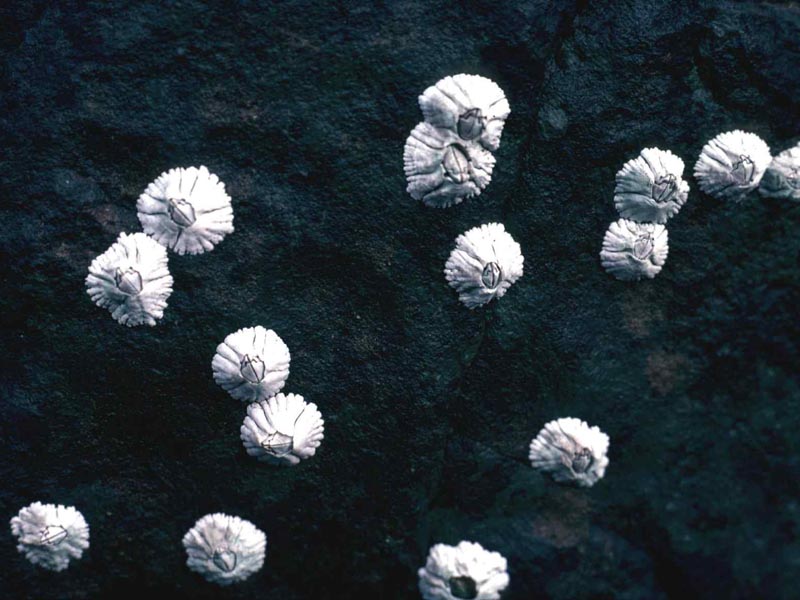
Group of individuals.
Photographer: Dr Keith Hiscock Copyright: Dr Keith Hiscock
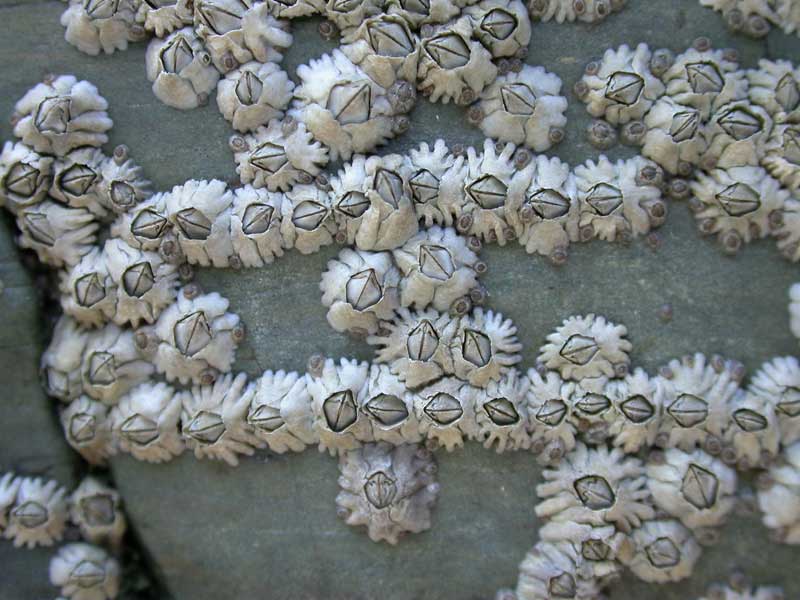
Semibalanus balanoides loosely gathered on a rock.
Photographer: Peter Barfield Copyright: Peter Barfield
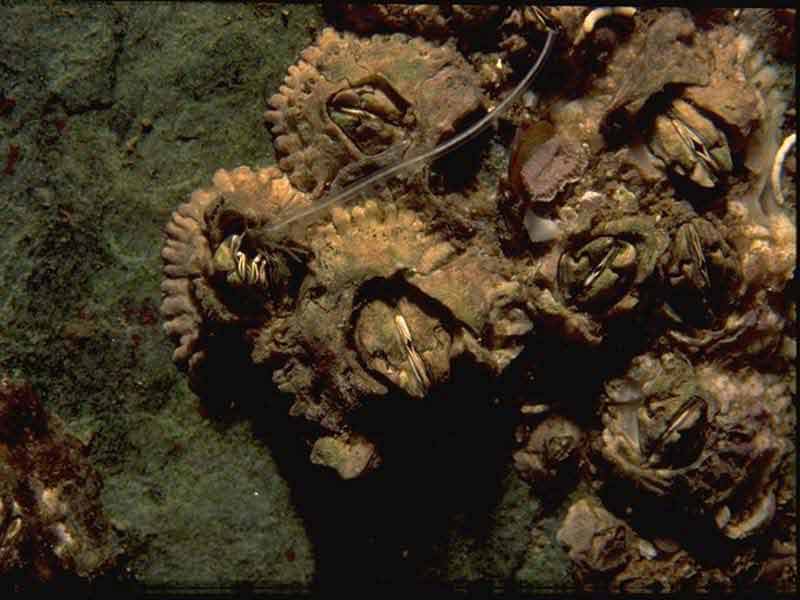
Semibalanus balanoides mating (penis extended and penetrating neighbouring barnacle).
Photographer: Sue Scott Copyright: Sue Scott
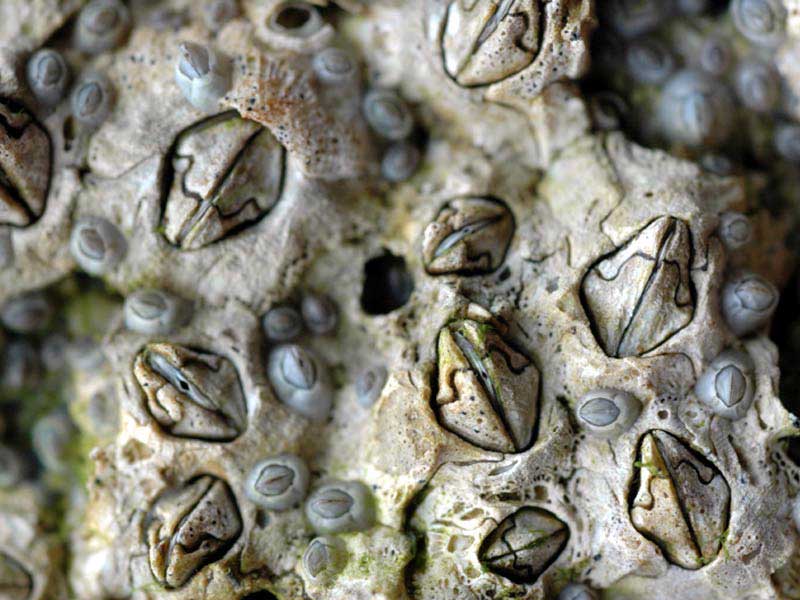
Semibalanus balanoides.
Photographer: Dr Keith Hiscock Copyright: Dr Keith Hiscock
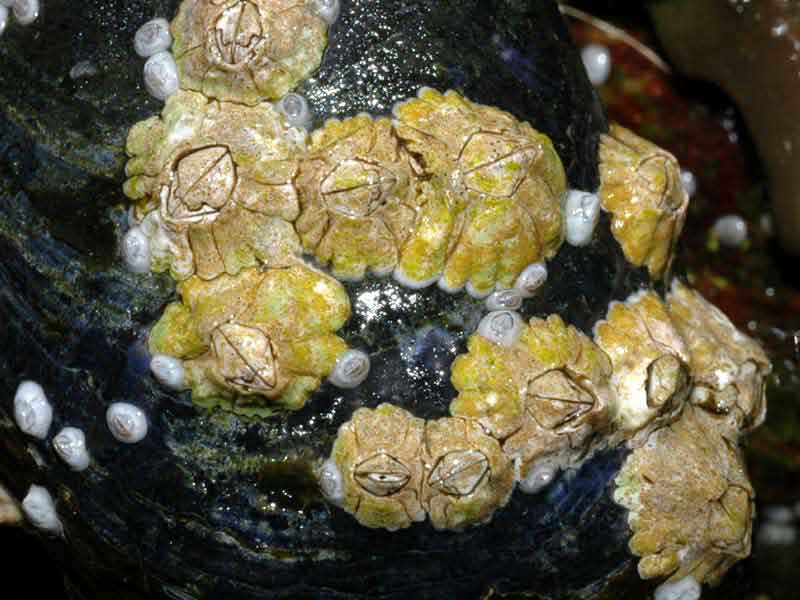
Close up of Semibalanus balanoides.
Photographer: Dr Keith Hiscock Copyright: Dr Keith Hiscock
Distribution data supplied by the Ocean Biodiversity Information System (OBIS). To interrogate UK data visit the NBN Atlas.Map Help
| Researched by | Nicola White | Refereed by | Prof. Alan J. Southward |
| Authority | (Linnaeus, 1767) | ||
| Other common names | - | Synonyms | Balanus balanoides (Linnaeus, 1767) |
Summary
Description
Semibalanus balanoides is the most widespread intertidal barnacle in the British Isles. It may grow up to 15 mm in diameter and has 6 calcified grey-white shell plates. It may be distinguished from other barnacles by the presence of a diamond shaped opercular aperture and a membranous shell base. The barnacle feeds on zooplankton when immersed, by extending the thoracic appendages (cirri). It is a cross fertilizing hermaphrodite and may live for up to 8 years, depending on its position on the shore.
Recorded distribution in Britain and Ireland
All coasts of Britain & Ireland, but sometimes is absent or rare in south-west Cornwall, the Isles of Scilly and south west Ireland.Global distribution
Recorded in the north-east Atlantic from Spitsbergen to north-west Spain, on the Pacific coast of north America as far south as British Columbia and on the Atlantic coast as far south as Cape Hatteras; but missing from the Biscay coast of France.Habitat
Semibalanus balanoides is a dominant member of the eulittoral fauna of British rocky shores. It can be found on shores of all exposure and typically occurs in a zone below Chthamalus montagui, although the two can overlap. It may extend into the lower reaches of estuaries as it can tolerate salinities down to 20 psu.Depth range
Not relevantIdentifying features
- Shell wall of 6, grey-white plates.
- Opercular aperture diamond shaped.
- Rostral plate broad.
- Up to 15 mm in diameter.
- Shell base membranous.
- Tissue inside opercular aperture usually white or pinkish-white.
Additional information
No text entered
Listed by
- none -
Biology review
Taxonomy
| Level | Scientific name | Common name |
|---|---|---|
| Phylum | Arthropoda | Arthropods, joint-legged animals, e.g. insects, crustaceans & spiders |
| Family | Balanidae | |
| Genus | Semibalanus | |
| Authority | (Linnaeus, 1767) | |
| Recent Synonyms | Balanus balanoides (Linnaeus, 1767) | |
Biology
| Parameter | Data | ||
|---|---|---|---|
| Typical abundance | High density | ||
| Male size range | Up to 15mm | ||
| Male size at maturity | |||
| Female size range | Small(1-2cm) | ||
| Female size at maturity | |||
| Growth form | |||
| Growth rate | 23 - 160 | ||
| Body flexibility | |||
| Mobility | |||
| Characteristic feeding method | Active suspension feeder, Passive suspension feeder | ||
| Diet/food source | |||
| Typically feeds on | Zooplankton, detritus | ||
| Sociability | |||
| Environmental position | Epifaunal | ||
| Dependency | Independent. | ||
| Supports | Host Several parasites, e.g. gregarinid protozoa, larval digenetic trematodes (metacercariae), and in particular the castrating parasitic cryptoniscid isopod Hemioniscus balani (see additional text). | ||
| Is the species harmful? | Data deficient | ||
Biology information
Semibalanus balanoides has a membranous base, while Balanus crenatus has a calacareous base. Semibalanus balanoides is preyed on extensively by the dog whelk Nucella lapillus and the shanny Lipophrys pholis.
- Feeding: Semibalanus balanoides feeds by extending thoracic appendages called cirri out from the shell to filter zooplankton or similar sized organic particulates from the water (Rainbow, 1984). In the absence of any current, the barnacle rhythmically beats the cirri. When a current is present Semibalanus balanoides holds the cirri fully extended in the current flow (Crisp & Southward, 1961; Southward, 1955). Barnacles feed most during spring and autumn when plankton levels are highest. Little if any feeding takes place during winter, when barnacles rely on stored food reserves. Feeding rate is important in determining the rate of growth. Barnacles feed when they are immersed so barnacles low on the shore are able to feed for a longer time and consequently grow faster than those high on the shore (Barnes & Powell, 1953).
- Moulting: Barnacles need to moult in order to grow. Frequency of moulting is determined by feeding rate and temperature. Moulting does not take place during winter when phytoplankton levels and temperatures are low.
- Growth: all barnacle species grow faster in early life and slower in later life. Growth rates recorded in the British Isles are given above (Anderson, 1994; Crisp & Bourget, 1985). Growth rate varies with a variety of biological and environmental factors, including current flow, orientation with respect to current, food supply, wave exposure, shore height, surface contour, and intra- or inter specific competition. Crisp (1960) concluded that un-interrupted current flow was the most important factor affecting growth and that growth was mainly determined by food intake. The influence of current, wave exposure and tidal level out-weighed latitudinal temperature influences in Semibalanus balanoides (Crisp & Bourget 1985). Individuals orientated with the rostral end, and hence the cirri, into the current flow gained a slight growth advantage over individuals of different orientation. Individuals that settled in pits grew slower than those on flat surfaces, perhaps since individuals in pits are removed from current flow, although should they out-grow the dimensions of the pits they grew normally (Crisp, 1960; Crisp & Bourget, 1985). At densities above 0.25/cm² barnacles compete for space, and, as soon as they touch, growth in diameter is replaced by growth in height, so that dry weight and volume continue to increase. However, at densities >1/cm² growth rate decreases with density. The presence of foliose species, e.g. filamentous algae, hydroids and bryozoans may also reduce growth, presumably due to reduced current flow over and food supply to the barnacles. (Crisp & Bourget, 1985). Growth is also reduced by the energy demands of reproduction and the presence of the cryptoniscid isopod parasite Hemioniscus balani.
- Parasites and epizoites: the midgut of Semibalanus balanoides is parasitised by the Gregarinid protozoan Pyxinioides balani while Epistylis horizontalis (a peritrich ciliate) lives on the gills and mantle (reviewed by Arvy & Nigrelli, 1969). Protozoan infestation may delay the release of nauplii. Metacercariae (a larval stage in the life cycle of trematodes) occur inside or near the gut of barnacles, e.g. Maritrema spp., a possible parasite of the turnstone (Arenaria intrepes morinella), terns or gulls, is found in Semibalanus balanoides (Rainbow, 1984; Arvy & Nigrelli, 1969). The cryptoniscid isopod Hemioniscus balani is a widespread parasite of barnacles, found around the British Isles, including Ireland, north to the Faroes and Oslo Fjord, and south to the Atlantic coast of France, as well as from Labrador to Massachusetts, New Scotland and Friday Harbour in the western Atlantic (Crisp, 1968). Hemioniscus balani is protandrous, the males becoming female after invading the host, eventually developing into a bloated, enlarged, star-shaped egg sac. An individual barnacle may contain up to 7 of theses parasites. Heavy infestation inhibits or destroys the gonads resulting in castration of the barnacle. (Rainbow, 1984; Crisp, 1968; Arvy & Nigrelli, 1969). The shell of British barnacles in the mid-shore may appear blackened due to the epizoic lichen Arthropyrenia sublittoralis (Rainbow, 1984). The crustose lichen Pyrenocollema halodytes can also grow on barnacle plates.
Habitat preferences
| Parameter | Data |
|---|---|
| Physiographic preferences | Open coast, Strait or Sound, Sea loch or Sea lough, Ria or Voe, Estuary |
| Biological zone preferences | Lower eulittoral, Mid eulittoral, Upper eulittoral |
| Substratum / habitat preferences | Artificial (man-made), Bedrock, Cobbles, Large to very large boulders, Pebbles, Small boulders |
| Tidal strength preferences | Moderately strong 1 to 3 knots (0.5-1.5 m/sec.), Strong 3 to 6 knots (1.5-3 m/sec.), Very strong > 6 knots (>3 m/sec.), Weak < 1 knot (<0.5 m/sec.) |
| Wave exposure preferences | Exposed, Extremely exposed, Extremely sheltered, Moderately exposed, Sheltered, Ultra sheltered, Very exposed, Very sheltered |
| Salinity preferences | Full (30-40 psu), Reduced (18-30 psu), Variable (18-40 psu) |
| Depth range | Not relevant |
| Other preferences | No text entered |
| Migration Pattern | Non-migratory or resident |
Habitat Information
In the 1950s the species was extremely rare in south-west Cornwall, and the far west of south County Cork (Crisp & Southward, 1958; Southward & Crisp, 1954; Southward, 1967). Since 1962, as sea temperatures decreased, its range spread westwards apparently from Lyme Bay (Southward, 1967). In 1998 it was found at Porthleven, although the population has declined recently (Southward, pers. comm.). Southward (1998) found that the record for the Azores by Nilsson-Cantell, in the Fauna of Scandinavia, was an error. Semibalanus balanoides is a boreo-arctic (i.e. northern) species. Its northern limits are closely paralleled by the summer limits of pack ice while its southern limits are controlled by high temperatures which prevent final maturation of gametes. The mean monthly sea temperature must fall below 7.2 °C in order for the barnacles to breed. Semibalanus balanoides is dominant in the eastern and northern regions of the British Isles. In the south west it gives way to chthamalid barnacles and it is sometimes absent or rare in south west Cornwall, south west Ireland and the Isles of Scilly. Semibalanus balanoides is less abundant on shores occupied by fucoid algae, because seaweeds prevent establishment of barnacle larvae or remove settled larvae by 'sweeping' across the rock (see reproduction). On shores exposed to strong wave action the upper limit of the barnacles distribution is raised because the shore is kept moist by spray. Semibalanus balanoides has a lower tolerance to desiccation than the chthamalid species due to a greater permeability of the shell plates. It is sometimes found sublittorally.Life history
Adult characteristics
| Parameter | Data |
|---|---|
| Reproductive type | Permanent (synchronous) hermaphrodite |
| Reproductive frequency | Annual episodic |
| Fecundity (number of eggs) | 1,000-10,000 |
| Generation time | 1-2 years |
| Age at maturity | 1 year |
| Season | November - December |
| Life span | 5-10 years |
Larval characteristics
| Parameter | Data |
|---|---|
| Larval/propagule type | - |
| Larval/juvenile development | Lecithotrophic |
| Duration of larval stage | 1-2 months |
| Larval dispersal potential | Greater than 10 km |
| Larval settlement period | Insufficient information |
Life history information
Reproduction: Reproduction in barnacles is discussed in detail by Rainbow (1984), Barnes (1989), Klepal (1990), Barnes (1992), Anderson (1994) and the references therein. Key points follow.- Semibalanus balanoides is an obligate cross-fertilising hermaphrodite.
- The barnacle penis is substantially longer than the body and is capable of searching an area around the adult to find a receptive 'functional female'.
- Copulation takes place in the UK from November to early December and although an individual 'functional male' may inseminate a single 'functional female' up to 6-8 times (dispensing all its seminal fluid), insemination by more than one functional male is required to successfully fertilise all the eggs. Up to 6 concurrent penetrations may occur (Rainbow, 1984; Anderson, 1994).
- After copulation the penis degenerates and is re-grown during summer ready for the following November. Penis and gonad development in the population is highly synchronous, and probably controlled by light and temperature regime since gonad maturation is inhibited by 15 °C or greater and a light period greater than 12h/day (Barnes, 1992).
- Fertilised embryos are held in two egg sacs and incubated in the mantle cavity overwinter, during which the barnacle does not moult (anecdysis).
- Nauplii larvae are released from the barnacle between February and April, in synchronisation with the spring algal bloom. Hatching takes place later in the north and east of Britain.
- Synchronisation with the spring algal bloom is enabled by the release of a hatching substance, which is secreted by adult barnacles following ingestion of phytoplankton (Barnes 1957; Crisp 1956; reviewed by Clare, 1995). Hatching substance is released into the mantle cavity by the adult and has been identified as an eicosanoid, which may function by stimulating the release of embryonic dopamine (Clare, 1995). In response, the nauplii twitch repeatedly until they break free of the egg membrane and are released. The hatching factor is probably a complex mixture of hydroxy fatty acids, analogous to sex pheromones in insects (see Clare, 1995).
- 'Spawning' of nauplii in response to the spring phytoplankton bloom ensures that larvae grow and develop under optimum conditions when food supply is at its highest and have time to develop and lay down food reserves prior to settlement.
- Nauplii larvae are planktotrophic and develop in the surface waters for about two months. They pass through six nauplii stages before eventually developing into a cyprid larva. Cyprid larvae are specialised for settlement (see general biology). Peak settlement occurs in April to May in the west and May to June in the east and north of Britain.
- Semibalanus balanoides produces one brood per year of 5000 -10,000 eggs/ brood in mature adults but varies with age and location e.g. at Port Erin, Isle of Man fecundities of 2500-4000 eggs/ brood (max. 13,000) were reported while 400-8000 eggs / 1.5mg oven dried body weight were recorded in Scotland (Barnes, 1989).
- Reproduction may be affected by temperature, latitude, light, feeding, age, size, crowding, seaweed cover and pollution. High shore Semibalanus balanoides breed first and low shore specimens last (up to 12 days difference)(Barnes, 1989). Fertilization is prevented by temperatures above 10 °C and continuous light. Differences in breeding times with latitude are probably mediated by temperature and day length, e.g. in Spitzbergen fertilization occurs 2-3 months earlier than in the UK. Increased crowding or seaweed cover may decrease feeding and reduce fecundity.
- Barnacles grow rapidly in the first season after settlement. Newly metamorphosed larvae are very squat and only form the adult shape at 3 mm. Semibalanus balanoides may become sexually mature in the first year after settlement although this is often delayed until 2 years of age (Anderson, 1994).
- The lifespan of Semibalanus balanoides varies with the position on the shore. Barnacles low on the shore typically die in their third year, whereas those from near the mean level of high water neaps may live for five or six years.
- Jenkins et al. (2000) reported variation in settlement and recruitment at all spatial scales studied (10s, 1000s of metres and 100s of km) in Sweden, the Isle of Man, southwest Ireland and southwest England and between 2 years, 1997 and 1998. Substantial variation in settlement and recruitment occurred between sites, but was not consistent between the two years studied. Variation in settlement explained 29 -99% of variation in recruitment across all sites, although not all variation in recruitment was explained by settlement at all sites. They also observed significant variation between replicate samples within sites in 1997. Recruitment was lower in southwest England than southwest Ireland even with similar settlement due to variation in post settlement mortality.
- Settlement density may also be influenced by onshore or offshore winds, resulting in irregular and sharp peaks of settlement, e.g. north Yorkshire or north west Scotland coasts (Kendall et al., 1985). Settlement density may be directly related to orientation of the shore to the prevailing winds. Settlement was enhanced by onshore winds in the Isle of Man (Hawkins & Hartnoll, 1982) but offshore winds and calm seas in Anglesey (Rainbow, 1984). Hawkins & Hartnoll, (1982) and Jenkins et al. (2000) suggested that failure to recruit in any one year is probably less likely when progeny are produced locally and disperse over short distances, whereas where dispersal is wide the chance of larvae encountering adult habitat is subject to varying hydrographic conditions, especially in offshore islands where isolation may exacerbate loss of larvae due to offshore transport.
- In poor years settlement occurred mainly in the later part of the season suggesting either that early larvae failed or were lost (Kendall et al., 1985), or that the phytoplankton bloom, and so release and development of larvae, was late.
- Macroalgae canopies inhibit cyprid settlement and sweeping of algal fronds or bulldozing by grazing limpets may cause high post-settlement mortality, up 82-97% under Fucus serratus canopy (Jenkins et al., 1999). Fucus serratus was found to inhibit settlement more than Fucus spiralis (which has a less dense canopy) and Ascophyllum nodosum (which floats upright in the water column). However, the long-term survival of spat reaching >6mm under the canopy was enhanced, especially high on the shore due to reduced risk of desiccation under the canopy (Jenkins et al., 1999).
- The cyprids are capable of settling above their usual zone on the shore but their upper limit (below Chthamalus montagui) is maintained by their lower tolerance to temperature and desiccation when compared to chthamalids. Mortality in early life is highly variable, e.g. Kendall et al. (1985) noted that under highly desiccating conditions 70% of a single days input of barnacle spat to the upper shore died within 24 hrs, but overall, in 48 hrs in 1978 mortality was 13% however, in 1980, when intertidal was exposed to 27 °C, 48hr survival was reduced to 30%.
- Long-term monitoring of intertidal barnacle populations in southwest England demonstrated a correlation between the relative abundance of Semibalanus balanoides to Chthamalus spp. And the planktonic ecosystem and sea temperatures over a 40 year period (1954-1987) (Southward, 1991; Southward et al., 1995). Semibalanus balanoides increased in abundance in cooler years and Chthamalus spp. In warmer years, possibly due to the increased survival of Semibalanus balanoides spat at lower temperatures and reduced desiccation (Kendall et al. 1985). At increased temperatures Chthamalus spp. Are likely to produce more and earlier broods of larvae, and compete more effectively with Semibalanus balanoides which will suffer increased mortality at high to mid shore (Southward et al., 1995).
Sensitivity review
The MarLIN sensitivity assessment approach used below has been superseded by the MarESA (Marine Evidence-based Sensitivity Assessment) approach (see menu). The MarLIN approach was used for assessments from 1999-2010. The MarESA approach reflects the recent conservation imperatives and terminology and is used for sensitivity assessments from 2014 onwards.
Physical pressures
Use / to open/close text displayed
| Intolerance | Recoverability | Sensitivity | Evidence / Confidence | |
Substratum loss [Show more]Substratum lossBenchmark. All of the substratum occupied by the species or biotope under consideration is removed. A single event is assumed for sensitivity assessment. Once the activity or event has stopped (or between regular events) suitable substratum remains or is deposited. Species or community recovery assumes that the substratum within the habitat preferences of the original species or community is present. Further details EvidenceSemibalanus balanoides is permanently attached to the substratum so would be removed upon substratum loss. Bennell (1981) observed that barnacles were removed when the surface rock was scraped off in a barge accident at Amlwch, North Wales. Barnacle populations returned to pre-accident levels within 3 years. However, barnacle recruitment can be very variable because it is dependent on a suite of environmental and biological factors, such as wind direction,(see reproduction) therefore populations may take longer to recover. | High | High | Moderate | High |
Smothering [Show more]SmotheringBenchmark. All of the population of a species or an area of a biotope is smothered by sediment to a depth of 5 cm above the substratum for one month. Impermeable materials, such as concrete, oil, or tar, are likely to have a greater effect. Further details. EvidenceSmothering would bury barnacles and prevent feeding. It is likely that barnacles can withstand smothering for some period of time because they are able to respire anaerobically, however no studies have been found to confirm this. Recovery rates appear to be variable. Bennell (1981) recorded recovery of Semibalanus populations within 3 years on a site cleared of barnacles in North Wales. However barnacle recruitment is dependent on a suite of environmental and biological factors, such as wind direction, therefore populations may take longer to recover. | Intermediate | High | Low | Low |
Increase in suspended sediment [Show more]Increase in suspended sedimentBenchmark. An arbitrary short-term, acute change in background suspended sediment concentration e.g., a change of 100 mg/l for one month. The resultant light attenuation effects are addressed under turbidity, and the effects of rapid settling out of suspended sediment are addressed under smothering. Further details EvidenceIncreased siltation would probably reduce growth rate in Semibalanus balanoides. The reduced growth rate of barnacles living on carapaces of Nephrops norvegicus compared to barnacles growing on rafts was partly attributed to the increased levels of silt found in the immediate vicinity (Barnes & Bagenal, 1951). | Low | Very high | Very Low | Very low |
Decrease in suspended sediment [Show more]Decrease in suspended sedimentBenchmark. An arbitrary short-term, acute change in background suspended sediment concentration e.g., a change of 100 mg/l for one month. The resultant light attenuation effects are addressed under turbidity, and the effects of rapid settling out of suspended sediment are addressed under smothering. Further details Evidence | No information | |||
Desiccation [Show more]Desiccation
EvidenceDesiccation tolerance of Semibalanus balanoides varies considerably with the size of the barnacle and its position on the shore. Barnacles of 5 mm diameter have a median lethal time (MLT) of 45 hours at 19 °C, whereas barnacles of 11 mm diameter can withstand 92 hours. The median lethal time occurs when 64 % of the water is lost from the body (Foster, 1971a). Desiccation tolerance increases with shore height and increasing body size. The MLT of high shore specimens was reported to be between 48-98% higher than low shore specimens, depending on size (Ware & Hartnoll, 1996). Semibalanus balanoides is prevented from growing higher on the shore due to its desiccation tolerance, therefore an increase in the level of desiccation would cause a depression in the upper limit of the species distribution and increased competition from chthamalid barnacles and so intolerance is considered to be intermediate. A decrease in the level of desiccation may elevate the upper limit of the species distribution on the shore. Recovery rates appear to be variable. Bennell (1981) recorded recovery of Semibalanus balanoides populations within 3 years on a site cleared of barnacles in North Wales. However, barnacle recruitment can be very variable because it is dependent on a suite of environmental and biological factors, such as wind direction (see reproduction), therefore populations may take longer to recover. | Intermediate | High | Low | Moderate |
Increase in emergence regime [Show more]Increase in emergence regimeBenchmark. A one hour change in the time covered or not covered by the sea for a period of one year. Further details EvidenceSemibalanus balanoides suffers primarily from desiccation and heat upon exposure to air. As desiccation increases the operculum closes and barnacles respire anaerobically (Barnes et al., 1963). Larger barnacles can withstand longer periods of emergence due to increased desiccation tolerance. Barnacles of 5 mm diameter have a median lethal time of 45 hours at 19 °C, whereas barnacles of 11 mm diameter can withstand 92 hours exposure (Foster, 1971a). Semibalanus balanoides is prevented from growing higher on the shore due to poor tolerance of desiccation, therefore an increase in the period of emersion would cause increased competition from chthamalid barnacles and a depression in the upper limit of the species distribution. A decrease in the period of emersion would allow the species to grow further up the shore. Recovery rates appear to be variable. Bennell (1981) recorded recovery of Semibalanus balanoides populations within 3 years on a site cleared of barnacles in North Wales. However barnacle recruitment can be very variable because it is dependent on a suite of environmental and biological factors, such as wind direction, therefore populations may take longer to recover. | High | High | Moderate | Moderate |
Decrease in emergence regime [Show more]Decrease in emergence regimeBenchmark. A one hour change in the time covered or not covered by the sea for a period of one year. Further details Evidence | No information | |||
Increase in water flow rate [Show more]Increase in water flow rateA change of two categories in water flow rate (view glossary) for 1 year, for example, from moderately strong (1-3 knots) to very weak (negligible). Further details EvidenceSemibalanus balanoides can tolerate a wide range of water current rates. However, water flow rate is very important in determining the growth rate and a decrease in water flow would lower growth rates (Crisp, 1960). Barnacles can tolerate very high flow rates so they are unlikely to be washed off the substratum by an increase in the water current. On return to normal current levels the growth rate of the species would be quickly resumed. | Low | Very high | Very Low | Low |
Decrease in water flow rate [Show more]Decrease in water flow rateA change of two categories in water flow rate (view glossary) for 1 year, for example, from moderately strong (1-3 knots) to very weak (negligible). Further details Evidence | No information | |||
Increase in temperature [Show more]Increase in temperature
For intertidal species or communities, the range of temperatures includes the air temperature regime for that species or community. Further details EvidenceSemibalanus balanoides is pre-eminently a boreal species, adapted to cool environments. Higher temperatures are therefore likely to have more adverse effects on the species than lower temperatures. The lower lethal temperature varies seasonally and regionally. An exceptional tolerance to cold is acquired in December and January and is lost between February and April. The median lethal temperature in January was -17.6 °C in air for 18 hours, whereas animals in June could only withstand -6.0 °C (Crisp & Ritz, 1967). Semibalanus balanoides was not affected during the severe winter of 1962-63 in most areas, except the south east coast which suffered 20-100% mortality. (Crisp, 1964). However, recovery was rapid in this instance due to heavy settlement the following June (Crisp, 1964). However, the mean monthly sea temperature must fall below 7.2 °C for the gametes to mature (Barnes, 1958).Increased temperature is likely to favour chthamalid barnacles rather than Semibalanus balanoides, whereas cold years favour survival and abundance of Semibalanus balanoides in south west England (Southward et al. 1995). Reproduction in Semibalanus balanoides is inhibited by temperatures greater than 10 °C (Barnes, 1989). Cirral beating rate reaches a maximum at 18 °C in the U.K. (Southward, 1955) and 21 °C at Woods Hole, where summers are warmer (unpublished data, Crisp & Southward). This rate declines until all spontaneous activity ceases at 31 °C and at a temperature of 37 °C a coma is induced (Southward, 1955). It has also been noted that high internal temperatures of approximately 44 °C can cause 50 % mortality if experienced for more than 45 minutes (Southward, 1958). Therefore, Semibalanus balanoides is likely to exhibit 'intermediate' intolerance to temperature change. Recovery rates appear to be variable. Bennell (1981) recorded recovery of Semibalanus balanoides populations within 3 years on a site cleared of barnacles in North Wales. However, barnacle recruitment can be very variable because it is dependent on a suite of environmental and biological factors, such as wind direction, therefore populations may take longer to recover. | Intermediate | High | Low | Moderate |
Decrease in temperature [Show more]Decrease in temperature
For intertidal species or communities, the range of temperatures includes the air temperature regime for that species or community. Further details Evidence | No information | |||
Increase in turbidity [Show more]Increase in turbidity
EvidenceAn increase in turbidity could be beneficial for Semibalanus balanoides if the suspended particles are composed of organic matter. However, if the suspended particles are entirely composed of sediment, an energetic cost may be imposed because barnacles will be filtering inedible particles. A reduction in light penetration could also reduce growth rate of phytoplankton and so limit zooplankton levels, which form the bulk of barnacles food. On return to normal turbidity levels the growth rate of Semibalanus balanoides would quickly resume. | Low | Very high | Very Low | Low |
Decrease in turbidity [Show more]Decrease in turbidity
Evidence | No information | |||
Increase in wave exposure [Show more]Increase in wave exposureA change of two ranks on the wave exposure scale (view glossary) e.g., from Exposed to Extremely exposed for a period of one year. Further details EvidenceSemibalanus balanoides can tolerate all levels of wave exposure. However, a decrease in the level of wave exposure could cause a shift in the community towards fucoid algae, which prevent barnacle larvae from settling. An increase in wave exposure is unlikely to have an effect because barnacles are found in extremely exposed conditions. On return to normal wave exposure levels barnacle populations would quickly resume. | Low | High | Low | Low |
Decrease in wave exposure [Show more]Decrease in wave exposureA change of two ranks on the wave exposure scale (view glossary) e.g., from Exposed to Extremely exposed for a period of one year. Further details Evidence | No information | |||
Noise [Show more]Noise
EvidenceBarnacles are unlikely to be affected by noise. | Tolerant | Not relevant | Not sensitive | Not relevant |
Visual presence [Show more]Visual presenceBenchmark. The continuous presence for one month of moving objects not naturally found in the marine environment (e.g., boats, machinery, and humans) within the visual envelope of the species or community under consideration. Further details EvidenceBarnacles are unlikely to be affected by visual presence. | Tolerant | Not relevant | Not sensitive | Not relevant |
Abrasion & physical disturbance [Show more]Abrasion & physical disturbanceBenchmark. Force equivalent to a standard scallop dredge landing on or being dragged across the organism. A single event is assumed for assessment. This factor includes mechanical interference, crushing, physical blows against, or rubbing and erosion of the organism or habitat of interest. Where trampling is relevant, the evidence and trampling intensity will be reported in the rationale. Further details. EvidenceBally & Griffiths (1989) observed that human trampling had no effect on rocky shores in South Africa, and merely dislodged dead barnacle shells. However, Brosnan & Cumrine (1994) observed that barnacles were crushed and removed by trampling in California. Recovery took place within one year following the cessation of trampling. None of these studies involved Semibalanus balanoides but the intolerance may be similar. | Intermediate | High | Low | Very low |
Displacement [Show more]DisplacementBenchmark. Removal of the organism from the substratum and displacement from its original position onto a suitable substratum. A single event is assumed for assessment. Further details EvidenceBarnacles are permanently attached to substratum and cannot survive if detached. Recovery rates appear to be variable. Bennell (1981) recorded recovery of Semibalanus populations within 3 years on a site cleared of barnacles in North Wales. However barnacle recruitment can be very variable because it is dependent on a suite of environmental and biological factors, such as wind direction, therefore populations may take longer to recover. | High | High | Moderate | Moderate |
Chemical pressures
Use [show more] / [show less] to open/close text displayed
| Intolerance | Recoverability | Sensitivity | Evidence / Confidence | |
Synthetic compound contamination [Show more]Synthetic compound contaminationSensitivity is assessed against the available evidence for the effects of contaminants on the species (or closely related species at low confidence) or community of interest. For example:
The evidence used is stated in the rationale. Where the assessment can be based on a known activity then this is stated. The tolerance to contaminants of species of interest will be included in the rationale when available; together with relevant supporting material. Further details. EvidenceBarnacles have a low resilience to chemicals such as dispersants, dependant on the concentration and type of chemical involved (Holt et al., 1995) . They are less intolerant than some species (e.g. Patella vulgata) to dispersants (Southward & Southward, 1978). Most Semibalanus balanoides were killed in areas treated with dispersants (Smith, 1968). Holt et al. (1995) concluded that barnacles are fairly sensitive to chemical pollution. However, the barnacle population suffered indirectly as a result of the mass mortality of grazers. The resultant bloom of algae, and growth of fucoids, within 6 months, grew over and killed surviving barnacles (Hawkins & Southward, 1992). Recovery rates appear to be variable. Bennell (1981) recorded recovery of Semibalanus balanoides populations within 3 years on a site cleared of barnacles in North Wales. However barnacle recruitment can be very variable because it is dependent on a suite of environmental and biological factors, such as wind direction, therefore populations may take longer to recover. Hawkins & Southward (1992) suggested that the communities on shores heavily treated with dispersants had taken 5-8 years to recover, while some had not recovered after 10 years, and (if limpets and barnacle densities are used as criteria) 15 years may be a more realistic estimate for community recovery. Where oil had gone largely untreated recovery was almost complete within 3 years (Hawkins & Southward, 1992). | Intermediate | Moderate | Moderate | Moderate |
Heavy metal contamination [Show more]Heavy metal contaminationEvidenceBarnacles accumulate heavy metals and store them as insoluble granules. Clarke (1947) investigated the intolerance of Semibalanus balanoides to copper, mercury, zinc and silver. He found that 90 percent of barnacles died when held in 0.35 mg/l Cu carbonate for two days. Zinc, mercury and silver killed 90 percent of barnacles in two days at concentrations of 32 mg/l, 1 mg/l and 0.4 mg/l respectively. Pyefinch & Mott (1948) recorded median lethal concentrations of 0.32 mg/l copper and 0.36 mg/l mercury over 24 hours for this species. Barnacles may tolerate fairly high level of heavy metals in nature, for example they are found in Dulas Bay, Anglesey, where copper reaches concentrations of 24.5 µg/l, due to acid mine waste (Foster et al., 1978). | Low | High | Low | Moderate |
Hydrocarbon contamination [Show more]Hydrocarbon contaminationEvidenceLittoral barnacles have a high resistance to oil (Holt et al., 1995). However, after the Torrey Canyon oil spill, some mortality of barnacles was caused by the oil although most had been able to form a hole in the covering of oil and were 'in good order' (Smith, 1968). Significant reductions in densities of Semibalanus balanoides were observed after the Exxon Valdez oil spill (1989) , especially at high and mid shore (Highsmith et al., 1996). Although barnacles survived on most shores, up to 98 % reduction in barnacle cover resulted from treatment by hot-water washing. However, recovery on most rocky shores was reported to have progressed considerably by July 1992 (Houghton, et al. 1996). Experimentally, Semibalanus balanoides has been found to tolerate exposure to the water-accommodated fraction of diesel oil at 129.4 µg/l for two years (Bokn et al., 1993). Recovery rates appear to be variable. They depend on the level of settlement and the survival rate of spat, both of which vary with a suite of environmental and biological factors. Lightly oiled shores have been observed to take 7 to 9 years to reach the previous normal state and more heavily oiled shores take longer (Holt et al., 1995). | Intermediate | Moderate | Moderate | Low |
Radionuclide contamination [Show more]Radionuclide contaminationEvidenceInsufficientinformation. | No information | Not relevant | No information | Not relevant |
Changes in nutrient levels [Show more]Changes in nutrient levelsEvidenceLittle data exists on the effects of increased nutrients on barnacles. A slight increase in nutrient levels could be beneficial for barnacles by promoting the growth of phytoplankton levels and therefore increasing zooplankton levels. However, Holt et al. (1995) predict that smothering by ephemeral green algae is a possibility under eutrophic conditions. Recovery rates appear to be variable. Bennell (1981) recorded recovery of Semibalanus populations within 3 years on a site cleared of barnacles in North Wales. However barnacle recruitment can be very variable because it is dependent on a suite of environmental and biological factors, such as wind direction, therefore populations may take longer to recover. | Intermediate | High | Low | Low |
Increase in salinity [Show more]Increase in salinity
EvidenceSemibalanus balanoides can tolerate salinities between 12 and 50 psu, below this cirral activity ceases (Foster, 1970). Barnacles can survive periodic emersion in freshwater, e.g. from rainfall or fresh water run off, by closing their opercular valves (Foster, 1971b). They can also withstand large changes in salinity over moderately long periods of time by falling into a "salt sleep". In this state motor activity ceases and respiration falls, enabling animals to survive in freshwater for three weeks (Barnes, 1953). Recovery rates appear to be variable. Bennell (1981) recorded recovery of Semibalanus populations within 3 years on a site cleared of barnacles in North Wales. However barnacle recruitment can be very variable because it is dependent on a suite of environmental and biological factors, such as wind direction, therefore populations may take longer to recover. | Low | High | Low | Moderate |
Decrease in salinity [Show more]Decrease in salinity
Evidence | No information | |||
Changes in oxygenation [Show more]Changes in oxygenationBenchmark. Exposure to a dissolved oxygen concentration of 2 mg/l for one week. Further details. EvidenceSemibalanus balanoides can respire anaerobically, so it can tolerate some reduction in oxygen concentration (Newell, 1979). When placed in wet nitrogen, where oxygen stress is maximal and desiccation stress is low, Semibalanus balanoides has a mean survival time of 5 days (Barnes et al., 1963). Most barnacles can probably survive low levels of oxygen for a week so intolerance is recorded as intermediate. | Intermediate | High | Low | Moderate |
Biological pressures
Use [show more] / [show less] to open/close text displayed
| Intolerance | Recoverability | Sensitivity | Evidence / Confidence | |
Introduction of microbial pathogens/parasites [Show more]Introduction of microbial pathogens/parasitesBenchmark. Sensitivity can only be assessed relative to a known, named disease, likely to cause partial loss of a species population or community. Further details. EvidenceBarnacles are parasitised by a variety of organisms and, in particular, the cryptoniscid isopod Hemioniscus balani (see general biology). Heavy infestation can cause castration of the barnacle. Levels of infestation within a population vary. Once infected recovery of an individual barnacle is unlikely. | Intermediate | High | Low | High |
Introduction of non-native species [Show more]Introduction of non-native speciesSensitivity assessed against the likely effect of the introduction of alien or non-native species in Britain or Ireland. Further details. EvidenceThe Australasian barnacle Elminius modestus was introduced to British waters on ships during the second world war. The species does well in estuaries and bays, where it can displace Semibalanus balanoides and Chthamalus montagui. The native species are not displaced completely because they out-compete Elminius on exposed shores (Raffaelli & Hawkins, 1996). | Intermediate | High | Low | Low |
Extraction of this species [Show more]Extraction of this speciesBenchmark. Extraction removes 50% of the species or community from the area under consideration. Sensitivity will be assessed as 'intermediate'. The habitat remains intact or recovers rapidly. Any effects of the extraction process on the habitat itself are addressed under other factors, e.g. displacement, abrasion and physical disturbance, and substratum loss. Further details. EvidenceNot relevant. | Not relevant | Not relevant | Not relevant | Not relevant |
Extraction of other species [Show more]Extraction of other speciesBenchmark. A species that is a required host or prey for the species under consideration (and assuming that no alternative host exists) or a keystone species in a biotope is removed. Any effects of the extraction process on the habitat itself are addressed under other factors, e.g. displacement, abrasion and physical disturbance, and substratum loss. Further details. EvidenceCollection of intertidal algae could damage barnacles by abrasion from trampling. Recovery rates appear to be variable. Bennell (1981) recorded recovery of Semibalanus populations within 3 years on a site cleared of barnacles in North Wales. However barnacle recruitment is dependent on a suite of environmental and biological factors, such as wind direction, therefore populations may take longer to recover. | Intermediate | High | Low | Not relevant |
Additional information
Semibalanus balanoides may be infected by the isopod Hermioniscus balani. Crisp (1960) recorded that 1.7 percent of barnacles were infected by the isopod and that infected barnacles had no egg masses and grew nearly 40 percent less than uninfected barnacles. King et al., (1993) similarly recorded that 7 percent of brooding Semibalanus balanoides were infected by the isopod.Importance review
Policy/legislation
- no data -
Status
| National (GB) importance | - | Global red list (IUCN) category | - |
Non-native
| Parameter | Data |
|---|---|
| Native | - |
| Origin | - |
| Date Arrived | - |
Importance information
Semibalanus balanoides is a dominant member of the intertidal fauna of rocky shores. On semi-exposed shores patches of Semibalanus balanoides may alternate with patches of fucoid seaweeds and limpets. Clumps of Fucus fronds can establish on moderately exposed shores, in the absence of heavy limpet grazing. The fronds sweep across the rock surface dislodging barnacle larvae and they provide damp conditions in which juvenile limpets and dogwhelks aggregate. The clumps of fronds eventually disappear through ageing and following this, the limpets and dogwhelks disperse due to the loss of shelter. Barnacles can then settle successfully in the remaining gaps.
The definitive early studies of barnacles (Cirripedes) were conducted by Charles Darwin. He devoted eight years (1846-1854) to a careful study of the Cirripedes that probably had considerable influence on the development of his theories of natural selection, published in 1859, for which he is more famous (Southward, 1983; Crisp, 1983).
Bibliography
Anderson, D.T., 1994. Barnacles. Structure, function, development and evolution. Melbourne: Chapman & Hall.
Arvy, L. & Nigrelli, R.F., 1969. Studies on the biology of barnacles: parasites of Balanus eburneus and B. balanoides from New York Harbour and a review of the parasites and diseases of other Cirripedia. Zoologica, 54, 95-103.
Barnes, H. & Powell, H.T., 1953. The growth of Balanus balanoides and B. crenatus under varying conditions of submersion. Journal of the Marine Biological Association of the United Kingdom, 32, 107-127.
Barnes, H., 1953. The effect of lowered salinity on some barnacle nauplii. Journal of Animal Ecology, 22, 328-330.
Barnes, H., 1957. Processes of restoration and synchronization in marine ecology. The spring diatom increase and the 'spawning' of the common barnacle Balanus balanoides (L.). Année Biologique. Paris, 33, 68-85.
Barnes, H., 1958. Regarding the southern limits of Balanus balanoides (L.). Oikos, 9, 139-157.
Barnes, H., Finlayson, D.M. & Piatigorsky, J., 1963. The effect of desiccation and anaerobic conditions on the behaviour, survival and general metabolism of three common cirripedes. Journal of Animal Ecology, 32, 233-252.
Barnes, M., 1989. Egg production in Cirripedia. Oceanography and Marine Biology: an Annual Review, 27, 91-166.
Barnes, M., 1992. The reproductive periods and condition of the penis in several species of common cirripedes. Oceanography and Marine Biology: an Annual Review, 30, 483-525.
Bassindale, R., 1964. British Barnacles. London: The Linnean Society of London.[Synopses of the British Fauna, no. 14.]
Bennell, S.J., 1981. Some observations on the littoral barnacle populations of North Wales. Marine Environmental Research, 5, 227-240.
Bokn, T.L., Moy, F.E. & Murray, S.N., 1993. Long-term effects of the water-accommodated fraction (WAF) of diesel oil on rocky shore populations maintained in experimental mesocosms. Botanica Marina, 36 (4), 313-319. DOI https://doi.org./10.1515/botm.1993.36.4.313
Clare, A.S., 1995. Chemical signals in barnacles: old problems, new approaches. In New Frontiers in Barnacle Evolution (ed. F.R. Schram & J.T. Hoeg), pp. 49-67. Rotterdam: A.A. Balkema.[Crustacean Issues, no. 10]
Clarke, G.L., 1947. Poisoning and recovery in barnacles and mussels. Biological Bulletin, Marine Biological Laboratory, Woods Hole, 92, 73-91.
Crisp, D.J. & Bourget, E., 1985. Growth in Barnacles. Advances in Marine Biology, 22, 199-244.
Crisp, D.J. & Ritz, D.A., 1967. Changes in temperature tolerance of Balanus balanoides during its life cycle. Helgolander Wissenschaftliche Meeresuntersuchungen, 15, 98-115.
Crisp, D.J. & Southward, A.J., 1958. The distribution of intertidal organisms along the coasts of the English Channel. Journal of the Marine Biological Association of the United Kingdom, 37, 157-208.
Crisp, D.J. & Southward, A.J., 1961. Different types of cirral activity Philosophical Transactions of the Royal Society of London, Series B, 243, 271-308.
Crisp, D.J., 1956. A substance promoting hatching and liberation of young in cirripedes. Nature, 178, 263.
Crisp, D.J., 1960. Factors influencing the growth rate of Balanus balanoides. Journal of Animal Ecology, 29, 95-110.
Crisp, D.J., 1968. Distribution of the parasitic isopod Hemioniscus balani with special reference to the east coast of North America. Journal of the Fisheries Research Board of Canada, 25, 1161-1167.
Crisp, D.J., 1974. Factors influencing the settlement of marine invertebrate larvae. In Chemoreception in Marine Organisms, Chapter 5 (ed. P.T. Grant & A.M. Mackie), pp. 177-265. London: Academic Press.
Crisp, D.J., 1976. Settlement responses in marine organisms. In Adaptations to the environment: essays on the physiology of marine animals (ed. R.C. Newell), pp. 83-124. London: Butterworths.
Crisp, D.J., 1983. Extending Darwin's investigations on the barnacle life-history. Biological Journal of the Linnean Society, 20, 73-83.
Fish, J.D. & Fish, S., 1974. The breeding cycle and growth of Hydrobia ulvae in the Dovey estuary. Journal of the Marine Biological Association of the United Kingdom, 54, 685-697.
Foster, B.A., 1969. Tolerance of high temperatures by some intertidal barnacles. Marine Biology, 4, 326-332.
Foster, B.A., 1970. Responses and acclimation to salinity in the adults of some balanomorph barnacles. Philosophical Transactions of the Royal Society of London, Series B, 256, 377-400.
Foster, B.A., 1971a. Desiccation as a factor in the intertidal zonation of barnacles. Marine Biology, 8, 12-29.
Foster, B.A., 1971b. On the determinants of the upper limit of intertidal distribution of barnacles. Journal of Animal Ecology, 40, 33-48.
Foster, P., Hunt, D.T.E. & Morris, A.W., 1978. Metals in an acid mine stream and estuary. Science of the Total Environment, 9, 75-86.
Harms, J., 1984. Influence of water temperature on larval development of Elminius modestus and Semibalanus balanoides. Helgolander Meeresuntersuchungen, 38, 123-134.
Hawkins, S.J. & Hartnoll, R.G., 1982. Settlement patterns of Semibalanus balanoides in the Isle of Man (1977-1981). Journal of Experimental Marine Biology and Ecology, 62, 271-283.
Hawkins, S.J. & Southward, A.J., 1992. The Torrey Canyon oil spill: recovery of rocky shore communities. In Restoring the Nations Marine Environment, (ed. G.W. Thorpe), Chapter 13, pp. 583-631. Maryland, USA: Maryland Sea Grant College.
Hayward, P.J. & Ryland, J.S. (ed.) 1995b. Handbook of the marine fauna of North-West Europe. Oxford: Oxford University Press.
Highsmith, R.C., Rucker, T.L., Stekoll, M.S., Saupe, S.M., Lindeberg, M.R., Jenne, R.N. & Erickson, W.P., 1996. Impact of the Exxon Valdez oil spill on intertidal biota. In Proceedings of the Exxon Valdez Oil Spill Symposium. American Fisheries Society Symposium, no. 18, Anchorage, Alaska, USA, 2-5 February 1993, (ed. S.D. Rice, R.B. Spies, D.A., Wolfe & B.A. Wright), pp.212-237.
Hill, E.M. & Holland, D.L., 1985. Influence of oil shale on intertidal organisms: isolation and characterisation of metalloporphyrins that induce the settlement of Balanus balanoides and Elminius modestus. Proceedings of the Royal Society of London, Series B, 225, 107-120.
Holland, D.I., Crisp, D.J., Huxley, R. & Sisson, J., 1984. Influence of oil shale on intertidal organisms: effects of oil shale extract on settlement of the barnacle Balanus balanoides(L.). Journal of Experimental Marine Biology and Ecology, 75, 245-255.
Houghton, J.P., Lees, D.C., Driskell, W.B., Lindstrom & Mearns, A.J., 1996. Recovery of Prince William Sound intertidal epibiota from Exxon Valdez oiling and shoreline treatments, 1989 through 1992. In Proceedings of the Exxon Valdez Oil Spill Symposium. American Fisheries Society Symposium, no. 18, Anchorage, Alaska, USA, 2-5 February 1993, (ed. S.D. Rice, R.B. Spies, D.A., Wolfe & B.A. Wright), pp.379-411.
Howson, C.M. & Picton, B.E., 1997. The species directory of the marine fauna and flora of the British Isles and surrounding seas. Belfast: Ulster Museum. [Ulster Museum publication, no. 276.]
Hui, E. & Moyse, J., 1987. Settlement patterns and competition for space. In Barnacle Biology, (ed. A.J. Southward), pp. 363-376. Rotterdam: A.A. Balkema.[Crustacean Issues 5.]
Kendall, M.A., Bowman, R.S., Williamson, P. & Lewis, J.R., 1985. Annual variation in the recruitment of Semibalanus balanoides on the North Yorkshire coast 1969-1981. Journal of the Marine Biological Association of the United Kingdom, 65, 1009-1030.
Keough, M.J. & Raimondi, P.T., 1995. Responses of settling invertebrate larvae to bioorganic films: Effects of different types of films. Journal of Experimental Marine Biology and Ecology, 185, 235-253.
King, P.A., McGrath, D., Morgan, R., Fitzgerald, O., Mullins, P. & Raleigh, J., 1993. Reproduction and settlement of the barnacle Semibalanus balanoides(L.) in Galway Bay. Proceedings of the Royal Irish Academy, 93B, 5-12.
Klepal, W., 1990. The fundementals of insemination in cirripedes. Oceanography and Marine Biology: an Annual Review, 28, 353-379.
Lewis, J.R., 1964. The Ecology of Rocky Shores. London: English Universities Press.
Lucas, M.I., Walker, G., Holland, D.L. & Crisp, D.J., 1979. An energy budget for the free-swimming and metamorphosing larvae of Balanus balanoides (Crustacea: cirripedia). Marine Biology, 55, 221-229.
Mathieson, A.C., Neefus, C.D. & Penniman, C.E., 1983. Benthic ecology in an estuarine tidal rapid. Botanica Marina, 26, 213-230.
Newell, R.C., 1979. Biology of intertidal animals. Faversham: Marine Ecological Surveys Ltd.
Pyefinch, K.A. & Mott, J.C., 1948. The sensitivity of barnacles and their larvae to copper and mercury. Journal of Experimental Biology, 25, 276-298.
Raffaelli, D.G. & Hawkins, S.J., 1999. Intertidal Ecology 2nd edn.. London: Kluwer Academic Publishers.
Rainbow, P.S., 1984. An introduction to the biology of British littoral barnacles. Field Studies, 6, 1-51.
Smith, J.E. (ed.), 1968. 'Torrey Canyon'. Pollution and marine life. Cambridge: Cambridge University Press.
Southward, A.J. & Crisp, D.J., 1954. The distribution of certain intertidal animals around the Irish coast. Proceedings of the Royal Irish Academy, 57B, 1-29.
Southward, A.J. & Southward, E.C., 1978. Recolonisation of rocky shores in Cornwall after use of toxic dispersants to clean up the Torrey Canyon spill. Journal of the Fisheries Research Board of Canada, 35, 682-706.
Southward, A.J., 1955. On the behaviour of barnacles. I. The relation of cirral and other activities to temperature. Journal of the Marine Biological Association of the United Kingdom, 34, 403-432.
Southward, A.J., 1958. Note on the temperature tolerances of some intertidal animals in relation to environmental temperatures and geographical distribution. Journal of the Marine Biological Association of the United Kingdom, 37, 49-56.
Southward, A.J., 1967. Recent changes in abundance of intertidal barnacle in south-west England: a possible effect of climatic deterioration. Journal of the Marine Biological Association of the United Kingdom, 47, 81-85.
Southward, A.J., 1983. A new look at variation in Darwin's species of acorn barnacles. Biological Journal of the Linnean Society, 20, 59-72.
Southward, A.J., 1991. Forty years of changes in species composition and population density of barnacles on a rocky shore near Plymouth. Journal of the Marine Biological Association of the United Kingdom, 71, 495-513.
Southward, A.J., 1998. New observations on barnacles (Crustacea: Cirripedia) of the Azores Region. Arquipelago, 16A, 11-27.
Southward, A.J., Hawkins, S.J. & Burrows, M.T., 1995. Seventy years observations of changes in distribution and abundance of zooplankton and intertidal organisms in the western English Channel in relation to rising sea temperature. Journal of Thermal Biology, 20, 127-155.
Stubbings, H.G., 1975. Balanus balanoides. Liverpool: Liverpool University Press.
Thompson, RC., Norton, T.A. & Hawkins, S.J., 1998. The influence of epilithic microbial films on the settlement of Semibalanus balanoides cyprids - a comparison between laboratory and field experiments. Hydrobiologia, 375/376, 203-216.
Walker, G., 1995. Larval settlement: Historical and future perspectives. In New Frontiers in Barnacle Evolution, (ed. F.R. Schram & J.T. Hoeg). Rotterdam: A.A. Balkema. [Crustacean Issues 10]
Ware, F.J. & Hartnoll, R.G., 1996. Desiccation of the barnacle Semibalanus balanoides (L.) in relation to shore height (Cirripedia. Thoracica). Crustaceana, 69, 321-329.
Yule, A.B. & Walker, G., 1987. Adhesion in barnacles. In Barnacle Biology, (ed. A.J. Southward), pp. 389-402. Rotterdam: A.A. Balkema. [Crustacean Issues 5.]
Datasets
Bristol Regional Environmental Records Centre, 2017. BRERC species records recorded over 15 years ago. Occurrence dataset: https://doi.org/10.15468/h1ln5p accessed via GBIF.org on 2018-09-25.
Bristol Regional Environmental Records Centre, 2017. BRERC species records within last 15 years. Occurrence dataset: https://doi.org/10.15468/vntgox accessed via GBIF.org on 2018-09-25.
Centre for Environmental Data and Recording, 2018. Ulster Museum Marine Surveys of Northern Ireland Coastal Waters. Occurrence dataset https://www.nmni.com/CEDaR/CEDaR-Centre-for-Environmental-Data-and-Recording.aspx accessed via NBNAtlas.org on 2018-09-25.
Cofnod – North Wales Environmental Information Service, 2018. Miscellaneous records held on the Cofnod database. Occurrence dataset: https://doi.org/10.15468/hcgqsi accessed via GBIF.org on 2018-09-25.
Environmental Records Information Centre North East, 2018. ERIC NE Combined dataset to 2017. Occurrence dataset: http://www.ericnortheast.org.ukl accessed via NBNAtlas.org on 2018-09-38
Fenwick, 2018. Aphotomarine. Occurrence dataset http://www.aphotomarine.com/index.html Accessed via NBNAtlas.org on 2018-10-01
Fife Nature Records Centre, 2018. Fife Nature Records Centre combined dataset. Occurrence dataset: https://doi.org/10.15468/ccc1ip accessed via GBIF.org on 2018-09-27.
Fife Nature Records Centre, 2018. St Andrews BioBlitz 2014. Occurrence dataset: https://doi.org/10.15468/erweal accessed via GBIF.org on 2018-09-27.
Fife Nature Records Centre, 2018. St Andrews BioBlitz 2015. Occurrence dataset: https://doi.org/10.15468/xtrbvy accessed via GBIF.org on 2018-09-27.
Fife Nature Records Centre, 2018. St Andrews BioBlitz 2016. Occurrence dataset: https://doi.org/10.15468/146yiz accessed via GBIF.org on 2018-09-27.
Kent Wildlife Trust, 2018. Biological survey of the intertidal chalk reefs between Folkestone Warren and Kingsdown, Kent 2009-2011. Occurrence dataset: https://www.kentwildlifetrust.org.uk/ accessed via NBNAtlas.org on 2018-10-01.
Kent Wildlife Trust, 2018. Kent Wildlife Trust Shoresearch Intertidal Survey 2004 onwards. Occurrence dataset: https://www.kentwildlifetrust.org.uk/ accessed via NBNAtlas.org on 2018-10-01.
Lancashire Environment Record Network, 2018. LERN Records. Occurrence dataset: https://doi.org/10.15468/esxc9a accessed via GBIF.org on 2018-10-01.
Manx Biological Recording Partnership, 2017. Isle of Man wildlife records from 01/01/2000 to 13/02/2017. Occurrence dataset: https://doi.org/10.15468/mopwow accessed via GBIF.org on 2018-10-01.
Manx Biological Recording Partnership, 2018. Isle of Man historical wildlife records 1995 to 1999. Occurrence dataset: https://doi.org/10.15468/lo2tge accessed via GBIF.org on 2018-10-01.
Merseyside BioBank., 2018. Merseyside BioBank (unverified). Occurrence dataset: https://doi.org/10.15468/iou2ld accessed via GBIF.org on 2018-10-01.
Merseyside BioBank., 2018. Merseyside BioBank Active Naturalists (unverified). Occurrence dataset: https://doi.org/10.15468/smzyqf accessed via GBIF.org on 2018-10-01.
National Trust, 2017. National Trust Species Records. Occurrence dataset: https://doi.org/10.15468/opc6g1 accessed via GBIF.org on 2018-10-01.
NBN (National Biodiversity Network) Atlas. Available from: https://www.nbnatlas.org.
Norfolk Biodiversity Information Service, 2017. NBIS Records to December 2016. Occurrence dataset: https://doi.org/10.15468/jca5lo accessed via GBIF.org on 2018-10-01.
OBIS (Ocean Biodiversity Information System), 2025. Global map of species distribution using gridded data. Available from: Ocean Biogeographic Information System. www.iobis.org. Accessed: 2025-06-17
Outer Hebrides Biological Recording, 2018. Invertebrates (except insects), Outer Hebrides. Occurrence dataset: https://doi.org/10.15468/hpavud accessed via GBIF.org on 2018-10-01.
South East Wales Biodiversity Records Centre, 2018. SEWBReC Myriapods, Isopods, and allied species (South East Wales). Occurrence dataset: https://doi.org/10.15468/rvxsqs accessed via GBIF.org on 2018-10-02.
South East Wales Biodiversity Records Centre, 2018. Dr Mary Gillham Archive Project. Occurance dataset: http://www.sewbrec.org.uk/ accessed via NBNAtlas.org on 2018-10-02
Suffolk Biodiversity Information Service., 2017. Suffolk Biodiversity Information Service (SBIS) Dataset. Occurrence dataset: https://doi.org/10.15468/ab4vwo accessed via GBIF.org on 2018-10-02.
The Wildlife Information Centre, 2018. TWIC Biodiversity Field Trip Data (1995-present). Occurrence dataset: https://doi.org/10.15468/ljc0ke accessed via GBIF.org on 2018-10-02.
Yorkshire Wildlife Trust, 2018. Yorkshire Wildlife Trust Shoresearch. Occurrence dataset: https://doi.org/10.15468/1nw3ch accessed via GBIF.org on 2018-10-02.
Citation
This review can be cited as:
Last Updated: 17/04/2008