
Corallina officinalis on exposed to moderately exposed lower eulittoral rock
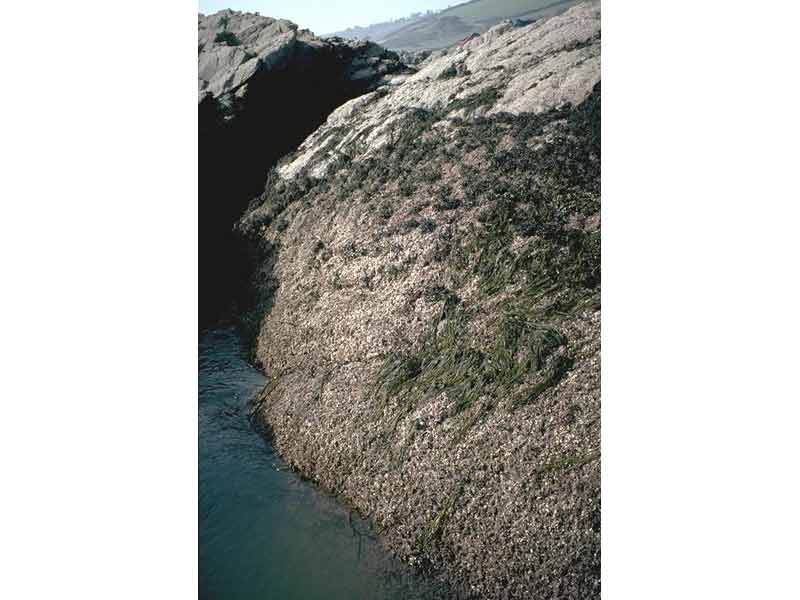
Steep bedrock shore with Corallina officinalis.
Photographer: Dr Keith Hiscock Copyright: Joint Nature Conservation Committee (JNCC)
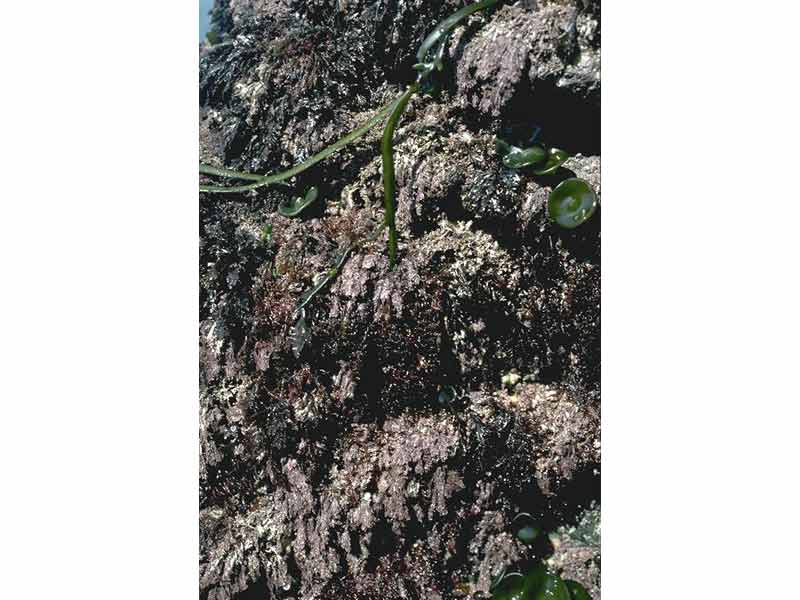
Close up of rock face with Corallina and Himanthalia (ELR.Coff).
Photographer: Paul Brazier Copyright: Joint Nature Conservation Committee (JNCC)

| Researched by | Dr Heidi Tillin & Dr Harvey Tyler-Walters | Refereed by | This information is not refereed |
|---|
Summary
UK and Ireland classification
Description
Very exposed to moderately exposed lower eulittoral rock that supports a dense turf of the red seaweed Corallina officinalis, often on wave surged rocky slopes. There is usually a low abundance of other turf-forming red seaweeds including Lomentaria articulata, Mastocarpus stellatus, Palmaria palmata and Osmundea pinnatifida. Other seaweeds that occur in low abundance includes the wrack Himanthalia elongata, Laminaria digitata while the brown seaweed Leathesia difformis can be found growing on and around the other seaweeds. The green seaweeds Ulva intestinalis, Ulva lactuca and Cladophora rupestris are present as well. A number of invertebrates are present on the bedrock underneath the coralline turf, including the barnacle Semibalanus balanoides, the mussel Mytilus edulis, the sponges Halichondria panicea and Hymeniacidon perleve, the anemone Actinia equina and the limpets Patella ulyssiponensis and Patella vulgata. The brown seaweed Bifurcaria bifurcata and the barnacle Perforatus perforatus may occur in the extreme south-west. Two variants have been described: Corallina officinalis and kelp (Coff.Coff) and Corallina officinalis, Himanthalia elongata and the limpet Patella ulyssiponensis (Coff.Puly) (Information from Connor et al., 2004; JNCC, 2015).
Depth range
Lower shoreAdditional information
None entered
Listed By
Habitat review
Ecology
Ecological and functional relationships
Coralline turf communities are described in detail by Hagerman (1968), Dommasnes (1968, 1969), Hicks (1985), Grahame & Hanna (1989), Crisp & Mwaiseje (1989), Bamber (1988) and Bamber & Irving ( 1993). The following information is based the above references and lists of species in the MNCR database (JNCC 1999).- Macroalgae including Corallina officinalis, Mastocarpus stellatus, Osmundea pinnatifida and Lomentaria articulata, provide primary productivity either directly to grazing fish and invertebrates or indirectly, to detritivores and decomposers, in the form of detritus and drift algae or as dissolved organic material and other exudates.
- Macroalgal species compete for light, space and, to a lesser extent, nutrients, depending on the growth rates, size and reproductive pattern of each species. However, Corallina officinalis probably has a competitive advantage in wave exposed habitats due to their robust coralline fronds and resistant vegetative crustose bases (see Littler & Kauker, 1986).
- Corallina officinalis provides substratum for spirorbid worms (e.g. Spirorbis corallinae), epiphytes and periphyton, depending on location, including microflora (e.g. bacteria, blue green algae, diatoms and juvenile larger algae), and interstices and refuges from predation for a variety of small invertebrates (see habitat complexity below).
- Amphipods (e.g. Parajassa pelagica and Stenothoe monoculoides), isopods (e.g. Idotea pelagica and Jaera albifrons) and other mesoherbivores graze the epiphytic flora and senescent macroalgal tissue, which may benefit the macroalgal host, and may facilitate dispersal of the propagules of some macroalgal species (Brawley, 1992b; Williams & Seed, 1992). Mesoherbivores also graze the macroalgae but do not normally adversely affect the canopy (Brawley, 1992b).
- Grazers of periphyton (bacteria, blue-green algae and diatoms) or epiphytic algae include harpacticoid copepods, small gastropods (e.g. Rissoa spp. and Littorina neglecta.
- Macroalgal grazers include limpets e.g. Patella vulgata and Patella ulyssiponensis, juvenile blue-rayed limpets Helcion pelucidum, and gastropods such as Littorina saxatilis and Littorina neglecta.
- Coralline algae are probably relatively grazing resistant (Littler & Kauker, 1984) and few species graze the corallines directly except perhaps chitons and limpets of the genus Tectura. Grazers probably benefit the coralline turf by removing epiphytic and ephemeral algae (e.g. Ulva), which could potentially smother the turf.
- Suspension feeders include Semibalanus balanoides, the spirorbid Spirorbis corallinae, the sponge Halichondria panicea, juvenile bivalves and interstitial bivalves such as Lasaea adansoni and Turtonia minuta, and the tubiculous amphipod Parajassa pelagica.
- Turbellarians, nematodes and halacarid mites are probably interstitial predators on other nematodes, mites, and harpacticoid copepods (Hicks, 1985).
- When the biotope is covered by the tide, intertidal fish such as gobies, blennies and clingfish, and the juveniles of larger inshore fish are probably active predators of amphipods, isopod, ostracods and harpacticoid copepods. The physical complexity of the Corallina officinalis turf was reported to offer a refuge from predation for epiphytic invertebrates (Coull & Wells, 1983; Hicks, 1985). Choat & Kingett (1982) did not detect any significant effect on fish predation in exclusion experiments. In harpacticoid copepods, although large numbers were consumed by fish little effect on the population resulted (Hicks, 1980). However, Hicks (1985) noted that considerable evidence of predators regulating prey abundance was available.
- The brittlestar Amphipholis squamata probably is a detritivore within the turf.
Seasonal and longer term change
Red algal turf declines in abundance during the winter months, partly due to die back and abrasion during winter storms. For example, Seapy & Littler (1982) noted that the cover of Corallina officinalis var. chilensis declined in the winter months, growing back in summer and developing a dense cover in autumn in California. Littler et al. (1979) reported a autumn maximum in cover of Corallina officinalis var. chilensis and a summer minimum in cover in San Clement Island, California. In Denmark, fronds of Corallina officinalis were reported to cease growing in summer, sloughed in autumn, and new fronds initiated from crustose, perenniating bases in late winter (Rosenvinge, 1917; cited in Johanssen, 1974). However, in the Bristol Channel, Bamber & Irving (1993) noted that the biomass of Corallina officinalis increased steadily through spring and summer and began to decline after July. Mastocarpus stellatus (as Gigartina stellata) was reported have a perennial holdfast, losing many erect fronds in winter, which grow back in spring (Dixon & Irvine, 1977). Osmundea pinnatifida also shows seasonal variation in growth, expanding its perennial holdfast in June to September, and producing erect fronds from October onwards reaching a maximum in February to May (Maggs & Hommersand, 1993).Choat & Kingett (1982) reported that the abundance of amphipods in a New Zealand coralline turf habitat peaked in summer and declined to a low in winter, while polychaetes showed a peak of abundance in winter decreasing in summer. But ostracods showed a relatively low abundance throughout the sampling period (Choat & Kingett, 1982). Bamber (1993) examined coralline turf dominated runoffs in the Bristol Channel, and noted that the amphipod Melita palmata and the brittlestar Amphipholis squamata recruited after the summer growth of the coralline turf reaching a peak abundance in autumn. But the small isopod Jaera albifrons recruited to the turf in late winter and the polychaete Platynereis dumerilii showed an erratic pattern of abundance (Bamber & Irving, 1993). However, Bamber & Irving (1983) noted considerable variation in seasonal abundance between sites (runoffs) on the same shore.
Habitat structure and complexity
This biotope occurs in very wave exposed conditions on horizontal, steep or vertical bedrock subject to wave crash and is composed of species tolerant of wave action. The biotope may develop below the lower limit of the barnacle or mussel belts in wave exposed conditions.- Corallina officinalis forms a dense carpet or turf on the bedrock and with increasing wave exposure may grow as a cushion like or compact turf (Dommasnes, 1968; Johansen, 1974; Irvine & Chamberlain, 1994).
- Other red algae occur in low abundance depending on wave exposure with Mastocarpus stellatus being the most tolerant, Osmundea pinnatifida slightly less tolerant, while Lomentaria articulata and Palmaria palmata favour shaded or overhanging surfaces. Shaded overhangs may also support Plumaria elegans, Ptilota plumosa and Cladophora rupestris (Lewis, 1964).
- Depressions filled with Osmundea pinnatifida and Corallina officinalis may also support the olive-brown bulbous seaweed Leathesia difformis (Lewis, 1964).
- Large macroalgae such as Himanthalia elongata typically occur at low abundance, their long thongs lying over the coralline turf.
- The interstices formed by the branches of Corallina officinalis support a diverse epiphytic fauna (Dommasnes, 1968, 1969; Hagerman, 1968; Hicks & Coull, 1983; Hicks, 1985; Bamber, 1988; Crisp & Mwaiseje, 1989; Grahame & Hanna, 1989; Bamber & Irving, 1993). The species diversity and abundance of the epiphytic fauna depends the percentage cover of turf, wave exposure, the size of the interstices within the turf, and the build up of sediment. In wave exposure, the build up of sediment is likely to be limited and the close compact, cushion growth form may reduce the diversity of the infauna but provide a better refuge from predation for harpacticoid copepods and ostracods (Dommasnes, 1968, 1969; Seapy & Littler, 1982; Choat & Kingett, 1982; Hicks & Coull, 1983; Hicks, 1985).
- In wave exposed conditions, tubiculous amphipods and isopods are represented by species with well developed claws or gnathopods and strong stout legs and bodies, e.g. the isopods Idotea pelagica and Jaera albifrons, and the amphipods Parajassa pelagica, although Stenothoe monoculoides, Apherusa jurinei and the isopod Ianiropsis breviremis occur irrespective of wave exposure (Dommasnes, 1986, 1969).
- Corallina officinalis provides a substratum for small spirorbids e.g. Spirobis corallinae, which is only found on Corallina officinalis. Increasing density of Spirorbis corallinae was shown to increase the species richness of the epiphytic fauna, especially small species such as Stenothoe monocloides (Crisp & Mwaiseje, 1989) but with increasing wave exposure, the spirorbid is found within the Corallina officinalis turf rather than at its tips and was reported to be absent from the 'most wave exposed' sites (Grahame & Hanna, 1989).
- Wave exposed coralline turf also reported to support Foraminifera, Turbellaria, nematodes, polychaetes (e.g. Platynereis dumerilii and Perinereis cultrifera), the tanaid Tanais cavolinii, halacarid mites, gastropods (e.g. Littorina neglecta, Littorina saxatilis, and Rissoa spp.), juvenile bivalves (e.g. Mytilus edulis, Musculus discors), interstitial bivalves (e.g. Lasaea adansoni and Turtonia minuta) and the small brittlestar Amphipholis squamata (Hagerman, 1968; Dommasnes, 1968, 1969; Bamber & Irving, 1993).
- In gaps in the turf, the surface of the bedrock may be covered with encrusting coralline algae and barnacles such as Semibalanus balanoides, and patrolled by limpets (e.g. Patella ulyssiponensis).
Productivity
Little information concerning the productivity of coralline turf communities was found. The red algae, algal epiphytes and periphyton provide primary productivity to grazers, while their spores and phytoplankton provide primary productivity to suspension feeders. Bamber & Irving (1993) reported that Corallina officinalis reached a biomass of up to 3.3-6.7 kg/m². Littler et al. (1979) determined the total daily productivity of an intertidal algal population in California, which peaked in autumn at 1.22 gC fixed /m²/day, and declined in winter to a spring low of 0.47 gC fixed /m²/day. Blue-green algae, Corallina officinalis var. chilensis and Egregia menziesii contributed 76% of the total community primary productivity (Littler et al., 1979).Secondary productivity of the invertebrate fauna may be high and coralline turf may support high abundances of invertebrates. For example, Choat & Kingett (1982) recorded the following numbers of epiphytic fauna: amphipods 1038 / 0.01m²; ostracods 219 /0.01m², and polychaetes 134 /0.01m².
Recruitment processes
Corallina officinalis has isomorphic sexual (gametophyte) and asexual (sporophyte) stages (see MarLIN review). Settled tetraspores develop into a perennial crustose base, from which the upright, articulate fronds develop. Sporeling formed within 48hrs, a crustose base within 72hrs, fronds being initiated after 3 weeks and the first intergeniculum (segment) formed within 13 weeks (Jones & Moorjani, 1973). Settlement and development of fronds is optimal on rough surfaces but settlement can occur on smooth surfaces (Harlin & Lindbergh, 1977; Wiedeman, pers comm.). Corallina officinalis settled on artificial substrata within 1 week of their placement in the intertidal in New England summer suggesting that recruitment is high (Harlin & Lindbergh, 1977).The propagules of most macroalgae tend to settle near the parent plant (Schiel & Foster, 1986; Norton, 1992; Holt et al., 1997). For example, the propagules of fucales are large and sink readily and red algal spores and gametes and immotile. Norton (1992) noted that algal spore dispersal is probably determined by currents and turbulent deposition (zygotes or spores being thrown against the substratum). For example, spores of Ulva sp. (as Ulva) have been reported to travel 35km, Phycodrys rubens 5km and Sargassum muticum up to 1km, although most Sargassum muticum spores settle within 2m. The reach of the furthest propagule and useful dispersal range are not the same thing and recruitment usually occurs on a local scale, typically within 10m of the parent plant (Norton, 1992). In clearance studies in the subtidal Kain (1975) noted that on a single block cleared every two months, most biomass belonged to Rhodophyceae in winter, Phaeophyceae in spring and Chlorophyceae in late summer, and concluded that recruitment was dependant on spore availability. For example, spore production in Mastocarpus stellatus is maximum between September to December (Dixon & Irvine, 1977), spores of Osmundea pinnatifida are present in October and December to June (Maggs & Hommersand, 1993), while the spores of Lomentaria articulata are available all year round with a peak in summer (Irvine, 1983).
Recruitment of Patella vulgata fluctuates from year to year and from place to place (Bowman, 1981). Fertilization is external and the larvae are pelagic for up to two weeks before settling on rock at a shell length of about 0.2mm. Winter breeding occurs only in southern England, in the north of Scotland it breeds in August and in north-east England in September. Reproduction is probably similar in Patella ulyssiponensis, except that it may be a protandrous hermaphrodite, spawning in October in south-west Ireland (Fish & Fish, 1996). The larvae of the blue-rayed limpet Patella pellucida settle on encrusting corallines and migrate to Mastocarpus stellatus as they grow and finally to Laminaria spp. via Himanthalia elongata (McGrath, 1992; see MarLIN review).
Barnacle recruitment can be very variable because it is dependent on a suite of environmental and biological factors, such as wind direction and success depends on settlement being followed by a period of favourable weather. Long-term surveys have produced clear evidence of barnacle populations responding to climatic changes. During warm periods Chthamalus spp. Predominate, whilst Semibalanus balanoides does better during colder spells (Hawkins et al., 1994). Release of Semibalanus balanoides larvae takes place between February and April with peak settlement between April and June.
Many species of mobile epifauna, such as polychaetes have long lived pelagic larvae and/or are highly motile as adults. Gammarid amphipods brood their embryos and offspring but are highly mobile as adults and probably capable of colonizing new habitats from the surrounding area (e.g. see Hyale prevosti review). Similarly, isopods such as Idotea species and Jaera species brood their young. Idotea species are mobile and active swimmers and probably capable to recruiting to new habitats from the surrounding area by adult migration. Jaera albifrons, however, is small and may take longer to move between habitats, and Carvalho (1989) suggested that under normal circumstances movement was probably limited to an area of less than 2m. Hicks (1985) noted that epiphytic harpacticoid copepods lack planktonic dispersive larval stages but are active swimmers, which is therefore the primary mechanism for dispersal and colonization of available habitats. Some species of harpacticoids are capable to moving between low and mid-water levels on the shore with the tide, while in other colonization rates decrease with increasing distance form resident population. Overall immigration and in situ reproduction were thought to maintain equilibrium populations exposed to local extinction, although there may be local spatial variation in abundance (see Hicks, 1985).
The small littorinids Littorina saxatilis and Littorina neglecta are ovoviviparous, releasing miniature adults. Therefore, local recruitment is probably good, whereas long distance recruitment is probably poor. The interstitial bivalve Lasaea adansoni also broods its eggs, releasing miniature adults. However, Martel & Chia (1991b) reported bysso-pelagic or mucus rafting in small bivalves and gastropods in the intertidal, and suggested that drifting may be an effective mean of dispersal at the local scale, even for species that produce miniature adult offspring. The gastropod Rissoa parva lays eggs capsules, from which hatch veliger larvae with a prolonged pelagic life and potentially good dispersal capability (Fish & Fish, 1996).
Time for community to reach maturity
The epiphytic species diversity of the coralline turf is dependant on the Corallina officinalis cover and its growth form (Dommasnes, 1968, 1969; Seapy & Littler, 1982; Crisp & Mwaiseje, 1989). Corallina officinalis was shown to settle on artificial substrata within one week of their placement in the intertidal in New England summer suggesting that recruitment is high (Harlin & Lindbergh, 1977). New fronds of Corallina officinalis appeared on sterilised plots within six months and 10% cover was reached with 12 months (Littler & Kauker, 1984). In experimental plots, up to 15% cover of Corallina officinalis fronds returned within 3 months after removal of fronds and all other epiflora/fauna (Littler & Kauker, 1984). Bamber & Irving (1993) reported that new plants grew back in scraped transects within 12 months, although the resistant crustose bases were probably not removed. New crustose bases may recruit and develop quickly the formation of new fronds from these bases and recovery of original cover may take longer. Once a coralline turf has developed it will probably be colonized by epiphytic invertebrates such as harpacticoids, amphipods and isopods relatively quickly from the surrounding area. Therefore, the biotope would be recognizeable once the coralline turf has regrown, which is likely to be within a few months if the resistant crustose bases remain. Recruitment of red algae is probably equally rapid, and once the algal turf has developed most of the epiphytic invertebrates would colonize quickly, although some species e.g. small brooding gastropods would take longer.Additional information
None enteredPreferences & Distribution
Habitat preferences
| Depth Range | Lower shore |
|---|---|
| Water clarity preferences | No information |
| Limiting Nutrients | No information |
| Salinity preferences | Full (30-40 psu) |
| Physiographic preferences | Open coast |
| Biological zone preferences | Lower eulittoral |
| Substratum/habitat preferences | Bedrock |
| Tidal strength preferences | Moderately strong 1 to 3 knots (0.5-1.5 m/sec.), Very weak (negligible), Weak < 1 knot (<0.5 m/sec.) |
| Wave exposure preferences | Exposed, Moderately exposed, Very exposed |
| Other preferences | Wave exposed conditions |
Additional Information
This biotope is characteristic of wave exposed headlands and the open coast on steep to vertical slopes exposed to the full impact of wave crash or horizontal scarps from which water drains slowly (Lewis, 1964; Connor et al., 1997b). The ELR.Coff community often forms a distinct band below mussel or barnacle dominated communities and above the kelp belt, the coralline turf often extending into the kelp belt, e.g. EIR.Ala (Lewis, 1964; Connor et al., 1997b).Species composition
Species found especially in this biotope
Rare or scarce species associated with this biotope
-
Additional information
The MNCR recorded 104 species within this biotope, although not all species occurred in all records of the biotope (JNCC, 1999). Detailed lists of the fauna of coralline turfs are given by Hagerman (1968), Dommasnes (1968, 1969), Hicks (1985), Grahame & Hanna (1989), Crisp & Mwaiseje (1989), and Bamber (1988, 1993).Sensitivity review
Sensitivity characteristics of the habitat and relevant characteristic species
Corallina officinalis is the dominant characterizing species within this biotope LR.HLR.FR.Coff and its two variant sub-biotopes LR.HLR.FR.Coff.Coff and LR.HLR.FR.Coff.Puly. Corallina officinalis forms a dense turf that provides substratum and refuges for a diverse epifauna. As the biotope characterization and many of the associated species are dependent on the presence of Corallina officinalis the sensitivity assessments specifically considers this species as both a key structuring and characterizing species. Other turf-forming algae such as Lomentaria articulata, Mastocarpus stellatus, Palmaria palmata and Osmundea pinnatifida occur in low abundances. The green seaweeds Ulva intestinalis, Ulva lactuca and Cladophora rupestris are present as well and assessments describe the sensitivity of the red and green species in general terms. Himanthalia elongata also occurs but in lower abundances that the LR.HLR.FR.Him biotope, therefore, this species is considered specifically within the assessment where its sensitivity differs and it may come to dominate the biotope. Gastropods Littorina littorea, Patella vulgata and Patella ulyssiponensis are significant grazers in the eulittoral zone and, by preferentially grazing on foliose red and green algae, structure the biotope allowing Corralina sp. to dominate. They are, therefore, included as important structural species. Patella ulyssiponensis characterizes the variant biotope description and supports differentiation of the biotope from the very similar LR.HLR.FR.Coff.Coff. The sensitivity of this species to pressures is, therefore, highlighted. A number of invertebrates are present on the bedrock underneath the coralline turf, including the barnacle Semibalanus balanoides, the mussel Mytilus edulis, the sponges Halichondria panicea and Hymeniacidon perleve, the anemone Actinia equina. These common rocky shore species contribute to species diversity and ecological function within the biotope but are not considered to be important structural or functional species and are only generally referred to within the assessments. Epiphytic grazers, such as amphipods, isopods and small gastropods probably keep the turf free of epiphytic algae and are important structural species. Due to lack of evidence the sensitivity of this group is considered only generally where the pressures may impact on this biotope. Temporal variation of the abundances of the characterizing species within this biotope may lead to biotope reversion between LR.HLR.FR.Coff.Coff, LR.HLR.FR.Coff.Puly and LR.HLR.FR.Him as these contain broadly similar species and occur in similar conditions (Connor et al., 2004). The biotope assessments are largely considered applicable to the infralittoral biotope in the EUNIS classification A3.118.
Resilience and recovery rates of habitat
Where this biotope is impacted by pressures, recovery of the key structuring and characterizing species Corallina officinalis will require either regrowth from surviving holdfast or basal crusts or recolonization by propagules. The crustose holdfast or base is perennial and grows apically (continuous growth at tips), similar to encrusting corallines such as Lithothamnia sp. The basal crust may grow continuously until stimulated to produce fronds (Littler & Kauker 1984; Colhart & Johanssen 1973). Littler & Kauker (1984) suggest that the crustose bases are an adaptation to resist grazing and desiccation whereas the fronds are adapted for higher primary productivity and reproduction. The basal crusts are tougher than the upright fronds (requiring a pressure of 94 g/mm2 to penetrate, compared to 43 g/mm2 respectively). Regeneration of the basal crusts provides a more rapid route to recovery than recolonization. Experiments in the intertidal in southern California found that areas scraped back to crusts recovered four times more rapidly than sterilised plots where the crusts were removed (Littler & Kauker, 1994).
In culture, Corallina officinalis fronds exhibited an average growth rate of 2.2 mm/month at 12 and 18°C . The growth rate was only 0.2 mm/month at 6°C and no growth was observed at 25°C (Colhart & Johanssen 1973). Similarly Blake & Maggs (2003) observed much higher growth rates of 2 mm/month over 6 months starting from September in Corralina officinalis grown in Strangford Lough (Northern Ireland) at 5 and 10 m depth, these rates are similar to those observed by Andrake & Johansen, (1980) in winter in New Hampshire. The evidence for growth rate suggests that to achieve a height of 10 cm the turf would be at least 4 years old (probably older as higher temperatures appear to slow growth. A lower level turf of, for example 5 cm, could theoretically be achieved within 2 years.
Where the bases are removed, recovery will depend on recolonization. Areas that are cleared during the reproductive period have the potential to be rapidly colonized. Corallina officinalis was shown to settle on artificial substances within 1 week of their placement in the intertidal in New England summer (Harlin & Lindbergh, 1977). However, settlement plates laid out in the autumn were not recolonized until the next spring. In the lower rocky intertidal in southern California dominated by Corallina officinalis with foliose overstorey algae present, Littler & Kauker (1984) experimentally cleared plots and followed the recovery for 12 months. Some areas were scraped allowing the basal crusts to remain whereas others were completely sterilised (removal of all material and surfaces then scorched with a blow torch to remove bases). In scraped plots, up to 15% cover of Corallina officinalis fronds returned within 3 months after removal of fronds and all other epiflora/fauna (Littler & Kauker, 1984) while in sterilized plots (all basal crusts removed) appearance of articulated fronds occurred 6 months following clearance. At the end of the 12 month observation period, Corallina officinalis cover had increased to approximately 18% in plots where basal crusts remained and to approximately 10% in sterilised plots. Similarly, Bamber & Irving (1993) reported that new plants grew back in scraped transects within 12 months, although the resistant crustose bases were probably not removed.
Once established turfs of Corallina spp. can persist for a long time, surveys of rocky intertidal ledges at Hinkley point, Somerset in England have found that the patches mapped in the 1980s (Bamer & Irving, 1993) had not changed position when resurveyed 18 years later (Burdon et al., 2009). It has been speculated but not definitively demonstrated that turf-forming algae and canopy-forming algae may represent alternate stable states on temperate rocky shores and a shift in balance to the alternate state may prevent recovery. Some potential mechanisms for inhibition of canopy-forming species are space pre-emption by turfs that prevent recruitment of taller algae (Perkol-Finkel & Airoldi, 2010, Kennelly, 1987) due to the coverage of suitable rock surfaces and the presence of sediments within the turf (Airoldi, 2003). Clearance experiments on rocky, intertidal shores in Southern California (Sousa, 1979) found that Ulva species which have a longer reproductive season could colonize cleared areas preventing the establishment of perennial red algae. However, grazing by crabs removed the green algae (Sousa, 1979), highlighting the potential importance of grazers, particularly littorinids, to the re-establishment of this biotope.
Resilience assessment. No direct evidence was found for the age of individual Corallina crusts, the longevity of turfs, or the time to recover from basal crusts or sterilised plots to a full dense cover. New crustose bases may recruit and develop quickly but the formation of new fronds from these bases and recovery of original cover may take longer. Once a coralline turf has developed it will probably be colonized by epiphytic invertebrates such as harpacticoids, amphipods and isopods relatively quickly from the surrounding area. Therefore, the biotope would be recognizable once the coralline turf has regrown, which is likely to be quite rapid if the resistant crustose bases remain. The clearance experiments by Littler & Kauker (1984) suggest that recovery of a dense turf cover whether basal crusts remained or were totally removed would require more than 2 years. Presumably, as crusts can grow in all directions percentage cover is not a linear function and that gap closure would speed up with greater cover. Recruitment of associated species of red algae is probably equally rapid, and once the algal turf has developed most of the epiphytic invertebrates would colonize quickly. The ephemeral green algae associated with the biotope are opportunist colonizers of gaps and would be expected to recover within a year. Limpets and littorinids could recover through migration but where populations are removed over a larger area recolonization by larvae would be required. Recruitment through larvae may be episodic and recovery to former population structure may require > 2 years. More detailed information on recovery of associated species can be found in the information for biotopes where these are the key characterizing species.
Resilience of the biotope is assessed as ‘High’ where resistance is ‘High’ (no significant impact) or ‘Medium’ (where <25 % of Corallina officinalis fronds are removed and bases remain) based on regrowth from the basal crusts and vegetative growth from surrounding turfs and repair, migration or recolonization of associated species. Where resistance is ‘Low’ or ‘None’ then resilience is assessed as ‘Medium’, between 2 -10 years but towards the lower end of that range for Corallina officinalis and the associated species. Where perturbations have a large spatial footprint with the widespread removal of crusts over a large area then the development of an alternate state emerging with dominance by canopy-forming algae is a possibility. In such an instance recovery could take much longer and depend on active management or further perturbations. No evidence was found however to determine when such shifts might occur.
NB: The resilience and the ability to recover from human induced pressures is a combination of the environmental conditions of the site, the frequency (repeated disturbances versus a one-off event) and the intensity of the disturbance. Recovery of impacted populations will always be mediated by stochastic events and processes acting over different scales including, but not limited to, local habitat conditions, further impacts and processes such as larval-supply and recruitment between populations. Full recovery is defined as the return to the state of the habitat that existed prior to impact. This does not necessarily mean that every component species has returned to its prior condition, abundance or extent but that the relevant functional components are present and the habitat is structurally and functionally recognisable as the initial habitat of interest. It should be noted that the recovery rates are only indicative of the recovery potential.
Hydrological Pressures
Use [show more] / [show less] to open/close text displayed
| Resistance | Resilience | Sensitivity | |
Temperature increase (local) [Show more]Temperature increase (local)Benchmark. A 5°C increase in temperature for one month, or 2°C for one year. Further detail EvidenceSpecies found in the intertidal are exposed to extremes of high and low air temperatures during periods of emersion. They must also be able to cope with sharp temperature fluctuations over a short period of time during the tidal cycle. In winter, air temperatures are colder than the sea, conversely in summer air temperatures are much warmer than the sea. Species that occur in this intertidal biotope are therefore generally adapted to tolerate a range of temperatures, although the timing of site-specific factors such as low tides will influence local acclimation. For intertidal species, increased temperatures may also result in desiccation when exposed (see changes in emergence pressure). The key characterizing species, Corallina officinalis has a cosmopolitan distribution (Guiry & Guiry, 2015) and throughout its range experiences wide variation in temperatures (although local populations may be acclimated to the prevailing thermal regime). Littler & Kauker (1984) suggested that the crustose bases of Corallina officinalis are more resistant of desiccation or heating than fronds. Severe damage was noted in Corallina officinalis fronds as a result of desiccation during unusually hot and sunny weather in summer 1983. An abrupt increase in temperature of 10°C caused by the hot, dry 'Santa Anna' winds (between January -and February) in Santa Cruz, California resulted in die back of several species of algae exposed at low tide (Seapy & Littler, 1982). Lüning (1990) reported that Corallina officinalis from Helgoland survived one week of exposure to temperatures between 0°C and 28°C. In an exceptionally hot summer (1983, with an increase of between 4.8 and 8.5°C) Hawkins & Hartnoll (1985) observed no temperature bleaching of adult Himanthalia elongata (although some buttons were bleached) or other canopy forming species. However, understorey red algae showed more signs of damage with bleached Corallina officinalis and ‘lithothamnia’ observed around the edges of pools due to desiccation. Occasional damaged specimens of Palmaria palmata, Osmundea pinnatifida and Mastocarpus stellatus were observed. Latham (2008) investigated the effects of temperature stress on Corallina officinalis through laboratory tests on samples collected in the Autumn in Devon, England from rock pools. Samples were kept at 1 °C for three days and then exposed to temperatures of 5°C, 15°C, 20°C, 25°C and 30°C (the normal range of temperature experienced was suggested to be between 5 and 15°C). At 35°C, the Corallina was completely bleached after 3 days with a sample kept at 30°C beginning to bleach. After 7 days (the end of the experiment) the sample kept at 30°C was partially bleached. Samples kept at 5, 15, 20 and 25°C showed little change in chemicals produced in reaction to thermal stress and no bleaching suggesting the temperatures in that range had not induced stress reactions. Most of the other species within the biotope are distributed to the north and south of Britain and Ireland and unlikely to be adversely affected by a chronic long-term temperature change. Ulva spp. are characteristic of upper shore rock pools, where water and air temperatures are greatly elevated on hot days. Empirical evidence for thermal tolerance to anthropogenic increases in temperature is provided by the effects of heated effluents on rocky shore communities in Maine, USA. Ascophyllum and Fucus were eliminated from a rocky shore heated to 27-30°C by a power station whilst Ulva intestinalis (as Enteromorpha intestinalis) increased significantly near the outfall (Vadas et al., 1976). Barnacles, Semibalanus balanoides, limpets, Patella vulgata and littorinids also occur within this biotope. Laboratory studies suggest that adults of these species can tolerate temperature increases. The median upper lethal temperature limit in laboratory tests on Littorina littorea, Littorina saxatilis and Semibalanus balanoides was approximately 35°C (Davenport & Davenport, 2005). Patella vulgata can also tolerate high temperatures. The body temperature of Patella vulgata can exceed 36°C in the field, (Davies, 1970); adults become non-responsive at 37-3°C and die at temperatures of 42°C (Evans, 1948). The smaller species associated with the Corallina officinalis may be protected within fronds and accumulated sediments from changes in temperature although no direct evidence was found to assess the sensitivity of these to increased temperatures. Hiscock et al. (2004), suggest that a 1-2°C increase in temperature could increase the reproductive success of Patella ulyssiponensis potentially resulting in a northward expansion of the range. Sensitivity assessment. Based on the global distribution of Corallina officinalis and the experiments by Latham (2008) which approximate to the pressure benchmark more than the observations of extreme events (Seapy & Littler, 1982, Hawkins & Hartnoll, 1985) it is suggested that Corallina officinalis would not be sensitive to either an acute or chronic increase in temperature at the pressure benchmark. Littler & Littler, (1984) suggest that the basal crustose stage is adaptive as resisters of sand scour and wave shearing as well as physiological stressors such as desiccation and heating. Where these survive any increases in temperature above the pressure benchmark they would provide a mechanism for biotope recovery. The sensitivity of the biotope is based on the key characterizing Corallina turf but it should be noted that many of the associated species are considered to have ‘High’ resistance to changes in temperature at the pressure benchmark. It should be noted that the timing of acute increases would alter the degree of impact and hence sensitivity. An acute change occurring on the hottest day of the year and exceeding thermal tolerances would lead to mortality. The sensitivity of Patella vulgata and Semibalanus balanoides to longer-term, broad-scale perturbations would potentially be greater due to effects on reproduction but these changes may lead to species replacements (by Patella depressa or Patella ulyssiponensis and Chthamalus spp.) and are not considered to significantly affect the character of the biotope. An increase in Patella ulyssiponensis may lead to the conversion of some examples of this biotope to the sub-biotope variant characterized by this species. | HighHelp | HighHelp | Not sensitiveHelp |
Temperature decrease (local) [Show more]Temperature decrease (local)Benchmark. A 5°C decrease in temperature for one month, or 2°C for one year. Further detail EvidenceMany intertidal species are tolerant of freezing conditions as they are exposed to extremes of low air temperatures during periods of emersion. They must also be able to cope with sharp temperature fluctuations over a short period of time during the tidal cycle. In winter air temperatures are colder than the sea, conversely in summer air temperatures are much warmer than the sea. Species that occur in the intertidal are therefore generally adapted to tolerate a range of temperatures, with the width of the thermal niche positively correlated with the height of the shore (Davenport & Davenport, 2005). Under extremely low temperatures, components of the community demonstrate tolerance. Lüning (1990) reported that Corallina officinalis from Helgoland survived 0°C when exposed for one week. New Zealand specimens were found to tolerate -4 °C (Frazer et al., 1988). Lüning (1990) suggested that most littoral algal species were tolerant of cold and freezing. For example, the photosynthetic rate of Chondrus crispus recovered after 3hrs at -20°C but not after 6 hrs (Dudgeon et al., 1990). The photosynthetic rate of Mastocarpus stellatus higher on the shore fully recovered from 24 hrs at -20°C. The associated species are also likely to be tolerant of a decrease in temperature at the pressure benchmark. Mytilus edulis and Ulva spp. are eurytopic, found in a wide temperature range and in areas which frequently experience freezing conditions and are vulnerable to ice scour (Seed & Suchanek 1992). The tolerance of Semibalanus balanoides collected in the winter (and thus acclimated to lower temperatures) to low temperatures was tested in the laboratory. The median lower lethal temperature tolerance was -14.6°C (Davenport & Davenport, 2005). A decrease in temperature at the pressure benchmark is therefore unlikely to negatively affect this species. The same series of experiments indicated that median lower lethal temperature tolerances for Littorina saxatilis and Littorina littorea were -16.4 and -13°C respectively. Adults of Patella vulgata are also largely unaffected by short periods of extreme cold. Ekaratne & Crisp (1984) found adult limpets continuing to grow over winter when temperatures fell to -6°C, and stopped only by still more severe weather. However, loss of adhesion after exposure to -13°C has been observed with limpets falling off rocks and therefore becoming easy prey to crabs or birds (Fretter & Graham, 1994). However, in the very cold winter of 1962-3 when temperatures repeatedly fell below 0°C over a period of two months large numbers of Patella vulgata were found dead (Crisp, 1964). Periods of frost may also kill juvenile Patella vulgata, resulting in recruitment failures in some years (Bowman & Lewis, 1977). In colder conditions an active migration by mobile species may occur down the shore to a zone where exposure time to the air (and hence time in freezing temperatures) is less. Patella ulyssiponensis may be sensitive to long-term decreases in temperature (Hiscock et al., 2004) Sensitivity assessment. Based on the characterizing and associated species, this biotope is considered to have ‘High’ resistance and ‘High' resilience (by default) to this pressure and is therefore considered to be ‘Not sensitive’. The timing of changes and seasonal weather could result in greater impacts on species. An acute decrease in temperature coinciding with unusually low winter temperatures may exceed thermal tolerances and lead to mortalities of the associated species although this would not alter the character of the biotope. A long-term decrease in temperature may lead to conversion of biotopes characterized by Patella ulyssiponensis to a similar sub-biotope. | HighHelp | HighHelp | Not sensitiveHelp |
Salinity increase (local) [Show more]Salinity increase (local)Benchmark. A increase in one MNCR salinity category above the usual range of the biotope or habitat. Further detail EvidenceLocal populations may be acclimated to the prevailing salinity regime and may, therefore, exhibit different tolerances to other populations subject to different salinity conditions and therefore caution should be used when inferring tolerances from populations in different regions. This biotope is found in full (30-35 ppt) salinity (Connor et al., 2004). Biotopes found in the intertidal will naturally experience fluctuations in salinity where evaporation increases salinity and inputs of rainwater expose individuals to freshwater. Species found in the intertidal are therefore likely to have some form of behavioural or physiological adaptations to changes in salinity. The characterizing species Corallina officinalis and Patella ulyssiponensis are found in tide pools where salinities may fluctuate markedly during exposure to the air. Kinne (1971) cites maximal growth rates for Corallina officinalis between 33 and 38 psu in Texan lagoons. The associated species are typically found in a range of salinities. Ulva species can survive hypersaline conditions in supralittoral rockpools subjected to evaporation and is considered to be a very euryhaline species, tolerant of extreme salinities ranging from 0 psu to 136 psu (Reed & Russell, 1979). In the laboratory, Semibalanus balanoides was found to tolerate salinities between 12 and 50 psu (Foster, 1970). Young Littorina littorea inhabit rock pools where salinity may increase above 35psu. Thus, the associated species may be able to tolerate some increase in salinity. Mytilus edulis is found in a wide range of salinities from variable salinity areas and mussels in rock pools are likely to experience hypersaline conditions on hot days. Newell (1979) recorded salinities as high as 42psu in intertidal rock pools, suggesting that Mytilus edulis can tolerate high salinities. Sensitivity assessment. No direct evidence was found to assess sensitivity to this pressure. Although some increases in salinity may be tolerated by the associated species present these are generally short-term and mitigated during tidal inundation. This biotope is considered, based on the distribution of Corallina officinalis on the mid to lower shore to be sensitive to a persistent increase in salinity to >40 ppt. Resistance is therefore assessed as ‘Low’ and recovery as ‘Medium’ (following restoration of usual salinity). Sensitivity is therefore assessed as ‘Medium’. | LowHelp | MediumHelp | MediumHelp |
Salinity decrease (local) [Show more]Salinity decrease (local)Benchmark. A decrease in one MNCR salinity category above the usual range of the biotope or habitat. Further detail EvidenceBiotopes found in the intertidal will naturally experience fluctuations in salinity where evaporation increases salinity and inputs of rainwater expose individuals to freshwater. Species found in the intertidal are therefore likely to have some form of behavioural or physiological adaptations to changes in salinity. As this biotope is present in full salinity, the assessed change at the pressure benchmark is a reduction in salinity to a variable regime (18-35 ppt) or reduced regime (18-30 ppt). In the Baltic, Corallina officinalis is confined to deeper waters as surface salinity decreases (Kinne, 1971) suggesting that full salinity is required in the long-term although short-term fluctuations may be tolerated (although the thresholds of this tolerance are not clear). Kinne (1971) cites maximal growth rates for Corallina officinalis between 33 and 38 psu in Texan lagoons so that a decrease in salinity at the pressure benchmark would be predicted to lead to reduced growth. Based on occurrence in estuaries, it is clear that some of the species associated with this biotope have a high tolerance for this pressure. However, it should be noted that local populations may be acclimated to the prevailing salinity regime and may, therefore, exhibit different tolerances to other populations subject to different salinity conditions so that caution should be used when inferring tolerances from populations in different regions. Ulva species are considered to be a very euryhaline species, tolerant of extreme salinities ranging from 0 psu to 136 psu, although some variation in salinity tolerance between populations of Ulva intestinalis has been found indicating that plants have some adaptation to the local salinity regime (Reed & Russell, 1979). Littorina littorea is found in waters of full, variable and reduced salinities (Connor et al., 2004) and so populations are considered tolerant of decreases in salinity at the pressure benchmark. Mytilus edulis is found in a wide range of salinities from variable salinity areas (18-35ppt) such as estuaries and intertidal areas to areas of more constant salinity (Connor et al., 2004). Mytilus edulis was recorded to grow in a dwarf form in the Baltic sea where the average salinity was 6.5psu (Riisgård et al., 1993). Prolonged reduction in salinity, e.g. from full to reduced (18-30 ppt), is likely to reduce the species richness of the biotope due to loss of some intolerant invertebrates from the assemblage associated with the Corallina officinalis turf. Sensitivity assessment. Although some daily changes in salinity may be experienced these will be mitigated during tidal inundation. This biotope is considered, based on Corallina officinalis distribution and the evidence from Kinne, (1971), to be sensitive to a decrease in salinity at the pressure benchmark. Resistance is, therefore, assessed as ‘Low’ and recovery as ‘Medium’ (following restoration of usual salinity) Hence, sensitivity is assessed as ‘Medium’. | LowHelp | MediumHelp | MediumHelp |
Water flow (tidal current) changes (local) [Show more]Water flow (tidal current) changes (local)Benchmark. A change in peak mean spring bed flow velocity of between 0.1 m/s to 0.2 m/s for more than one year. Further detail EvidenceThe biotope is found in a range of flow rates from 'moderately strong' (0.5-1.5 m/s) to very 'weak' negligible) (Connor et al., 2004, Dommasnes, 1969). Moderate water movement is beneficial to seaweeds as it carries a supply of nutrients and gases to the plants and removes waste products. However, if the flow becomes too strong, plants may become displaced. Additionally, an increase to stronger flows may inhibit settlement of spores and remove adults or germlings. However, Corallina officinalis has a compact, turf-forming growth form that reduces water flow through turbulence and friction and is probably resistant to displacement by an increase in water flow. Changes in water flow at the pressure benchmark may result in increased or decreased sediment deposition, these are not considered to alter the character of the biotope but may alter species richness of the small invertebrates associated with the turf. Sensitivity assessment. The biotope is found across a range of flow rates, mid-range populations are considered to have 'High' resistance to a change in water flow at the pressure benchmark (although see sediment supply caveats). Resilience is assessed as ‘High’, by default, and the biotope is considered ‘Not sensitive’. | HighHelp | HighHelp | Not sensitiveHelp |
Emergence regime changes [Show more]Emergence regime changesBenchmark. 1) A change in the time covered or not covered by the sea for a period of ≥1 year or 2) an increase in relative sea level or decrease in high water level for ≥1 year. Further detail EvidenceEmergence regime is a key factor structuring this (and other) intertidal biotopes although it should be noted that Corallina officinalis may occur at a range of shore heights depending on local conditions such as the degree of wave action (Dommasnes, 1969), shore topography, run-off and degree of shelter from canopy-forming macroalgae. Increased emergence may reduce habitat suitability for characterizing and associated species through greater exposure to desiccation and reduced feeding opportunities for the barnacles, anemones, sponges and Mytilus edulis which feed when immersed. Changes in emergence may, therefore, lead to species replacement and the development of a biotope, more typical of the changed shore level may develop. This biotope is considered sensitive to increased emergence as the key characterizing Corallina officinalis are sensitive to desiccation (Dommasnes, 1969) and are generally not found on open rock unless protected by algal canopies or where the surfaces are damp or wet. At Hinkley Point (Somerset, England), for example, seawater run-off from deep pools high in the intertidal supports dense turfs of Corallina spp. lower on the shore (Bamber & Irving, 1993). Fronds are highly intolerant of desiccation and do not recover from a 15 % water loss, which might occur within 40-45 minutes during a spring tide in summer (Wiedemann, 1994). Bleached corallines were observed 15 months after the 1964 Alaska earthquake which elevated areas in Prince William Sound by 10 m. Similarly, increased exposure to air caused by upward movement of 15 cm due to nuclear tests at Amchitka Island, Alaska adversely affected Corallina pilulifera (Johansen, 1974). During an unusually hot summer, Hawkins & Hartnoll (1985) observed damaged Corallina officinalis and other red algae. Littler & Littler, (1984) suggest that the basal crustose stage is adaptive, allowing individuals to survive periods of physical stress as well as physiological stress such as desiccation and heating. The basal crust stage may persist for extended periods with frond regrowth occurring when conditions are favourable. Mobile epifauna are likely to relocate to more suitable habitats. Species such as Patella vulgata and Littorina littorea that are found throughout the intertidal zone are adapted to tolerate desiccation to some extent. For example. littorinids can seal the shell using the operculum while limpets clamped tightly to rock will reduce water loss. Patella ulyssiponensis is a key characterizing species for the variant biotope coff.puly and is generally restricted to the lower shore although it may inhabit tide pools on the upper shore (Delaney et al., 1998). The green algae are also resistant to this pressure (although it may be bleached at higher shore levels during periods of high temperature) and are found throughout the intertidal including the high shore levels which may not be inundated every day. A significant, long-term, increase in emergence is therefore likely to lead to the replacement of this biotope with one more typical of the changed conditions dominated by limpets, barnacles and mussels or green algae for example. Corallina officinalis and many of the associated species are found subtidally. Decreased emergence is likely to lead to the habitat the biotope is found in becoming more suitable for the lower shore species generally found below the biotope, leading to replacement by, for example, a kelp dominated biotope with red algae and Corallina officinalis surviving under the canopy. Sensitivity assessment. Emergence is a key factor structuring the distribution of on the shore, resistance to increased emergence is assessed as ‘Low’ as Corallina officinalis and associated red algae are intolerant of desiccation but basal crusts may allow individuals to persist in conditions that are unfavourable to frond development until the emergence regime is re-established. Resilience is assessed as ‘Medium’ and sensitivity is therefore assessed as ‘Medium’. Pre-emption of space by Corallina officinalis and other red algae may reduce the establishment of lower shore species including kelps, resistance is therefore assessed as ‘Medium’ to decreased emergence and recovery as ‘Medium’ so that sensitivity is assessed as ‘Medium’. The more precautionary assessment for increased emergence is presented in the table. | LowHelp | MediumHelp | MediumHelp |
Wave exposure changes (local) [Show more]Wave exposure changes (local)Benchmark. A change in near shore significant wave height of >3% but <5% for more than one year. Further detail EvidenceThis biotope is recorded from locations that are judged to range from very exposed, moderately exposed or exposed (Connor et al., 2004), while Dommasnes (1969) recorded turfs from very wave sheltered areas in Norway. The degree of wave exposure influences wave height, as in more exposed areas with a longer fetch, waves would be predicted to be higher. As this biotope occurs across a range of exposures, this was therefore considered to indicate, by proxy, that biotopes in the middle of the wave exposure range would tolerate either an increase or decrease in significant wave height at the pressure benchmark. it should be noted that amounts of sediment accumulated within the turf and the associated fauna are influenced by the prevailing conditions but the biotope is still recognisable as a coralline turf. Sensitivity assessment. The biotope is found across a range of wave exposures, mid-range populations are considered to have 'High' resistance to a change in significant wave height at the pressure benchmark. Resilience is assessed as ‘High’, by default, and the biotope is considered ‘Not sensitive’. | HighHelp | HighHelp | Not sensitiveHelp |
Chemical Pressures
Use [show more] / [show less] to open/close text displayed
| Resistance | Resilience | Sensitivity | |
Transition elements & organo-metal contamination [Show more]Transition elements & organo-metal contaminationBenchmark. Exposure of marine species or habitat to one or more relevant contaminants via uncontrolled releases or incidental spills. Further detail EvidenceThis pressure is Not assessed but evidence is presented where available. Contamination by non-synthetic chemicals, at levels greater than the pressure benchmark, may adversely impact the biotope. Little information was found concerning the effects of heavy metals on turf forming and encrusting coralline algae. However, Bryan (1984) suggested that the general order for heavy metal toxicity in seaweeds is: organic Hg> inorganic Hg > Cu > Ag > Zn> Cd>Pb. Most of the information available suggests that the associated adult gastropod molluscs are rather tolerant of heavy-metal toxicity (Bryan, 1984). Winkles may absorb metals from the surrounding water by absorption across the gills or from their diet, and evidence from experimental studies on Littorina littorea suggest that diet is the most important source (Bryan et al., 1983). The species has been suggested as a suitable bioindicator species for some heavy metals in the marine environment. Bryan et al. (1983) suggested that the species is a reasonable indicator for Ag, Cd, Pb and perhaps As. In the Fal estuary Patella vulgata occurs at, or just outside, Restronguet Point, at the end of the creek where metal concentrations are in the order: Zinc (Zn) 100-2000 µg/l, copper (Cu) 10-100µg/l and cadmium (Cd) 0.25-5µg/l (Bryan & Gibbs, 1983). However, in the laboratory, Patella vulgata was found to be intolerant of small changes in environmental concentrations of Cd and Zn by Davies (1992). At concentrations of 10µg/l, pedal mucus production and levels of activity were both reduced, indicating a physiological response to metal concentrations. Exposure to Cu at a concentration of 100 µg/l for one week resulted in progressive brachycardia (slowing of the heart beat) and the death of limpets. Zn at a concentration of 5500 µg/l produced the same effect (Marchan et al., 1999). | Not Assessed (NA)Help | Not assessed (NA)Help | Not assessed (NA)Help |
Hydrocarbon & PAH contamination [Show more]Hydrocarbon & PAH contaminationBenchmark. Exposure of marine species or habitat to one or more relevant contaminants via uncontrolled releases or incidental spills. Further detail EvidenceThis pressure is Not assessed but evidence is presented where available. Contamination by non-synthetic chemicals, at levels greater than the pressure benchmark, may adversely impact the biotope. Where exposed to direct contact with fresh hydrocarbons, encrusting coralline algae appear to have a high intolerance. Crump et al. (1999) described "dramatic and extensive bleaching" of 'Lithothamnia' following the Sea Empress oil spill. Observations following the Don Marika oil spill (K. Hiscock, pers. comm.) were of rockpools with completely bleached coralline algae. However, Chamberlain (1996) observed that although Lithophyllum incrustans was affected in a short period of time by oil during the Sea Empress spill, recovery occurred within about a year. The oil was found to have destroyed about one third of the thallus thickness but regeneration occurred from thallus filaments below the damaged area. Following the Torrey Canyon oil spill in 1967, oil and detergent dispersants affected high shore specimens of Corallina officinalis more than low shore specimens. Plants in deep pools were afforded some initial protection, although probably later affected by contaminated runoff. In areas of heavy spraying, however, Corallina officinalis was killed. (Smith 1968). | Not Assessed (NA)Help | Not assessed (NA)Help | Not assessed (NA)Help |
Synthetic compound contamination [Show more]Synthetic compound contaminationBenchmark. Exposure of marine species or habitat to one or more relevant contaminants via uncontrolled releases or incidental spills. Further detail EvidenceThis pressure is Not assessed but evidence is presented where available. Smith (1968) reported that oil and detergent dispersants from the Torrey Canyon spill affected high water plans of Corallina officinalis more than low shore plants and some plants were protected in deep pools. In areas of heavy spraying, however, Corallina officinalis was killed (Smith, 1968). Regrowth of fronds had begun within two months after spraying ceased (Smith, 1968). O'Brien & Dixon (1976) suggested that red algae were the most sensitive group of algae to oil or dispersant contamination, possibly due to the susceptibility of phycoerythrins to destruction. They also reported that red algae are effective indicators of detergent damage since they undergo colour changes when exposed to a relatively low concentration of detergent. However, Smith (1968) reported that red algae such as Chondrus crispus, Mastocarpus stellatus and Laurencia pinnatifida were amongst the algae least affected by detergents. Laboratory studies by Grandy (1984) on the effects of oil and dispersants on several red algal species concluded that they were all sensitive to oil/dispersant mixtures, with little difference between adults, sporelings, diploid or haploid life stages. Cole et al. (1999) suggested that herbicides were (not surprisingly) very toxic to algae and macrophytes. Hoare & Hiscock (1974) noted that with the exception of Phyllophora species, all red algae including encrusting coralline forms were excluded from the vicinity of an acidified halogenated effluent discharge in Amlwch Bay, Anglesey. Intertidal populations of Corallina officinalis occurred in significant amounts only 600 m east of the effluent. Chamberlain (1996) observed that although Lithophyllum incrustans was quickly affected by oil during the Sea Empress spill, recovery occurred within about a year. The oil was found to have destroyed about one third of the thallus thickness but regeneration occurred from thallus filaments below the damaged area. Most pesticides and herbicides were suggested to be very toxic for invertebrates, especially crustaceans (amphipods isopods, mysids, shrimp and crabs) and fish (Cole et al., 1999). | Not Assessed (NA)Help | Not assessed (NA)Help | Not assessed (NA)Help |
Radionuclide contamination [Show more]Radionuclide contaminationBenchmark. An increase in 10µGy/h above background levels. Further detail EvidenceNo evidence was found to assess this pressure at the benchmark. Algae bioaccumulate radionuclides (with extent depending on the radionuclide and the algae species). Adverse effects have not been reported at low levels. | No evidence (NEv)Help | Not relevant (NR)Help | No evidence (NEv)Help |
Introduction of other substances [Show more]Introduction of other substancesBenchmark. Exposure of marine species or habitat to one or more relevant contaminants via uncontrolled releases or incidental spills. Further detail EvidenceThis pressure is Not assessed. | Not Assessed (NA)Help | Not assessed (NA)Help | Not assessed (NA)Help |
De-oxygenation [Show more]De-oxygenationBenchmark. Exposure to dissolved oxygen concentration of less than or equal to 2 mg/l for one week (a change from WFD poor status to bad status). Further detail EvidenceThis biotope would only be exposed to low oxygen in the water column intermittently during periods of tidal immersion. In addition, in areas of wave exposure and moderately strong current flow, low oxygen levels in the water are unlikely to persist for very long as oxygen levels will be recharged by the incorporation of oxygen in the air into the water column or flushing with oxygenated waters. No evidence was found to assess this pressure for the Corallina turfs. However, the associated species are unlikely to be impacted by this pressure, at the benchmark. Experiments have shown that thallus discs of Ulva lactuca plants can survive prolonged exposure to anoxia and hypoxia (Vermaat & Sand-Jensen, 1987; Corradi et al., 2006). Following the resumption of normal oxygen conditions, gametes were produced. The associated invertebrate species also show high tolerances for reduced oxygen at levels that exceed the pressure benchmark. Littorina littorea can easily survive 3-6 days of anoxia (Storey et al., 2013). Semibalanus balanoides can respire anaerobically, so they can tolerate some reduction in oxygen concentration (Newell, 1979). When placed in wet nitrogen, where oxygen stress is maximal and desiccation stress is low, Semibalanus balanoides have a mean survival time of 5 days (Barnes et al., 1963). Limpets can also survive for a short time in anoxic seawater; Grenon & Walker, (1981) found that in oxygen-free water limpets could survive up to 36 hours, although Marshall & McQuaid (1989) found a lower tolerance for Patella granularis, which survived up to 11 hours in anoxic water. Patella vulgata and Littorina littorea are able to respire in the air, mitigating the effects of this pressure during the tidal cycle. Sensitivity assessment. No direct evidence for the effects of hypoxia on Corallina turfs was found. As the biotope will only be exposed to this pressure when emersed and respiration will occur in air, biotope resistance was assessed as ‘High’ and resilience as ‘High’ (no effect to recover from), resulting in a sensitivity of 'Not sensitive'. | HighHelp | HighHelp | Not sensitiveHelp |
Nutrient enrichment [Show more]Nutrient enrichmentBenchmark. Compliance with WFD criteria for good status. Further detail EvidenceThe key characterizing Corallina officinalis and the associated green algae species have been identified worldwide as species that occur in areas subject to increased nutrient input within the vicinity of sewage outfalls and at intermediately polluted sites (Belgrove et al., 2010; Littler & Murray, 1975; May, 1985; Brown et al., 1990; Belgrove et al., 1997). For example, Kindig & Littler (1980) demonstrated that Corallina officinalis var. chilensis in South California showed equivalent or enhanced health indices, highest productivity and lowest moralities (amongst the species examined) when exposed to primary or secondary sewage effluent. Grazers in the biotope may benefit from increased availability of food resources, due to enhanced growth. Atalah & Crowe (2010) added nutrients to rockpools occupied by a range of algae including encrusting corallines, turfs of Mastocarpus stellatus, Chondrus crispus and Corallina officinalis and green and red filamentous algae. The invertebrates present were mostly Patella ulyssiponensis, the winkle Littorina littorea and the flat top shell Gibbula umbilicalis. Nitrogen and phosphorous enhancement was via the addition of fertilisers, as either 40 g/litre or 20 g/litre. The treatments were applied for seven months and experimental conditions were maintained every two weeks. The experimental treatments do not directly relate to the pressure benchmark but indicate some general trends in sensitivity. Nutrients had no significant effect on the cover of Corallina officinalis. The cover of green filamentous algae was significantly increased both by reduced grazing and increased nutrients, although the effect size was synergistically magnified by the combined effect of grazer removal and nutrients Nutrient enrichment caused an absolute increase in the average cover of green filamentous algae of 19% (±3.9 S.E.) respect to the control treatments while the cover of red turfing algae was not affected by nutrient addition (Atalah & Crowe, 2010) Sensitivity assessment. The pressure benchmark is relatively protective and may represent a reduced level of nutrient enrichment in previously polluted areas. Due to the tolerance of high levels of nutrient input demonstrated generally e.g. Belgrove et al. (2010) and Atalah & Crowe (2010), resistance to this pressure is assessed as ‘High’ and resilience as ‘High’ so that the biotope is assessed as ‘Not sensitive’. Where Corallina dominated biotopes have replaced canopy forming species in enriched areas it is not clear whether a change to the benchmark would lead to a shift in biotope type. Once established the presence of Corallina spp. and other turf forming species may limit recruitment by taller species (Belgrove et al., 2010). No evidence was found to support an assessment of this indirect effect and it is not presented within the table. | HighHelp | HighHelp | Not sensitiveHelp |
Organic enrichment [Show more]Organic enrichmentBenchmark. A deposit of 100 gC/m2/yr. Further detail EvidenceNo direct evidence was found to assess this pressure. Organic enrichment may lead to eutrophication with adverse environmental effects including deoxygenation, algal blooms and changes in community structure (see nutrient enrichment and de-oxygenation). Where the biotopes occur in tide-swept or wave exposed areas (Connor et al., 2004) water movements will disperse organic matter reducing the level of exposure. The key characterizing species Corallina officinalis has been noted to increase in abundance and may form extensive turfs within the vicinity of sewage outfalls and at intermediately polluted sites (Belgrove et al., 2010; Littler & Murray, 1975; May, 1985; Brown et al., 1990). As turf-forming algae Corallina spp. trap large amounts of sediment and are therefore not considered sensitive to sedimentation. The turfs host a variety of associated species and deposit feeders amongst these would be able to consume inputs of organic matter. Cabral-Oliveira et al. (2014), found higher abundances of juvenile Patella sp. and lower abundances of adults closer to sewage inputs, Cabral-Oliveira et al. (2014) suggested the structure of these populations was due to increased competition closer to the sewage outfalls. Sensitivity assessment. Based on resistance to sedimentation, exposure to wave action, the presence of detrital consumers and the persistence of turfs in areas subject to sewage inputs resistance is assessed as ‘High’ and resilience as ‘High’ (by default). The biotope is therefore considered to be ‘Not sensitive’ to this pressure at the benchmark. | HighHelp | HighHelp | Not sensitiveHelp |
Physical Pressures
Use [show more] / [show less] to open/close text displayed
| Resistance | Resilience | Sensitivity | |
Physical loss (to land or freshwater habitat) [Show more]Physical loss (to land or freshwater habitat)Benchmark. A permanent loss of existing saline habitat within the site. Further detail EvidenceAll marine habitats and benthic species are considered to have a resistance of ‘None’ to this pressure and to be unable to recover from a permanent loss of habitat (resilience is ‘Very Low’). Sensitivity within the direct spatial footprint of this pressure is, therefore ‘High’. Although no specific evidence is described confidence in this assessment is ‘High’, due to the incontrovertible nature of this pressure. | NoneHelp | Very LowHelp | HighHelp |
Physical change (to another seabed type) [Show more]Physical change (to another seabed type)Benchmark. Permanent change from sedimentary or soft rock substrata to hard rock or artificial substrata or vice-versa. Further detail EvidenceThis biotope is characterized by the hard rock substratum to which the characterizing coralline turf and associated species such as red and green algae, barnacles limpets and anemones can firmly attach. A change to a sedimentary substratum would significantly alter the character of the biotope and would lead to the development of a biological assemblage more typical of the changed conditions. A change to an artificial substratum could also impact the development of this biotope as species may have settlement preferences for particular surface textures. Artificial hard substratum may also differ in other characteristics from natural hard substratum, so that replacement of natural surfaces with artificial may lead to changes in the biotope through changes in species composition, richness and diversity (Green et al., 2012; Firth et al., 2014) or the presence of non-native species (Bulleri & Airoldi, 2005). Corallina officinalis shows optimal settlement on finely rough artificial substrata (0.5 - 1 mm surface particle diameter). Although spores will settle and develop as crustose bases on smooth surfaces, fronds were only initiated on rough surfaces. Corallina officinalis settled on artificial substrata within one week in the field in summer months in New England (Harlin & Lindbergh 1977). However, in the laboratory fronds can grow from bases attached to smooth surfaces (Wiedeman pers comm. Previous MarLIN review) Similarly, tests with stone panels fixed to the sublittoral, mid-tide and high-tide levels of varying roughness found that Ulva species settle preferentially on smother, fine-grained substratum (chalk, mottled sandstone) and Porphyra purpurea on rougher, granulated substratum (limestone, granite, basaltic larvae) (Luther, 1976). Changes in substratum type can also lead to indirect effects. For example, Shanks & Wright (1986) observed that limpet mortalities were much higher at sites where the supply of loose cobbles and pebbles were greater, leading to increased abrasion through wave action 'throwing' rocks onto surfaces. Littorinids are found on a variety of shores, including sedimentary so a change in type may not significantly affect this species and some of the invertebrate species such as nematodes, amphipods and oligochaetes and polychaetes associated with sediments trapped in the Corallina turf are also found in sedimentary habitats Sensitivity assessment. A change to a soft sedimentary habitat would remove the habitat for this biotope, resistance is assessed as ‘None’ and resilience as ‘Very Low’ as the change is considered to be permanent. Sensitivity is therefore assessed as 'High'. | NoneHelp | Very LowHelp | HighHelp |
Physical change (to another sediment type) [Show more]Physical change (to another sediment type)Benchmark. Permanent change in one Folk class (based on UK SeaMap simplified classification). Further detail EvidenceNot relevant to biotopes occurring on bedrock. | Not relevant (NR)Help | Not relevant (NR)Help | Not relevant (NR)Help |
Habitat structure changes - removal of substratum (extraction) [Show more]Habitat structure changes - removal of substratum (extraction)Benchmark. The extraction of substratum to 30 cm (where substratum includes sediments and soft rock but excludes hard bedrock). Further detail EvidenceThe species characterizing this biotope are epifauna or epiflora occurring on rock and would be sensitive to the removal of the habitat. However, extraction of rock substratum is considered unlikely and this pressure is considered to be ‘Not relevant’ to hard substratum habitats. | Not relevant (NR)Help | Not relevant (NR)Help | Not relevant (NR)Help |
Abrasion / disturbance of the surface of the substratum or seabed [Show more]Abrasion / disturbance of the surface of the substratum or seabedBenchmark. Damage to surface features (e.g. species and physical structures within the habitat). Further detail EvidenceThe species characterizing this biotope occur on the rock and therefore have no shelter from abrasion at the surface. Littler & Littler (1984) suggest that the basal crustose stage of Corallina officinalis is adapted to resist sand scour and wave shearing (as well as physiological stressors such as desiccation and heating). The base is much tougher than the fronds shown by experiments that demonstrate that the base has nearly twice the mechanical resistance (measured by penetration) of fronds (Littler & Kauker, 1984). In general, studies show that Corallina and other turf-forming algae appear to be relatively resistant to single events and low levels of trampling. Brosnan & Crumrine (1994), for example, found that in experimentally trampled plots the cover of foliose and canopy forming species declined while turf-forming algae were relatively resistant. Similarly, a comparison of rocky intertidal ledges that received different amounts of visitors in Dorset, England, found that Corallina officinalis were present on both heavily visited and less visited ledges suggesting that this species has some resistance to trampling (Pinn & Rodgers, 2005). Povey & Keough (1991) in Mornington Peninsula, Australia investigated the effects of sustained trampling on intertidal coralline algal mats where upright branching Corallina spp. formed a turf with other red algae with sand and encrusting coralline algae between turfs. The experimental strips were 2 m long and 0.5 m wide. The percentage cover of upright Corallina spp. was significantly affected by 25 passages of a strip per day after 12 and 33 days. The algae appeared flattened and were shorter (1-2 cm high) compared with the low intensity and control plots (3-4 cm high). However low intensity trampling within a strip (2 passages/ day) did not significantly affect the coralline turf. Brown & Taylor (1999) also found that higher intensities of trampling damaged turfs. Moderate (50 steps per 0.09 sq. metres) or more trampling on intertidal articulated coralline algal turf in New Zealand reduced turf height by up to 50%, and weight of sand trapped within turf to about one third of controls. This resulted in declines in densities of the meiofaunal community within two days of trampling. Although the community returned to normal levels within three months of trampling events, it was suggested that the turf would take longer to recover its previous cover (Brown & Taylor 1999). Similarly, Schiel & Taylor (1999) noted that trampling had a direct detrimental effect on coralline turf species on the New Zealand rocky shore. At one site coralline bases were seen to peel from the rocks (Schiel & Taylor 1999), however, this was probably due to increased desiccation caused by loss of the algal canopy. Species associated with the coralline turf may be more sensitive. Soft bodied species such as anemones are likely to be damaged or removed by abrasion, although anemones and sponges may repair and fragments may regrow. No evidence was found for the sensitivity of the small invertebrates associated with the coralline turf but abrasion could displace and damage these. The barnacles, limpets and littorinids that occur in low densities in this biotope, have some protection from hard shells or plates but abrasion may damage and kill individuals or detach these. All removed barnacles would be expected to die as there is no mechanism for these to reattach. Removal of limpets and barnacles may result in these being displaced to a less favourable habitat and injuries to foot muscles in limpets may prevent reattachment. Although limpets and littorinids may be able to repair shell damage, broken shells while healing will expose the individual to more risk of desiccation and predation. Evidence for the effects of abrasion is provided by a number of experimental studies on trampling (a source of abrasion) and on abrasion by wave thrown rocks and pebbles. The effects of trampling on barnacles appear to be variable with some studies not detecting significant differences between trampled and controlled areas (Tyler-Walters & Arnold, 2008). However, this variability may be related to differences in trampling intensities and abundance of populations studied. The worst case incidence was reported by Brosnan & Crumrine (1994) who found that a trampling pressure of 250 steps in a 20x20 cm plot one day a month for a period of a year significantly reduced barnacle cover (Semibalanus glandula and Chthamalus dalli) at two study sites. Barnacle cover reduced from 6 6% to 7 % cover in 4 months at one site and from 21 % to 5 % within 6 months at the second site. Overall barnacles were crushed and removed by trampling. Barnacle cover remained low until recruitment the following spring. Long et al. (2011) also found that heavy trampling (70 humans /km/hrs) led to reductions in barnacle cover. Single step experiments provide a clearer, quantitative indication of sensitivity to single events of direct abrasion. Povey & Keough (1991) in experiments on shores in Mornington Peninsula, Victoria, Australia, found that in single step experiments 10 out of 67 barnacles, (Chthamalus antennatus about 3 mm long), were crushed. However, on the same shore, the authors found that limpets may be relatively more resistant to abrasion from trampling. Following step and kicking experiments, few individuals of the limpet Cellana trasomerica, (similar size to Patella vulgata) suffered damage or relocated (Povey & Keough, 1991). One kicked limpet (out of 80) was broken and 2 (out of 80) limpets that were stepped on could not be relocated the following day (Povey & Keough, 1991). On the same shore, less than 5% of littorinids were crushed in single step experiments (Povey & Keough, 1991). Shanks & Wright (1986), found that even small pebbles (<6 cm) that were thrown by wave action in Southern California shores could create patches in aggregations of the barnacle, Chthamalus fissus, and could smash owl limpets (Lottia gigantea). Average, estimated survivorship of limpets at a wave exposed site, with many loose cobbles and pebbles allowing greater levels of abrasion was 40% lower than at a sheltered site. Severe storms were observed to lead to the almost total destruction of local populations of limpets through abrasion by large rocks and boulders. In sites with mobile cobbles and boulders increased scour results in lower densities of Littorina spp. compared with other, local sites with stable substratum (Carlson et al., 2006). Ulva spp. fronds are very thin and could be torn and damaged and individuals may be removed from the substratum, altering the biotope through changes in abundance and biomass. Ulva spp. cannot repair damage or reattach but torn fronds could still photosynthesise and produce gametes. Tearing and cutting of the fronds has been shown to stimulate gamete production and damaged plants would still be able to grow and reproduce. Cladophora spp. have a relatively tough thallus (Dodds & Gudder, 1992) but no direct evidence was found for resistance to abrasion. In Kimmeridge Bay in Southern England, Pinn & Rodgers (2005) found that the abundance of Cladophora rupestris was lower at a more heavily visited and trampled site. Sensitivity assessment. The impact of surface abrasion will depend on the footprint, duration and magnitude of the pressure. Based on evidence from the step experiments and the relative robustness of the Corallina officinalis turf and associated species, resistance, to a single abrasion event is assessed as ‘Medium’ and recovery as ‘High’, so that sensitivity is assessed as ‘Low’. Resistance and resilience will be lower (and hence sensitivity greater) to abrasion events that exert a greater crushing force and remove the bases than the trampling examples the assessment is based on). | MediumHelp | HighHelp | LowHelp |
Penetration or disturbance of the substratum subsurface [Show more]Penetration or disturbance of the substratum subsurfaceBenchmark. Damage to sub-surface features (e.g. species and physical structures within the habitat). Further detail EvidenceThe species characterizing this biotope group are epifauna and epiflora occurring on rock which is resistant to subsurface penetration. The assessment for abrasion at the surface only is therefore considered to equally represent sensitivity to this pressure. | Not relevant (NR)Help | Not relevant (NR)Help | Not relevant (NR)Help |
Changes in suspended solids (water clarity) [Show more]Changes in suspended solids (water clarity)Benchmark. A change in one rank on the WFD (Water Framework Directive) scale e.g. from clear to intermediate for one year. Further detail EvidenceIntertidal biotopes will only be exposed to this pressure when submerged during the tidal cycle and thus have limited exposure. Siltation, which may be associated with increased suspended solids and the subsequent deposition of these is assessed separately (see siltation pressures). In general, increased suspended particles reduce light penetration and increase scour and deposition. They may enhance food supply to filter or deposit feeders (where the particles are organic in origin) or decrease feeding efficiency (where the particles are inorganic and require greater filtration efforts). Increases in the cover of sediment trapping, turf-forming algae at the expense of canopy-forming species have been observed worldwide in temperate systems and have been linked to increased suspended solids linked to human activities worldwide (Airoldi, 2003). Corallina species accumulate more sediment than any other alga (Hicks, 1985). Hence an increase in suspended sediment is likely to accumulate in the coralline turf. A significant increase may result in smothering (see above). An accumulation of sediment within the turf may attract more sediment dwelling interstitial invertebrates such as nematodes, harpacticoids and polychaetes, although in more wave exposed locations accumulation of sediment is likely to be minimal. Increased suspended sediment may also result in increased scour, which may adversely affect foliose red algae, and interfere with settling spores and recruitment if the factor is coincident with their major reproductive period. However, coralline algae, especially the crustose forms are thought to be resistant of sediment scour (Littler & Kauker, 1984), and will probably not be adversely affected at the benchmark level. This community is unlikely to be dependent on suspended sediment. Although accumulated sediment within coralline turf habitats is likely to increase the species diversity of the epiphytic fauna, in very wave exposed locations, accumulated sediment in the habitat is likely to be minimal. A reduction in suspended sediment will probably reduce the risk of scour and reduce food availability for the few suspension feeding species in the biotope (e.g. barnacles and spirorbids present), although effects are not likely to be lethal. The biotope occurs in shallow waters where light attenuation due to increases in turbidity is probably low. Red algae and coralline algae especially are known to be shade tolerant and are common components of the understorey on seaweed dominated shores. Experiments have shown that Ulva is a shade tolerant genus and can compensate for reduced irradiance by increasing chlorophyll concentration and light absorption at low light levels. Ulva spp. were able to survive over two months in darkness and to begin photosynthesising immediately when returned to the light (Vermaat & Sand-Jensen, 1987). Limited shading from suspended sediments is therefore not considered to negatively affect this genus. Therefore, a decrease in light intensity is unlikely to adversely affect the biotope. An increase in light intensity is unlikely to adversely affect the biotope as plants can acclimate to different light levels. Sensitivity assessment. The exposure of biotope to suspended sediments in the water column will be limited to immersion periods, and wave action will reduce accumulation. The biotope is considered to be ‘Not sensitive’ to a reduction in suspended solids, although this may reduce food supply to the barnacles and other filter and deposit feeders that occur in this biotope. An increase in suspended solids may lead to some sub-lethal abrasion of fronds however, evidence globally indicates that an increase in suspended solids favour the turf-forming algae that characterize this biotope (Airoldi, 2003). Resistance is therefore assessed as ‘High’ and resilience as ‘High’ (by default) so that the biotope is considered to be ‘Not sensitive’. An increase in suspended solids above the pressure benchmark may result in a change in species composition with an increase in species seen in very turbid, silty environments e.g. Ahnfeltia plicata, Rhodothamniella floridula, Polyides rotunda and Furcellaria lumbricalis. | HighHelp | HighHelp | Not sensitiveHelp |
Smothering and siltation rate changes (light) [Show more]Smothering and siltation rate changes (light)Benchmark. ‘Light’ deposition of up to 5 cm of fine material added to the seabed in a single discrete event. Further detail EvidenceIncreased abundance of algal turfs worldwide has been linked to sediment perturbations although not all the pathways and mechanisms of these effects are clear (see review by Airoldi, 2003). However, even the most tolerant of organisms would eventually suffer from inhibition and mortality following smothering although the thresholds for these effects have has not been identified (Airoldi, 2003). Corallina officinalis and others within the genus (e.g. Corallina pinnatifolia and Corallina vancouveriensis) are found on shores subject to high rates of sedimentation that are periodically disturbed by sand burial and scour (Stewart, 1989). Coralline turfs also trap sediments within the turf. The amount of sediment present and the associated fauna varies naturally depending on local conditions such as wave exposure (Dommasnes, 1969). On intertidal shores in southern California the amount of sediment trapped within turfs of Corallina spp. varied seasonally from < 5mm to >4.5 cm and was closely related to species composition and the structure of the turf. Airoldi (2003) identified a number of morphological, physiological and life history traits that conferred high levels of tolerance to sedimentation. Those shared by Corallina spp are the regeneration of upright fronds from a perennial basal crust resistant to burial and scour, calcified thalli, apical meristems, large reproductive outputs, lateral vegetative growth and slow growth rates (Airoldi, 2003). Experimental deposition of sand on coralline turfs and maintained at 3 cm or 6 cm for one month via daily top-ups did not remove the turfs but did lead to rapid (within 1 hours changes in the invertebrate species as highly mobile species moved away from the turf with later colonisation by sand adapted species (Huff & Jarett, 2007). The community had recovered one month after sand deposition ceased (Huff & Jarett, 2007). Atalah & Crowe (2010) added sediment and nutrients to rockpools. The rock pools were occupied by a range of algae including encrusting corallines, turfs of Mastocarpus stellatus, Chondrus crispus and Corallina officinalis and green and red filamentous algae. The invertebrates present were mostly Patella ulyssiponensis, the winkle Littorina littorea and the flat top shell Gibbula umbilicalis. Sediment treatment involved the addition of a mixture of coarse and fine sand of either 300 mg/cm2/month or 600 mg/cm2 every 15 days. The treatments were applied for seven months and experimental conditions were maintained every two weeks. The experimental treatments do not directly relate to the pressure benchmark but indicate some general trends in sensitivity. In the pools, the chronic addition of both levels of sediment led to a significant increase in the cover of Corallina officinalis. Sedimentation had no significant effect on the cover of green filamentous algae (Ulva sp.) but led to an increase in the mean cover of red turfing algae (Mastocarpus stellatus and Chondrus crispus and Corallina officinalis) from 11.7% (±1.0 S.E.) in controls to 26.1% (±4.7 S.E.), but there were no differences between the two levels of sedimentation. The abundance of the limpet Patella ulyssiponensis was significantly reduced by sedimentation. The average abundance of limpets in pools with high levels of sediment added was significantly lower (P< 0.05, mean 1.4 ind/144 cm2±0.2S.E.) than in pools with ambient sediment loading (mean 2.7 ind/144 cm2±0.3 S.E.) (Atalah & Crowe, 2010). Observations and experiments indicate that Ulva spp. have relatively high tolerances for the stresses induced by burial (darkness, hypoxia and exposure to sulphides) Vermaat & Sand-Jensen, 1987; Corradi et al., (2006; Kamermans et al., (1998). Ulva lactuca is a dominant species on sand-affected rocky shores in New Hampshire (Daly & Mathieson, 1977) although Littler et al., (1983) suggest that Ulva sp., are present in areas periodically subject to sand deposition not because they are able to withstand burial but because they are able to rapidly colonise sand-scoured areas. Ulva spp. have, however, been reported to form turfs that trap sediments (Airoldi, 2003, references therein) suggesting that resistance to chronic rather than acute siltation events may be higher. The associated species, Patella vulgata and Littorina spp. are likely to be negatively affected by siltation (Airoldi & Hawkins, 2007; Chandrasekara & Frid, 1998; Albrecht & Reise, 1994). Experiments have shown that the addition of even thin layers of sediment (approximately 4 mm) inhibit grazing and result in loss of attachment and death after a few days Airoldi & Hawkins (2007). The laboratory experiments are supported by observations on exposed and sheltered shores with patches of sediment around Plymouth in the south west of England as Patella vulgata abundances were higher where deposits were absent (Airoldi & Hawkins (2007). Littler et al., (1983) found that another limpet species, Lottia gigantea on southern Californian shores was restricted to refuges from sand burial on shores subject to periodic inundation by sands. In general, propagules, early post-settlement stages and juveniles suffer severe stress and mortality from sediments (Vadas et al., 1992; Airoldi, 2003). Moss et al., (1973), for example, found that the growth of zygotes of Himanthalia elongata was inhibited by a layer of silt 1-2 mm thick and that attachment on silt was insecure. Sensitivity assessment. The sensitivity assessment is based on the Corallina officinalis turf that characterizes this biotope. Resistance to siltation at the pressure benchmark is assessed as ‘High’, based on Airoldi (2003). Resilience is assessed as ‘High’ and the biotope is therefore considered to be ‘Not sensitive’. The associated species within the biotope have higher sensitivities. The loss of grazing species could reduce species richness and may allow some growth of ephemeral red and green algae but this is not considered to significantly alter the biotope due to the space occupied by the coralline turf. However, the different siltation resistances of the red turf-forming algae and Patella ulyssiponensis (Atalah & Crowe, 2010) suggest that siltation events could alter the biotope classification between the two variants and that the variant characterized by Patella ulyssiponensis (LR.HLR.FR.Coff.Puly) is probably more sensitive to this pressure. | HighHelp | HighHelp | Not sensitiveHelp |
Smothering and siltation rate changes (heavy) [Show more]Smothering and siltation rate changes (heavy)Benchmark. ‘Heavy’ deposition of up to 30 cm of fine material added to the seabed in a single discrete event. Further detail EvidenceNo evidence was found to assess this pressure at the benchmark. A deposit at the pressure benchmark would cover all species with a thick layer of fine materials. Species associated with this biotope such as limpets and littorinids would not be able to escape and would likely suffer mortality. The tolerance of Corallina officinalis would be mediated by the length of time the deposit remained in place. The coralline turf and the red and green algae would be covered with sediment. Removal of the sediments by wave action and tidal currents would result in considerable scour. Field observations and laboratory experiments have highlighted the sensitivity of limpets to sediment deposition (Airoldi & Hawkins, 2007) tested the effects of different grain sizes and deposit thickness in laboratory experiments using Patella vulgata. Sediments were added as a ‘fine’ rain to achieve deposit thicknesses of approximately 1mm, 2 mm, and 4 mm in controlled experiments and grazing and mortality observed over 8-12 days. Limpets were more sensitive to sediments with a higher fraction of fines (67% silt) than coarse (58% sand). Coarse sediments of thicknesses approximately 1, 2 and 4 mm decreased grazing activity by 35, 45 and 50 % respectively. At 1 and 2 mm thicknesses, fine sediments decreased grazing by 40 and 77 %. The addition of approximately 4 mm of fine sediment completely inhibited grazing. Limpets tried to escape the sediment but lost attachment and died after a few days (Airoldi & Hawkins, 2007). Observations on exposed and sheltered shores with patches of sediment around Plymouth in the south-west of England found that Patella vulgata abundances were higher where deposits were absent. The limpets were locally absent in plots with 50-65% sediment cover (Airoldi & Hawkins, 2007). Littler et al., (1983) found that another limpet species, Lottia gigantea on southern Californian shores was restricted to refuges from sand burial on shores subject to periodic inundation by sands. Sensitivity assessment. Sensitivity to this pressure will be mediated by site-specific hydrodynamic conditions and the footprint of the impact. Where a large area is covered sediments may be shifted by wave and tides rather than removed. However, mortality will depend on the duration of smothering, where wave action rapidly mobilises and removes fine sediments, survival may be much greater. Even small deposits of sediments are likely to result in local removal of limpets. Resistance is assessed as ‘Low’ as the impact is likely to be significant and would almost certainly result in the loss of grazers and a high proportion of the encrusting corallines and associated algae. Resilience is assessed as ‘Medium’ and sensitivity is assessed as ‘Medium’. | LowHelp | MediumHelp | MediumHelp |
Litter [Show more]LitterBenchmark. The introduction of man-made objects able to cause physical harm (surface, water column, seafloor or strandline). Further detail EvidenceNot assessed. | Not Assessed (NA)Help | Not assessed (NA)Help | Not assessed (NA)Help |
Electromagnetic changes [Show more]Electromagnetic changesBenchmark. A local electric field of 1 V/m or a local magnetic field of 10 µT. Further detail EvidenceNo evidence. | No evidence (NEv)Help | Not relevant (NR)Help | No evidence (NEv)Help |
Underwater noise changes [Show more]Underwater noise changesBenchmark. MSFD indicator levels (SEL or peak SPL) exceeded for 20% of days in a calendar year. Further detail EvidenceNot relevant | Not relevant (NR)Help | Not relevant (NR)Help | Not relevant (NR)Help |
Introduction of light or shading [Show more]Introduction of light or shadingBenchmark. A change in incident light via anthropogenic means. Further detail EvidenceCorallina officinalis are shade tolerant algae, often occurring under a macroalgal canopy that reduces light penetration. In areas of higher light levels, the fronds may be lighter in colour due to bleaching (Colhart & Johansen, 1973). Other red algae in the biotope are flexible with regard to light levels. Canopy removal experiments in a rocky subtidal habitat in Nova Scotia, Canada by Schmidt & Scheibling (2007) did not find a shift in understorey macroalgal turfs (dominated by Corallina officinalis, Chondrus crispus and Mastocarpus stellatus) to more light-adapted species over 18 months. Corallina officinalis may be overgrown by epiphytes, especially during summer. Sensitivity assessment. As the key structuring and characterizing species colonize a broad range of light environments from intertidal to deeper subtidal and shaded understorey habitats the biotope is considered to have ‘High’ resistance and, by default, ‘High’ resilience and, therefore, is ‘Not sensitive’ to this pressure. | HighHelp | HighHelp | Not sensitiveHelp |
Barrier to species movement [Show more]Barrier to species movementBenchmark. A permanent or temporary barrier to species movement over ≥50% of water body width or a 10% change in tidal excursion. Further detail EvidenceBarriers that reduce the degree of tidal excursion may alter larval supply to suitable habitats from source populations. Conversely, the presence of barriers may enhance local population supply by preventing the loss of larvae from enclosed habitats. Barriers and changes in tidal excursion are not considered relevant to the characterizing Corallina officinalis as species dispersal is limited by the rapid rate of settlement and vegetative growth from bases rather than reliance on recruitment from outside of populations. Other species associated with the biotope are widely distributed and produce large numbers of larvae capable of long-distance transport and survival, resistance to this pressure is assessed as 'High' and resilience as 'High' by default. This biotope is therefore considered to be 'Not sensitive'. | HighHelp | HighHelp | Not sensitiveHelp |
Death or injury by collision [Show more]Death or injury by collisionBenchmark. Injury or mortality from collisions of biota with both static or moving structures due to 0.1% of tidal volume on an average tide, passing through an artificial structure. Further detail EvidenceNot relevant’ to seabed habitats. NB. Collision by grounding vessels is addressed under ‘surface abrasion. | Not relevant (NR)Help | Not relevant (NR)Help | Not relevant (NR)Help |
Visual disturbance [Show more]Visual disturbanceBenchmark. The daily duration of transient visual cues exceeds 10% of the period of site occupancy by the feature. Further detail EvidenceNot relevant. | Not relevant (NR)Help | Not relevant (NR)Help | Not relevant (NR)Help |
Biological Pressures
Use [show more] / [show less] to open/close text displayed
| Resistance | Resilience | Sensitivity | |
Genetic modification & translocation of indigenous species [Show more]Genetic modification & translocation of indigenous speciesBenchmark. Translocation of indigenous species or the introduction of genetically modified or genetically different populations of indigenous species that may result in changes in the genetic structure of local populations, hybridization, or change in community structure. Further detail EvidenceThe characterizing species and other common rocky shores species within the biotope, with the exception of Mytilus edulis which occurs in low densities, are not subject to translocation or cultivation. Commercial cultivation of Mytilus edulis involves the collection of juvenile mussel ‘seed’ or spat (newly settled juveniles ca 1-2 cm in length) from wild populations, with subsequent transportation around the UK for re-laying in suitable habitats. As the seed is harvested from wild populations from various locations the gene pool will not necessarily be decreased by translocations. Movement of mussel seed has the potential to transport pathogens and non-native species (see sensitivity assessments for Mytilus edulis bed biotopes). A review by Svåsand et al. (2007) concluded that there was a lack of evidence distinguishing between different Mytilus edulis populations to accurately assess the impacts of hybridisation with the congener Mytilus galloprovincialis and in particular how the gene flow may be affected by aquaculture. Therefore, it cannot be confirmed whether farming will have an impact on the genetics of wild individuals beyond a potential for increased hybridization. Sensitivity assessment. No direct evidence was found regarding the potential for negative impacts of translocated mussel seed on wild Mytilus edulis populations. While it is possible that translocation of mussel seed could lead to gene flow between cultivated beds and local wild populations, there is currently no evidence to assess the impact (Svåsand et al., 2007). | No evidence (NEv)Help | Not relevant (NR)Help | No evidence (NEv)Help |
Introduction of microbial pathogens [Show more]Introduction of microbial pathogensBenchmark. The introduction of relevant microbial pathogens or metazoan disease vectors to an area where they are currently not present (e.g. Martelia refringens and Bonamia, Avian influenza virus, viral Haemorrhagic Septicaemia virus). Further detail EvidenceSeveral coralline and non-coralline species are epiphytic on Corallina officinalis. Irvine & Chamberlain (1994) cite tissue destruction caused by Titanoderma corallinae. However, no information on pathogenic organisms in the UK was found. In Rhodophycota, viruses have been identified by means of electron microscopy (Lee, 1971) and they are probably widespread. However, nothing is known of their effects on growth or reproduction in red algae and experimental transfer from an infected to an uninfected specimen has not been achieved (Dixon & Irvine, 1977). Corallina officinalis, like many other algal species, has been demonstrated to produce antibacterial substances (Taskin et al., 2007). Other species associated with this biotope such as littorinids, patellid limpets and other algae also experience low levels of infestation by pathogens but mass-mortalities have not been recorded. For example, parasitism by trematodes may cause sterility in Littorina littorea. Littorina littorea is also parasitized by the boring polychaete, Polydora ciliata and Cliona sp, which weakens the shell and increases crab predation. Outbreaks of the shellfish pathogen Martelia spp. may cause widespread mortality of Mytilus edulis (Mainwaring et al., 2014) but populations within the UK have not been significantly impacted. Sensitivity assessment. Based on the available evidence this biotope is considered to have ‘High’ resistance and hence ‘High’ resilience and is classed as ‘Not sensitive’ at the pressure benchmark. | HighHelp | HighHelp | Not sensitiveHelp |
Removal of target species [Show more]Removal of target speciesBenchmark. Removal of species targeted by fishery, shellfishery or harvesting at a commercial or recreational scale. Further detail EvidenceDirect, physical impacts from harvesting are assessed through the abrasion and penetration of the seabed pressures. The sensitivity assessment for this pressure considers any biological/ecological effects resulting from the removal of target species on this biotope. The key characterizing and structuring species Corallina officinalis is collected for medical purposes; the fronds are dried and converted to hydroxyapatite and used as bone forming material (Ewers et al., 1987). It is also sold as a powder for use in the cosmetic industry. Some species present in the biotope may also be targeted. The blue mussel Mytilus edulis is too small and patchy in this biotope to be targeted for commercial harvesting. However, some, unregulated recreational hand-gathering of this species and limpets, Patella spp., may occur. Littorina littorea may be targeted by commercial or recreational harvesters. Red and green algae may also be collected, Mastocarpus stellatus, for example, is harvested to produce carrageen. Littorinids are one of the most commonly harvested species of the rocky shore. Large-scale removal of Littorina littorea may allow a proliferation of opportunistic green algae, such as Ulva, on which it preferentially feeds. Experiments designed to test the effects of harvesting by removing individuals at Strangford Lough found that there was no effect of experimental treatments (either harvesting or simulated disturbance) on Littorina littorea abundance or body size over a 12 week period (Crossthwaite et al., 2012). This suggests that these animals are generally abundant and highly mobile; thus, animals that were removed were quickly replaced by dispersal from the surrounding, un-harvested areas. However, long-term exploitation, as inferred by background levels of harvest intensity, did significantly influence population abundance and age structure (Crossthwaite et al., 2012). A broadscale study of harvesting in Ireland using field studies and interviews with wholesalers and pickers did suggest that some areas were over-harvested but the lack of background data and quantitative records make this assertion difficult to test (Cummins et al., 2002). Sensitivity assessment. Collection of the key characterizing species would significantly alter the character and structure of the biotope and result in the loss of species inhabiting the turf. Collection of the associated limpet and littorinid grazers may allow red and green algae to increase in abundance and density. However, these algae may also be subject to harvesting limiting their dominance. The resistance of this biotope to targeted harvesting of characterizing and associated species is ‘Low’ as the species are all relatively large, conspicuous and easily collected. Resilience is assessed ‘Medium’ and sensitivity is assessed as ‘Medium’. | LowHelp | MediumHelp | MediumHelp |
Removal of non-target species [Show more]Removal of non-target speciesBenchmark. Removal of features or incidental non-targeted catch (by-catch) through targeted fishery, shellfishery or harvesting at a commercial or recreational scale. Further detail EvidenceIncidental removal of the key characterizing species and associated species would alter the character of the biotope. The biotope is characterized by dense turfs of Corallina officinalis, these provide habitat and attachment surfaces for epiphytic species and where these trap sediments also provide a habitat for associated species. The loss of the turf due to incidental removal as by-catch would, therefore, alter the character of the habitat and result in the loss of species richness. The ecological services such as primary and secondary production provided by these species would also be lost. Sensitivity assessment. Removal of a large percentage of the characterizing species resulting in bare rock would alter the character of the biotope, species richness and ecosystem function. Resistance is, therefore, assessed as ‘Low’ and recovery as ‘Medium’ so that sensitivity is assessed as 'Medium'. | LowHelp | MediumHelp | MediumHelp |
Introduction or spread of invasive non-indigenous species (INIS) Pressures
Use [show more] / [show less] to open/close text displayed
| Resistance | Resilience | Sensitivity | |
Other INIS [Show more]Other INISEvidenceThe non-native wireweed Sargassum muticum may occur extensively in examples of this biotope. But the biotope persists, probably because of the small area of basal attachment of Sargassum. The Australasian barnacle Austrominius (previously Elminius) modestus was introduced to British waters on ships during the second world war. However, its overall effect on the dynamics of rocky shores has been small as Austrominius modestus has simply replaced some individuals of a group of co-occurring barnacles (Raffaelli & Hawkins, 1999). Although present, monitoring indicates it has not outnumbered native barnacles in the Isle of Cumbrae (Gallagher et al., 2015) it may dominate in estuaries where it is more tolerant of lower salinities than Semibalanus balanoides (Gomes-Filho et al., 2010). The degree of wave exposure experienced by his biotope will limit colonization by Austrominius modestus which tends to be present in more sheltered biotopes. Beneath a canopy of the invasive Codium fragile ssp. tomentosoides on subtidal rocky shores in Nova Scotia, Corallina officinalis was the dominant species comprising 78-80% of the turf biomass, while Chondrus crispus and Mastocarpus stellatus comprised 18% (Schmidt & Scheibling, 2007). The biomass of Corallina officinalis was similar to those under a canopy of the native Laminaria species on the same shore (Laminaria longicruris and Laminaria digitata), suggesting little negative effect. Sensitivity assessment. Overall, there is little evidence of this biotope being adversely affected by non-native species, resistance is therefore assessed as 'High', and resilience as 'High' (by default), and the biotope is considered to be 'Not sensitive'. | HighHelp | HighHelp | Not sensitiveHelp |
Bibliography
Airoldi, L., 2003. The effects of sedimentation on rocky coast assemblages. Oceanography and Marine Biology: An Annual Review, 41,161-236
Airoldi, L. & Hawkins, S.J., 2007. Negative effects of sediment deposition on grazing activity and survival of the limpet Patella vulgata. Marine Ecology Progress Series, 332, 235-240. DOI https://doi.org/10.3354/meps332235
Albrecht, A. & Reise, K., 1994. Effects of Fucus vesiculosus covering intertidal mussel beds in the Wadden Sea. Helgoländer Meeresuntersuchungen, 48 (2-3), 243-256.
Almada-Villela P.C., 1984. The effects of reduced salinity on the shell growth of small Mytilus edulis L. Journal of the Marine Biological Association of the United Kingdom, 64, 171-182.
Andrake, W. & Johansen, H.W., 1980. Alizarin red dye as a marker for measuring growth in Corallina officinalis L. (Corallinaceae, Rhodophyta). Journal of Phycology, 16 (4), 620-622.
Atalah, J. & Crowe, T.P., 2010. Combined effects of nutrient enrichment, sedimentation and grazer loss on rock pool assemblages. Journal of Experimental Marine Biology and Ecology, 388 (1), 51-57.
Bailey, J., Parsons, J. & Couturier, C., 1996. Salinity tolerance in the blue mussel, Mytilus edulis. Rep. Report no. 0840-5417, Aquaculture Association of Canada, New Brunswick, Canada
Bamber, R.N. & Irving, P.W., 1993. The Corallina run-offs of Bridgewater Bay. Porcupine Newsletter, 5, 190-197.
Barnes, H., Finlayson, D.M. & Piatigorsky, J., 1963. The effect of desiccation and anaerobic conditions on the behaviour, survival and general metabolism of three common cirripedes. Journal of Animal Ecology, 32, 233-252.
Bellgrove, A., Clayton, M.N. & Quinn, G., 1997. Effects of secondarily treated sewage effluent on intertidal macroalgal recruitment processes. Marine and Freshwater Research, 48 (2), 137-146.
Bellgrove, A., McKenzie, P.F., McKenzie, J.L. & Sfiligoj, B.J., 2010. Restoration of the habitat-forming fucoid alga Hormosira banksii at effluent-affected sites: competitive exclusion by coralline turfs. Marine Ecology Progress Series, 419, 47-56.
Blake, C. & Maggs, C.A., 2003. Comparative growth rates and internal banding periodicity of maerl species (Corallinales, Rhodophyta) from northern Europe. Phycologia, 42 (6), 606-612.
Boney, A.D., 1971. Sub-lethal effects of mercury on marine algae. Marine Pollution Bulletin, 2, 69-71.
Bowman, R.S. & Lewis, J.R., 1977. Annual fluctuations in the recruitment of Patella vulgata L. Journal of the Marine Biological Association of the United Kingdom, 57, 793-815.
Bowman, R.S., 1981. The morphology of Patella spp. juveniles in Britain, and some phylogenetic inferences. Journal of the Marine Biological Association of the United Kingdom, 61, 647-666.
Brawley, S.H., 1992b. Mesoherbivores. In Plant-animal interactions in the marine benthos (ed. D.M John, S.J. Hawkins & J.H. Price), pp. 235-263. Oxford: Clarendon Press. [Systematics Association Special Volume, no. 46.]
Brosnan, D.M. & Crumrine, L.L., 1994. Effects of human trampling on marine rocky shore communities. Journal of Experimental Marine Biology and Ecology, 177, 79-97.
Brown, P.J. & Taylor, R.B., 1999. Effects of trampling by humans on animals inhabiting coralline algal turf in the rocky intertidal. Journal of Experimental Marine Biology and Ecology, 235, 45-53.
Brown, V., Davies, S. & Synnot, R., 1990. Long-term monitoring of the effects of treated sewage effluent on the intertidal macroalgal community near Cape Schanck, Victoria, Australia. Botanica Marina, 33 (1), 85-98.
Bryan, G.W. & Gibbs, P.E., 1983. Heavy metals from the Fal estuary, Cornwall: a study of long-term contamination by mining waste and its effects on estuarine organisms. Plymouth: Marine Biological Association of the United Kingdom. [Occasional Publication, no. 2.]
Bryan, G.W., 1984. Pollution due to heavy metals and their compounds. In Marine Ecology: A Comprehensive, Integrated Treatise on Life in the Oceans and Coastal Waters, vol. 5. Ocean Management, part 3, (ed. O. Kinne), pp.1289-1431. New York: John Wiley & Sons.
Bryan, G.W., Langston, W.J., Hummerstone, L.G., Burt, G.R. & Ho, Y.B., 1983. An assessment of the gastropod Littorina littorea (L.) as an indicator of heavy metal contamination in United Kingdom estuaries. Journal of the Marine Biological Association of the United Kingdom, 63, 327-345.
Bulleri, F. & Airoldi, L., 2005. Artificial marine structures facilitate the spread of a non‐indigenous green alga, Codium fragile ssp. tomentosoides, in the north Adriatic Sea. Journal of Applied Ecology, 42 (6), 1063-1072.
Burdin, K.S. & Bird, K.T., 1994. Heavy metal accumulation by carrageenan and agar producing algae. Botanica Marina, 37, 467-470.
Burdon, D., Dawes, O., Eades, R., Leighton, A., Musk, M. & Thompson, S., 2009. BEEMS WP6 Intertidal Studies; Hinkley Survey-Report to Cefas. Institute of Estuarine and Coastal Studies, University of Hull.
Carlson, R.L., Shulman, M.J. & Ellis, J.C., 2006. Factors Contributing to Spatial Heterogeneity in the Abundance of the Common Periwinkle Littorina Littorea (L.). Journal of Molluscan Studies, 72 (2), 149-156.
Carvalho, G.R., 1989. Microgeographic genetic differentiation and dispersal capacity in the intertidal isopod, Jaera albifrons Leach. In Proceedings of the 23rd European Marine Biology Symposium, Swansea, 5-9 September 1988. Reproduction, Genetics and Distribution of Marine Organisms (ed. J.S. Ryland & P.A. Tyler), pp. 265-271. Denmark: Olsen & Olsen.
Chamberlain, Y.M., 1996. Lithophylloid Corallinaceae (Rhodophycota) of the genera Lithophyllum and Titausderma from southern Africa. Phycologia, 35, 204-221.
Chandrasekara, W.U. & Frid, C.L.J., 1998. A laboratory assessment of the survival and vertical movement of two epibenthic gastropod species, Hydrobia ulvae, (Pennant) and Littorina littorea (Linnaeus), after burial in sediment. Journal of Experimental Marine Biology and Ecology, 221, 191-207.
Choat, J.H. & Kingett, P.D., 1982. The influence of fish predation on the abundance cycles of an algal turf invertebrate fauna. Oecologia, 54, 88-95.
Cole, S., Codling, I.D., Parr, W. & Zabel, T., 1999. Guidelines for managing water quality impacts within UK European Marine sites. Natura 2000 report prepared for the UK Marine SACs Project. 441 pp., Swindon: Water Research Council on behalf of EN, SNH, CCW, JNCC, SAMS and EHS. [UK Marine SACs Project.]. Available from: http://ukmpa.marinebiodiversity.org/uk_sacs/pdfs/water_quality.pdf
Colthart, B.J., & Johanssen, H.W., 1973. Growth rates of Corallina officinalis (Rhodophyta) at different temperatures. Marine Biology, 18, 46-49.
Connor, D.W., Allen, J.H., Golding, N., Howell, K.L., Lieberknecht, L.M., Northen, K.O. & Reker, J.B., 2004. The Marine Habitat Classification for Britain and Ireland. Version 04.05. ISBN 1 861 07561 8. In JNCC (2015), The Marine Habitat Classification for Britain and Ireland Version 15.03. [2019-07-24]. Joint Nature Conservation Committee, Peterborough. Available from https://mhc.jncc.gov.uk/
Connor, D.W., Brazier, D.P., Hill, T.O., & Northen, K.O., 1997b. Marine biotope classification for Britain and Ireland. Vol. 1. Littoral biotopes. Joint Nature Conservation Committee, Peterborough, JNCC Report no. 229, Version 97.06., Joint Nature Conservation Committee, Peterborough, JNCC Report No. 230, Version 97.06.
Coull, B.C. & Wells, J.B.J., 1983. Refuges from fish predation: experiments with phytal meiofauna from the New Zealand rocky intertidal. Ecology, 64, 1599-1609.
Crisp, D.J. & Mwaiseje, B., 1989. Diversity in intertidal communities with special reference to the Corallina officinalis community. Scientia Marina, 53, 365-372.
Crisp, D.J. (ed.), 1964. The effects of the severe winter of 1962-63 on marine life in Britain. Journal of Animal Ecology, 33, 165-210.
Crossthwaite, S.J., Reid, N. & Sigwart, J.D., 2012. Assessing the impact of shore-based shellfish collection on under-boulder communities in Strangford Lough. Report prepared by the Natural Heritage Research Partnership (NHRP) between Quercus, Queen’s University Belfast and the Northern Ireland Environment Agency (NIEA) for the Research and Development Series No. 13/03.
Crump, R.G., Morley, H.S., & Williams, A.D., 1999. West Angle Bay, a case study. Littoral monitoring of permanent quadrats before and after the Sea Empress oil spill. Field Studies, 9, 497-511.
Cummins, V., Coughlan, S., McClean, O., Connolly, N., Mercer, J. & Burnell, G., 2002. An assessment of the potential for the sustainable development of the edible periwinkle, Littorina littorea, industry in Ireland.Report by the Coastal and Marine Resources Centre, Environmental Research Institute, University College Cork.
Davenport, J. & Davenport, J.L., 2005. Effects of shore height, wave exposure and geographical distance on thermal niche width of intertidal fauna. Marine Ecology Progress Series, 292, 41-50.
Davies, C.E. & Moss, D., 1998. European Union Nature Information System (EUNIS) Habitat Classification. Report to European Topic Centre on Nature Conservation from the Institute of Terrestrial Ecology, Monks Wood, Cambridgeshire. [Final draft with further revisions to marine habitats.], Brussels: European Environment Agency.
Davies, M.S., 1992. Heavy metals in seawater: effects on limpet pedal mucus production. Water Research, 26, 1691-1693.
Davies, S.P., 1970. Physiological ecology of Patella IV. Environmental and limpet body temperatures. Journal of the Marine Biological Association of the United Kingdom, 50 (04), 1069-1077.
Delany, J., Myers, A.A. & McGrath, D., 1998. Recruitment, immigration and population structure of two coexisting limpet species in mid-shore tidepools, on the west coast of Ireland. Journal of Experimental Marine Biology and Ecology, 221, 221-230.
Dixon, P.S. & Irvine, L.M., 1977. Seaweeds of the British Isles. Volume 1 Rhodophyta. Part 1 Introduction, Nemaliales, Gigartinales. London: British Museum (Natural History) London.
Dodds, W.K. & Gudder, D.A., 1992. The ecology of Cladophora. Journal of Phycology, 28, 415-427.
Dommasnes, A., 1968. Variation in the meiofauna of Corallina officinalis with wave exposure. Sarsia, 34, 117-124.
Dommasnes, A., 1969. On the fauna of Corallina officinalis L. in western Norway. Sarsia, 38, 71-86.
Dudgeon, S.R., Davison, I.R. & Vadas, R.L., 1990. Freezing tolerance in the intertidal red algae Chondrus crispus and Mastocarpus stellatus: relative importance of acclimation and adaptation. Marine Biology, 106, 427-436. DOI https://doi.org/10.1007/BF01344323
Ebere, A.G. & Akintonwa, A., 1992. Acute toxicity of pesticides to Gobius sp., Palaemonetes africanus, and Desmocaris trispimosa. Bulletin of Environmental Contamination and Toxicology, 49, 588-592.
Ekaratne, S.U.K. & Crisp, D.J., 1984. Seasonal growth studies of intertidal gastropods from shell micro-growth band measurements, including a comparison with alternative methods. Journal of the Marine Biological Association of the United Kingdom, 64, 183-210.
Evans, R.G., 1948. The lethal temperatures of some common British littoral molluscs. The Journal of Animal Ecology, 17, 165-173.
Ewers, R., Kasperk, C. & Simmons, B., 1987. Biologishes Knochenimplantat aus Meeresalgen. Zahnaerztliche Praxis, 38, 318-320.
Firth, L., Thompson, R., Bohn, K., Abbiati, M., Airoldi, L., Bouma, T., Bozzeda, F., Ceccherelli, V., Colangelo, M. & Evans, A., 2014. Between a rock and a hard place: Environmental and engineering considerations when designing coastal defence structures. Coastal Engineering, 87, 122-135.
Fish, J.D. & Fish, S., 1996. A student's guide to the seashore. Cambridge: Cambridge University Press.
Foster, B.A., 1970. Responses and acclimation to salinity in the adults of some balanomorph barnacles. Philosophical Transactions of the Royal Society of London, Series B, 256, 377-400.
Frazer, A.W.J., Brown, M.T. & Bannister, P., 1988. The frost resistance of some littoral and sub-littoral algae from southern New Zealand. Botanica Marina, 31, 461-464.
Fretter, V. & Graham, A., 1994. British prosobranch molluscs: their functional anatomy and ecology, revised and updated edition. London: The Ray Society.
Gallagher, M.C., Davenport, J., Gregory, S., McAllen, R. & O'Riordan, R., 2015. The invasive barnacle species, Austrominius modestus: Its status and competition with indigenous barnacles on the Isle of Cumbrae, Scotland. Estuarine, Coastal and Shelf Science, 152, 134-141.
Gomes-Filho, J., Hawkins, S., Aquino-Souza, R. & Thompson, R., 2010. Distribution of barnacles and dominance of the introduced species Elminius modestus along two estuaries in South-West England. Marine Biodiversity Records, 3, e58.
Grahame, J., & Hanna, F.S., 1989. Factors affecting the distribution of the epiphytic fauna of Corallina officinalis (L.) on an exposed rocky shore. Ophelia, 30, 113-129.
Grandy, N., 1984. The effects of oil and dispersants on subtidal red algae. Ph.D. Thesis. University of Liverpool.
Green, D., Chapman, M. & Blockley, D., 2012. Ecological consequences of the type of rock used in the construction of artificial boulder-fields. Ecological Engineering, 46, 1-10.
Grenon, J.F. & Walker, G., 1981. The tenacity of the limpet, Patella vulgata L.: an experimental approach. Journal of Experimental Marine Biology and Ecology, 54, 277-308.
Gressner, F. & Schramm, W., 1971. Salinity - Plants. In Marine Ecology. A comprehensive, integrated treatise on life in oceans and coastal waters. Vol. 1 Environmental Factors. Part 2. (ed. O. Kinne), pp. 705-820. London: John Wiley & Sons.
Guiry, M.D. & Blunden, G., 1991. Seaweed Resources in Europe: Uses and Potential. Chicester: John Wiley & Sons.
Guiry, M.D. & Guiry, G.M. 2015. AlgaeBase [Online], National University of Ireland, Galway [cited 30/6/2015]. Available from: http://www.algaebase.org/
Hagerman, L., 1968. The ostracod fauna of Corallina officinalis L. in western Norway. Sarsia, 36, 49-54.
Harlin, M.M., & Lindbergh, J.M., 1977. Selection of substrata by seaweed: optimal surface relief. Marine Biology, 40, 33-40.
Hawkins, S.J. & Harkin, E., 1985. Preliminary canopy removal experiments in algal dominated communities low on the shore and in the shallow subtidal on the Isle of Man. Botanica Marina, 28, 223-30.
Hawkins, S.J. & Hartnoll, R.G., 1985. Factors determining the upper limits of intertidal canopy-forming algae. Marine Ecology Progress Series, 20, 265-271.
Hawkins, S.J., Proud, S.V., Spence, S.K. & Southward, A.J., 1994. From the individual to the community and beyond: water quality, stress indicators and key species in coastal systems. In Water quality and stress indicators in marine and freshwater ecosystems: linking levels of organisation (individuals, populations, communities) (ed. D.W. Sutcliffe), 35-62. Ambleside, UK: Freshwater Biological Association.
Hicks, G.R.F. & Coull, B.C., 1983. The ecology of marine meiobenthic harpacticoid copepods. Oceanography and Marine Biology: an Annual Review, 21, 67-175.
Hicks, G.R.F., 1980. Structure of phytal harpacticoid copepod assemblages and the influence of habitat complexity and turbidity. Journal of Experimental Marine Biology and Ecology, 44, 17-192.
Hicks, G.R.F., 1985. Meiofauna associated with rocky shore algae. In The Ecology of Rocky Coasts: essays presented to J.R. Lewis, D.Sc., (ed. P.G. Moore & R. Seed, ed.). pp. 36-56. London: Hodder & Stoughton Ltd.
Hiscock, K., Southward, A., Tittley, I. & Hawkins, S., 2004. Effects of changing temperature on benthic marine life in Britain and Ireland. Aquatic Conservation: Marine and Freshwater Ecosystems, 14 (4), 333-362.
Hoare, R. & Hiscock, K., 1974. An ecological survey of the rocky coast adjacent to the effluent of a bromine extraction plant. Estuarine and Coastal Marine Science, 2 (4), 329-348.
Holt, T.J., Hartnoll, R.G. & Hawkins, S.J., 1997. The sensitivity and vulnerability to man-induced change of selected communities: intertidal brown algal shrubs, Zostera beds and Sabellaria spinulosa reefs. English Nature, Peterborough, English Nature Research Report No. 234.
Holt, T.J., Jones, D.R., Hawkins, S.J. & Hartnoll, R.G., 1995. The sensitivity of marine communities to man induced change - a scoping report. Countryside Council for Wales, Bangor, Contract Science Report, no. 65.
Holt, T.J., Rees, E.I., Hawkins, S.J. & Seed, R., 1998. Biogenic reefs (Volume IX). An overview of dynamic and sensitivity characteristics for conservation management of marine SACs. Scottish Association for Marine Science (UK Marine SACs Project), 174 pp. Available from: http://ukmpa.marinebiodiversity.org/uk_sacs/pdfs/biogreef.pdf
Hong, J. & Reish, D.J., 1987. Acute toxicity of cadmium to eight species of marine amphipod and isopod crustaceans from southern California. Bulletin of Environmental Contamination and Toxicology, 39, 884-888.
Huff, T.M. & Jarett, J.K., 2007. Sand addition alters the invertebrate community of intertidal coralline turf. Marine Ecology Progress Series, 345, 75-82.
Irvine, L.M., 1983. Seaweeds of the British Isles vol. 1. Rhodophyta Part 2A. Cryptonemiales (sensu stricto), Palmariales, Rhodymeniales. London: British Museum (Natural History).
JNCC (Joint Nature Conservation Committee), 2022. The Marine Habitat Classification for Britain and Ireland Version 22.04. [Date accessed]. Available from: https://mhc.jncc.gov.uk/
JNCC (Joint Nature Conservation Committee), 2022. The Marine Habitat Classification for Britain and Ireland Version 22.04. [Date accessed]. Available from: https://mhc.jncc.gov.uk/
JNCC (Joint Nature Conservation Committee), 1999. Marine Environment Resource Mapping And Information Database (MERMAID): Marine Nature Conservation Review Survey Database. [on-line] http://www.jncc.gov.uk/mermaid
Johansen, W.H., 1974. Articulated coralline algae. Oceanography and Marine Biology: an Annual Review, 12, 77-127.
Johansson ,G., Eriksson, B.K., Pedersen, M. & Snoeijs, P., 1998. Long term changes of macroalgal vegetation in the Skagerrak area. Hydrobiologia, 385, 121-138.
Kain, J.M., 1975a. Algal recolonization of some cleared subtidal areas. Journal of Ecology, 63, 739-765.
Kennelly, S.J., 1987. Inhibition of kelp recruitment by turfing algae and consequences for an Australian kelp community. Journal of Experimental Marine Biology and Ecology, 112 (1), 49-60.
Kindig, A.C., & Littler, M.M., 1980. Growth and primary productivity of marine macrophytes exposed to domestic sewage effluents. Marine Environmental Research, 3, 81-100.
Kinne, O. (ed.), 1971a. Marine Ecology: A Comprehensive, Integrated Treatise on Life in Oceans and Coastal Waters. Vol. 1 Environmental Factors, Part 2. Chichester: John Wiley & Sons.
Latham, H., 2008. Temperature stress-induced bleaching of the coralline alga Corallina officinalis: a role for the enzyme bromoperoxidase. Bioscience Horizons, 1-10
Lee, R.E., 1971. Systemic viral material in the cells of the freshwater alga Sirodotia tenuissima (Holden) Skuja. Journal of Cell Science, 8, 623-631.
Lewis, J.R., 1964. The Ecology of Rocky Shores. London: English Universities Press.
Littler, M. & Murray, S., 1975. Impact of sewage on the distribution, abundance and community structure of rocky intertidal macro-organisms. Marine Biology, 30 (4), 277-291.
Littler, M. M., & Littler, D. S. 1984. Relationships between macroalgal functional form groups and substrata stability in a subtropical rocky-intertidal system. Journal of Experimental Marine Biology and Ecology, 74(1), 13-34.
Littler, M.M., & Kauker, B.J., 1984. Heterotrichy and survival strategies in the red alga Corallina officinalis L. Botanica Marina, 27, 37-44.
Littler, M.M., Murray, S.N. & Arnold, K.E., 1979. Seasonal variations in net photosynthetic performance and cover of intertidal macrophytes. Aquatic Botany, 7, 35-46.
Long, J.D., Cochrane, E. & Dolecal, R., 2011. Previous disturbance enhances the negative effects of trampling on barnacles. Marine Ecology Progress Series, 437, 165-173.
Lüning, K., 1990. Seaweeds: their environment, biogeography, and ecophysiology: John Wiley & Sons.
Luther, G., 1976. Bewuchsuntersuchungen auf Natursteinsubstraten im Gezeitenbereich des Nordsylter Wattenmeeres: Algen. Helgoländer Wissenschaftliche Meeresuntersuchungen, 28 (3-4), 318-351.
Maggs, C.A. & Hommersand, M.H., 1993. Seaweeds of the British Isles: Volume 1 Rhodophycota Part 3A Ceramiales. London: Natural History Museum, Her Majesty's Stationary Office.
Mainwaring, K., Tillin, H. & Tyler-Walters, H., 2014. Assessing the sensitivity of blue mussel beds to pressures associated with human activities. Joint Nature Conservation Committee, JNCC Report No. 506., Peterborough, 96 pp. Available from: https://www.marlin.ac.uk/assets/pdf/JNCC_Report_506_web.pdf or http://jncc.defra.gov.uk/pdf/JNCC_Report_506_web.pdf
Marchan, S., Davies, M.S., Fleming, S. & Jones, H.D., 1999. Effects of copper and zinc on the heart rate of the limpet Patella vulgata (L.) Comparative Biochemistry and Physiology, 123A, 89-93.
Marshall, D.J. & McQuaid, C.D., 1989. The influence of respiratory responses on the tolerance to sand inundation of the limpets Patella granularis L.(Prosobranchia) and Siphonaria capensis Q. et G.(Pulmonata). Journal of Experimental Marine Biology and Ecology, 128 (3), 191-201.
Martel, A. & Chia, F.S., 1991b. Drifting and dispersal of small bivalves and gastropods with direct development. Journal of Experimental Marine Biology and Ecology, 150, 131-147.
May, V., 1985. Observations on algal floras close to two sewerage outlets. Cunninghamia, 1, 385-394.
McGrath, D., 1992. Recruitment and growth of the Blue-rayed limpet, Helcion pellucidum in south east Ireland. Journal of Molluscan Studies, 58, 425-431.
Moss, B., Mercer, S., & Sheader, A., 1973. Factors Affecting the Distribution of Himanthalia elongata (L.) S.F. Gray on the North-east Coast of England. Estuarine and Coastal Marine Science, 1, 233-243.
Newell, R.C., 1979. Biology of intertidal animals. Faversham: Marine Ecological Surveys Ltd.
Norton, T.A., 1992. Dispersal by macroalgae. British Phycological Journal, 27, 293-301.
O'Brien, P.J. & Dixon, P.S., 1976. Effects of oils and oil components on algae: a review. British Phycological Journal, 11, 115-142.
Perkol-Finkel, S. & Airoldi, L., 2010. Loss and recovery potential of marine habitats: an experimental study of factors maintaining resilience in subtidal algal forests at the Adriatic Sea. PLoS One, 5 (5), e10791.
Pinn, E.H. & Rodgers, M., 2005. The influence of visitors on intertidal biodiversity. Journal of the Marine Biological Association of the United Kingdom, 85 (02), 263-268.
Povey, A. & Keough, M.J., 1991. Effects of trampling on plant and animal populations on rocky shores. Oikos, 61: 355-368.
Raffaelli, D.G. & Hawkins, S.J., 1999. Intertidal Ecology 2nd edn.. London: Kluwer Academic Publishers.
Reed, R.H. & Russell, G., 1979. Adaptation to salinity stress in populations of Enteromorpha intestinalis (L.) Link. Estuarine and Coastal Marine Science, 8, 251-258.
Riisgård, H.U., Bondo Christensen, P., Olesen, N.J., Petersen, J.K, Moller, M.M. & Anderson, P., 1993. Biological structure in a shallow cove (Kertinge Nor, Denmark) - control by benthic nutrient fluxes and suspension-feeding ascidians and jellyfish. Ophelia, 41, 329-344.
Schiel, D.R. & Foster, M.S., 1986. The structure of subtidal algal stands in temperate waters. Oceanography and Marine Biology: an Annual Review, 24, 265-307.
Schiel, D.R. & Taylor, D.I., 1999. Effects of trampling on a rocky intertidal algal assemblage in southern New Zealand. Journal of Experimental Marine Biology and Ecology, 235, 213-235.
Schmidt, A.L. & Scheibling, R.E., 2007. Effects of native and invasive macroalgal canopies on composition and abundance of mobile benthic macrofauna and turf-forming algae. Journal of Experimental Marine Biology and Ecology, 341 (1), 110-130.
Seapy , R.R. & Littler, M.M., 1982. Population and Species Diversity Fluctuations in a Rocky Intertidal Community Relative to Severe Aerial Exposure and Sediment Burial. Marine Biology, 71, 87-96.
Seed, R. & Suchanek, T.H., 1992. Population and community ecology of Mytilus. In The mussel Mytilus: ecology, physiology, genetics and culture, (ed. E.M. Gosling), pp. 87-169. Amsterdam: Elsevier Science Publ. [Developments in Aquaculture and Fisheries Science, no. 25.]
Shanks, A.L. & Wright, W.G., 1986. Adding teeth to wave action- the destructive effects of wave-bourne rocks on intertidal organisms. Oecologia, 69 (3), 420-428.
Smith, J.E. (ed.), 1968. 'Torrey Canyon'. Pollution and marine life. Cambridge: Cambridge University Press.
Sousa, W.P., 1979b. Experimental investigations of disturbance and ecological succession in a rocky intertidal algal community. Ecological Monographs, 49, 227-254.
Stewart, J.G., 1989. Establishment, persistence and dominance of Corallina (Rhodophyta) in algal turf. Journal of Phycology, 25 (3), 436-446.
Storey, K.B., Lant, B., Anozie, O.O. & Storey, J.M., 2013. Metabolic mechanisms for anoxia tolerance and freezing survival in the intertidal gastropod, Littorina littorea. Comparative Biochemistry and Physiology Part A: Molecular & Integrative Physiology, 165 (4), 448-459.
Suchanek, T.H., 1993. Oil impacts on marine invertebrate populations and communities. American Zoologist, 33, 510-523. DOI https://doi.org/10.1093/icb/33.6.510
Svåsand, T., Crosetti, D., García-Vázquez, E. & Verspoor, E., 2007. Genetic impact of aquaculture activities on native populations. Genimpact final scientific report (EU contract n. RICA-CT-2005-022802).
Taskin, E., Ozturk, M. & Kurt, O., 2007. Antibacterial activities of some marine algae from the Aegean Sea (Turkey). African Journal of Biotechnology, 6 (24), 2746-2751.
Tyler-Walters, H. & Arnold, C., 2008. Sensitivity of Intertidal Benthic Habitats to Impacts Caused by Access to Fishing Grounds. Report to Cyngor Cefn Gwlad Cymru / Countryside Council for Wales from the Marine Life Information Network (MarLIN) [Contract no. FC 73-03-327], Marine Biological Association of the UK, Plymouth, 48 pp. Available from: www.marlin.ac.uk/publications
Vadas, R.L., Johnson, S. & Norton, T.A., 1992. Recruitment and mortality of early post-settlement stages of benthic algae. British Phycological Journal, 27, 331-351.
Vadas, R.L., Keser, M. & Rusanowski, P.C., 1976. Influence of thermal loading on the ecology of intertidal algae. In Thermal Ecology II, (eds. G.W. Esch & R.W. McFarlane), ERDA Symposium Series (Conf-750425, NTIS), Augusta, GA, pp. 202-212.
Vermaat J.E. & Sand-Jensen, K., 1987. Survival, metabolism and growth of Ulva lactuca under winter conditions: a laboratory study of bottlenecks in the life cycle. Marine Biology, 95 (1), 55-61.
Watson, D.C. & Norton, T.A., 1985. Dietary preferences of the common periwinkle, Littorina littorea (L.). Journal of Experimental Marine Biology and Ecology, 88, 193-211.
Wiedemann, T., 1994. Oekologische Untersuchungen in Gezeitentuempeln des Helgolaender Nord-Ost Felswatts. , Diploma thesis, University of Kiel, Germany.
Williams, G.A. & Seed, R., 1992. Interactions between macrofaunal epiphytes and their host algae. In Plant-animal interactions in the marine benthos (ed. D.M John, S.J. Hawkins & J.H. Price), pp. 189-211. Oxford: Clarendon Press. [Systematics Association Special Volume, no. 46.]
Citation
This review can be cited as:
Last Updated: 10/10/2015
- coraline algae