
Tangle or cuvie (Laminaria hyperborea)
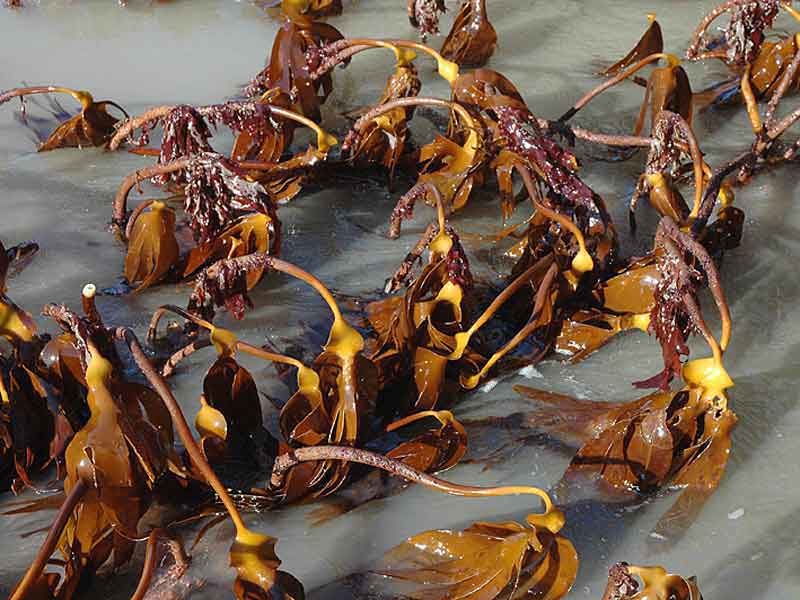
Laminaria hyperborea.
Photographer: Dr Keith Hiscock Copyright: Dr Keith Hiscock
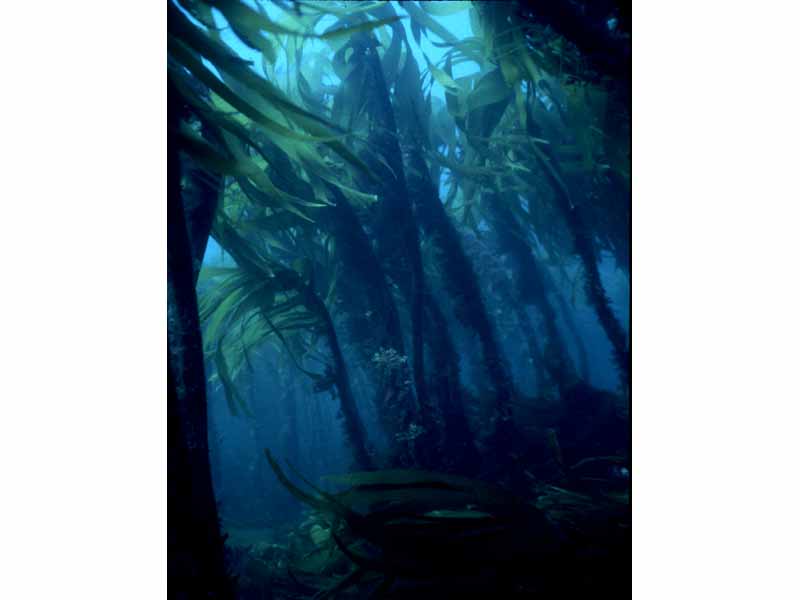
Laminaria hyperborea forest.
Photographer: Dr Keith Hiscock Copyright: Dr Keith Hiscock
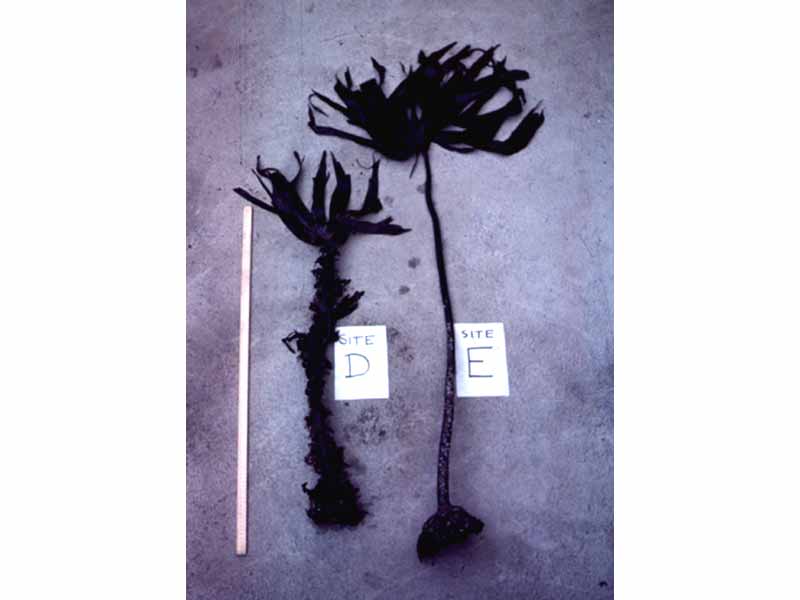
Laminaria hyperborea from unpolluted site, with epiphytes, (D) and polluted site (E).
Photographer: Dr Keith Hiscock Copyright: Dr Keith Hiscock
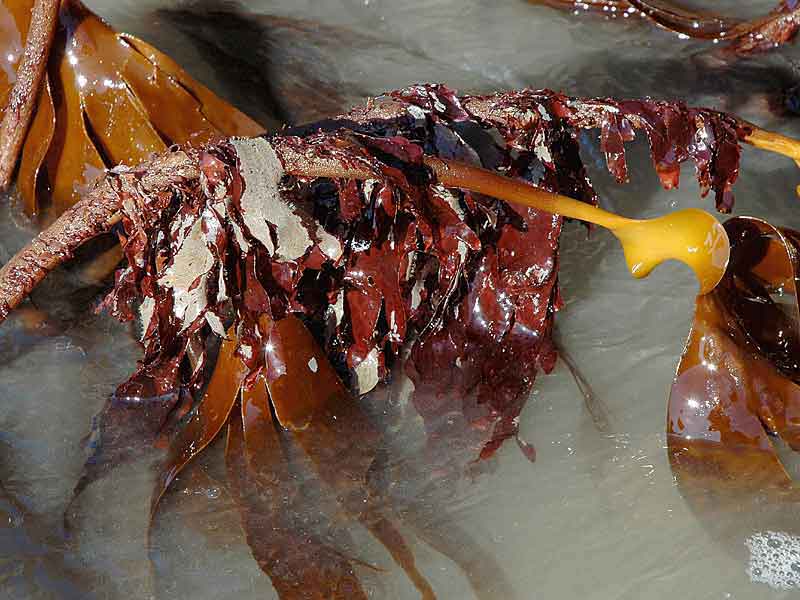
Laminaria hyperborea showing epiphytic growth.
Photographer: Dr Keith Hiscock Copyright: Dr Keith Hiscock
Distribution data supplied by the Ocean Biodiversity Information System (OBIS). To interrogate UK data visit the NBN Atlas.Map Help
| Researched by | Dr Harvey Tyler-Walters | Refereed by | Dr Joanna Jones |
| Authority | (Gunnerus) Foslie, 1884 | ||
| Other common names | - | Synonyms | - |
Summary
Description
A large conspicuous kelp which can grow up to 3.5 m in length in suitable conditions although this length is rarely attained (J. Jones, pers. comm.). The blade is broad, large, tough, flat and divided into 5 - 20 straps or fingers (digitate). The blade is glossy, golden brown to very dark brown in colour. The holdfast is large, conical and branched with conspicuous haptera. The stipe is stiff, rough textured, thick at the base and tapers towards the frond. The stipe stands erect when out of water. The stipe is often covered with numerous epifauna and epiflora. The amount of energy allocated to growth of the stipe, and consequently maximum length of stipe, varies with season, the age of plant and location. This species is often confused with Laminaria digitata, especially when young.
Recorded distribution in Britain and Ireland
Found on most coasts of Britain and Ireland. Scarce along the south east coast of Britain due to a lack of suitable substrata.Global distribution
Restricted to the north east Atlantic from the northern coast of Iceland, north to the Russian coast near Murmansk and south to Cape Mondego, mid-Portugal including Norway, Faroes, northern France and northern Spain but absent from the Bay of Biscay.Habitat
Found on bedrock or other stable substrata from extreme low water to depths dependant on light penetration and sea urchin grazing (typically about 8 m depth in coastal waters to 30 m in clear coastal waters). It grows as dense forests under suitable conditions. Found at depths of up to 47 m around St Kilda.Depth range
1-36mIdentifying features
- Large frond up to 1 m in length lacking midrib.
- Frond is smooth, wide and digitate.
- Stipe stiff, rough in texture and often covered by red seaweeds.
- Stipe is circular in cross section and snaps when bent if already nicked.
- May be confused with Laminaria digitata when young. However, the stipe of Laminaria digitata is usually oval in cross section, not thicker at the base and does not snap easily.
Additional information
Other common names include redware, cuvy, sea rod, mayweed or Slat mara. The new blade grows below the older blade from November onwards. The old blade is shed in spring and early summer. Blade and stipe vary with exposure and current. In sheltered conditions, the blade has few or no digits and the stipe becomes thin but, in exposed conditions, the blade is deeply digitate and the stipe becomes thick. The stipe is usually up to one metre long but stipes up to three metres long have been recorded (Parke unpublished, cited in Kain, 1971a).
Listed by
- none -
Biology review
Taxonomy
| Level | Scientific name | Common name |
|---|---|---|
| Phylum | Ochrophyta | Brown and yellow-green seaweeds |
| Class | Phaeophyceae | |
| Order | Laminariales | |
| Family | Laminariaceae | |
| Genus | Laminaria | |
| Authority | (Gunnerus) Foslie, 1884 | |
| Recent Synonyms | ||
Biology
| Parameter | Data | ||
|---|---|---|---|
| Typical abundance | High density | ||
| Male size range | Gametophyte ca 0.01 mm | ||
| Male size at maturity | |||
| Female size range | Gametophyte ca 0.01 mm | ||
| Female size at maturity | |||
| Growth form | Arborescent / Arbuscular | ||
| Growth rate | 0.94cm/day | ||
| Body flexibility | High (greater than 45 degrees) | ||
| Mobility | |||
| Characteristic feeding method | Autotroph | ||
| Diet/food source | Autotroph | ||
| Typically feeds on | Not relevant | ||
| Sociability | |||
| Environmental position | Epilithic | ||
| Dependency | Independent. | ||
| Supports | None | ||
| Is the species harmful? | No Edible | ||
Biology information
Growth. The growth rate during maximal growth is reported. Adults grow rapidly until about five years old. Peak growth occurs during winter (November to June) and stops in summer, initiated by a photoperiodic response to day length. The total carbon content of canopy lamina is reported to vary with season reflecting a change in carbohydrate storage (Sjøtun, 1996). Carbon content is high in the summer and autumn and starts to decrease in winter with the onset of growth. The old blade is replaced by a new blade formed between the meristem (top of the stipe) and the old blade. Nutrients from the old blade contribute to growth. The old blade is shed in spring to early summer.
In Laminaria hyperborea, the proportion of growth allocated to various regions of the plant is reported to vary with both the age of the plant and its habitat (Sjøtun & Fredriksen, 1995). The proportion of growth allocated to the stipe and hapteron, for instance, increases with exposure, the latter probably helping the plant to remain attached and help it to survive in exposed localities (Sjøtun & Fredriksen, 1995). However, in one-year-old plants, growth mainly occurred in the lamina in order to maximize the area for photosynthesis in the light-limited understorey.
Habitat preferences
| Parameter | Data |
|---|---|
| Physiographic preferences | Open coast, Strait or Sound, Ria or Voe, Enclosed coast or Embayment |
| Biological zone preferences | Lower infralittoral, Upper infralittoral |
| Substratum / habitat preferences | Artificial (man-made), Bedrock, Cobbles, Large to very large boulders, Pebbles |
| Tidal strength preferences | Moderately strong 1 to 3 knots (0.5-1.5 m/sec.), Weak < 1 knot (<0.5 m/sec.) |
| Wave exposure preferences | Exposed, Moderately exposed, Very exposed |
| Salinity preferences | Full (30-40 psu) |
| Depth range | 1-36m |
| Other preferences | No text entered |
| Migration Pattern | Non-migratory or resident |
Habitat Information
Laminaria hyperborea is not found in areas influenced by sediment (e.g. sand) scour. Laminaria hyperborea is absent is areas of extreme wave action or currents (e.g. surge gullies) since the stiff stipe is likely to snap or holdfasts tear off. It is also absent from sheltered areas. The upper limit of its distribution may be depressed by wave action, e.g. in St Kilda its upper limit is several metres below MLWS (Birkett et al., 1998b). High irradiances (comparable to direct sunlight) reduce photosynthesis in Laminaria hyperborea, which may explain its absence from intertidal rock pools, where it is replaced by Laminaria digitata (Kain et al., 1975). The lower limit of Laminaria hyperborea is determined by light penetration except in the presence of grazing e.g. by Echinus in the Isle of Man (Jones & Kain, 1967; Kain et al. 1974). The lower limit for Laminarians is generally considered to be about 1 percent of surface irradiance (Luning, 1990; Birkett et al., 1998b).Life history
Adult characteristics
| Parameter | Data |
|---|---|
| Reproductive type | Alternation of generations |
| Reproductive frequency | Annual episodic |
| Fecundity (number of eggs) | >1,000,000 |
| Generation time | 2-5 years |
| Age at maturity | 2 -6 years |
| Season | September - April |
| Life span | 11-20 years |
Larval characteristics
| Parameter | Data |
|---|---|
| Larval/propagule type | - |
| Larval/juvenile development | Spores (sexual / asexual) |
| Duration of larval stage | See additional information |
| Larval dispersal potential | 0 - 10 km |
| Larval settlement period | Can be all year round (see additional information) |
Life history information
Laminaria hyperborea is a perennial and lives for up to 20 years. Longevity is thought to be higher in its northern distribution (Sjøtun et al., 1993). Spores are produced from sori over most of the blade surface (except most distal or proximal areas) over six to seven weeks in winter (September - April) (Kain, 1975). Most young sporophytes (germlings) appear in spring but can appear all year round depending on conditions (Birkett et al., 1998b).
Laminarians exhibit an alternation of generations and morphologically distinct reproductive phases. The obvious plant is the sporophyte (diploid) producing vast numbers of meiotic haploid zoospores from 'sori'. The flagellated zoospores are about 5 microns in diameter (Sauvageau, 1918; cited in Kain, 1979) and may be transported at least 5 km from the parent (Jónsson, 1972, cited in Norton, 1992). They lose their flagella after 24 hrs (Kain, 1964) and settle on the available substrata. However, the settling rate is dependent on the local currents, therefore larval settling time is probably longer than 1 day (Fredriksen et al., 1995). The zoospores develop into microscopic dioecious gametophytes. These become fertile in 10 days in optimal conditions.
Male gametophytes release motile sperm that fertilize the eggs of female gametophytes and the resultant zygote develops into the new sporophyte. Mass and rapid sperm release was initiated by adding a drop of seawater, into which female Laminaria hyperborea gametophytes had released eggs, to the male gametophyte culture medium, suggesting the eggs produce pheromones which induce the release of and attract the sperm (Lüning & Müller, 1978).
Maturation of the gametophytes can be delayed under less optimal conditions and development remains vegetative. For example, Lüning (1980) reported that fertility, the induction of fertilization in male and female gametophytes, depended on a critical quantum dose of blue light. Fragments of damaged vegetative gametophytes may develop into separate gametophytes (only a few cells are required) hence reproductive potential may be increased. If optimal conditions return the gametophyte may become fertile and produce gametes. Spore production may be inhibited by epifauna such as Membranipora membranacea (sea mat) and endophytes such as Streblonema sp. (Kain, 1975b).
Sensitivity review
The MarLIN sensitivity assessment approach used below has been superseded by the MarESA (Marine Evidence-based Sensitivity Assessment) approach (see menu). The MarLIN approach was used for assessments from 1999-2010. The MarESA approach reflects the recent conservation imperatives and terminology and is used for sensitivity assessments from 2014 onwards.
Physical pressures
Use / to open/close text displayed
| Intolerance | Recoverability | Sensitivity | Evidence / Confidence | |
Substratum loss [Show more]Substratum lossBenchmark. All of the substratum occupied by the species or biotope under consideration is removed. A single event is assumed for sensitivity assessment. Once the activity or event has stopped (or between regular events) suitable substratum remains or is deposited. Species or community recovery assumes that the substratum within the habitat preferences of the original species or community is present. Further details EvidenceRemoval of the substratum would entail removal of the plants themselves, juvenile sporophytes (germlings) and gametophytes. They can not re-attach once removed and would be swept away. Experimental clearance experiments (Kain, 1979) in the Isle of Man showed that Laminaria hyperborea out-competed opportunistic species (e.g. Alaria esculenta, Saccorhiza polyschides and Desmarestia spp.) and returned to near control levels of biomass within 3 years at 0.8 m but that recovery was slower at 4.4m. However, Kain (1979) noted that grazing would slow recovery since, even though they did not prevent spore settlement, few sporophytes survived after 1 year in the presence of Echinus esculentus. These experiments did not remove the gametophyte 'seed' bank. Research on harvested populations of Laminaria hyperborea in Norway suggests that kelp forest biomass returned to pre-harvesting levels after 1-2 years, but that the plants were mainly small (1m) and that the age structure of the population was shifted towards younger plants. Sivertsen (1991, cited in Birkett et al., 1998b) showed that kelp populations stabilize after about 4-5 year post-harvesting. Re-growth was due primarily to growth of viable juveniles after harvesting. Current advice in Norway suggest that kelp forest should be left for 7-10 years after harvesting for the kelp biomass and non-kelp species to recover (Birkett et al., 1998b). Therefore, recovery is dependant on the depth (light availability) and grazing. However, given the potentially large number of spores and gametophytes it is likely that recolonization would occur rapidly and sporophytes may grow up to 0.94 cm /day under optimal conditions. | High | Moderate | Moderate | Moderate |
Smothering [Show more]SmotheringBenchmark. All of the population of a species or an area of a biotope is smothered by sediment to a depth of 5 cm above the substratum for one month. Impermeable materials, such as concrete, oil, or tar, are likely to have a greater effect. Further details. EvidenceAlthough smothering of the adult sporophyte may reduce photosynthetic activity it is unlikely to cause damage. However, juvenile sporophytes may be smothered and their growth inhibited. The germlings, zoospores and gametophytes are likely to be intolerant of smothering. | Low | Immediate | Not sensitive | Low |
Increase in suspended sediment [Show more]Increase in suspended sedimentBenchmark. An arbitrary short-term, acute change in background suspended sediment concentration e.g., a change of 100 mg/l for one month. The resultant light attenuation effects are addressed under turbidity, and the effects of rapid settling out of suspended sediment are addressed under smothering. Further details EvidenceIncreased sedimentation may result in smothering of adults (sporophytes), germlings and gametophytes (see above). It may also prevent spore attachment (J. Jones, pers. comm.). Increased sediment deposition may increase sediment scour. However, the most likely effect of increased siltation will be increased light attenuation and turbidity (see below). | Low | Immediate | Not sensitive | Low |
Decrease in suspended sediment [Show more]Decrease in suspended sedimentBenchmark. An arbitrary short-term, acute change in background suspended sediment concentration e.g., a change of 100 mg/l for one month. The resultant light attenuation effects are addressed under turbidity, and the effects of rapid settling out of suspended sediment are addressed under smothering. Further details Evidence | No information | |||
Desiccation [Show more]Desiccation
EvidenceLaminaria hyperborea is primarily a subtidal species and is unlikely to experience desiccation except during extreme low waters events. It is likely to be highly intolerant of desiccation, and should the single meristem (growth region) be destroyed the plant will die. Although individuals at the top of the shore may be lost the majority of population is found subtidally and is unlikely to be affected. | High | Moderate | Moderate | Low |
Increase in emergence regime [Show more]Increase in emergence regimeBenchmark. A one hour change in the time covered or not covered by the sea for a period of one year. Further details EvidenceLaminaria hyperborea is primarily a subtidal species and is likely to be highly intolerant of increases in emergence. Its upper limit on the shore is in part dependant on the emergence regime as well as competition from more tolerant species such as Laminaria digitata. An increase in emergence time is likely to depress its upper limit on the shore. | High | Moderate | Moderate | Low |
Decrease in emergence regime [Show more]Decrease in emergence regimeBenchmark. A one hour change in the time covered or not covered by the sea for a period of one year. Further details Evidence | No information | |||
Increase in water flow rate [Show more]Increase in water flow rateA change of two categories in water flow rate (view glossary) for 1 year, for example, from moderately strong (1-3 knots) to very weak (negligible). Further details EvidenceThe morphology of the stipe and blade vary with water flow rate. In wave exposed areas, for example, Laminaria hyperborea develops a long and flexible stipe and this is probably a functional adaptation to strong water movement (Sjøtun, 1998). In addition, the lamina becomes narrower and thinner in strong currents (Sjøtun & Fredriksen, 1995). However, the stipe of Laminaria hyperborea is relatively stiff and can snap in strong currents. It is usually absent from areas of high wave action or strong currents although in Norway it can do well in rapids (J. Jones, pers. comm.). | High | Moderate | Moderate | Moderate |
Decrease in water flow rate [Show more]Decrease in water flow rateA change of two categories in water flow rate (view glossary) for 1 year, for example, from moderately strong (1-3 knots) to very weak (negligible). Further details Evidence | No information | |||
Increase in temperature [Show more]Increase in temperature
For intertidal species or communities, the range of temperatures includes the air temperature regime for that species or community. Further details EvidenceBirkett et al. (1998) suggest that kelp are stenothermal (intolerant of temperature change) and that upper and lower lethal limits for kelp would be between 1-2 °C above or below the normal temperature tolerances. The optimum temperature for the development of Laminaria hyperborea gametophytes and young sporophytes is between 10-17 °C (Kain, 1971). Above 17 °C, gamete survival is reduced (Kain, 1971) and gametogenesis is inhibited at 21 °C in this species (tom Dieck, 1992). Given its distribution in the North Atlantic this species is likely to be tolerant of low temperatures. This species is likely to be intolerant of change in temperature equivalent to either benchmark outside its normal range. The temperature tolerances of the gametophyte stages are different to those of the adult. Gametophytic development has been observed at 0 °C although development is slow and suggests that 0 °C is close to the lowest temperature allowing vegetative development of the primary cells (Sjøtun & Schoschina, 2002). | High | Moderate | Moderate | Moderate |
Decrease in temperature [Show more]Decrease in temperature
For intertidal species or communities, the range of temperatures includes the air temperature regime for that species or community. Further details Evidence | No information | |||
Increase in turbidity [Show more]Increase in turbidity
EvidenceThe light penetration influences the maximum depth at which kelps species can grow. Dring (1982) reported that laminarians grow at depths at which the light levels are reduced to 1 percent of incident light at the surface. This varies with the turbidity of the sea water from 100 m in the Mediterranean to only 6-7 m in the silt laden German Bight to a maximum of about 35 m in Atlantic European waters. In very turbid waters the depth limit for kelp may be limited to 2 m or it may be absent completely, e.g. Severn Estuary) (Birkett et al., 1998b; Lüning, 1990). Increased turbidity due to coastal engineering, dredging, cooling water plumes have been reported to result in the loss of local kelp forest. Suspended material in vicinity of sewage outfalls have been reported to result in reduced the depth range and the fewer new plants under the canopy. The quality or wavelength of light also affects kelps. Red light favours the accumulation of carbohydrates and blue light enhances protein synthesis, enzyme activity, respiration and is important for the formation of oogonia (eggs) in gametophytes (Dring, 1988). Dissolved organic materials (yellow substance or gelbstoff) absorbs blue light strongly, therefore changes in riverine input or other land based runoff are likely to influence kelp density and distribution. Laminaria hyperborea is likely to be intolerant of a increase of light attenuation of 30 percent of incident surface illumination but would probably not be destroyed within 5 weeks. However, it is likely to be highly intolerant of an increase in turbidity for longer periods especially in deeper waters. | Intermediate | Moderate | Moderate | Moderate |
Decrease in turbidity [Show more]Decrease in turbidity
Evidence | No information | |||
Increase in wave exposure [Show more]Increase in wave exposureA change of two ranks on the wave exposure scale (view glossary) e.g., from Exposed to Extremely exposed for a period of one year. Further details EvidenceLaminaria hyperborea is unable to survive where wave action is extreme because of its large frond area attached to a stiff stipe which is liable to snap. Wave action depresses the upper limit of populations to several metres below low water. In Norway, for example, the upper and lower limits of Laminaria hyperborea are raised from 5 to 0 m and 32 to 26 m from exposed to sheltered sites respectively (Kain, 1971b). It is absent from Rockall possibly due to extreme exposure and strong currents or geographical isolation. Older and larger plants, especially if the holdfasts are weakened by feeding by Helcion pellucidum, are most intolerant of wave action and populations affected by wave action have a reduced age range. As wave exposure increases Laminaria hyperborea is out-competed by Laminaria digitata or Alaria esculenta. In a study in Norway (Sjøtun et al., 1993) Laminaria hyperborea from the most wave exposed site (in Finnmark) exhibited the lowest annual biological productivity per plant. Furthermore, of the four most exposed sites, three of them corresponded with the lowest mean standing crops (fresh weights). Therefore, Laminaria hyperborea is probably highly intolerant of increases in exposure at the benchmark level. It could benefit from decreases in wave exposure, possibly extending its upper limit up the shore, however this would only happen if its upper limit was depressed below the lowest astronomical tide (LAT) as it is highly intolerant of emergence (J. Jones, pers. comm.). | High | Moderate | Moderate | Moderate |
Decrease in wave exposure [Show more]Decrease in wave exposureA change of two ranks on the wave exposure scale (view glossary) e.g., from Exposed to Extremely exposed for a period of one year. Further details Evidence | No information | |||
Noise [Show more]Noise
EvidencePlants have no known sound or vibration receptors | Tolerant | Not relevant | Not sensitive | Not relevant |
Visual presence [Show more]Visual presenceBenchmark. The continuous presence for one month of moving objects not naturally found in the marine environment (e.g., boats, machinery, and humans) within the visual envelope of the species or community under consideration. Further details EvidenceMacroalgae are not known to react to the rapid changes in light and shade that would be associated with movement and have no known visual receptors. | Tolerant | Not relevant | Not sensitive | Not relevant |
Abrasion & physical disturbance [Show more]Abrasion & physical disturbanceBenchmark. Force equivalent to a standard scallop dredge landing on or being dragged across the organism. A single event is assumed for assessment. This factor includes mechanical interference, crushing, physical blows against, or rubbing and erosion of the organism or habitat of interest. Where trampling is relevant, the evidence and trampling intensity will be reported in the rationale. Further details. EvidencePhysical disturbance caused by a scallop dredge or equivalent impact is likely to have similar effects to that of harvesting, although not so severe (see below). Plants are likely to be removed or damaged by a passing dredge. Therefore, an intolerance of intermediate has been recorded.. Recovery is likely to moderate. | Intermediate | Moderate | Moderate | Very low |
Displacement [Show more]DisplacementBenchmark. Removal of the organism from the substratum and displacement from its original position onto a suitable substratum. A single event is assumed for assessment. Further details EvidenceLaminaria hyperborea cannot re-attach once removed and would be swept away. Experimental clearance experiments (Kain, 1979) in Isle of Man showed that Laminaria hyperborea out competed other opportunistic species (e.g. Alaria esculenta, Saccorhiza polyschides and Desmarestia spp.) and returned to near control levels of biomass within 3 years at 0.8m but that recovery was slower at 4.4m. However, Kain (1979) noted that grazing would slow recovery since, even though they did not prevent spore settlement, few sporophytes survived after 1 year in the presence of Echinus esculentus. These experiments did not remove the gametophyte 'seed' bank. Research on harvested populations of Laminaria hyperborea in Norway suggests that kelp forest biomass returned to pre-harvesting levels after 1-2 years, but that the plants were mainly small (1m) and that the age structure of the population was shifted towards younger plants. Sivertsen (1991, cited in Birkett et al., 1998) showed that kelp populations stabilize after about 4-5 year post-harvesting. After 4 years post harvesting, kelps had only two thirds of their pre-harvesting canopy height. Re-growth was due primarily to growth of viable juveniles after harvesting. Current advice in Norway suggest that kelp forest should be left for 7-10 years after harvesting for the kelp biomass and non-kelp species to recover (Birkett et al., 1998b). Therefore, recovery is dependant on the depth (light availability) and grazing. However, given the potentially large number of spores and gametophytes it is likely that recolonization would occur rapidly and sporophytes may grow up to 0.94 cm /day under optimal conditions. | High | Moderate | Moderate | High |
Chemical pressures
Use [show more] / [show less] to open/close text displayed
| Intolerance | Recoverability | Sensitivity | Evidence / Confidence | |
Synthetic compound contamination [Show more]Synthetic compound contaminationSensitivity is assessed against the available evidence for the effects of contaminants on the species (or closely related species at low confidence) or community of interest. For example:
The evidence used is stated in the rationale. Where the assessment can be based on a known activity then this is stated. The tolerance to contaminants of species of interest will be included in the rationale when available; together with relevant supporting material. Further details. Evidence
| Low | Immediate | Not sensitive | Moderate |
Heavy metal contamination [Show more]Heavy metal contaminationEvidenceHopkin & Kain (1978) examined the effect of Cu, Zn, Hg and Cd on Laminaria hyperborea gametophytes and sporophytes. Sublethal effects on sporophyte development, growth and respiration were shown at concentrations higher than the short term benchmark for Hg, Zn and Cd. Hg was found to be lethal at 0.05 mg/l. However, Cu affected sporophyte development at 0.01mg/l, lower than the benchmark level but was lethal at 0.1 mg/l. However, this report did not examine other heavy metals or their synergistic effects. | Intermediate | Immediate | Very Low | Moderate |
Hydrocarbon contamination [Show more]Hydrocarbon contaminationEvidenceMucilaginous slime coating kelp fronds is thought to protect them from coatings of oil. Hydrocarbons in solution reduce photosynthesis and may be algicidal. Reduction in photosynthesis depends on the type of oil, its concentration, length of exposure, method used to prepare oil-water mixture and irradiance in experimental trials (Lobban & Harrison, 1994). The sublittoral fringe populations of Laminaria hyperborea would be most vulnerable to oiling. Subtidal populations being only exposed to dispersed oil or oil adsorbed to particles. Kelps are relatively insensitive to dispersants (Birkett et al., 1998). Three days exposure to 1 percent diesel emulsion reduced photosynthesis completely in young Macrocytsis plants. Laminaria digitata exposed to diesel oil at 130 microgrammes per litre reduced growth by 50 percent in a two year experiment. No growth inhibition was noted at 30 microgrammes per litre and the plants recovered completed in oil-free conditions. Holt et al. (1995) report that oil spills in the USA and the Torry Canyon spillage had little effect on kelp forest. Respiration in Laminaria hyperborea was inhibited by phenol at 100 mg/l (100 ppm). | Low | Immediate | Not sensitive | Moderate |
Radionuclide contamination [Show more]Radionuclide contaminationEvidenceInsufficientinformation | No information | No information | No information | Not relevant |
Changes in nutrient levels [Show more]Changes in nutrient levelsEvidenceAll kelp species are efficient absorbers of nutrients (nitrates and phosphates) and can take up and store excess nutrients. Dring (1982) reports that storage of nitrates in winter (when nutrients are plentiful) allows Laminarians to continue growth for 2-3 months after the spring decrease in sea nutrients levels. Although growth is negligible in summer, photosynthesis remains high and reserves of carbohydrates are built up. These carbohydrate reserves peak in autumn, are translocated to the meristem in winter and allow rapid growth in winter when nutrient levels are high. Holt et al. (1995) suggest that Laminaria hyperborea may be tolerant of eutrophication since healthy populations are found at ends of sublittoral untreated sewage outfalls in the Isle of Man. Nutrients may be added to macrophyte cultures to increase productivity. However, eutrophication is associated with loss of perennial macrophytes, a reduction in the depth range and replacement by mussels or opportunistic algae species (Fletcher, 1996; Birkett et al., 1998b) presumably due to indirect effects such as increased turbidity. Increased nutrients may increase growth of epiphytes and plankton, resulting in reduced light penetration for photosynthesis and a subsequent reduction in the depth at which kelp could grow and possibly competition with juvenile sporophytes. Therefore, a rank of intermediate intolerance has been given to represent the likely indirect effects on turbidity and competition. | Intermediate | Moderate | Moderate | Moderate |
Increase in salinity [Show more]Increase in salinity
EvidenceLüning (1990) suggests that kelps are stenohaline and that their tolerance to salinity covers a range between 16 - 50 psu. Optimal growth probably occurs between 30 -35 psu and grow rates are likely to be affected by periodic salinity stress. Hopkin & Kain (1978) stated that early sporophytes of Laminaria hyperborea grew optimally between 20 -35 psu but did not survive at 6 psu. Birkett et al. (1998) suggest that long term changes in salinity may result in loss of affected kelp beds. | Intermediate | Moderate | Moderate | Moderate |
Decrease in salinity [Show more]Decrease in salinity
Evidence | No information | |||
Changes in oxygenation [Show more]Changes in oxygenationBenchmark. Exposure to a dissolved oxygen concentration of 2 mg/l for one week. Further details. EvidenceLittle information on the effects of oxygen depletion on macroalgae was found. Kinne (1972) reports that reduced oxygen concentrations inhibit both photosynthesis and respiration. The effects of decreased oxygen concentration equivalent of the benchmark would be greatest during dark when the kelps are dependant on respiration. | No information | Not relevant | No information | Not relevant |
Biological pressures
Use [show more] / [show less] to open/close text displayed
| Intolerance | Recoverability | Sensitivity | Evidence / Confidence | |
Introduction of microbial pathogens/parasites [Show more]Introduction of microbial pathogens/parasitesBenchmark. Sensitivity can only be assessed relative to a known, named disease, likely to cause partial loss of a species population or community. Further details. EvidenceGalls on the blade of Laminaria hyperborea and spot disease are associated with the endophyte Streblonema sp. although the causal agent is unknown (bacteria, virus or endophyte). Resultant damage to the blade and stipe may increase losses in storms. The endophyte inhibits spore production and therefore recruitment and recoverability. | Low | Immediate | Not sensitive | Moderate |
Introduction of non-native species [Show more]Introduction of non-native speciesSensitivity assessed against the likely effect of the introduction of alien or non-native species in Britain or Ireland. Further details. EvidenceThe Japanese kelp Undaria pinnatifida (wakame) has recently spread to the south coast of England from Brittany where it was introduced for aquaculture. It is presently restricted to man made structures but could spread in ballast water of commercial or recreational boats and shipping. Its potential competition with other kelps in the UK, including Laminaria hyperborea requires further study (Birkettet al., 1998). | No information | Not relevant | No information | Not relevant |
Extraction of this species [Show more]Extraction of this speciesBenchmark. Extraction removes 50% of the species or community from the area under consideration. Sensitivity will be assessed as 'intermediate'. The habitat remains intact or recovers rapidly. Any effects of the extraction process on the habitat itself are addressed under other factors, e.g. displacement, abrasion and physical disturbance, and substratum loss. Further details. EvidenceResearch on harvested populations of Laminaria hyperborea in Norway suggests that kelp forest biomass returned to pre-harvesting levels after 1-2 years, but that the plants were mainly small (1m) and that the age structure of the population was shifted towards younger plants. Sivertsen (1991; cited in Birkett et al., 1998) showed that kelp populations stabilize after about 4-5 year post-harvesting. Re-growth was due primarily to growth of viable juveniles after harvesting. Current advice in Norway suggest that kelp forest should be left for 7-10 years after harvesting for the kelp biomass and non-kelp species to recover (Birkett et al., 1998). Therefore recovery is dependant on the depth (light availability) and grazing. However, given the potentially large number of spores and gametophytes it is likely that recolonization would occur rapidly and sporophytes may grow up to 0.94 cm /day under optimal conditions. Evidence from storm damage indicates that kelp forest can regrow within 14 months. Experimental clearance experiments (Kain, 1979) in Isle of Man showed that Laminaria hyperborea out competed other opportunistic species (e.g. Alaria esculenta, Saccorhiza polyschides and Desmarestia spp.) and returned to near control levels of biomass within 3 years at 0.8 m but that recovery was slower at 4.4 m. However, Kain (1979) noted that grazing would slow recovery since, even though it did not prevent spore settlement, few sporophytes survived after 1 year in the presence of by Echinus esculentus. These experiments did not remove the gametophyte 'seed' bank. | Intermediate | Moderate | Moderate | High |
Extraction of other species [Show more]Extraction of other speciesBenchmark. A species that is a required host or prey for the species under consideration (and assuming that no alternative host exists) or a keystone species in a biotope is removed. Any effects of the extraction process on the habitat itself are addressed under other factors, e.g. displacement, abrasion and physical disturbance, and substratum loss. Further details. EvidenceRemoval of urchin predators such as lobsters or crawfish has been implicated in increases in urchin populations and therefore the creation of 'urchin barrens' and the loss of kelp beds (Birkett et al., 1998b). Similarly, removal of grazing abalone by fishing is thought to have resulted in the loss of kelp beds as sea urchins populations benefited from reduced competition for food. However, the evidence is equivocal as sea urchin barrens occur in areas where lobsters are not found (Birkett et al., 1998; Hawkins & Raffaelli, 1999). It is likely that there is a complex interaction between sea urchin recruitment and predation. However, removal of predators or other grazers may perturb the ecosystem making it more intolerant of natural fluctuations in sea urchin numbers or other perturbations. | Intermediate | Moderate | Moderate | Moderate |
Additional information
Importance review
Policy/legislation
- no data -
Status
| National (GB) importance | - | Global red list (IUCN) category | - |
Non-native
| Parameter | Data |
|---|---|
| Native | - |
| Origin | - |
| Date Arrived | Not relevant |
Importance information
Drift kelp has long been collected as an agricultural fertilizer and soil conditioner. Recently kelps have been harvested for the alginate industry which produces valuable emulsifiers and gelling agents for the cosmetic, pharmaceutical and food industries. Laminaria hyperborea is harvested commercially in Norway, Brittany, Scotland and Ireland (for reviews see Guiry & Blunden, 1991; Wilkinson, 1995 and Birkett et al., 1998b).
Kelps provide a unique habitat and substratum for many organisms and kelp forests are species rich habitats (Birkett et al., 1998b). Laminaria hyperborea provide three separate habitats, the blade (or frond), the stipe and the holdfast. The blades support Patella pellucida, the bryozoan Membranipora membranacea and the hydroid Obelia geniculata (Erwin et al., 1990; Birkett et al., 1998b) as well as endophytes and epiphytes, e.g. Myrionema corunnae (only found on Laminaria blades), and Pogotrichum filiforme and Chilionema sp., which are mainly restricted to kelp blades (Birkett et al., 1998b). The stipes support diverse flora and fauna, especially foliose algae, depending on the age of the stipe, density of the kelp plants, and depth (Norton et al., 1977; Birkett et al. 1998b,). Hiscock & Mitchell (1980) list 15 species of algae associated with kelp stipes including, Palmaria palmata, Membranoptera alata, and Phycodrys rubens which are found mainly or solely on kelp stipes in the sublittoral. Kelp holdfasts support a diverse fauna that represents a sample of the surrounding mobile fauna and crevice-dwelling organisms, e.g. cnidaria, polychaetes, nematodes, gastropods, bivalves, cirripedes, amphipods, isopods, copepods (mainly harpacticoids), and small crabs (Hoare & Hiscock, 1974; Jones, 1971; Moore, 1973a & b; Sheppard et al., 1980). Moore (1973a) lists 389 species from holdfasts collected from the north east coast of Britain. A useful account of holdfast fauna is given by Hayward (1988). Kelp holdfasts form a convenient sampling unit. Holdfast fauna has been used to investigate the effects of pollution (e.g. Moore, 1973a, b; Sheppard et al., 1980) and was recently used (amongst other studies) to examine the effects of the Sea Empress Oil spill (Somerfield & Warwick, 1999). Further information on the community associated with Laminaria hyperborea and its importance is detailed under the biotope EIR.LhypR.
Bibliography
Birkett, D.A., Maggs, C.A., Dring, M.J. & Boaden, P.J.S., 1998b. Infralittoral reef biotopes with kelp species: an overview of dynamic and sensitivity characteristics for conservation management of marine SACs. Natura 2000 report prepared by Scottish Association of Marine Science (SAMS) for the UK Marine SACs Project., Scottish Association for Marine Science. (UK Marine SACs Project, vol VI.), 174 pp. Available from: http://ukmpa.marinebiodiversity.org/uk_sacs/pdfs/reefkelp.pdf
Dieck, T.I., 1992. North Pacific and North Atlantic digitate Laminaria species (Phaeophyta): hybridization experiments and temperature responses. Phycologia, 31, 147-163.
Dieck, T.I., 1993. Temperature tolerance and survival in darkness of kelp gametophytes (Laminariales: Phaeophyta) - ecological and biogeographical implications. Marine Ecology Progress Series, 100, 253-264.
Dring, M.J., 1988. Photocontrol of development in algae. Annual Review of Plant Physiology and Plant Molecular Biology, 39, 157-174.
Erwin, D.G., Picton, B.E., Connor, D.W., Howson, C.M., Gilleece, P. & Bogues, M.J., 1990. Inshore Marine Life of Northern Ireland. Report of a survey carried out by the diving team of the Botany and Zoology Department of the Ulster Museum in fulfilment of a contract with Conservation Branch of the Department of the Environment (N.I.)., Ulster Museum, Belfast: HMSO.
Guiry, M.D. & Blunden, G., 1991. Seaweed Resources in Europe: Uses and Potential. Chicester: John Wiley & Sons.
Guiry, M.D. & Nic Dhonncha, E., 2000. AlgaeBase. World Wide Web electronic publication http://www.algaebase.org, 2000-01-01
Hardy, F.G. & Guiry, M.D., 2003. A check-list and atlas of the seaweeds of Britain and Ireland. London: British Phycological Society
Hiscock, K. & Mitchell, R., 1980. The Description and Classification of Sublittoral Epibenthic Ecosystems. In The Shore Environment, Vol. 2, Ecosystems, (ed. J.H. Price, D.E.G. Irvine, & W.F. Farnham), 323-370. London and New York: Academic Press. [Systematics Association Special Volume no. 17(b)].
Hoare, R. & Hiscock, K., 1974. An ecological survey of the rocky coast adjacent to the effluent of a bromine extraction plant. Estuarine and Coastal Marine Science, 2 (4), 329-348.
Hopkin, R. & Kain, J.M., 1978. The effects of some pollutants on the survival, growth and respiration of Laminaria hyperborea. Estuarine and Coastal Marine Science, 7, 531-553.
Howson, C.M. & Picton, B.E., 1997. The species directory of the marine fauna and flora of the British Isles and surrounding seas. Belfast: Ulster Museum. [Ulster Museum publication, no. 276.]
JNCC (Joint Nature Conservation Committee), 1999. Marine Environment Resource Mapping And Information Database (MERMAID): Marine Nature Conservation Review Survey Database. [on-line] http://www.jncc.gov.uk/mermaid
Jones, D.J., 1971. Ecological studies on macro-invertebrate communities associated with polluted kelp forest in the North Sea. Helgolander Wissenschaftliche Meersuntersuchungen, 22, 417-431.
Jones, N.S. & Kain, J.M., 1967. Subtidal algal recolonisation following removal of Echinus. Helgolander Wissenschaftliche Meeresuntersuchungen, 15, 460-466.
Kain, J.M., 1964. Aspects of the biology of Laminaria hyperborea III. Survival and growth of gametophytes. Journal of the Marine Biological Association of the United Kingdom, 44 (2), 415-433.
Kain, J.M., 1965. Aspects of the biology of Laminaria hyperborea. IV. Growth of early sporophytes. Journal of the Marine Biological Association of the UK, 45 (1), 129-142.
Kain, J.M., 1971a. Synopsis of biological data on Laminaria hyperborea. FAO Fisheries Synopsis, no. 87.
Kain, J.M., 1971b. The biology of Laminaria hyperborea VI Some Norwegian populations. Journal of the Marine Biological Association of the United Kingdom, 51, 387-408.
Kain, J.M., 1975b. The biology of Laminaria hyperborea VII Reproduction of the sporophyte. Journal of the Marine Biological Association of the United Kingdom, 55, 567-582.
Kain, J.M., 1979. A view of the genus Laminaria. Oceanography and Marine Biology: an Annual Review, 17, 101-161.
Kain, J.M., Drew, E.A. & Jupp, B.P., 1975. Light and the ecology of Laminaria hyperborea II. In Proceedings of the Sixteenth Symposium of the British Ecological Society, 26-28 March 1974. Light as an Ecological Factor: II (ed. G.C. Evans, R. Bainbridge & O. Rackham), pp. 63-92. Oxford: Blackwell Scientific Publications.
Kinne, O. (ed.), 1972. Marine Ecology: A Comprehensive, Integrated Treatise on Life in Oceans and Coastal Waters,Vol.1, Environmental Factors, part 3. New York: John Wiley & Sons.
Lein, T.E., Sjøtun, K. & Wakili, S., 1991. Mass-occurrence of a brown filamentous endophyte in the lamina of the kelp Laminaria hyperborea (Gunnerus) Foslie along the southwestern coast of Norway. Sarsia, 76 (3), 187-193. DOI https://doi.org/10.1080/00364827.1991.10413474
Lüning, K. & Müller, D.G., 1978. Chemical interaction in sexual reproduction of several Laminariales (Phaeophyceae): release and attraction of spermatozoids. Zeitschrift für Pflanzenphysiologie, 89, 333-341.
Lüning, K., 1980. Critical levels of light and temperature regulating the gametogenesis of three laminaria species (Phaeophyceae). Journal of Phycology, 16, 1-15.
Moore, P.G., 1973a. The kelp fauna of north east Britain I. Function of the physical environment. Journal of Experimental Marine Biology and Ecology, 13, 97-125.
Moore, P.G., 1973b. The kelp fauna of north east Britain. II. Multivariate classification: turbidity as an ecological factor. Journal of Experimental Marine Biology and Ecology, 13, 127-163.
Norton, T.A. (ed.), 1985. Provisional Atlas of the Marine Algae of Britain and Ireland. Huntingdon: Biological Records Centre, Institute of Terrestrial Ecology.
Norton, T.A., 1992. Dispersal by macroalgae. British Phycological Journal, 27, 293-301.
Norton, T.A., Hiscock, K. & Kitching, J.A., 1977. The Ecology of Lough Ine XX. The Laminaria forest at Carrigathorna. Journal of Ecology, 65, 919-941.
Picton, B.E. & Costello, M.J., 1998. BioMar biotope viewer: a guide to marine habitats, fauna and flora of Britain and Ireland. [CD-ROM] Environmental Sciences Unit, Trinity College, Dublin.
Raffaelli, D.G. & Hawkins, S.J., 1999. Intertidal Ecology 2nd edn.. London: Kluwer Academic Publishers.
Sheppard, C.R.C., Bellamy, D.J. & Sheppard, A.L.S., 1980. Study of the fauna inhabiting the holdfasts of Laminaria hyperborea (Gunn.) Fosl. along some environmental and geographical gradients. Marine Environmental Research, 4, 25-51.
Sjøtun, K. & Fredriksen, S., 1995. Growth allocation in Laminaria hyperborea (Laminariales, Phaeophyceae) in relation to age and wave exposure. Marine Ecology Progress Series, 126, 213-222.
Sjøtun, K. & Schoschina, E.V., 2002. Gametophytic development of Laminaria spp. (Laminariales, Phaeophyta) at low temperatures. Phycologia, 41, 147-152.
Sjøtun, K., Fredriksen, S. & Rueness, J., 1996. Seasonal growth and carbon and nitrogen content in canopy and first-year plants of Laminaria hyperborea (Laminariales, Phaeophyceae). Phycologia, 35, 1-8.
Sjøtun, K., Fredriksen, S. & Rueness, J., 1998. Effect of canopy biomass and wave exposure on growth in Laminaria hyperborea (Laminariaceae: Phaeophyta). European Journal of Phycology, 33, 337-343.
Sjøtun, K., Fredriksen, S., Lein, T.E., Runess, J. & Sivertsen, K., 1993. Population studies of Laminaria hyperborea from its northen range of distribution in Norway. Hydrobiologia, 260/261, 215-221.
Somerfield, P.J. & Warwick, R.M., 1999. Appraisal of environmental impact and recovery using Laminaria holdfast faunas. Sea Empress, Environmental Evaluation Committee., Countryside Council for Wales, Bangor, CCW Sea Empress Contract Science, Report no. 321.
Wilkinson, M., 1995. Information review on the impact of kelp harvesting. Scottish Natural Heritage Review, no. 34, 54 pp.
Datasets
Centre for Environmental Data and Recording, 2018. Ulster Museum Marine Surveys of Northern Ireland Coastal Waters. Occurrence dataset https://www.nmni.com/CEDaR/CEDaR-Centre-for-Environmental-Data-and-Recording.aspx accessed via NBNAtlas.org on 2018-09-25.
Cofnod – North Wales Environmental Information Service, 2018. Miscellaneous records held on the Cofnod database. Occurrence dataset: https://doi.org/10.15468/hcgqsi accessed via GBIF.org on 2018-09-25.
Environmental Records Information Centre North East, 2018. ERIC NE Combined dataset to 2017. Occurrence dataset: http://www.ericnortheast.org.ukl accessed via NBNAtlas.org on 2018-09-38
Fenwick, 2018. Aphotomarine. Occurrence dataset http://www.aphotomarine.com/index.html Accessed via NBNAtlas.org on 2018-10-01
Fife Nature Records Centre, 2018. St Andrews BioBlitz 2014. Occurrence dataset: https://doi.org/10.15468/erweal accessed via GBIF.org on 2018-09-27.
Fife Nature Records Centre, 2018. St Andrews BioBlitz 2015. Occurrence dataset: https://doi.org/10.15468/xtrbvy accessed via GBIF.org on 2018-09-27.
Fife Nature Records Centre, 2018. St Andrews BioBlitz 2016. Occurrence dataset: https://doi.org/10.15468/146yiz accessed via GBIF.org on 2018-09-27.
Kent Wildlife Trust, 2018. Biological survey of the intertidal chalk reefs between Folkestone Warren and Kingsdown, Kent 2009-2011. Occurrence dataset: https://www.kentwildlifetrust.org.uk/ accessed via NBNAtlas.org on 2018-10-01.
Kent Wildlife Trust, 2018. Kent Wildlife Trust Shoresearch Intertidal Survey 2004 onwards. Occurrence dataset: https://www.kentwildlifetrust.org.uk/ accessed via NBNAtlas.org on 2018-10-01.
Manx Biological Recording Partnership, 2017. Isle of Man wildlife records from 01/01/2000 to 13/02/2017. Occurrence dataset: https://doi.org/10.15468/mopwow accessed via GBIF.org on 2018-10-01.
Manx Biological Recording Partnership, 2022. Isle of Man historical wildlife records 1990 to 1994. Occurrence dataset:https://doi.org/10.15468/aru16v accessed via GBIF.org on 2024-09-27.
Merseyside BioBank., 2018. Merseyside BioBank (unverified). Occurrence dataset: https://doi.org/10.15468/iou2ld accessed via GBIF.org on 2018-10-01.
National Trust, 2017. National Trust Species Records. Occurrence dataset: https://doi.org/10.15468/opc6g1 accessed via GBIF.org on 2018-10-01.
NBN (National Biodiversity Network) Atlas. Available from: https://www.nbnatlas.org.
OBIS (Ocean Biodiversity Information System), 2025. Global map of species distribution using gridded data. Available from: Ocean Biogeographic Information System. www.iobis.org. Accessed: 2025-08-04
Outer Hebrides Biological Recording, 2018. Non-vascular Plants, Outer Hebrides. Occurrence dataset: https://doi.org/10.15468/goidos accessed via GBIF.org on 2018-10-01.
Royal Botanic Garden Edinburgh, 2018. Royal Botanic Garden Edinburgh Herbarium (E). Occurrence dataset: https://doi.org/10.15468/ypoair accessed via GBIF.org on 2018-10-02.
South East Wales Biodiversity Records Centre, 2018. SEWBReC Algae and allied species (South East Wales). Occurrence dataset: https://doi.org/10.15468/55albd accessed via GBIF.org on 2018-10-02.
Citation
This review can be cited as:
Last Updated: 03/07/2007